Friday, November 13, 2026
Home Blog Page 282

Oklahoma superintendent hits back over CNN clash over ICE raids, rejects ‘sanctuary schools’

0

Oklahoma State School Superintendent Ryan Walters pushed back after a clash on CNN over his openness to allowing Immigration and Customs Enforcement (ICE) officers into schools – with Walters doubling down and rejecting “sanctuary schools.”

Walters had told local media that he would not rule out allowing federal agents into schools to remove illegal immigrants, amid an ongoing deportation operation since President Donald Trump took office.

The Trump administration has lifted a Biden-era “sensitive places” mandate, which prevented agents from entering schools amid concerns that illegal immigrants could use such places to hide from enforcement. It has sparked pushback from some local officials.

CNN ANCHOR SPARS WITH OKLAHOMA SUPERINTENDENT OVER ICE RAIDS ON SCHOOLS: ‘JUST ANSWER MY QUESTION’ 

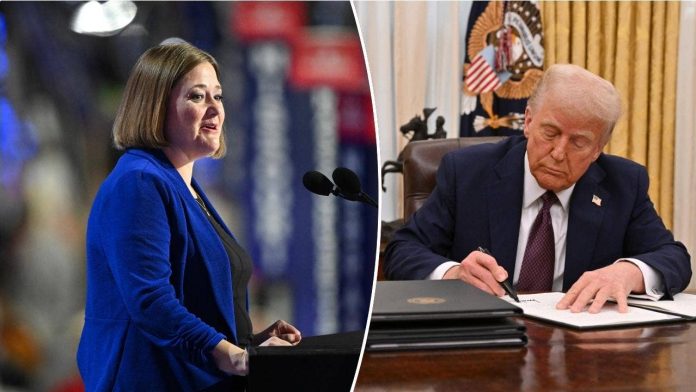
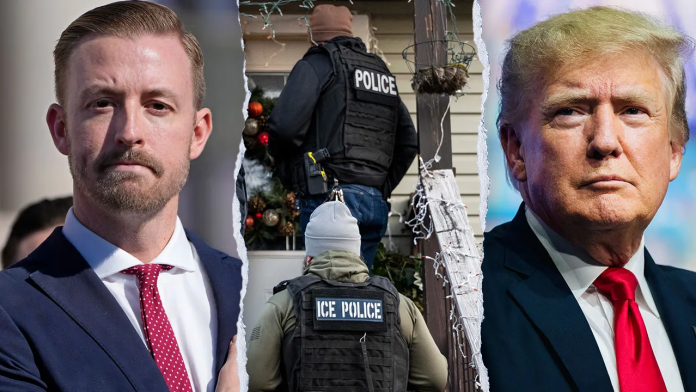
Oklahoma State School Superintendent Ryan Walters, left, is pushing back against left-wing media outlets and Democrats after facing criticism for announcing his intention to cooperate with President Donald Trump’s illegal immigration crackdown. (AP/Getty)

However, Walters, in an interview with Fox News Digital, said that such moves could be necessary to avoid family separation.

“Are the Democrats and now the left-wing media the party of family separation? If you have adults that are going to be deported from this country, do you not want the Trump administration to know where their kids are, where they’re enrolled in school, so that if the family is to be deported, they’re actually deported together?” he asked.

It led to a furious back-and-forth with CNN host Brianna Keilar, who asked him if it would be traumatic for kids.

“Do you think it would be traumatic for students to witness a raid in their school and students forcibly removed from their school? Do you think that would be traumatic?”

TRUMP-ERA SOUTHERN BORDER SEES MIGRANT ENCOUNTERS PLUMMET BY OVER 60% AS NEW POLICIES KICK IN 

CNN's Brianna Keilar and Ryan Walters

CNN host Brianna Keilar asked Ryan Walters to respond to his comments appearing to support ICE raids in schools. (CNN screenshot)

Walters answered, “I think what would be traumatic is if you didn‘t give President Trump the information necessary to keep families together. So what you would prefer is to just deport the parents and have the kids have no idea what happened to their parents? What we‘re—”

“That’s not what I’m asking. I’m asking you….That’s not at all what I’m asking, superintendent,” Keilar interrupted again.

Many members of the media have also taken issue with a recent rule change by the Oklahoma State Board of Education, titled “Enhancing Enrollment Transparency,” which requires each school district to report the number of students enrolled in schools who are unable to provide proof of citizenship or legal status. According to the rule, the new policy is designed to “provide greater transparency” and to “support the needs” of the schools and students.

“We’re saying we want to see your driver’s license, we want to see which country you came from, if you’ve come into the country illegally. I think that is a very commonsense requirement that we’re putting out there. We want to make sure that we’re asking for this information so that we can accurately use resources and personnel in the state to educate our children,” Walters explained. “I think that our taxpayers or our citizens understand that. And the left tries to gaslight the American people into acting like this is some kind of absurd ask.”

ICE CRACKDOWN SEES 7,400 ILLEGAL MIGRANTS ARRESTED IN 9 DAYS
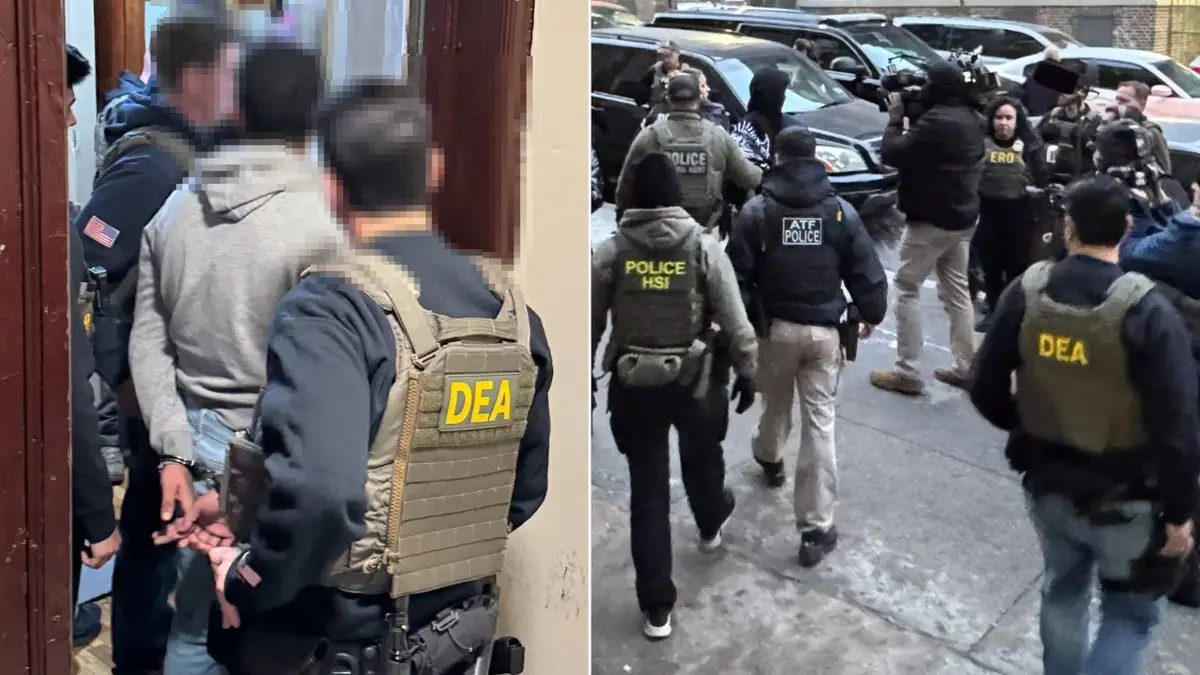
ICE and DEA migrant raids NYC

ICE and DEA migrant raids New York City. (Drug Enforcement Administration New York)

Speaking to Fox Digital, Walters stood by his stance, noting Trump’s victory at the voting booth in November.

“We’re talking about families, we’re talking about adults, the adults are in the country illegally. And we’re trying to make sure the Trump administration has the information to move forward with the most aggressive deportation policy in our nation’s history that the American people clearly support,” he said.

“The president won an overwhelming victory with his election. He won every swing state. He won every county in Oklahoma. So you look at this and you say: ‘CNN, left wing media, Democrats, you don’t want to have the real conversation because it requires you to admit you created this problem.’ Now the adults are in charge trying to fix it by shutting down the border, deporting illegal immigrants,” he said.

MORE ILLEGAL MIGRANTS BUSTED RUNNING MASSIVE GUN-RUNNING OPERATIONS
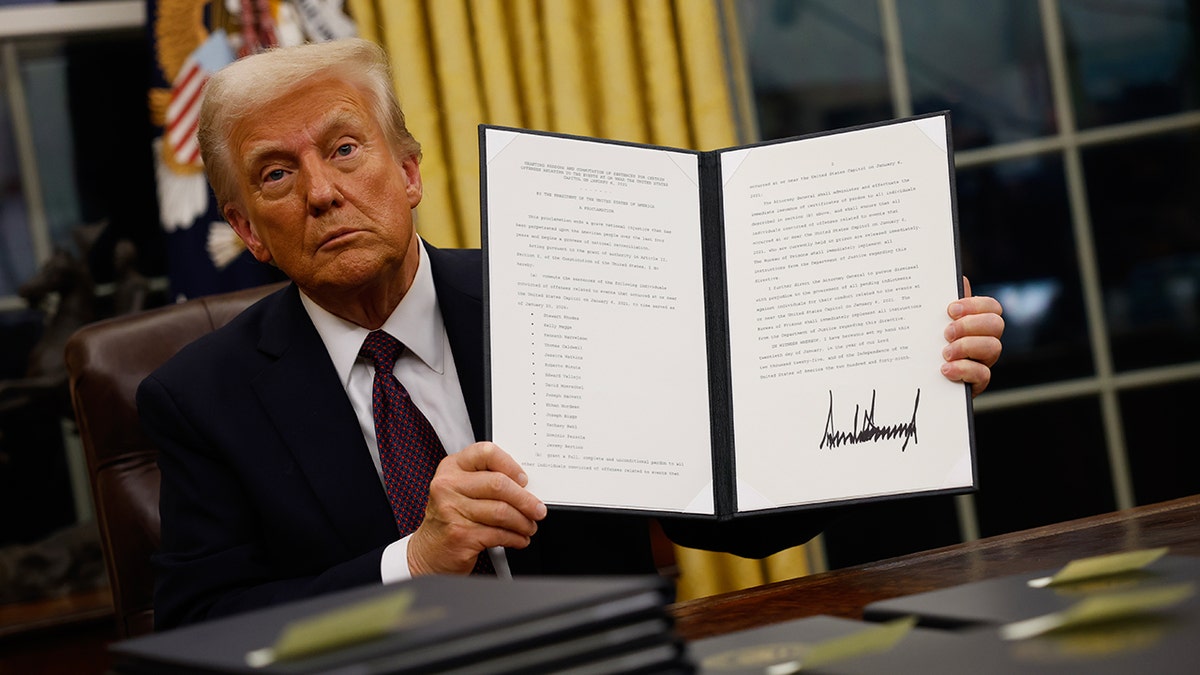
President Trump

 President Donald Trump signs executive orders in the Oval Office on Jan. 20, 2025 in Washington, D.C. (Anna Moneymaker/Getty Images)

Walters also pointed to the impact of illegal immigration on schools in Oklahoma, including the necessary diversion of resources.

“While the left continues to go out and defend and champion the cause of illegal immigrant criminals, we’re looking at the American citizen, Oklahomans, and we’re sitting here saying, ‘listen, what about the kid that’s over a year behind in reading who we’ve now put in a tutoring program? They’re getting caught back up, now all of a sudden, all the tutors have to be diverted because of illegal immigrants that have flocked to their city and flocked to their hometown,’” he said.

“Outlets like CNN and other left-wing outlets refuse to talk about the compassion for the victims’ families who have been targeted by the crimes committed by illegal immigrants. They refuse to talk about compassion when it’s your students of American citizens that have fallen behind in school, are working to get caught back up and yet, all of their resources are being moved at the last minute. They refuse to talk about compassion when you see the deaths caused by fentanyl, that oftentimes what a student tries it for the first time and they drop dead,” he said. “Americans are tired of it.”

He also pointed to the flow of drugs and criminals into the U.S. via the porous southern border.

CLICK HERE FOR MORE IMMIGRATION COVERAGE

Ryan Walters

Oklahoma State School Superintendent Ryan Walters. (Courtesy of Ryan Walters)

“And we know that over 99% of that fentanyl has come across the border. So the left, they can cry their crocodile tears. It’s complete phony outrage that they act like that,” he said. “They have compassion for illegal immigrants. They have no compassion for the American citizens, for the American people, for the American worker. And Americans are tired of it.”

Walters also said that other states should be following Oklahoma’s example and backing the deportation and border security effort by the Trump administration.

“This country is a law and order country. We cannot continue to allow criminal activity, we cannot continue to allow sanctuary schools,” he said. “Listen, you don’t get to…harbor any other criminals in a school system. We should not be allowing illegal immigrants to enroll in our schools, work in our schools, and not get that information for the president, for the entire country,” he said.

CLICK HERE TO GET THE FOX NEWS APP

“Americans want to see an America First policy. They’ve got that in President Trump,” he added. “They will see that here in Oklahoma with our schools. We will put our students first. We will put American citizens first. And we will continue to work with President Trump and his team as they are doing a tremendous job in not only getting our schools back on track but getting our country back on track by bringing law and order back.”

Fox News’ Lindsay Kornick and Emma Woodhead contributed to this report.
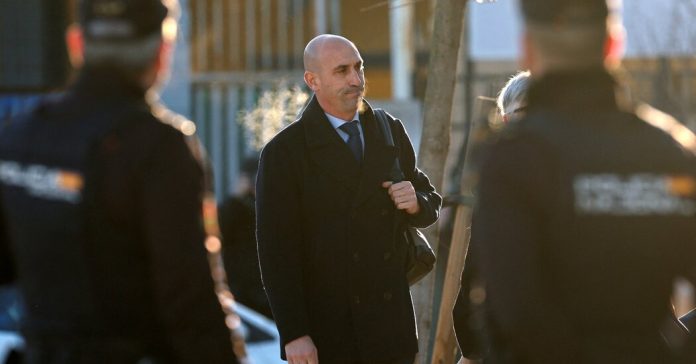
Spain’s Ex-Soccer Chief Luis Rubiales Goes on Trial Over Forced Kiss at World Cup

0

Jennifer Hermoso, the Spanish soccer star who was forcibly kissed by Luis Rubiales, her country’s former top soccer official, testified as his trial opened on Monday that he had “ruined one of the happiest days of my life” — her team’s victory in the 2023 Women’s World Cup.

Ms. Hermoso described her horror at the unexpected kiss from Mr. Rubiales, who is accused of sexual assault and coercion. She also testified about the distress she felt after Mr. Rubiales and other Spanish soccer leaders waged what she called an intense campaign for her to publicly support him after the kiss ignited a social media storm.

“I felt disrespected,” Ms. Hermoso, 34, said in televised testimony at the trial outside Madrid, adding, “I didn’t look for that act, nor did I expect it.”

The kiss set off a national scandal, deepened debates about longstanding sexism in Spanish soccer and became a watershed moment in Spain’s #MeToo movement. Now, less than a year and a half later, Mr. Rubiales is one of four former Spanish soccer officials on trial.

Mr. Rubiales, 47, faces two and a half years in prison if convicted. The other three men, who include Jorge Vilda, the team’s coach at the 2023 World Cup, are accused of coercion. Each could face 18 months.

Ms. Hermoso has long said that the kiss was not consensual, which Mr. Rubiales has disputed.

“I couldn’t react — it was a thousandth of a second,” she testified.

Mr. Rubiales threatened to send people to talk to her family, she testified, and begged her to make a video playing it down. She also spoke of what she saw as a potential punishment for her refusal: A month after the kiss, she was briefly left off the national team’s roster.

“I was refusing to do something that my boss wanted to do,” she said, adding that she had received death threats. “I was afraid to go out in the street in case someone was chasing me.”

But during the medals ceremony after the final, Mr. Rubiales grabbed and kissed Ms. Hermoso — the national team’s record scorer — on the lips. In a video taken after the match, she said, “I didn’t like that!”

The public reaction was swift and furious.

For many, the kiss was a reminder of the repeated sexism scandals that had ripped through Spanish soccer. Some called on Mr. Rubiales to resign. Irene Montero, who was the Spanish equality minister and is now a member of the European Parliament, described the kiss as “sexual violence” in a social media post.

Initially, Mr. Rubiales offered a tepid apology and resisted calls to resign. Spain’s soccer federation released a statement that quoted Ms. Hermoso calling it “a totally spontaneous mutual gesture.”

But at the trial on Monday, Ms. Hermoso said that she had never approved the statement, adding that she knew immediately that the act was not normal. “My boss was kissing me,” she said. “This should not happen.”

After the kiss, dozens of Spanish soccer players said that they would refuse to play for their country until the “current managers” stepped aside, which many saw as a reference to Mr. Rubiales and Mr. Vilda.

Ms. Hermoso filed a criminal complaint of sexual assault against Mr. Rubiales. “At no time did I consent to the kiss that he gave me,” she said.

As the public pressure mounted, Mr. Rubiales’s support thinned. FIFA, soccer’s global governing body, suspended him and later barred him from the sport for three years. Mr. Vilda was fired. Less than a month after the kiss, Mr. Rubiales resigned as president of Spain’s soccer federation and also as a vice president of UEFA, European soccer’s governing body.

Mr. Rubiales was also briefly arrested last year in a wide-ranging investigation into allegations of corruption and money laundering while he led soccer in Spain. Those investigations are continuing, though no charges have been brought against him. He has denied wrongdoing.

Mr. Rubiales might not face prison time, even if he is convicted. In Spain, if someone without a criminal record is sentenced to two years or less, they usually do not go to prison.

Ms. Hermoso, however, described the kiss, and the public reaction, as an enduring trauma. “My life has been on standby,” she said. “And, honestly, I have not been able to live freely.”

Aritz Parra and Nader Ibrahim contributed research.

Republican state AGs back Trump birthright citizenship order in court filing: ‘Taxpayers are on the hook’

0

FIRST ON FOX: Republican attorneys general from 18 states are pushing back against lawsuits filed by Democrat AGs and legal groups nationwide challenging the Trump administration’s executive order on birthright citizenship through an amicus brief filing set to be filed Monday, Fox News Digital has learned.

“If someone comes on a tourist visa to have an anchor baby, they are not under that original meaning of the United States Constitution,” Iowa AG Brenna Bird told Fox News Digital in an interview Monday. Bird is the lead AG leading an amicus brief filing in support of the executive order on Monday.

“Oftentimes, when this has happened. It’s the taxpayers that are paying for the health care through Medicaid or through hospitals, paying for care for someone to have a child, or the state child health insurance system as well,” Bird said. “Each state has a system that helps kids without insurance, and so the taxpayers are on the hook here for all the costs.”

TRUMP ADMIN HITS BACK AS ACLU LAUNCHES LAWSUIT ON BIRTHRIGHT CITIZENSHIP: ‘READY TO FACE THEM’

Iowa Attorney General Brenna Bird, alongside more than a dozen state AGs, filed an amicus brief supporting President Donald Trump’s executive order ending birthright citizenship. (Getty Images)

Bird’s amicus brief comes in response to 18 Democrat-led states who launched their own lawsuit, claiming the order is unconstitutional and “unprecedented.” 

“The President has no authority to rewrite or nullify a constitutional amendment or duly enacted statute. Nor is he empowered by any other source of law to limit who receives United States citizenship at birth,” the lawsuit reads.

Attorneys general from California, New Jersey, Massachusetts, Colorado, Connecticut, Delaware, Hawaii, Maine and others signed on to the suit, along with the city and county of San Francisco and Washington, D.C.

The American Civil Liberties Union (ACLU) filed a lawsuit against the Trump administration the same day he signed the order “on behalf of organizations with members whose babies born on U.S. soil will be denied citizenship under the order.” The ACLU also claimed the order is unconstitutional and against congressional intent and Supreme Court precedent.

TRUMP’S HOUSE GOP ALLIES PUSH BIRTHRIGHT CITIZENSHIP BILL AFTER PROGRESSIVE FURY AT PRESIDENTIAL ORDER

federal agent seen from back wearing vest arresting suspect

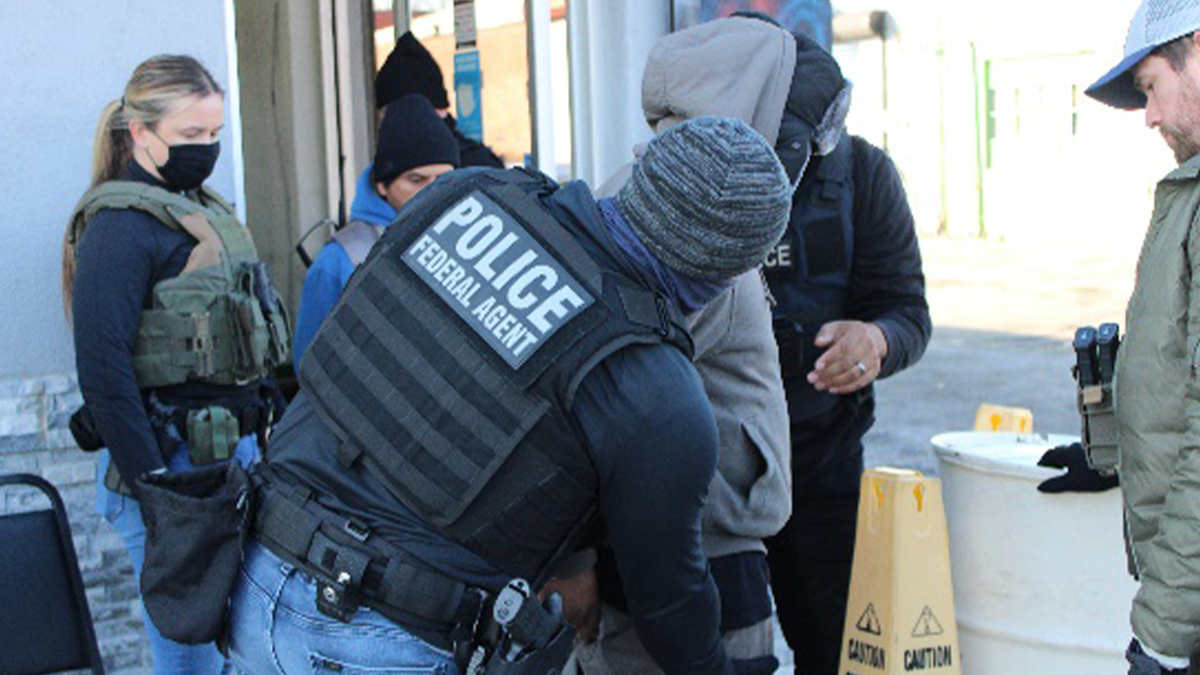
ICE agents arrested seven illegal immigrants during a workforce operation raid. (U.S. Immigration and Customs Enforcement)

Bird’s brief – signed by Republican AGs from Alabama, Arkansas, Florida, Idaho, Indiana, Kansas, Louisiana, Mississippi, Missouri, Montana, Nebraska, North Dakota, Oklahoma, South Carolina, South Dakota, Utah and Wyoming – focuses on several arguments. 

The first part of the 13-page brief claims that President Donald Trump’s executive order complies with the “original meaning of the Fourteenth Amendment.” The second portion claims Trump’s order “reduces harm to the states.”

The brief states that the “Plaintiffs’ erroneous Citizenship Clause interpretation will continue the powerful incentive for citizens of foreign countries to give birth on American soil, even if they must illegally enter this country to do so.”

“The lure of American citizenship motivates pregnant women to travel to America to give birth,” the brief reads. “Some women, desperate to give birth in the United States, cross the border the day they deliver their baby.” 

A border hospital administrator described witnessing pregnant women arriving at the hospital in active labor, still wet and shivering from crossing the river, determined to give birth in the U.S., the brief, which will be filed in the U.S. District Court of Massachusetts, says.

PRESIDENT TRUMP’S BIRTHRIGHT CITIZENSHIP EXECUTIVE ORDER FACES LEGAL CHALLENGES FROM 22 STATES

Trump on stage signing executive orders

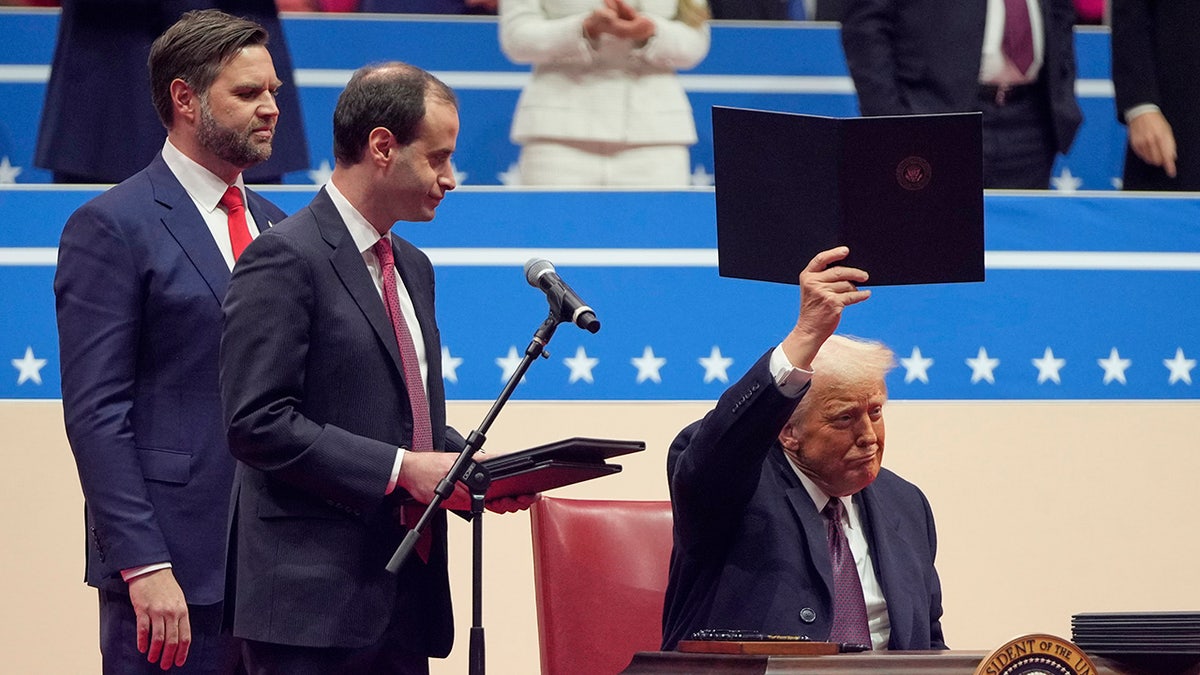
President Donald Trump, right, signs executive orders on stage at an indoor Presidential Inauguration parade event in Washington, D.C., on Monday, Jan. 20, 2025. (AP Photo/Mark Schiefelbein)

Trump’s order, titled the “Protecting the Meaning and Value of American Citizenship” states that “the privilege of United States citizenship does not automatically extend to persons born in the United States” when the individual’s parents are illegal immigrants living in the U.S. or if their presence is lawful but temporary. It was among the first orders he signed after taking office in early January.

“President Trump is restoring the meaning and value of American citizenship, and also making sure that if someone is breaking the law, they won’t be rewarded for that by getting citizenship,” Bird said. “And so it’s following the Constitution and making sure that we’re upholding our immigration laws.”

CLICK HERE TO GET THE FOX NEWS APP

Fox News Digital’s Haley-Chi-Sing contributed to this report.
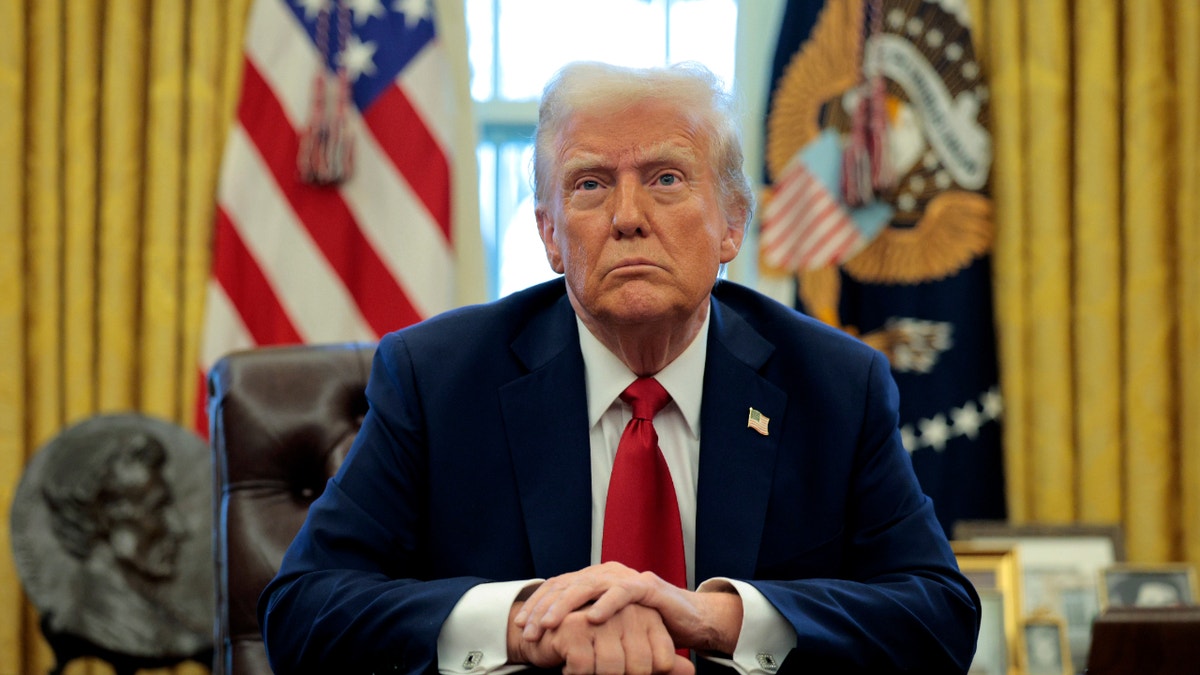
Crews Lift First Wreckage From D.C. Plane Crash Out of Potomac

0

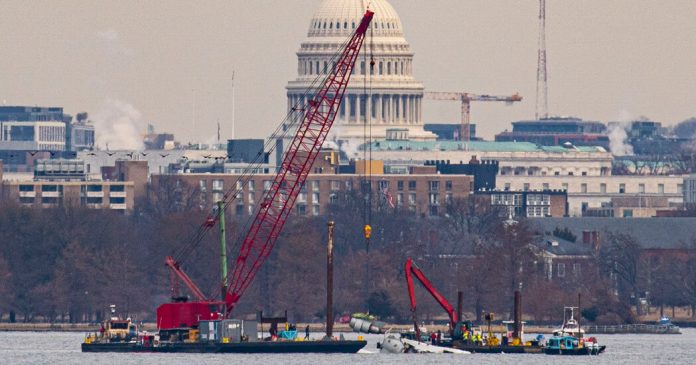
Salvage crews began lifting the wreckage of American Airlines Flight 5342 from the Potomac River in Washington on Monday morning, the start of an operation that was expected to take three days.

Just after 10 a.m. Eastern, the first piece of wreckage appeared. A crane perched on a barge in the middle of the river hoisted what appeared to be one of the plane’s engines out of the water.

Boats and crew members had started gathering on the river around 8 a.m. Col. Francis Pera of the Army Corps of Engineers said on Sunday that the salvage work would reveal the bodies of some of those who were still missing after the deadly collision between the jet and an Army helicopter last week.

There were 64 people aboard the jet and three in the helicopter, none of whom survived. Remains of 55 victims have been recovered, officials said on Sunday afternoon. Recovery crews are continuing to search the cold and murky water for bodies.

After being lifted from the river, the plane will be placed on a flatbed trailer and taken to a hangar to be studied as part of the investigation into the crash.

The collision on Wednesday night, the worst plane crash in the United States in two decades, occurred in clear skies as the jet approached Ronald Reagan National Airport around 9 p.m.

Federal investigators have said it is too early to speculate about the causes of the crash. But it has raised concerns about staffing, congestion and safety at one of the nation’s busiest airports.

Trump puts Mexico tariffs on hold 1 month : NPR

0

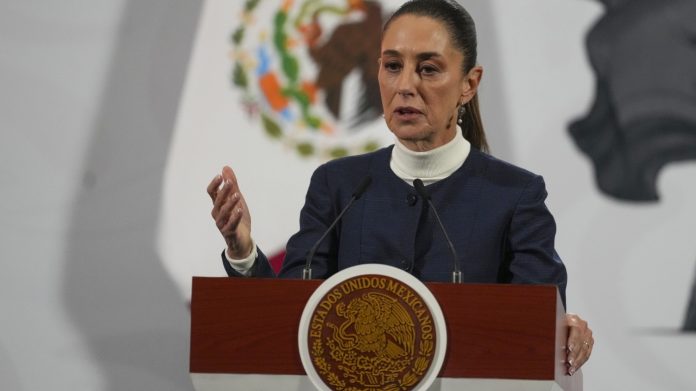
Mexican President Claudia Sheinbaum gives her daily morning press conference at the National Palace in Mexico City, Monday.

Marco Ugarte/AP


hide caption

toggle caption

Marco Ugarte/AP

Mexican President Claudia Sheinbaum said that following a phone call with President Trump Monday morning, the U.S. has agreed to put planned tariffs on Mexico on hold for a month. The White House confirmed the move.

In a post on X, she said: “The tariffs are on pause for one month from now.” Sheinbaum said her government had agreed to send 10,000 national guard troops to the border to prevent drug trafficking, specifically fentanyl. And the U.S. will work to stop weapons trafficking to Mexico, she added.

Posting on his Truth Social Platform, Trump said the two leaders had a “very friendly conversation,” and reiterated the troop commitment to securing the border with the U.S. that Sheinbaum announced.

Over the weekend, Trump had said that a 25% import tax on goods from Mexico and Canada, alongside 10% tariffs on goods from China, would go into effect on Tuesday. Trump said he will be speaking to Canadian Prime Minister Justin Trudeau Monday afternoon.

Mexico has been warning that a tariff war between the two countries would have huge effects, not just for U.S. consumers, but also for American companies manufacturing in Mexico.

The largest exporter in Mexico, for example, is the U.S. car company General Motors. Mexico is the No. 1 provider of cars and car parts for the United States. It’s the largest provider of TV and computer screens and one out of every three refrigerators in the U.S. comes from Mexico.

Trump said negotiations with Mexico would continue, led on the U.S. side by Secretary of State Marco Rubio, Treasury Secretary Scott Bessent and Commerce Secretary Howard Lutnick. 

“I look forward to participating in those negotiations, with President Sheinbaum, as we attempt to achieve a ‘deal’ between our countries,” he said on social media.

Trump-aligned group putting pressure on Republican senators in push to confirm RFK Jr.

0

A newly formed outside group aligned with President Donald Trump says it’s taking aim at Republican senators who remain undecided on Robert F. Kennedy Jr., as it pushes to confirm Trump’s Health and Human Services secretary.

Patient First Coalition (PFC), a nonprofit advocacy group launched last week, says it’s now beginning what it describes as a “massive grassroots effort” to encourage Republican senators to support Kennedy, the vaccine skeptic and environmental crusader who ran for the White House in 2024 before ending his bid and endorsing Trump.

Kennedy survived back-to-back combustible Senate confirmation hearings last week, where Trump’s nominee to lead 18 powerful federal agencies that oversee the nation’s food and health faced plenty of verbal fireworks over past controversial comments, including his repeated claims in recent years linking vaccines to autism, which have been debunked by scientific research.

TRUMP HEALTH SECRETARY NOMINEE RFK JR. SURVIVES HEATED HEARINGS

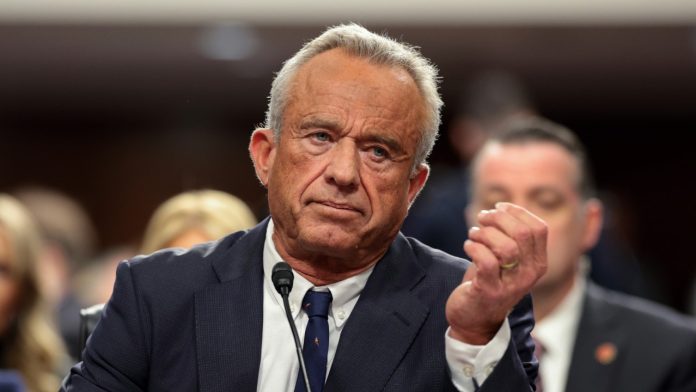
Robert F. Kennedy Jr. testifies during his Senate Finance Committee confirmation hearing on Jan. 29, 2025, in Washington, D.C. (Getty Images)

The move by PFC, which says it’s a collective group of organizations committed to advancing Kennedy’s so-called “Make America Healthy Again” agenda, comes ahead of Tuesday’s key confirmation vote by the Senate Finance Committee.

“All uncommitted Republican Senators will be targeted in this grassroots effort,” PFC highlighted.

Shannon Burns, the group’s senior advisor, shared that “our grassroots phase will include television, radio and podcast interviews with our advisory board members, as well as guest columns in newspapers across the country.”

RFK’S CONFIRMATION HEARING QUICK GOES OFF THE RAILS

“We will enable thousands of calls and emails into Senate offices from millions of Americans who support this agenda. We want to organize them, mobilize them, and make sure their voices are heard before the Senate votes,” Burns added.

PFC pointed out that it will initially give “special focus” to GOP senators in Louisiana, Maine, Alaska, Kentucky and North Carolina.

Sen Cassidy and RFK Jr

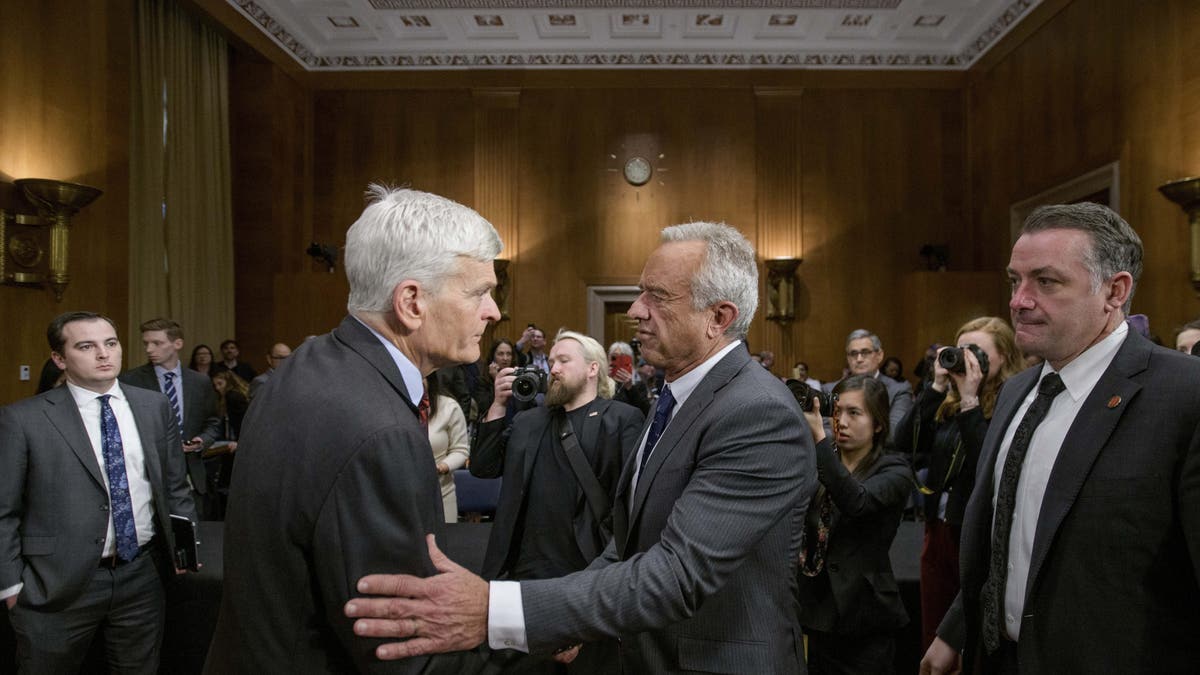
Robert F. Kennedy Jr. talks with Sen. Bill Cassidy following his testimony before the Senate Committee on Health, Education, Labor and Pensions on Capitol Hill, Thursday, Jan. 30, 2025. (AP Photo/Rod Lamkey Jr.)

Those states are home to Sen. Bill Cassidy, the Louisiana physician and chair of the Senate Health Committee, Sens. Susan Collins of Maine and Lisa Murkowski of Alaska, who are often at odds with Trump, Sen. Mitch McConnell of Kentucky, the former longtime Senate Republican leader, and Sen. Thom Tillis of North Carolina.

HEAD HERE FOR LATEST FOX NEWS REPORTING ON PRESIDENT TRUMP’S FIRST 100 DAYS BACK IN THE WHITE HOUSE

“Your past of undermining confidence in vaccines with unfounded or misleading arguments concerns me,” Cassidy told Kennedy at the end of Thursday’s confirmation hearing.

PFC is one of a handful of outside groups targeting GOP senators in the fight to confirm Trump’s nominees.

President Trump

President Donald Trump talks to reporters in the Oval Office at the White House on Jan. 30, 2025. (Getty Images)

A source in Trump’s political orbit tells Fox News that those groups could “exact consequences” on Republican senators who don’t support the president’s Cabinet nominees.

CLICK HERE TO GET THE FOX NEWS APP

And Trump on Sunday took to social media to demand that Senate Republicans ‘GET TOUGH VERY FAST” in confirming the rest of his Cabinet.

How Costs for Online Sales After Trump’s Trade Move

0

President Trump’s decision to impose hefty tariffs on Canada, Mexico and China included a little-noticed but significant change to how online purchases will be taxed when they enter the United States.

One provision of Mr. Trump’s executive order will increase costs for more than 80 percent of U.S. e-commerce imports. The decision could shift the landscape for online sales from Chinese vendors like Shein and Temu that have swiftly expanded their market share by sending cheap goods into the United States.

The president’s order erased a workaround that many companies have taken advantage of in recent years, particularly since Mr. Trump imposed tariffs on Chinese products in his first term. The provision, known as the de minimis exception, allowed certain products that were sent directly to consumers from online platforms to come into the United States without facing tariffs, a huge tax advantage.

This obscure provision of trade law underpins major business models. Shein, Temu and many sellers on Amazon have used the de minimis exemption to bypass tariffs. The exemption allows packages to be shipped from other countries without paying tariffs, as long as the shipments do not exceed $800 per recipient per day.

But critics say the de minimis measure has also helped fuel an American drug crisis. Importers who use de minimis do not have to provide as much information to U.S. Customs and Border Protection as they do with other packages, for ease of processing. That means drugs and the precursors used to make them could be more easily shipped into the United States without the government catching them.

De minimis stems from a century-old trade law that was originally intended for shipments that would be too trivial to merit the attention of customs. But the use of this provision has exploded in popularity.

A report released last week by the Congressional Research Service found that Chinese exports of low-value packages soared to $66 billion in 2023 from $5.3 billion in 2018. While Mr. Trump’s executive order applies to China, Canada and Mexico, China is by far the biggest source for such packages. The country is responsible for about two-thirds of them, sending more than all other countries combined, according to federal statistics.

The carveout has given an advantage to Chinese companies like Shein and Temu, which ship millions of low-value packages directly to consumers’ doorsteps each year. That ability to bypass tariffs has helped Shein and Temu to offer cheap prices, boosting their popularity. According to the Congressional Research Service, the two companies together hold about 17 percent of the discount e-commerce market in the United States for fast fashion, toys and other consumer goods.

That has angered traditional retailers, which typically bring big bulk shipments to their warehouses that they must pay tariffs for. Retailers like Walmart and Amazon had been facing pressure to shift more toward Temu and Shein’s model of shipping directly to consumers from China, which would have meant they were creating fewer jobs in U.S. distribution centers.

Express delivery companies like FedEx and UPS that fly many of the packages across the Pacific from China have also spoken out in favor of preserving the de minimis exception.

But the Trump administration is focused on targeting de minimis for another reason: its apparent ties to the fentanyl trade. A White House official said in a call with a reporter on Saturday that the provision was causing the United States to lose a tremendous amount of tariff revenue and also impeding the efforts of customs officials to catch fentanyl shipments arriving in packages.

A group of law enforcement, trade and drug prevention groups sent a letter to Mr. Trump last month asking him to end the trade exception, saying it was “flooding the United States with fentanyl, fentanyl precursors, pill presses and other illicit goods from China and other countries.”

The issue has percolated for years, but efforts to limit or end the provision have recently gained momentum. Lawmakers have been considering legislation to the de minimis rule and the Biden administration proposed changes last year that would narrow the exception when it came to China, but they have not yet taken effect.

Congressional proposals to change de minimis would have preserved an exemption for international travelers who bring up to $800 worth of overseas purchases into the United States in their luggage, allowing them to avoid making customs declarations and paying duties at American airports and other points of entry to the United States.

By contrast, Mr. Trump’s executive orders made no mention of preserving the de minimis exemption for people entering the United States. Depending on how customs officials handle it, that could complicate entry to the United States starting on Tuesday for people traveling from Canada, Mexico or China.

Timothy C. Brightbill, a lawyer at Wiley Rein, said the change made by the Trump administration would “have broad impacts on many businesses and industries.” He said a variety of importing industries had “abused” de minimis provisions, and eliminating the loophole would be consistent with the president’s goal of addressing fentanyl shipments.

China’s Ministry of Commerce had no response on Monday to questions about Mr. Trump’s decision. Shein and Temu, also did not respond to a request for comment. A Chinese embassy spokesperson said that China firmly opposed the imposition of tariffs, and that there is no winner in a trade war.

Congress raised the de minimis exemption in 2016 to $800 from $200 in response to complaints from American customs officials that they were already struggling then to examine all the packages coming in. With the increase in the exemption, the number of low-value packages sent to the United States each year has soared.

Since many Americans purchase such packages, the change will also come with an economic cost. Research has found that eliminating the de minimis exception entirely would result in costs of $11 billion to $13 billion for American consumers and disproportionately hurt poorer and minority households.

Amit Khandelwal, an economist at Yale University who is an author of a study on the trade provision, said his research found that lower-income Americans spent a disproportionate amount on de minimis shipments and imports from China compared with wealthier consumers.

”Lower-income individuals will be hurt more,” he said. “Domestic retailers, domestic producers, they obviously would benefit from taxing those imports, but there is a cost.”

Ending the de minimis exception will result in one other interesting change: The official figures for U.S. trade with China, and the U.S. trade deficit, will immediately rise. De minimis shipments do not appear in the typical trade data that is released by the census.

The change will mean that perhaps as much as $100 billion of trade will no longer be missing from official statistics, said Brad W. Setser, an economist at the Council on Foreign Relations. “It brings shadow trade back out of the shadows.”

Claressa Shields makes boxing history as 1st-ever female undisputed heavyweight champion

0

Boxer Claressa Shields made history in the ring on Sunday night. 

Shields dropped Danielle Perkins to become the first-ever undisputed women’s heavyweight champion. 

She is also the first boxer, male or female, to be the undisputed champion in three different weight classes in the four-belt era. Shields did so in junior middle weight and middle weight prior to this feat. 

SIGN UP FOR TUBI AND STREAM SUPER BOWL LIX FOR FREE

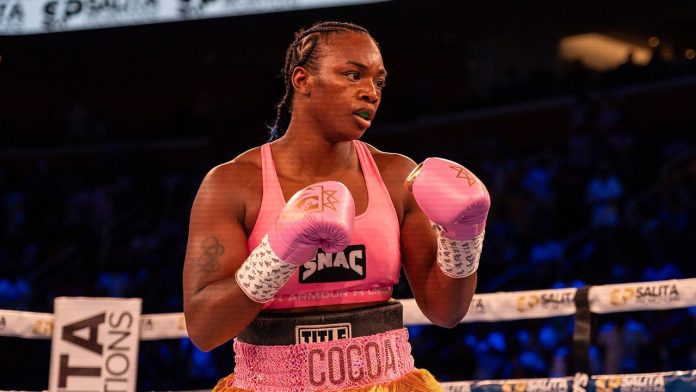
Claressa Shields trains during an open media workout at Downtown Boxing Gym in Detroit on Jan. 7. (IMAGN)

Perkins was undefeated up until the time Shields landed a right hook in the final seconds of the 10th and final round. That punch, which slumped Perkins for some seconds before she walked to a corner on the canvas, cemented history for Shields. 

Perkins is now 5-1 for her career with two knockouts, while Shields remains undefeated at 16-0 with three knockouts. 

CLICK HERE FOR MORE SPORTS COVERAGE ON FOXNEWS.COM

After the match, Shields was excited about the win, but she revealed that she would actually need shoulder surgery after suffering an injury before the fight. She noted not being able to lift her left arm earlier in the week. 

“I actually think I’m going to have to have surgery on my left arm. I tore my labrum last week, so the fight almost didn’t happen,” Shields said, via ESPN. “I didn’t want to let Flint down, but I really couldn’t use my jab the way that I wanted to, but I did the best that I could. I iced it, I did therapy, and now I think I’m going to have a shoulder surgery.”

Claressa Shields boxes

Claressa Shields, left, fights women’s WBC champion Vanessa Lepage-Joanisse during the main event fight at Little Caesars Arena in Detroit on Saturday, July 27, 2024. (IMAGN)

Shields gave kudos to Perkins after the match, saying she was “strong as hell” with her punches in the ring. However, Shields was patient and struck at the last second when Perkins’ guard was down. 

“My experience and my skills got me over it and also, I’ve been in plenty of street fights with bigger people and I had to use some of my skills in that today, too. So, when I dropped her in the last round, it’s because she got greedy,” Shields said of her opponent. 

Shields landed 29% of her punches on Perkins, as well as 36% of her power punches. Perkins landed just 19% of punches. 

Claressa Shields boxes

Boxer Claressa Shields fights women’s WBC champion Vanessa Lepage-Joanisse during the main event fight at Little Caesars Arena in Detroit on Saturday, July 27, 2024. (IMAGN)

CLICK HERE TO GET THE FOX NEWS APP

It was a unanimous decision on the card, as judges ruled the fight in favor of Shields 97-92, 99-90 and 100-89. 

Follow Fox News Digital’s sports coverage on X, and subscribe to the Fox News Sports Huddle newsletter.

Standoff at Ukrainian Agency Disrupts Arms Contracts, Suppliers Say

0

More than a week after it began, a standoff between Ukraine’s defense minister and the official overseeing weapons procurement remains unresolved and is beginning to disrupt arms contracts, Ukrainian defense companies say.

Ukraine’s arms industry trade group has said that more than 80 defense companies, accounting for about a third of last year’s supplies to the army, “are unable to receive payment for completed orders and sign new contracts.” In one such case, a contract to produce 155-millimeter artillery rounds, a caliber used in many field guns, has been put on hold, the producer of the ammunition said.

The standoff is unlikely to have an immediate effect on arms supplies to Ukrainian troops, the companies said, as current deliveries are drawn from previous contracts. But if it persists, it could jeopardize supplies in the months ahead at a critical time for the Ukrainian Army, which is already struggling to contain Russia’s advance on the battlefield.

At the root of the issue is a tense showdown over the leadership of Ukraine’s defense procurement agency, which had a budget of over $7 billion last year. The defense minister, Rustem Umerov, recently dismissed the agency’s director, Maryna Bezrukova, citing “poor procurement planning” and delayed supplies to the front line, and appointed an acting head.

Ms. Bezrukova has denied the claims of mismanagement and said her dismissal was illegal, because her contract was extended by the agency’s supervisory board. She said on Monday that she would not resign.

The standoff has escalated to the point where both Ms. Bezrukova and the new acting head, Arsen Zhumadilov, have been working from the agency’s headquarters in recent days, including Monday, leaving international partners and defense companies confused about who was responsible for signing contracts.

“The normal day-to-day work of the defense procurement agency is just blocked,” Serhiy Honcharov, head of the National Association of Ukrainian Defense Industries, said in an interview. “Who is actually in charge? No one knows. In this chaos, it’s impossible to sign contracts.”

Serhiy Bulavko, the head of the procurement control department at the defense ministry, told reporters on Friday that there were “no disruptions in weapons supplies” as of now and that “contracting is underway.”

The tumult in Ukraine’s defense sector also risks derailing Kyiv’s efforts to convince its allies, especially President Trump, to maintain support for its fight against Russia. A key part of these efforts was a new mechanism to fund Ukrainian weapon production with Western money through the agency, as an alternative to direct arms supplies.

Last year, half a billion dollars’ worth of weapons were produced through this mechanism. Kyiv aims to double that amount this year.

The agency was established last year in an effort to curb corruption in the procurement process — a move that was applauded by Ukraine’s Western partners. It buys weapons from both foreign and domestic producers.

Olha Stefanishyna, Ukraine’s minister for European integration and justice, complained last week that the standoff was sending the wrong message to Kyiv’s partners. She told the Ukrainian media outlet Suspilne that NATO members had raised questions about the issue in private meetings. “Such aggressive public communication does not help Ukraine, inside and outside,” she said.

Mr. Umerov sought to dismiss Ms. Bezrukova by declining to extend her contract as head of the agency. The move has sparked some calls for his resignation. But he appears unlikely to step down after President Volodymyr Zelensky voiced support for him in an interview with The Associated Press released Sunday.

“The defense minister has the right to do everything necessary to prevent any delays in supplies,” Mr. Zelensky said.

Vladyslav Belbas, the head of Ukrainian Armor Design and Manufacturing Co., a private Ukrainian arms company, said a contract to produce 155-millimeter artillery rounds that was slated to be signed by late January had been put on hold because of the dispute. Ms. Bezrukova confirmed that the contract had not been signed.

“That affects our production capabilities. Because if we don’t know what’s happening, how can I scale the production or how can I least plan for the production?” Mr. Belbas said in a phone interview.

What Netanyahu and Trump will discuss in White House meeting : NPR

0

Israeli Prime Minister Benjamin Netanyahu makes statements at Ben Gurion Airport in Tel Aviv, Israel, on Sunday, ahead of his visit to Washington, D.C., where he will meet with President Trump this week.

Avi Ohayon/GPO handout/Anadolu via Getty Images


hide caption

toggle caption

Avi Ohayon/GPO handout/Anadolu via Getty Images

TEL AVIV, Israel — Israeli Prime Minister Benjamin Netanyahu’s White House visit Tuesday will be rife with symbolism: He’s the first world leader to meet President Trump since the inauguration two weeks ago.

It will also be a crucial day for the future of the Middle East — and Netanyahu himself.

Negotiations have begun for a second phase of a ceasefire deal that would end the war with Hamas and return all Israeli hostages from captivity in Gaza. Also on the table is a bargain that could reshape the Middle East for decades to come: a deal to open Israel’s diplomatic relations with Saudi Arabia.

Another central question to resolve: whether Israel will launch a military strike on a weakened Iran, shorn after a year of intense fighting against its proxies.

Trump’s Middle East envoy, Steve Witkoff, played a key role in persuading Netanyahu to accept the ceasefire’s first phase, and Trump wants to see the deal continue until all hostages are freed and the war is over, in order to focus on a Saudi-Israeli peace deal.

The Israeli leader’s allies, however, have threatened to bring down the government if Israel goes down that path — and does not resume the war in Gaza and eliminate Hamas rule there.

“The Tuesday meeting is actually critical to Netanyahu’s ability to survive as the leader of Israel and to make sure that his coalition stays intact,” says Gayil Talshir, professor of politics at Hebrew University. “I think Netanyahu wants exactly what Trump offers him, but I think his own coalition has quite a different vision.”

Netanyahu’s political future and legacy

The main challenge Netanyahu faces is from Bezalel Smotrich, Israel’s finance minister, who wants the war to continue till Hamas is destroyed — a task Israeli defense analysts believe is unrealistic, so long as Hamas continues to hold Israeli hostages and Israel does not endorse a viable alternative leadership for Gaza.

Despite Israel pounding Gaza for over a year, the recent hostage releases have seen dozens of masked Hamas fighters parade Israelis on makeshift stages before freeing them.

Talshir, who’s writing a forthcoming book about the Netanyahu era of Israel, believes that given Netanyahu’s interest in retaining his coalition and staying in office, the prime minister might have an interest in returning to war.

“As long as he continues the war, Israel does not go to election,” Talshir says. “Israel does not have a public investigation of what happened on Oct. 7. And Netanyahu remains in power.”

Netanyahu faces another Gordian knot: He and Trump have their sights set on establishing Saudi-Israeli relations, but Riyadh in return demands a pathway to a Palestinian state. That’s a prospect Netanyahu’s allies and most of the Israeli parliament oppose even more fervently after the deadly Hamas-led attack on Israel on Oct. 7, 2023, that sparked the Gaza war. They see a Palestinian state as a security threat to Israel and an undeserved reward to Palestinians after the attack.

Victoria Coates, an analyst at The Heritage Foundation in Washington D.C., and a deputy national security adviser to Trump during his first term, said the U.S. president will find it difficult to satisfy that Saudi demand.

“As much as we might want a deal with Saudi Arabia, you know, Israel is going to, particularly after Oct. 7, remain very, very mindful of its internal security. It has to,” says Coates. “So, you know, the deal that looked like it was pretty imminent in the 2020-21 time frame may take a little bit longer now.”

Trump has also floated the prospect of relocating Palestinians from Gaza to neighboring Egypt and Jordan. Arab countries including Egypt, Jordan and Saudi Arabia have firmly rejected the idea, as have Palestinians.

Many Israelis want the hostages to return

On Saturday, family and friends cheered as American Israeli hostage Keith Siegel was freed by Hamas. But many at the gathering at Siegel’s extended relatives’ home in a kibbutz in central Israel expressed nervousness about the war resuming before all the hostages were freed. Rabbi Steve Burnstein believes U.S. pressure can make a difference.

“We just hope and pray that the Americans do everything that they can to ensure that the Israeli government has the strength and the courage to make sure that we reach the second stage of the deal,” he said to NPR.

That same evening, a few thousand Tel Aviv residents showed up at one of the weekly rallies celebrating the return of three Israeli hostages and demanding the government work toward returning all the remaining hostages still held by Hamas, many of whom are believed dead.

At the rally, Shelly, who only gave her first name to speak frankly about U.S.-Israeli politics without repercussion, said she believes only “Trump can push Netanyahu to seal another deal.”

“I feel like Netanyahu didn’t want a deal before. And he’s doing it because Trump said so,” she said. “And I hope Trump’s gonna tell him, we’re bringing everyone. Every single hostage home.”