Thursday, November 12, 2026
Home Blog Page 319

J6 rioter recently pardoned shot, killed by police after allegedly resisting arrest

0

An Indiana man and MAGA insurrectionist, who was pardoned by President Donald Trump for his involvement in the riot at the U.S. Capitol on Jan. 6, 2021, was fatally shot while allegedly resisting arrest.

Preliminary investigation reveals that Matthew Huttle was pulled over by Jasper County sheriff’s depuy for a traffic stop, according to the Indiana State Police Criminal Investigations Division Lowell Post.

During the stop, the officer was attempting to arrest Huttle when he began to resist, police said. 

JUDGE VACATES ORDER AGAINST J6 DEFENDANTS, SAYS THEY CAN VISIT US CAPITOL WITHOUT SEEKING PERMISSION

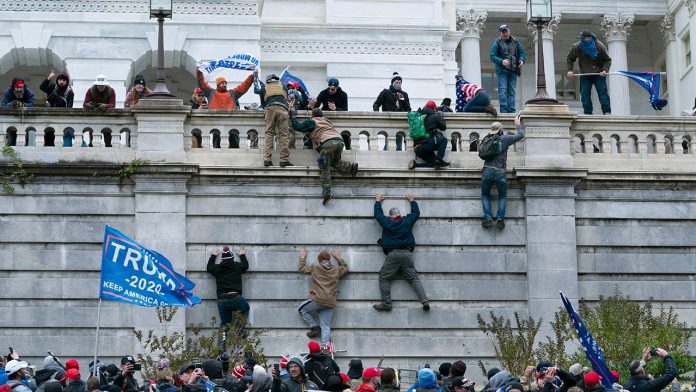
An Indiana man involved in the U.S. Capitol riots on Jan. 6 was fatally shot by police during a traffic stop while allegedly resisting arrest. (AP/Jose Luis Magana)

An altercation then took place between Huttle and the officer, resulting in the officer shooting him. Huttle was in possession of a firearm at the time of the traffic stop, police said.

A statement from Jasper County Sheriff Patrick Williamson said that the officer involved is currently on leave pending the results of the investigation.

“For full transparency, I requested the Indiana State Police to investigate this officer involved shooting. The officer that is involved has been placed on paid administrative leave, which is standard protocol and is our policy in these situations. Our condolences go out to the family of the deceased as any loss of life is traumatic to those that were close to Mr. Huttle. I will release the officer’s name once I have approval from the State Police Detectives,” Williamson said.

The first page of the report

Huttle was said to be on Capitol grounds for several hours on Jan. 6, 2021, and entered the building for approximately 10 minutes, according to the FBI. (AP Photo/Jon Elswick)

WILLIAM SHIPLEY: THE CONSTITUTIONAL REASON WHY TRUMP’S SWEEPING JAN. 6 PARDONS WERE JUSTIFIED

Huttle was recently pardoned for his role in the U.S. Capitol riots. The FBI said he was at the Capitol for several hours during the riots and entered the building for approximately 10 minutes.

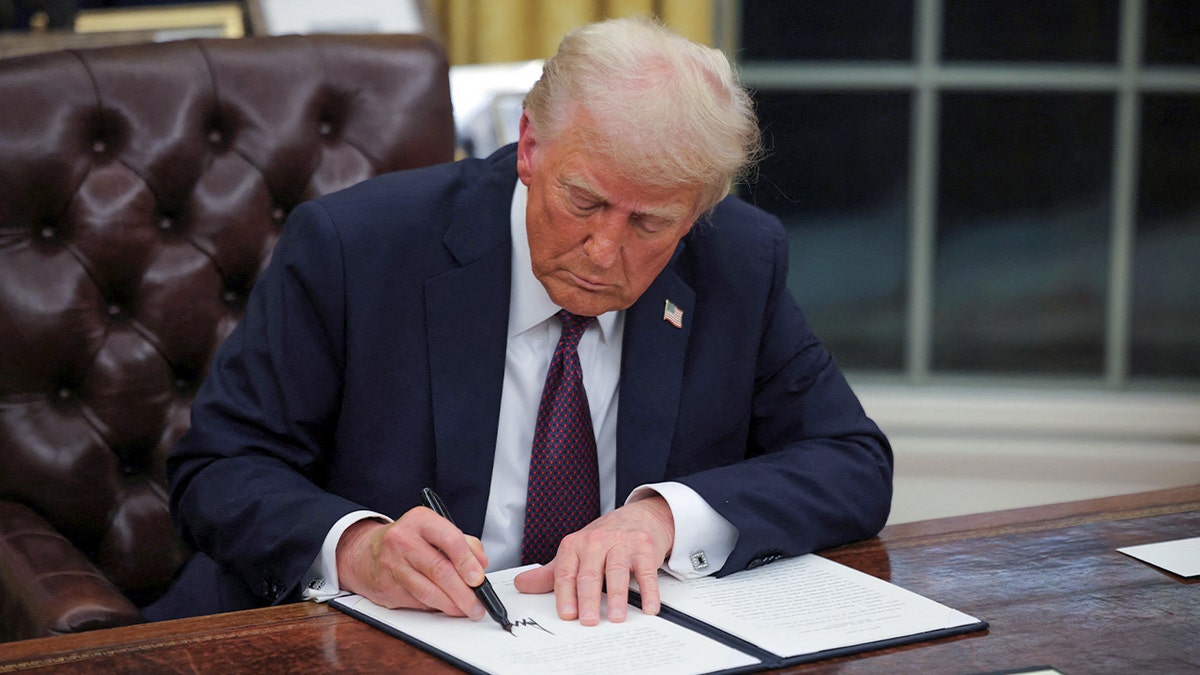
President Donald Trump signs documents in the Oval Office

President Donald Trump signs pardons for Jan. 6 defendants in the Oval Office on Inauguration Day in Washington, D.C., on Jan. 20, 2025. (REUTERS/Carlos Barria)

CLICK HERE TO GET THE FOX NEWS APP

Huttle was sentenced to six months in federal prison and 12 months on supervised release, according to federal records.

The investigation is ongoing and findings will be submitted to the Jasper County Prosecutor’s Office for formal review.

Caution Ahead! Vietnam’s Drivers Are Suddenly Following the Rules.

0

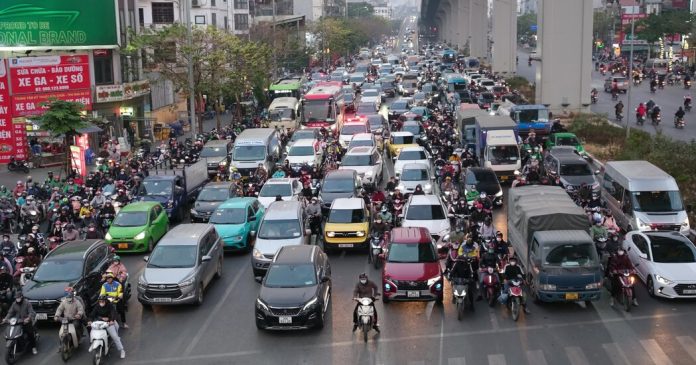
Vietnam’s motorbike drivers have always tended to treat red lights as suggestions, more slow down than stop. At rush hour, they’ve brought the same indifference to other rules, like: Yield to pedestrians; or, stay off sidewalks; or, do not drive against the flow of traffic.

Some found it charming, the ballet of many wheels dancing around pedestrians. But Vietnam’s road fatality rates have long been among the highest in Asia. And after cracking down on drunken driving, the country’s leaders are now going after everything else.

Under a new law, traffic fines have risen tenfold, with the biggest tickets exceeding $1,500. The average citation tops a month’s salary for many, and that’s more than enough to change behavior. Intersections have become both calmer and more congested by an outbreak of caution. Faulty green lights have even led scared drivers to walk motorbikes across streets the police might be watching.

“It’s safer, it’s better,” said Pham Van Lam, 57, as he pruned trees outside a Buddhist pagoda by a busy road on the outskirts of Ho Chi Minh City this week. “But it’s cruel for poor people.”

Making Vietnam more “civilized” (“van minh” in Vietnamese) appears to be the goal. It’s a word the government has often deployed for public order campaigns, signaling what this lower-middle-income country often sees as its north star: the wealth and order of a Singapore, South Korea or Japan.

All three countries prioritized road safety as they grew richer, as did China, adhering to the idea that orderly streets reflect an achievement of modernization.

But Vietnam has its own particular history and trajectory. Economic growth has lifted millions out of poverty without propelling them into comfort. In most cities, there are growing numbers of people, motorbikes, cars and trucks — and the Communist bureaucracy is struggling to keep up.

The streets are Vietnam’s coliseum. Especially in cities, they are the forum where society’s biggest conflicts — between government control and personal freedom, between the elites seeking harmony and strivers seeking income — have long played out.

In 1989, as the state laid off more than a million people, an admission that Soviet-style central planning had not delivered economic growth, private enterprise was legalized on the streets. A small-business revolution followed, with tiny plastic chairs and sidewalk sales.

Home, work and road rapidly merged. Street-front living rooms became stores. Motorbikes and food carts swarmed sidewalks. Pedestrians, an afterthought, walked in traffic.

The government has at times tried to bring order to particular areas. More than a decade ago, an anthropologist at Yale saw in such efforts “a convergence between the disciplinary goals of the late socialist Vietnamese state and the interests of an emerging propertied class.”

But like the tropical vegetation that grows wild at the cities’ edges, Vietnam’s irreverent urban culture has resisted being tamed.

In 2007, when the government decided to force motorbike drivers to wear helmets, obedience blended with mock compliance. Some people strapped kitchen pots to their heads. Many still wear headgear shaped like a baseball cap, and not much safer than one.

When the police started aggressively targeting drunken driving a few years ago by sharply raising fines and confiscating vehicles, many of the violators just left their motorbikes behind rather than paying to get them back.

Now another backlash is brewing. Millions of dollars are pouring in (Ho Chi Minh City reported that ticket revenue jumped 35 percent in the law’s first two weeks). Many see the new rules, along with added cameras and a provision offering rewards for snitches, as more about institutional greed than safety.

“The police just want to take as much money as they can,” said Dinh Ngoc Quang, a motorbike taxi driver, as he was waiting for customers at an intersection in Hanoi, Vietnam’s capital. “The higher fines hit the pocket of lower-income people like me the hardest.”

As the traffic lights turned red, the rush of motorbikes and cars — usually constant — suddenly stopped.

“It’s nice to have traffic order, but how about the life of poor people like us who need to work on the street every day?” he added.

Some drivers have called the new law oppressive, authoritarian and exploitative. Many complain that the fines are far too high, and that their usual trips take twice as long, eating into the earnings of taxi and truck drivers, or those of anyone relying on efficient delivery. Memes about ambulances getting stuck for hours and people getting rich (or punched) for reporting red-light violators have spread on social media.

Caution, by all accounts, has disrupted the flow.

In major cities, motorbikes playing by the old rules now frequently rear-end drivers trying to be careful, stopping early, sometimes even when lights are green. Truck drivers have paused wherever they could to avoid fines for working too many hours straight. Intersections are now noticeably louder, as honking drivers squeal where traffic used to gurgle and move like a river around stones.

“We’re stuck everywhere, all the time,” said Huynh Van Mai, a truck driver who makes regular trips between Ho Chi Minh City and the port of Vung Tau, about 60 miles away.

“It’s stressful,” he added, taking a break near a logistics hub with towers of shipping containers stacked behind him. “There are so many changes in the laws.”

And yet, as many acknowledge, there is a logic to the effort. Since stepped-up enforcement started, beer sales have fallen by 25 percent, and drunken driving has declined across Vietnam.

Vietnam’s national leaders — just a few months into power, with many who started their careers in state security — are eager to go further. The pursuit of safety and government surveillance seem to be aligned: In Hanoi, officials announced a plan last week to add 40,000 cameras to the roughly 20,000 already in place across the capital.

But in such a young country, with an average age of around 32, compared to nearly 40 for the United States and China, the government seems to realize that some rebellion is inevitable.

When it comes to driving, preaching patience is one response. As a columnist in one newspaper recently wrote: “Hours of traffic jams are like a large-scale rehearsal for society where each person must learn to adjust themselves, accept limitations and interact with others.”

In some places, concessions to pragmatism have also been made. After 10 days of complaints, Ho Chi Minh City sent out teams to install signals allowing motorbikes to turn right on red at 50 intersections. In Hanoi, the local authorities have also moved to adjust some traffic lights.

A twitchy balance between chaos and order has started to emerge. Though some motorbike riders still speed against traffic, and on sidewalks, far more stop when they should alongside the country’s growing ranks of cars and trucks.

Sensing success, some commentators have begun to wonder what else could be changed with large fines — perhaps big tickets for littering would help reduce trash all over the country?

“It takes time and effort to promote a civilized style,” said Nguyen Ngoc Dien, a former deputy rector at the University of Economics and Law at Vietnam National University in Ho Chi Minh City. “These new traffic regulations are part of that effort.”

Jim Acosta leaving CNN after being pulled from network’s programming schedule: report

0

CNN anchor Jim Acosta is reportedly leaving the network after he was officially pulled from its programming schedule. 

The Status newsletter reported Monday that Acosta was expected to leave CNN after it was announced last week that his 10 a.m. ET program was being replaced with “The Situation Room with Wolf Blitzer and Pamela Brown” in the network’s latest reshuffling. 

The newsletter previously reported that Acosta was pitched by CNN CEO Mark Thompson to move him from his one-hour slot at 10 a.m. ET to a two-hour slot beginning at midnight, a far less distinguished place in the lineup.

One CNN insider told Fox News Digital they heard Acosta “struggled with the choice” and may be cutting his contract short as a result.

“It takes courage,” the CNN insider said.

Another CNN insider was dismayed by Acosta’s exit, saying “Many viewers like Jim… if there is anyone who could make the overnight go it’s him,” adding “It’s sad to see him go.”

A spokesperson for CNN declined to comment. 

ANTI-TRUMP ANCHOR JIM ACOSTA LEFT OFF NEW CNN PROGRAMMING SCHEDULE

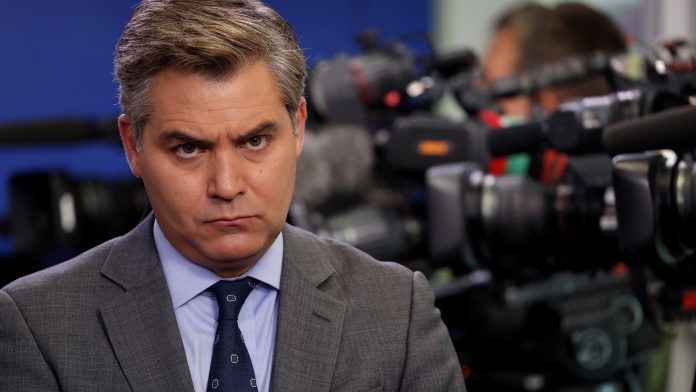
Jim Acosta is reportedly leaving CNN after he was left off the network’s new programming schedule. (REUTERS/Carlos Barria)

Acosta became more widely known as CNN’s chief White House correspondent for his antagonistic relationship with President Donald Trump and his aides during the first Trump administration. After the 2020 election, Acosta’s status at CNN was shifted to chief domestic correspondent, anchoring a show on the weekends but eventually moving his way to weekday programming. 

While CNN’s past leadership reveled in Acosta’s constant sparring matches with the first Trump administration, the network’s current leadership appears to be trying to present its programming as more neutral for the second go-around.

CNN’S JIM ACOSTA SAYS ‘WE ARE NOT THE ENEMY OF THE PEOPLE’ IN SHOT AT TRUMP AS HE RETURNS TO OFFICE

Jim Acosta Jimmy Kimmel

CNN’s Jim Acosta became a regular fixture on the late-night circuit during the first Trump administration, a rarity for a White House reporter in previous presidencies. (Randy Holmes via Getty Images))

Acosta first joined CNN in 2007, where he covered political campaigns and eventually the Obama and Trump White Houses. He quickly became notorious for shouting questions at Trump’s White House press secretaries and frequently going toe-to-toe with the president himself, developing a reputation for grandstanding and receiving a profile boost by Trump after being called “fake news.”

Acosta famously refused to give up the microphone in a 2018 press conference as he engaged in a contentious back-and-forth with Trump. The White House attempted to revoke Acosta’s press pass following the dust-up, but his credentials were restored when CNN argued that it violated the First and Fifth Amendment rights of Acosta and the network.

CNN’S JIM ACOSTA ‘GETTING HOSED’ AS NETWORK MULLS MOVING ANTI-TRUMP ANCHOR TO MIDNIGHTS, SOURCES SAY

CNN's Jim Acosta famously refused to give up the microphone while peppering President Donald Trump with questions during a 2018 press conference.

CNN’s Jim Acosta famously refused to give up the microphone while peppering President Donald Trump with questions during a 2018 press conference. (REUTERS/Jonathan Ernst )

Acosta’s adversarial relationship with the first Trump administration appeared to be lucrative as he landed himself a book deal and became a guest on liberal late-night shows, further fueling the star power that landed him an anchor chair during the Biden presidency. He recently told viewers the press is “not the enemy of the people” in a shot at Trump. 

CLICK HERE TO GET THE FOX NEWS APP

 Fox News’ Brian Flood contributed to this report.

Tuesday Briefing: A.I. From China Rattles Markets

0

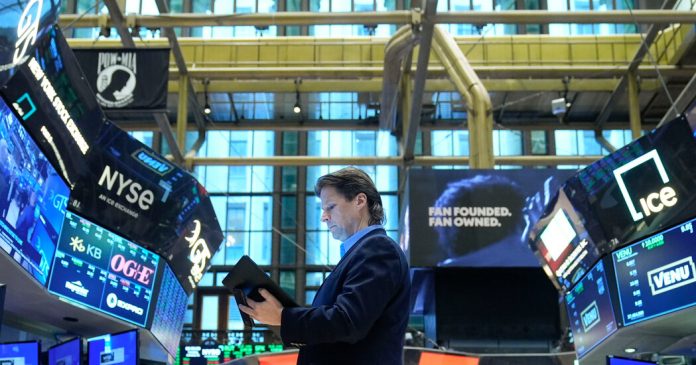
Stocks sank yesterday in the U.S. as investors were shaken by the advances of the Chinese A.I. company DeepSeek. Primarily driven by tech stocks, the sell-off also dented market indexes in Europe and Japan.

DeepSeek claims to have matched the abilities of cutting-edge chatbots while using far fewer specialized computer chips. That threatens the power and prospects of tech giants in the U.S. and elsewhere.

The chipmaker Nvidia plunged more than 16 percent yesterday, erasing hundreds of billions of dollars in market value. The Nasdaq dropped about 3 percent.

Jason Karaian, our deputy Business editor, told me that analysts were calling DeepSeek’s emergence a “slap in the face” for investors, who may now be reassessing their expectations for big returns from the A.I. race. Here’s what to know about DeepSeek.

Tech competition: Last week, President Trump signed an executive order intended to speed the development of A.I., as the U.S. tries to maintain dominance in the field. DeepSeek’s apparent advances, despite U.S. efforts to limit the sales of powerful chips to China, “was as much a jolt to Washington as to Wall Street,” Jason said.


President Gustavo Petro of Colombia agreed yesterday to allow U.S. military planes to fly unauthorized immigrants from the U.S. to his country, a day after President Trump threatened Colombia with high tariffs and sanctions.

The clash reflected how Trump was ready to make an example out of Colombia as countries around the world have grappled with how to prepare for the mass deportations that he has promised.

The quick surrender is likely to encourage Trump to use the same weapon against other countries. A number of governments have taken notice and are seeking help to navigate the new administration.

Lobbyists wanted: Panama, which is pushing back against Trump’s threat to reclaim the Panama Canal, recently signed a contract with a team of Washington lobbyists with Trump ties. Just before the inauguration, Denmark began searching for a well-connected group with ties to Trump after the president said he wanted the U.S. to take over Greenland.


Dozens of world leaders joined a group of fewer than 50 Nazi death camp survivors in Poland yesterday to commemorate the 80th anniversary of the liberation of Auschwitz, where more than 1.1 million people, mostly Jews, were murdered.

The remembrance came as Germany and the rest of Europe experience a rise in hard-right politics that is widely viewed as an echo of the nationalism that brought Hitler to power in the 1930s.

Germany: Just days before the commemoration, Elon Musk spoke at a rally for the hard-right Alternative for Germany party, saying that the country had “too much of a focus on past guilt.” Friedrich Merz, who leads in the polls for the chancellor election next month, opened the door to working with the AfD.


Life in Venice might be best experienced in winter, when its canals, ancient arches and restaurants are not packed with throngs of summer tourists. Or, at least, that’s what the poet Joseph Brodsky thought. Inspired by his accounts of a frosty Venice, a Danish writer and his daughter retraced Brodsky’s steps to find beauty in the cold.

Lives lived: Clinton Bailey, who documented the traditions of Bedouin tribes of the Middle East and helped preserve a vanishing culture, has died at 88.

More than a half-billion people in Africa are without electricity. This week, a World Bank-led initiative pledged at least $35 billion to get power to half of the continent’s unelectrified people using solar “minigrids.” These would make it easier to get power to places without existing infrastructure.

Despite the political will behind the effort, many in Africa’s power sector are deeply skeptical. Recently, a major U.S. maker of solar minigrids tried to go into business in Tanzania. When it closed up shop, thousands were left powerless and frustrated. Read more.

Florida Republicans snub DeSantis over immigration enforcement : NPR

0

President Trump’s call for mass deportations has led to a battle among Republicans in Florida. GOP lawmakers are rejecting Gov. Ron DeSantis’ call for a special legislative session.


MARY LOUISE KELLY, HOST:

OK, to Florida now, where Republican Governor Ron DeSantis received a surprising snub today from leaders within his own party. At issue – immigration. DeSantis called a legislative session to pass proposals he says would help President Trump conduct mass deportations. But Republican lawmakers quickly ended his session and announced one of their own with a different take on immigration enforcement, and they had some criticism for the governor along the way. NPR’s Greg Allen is with us from Miami. Hey, Greg.

GREG ALLEN, BYLINE: Hi, Mary Louise.

KELLY: Sounds like there was a lot going on in the Florida Legislature today. Catch us up.

ALLEN: Right. Well, you know, as Governor DeSantis has the authority to call the Legislature into a special session, and he’s done that quite often before. This time, though, when he did, Republican leaders in the Legislature surprised many by pushing back against the call, saying a special session is premature. Today, House Speaker Daniel Perez had some pointed words for DeSantis.

(SOUNDBITE OF ARCHIVED RECORDING)

DANIEL PEREZ: I believe special sessions should be used sparingly. They should not be stunts designed to generate headlines.

ALLEN: So the Legislature met. Perez gaveled in and then gaveled out DeSantis’ special session. The same thing happened in the Senate. And then after that, in both chambers, Republican leaders convened another special session to consider their own proposals for addressing illegal immigration. Advocates I’ve spoken to say this is worrying immigrant communities throughout Florida who are already on edge about Trump’s proposal for mass deportation.

KELLY: OK, so a lot of competing proposals here. Walk us through what DeSantis actually wants to do and what Republican lawmakers say they want to do instead.

ALLEN: Right. Well, DeSantis wants to require counties and cities to participate in the federal deportation program, and that similar proposal is going around a lot of Republican-led states. He wants to be able to suspend any officials who don’t do so, including those who are elected. But House Speaker Perez said that those ideas, in his words, are just too bureaucratic.

(SOUNDBITE OF ARCHIVED RECORDING)

PEREZ: We do not need to duplicate the functions of U.S. Immigration and Customs and create a mini-me version of ICE. In addition, his proposals would hijack local law enforcement operations.

ALLEN: DeSantis also wants a law that would require people to show ID and their immigration status before sending remittances back to their home countries. Republican leaders in the Legislature – of course, they control the Legislature – they rejected that idea also, saying that that would create new mandates for businesses and set up what they called a Big Brother database of people who want to send money abroad.

The Legislature’s bill is significantly less harsh on immigrants, local communities and business interests. And they would make Florida’s agriculture commissioner the state’s chief immigration officer. You know, agriculture, of course, depends on migrant labor here and across the nation.

Yeah. And DeSantis isn’t happy with this bill. He says he likes a few elements, such as the one that removes in-state tuition waivers for students without legal status. But he said putting the agriculture commissioner in charge of enforcing immigration, quote, “puts the fox in charge of the henhouse.”

KELLY: So just trying to think through what all this means, DeSantis has been clear. The governor is on board. He wants to help Trump implement his immigration agenda in Florida. Greg, do today’s developments suggest fellow Republicans and the state Legislature are not on board?

ALLEN: Republican leaders say that problem is not with – is with DeSantis, not with Trump. Senate President Ben Albritton says he supports Trump’s efforts to control the border and to deport immigrants with criminal records.

(SOUNDBITE OF ARCHIVED RECORDING)

BEN ALBRITTON: The best way to do that is to follow the leadership of President Trump. President Trump asked for partnership at the state level that produces results. That’s the kind of partnership I support.

ALLEN: But, you know, Mary Louise, this is not just about immigration. DeSantis has gotten pretty much everything he’s wanted from the Republican majority in the Legislature over the past six years. And this was all while DeSantis was, of course, getting ready to run for the Republican presidential nomination, and he was a political force in his own right.

But now he’s on his last term. He’s out of office in two years, you know, with an uncertain future. Republicans in the Legislature today accused him of trying to bully them, and they used this special session today for some payback. They overrode a budget veto he issued last year, and they restored some $50 million to their budget.

KELLY: NPR’s Greg Allen in Miami. Thank you, Greg.

ALLEN: You’re welcome.

Copyright © 2025 NPR. All rights reserved. Visit our website terms of use and permissions pages at www.npr.org for further information.

NPR transcripts are created on a rush deadline by an NPR contractor. This text may not be in its final form and may be updated or revised in the future. Accuracy and availability may vary. The authoritative record of NPR’s programming is the audio record.


President Trump continues call for ‘state-of-the-art’ Iron Dome missile system

0

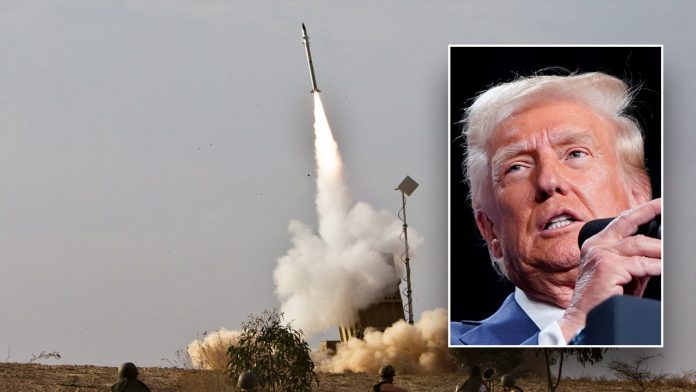
President Donald Trump said that the construction of an Iron Dome-like shield for the U.S. is a top priority for him on Monday, calling for “immediate” work to be done on the project before signing an executive order.

Trump made the remarks at a Republican dinner in Florida on Monday, while commending his recently-confirmed Secretary of Defense Pete Hegseth. After landing at Joint Base Andrews that night, he confirmed that he signed an executive order regarding the Iron Dome on the plane.

“Pete Hegseth, who’s going to be great, by the way… I think he’s going to be fantastic,” Trump said at the event. “I know him very well. I think he’s going to be fantastic.”

“He’s what we need, to immediately begin the construction of a state-of-the-art Iron Dome missile defense shield, which will be able to protect Americans.”

PETE HEGSETH CONFIRMED TO LEAD PENTAGON AFTER VP VANCE CASTS TIE-BREAKING VOTE

President Trump says that he will sign an EO authorizing an Iron Dome project. (Reuters)

The president added that Americans “protect other countries, but we don’t protect ourselves.” Trump also referenced that President Ronald Reagan was interested in the system during the Cold War, but Americans “didn’t have the technology.”

“And now we have phenomenal technology. You see that with Israel,” Trump continued. “So I think the United States is entitled to that. And everything will be made right here in the USA 100%.”

“We’re going next to ensure that we have the most lethal fighting force in the world.”

On Monday, the State Department said that a future Iron Dome is one of Hegseth’s many priorities.

MCCONNELL VOTED NO ON HEGSETH AS PENTAGON HEAD, FORCING VANCE TO CAST TIEBREAKER

Trump mar-a-lago

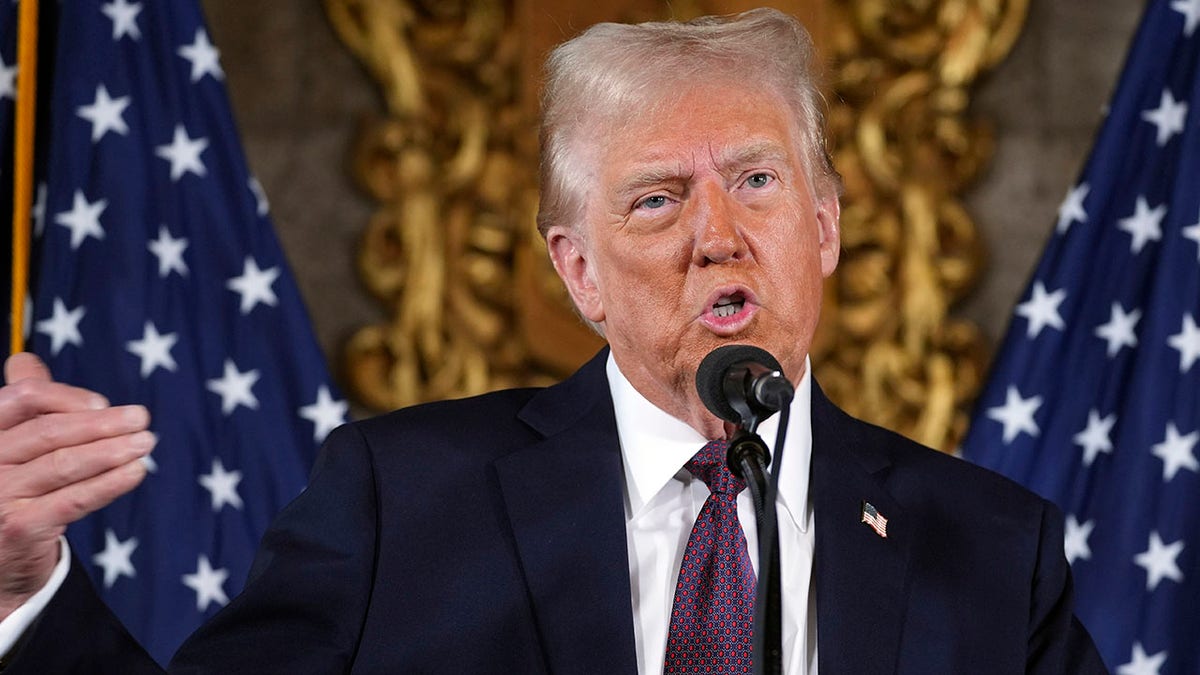
President-elect Donald Trump speaks during a news conference at Mar-a-Lago, Tuesday, Jan. 7, 2025, in Palm Beach, Fla.  (AP Photo/Evan Vucci)

“Other areas the secretary will study include reinstating troops that were pushed out because of COVID-19 vaccination mandates and developing an Iron Dome anti-missile system for the United States,” the statement read.

This wasn’t Trump’s first mention of an Iron Dome for the U.S. At the Commander-In-Chief inaugural ball on Jan. 20., Trump said that the project was on his radar.

“We’re also doing the Iron Dome all made in America,” Trump said. “We’re going to have a nice Iron Dome.”

The Republican leader also referenced the plan on the campaign trail in 2024.

Hegseth outside Pentagon with band honoring fallen soldier

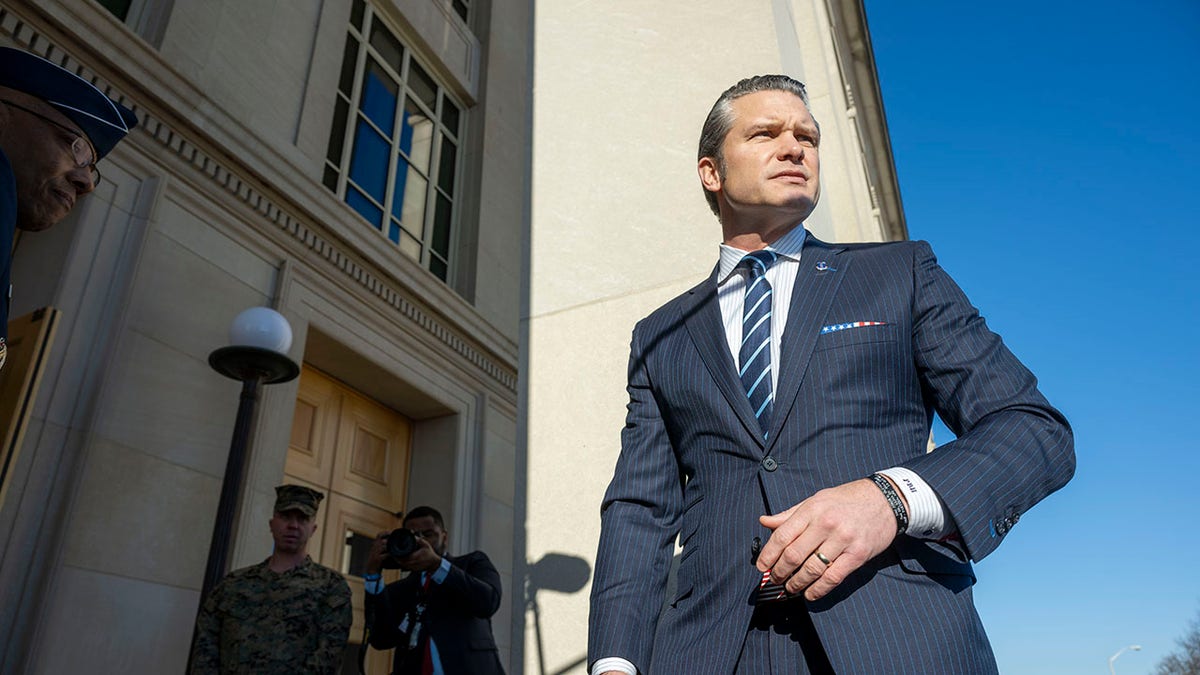
Defense Secretary Pete Hegseth arrives at the Pentagon, Monday, Jan. 27, 2025 in Washington.  (AP Photo/Kevin Wolf)

CLICK TO GET THE FOX NEWS APP

“By next term we will build a great Iron Dome over our country,” Trump said during a West Palm Beach event on June 14. “We deserve a dome…it’s a missile defense shield, and it’ll all be made in America.”

François Ponchaud, Who Alerted World to Cambodian Atrocities, Dies at 86

0

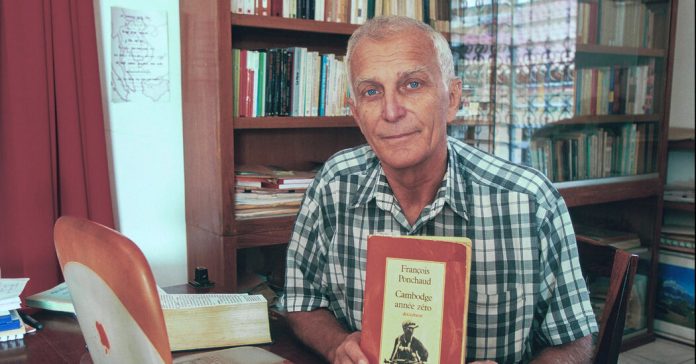
The Rev. François Ponchaud, a French Catholic priest whose book “Cambodia: Year Zero” alerted the world to the atrocities being committed by the communist Khmer Rouge that would eventually take the lives of nearly two million people, died on Jan. 17 in Lauris, France. He was 86.

His death was announced by the Paris Foreign Missions Society, of which Father Ponchaud was a member. The society said he died at its retirement facility. The cause was cancer, a friend, the historian Henri Locard, said.

In 1975, at the end of the Indochina war, only sketchy accounts of the Khmer Rouge horrors had reached the outside world, and they were widely dismissed by those in the West who wanted to put the conflicts in Vietnam and Cambodia behind them.

Father Ponchaud, a priest who had spent a decade in Cambodia and was fluent in the language, was expelled along with other foreigners when the Khmer Rouge took control of the country and sealed its borders.

The Khmer Rouge evacuated the entire capital city of Phnom Penh — a chaotic forced exodus in which thousands died — and for the next four years turned Cambodia into a vast labor camp scattered with torture houses and killing fields, where close to one-fourth of the population were executed or died of starvation and overwork.

After his expulsion, Father Ponchaud set to work collecting hundreds of written and oral accounts from refugees along the border with Thailand and in France, placing them side by side with information from the propaganda broadcasts of the new government.

His revelations began with articles in the French press that were fiercely attacked by leftists clinging to a romantic view of revolutionaries who had thrown off the yoke of French colonialism.

Father Ponchaud’s book — sober, detailed and thoroughly documented, with the most horrific scenes told in the words of the refugees themselves — was published in 1977. The catalog of horrors was hard to deny.

“Ponchaud came as an annoyance to people who wanted everything to be lovely in Indochina, with the ‘great new dawn’ and all that nonsense,” David P. Chandler, a leading historian of Cambodia, said in an interview.

“Everyone in the West was fed up with Indochina and wanted to get out of it after 1975, and didn’t want to pay attention to what was happening,” Mr. Chandler said. “It was too much to handle in the late ’70s.”

The phrase “year zero” caught the imagination of the public, although the Khmer Rouge themselves did not use it. It was an apt description, however, of their shutdown of history and culture in an attempt to restart the country and create a pure agrarian utopia.

To achieve this, the Khmer Rouge began by executing high-ranking government and military officials and then moved on to killing educated people who brought the past along with them — teachers, lawyers, Buddhist monks, court dancers — as well as members of ethnic minorities, including Vietnamese and Chinese people and Cham Muslims.

Father Ponchaud himself witnessed the evacuation of Phnom Penh, in which even hospital patients, some wheeled in their beds, were forced into the streets.

“I saw the unspeakable event,” he testified at a United Nations-sponsored trial of Khmer Rouge leaders in 2013. “I saw sick people, I saw the crippled, who were crawling like worms right in front of my house.”

The purges spread through the mostly rural nation, as low-ranking members of the Khmer Rouge rooted out people they considered tainted by the past and executed those who disobeyed them. Slaughter — or “self-slaughter,” in Father Ponchaud’s words — eventually became the defining characteristic of the regime.

“Unending labor, too little food, wretched sanitary conditions, terror and summary executions: From these, the hair-raising human cost of the Khmer revolution can be imagined without much difficulty,” he told the French news organization Agence France-Presse in 2021.

In one of the book’s many descriptions of the terror that permeated the country, a woman told of climbing a tree when she heard the Khmer Rouge approaching, at the risk of having her legs eaten by red ants, as “some children were being torn apart and some were being impaled.”

The book quotes a refugee who said he worked in a hospital with 300 beds. “It was a hospital in name only because sick people were sent here so that their families wouldn’t waste time looking after them instead of working,” the witness said. “Large numbers of people died every day. The 20 or 30 people running the hospital both cooked the rice and carried away the corpses to bury them.”

François Ponchaud was born on Feb. 8, 1939, in Sallanches, a small village in the French Alps where his father, Leon, served as a general councilor.

He worked with his parents on their farm, he said, until he was 20. “We had 12 cows, pigs and chickens; we had a lot of fruits and berries — strawberries, apples and pears,” he told The Phnom Penh Post in 2013. “I have six brothers and six sisters, but I’m the only one who became a priest.”

In 1959, after a year in a seminary, he was sent to fight in the separatist war in Algeria, serving for two and a half years. He took parachute training but said he never jumped in combat.

“I didn’t like the war,” he told The Post. “Now I think I’d rather be killed or go to prison than participate in such a war, but at the time I didn’t dare go to prison.”

After the war, he studied in a seminary and at a Gregorian university in Rome. He was sent to Cambodia as a missionary in 1965 and served in the Apostolic Prefecture of Kampong Cham, until he was expelled with other foreigners in 1975.

“I came to Cambodia not to convert people but to help Cambodian people understand the value of their own religion,” he told a church publication, UCA News, in 2021.

“The main aim is helping people to understand clearly what Buddha taught and what Jesus said in the Gospels, helping them to live together and love one another,” he said. “Our life is valuable even if we are poor. We can walk together. This is the good news we proclaim in Cambodia today.”

He added: “The teaching of Buddha, and meditation, allowed me to become a better Christian. Buddha helped me to know who God is.”

He taught himself the language and became so fluent that he chose to testify in Khmer at the 2013 trial rather than in his native French.

Among other things, he told the judges that Henry Kissinger, the U.S. national security adviser, should be tried for America’s secret bombing of Cambodia in 1969 and 1970, which took thousands of lives and contributed to the rise of the Khmer Rouge.

The Khmer Rouge were finally ousted in January 1979 by a Vietnamese invasion. They retreated to the jungle, where they fought a civil war that brought continued pain and destruction to Cambodia until the late 1990s, when the last leaders surrendered.

Father Ponchaud returned to Cambodia in 1993, established a cultural center to teach the language and customs of Cambodia to missionary priests and volunteers, and worked on a translation of the Bible into Khmer, before returning to France in December 2021 because of ill health.

Survivors include his four siblings, Marie, André, Henri and Bernard.

What to know about Trump's Chief of Staff Susie Wiles

0

Chief of Staff Susie Wiles could make or break Trump’s second term. NPR’s Ailsa Chang speaks with Chris Whipple, author of The Gatekeepers: How the White House Chiefs of Staff Define Every Presidency.

Nigerian extradited to US for alleged sextortion scheme that led to SC teen’s suicide

0

Join Fox News for access to this content

You have reached your maximum number of articles. Log in or create an account FREE of charge to continue reading.

By entering your email and pushing continue, you are agreeing to Fox News’ Terms of Use and Privacy Policy, which includes our Notice of Financial Incentive.

Please enter a valid email address.

This story discusses suicide. If you or someone you know is having thoughts of suicide, please contact the Suicide & Crisis Lifeline at 988 or 1-800-273-TALK (8255).

A Nigerian man has been extradited to the U.S. after being indicted for allegedly operating a sextortion scheme that led to a South Carolina teenager’s death.

The U.S. Attorney’s Office for the District of South Carolina said in a press release that 24-year-old Hassanbunhussein Abolore Lawal of Osun State, Nigeria, has been indicted on charges of: child exploitation resulting in death; the production and distribution of child sexual abuse material; coercion and enticement of a minor; cyberstalking resulting in death; interstate threats with intent to extort; and aiding and abetting.

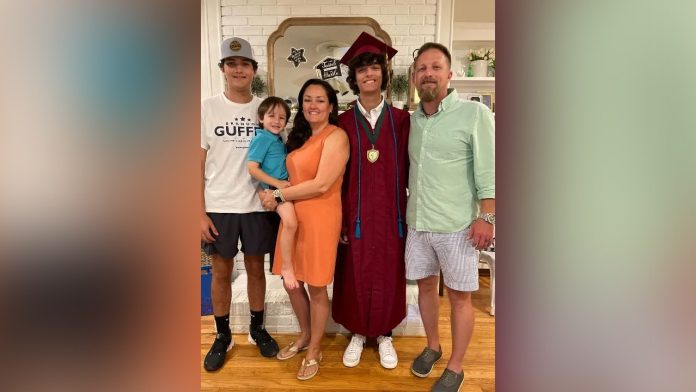
The charges stem from an investigation into the death of 17-year-old Gavin Guffey of Rock Hill, South Carolina, who died by suicide in July 2022 after falling victim to Lawal’s alleged scheme.

NJ STUDENT BULLIED LIKE ADRIANA KUCH A YEAR BEFORE TEEN’S SUICIDE AFTER SCHOOL ASSAULT FILMED: LAWSUIT

Brandon Guffey, right, has been exposing the dangers of sextortion after his son, Gavin, second from right, died by suicide last year. (Brandon Guffey)

Lawal, the attorney’s office said, posed as a young woman on social media and convinced the teen to send compromising photos. After the teenager sent the photos, Lawal is accused of sending harassing messages to him, threatening to leak the photos and ruin his reputation unless the teen sent him money.

Lawal is accused of later doing the same to members of Guffey’s family.

“We will not allow predators who target our children to hide behind a keyboard or across the ocean. Today we honor Gavin’s life and continue our fight against sextortion by holding this defendant accountable,” said U.S. Attorney Adair Ford Boroughs for the District of South Carolina. “This investigation and extradition are the result of tremendous law enforcement coordination both in the United States and Nigeria.”

The boy’s father, South Carolina Republican state Rep. Brandon Guffey, told Fox News Digital last year that his son and the perpetrator began chatting on Instagram, the social media app owned by Facebook’s parent company, Meta.

SUICIDE PREVENTION MONTH: HOW 3 ORGANIZATIONS HAVE TURNED PERSONAL LOSS INTO SUICIDE PREVENTION EFFORTS

Gavin and his brothers hug

The number of reports involving sextortion tips to the National Center for Missing and Exploited Children more than doubled between 2019 and 2021. In 2022, 79% of offenders were seeking money from victims. (Brandon Guffey)

That person convinced Gavin to turn on “vanish mode” in their Instagram chat, which allows messages to disappear after they are received. 

“And then they shared photos,” Guffey told Fox News Digital.

After exchanging photos, that person demanded money from Gavin. He replied that he only had $25 in his account, which Guffey said was not true, and sent $25. The scammer demanded more.

“And he even said that I’m sitting in my room with a gun. If these pictures go out, I’m going to end it right now,” the state lawmaker explained. “I don’t know if any of the pictures were shared.”

WARNING SIGNS OF SUICIDE: WHAT TO KNOW ABOUT PREVENTION, RED FLAGS AND HOW TO DEAL WITH THE ISSUE

Gavin Guffey sitting outside

Gavin Guffey, 17, died by suicide in 2022 after becoming the victim of a sextortion plot on Instagram. (Brandon Guffey)

Gavin, who had just graduated from high school that spring and had a passion for art and music, shot himself that evening.

After his death, the scammer he met on Instagram tracked down Brandon Guffey and Gavin’s teenage cousin on Instagram and began demanding money from them.

“This indictment represents the culmination of countless hours of dedicated work done by our investigators both here and abroad,” said Steve Jensen, special agent in charge of the FBI Columbia Field Office. “The defendant’s alleged actions are reprehensible resulting in the tragic loss of a young man’s life. We remain steadfast in our commitment to holding criminals accountable, especially those who target our children and endanger their lives, no matter where they are.”

CLICK HERE TO GET THE FOX NEWS APP

If convicted, Lawal faces up to life in prison. The charge of child exploitation resulting in death carries a mandatory sentence of 30 years in prison.

Lawal could also face mandatory restitution in which the court may order him to pay for losses incurred by the family as a result of his alleged scheme.

Fox News Digital’s Audrey Conklin contributed to this report.

Inside Colombia’s Crisis Over Trump’s Deportations

0

Colombia’s president, early on Sunday, announced that he had turned back two American military planes carrying deportees from the United States, setting off an extraordinary crisis inside and outside his country as he infuriated President Trump and caught even his own inner circle off guard.

President Gustavo Petro’s friends — and even his most powerful political adversary, former President Álvaro Uribe — quickly jumped in, working contacts in Washington to help defuse a crisis that threatened to devastate Colombia’s economy and upend relations in the region.

Late on Sunday, after moments when the tense discussions between the two countries appeared on the verge of breaking down, the White House announced that the Colombian government had agreed to receive all deportation flights, including military planes. The Colombian Foreign Ministry soon said “the impasse” had been overcome.

“Despite the difficulties we had, it’s proof that diplomatic channels continue to be the best way to sort out differences,” said Colombia’s ambassador to the United States, Daniel García-Peña, who was in Bogotá, the capital, on Sunday.

He was part of a small group that for several hours managed Mr. Petro on one line and the Trump administration, through its special envoy to Latin America, Mauricio Claver-Carone, on another.

On Monday, Mr. García-Peña said he hoped the “U.S.-Colombia relationship cannot only continue throughout this new administration” but flourish. But on Sunday, that prospect seemed far off.

For many of those involved, the day began around 4 a.m. with their phones ringing constantly. Mr. Petro had just posted a message on social media.

“The U.S. cannot treat Colombian migrants like criminals,” he said, announcing that he was withdrawing authorization for U.S. military planes to land in Colombia.

At 9:30 a.m., Mr. Petro said he had turned military planes back. (The Trump administration said two military flights had been forced to return to the United States.)

The tensions built over the day.

Mr. Trump retaliated by saying he would hit Colombia with 25 percent tariffs, rising to 50 percent within days, as well as a raft of financial and banking sanctions. He also suspended visas for all government officials and their associates. “These measures are just the beginning,” Mr. Trump wrote.

Mr. Petro responded by saying he would impose sanctions on the United States, too. “You will never dominate us,” he declared.

Colombia’s recently appointed foreign minister, Laura Sarabia, called for “calm.”

Gustavo Bolívar, who directs social services programs for the Petro administration, said the president reached out to him after Mr. Trump’s retaliatory moves. Mr. Bolivar shared his concerns that economic sanctions would harm Colombian businesses, he said.

At least three former presidents, including Mr. Uribe, a right-wing leader who has long been at odds with Mr. Petro, also offered to help navigate the storm. One official with knowledge of the events said that Mr. Uribe had called Ms. Sarabia and said, essentially: We have differences with President Petro. He made a mistake. But we need to resolve this. How can I help?

Ms. Sarabia urged Mr. Uribe to call his friends in Washington, including the new secretary of state, Marco Rubio.

The accounts of some of the discussions within the Petro government and with the Trump administration are based in part on interviews with an official in Mr. Petro’s government and with a departing high-ranking official. The two officials requested anonymity to describe sensitive discussions.

Republican senators in the United States also weighed in, urging the Trump administration to show restraint, according to the two officials.

In Colombia, members of Mr. Petro’s inner circle warned that American sanctions could cause widespread damage to the country. The United States is Colombia’s largest trading partner, with key industries like oil, coffee and flowers reliant on the U.S. market.

Mr. Petro, a former rebel and avowed leftist, is already facing significant challenges, including an eruption of violence near the Venezuelan border involving a rebel group. The unrest is threatening to unravel his promise of bringing lasting peace to a country that has known decades of conflict.

Mr. Petro’s confrontation with the Trump administration, and the prompt backlash from the newly sworn-in president, came as Latin American governments are struggling to respond to American pressure to cooperate with measures to curb migration, including stepped-up deportations. At the same time, they are trying to assure their citizens that they will protect their rights.

Mr. Petro announced that he was barring military deportation flights after reports from Brazil over the weekend that 88 people on a flight from the United States, including some families, had endured conditions that the Brazilian government described as “unacceptable” and “degrading.” The deportees had arrived on a nonmilitary plane that malfunctioned and made an emergency landing in Manaus, a city in the Amazon rainforest.

Luis Gilberto Murillo, Colombia’s outgoing foreign minister, who was closely involved in the negotiations with the U.S. government on Sunday, said in an interview that Mr. Petro had two reasons for blocking the U.S. flights. “The first and most important,” he said, “was the dignified treatment of Colombians. He does not agree with people being in handcuffs on those flights.”

The other issue was the use of military planes, he said.

Mr. Petro was not fully aware of a recent change under the Trump administration that allows military aircraft to be used for deportations, Mr. Murillo said. In the past, migrants being deported have been transported on planes that resemble commercial craft and are operated by U.S. Immigration and Customs Enforcement.

Mr. García-Peña said Colombian officials relented on Sunday when U.S. officials assured them that Colombians aboard deportation flights would not be placed in handcuffs after they were returned and would be escorted by Department of Homeland Security officials, not military personnel.

They were also told Colombian citizens would not be photographed aboard the flights, he said.

Mr. Trump’s press secretary shared images last week of people in shackles being led onto military planes. “President Trump is sending a strong and clear message to the entire world: if you illegally enter the United States of America, you will face severe consequences,” she wrote.

Mr. Trump described the deportees as “criminals.”

The use of military planes to transport people expelled from the United States, which Mr. Trump authorized through an executive order, has emerged as a key part of fulfilling a campaign promise to carry out sweeping deportations. But the Trump administration has also made clear that it would not dispatch military planes without the approval of the receiving country.

The acting defense secretary, Robert Salesses, said military planes would be used to transport more than 5,000 people in the custody of the U.S. Border Patrol.

Two military planes arrived on Friday in Guatemala, carrying 160 migrants who had been apprehended after crossing the border, including women and children.

Several Latin American governments have expressed concern over the treatment of migrants being deported now. “What happened on this flight was a violation of rights,” said Macaé Evaristo, Brazil’s minister of human rights, hours before Mr. Petro spoke out.

Honduras has also invoked the need to protect its citizens and Mexico’s president, Claudia Sheinbaum, said: “What do we ask for? Respect for human rights.”

Experts say Mr. Trump’s hard-line response to Mr. Petro may have a chilling effect on other leaders in the region as they weigh their own actions.

Mr. Trump’s swift threat to impose major tariffs on Colombia, which has historically been the strongest United States ally in the region, signals that his migration agenda will be the top priority in diplomatic relationships in the hemisphere, said Will Freeman, a fellow for Latin America studies at the Council on Foreign Relations.

“A previous administration that saw that as one concern among others would probably be walking much more carefully now with Colombia,” said Mr. Freeman. “But I think the fact that Trump is doing this really shows that he sees it as his No. 1 priority.”

For now, Colombia seems intent on avoiding another fight with the United States.

“We will have clear protocols, so that this doesn’t happen again,” said Mr. Murillo, the outgoing foreign minister.

The Trump administration was clearly satisfied with the outcome of its brief if intense feud with Colombia. “America is respected again,” it said.

While Colombia stood to lose more than the United States if tariffs had been imposed by both countries, experts say that alienating Colombia, an important asset for American business, could push it closer to China, its second-largest trading partner, which is making inroads across Latin America.

As Mr. Trump and Mr. Petro’s feud escalated on Sunday, China’s ambassador to Colombia said on social media that the two countries “are in the best moment of our diplomatic relations.”

Caught in the middle were the Colombian deportees who had been in the air on their way to Colombia when Mr. Petro turned the military planes back. Some were said to be arriving in Colombia as early as Monday night on a Colombian government plane.

Mr. Petro was still posting his opinions.

“The solution to illegal migration,” he wrote, “is not simply to deport people and criminalize them.”

Reporting was contributed by Jorge Valencia from Bogotá. Federico Rios from Medellín and Emiliano Rodríguez Mega from Mexico City.