Thursday, November 12, 2026
Home Blog Page 324

Rubio pauses foreign aid from State Department, USAID

0

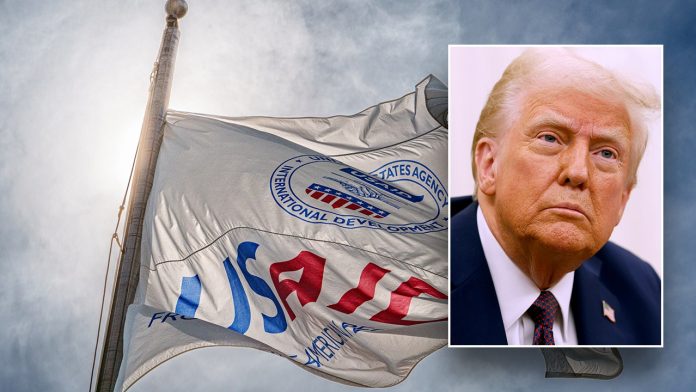
Secretary of State Marco Rubio paused all U.S. foreign assistance funded by or through the State Department and U.S. Agency for International Development (USAID) to allow the Trump administration to review if the money puts “America First.”

On Sunday, the State Department released a statement about falling in step with President Donald Trump’s executive order to reevaluate and realign foreign aid from the U.S.

“Consistent with President Trump’s Executive Order on Reevaluating and Realigning United States Foreign Aid, Secretary [Marco] Rubio has paused all U.S. foreign assistance funded by or through the State Department and U.S. Agency for International Development (USAID) for review,” the statement read. “He is initiating a review of all foreign assistance programs to ensure they are efficient and consistent with U.S. foreign policy under the America First agenda. President Trump stated clearly that the United States is no longer going to blindly dole out money with no return for the American people.”

The statement continued, saying the review and alignment of foreign assistance on behalf of taxpayers is a “moral imperative,” adding that Rubio is proud to protect America’s investment “with a deliberate and judicious review” of how the money is spent on aiding foreign countries overseas.

AFTER RAUCOUS FIRST WEEK IN OFFICE, DONALD TRUMP TO KEEP HIS FOOT ON THE GAS

The front of the U.S. Agency of International Development (USAID) headquarters building is seen on September 15, 2014, in Washington, DC.

“The implementation of this Executive Order and the Secretary’s direction furthers that mission,” the statement read. “As Secretary of State Marco Rubio has said, ‘Every dollar we spend, every program we fund, and every policy we pursue must be justified with the answer to three simple questions: Does it make America safer? Does it make America stronger? Does it make America more prosperous?’”

The announcement comes after the Trump administration ordered staffers with USAID to stop providing foreign aid worldwide or face “disciplinary action” for not complying.

Reuters reported that the Trump administration sent a sharply-worded memo to more than 10,000 staff members at USAID on Saturday, offering a “stop-work” directive from Friday that put a freeze on U.S. foreign aid around the world.

TRUMP ADMINISTRATION NEEDS MORE PLANES TO CARRY OUT DEPORTATIONS: REPORT
Trump mar-a-lago

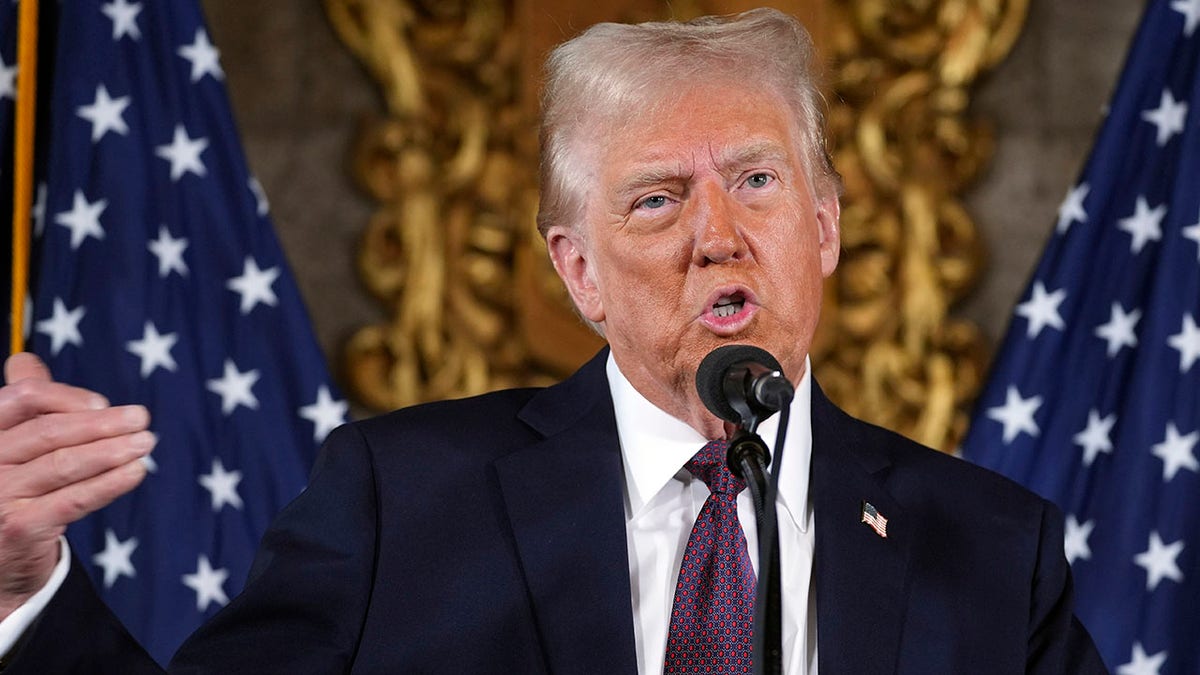
President Donald Trump wants all foriegn aid to put  “America First.” (AP Photo/Evan Vucci)

The wire service reviewed the memo and said it laid out expectations for the workforce on how to achieve Trump’s goals to put “America First.”

“We have a responsibility to support the President in achieving his vision,” Ken Jackson, assistant to the administrator for management and resources wrote in the internal memo, titled “Message and Expectation to the Workforce.”

“The President has given us a tremendous opportunity to transform the way we approach foreign assistance for decades to come,” the memo added. Reuters reported that it confirmed the authenticity of the memo with several sources.

SPEAKER JOHNSON INVITES TRUMP TO ADDRESS CONGRESS AMID BUSY FIRST 100-DAY SPRINT
Marco Rubio speaking

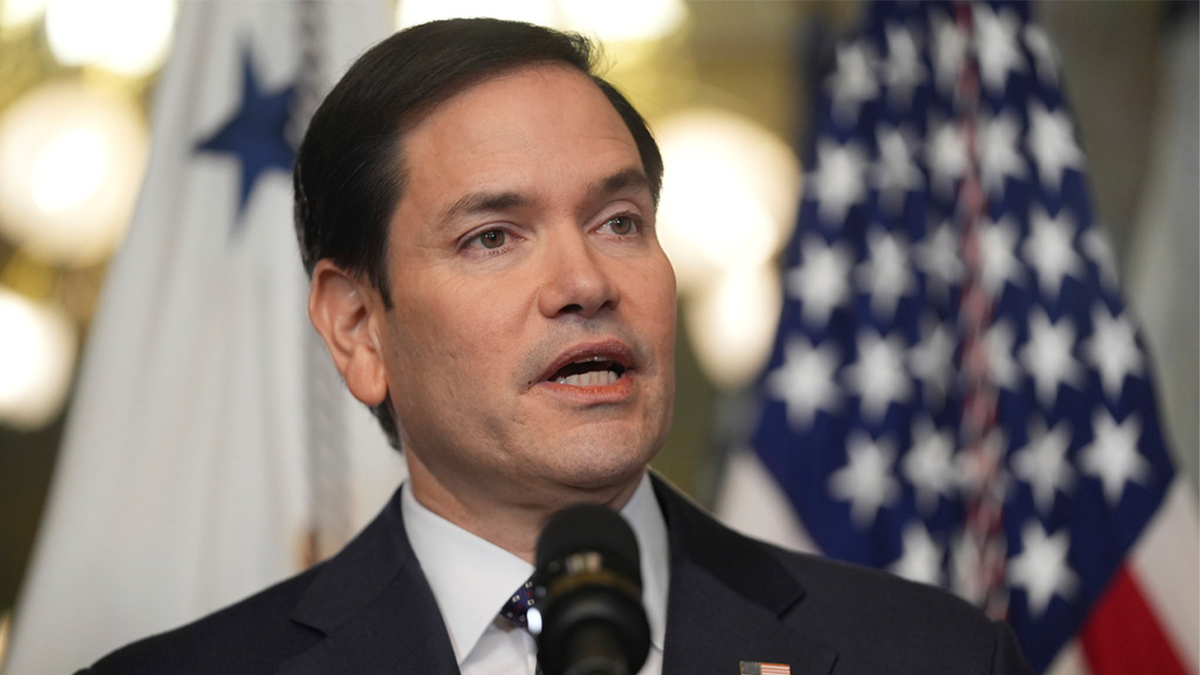
Secretary of State Marco Rubio paused all U.S. foreign assistance funded by or through the State Department and U.S. Agency for International Development (USAID). (AP Photo/Evan Vucci)

Trump ordered a 90-day pause in foreign aid just hours after taking office, to review if the funding was in line with his foreign policy priorities.

On Friday, the State Department issued a pause on aid worldwide.

CLICK HERE TO GET THE FOX NEWS APP

The U.S. is the largest donor of aid globally. During fiscal year 2023, the U.S. dispersed $72 billion in assistance. It also provided 42% of all humanitarian aid tracked by the United Nations in 2024.

Fox News Digital has reached out to USAID for comment.

Reuters contributed to this report.
At Auschwitz, a Solemn Ceremony at a Time of Rising Nationalism

0

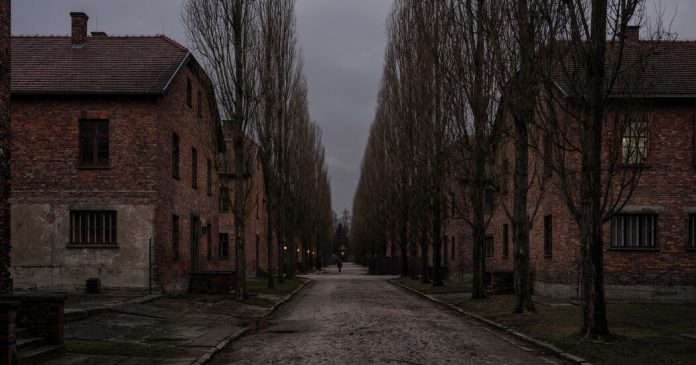
More than 50 world leaders, including King Charles III, will join a dwindling group of Nazi death camp survivors on Monday in southern Poland to commemorate the 80th anniversary of the Red Army’s liberation of Auschwitz, where more than 1.1 million people, mostly Jews, were murdered.

A day of solemn ceremony, shadowed by a resurgence of nationalism in Germany and several other European countries, will take place near a former gas chamber and crematory in the Polish town of Oswiecim, whose name was Germanized to Auschwitz during Hitler’s 1939-1945 occupation of Poland.

The commemoration will begin early Monday with survivors of Auschwitz — who numbered thousands at the end of World War II in 1945 but have mostly since died — laying wreaths on the Wall of Death. The wall, in a courtyard between former barracks, is where prisoners were executed by SS guards and remains pockmarked with bullet holes.

Ronald S. Lauder, the president of the World Jewish Congress and chairman of the Auschwitz-Birkenau Memorial Foundation, said in an interview that “this is the most important anniversary we are going to have because of the shrinking number of survivors and because of what is happening in the world today.”

“We thought the virus of anti-Semitism was dead,” he said, “but it was just in hiding.”

Fewer than 50 survivors will take part in Monday’s commemoration, less than half the number who attended the 75th anniversary. “In five years, there will be very few left,” Mr. Lauder said. “And those who are still alive won’t have the energy to go.”

The number of foreign dignitaries, however, keeps growing. This year’s guest list, the largest ever, includes scores of government leaders and at least eight kings and queens. Among them are Germany’s departing chancellor, Olaf Scholz and its president, Frank-Walter Steinmeier. Also expected is Mr. Scholz’s likely successor, Friedrich Merz.

With less than a month to go before Germany holds a general election, Mr. Scholz, Mr. Merz and other mainstream German politicians are scrambling to curb support for Alternative for Germany, a hard-right party known as AfD that is widely seen as a dangerous throwback to the nationalism that brought Hitler to power in the 1930s.

At an election rally on Saturday in eastern Germany, AfD politicians and Elon Musk, a top adviser to President Trump, who spoke by video link, urged Germans not to feel guilty for the Nazi-era crimes of their grandparents.

That and calls at the rally for a “Great Germany,” said Poland’s prime minister, Donald Tusk, on Sunday, “sounded all too familiar and ominous, especially only hours before the anniversary of the liberation of Auschwitz.”

None of the leaders at the event on Monday will speak. As part of the anniversary events, the house where the Nazi commandant of Auschwitz lived with his family — which was the subject of the Oscar-winning movie “The Zone of Interest” — will open to visitors for the first time following its sale by Polish owners to the Counter Extremism Project, a New York-based group.

Piotr Cywinski, a Polish historian and the director of the Auschwitz-Birkenau Museum, said his state-run institution wanted to avoid political speeches and to put survivors and the remembrance of Nazi victims at the center of Monday’s events.

“Memory,” he said in an interview, “is not only crying when you look to the past, it is not only empathy when you look to the victims. This is not enough. Memory, I think, is really the key for today’s time and the key for finding your position today.”

A U.S. delegation will be led by Steve Witkoff, President Trump’s Middle East envoy, who played a key role in negotiating a recent Gaza truce agreement between Israel and Hamas, and Howard Lutnick, Mr. Trump’s nominee for secretary of commerce. Also in the delegation is Charles Kushner, the father of Mr. Trump’s son-in-law Jared Kushner and who is Mr. Trump’s choice as ambassador to France.

Russia, which used to regularly take part in anniversary events at Auschwitz, was not invited to this year’s commemoration, despite the Soviet Army’s liberation of the camp in January 1945. Representatives from Moscow have been banished from anniversary events since the start of Russia’s full-scale invasion of Ukraine in February 2022, which the Kremlin justified on the false pretext that Ukraine, whose president is Jewish, was run by Nazis. Ukraine was invited, and will be represented by its president, Volodymyr Zelensky.

Russia under President Vladimir V. Putin has turned the Soviet role in the defeat of Hitler into a national cult in which anyone at odds with the Kremlin is cast as a Nazi. Never mentioned is the fact that the Soviet Union was effectively Hitler’s ally until 1941, when the Nazis began gassing Jews at Auschwitz. Moscow and Berlin signed a nonaggression pact in 1939 that led to the invasion of Poland by Nazi and Soviet forces later that year.

Maria Zakharova, the Russian Foreign Ministry’s spokesman, lambasted the Polish organizers of Monday’s commemoration, telling them that “your lives, jobs, entertainment, and the very existence of your people, your children have been paid for with the blood of Soviet soldiers who defeated the Third Reich.”

Pro-Ukrainian voices on social media responded by claiming that Ukrainian, not Russian, troops had liberated Auschwitz. The first troops to reach the Auschwitz-Birkenau extermination complex were from the 60th Army of the First Ukrainian Front, a Soviet force comprising soldiers from across the Soviet Union. They freed around 7,000 prisoners from the main camp at Auschwitz, from nearby Birkenau and from a labor camp at Monowitz.

The political struggles of the Middle East have also intruded, with pro-Palestinian activists demanding that Poland arrest members of the Israeli delegation, expected to be led by the education minister, Yoav Kisch, for what they call “genocide” in Gaza. The International Criminal Court last year issued an arrest warrant for Israel’s prime minister, Benjamin Netanyahu.

While Mr. Netanyahu was not expected to attend, the Polish government announced this month that all Israeli officials who did come would be safe from arrest.

Anatol Magdziarz contributed reporting from Warsaw.

ICE arrests nearly 1k illegal aliens during sixth day of Trump administration

0

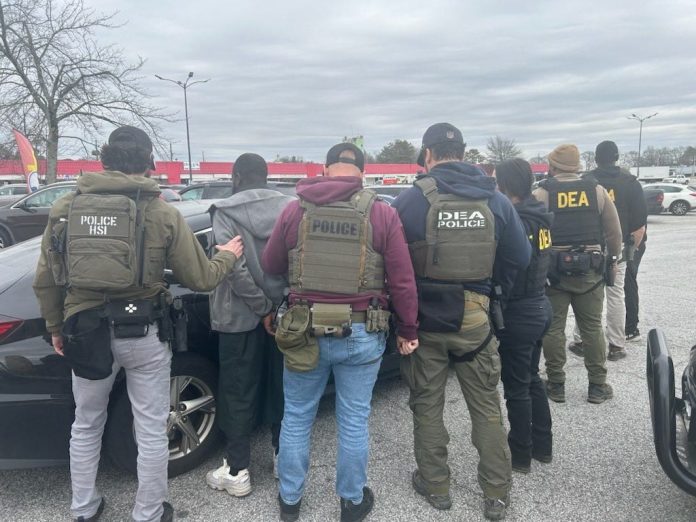
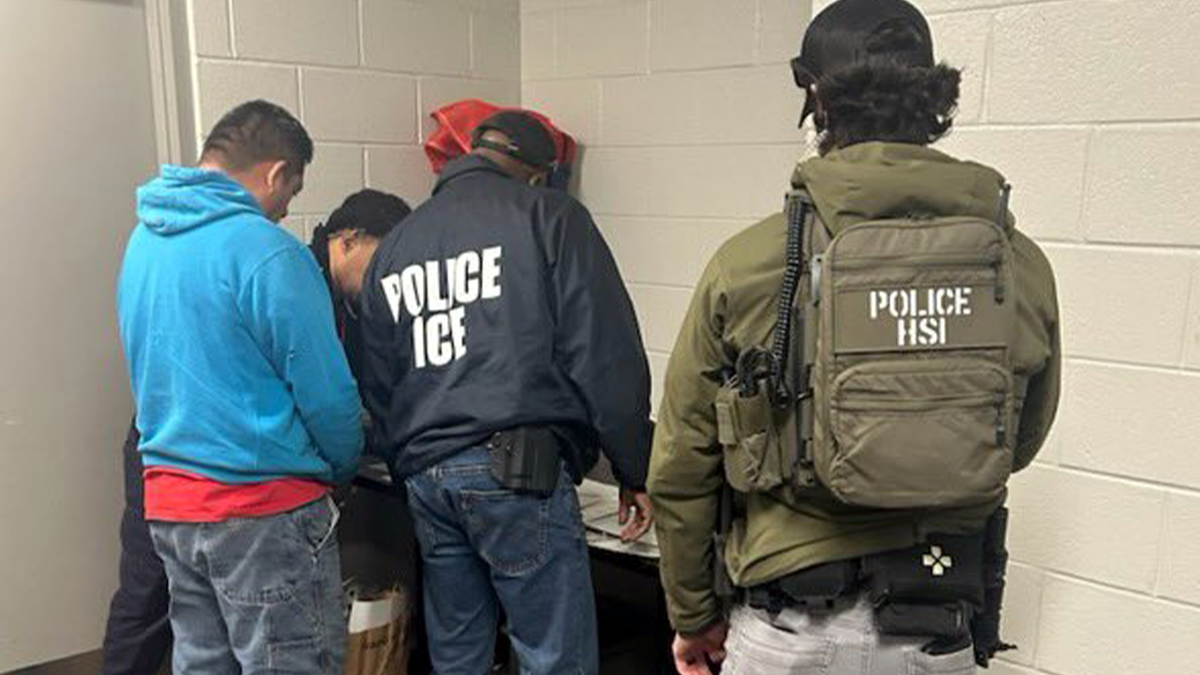
Immigration and Customs Enforcement (ICE) made nearly 1,000 arrests on Sunday, with lots of activity taking place in the southeastern United States, according to various ICE field offices.

The agency said law enforcement officers arrested 956 people and lodged 554 detainers, which means “there’s probable cause to believe that the person is removable from the United States under federal immigration law.”

The ICE field office in Miami, Florida, shared the details behind five of the illegal aliens arrested – three in Florida and two in Puerto Rico.

TRUMP’S ICE RACKS UP HUNDREDS OF ARRESTS, INCLUDING ILLEGAL IMMIGRANTS ARRESTED FOR HORROR CRIMES

Immigration and Customs Enforcement had yet another busy day on Sunday, arresting nearly 1,000 people and lodging 554 detainers as President Donald Trump attempts to secure the border. (Immigration and Customs Enforcement)

The two arrested in Puerto Rico were residents of the Dominican Republic, and one was charged with domestic violence while the other was charged with driving under the influence of liquor.

A Nicaraguan national was arrested at the Broward County Jail for aggravated assault with a deadly weapon, unlawful carrying of a concealed weapon, discharging a firearm in public and driving with a suspended license.

ICE officers arrest amn

Nearly 1,000 people were arrested Saturday morning, according to the ICE. (Immigration and Customs Enforcement)

FIRST IMAGES OF ICE MASS DEPORTATION EFFORTS SHOW ARRESTS OF MS-13 GANG MEMBERS, MURDER SUSPECTS

A Jamaica resident with charges for possession of oxycodone, displaying a firearm during a felony offense and operating a motor vehicle without a valid license was arrested, while a Mexico resident at the Martin County Jail was charged with traffic offenses and convicted of multiple DUIs. 

“#ICE protects America by enforcing US immigration laws to preserve national security & public safety,” the Miami field office said on X.

Federal agents arrest illegal alien

ICE was assisted by the agents from the Drug Enforcement Administration and Homeland Security Investigations. (Immigration and Customs Enforcement)

CLICK HERE TO GET THE FOX NEWS APP

Since President Donald Trump took office last Monday, mass deportation operations have taken place each day, with as many as over 400 arrests made on the first day.

“Removing criminal aliens from our communities isn’t just enforcement—it’s protection. Ensuring the safety and security of our neighborhoods starts with upholding the law,” the Atlanta field office said.

Rebels Backed by Rwanda Announce Capture of Key City in Eastern Congo

0

A rebel militia backed by Rwanda has announced the capture of the city of Goma in eastern Democratic Republic of Congo, a major victory for the group and one of the most significant escalations in the conflict between the two countries in years.

The militia, known as M23, briefly occupied Goma once before, in 2012, then was defeated and lay dormant for almost a decade. Now it has come roaring back, aiming to occupy the region for the long term and exploit its valuable rare minerals, according to United Nations experts.

This time, M23 appears to be in a stronger position to keep hold of Goma, a city made up mainly of people who left their homes in terror and will now have to live under the rule of one of the armed groups they fled.

A spokesman for M23 announced the “liberation of the city of Goma” in a post on X, saying Congolese military personnel had to hand over their arms to the U.N. and assemble in a stadium before 3 a.m. There was no confirmation that had been completed yet, though, and there were scattered reports of gunfire in the city into Monday morning.

The conflict in eastern Congo — an area about the size of Michigan — was once labeled Africa’s World War. It has been going on since the 1990s, and has involved dozens of armed groups, of which M23 is currently dominant.

The rebels plan to occupy and exploit the region for the long term, according to the U.N. and the United States, which say the group is funded and directed by Congo’s much smaller neighbor Rwanda. Rwanda denies those accusations.

The rebels’ advance on Goma, which began with an offensive in the region launched this month, escalated rapidly over the past three weeks, prompting people to flee to — and from — the city.

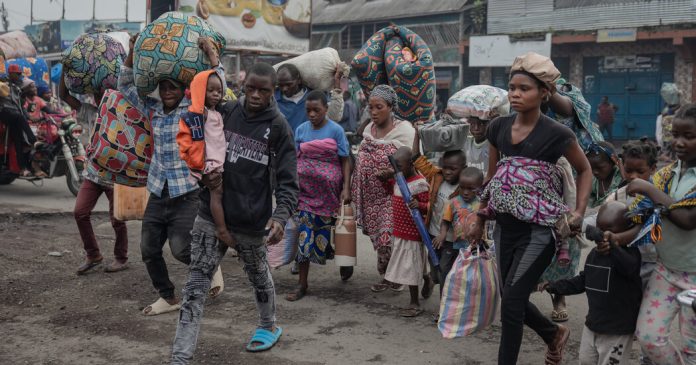
On Sunday morning, thousands of people arrived in Goma from areas north of the city, some toting the few possessions they had managed to grab in pieces of cloth tied around their foreheads, others carrying babies only a few days old. Many had already been displaced and were fleeing bombs that had fallen near camps. Others had left their villages, which were caught in the crossfire between M23 and the Congolese armed forces.

Camps on the outskirts of Goma that had hosted more than 300,000 people completely emptied out in a few hours, the U.N. said.

On Friday, the military governor of North Kivu, the province of which Goma is the capital, was fatally wounded on the battlefield, according to a Congolese military spokesman. The circumstances of his death remained murky, but the spokesman said that the governor, Gen. Peter Cirimwami, died as he was being evacuated to Kinshasa, Congo’s capital.

On Saturday, the United Nations peacekeeping mission in Goma evacuated many of its staff members from the city, putting them on buses to the airport with plans to fly out to Entebbe, in neighboring Uganda.

In 2012, Rwanda came under intense international pressure to stop backing M23, and as a result, the militia was defeated the following year. But it is unclear whether such pressure can be summoned again, experts said. Rwanda has built up its relationships with Western nations since then, and has become less dependent on aid.

At an emergency meeting of the United Nations Security Council on Sunday, the United States and other members condemned Rwanda’s actions, but stopped short of calling for sanctions. Bintou Keita, the head of the U.N. peacekeeping mission in Congo, told the meeting that three peacekeepers had been killed trying to protect Goma and a nearby town, Saké, from M23’s advance. She also said that the rebels had closed the airspace over Goma.

“In other words, we are trapped,” she said.

As the rebels advanced on Goma, an already dire humanitarian situation was becoming even worse. Over 400,000 people have fled their homes since the start of this year, according to the U.N. refugee agency, as M23 rebels have attacked new areas of North Kivu province, where Goma is, and South Kivu. They joined 4.6 million people who were already displaced in Congo’s east.

And still, people poured into Goma, often in long columns.

Some pushed wheelbarrows with a few salvaged belongings. Some had bicycles or carried mattresses on their heads and backs. Many of them had life-threatening injuries.

Myriam Favier, the head of the International Committee of the Red Cross’s sub-delegation in Goma, said on Friday that the day before, more than 100 people had arrived within 24 hours at the hospital where she worked — normally the number of people who arrive in a whole month.

“They’re coming from everywhere,” she said. “They’re coming from all fronts.”

Ms. Favier described medical staff treating patients with mortar or shrapnel wounds and said that the number of minors with serious injuries had been increasing significantly. She called on those using heavy artillery to reduce their attacks, saying that so many people were arriving with head wounds and chest trauma that the hospital had run out of beds and had to put patients on mattresses in the parking lot.

Across Goma, schools were being turned into shelters for displaced people. Families were stocking up what supplies they could so they did not have to venture out.

Many of the people who fled had sought sanctuary in Goma, knowing it was in the rebels’ sights, but having no other option.

As the city fell into M23’s hands, they hid where they could, many of them hungry, cold or badly injured. Some slept in the street, others in hospitals.

Solange Safi Ndakwinja was trying to look after her three daughters, who were badly injured by a bomb that exploded at an army checkpoint.

“My hope is God will help us,” Ms. Ndakwinja said. “For the rest, we don’t know what will happen.”

Elian Peltier contributed reporting from Dakar, Senegal, and Declan Walsh from Nairobi, Kenya.

White House says Colombia agrees to take deported migrants after Trump tariff threat : NPR

0

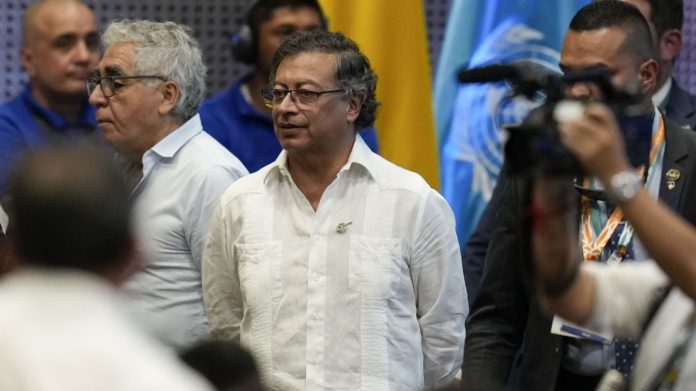
Colombia’s President Gustavo Petro arrives at the opening ceremony of COP16, a United Nations’ biodiversity conference, in Cali, Colombia, Oct. 20, 2024.

Fernando Vergara/AP


hide caption

toggle caption

Fernando Vergara/AP

BOGOTA, Colombia — The White House claimed victory in a showdown with Colombia over accepting flights of deported migrants from the U.S. on Sunday, hours after President Donald Trump threatened steep tariffs on imports and other sanctions on the longtime U.S. partner.

Long close partners in anti-narcotics efforts, the U.S. and Colombia clashed Sunday over the deportation of migrants and imposed tariffs on each other’s goods in a show of what other countries could face if they intervene in the Trump administration’s crackdown on illegal immigration. The White House held up the episode as a warning to other nations who might seek to impede his plans.

Earlier, the U.S. president had ordered visa restrictions, 25% tariffs on all Colombian incoming goods, which would be raised to 50% in one week, and other retaliatory measures sparked by President Gustavo Petro’s decision to reject two Colombia-bound U.S. military aircraft carrying migrants after Petro accused Trump of not treating immigrants with dignity during deportation. Petro also announced a retaliatory 25% increase in Colombian tariffs on U.S. goods.

Trump said the measures were necessary because Petro’s decision “jeopardized” national security in the U.S. by blocking the deportation flights.

“These measures are just the beginning,” Trump wrote on his social media platform Truth Social. “We will not allow the Colombian Government to violate its legal obligations with regard to the acceptance and return of the Criminals they forced into the United States.”

Press secretary Karoline Leavitt said in a late Sunday statement that the “Government of Colombia has agreed to all of President Trump’s terms, including the unrestricted acceptance of all illegal aliens from Colombia returned from the United States, including on U.S. military aircraft, without limitation or delay.”

Leavitt said the tariff orders will be “held in reserve, and not signed.” But Leavitt said Trump would maintain visa restrictions on Colombian officials and enhanced customs inspections of goods from the country, “until the first planeload of Colombian deportees is successfully returned.”

The Colombian government late Sunday said it considered as “overcome” the episode with the Trump administration and Petro reposted the statement from the White House on X.

“We have overcome the impasse with the United States government,” said Colombian Foreign Minister Luis Gilberto Murillo. “We will continue to receive Colombians who return as deportees, guaranteeing them decent conditions as citizens subject to rights.”

Murillo added that the South American country’s presidential aircraft is available to facilitate the return of migrants who were to arrive hours earlier on the U.S. military airplanes.

Earlier Sunday, U.S. Secretary of State Marco Rubio announced he was authorizing the visa restrictions on Colombian government officials and their families “who were responsible for the interference of U.S. repatriation flight operations.” They were being imposed on top of the State Department’s move to suspend the processing of visas at the U.S. Embassy in Colombia’s capital, Bogota.

Petro had said earlier that his government would not accept flights carrying migrants deported from the U.S. until the Trump administration creates a protocol that treats them with “dignity.” Petro made the announcement in two X posts, one of which included a news video of migrants reportedly deported to Brazil walking on a tarmac with restraints on their hands and feet.

“A migrant is not a criminal and must be treated with the dignity that a human being deserves,” Petro said. “That is why I returned the U.S. military planes that were carrying Colombian migrants… In civilian planes, without being treated like criminals, we will receive our fellow citizens.”

After Trump’s earlier tariff threat, Petro said in a post on X that he had ordered the “foreign trade minister to raise import tariffs from the U.S. by 25%.”

Colombia has traditionally been the U.S.’s top ally in Latin America. But their relationship has strained since Petro, a former guerrilla, became Colombia’s first leftist president in 2022 and sought distance from the U.S.

Colombia accepted 475 deportation flights from the U.S. from 2020 to 2024, fifth behind Guatemala, Honduras, Mexico and El Salvador, according to Witness at the Border, an advocacy group that tracks flight data. It accepted 124 deportation flights in 2024.

Colombia is also among the countries that last year began accepting U.S.-funded deportation flights from Panama.

The U.S. government didn’t immediately respond to a request for comment from The Associated Press regarding aircraft and protocols used in deportations to Colombia.

“This is a clear message we are sending that countries have an obligation to accept repatriation flights,” a senior administration official told AP. The official spoke on the condition of anonymity because they were not authorized to discuss issue publicly.

Rubio in a statement said Petro “canceled his authorization” for the flights when the aircraft were in the air.

Colombians emerged in recent years as a major presence on the U.S. border with Mexico, aided in part by a visa regime that allows them to easily fly to Mexico and avoid trekking though the treacherous Darien Gap. They ranked fourth with 127,604 arrests for illegal crossings during a 12-month period through September, behind Mexicans, Guatemalans and Venezuelans.

Mexico hasn’t imposed visa restrictions on Colombians, as they have on Venezuelans, Ecuadoreans and Peruvians.

Petro’s government in a statement later announced that the South American country’s presidential aircraft had been made available to facilitate the return of migrants who were to arrive hours earlier on the U.S. military airplanes and guarantee them “dignified conditions.”

As part of a flurry of actions to make good on Trump’s campaign promises to crack down on illegal immigration, his government is using active-duty military to help secure the border and carry out deportations.

Two U.S. Air Force C-17 cargo planes carrying migrants removed from the U.S. touched down early Friday in Guatemala. That same day, Honduras received two deportation flights carrying a total of 193 people.

Colombia is the U.S.’s fourth-largest overseas supplier of crude oil, shipping about 209,000 barrels of oil per day last year, although booming domestic production has reduced the U.S.’ dependence on foreign oil. The South American country is also the U.S.’s largest supplier of fresh cut flowers.

Texas boy, 12, facing charges after leading deputies in pursuit in stolen vehicle, sheriff’s office says

0

A 12-year-old boy was charged after leading deputies in a chase while driving a stolen vehicle in Texas, according to officials.

The Harris County Sheriff’s Office said deputies located a stolen Kia Rio in the 12200 block of Antoine Drive on Friday, Fox 26 reported.

Deputies then began chasing the suspect driving the vehicle, but the pursuit came to an end when the vehicle flipped.

7 SAN ANTONIO POLICE OFFICERS SHOT IN CONFRONTATION WITH SUSPECT WITH 3 PRIOR ARRESTS

Police lights

A 12-year-old boy was charged after leading deputies in a chase while driving a stolen vehicle. (iStock)

The suspect was revealed to be a 12-year-old boy after the incident. His identity was not released due to him being a child.

The boy was processed and released to his mother, deputies said.

TEXAS MOTHER CHARGED AFTER FOUND LYING OUTSIDE IN FREEZING TEMPS WITH TWO BABIES: SHERIFF’S OFFICE

Police car

The boy was processed and released to his mother. (iStock)

CLICK HERE TO GET THE FOX NEWS APP

The owner of the stolen vehicle has not filed charges, but officials said charges were filed for evading in a motor vehicle.

Monday Briefing – The New York Times

0

Fragile cease-fires in Lebanon and Gaza were put to the test yesterday.

In Southern Lebanon, Israeli forces killed or injured scores of people, Lebanese officials said, and in Gaza, Israel prevented thousands of uprooted Palestinians from moving back to their homes, saying Hamas had violated the terms of their truce, including by not adhering to the agreed order of hostage releases.

By the end of the day, however, Israel and Hamas said understandings had been reached via mediators to resolve their dispute, and the White House issued a statement indicating that in Lebanon, an arrangement for an initial 60-day truce would be extended until Feb. 18.

Negotiators had hoped that the cease-fire in Lebanon would become permanent by now, securing a measure of calm in a turbulent region. Thousands of Lebanese displaced by the war have poured onto roads leading south as they aim to return home.

The latest: Displaced Gazans in the enclave’s south can start returning on foot to their homes in the north starting at 7 a.m. local time this morning, followed by vehicles via a different route two hours later, according to an Israeli military spokesman.

Diplomacy: President Trump has pushed to “clean out” the Gaza Strip, including by asking Egypt and Jordan to take in hundreds of thousands of Palestinians. His suggestion drew flat rejections from those countries, two of the most important U.S. allies in the Middle East.

Related: A sudden halt to U.S. foreign aid will not apply to emergency food aid and weapons support to Israel and Egypt.


The U.S. and Colombia narrowly avoided a trade war yesterday, with President Gustavo Petro of Colombia and President Trump sparring over the deportation of Colombian migrants from the U.S.

Late last night, Petro backed down and agreed to receive all deportees from the U.S., including those on military planes. Trump had threatened to impose steep tariffs and a raft of other penalties in response to Petro’s announcement that he had turned back military planes carrying deportees to Colombia.

In a statement yesterday, the White House said Petro had agreed to all of its terms. It said tariffs and sanctions would be “held in reserve” and that other penalties would remain in effect until the first planeload of deportees had arrived in Colombia. Colombia’s foreign ministry also released a statement, saying that it would accept deportation flights and “guarantee dignified conditions” for those Colombians on board.

In other Trump administration news:


In an election that was widely dismissed as rigged, Europe’s longest-serving leader, President Aleksandr Lukashenko of Belarus, cruised to his seventh election victory in a row yesterday.

A survey of voters leaving polling places that was released by state media yesterday evening showed the president getting 87.6 percent of the vote, more than the 81 percent he claimed to have won in 2020. Exit polls are controlled by the state, like all aspects of elections in Belarus, and generally reflect the ultimate outcome.

Caity Weaver, a Times magazine writer, loves sugar. Like, really loves it. Her home contains stashes of Dunkaroos, pouches of Gushers and packs of Strawberry Sensation Fruit Roll-Ups, auto-delivered from Amazon.

Determined to kick the habit and learn about sugar dependence, Weaver traveled to a food therapy facility in Austria to try to change her ways. It was, she says, a journey into hell.

Lives lived: Carol Downer, a leader in the feminist women’s health movement who drew national fame for her role in a case known as the Great Yogurt Conspiracy, has died at 91.

Two art fraud rings in a remote Canadian city produced thousands of paintings that were peddled as works by Norval Morrisseau, Canada’s most celebrated Indigenous artist.

By the time it all came out — decades later — the works had collectively fetched millions of dollars across Canada, making it onto the walls of the country’s top galleries and universities. They were purchased by retired schoolteachers, billionaire art collectors and even a rock star.

“None of us knew anything about art,” said one of the hard-boiled homicide detectives who helped crack the case. They carried out their investigation by reconstructing Morrisseau’s life so they could understand how and what he painted, and how he signed his works.

Read about the saga here.


That’s it for today’s briefing. It’s great to be back. — Natasha

Reach Natasha and the team at [email protected].

Glenn Close questions truth of AI in Hollywood

0

Glenn Close acknowledged the ever-changing landscape of the entertainment industry during a stop in Park City, Utah for the Sundance Film Festival.

The Academy Award-nominated actress has been trying to keep her “equilibrium” lately, ahead of celebrating Sundance Institute icon Michelle Satter at a gala fundraiser.

“I’m very lucky to have a job,” Close told The Hollywood Reporter. “There were so many people impacted in LA already, and then now with the fires. I was astounded at how few jobs there are in our profession. I’m a big reader of history, and unfortunately, I think not enough people in this country understand the history and what we’ve just gotten ourselves into. That’s very dangerous.

“On top of that is [artificial intelligence]. What is going to be truth? What is true is going to be a big question.”

LISA KUDROW BEGAN TO FEAR AI AFTER SEEING TOM HANKS MOVIE

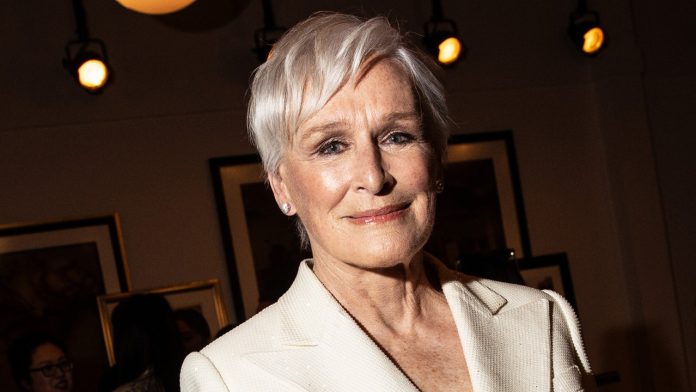
Glenn Close wonders how artificial intelligence will affect Hollywood. (Lexie Moreland)

Close told the outlet she had recently finished reading Yuval Noah Harari’s novel, “Nexus: A Brief History of Information Networks from the Stone Age to AI,” a book which she found “incredible,” yet “more terrifying than anything I’ve read.”

When asked her interpretation of AI, Close said, “Depends on how it’s handled.” 

“I don’t want my image or my voice to be reconstructed,” she noted. “I mean, people need jobs. It’s a sad dilemma.” 

NICOLAS CAGE WARNS HOLLYWOOD ACTORS THAT AI ‘WANTS TO TAKE YOUR INSTRUMENT’

Close pondered, “Is it progress that less people will work because of it? I don’t know. I think we’re losing one thing that a place like Sundance and what Michelle has done is so important — stories about what it means to be a human being. We have to cling to that.

“We have to keep coming back and be inspired by things that teach us, that help us with our emotions to know what it means to be human and [to always] to look into somebody else’s eyes — not a screen — but another human being’s eyes. If we lose that, it’ll be a very slippery slope, I’m afraid.”

Glenn Close Oscars

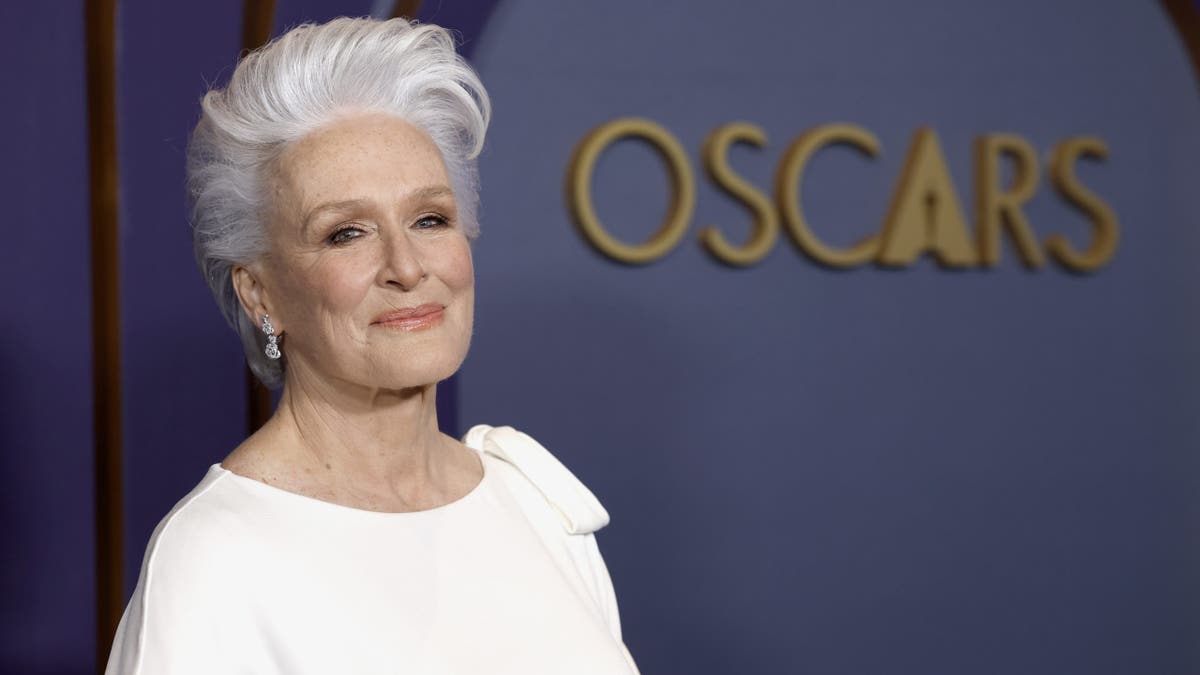
The “Hillbilly Elegy” actress debated how Hollywood would receive AI. (Frazer Harrison)

Close isn’t the only star as of late to question the use of artificial intelligence in Hollywood.

“I don’t want my image or my voice to be reconstructed. I mean, people need jobs. It’s a sad dilemma.” 

— Glenn Close

LIKE WHAT YOU’RE READING? CLICK HERE FOR MORE ENTERTAINMENT NEWS

Last year, Nicolas Cage warned actors about the need to control their images amid the rise in popularity of AI.

“There is a new technology in town. It’s a technology that I didn’t have to contend with for 42 years until recently. But these 10 young actors, this generation, most certainly will be, and they are calling it ‘EBDR.’ This technology wants to take your instrument. We are the instruments as film actors. We are not hiding behind guitars and drums,” Cage said while accepting the Icon Award at the 25th Newport Beach Film Festival in October.

EBDR stands for “employment-based digital replica,” one of two digital replicas allowed following the deal settled by the actors’ union SAG-AFTRA and the studios following last year’s dual strikes.

Nicolas Cage standing at a podium wearing a white coat.

Nicolas Cage warned actors against the use of artificial intelligence. (Jesse Grant)

Per the rules in the contract, an “EBDR is one created in connection with your employment on a motion picture” and may require something like having an actor’s body scanned. Compensation is based on how much a performer would have worked in person for the scenes the digital replica is used in, and performers are entitled to residuals from their replica’s appearance in the finished product.

“The studios want this so that they can change your face after you’ve already shot it — they can change your face, they can change your voice, they can change your line deliveries, they can change your body language, they can change your performance,” Cage warned. 

CLICK HERE TO SIGN UP FOR THE ENTERTAINMENT NEWSLETTER

“I’m asking you, if you’re approached by a studio to sign a contract, permitting them to use EBDR on your performance, I want you to consider what I am calling ‘MVMFMBMI’ — my voice, my face, my body, my imagination — my performance, in response. Protect your instrument.”

Robert Downey Jr. admitted he intends to sue if his likeness is used with AI, while Ben Affleck believes movies will be the last thing artificial intelligence replaces.

Ben Affleck at film festival

Ben Affleck believes that AI will help more filmmakers create projects.  (Marilla Sicilia)

CLICK HERE TO GET THE FOX NEWS APP

“AI can write you excellent imitative verse that sounds Elizabethan, it cannot write you Shakespeare,” Affleck said at CNBC’s Delivering Alpha 2024 investor summit. “The function of having two actors, or three or four actors in a room and the taste to discern and construct, that is something that currently entirely eludes AI’s capability and I think will for a meaningful period of time.”

He added, “What AI is going to do is going to disintermediate the laborious, less creative and more costly aspects of filmmaking that will allow costs to be brought down, that will lower the barrier for entry, that will allow more voices to be heard, that will make it easier for the people that want to make ‘Good Will Huntings’ to go out and make it.”

Fox News Digital’s Elizabeth Stanton contributed to this report.
AOC roasted over post about Colombia tariffs and coffee prices

0

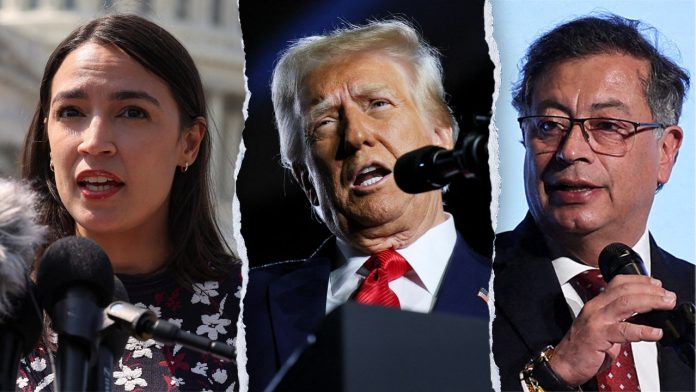
Rep. Alexandria Ocasio-Cortez, D-N.Y., weighed in on President Donald Trump’s ongoing tariff feud with Colombian President Gustavo Petro – but not every social media user bought her comments.

The spat between Trump and Petro began when the Colombian leader refused to accept two deportation flights over the weekend, prompting Trump to unleash retaliatory measures. Both world leaders threatening to raise tariffs on imported products by 25% to 50%, and Trump ordered a travel ban and visa revocations for all Colombian government officials.

“I was just informed that two repatriation flights from the United States, with a large number of Illegal Criminals, were not allowed to land in Colombia,” Trump wrote on Truth Social. “This order was given by Colombia’s Socialist President Gustavo Petro, who is already very unpopular amongst his people.”

“Petro’s denial of these flights has jeopardized the National Security and Public Safety of the United States, so I have directed my Administration to immediately take the following urgent and decisive retaliatory measures.”

COLOMBIAN LEADER QUICKLY CAVES AFTER TRUMP THREATS, OFFERS PRESIDENTIAL PLANE FOR DEPORTATION FLIGHTS

AOC gave her take on the Trump-Petro feud in an X post on Sunday. (Reuters)

In an X post on Sunday, Ocasio-Cortez insisted that American consumers are the only party that pay tariffs.

“To ‘punish’ Colombia, Trump is about to make every American pay even more for coffee,” the New York congresswoman said in a post. “Remember: WE pay the tariffs, not Colombia.”

“Trump is all about making inflation WORSE for working class Americans, not better,” she added. “He’s lining the pockets of himself and the billionaire class.”

Petro appeared to be a fan of AOC’s post, reposting it on his own X account.

While tariffs do have the potential to inflate prices, the importer, which is the company or entity bringing the goods into the U.S., will pay the actual tariff to U.S. Customs and Border Protection (CBP).

But inflated prices are not guaranteed – sometimes, tariffs can reduce the world price of an object as suppliers rush to retain access to the large U.S. market. It is possible that coffee suppliers in different countries, such as Vietnam and Brazil – which produce more coffee than Colombia – would lower or maintain their prices.

BILLIONAIRES COZY UP TO TRUMP WITH SEVEN FIGURE INAUGURAL DONATIONS AFTER PAST FEUDS WITH PRESIDENT

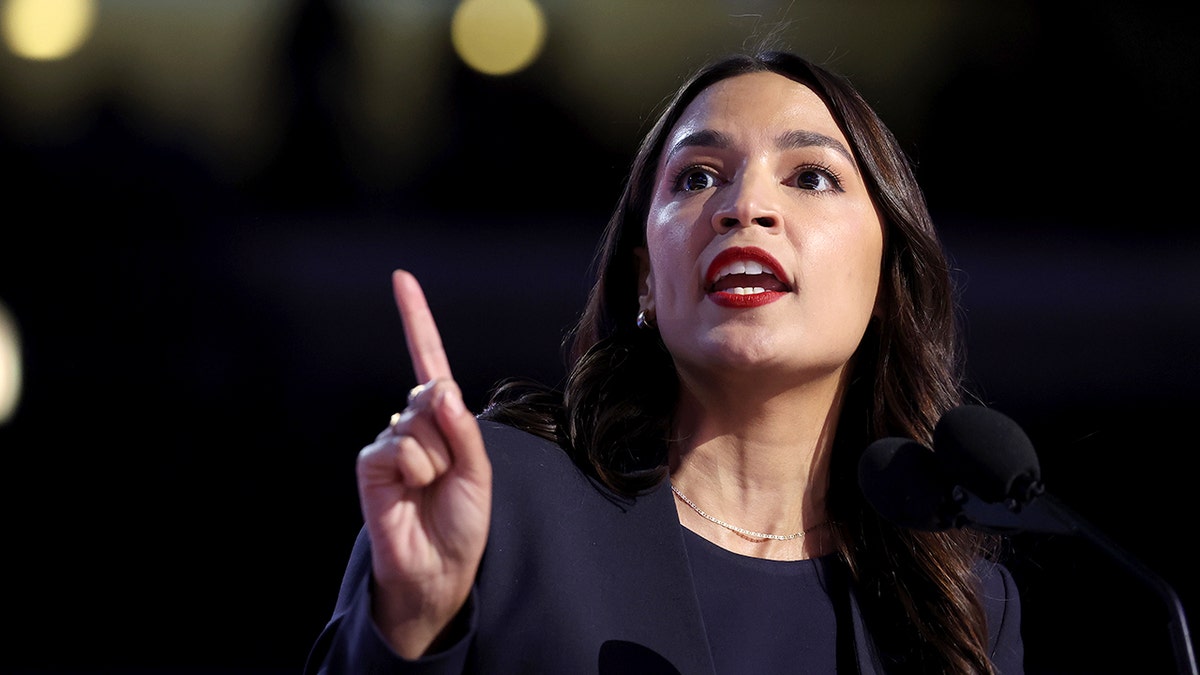
Rep. Alexandria Ocasio-Cortez pointing her finger

Rep. Alexandria Ocasio-Cortez, D-N.Y., slammed Trump for threatening Colombia’s president with tariffs.  ( Justin Sullivan/Getty Images)

Ocasio-Cortez’s tweet racked up over 47,000 likes from supporters as of 8 p.m., but received scorn from Trump supporters and tariff advocates.

“World record. 35 minutes and the tweet already aged like hot milk,” the social media account Catturd wrote, referencing Petro’s immediate offer to transport Colombian migrants on his presidential plane.

“Who wants to tell her that there are other countries that export coffee, not just Columbia,” California State Assembly Bill Essayli wrote. 

Conservative commentator John Cardillo echoed Essayli’s sentiment, suggesting that the South American country “should take their illegal aliens back.”

“Plenty of other nations grow coffee beans,” Cardillo wrote on X. “We can buy the coffee from them.”

Activist Adam Lowisz responded to Ocasio-Cortez by insisting that the Democratic politician “doesn’t understand how tariffs work.”

“Coffee from Colombia will increase in price, so we will purchase coffee from suppliers in other countries who do take back their illegals,” the conservative X user wrote. “Businesses will hesitate to invest in Colombia any further if they continue to be bad actors.”

CLICK HERE TO GET THE FOX NEWS APP

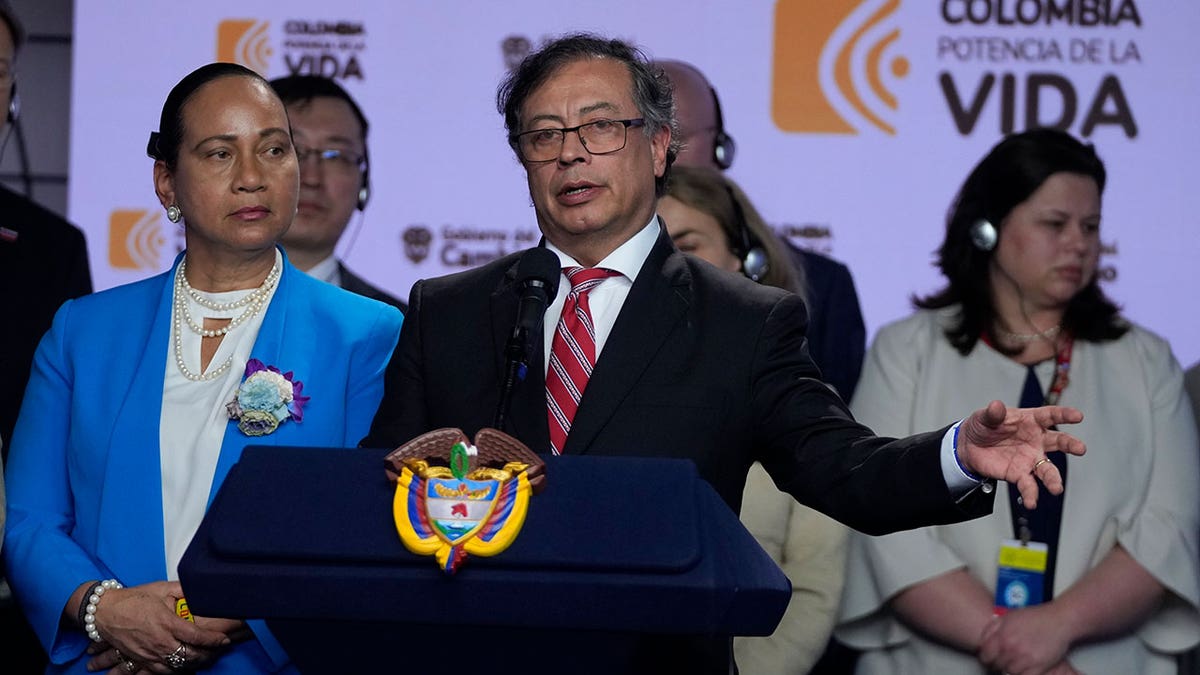
Gustavo Petro speaking to the press

Colombia’s President Gustavo Petro offered up his own presidential plane for deportation flights after Trump threatened the country with tariffs and more. (AP Photo/Fernando Vergara, File)

Fox News Digital reached out to Ocasio-Cortez’s office for additional comment.

Fox News Digital’s Kyle Schmidbauer contributed to this report. 
A Hardened Detective and an Angry Rock Star: How a Vast Art Fraud Was Cracked

0

Two art fraud rings in a remote Canadian city produced thousands of paintings sold in galleries as works by Norval Morrisseau, Canada’s most celebrated Indigenous artist.


Tim Tait put two and two together when he went to sell some of his paintings to a law firm in downtown Thunder Bay two decades ago. He spotted one of his other works already there — but with somebody else’s signature on it.

And not just anybody’s. It read “Copper Thunderbird,” a.k.a. the “Picasso of the North.” Real name Norval Morrisseau, Canada’s most famous Indigenous artist whose original style shattered the country’s idea of art and elbowed its way into its most important museum.

“I called the cops,” said Mr. Tait, a local artist in Thunder Bay, Ontario, who is also Indigenous. “All they did was laugh at me and ridicule me on the phone.”

“And I said, ‘When it comes out, I’ll be singing like a bird.’”

By the time it all came out — decades later — two criminal rings in Thunder Bay had knocked off thousands of bogus Norval Morrisseaus that collectively fetched millions of dollars across Canada. The fakes, which included rebranded paintings by Mr. Tait and other Indigenous artists, made it onto the walls of the country’s top galleries and universities. They were purchased by retired schoolteachers, billionaire art collectors and even a rock star.

The leaders of the Thunder Bay rings have pleaded guilty to fraud in the past year and are now imprisoned. Thunder Bay — an isolated city on Lake Superior’s north shore that drug dealers from Toronto have turned into Canada’s homicide capital — has also emerged as the epicenter of the biggest art fraud in the country’s history.

The convictions came a quarter-century after the authenticity of many Morrisseaus was first publicly questioned — and only after a series of unusual events linking the rock star; a cold-case murder of a teenager; his aging, grieving parents; and the hard-boiled homicide detectives initially skeptical of art fraud. The detectives ended up mastering the finer points of Morrisseau’s Woodlands style of art.

“None of us knew anything about art,” Det. Jason Rybak of the Thunder Bay Police Service said during a recent drive through the city, whose muted colors were further drained by fresh snow and a cloud-filled sky.

Recalling the first raid of a ringleader’s house, Detective Rybak, who led the investigation, said: “Next thing you know, we have these paintings. And we’re like, ‘Oh yeah, what now?’”

The police knew of Morrisseau, though. A member of the Ojibwe First Nation, he was born on a reserve northeast of Thunder Bay. But Morrisseau had long been a fixture on the city’s streets where he hawked his artwork.

Morrisseau became famous for creating the Woodland School of painting, a fusion of Ojibwe and European styles. His paintings touched on Indigenous beliefs, depicting people, animals and the physical and spiritual worlds in bright colors and X-ray-like motifs.

Canada’s artistic establishment had long considered works by Indigenous artists to be ethnography, not fine art. But Morrisseau’s work changed that starting in the 1960s, as it earned acclaim in Toronto, the United States and France, where he became known as the Picasso of the North.

In 2006, a year before his death at 75, the National Gallery of Canada, the country’s most important museum, held a retrospective of Morrisseau’s art — the first time a contemporary Indigenous artist was given such a spotlight. But the homage was marred by news reports of the proliferation of suspected knockoffs. Morrisseau himself had spoken out against the fraud and identified fakes with his forged signature.

The stories never led anywhere because gallery owners, auctioneers and others with a financial stake in counterfeit Morrisseaus fiercely denied the existence of widespread fraud, said Jonathan Sommer, a lawyer who represented three people who sued galleries for selling them counterfeits.

Many wealthy collectors were too embarrassed to admit they had bought fakes, Mr. Sommer said. But one client happened to be a rock star: Kevin Hearn, the keyboardist for the Barenaked Ladies, a Canadian band that has sold more than 15 million albums.

Mr. Hearn, a onetime choirboy, loved “the bold colors and the black lines” in the paintings of Morrisseau, whose work was influenced by stained-glass church windows. In 2005, he bought a painting of animals in a circle on a green canvas called, “Spirit Energy of Mother Earth,” paying 20,000 Canadian dollars, about $16,500 at the time, at a Toronto gallery that reassured him of its authenticity.

After learning a few years later that it was a fake, Mr. Hearn successfully sued the gallery even as he weathered online attacks from people at risk of losing financially by the exposing of sham Morrisseaus.

“I was scared for my family,” Mr. Hearn said in an interview. “They were posting photos of my special-needs daughter online saying that I was a bad father for pursuing this litigation.”

Mr. Hearn also backed the making of a documentary, “There Are No Fakes,” on the broader fraud involving Morrisseau.

“I feel like the relationship between an artist’s work and the people that take that work into their heart is sacred,” he said.

The documentary featured information on Gary Lamont, a Thunder Bay man convicted of sexual abuse who was also, according to the police, a small-time drug dealer and a suspect in the 1984 killing of a 17-year-old named Scott Dove.

When Scott’s parents learned he had been mentioned in the documentary, they reached out to an investigator who had been looking into the cold case: Detective Rybak, who said that Mr. Lamont was still a suspect in the murder.

Detective Rybak, 49, had spent his career on homicides and drugs. When the detective called Mr. Hearn and his lawyer, Mr. Sommer, he was focused on the cold case and showed little interest in the fake Morrisseaus, Mr. Sommer said. But that changed when the detective became aware of the potentially strong case against Mr. Lamont — for art fraud.

“Once he got it,” Mr. Sommer said, “he became like a pit bull.”

Detective Rybak and two colleagues, Det. Sean Verescak and Det. Kevin Bradley, said they carried out their investigation by reconstructing Morrisseau’s life so they could understand how and what he painted, and how he signed his works.

Morrisseau, who was sexually abused at the Roman Catholic residential school he was sent to at 6, according to biographies, battled alcoholism for most of his life and, at one point, was homeless in Vancouver.

“He had lots of demons,” Detective Rybak said.

After his international success, Morrisseau returned to Thunder Bay in the 1970s.

It was a blue-collar town where people worked at paper mills and grain elevators. Toronto was a 16-hour drive, a place children visited for the first time on eighth-grade field trips. Few in Thunder Bay were aware of Morrisseau’s accomplishments. Locals knew him simply as the Indigenous artist who milled around downtown offering his drawings outside a bank in exchange for money, food or alcohol.

During one winter storm, Peter Kantola was driving when Morrisseau appeared out of nowhere and flagged him down. The artist had his hands deep in the pockets of a flimsy jacket.

“He was half frozen, the snow was blasting his whole face,” recalled Mr. Kantola, 84, a retired high school science teacher.

Mr. Kantola gave Morrisseau a lift, and, after that, would do so whenever he ran into him. Morrisseau, Mr. Kantola said, gave him two large paintings that now grace his living room.

Morrisseau also befriended Gary Lamont, the future art-fraud ringleader, in the 1970s, according to Mr. Lamont’s guilty plea statement. During the course of their friendship, Mr. Lamont occasionally set up Morrisseau in an apartment and covered the rent.

Mr. Lamont’s longtime partner, Linda Tkachyk, would take money, food and alcohol to the artist, her niece Amanda Dalby recalled. Ms. Dalby, 40, lived with her aunt and Mr. Lamont when she was a child.

On one visit, Morrisseau gave Ms. Dalby and her sister a painting.

“He said it would be enough to pay for our schooling,” Ms. Dalby said, adding that Mr. Lamont later took it.

According to Mr. Lamont’s guilty plea, he started producing counterfeit Morrisseaus in 2002 and continued until 2015. He was sentenced last December to five years in prison.

In the house where Ms. Dalby stayed, Indigenous artists, including a nephew of Morrisseau’s, painted nonstop inside a tiny room that Mr. Lamont kept locked, she said.

According to his guilty plea, Mr. Lamont also traded money and marijuana for paintings by Mr. Tait — the local artist who vowed to sing like a bird and helped expose Mr. Lamont. Mr. Tait stopped supplying him with paintings after realizing they were being passed off as Morrisseaus.

“He took advantage of me pretty bad,” Mr. Tait said one recent evening as he painted on a large canvas, his granddaughter bounding around their apartment. “That was my biggest weakness, drugs. I’m not like that anymore — 20 years in August.”

Hundreds of paintings produced by the Indigenous artists were rebranded with Morrisseau’s signature in Cree syllabics — “Copper Thunderbird” — and sold for 2,000 to 10,000 Canadian dollars.

By the end of their investigation, the detectives had unearthed a second forgery ring in Thunder Bay. Under its leader, a housepainter named David Voss, fake Morrisseaus were made in assembly-line fashion with Mr. Voss sketching outlines that were colored in by multiple individuals, each responsible for a single hue. Mr. Voss pleaded guilty to fraud in June. The case of a third ring, based in southern Ontario, is still working its way through the courts.

According to the detectives, Mr. Lamont used drugs and alcohol to turn Indigenous artists into Morrisseau forgers.

Gil Labine, Mr. Lamont’s lawyer, said his client was not a drug dealer, though he supplied the Indigenous artists with drugs. Mr. Labine added that Mr. Lamont has denied any involvement in the 1984 murder.

The artists regularly showed up at the arts supply shop in town, the Painted Turtle, to pick up large orders for Mr. Lamont, said the owner, Lorraine Cull.

Late one December, Mr. Lamont showed up with four young men.

“He almost cleaned us out of all the canvases we had,” Ms. Cull said. “I asked him, ‘What are you doing with all this?’ And he said they were Christmas gifts for all the artists up North.”

“And it was after Christmas.”