Thursday, November 12, 2026
Home Blog Page 328

Live Updates: Violence as Deadline Passes for Israeli Troop Withdrawal in Lebanon

0

At least 15 people were killed and more than 80 injured by Israeli forces on Sunday in southern Lebanon, Lebanese officials said, as the 60-day deadline for both Hezbollah and Israel to withdraw from the south expired and thousands of Lebanese displaced by the war poured onto roads leading south back to their homes.

The agreement, which was signed in November and halted the deadliest war in decades between the two sides, stipulated that both Hezbollah and Israel withdraw, while the Lebanese Army and U.N. peacekeepers would be deployed in force to secure the area. Negotiators had hoped the cease-fire deal would become permanent, returning a measure of calm to a turbulent region.

But as the deadline passed on Sunday, a very different scenario was taking shape.

Israeli forces remained in parts of southern Lebanon in violation of the cease-fire agreement, stoking fears of a sustained Israeli occupation and renewed hostilities between Israel and Hezbollah. Israeli officials warned Lebanese not to return to their homes in many towns and villages in the south.

“In the near future, we will continue to inform you about the places to which you can return,” Avichai Adraee, the Arabic spokesman of the Israeli military, posted on social media on Sunday morning. “Until further notice, all previously published instructions remain in effect.”

Lebanon’s Health Ministry said that those killed and injured on Sunday morning had been trying to enter their villages along the border when they were attacked by Israeli forces. Residents of some southern towns had called for their neighbors to gather early Sunday morning and head to their homes in a convoy, despite the warnings from Israel. The Lebanese military said it was accompanying civilians returning to several border towns to try to ensure their safety. The military said in a statement that a Lebanese soldier was among those killed by Israeli fire.

It marked one of the deadliest days in Lebanon since the cease-fire came into effect in November.

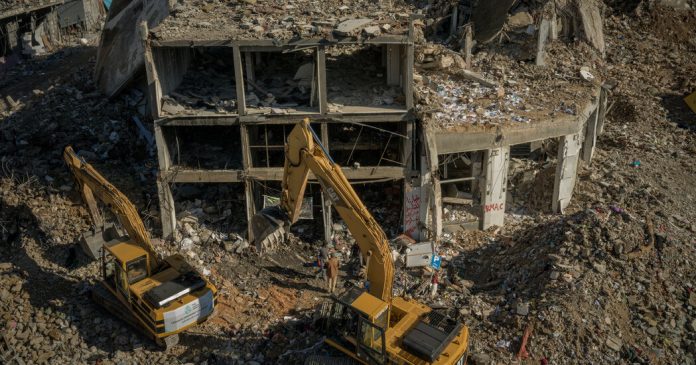
Work resumed late last month to clear the rubble from a barrage of Israeli airstrikes in the southern city of Nabatieh, Lebanon. Credit…Laura Boushnak for The New York Times

The Israeli military said in a statement that it had fired “warning shots” after what it described as “suspects” approached their forces. It also said that an unspecified number of people had been arrested and were now being questioned at the scene.

In the southern town of Aita al-Shaab, much of which now lies in ruin, many began streaming back to their homes on Sunday, arriving to rubble-strewed streets and flattened buildings.

Mohamed Srour, the town’s mayor, was among those returning after being displaced for more than a year. He said that Israeli soldiers had not yet fully withdrawn from the town and claimed that they were firing sporadically at civilians. The claims could not be independently verified. Still, Mr. Srour remained resolute.

“Today, Aita is celebrating the long-awaited return.” he said. “The houses are destroyed and the livelihood is gone, but our will to live is stronger. We will build again.”

In recent days, Israeli officials have cited concerns that Hezbollah remains active in southern Lebanon and doubts about the Lebanese Army’s ability to stymie the group.

Those claims could not be independently verified, and the five-member committee overseeing the implementation of the cease-fire has not publicly released any information regarding Hezbollah’s compliance with the terms of the truce.

The situation poses a critical test for Lebanon’s new leaders, President Joseph Aoun and Prime Minister-designate Nawaf Salam, as they seek to wrest back some political control from Hezbollah, the country’s dominant political and military force, and build a functioning state. Mr. Aoun urged civilians to exercise restraint on Sunday, but stressed that the country’s sovereignty was “nonnegotiable.”

Any prolonged Israeli occupation of southern Lebanon could breathe new life into Hezbollah, a group that was founded to liberate Lebanon from Israeli occupation and that has portrayed itself as the only force capable of protecting Lebanon’s borders, experts say.

It also threatens to derail the current political momentum in Lebanon, where for the first time in decades there is a serious push to consolidate all military power within the state and do away with Hezbollah’s justification for its vast arsenal.

Lebanese soldiers next to a poster of the Hezbollah leader Hassan Nasrallah, who was killed in September in an Israeli airstrike on his headquarters just south of Beirut.Credit…Daniel Berehulak/The New York Times

The focus in Lebanon now is toward “disarming Hezbollah and transitioning from the era in which Hezbollah was seen as having the right to acquire weapons,” said Mohanad Hage Ali, the deputy director for research at the Carnegie Middle East Center in Beirut, the Lebanese capital. Any prolonged Israeli occupation “would put the breaks on that momentum, which is happening organically,” he added.

Hezbollah officials did not respond to Israel’s accusations that the group remained militarily active in southern Lebanon, but said that they were “committed” to upholding the terms of the truce.

On Saturday, Lebanese Army officials said they were prepared to complete their deployment in the south.This month, the American general overseeing the cease-fire monitoring committee expressed confidence in the Lebanese Army’s ability to secure southern Lebanon. The army continues to demonstrate that “it has the capability, intent and leadership to secure and defend Lebanon,” Maj. Gen. Jasper Jeffers said in a statement.

The 60-day truce took effect more than a year after Hezbollah began firing rockets toward Israeli positions in solidarity with its ally Hamas, the Palestinian militant group in Gaza that led the Oct. 7, 2023, attack on Israel. Israel retaliated by assassinating Hezbollah’s leadership, leveling towns and villages along the border and invading southern Lebanon.

Vehicles crowded the road in November as families tried to return to homes they fled when Israel’s offensive in Lebanon intensified. Credit…Daniel Berehulak/The New York Times

Even before Sunday’s deadline, thousands of Lebanese who were displaced by the war from homes along the southern border were preparing to return home. On Saturday, the main highway leading from Beirut to southern Lebanon was packed with cars, even as people received automated phone calls from the Israeli military warning them not to return home.

Israeli forces appeared to be continuing efforts that persisted during the 60-day truce to bulldoze and block roads between some villages in southern Lebanon, according to local news media. Israel currently occupies roughly 70 percent of the areas that it captured after invading Lebanon last fall, according to the United Nations peacekeeping force in southern Lebanon.

Hezbollah has not said how it plans to respond to Israel’s continued occupation of Lebanese soil. Some Hezbollah lawmakers have vowed retaliation. But other officials from Hezbollah instead shifted responsibility for responding to Israel to the Lebanese government. The group’s statement on Friday said that it was up to the state “to reclaim the land and wrest it from the grip of the occupation.”

That shifting of responsibility is a tried-and-true tactic for Hezbollah, which just a few months ago had called on the state to provide for thousands of Lebanese displaced by a war it had pulled the country into. Still, the political posturing from a group whose founding principle is resisting Israeli occupation reflects Hezbollah’s current weakened state.

A family climbing over rubble after a memorial ceremony for Hezbollah leader Hassan Nasrallah. For the first time in decades, there is a serious push in Lebanon to consolidate all military power within the state.Credit…Daniel Berehulak/The New York Times

After 14 months of fighting, the Shiite Muslim group’s military ranks are battered, and its loyal support base is weary. Its patron Iran has also been weakened by Israel.And in neighboring Syria, rebels toppled an Iran ally, the dictator Bashar al-Assad, cutting off Hezbollah’s land bridge for receiving weapons and cash from Iran.

These blows have loosened Hezbollah’s once iron grasp on political power in Lebanon, shifting the country’s political sands for the first time in decades. This month, Lebanese lawmakers elected a new president, Mr. Aoun, after years of political gridlock that many analysts had attributed to Hezbollah. Days later, lawmakers named Mr. Salam, a prominent diplomat whom Hezbollah had long opposed, as prime minister.

Still, Middle East experts have warned against writing off Hezbollah’s political weight. And if Israel continues to occupy Lebanon, it could revitalize the group’s mostly Shiite Muslim support base as it looks for a patron and protector against Israeli forces.

“I believe neither parties have an interest in resuming the war,” said Sami Nader, the director of the Institute of Political Science at Saint Joseph University of Beirut. “But as long as Israel is occupying Lebanon, it’s reviving the narrative of Hezbollah.”

Hwaida Saad, Dayana Iwaza and Sara Chaito contributed reporting.
Why are comedians trending toward Catholicism? One quirky comic offers a surprising explanation

0

Though he may be covered in tattoos from head to toe — quite literally — the only thing more obvious than comedian Shayne Smith’s body art lately might be his newfound Catholicism.

And the former motorcycle gang member is certainly in good company.

Jim Gaffigan, Kevin James, Stephen Colbert, Tom Leopold, Russell Brand, and Rob Schneider are just a few other comedians who share in the same faith — the latter half of the boisterous bunch having converted to Catholicism in their adulthood.

The former half has been just as busy keeping Catholicism alive: Gaffigan recently performed at The Sheen Center for Thought & Culture, at which Cardinal Timothy Dolan is a board member; Kevin James reportedly hosted a Catholic retreat before the pandemic; and Stephen Colbert is known for teaching Sunday school.

But what is driving these comedians toward Catholicism?

Smith, who officially converted last year, gave Fox News Digital his take — by first explaining what drew him to the age-old religion.

‘ROSARY’ BEATS ROGAN: IS FAITH-BASED MEDIA BECOMING MAINSTREAM?

“I chose Catholicism for all the rational reasons. I’m a big history guy, and I just thought… you know, if you ask Siri who founded your religion, and you’re not Catholic, she’ll say the name of just some guy. [But] if you ask her who started your church, and you’re Catholic, she’ll say, Jesus Christ. So I thought that was a pretty good start.”

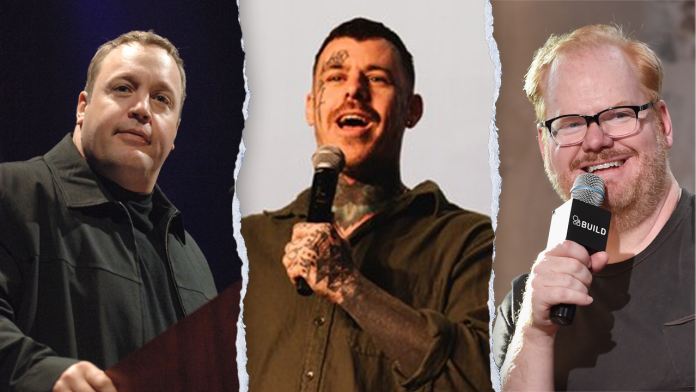
Comedians Kevin James, Shayne Smith, and Jim Gaffigan, all of whom I identify as practicing Catholics. (Fox News)

“There are [also] very rational reasons outside of history. For instance, I read this book called “Dominion,” which was about a guy who set out to write a book about how religion had sort of muddled Western civilization and made the world a worse place. And he accidentally discovered that Christianity and, very specifically Catholicism, had been responsible for hospitals, the modern university system of scientific discoveries, medicine and Western civilization in general. And then he ended up becoming Christian.”

MARTIN SCORSESE SAYS HIS NEW FOX NATION SERIES ‘THE SAINTS’ WAS A STORY HE ALWAYS WANTED TO TELL

But it was in his search for a natural explanation that Smith would discover the supernatural:

“I had an experience where I was compelled to go into a Catholic Church for no reason, and I did not have an education about Catholicism [at the time], so I didn’t really understand the Catholic Church in general. I was discerning Christianity and sort of leaning Protestant. But I stepped into a Catholic Church one afternoon — I finally just gave in to this compulsion — and I had an experience with our heavenly mother [Mary].”

Smith went on to describe a “very brief but incredibly powerful” experience that, at the time, he believed was a psychedelic vision of a woman who was “based in bright white light.”

“She reached out and touched me,” he described. “And I wept the hardest I’ve ever wept.”

Smith, who is no stranger to opening up about his “trailer park” upbringing in his partly autobiographical stand-ups, has described his mostly-single mother as tough enough to have once punched a “bad dog” unconscious. He went on to tell Fox News Digital that his “incredibly surreal” experience with Mother Mary instantly helped heal his relationship with his own mother.

“In that moment, a lot of things changed for me. I suddenly just felt like a lot of my issues with women had been healed. And I felt like my relationship with my mother had been healing, and all these other sorts of things happened.”

Smith left the church that day having made the decision to dedicate his life to Jesus.

And that started with his discovery of Marian apparitions.

“Only then did I discover that Marian apparitions are a thing that happens to people and, in fact, are things that sometimes happen to tens of thousands of people at once,” he added. “So there are rational reasons why I became Catholic, and then the other reason would be the supernatural experience I had with Mary.”

CALIFORNIA FAMILY CLINGS TO FAITH AFTER VIRGIN MARY STATUE SURVIVES RELENTLESS WILDFIRES THAT DESTROYED HOME

Shayne Smith Seek

Comedian-turned-Catholic Shayne Smith performed in front of a captivated crowd of Catholics at the annual SEEK conference, held in early January in Washington, D.C. (FOCUS)

COMEDIAN RUSSELL BRAND ANNOUNCES HE’S BAPTIZED: ‘I’M TAKING THE PLUNGE’

When asked why he believes other comedians might be trending toward Catholicism, Smith offered Fox News Digital a surprising answer: suffering.

“I think having a sense of humor…it all correlates to suffering. And Catholics are very aware of suffering. They’re not afraid to suffer,” he asserted.

“And in fact, often they invite it sometimes too much, and then we get the concept of Catholic guilt, which shouldn’t be a thing. We’re the only religion with a built-in guilt relief system. Like, go to confession, dork,” he jested. “But yeah, I think it really correlates to suffering. I think that Catholics are so tuned in to suffering and are very aware that their suffering matters and means something, and they’re not afraid of it. They sort of confront it head on. And I think that that is an essential part to having a good sense of humor.”

Smith went on to describe his comeuppance as a suffering yet successful comedian and podcast host, having begun as an atheist. He said, despite his appearance and former criminal career, the Catholic community has welcomed him with open arms — even after his public conversion resulted in the loss of tens of thousands of followers.

He told Fox News Digital that after having begun his stand-up career as a man who rejected religion, once he publicly converted to Catholicism, he was “basically canceled” by his former fan base.

“I got death threats. People mailed things to my mother, like it was crazy. And I was like, ‘okay, well, this is kind of the end of my career.’ And that’s okay, because faith is more important than money,” he continued. “But over time, it has reversed course. And now I’m more popular than ever.”

Smith went on to say that his early-on encounters with fans during meet-and-greets when he first achieved popularity would give him anxiety due to the inappropriate nature of their interactions, explaining that he was “getting touched by women” and “harassed by drunk people.”

But, since cleaning up his act, his fandom has changed dramatically.

“Now, I do meet and greets and people are asking me to pray the rosary with them. Women are so kind and gentle with me. People are giving me handwritten letters of encouragement and everything is so much more lovely and light and good, I’m, like, blown away.”

Smith hasn’t just cleaned up his act in the proverbial sense, but set the record straight with Fox News Digital: he is a self-proclaimed clean comedian to boot.

“Because I have Catholic sensibilities, my comedy is digestible by anyone,” he said. “I’m a Catholic person, and that is the central part of my identity and the most important part of me. But as far as my comedy goes, I’m just a storyteller. I would like to just be as funny as possible for the most amount of people possible.”

One of Smith’s recent performances took place in Washington, D.C. during SEEK ’25, an annual Catholic conference hosted by the Focus organization. There, Smith performed a stand-up routine on opening night to a captivated crowd he described as nothing short of “kind.”

“I would recommend SEEK to anyone of any age. It is Comic-Con for Catholics,” he jested. “I went to SEEK and I saw that Catholicism, while deeply personal, is also deeply communal… [God] wants us to come to him, together… He wants us to take care of and love each other and ourselves the way he loves us, which is, you know, infinitely.”

Brock Martin, the son of the Focus organization’s founder, spoke to Fox News Digital at the SEEK conference about the group’s mission. 

“Whenever Focus is working with people… the first experience would be an experience of God’s love and his plan for you,” Martin said. “That’s an earth-shattering reality, that the God of the universe —the same person that made the cosmos — like, knows your name, has a plan for you, wants you to flourish, wants to spend eternity with you…”

In acknowledging God’s plan for his own life, Smith said he realized he couldn’t keep his Catholicism to himself.

“I realized that, to just stay home and make my faith something personal, or to just read the Bible, or to just be Catholic and keep it to myself… was not the point. And it was not ultimately the fulfilling and rewarding experience that I needed,” the comedian concluded.

CLICK HERE TO GET THE FOX NEWS APP

To hear more from Shayne Smith, fans can check out his new ‘Ghost Stories’ special on Angel Studios’ Dry Bar Comedy.

A Storm, a Spill and a Disaster for the Black Sea’s Beaches

0

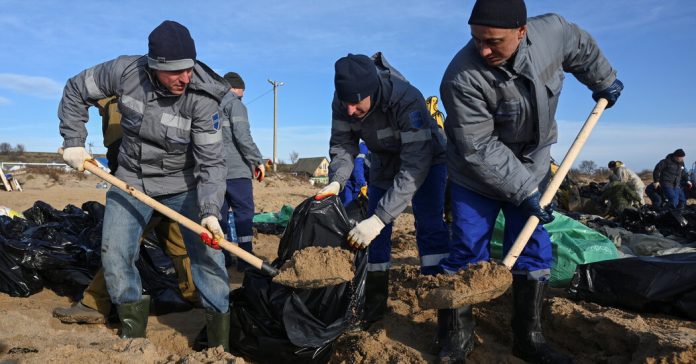
When a 28-year-old volunteer named Nikolai stepped onto a sandy beach on Russia’s Black Sea coast in a hazmat suit just before New Year’s Eve, he was so overwhelmed by the amount of thick oil film that he almost broke down.

He and other volunteers were tasked with shoveling away the oil-drenched sand, but “the scale is just too big,” he said.

Two weeks into the new year, and four weeks after the spill, President Vladimir V. Putin acknowledged the extent of the disaster and dispatched senior officials to deal with Russia’s largest oil spill in years, which has befouled some of the country’s most popular beaches.

The oil was released by two aging Russian tankers that were damaged during a heavy storm in the Kerch Strait on Dec. 15. At least 2,400 metric tons of oil spewed into the sea, Russian officials said.

The disaster in the strait, which separates the Crimean Peninsula from mainland Russia, raised questions about whether the vessels were part of the so-called shadow fleet that Moscow uses to evade sanctions on its oil industry, sometimes employing ships in shoddy conditions.

One of the vessels, the Volgoneft-212, split in half and sank, killing one crew member. The other, the Volgoneft-239, ran aground near the port of Taman. The two vessels were loaded with a total of 9,000 tons of heavy fuel oil, and the authorities are now working not only to clean up the shores, but also to try to contain additional spills from the ship that ran aground.

Russian officials originally claimed that the spill was contained, but soon after the disaster, sightings of floating oil and tarred birds were reported all along Russia’s Black Sea coast.

On Thursday, Mr. Putin ordered a report on the condition of Russia’s tanker fleet, and also asked a deputy prime minister to review Russian legislation covering oil shipments by sea and river and to look into the “scientific advances on the cleanup of similar disasters,” his press office said.

Last week, the Ukrainian Navy warned that oil from the spill could reach Ukraine’s Black Sea coast near Odesa and Mykolaiv, but Ukraine’s Environmental Ministry said a day later that it saw no immediate threat.

Nikolai was among hundreds of volunteers who have lent a hand to the cleanup. A Moscow entrepreneur, he had viewed information from photographs and videos posted by local residents and officials, and traveled to the resort town of Anapa as the new year approached.

In a phone interview with The New York Times after he returned home, he said he had spent a week shoveling away the oil that was washing onto the shore. He asked that his surname not be used because he fears he might lose out on state contracts.

Individuals and businesses chipped in to provide some volunteers with hazmat suits and some basic equipment, but the task was daunting.

“I had seen the photos before I arrived,” Nikolai said. “Yes, it looked bad — but it’s different when you see it in real life. You take the shovel and scoop out that black blob of oil, and it feels like just a drop in the ocean.”

The air along the coast was so heavy with oil fumes, Nikolai said, that he felt dizzy and weak after walking there without a respirator.

Cleanup teams have been responding to oil spills along a coastline of almost 500 miles, collecting over 160,000 tons of contaminated sand and soil as well as 25 tons of “oil-containing liquid,” Russia’s Emergency Situations Ministry said this week.

But the spill risks becoming a “long-term environmental disaster,” according to Greenpeace Ukraine, which criticized the slow Russian response and warned of a deadly impact on Black Sea marine life.

Environmentalists say the spill is particularly difficult to clean up because of the tankers’ cargo. Heavy fuel oil, unlike ordinary regular crude oil, does not stay on the surface of the water, but instead sinks to the bottom.

“If it is not promptly removed from the surface, it remains to wait until it is biodegraded by marine microorganisms,” said Natalia Gozak, the office director of Greenpeace Ukraine. “This can take decades.”

The lack of an immediate response means that large masses of contaminated sand need to be scooped out, essentially gutting the portions of the beaches around Anapa, according to Georgy Kavanosyan, an independent Russian environmentalist and hydrogeologist who arrived at the scene two days after the spill.

“The oil started sinking down into the sand in the initial days because there were not enough responders there,” Mr. Kavanosyan said.

Satellite images published by Mr. Kavanosyan showed two elongated stains near the tanker that ran aground, indicating new oil spills from it after two minor earthquakes in the area over the weekend.

“That vessel is a ticking bomb,” he said. “The most important thing right now is to pump out that oil and extract the ship.”

Officials reported that they had collected most of the oil from that spill by last Monday.

When Mr. Putin finally spoke out about the disaster, he described it as “one of the most serious environmental challenges we have faced in recent years.”

Mr. Putin ordered senior officials dispatched to oversee the efforts. A task force set up this month brought in several ministers to make plans for the cleanup and reconstruction, as well as for removing the tankers.

The oil spill’s longer-term effect on wildlife remains to be seen.

At least 58 dead dolphins have been found so far, the Delfa Dolphin Rescue and Research Center said in a statement on Saturday. The group sent a team out to the sea last Friday to reach the sunken tanker and confirm reports that the oil was still seeping out from it.

“Contamination was along the entire route,” it said. “Just five kilometers from the shore, common bottlenose dolphins and harbor porpoises were swimming in oil film and small fractions of fuel oil, to our great regret and alarm.”

At least 6,000 oil-smeared birds have been caught and cleaned by volunteers, but many are unlikely to survive, experts said. The spills are likely to kill tens of thousands of local birds, according to Greenpeace Ukraine.

Russian oil companies have increasingly turned to using dilapidated tankers that are not regulated or insured by Western companies.

President Volodymyr Zelensky of Ukraine and other Ukrainian officials have suggested the two 50-year-old tankers were part of Russia’s shadow fleet, which emerged after Western nation moved to punish Moscow economically over the invasion of Ukraine.

But Elisabeth Braw, a senior fellow at the Atlantic Council who has written several articles on the shadow fleet, said the ships were “rickety old tankers” that lacked several characteristics of shadow fleet vessels, which typically operate in the Baltic Sea and sail under the flags of other countries.

Both tankers involved in the spills are Russian-owned, and one of them had its license suspended and should not have been allowed to sail, according to the state-owned RIA Novosti news agency.

Questions were also raised about why the tankers, originally built for river navigation, were allowed at sea in winter storms in the first place.

Cassandra Vinograd contributed reporting from Kyiv, Ukraine.

Minnesota Christian colleges sue over dual enrollment statement of faith ban

0

Two Minnesota Christian colleges are challenging the state after a decades-long law was amended to exclude them from participating in the state’s dual enrollment program because they require students to sign statements of faith.  

Since 1985, Minnesota’s postsecondary enrollment program allowed thousands of high school students, desiring to attend both private and public colleges, to enroll in a program and simultaneously receive high school and college credits for free. In 2023, the state amended the program law to exclude schools that require students to sign a statement of faith on the application, a decision that would single out Crown College and the University of Northwestern, St. Paul, according to legal representation. Now, the colleges are fighting the measure, saying it discriminates on the basis of religious exercise. 

Fox News Digital spoke to Diana Thomson from the Beckett Fund for Religious Liberty, who is representing the schools in the case against the state. 

COLLEGES, EDUCATIONAL GROUPS OFFER ADVICE FOR INAUGURATION DAY ‘ANXIETY,’ TRIPS TO DC FOR TRUMP SWEARING-IN 

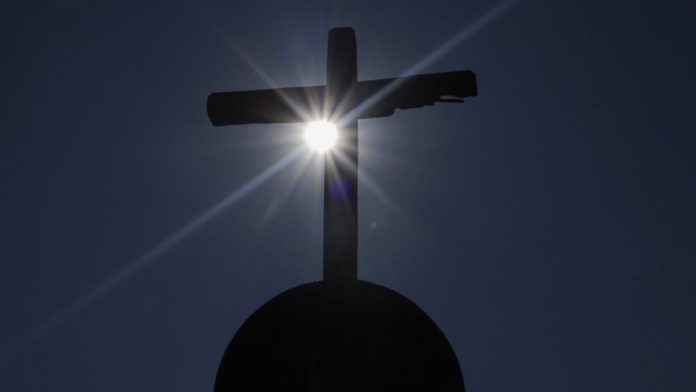
A cross stands outside a church in Culhuacan in Mexico City, Mexico, on December 26, 2024, during the celebration of the patron saint San Juan Evangelista. (Photo by Gerardo Vieyra/NurPhoto via Getty Images)

“The Supreme Court has said over the last decade that, especially in the context of education, the government does not have to offer funding to private schools,” Thomson told Fox News Digital. “It runs public schools. It doesn’t have to offer funding to private schools, but once it does, it can’t exclude religious schools on the basis of their religious status, their religious exercise. So, there are cases around the country where governments are trying to get around this, what the Supreme Court said, and exclude religious schools from education programs. This is the only one I’m aware of that is a dual enrollment program.” 

The court documents allege officials singled out the two colleges’ practices, going as far as calling the statements of faith “creepy” and “admitted that the Amendment’s purpose was to force Crown and Northwestern to abandon their faith statements.” 

“One of the things that you heard from the lawmakers … in the discovery process. … was .. ‘These other schools don’t require a statement of faith. Why can’t Crown and Northwestern just do what they do? Why can’t they just adopt their religious beliefs?,” Thomson told Fox News, explaining the Constitution does not require schools to change their beliefs to receive public dollars.  

“From proposal through passage, the Amendment targeted Plaintiffs,” the lawsuit alleges. “Staff admitted the proposal was motivated by objections to any admissions standards requiring students to be ‘actively practicing [their] Christian faith.’ (Ex. 21 at 1. ) MDE also wanted to eliminate any messaging that ‘may communicate to a potential student that they are not welcome to take a PSEO course … because of [the school’s] biblical worldview.’ (Reynolds.Tr.1 132:8-133:19.)”

Thomson said the law is not about the “separation of church and state, it’s about choice.” 

“It’s about giving students a choice of where they want to go to school. Students have the choice to go to the University of Minnesota, to any public or private school in Minnesota that offers this program,” she said. “Some students want to choose schools that establish a community that allows them to carry out their faith. That’s what this program allows. It doesn’t establish a religion for the government to offer choice.” 

If the provision passed, the lawyer says families that have sent all their children to Crown and Northwestern will now not have the same opportunities for their younger children who wish to obtain dual enrollment credits. 

CLICK HERE TO GET THE FOX NEWS APP 

“I think it’s important for governments to understand that they can’t exclude religious schools and religious entities from participating in government programs just because of their religious exercise,” Thomson said. “Membership in religious organizations is a core constitutional right that is protected by the First Amendment. For the government to interfere in that is a blatant violation of the Constitution.” 

Fox News Digital reached out to the Minnesota Department of Education and the Commissioner’s Office. They did not respond to multiple requests for comment.  

Israel Blocks Gazans From North, Accusing Hamas of Cease-Fire Breach

0

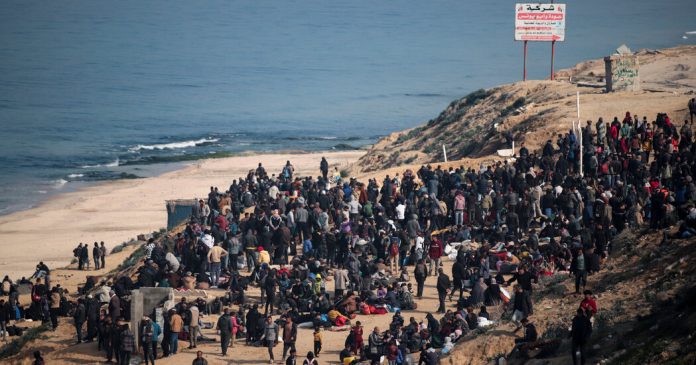
Israeli troops were preventing Palestinians from returning to their homes in the north of the Gaza Strip on Sunday after Israel accused Hamas of violating the terms of the cease-fire agreement.

Under the terms of the initial phase of the deal agreed earlier this month, Israel had been expected to withdraw some of its forces to allow hundreds of thousands of displaced Gazans to head north after a hostage and prisoner exchange on Saturday.

But Rear Adm. Daniel Hagari, an Israeli military spokesman, accused Hamas on Saturday of violating the deal by not returning captive Israeli civilians first. Israeli officials said that under the agreement, Arbel Yehud, an Israeli held hostage in Gaza, was supposed to be one of the four women released on Saturday.

The hostages released were all soldiers who had been lookouts at a base on the Gaza border and were abducted from there on Oct. 7, 2023, during the Hamas-led attack on Israel that began the war.

The office of Prime Minister Benjamin Netanyahu of Israel said that it would not allow Gazans to head north “until the release of the civilian Arbel Yehud has been arranged,” leaving the timing of the troop withdrawal and the residents’ return unclear.

Hamas accused Israel of hesitating to fully implement the cease-fire agreement. The dispute is one of the most significant between the parties since the cease-fire took effect after 15 months of devastating war.

This is a developing story. Check back for updates.

‘Shopping the perimeter’ could mean missing out on nutritious foods, say experts

0

The age-old grocery store advice to “shop the perimeter” and avoid the center aisles for the healthiest food possible is somewhat outdated — and even has the potential that shoppers would ignore nutritious foods, two dietitians told Fox News Digital.

The advice to buy only products on the perimeter, or edges, of a grocery store is “a bit outdated as a one-size-fits-all rule,” said Lauren Manaker, a Charleston, South Carolina-based registered dietitian. 

“The idea comes from the fact that fresh produce, dairy and meats are typically located around the edges of the grocery store,” she said.

TO STAY HEALTHY, EAT MORE FOODS WITH VITAMIN D, NUTRITION EXPERT ADVISES

“But this approach overlooks a ton of nutritious, convenient and affordable options found in the center aisles.”

For instance, a person who only “shops the perimeter” would miss nutrient-dense foods such as “canned tuna, frozen fruits and whole-grain quinoa,” Manaker said.

While fresh and unprocessed food is typically found on the edges of a grocery store, healthy options can also be found in the center aisles, a dietitian (not pictured) told Fox News Digital. (iStock)

“These foods are packed with nutrients, have long shelf lives and can be incredibly versatile in your cooking,” she added. 

Dr. Phyllis Pobee, a board-certified physician who specializes in genetic weight loss, shared similar sentiments with Fox News Digital. Pobee is the Toronto-based founder of GeneLean360°, a weight-loss and wellness consulting company. 

“Transform your grocery shopping into a powerful tool for maintaining and enhancing your health.”

She gave several tips for maximizing a trip to the grocery store, including planning meals before making a list, embracing whole foods over processed ones and considering adding “superfoods” to diets. 

MAKE AMERICA HEALTHY AGAIN: THE POWERHOUSE FOODS THAT WORK MEDICAL MAGIC

“While the traditional advice of shopping the perimeter is useful, integrating these personalized strategies based on genetic insights and a deeper understanding of food labels can transform your grocery shopping into a powerful tool for maintaining and enhancing your health,” she said. 

Eating whole foods means “filling your cart with fresh fruits and vegetables, whole grains and lean proteins,” Pobee said. 

family using a shopping cart while buying groceries at the supermarket

There is wisdom of looking for “seasonal and locally sourced produce whenever possible.” (iStock)

“Even if these items are spread throughout the store, seek them out to ensure a diet rich in nutrients,” she said.

Pobee also suggested the wisdom of looking for “seasonal and locally sourced produce whenever possible.”

CLICK HERE TO SIGN UP FOR OUR LIFESTYLE NEWSLETTER

“These options are often more nutrient-dense and fresher than their out-of-season counterparts, which have to travel long distances and are typically treated with preservatives,” she said. 

Rather than just stick to advice like “shop the perimeter,” shoppers should take a more holistic approach, Manaker suggested. 

A woman wearing a jacket shops for canned tuna fish at a grocery store.

Someone who only “shops the perimeter” of a grocery store would miss nutrient-dense foods like canned tuna fish, said experts. (iStock)

“To shop smarter, it’s all about reading labels and understanding what works best for your health goals, lifestyle and budget,” she said. 

For more Lifestyle articles, visit www.foxnews.com/lifestyle

A person should aim to “look for options that are high in essential nutrients like fiber, protein and healthy fats while being mindful of added sugars and sodium content,” she said.  

CLICK HERE TO GET THE FOX NEWS APP

“And don’t forget to explore those center aisles,” she said.

They’re full of “healthy staples like beans, whole grains, nuts and even some great frozen or canned options that make balanced eating a breeze.” 

South Korea’s President Yoon Is Indicted

0

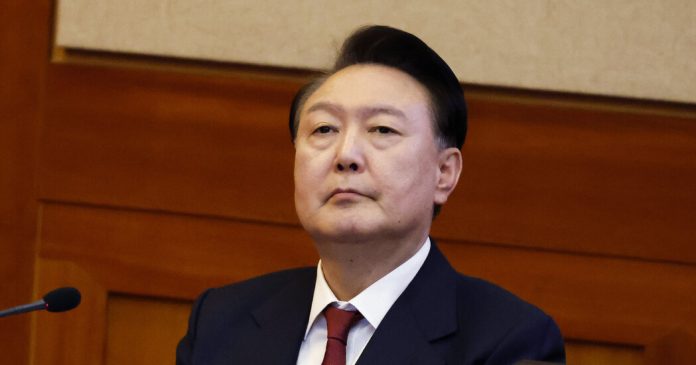
South Korea’s impeached and arrested president, Yoon Suk Yeol, was formally indicted on Sunday on charges of leading an insurrection last month when he briefly imposed martial law.

Mr. Yoon’s indictment means that his trial is likely to start soon. It follows the indictments of a former defense minister and several military generals and police chiefs, all of whom face criminal charges of helping Mr. Yoon commit the same crime.

He is the first president in South Korean history to face criminal charges while still in office.

His downfall began when he unexpectedly declared martial law on Dec. 3, accusing the opposition-controlled National Assembly of “paralyzing” his government. The Assembly voted the measure down, forcing him to rescind the order after about six hours. But it has set off South Korea’s worst political crisis in decades.

As people called for Mr. Yoon’s ouster, the Assembly impeached him on Dec. 14, suspending him from office. The country’s Constitutional Court is deliberating whether the parliamentary impeachment was legitimate and if he should be formally removed from office. Separately, criminal investigators detained Mr. Yoon on the insurrection charges on Jan. 15.

From his jail cell, Mr. Yoon has vowed to fight to regain office.

A majority of South Koreans approved of his impeachment and consider him guilty of insurrection, according to public opinion polls. But Mr. Yoon’s die-hard supporters have called his impeachment “fraud.” Some of them shocked the country when they vandalized a courthouse in Seoul after one of its judges approved a warrant to arrest him on Jan. 19. Nearly 60 people were arrested in connection with that unrest.

Prosecutors said that Mr. Yoon committed insurrection during the short-lived imposition of marital law when, they said, he banned all political activities and ordered military commanders to break the Assembly’s doors down “with axes” or “by shooting, if necessary” and “drag out” lawmakers. They said Mr. Yoon sent the troops there to seize the Assembly and detain political leaders.

The nation watched the live-streamed scenes of special forces troops armed with assault rifles storming the Assembly as lawmakers were gathering there to vote against martial law. But Mr. Yoon has rejected the charge of insurrection, saying that he never intended to neutralize the Parliament or arrest political leaders. The troops were there to “keep order,” he said.

Mr. Yoon’s indictment, although not a surprise, came sooner than expected.

State prosecutors have been investigating the former defense minister and generals. The country’s Corruption Investigation Office for High-ranking Officials took on the insurrection case against Mr. Yoon, but by law, only prosecutors can indict him.

Mr. Yoon has refused to cooperate with the inquiry; he and his lawyers have insisted that the four-year-old office has no right to investigate him.

On Thursday, the Corruption Investigation Office handed his case over to prosecutors. The two had earlier agreed that prosecutors had until early February to indict Mr. Yoon, and prosecutors had planned to further investigate Mr. Yoon’s actions.

But on Friday, a judge in a Seoul court ruled that Mr. Yoon must be either be indicted sooner or released because the Corruption Investigation Office had already done an investigation.

‘Dating Game’ serial killer’s fame was key to downfall, detective reveals

0

Join Fox News for access to this content

Plus special access to select articles and other premium content with your account – free of charge.

By entering your email and pushing continue, you are agreeing to Fox News’ Terms of Use and Privacy Policy, which includes our Notice of Financial Incentive.

Please enter a valid email address.

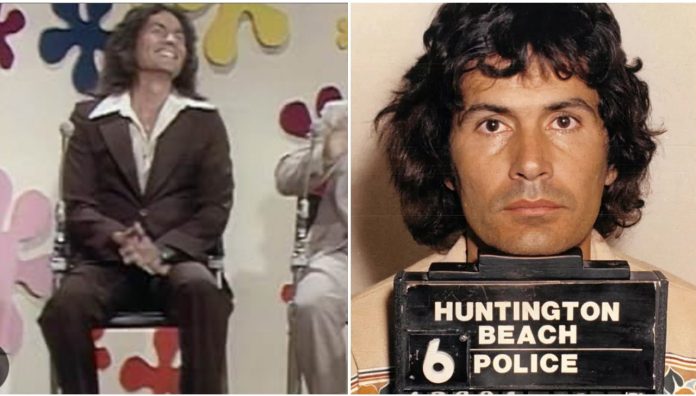
The man who arrested serial killer Rodney Alcala, whose case inspired the recent Netflix special “Woman of the Hour,” detailed the true story behind the popular film and how Alcala’s appearance on a 1970s dating show led authorities to his capture. 

Alcala has been dubbed the “Dating Game killer” because he appeared on the television show “The Dating Game” as Bachelor No. 1 in 1978 during his killing spree.

“He had a very high IQ… but the problem with a guy like that, I think, is most of his IQ isn’t focused on developing personal relationships…and things like that… it’s all focused on my next victim and how to exploit women and girls,” Craig Robison, the lead detective in Alcala’s investigation with the Huntington Beach police, told Fox News Digital in his first public interview on the case. “He would still be doing it if we didn’t catch him.”

Robison is also a retired California prosecutor and judge. Since judges in the state are not permitted to speak on “pending” cases, he has never spoken publicly about the investigation previously and was even prohibited from testifying during the serial killer’s third trial. Robison said the case was considered “pending” from Alcala’s arrest up until he died in prison in 2021. 

‘DATING GAME KILLER’ KEPT ‘TROPHIES’ THAT ULTIMATELY LED TO HIS DOWNFALL: DETECTIVE

Rodney Alcala has been dubbed the “Dating Game killer” because he appeared on the television show “The Dating Game” as Bachelor No. 1 in 1978 during his killing spree. (Prosecutor Matt Murphy)

While the Netflix movie shows Alcala winning “The Dating Game” show’s competition and going on a date with female bachelorette Cheryl Bradshaw, many may not know the true story behind their exchange. 

Robison revealed that Bradshaw never actually went on a date with Alcala. 

“From the moment that she met him, he kind of creeped her out,” he said, adding that her “intuition” might have saved her life.  

The former detective disclosed that he met with Anna Kendrick, who played Bradshaw in the film, to help her research the serial killer’s case. He said Kendrick was interested in “what made [Alcala] tick.” 

DNA LINKS CALIFORNIA MAN TO 1979 COLD CASE MURDER, YEARS AFTER PASSING LIE DETECTOR

Rodney Alcala talks with his investigator before being convicted in Santa Ana, Calif. on Feb. 25, 2010, of murdering a 12-year-old girl and four women in the late 1970s (AP).

Rodney Alcala talks with his investigator before being convicted in Santa Ana, Calif. on Feb. 25, 2010, of murdering a 12-year-old girl and four women in the late 1970s. (ORANGE COUNTY REGISTER)

Robison began investigating Alcala’s case in June 1979 after the disappearance of 12-year-old Robin Samsoe, who was last seen riding a bicycle to her dance class.  

“Missing children in her age category, sometimes are runaways, and so I think that was probably the first suspicion,” he said. “It started to feel…more like something may have happened to her.”

On the day she disappeared, Samsoe had gone to the beach with her friend Bridget Wilvurt before heading off on the bike to class. The girls were approached by a man “dressed in civilian clothes, not beach attire” with an “Afro-style hairdo and a camera,” who asked to take their picture, Robison said. 

FOLLOW THE FOX TRUE CRIME TEAM ON X

Alcala's victim Robin Samsoe

12-year-old Robin Samsoe. Alcala was sentenced to death in 2010 for five murders in California in the late 1970s, including that of Samsoe, 18-year-old Jill Barcomb, 21-year-old Jill Parenteau, 27-year-old Georgia Wixted and 32-year-old Charlotte Lamb after new DNA evidence connected him to the victims. (Prosecutor Matt Murphy)

Detectives brought Wilvurt in to sit with their sketch artist, and they released the composite drawing to the public. Robison said authorities also set up a tip line, and they received a significant call from a parole officer, who had seen the sketch and believed the man police were looking for was Alcala – a convicted felon with a hefty rap sheet.

Detectives learned that in 1968, a witness spotted Alcala driving off with a young girl, followed them to an apartment and called the police. Officers discovered 8-year-old Tali Shapiro, on the verge of death, having been raped and beaten with a steel bar. While Shapiro survived the attack, Alcala fled the scene but was later caught and arrested, pleading guilty to child molestation. 

He served just 34 months before being paroled in 1974, and he was soon arrested again for marijuana possession while with a 13-year-old girl and was imprisoned again until 1977. 

NEWS ANCHOR’S MYSTERIOUS DISAPPEARANCE WAS CRIME OF ‘JEALOUSY’: PRIVATE INVESTIGATOR

police sketch for rodney alcala

Detectives brought Robin Samsoe’s friend Bridget Wilvurt in to sit with their sketch artist, and they released this composite drawing to the public. (Prosecutor Matt Murphy)

Authorities learned that just months before Samsoe disappeared, Alcala was arrested for the rape of a 15-year-old girl, who was hitchhiking in Pasadena in February 1979. The surviving teen convinced Alcala that she enjoyed the time with him before ultimately bolting and alerting police when he pulled over at a gas station. 

“For some reason, he didn’t kill her and leave her out there,” Robison said. “She played to him in a way that instead of panicking and screaming and fighting and resisting and getting murdered and strangled, she took a different approach.” 

Alcala was arrested for the rape, but he was released on bail. Robison said this case was still pending at the time of Samsoe’s disappearance in June 1979. 

COP WHO SURVIVED SERIAL KILLER AS A TEEN IS NOW ON TRACK TO BECOME A DETECTIVE

Serial killer Rodney Alcala

Serial killer Rodney Alcala, pictured in this booking photo, died of natural causes on July 24, 2021, while awaiting execution in California. (Prosecutor Matt Murphy)

After he learned of the hitchhiker’s case, Robison retrieved the booking photo from Alcala’s arrest. That same day, one of the other detectives went home and noticed something pivotal for the case airing on television – an episode of “The Dating Game” from the prior year. 

“He’s reading the newspaper, and you hear Jim Lange come on… he says, ‘And now let me tell you a little bit about your date…he’s this, he’s that, he’s a photographer, he’s all of these great things… meet your date – Rodney Alcala… there’s the guy that we just identified as a potential suspect.” Robison said. 

“If you believe in divine guidance…that certainly would be a good clue. The finger of God comes down and says, ‘Hey, you should look at this guy.’”

Detectives then brought Wilvurt back into the police station, where they showed her the clip of Alcala in the dating show. 

“When she saw the picture of this man, you could see a complete change in her demeanor,” Robison recalled. “It was like her blood ran cold…’That’s the guy that was at the beach,’ she said.” 

Police discovered Samsoe’s remains in early July 1979 in a remote mountain ravine, and weeks later, Robison arrested Alcala for her murder. 

“Craig Robison…at 27 years old …of all the really good cops involved in this case…the youngest detective on the first homicide is the one that figured it out and arrested Rodney Alcala,” Matt Murphy, the lead prosecutor on Alcala’s case, told Fox News Digital. 

GET REAL-TIME UPDATES DIRECTLY ON THE TRUE CRIME HUB

Rodney Alcala

Rodney Alcala was arrested in 1979 for the murder of 12-year-old Robin Samsoe. 

Robison and his team soon discovered a storage locker that Alcala had opened in Seattle after Samsoe’s murder, where he stored many implicating items, including hundreds of photographs of women and jewelry. 

“He had boxes and boxes of stuff in there,” Robison said. “One of the things that I saw when we were doing our search was a little bag…yellow and red with a zipper on it. …It’s full of jewelry…there were these set of earrings… had a gold post and a little gold ball on them.” 

His investigative team showed the earrings to Samsoe’s mother, who helped authorities confirm what they had already suspected – that the earrings belonged to her daughter, though they didn’t have the DNA to prove it at the time.

“He kept these little trinkets as trophies of the things that he’d done, the murders he committed over the course of his career,” Robison added.

Alcala's "trophies" - jewelry found in his storage

Alcala’s “trophies” – jewelry found in his Seattle storage unit. Robison described the yellow and red pouch, in which he found a set of earrings that Robin Samsoe’s mother said belonged to her daughter.  (Prosecutor Matt Murphy)

“He kept these little trinkets as trophies of the things that he’d done, the murders he committed over the course of his career.”

— Craig Robison

Alcala was sentenced to death in Samsoe’s murder twice – in 1980 and again in 1986 – but both convictions were overturned. 

The “trophies” Robison and his team originally found in the storage locker connected Alcala to his crimes forensically decades later. In the very same red and yellow pouch where Samsoe’s gold-ball earrings were found, another set of rose-shaped earrings carried DNA belonging to a different victim – Charlotte Lamb, who was murdered in 1978 in Los Angeles.  

“We finally had the forensic connection that arguably was missing before,” Murphy told Fox News Digital. 

In 2010, Alcala was sentenced to death for five murders in California in the late 1970s, including that of 12-year-old Samsoe. He was charged in the additional killings of 18-year-old Jill Barcomb, 21-year-old Jill Parenteau, 27-year-old Georgia Wixted and 32-year-old Charlotte Lamb after new DNA evidence connected him to the victims.

“I’ll be convinced to the day I die that we had enough evidence in all three trials to convict him,” Robison said. “All we succeeded in doing in the third trial was establishing that, yes, he is the serial killer that we all knew that he was before.”

SIGN UP TO GET TRUE CRIME NEWSLETTER

Rodney Alcala

Rodney Alcala died of natural causes on July 24, 2021, while awaiting execution in California. He was 77 at the time of his death.  (AP Photo/David Handschuh, Pool, File)

In 2013, he received an additional 25 years to life after pleading guilty to two slayings in New York, and in 2016, he was charged again, this time with the murder of a 28-year-old pregnant woman after DNA evidence connected him to her 1977 death in Wyoming.

“Once we had the DNA in the system, then other agencies … New York PD and police agencies around the country started looking into their homicides and their Jane Doe’s,” retired detective Steven Mack, who began investigating the case in 2003 after the first two convictions were overturned, previously told Fox News Digital. “They were able to connect Alcala to their crimes.”

Investigators have either suspected Alcala of or linked him to other murders in Los Angeles and Marin County in California; Seattle, Washington; New York; New Hampshire; and Arizona, according to the California Department of Corrections and Rehabilitation. 

SEARCH FOR MISSING NEWS ANCHOR EXPANDS AFTER AUTHORITIES GET NEW TIP

In this March 30, 2010 file photo, convicted serial killer Rodney Alcala listens as victim-impact statements are read in a Santa Ana, Calif.

In this March 30, 2010 file photo, convicted serial killer Rodney Alcala listens as victim-impact statements are read in a Santa Ana, Calif. (AP)

Alcala died of natural causes on July 24, 2021, while awaiting execution in California. He was 77 at the time of his death. 

Though it took over 30 years to sentence Alcala for his crimes, he remained incarcerated from the time Robison arrested him in 1979 up until his death. 

CLICK HERE TO GET THE FOX NEWS APP

“Huntington Beach back at the time, I think maybe they had 150 police officers, but it was a small, much smaller community than it is today…locals were able to catch this guy with all of this intelligence and put him behind bars,” Robison said. “That’s what started his complete undoing, was his arrest that we made in July of 1979.”

How Riad Sattouf Uses His Cartoons to Draw a Window Into the Middle East

0

One early evening in December, the Syrian dictator Bashar al-Assad fled his country as rebel forces advanced on Damascus. In France, three days later, one of the country’s most-watched TV news channels turned to a cartoonist for expert opinion on the news.

“Did you think that this could have happened so rapidly?” a news anchor for the channel, BFMTV, asked the cartoonist, Riad Sattouf, whose smiling face appeared on a giant video wall.

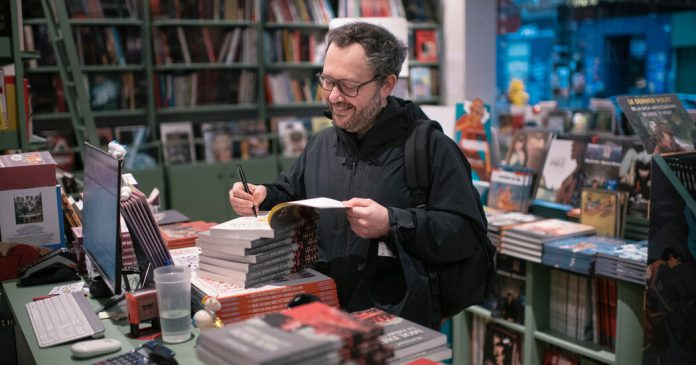
Over the past decade, Mr. Sattouf, 46, has become one of France’s biggest literary stars, thanks largely to his masterwork, “The Arab of the Future,” a series of graphic memoirs. Over six volumes, the series tells the story of Mr. Sattouf’s childhood, which was jarringly divided between the Middle East and France, and the disintegration of the marriage between his French mother and his Syrian father.

The books — in a genre known as “bandes dessinées” in France — have sold more than three million copies and have been translated into some 23 languages. Though told from a child’s perspective and drawn in a deceptively simple style, they touch on some of the thorniest questions about the compatibility of the Western and Arab worlds. They are also suffused with a subtle but withering social satire.

For Mr. Sattouf, this posture informs not only his art, but the way he interprets the world. In his TV appearance in December, he told viewers that the fall of Mr. al-Assad was a moment of “immense hope” for Syria. But when asked to predict what might happen next, he warned that he tended to see things “extremely pessimistically.”

“I keep my fingers crossed,” he said, “that a terrible dictatorship won’t be replaced by another dictatorship.”

Mr. Sattouf, who was born in France, grew up enamored with the brutally honest and occasionally offensive work of the American cartoonist Robert Crumb. His work also follows in the tradition of comics that offer readers an intimate view of characters living through pivotal historical moments, including Art Spiegelman’s “Maus” and Marjane Satrapi’s “Persepolis.”

For years, Mr. Sattouf wrote a cartoon strip for Charlie Hebdo, a French satirical magazine. He stopped contributing a few months before January 2015, when the magazine’s offices were targeted in a deadly terrorist attack over its depiction of the Prophet Muhammad. Mr. Sattouf did not draw the cartoons of Muhammad; his strip had been focused on amusing, and sometimes depressing, scenes of daily life he encountered on the streets and metro in Paris.

In “The Arab of the Future,” Mr. Sattouf paints a complex portrait of his father, who made his way from a small rural village in Syria to Sorbonne University in Paris, where he received a doctorate in history and met the woman who would become Mr. Sattouf’s mother. The cartoonist also portrays his father as sliding, over the years, into a state of permanent bitterness toward the West and an embrace of anti-democratic Arab strongmen.

Some of the most arresting pages in the series depict Mr. Sattouf’s experience as a child in Ter Maaleh, his father’s village. He moved there in the 1980s, while he was in grade school, and lived there during the dictatorial reign of Mr. al-Assad’s father, Hafez al-Assad.

Mr. Sattouf’s memories of Ter Maaleh are vivid and coruscating. The French journalist Stéphane Jarno recently described the depictions of the town as “a few buildings surrounded by emptiness, a micro-society steeped in blind piety and power struggles, with apparently little love but a lot of violence.”

This willingness to pull no punches about his experience in Syria puts Mr. Sattouf in a loose but important category of French public figures with roots in the Arab world who are unafraid to criticize it. It can be a fraught position.

The Algerian author Kamel Daoud, who currently lives in France, recently won the Prix Goncourt, France’s most prestigious literary prize, for a novel that addressed the complex history of the Algerian civil war. In the past, Mr. Daoud, who has openly discussed sensitive religious issues, was the subject of a death threat from an Algerian imam. More recently, Mr. Daoud has complained that he has been castigated by elements of the French left for “not being the good Arab, who is in the permanent state of de-colonial victimhood.”

Somehow, Mr. Sattouf has largely avoided that fate. He has been a critical darling of the French news media since at least the mid 2000s, when, as a young man, he was publishing what he called “sexual and provocatively funny” comics. At the same time, he said in a recent interview, he had never faced a backlash from Islamist groups.

“Never,” he said, smiling. “Because my comics are so good.”

The line was delivered with a joking-not-joking sort of flourish.

Mr. Sattouf met for the interview in Rennes, the capital of Brittany, late last month. He comes across as both impish and serious-minded, with a quiet voice that toggled in the interview between French and a workable English that he said he had learned from bingeing “Seinfeld.”

He insisted, as he has in the many interviews he has given since the flight of Mr. al-Assad, that he is not a Middle East expert. “It’s very complicated to me,” he said. “My books are about Syria, but in my books I tell stories of my family. I tell my memory, my point of view as a child.”

The books describe a childhood of wrenching change, with a love of drawing and cartooning as a refuge and a constant.

When he was 12, he left Ter Maaleh, moving back to Brittany with his two younger brothers and his mother as his parents’ marriage had begun to fray. He has not been back to Syria since.

In France, he said, he found a freedom of expression crucial to his craft. He also watched with concern as some French leaders seemed to embrace Mr. al-Assad. He made specific note of the 2008 decision of Nicolas Sarkozy, then the French president, to invite Mr. al-Assad to Paris for Bastille Day festivities.

As revelations of the Syrian regime’s atrocities have come to light, Mr. Sattouf said that he felt a sense of vindication.

“We see that the story I was telling in my books was closer to the reality than what you could see in the media,” he said.

Mohamed-Nour Hayed, 22, a Franco-Syrian activist and writer who was granted asylum in France amid the civil war in Syria, recalls first reading “The Arab of the Future” at age 15. He said he was concerned that Mr. Sattouf’s negative depiction of Syria could reinforce stereotypes among readers who see only a depiction of “a very closed-minded Syria.”

But Mr. Hayed also praised the series and said that it had influenced him as he wrote his own first novel, which is set during the war. Like “The Arab of the Future,” Mr. Hayed said, it is written from the perspective of a child.

In addition to writing “The Arab of the Future,” Mr. Sattouf has directed two feature films. “Les Beaux Gosses,” or “The French Kissers,” a coming-of-age comedy, won a César award for best first film. Late last year, he released the first volume of “I, Fadi, the Stolen Brother” a spinoff series to “The Arab of the Future,” based on interviews with his youngest brother, who, Mr. Sattouf said, was taken from France to Syria by his father when his brother was a child. Mr. Sattouf, in the interview, described it as kidnapping.

When asked to fill in exactly what happened to his brother afterward, Mr. Sattouf declined, saying he did not want to give away the rest of the story, to be published in later volumes.

The first four volumes of the “Arab” series have been translated into English; Fantagraphics, a U.S.-based comics publisher, is planning to publish versions of the final volumes, as well as the new series. Many French bookstores currently feature big cardboard displays showing off Mr. Sattouf’s books, along with a photograph of his face. Outside the Rennes train station recently, a middle-aged man recognized Mr. Sattouf and ran up to shake his hand.

And the French media continue to turn to him for insight into the fall of the Assad regime.

Mr. Sattouf told the regional newspaper Ouest-France that organizing democratic elections “in a country fractured by 13 years of civil war required immense political will, but also international support.”

He told the conservative newspaper Le Figaro that living under Assad rule in Syria had imbued him with “a certain paranoia, let’s say, a distrust which has become part of my personality.”

He also spoke to the newspaper La Croix about going back to Syria one day.

“But this can only happen in a peaceful and democratic Syria,” he said. “For now, it is still a distant and fanciful prospect.”

Rubio demands answers with 2 more Americans said to be held by Taliban

0

Join Fox News for access to this content

Plus special access to select articles and other premium content with your account – free of charge.

By entering your email and pushing continue, you are agreeing to Fox News’ Terms of Use and Privacy Policy, which includes our Notice of Financial Incentive.

Please enter a valid email address.

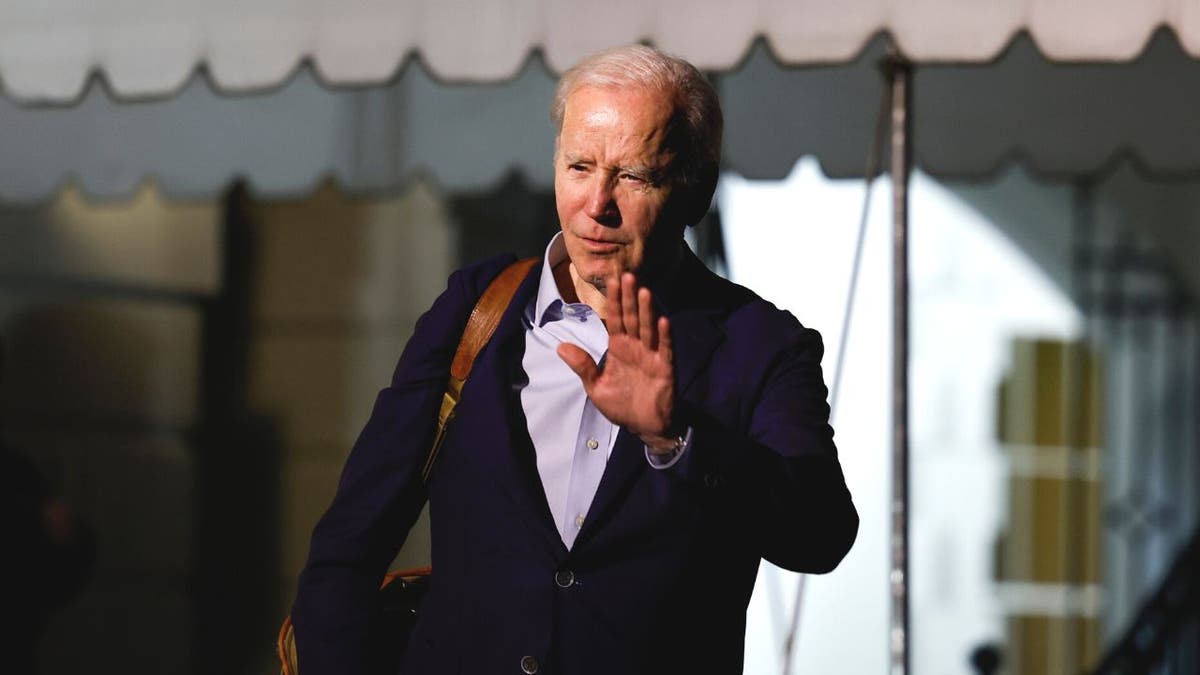
In the final hours of his term, President Joe Biden negotiated a prisoner exchange with the Taliban that released U.S. citizens Ryan Corbett and William Wallace McKenty from Taliban custody. 

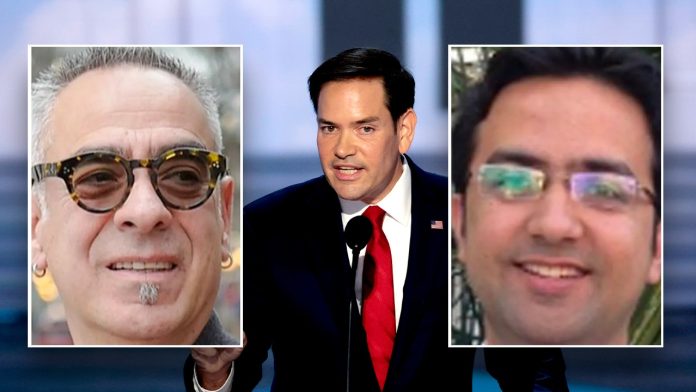
Not included in the deal, however, were U.S. citizens George Glezmann and Mahmood Habibi.

On Saturday, Secretary of State Marco Rubio posted on X that he was “just hearing” of the detentions of additional Americans by the Taliban. 

“If this is true, we will have to immediately place a VERY BIG bounty on their top leaders, maybe even bigger than the one we had on Bin Laden,” Rubio wrote.

2 AMERICANS RELEASED IN EXCHANGE FOR TALIBAN PRISONER

Dennis Fitzpatrick, who is coordinating efforts outside the U.S. government for Glezmann’s release, claimed Glezmann was “never a serious priority for the Biden White House.” 

“President Biden and [former National Security Advisor] Jake Sullivan decided to leave George Glezmann in Kabul for no good reason,” Fitzpatrick told Fox News Digital. “We are confident that President Trump’s clear-eyed leadership will secure George’s release to his family.”

Two U.S. citizens, George Glezmann, left, and Mahmood Habibi, were not included in the recent Biden administration deal that freed two other Americans from the Taliban. (James Foley Foundation/Getty Images)

Fitzpatrick added that 66-year-old Glezmann is “a totally innocent man” who was “a hard-working, blue-collar airline mechanic before he was wrongfully detained. He doesn’t deserve to be used as a pawn.”

Glezmann has been in detention since Dec. 5, 2022, when he was traveling to Afghanistan to “explore the cultural landscape and rich history of the country” according to a Senate resolution from July 2024 calling for his immediate release. 

The resolution states that Glezmann’s mental and physical condition were deteriorating as a result of his detention in a nine-foot square underground cell. He has only been allowed limited calls to family and has experienced “facial tumors, hypertension, severe malnutrition, and other medical conditions” as a result of his detention.

Biden waving

Former President Joe Biden at the White House  (Anna Moneymaker)

While the Taliban admit to holding Glezmann in custody, they insist they do not hold Mahmood Habibi. 

TALIBAN DISMISS DISCRIMINATION ACCUSATIONS AS ‘ABSURD’ DESPITE BANNING WOMEN FROM THE PUBLIC IN AFGHANISTAN

marco rubio

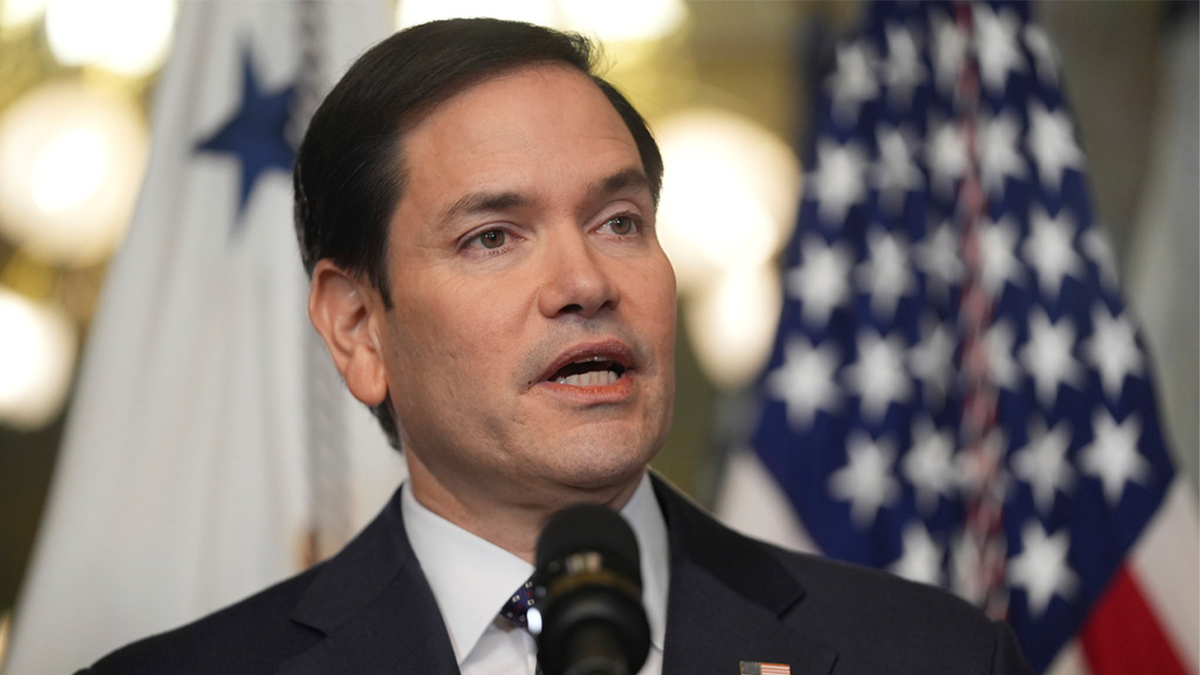
Secretary of State Marco Rubio speaks after being sworn in by Vice President JD Vance in the Vice Presidential Ceremonial Office in the Eisenhower Executive Office Building on the White House campus Tuesday, in Washington, D.C.  (AP Photo/Evan Vucci)

Habibi’s brother Ahmad told Fox News Digital the family “know[s] that my brother is still in Taliban custody. I can’t share too much about that because we don’t want to put him or others at risk. But anyone accepting the Taliban’s hollow suggestions that they do not have him is falling for their lies.

“We have multiple witnesses to his arrest by the [General Directorate of Intelligence (GDI)]. We have multiple witnesses who were held with him at GDI headquarters. The Taliban has always claimed they don’t have him and don’t know who he is. How do they explain the obvious contradictions to this?”

Ahmad also claimed the family “know[s] that the U.S. government has technical evidence that Mahmood was in GDI custody long after his arrest.” 

He alleges the Biden National Security Council “micromanaged the State Department’s effort to secure my brother’s release” and “blocked [the State Department] from using the data in their discussions with the Taliban, even though we told them that it would have directly confronted the Taliban’s claims that they never heard of my brother.” 

TOP GENERAL IN FIGHT AGAINST THE TALIBAN SAYS AFGHANISTAN HAS ONCE AGAIN BECOME A ‘CRUCIBLE OF TERRORISM’ 

Neither the State Department nor the National Security Council responded to Fox News Digital’s requests for confirmation of Ahmad’s claims.

Fox News Digital also reached out to Taliban spokespersons Zabihullah Mujahid and Suhail Shaheen about Habibi’s detention and asked Mujahid what happened to Habibi after he was arrested by the GDI. Mujahid did not respond. Shaheen directed Fox News Digital to reach out to the GDI and claimed no knowledge of the situation.  

The Taliban have long sought the release of Guantanamo Bay detainee and al Qaeda facilitator Muhammad Rahim in exchange for the Americans they admitted were in their prisons. Ahmad Habibi told CBS News President Biden assured him in a Jan. 12 phone call that the U.S. would not release Rahim unless the Taliban released Habibi.

Taliban fighters in truck with guns

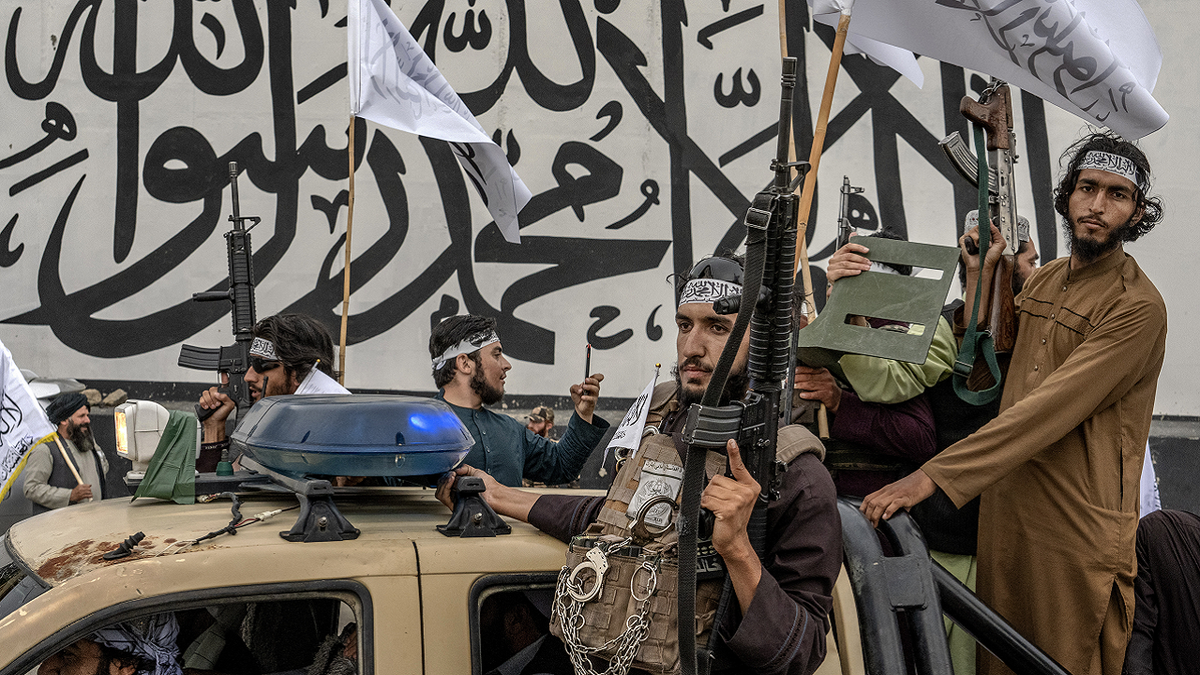
Taliban fighters in Kabul, Afghanistan (AP Photo/Ebrahim Noroozi)

CLICK HERE TO GET THE FOX NEWS APP

Former Principal Deputy Special Presidential Envoy for Hostage Affairs Hugh Dugan told Fox News Digital the Trump administration could pursue multiple “lines of effort” to secure the release of Glezmann and Habibi. 

Dugan said this could involve “outright rescue by the military” at one level or continued “subtle diplomacy in the background.”  

Dugan said he recognized that “to say we’re doing everything we can … is not satisfying to a family member, frankly, or anybody, and they want to hear that you’re continuing to identify what might have eluded us all along, or that there’s a crack in the horizon that’s opening. 

“And we need to realize that that might be another step in our path to recovery and a line of effort has to be amended to accommodate new realities at any given moment.”