Thursday, November 12, 2026
Home Blog Page 33

Trump wants a Golden Dome over America. Here’s what it would take : NPR

0

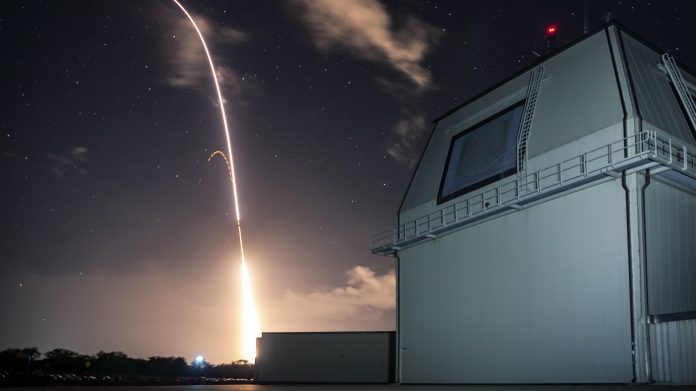
The U.S. military tests its land-based Aegis missile defense system in 2018. Such systems can track and intercept short and medium-ranged missiles but struggle against larger, more powerful intercontinental ballistic missiles of the sort used by Russia and China.

Mark Wright/AP/Missile Defense Agency


hide caption

toggle caption

Mark Wright/AP/Missile Defense Agency

President Trump has told the Pentagon to take another look at missile defense. Technology to shoot down missiles has existed for decades, but the kind of missile shield Trump is looking to build would be much more complex — and expensive.

A key part of the new missile defense system, which Trump described as “Golden Dome” in a speech earlier this year, will likely be space-based interceptors, according to experts and an executive order signed by the president.

A number of defense companies have expressed interest in trying to build the Golden Dome. Last week, Reuters reported that Elon Musk’s firm SpaceX had joined a bid for the project. Musk later refuted that claim in a post on X.

Here’s why a critical part of Golden Dome might be built on the final frontier, and what building such a system would involve.

Golden Dome would be very different than Israel’s Iron Dome

Trump’s speech to Congress and his executive order have both referenced Israel’s Iron Dome missile shield.

Iron Dome has proven itself incredibly effective during Israel’s latest wars at intercepting missiles and rockets. It depends on a powerful network of radars, computers, and interceptor missiles to defend cities and military sites throughout the country.

Israel's Iron Dome can intercept rockets fired from short distances, but it is ineffective against longer-ranged missiles.

Israel’s Iron Dome can intercept rockets fired from short distances, but it is ineffective against longer-ranged missiles.

Ariel Schalit/AP/AP


hide caption

toggle caption

Ariel Schalit/AP/AP

But building Iron Dome is a much more modest proposal than building a Golden Dome.

“It’s the difference between a kayak and a battleship,” says Jeffrey Lewis, a professor at the Middlebury Institute of International Studies at Monterey, who studies missile defenses.

A big part of that difference is the size of the landmass that needs to be protected — Israel is more than 400 times smaller than the United States, and it’s mostly flat desert that’s easy to defend.

The missile threat is fundamentally different for America

“Iron Dome, fundamentally, is designed to deal with slow moving, short-range projectiles,” Lewis says.

For the most part, it shoots at missiles and rockets fired from near the border that can typically fly just tens of miles.

But the missiles Russia and China have pointed at the U.S. are completely different. They include huge, powerful intercontinental ballistic missiles that soar into space and shriek back to Earth at hypersonic speeds. Iron Dome could never intercept them.

A Russian National Guard soldier stands in front of a Yars nuclear missile during Victory Day Parade dress rehearsals in 2024. The Yars is a type of intercontinental ballistic missile that can strike at hypersonic speeds.

A Russian National Guard soldier stands in front of a Yars nuclear missile during Victory Day Parade dress rehearsals in 2024. The Yars is a type of intercontinental ballistic missile that can strike at hypersonic speeds.

Contributor/Getty Images Europe/Getty Images Europe


hide caption

toggle caption

Contributor/Getty Images Europe/Getty Images Europe

In fact, these bigger missiles are hard for any existing missile defense system to intercept, says Laura Grego, a physicist at the non-profit Union of Concerned Scientists. The best thing to do is try to hit these ICBMs right as they’re launching from their silo, but “the launch phase of those missiles only lasts three to five minutes, so you only have some hundreds of seconds that you have available to catch them as they’re launching.”

In order to catch these missiles, Golden Dome must have the high ground

This leads to the third big difference between the real Iron Dome and President Trump’s futuristic Golden Dome — to hit these missiles early, a Golden Dome will likely need to include technology in space.

The idea is to have satellites in orbit that could spot missiles as they leave the ground and then shoot them at the beginning of their flight.

It’s a system that’s been thought of before. The problem, says Grego, is that the Earth is really big, and satellites spin around it really fast.

In order to ensure you have a satellite in position above the right patch of Earth, “you need a lot of things in space in order to have them at the right place at the right time,” she says.

Grego was part of an independent panel set up by the American Physical Society, which took a look at missile defense. Earlier this year, they concluded a constellation of about 16,000 interceptors would be needed to attempt to counter a rapid salvo of about 10 solid propellant ICBMs similar to North Korea’s Hwasong-18 missiles.

An artist's rendering of Brilliant Swarms, a proposed space-based missile defense system from the firm Booz Allen Hamilton. The small cubesats would act as both sensors and interceptors to catch missiles early in flight.

An artist’s rendering of Brilliant Swarms, a proposed space-based missile defense system from the firm Booz Allen Hamilton. The small cubesats would act as both sensors and interceptors to catch missiles early in flight.

Booz Allen Hamilton


hide caption

toggle caption

Booz Allen Hamilton

A huge constellation is possible to build but would be expensive

The idea of having 16,000 satellites in orbit seemed impossible, until recently. Elon Musk’s company SpaceX has been building a constellation of internet satellites called Starlink.

It has put around 7,000 satellites in orbit, with plans to launch thousands more.

According to the Reuters article, SpaceX was looking at partnering with defense tech firms Palantir and Anduril. The constellation would include hundreds of missile sensing and attack satellites, the report claimed.

In his post on X, however, Musk said “our strong preference would be to stay focused on taking humanity to Mars. If the President asks us to help in this regard, we will do so, but I hope that other companies (not SpaceX) can do this.”

Separately, the consulting firm Booz Allen Hamilton recently unveiled a proposal for a system of 2,000 anti-missile satellites it said could provide a good initial defense, in conjunction with other systems. The constellation’s satellites would act as both sensors and interceptors — some satellites might detect the launch and then others passing near would whizz off to strike the incoming missile.

The firm believes it could field the constellation for $25 billion, “and that would include the R&D, etc.,” says Trey Obering, an executive vice president at Booz Allen Hamilton who formerly served as the head of the Pentagon’s Missile Defense Agency during George W. Bush’s administration.

Lewis thinks the numbers for Booz Allen’s constellation could end up being higher. Moreover, he points out, the constellation would require new satellites to be continually added, because gradually these satellites would fall out of their orbits. “That’s $4 to $5 billion a year just to sustain,” he points out.

If Golden Dome gets built, America’s rivals might adapt

Still other experts say it is the time to take another look at space-based systems, and Trump’s Golden Dome proposal provides that opportunity.

“It’s a welcome development and it’s, in some respects, overdue,” says Tom Karako, director of the Missile Defense Project at the Center for Strategic and International Studies. Karako says the wars in the Middle East and in Ukraine show why missile defense is needed. Non-nuclear missiles have become a go-to weapon, he says, and Golden Dome could serve as a powerful deterrent.

China's military showed off a new hypersonic ballistic nuclear missile in 2019 that could potentially breach all existing anti-missile shields deployed by the U.S. and its allies.

China’s military showed off a new hypersonic ballistic nuclear missile in 2019 that could potentially breach all existing anti-missile shields deployed by the U.S. and its allies.

Ng Han Guan/AP/AP


hide caption

toggle caption

Ng Han Guan/AP/AP

“I don’t want to just deter a nuclear exchange, I want to deter a conventional war with China and Russia and we do that by raising the threshold,” he says.

But Lewis is more skeptical. Conventional wars aside, he says, Russia and China still depend on nuclear weapons to maintain a strategic balance with America. If we try to build a Golden Dome, he warns, they will rapidly expand and upgrade their nuclear arsenals in response.

“We will end up with vastly larger Russian and Chinese nuclear forces. We will end up with the Russians and the Chinese having all kinds of crazy sci-fi weapons,” he says. “In short we will end up spending tens if not hundreds of billions of dollars to be in, at best, the same place we are today, and most likely a much worse place.”

It could spark a new nuclear arms race, he warns, and Russia may already be preparing. The U.S. believes it’s experimenting with ways of putting nuclear weapons in space, in order to destroy large constellations of satellites like the ones needed for Golden Dome.
U.S. is sliding toward authoritarianism, hundreds of scholars say : NPR

0

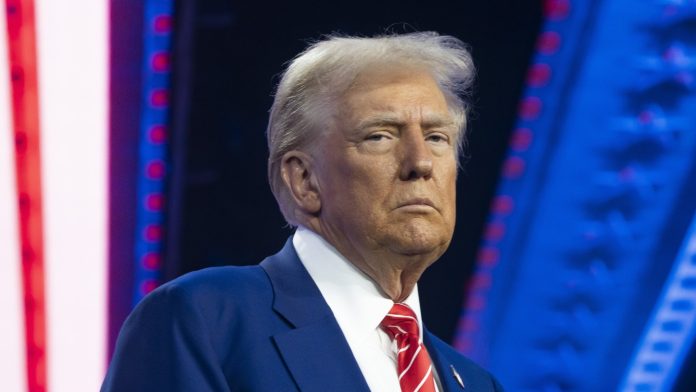
U.S. President-elect Donald Trump looks on during Turning Point USA’s AmericaFest at the Phoenix Convention Center on Dec. 22, 2024, in Phoenix. The annual four day conference geared toward energizing and connecting conservative youth hosts some of the country’s leading conservative politicians and activists.

Rebecca Noble/Getty Images


hide caption

toggle caption

Rebecca Noble/Getty Images

WASHINGTON — A survey of more than 500 political scientists finds that the vast majority think the United States is moving swiftly from liberal democracy toward some form of authoritarianism.

In the benchmark survey, known as Bright Line Watch, U.S.-based professors rate the performance of American democracy on a scale from zero (complete dictatorship) to 100 (perfect democracy). After President Trump’s election in November, scholars gave American democracy a rating of 67. Several weeks into Trump’s second term, that figure plummeted to 55.

“That’s a precipitous drop,” says John Carey, a professor of government at Dartmouth and co-director of Bright Line Watch. “There’s certainly consensus: We’re moving in the wrong direction.”

Carey said the decline between November and February was the biggest since Bright Line Watch began surveying scholars on threats to American democracy in 2017. In the survey, respondents consider 30 indicators of democratic performance, including whether the government interferes with the press, punishes political opponents and whether the legislature and the judiciary can check executive authority.

Not all political scientists view Trump with alarm, but many like Carey who focus on democracy and authoritarianism are deeply troubled by Trump’s attempts to expand executive power over his first several months in office.

“We’ve slid into some form of authoritarianism,” says Steven Levitsky, a professor of government at Harvard, and co-author of How Democracies Die. “It is relatively mild compared to some others. It is certainly reversible, but we are no longer living in a liberal democracy.”

Protesters wave Turkish flags in front of the New Mosque in Istanbul. Despite a government protest ban, mass demonstrations erupted nationwide following the arrest of Istanbul Mayor Ekrem Imamoglu on corruption charges, with crowds demanding democracy and chanting "people, rights, justice." Scholars of democracy view Turkey as a competitive authoritarian regime in which the ruling party uses institutions such as the courts to attack their political opponents.

Protesters wave Turkish flags in front of the New Mosque in Istanbul. Despite a government protest ban, mass demonstrations erupted nationwide following the arrest of Istanbul Mayor Ekrem Imamoglu on corruption charges, with crowds demanding democracy and chanting “people, rights, justice.” Scholars of democracy view Turkey as a competitive authoritarian regime in which the ruling party uses institutions such as the courts to attack their political opponents.

Su Cassiano/Middle East Images/AFP via Getty


hide caption

toggle caption

Su Cassiano/Middle East Images/AFP via Getty

Kim Lane Scheppele, a Princeton sociologist who has spent years tracking Hungary, is also deeply concerned: “We are on a very fast slide into what’s called competitive authoritarianism.”

When these scholars use the term “authoritarianism,” they aren’t talking about a system like China’s, a one-party state with no meaningful elections. Instead, they are referring to something called “competitive authoritarianism,” the kind scholars say they see in countries such as Hungary and Turkey.

In a competitive authoritarian system, a leader comes to power democratically and then erodes the system of checks and balances. Typically, the executive fills the civil service and key appointments — including the prosecutor’s office and judiciary — with loyalists. He or she then attacks the media, universities and nongovernmental organizations to blunt public criticism and tilt the electoral playing field in the ruling party’s favor.

“The government would still have elections and would nominally be democratic,” says Rory Truex, a political scientist at Princeton who focuses on China. “But those elections would no longer be free and fair.”

A man walks next to a graffiti with the image of the late Venezuelan President Hugo Chávez in Caracas. Political scientists say that President Trump does not enjoy the huge popular support that leaders like Chavez harnessed to dominate their nation's political systems.

A man walks next to a graffiti with the image of the late Venezuelan President Hugo Chávez in Caracas. Political scientists say that President Trump does not enjoy the huge popular support that leaders like Chávez harnessed to dominate their nation’s political systems.

Raul Arboleda/AFP via Getty Images


hide caption

toggle caption

Raul Arboleda/AFP via Getty Images

While the vast majority of scholars surveyed say Trump is pushing the country toward autocracy, other professors strongly disagree. James Campbell, a retired political scientist at the University at Buffalo, SUNY, says Trump is using legitimate presidential powers to address long-standing problems. Campbell points to Trump’s use of tariffs to try to push companies to bring manufacturing jobs back to the United States. In recent decades, economic globalization led to catastrophic layoffs of everyone from furniture makers in North Carolina to auto assembly-line workers in the Midwest as firms sent work overseas, especially to China.

“I think they’ve done an excellent job,” Campbell says of the Trump administration.

Campbell adds that he thinks many political scientists may see Trump as autocratic because they don’t like him or his politics.

“I think most of them are coming from the political left,” he says. “There’s a comfort in all of them getting together and saying, ‘Oh, Trump’s a bad guy. He’s authoritarian.’ “

NPR reached out to the Trump administration, which has yet to respond.

President Trump has spoken admiringly of Hungary's Prime Minister Viktor Orban. U.S. scholars of democracy say Orban has used various tactics, including stocking state agencies with loyalists and attacking media business models, to turn Hungary into a competitive authoritarian state. Under competitive authoritarianism, there are still elections, but the playing field is tilted in favor of the ruling party.

President Trump has spoken admiringly of Hungary’s Prime Minister Viktor Orbán. U.S. scholars of democracy say Orbán has used various tactics, including stocking state agencies with loyalists and attacking media business models, to turn Hungary into a competitive authoritarian state. Under competitive authoritarianism, there are still elections, but the playing field is tilted in favor of the ruling party.

Attila Kisbenedek/AFP via Getty Images


hide caption

toggle caption

Attila Kisbenedek/AFP via Getty Images

But many democracy scholars say the Trump administration is using tactics employed by autocrats, and they point to specific actions. For instance, Trump’s Federal Communications Commission (FCC) is investigating all the major broadcast outlets — except for Rupert Murdoch’s Fox, which owns the pro-Trump Fox News Channel.

The FCC is questioning how CBS edited an interview of Trump’s 2024 rival, Kamala Harris, and whether NPR and PBS are complying with regulations on corporate underwriting spots. The FCC can revoke local broadcast licenses, which could damage the networks financially.

Princeton’s Scheppele says this is reminiscent of Hungary under Prime Minister Viktor Orbán. Orbán took aim at the business model of Hungarian media, which heavily relied on state advertising.

“Overnight, [Orbán] cuts all the advertising to the independent and opposition media,” Scheppele says. “They all have a hole blown in their budget.”

In another example, Trump has withheld or threatened to withhold billions of dollars from universities, including Harvard, Princeton and Columbia, citing concerns about antisemitism. Scheppele says Orbán also targeted universities that had been critical of his government.

“In the first two years, Orbán cut the university budgets by 40%,” she says.

Another way to measure authoritarianism, according to Levitsky, is whether publicly opposing the government comes with a cost. He says — under Trump — it does. For instance, Trump has issued executive orders barring lawyers with firms he doesn’t like from entering government buildings and representing government contractors.

Fear of government retribution is now spreading through society. A scholar who spoke to NPR for this story later asked not to be quoted, saying he feared the Trump administration might try to punish him by slashing research grants he’s working on. In a recent NPR series on free speech, many people did not want to be identified by name.

A demonstrator holds a banner as teachers, students and their sympathisers protest in central Budapest at the headquarters of the Interior Ministry on September 2, 2024, after the head of the renowned Madach Imre high school was sacked last week for not implementing a government-mandated "smartphone ban". In August, schools were instructed to collect students' phones and smart devices during the teaching hours in a decree signed by nationalist Prime Minister Viktor Orban. The principal of the Madach Imre High School was fired, after it refused to implement the ban, citing a part of the regulation.

Teachers, students and their sympathizers protest in central Budapest following a government-mandated “smartphone ban” in schools that was signed by nationalist Prime Minister Viktor Orbán.

Attila Kisbenedek/AFP via Getty Images


hide caption

toggle caption

Attila Kisbenedek/AFP via Getty Images

But even some scholars who say Trump has autocratic tendencies think the American system should be able to withstand them.

Kurt Weyland, a political scientist at the University of Texas at Austin, says that so far the lower courts are checking Trump. He also says Trump does not have the overwhelming popular support that autocratic leaders such as Venezuela’s Hugo Chávez and El Salvador’s Nayib Bukele enjoyed and that was crucial to their ability to change their country’s political systems.

For instance, Bukele, who met with Trump at the White House last week, has seen approval ratings over 90% and won reelection last year by a landslide. By contrast, a recent poll showed Trump’s approval rating falling to 43% and he was reelected with just under half the popular vote.

“These populist leaders managed to engineer new constitutions that seriously concentrated power and that were the breakpoint that put those countries on the path toward competitive authoritarian rule,” says Weyland, who wrote Democracy’s Resilience to Populism’s Threat: Countering Global Alarmism. “In the United States, that is out of the question.”

Bright Line Watch conducted its survey in early February. It plans to put another in the field soon. Carey, one of the co-directors, expects political scientists to downgrade America’s democracy even further.

President Trump more vocal about D.C.'s local issues in second term

0

Since returning to office, Trump has been more vocal about local matters in Washington, D.C., bringing a shift in tone by local leaders, especially when the city’s financial future may be on the line.

The Picture Show : NPR

0

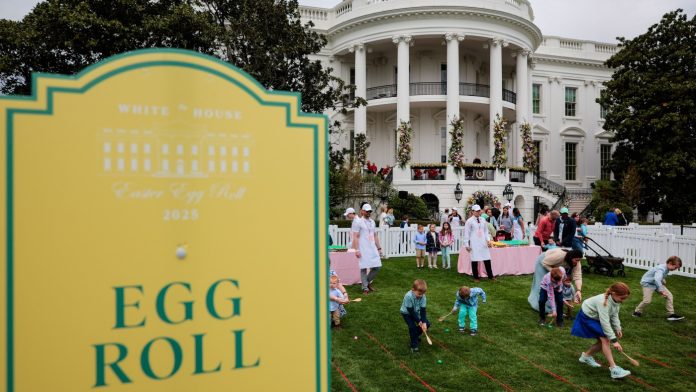
Children and their parents participate in the White House Egg Roll on the South Lawn on Monday in Washington, D.C. The White House expected thousands of children and adults to participate in the annual tradition of rolling colored eggs down the White House lawn, which was started by President Rutherford B. Hayes in 1878.

Chip Somodevilla/Getty Images


hide caption

toggle caption

Chip Somodevilla/Getty Images

The White House held its annual Easter egg roll event Monday on the South Lawn, with President Trump and first lady Melania Trump welcoming thousands of people to the first White House Easter Egg Roll of his second term.

The annual tradition dates back to the presidency of Rutherford B. Hayes, according to the White House, and save for war and food shortages, has been a mainstay of Pennsylvania Avenue since 1878.

WASHINGTON, DC - APRIL 21: Children participate in the White House Egg Roll on the South Lawn on April 21, 2025 in Washington, DC. The White House is expecting thousands of children and adults to participate in the annual tradition of rolling colored eggs down the White House lawn, which was started by President Rutherford B. Hayes in 1878. (Photo by Anna Moneymaker/Getty Images)

Children participate in the White House Egg Roll on the South Lawn on Monday in Washington, D.C.

Anna Moneymaker/Getty Images


hide caption

toggle caption

Anna Moneymaker/Getty Images

WASHINGTON, DC - APRIL 21: U.S. President Donald Trump, joined by first lady Melania Trump and the Easter Bunny, delivers remarks during the White House Egg Roll on the South Lawn on April 21, 2025 in Washington, DC. The White House is expecting thousands of children and adults to participate in the annual tradition of rolling colored eggs down the White House lawn, which was started by President Rutherford B. Hayes in 1878. (Photo by Anna Moneymaker/Getty Images)

President Trump, joined by first lady Melania Trump and the Easter Bunny, delivers remarks during the White House Egg Roll on the South Lawn.

Anna Moneymaker/Getty Images


hide caption

toggle caption

Anna Moneymaker/Getty Images

WASHINGTON, DC - APRIL 21: Guests visit the Meta tent during the White House Easter Egg Roll on the South Lawn of the White House on April 21, 2025 in Washington, DC. The White House is expecting thousands of children and adults to participate in the annual tradition of rolling colored eggs down the White House lawn, which was started by President Rutherford B. Hayes in 1878. (Photo by Chip Somodevilla/Getty Images)

Guests visit a tent sponsored by Meta during the White House Easter Egg Roll.

Chip Somodevilla/Getty Images


hide caption

toggle caption

Chip Somodevilla/Getty Images

The event, which the White House said would use eggs “donated by American egg farmers,” also comes as egg prices in the United States reached record highs earlier this year due to an outbreak of avian flu that has forced farmers to kill off millions of egg-laying hens.

Monday’s egg roll was also the first time the White House had solicited corporate sponsors for the event, with YouTube, Amazon, Meta, listed among the sponsors. The companies’ support comes as billionaire tech executives have faced growing criticism for cozying up to the Trump administration, including Amazon’s Jeff Bezos, Meta’s Mark Zuckerberg and Google’s Sundar Pichai, as well as Tesla and SpaceX CEO Elon Musk, who has taken on unprecedented power within the White House.

With sponsorships ranging from $75,000 to $200,000, according to a CNN report earlier this month, the White House has said the money raised will go to the White House Historical Association, a nonprofit.

WASHINGTON, DC - APRIL 21: Children and their parents participate in the White House Egg Roll on the South Lawn on April 21, 2025 in Washington, DC. The White House is expecting thousands of children and adults to participate in the annual tradition of rolling colored eggs down the White House lawn, which was started by President Rutherford B. Hayes in 1878. (Photo by Chip Somodevilla/Getty Images)

Children and their parents participate in the White House Egg Roll on Monday.

Chip Somodevilla/Getty Images


hide caption

toggle caption

Chip Somodevilla/Getty Images

WASHINGTON, DC - APRIL 21: Children pose for photographs while pretending to ring the bell for the New York Stock Exchange during the White House Egg Roll on the South Lawn on April 21, 2025 in Washington, DC. The White House is expecting thousands of children and adults to participate in the annual tradition of rolling colored eggs down the White House lawn, which was started by President Rutherford B. Hayes in 1878. (Photo by Chip Somodevilla/Getty Images)

Children pose for photographs while pretending to ring the bell for the New York Stock Exchange, one of sponsors of the White House Egg Roll.

Chip Somodevilla/Getty Images


hide caption

toggle caption

Chip Somodevilla/Getty Images

WASHINGTON, DC - APRIL 21: Guests put together bouquets of fresh flowers during the White House Easter Egg Roll on the South Lawn of the White House on April 21, 2025 in Washington, DC. The White House is expecting thousands of children and adults to participate in the annual tradition of rolling colored eggs down the White House lawn, which was started by President Rutherford B. Hayes in 1878. (Photo by Chip Somodevilla/Getty Images)

Guests put together bouquets of fresh flowers during the White House Easter Egg Roll.

Chip Somodevilla/Getty Images


hide caption

toggle caption

Chip Somodevilla/Getty Images

WASHINGTON, DC - APRIL 21: Children play with soap bubbles during the White House Easter Egg Roll on the South Lawn of the White House on April 21, 2025 in Washington, DC. The White House is expecting thousands of children and adults to participate in the annual tradition of rolling colored eggs down the White House lawn, which was started by President Rutherford B. Hayes in 1878. (Photo by Chip Somodevilla/Getty Images)

Children play with soap bubbles during the White House Easter Egg Roll on the South Lawn of the White House.

Chip Somodevilla/Getty Images


hide caption

toggle caption

Chip Somodevilla/Getty Images

WASHINGTON, DC - APRIL 21: U.S. Secretary of Defense Pete Hegseth watches as children participate in the White House Easter Egg Roll on the South Lawn of the White House on April 21, 2025 in Washington, DC. The White House said they are expecting thousands of children and adults to participate in the annual tradition of rolling colored eggs down the White House lawn, which was started by President Rutherford B. Hayes in 1878. (Photo by Anna Moneymaker/Getty Images)

U.S. Secretary of Defense Pete Hegseth takes part in the festivities at the White House Easter Egg Roll.

Anna Moneymaker/Getty Images


hide caption

toggle caption

Anna Moneymaker/Getty Images

Guests sit at a station hosted by Amazon on the South Lawn of the White House before President Donald Trump and first lady Melania Trump participate in the White House Easter Egg Roll Monday, April 21, 2025, in Washington. (AP Photo/Alex Brandon)

Guests sit at a station hosted by Amazon on the South Lawn of the White House on Monday.

Alex Brandon/AP


hide caption

toggle caption

Alex Brandon/AP

WASHINGTON, DC - APRIL 21: A child participates in the White House Egg Roll on the South Lawn of the White House on April 21, 2025 in Washington, DC. The White House is expecting thousands of children and adults to participate in the annual tradition of rolling colored eggs down the White House lawn, which was started by President Rutherford B. Hayes in 1878. (Photo by Chip Somodevilla/Getty Images)

A child balances an egg during the White House Egg Roll on Monday.

Chip Somodevilla/Getty Images


hide caption

toggle caption

Chip Somodevilla/Getty Images

Speaker of the House Emerita Nancy Pelosi remembers Pope Francis : NPR

0

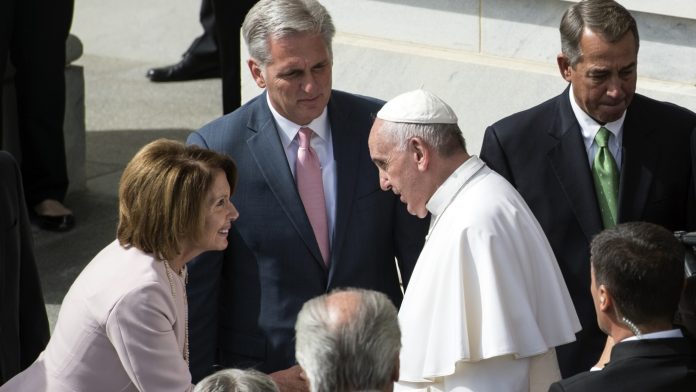
Rep. Nancy Pelosi shakes hands with Pope Francis on Capitol Hill in September 2015.

Nikki Kahn/Pool/ AP


hide caption

toggle caption

Nikki Kahn/Pool/ AP

Catholics around the world are mourning the death of Pope Francis, who died on Easter Monday at age 88. Among them is Speaker of the House Emerita Nancy Pelosi, who told NPR she met Pope Francis a handful of times.

In an interview with All Things Considered host Mary Louise Kelly, Pelosi recounted a visit in which he laughed at her.

Pelosi was waiting for him in his office and when he opened the door, “tears just flowed down my eyes … I was just overwhelmed by seeing him.”

She was overcome with emotion, but met by his kindness.

“How he reacted is what really got me,” she told NPR. “He just laughed and laughed and laughed that I was so tearful upon seeing him.”

Pelosi praised Francis as “humble, courageous and confident.”

“He would always say, ‘Pray for me.’ And I’d be like, ‘Well wait a minute, your Holiness, you’re supposed to be praying for the rest of us.'”

Today, Pelosi said, “I’m praying to him …. He’s a saintly person. I’m praying to him.”

This interview has been lightly edited for length and clarity.

Interview highlights

Mary Louise Kelly: I remember when you and I spoke last summer, I was interviewing you about your memoir, your book, and you talked about growing up Catholic and how today your faith remains very deep. So, just say a little bit more about that — what Pope Francis’ death means to you personally.

Nancy Pelosi: Well, his death means a great deal to me personally, but to many, many Catholics and people of faith throughout the world. So that’s why it’s such a day of sadness. I was at his installation on the Feast of Saint Joseph. Then I’ve had four opportunities to visit with him and speak with him, sometimes with my children, sometimes officially and always, always, always inspired by him. He would always say, “Pray for me.” And I’d be like, “Well, wait a minute, your Holiness, you’re supposed to be praying for the rest of us.” So this sign of his humility: “Pray for me.” And then his confidence and his courage to do all the wonderful things that he did was quite remarkable.

Kelly: And it sounds like you’re praying for him today.

Pelosi: I’m praying to him today. I’m praying to him today.

People light candles as they pay respects in front of a portrait of Pope Francis on Monday during a condolence meeting in New Delhi. Pope Francis, an energetic reformer who inspired widespread devotion from Catholics but riled traditionalists, died Monday at 88, just a day after greeting delighted worshipers after Easter Mass.

People light candles as they pay respects in front of a portrait of Pope Francis on Monday during a condolence meeting in New Delhi.

Sajjad Hussain/AFP via Getty Images


hide caption

toggle caption

Sajjad Hussain/AFP via Getty Images

Kelly: When was the last time you saw him or were able to speak with him?

Pelosi: The last time I saw him, we visited Saint Peter’s, of course, on the Feast of Saints Peter and Paul. Then they called me outside and said, “We want you to wait here.” And we just waited there. My husband and I, Paul and I. And then the door opened and in came His Holiness in a wheelchair at a distant door. But he stood up and walked over to where we were. And we had this beautiful chat and it was photographed and they put it out there publicly. That was the last time I saw him. Right before that, though, is when I had the private visit with him in his office. And they told me when we went there, these rules are very strict, they’re 400 years old, so you must obey all the rules. So, I went to see him at his office. As soon as the door opened, I was facing him. He was standing on the other side of the door and tears just flowed down my eyes. I was just, just overwhelmed by seeing him. But how he reacted is what really got me is he just laughed and laughed and laughed that I was so tearful upon seeing him.

Kelly: He was, of course, a spiritual leader and also a political one. This was not a man afraid of a fight. I’m thinking, for example, about the positions he took in LGBTQ rights, transgender rights — at a moment when those are being walked back here in the U.S. What does it mean for the world to have lost his voice at this moment?

Pelosi: Well, we are going to have a new pope soon and hopefully he will respect the dignity of every person. I do want to, though, add that one of the things that he did is just enlarge the issue to God’s creation. All of God’s children were precious to him and God’s creation — that would be our climate, our globe. And he wrote an encyclical about saving the planet as God’s creation.

Kelly: So, understanding that today is a day of mourning for you, for many Catholics, a day to pay respect to Pope Francis. What qualities would you hope to see in his successor? What aspects of his legacy would you wish to see carried on?

Pope Francis greets people in December 2024.

Pope Francis greets people in December 2024.

Andreas Solaro/AFP via Getty Images


hide caption

toggle caption

Andreas Solaro/AFP via Getty Images

Pelosi: Right now, it’s hard to talk about what comes next when we’re still mourning him. And actually in church yesterday, Christ is risen. Easter, the most glorious of all holidays. And we prayed for him in church yesterday, too. But we always pray for the pope in church. I do believe that whoever is chosen, the pope is the pope inspired by the Holy Ghost and accepts whatever that decision is.

Kelly: You’re making me think. When I woke up this morning and heard the news, I thought, Oh, I wonder if he was hanging on for one more Easter. We’ll never know. But do you think he was hanging on to celebrate one more Easter?

Pelosi: Well, it could be. You know, it’s the most glorious feast in the church. Christ is risen is the basis of our faith. And I don’t know if he had the choice to stay on or not, but thank God that he was able to and to drive through the crowd and wish Happy Easter to people and the joy that it gave to all the people in the square to see him, thank God that he was able to be able to stay alive for Easter. That was remarkable. And then this morning, when we heard the news, it was of course. Of course, of course. He stayed here one more day. So beautiful.

This story was adapted for the web by Karen Zamora.

White House looking to replace Pete Hegseth as defense secretary : NPR

0

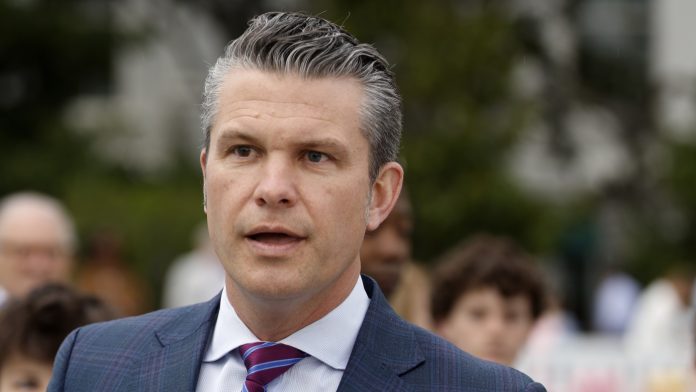
Secretary of Defense Pete Hegseth speaks to reporters during the White House Easter Egg Roll on the South Lawn of the White House on April 21, the day after The New York Times reported that he shared information last month to a second private Signal group chat about strikes in Yemen.

Chip Somodevilla/Getty Images


hide caption

toggle caption

Chip Somodevilla/Getty Images

The White House has begun the process of looking for a new secretary of defense, according to a U.S. official who was not authorized to speak publicly.

This comes as Defense Secretary Pete Hegseth continues to find himself mired in controversy. NPR has also confirmed with the same official that Hegseth shared details ahead of last month’s Yemen strikes with his wife and brother in a Signal chat on his personal phone, minutes after being updated by a senior U.S. military official. The news of the second Signal group chat about the mission was first reported by The New York Times.

In March, Hegseth shared details about action against Houthi targets in Yemen in a Signal chat with top White House officials that accidentally included a journalist.

In the last few weeks, four senior advisers to Hegseth have left abruptly, some accused of leaking. They have all released public statements suggesting infighting within the department of defense.

White House press secretary Karoline Leavitt denied that there’s an effort to replace Hegseth, posting on X that President Trump “stands strongly” behind him.

This breaking story will be updated.

NPR disclosure: Katherine Maher, the CEO of NPR, chairs the board of the Signal Foundation.

Live updates: Pope Francis, a towering figure on the world stage, dies at 88 : NPR

0

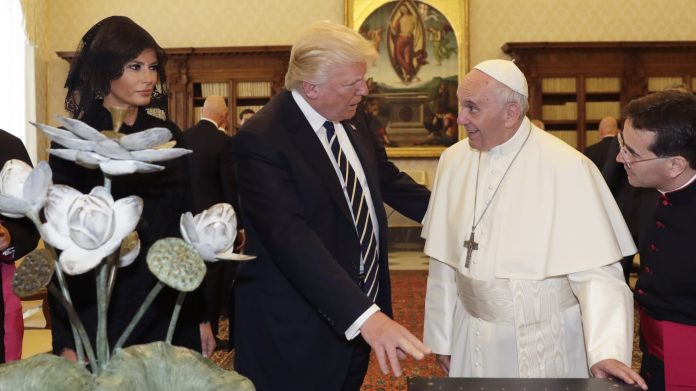
Pope Francis exchanges gifts with US President Donald Trump (C) and US First Lady Melania Trump during a private audience at the Vatican on May 24, 2017. US President Donald Trump met Pope Francis at the Vatican today in a keenly-anticipated first face-to-face encounter between two world leaders who have clashed repeatedly on several issues.

Alessandra Tarantino/AFP via Getty Images


hide caption

toggle caption

Alessandra Tarantino/AFP via Getty Images

U.S. President Donald Trump and First Lady Melania Trump meet Pope Francis, on May 22, 2017 in Vatican City, Vatican.

U.S. President Donald Trump and First Lady Melania Trump meet Pope Francis, on May 22, 2017 in Vatican City, Vatican.

Vatican Pool/Corbis/Getty Images


hide caption

toggle caption

Vatican Pool/Corbis/Getty Images

President Trump has acknowledged the pope’s death in a one-line post on Truth Social, writing: “Rest in Peace Pope Francis! May God Bless him and all who loved him!”

Trump and Francis clashed repeatedly in recent years.

Trump praised the pope at the start of Francis’s papacy, in 2013, several years before Trump reached the White House.

“The new Pope is a humble man, very much like me, which probably explains why I like him so much!” Trump tweeted in December of that year, several months after Francis became pope.

Things soured soon after. During the 2016 election, Francis roundly criticized Trump’s campaign proposal to build a wall on the U.S.-Canada border.

“A person who thinks only about building walls, wherever they may be, and not building bridges, is not Christian,” Francis said at the time.

Trump — who aggressively courted evangelical Christian leaders and voters during his campaign — fired back immediately, saying, “for a religious leader to question a person’s faith is disgraceful.”

“If and when the Vatican is attacked by ISIS, which as everyone knows is ISIS’s ultimate trophy, I can promise you that the Pope would have only wished and prayed that Donald Trump would have been President because this would not have happened,” he added.

Trump met the Pope during a 2017 trip to the Vatican, later telling reporters: “He is something. We had a fantastic meeting.” A photo from the visit, in which Trump is smiling next to a glum-looking Francis, quickly went viral.

Nearly a decade later, amidst the second Trump administration’s crackdown on immigration, the pope once again made a rare public rebuke of the president’s policies.

In a public letter to U.S. Catholic bishops, February, Francis described the program of mass deportations as a “major crisis.”

He said while nations have the right to defend themselves, “the rightly formed conscience cannot fail to make a critical judgment and express its disagreement with any measure that tacitly or explicitly identifies the illegal status of some migrants with criminality.”

“The act of deporting people who in many cases have left their own land for reasons of extreme poverty, insecurity, exploitation, persecution or serious deterioration of the environment, damages the dignity of many men and women, and of entire families, and places them in a state of particular vulnerability and defenselessness,” Francis wrote.

The letter also appeared to respond to widely-criticized comments that Vice President Vance, who is Catholic, had made weeks earlier. Vance said people should care for their family, communities and country before caring for others — and Francis disagreed.

“Christian love is not a concentric expansion of interests that little by little extend to other persons and groups,” the pope wrote.

Live updates: Pope Francis, a towering figure on the world stage, dies at 88 : NPR

0

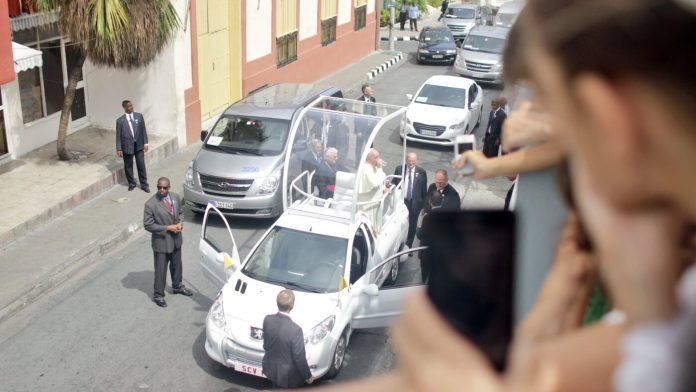
Pope Francis on a visit to Santiago de Cuba, Cuba, in September 2015.

Sven Creutzmann/Mambo Photo/Getty Images


hide caption

toggle caption

Sven Creutzmann/Mambo Photo/Getty Images

Before becoming pope, Jorge Mario Bergoglio had traveled very little.

As Pope Francis, he became a global player, preferring to visit what he called the “periphery” of the world, in Asia, Africa and Latin America.

His travels included visits to Myanmar, Bangladesh, Japan, the Central African Republic, Mozambique, Uganda, Madagascar, Israel, Egypt, Iraq, Ecuador, Chile and Cuba, among other countries.

He helped restore relations between the U.S. and Cuba during the Obama administration.

And his watchwords were “encounter,” “dialogue,” “reconciliation” and “build bridges, not walls.”

Interfaith dialogue was one of the pillars of his papacy — he forged closer ties with the Orthodox Church, Protestants and Muslims, and he continued the Vatican’s good relations with Jews set forth by St. John Paul II.

Francis had no qualms about delivering overtly political messages.

Accepting a prestigious European prize in 2016, he sharply scolded the European Union for its treatment of migrants and fraying sense of unity.

“I dream of a Europe where being a migrant is not a crime. … I dream of a Europe that promotes and protects the rights of everyone,” he said.

House Democrats land in El Salvador, demand Abrego Garcia’s return : NPR

0

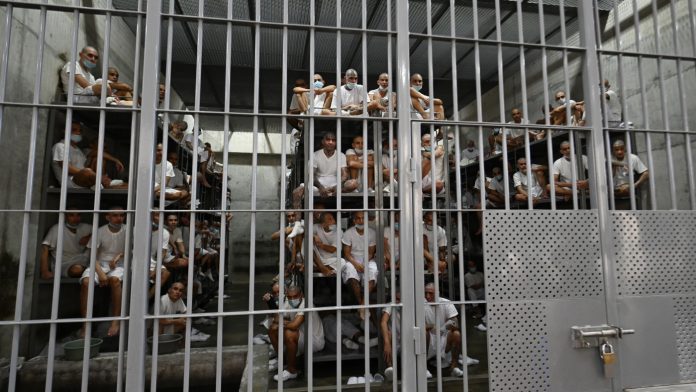
Inmates sit in a cell at El Salvador’s Counter-Terrorism Confinement Centre (CECOT) mega-prison, where hundreds of gang members are incarerated, in Tecoluca on Jan. 27. The Trump administration says it is considering El Salvador’s offer to accept U.S. prisoners — including some U.S. citizens — in its jails.

Marvin Recinos/AFP via Getty Images


hide caption

toggle caption

Marvin Recinos/AFP via Getty Images

Four House Democrats were scheduled to land in El Salvador Monday to demand the release and return of Kilmar Abrego Garcia, a Salvadoran citizen who lived in Maryland and was deported by the administration to a prison in El Salvador due to what the Trump administration an “administrative error.”

The group — Rep. Robert Garcia, D-Calif., Rep. Maxwell Frost, D-Fla., Rep. Yassamin Ansari, D-Ariz., and Rep. Maxine Dexter, D-Ore. — said in a statement they hope “to pressure” the White House “to abide by a Supreme Court order.”

“While Donald Trump continues to defy the Supreme Court, Kilmar Abrego Garcia is being held illegally in El Salvador after being wrongfully deported,” Rep. Garcia said. “That is why we’re here — to remind the American people that kidnapping immigrants and deporting them without due process is not how we do things in America.”

The Trump administration has refused to bring back Abrego Garcia despite a Supreme Court order to “facilitate” his return — and is receiving bipartisan criticism for it. The Salvadoran citizen entered the country illegally; an immigration judge said he should not be deported to El Salvador because Abrego Garcia was able to prove he was likely to suffer persecution in his home country. The Trump administration says it deported him because he was a member of MS-13; his lawyers deny that Abrego Garcia belongs to the gang.

The White House has said it can’t force the Salvadoran government to release one of its citizens, while El Salvador’s President Nayib Bukele called the idea of Abrego Garcia’s release “preposterous.”

On Thursday, a federal court denied the Trump administration’s appeal of the court’s return-order.

Last week, Reps. Garcia and Frost requested congressional travel funds and security for the trip to El Salvador. Rep. James Comer, the Kentucky Republican who chairs the House Oversight and Government Reform Committee, rejected the request. Rep. Mark Green, the Tennessee Republican who chairs the House Homeland Security Committee, said Thursday he’d also deny any such request.

The group’s visit to El Salvador is not a taxpayer funded CODEL trip.

The trip by House Democrats comes after a long and bipartisan series of visits to El Salvador by U.S. government officials. Starting in early February, Secretary of State Marco Rubio visited Salvadoran President Bukele’s residence. In March, Department of Homeland Security Secretary Kristi Noem met with Bukele and visited CECOT. And in April, Rep. Riley Moore, R-W. Va., also went to the mega-prison. Sen. Chris Van Hollen, the Maryland Democrat, met with Abrego Garcia last week.

U.S. Vice President JD Vance arrives in India for a 4-day visit : NPR

0

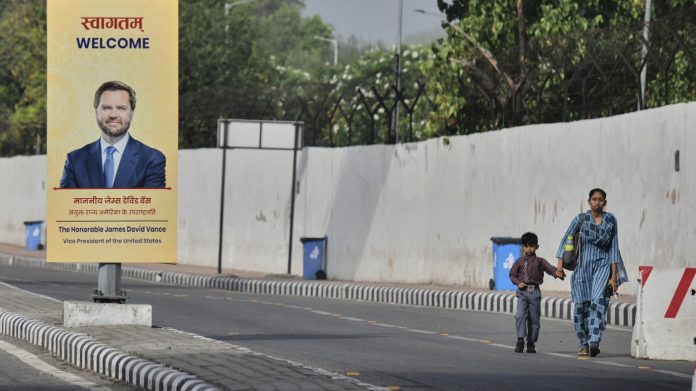
A woman and a child walk past a banner welcoming U.S. Vice President JD Vance on a street in New Delhi, India, on Monday.

AP/AP


hide caption

toggle caption

AP/AP

NEW DELHI — U.S. Vice President JD Vance arrived in India on Monday for a four-day visit as New Delhi looks to avoid U.S. tariffs, negotiate a bilateral trade deal with Washington and strengthen ties with the Trump administration.

Vance will meet Prime Minister Narendra Modi on the first day of his largely personal visit. The two leaders are expected to hold discussions on bilateral ties outlined in February when Modi met President Donald Trump in Washington.

The U.S. is India’s largest trading partner and the two countries are now holding negotiations aiming to seal a bilateral trade agreement this year.

They have set an ambitious target of more than doubling their bilateral trade to $500 billion by 2030. If achieved, the trade deal could significantly enhance economic ties between the two countries and potentially strengthen diplomatic ties as well.

Vance’s first visit to New Delhi comes amid the backdrop of Trump’s now-paused tariff program against most countries, including India. It also coincides with a rapidly intensifying trade war between Washington and Beijing, which is New Delhi’s main rival in the region.

“We are very positive that the visit will give a further boost to our bilateral ties,” Indian Foreign Ministry spokesperson Randhir Jaiswal told reporters last week.

Vance was greeted with an Indian classical dance performance after he arrived at New Delhi’s Palam airport on Monday, following his visit to Rome, where he met Pope Francis on Easter Sunday. He is accompanied by his wife, Usha Vance, whose parents are from India, along with their children and officials from the U.S. administration. The couple will visit historical sites in the cities of Jaipur and Agra.

U.S. Vice President JD Vance and second lady Usha Vance arrive in New Delhi, India, on Monday.

U.S. Vice President JD Vance and second lady Usha Vance arrive in New Delhi, India, on Monday.

Kenny Holston/AP/Pool The New York Times


hide caption

toggle caption

Kenny Holston/AP/Pool The New York Times

India is a close partner of the U.S. and an important strategic ally in combating the rising influence of China in the Indo-Pacific region.

It is also part of the Quad, which is comprised of the U.S., India, Japan and Australia and is seen as a counterbalance to China’s expansion in the region. Trump is expected to attend a summit of Quad leaders in India later this year.

Modi established a good working relationship with Trump during his first term in office and the two leaders are likely to further boost cooperation between their countries.

He was among the first leaders to visit the U.S. and hold talks with Trump after he returned to the White House. During his visit, Modi hailed a “mega partnership” with the U.S., and kickstarted a negotiation process to minimize the possible fallout of Trump’s tariffs.

The two leaders also said they planned to grow their defense partnership, with India signaling compliance with the Trump administration’s demands, saying it will purchase more oil, energy and defense equipment from the U.S.

Regardless, Trump targeted India with a 26% levy, which has since been paused. However, he has continued to call India a “tariff abuser” and “tariff king.”

The trade negotiations are especially urgent for New Delhi as it could be hit hard by Trump’s reciprocal tariffs, particularly in the agriculture, processed food, auto components, high-end machinery, medical equipment and jewelry sectors.