Thursday, November 12, 2026
Home Blog Page 332

Europe Is Pouring Money Into Defense. Is It Enough?

0

Source: NATO

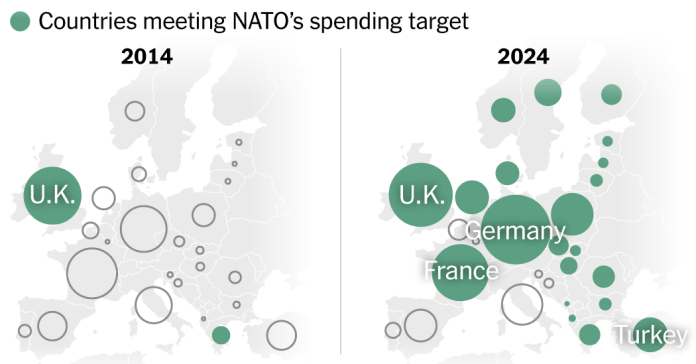
Circles are sized by absolute military spending.
The current NATO target is 2 percent of G.D.P.

After the end of the Cold War, European military spending told a story of stability and optimism. Money flowed away from tanks and submarines and went instead to hospitals and pensions.

But that era is over. With a full-blown land war raging in Ukraine and an isolationist American president back in the White House, European leaders have come to a stark conclusion: They must spend more on their militaries.

Decades of cuts have left Europe’s militaries unprepared for what might lie ahead. With equipment outdated and forces undersized, their ability to operate without U.S. backing has been diminished.

NATO countries formally committed to spending 2 percent of G.D.P. on their militaries in 2014, following Russia’s annexation of Crimea, though the benchmark had been discussed for over a decade. But eight countries still do not reach that benchmark, and many analysts say even that is not enough. Now, President Donald J. Trump has said he believes they should spend 5 percent.

Sources: NATO (2024); Stockholm International Peace Research Institute (1991 to 2023)

Note: All current NATO members are shown, though some joined after 1991. Circles are sized by absolute military spending.

As their military budgets shrank over the decades, European countries relied heavily on the United States for security, trusting in the NATO pledge that an attack on one member will be treated as an attack on all. Today, the U.S. accounts for up two-thirds of NATO’s total military spending.

But as Mr. Trump prepared to return to the White House, he sounded even more hostile to some NATO allies than he did during his first term in office. He said would encourage Russia to “do whatever they hell they want” to members that do not contribute enough money to the alliance.

European NATO contributions have long been a frustration for Mr. Trump. Even after countries began hitting the 2 percent target, he demanded that they do more.

At a news conference earlier this month, he made his assertion that European countries should be spending 5 percent of their G.D.P. on defense. That is more than twice the current target — and far higher than America’s own military spending, which is near a post-Cold War low.

“Before Trump came to office, 2 percent was seen as the ceiling. Now it’s seen as the baseline,” said Daniel Fiott, the Head of the Defense and Statecraft Program at the Brussels School of Governance.

But some European leaders, too, are calling for higher targets.

Robert Habeck, the German economic minister, proposed raising military spending to 3.5 percent in a recent interview with Der Spiegel. “We need to spend almost twice as much on defense so that Putin does not dare to attack us,” Mr. Habeck said.

While countries in Western Europe are debating spending more on their militaries, those closer to Moscow have already acted. Poland’s spending reached 4 percent of its G.D.P. in 2024, the highest in NATO.

Source: NATO

Note: Circles are sized by military spending

But even with the increase in spending, many experts say Europe should be spending more.

Much of the money that has been spent to date has been for “making up ground” lost since the end of the Cold War, and for backfilling weapons stocks depleted by transfers to Ukraine, said Sean Monaghan, a fellow at the Center for Strategic and International Studies.

“It’s not substantially increasing Europe’s defense capabilities in a way that would enable it to succeed in a war against Russia,” he said.

It wasn’t just that European leaders thought wars were unlikely after the collapse of the Soviet Union. They also believed that any future warfare would look very different.

Anticipating very short-term missions that relied on precision weapons and localized fighting, according to Mr. Fiott, leaders did not invest in the equipment and supply chains needed for a protracted ground war.

“You don’t have to think about investing in tanks, massive naval fleets, long-range missiles — all of the gaps that we see prevalent today,” Mr. Fiott said.

Going beyond the 2 percent military spending target may pose a dilemma for some leaders.

Over the past three decades, expenditures on health care and social protections, among them pensions, unemployment benefits and housing allowances, have risen sharply. Raising military spending even to 3.5 percent of the G.D.P. might mean dramatic shifts in spending.

Spending on health care and social programs has increased significantly since the 90s

Change in spending as a share of G.D.P. for European NATO members

Spain and Italy are two of the most notable NATO underspenders, with both devoting less than 1.5 percent on their militaries. Since the mid-90s, spending in the two countries on health and social protection has ballooned, in large part fueled by rapidly aging populations.

But now European leaders are faced with a newly aggressive Russia that has increased military spending to 6.3 percent, and an unpredictable American president who has spoken of using “economic or military force” to acquire Greenland, a territory controlled by a NATO ally.

If they do decide to spend still more on their militaries, they have few appealing options for financing it.

Among Europe’s five largest economies, which account for the majority of NATO’s non-U.S. defense spending, taxes have already risen significantly since 1991.

Taxes have increased in the largest European economies since 1990

Source: Organisation for Economic Co-operation and Development

Europe also has another disadvantage when it comes to military spending compared with larger nations like the United States, or the country waging war on its eastern edge, Russia: It is made up of dozens of countries, each building its own military and pushing for its own defense industries to win government contracts.

“The U.S. has massive economies of scale,” Mr. Monaghan said. “European nations by themselves don’t have that.”

Even with the war in Ukraine still raging, some European politicians are already talking about plans for peacetime. Germany’s economy minister said that a 3.5 percent spending goal would be temporary, and could be reduced once Germany’s security reached a “reasonable state.”

That might prove unwise, said Mr. Monaghan, the Center for Strategic and International Studies fellow.

“The constant threat from Russia is the new normal, and we need to prepare for that and invest in our defense for that,” he said. “I think there’s still a lot of wishful thinking around.”

Trump fires independent inspectors general at several agencies : NPR

0

President Donald Trump arrives on Air Force One at Harry Reid International Airport in Las Vegas, Friday, Jan. 24, 2025.

Mark Schiefelbein/AP


hide caption

toggle caption

Mark Schiefelbein/AP

WASHINGTON — The Trump administration has fired about 17 independent inspectors general at government agencies, a sweeping action to remove oversight of his new administration that some members of Congress are suggesting violated federal oversight laws.

The dismissals began Friday night and were effective immediately, according to two people familiar with the actions. They spoke on condition of anonymity to provide details that have not been made public. Neither confirmed the exact number of firings, but an email sent by one of the fired inspectors general said “roughly 17” inspectors general had been removed.

Congress was not given 30-day notices about the removals –- something that even a top Republican is decrying.

“There may be good reason the IGs were fired. We need to know that if so,” Sen. Chuck Grassley, chair of the Senate Judiciary Committee, said in a statement. “I’d like further explanation from President Trump. Regardless, the 30 day detailed notice of removal that the law demands was not provided to Congress,” said Grassley, R-Iowa.

The White House did not immediately comment on Saturday. President Donald Trump was in Las Vegas for a speech focused on his campaign promise to end federal taxation on tips.

But the moves were consistent with the president’s first week back in the White House, which has featured a series of steps to remake the federal government. Trump has done everything from using executive orders to impose hiring freezes and crack down on diversity, equity and inclusion initiatives, to suggesting that he wants to shutter the Federal Emergency Management Agency and leave disaster recovery up to individual states affected by major emergencies.

The role of the modern-day inspector general dates to post-Watergate Washington, when Congress installed offices inside agencies as an independent check against mismanagement and abuse of power. Though inspectors general are presidential appointees, some serve presidents of both parties. All are expected to be nonpartisan.

“Yesterday, in the dark of night, President Trump fired at least 12 independent inspector generals at important federal agencies across the administration,” Senate Democratic leader Chuck Schumer of New York said Saturday on the chamber’s floor. “This is a chilling purge and it’s a preview of the lawless approach Donald Trump and his administration are taking far too often as he’s becoming president.”

Schumer said the dismissals are “possibly in violation of federal law” and help demonstrate that the move “is a glaring sign that it’s a golden age for abuse in government and even corruption.”

The Washington Post, which first reported the firings, said that many were appointees from Trump’s first term. Among those inspectors general reported removed included those for the departments of Agriculture, Commerce, Defense and Education.

Spared in this round of dismissals, however, was Michael Horowitz, the longtime Justice Department inspector general who has issued reports on assorted politically explosive criminal investigations over the past decade.

In December 2019, for instance, Horowitz released a report faulting the FBI for surveillance warrant applications in the investigation into ties between Russia and Trump’s 2016 presidential campaign. But the report also found that that investigation had been opened for a legitimate purpose and did not find evidence that partisan bias had guided investigative decisions.

Democrats were livid about firings.

Sen. Amy Klobuchar. D-Minn., noted that inspectors general are “critical to rooting out waste, fraud, and abuse throughout the federal government.” The mass firings were “alarming,” she said.

Rep. Gerald Connolly of Virginia, a Democrat who is ranking member of the House Committee on Oversight and Government Reform, called it a “coup to overthrow legally protected independent inspectors general.”

He also suggested that the move — coming on just the fourth full day of Trump’s second term — could potentially free up a series of positions that can subsequently be filled with loyalists who are strongly sympathetic to the Trump administration.

“Replacing independent inspectors general with political hacks will harm every American who relies on social security, veterans benefits, and a fair hearing at IRS on refunds and audits,” Connolly said.

Democratic Sen. Elizabeth Warren of Massachusetts called Trump’s actions “a purge of independent watchdogs in the middle of the night.”

“Inspectors general are charged with rooting out government waste, fraud, abuse, and preventing misconduct,” Warren posted on X. “President Trump is dismantling checks on his power and paving the way for widespread corruption.”

Still, Trump has aggressively challenged the authority of independent agency watchdog groups in the past.

In 2020, he replaced multiple key inspectors general, including those leading the Defense Department and intelligence community, as well as the inspector general tapped to chair a special oversight board for the $2.2 trillion economic relief package on the coronavirus.

Auschwitz 80 years since liberation: Ryszard Horowitz’s story of survival and making the American Dream

0

Join Fox News for access to this content

Plus special access to select articles and other premium content with your account – free of charge.

By entering your email and pushing continue, you are agreeing to Fox News’ Terms of Use and Privacy Policy, which includes our Notice of Financial Incentive.

Please enter a valid email address.

A film shows a large group of children walking out of Auschwitz concentration camp in the company of nuns. Regina Horowitz recognized her own child and begged the camera operator to give her the frames of the film depicting Ryszard. 

There are very few survivors left as the world commemorates the 80th anniversary of the liberation of the Nazi death camp Auschwitz. The Horowitz family’s tale of survival is one such documentation. 

The Kraków orphanage would send her Regina Horowitz to another address, where she miraculously found her five-year-old son, who was just as shocked to see his mom alive. And not just her, but also his sister Niusia and his grandmother . . . all three women saved by German industrialist Oskar Schindler. 

HOLOCAUST SURVIVORS CAN LIVE ON FOR GENERATIONS WITH CREATIVE USE OF NEW TECHNOLOGY

Ryszard Horowitz, Niusia Horowitz-Karakulska and Roman Polanski enjoying a day at Wawel Royal Castle in Kraków, with Roman’s uncle. Photo courtesy Ryszard Horowitz. (Ryszard Horowitz )

Renowned photographer Ryszard Horowitz was born on May 5th, 1939, to a loving family in the historic city of Kraków, the former capital of Poland, but just four months later Nazi Germany invaded Poland, resulting in utter devastation.

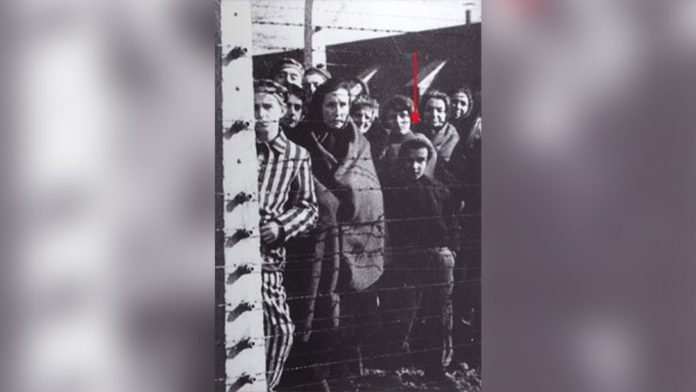
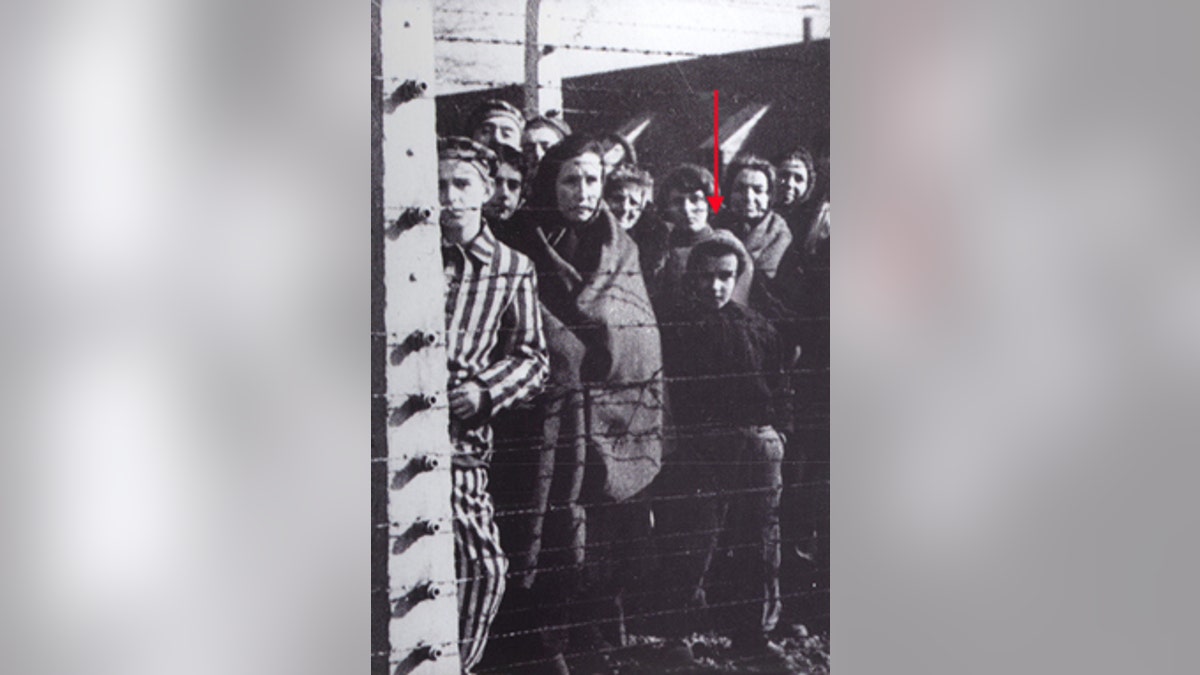
Ryszard Horowitz, highlighted, behind the barbed wire of Auschwitz Concentration Camp, Liberation of the camp in 1945. Photo courtesy Ryszard Horowitz.

Ryszard Horowitz, highlighted, behind the barbed wire of Auschwitz Concentration Camp, Liberation of the camp in 1945. Photo courtesy Ryszard Horowitz. (Ryszard Horowitz )

The war would turn brutal and sinister, especially for Poland’s Jews.

“When the Germans marched into Kraków,” Horowitz told Fox News Digital, “my parents’ first reaction was to run away. They packed their suitcases and left me with my non-Jewish nanny, Antosia. But soon they returned with my sister, because they did not want me to stay behind. So, we were reunited but eventually forced to relocate to the ghetto.”

Dawid and Regina Horowitz, wedding photo. Kraków, 1932. Photo courtesy Ryszard Horowitz.

Dawid and Regina Horowitz, wedding photo. Kraków, 1932. Photo courtesy Ryszard Horowitz. (Ryszard Horowitz )

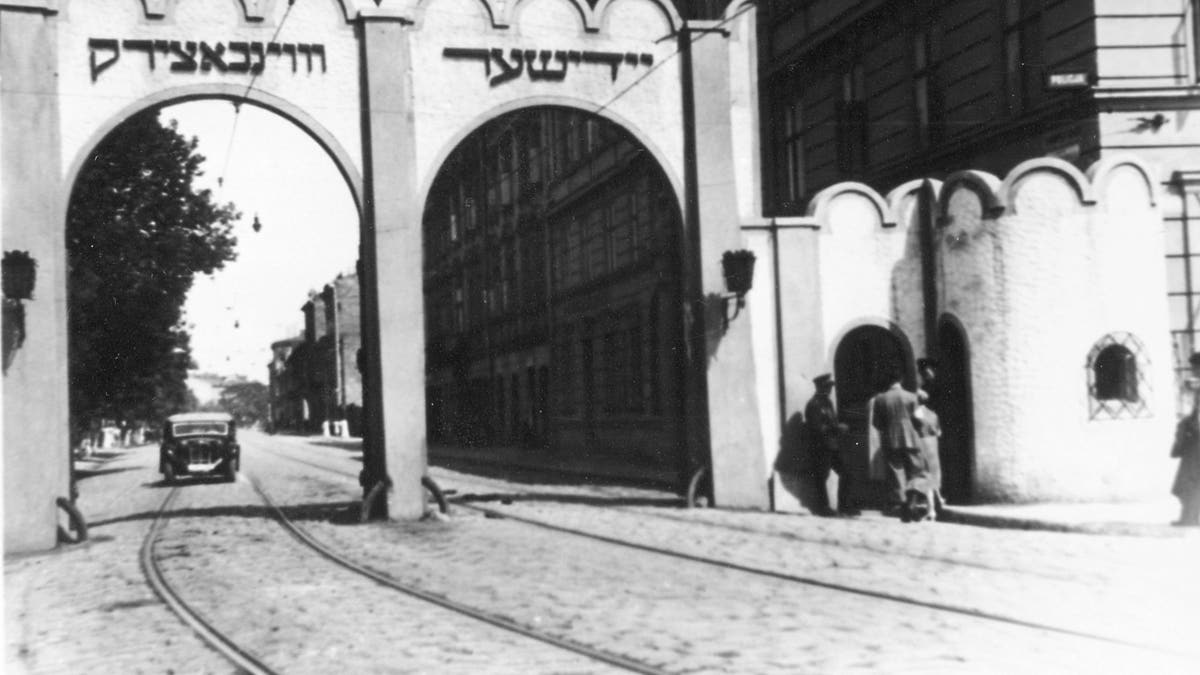
The Nazis segregated Jews from the rest of the population, forcing them into Krakow’s notorious ghetto. Life was bleak behind the fences, in constant fear of Nazi persecution. 

Kraków Ghetto, gate one, 1941. Photo from the collection of The Historical Museum of the City of Kraków, Poland.

Kraków Ghetto, gate one, 1941. Photo from the collection of The Historical Museum of the City of Kraków, Poland.

Fortunately for Ryszard, there was an older boy there, called Roman Liebling, known later as Roman Polanski, who attended his third birthday party. According to Polanski, although food was scarce, by some miracle Ryszard’s mother, Regina, managed to procure hot chocolate for the kids. Ryszard, however, did not care for hot chocolate and refused to drink it.

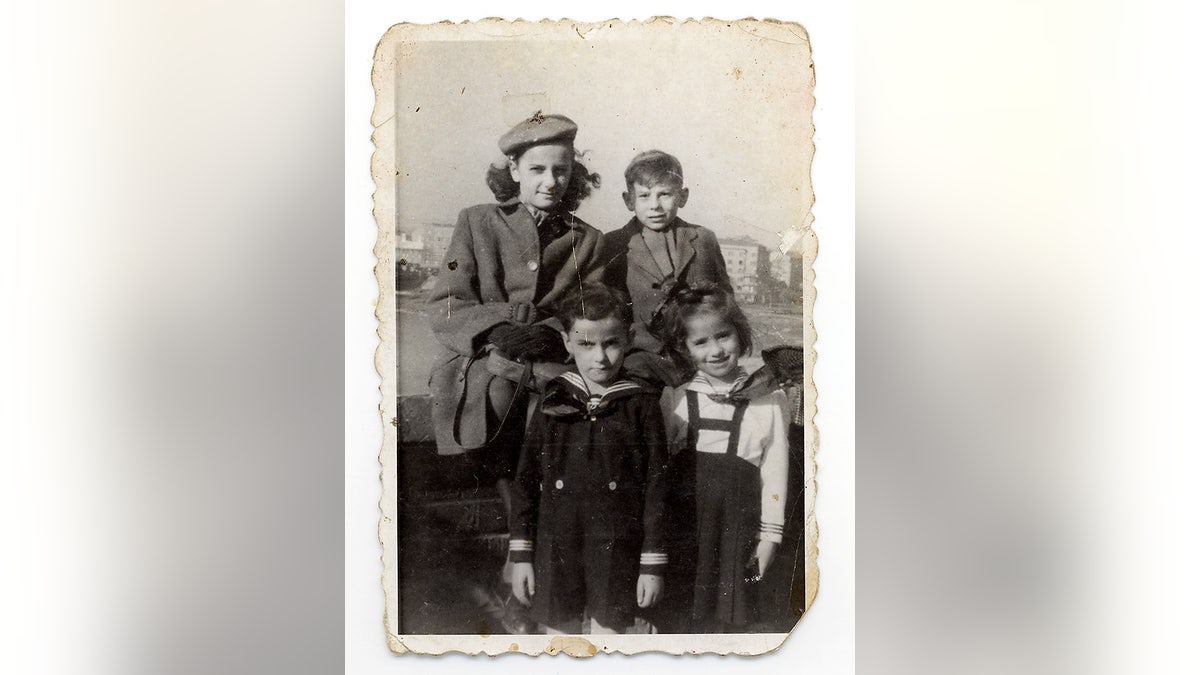
Niusia Horowitz, Roman Polanski, Ryszard Horowitz, Roma Ligocka in Kraków, 1946. Photo courtesy Ryszard Horowitz.

Niusia Horowitz, Roman Polanski, Ryszard Horowitz, Roma Ligocka in Kraków, 1946. Photo courtesy Ryszard Horowitz. (Ryszard Horowitz)

TENNESSEE PROFESSOR REVEALS STORY OF HER LATE HUSBAND, A HOLOCAUST SURVIVOR, AMID TODAY’S ANTISEMITISM

By 1943, the Germans were liquidating Kraków’s ghetto, and the Horowitz family was forced to relocate to a Nazi concentration camp in Plaszow. It was run by a notorious Nazi commander, Austrian officer Amon Göth.

The remnants of a wall from the Jewish ghetto in Krakow, Poland. January 11, 2023.

The remnants of a wall from the Jewish ghetto in Krakow, Poland. January 11, 2023. (Andrew Lichtenstein/Corbis via Getty Images)

“It was a terrible camp, because the man in charge was an extremely brutal character. He created a tremendous sense of fear. He was shooting people right and left. He was like a God in terms of his power and made life there totally impossible,” Horowitz recalled. 

Göth liked to throw parties in his villa, where two of Ryszard’s musician uncles were forced to play. 

Ryszard Horowitz’s uncles had careers as entertainers before World War Two began. Photo courtesy Ryszard Horowitz.

Ryszard Horowitz’s uncles had careers as entertainers before World War Two began. Photo courtesy Ryszard Horowitz. (Ryszard Horowitz)

One of the men attending the parties was German industrialist Oskar Schindler. His friendship with Göth enabled him to run a business that would ultimately become a lifeline for many of the camps Jews.

“Oscar Schindler got permission to open a factory producing utensils for the German army, and my family worked there.” Horowitz explained.

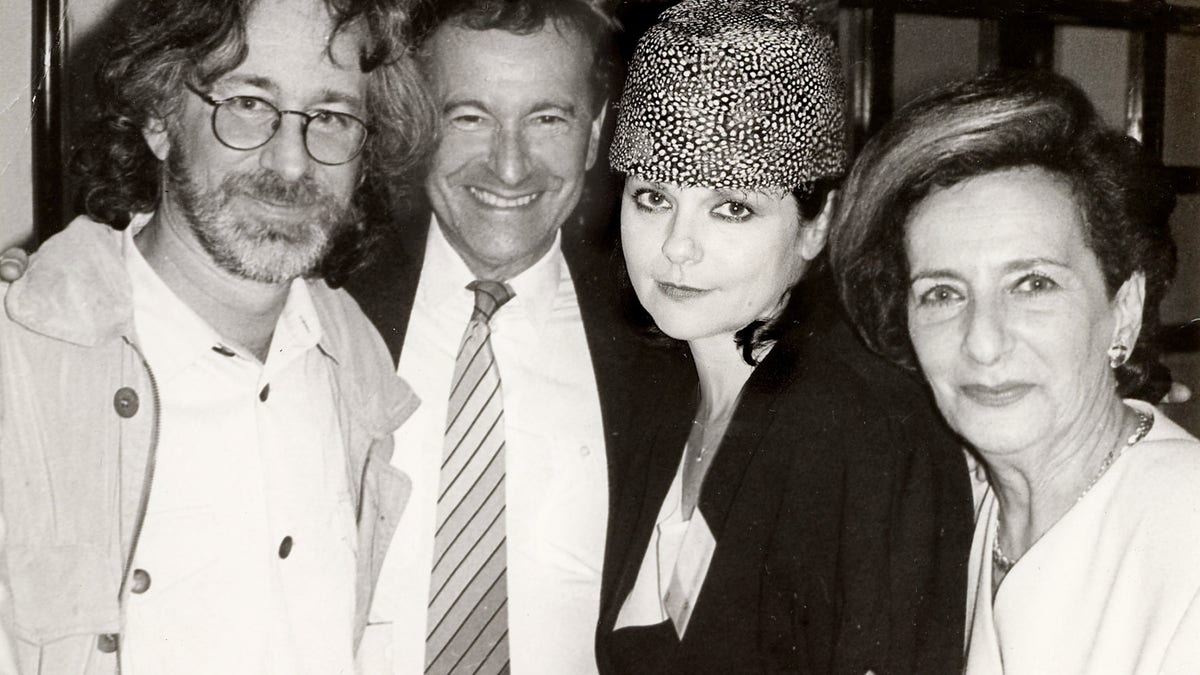
Steven Spielberg, Ryszard Horowitz, Ania Bogusz and Bronisława Horowitz-Karakulska. Photo courtesy Ryszard Horowitz.

Steven Spielberg, Ryszard Horowitz, Ania Bogusz and Bronisława Horowitz-Karakulska. Photo courtesy Ryszard Horowitz. (Ryszard Horowitz)

Steven Spielberg introduced Oskar Schindler to the entire world in his 1993 movie “Schindler’s List,” and Horowitz shared some observations about the famed businessman.

 “Everybody will tell you something else about him. How good he was, how bad he was, how handsome he was, how many women he had, but the bottom line is . . . somehow, he felt this urge to save people. Once, he got into trouble when he kissed my sister when she gave him a cake for his birthday,” Horowitz said. 

In 1944, the Germans decided it was time to dismantle Plaszow, disguise the traces of their atrocities, and close Schindler’s factory.  

‘LIVING LEGEND’: SCHUMER HONORS CENTENARIAN HOLOCAUST SURVIVOR WITH CAPITOL FLAG, SENATE FLOOR RECOGNITION

The Jewish Cemetery in Kraków, photocomposition by Ryszard Horowitz. Photo courtesy Ryszard Horowitz.

The Jewish Cemetery in Kraków, photocomposition by Ryszard Horowitz. Photo courtesy Ryszard Horowitz. (Ryszard Horowitz)

“Schindler managed to get permission to move a certain number of workers to his factory in Brünnlitz, in Czechoslovakia,” Horowitz said. 

Brünnlitz was a German labor camp, and as Spielberg showed in his film, a list was created with names of those who would be relocated there. 

“There is no question that there was a list, and my family was on that list. I was not, because I was too small to work, but somehow, I managed to squeeze in. There were two transports, one of men and one of women. I was traveling with my father,” Horowitz explained. 

Schindler’s men made it to Brünnlitz alive, but Ryszard’s life was about to unravel.

“We waited for the women to follow us to Brünnlitz. But, for some reason, we do not know why, they were sent to Auschwitz concentration camp instead,” he said. 

Schindler hurried to Auschwitz to rescue his women and left Josef Leipold in charge of his factory. 

“Leipold was the exact opposite of Schindler.” Horowitz said. “From the beginning, his idea was to finish us off. And he did not want children there. So, he packed us with our fathers and shipped us to Auschwitz.”

Upon arriving at Auschwitz, Ryszard was selected to have concentration camp numbers tattooed on his forearm. Which meant he would stay alive, for a time.

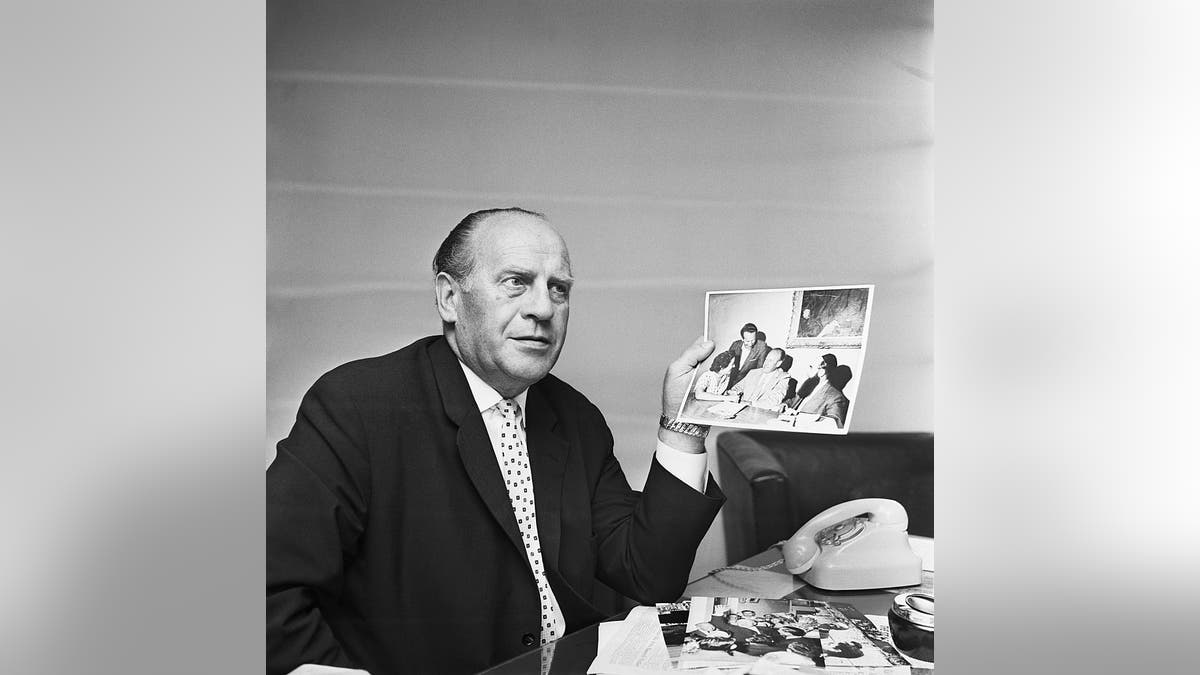
Businessman Oskar Schindler speaks about saving lives during the Holocaust of Germany's Third Reich in an interview with United Press International.

Businessman Oskar Schindler speaks about saving lives during the Holocaust of Germany’s Third Reich in an interview with United Press International. (Bettmann / Contributor/Getty Images)

YOUNGEST PERSON SAVED BY OSKAR SCHINDLER: ‘I FEEL GUILTY THAT I SURVIVED’

Oskar Schindler managed to rescue the women. They were aboard a train that was about to depart for Auschwitz.

Horowitz recalled these heartbreaking moments, “My cousin and I saw the train, and my mother was there, my sister, my grandmother . . . and they saw us. My mother was certain this was the last time she would see me. They went to Brünnlitz, and my father and I remained in Auschwitz.”

In January 1945, with the Red Army approaching, German SS forces marched thousands of prisoners out of Auschwitz to different camps on German territory. Richard’s father, Dawid “Dolek” Horowitz, was forced to leave his son behind.

“I think that one of the reasons I survived was that a man in charge of a warehouse, Roman Gunz, agreed to look after me. Sometimes he would feed me, and when things got difficult, he would hide me in the warehouse or inside the infectious hospital ward,” Horowitz said. 

Then one day, the nightmare of Auschwitz came to an end.

“When the Red Army came close to the camp, the Germans were in a panic. They rounded all the kids up and were ready to shoot us, but just then two German officers arrived on motorcycles screaming to drop everything and follow them, so they did,” Horowitz remembered. 

A few hours later, Soviet troops entered Auschwitz.

“The Red Army arrived, most of them on horseback,” he said. “They gave us food and sweets. They had cameras with them, and they recorded a lot of footage. The following day, nuns arrived and took us to an orphanage in Kraków. Polanski’s aunt Tosia found me there and took me to her apartment on Dluga Street. And Roman was already there.”

The Horowitz Family survivors, Szachne, Sabina, Niusia, Regina, Ryszard and Dawid. Kraków, Poland. 

The Horowitz Family survivors, Szachne, Sabina, Niusia, Regina, Ryszard and Dawid. Kraków, Poland.  (Ryszard Horowitz)

In March 1945, Brünnlitz was liberated, and the Horowitz women returned to Kraków. 

“One day, my mom was out in the market Square, where they were showing a documentary movie about the liberation of Auschwitz, and she recognized me in it,” Horowitz said. 

The Horowitz women moved in with Roman Polanski’s family. They were soon joined by Dawid Horowitz.

“We all lived under one roof for two years, until my father got us a nice apartment near Market Square,” Horowitz said. 

After the war, Poles found their country in ruins with a hostile communist regime in charge. 

“Most of my closest friends and their families were anti-communists. Everybody’s dream was to get out of Poland as fast as possible,” Horowitz explained. 

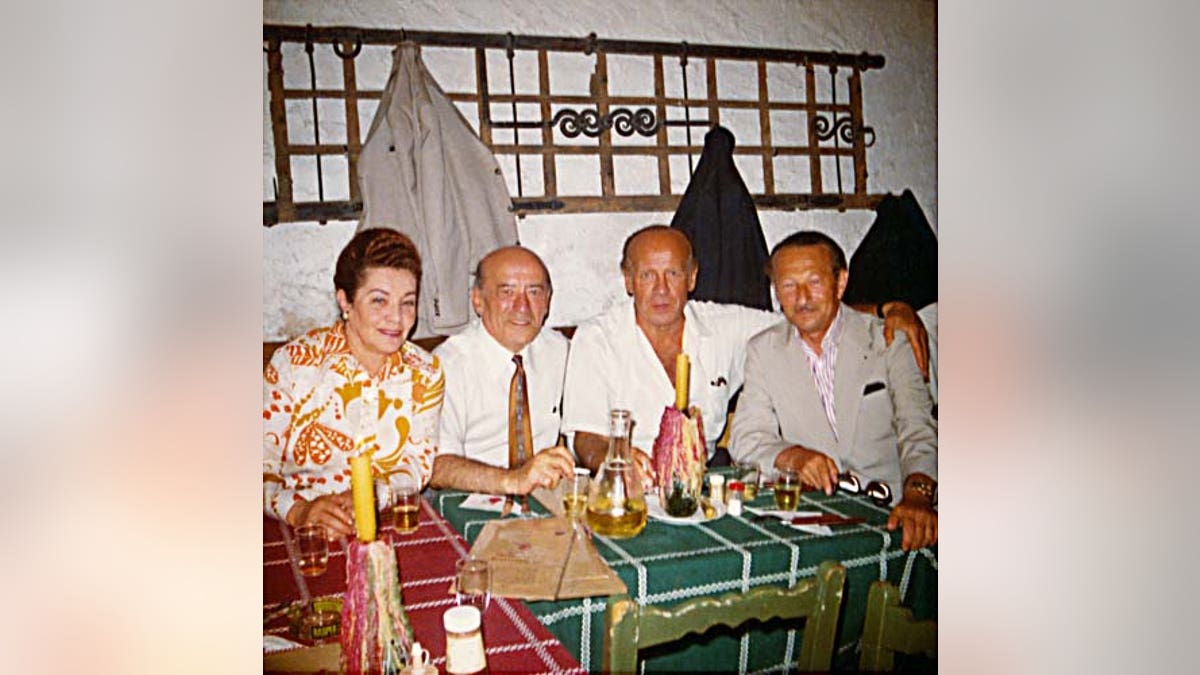
Regina and Dawid Horowitz reunite with Oskar Schindler and Henry Rosner in Vienna. Photo courtesy Ryszard Horowitz.

Regina and Dawid Horowitz reunite with Oskar Schindler and Henry Rosner in Vienna. Photo courtesy Ryszard Horowitz. (Ryszard Horowitz)

Dawid Horowitz managed to open a store selling tools and building materials, with Polanski’s aunt Tosia as his business partner. Life went on.

“For me and my friends, life was pretty good at the time, because we were not engaged in politics. We were artists, and we believed that we lived in a totally free society, so we did what we wanted to do, and we had this amazing outlet, a cabaret called “Piwnica pod Barnami” (The Cellar under the Rams). And we had jazz,” Horowitz recalled. 

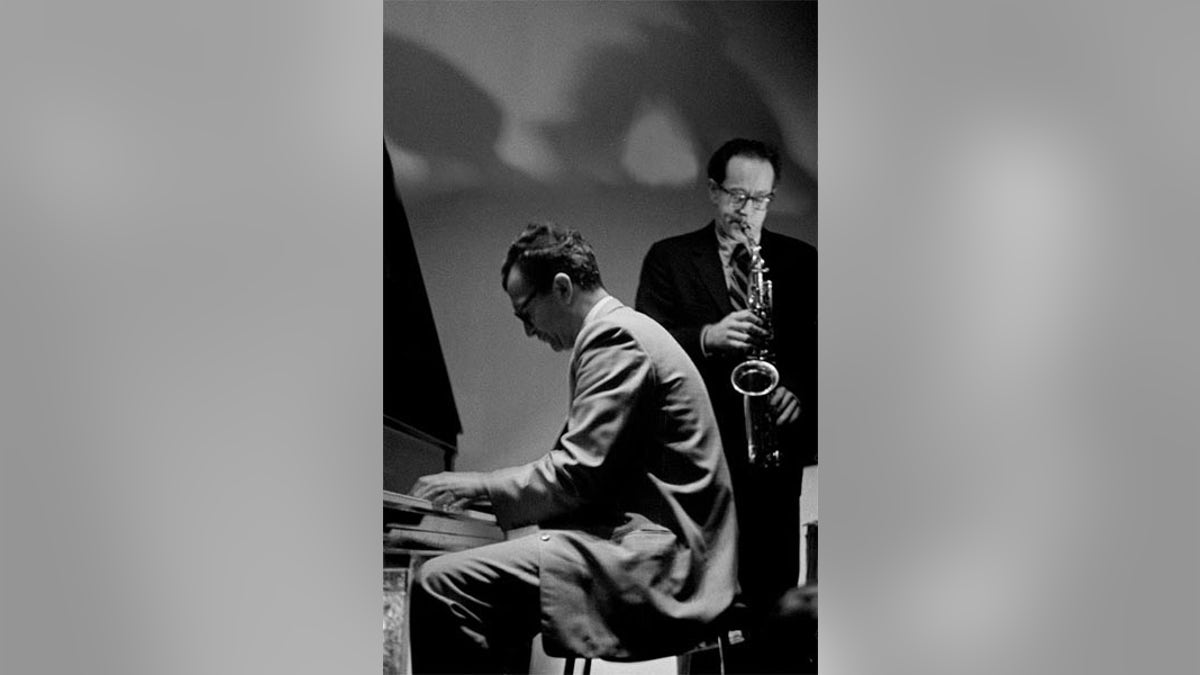
Dave Brubeck and Paul Desmond, in Kraków,1958. Photo courtesy Ryszard Horowitz.

Dave Brubeck and Paul Desmond, in Kraków,1958. Photo courtesy Ryszard Horowitz. (Ryszard Horowitz)

In 1958, American jazz pianist Dave Brubeck arrived in Kraków to perform. Ryszard Horowitz was there with his camera and documented it in pictures. Little did he know that photography was his future. And that future was on the other side of the Atlantic Ocean.

Ryszard Horowitz, aboard the Polish ocean liner "MS Batory," departing for America in 1959. Photo courtesy Ryszard Horowitz.

Ryszard Horowitz, aboard the Polish ocean liner “MS Batory,” departing for America in 1959. Photo courtesy Ryszard Horowitz. (Ryszard Horowitz)

“I had this opportunity because my uncles here in New York were ready to offer me room and board. And I also received a scholarship from the Pratt Institute in Brooklyn,” Horowitz said. 

With his father’s encouragement and some U.S. dollars hidden in the heel of his shoe, Horowitz boarded the Polish ocean liner “MS Batory.” 

Life as an immigrant in the Big Apple was a mixed bag. But at the Pratt Institute, Horowitz quickly exhibited a unique talent for photography.

Ryszard Horowitz photo shoot for Tiffany & Co. Photo courtesy Ryszard Horowitz.

Ryszard Horowitz photo shoot for Tiffany & Co. Photo courtesy Ryszard Horowitz. (Ryszard Horowitz)

“I created their first photography lab at Pratt, and I was asked to design their 75th anniversary yearbook, which I edited, and I pretty much took all the photographs for them. It was the first time in history that the New York Art Directors Club gave an award to a student. So, this became my portfolio,” Horowitz explained. 

Photocomposer Ryszard Horowitz: One-Man show in Beijing, China.

Photocomposer Ryszard Horowitz: One-Man show in Beijing, China. (Ryszard Horowitz)

Ryszard connected with influential people who helped pave his way to success. Among them were photographer Richard Avedon, graphic artist Saul Steinberg and ballet choreographer Sergei Diaghilev, as well as his idol, disc jockey Willis Conover, who hosted the Jazz Hour on the Voice of America.

Through the lens of his camera, Horowitz saw the world somewhat differently. His photographs looked like computer-generated graphics, except that they predated the digital age. He became known as the pioneer of special effects photography. 

FULL-SCALE REPLICA OF ANNE FRANK’S HIDDEN ANNEX TO BE UNVEILED IN NEW YORK CITY

“I found a way of reversing perspective and juxtaposing large objects to make them look small and vice versa,” Horowitz said. 

Horowitz was a master of light. He learned to manipulate light to photograph expensive jewelry and new cars. 

“My art education in Kraków helped me – my devotion to the great masters of painting,” Horowitz explained. 

Ryszard Horowitz receives an honorary doctorate at the University of Warsaw, Poland. Photo courtesy Ryszard Horowitz.

Ryszard Horowitz receives an honorary doctorate at the University of Warsaw, Poland. Photo courtesy Ryszard Horowitz. (Ryszard Horowitz)

His iconic commercial work captivated audiences in the world of advertising, bringing him fame and prestigious awards. He received honorary doctorates from the University of Warsaw and Wrocław in Poland, and in 2014, his hometown of Kraków made him an honorary citizen.

“Some of my photographs consist of different images taken in different parts of the world, and they are merged into a single unit that’s not jarring but believable. They appear as though they are an instance of a situation that never existed except in my head. That’s why I call myself a ‘photocomposer,” Horowitz explained. 

Award-winning digital photo-composition: Allegory (1992) by Ryszard Horowitz. Photo courtesy Ryszard Horowitz.

Award-winning digital photo-composition: Allegory (1992) by Ryszard Horowitz. Photo courtesy Ryszard Horowitz. (Ryszard Horowitz)

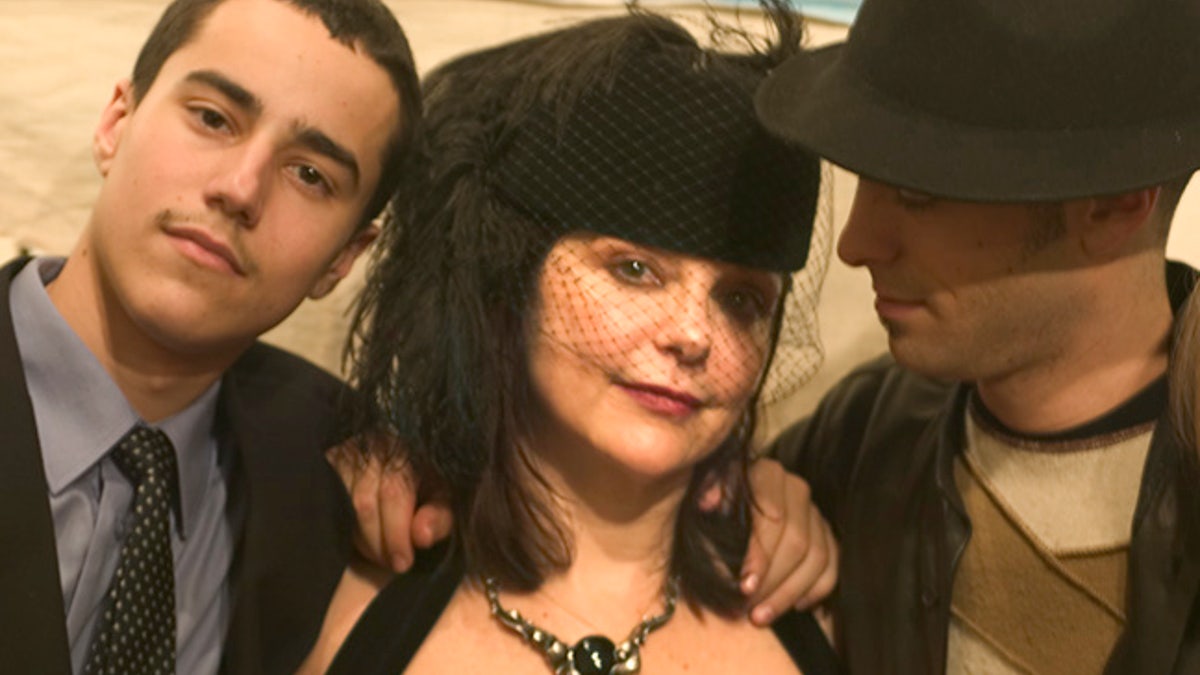
He achieved success in his personal life as well. Since 1974, he’s been happily married to Anna Bogusz, and they have two grown sons: Daniel and Emil.

Emil, Ania and Daniel Horowitz. Photo courtesy Ryszard Horowitz.

Emil, Ania and Daniel Horowitz. Photo courtesy Ryszard Horowitz.

CLICK HERE TO GET THE FOX NEWS APP

“I met Ania at a party. She was an architecture student from a Polish family living in Caracas, Venezuela. She was only passing through New York on her way to Paris to continue her studies. She never made it to Paris,” Horowitz smiled, recollecting meeting the love of his life. 

Ania Bogusz and Ryszard Horowitz, 1974. Photo courtesy Ryszard Horowitz.

Ania Bogusz and Ryszard Horowitz, 1974. Photo courtesy Ryszard Horowitz.

So many years after he walked out of Auschwitz alive, Ryszard Horowitz feels blessed to live the American Dream with his family, and doing what he loves most – creating his photo compositions . . . and listening to jazz.


They Were Waiting for Flights. Then Trump Closed a Door for Afghan Allies.
0

Nasir, a legal adviser to the Afghan Air Force during the war, helped approve airstrikes against Taliban fighters. He is still in Afghanistan, where he has lived in hiding since the Taliban takeover in 2021 while awaiting approval to resettle in the United States.

He had passed background checks and needed only a medical exam to finish the process, he said. But this past week, he and tens of thousands of other Afghans found their paths to the United States blocked by an executive action signed by President Trump.

The order suspended a resettlement program that brings thousands of legal refugees to the country each year. Among the many now in limbo are Afghans who assisted the American war effort and are seeking a new start and a sense of security in the United States.

Nasir, a former lieutenant colonel who asked that his full name not be used, wrote in a text message that Mr. Trump had “not only disregarded the interests of Afghans in this decision, but also failed to consider the interests of the United States.”

“How can the world and America’s allies rely on the U.S. government?” he added.

The U.S. Refugee Admissions Program, in place since 1980, allows legal immigration for vetted people who have fled their home countries because of persecution, war or other threats. In suspending the program, Mr. Trump said that continuing it would burden communities that were not equipped to handle refugees.

Mr. Trump’s order, titled, “Realigning the United States Refugee Admissions Program,” takes effect on Monday. It says that the secretary of state and the homeland security secretary may admit refugees on a case-by-case basis, but only if they determine that it is “in the national interest and does not pose a threat to the security or welfare of the United States.”

The order does not specify when the suspension will end, saying that it will continue “until such time as the further entry into the United States of refugees aligns with the interests of the United States.”

At least 40,000 Afghans were pursuing resettlement in the United States before the order was issued on Monday and refugee flights were halted the next day, according to #AfghanEvac, a coalition of 250 groups working to help Afghans immigrate.

The suspension is particularly devastating for the 10,000 to 15,000 Afghans who, according to #AfghanEvac, had been fully vetted and were preparing for flights. It is also a severe blow to an estimated 200 active-duty U.S. service members who are trying to get their families out of Afghanistan.

A U.S. Army paratrooper at Fort Liberty in North Carolina, who asked to be identified by his code name, Mojo, said he had spent the past year helping his sister and her husband apply for refugee status to enter the United States from Afghanistan.

Mojo, 26, was an interpreter for U.S. forces in Afghanistan. He said he joined the U.S. Army two years ago after leaving Afghanistan in 2021 under a program that grants visas to Afghans who directly served the U.S. military or government.

His sister and brother-in-law, both physicians, are in hiding, fearing retribution from the Taliban because of Mojo’s military service, he said. They recently completed the lengthy refugee vetting process and were approved to resettle in the United States, he said. All that remained was to arrange a flight out of Afghanistan.

“We were so close to bringing them to safety — and suddenly it all got shut down,” Mojo said by phone from Fort Liberty, formerly known as Fort Bragg, where he serves in the 82nd Airborne Division.

When his sister heard the news, Mojo said, “she started crying — and I started crying with her.”

Shawn VanDiver, the president of #AfghanEvac, called the executive order a betrayal of Afghans who supported the U.S. government or military.

“Everyone is frozen in place — it’s heartbreaking,” he said in a phone interview.

Among those thrust into uncertainty are former members of the Afghan military and security forces, as well as judges and lawyers involved in prosecutions of Taliban members. Some of the judges and lawyers are women, who have been persecuted by the Taliban.

Mr. VanDiver said that suspending the resettlement program did not address the problem of illegal entry by migrants at the southern U.S. border — a focus of Mr. Trump’s campaign. Individuals in the program cannot apply by themselves, but must be referred by U.S. government agencies or designated nongovernmental partners.

“Failing to protect our Afghan allies sends a dangerous message to the world: that U.S. commitments are conditional and temporary,” Mr. VanDiver said.

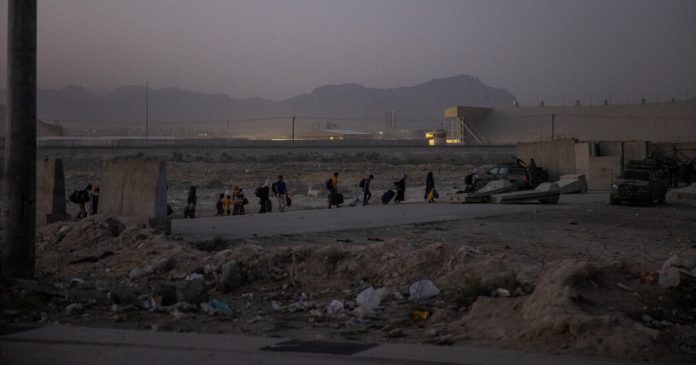
Hundreds of thousands of the Afghans who fled after the Taliban takeover landed in neighboring Pakistan. Large numbers live in the capital, Islamabad, where they have pursued resettlement in the United States and other Western countries through the embassies and refugee agencies there.

Many fear that they will be deported back to Afghanistan now that their pathway to the United States has been cut off. Pakistan has already expelled hundreds of thousands of Afghans because of rising tensions with the Taliban.

“For three years, we endured relentless harassment from Pakistani authorities,” said Ihsan Ullah Ahmedzai, a journalist who worked with U.S.-funded media outlets in Kabul, the Afghan capital, before fleeing to Islamabad in 2021. “But we remained hopeful that we would soon leave for the United States,” he added.

That optimism is now gone. “Trump’s order felt like a bombshell,” Mr. Ahmedzai said. “It shattered our hopes and left us vulnerable to danger once again.”

Noor Habiba, who worked with a U.S.-funded women’s rights group in Kabul before fleeing with her husband and two daughters to Islamabad, said she had hoped until now to make it to the United States in February or March.

“We cannot go back to Afghanistan,” Ms. Habiba said. “There is nothing left for women to live for under Taliban rule.”

Advocates for immigrants are worried that Afghans already in the United States could also be at risk. Migrants allowed into the country under Biden administration programs could be deported quickly with powers that Mr. Trump is giving to Immigration and Customs Enforcement, according to an internal memo obtained by The New York Times.

After the U.S. military withdrew from Afghanistan in August 2021, the Biden administration began a program allowing 76,000 evacuated Afghans to enter the United States for humanitarian reasons, according to the Migration Policy Institute.

As of 2023, more than 90,000 Afghans had settled in the United States, according to Mustafa Babak, an Emerson Collective fellow who is a resettlement expert.

The number of refugees from Afghanistan and other countries admitted under the U.S. resettlement program has fluctuated wildly under Democratic and Republican administrations.

Under President Barack Obama, 85,000 refugees were admitted in total in 2016. In 2020, the last year of Mr. Trump’s first term, the number reached a low of 11,000. President Joseph R. Biden Jr. revived the program, admitting 100,000 refugees last year, the most in three decades.

The program requires applicants to undergo a demanding screening process that includes background checks by the F.B.I. and other agencies, biometric screenings, medical exams, interviews and multiple security reviews.

Zahra, a U.S. Army sergeant, said that five immediate family members who are in hiding in Afghanistan had made it partway through that process when the executive order froze them in place.

She said she had come to the United States from Afghanistan on an academic scholarship in 2016. She enlisted in the U.S. Army in 2021, she said.

“My family is very stressed,” Zahra, 30, who asked that her full name not be published, said in a text message. “We have been hanging to the little hope we had been given.”

She added, “This pause on evacuation flights takes that little hope away and leaves them with a future full of uncertainty.”

Mojo, the U.S. Army paratrooper, said he had feared that Mr. Trump would block resettlement of other refugees, but had believed that he would exempt Afghan allies because of their support of the U.S. mission.

“I still have hope” for an exemption, he said. “I mean, he is my commander in chief.”

Senate confirms Kristi Noem as Trump’s Secretary of Homeland Security : NPR

0

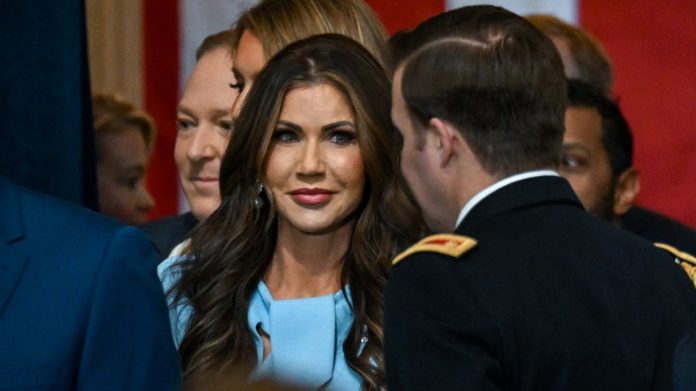
Secretary of the Department of Homeland Security nominee Kristi Noem arrives for the inauguration of U.S. President-elect Donald Trump in the U.S. Capitol Rotunda on Jan. 20, 2025 in Washington, DC.

Kenny Holston-Pool/Getty Images


hide caption

toggle caption

Kenny Holston-Pool/Getty Images

The Senate confirmed South Dakota Gov. Kristi Noem on Saturday to serve as the Secretary of Homeland Security, putting her in charge of executing one of President Trump’s biggest priorities in his second term: cracking down on immigration.

Noem, a Republican, won confirmation in a 59-34 vote. She becomes the fourth person confirmed in Trump’s cabinet, following Secretary of State Marco Rubio, CIA Director John Ratcliffe, and Pete Hegseth, who was narrowly appointed Secretary of Defense on Friday night after Vice President J.D. Vance cast a tie-breaking vote.

Noem is set to lead the department poised to be at the center of President Trump’s plans to crack down on immigration, including the various deportation efforts, visa changes and border security measures kicked off by the slew of executive actions signed by Trump since his return to office.

Noem, 53, has been a vocal advocate for Trump’s immigration agenda, as she explained to senators during her confirmation hearing.

“The reason that I asked for it is because I knew it was the president’s number one priority,” Noem told the Senate Homeland Security and Governmental Affairs Committee, about why she is best for the role.

“I knew that it would be needed to have someone in the position, that would do what the president promised the American people and would be strong enough to do it,” she said.

During her confirmation hearing, Noem said she would partner with Trump to reinstate the “Remain in Mexico” policy, also known as the Migrant Protection Protocols, which would require certain asylum seekers to wait in Mexico until their court hearing dates in the U.S., in an effort to limit the number of people waiting inside U.S. borders.

Noem also vowed to shut down the CPB One App, an app used by asylum seekers to petition for asylum with U.S. Customs and Border Protection. DHS cancelled all appointments within hours of Trump’s inauguration.

She has expressed support for ending birthright citizenship, which President Trump is seeking to do through an executive action. Legal experts broadly agree the president does not have the authority to revoke birthright citizenship through executive action, but rather doing so would require amending the Constitution. A U.S. judge has already temporarily blocked the order, calling it “blatantly unconstitutional.”

Noem is expected to work to implement immigration policy set by Tom Homan, whom Trump has picked to serve as his “border czar,” and Stephen Miller, deputy chief or staff and a key architect of the president’s immigration agenda. She is also likely to work with Hegseth, as several of Trump’s executive actions involve military assistance to DHS for repatriation flights, building barriers at the southern border and more.

Noem will oversee more than 260,000 federal employees. In addition to overseeing agencies that deal with immigration and responding to natural disasters, Homeland Security works with the nation’s intelligence agencies to prevent terrorist threats.

Aryna Sabalenka slams, throws racket after being upset by Madison Keys in Australian Open final

0

A thriller at Rod Laver Arena in Melbourne saw American Madison Keys upset No. 1-ranked women’s singles player Aryna Sabalenka to win the Australian Open on Saturday. 

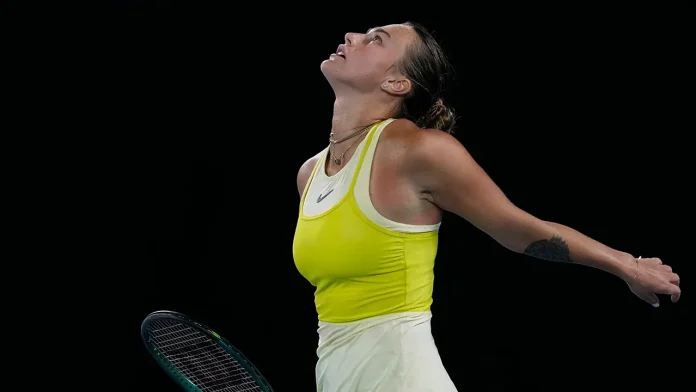
After shaking hands with the victor, Sabalenka let out her emotions on her racket. 

Sabalenka, who was looking to become the first player since Martina Hingis to win three straight Australian Opens, fell to Keys, 6-3, 2-6, 7-5, in the match, which gave her opponent her first-ever Grand Slam title. 

CLICK HERE FOR MORE SPORTS COVERAGE ON FOXNEWS.COM

Aryna Sabalenka of Belarus reacts after the women’s singles final against Madison Keys of the U.S. at the Australian Open tennis championship in Melbourne, Australia, Saturday, Jan. 25, 2025. (AP Photo/Asanka Brendon Ratnayake)

Sabalenka shook Keys’ hand at the net, followed by the chair umpire, but she was seen slamming her racket and throwing it at the bench once the niceties were finished. 

Sabalenka then covered her face in a towel before storming off into the locker room. 

The heat of competition not going your way in the end can be tough to swallow in the moment, and Sabalenka said as much during his post-match press conference. 

AUSTRALIAN TENNIS STAR ANNOUNCES DIVORCE FROM HUSBAND, TEASES ONLYFANS PAGE

“There definitely was a bit of frustration, because I was so close to achieve something crazy,” she said, per The New York Post. “When you’re out there, you’re fighting, but it seems like everything (is not) going the way you really want (it) to go.”

Sabalenka added that she “just needed to throw those negative emotions at the end,” and she did so literally to her Wilson racket. She said she needed to do that “so I could give a speech (and) not stand there being disrespectful.”

“I was just trying to let it go and be a good person,” Sabalenka said. 

Getting the raw emotion out appeared to work, as Sabalenka was seen joking with her team after the loss. 

Aryna Sabalenka reacts during interview

Melbourne, Victoria, Australia: Aryna Sabalenka interviews after her match against Paula Badosa of Spain in the semifinals of the women’s singles at the 2025 Australian Open at Melbourne Park. (Mike Frey-Imagn Images)

“As always, that’s your fault guys,” she said, laughing. “I don’t wanna see you for the next week. I really hate you. No thank you for everything you are doing for me and blah, blah, blah.”

Sabalenka got back to a serious note, though, addressing Keys. 

“I think we did our best,” Sabalenka said. “Just Madison was playing incredible. I just couldn’t do anything in this match. Next time I play against Madison, I bring better tennis.” 

As for Keys, she also showed love to Sabalenka, saying it was “unbelievable playing” on her part. She also noted, at age 29, that she never thought she’d win a Grand Slam despite coming close in the past. 

“From a pretty young age, I felt like if I never won a Grand Slam, then I wouldn’t have lived up to what people thought I should have been. That was a pretty heavy burden to kind of carry around,” Keys said. 

Aryna Sabalenka looks up on tennis court

Aryna Sabalenka of Belarus reacts during the women’s singles final against Madison Keys of the U.S. at the Australian Open tennis championship in Melbourne, Australia, Saturday, Jan. 25, 2025. (AP Photo/Ng Han Guan)

CLICK HERE TO GET THE FOX NEWS APP

“So, I finally got to the point where I was proud of myself and proud of my career, with or without a Grand Slam. I finally got to the point where I was OK if it didn’t happen. I didn’t need it, to feel like I had a good career or that I deserved to be talked about as a great tennis player.

Follow Fox News Digital’s sports coverage on X, and subscribe to the Fox News Sports Huddle newsletter.

Israel and Hamas Dispute Over Hostage Leaves Displaced Palestinians Waiting

0

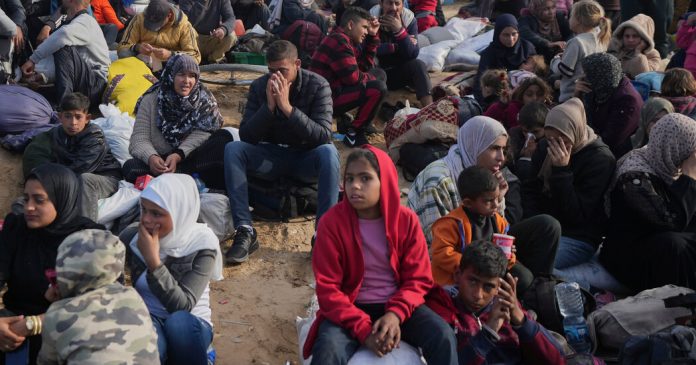
Displaced Palestinians in southern and central Gaza were left wondering on Saturday when Israel would permit them to return to their homes in the northern part of the territory, as Israel and Hamas sparred over the implementation of the cease-fire deal.

The Israeli prime minister’s office said Israel would prevent movement to the north of Gaza until plans were set for the release of Arbel Yehud, one of the last civilian women in captivity in Gaza.

Israeli officials said the agreement had required Ms. Yehud to be released on Saturday. They said they believed that she wasn’t being held by Hamas, suggesting the holdup wasn’t solely Hamas’s responsibility.

Hamas accused Israel of hesitating to implement the cease-fire agreement. The dispute was one of the most significant between the parties since the cease-fire took effect a week ago.

The holdup left many Palestinians in a state of anxious waiting, as they were already packing their belongings, including kitchen supplies, clothing and mattress pads.

Hundreds of thousands of Palestinians have been looking forward to returning to their homes in northern Gaza — many of which were destroyed in Israel’s bombing campaign — after long months enduring miserable conditions in makeshift shelters, schools and friends’ and relatives’ homes.

As of Saturday evening, neither Hamas nor the Israeli prime minister’s office had publicly announced plans for the release of Ms. Yehud.

It was unclear what exactly would need to take place for Israel to consider Ms. Yehud’s release arranged, but Hamas has confirmed which hostages will be freed to Israel in the past by sending lists to Israel through mediators.

The cease-fire deal between Israel and Hamas says the Israeli military should withdraw eastward on the seventh day of the agreement and that displaced Palestinians could then begin to return to their homes. Even though Saturday was the seventh day of the agreement, the Hamas-run government media office said earlier this week that people would be allowed to return on Sunday.

Avichai Adraee, the Arabic spokesman of the Israeli military, posted on social media on Saturday that it was still forbidden to approach the corridor linking central Gaza to the north, without clarifying when that would change.

Palestinians in Gaza expressed nervousness as they waited for a resolution.

“Everyone is worried and cautious,” said Ibrahim Abdulwahed, 40, a displaced man in the central city of Deir al-Balah. He said he was hopeful Israel and Hamas would resolve the issue.

Others said their excitement about returning home was mixed with fears about the devastation they would encounter after 15 months of Israeli bombardment.

“My husband and I have been waiting for this day with so much anticipation, but I can’t help feeling frightened about the great destruction I’ll see on the way back,” said Nour Qasim, 22, a displaced person in Nuseirat, in central Gaza.

American Madison Keys wins Australian Open, upsets No. 1-ranked Aryna Sabalenka

0

American tennis star Madison Keys upset No. 1-ranked Aryna Sabalenka to win the Australian Open on Saturday.

Keys, 29, won 6-3, 2-6, 7-5 in the tightly contested match to win her first-ever Grand Slam tournament. 

Keys finished with just one more point won than Sabalenka overall, winning 92 points, compared to Sabalenka’s 91. 

CLICK HERE FOR MORE SPORTS COVERAGE ON FOXNEWS.COM

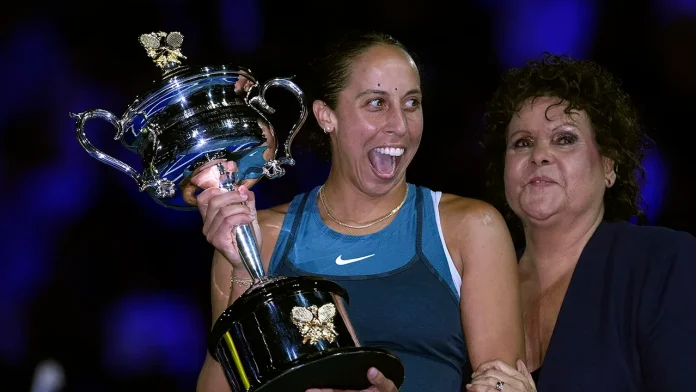
Madison Keys, center, of the U.S. reacts as she receives the Daphne Akhurst Memorial Cup from Evonne Goolagong Cawley after defeating Aryna Sabalenka of Belarus in the women’s singles final at the Australian Open tennis championship in Melbourne, Australia, on Saturday, Jan. 25, 2025.  (AP Photo/Ng Han Guan)

Sabalenka was seeking to win her third consecutive Australian Open, something that was last achieved — by Martina Hingis — from 1997 through 1999. 

This was the second time in Keys’ career that she had a chance at a major title, her last being a 6-3, 6-0 loss to fellow countrywoman Sloane Stephens in the 2017 US Open. 

Keys had high expectations for herself in her tennis career, but began to accept the fact that she might never win a Grand Slam title. 

“From a pretty young age, I felt like if I never won a Grand Slam, then I wouldn’t have lived up to what people thought I should have been. That was a pretty heavy burden to kind of carry around,” Keys said. 

NOVAK DJOKOVIC BOOED AFTER RETIRING FROM AUSTRALIAN OPEN SEMIFINAL MATCH WITH INJURY

Madison Keys reacts

Madison Keys of the U.S. reacts during her women’s singles final match against Aryna Sabalenka of Belarus at the Australian Open tennis championship in Melbourne, Australia, Saturday, Jan. 25, 2025.  (AP Photo/Vincent Thian)

“So I finally got to the point where I was proud of myself and proud of my career, with or without a Grand Slam. I finally got to the point where I was OK if it didn’t happen. I didn’t need it to feel like I had a good career or that I deserved to be talked about as a great tennis player.

“I feel like finally letting go of that kind of internal talk that I had just gave me the ability to actually go out and play some really good tennis to actually win a Grand Slam.”

Not only did Keys upset the No.1 ranked Sabalenka, but she also took down No. 2 ranked Iga Świątek in the semifinals en route to her Australian Open title victory.

Keys was the first woman since Serena Williams in 2005 to defeat both of the WTA’s top two players at Melbourne Park. She said that beating Swiatek gave her the confidence she could win against Sabalenka.

CLICK HERE TO GET THE FOX NEWS APP

Madison Keys speaks

Madison Keys of the U.S. speaks during a press conference after defeating Aryna Sabalenka of Belarus in the women’s singles final at the Australian Open tennis championship to win the Daphne Akhurst Memorial Cup, in Melbourne, Australia, Saturday, Jan. 25, 2025.  (AP Photo/Vincent Thian)

“Winning that match the other night against Iga was really kind of a big hurdle,” Keys said. “I always believed that I could do it, but to do it that way — really I thought to myself after the match that I can absolutely win on Saturday.”

This was Keys 46th Slam appearance, the third most before winning a women’s major title, being only Flavia Pennetta’s 49 and Marion Bartoli’s 47 appearances before they won. 

“I didn’t always believe that I could get back to this point. But to be able to do it and win, it means the world to me.”

The Associated Press contributed to this report. 

Follow Fox News Digital’s sports coverage on X, and subscribe to the Fox News Sports Huddle newsletter.

Quebec’s Ban on Religious Symbols Will Be Tested at the Supreme Court

0

A Quebec law that critics say unjustly targets Muslim, Jewish and Sikh people will be challenged at Canada’s Supreme Court, reigniting a sweeping debate over the province’s brand of secularism.

The law, known in Quebec as Bill 21, bars civil servants like teachers, prosecutors and police officers from wearing, while at work, the garments or accessories associated with their faith, such as skullcaps, turbans, head scarves and crosses.

Freedom of expression and religion are enshrined in Canada’s constitution. But governments at all levels, including federal, can set aside certain rights in favor of their own policy objectives, through the rarely used “notwithstanding clause.” The clause was adopted in 1981 as something of an override button after provincial leaders expressed concern that they would have to cede authority to the courts to interpret some rights.

Quebec’s secular policies are stricter than those of other Canadian provinces, where for many years the Roman Catholic Church exerted an influence over education, health care and public welfare. A Liberal government won in Quebec in 1960 with a promise to reflect the changing needs of Quebec society. That ushered in a period of transformation remembered as the “quiet revolution,” in which the state moved toward secularization. Quebec enacted its ban on religious symbols in 2019 using the notwithstanding clause, with support from residents.

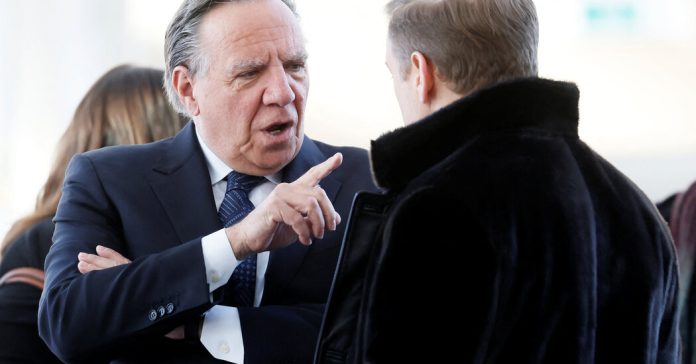
“We will fight to the end to defend our values ​​and who we are,” Premier François Legault said Thursday on X.

Critics say the ban on religious symbols is a reaction to an increase in Muslim immigrants. A study published in the Canadian Review of Sociology in 2018 found a greater prevalence of Islamophobia in Quebec than in other Canadian provinces.

There have been legal challenges by religious groups, school boards and individuals who have argued that the law violates their fundamental freedoms.

Last year, three judges from Quebec’s Court of Appeal unanimously upheld the law in a case involving the English Montreal School Board, which argued that the law also had the effect of promoting gender discrimination, predominantly against female teachers.

It is rare for the Supreme Court to take on cases when a lower court of appeal has come to a unanimous decision, said Pearl Eliadis, a law professor at McGill University.

The Supreme Court does not give reasons for taking on specific cases, so it’s unclear which issues — the notwithstanding clause, gender discrimination, freedom of expression — the court will adjudicate.

Rulings from the Supreme Court in the last two decades have underscored that Canada is fundamentally a secularist society. Canada’s legal tradition likens the constitution to a living tree, Professor Eliadis said, able to evolve to meet society’s changing needs.

Professor Eliadis said she thought the case was about “the way in which secularism is being deployed to suppress the rights of religious minorities.”

[Published in 2020: A Quebec Ban on Religious Symbols Upends Lives]

Harini Sivalingam, a director at the Canadian Civil Liberties Association, one of the organizations that challenged the law in court, said at a news conference on Thursday that the law disproportionately affected minority populations, including Muslim, Sikh and Jewish communities.

Arif Virani, the federal justice minister, told reporters at Parliament Hill on Thursday that the government planned to argue its viewpoint because the issue was of national importance. The Liberal Party’s uncertain future in leadership, however, could hamper that effort.

In response to Mr. Virani’s comments, Simon Jolin-Barrette, Quebec’s justice minister, said in a statement that the province would “fight to the end” to protect its secular values, adding that the federal government was showing a lack of respect for Quebec’s autonomy by weighing in on the case.

Professor Eliadis said that while one of the main tenets of Quebec’s secularism was the idea that the state should be a neutral actor, she thought the law had imposed the government’s viewpoint of what nonreligion ought to look like in the public service.

“Now the state is no longer really neutral,” she said.


Vjosa Isai is a reporter and researcher for The New York Times in Toronto.


How are we doing?
We’re eager to have your thoughts about this newsletter and events in Canada in general. Please send them to [email protected].

Like this email?
Forward it to your friends, and let them know they can sign up here.

What you should learn from these 4 major challenges Trump overcame to win back the White House

0

Join Fox News for access to this content

Plus special access to select articles and other premium content with your account – free of charge.

By entering your email and pushing continue, you are agreeing to Fox News’ Terms of Use and Privacy Policy, which includes our Notice of Financial Incentive.

Please enter a valid email address.

NEWYou can now listen to Fox News articles!

Now that President Donald J. Trump has returned to the White House, what valuable insights can we take from his unprecedented political journey to improve our own lives? 

While countless political analyses have explored the astonishing nature of his comeback, what stands out most is the sheer magnitude of obstacles he overcame to reclaim the presidency. While many of us navigate life moving back and forth, Trump’s unwavering resolve has consistently propelled him forward. He’s refused to be deterred by setbacks. 

If you’re seeking inspiration for personal success, there’s much to learn from his resilience. Here are four major challenges he conquered and how you can apply these lessons to elevate your own life in the coming year.

Donald Trump takes the oath of office from Chief Justice John Roberts during inauguration ceremonies in the Rotunda of the U.S. Capitol on Jan. 20, 2025. (Kevin Lamarque/AFP via Getty Images)

Even When the World Is Against You…

For most people, a single lawsuit would be enough to cause sleepless nights. Now imagine being embroiled in multiple high-stakes legal battles simultaneously. 

DONALD TRUMP IS OUR PRESIDENT AND DEMOCRATS HAVE NO IDEA WHAT TO DO

President Trump faced four major cases at once: the federal January 6th case, the Georgia election case, the classified documents case, and the Manhattan hush money case. Each case drained resources – time, energy and money – but more significantly, any one of them could have derailed his focus from his ultimate mission. 

Whether these cases had legitimacy is irrelevant; the key takeaway is that focus triumphs over sheer brilliance. In moments of adversity, you must discern whether you are facing a genuine crisis or merely an inconvenience. Trump demonstrated to the nation that an unrelenting focus on the bigger picture can lead to victory.

Enemies Can Become Allies – Even Big Tech

Who could have imagined a scenario in which Elon Musk, Mark Zuckerberg, Jeff Bezos and Tim Cook would be seated together at a presidential inauguration? True leadership hinges on the ability to recognize and leverage strategic opportunities. At one point, Mark Zuckerberg believed he had aligned himself with the Biden administration by condemning Trump’s stance on immigration and other liberal issues. However, when Biden accused Facebook of “killing people” for not fully submitting to government-mandated content moderation, the tables turned. 

TRUMP’S (SECOND) FIRST 100 DAYS GIVES DEMOCRATS OPPORTUNITIES

Through sheer influence, Trump managed to bring the tech titans to his side – an industry that once vilified him. But beyond politics, the presence of these executives at his inauguration signaled something even greater: a unified front in technological supremacy, sending a powerful message to China and the world that America will not be overtaken in innovation.

So What If People Don’t Like You?

As Donald Trump prepared for his second inauguration, his approval ratings remained in a precarious position, teetering on the edge of turning positive for the first time. According to FiveThirtyEight’s tracker, his approval rating had narrowed significantly from an unfavorable margin of 8.6 points on Election Day to nearly neutral in early January.

Trump embodies the archetype of the boss many of us have encountered—one whose management style, communication or leadership tactics may not always be well received. However, what remains undeniable is his ability to execute and deliver results.

EVERY AMERICAN SHOULD ROOT FOR PRESIDENT TRUMP’S SUCCESS

As Trump left office in 2021, his approval rating stood at a dismal 34%, the lowest of his presidency. His overall approval average was four points lower than any of his predecessors in Gallup’s polling history. Yet, despite all this, the electorate overwhelmingly reinstated him because they recognized his ability to address key national concerns – securing the border, revitalizing the economy and ensuring public safety.

Do Celebrity Endorsements Even Matter Anymore?

In a world where cultural icons like Beyoncé, Taylor Swift and Oprah publicly endorse a candidate, conventional wisdom would suggest an easy path to victory for their chosen side. In addition, raising a billion dollars should theoretically provide the financial firepower necessary to outmaneuver an opponent. 

Yet, despite 90% of mainstream media, Hollywood elites and the entertainment industry aligning against him, Trump remained undeterred.

CLICK HERE FOR MORE FOX NEWS OPINION

Many individuals believe that success is determined by having the “right connections” – a prestigious endorsement, an influential mentor, or a well-connected network. 

However, Trump’s triumph proves that external validation is not the deciding factor. Whether in school, at work or in politics, personal success is not dictated by who endorses you but by how the people – your audience, clients or colleagues – ultimately respond to your efforts.

Four More Years

The biggest question now isn’t what President Trump will do with his renewed presidency – it’s what lessons you can extract from his historic return to power and how you can apply them to your own ambitions. 

CLICK HERE TO GET THE FOX NEWS APP

Throughout a relentless political storm, Trump exemplified the power of persistence, demonstrating that hard work and resilience yield results. He proved that no challenge is insurmountable, no setback too significant, and no opposition too powerful if you remain committed to your goals.

Now, the challenge is yours. Take these lessons, harness your determination and make the next four years your most successful yet.

CLICK HERE TO READ MORE BY TED JENKIN