Thursday, November 12, 2026
Home Blog Page 341

Some Prominent Palestinian Prisoners Set to Be Released in the Israel-Hamas Cease-Fire Agreement

0

Israel is due to release more than 1,000 Palestinian prisoners over the course of the 42-day initial cease-fire, according to the terms of the agreement, beginning with at least 90 on Sunday in exchange for three Israeli hostages held by Hamas in Gaza.

Israelis say that many of the prisoners are terrorists and murderers. Many Palestinians see the imprisoned militants as freedom fighters against Israeli rule, and they argue that others were jailed by an unfair Israeli military justice system.

Here are several of the most prominent Palestinian prisoners set to be released under the cease-fire, according to the Israeli Justice Ministry.

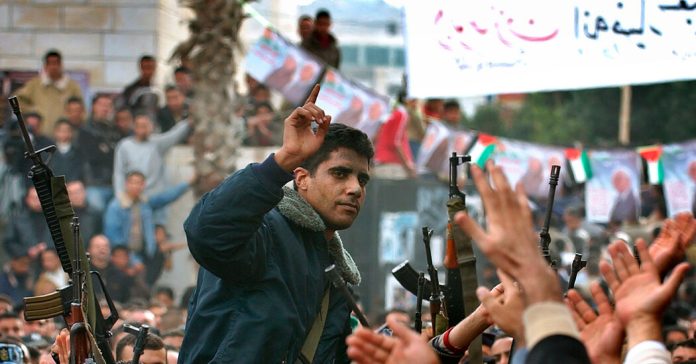
Over the past two decades, Zakaria Zubeidi, 49, has been a militant, a theater director, and an escaped prisoner whose flight stunned Israelis and Palestinians alike.

Mr. Zubeidi rose to prominence as a militant leader during the Second Intifada, or uprising, in the early 2000s, during which Palestinian militants committed deadly attacks against Israelis, including suicide bombings targeting civilian thoroughfares.

Israel responded by reoccupying major Palestinian cities amid street battles. Some of the toughest fighting took place in the Palestinian city of Jenin, Mr. Zubeidi’s hometown. He later emerged as a top commander in the Al-Aqsa Martyrs’ Brigades, an armed militia loosely linked with the secular Fatah party, the dominant Palestinian political faction in the West Bank.

After the uprising, Mr. Zubeidi worked at a theater inside the hardscrabble Jenin refugee camp. In 2019, Israel arrested him again on charges that he had returned to militancy.

Two years later, Mr. Zubeidi and five other Palestinian prisoners conducted a jailbreak by crawling nearly 32 yards through an underground tunnel outside one of Israel’s maximum-security prisons. Although they were later recaptured, the security breach shook Israelis and thrilled Palestinians.

An Israeli drone strike killed Mr. Zubeidi’s son, Mohammad, in September. The Israeli military called the son a “significant terrorist” and said he had been involved in shooting at Israeli troops.

Wissam Abbasi, 48, Mohammad Odeh, 52, and Wael Qassim, 54, were jailed in 2002 on accusations of carrying out Hamas attacks against Israelis during the Second Intifada. According to Israel’s justice ministry, the three men were given life sentences for murder and a string of other crimes.

According to contemporary Israeli media reports, the men were among several convicted of being involved in a Hamas cell in Jerusalem that was responsible for a string of bombings that killed over 30 Israelis in crowded civilian areas.

The attacks included a Hamas bombing at the Hebrew University of Jerusalem that killed nine people, including four U.S. citizens, according to the Israeli authorities.

Mr. Odeh, who was working as a painter at the university, planted the bomb in a cafeteria and covered it with a newspaper, The New York Times reported at the time, citing Israeli officials. When he left, he remotely detonated the explosive with a cellphone, the officials said.

Under the terms of the cease-fire deal, the men will not be allowed to return to their homes in Jerusalem, according to the Israeli justice ministry. They will be required to live in exile, although it is unclear where they will be allowed to go.


Boise State star Ashton Jeanty becomes underwear model with new partnership

0

Join Fox News for access to this content

Plus special access to select articles and other premium content with your account – free of charge.

By entering your email and pushing continue, you are agreeing to Fox News’ Terms of Use and Privacy Policy, which includes our Notice of Financial Incentive.

Please enter a valid email address.

There are a lot of ways college football fans could describe Boise State running back Ashton Jeanty.

He was a Heisman Trophy runner-up, Maxwell Award winner, Doak Walker Award winner and a unanimous All-American selection. But ahead of the NFL Draft, fans can also describe him as an underwear model.

CLICK HERE FOR MORE SPORTS COVERAGE ON FOXNEWS.COM

Ashton Jeanty poses for SAXX. (SAXX)

Jeanty teamed up with SAXX last month to promote the men’s underwear line, which is said to be a comfortable undergarment for every part of the male body. He told Fox News Digital that he never imagined in his wildest dreams that he would be modeling underwear.

“I didn’t think so, but, you know, things just have a way of happening, and that’s just kind of how it did,” he explained. “You know, good-looking guy, great running back, they want you to model some great underwear, so it just happened. I’m glad it did. It made kind of step outside my box.”

Jeanty said it was Las Vegas Raiders defensive end Maxx Crosby who selected him to become a part of the SAXX brand, and he said the partnership itself made sense to him.

Ashton Jeanty poses

Ashton Jeanty poses for SAXX. (SAXX)

BILL BELICHICK’S GIRLFRIEND SEEMINGLY SHUTS DOWN RUMORS COACH WILL LEAVE NORTH CAROLINA FOR NFL

“Just being a game-changing player on the field, you got to have some game-changing underwear to rock,” he said. “I thought it was a perfect collab. Design, the comfortability, all that type of stuff, it’s been great partnering with them.”

Jeanty ran for 2,601 yards and 29 touchdowns in his final season with Boise State, nearly eclipsing Barry Sanders’ single-season rushing record.

Boise State won the Mountain West Conference title and earned a bye into the College Football Playoff quarterfinals. The Broncos lost to Penn State.

Ashton Jeanty runs

Boise State running back Ashton Jeanty (2) in the first half of an NCAA college football game on Saturday, Nov. 23, 2024, in Laramie, Wyo.  (AP Photo/David Zalubowski)

CLICK HERE TO GET THE FOX NEWS APP

Jeanty declared for the NFL Draft earlier this month. He’s expected to be the top running back taken.

Follow Fox News Digital’s sports coverage on X, and subscribe to the Fox News Sports Huddle newsletter.

What Border Crisis? Mexican Migrant Shelters Are Quiet Ahead of Trump

0

Migrants used to gather by the hundreds in encampments in Ciudad Juárez, on the Mexican side of the Rio Grande, waiting for a chance to cross into the United States. But as President-elect Donald J. Trump prepares to take office on Monday, few people could be found this past week on the once-teeming embankments.

All that remained were extinguished campfires, discarded shoes, shirts and toothbrushes.

One Mexican city after another has reported a similar situation along the border with the United States, where the number of migrants has steadily dropped in recent months. The decline has been attributed largely to hardened restrictions introduced by the Biden administration and by Mexican and Panamanian officials meant to deter migration.

As President Biden came under increasing pressure during his re-election campaign to curb migration flows, he issued in June an executive order effectively blocking undocumented migrants from receiving asylum. That month, U.S. border officials recorded 83,532 illegal crossings, a significant drop from the previous month’s 117,905.

Despite the decline, illegal crossings remain higher than during much of Mr. Trump’s first term, fueling calls by the new Trump administration, and even by some Democrats in Congress, for more severe restrictions on migration to the United States.

Gov. Kristi Noem of South Dakota, Mr. Trump’s pick to run the Homeland Security Department, told senators on Friday that she planned to reinstate a Trump-era policy forcing asylum seekers to stay in Mexico for the duration of their U.S. cases and reduce temporary immigration relief for people from countries experiencing unrest.

“Border security must remain a top priority,” Ms. Noem said.

Some officials in Latin America are pushing back, arguing that the tougher restrictions on both sides of the border have worked to stem the crisis.

“The flow of migration from the south of Mexico toward the border has diminished in the last few months,” said Enrique Serrano Escobar, who leads the Chihuahua State office responsible for receiving migrants. “There is no crisis,” he said of Ciudad Juárez. “There is no problem.”

The quieter border these days contrasts with the recent years of frequent tragedies along the frontier, including family separations and the 2023 fire at a migrant detention facility in Ciudad Juárez that killed dozens.

Thousands of migrants are still trying to make their way north even as the authorities on both sides of the border harden restrictions. But overall, movement through the Darién Gap, the inhospitable land bridge connecting North and South America, and shelter capacity in U.S.-Mexico border cities like Ciudad Juárez and Matamoros have become indicators of how migration flows are easing.

“Normally, we would have around 150,” said Lucio Torres, who has been overseeing a shelter in Nuevo Laredo, across the Rio Grande, for three years. The shelter has capacity for 300 people. This week, the facility housed only seven.

Mr. Serrano Escobar said that migrant shelters run by government and civic organizations in Ciudad Juárez, with capacity for about 3,000 migrants, are currently only about 40 percent full. “The city is calm,” he added.

In November, more than 46,000 people crossed the border illegally, the lowest number during the Biden administration. December saw more than 47,000 illegal crossings. By comparison, in December 2023, illegal crossings surpassed a record of roughly 250,000.

Mexican security forces said that they detained more than 475,000 migrants in the last quarter of 2024. That is nearly 68 percent more detentions compared with the same period a year earlier, according to government data.

Solsiree Petit, 44, a Venezuelan teacher in Ciudad Juárez, said she had tumors in her breasts that require surgery. She said her sons, 10 and 17, had turned themselves in to the U.S. authorities seeking asylum about a week ago. She said she had an appointment with U.S. Customs and Border Protection in El Paso to submit her own asylum application on Jan. 29.

She said she hoped that her appointment would still be honored under the Trump administration. “I prefer not to think otherwise about that,” she said, “because it depresses you more.”

CBP One, the phone app that Ms. Petit used to schedule her appointment, allowed U.S. immigration authorities to process nearly 44,000 migrants in December at ports of entry.

While the Biden administration created the app to incentivize migrants to avoid crossing into the country illegally, Ms. Noem, the Homeland Security nominee, said she would wind down use of the app, reflecting concerns among Republicans that it was used to allow migrants into the country who should be barred from entry.

Similar to the tense calm seen in Ciudad Juárez, the Pumarejo shelter in Matamoros, which can accommodate 1,500 people, currently has only 260, according to shelter officials. In Tijuana, three notable shelters indicated that they were only 50 percent full.

Shelters in Guatemala City have also all but emptied of migrants heading north, said Karina López, a social worker at the city’s Casa del Migrante shelter. Several years ago, the shelter struggled to care for more than 3,000 weary migrants with just over 100 beds. Those numbers are unheard-of today, Ms. López said. That is partly because people are staying only a few hours in their rush to get to the border before the inauguration, she said.

Fear of violent crime and extortion is also thought to be keeping some migrants away from shelters targeted by organized crime in Mexico. Instead of seeking refuge there, some are choosing to stay with acquaintances, in rented rooms or with their smugglers as they try to make their way to the border, legally or illegally.

“I don’t care if the devil himself is in my way, I’m going forward,” said Juan Hernández, a handyman from Honduras. Mr. Hernández, 45, said he had lived in the United States for 23 years and had been deported five times. He arrived six months ago in Monterrey, a major industrial hub in northeast Mexico, after being deported to Honduras following a conviction in North Carolina for drunken driving.

He said he planned to cross the border again soon in a bid to reunite with his two children living in Raleigh, N.C.

For now, migrants like Mr. Hernández appear to be a minority. Not long ago in the historic center of Guatemala City, the sidewalks were filled with people begging for spare change or a meal for their children, many of them draped in the Venezuelan flag. This week, they were mostly absent.

In the Darién Gap, the number of migrants fell sharply after the Panamanian government introduced tougher restrictions to complement the Biden administration’s new asylum policies.

Two years ago, boatloads of people trying to get to the jungle would leave every day from Necoclí, a Colombian beach town at the southern end of the jungle. Migrants would often photograph the boat journeys and share pictures on social media, where they came to symbolize the migrants’ last moments of safety before entering the perilous Darién Gap jungle.

Now, days go by when there are not enough migrants to fill a single boat. Instead, the boats are leaving every two or three days and not always full.

In August 2023, a record 80,000 migrants passed through the Darién in a single month. In December, just under 5,000 people went through, according to Panamanian officials.

Yet, as the Trump inauguration approaches, smugglers have continued to urge migrants to get to the border and avoid a potential crackdown. Fearing it could be their last chance to make their way to the United States, some have resorted to begging friends to loan them money or to turning over the deeds to their homes to smugglers as collateral, shelter operators say.

One option offered by smugglers and referred to by migrants as the “V.I.P. route” shuttles migrants from Guatemala to Cancún, Mexico, by land, and from Cancún to Ciudad Juárez by air using false Mexican passports, according to Ms. López, the social worker. The price of a one-way flight on this route peaked at around $450 this week.

After the inauguration, the price drops to about $100.

Reporting was contributed by Annie Correal from Guatemala City; Julie Turkewitz from Bogotá, Colombia; Chantal Flores from Monterrey, Mexico; Edyra Espriella from Matamoros, Mexico; Aline Corpus from Tijuana, Mexico; Emiliano Rodríguez Mega and Rocío Gallegos from Mexico City; and Hamed Aleaziz from Washington.

Charles Barkley slams San Francisco as ‘rat infested,’ declares he’s skipping NBA All-Star Game

0

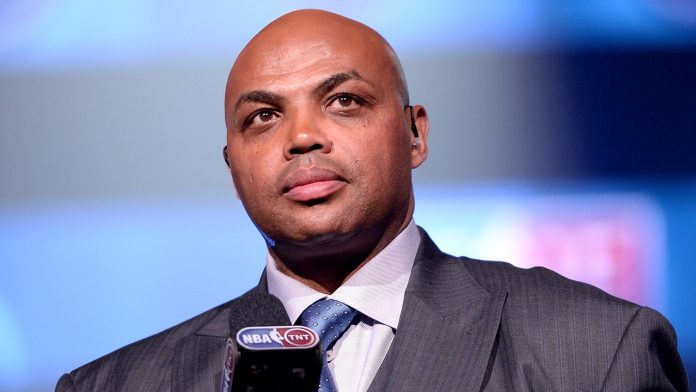
Basketball Hall of Famer Charles Barkley took another shot at the city of San Francisco as he made clear he had no intentions of going to the NBA All-Star Game.

Barkley spoke on TNT’s “Inside the NBA” about the All-Star candidacy of the Detroit Pistons’ young star Cade Cunningham. With the Golden State Warriors set to host the game at the Oracle Arena in San Francisco, Barkley said Cunningham will be there, but he won’t.

CLICK HERE FOR MORE SPORTS COVERAGE ON FOXNEWS.COM

Jan. 21, 2023; Phoenix, Arizona: Phoenix Suns former player Charles Barkley in attendance at Footprint Center. (Mark J. Rebilas-USA TODAY Sports)

“He’s going to make the All-Star Team,” Barkley said. “I’m not going. I’m not going to that rat-infested place out in San Francisco.”

Barkley responded to one of his colleagues calling San Francisco “beautiful.”

“San Francisco is not a beautiful city. Rats. Cats. Y’all are not gonna make me like San Francisco. No. Nope, nope, nope”

JIMMY BUTLER REPORTEDLY EXPECTED TO START FOR HEAT IN RETURN FROM SUSPENSION

It’s not the first time Barkley had criticized the city. Last year, he ripped San Francisco during the NBA’s alternative broadcast of the All-Star Game, which took place in Indianapolis.

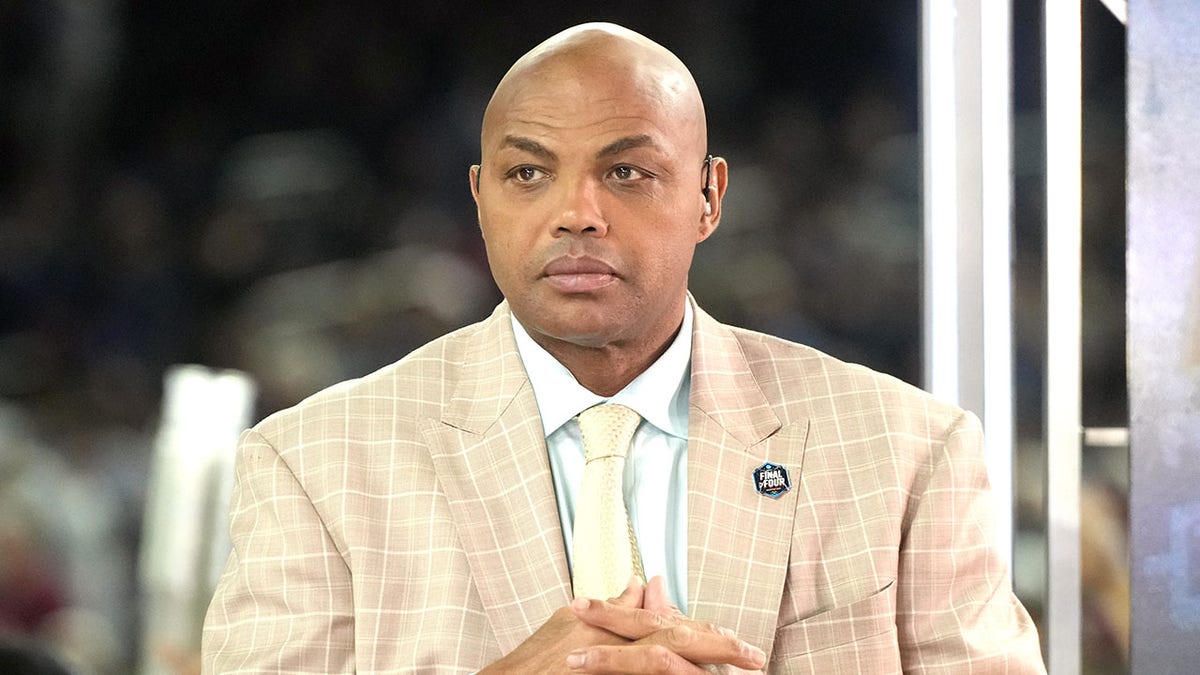
Charles Barkley looks on

College basketball analyst Charles Barkley on air before the NCAA Men’s Basketball Tournament Final Four championship game. (Mitchell Layton/Getty Images)

Barkley asked Miller which he would choose: playing in the cold in Indianapolis – where Miller spent his entire 18-year NBA career – or “being around a bunch of homeless crooks in San Francisco.”

Warriors star Draymond Green called Barkley “crazy” and said that Barkley was not “welcome” in the city. WNBA star Candace Parker said “we love San Francisco,” but Barkley offered a retort.

“No we don’t,” he said. “… You can’t even walk around down there.”

Green was emphatic with his pushback.

“Yes you can walk around,” he said.

Barkley clapped back saying, “Yeah, with a bulletproof vest.”

Draymond Green argues a call

Nov. 15, 2024; San Francisco, California: Golden State Warriors forward Draymond Green (23) argues a call with referee Brian Forte (45) during the third quarter against the Memphis Grizzlies at Chase Center. (D. Ross Cameron-Imagn Image)

CLICK HERE TO GET THE FOX NEWS APP

New San Francisco Mayor Daniel Lurie has vowed to make San Francisco’s streets safe again, build “enough housing to turn around our affordability crisis” and tackle “our drug and behavioral health crisis.”

Follow Fox News Digital’s sports coverage on X, and subscribe to the Fox News Sports Huddle newsletter.

How Antony Blinken, America’s Top Diplomat, Became the Secretary of War

0

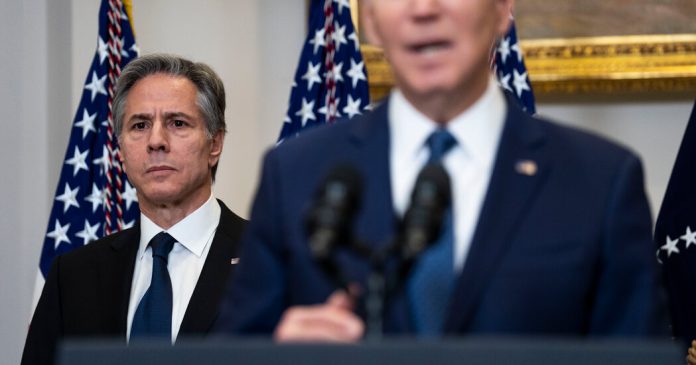
Making his final trip as America’s top diplomat last week, Secretary of State Antony J. Blinken arrived in Paris, his former hometown, to a hero’s welcome.

France’s president, Emmanuel Macron, proclaimed Mr. Blinken “an eminent servant of peace” at a ceremony at the Élysée Palace before awarding him the country’s highest tribute, the Legion of Honor medal. With its red silk ribbon pinned to his jacket, Mr. Blinken called the medal “the honor of a lifetime.”

It was a very different scene back in Washington a few days later, when Mr. Blinken gave a final speech before a crowd of foreign policy experts.

“Secretary Blinken! Your legacy will be genocide! You will forever be known as ‘Bloody Blinken, Secretary of Genocide,’” shouted a protester who had infiltrated the Atlantic Council event. Security officers led her out of the room, as well as a man waving a sign that read “Blinken: War Criminal.”

A similar drama punctured Mr. Blinken’s farewell news conference at the State Department two days later, as a journalist, shouting that Mr. Blinken belonged in The Hague, was carried from the room by security officers.

The contrasting scenes reveal the duality of Mr. Blinken’s tenure as secretary of state. Over four years and more than one million flight miles logged, Mr. Blinken was the face of America’s deep involvement in two wars, one in Ukraine and the other in Israel and Gaza. The first, the defense of Ukraine against Russia, was a popular cause marked by Ukrainian flags flying from American porches, and Mr. Blinken basked in accolades as he invoked the highest principles of international law and human rights.

But the war between Israel and Hamas in Gaza ignited by Palestinian terrorist attacks became a political and moral nightmare for the Biden administration as Israeli strikes with American-supplied weapons killed an estimated 46,000 Palestinians, many of them women and children.

While President Biden set the policy, Mr. Blinken, his decades-long aide and surrogate son, presented it to the public. The diplomat was accused of gutting the very principles he had championed in Ukraine, and became the target of vitriol rarely directed at a U.S. secretary of state.

So entwined are Mr. Blinken’s work and his reputation with conflict that he could just as easily be called by a retired cabinet title that is still on office plaques in the old State Department building — secretary of war.

Mr. Blinken reflected on the question during an interview this week in his wood-paneled office, which he had decorated with contemporary art pieces from the likes of Jasper Johns and Willem de Kooning. Mr. Blinken said, “If we want to use the term ‘war’ expansively, I think the State Department has been” — he paused — “yes, it has taken up a lot of our time and effort, and yes, as part of that, you learn a lot about weapons systems.”

War presented the Biden administration with the opportunity to forge closer international partnerships, and it is there that the president and his aides have excelled, Mr. Blinken said. “The United States is able to engage a more contested, a more complicated, a more combustible world from a position of strength,” he said. “That’s what I believe our legacy is.”

Mr. Blinken was no stranger to war when he started in his current post. Over a long career as a Washington foreign policy hand, including as deputy secretary of state, he had grappled with armed conflicts, notably the American quagmires in Iraq and Afghanistan. And his childhood was shaped by the memory of World War II, specifically by stories of how his stepfather, Samuel Pisar, had survived the Holocaust.

At the ceremony in Paris, Mr. Blinken cited a lesson he had learned from his stepfather: “We have to remain eternally vigilant, because humanity’s striving for the best can sometimes be overcome by its capacity for the worst.”

But the world served up an especially ugly parade of horrors as Mr. Blinken took charge of the State Department: strife and atrocities in Yemen, Syria, Haiti, Ethiopia, Armenia, Myanmar, the Democratic Republic of Congo and Sudan, where the secretary declared this month that combatants were carrying out a genocide.

Bearing a flawlessly polite and self-effacing demeanor, Mr. Blinken spent countless hours trying to resolve and prevent conflict. But for better or worse, his legacy rests not on forging grand peace treaties — those traditional diplomatic prizes eluded him — but on his role in two wars that often cast him in very different lights.

Mr. Blinken’s first test, the American withdrawal from Afghanistan, was widely seen as a fiasco.

The Taliban’s swift takeover of Kabul in August 2021 caught the State Department by surprise, forcing a chaotic evacuation of American citizens and Afghan allies. Some Republican lawmakers demanded that Mr. Blinken resign.

His moment came when President Vladimir V. Putin of Russia ordered a full-scale invasion of Ukraine in February 2022.

As Mr. Putin was building up for the assault, Mr. Blinken delivered a speech in Berlin invoking how Presidents John F. Kennedy and Ronald Reagan had stood up to Soviet power and declared that the United States would again defend “the governing principles of international peace and security.” A day later in Geneva, he faced down his grim Russian counterpart, Sergey Lavrov, warning that a Russian attack would draw “a swift, severe and a united response.”

It was the kind of commanding, high-stakes diplomacy you might see in the Netflix series “The Diplomat.” Mr. Blinken deployed his flawless French in Paris and Brussels, and cajoled leaders in Seoul and Tokyo. The result: a coalition of about 50 nations committed to supplying weapons to Ukraine or imposing economic sanctions on Russia.

As the war progressed, neither side sought negotiations, so Mr. Blinken was less a peacemaker than a war strategist. Immersed in details of military hardware and battlefield conditions, he often argued against more risk-averse Pentagon officials in favor of sending powerful American weapons to Ukraine.

And when the chairman of the Joint Chiefs of Staff, Mark A. Milley, suggested in late 2022 that Ukraine should capitalize on battlefield gains by seeking peace talks with Moscow, Mr. Blinken insisted the fight should go on.

Visiting Kyiv in May, Mr. Blinken, a guitar player, took the stage at a packed music club and led a local band in a rendition of Neil Young’s “Rockin’ in the Free World.” The defense of Ukraine had offered him a literal rock star moment.

Five days after the terrorist attacks carried out by Hamas in October 2023, Mr. Blinken stood next to Prime Minister Benjamin Netanyahu of Israel at a military base in Tel Aviv and told the world how the killings had seared him personally.

“I come before you not only as the U.S. secretary of state, but also as a Jew,” he said. “I understand on a personal level the harrowing echoes that Hamas’s massacres carry for Israeli Jews and for Jews everywhere.”

That moment, too, had a noble glow. Mr. Blinken was rushing to the rescue of an American friend who had been horribly violated in the attacks. Hamas and its partners took hostages and killed more than 1,200 Israelis — the largest single-day massacre of Jews since the Holocaust.

But this time the narrative would grow far more complicated. In private meetings on that same trip, Mr. Blinken and his aides heard about war plans for Gaza that foretold more mass killing — including ominous reminders from Israeli officials that America had once been willing to annihilate Hiroshima and Nagasaki with atomic bombs.

Mr. Blinken would make a dozen wartime trips to the Middle East. They were grim affairs, in contrast to the European tours where he was hailed as a savior of Ukraine. Israeli officials complained about pressure from Washington on one day while Arab monarchs fumed on the next that Israel was out of control.

Again he immersed himself in military matters. Meeting with Israel’s war cabinet, he would study maps of Gaza and discuss details of strategy. On one visit, they scrambled into a bunker when Tel Aviv came under rocket attack.

He beseeched the Israelis to let in more humanitarian aid and limit civilian casualties as they pummeled Gaza, turning hospitals, schools and mosques to dust. Some State Department officials argued in vain that Israel was intentionally withholding food and medicine from desperate Palestinians. For months, Mr. Blinken has said the department was “assessing” reports of Israeli war crimes.

Over time, Mr. Blinken’s visits with Mr. Netanyahu seemed to become less and less effective. Sometimes the Israeli leader would publicly undermine his American guest’s positions hours after hosting him.

Critics of the war said that only withholding military aid would change the Israeli approach. That never happened.

In keeping with Mr. Biden’s “bear hug” approach, Mr. Blinken and the State Department kept sending Israel weapons, including 2,000-pound bombs that U.S. military officials call unsuited for urban combat.

Over the 16 months of war, Mr. Biden has approved $26 billion in aid to Israel. Mr. Blinken has never expressed regrets over refraining from using that leverage to influence Mr. Netanyahu. Signs of “daylight” between the United States and Israel only encouraged Hamas, he says.

State Department officials sent Mr. Blinken dissent cables opposing the policy. A handful resigned and became public dissidents.

“We don’t have a policy,” said Michael Casey, a diplomat and Iraq war veteran who resigned last year from his State Department post in Jerusalem, where he worked on Gaza. “We support the Israeli government’s goals over our own interests.”

He said that “of everyone in the cast of characters at the top, Antony Blinken has been the most disappointing.” Despite showing flashes of empathy with Palestinians, he said, Mr. Blinken never veered from the approach to Israel.

Protesters camped outside his Virginia home and splashed fake blood on his black Suburban. The descendant of a Holocaust survivor was accused of enabling “genocide.”

Such invective “comes with the job,” Mr. Blinken said, while warning that a trend of hounding public officials in private spaces like their homes could deter people from entering government.

For a time, it seemed that he and his colleagues might have nothing to show for their many months pressing the warring parties for a cease-fire deal. Then came this week’s agreement between Israel and Hamas.

Even if it took pressure from President-elect Donald J. Trump, the deal, if it holds, could be a welcome part of Mr. Blinken’s legacy. But the clock has run out on his greater ambition of brokering a historic agreement to normalize diplomatic relations between Israel and Saudi Arabia that would, in theory, have included a first-ever explicit pathway to a Palestinian state.

Such a pact might have won him some forgiveness from furious Western liberals and Muslims worldwide.

He admits that public opinion toward the United States has grown “very challenging” in places where America is seen as hypocritical for denouncing Russia’s war while defending Israel’s.

He must also accept frustrating uncertainties. Ukraine’s fate could be in peril under Mr. Trump. And as for Gaza, some doubt that a cease-fire can endure.

That is the nature of war, Mr. Blinken says: “Most of these challenges don’t have neat Hollywood endings.”

He leaves haunted by his gazing into the same abyss of humanity that his stepfather survived decades ago. “What really drives me more than anything else is the demonization we see in all directions,” he said. “The inability to acknowledge suffering on each side, the inability to see the humanity in the other.”

Cowboys legend DeMarcus Ware says Eagles fan harmed his mother amid controversy over fan who cursed at woman

0

Join Fox News for access to this content

Plus special access to select articles and other premium content with your account – free of charge.

By entering your email and pushing continue, you are agreeing to Fox News’ Terms of Use and Privacy Policy, which includes our Notice of Financial Incentive.

Please enter a valid email address.

Philadelphia Eagles fans are under a national microscope after one of their own, Ryan Caldwell, was seen verbally assaulting a female Green Bay Packers fan in viral footage at a playoff game last Sunday.

But the fan base’s history of abuse against women on the opposing side dates back much further than that. 

Former Dallas Cowboys player DeMarcus Ware, who played a game in Philadelphia every year during his Dallas career from 2005 to 2013, told Fox News Digital that he once had to witness Eagles fans hurl dangerous projectiles at his mother, Brenda Ann Ware, during a game his rookie year in 2005.

“My rookie season when my mom was in the stands, I told her not to wear my jersey, and she was in the front row, and were up there in Philly, they were putting batteries in snowballs and throwing them and one of them hit my mom,” Ware said. 

CLICK HERE FOR MORE SPORTS COVERAGE ON FOXNEWS.COM

Seeing his mother get pegged by a snow-covered battery nearly prompted Ware to abandon his football duties and run up into the stands to start a fight. 

“I turned around at the time, and I didn’t care about football anymore. I wanted to go get the guy who was in the stands. But I didn’t,” Ware said. 

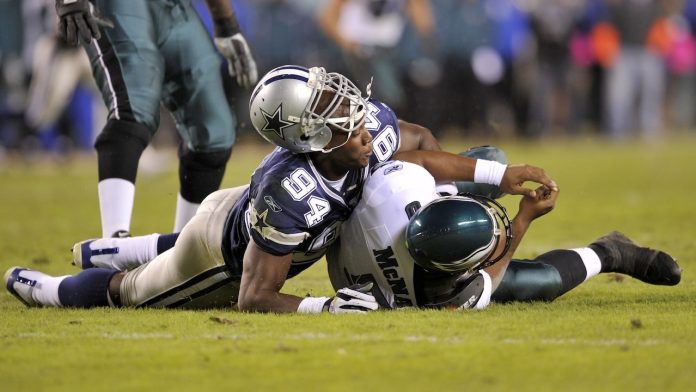
DeMarcus Ware of the Dallas Cowboys sacks Donovan McNabb (5) of the Philadelphia Eagles during the Eagles 10-6 win over the Cowboys at Texas Stadium in Irving, Texas. (James D. Smith /Icon SMI/Icon Sport Media via Getty Images)

The linebacker held back, allowing team security to take care of the fan who hurt his mom. But he let the memory of the incident fester in his mind, and motivate him every time he took the field against the Eagles. 

The Cowboys beat the Eagles 21-20 in that 2005 game in Philadelphia to sweep the season series. 

In 17 career games against the Eagles, Ware had 16 total sacks. The Cowboys went 9-8 against their rivals in the games that Ware played. 

Ware had his most vengeful stretch against the Eagles in 2011. In January of that year, he had three sacks in Philadelphia in the 2010 season finale to help seal a 14-13 win. The following season, in an October game in Philadelphia, he had four sacks, the most he ever had in a game against the arch rival. He had two more sacks in the second meeting against the Eagles that year in December in Dallas. 

But despite nearly a decade of animosity against the Eagle fans for what they did to his mother, he still respects the will of the fan base. The franchise’s former home, Veterans Stadium, had an on-site judicial court and jail cells to deal with law-breaking fans, which isn’t something that Ware takes lightly.

“The Philadelphia Eagles fans, they are very, very strong-willed fans,” he said. 

“When you have a jail at the bottom of the stadium back in the day, when you’re able to go to jail because you’re acting up, even from the point every single time we played, it was a rivalry battle showdown if it was up there or at home. And their fans, they travel well, they’re just tenacious, and that’s just who they are.”

Caldwell’s recent viral video has re-ignited certain stereotypes of the fan base as the team contends for a Super Bowl this season. 

5 MOST INFAMOUS FAN MOMENTS IN SPORTS

Eagles fan waves the flag

Jan. 12, 2025; Philadelphia, Pennsylvania: Philadelphia Eagles fans during a game against the Green Bay Packers in an NFC wild card game at Lincoln Financial Field. (Eric Hartline-Imagn Images)

The footage shows Caldwell calling the nearby Packers fans vulgar and sexist names, while taunting the man accompanying her with explicit gestures. 

Caldwell has since been fired from his job as a project manager at the NJ-based company BCT Partners. He has apologized but also defended himself by insisting his actions “were not without provocation” and that the viral video “does not show the full context” of what happened. 

Still, Caldwell’s abusive behavior is only the latest in a long history of unruly and sometimes illegal behavior by the fan base over the years. 

In 1997, during a Monday night game against the San Francisco 49ers, one mischievous Eagles fan shot a flare gun into the stands full of other fans, endangering multiple lives. 

After the flare was shot, multiple fistfights broke out around the stadium as most of the violence was directed at 49ers fans by Eagles fans. 

“There were a large number of fights and acts of intimidation, many directed at fans in 49ers jerseys,” the Philadelphia Inquirer wrote at the time.

After the game, Eagles owner Jeffrie Lurie was forced to condemn his own fans. 

“In spite of the fact that we feel we have made significant strides in recent years with regard to fan conduct at Veterans Stadium, what we witnessed this past Monday was undoubtedly a step backward,” Lurie told reporters at the time.

In 2018, an Eagles fan was arrested during the NFC divisional playoff game against the Falcons, for punching the horse of a Philadelphia police officer. 

According to a police report at the time, a man was ejected because “he was intoxicated and did not possess a ticket.” After his ejection from Lincoln stadium, the man walked toward a police officer mounted on a horse and “began punching the horse in the face, neck and shoulder area.” 

CLICK HERE TO GET THE FOX NEWS APP

Eagles fans go wild

Philadelphia Eagles fans climb poles after taking to the streets. (Fox News Digital)

After the Eagles won the Super Bowl against the New England Patriots that year, multiple violent riots broke out around the city. Looting and destruction were reported at multiple convenience shops and a local Macy’s department store. Cars were flipped over, traffic lights and lamp posts were torn down, and there were even unconfirmed reports of explosions. 

One of the most storied examples of unruly Eagles fan behavior took place all way back in 1968, when a man dressed as Santa Claus walked out onto the field. He was booed relentlessly by fans who were upset about a disappointing season and, like Ware’s mother, he was even hit with snowballs. 

But it didn’t stop at snowballs, as he was also hit with beer cans and even sandwiches. 

Follow Fox News Digital’s sports coverage on X, and subscribe to the Fox News Sports Huddle newsletter.

Here Are Some Prominent Palestinian Prisoners Set to Be Released

0

Israel is due to release more than 1,000 Palestinian prisoners over the course of the 42-day initial cease-fire, according to the terms of the agreement, beginning with at least 90 on Sunday in exchange for three Israeli hostages held by Hamas in Gaza.

Israelis say that many of the prisoners are terrorists and murderers. Many Palestinians see the imprisoned militants as freedom fighters against Israeli rule, and they argue that others were jailed by an unfair Israeli military justice system.

Here are several of the most prominent Palestinian prisoners set to be released under the cease-fire, according to the Israeli Justice Ministry.

Over the past two decades, Zakaria Zubeidi, 49, has been a militant, a theater director, and an escaped prisoner whose flight stunned Israelis and Palestinians alike.

Mr. Zubeidi rose to prominence as a militant leader during the Second Intifada, or uprising, in the early 2000s, during which Palestinian militants committed deadly attacks against Israelis, including suicide bombings targeting civilian thoroughfares.

Israel responded by reoccupying major Palestinian cities amid street battles. Some of the toughest fighting took place in the Palestinian city of Jenin, Mr. Zubeidi’s hometown. He later emerged as a top commander in the Al-Aqsa Martyrs’ Brigades, an armed militia loosely linked with the secular Fatah party, the dominant Palestinian political faction in the West Bank.

After the uprising, Mr. Zubeidi worked at a theater inside the hardscrabble Jenin refugee camp. In 2019, Israel arrested him again on charges that he had returned to militancy.

Two years later, Mr. Zubeidi and five other Palestinian prisoners conducted a jailbreak by crawling nearly 32 yards through an underground tunnel outside one of Israel’s maximum-security prisons. Although they were later recaptured, the security breach shook Israelis and thrilled Palestinians.

An Israeli drone strike killed Mr. Zubeidi’s son, Mohammad, in September. The Israeli military called the son a “significant terrorist” and said he had been involved in shooting at Israeli troops.

Wissam Abbasi, 48, Mohammad Odeh, 52, and Wael Qassim, 54, were jailed in 2002 on accusations of carrying out Hamas attacks against Israelis during the Second Intifada. According to Israel’s justice ministry, the three men were given life sentences for murder and a string of other crimes.

According to contemporary Israeli media reports, the men were among several convicted of being involved in a Hamas cell in Jerusalem that was responsible for a string of bombings that killed over 30 Israelis in crowded civilian areas.

The attacks included a Hamas bombing at the Hebrew University of Jerusalem that killed nine people, including four U.S. citizens, according to the Israeli authorities.

Mr. Odeh, who was working as a painter at the university, planted the bomb in a cafeteria and covered it with a newspaper, The New York Times reported at the time, citing Israeli officials. When he left, he remotely detonated the explosive with a cellphone, the officials said.

Under the terms of the cease-fire deal, the men will not be allowed to return to their homes in Jerusalem, according to the Israeli justice ministry. They will be required to live in exile, although it is unclear where they will be allowed to go.

Week in politics: Biden's busy last week in office, Trump's inauguration moved inside

0

President Joe Biden wraps up his term with a flurry of activity before Inauguration Day, and cold weather moves President-elect Donald Trump inside the Capitol for his oath of office and address.

Fox News AI Newsletter: China gains ground

0

Welcome to Fox News’ Artificial Intelligence newsletter with the latest AI technology advancements.

IN TODAY’S NEWSLETTER:

– US must win AI race as China gains ground: ‘Lead is not as big as it once was,’ OpenAI exec warns
– How does AI keep the US safe amid world conflict?
– AI scammers pretending to be Brad Pitt con woman out of $850,000

A man is seen using the OpenAI ChatGPT artificial intelligence chat website

A man is seen using the OpenAI ChatGPT artificial intelligence chat website in this illustration photo on July 18, 2023.  (Jaap Arriens/NurPhoto via Getty Images)

AMERICA MUST WIN: OpenAI’s Chris Lehane is warning of America’s shrinking lead in the artificial intelligence space as the company releases its economic blueprint and policy proposals for the U.S.

KEEPING US SAFE: Booz Allen Hamilton CEO Horacio Rozanski unpacks global unrest in the Middle East despite the Israel-Hamas deal and the impact of artificial intelligence on defense on “The Claman Countdown.”

Brad Pitt bites his lower lip and smiles in a black suit

Brad Pitt. (Stephane Cardinale – Corbis/Corbis via Getty Images)

‘ONCE UPON A TIME’: A happily-ever-after with someone a woman believed was Hollywood hunk Brad Pitt quickly turned into a living nightmare.

AI TRANSFORMER HOMES: AC Future, a leading developer of AI-enabled sustainable living solutions, has partnered with world-renowned Italian design house Pininfarina to create a groundbreaking collection of transformable living spaces. This innovative collaboration has resulted in three distinct products: AI-THd (AI Transformer Home Drivable), AI-THu (AI Transformer Home Unit) and AI-THt (AI Transformer Home Trailer).

Shape-shifting AI Transformer homes will leave you wanting one

AI-THt (AC Future) (Kurt “CyberGuy” Knutsson)

Subscribe now to get the Fox News Artificial Intelligence Newsletter in your inbox.

FOLLOW FOX NEWS ON SOCIAL MEDIA

Facebook
Instagram
YouTube
Twitter
LinkedIn

SIGN UP FOR OUR OTHER NEWSLETTERS

Fox News First
Fox News Opinion
Fox News Lifestyle
Fox News Health

DOWNLOAD OUR APPS

Fox News
Fox Business
Fox Weather
Fox Sports
Tubi

WATCH FOX NEWS ONLINE

Fox News Go

STREAM FOX NATION

Fox Nation

Stay up to date on the latest AI technology advancements and learn about the challenges and opportunities AI presents now and for the future with Fox News here.

When the U.S. Hit Canada With Steep Tariffs Before, Canada Had a Plan B

0

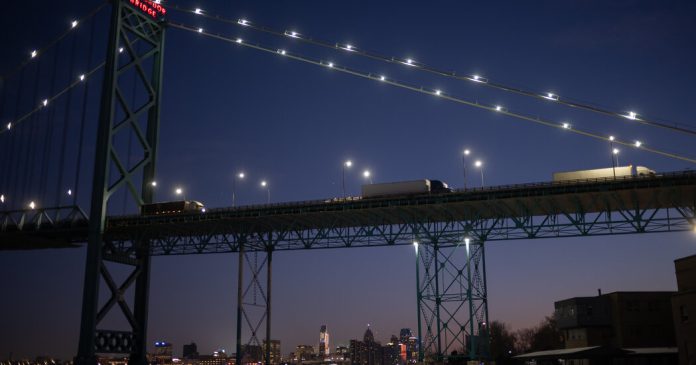
After Donald J. Trump’s presidential inauguration on Monday, Canadians will learn whether he intends to follow through on his threat to immediately impose 25 percent tariffs on exports from Canada to the United States.

Many people here have told me they are looking forward to the details of the federal government’s response to any American trade action. Matina Stevis-Gridneff, our Canada bureau chief, reports that it will be much like Canada’s response to the tariffs on aluminum and steel that Mr. Trump introduced during his first administration. Any coming retaliatory tariffs, she writes, will “focus on goods made in Republican or swing states, where the pain of tariffs, like pressure on jobs and the bottom lines of local businesses, would affect Trump allies.”

[Read: Canada’s Plan for a Trade War: Pain for Red States and Trump Allies]

But given the size of Canada’s economy, the country cannot inflict the same amount of harm that the United States can. That raises the question of whether retaliation, no matter how politically targeted, will be effective.

There is, of course, no way to answer that question. But an earlier trade war between Canada and the United States might offer some indications of what’s to come.

Back in 1930, as today, the North American neighbors were each other’s largest trading partner. But the mix of goods was quite different: For one thing, Canada was importing most of its oil from the United States, while today oil and gas are Canada’s largest exports.

A movement by American farmers to close off competition from imports, including those from Canada, to bolster prices ballooned into a sweeping piece of legislation known as the Smoot-Hawley Tariff Act. It raised already high U.S. tariffs, eventually bringing the average import duty to a staggering 59.1 percent.

Then as now, the tariffs were denounced by many economists. Over 1,000 of them unsuccessfully petitioned President Herbert Hoover to veto the bill.

Historians and economists still debate the effect of Smoot-Hawley on the Great Depression. But a 1997 paper by three economists at Lehigh University in Pennsylvania documents how it harmed Canada’s economy and profoundly influenced its politics.

Most of the seven largest exports from Canada to the United States at the time, the paper says, had large declines. Exports of milk and cheese plunged by 65 percent, and cattle sales to the United States fell by 84 percent.

Before Smoot-Hawley, William Lyon Mackenzie King, the Liberal prime minister, had been planning to reduce tariffs on Canadian imports of U.S. goods. In the hope of avoiding a trade war, Mackenzie King matched the new U.S. tariffs on only 16 products, which accounted for 30 percent of imports from the United States.

Like Prime Minister Justin Trudeau today, Mackenzie King led a minority government. He passed bills with the support of the Progressives, a party supported largely by farmers.

During the 1930 election campaign, R.B. Bennett, the Conservative leader, relentlessly attacked Mackenzie King for not retaliating more forcefully against the United States.

Bennett’s speeches about the merits of high tariffs were remarkably similar to Mr. Trump’s social media posts on the topic today.

“How many tens of thousands of American workmen are living on Canadian money today?” he said while campaigning in Quebec. “They’ve got the jobs, and we’ve got the soup kitchens.”

He promised the crowd that he would use tariffs to “blast a way into markets that have been closed.”

A vote analysis in the Lehigh paper concludes that tariff issues were a key factor in Bennett’s victory in the 1930 election, which brought the Conservatives their only majority government between 1911 and 1958.

While Bennett did increase tariffs, they failed to blast a way into any market, according to Robert Bothwell, an emeritus professor of Canadian history at the University of Toronto.

But, Professor Bothwell told me, Bennett found another solution, which involved expanding on one of Mackenzie King’s actions: When he imposed the tariffs on U.S. goods, Mackenzie King also cut them on 270 products from Britain and other countries within its empire.

Bennett hosted a conference in Ottawa that led to a series of agreements between Britain and its former colonies that greatly opened up trade between them by reducing and in some cases eliminating tariffs.

That arrangement, Professor Bothwell said, could neither offset the economic collapse of the Depression nor fully replace the American market for Canadian exports, but it did greatly mitigate the harm caused by Smoot-Hawley.

“We had an out of sorts, and it really did work in the ’30s,” he said. “Every time the Americans jacked up their tariffs, we would tend to trade more with the British.”

When Franklin D. Roosevelt succeeded Hoover as U.S. president in 1933, Professor Bothwell said, his administration soon noticed the loss of exports to Canada, driven by the combination of American tariffs and the Imperial arrangement with Britain, and moved to compromise on trade.

Today there is talk that Canada will again try to build up exports with nations other than the United States. But Professor Bothwell said that changes in trade, manufacturing and transportation have made a repeat unlikely.

“We don’t have an obvious alternative,” he said. “I don’t see us having a way to absorb the same amount of exports as we did in the ’30s.”


Ian Austen reports on Canada for The Times based in Ottawa. He covers politics, culture and the people of Canada and has reported on the country for two decades. He can be reached at [email protected]. More about Ian Austen


How are we doing?
We’re eager to have your thoughts about this newsletter and events in Canada in general. Please send them to [email protected].

Like this email?
Forward it to your friends, and let them know they can sign up here.