Thursday, November 12, 2026
Home Blog Page 344

Bolsonaro Hid at Hungary’s Embassy. Not For Asylum, He Says, Maybe Love.

0

When we first watched the surveillance footage, we were stunned.

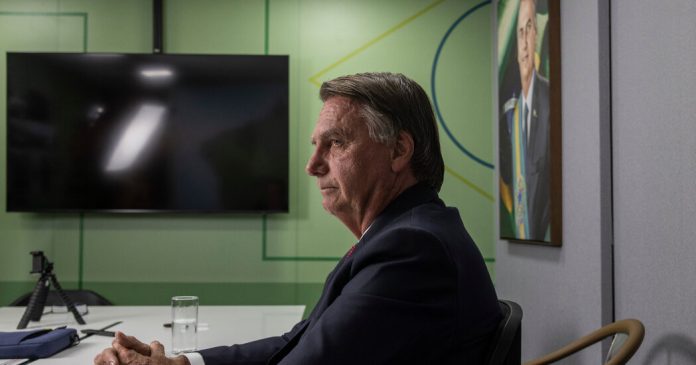
There was the Hungarian ambassador to Brazil pacing nervously in the embassy. There was Jair Bolsonaro, the former Brazilian president — fresh off court orders not to leave the country because of an intensifying criminal investigation — arriving at the gate. There were the embassy staff members hustling to the guest quarters with linens and a coffee maker.

And then, for two days, there was Mr. Bolsonaro wandering the parking lot, looking bored, and there were his security guards fetching pizza.

Given the circumstances — a politician facing potential imprisonment sleeping at a foreign embassy controlled by a political ally — it had all the hallmarks of a man seeking political asylum. Foreign embassies can be considered sovereign territory and have historically been used as refuge for people fleeing custody.

Colleagues and I published an article saying so, complete with clips from the footage.

In response, Mr. Bolsonaro’s lawyers issued a statement saying he had merely gone to the embassy to talk politics. Any suggestion otherwise, they said, was “fake news.”

Alexandre de Moraes, the Brazilian Supreme Court justice leading sprawling criminal investigations into the former president, later decided that Mr. Bolsonaro had not broken the law by sleeping at the embassy.

So when I sat down with Mr. Bolsonaro for an interview this week, I was eager to finally ask him why — in the middle of Brazil’s carnival, four days after the police confiscated his passport — he had decided to sleep in the small guest room of the Hungarian Embassy.

Here is an excerpt from our exchange, translated from Portuguese and edited for clarity.

Why did you sleep at the Hungarian Embassy for two nights?

Look, it was a question of time zones with whom I was talking. And that’s final.

But you slept there for two nights?

Yes.

Is that normal?

That’s up for me to decide.

You don’t have a bed in Brasília? (Brasília is Brazil’s capital.)

I do. I could’ve been fighting with my wife. I’m not saying. Just like when I talk to the authorities, I don’t say I did. Nothing leaks from me. Zero.

Have you slept at another embassy?

Who knows? I’m friends with Israel. I get along with countries in the Arab world. I’m not going to say what I do because that gives them a narrative to chase. I’m a free citizen.

The team of Alexandre de Moraes wanted to arrest me because I went without a passport. You don’t need a passport to enter an embassy.

You are a private citizen. You’re also a former president who talks about the importance of the truth. So it’s natural to want to understand why you slept at a foreign embassy four days after the authorities searched your home.

They could have arrested me during the search if they wanted. Anything I do is an attempt to hide to them. Was it refuge? Asylum? With asylum, you deal directly with the president.

Was it a bid for asylum? It seems strange to sleep in an embassy.

Isn’t it strange that I’m being persecuted? Everything I might say, the other side could go after me. I met with [President Viktor Orban of Hungary] in Argentina at [President Javier] Milei’s inauguration. I get along well with him.

It wasn’t a crime what I did. If there had been any crime, they would have arrested me.

[The embassy’s surveillance footage also showed a person visit Mr. Bolsonaro for 38 minutes. A Brazilian news outlet later reported it was his son, Carlos. Carlos was in the room with us.]

Carlos, you visited your father, right? What happened?

Carlos Bolsonaro: I just talked to my father about …

[Lawyer in the room interrupts to request to talk off the record.]

Jair Bolsonaro: Do you think I would have trouble leaving Brazil right now? No passport? Don’t a ton of illegal immigrants go to the United States? I’m an army captain. I’m used to the hardships out there.

OK. So why were you at the embassy?

Who knows? Maybe I have a lover there.

I’m not trying to be difficult, but I care about the truth, and you say you do, too. So I just want to understand.

It’s a secret. Maybe one day you’ll find out.
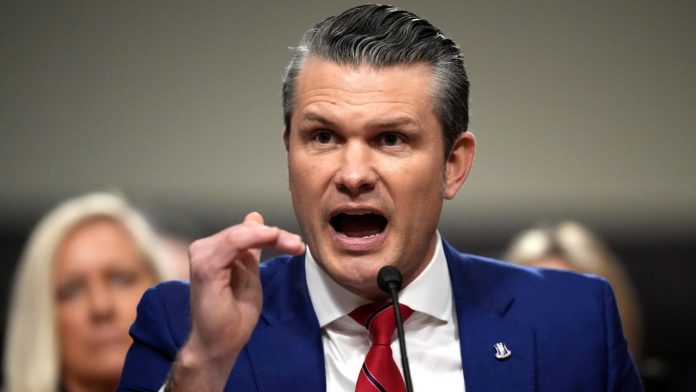
Hegseth moves closer to being confirmed as new defense secretary

0

Pete Hegseth has picked up another key vote for confirmation as President-elect Trump‘s secretary of defense.

Sen. Bill Cassidy, R-La., on Friday said he will vote to confirm Hegseth, an Army combat veteran whose nomination was under question because of his remarks questioning women’s roles in the military, sexual misconduct allegations, as well as allegations that he drank alcohol while working previous jobs.

Hegseth appeared before the Senate Armed Services Committee this week relatively unscathed amid questions from lawmakers. 

DEM SENATOR’S ‘LIES AND STUPIDITY’ AT HEGSETH HEARING ROASTED ON SOCIAL MEDIA: ‘CLOWN SHOW’

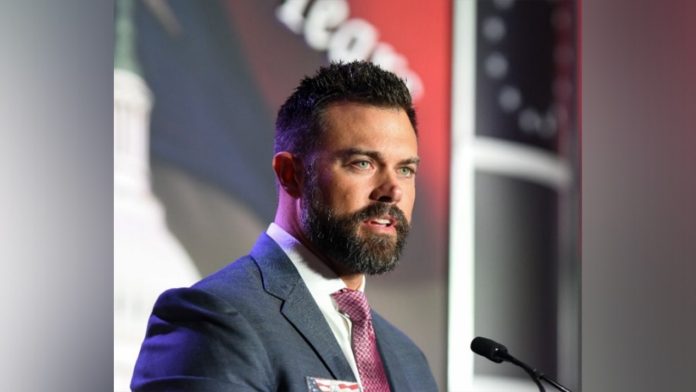
President-elect Donald Trump’s nominee for Secretary of Defense Pete Hegseth testifies during his Senate Armed Services confirmation hearing on Capitol Hill on Jan. 14 in Washington, D.C.  ( (Photo by Andrew Harnik/Getty Images))

“The President’s pick for Secretary of Defense, Mr. Hegseth, has impressive academic qualifications, conducted himself very well in the Senate Armed Services hearing, and has a commendable record of service in uniform. He assured me he will surround himself with a strong support team,” Cassidy said in a statement. “I will vote for his confirmation.”

Hegseth has seen a wave of support from Republicans, including Sen. Joni Ernst, of Iowa, who previously expressed concerns about his nomination.

PETE HEGSETH SAYS HE HASN’T HEARD FROM WEST POINT SINCE EMPLOYEE ‘ERROR’ DENYING HIS ACCEPTANCE

Sen. Bill Cassidy

U.S. Sen. Bill Cassidy, R-La., attends a press conference at the U.S. Capitol on Aug. 5, 2022 in Washington, D.C. (Kevin Dietsch/Getty Images)

Sen. Tommy Tuberville, R-Ala., said Hegseth passed his confirmation hearing with “flying colors.”

“They tried to rattle him. They brought out all these anonymous allegations. He had an answer for every one of them,” Tuberville said at the time. 

During his proceedings, protesters were hauled out in zip ties after interrupting the hearing. 

Democratic lawmakers also grilled Hegseth about his stance on women in combat roles, prompting him to push back that his argument related to women serving in the military focuses on military standards not eroding. 

Pete Hegseth at hearing

Rep. Michael Waltz (R-FL) (L) introduces U.S. President-elect Donald Trump’s nominee for Secretary of Defense Pete Hegseth during his Senate Armed Services confirmation hearing on Capitol Hill on Jan. 14, i Washington, D.C.  (Getty Images)

 CLICK HERE TO GET THE FOX NEWS APP 

“I would point out I’ve never disparaged women serving in the military,” he told Sen. Kirsten Gillibrand, D-N.Y. “I respect every single female service member that has put on the uniform, past and present. My critiques, senator, recently and in the past, and from personal experience, have been instances where I’ve seen standards lowered.”

World Economic Forum: Behind the Scenes at Davos

0

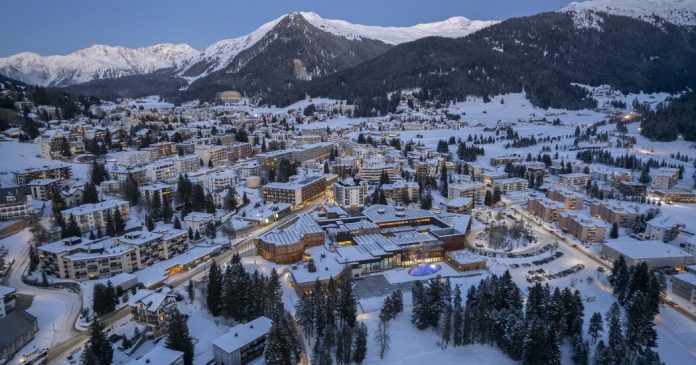
The World Economic Forum’s annual meeting, commonly referred to as Davos, welcomes more than 3,000 global leaders from business, politics and civil society every January in the namesake Swiss city. They gather to address pressing issues such as climate change and economic and geopolitical challenges. Davos, which begins Monday and runs through Friday, was started in 1971 by the German economist Klaus Schwab, who initially named it the European Management Symposium.

Severin Podolak, the head of event management and operations for the World Economic Forum since 2021, helps design the event, manage it and ensure its overall success. Before taking on this role, Mr. Podolak held a similar position for the Swiss Re Group, a reinsurance company based in Zurich. He has more than 20 years of experience in events and hospitality.

“I’m in charge of the nitty-gritty details of the meeting and the person who makes sure that the technology is working, that the rooms are warm enough and everyone is well fed,” he said. The timing of the sessions, accommodations for attendees, and transportation to and from Davos also fall under Mr. Podolak’s purview.

He was attracted to the position, he said, because he has a passion for “orchestrating impactful events that drive global change.”

“The forum’s mission to improve the state of the world through multi-stakeholder collaboration resonates deeply with my professional values,” Mr. Podolak said.

Davos, the forum’s largest meeting, transpires in three venues: the Congress Centre; Kurpark Village, a nearly 65,000-square-foot temporary wooden chalet that debuted in 2024; and the Davos Ice Stadium, where hockey is played. Collectively, they are known as the Secured Zone and are within a five-minute walk from one another.

Mr. Podolak said the meeting encompassed more than 500 sessions over five days, from 8:30 a.m. to 9 p.m. Sessions include panels on global issues such as sustainability, artificial intelligence and the state of democracy worldwide, and invitation-only small-group and problem-solving discussions.

“Every session, whether it’s a breakfast, dinner or an address to a large group, has a purpose,” he said. “Nothing we organize is for pure networking only, although that ends up happening.” He noted that organizations and individuals attending the meeting planned the after-parties and other social events, not the World Economic Forum.

Planning the gathering is a yearlong endeavor for an in-house events team of 15. “As soon as one Davos is over, we start planning the next one and meet weekly up until two months before when we start meeting every day, sometimes multiple times daily,” he said.

The following interview was conducted by video and has been edited and condensed.

Can you elaborate further on what your team does for Davos?

The main responsibility of the events team is to develop the overall event concept and coordinate the various contributors, including both internal and external contractors. We plan the event, negotiate contracts with suppliers, ensure budget adherence and manage relationships with various stakeholders.

Our team is responsible for the entire infrastructure and work force for the event, contracting accommodations and providing comprehensive participant and staff logistics, including transportation. We also create the food and beverage concept, manage freight and material transport, and handle session logistics. This means ensuring that every session room is equipped and set up according to the requirements of the next session. This also includes managing technological aspects such as audio and visual setups.

After the event, it’s our job to ensure that the relevant feedback is collected and findings are incorporated into next year’s event concept.

What criteria do you use to change how Davos is organized each year?

The attendee experience, of course, is crucial. We have staff on the ground who gather feedback from attendees on the spot and make changes for the following year accordingly. In the last few years, participants have told us they wanted places in our venues to have informal gatherings between sessions. In response, this year, we have lounges with tables of different sizes and couches and food and drink stations where people can meet.

How do you ensure security across multiple events and locations?

There are around 5,000 security people on site during Davos, including the Swiss military, the police and employees of private security companies. Some officers are in uniform while others are not, but security is visible, and there are multiple checkpoints throughout.

How do you design the agenda to provide a balanced time allocation?

We try to make sure that each session hits a topic of relevance and has balance and diversity. The sessions are roughly 45 minutes to an hour long and include a mix of people from different countries, genders and industries.

How do you ensure that events start and end on schedule?

Being late is not an option because we livestream more than 50 percent of the sessions. We start them on time even if the room isn’t filled or people are still walking in. Sometimes, they overrun, but the moderators handle this, and we have at least 45 minutes between sessions to clean the room and set up for the next session.

Where do attendees stay, and what are the arrangements for transporting them from their hotels to events?

We have contracts with more than 45 hotels in Davos and the neighboring city of Klosters. Most book accommodations with us when they register. We have four shuttle lines connecting the various hotels with the venues. In addition, all attendees have access to free public transportation to and from the venues.

How do you deal with any medical issues that might come up?

We have an infirmary at the Congress Centre with doctors on site all day for anything that may happen.

You have said that sustainability is a priority when organizing the event. Can you share more details?

Sustainability is at the core of the organization, and we have many initiatives to be as ecologically responsible as possible. Our heating is provided only by local wood pellets. We don’t use oil or gas. We use only LED lighting, and the majority of our transportation fleet is electric vehicles.

With respect to food, we use A.I. technology to determine how much is uneaten and what can be salvaged. We donate whatever we can save to a local charity, 4Reasons, which runs a pop-up restaurant during Davos that’s open to anyone. There is no cost to dine, but they do request a donation.

What keeps you awake at night during Davos? What do you worry about most?

In Davos, the days are long, and the workload can be heavy. At night, I am usually so exhausted that I sleep like a stone. Davos is the result of a year of preparation with a very competent team, and I am confident that we have control over what we can manage.

However, in a complex event with so many participants and moving parts, it is not possible to predict everything. Therefore, my efforts are focused on how we can best deal with unpredictable situations. Ultimately, my main concerns are about the team — keeping them healthy and their work balanced during the event is of the utmost importance.

Can you discuss the timing of Davos, which starts on the day of the U.S. presidential inauguration?

We know that the inauguration means that there may be a smaller political footprint from the U.S. at the meeting. This year, we don’t know what will happen because government officials have up until the date before the event to register. However, a strong contingent of U.S. business leaders and media is still attending.

Former Space Force commander to serve with Hegseth as Air Force undersecretary: President-elect Donald Trump

0

A former fighter pilot will serve as the next United States Undersecretary of the Air Force, President-elect Donald Trump announced Friday night.

Lt. Col. Matthew Lohmeier, a former U.S. Space Force commander, appeared on Fox News to discuss military readiness in July, after claiming he was fired for criticizing the “Marxist” DEI complex.

Lohmeier, a graduate of the U.S. Air Force Academy, was in the military for more than a decade before joining the Space Force in 2020, where he specialized in missile warning systems.

Lieutenant Colonel Matthew Lohmeier (United States Congress)

SPACE FORCE COMMANDER WHO SAYS HE LOST PENSION FOR CRITICIZING DEI IN MILITARY OPENS UP ON BEING ‘BETRAYED’

He was fired less than a year later, after appearing on The Steve Gruber Show, and lost his pension.

Matthew Lohmeier

Matthew Lohmeier (Buckley Space Force Base)

Trump commended Lohmeier in the nomination announcement, writing Lohmeier “devoted his life to serving our Great Nation.”

“Matthew will work with the GREAT Secretary of Defense Nominee, Pete Hegseth, to end the devastating “woke” policies that have destroyed our Military, and make our Country STRONG AGAIN,” Trump wrote on Truth Social. “Congratulations Matthew!”

CLICK HERE TO GET THE FOX NEWS APP

Fox News Digital’s Hannah Grossman and Alba Cuebas-Fantauzzi contributed to this story.

Trump’s Tariff Threat Stokes Anxiety in Canada’s Auto-Industry Hub

0

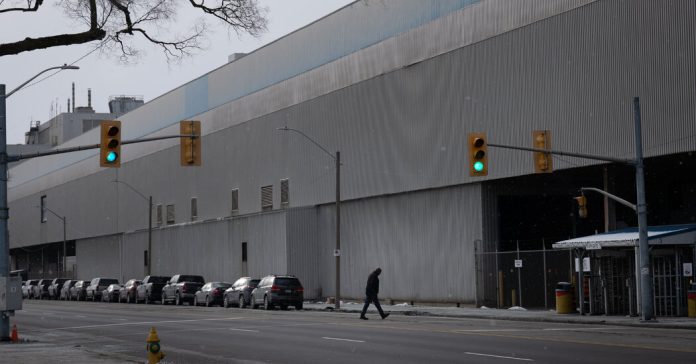
Since 1988, the hulking presses at Lanex Manufacturing on the edge of Windsor, Ontario, have been stamping out door strikers, folding-seat latches, tailpipe hangers, frame braces and other prosaic bits of metal that make their way into vehicles ranging from Corvettes to Honda minivans.

But, these days, worries about the future permeate the plant as President-elect Donald J. Trump prepares to enter the White House. He has threatened to impose a 25 percent tariff on all goods exported from Canada to the United States. In Windsor, that would ravage its lifeblood: automobiles and everything that goes into them.

“Everybody’s waiting for the next shoe to drop,” Bruce Lane, the president of Lanex, said in its boardroom, whose walls were made of painted concrete blocks. “If Windsor lost its automotive business, Windsor would not survive.”

Few Canadian cities are as acutely aware as Windsor of the integration of the two countries’ economies. The city sits just across the Detroit River from Detroit, and Canada’s maple-leaf flag often flies next to the stars and stripes there. And no industry has been interwoven across the border for as long as auto making.

“These workers here in Windsor are more exposed to trade with the United States than anyone else,” Prime Minister Justin Trudeau said at a steel plant during a recent visit to the city.

Mr. Trump, he added, “is proposing tariffs that would damage not just people here in Windsor but people right across the country and indeed in the United States.”

Windsor’s two major landmarks are shared with Detroit: the $5.7 billion Gordie Howe International Bridge, scheduled to open this year, and the 96-year-old Ambassador Bridge, which carries about $300 million in cross-border trade each day. Of Canada’s $440 billion in annual exports to the United States, only oil and gas generate a larger amount than cars, trucks and auto parts.

But with Canadian officials taking Mr. Trump at his word that he will follow through on his threat of tariffs, Mr. Lane and others in the auto industry are already bracing for the potential fallout.

George Papp is the chief executive of Papp Plastics, whose headquarters sits near the imposing new suspension bridge. He said his U.S. customers, mainly automakers, would simply invoke the terms of contracts he has with them and deduct the cost of tariffs from the amount they pay him.

“Who’s going to take the hit?” Mr. Papp said. “Me, and people like me and companies like mine.”

Flavio Volpe, the president of the Automotive Parts Manufacturer’s Association, a Canadian trade group, estimated that most of his members had single-digit profit margins and that the tariffs Mr. Trump was threatening would be ruinous.

The intertwining of the auto industry across the two countries was cemented in 1965 when Canada and the United States reached an agreement that effectively eliminated the border for the industry. Today, 90 percent of cars and trucks made in Canada are sent to the United States, primarily by train.

At Lanex, small metal parts that few motorists will ever see are forged into shape by upward of 600 tons of pressure by the firm’s presses. Their journeys illustrate how enmeshed the two countries’ auto industries have become.

As a small supplier, Mr. Lane does not deal directly with carmakers but sells his goods through larger parts makers. Seat-locking hooks that Lanex makes for Honda minivans are sent to a plant elsewhere in Ontario, where they are fitted with other parts and then shipped to an assembly line in Alabama that belongs to Honda, a Japanese company.

Mr. Lane’s factory has sent parts to Michigan for heat treating, brought them back to Windsor for more machining and then sold them to a U.S. company.

“Windsor is used to going back and forth across the border,” Mr. Lane said. “It’s like just like getting up out of bed in the morning.”

The turmoil from possible tariffs comes at an already difficult time for Canada’s auto business. Many auto-parts manufacturers have yet to see their business return to levels from before the coronavirus pandemic because of lagging car sales. In 2020, Lanex had about 60 employees working on two shift, but it now has about two dozen employees running a single shift.

The anxiety is particularly acute in Windsor, which had a metropolitan population of roughly 484,000. Aside from cargo trucks rumbling across the Ambassador Bridge, the city’s most obvious automotive symbol is a giant Stellantis factory that produces Chrysler Pacifica minivans as well as Dodge Charger muscle cars.

A city within the city, the European-based Stellantis employs 4,500 workers. Aided by billions of dollars in Canadian subsidies, it is building a battery plant in a joint venture with the South Korean company LG in Windsor and recently spent 1.89 billion Canadian dollars (about $1.3 billion) to retool its assembly plant to make electric vehicles alongside gasoline-powered ones.

But, like many auto makers, Stellantis is now in a slump as it struggles with the transition to electric vehicles and with competition from China.

James Stewart, the president of the local union that represents Windsor’s Stellantis workers, said he did not believe a large tariff would necessarily deal a fatal blow to Stellantis’s operations in Windsor given how much the company had invested.

But with so much of Windsor’s economic well-being intimately tied to trade with the United States, Mr. Stewart said, tariffs would deal a heavy blow, including the closing of businesses, layoffs and production cuts.

“We’re a suburb of Detroit; we’ve always felt that way,” he said, adding that Windsor seemed to be “under attack and for no reason.”

Mr. Trump initially characterized tariffs as a way to prod Canada and Mexico into better securing their borders to tamp down the flow of undocumented migrants.

But he also mused about making Canada the 51st state, noting that the United States was heavily invested in Canada’s military defense, and threatened to use economic force annex it. He has also vented about what he describes as the “subsidizing’’ of Canada by the United States, an apparent reference to the U.S. trade deficit with Canada, largely because of oil and gas imports.

The Trudeau government is expected to detail how it would retaliate against any U.S. tariffs on Monday, the day Mr. Trump is to take office.

But Canada’s comparatively small economy makes it difficult for the country to inflict substantial economic harm on the United States, though levies against specific products could hurt individual states. Retaliatory tariffs would also drive up prices in Canada.

Back at the Lanex plant, Mr. Lane said that, by pure coincidence, the company had been embarking on a “secret” manufacturing project unrelated to automobiles and that had unexpectedly become a potential hedge against tariffs. He declined to offer any details to avoid tipping off competitors.

Mr. Papp, the plastics-company owner, said that even though he would oppose tariffs, which would hurt his business, he was a fan of Mr. Trump and understood why the president-elect had argued that tariffs were needed to help rebuild industry in the United States.

Regardless of what happens, Mr. Papp said, Canada and the United States will always remain unshakable allies.

“You can’t separate our countries,” he said. “They’re bolted together.”

Maher challenges liberals to have ‘intellectual honesty’ about California fires

0

Liberal talk show host Bill Maher argued that liberals who usually politicize tragedies are silent when Democratic leaders are to blame.

Many California residents, including celebrities, have lost their homes in the Pacific Palisades area as wildfires continue to rage there and elsewhere in Los Angeles County, burning more than 27,000 acres, destroying over 10,000 structures and killing at least 25 people, according to local officials.

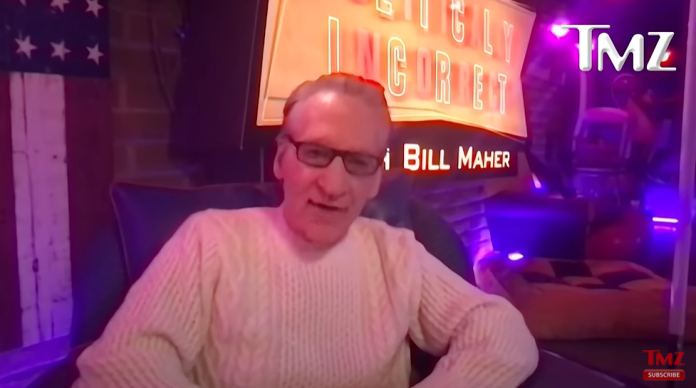
While LA Mayor Karen Bass and California Gov. Gavin Newsom have taken some criticism for their management before and during the devastating fires, Maher argued in a TMZ interview that more critics need to speak out and hold liberal leaders responsible.

Talk show host Bill Maher argued local Democratic leaders in California should be held accountable by their fellow Democrats.

ESSENTIAL PHONE NUMBERS FOR LOS ANGELES-AREA RESIDENTS AND HOW YOU CAN HELP THEM

“I’m with the people who want to hold politicians accountable,” Maher said to the news outlet.

The comedian highlighted that many liberals are saying, “We shouldn’t talk about it now,” describing them as “hypocritical.”

“It’s so funny to hear that coming out of the mouths of liberals, because they hate it when conservatives say that after a gun tragedy, which is what conservatives always say after a mass-shooting. ‘This is not the time to politicize it.’ And then it never is,” Maher said. “It is absolutely the time to talk about it.”

While he said that there are some other factors making some level of the disaster inevitable, such as global warming, he stood by his assertion that “errors” were made.

“Was it always going to be bad? Of course,” Maher said. “Their arguments are not wrong. We built the city in a terrible place to build a city. Global warming absolutely does make hot stuff and weather worse. Winds were ridiculous. Yeah, I get all that. And they also made a lot of errors.”

CALIFORNIANS ‘ANGRY’ AMID DEVASTATING WILDFIRES, ASKING WHERE HIGH TAX DOLLARS WENT: LOCAL RESEARCHER

California fires aftermath

Water is dropped by helicopter on the Kenneth Fire in the West Hills section of Los Angeles, Thursday, Jan. 9, 2025. (Ethan Swope/AP)

CLICK HERE TO GET THE FOX NEWS APP

Maher added that “If you held Bush accountable for Katrina” then “you have to have some intellectual honesty in criticizing your team when they don’t do it right. And they’ve had a long time to get this right-er.”

The HBO host also stressed that somehow such disasters “always seem to be the worst they possibly could be” – a sign that more should be expected of leaders.

“I think we should demand better,” Maher argued.

Israeli Government Approves Cease-Fire Deal for Gaza

0

The Israeli government approved a cease-fire deal with Hamas early Saturday that calls for the release of dozens of hostages and hundreds of Palestinian prisoners after hours of deliberations, setting up a reprieve in the 15-month, devastating war in the Gaza Strip.

The Israeli prime minister’s office, which announced the agreement after the full cabinet voted, said the deal would go into effect on Sunday.

Palestinians have celebrated the provisional cease-fire with the hope that it will finally end the conflict and Israelis are anxiously awaiting the return of scores of captives abducted by Hamas.

Daniel Lifshitz, whose grandfather Oded, 84, was among the 250 captives taken in the Hamas-led attack on Israel on Oct. 7, 2023, said, “The stomach is turning, and the heart is poured out on the floor, but it’s what we’ve been waiting for.”

The initial attack killed about 1,200 people, setting off a wave of bombardments by Israel that has killed over 46,000 Palestinians, according to Gazan health officials, who do not distinguish between combatants and civilians.

The vote on Saturday was the second and final one required to approve the cease-fire and hostage release agreement. Hours earlier on Friday, the security cabinet voted to approve it, overcoming a key hurdle to enacting a deal that U.S. and other diplomats see as the best chance to end the war. Hamas had said that there were no longer any barriers to the agreement.

President Isaac Herzog of Israel, who holds a largely ceremonial role, had hailed the security cabinet’s vote, although he acknowledged the difficulties ahead in enacting the agreement. “I harbor no illusions — the deal will bring with it great challenges and painful, agonizing moments,” he said in a statement.

Under the agreement, both sides would begin a six-week truce, during which Israeli forces would withdraw eastward, away from populated areas. Hamas would free 33 of the hostages still in captivity, mostly women and older people.

Mr. Lifshitz’s grandfather is among the hostages set to be released in the deal’s initial phase, but the family has no information about his well-being or whether he is still alive. “Preparing for a festivity and a funeral simultaneously is impossible,” he said.

Israel would also release hundreds of Palestinian prisoners, including some serving long sentences for attacks on Israelis. On Friday evening, the Israeli government released a list of 95 Palestinian prisoners that it said would be among the first to be released on Sunday, including Khalida Jarrar, a prominent lawmaker in the Israeli-occupied West Bank.

The cease-fire agreement passed with 24 ministers voting in favor and eight ministers opposed, according to an Israeli official who spoke on condition of anonymity. Most of the ministers who voted against the deal belong to two far-right parties that had denounced the deal, the official said.

The truce would be the first since November 2023, when 105 hostages were freed in a weeklong cease-fire in exchange for 240 Palestinian prisoners.

A host of questions has shadowed the celebrations among relatives of hostages, Gazans desperate for the war to stop and diplomats who have struggled for months to broker a truce. What happens after the first phase of the cease-fire deal, set to last 42 days, is unclear, including whether Israel intends to pursue a second phase of the deal and an enduring cease-fire in Gaza, allowing the remaining hostages to return home.

“I’ll be the happiest man alive to see any one of the hostages return, but there’s also immense worry over the second phase,” said Doron Zexer, a prominent activist for the release of an Israeli-American hostage, Edan Alexander.

As the full cabinet met on Friday, at the beginning of the Sabbath, Prime Minister Benjamin Netanyahu of Israel was facing an internal rebellion from far-right partners whom he depends on to hold together his governing coalition.

On Thursday night, one such partner, the hard-line national security minister, Itamar Ben-Gvir, announced he would resign from the coalition if the cabinet approved the cease-fire deal. The finance minister, Bezalel Smotrich, has also threatened to quit the government if Mr. Netanyahu proceeds from a first phase of the cease-fire to a permanent one.

Their moves would not, on their own, prevent the initial phase of the Gaza deal from moving ahead. But they would create more uncertainty about Israel’s commitment to a cease-fire in the long term, as hard-line members of the government push for Israel’s military to resume the war and seek Hamas’s destruction.

Also unclear is a plan for postwar Gaza, despite the optimistic assertions of departing officials in the Biden administration. The U.S. secretary of state, Antony J. Blinken, told reporters on Thursday that the cease-fire was “a moment of historic possibility for the region,” creating opportunities for lasting peace, Gaza’s reconstruction, “a credible pathway to a Palestinian state” and normalized relations between Israel and Saudi Arabia.

But while President Biden said on Thursday that he had pushed Mr. Netanyahu to accommodate Palestinian concerns, the Israeli prime minister has consistently rebuffed U.S. calls to work toward an eventual Palestinian state.

“He has to find a way to accommodate the legitimate concerns” of Palestinians, Mr. Biden said in an interview with MSNBC on Thursday. He called Mr. Netanyahu a friend but added, “We don’t agree a whole lot lately.”

Even after negotiators announced a cease-fire deal, deadly Israeli airstrikes continued in Gaza. The Israeli military said on Thursday that it had struck about 50 targets across the territory over the previous day, while Gazan officials reported dozens of people killed.

“The cease-fire feels meaningless,” said Ahmad al-Mashharwi, who was sheltering with more than a dozen relatives in a rented house in Gaza City, in a phone interview on Friday. “Artillery and airstrikes continue around us, especially in northern Gaza.”

He said that conditions in northern Gaza were dire, with prices soaring and basic goods in short supply.

“We can’t afford food or clean water, and my children are going hungry,” Mr. al-Mashharwi said. “We’ve been stripped of everything — there’s no safety, no resources, nothing to help us survive.”

The cease-fire is supposed to pave the way for more humanitarian aid to reach Gaza. The World Health Organization said on Friday that it hoped aid deliveries would accelerate sharply to between 500 and 600 trucks daily from 40 to 50 a day in recent months, and allow the first steps toward restoring health services after more than a year of war.

“We will see if the political will is there and impediments are taken out and routes are opening up,” Dr. Rik Peeperkorn, the W.H.O. representative for Palestinian territories, told reporters on Friday.

Hundreds of aid trucks carrying food, tents and other supplies were already lined up in Arish, close to the Rafah crossing with Egypt, according to Al Qahera News, an Egyptian state-owned TV channel.

Aid workers also hope that the cease-fire would allow for far more medical evacuations. The W.H.O. reported that Israel had approved the evacuation of 5,405 patients since the start of the war. But the pace of evacuations slowed to a trickle after Israel closed the Rafah crossing in May. Of 1,200 patients the W.H.O. said it applied for approval to evacuate over a one-month period in late 2024, Israel accepted the movement of only 29.

It is now looking to restart once-regular transfers to hospitals in East Jerusalem and Egypt, as well as access to hospitals overseas.

“This is not a logistical problem,” James Elder, a spokesman for the U.N. children’s agency, told reporters. “It’s a problem of intent.”

Nick Cumming-Bruce contributed reporting from Geneva.

Grocery prices, oil, tariffs, and defunding NPR. Your questions, answered. : Planet Money : NPR

0

President Donald Trump listens to a question while speaking with reporters as he walks to Marine One on the South Lawn of the White House, Monday, Aug. 17, 2020, in Washington. Trump is en route to Minnesota and Wisconsin.


Alex Brandon/AP


hide caption

toggle caption


Alex Brandon/AP


President Donald Trump listens to a question while speaking with reporters as he walks to Marine One on the South Lawn of the White House, Monday, Aug. 17, 2020, in Washington. Trump is en route to Minnesota and Wisconsin.


Alex Brandon/AP

Donald Trump is just about to begin his second presidency. And it may be safe to say that every single person in America has at least one question about what’s to come in the next four years.

So, we thought we’d try to answer your questions — as best we can — about the economics of a second Trump term. Is now the time to shop for new tech? Can Trump actually bring down grocery and oil prices? And, does the president have the power to get rid of NPR?

This episode of Planet Money was hosted by Amanda Aronczyk. It was produced by Emma Peaslee and edited by Meg Cramer. It was engineered by Neil Tevault and fact-checked by Sierra Juarez. Alex Goldmark is Planet Money’s executive producer.

Help support Planet Money and hear our bonus episodes by subscribing to Planet Money+ in Apple Podcasts or at plus.npr.org/planetmoney.

Always free at these links: Apple Podcasts, Spotify, the NPR app or anywhere you get podcasts.

Find more Planet Money: Facebook / Instagram / TikTok / Our weekly Newsletter.

Music: NPR Source Audio- “So Long,” “Tricky Quirky,” “Virtual Machine,” “Something New,” and “Adventure Time”

Next Ohio senator, a ‘fiscal conservative,’ aims to ‘get government out of people’s lives’

0

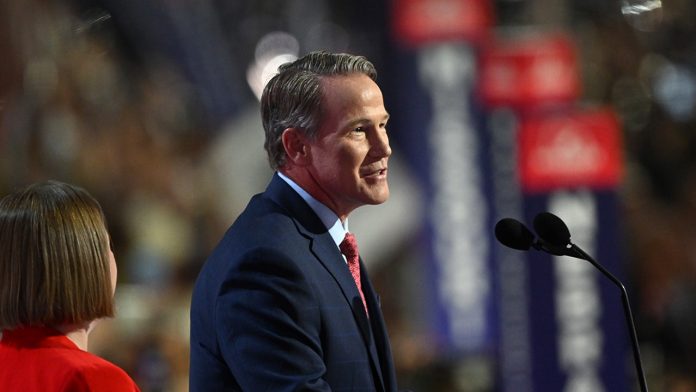
FIRST ON FOX: Ohio’s new Senator-designate, Lt. Gov. Jon Husted, wants to get the country “to a more fiscally responsible path” and is bringing his years of state government experience to the upper chamber. 

“Look, as a fiscal conservative, I always want to move America on to a more fiscally responsible path, and I want to get government out of people’s lives,” he told Fox News Digital in an exclusive first interview after being appointed by Gov. Mike DeWine, R-Ohio, to be the next senator. 

Husted will take over Vice President-elect JD Vance’s vacated Senate seat and run in a special election in 2026 to determine who will serve the remainder of his term. 

DOGE CAUCUS PLANS FOR BIGGEST IMPACT, EYEING KEY TOOLS TO EXPEDITE CUTTING WASTE

Husted was appointed to be the next Ohio senator on Friday. (Getty Images)

The lieutenant governor said he plans to run both in 2026 and again when Vance’s seat is up for re-election in 2028. 

As a “fiscal conservative,” one issue sure to test Husted upon arriving at the Senate is President-elect Trump’s desire to raise the debt ceiling. 

“Look, I’ll get into all of those issues once I take the oath,” he said. 

“In state government, we have to balance our budget,” Husted explained.  

OHIO GOV DEWINE PICKS LT GOV TO FILL VICE PRESIDENT-ELECT JD VANCE’S VACANT SEAT

J.D. Vance walks into the Senate Chamber on Capitol Hill

U.S. Sen. J.D. Vance (R-OH) walks into the Senate chamber on Capitol Hill on April 23, 2024 in Washington, DC.  (Andrew Harnik/Getty Images)

“If you want to cut taxes, you got to cut spending. And that’s what I’m accustomed to. And that’s the attitude I’ll take into the process of being a U.S. senator.”

He acknowledged that America’s debt and spending problem can’t be remedied with a “magic wand,” but added, “you got to start somewhere.” 

Husted’s appointment comes as the Trump transition team is currently pressing forward with key nominees for his Cabinet. Many of them have been meeting with senators for months ahead of their confirmation hearings and committee votes. 

Asked about coming in right in the middle of this process, he told Fox News Digital, “I think it’s a good list of nominees.”

DESANTIS ANNOUNCES CHOICE FOR SENATE APPOINTMENT AFTER RUBIO’S EXPECTED RESIGNATION

Jon Husted

Gov. Mike DeWine announced Husted as his pick for Senate. (Reuters)

“Remember, you know, I’m taking Vance’s seat. I’m an ally of the Trump administration, and I’m going to help support those nominees and get them confirmed as quickly as we can,” the senator-designate emphasized. 

The first confirmation votes for Trump nominees are expected to take place on Monday evening following the inauguration. 

It’s unclear who will run against Husted in the 2026 special election, but the seat is expected to be one of the Democrats’ top targets after losing former Sen. Sherrod Brown’s seat in November. 

CONFIRMATION DELAYS STACK UP FOR TRUMP NOMINEES AS PAPERWORK LAGS IN FEDERAL OFFICES

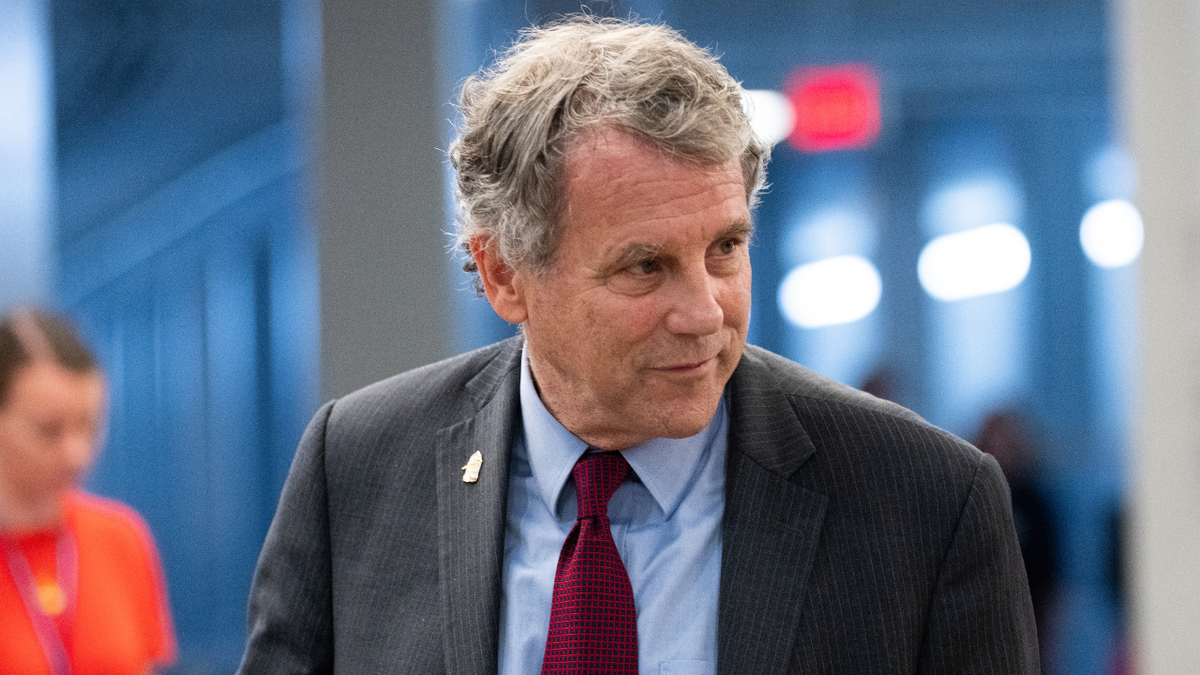
Sherrod Brown, D-Ohio, walks through the Capitol in July.

Sen. Sherrod Brown, D-Ohio, walks through the U.S. Capitol in July. (Bill Clark/CQ-Roll Call, Inc via Getty Images)

CLICK HERE TO GET THE FOX NEWS APP

Brown has been speculated as a candidate for Vance’s seat, and he previously dismissed questions from Fox News Digital about whether he’d launch a campaign for it. 

Following the news of Husted’s appointment on Friday, Democratic Senatorial Campaign Committee (DSCC) spokesman David Bergstein said in a statement, “The start of the 2026 cycle has quickly been defined by new weak spots emerging in Senate Republicans’ already challenging map. Ohio’s special election adds another seat and another controversial candidate the GOP will have to protect – and it means Senate Republicans are starting the cycle having to play even more defense.” 

Israel Prepares for Return of Hostages Held in Gaza for Over a Year

0

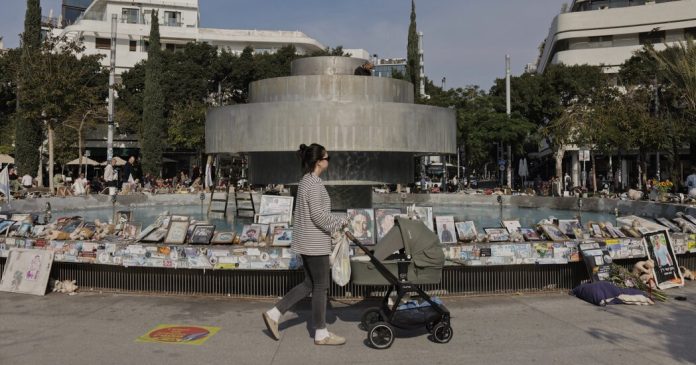
The Israeli authorities are making preparations to welcome home dozens of hostages held incommunicado by Hamas for over a year in Gaza, without knowing whether they will return starved, traumatized or dead.

Thirty-three hostages are supposed to be freed in the first phase of the Gaza cease-fire agreement between Israel and Hamas, in the first such major release since a weeklong cease-fire seven weeks into the war. Some families have caught glimpses of their loved ones in Hamas-directed hostage videos. But it is far from clear in what condition the captives will return.

At Israeli hospitals, health officials have been preparing isolated areas where the hostages can begin recuperating in privacy. Israel’s Health Ministry has drafted an extensive protocol for their psychological and physical treatment. There are particular concerns that they may be severely malnourished.

“The ones who were freed back then were already poorly nourished,” Hagar Mizrahi, a senior Israeli health ministry official, said of the hostages freed during the 2023 truce. “Imagine their situation now, after an additional 400 days. We are extremely worried about this.”

After Hamas led the Oct. 7, 2023, attack on Israel, killing about 1,200 people and capturing about 250 others, about 105 Israeli and foreign hostages were freed in the weeklong truce in November that year. A few were later released in Israeli military operations, and Israeli soldiers recovered the bodies of dozens of others.

But around 98 hostages remained in Gaza, dozens of whom presumed dead by the Israeli authorities.

Of the women, older men and other hostages returning under the first phase of this cease-fire deal, many are believed to have been held in the militant group’s warren of tunnels in Gaza, conditions likely to leave physical and psychological scars.

Health officials have been poring over every piece of intelligence — including the hostage videos — in an effort to discern the hostages’ condition, Dr. Mizrahi said. A committee of officials that includes Dr. Mizrahi has determined that some were killed.

Israeli officials say the logistics of the release will be broadly similar to those during the previous cease-fire, when 105 hostages were released in exchange for 240 Palestinians jailed in Israel.

In that exchange, Hamas fighters handed over hostages — mostly women and children — to the International Committee of the Red Cross. The Red Cross’s workers ferried the captives from Gaza in a marked ambulance to Egypt before taking them to Israel.

At the border crossing, Israeli intelligence agents verified their identities. Around the same time, Israeli security officials released a specified group of Palestinian women and teenage prisoners.

This time, the Israeli authorities have established three reception points to receive the hostages along the Gaza border, according to an Israeli military official. Those will be staffed by Israeli soldiers, as well as doctors and psychologists, said the official, who spoke on condition of anonymity in accordance with protocol.

From there, the hostages will be taken to the Israeli hospitals that have been preparing to care for them, the official said.

The 105 hostages released in November 2023 came home after roughly 50 days in captivity in Gaza. They arrived in a country that had fundamentally changed; some learned only then about friends and loved ones who had been killed in the Hamas-led attack.

At first, officials aimed to reintegrate returning hostages as quickly as possible, according to Dr. Mizrahi. Now, the health authorities recommend that the hostages being released remain in the hospital for at least four days, if not longer, she said.

In the meantime, the hostages’ family members — some of whom themselves survived captivity — can only wait.

“Last time, we saw the Red Cross transferring the hostages, and some of them were running to the relatives, hugging them,” said Einat Yehene, a clinical psychologist working with the Hostage Families Forum, an advocacy group. “It’s not going to be easy and similar this time, given the physical and the emotional conditions we expect.”