Thursday, November 12, 2026
Home Blog Page 345

6 injured after tractor-trailer, dump truck slam into NJ Target

0

Nearly a dozen people were injured Friday afternoon after a dump truck crashed into a tractor-trailer, then slammed into a New Jersey Target.

The dump truck lost control while driving down a steep hill, crossed the road, and hit the tractor-trailer, affiliate Fox 5 New York reported.

The destruction continued, as the vehicles flew into the North Bergen Target at 7101 Tonnelle Avenue.

Dump truck inside NJ Target after crash involving tractor trailer (WNYW)

MANHUNT IN DEADLY SUBURBAN HOME INVASION SPANS US AFTER PHONY UTILITY WORKERS TARGET UPSCALE NEIGHBORHOOD

North Hudson Regional Fire Chief David Donnarumma confirmed six people were injured, with one woman in critical condition, according to FOX 5.

The woman had to be extricated from the bathroom, where she sustained extensive injuries, according to the report.

Video from SkyFOX showed a giant hole in the side of the department store, with the tractor-trailer wrapped around a telephone poll and the dump truck inside the business.

dump-truck-inside-nj-target-after-crash-involving-tractor-trailer-2

Dump truck inside NJ Target after crash involving tractor trailer (WNYW)

The street is closed while crews remove the wreckage and structural engineers assess the building, according to authorities.

North Bergen Mayor Nicholas Sacco released a statement, calling the crash “devastating.”

DRONE MISHAP DURING ORLANDO HOLIDAY AERIAL SHOW SENDS CHILD TO HOSPITAL

dump-truck-inside-nj-target-after-crash-involving-tractor-trailer-1

Dump truck inside NJ Target after crash involving tractor trailer (WNYW)

“According to initial reports, a dump truck descending 69th Street hill lost control, crossed into oncoming traffic, and struck a tractor-trailer,” Sacco wrote. “The force of the collision caused both vehicles to crash into the Target store. … Additional updates will be provided as new information arises. Please offer your support and prayers to the injured individuals.” 

The Target was open for business at the time of the crash. It is unclear how many people were in the affected area.

CLICK HERE TO GET THE FOX NEWS APP

Fox News Digital reached out to Target for comment, but did not immediately receive a response.

Fox 5 New York’s Adeja Shivonne contributed to this story.

The Sheikh, the Mogul and the Diplomat: The Trio Who Sealed the Gaza Truce

0

At his seaside office complex in Doha on Wednesday evening, the Qatari prime minister thought he had a deal. Hamas’s negotiators, led by a burly former lawmaker, had left the prime minister’s office, having given up on an 11th-hour demand that was the last major obstacle to a cease-fire in Gaza after 466 days of war.

Reporters had begun to assemble in an auditorium downstairs, expecting to witness the prime minister, Sheikh Mohammed bin Abdulrahman Al Thani, announce that he and other mediators had finally brokered a deal. Two American envoys joined Sheikh Mohammed as he prepared his statement.

Suddenly, there was a new problem, according to two people familiar with the negotiations.

In a room elsewhere on the sixth floor, the Israeli delegation, led by the heads of Israel’s two main intelligence agencies, had their own last-minute demand. Prime Minister Benjamin Netanyahu wanted to clarify the names of a handful of Palestinian prisoners whom Israel would release during the truce.

As his aides tried to resolve the final hitch, Sheikh Mohammed sat in his office with Brett McGurk, President Biden’s lead negotiator, and Steve Witkoff, the representative of President-elect Donald J. Trump, hoping that their efforts had not been wasted.

This account of the final days of negotiation is based on conversations with nine people involved in or briefed on the talks, some of whom spoke on condition of anonymity to discuss sensitive diplomacy.

The truce that was ultimately announced at the belated news briefing, hours after Israel’s new demand, was little different to versions promoted for most of the past year by mediators from Egypt, Qatar and the Biden administration, whose representatives met frequently with the warring parties in Cairo, Doha and several European capitals throughout 2024.

What pushed the deal over the line this past week was the unlikely partnership between the envoys of America’s current and future presidents, working in tandem with the Qatari prime minister in marathon late-night meetings. While Mr. Biden and Mr. Trump have competed for credit, the reality is that their representatives were both crucial to the final push, each using different approaches to push the Israeli leadership toward a deal while Sheikh Mohammed focused on Hamas.

Starting last Sunday, the Israeli and Palestinian delegations, as well as the two Americans, spent long days at the prime minister’s compound, close to the old market in downtown Doha. The delegations, which do not speak directly to each other, sat in different rooms on different floors, with Qatari and Egyptian officials passing messages between the two sides.

“They aren’t natural partners, but the combination of these three individuals, and the three worlds they represent, was the only thing that was going to get this done,” said Thomas R. Nides, a former U.S. ambassador to Israel. “You needed pressure from all sides — pressure from the Arab world, pressure from Biden, and pressure from Trump.”

It was Mr. McGurk, a veteran diplomat long focused on the Middle East, who has helped oversee U.S. mediation efforts since the opening weeks of the war and who helped craft the deal’s complicated details nearly a year ago. It was Mr. Witkoff, a real estate investor who plays golf with Mr. Trump, who was instrumental in persuading Israel to finally agree to the deal’s contents. And it was Sheikh Mohammed who persuaded Hamas to make key compromises, while providing both sides with the office space in which to wrangle the final details.

The deal they sealed provides for a pause of at least six weeks in the fighting, during which time Hamas has agreed to gradually release 33 of the hostages captured during the group’s raid on Israel at the start of the war on Oct. 7, 2023. In exchange, Israel has committed to gradually releasing roughly 1,000 Palestinian prisoners, some of whom are serving life sentences for murder, and allowing hundreds of thousands of displaced Gazans to return to their homes.

The deal is extremely similar to proposals that the two sides nearly agreed to between May and July 2024. Those talks broke down amid disputes about whether to forge a permanent or temporary truce, whether and how to allow displaced Gazans to return home, how and when Israeli troops might withdraw from Gaza, and the number of hostages Hamas might release in the first weeks of a truce.

As a result, the war dragged on, leading to the killing of tens of thousands more Palestinians, as well as several Israeli hostages.

Critics accused Mr. Netanyahu of sabotaging the talks to avoid a collapse of his governing coalition, which included lawmakers opposed to a deal. Others said that Hamas had intentionally prolonged the negotiations in the hope that Israel might become entrenched in a wider regional conflict with Hamas’s allies in Lebanon, Iran and Yemen. At times, Qatar refused to continue mediating, accusing both sides of halfhearted engagement.

Momentum returned after Mr. Trump’s re-election in November, even before the president-elect warned Hamas that there would be “all hell to pay” if the hostages were not released by his inauguration. He appointed Mr. Witkoff, who had no diplomatic experience but growing business relationships in Qatar, as his emissary in the Middle East. Mr. Witkoff had been playing golf with Mr. Trump in September during what law enforcement officials said was an attempt on the former and future president’s life.

Quietly, members of the Biden administration reached out to Mr. Witkoff to see if they could work together on the cease-fire talks, according to two people familiar with the conversations. Despite vast political chasms between their bosses, Mr. McGurk and Mr. Witkoff began to coordinate, sometimes talking several times a day, according to one of the people.

Still, wide gaps between Hamas and Israel remained. Shortly before Christmas, with just weeks left in the Biden presidency, Mr. McGurk returned despondently from a trip to Doha. He told the Qataris that he would not fly back unless Hamas made a clear signal of its interest in a deal, according to two people familiar with his thinking.

That moment came in the first days of January, according to two people involved in the process. Sheikh Mohammed persuaded Hamas to confirm the names of more than 30 hostages who would be released during the first six weeks of a truce, a long-awaited move that suggested the group was genuinely interested in a deal, the people said. The reason for Hamas’s shift remains unclear, but analysts say that Israel’s increasing dominance over Hamas’s main allies, Hezbollah and Iran, left the group feeling isolated, while its own losses on the battlefield in Gaza left it feeling weakened.

Mr. McGurk was informed of the breakthrough while attending his daughter’s birthday party at an indoor trampoline park on Jan. 4, according to two people familiar with the event. He left the party halfway through, immediately flying to Doha to meet Sheikh Mohammed, his Egyptian counterparts and Israeli negotiators. Mr. Witkoff joined him on Jan. 10, and the pair agreed with Sheikh Mohammed that the Americans would jointly focus on cajoling Israel while the prime minister would press Hamas.

The main remaining differences centered on the depth of a buffer zone that Israel sought to maintain within Gaza’s borders, as well as the number of prisoners to be exchanged for wounded and sick hostages.

It was a visit at short notice by Mr. Witkoff to Jerusalem last Saturday, the Jewish Sabbath, that brought a new breakthrough, according to four officials briefed on the meeting.

Mr. Witkoff sat with Mr. Netanyahu and senior Israeli officials in the prime minister’s Jerusalem office, with Mr. McGurk joining the discussion by telephone.

The two Americans pressed Mr. Netanyahu to soften on the last two big obstacles, according to a person familiar with the discussion. Mr. McGurk warned the Israeli leader that he risked losing his best chance of sealing a deal. Then Mr. Witkoff applied the necessary pressure, stressing to Mr. Netanyahu that Mr. Trump wanted this deal done, the person said.

After the meeting, Mr. Netanyahu seemed to have changed his attitude, four officials said. He immediately ordered his four top negotiators — including David Barnea, the head of Israel’s foreign intelligence agency, and Ronen Bar, Israel’s domestic spy chief — to Doha.

Over the next four days, Sheikh Mohammed hosted a marathon series of meetings, mostly in his personal office, as Hamas officials, Israeli negotiators, Egyptian intelligence officers and the two Americans spoke with him, sometimes until the small hours of the morning.

The Israeli and Hamas teams, based on different floors, never saw each other; they took turns entering the prime minister’s office for updates on their enemy’s latest position.

Progress was sometimes hindered by the nature of Hamas’s command structure, which required its leaders in Qatar to check certain details with their counterparts in Gaza, who are all in hiding and hard to reach.

Mr. McGurk and Mr. Witkoff also often checked in with their respective bosses; at times, Mr. McGurk was speaking with Mr. Biden while Mr. Witkoff, just yards away, was on the phone with Mr. Trump or his team, according to a person familiar with the scene.

“We were negotiating word by word, sentence by sentence and formula by formula,” said Mohammed Al-Khulaifi, a minister of state in the Qatari foreign ministry. “It becomes exhausting mentally and physically.”

The biggest breakthrough came close to midnight on Sunday night, according to three people familiar with the moment.

Sheikh Mohammed told the two Americans that the deal could be closed if Israel could make two more compromises, according to one of the people.

Mr. McGurk and Mr. Witkoff walked together down the corridor to the Israelis’ room, where the negotiators were already speaking by phone with Mr. Netanyahu. Joining the call, the Americans told the Israeli leader that a deal could be reached if he agreed to slightly increase the number of prisoners involved in the swap, as well as slightly decrease the depth of the buffer zone.

After a loud debate in Hebrew between Mr. Netanyahu and his team, they made the compromise.

The Americans returned to update Sheikh Mohammed.

“We will have a deal,” the Qatari leader told the envoys, according to the person familiar with the scene.

After a year of failure, around midnight on Sunday, they thought they had an agreement, subject to wrangling over small final details.

Still, Wednesday brought more hitches. With the news briefing scheduled for the evening, Hamas suddenly tried to reopen a discussion about how much land Israeli troops would continue to control along the border between Egypt and Gaza.

Then, after Egyptian and Qatari leaders had persuaded Hamas to back down, Israel pushed for greater clarity about which Palestinian prisoners would be released.

Thousands of miles away, in the Oval Office, Jake Sullivan, the national security adviser, sat with President Biden and Vice President Kamala Harris, awaiting news from Mr. McGurk.

Even as Sheikh Mohammed finally announced the deal on Wednesday night, the last prisoners’ identities were still being clarified by the two sides, according to a person familiar with the debate.

But Mr. McGurk and Mr. Witkoff felt confident enough to inform their bosses that a cease-fire would be reached, one person familiar with the scene said.

That final wrangling continued into Thursday, with Mr. McGurk and Mr. Witkoff finally leaving Qatar that night.

The deal was cemented — and so was one of the unlikeliest pairings in diplomatic history.

Aaron Boxerman and Ronen Bergman contributed reporting.

Democrats learn the same hard lesson again

0

Democrats will soon be shut out of the three branches of government. They’ll elect a new chair to help win back the working class voters who used to be part of their base. This has happened before.

Ohio State players enter national championship with confidence rooted in faith

0

College football players and coaches have spoken openly and on the biggest platforms this season about their faith, and on Monday, two teams that have led that conversation will face off in the national championship. 

Ohio State is the favorite heading into the title game, but for many players it’s their faith, not stats and analytics, that’s the driving factor behind their confidence on the field.  

Ohio State quarterback Will Howard (18) passes against Texas during the second half of the Cotton Bowl College Football Playoff semifinal game, Friday, Jan. 10, 2025, in Arlington, Texas.  (AP Photo/Gareth Patterson)

In a series of interviews with Sports Spectrum this season, several Buckeyes players spoke about turning to their faith and how doing so has impacted their performance on the field. 

CLICK HERE FOR MORE SPORTS COVERAGE ON FOXNEWS.COM

“I would say for the past couple years we’ve kinda been – there’s kinda been a number of players on the football team who have restored their faith in Jesus Christ. And that was something that was big for me my freshman year,” star receiver Emeka Egbuka told the outlet in November. 

Egbuka, a graduate student, recalled in his interview the turning point for him. He was invited to attend a mass by his fellow teammates and said it was the first time he had felt a true connection to his faith. 

“Ever since then, my life has been changed. A complete 180, and I have a similar testimony to a lot of players on the team. We’ve been praying for a type of revival like this on our team, and we decided to share with everybody what God has been doing on our football team.” 

Egbuka said he opted against going into the NFL Draft last season because he felt a calling that was “bigger” than football. 

Emeka Egbuka

Emeka Egbuka, #2 of the Ohio State Buckeyes, runs the ball during the first quarter of the game against the Oregon Ducks at Autzen Stadium on October 12, 2024 in Eugene, Oregon.  (Alika Jenner/Getty Images)

NOTRE DAME’S RILEY LEONARD CREDITS OPEN FAITH FOR BRINGING TEAM, OHIO STATE TOGETHER FOR NATIONAL TITLE

“I felt the Lord was leading me back to Ohio State for another year. I felt the Lord asking me a question, testing my heart: ‘If you do come back for this next year, you’re going to have this massive platform, you’re going to have tons of following, you are going to have these accolades –  this name to live up to, and you can do one of two things with that moment. You can either use it to glorify me or to glorify yourself,’ so I saw it as somewhat of a challenge and something that I had to do.” 

Star running back TreVeyon Henderson told the outlet in a separate interview that despite his standout rookie season, which included success and NIL deals, he had turned to his faith following an injury. 

“He saved my life from going down that road of destruction. He saved me. He put me on this path of everlasting life . . . you see so many people go down that large path of destruction, but I’m so thankful that Jesus, He rescued me from that path and put me on His path.” 

Treveyon Henderson celebrating

Ohio State Buckeyes running back TreVeyon Henderson (32) scores a touchdown on a 75-yard touchdown catch and run against the Texas Longhorns in the second quarter of the Cotton Bowl Classic during the College Football Playoff semifinal game at AT&T Stadium in Arlington, Texas, on January, 10, 2025. (Kyle Robertson/Columbus Dispatch / USA Today Network via Imagn Images)

CLICK HERE TO GET THE FOX NEWS APP

And just last month, tight end Gee Scott Jr. said that this season has been highlighted by massive change spiritually. 

“I would just say there’s been a mass herd of people who are making the public declaration to yield their life to Christ, which I commend so much, because, especially at this age and in 2024, the world that we live in right now, there’s so many things that you could allude or surrender your life to, there’s so many things that you can give your life to.” 

Just this week, Notre Dame quarterback Riley Leonard praised both teams for speaking so openly about their faith, and he believes that it’s a big reason as to why they are the two teams battling it out for college football’s biggest prize. 

Follow Fox News Digital’s sports coverage on X, and subscribe to the Fox News Sports Huddle newsletter.

Canada Prepares for Trump Tariff Threat With Three-Stage Plan

0

Orange juice from Florida. Whiskey from Tennessee. Peanut butter from Kentucky.

Canada is preparing for an all-out trade war with its closest ally and biggest trading partner, and the list of American goods that could be affected is long.

Canadian officials are preparing a three-stage plan of retaliatory tariffs and other trade restrictions against the United States, which will be put into motion if President-elect Donald J. Trump makes good on his threat to impose a blanket 25 percent tariff on all Canadian goods imported into the United States.

Canadian officials will wait until Mr. Trump has made his move — which he has said will be on his first day in office, Monday — and then start with imposing tariffs. They would mostly affect consumer goods worth 37 billion Canadian dollars ($25.6 billion), according to two senior government officials familiar with the plans.

They spoke on condition of anonymity to discuss details of plans meant to remain private for now.

The Canadian officials said their choice of goods was meant to be precisely targeted and aimed at political impact. They specifically want to focus on goods made in Republican or swing states, where the pain of tariffs, like pressure on jobs and the bottom lines of local businesses, would affect Trump allies.

Canada’s government hopes that those allies, including governors or members of Congress, would then pick up the phone and call Mr. Trump, intervening in favor of de-escalation.

Mélanie Joly, Canada’s foreign minister, who spent Thursday and Friday in Washington, met with a slew of Republicans to make her country’s case, including Senator Lindsey Graham of South Carolina, Senator Jim Risch of Idaho, and the Senate majority leader, John Thune of South Dakota.

Ms. Joly said she hoped her outreach to senior Republicans would persuade them to intervene to avert or limit a trade war and its negative impact on consumers and jobs on both sides of the border.

“My job here is to be able to talk about facts, and that comes before any threat of counter tariffs from our side,” Ms. Joly said in an interview with The Times on Thursday. “Because then the senators might say, ‘Well, why are we doing this? Why are we imposing tariffs? It’s affecting my own constituency.’”

But, she added, Canada was ready to forcefully defend its interests if necessary. “Never underestimate Canadians,’’ she said. “We fight very hard, and we’re very courageous. We are willing to be surgical and appropriate to have an impact on American jobs.”

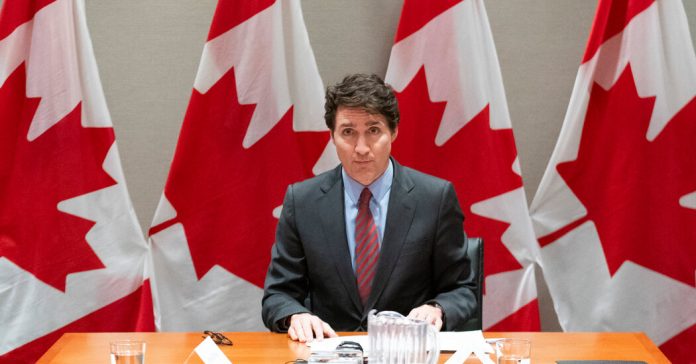
Bracing for Mr. Trump’s first day in office and what it might bring for Canada, Prime Minister Justin Trudeau and his cabinet will be huddled together on Monday and Tuesday in what some are calling their “U.S. war room,” in order to be able to respond swiftly if U.S. tariffs are announced.

The detailed list of goods is closely held, but it includes dozens of consumer goods from various categories, such as food and beverages, as well as other types of daily products, including dishwashers and porcelain goods like bathtubs and toilets.

Depending on what Canadian goods Mr. Trump chooses to impose tariffs on, and the level of those tariffs, Canada’s second move would be to expand its own tariffs to more American products, impacting 150 billion Canadian dollars’ worth of imports from the United States.

As part of its strategy, the Canadian government is also looking at other measures that would restrict the export of Canadian goods to the United States, such as export quotas or duties to be shouldered by the American side. That type of measure would be reserved for particularly sensitive Canadian exports that the United States relies on, such as hydroelectric power from Quebec used to provide energy across New England.

Tariffs work more like a tax on goods and are usually passed on to consumers. They make imported goods more expensive, and that often means consumers stop buying them, ultimately hurting the foreign companies exporting them.

Trade restrictions like export quotas aim to limit the availability of an exported good, and are particularly effective when an importing nation doesn’t have easily accessible or sufficient alternative sources for that good.

No matter how Canada’s counter tariffs or export restrictions are deployed, the goal will be the same: to pressure the Trump administration to step back from the president-elect’s vow to launch a devastating trade war on the United States’ neighbor.

The trading relationship between the two countries is enormous, with nearly $1 trillion in goods exchanged every year. The two nations are each other’s top trading partner.

Some cross-border industries are so integrated that tariffs would suddenly pose a major regulatory headache for many companies. A single vehicle, for example, crosses the U.S.-Canadian border up to eight times before it is fully assembled. Tariffs would immediately disrupt auto assembly lines across the United States and in Ontario, the auto industry’s heart in Canada.

And Canada exports vital commodities to the United States. Some 80 percent of Canada’s oil and 60 percent of its natural gas are exported to the United States. More than half of the oil imported into the United States comes from Canada.

A third and final level of escalation if a trade war between the U.S. and Canada escalates and which the Canadian government is eager to avoid would restrict the export of sensitive commodities worth hundreds of billions of dollars, including oil and gas, potash, uranium and critical minerals. All are exports that are crucial to the United States

Alberta, Canada’s oil-exporting powerhouse, has said it does not support measures that would impact its key industry. The rift between the province’s leadership and the rest of the country could become more consequential if Canada decides oil must be used as leverage against the United States.

Canada’s planning for a potentially prolonged U.S. trade war also includes supporting domestic industries, according to one of the senior officials.

The government is preparing for the possibility of financial bailouts for Canadian businesses that are badly hit by the U.S. tariffs, most likely on a case-by-case basis, the official said.

While mass bailouts or blanket funding for entire industries may not be on the table, the official said it would be unthinkable to allow a tariff war with the United States to wipe out thousands of jobs and businesses without the government stepping in to mitigate the blow.

Trump says the theme of his inaugural address will be unity

0

President-elect Donald Trump says his inaugural address will be about unity. That was how he described his first inaugural address, too.

These mistakes could tank your credit score

0

Do you know the difference between 550 and 780? Yes, they’re 230 digits apart, but they’re also examples of bad and good credit scores, respectively.

Win a pair of $329 Ray-Ban Meta smart glasses. Enter here, no purchase necessary!

If you don’t check yours regularly, now’s the time to start. Small mistakes are a lot more common than you think, and they can do some serious damage to your credit score. I’ll let you in on some of the most common credit report mistakes and what you can do to fix them.

5-MINUTE CLEANUP FOR YOUR PHONE AND COMPUTER

Step 1: Get your free credit report

The three credit reporting agencies (TransUnion, Experian and Equifax) are required by law to provide you with one free credit report a year. Sweet. There are a few ways you can request a copy from each agency.

Online is the fastest route. If you submit a request via phone or mail, expect to wait two weeks after the paperwork is received.

  • Online: www.AnnualCreditReport.com
  • Phone: 877-FACTACT (877-322-8228)
  • Mail: Download and complete the Annual Credit Report Request Form. Send it to: Annual Credit Report Request Service, P.O. Box 105281, Atlanta, GA 30348-5281

Pro tip: Grab your report from the fourth credit bureau, Innovis, too.

Close up of a man with a smartphone and laptop computer on January 31, 2019.  (Neil Godwin/Future via Getty Images)

Step 2: Look for the most common mistakes

Typos or wrong info: Anything from your name spelled incorrectly to your address or your birthdate off by one number. Tiny mistakes can mix up your credit with someone else’s.

Accounts you don’t recognize: If you see something you don’t recognize, don’t ignore it! This includes credit cards you never applied for, loans in your name or purchases you didn’t make.

Duplicates: It’s not normal to see a debt twice on a credit report. This includes things like the same collection account, transferred debts showing as separate accounts or paid-off debts still sitting there.

Incorrect account info: Sometimes, payments can mistakenly show up as late, or closed accounts may still show as active. Other times, reports may show the wrong credit limit or mess up your payment history.

AI ISN’T GOING ANYWHERE: PROMPTS TO MAKE LIFE EASIER

Outdated info: Bankruptcies older than 10 years, late payments older than seven years and outdated collections accounts should not be showing on your credit report.

Make sure websites are following your rules: How to check permissions

Step 3: Report anything strange

Don’t panic! Write down and make copies of anything that looks off, then file a dispute with the credit reporting company by mail, phone or online.

If you’re filing online or by mail, explain in writing exactly what’s wrong and why, and include copies of documents with proof. Make sure to include your contact info, credit report confirmation numbers and a copy of your version of your credit report.

Equifax

Close-up of the upper corner of a consumer credit report from the credit bureau Equifax, with text reading Credit File and Personal Identification, on a light wooden surface, September 11, 2017.  (Smith Collection/Gado/Getty Images)

And always follow up! Bureaus are required to look into your disputes within 30 days. Track its progress until you have a resolution in writing. If your dispute is valid, the bureau has to fix it and tell the other bureaus as well.

A lot of these issues boil down to good old-fashioned human error. It happens, but don’t let that stop you from taking charge.

Related: How to run a 5-minute privacy check on your phone

While you’re at it, find your job number

Equifax also runs a database of 716 million income and employment records, including, potentially, yours. It’s called The Work Number, and employers use it to make sure you are who you say you are.

Your Employment Data Report (EDR) includes things like where you’ve worked, when you worked there and your exact past salary numbers.

TECH TIP: SAVE YOUR MEMORIES BEFORE IT’S TOO LATE

Trying to get a new job? An employer could use your EDR to find your past salary range and lowball you in negotiations. And, of course, Equifax will sell your EDR to anyone who’s buying, including debt collectors. 

Money smarts: It’s not just bogus calls and emails putting your bank info at risk

How to stop it

You can freeze your EDR just like a credit report. You can also see who’s tried to access it within the past two years. You’ll need to make an account with The Work Number to do it. 

  • Search for your current or former employer(s) using their name or employer code (the nine-digit number on your W-2).
  • Click their name, followed by Register Now. Heads-up: It’ll ask for your Social Security number.

Once you register, look over your report and make sure it’s accurate. Fill out this data dispute form if you find anything fishy.

Restaurant Bill with Credit Card

A credit card is pictured alongside a restaurant bill. (iStock)

Then, head back to the dashboard and click Freeze Your Data. Fill out the Data Freeze Placement Form and submit it. The Work Number will send you a freeze confirmation letter, along with a PIN. Save your PIN in your password manager. You’ll need it if you ever want to unfreeze your report.

You can always log into The Work Number or call them to unfreeze your report.

If you can’t find your employer: They may not be registered with The Work Number. Call the freeze helpline at 1-800-367-2884 to double-check.

Unless you’re actively applying for a loan or government benefits, or unless an employer actively requests your EDR, it’s a no-brainer to freeze it. And if a potential employer insists on checking your EDR to hire you, maybe it’s not the right fit after all.

CLICK HERE TO GET THE FOX NEWS APP

Get tech-smarter on your schedule

Award-winning host Kim Komando is your secret weapon for navigating tech.

Copyright 2025, WestStar Multimedia Entertainment. All rights reserved.

Ahead of Trump Presidency, the Fed Quits Global Climate Network

0

The Federal Reserve has withdrawn from a network of global financial regulators focused on climate risk days before President-elect Donald J. Trump returns to power.

The central bank announced that it was formally joining the network in December 2020, shortly after President Biden was elected. The decision was met with praise from Democrats and skepticism from Republicans, who worried that increased attention to climate risk by financial regulators could have harmful impacts on American bank customers.

The group, known as the Network of Central Banks and Supervisors for Greening the Financial System, exists to help central banks and other regulators exchange ideas and research as they figure out how to account for climate-related risks in the financial sector. The network also aims to “mobilize mainstream finance to support the transition toward a sustainable economy.”

Fed officials said the decision to leave the network came after the group’s work had broadened.

“While the Board has appreciated the engagement with the N.G.F.S. and its members, the work of the N.G.F.S. has increasingly broadened in scope, covering a wider range of issues that are outside of the Board’s statutory mandate,” the Federal Reserve said in a statement on Friday.

The network did not immediately respond to a request for comment.

Five members of the Fed’s Board of Governors voted to withdraw from the network, including Fed Chair Jerome H. Powell. Two members abstained, including Adriana Kugler and Michael Barr, who recently announced that he would step down from his role as vice chair for supervision by Feb. 28.

The central bank’s move to join the network was a seen as a sign of its recognition that the Fed had to begin taking into account the impact of extreme weather events as they occur more frequently and pose a greater risk to the financial system. The Fed had been participating in the network informally for more than a year before it officially joined.

Days before the Fed formally became a member, a group of Republican lawmakers expressed skepticism about the Fed’s involvement with the network. Its recommendations “could significantly limit access to capital for crucial industries and place harmful restrictions on regulated entities,” the Republican lawmakers wrote in a letter to Fed officials in December 2020.

Outgoing Medicaid director Dan Tsai on the program under Biden and Trump : Shots

0

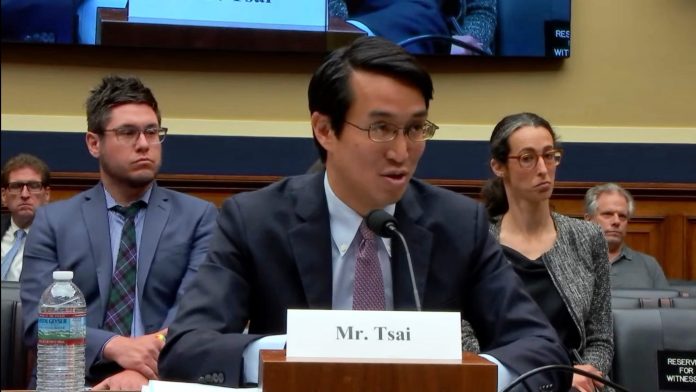
Daniel Tsai is the director of Medicaid and CHIP Services under the Biden administration.

Centers for Medicare and Medicaid Services


hide caption

toggle caption

Centers for Medicare and Medicaid Services

With President-elect Donald Trump’s inauguration set for Monday, there’s still a lot of uncertainty about what changes his administration and the new Republican Congress could usher in.

Republicans in Congress have begun discussing possible changes to Medicaid — the public health insurance program for low-income and disabled Americans that covers 80 million people. Those changes could potentially cut federal spending for the program by more than $2 trillion over the next decade and lead millions to lose their coverage.

Those proposals face a long road to being enacted — but would be a dramatic departure from the Biden administration’s approach to the program.

Biden’s team at the Center for Medicaid and CHIP Services — led by Dan Tsai — worked to keep people enrolled as states redetermined Americans’ eligibility for the first time since before the COVID-19 pandemic. The Biden administration also encouraged states to expand what the program covers.

“Medicaid saves people’s lives,” Tsai told the health care podcast Tradeoffs this week, as he reflected on his time at Medicaid’s helm.

Before coming to Washington in 2021, Tsai ran the Massachusetts Medicaid program during the Obama and Trump administrations.

Tsai said he saw first-hand how people in Massachusetts struggled as they tried to enroll in Medicaid. That experience motivated his work in the Biden administration.

He remembers one family in particular who showed up looking for help filling out their enrollment paperwork.

“I’m the Medicaid director, and I couldn’t help them diddly squat,” Tsai told Tradeoffs. “That really cast a very clear light on ‘Why is it so difficult for folks to enroll in and renew their Medicaid?'”

In a wide-ranging discussion, Tsai revealed what he’s learned about Medicaid during his time in Washington — and his hopes and concerns for the program’s future.

The following excerpt has been edited for length and clarity.

Interview highlights:

On why he thinks Medicaid is so important

We know very clearly that having Medicaid leads to a significant reduction in kids dying. One study showed a 5% reduction in childhood mortality for kids having access to Medicaid. Medicaid expansion has been shown to reduce adult mortality by 9% over the first four years of Medicaid expansion after the Affordable Care Act. That’s 15,000 deaths that could have been avoided had all states adopted Medicaid expansion in 2014. We also have a wealth of studies that show when people do have access to Medicaid coverage, they will use primary care, they will access preventative services, mental health services. And they don’t forgo getting things like their prescription drugs.

I just also want to emphasize the broader economic and societal benefits from Medicaid. When I was the Medicaid director in Massachusetts, some of the most urgent phone calls I would get would be around the viability of a local hospital — the ability for Medicaid to be able to continue reimbursing that hospital, and the implication of hundreds, in some cases, thousands of jobs local to that community of having an anchor institution available. [It might determine] whether or not your teachers in the community and others could have a place to access oncology care, or whether or not there would be a hospital available for people in the community to deliver babies locally. 

On why he focused on making it easier for people to enroll in Medicaid and renew their coverage. 

I guarantee, if you and I were enrolled in Medicaid for our families, and my best answer to you of when you would go up for your Medicaid renewal was, “I don’t know, check your mail every day for the next year and make sure you don’t miss that piece of paper. And if you don’t respond in the 10 days or whatever your state gives you, you’re going to lose health care coverage. And your kid who relies on critical medications might not be able to get them,” we would be so angry, so frustrated. We would not accept that. And that is what 1 in 4 people in the country have had to experience for far too long.

On how the Biden administration made it easier for people to stay on Medicaid

We doubled the rate of auto-renewals. The percent of people going through a renewal where a state … can just ping up and say, “You know what? That person was at $13,000 of income last year, they were still at $13,000 of income. We should auto-renew them.”

We doubled that from 25 to 53 percentage points over the course of 18 months. I have very seldom seen progress at this scale and speed, and I think this came from the entire country having this amount of absolute dedicated focus with both CMS and states rolling up their sleeves and doing a ton of work. I cannot emphasize how difficult, whether it’s a blue or red state, you have dedicated public servants doing incredible things.

The experience is still too complicated, but we’ve made a massive dent in that. This is not an insurmountable thing. That is such deep rocket science like, how to improve the entire health of the population… This question is much simpler. And it takes very concerted, detailed work, but it can actually happen, and it can happen over a relatively compressed time frame.

On criticisms that the Biden administration kept millions of people on Medicaid who didn’t need to be

I don’t think that is a fair criticism. Many of the types of policies we put in are focused on how to keep eligible people enrolled. And we have seen many people that lost their coverage during the unwinding period come back very quickly. That tells us they were still eligible.

I’ll give you one example. Let’s say last year you were low-income, meaning under the federal poverty limit (so $15,000 for an individual or $31,200 for a family of four). And this year, the state pings up against all known electronic data sources and does not return any income. In that case, 92% of the time, you’re likely still to be low-income and would qualify for Medicaid.

We know from the data a lot of those people were falling through the cracks. You have many eligible people inappropriately losing health care coverage. … This is a very surgical way of reducing red tape. And these are the types of, I think, smart, data-driven policies that actually make a difference.

On what he learned about what happens when Medicaid covers nontraditional health care services, like housing and food

You always find that a small percentage of people account for an enormously large portion of health care costs. Those individuals, almost without fail, have this incredible complexity of physical health care conditions, often mental health, behavioral health conditions, and a range of psychosocial things, including housing instability, sometimes nutritional instability. And on a Medicaid program that costs $900 billion across the country, you have to find a better way of making sure we can deliver care and not having this incredible spend for folks just to bounce in and out of acute care settings.

There are many really important questions, not least of which is, what should Medicaid pay for? Because we are a health insurance program. And after a year and a half of intense policy debate at the federal level, we came to the conclusion that, yes, Medicaid does have a role — with guardrails — in actually paying for, in certain circumstances, things like housing and nutritional supports.

One really critical thing I would say to anyone interested in this is to not underestimate how difficult it is to make this actually work on the ground. I’ve been in rooms with literal shouting matches between health care providers and community-based [housing and nutrition] organizations all accusing the others of bad intentions or lack of competence. And so I think it is a huge area where we need to make progress in keeping folks from cycling in and out of the system.

On the future of Medicaid under Republican control of the White House and Congress

I am both optimistic, and I think we’re at a time of great risk for the program. I’m optimistic because so much of the progress that we just discussed was a ton of systems and operational work between our team and the states to actually fix things that were at the state level.

And the reason why I say progress is at risk is because the types of policies that could be considered – massive cuts to the program – will lead to more eligible people going uninsured. And I think it will be very damaging to the health of the American people.I do not think it is at all an exaggeration. You are going to have worse health outcomes and people will lose their lives as a result.

Dan Gorenstein is the executive editor of Tradeoffs, a nonprofit health policy news organization. Reporter Ryan Levi produced this story for the Tradeoffs podcast, and he and editor Deborah Franklin adapted it for the web. Tradeoffs’ reporting for this story was supported, in part, by West Health.

Listen to the interview here:

Justin Baldoni drags Taylor Swift into heated legal battle with Blake Lively

0

Justin Baldoni has pulled Taylor Swift into his heated legal battle with “It Ends With Us” co-star Blake Lively.

Baldoni accused Lively and her husband, Ryan Reynolds, of civil extortion, defamation and more in a $400 million lawsuit — which happens to mention global pop star Swift. 

The “Jane the Virgin” star’s lawsuit followed Lively’s own, where she accused the actor of sexual harassment while filming “It Ends With Us.” However, Baldoni insisted Lively “falsely” accused him in an attempt to repair her reputation following the fallout around the movie’s press tour after she took control of the film.

In an attempt to show how Lively allegedly took control of the movie’s production, Baldoni’s legal team claimed the actress used her friendship with Swift to threaten him. While working on the film, Lively insisted on rewriting the infamous rooftop scene. Baldoni had been hesitant about the idea, but told the 37-year-old actress he would “take a look at what she put together,” according to the complaint.

JUSTIN BALDONI SUES BLAKE LIVELY, RYAN REYNOLDS FOR $400M AFTER ACTRESS ACCUSED HIM OF SEXUAL HARASSMENT

Justin Baldoni mentioned Taylor Swift, inset, in his lawsuit against Blake Lively. (Getty Images)

Afterward, Lively invited Baldoni over to her New York City home, where the actor said he felt Swift and Reynolds pressured him into using the rewritten scene. “Later, Baldoni felt obliged to text Lively to say that he had liked her pages and hadn’t needed Reynolds and her megacelebrity friend to pressure him,” the complaint said.

“… I really love what you did. It really does help a lot. Makes it so much more fun and interesting. (And I would have felt that way without Ryan and Taylor [emoji] You really are a talent across the board. Really excited nd [sic] grateful to do this together,” Baldoni’s text read, according to the complaint.

Lively shared a lengthy response, in which she referred to Swift and Reynolds as “dragons” who protect her.

“The message could not have been clearer. Baldoni was not just dealing with Lively. He was also facing Lively’s ‘dragons,’ two of the most influential and wealthy celebrities in the world, who were not afraid to make things very difficult for him.”

— Justin Baldoni’s lawsuit

Taylor Swift sparkles in black mini dress with best friend Blake Lively

Lively and Swift have had a friendship for years. (Gotham)

“Both Ryan and [redacted] have established themselves as absolute titans as writers and storytellers outside of their primary gig – just singing or just acting or [redacted] just directing. I’m so lucky to have them as creative barometers,” Lively’s text, included in the complaint, read. “But also to have them as people who prop me up and make sure I’m seen for all I can, and do offer. Because they know firsthand all I contribute. They also know I’m not always as good at making sure I’m seen and utilized for fear of threatening egos, or fear of affecting the ease of the process. They don’t give a s— about that. And because of that, everyone listens to them with immense respect and enthusiasm. So I guess I have to stop worrying about people liking me.”

Baldoni believed “the message could not have been clearer,” according to the lawsuit. “Baldoni was not just dealing with Lively. He was also facing Lively’s ‘dragons,’ two of the most influential and wealthy celebrities in the world, who were not afraid to make things very difficult for him.”

Fox News Digital reached out to Swift’s representative for comment.

Taylor Swift points at the field next to Blake Lively, Ryan Reynolds and Hugh Jackman

Swift chats with Lively, Ryan Reynolds and Hugh Jackman at a Kansas City Chiefs game. (Dustin Satloff)

BLAKE LIVELY’S ‘IT ENDS WITH US’ COSTARS BRANDON SKLENAR, JENNY SLATE ‘ADMIRE HER BRAVERY’ AMID LAWSUIT

Baldoni accused Lively of tormenting him, his family and colleagues throughout the production process of the film in a lawsuit filed Thursday and obtained by Fox News Digital. The actor requested a jury trial and a judgment of $400 million.

Baldoni’s legal team claimed Lively has no evidence of a deliberate smear campaign and instead worked to repair her reputation by accusing the actor and others of sexual harassment.

Lively “could not tolerate her publicly tainted image for even a moment, and further could not accept that it was entirely of her own making,” the lawsuit read. “She needed a scapegoat. And rather than admit and take accountability for her own mishaps, she chose to blame Plaintiffs, in a malicious and unforgivably public manner.

“When she and Reynolds could not force Baldoni and Wayfarer to read a statement she and her representatives prepared, extorting them to ‘take accountability’ in defense of Lively’s actions, she lay in wait for months, preparing to publicly attack Baldoni by falsely claiming that he had sexually harassed her.”

LIKE WHAT YOU’RE READING? CLICK HERE FOR MORE ENTERTAINMENT NEWS

Justin Baldoni, Blake Lively and Ryan Reynolds at premiere

Baldoni sued Lively and Reynolds for $400 million. (Getty Images)

A representative for Lively slammed Baldoni’s lawsuit.

“This latest lawsuit from Justin Baldoni, Wayfarer Studios, and its associates is another chapter in the abuser playbook,” the statement provided by Lively’s legal team read. “This is an age-old story: A woman speaks up with concrete evidence of sexual harassment and retaliation and the abuser attempts to turn the tables on the victim. This is what experts call DARVO. Deny. Attack. Reverse Victim Offender.”

The statement continued, in part: “Their response to sexual harassment allegations: she wanted it, it’s her fault. Their justification for why this happened to her: look what she was wearing. In short, while the victim focuses on the abuse, the abuser focuses on the victim. The strategy of attacking the woman is desperate, it does not refute the evidence in Ms. Lively’s complaint, and it will fail.”

CLICK HERE TO SIGN UP FOR THE ENTERTAINMENT NEWSLETTER

Blake Lively and Justin Baldoni film on Jan. 12, 2024

Lively and Baldoni starred together in “It Ends With Us.” (Jose Perez/Bauer-Griffin/GC Images)

Lively detailed allegations of sexual harassment, retaliation, intentional affliction of emotional distress, negligence and more made by Baldoni and film producer Jamey Heath in a complaint first filed with the California Civil Rights department and later in federal court.

Some of the issues allegedly addressed at an “all-hands” meeting before filming began included no more showing nude videos or images of women to Lively, no more mention of Baldoni’s previous “pornography addiction,” no more discussions about personal experiences with sex, no more descriptions of their own genitalia, no more adding sex scenes outside what was in the original script, no more discussions about Lively’s weight or deceased father, and more.

Baldoni’s lawyer denied the allegations in a statement to The New York Times.

“These claims are completely false, outrageous and intentionally salacious with an intent to publicly hurt and rehash a narrative in the media,” he claimed.

CLICK HERE TO GET THE FOX NEWS APP