Thursday, November 12, 2026
Home Blog Page 35

What it would take for Trump admin to change Harvard’s tax status : NPR

0

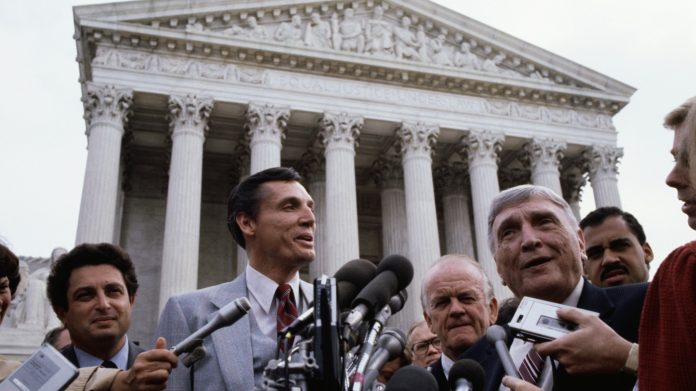
Bob Jones III, the president of Bob Jones University, speaks outside the U.S. Supreme Court in 1982. The IRS rescinded the university’s tax-exempt status in the 1976.

Bettmann Archive/via Getty Images


hide caption

toggle caption

Bettmann Archive/via Getty Images

In an escalating fight over federal funding, President Trump has threatened to revoke Harvard University’s tax-exempt status.

“Remember, Tax Exempt Status is totally contingent on acting in the PUBLIC INTEREST!” Trump wrote in a post on Truth Social this week. He suggested Harvard should be “Taxed as a Political Entity if it keeps pushing political, ideological, and terrorist inspired/supporting ‘Sickness.'”

On Thursday, Trump told reporters administration officials were weighing next steps and said, “I don’t think they’ve made a final ruling.” The IRS didn’t respond to NPR’s request for comment. The White House, earlier in the week, hadn’t responded for comment either.

The federal government has long exempted universities from taxes because of their “educational purposes” and commitment to public service. Trump’s threat could lead to a stunning retaliation against Harvard for its refusal to comply with the administration’s recent demands – but it is not entirely unprecedented.

At least one university is known to have had its tax-exempt status rescinded: Bob Jones University in South Carolina. The eventual 1983 Supreme Court ruling in that case would likely serve as the legal precedent for the Trump administration in a case against Harvard, says Michael Graetz, a professor of tax law at Yale University.

“Since 1913, the modern income tax has been in place and Harvard has been tax exempt for all of that time,” he says. “And no one has seriously questioned [their] tax exemption until now.”

Graetz wrote the book The Power to Destroy: How the Antitax Movement Hijacked America. He says, if Trump follows through on his threat and succeeds, “the financial impact to Harvard would be very, very large.”

Not only would Harvard lose the ability to earn revenue on its $53.2 billion endowment, but Graetz says Harvard donors would lose the ability to write off donations when they file their taxes.

Harvard spokesperson Jason Newton said in an email to NPR, “There is no legal basis to rescind Harvard’s tax-exempt status.” Such an action, he said, would hamper Harvard’s educational mission severely and would “result in diminished financial aid for students, abandonment of critical medical research programs, and lost opportunities for innovation.”

Trump’s threat comes as the administration continues to argue that several higher education institutions, including Harvard, are not doing enough to protect their Jewish students from discrimination. On April 11, the administration sent Harvard its latest list of demands, emphasizing concerns around antisemitism on campus. It ordered Harvard to change its hiring, admissions and other policies, and to eliminate diversity, equity and inclusion (DEI) programs.

In response, Harvard said it has already taken substantial steps toward fighting antisemitism, and the administration’s demands go “beyond the power of the federal government.”

After Harvard refused to comply, the administration’s Joint Task Force to Combat Anti-Semitism announced a freeze on more than $2.2 billion in federal funding for the school. The U.S. Department of Homeland Security has also been pressuring Harvard to turn over the disciplinary records of international students, including those who’ve participated in campus protests. NPR obtained a letter the agency sent this week saying Harvard’s eligibility to host international students will be revoked if it doesn’t submit the records by April 30.

What happened to Bob Jones University

For many years, Bob Jones University, a private Christian college in Greenville, S.C., had a policy in place that forbade its students from interracial dating or marriage. In 1976, the IRS found the school was engaging in unlawful racial discrimination and revoked Bob Jones University’s tax-exempt status.

The college sued the federal government and the case made it all the way to the Supreme Court. In question was whether Bob Jones’ discriminatory policy was protected by its right to religious freedom, because the school claimed the Bible prohibited race-mixing.

In 1983, the Supreme Court ruled in favor of the IRS, in an 8-1 decision, saying racial discrimination in schooling violated “fundamental national public policy” and “not all burdens on religion are unconstitutional.”

Larry Zelenak, a professor of law at Duke University, says he believes the Trump administration may lean on the Bob Jones ruling if it were to proceed with revoking Harvard’s tax-exempt status, arguing that Harvard discriminates against Jewish students by failing to protect them from antisemitism on campus.

People cross Harvard Yard on Harvard University’s campus in Cambridge, Mass., on Thursday.

People cross Harvard Yard on Harvard University’s campus in Cambridge, Mass., on Thursday.

Sophie Park/Getty images


hide caption

toggle caption

Sophie Park/Getty images

But Zelenak believes that argument would only work “if the IRS was taking the position that antisemitism was an official policy of [Harvard] in the way that racial discrimination was an official policy of Bob Jones … And I just don’t see the comparison there.”

Graetz agrees: “In the Bob Jones case, it was a policy of the university to discriminate against [Black people], whereas Harvard has no policy to discriminate against [Jewish people].”

Olatunde Johnson, a law professor at Columbia University who has written about Bob Jones, points out that even though racial discrimination was an official, written policy at the school, it took a lot for the university to actually lose its tax-exempt status.

“This was explicit [discrimination],” says Johnson. “And it was still a long adjudicatory process to determine that they were in fact discriminating.”

If the IRS were to go after Harvard, Johnson says, “A first step would be the necessity of going through a process – whether it’s an administrative process, and then a litigation process – that really ferrets out the facts.”

Congress acted to keep presidents from using the IRS for political means

This isn’t the first time presidents have tried to use the IRS to advance their political agendas. John F. Kennedy directed the agency to investigate right-wing groups and Richard Nixon tried to use it to target and investigate his political opponents with audits.

In 1998, Congress took steps to protect the IRS from this kind of political pressure, and to preserve its independence. It was, Graetz says, “an overwhelming bipartisan effort to eliminate pressures by presidents and other high ranking officials to audit their adversaries or audit institutions that they found to be ideologically uncomfortable.”

The law bars the executive branch from using the IRS to target any particular taxpayer.

If the IRS were to act on Trump’s suggestion to revoke Harvard’s tax status, Graetz says, “It’s important for the American public to recognize that this [would be] an extraordinary intrusion into the role of the IRS.”

Legal experts NPR spoke with believe Harvard would have a strong defense if the Trump administration’s threats become material.

“When the government proposes to revoke tax exempt [status], it doesn’t become effective, assuming the organization challenges the revocation … unless the government wins in court,” says Larry Zelenak of Duke. “And I find that unfathomable.”

Reporting contributed by Adrian Florido
Edited by Nicole Cohen
Visuals by Mhari Shaw
Research contributed by Sarah Knight
Veterans Affairs officials appear to soften ‘back-to-office’ order for therapists : Shots

0

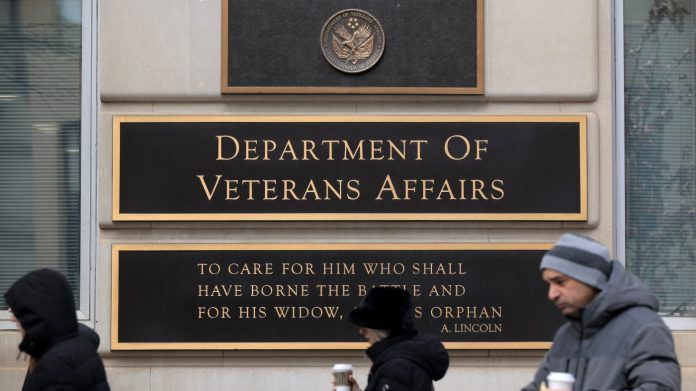
The Department of Veterans Affairs headquarters is a block from the White House in Washington, DC.

Chip Somodevilla/Getty Images


hide caption

toggle caption

Chip Somodevilla/Getty Images

The US Department of Veterans Affairs appears to be backing off a plan to send telehealth therapists back to offices that may lack privacy, according to a memo obtained by NPR.

Addressing widespread concerns over mental health clinicians’ ability to conduct confidential sessions, officials from the VA have issued a memo saying that providers must have private workspaces “that foster trusted, confidential, and therapeutic relationships with Veterans,” when they return to their offices in the coming weeks.

The memo is dated April 12, and was issued to regional directors the day after NPR’s latest reporting on this issue, which followed other reports and outcry from lawmakers.

After speaking with mental health providers and clinicians all over the country — anonymously, as many fear for their jobs — NPR previously reported that many are afraid they will be unable to provide therapy in private spaces after a mandatory return-to-work order that requires them to report to a VA facility. Many are currently providing telehealth to veterans from home.

The return-to-office order comes after much consternation over an announcement from VA officials and VA Secretary Doug Collins that the agency intends to cut 80,000 jobs. Under President Biden, Congress passed the PACT act, which allocated nearly $800 billion to expand VA care and benefits. The current efforts aim to reduce staffing numbers to the levels before this legislation, though it is not clear how VA would do so and still fulfill its legal requirements under the PACT act.

A script about confidentiality

Prior to the April 12 memo, VA management in one region circulated a script for therapists working in call center-like environments to read to their patients. “I cannot guarantee complete confidentiality,” read the document.

Confidentiality is guaranteed to health care patients through federal law, and the quality of a patient’s bond with a provider is one of the key predictors of overall outcomes in clinical therapy.

The April 12 memo stipulates that “spaces used to deliver synchronous telehealth services should offer the same level of privacy and therapeutic environment applicable to an in-person visit in the same space.”

Confusion remains

Several clinicians who spoke to NPR about this memo remained perplexed. The memo does not explicitly say therapists would be allowed to continue working from their homes, if private office space is unavailable. But the clinicians said they do not see how they would both meet the privacy requirements and return to work, where many say there is simply not enough space for things like parking and bathroom traffic, let alone adequate private spaces for therapy. Many staff were hired to be telehealth providers working off-site for all or part of the time.

Another document viewed by NPR, which was labeled “pre-decisional,” implies clinicians who provide mental health care would be eligible for an exemption to the mandatory return-to-work order. It offers few details, however.

The VA did not respond to a request for comment on what the April 12 memo would mean for employees reporting to overcrowded facilities. For earlier stories, VA spokesperson Peter Kasperowicz has repeatedly said that veterans’ care will continue “uninterrupted,” through the return to work mandate and insisted that all facilities will be compliant with federal privacy laws. “VA will make accommodations as needed so employees have enough space to work,” read a previous statement on the issue.

Some VA employees were required to return to the office on April 14, though others received last minute changes. May 5 is the current date forecasted by the VA to have employees back in person as part of a department wide mandate under the Trump administration and VA Secretary Collins.

A reputation for high quality care

The American Psychological Association has expressed concern for VA therapists who are unable to comply with federal privacy standards. “ That’s just such a fundamental way that, psychological services and psychotherapy has been conducted,” says Lynn Bufka, head of practice for APA. “I think most people feel sort of like, why would we even need to say that so explicitly?”

The VA is seen by many providers as the gold standard of mental health care in the United States, and many are concerned that the return-to-work order and job cuts will lead to attrition from providers or overall degradation of care for veterans.

“From a psychologist’s point of view, it’s seen as a place of good training and effort to really ensure that care is quality,” says Bufka. “Care that is evidence-based, that it is really meeting the needs of a population that was willing to give it everything in order for the rest of us to have the kind of quality of life that we have.”

Have information you want to share about the ongoing changes across the federal government? Katia Riddle is available through encrypted communications on Signal at Katia.75

Amid Trump cuts, nearly 300 U.S.-based scientists seek French program : NPR

0

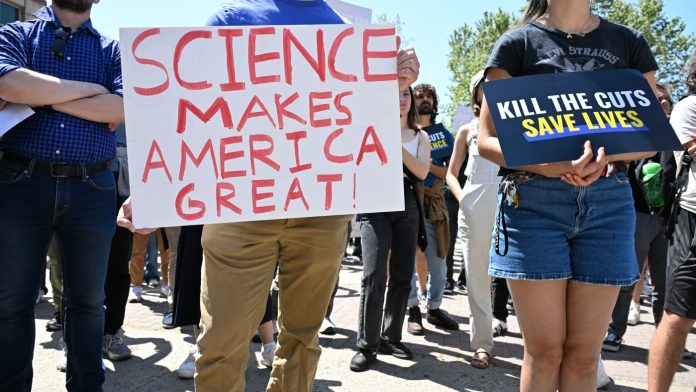
Students, researchers and demonstrators rally during a protest against the Trump administration’s funding cuts on research, health and higher education at the University of California Los Angeles on April 8.

Robyn Beck/AFP via Getty Images


hide caption

toggle caption

Robyn Beck/AFP via Getty Images

A French university courting U.S.-based academics said it has already received nearly 300 applications for researchers seeking “refugee status” amid President Trump’s elimination of funding for several scientific programs.

Last month, Aix-Marseille University, one of the country’s oldest and largest universities, announced it was accepting applications for its Safe Place For Science program, which it said offers “a safe and stimulating environment for scientists wishing to pursue their research in complete freedom.”

This week, Aix-Marseille said it had received 298 applications, and 242 of them are eligible and currently up for review. Of the eligible applicants, 135 are American, 45 have a dual nationality, 17 are French and 45 are from other countries, the university said.

“I am pleased that this request for the creation of scientific refugee status has found both media and political traction,” university President Éric Berton said in a statement.

The public research university said there is an even split between male and female applicants, with backgrounds from various prestigious U.S. institutions including Johns Hopkins University, NASA, the University of Pennsylvania, Columbia, Yale and Stanford. About 20 Americans will be accepted into the program to begin in June.

“We at Aix-Marseille University are convinced that mobilization to address the challenges facing scientific research must be collective in France and Europe,” Berton said.

The Trump administration has prioritized aggressive spending cuts and federal workforce reduction, leading to a battle for America’s best and brightest.

Already, for example, universities and medical research facilities are set to lose billions in federal funding under the National Institutes of Health. And rollbacks on federal diversity, equity and inclusion programs have compromised research ranging from climate change to biomedical research.

Aix-Marseille is not the only European institution hoping to capitalize on America’s brain drain.

Last month, France’s CentraleSupélec announced a $3.2 million grant to help finance American research that had been halted in the states. And Netherlands Minister of Education, Culture and Science Eppo Bruins wrote in a letter to parliament that he requested to set up a fund aimed at bringing top international scientists to the Netherlands.

There is some evidence that these entreaties are reaching curious ears.

Last month in the journal Nature, more than 1,200 respondents identifying as scientists cited Trump’s funding cuts as reasons they were considering moving to Canada or Europe.

Discussion boards reviewed by NPR show academics reaching the same conclusions.

Judge blocks DOGE access to sensitive Social Security data : NPR

0

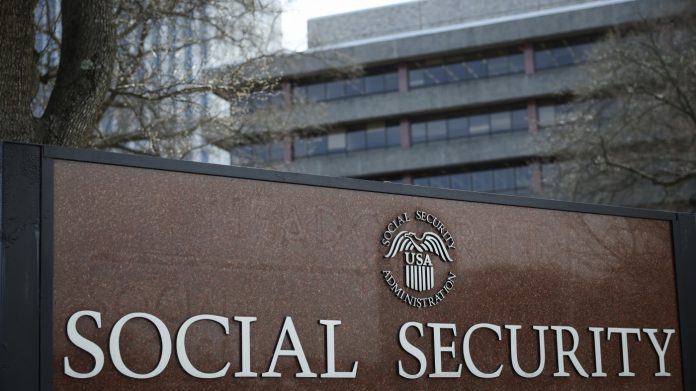
The entrance of the Social Security Administration’s main campus in Woodlawn, Md.

Kayla Bartkowski/Getty Images


hide caption

toggle caption

Kayla Bartkowski/Getty Images

A federal judge has once again blocked Department of Government Efficiency staffers who are operating inside the Social Security Administration (SSA) from accessing sensitive personal information of millions of Americans.

The issuing of a preliminary injunction comes in a lawsuit filed by a group of unions and retirees in Maryland, which is one of more than a dozen suits to raise alarms about the kind of data DOGE has accessed, and how such data could be used.

In a 148-page memorandum explaining the decision, U.S. District Judge Ellen Hollander wrote late Thursday that “the issue here is not the work that DOGE or the Agency want to do,” but rather “how they want to do the work.”

“To be sure, rooting out possible fraud, waste, and mismanagement in the SSA is in the public interest,” Hollander wrote, referencing DOGE’s stated aims. “But, that does not mean that the government can flout the law to do so.”

Hollander, an Obama appointee, previously granted a temporary restraining order against DOGE on March 20, questioning at the time why the agency did not use a more targeted look at Social Security data that includes personally identifiable information (PII), and calling DOGE’s methods “tantamount to hitting a fly with a sledgehammer.“

A federal appeals court dismissed on April 1 the Trump administration’s effort to lift Hollander’s temporary restraining order.

Now, weeks later, Hollander said the Trump administration still did not adequately explain why it needed to give a handful of staffers “unprecedented, unfettered access to virtually SSA’s entire data systems,” in order to implement the DOGE mandate of detecting waste, fraud and abuse.

“The DOGE Team seeks access to the PII that millions of Americans entrusted to SSA, and the SSA Defendants have agreed to provide it,” she wrote. “For some 90 years, SSA has been guided by the foundational principle of an expectation of privacy with respect to its records. This case exposes a wide fissure in the foundation.”

In seeking to justify the desire of DOGE team members to access PII in Social Security databases, SSA’s Acting Commissioner Lee Dudek had listed three projects the DOGE team needed to work on, but the judge wrote that his “explanations are imprecise, contradictory, and insufficient.”

This latest ruling prevents DOGE staffers from accessing Social Security databases that contain PII; directs them to delete any non-anonymized data in their possession from those databases, and to remove any software that DOGE staffers have previously installed on SSA systems; and to stop accessing or altering Social Security code.

The restrictions do not apply to non-DOGE SSA staff, or to DOGE members who want to use anonymized data and have received proper privacy training.

NPR has reached out to DOGE and the SSA for comment.

Continued concern over DOGE’s data access

The Social Security Administration is one of many federal agencies where federal judges have found the Elon Musk-led DOGE effort has likely violated the law in its efforts to access sensitive databases maintained by the federal government.

A top Elon Musk ally working inside the Social Security Administration has recently pushed dubious claims about noncitizen voting, apparently using the type of personal data that court records suggest DOGE should not have.

There are other concerns about what DOGE is doing inside the federal government.

This week, a whistleblower at the National Labor Relations Board said someone had removed case management data from the agency after DOGE accessed its system last month.

Have information or evidence to share about DOGE’s access to data inside the federal government? Reach out to the author, Stephen Fowler, on Signal at stphnfwlr.25. Please use a nonwork device.

Trump, El Salvador and Constitutional tensions : NPR

0

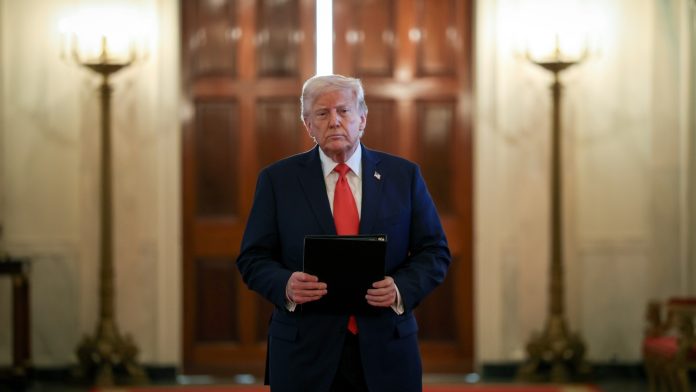
President Trump arrives for a presentation ceremony for the Commander-in-Chief Trophy to the U.S. Naval Academy in the East Room of the White House on Tuesday.

Win McNamee/Getty Images


hide caption

toggle caption

Win McNamee/Getty Images

The week was dominated by news about President Trump and the continued struggle over the narrative around Kilmar Abrego Garcia, the Maryland man who was illegally deported to El Salvador. But there was also continued concern around Trump’s tariffs — with the Federal Reserve chair saying they’re likely to lead to higher prices — and the tension between the scientific establishment and Robert F. Kennedy Jr., who made some big pronouncements during his first news conference as health and human services secretary.

Here are five takeaways from week 13 in our continued look at President Trump’s first 100 days in office:

1. Trump and El Salvador play a game of hot potato

President Trump met with El Salvador’s President Nayib Bukele at the White House on Monday. The president’s inner circle and the Salvadoran president played a faux blame game on the deported Maryland man.

The Supreme Court said the Trump administration had to “facilitate” Abrego Garcia’s return after the administration admitted the legal resident was mistakenly deported. Administration officials said during the meeting that they would facilitate it if Bukele wanted to return him. But Bukele told reporters he was not inclined to act.

“The question is preposterous: how can I smuggle a terrorist into the United States?” he told reporters in the Oval Office.

Round and round it goes with no resolution. Sen. Chris Van Hollen, D-Md., flew to El Salvador in an attempt to check on the man. He was initially denied the ability to see or talk to him. Later, he posted a photo of him with Abrego Garcia. By mid week, the White House was saying definitively that Abrego Garcia would never be allowed back into the country.

2. Which brings us to … nearing a constitutional crisis?

The same federal judge, who has now bucked the Trump administration over its deportation policies multiple times, James Boasberg, this week said there was “probable cause” for contempt charges against the administration. He’s giving the Trump team, which he said has shown a “willful disregard” for his orders, until Wednesday to give some real answers about why they defied his court order to turn around a plane that brought migrants to the Salvadoran prison.

Otherwise, he said, he would recommend contempt charges, and if the Trump Justice Department didn’t pursue those charges, he’s open to appointing an outside prosecutor to do so. The judge presiding over the specific Abrego Garcia case, Paula Xinis, said she’s “gotten nothing” from the administration, which she ordered to show evidence of what it’s doing to bring the man back. An appeals court unanimously denied the government’s request for a stay of Xinis ordering sworn testimony from government officials about what they have or haven’t done to return Abrego Garcia to the U.S.

The three-judge panel said the administration’s refusal to bring the man back “should be shocking not only to judges, but to the intuitive sense of liberty that Americans far removed from courthouses still hold dear.” It also accused the administration of “asserting a right to stash away residents of this country in foreign prisons without the semblance of due process that is the foundation of our constitutional order.”

President Trump meets with President Nayib Bukele of El Salvador in the Oval Office of the White House on Monday.

President Trump meets with President Nayib Bukele of El Salvador in the Oval Office of the White House on Monday.

Win McNamee/Getty Images


hide caption

toggle caption

Win McNamee/Getty Images

But the administration’s position is clear — it doesn’t believe it should have to listen to the courts.

“No court in the United States has a right to conduct the foreign policy of the United States,” Secretary of State Marco Rubio told reporters during that meeting in the Oval Office with Bukele. “I don’t understand what the confusion is. This individual is a citizen of El Salvador. He was illegally in the United States and was returned to his country.”

The Supreme Court said the administration had to “facilitate” the man’s return, but it also said the courts should show “due regard for the deference owed to the Executive Branch in the conduct of foreign affairs.”

So which one of those winds up weighing out? At the end of the day, a true constitutional crisis would come if the Trump administration exhausts its appeals and defies the Supreme Court, if it rules against the administration. Maybe that would come if Trump follows through on his musings about sending “homegrown” criminals, in other words, U.S. citizens, to El Salvador.

3. Often, politics is about perception

It’s worth remembering that so much of politics is about messaging — not facts, not nuance. And in the case of Abrego Garcia, the Trump administration is digging in hard to say he was a bad person. Trump and his team have alleged he’s a member of MS-13 and produced police reports that show police believed he was. White House Press Secretary Karoline Leavitt went so far as to say he was “engaged in human trafficking.”

On the other side, Abrego Garcia has legal status in the U.S.; his wife is an American citizen and has pleaded for his return; stories have noted that he is the father to a son on the autism spectrum; that he has no criminal record and that his family sent him to the United States in the first place as a teenager because a gang in El Salvador (not MS-13) was trying to coerce him to join.

In fact, an immigration court in 2019 found that he could face death or danger by being sent back to El Salvador. Xinis, the judge overseeing his case, called the evidence that he’s a gang member flimsy.

“Evidence’ against Abrego Garcia consisted of nothing more than his Chicago Bulls hat and hoodie, and a vague, uncorroborated allegation from a confidential informant claiming he belonged to MS-13’s ‘Western’ clique in New York — a place he has never lived,” she said in a ruling.

4. The Fed is expecting higher prices — and faces a dilemma

Federal Reserve Chair Jerome Powell departs after speaking at an Economic Club of Chicago event on Wednesday in Chicago, Illinois. Powell said that he expects "continued volatility" in markets, but that the fed is in a good position in anticipation of clarity on policy. (Photo by Vincent Alban/Getty Images)

Federal Reserve Chair Jerome Powell departs after speaking at an Economic Club of Chicago event on Wednesday in Chicago.

Vincent Alban/Getty Images


hide caption

toggle caption

Vincent Alban/Getty Images

The head of the Federal Reserve, Jerome Powell, said this week that Trump’s tariffs were larger than expected and that they’re “highly likely” to lead to higher inflation.

Translation: higher prices.

That prompted Trump to lash out against Powell on Thursday, saying the Fed chairman’s “termination cannot come fast enough.” Powell, backed by Supreme Court precedent, insists he cannot be fired by the president over policy disagreements.

Still, higher prices are something Americans have been expecting, polling shows.

Powell also said the tariffs could present a tension point for the Fed between keeping inflation low and keeping unemployment low.

So, for now, he said, the Fed will wait and watch. With how quickly Trump has been changing his mind, or, as he says, being “flexible,” it could be waiting and watching for a while.

5. Answers in search of science

For years, Robert F. Kennedy Jr. has cast doubt on the safety of vaccines and given credence to the contention that they might cause autism. That’s despite research thoroughly debunking the idea (and links to other, non-vaccine-related factors such as a father’s age). And despite decades of research and the difficulty in finding definitive answers, he’s now promising, as director of Health and Human Services under Trump, to unearth the true cause of autism by September — a timeline many experts find dubious.

He’s also contradicting his own Centers for Disease Control and Prevention, which said this week that part of the increase in the number of children found to have autism is likely because of increased diagnoses and better diagnostic tools.

Robert F. Kennedy Jr. speaks during a news conference at the Department of Health and Human Services on Wednesday in Washington, D.C. Kennedy held a news conference to discuss autism in the U.S.

Robert F. Kennedy Jr. speaks during a news conference at the Department of Health and Human Services on Wednesday in Washington, D.C. Kennedy held a news conference to discuss autism in the U.S.

Alex Wong/Getty Images


hide caption

toggle caption

Alex Wong/Getty Images

“One of the things I think we need to move away from today is this ideology that this diagnosis, rather the relentless increases, are simply artifacts of better diagnoses, better recognition,” Kennedy said. He also said: “Doctors and therapists in the past weren’t stupid; they weren’t missing all these cases. The epidemic is real. External factors, environmental exposures, that’s where we’re going to find the answer.”

There’s an irony in RFK Jr. claiming that “ideology” is contributing to the CDC’s conclusions when he is saying definitively that “environmental exposures” is “where we’re going to find the answer” and appointed someone who promoted the discredited vaccine link to autism to lead HHS’ effort to identify a cause.

Could there be environmental causes (other than vaccines)? That’s Kennedy’s theory. But science is about dispassionately letting evidence dictate answers, not letting preconceived answers dictate science.

Here’s a day-by-day look at what happened in the past week:

Friday, April 11

  • Trump gets a physical. 
  • RFK Jr. writes an op-ed in the New York Post arguing for budget cuts and firings at the agencies under HHS. 
  • University of Michigan consumer sentiment measure dips to its second lowest level since it began in 1952. 
  • Judge rules that Trump administration “failed to comply” with court order and now has to give daily updates on status of efforts to get Maryland man back. 
  • Judge finds Columbia student Mahmoud Khalil can be deported.
  • Five more law firms to provide $600 million in pro bono work, Trump says, including two of the biggest. 
  • Trump adviser Stephen Miller on social media calls Kilmar Abrego Garcia an “illegal alien terrorist.”
  • Politico reports that the State Department is telling employees to report on each other for anti-Christian bias.
  • Elon Musk calls potential cuts to NASA “troubling.”
  • The Trump administration moves forward with cutting Maine’s K-12 funding over transgender kids in girls’ school sports.
  • The administration gets a win in court about whether immigration raids can be carried out at houses of worship. A judge found a lack of standing for those who brought the case. 
  • The White House replaces a portrait of former President Obama with pop art of Trump with his fist in the air after the assassination attempt on him. 

Saturday

  • Smartphones and computers to be exempted from Trump’s tariffs. 
  • The Washington Post reports that senior Social Security Administration officials were overridden, as Trump officials demanded immigrants be marked as dead. One senior official who objected was marched out, the paper reported. 
  • State Department representative says Abrego Garcia is “alive and secure” at El Salvador prison, according to a court filing. 
  • Russia hits Ukrainian town, killing more than 30 people and wounding at least 84, the worst attack since 2023. 
  • Trump shows up at a UFC event in Miami and sits cageside with his grandkids.

Sunday

  • Letter from the White House physician says Trump is in “excellent physical health.” It says Trump is 224 pounds, 20 pounds lighter than his recorded weight in June 2020. It also notes he had a colonoscopy in July 2024, revealing diverticulosis and a polyp (this was not disclosed during the campaign). His LDL “bad cholestorol” was lower and he now takes ezetunibe, which he wasn’t recorded as taking in 2020. The letter concludes: “President Trump’s days include participation in multiple meetings, public appearances, press availability, and frequent victories in golf events.”
  • Commerce Secretary Howard Lutnick sews more confusion on tariffs. Lutnick says on ABC that electronics exemptions are temporary. But there is division in the White House about the comments, according to a Fox Business correspondent. 
  • Trump says on social media that “NOBODY is getting ‘off the hook’ for the unfair Trade Balances” and that electronics are moving to a different “bucket.” He added: “We are taking a look at Semiconductors and the WHOLE ELECTRONICS SUPPLY CHAIN in the upcoming National Security Tariff Investigations.”
  • Trump says on Air Force One: “We wanted to uncomplicate it from a lot of other companies, because we want to make our chips and semiconductors and other things in our country.” He would not say whether things like smartphones would be exempted permanently: “You have to show a certain flexibility. Nobody should be so rigid.”

Monday

  • There’s a hearing about the international Tufts student who was taken off the streets. The Washington Post reports that days before she was detained by immigration authorities, the State Department found no evidence linking her to anti-semitism or terrorism.
  • Salvadoran President Bukele says during a meeting with Trump in the Oval Office that he will not return Abrego Garcia. “How can I return him to the United States?” he says. “I smuggle him into the United States? Of course I’m not going to do it.”
  • Trump again blames Ukraine for Russia’s invasion. “Listen, when you start a war,” Trump says, “you gotta know you can win a war. You don’t start a war against somebody that’s 20 times your size and then hope that people give you some missiles.”
  • Trump opens the door to U.S. citizens being sent to an El Salvador prison. “The homegrowns are next, the homegrowns,” Trump says to Bukele. “You’ve got to build about five more places.”
  • Secretary of State Marco Rubio says the Trump administration does not have to listen to the courts to get Abrego Garcia back, because “no court in the United States has a right to conduct the foreign policy of the United States. I don’t understand what the confusion is. This individual is a citizen of El Salvador. He was illegally in the United States and was returned to his country.”
  • Trump meets with Ohio State football national champs.
  • Harvard rejects Trump’s demands tying federal funding to eliminating DEI programs. “No government — regardless of which party is in power — should dictate what private universities can teach, whom they can admit and hire, and which areas of study and inquiry they can pursue,” Harvard President Alan Garber wrote in a letter to students and staff. Some $9 billion is at stake. By the evening, the administration froze $2 billion in funding. 
  • The Washington Post reports that a Trump plan could cut as much as half the State Department’s budget. 
  • USA Today reports that the Trump administration is considering a budget that would eliminate Head Start altogether as well as the Low-Income Home Energy Assistance Program, which helps provide heat and air conditioning for low-income households. 
  • The White House is asking Congress to rescind money for the Corporation for Public Broadcasting, the New York Times reports. 
  • Rep. Marjorie Taylor Greene, R-Ga., bought stock just before Trump announced his tariffs pause, disclosures show, per USA Today, the New York Times and others. Democrats are calling for an investigation.
  • Trump says he’s “looking at” possible exemptions for 25% auto tariffs. “I’m looking at something to help some of the car companies with it,” Trump told reporters in the Oval Office. “And they need a little bit of time because they’re going to make them here, but they need a little bit of time. So I’m talking about things like that.”

Tuesday

  • Former President Biden gives his first speech since leaving office. “In fewer than 100 days, this new administration has done so much damage and so much destruction,” he said. “It’s kind of breath-taking.”
  • CDC vaccine advisers meet for the first time under RFK Jr. 
  • Man accused of attempting to assassinate Trump in Florida appears in court. 
  • The Trump administration moves to speed asylum cases. 
  • Judge chides Trump administration for doing “nothing” to get Maryland man back. 
  • NPR reports that the Army has moved to target books perceived to be dealing with DEI and “gender ideology” for removal from libraries. 
  • The Kennedy Center is to be permanently lit red, white and blue, according to WTOP.
  • A protester is tased at a Rep. Marjorie Taylor Greene town hall. 
  • An aide to Defense Secretary Pete Hegseth is out on leave and ushered out of the Pentagon for suspicion of leaking. 
  • Sen. Chuck Grassley, R-Iowa, faces a raucous town hall. 
  • RFK Jr. publicly contradicts the Centers for Disease Control and Prevention about the rise in autism cases and pushes environmental causes as a reason for the rise.
  • Trump signs an executive order intended to lower prescription drug prices.
  • The New York Times reports that the Trump administration picked a Hunter Biden whistleblower who cooperated with House Republicans’ investigation of him as the next head of the IRS.
  • Trump threatens to revoke Harvard’s tax-exempt status.

Wednesday

  • Hong Kong halts packages to U.S. because of tariffs. 
  • Trump says he will join trade talks with Japanese officials in Washington. Before the meeting, he posted on social media: “Hopefully something can be worked out which is good (GREAT!) for Japan and the USA!” After it, he said: “A Great Honor to have just met with the Japanese Delegation on Trade. Big Progress!”
  • Sen. Chris Van Hollen, D-Md. was denied the ability to see Abrego Garcia during a trip to El Salvador. He said that the country’s vice president told him the reason was “that the Trump administration is paying El Salvador, the government of El Salvador, to keep him at CECOT,” the acronym for the name of the prison.
  • USA Today reports on closed toilets and biologists cleaning some of them in some National Parks as a result of Trump’s budget cuts. 
  • Attorney General Pam Bondi announces legal action against Maine for transgender sports policy. “We believe they are failing to protect women, and it’s not only an issue in sports. It is a public safety issue,” Bondi said. 
  • Federal judge James Boasberg launches contempt proceedings against the Trump administration for violating his order to not deport Venezuelan migrants. He said there is “probable cause” that the government showed a “willful disregard” for the judge’s order. He gave the government a week to “cure” the problem, potentially by allowing the migrants to appeal from the Salvadoran prison. He also noted that if the Justice Department declines to cooperate, he could potentially appoint an outside prosecutor. 
  • The White House says it will appeal. “The President is 100% committed to ensuring that terrorists and criminal illegal migrants are no longer a threat to Americans and their communities across the country,” White House Communications Director Steven Cheung says. 
  • Retail spending jumps, as people try to get ahead of Trump’s tariffs. 
  • Polio is on the rise in Afghanistan and Pakistan. Global health officials are concerned that with USAID cuts, there could be spikes elsewhere.
  • Federal Reserve Chair Jerome Powell warns that Trump’s tariffs are “highly likely” to raise inflation in the short term as the level of tariffs have been higher than anticipated. That could put the Fed in a difficult position, caught between trying to control unemployment and inflation. 
  • U.S. Customs says it has collected about $250 million a day from Trump’s latest tariffs, well below the $2 billion a day Trump has claimed, CNBC reports. 
  • Rubio shuts down a State Department office that tracked mis- and disinformation from adversaries overseas. A former official who helped run a precursor office said, per the New York Times: “This amounts to a form of unilateral disarmament in the information warfare Russia and China are conducting all over the world” and that “no efforts were made inside the United States — only international.” Despite that, Rubio claims the office “spent millions of dollars to actively silence and censor the voices of Americans they were supposed to be serving.” Political appointee Darren Beattie, who had previously been fired in the first Trump administration as a White House speechwriter because of a speech he gave before white nationalists, organized the firings, the Times reports.
  • Trump’s pick for U.S. attorney in D.C., Ed Martin, appeared on Russian state TV more than 150 times, the Washington Post finds. 
  • The Washington Post finds that a second aid to Hegseth was fired.
  • California sues over Trump tariffs. “Eighty years of economic dominance in just a matter of weeks being unwound by this kind of recklessness,”  California Democratic Gov. Gavin Newsom said. “We are very mindful of the anxiety that this has imposed on all of you and very mindful of our role and responsibility at this moment not to be bystanders and to try to shape this debate and shape this conversation.” 
  • The World Trade Organization says North American exports are expected to drop almost 13% this year. “The outlook for global trade has deteriorated sharply due to a surge in tariffs and trade policy uncertainty,” it said in a report, per CNBC. 
  • A government memo obtained by CBS News shows that it’s not just “the worst” who can be sent to a prison at Guantanamo Bay. 
  • Rubio and Trump international envoy Steve Witkoff head to Paris to meet with European and Ukrainian officials pleading Ukraine’s case in its war with Russia.
  • Trump is planning an overhaul of the Endangered Species Act by redefining the word “harm.”
  • Axios reports that Trump himself blocked Elon Musk from attending a top secret Pentagon briefing because of a potential conflict of interest.  “What the f— is Elon doing there?” Trump said, according to Axios. “Make sure he doesn’t go.”
  • The AP reports that the Trump administration is doing away with the free tax-filing system the IRS set up during the Biden administration. 
  • The White House said again that Abrego Garcia would never be let back into the U.S. and brought a woman to a White House briefing whose daughter was killed by an MS-13 gang member. “Let me reiterate: Kilmar Abrego Garcia is an illegal alien, MS-13 gang member and foreign terrorist who was deported back to his home country,” White House spokeswoman Karoline Leavitt told reporters. Abrego Garcia had no criminal record, and the Trump administration had previously acknowledged his removal was due to an “administrative error.”
  • Reuters reports that DOGE is using a Musk AI chatbot tool to track anti-Trump sentiment among federal workers and that the group is using Signal to communicate, raising questions about records retention.
  • Homeland Security Secretary Kristi Noem sent a letter to Harvard, obtained by the New York Times, threatening to block the institution from enrolling international students.
  • CNN reports that the IRS is taking steps to revoke Harvard’s tax-exempt status, as Trump threatened the day before.
  • The Washington Post reports that DOGE is looking to use Medicare data as part of their effort to crackdown on immigrants without permanent legal status in the U.S.
  • The AP said in a court filing that the administration is continuing to deny it access despite a court order, the New York Times reports. The Trump administration is appealing.
  • The Trump administration issued an order to halt construction on a New York wind energy project that would power 500,000 homes, AP reports.

Thursday

  • Italy’s Giorgia Meloni meets with Trump at the White House. 
  • Trump signs more executive orders. 
  • Israel had planned to strike Iranian nuclear facilities, but it needed the U.S.’s help, and the U.S. was leery, the New York Times reports. 
  • Politico reports that Robert Hur is representing Harvard in its fight against the Trump administration. Hur was the special prosecutor who came under fire from Democrats for his report on Biden’s handling of classified material and his descriptions of Biden’s mental fitness.
  • The case of the AP being denied a seat in the White House because of its continued labeling of the “Gulf of Mexico” is back in court.
  • The Supreme Court schedules oral arguments for May 15 on Trump’s executive order to ban birthright citizenship despite the guarantees of the 14th Amendment to the Constitution.
  • Trump says in a social media post that he’s not happy with the job Powell is doing at the Fed, that he “is always TOO LATE AND WRONG.” Trump says he wants him to lower rates “now” and that “Powell’s termination cannot come fast enough!” Asked about the remarks at the White House, Trump reiterated that Powell acts “too slowly,” that he’s let him know and contends that if he wants him out, then he’ll be out of there real “fast.”
  • A three-judge appeals court panel said the Trump administration’s refusal to try and bring Abrego Garcia back “should be shocking” to all Americans who care about an “intuitive sense of liberty.” 
  • Elon Musk has installed top deputies at the Government Services Administration, which helps manage a lot of what the government spends money on, the AP reports. Agency employees discovered a transceiver for Musk’s Starlink satellite network on the roof of GSA headquarters, according to the AP, raising concerns about the protection of public data.
  • The New York Times reports that a Treasury official last month wrote to the IRS about My Pillow’s Mike Lindell to see if “a high-profile friend of the President” was “inappropriately targeted.” The IRS did not act on it and referred it to the inspector general because of concerns “that President Trump hoped to use the tax collector to protect his friends and allies from normal scrutiny.”

The State Department is changing its mind about human rights : NPR

0

The State Department releases the Country Reports on Human Rights Practices annually.

Nicholas Kamm/AFP


hide caption

toggle caption

Nicholas Kamm/AFP

The Trump administration is substantially scaling back the State Department’s annual reports on international human rights to remove longstanding critiques of abuses such as harsh prison conditions, government corruption and restrictions on participation in the political process, NPR has learned.

Despite decades of precedent, the reports, which are meant to inform Congressional decisions on foreign aid allocations and security assistance, will no longer call governments out for such things as denying freedom of movement and peaceful assembly. They won’t condemn retaining political prisoners without due process or restrictions on “free and fair elections.”

Forcibly returning a refugee or asylum seeker to a home country where they may face torture or persecution will no longer be highlighted, nor will serious harassment of human rights organizations.

According to an editing memo and other documents obtained by NPR, State Department employees are directed to “streamline” the reports by stripping them down to only that which is legally required. The memo says the changes aim to align the reports with current U.S. policy and “recently issued Executive Orders.”

Officially called “Country Reports on Human Rights Practices,” the annual documents are required, by statute, to be a “full and complete report regarding the status of internationally recognized human rights.”

Human rights defenders say the cuts amount to an American retreat from its position as the world’s human rights watchdog.

“What this is, is a signal that the United States is no longer going to [pressure] other countries to uphold those rights that guarantee civic and political freedoms – the ability to speak, to express yourself, to gather, to protest, to organize,” said Paul O’Brien, executive director of Amnesty International, USA.

A spokesperson for the State Department declined to comment on the memo or the human rights reports. NPR confirmed the memo’s authenticity with two sources close to the process.

The reports, released in March or April most years, are highly anticipated by foreign leaders and diplomats with a stake in how their countries are portrayed. The 2024 reports were initially completed in January, before President Trump took office, but they’ve been re-edited by the new administration. State department sources say the revised versions won’t be released until May.

The documents NPR reviewed confirm reporting by Politico that reports of violence and discrimination against LGBTQ people will be removed, along with all references to DEI.

Among other topics ordered to be struck from the reports:

  • Involuntary or coercive medical or psychological practices.
  • Arbitrary or unlawful interference with privacy.
  • Serious restrictions to internet freedom.
  • Extensive gender-based violence
  • Violence or threats of violence targeting people with disabilities.

By law, the State Department releases annual reports for every country, and they traditionally follow one basic outline. The cuts ordered in the Trump administration memo are not targeted at specific countries. Rather, they eliminate entire categories of abuses from all the reports.

But some deletions are more noteworthy than others. The Trump administration recently negotiated the transfer of immigrants from the U.S. into El Salvador’s notorious prison system. In a draft of the forthcoming report on that country reviewed by NPR, the section on prison conditions is erased. The only remnants of those violations are reports on prison deaths that fall into the category of “extrajudicial killings” and a mention of abuse by prison guards in a legislatively mandated section on “Torture and Cruel, Inhuman, or Degrading Treatment or Punishment.”

In the report on Hungary, a marked-up version of which was distributed as a model for how to apply the new directives, the section titled Corruption in Government is struck out. Hungary’s Prime Minister Viktor Orban has been called an authoritarian, and previous reports have noted restrictions to civil liberties. President Trump has called him “a great man and a great leader in Europe.”

András Lederer from Hungary’s oldest and largest human rights group, the Hungarian Helsinki Committee, told NPR that the State Department’s new policy weakens the position of human rights defenders in countries that have a problematic track record on these issues.

“You’re removing pressure, and it definitely sends the message to the perpetrators that this is not important for [the US] any more,” Lederer said.

People who specialize in human rights work told NPR they worry about the effect the cuts will have on the documents’ influence within the international community.

“You can’t overstate the value in the real world of the annual State Department human rights reports being credible and impartial,” said Christopher LeMon, until January a deputy assistant secretary in the State Department’s Bureau of Democracy, Human Rights and Labor.

“You also can’t overstate the damage it will do to that credibility if the Trump administration’s edits are seen to diminish – not just the scope of what are defined as human rights – but also if those edits are seen to play favorites.”

Former Secretary of State Mike Pompeo complained during the first Trump administration about what he called “a proliferation of human rights” and he moved to pare them back. He formed a Commission on Unalienable Rights that focused on revolution-era and post-World War II notions of rights, de-emphasizing issues like discrimination and reproductive rights, putting more focus on religious freedom and the right to private property.

The memo reviewed by NPR outlines changes that are far more sweeping.

In 2013, then-Sen. Marco Rubio underscored the importance of these audits, saying they shed light on “foreign governments’ failure to respect” citizens’ fundamental rights… from the sexual exploitation of women and children to the denial of political rights to minorities.”

He said the reports show that “the United States will stand with freedom-seeking people around the world.”

As Secretary of State, Rubio is now responsible for the reports. He’s the person who, traditionally, would promote their release to the public. But under his stewardship, those violations he cited – sexual exploitation of women and children and the denial of political rights to minorities – are being deleted from the reports.

The reports will still include human rights matters that are specifically required by law, including war crimes and genocide, antisemitism, worker rights and child marriage. Attacks on freedom of the press have to be reported, although not those on freedom of expression for regular citizens.

For all of these required categories, the editing memo dictates that where multiple examples were cited in the original drafts, reporting should be “reduced” to just one example.

Paul O’Brien of Amnesty International called this misguided.

“ These things are not meant to be novels or cliffhangers,” he said, “They are deeply useful as reference documents for folks with all sorts of different needs. You’re trying to understand whether to invest in a country. You’re trying to understand how to approach a set of political actors who are now in charge of a country and where you want to hold them accountable.”

The reports on Hungary and El Salvador are among 20 countries whose reports, the memo directs, must be flagged for special review by a “Senior Advisor” in the department – a political appointee. The other countries flagged include Argentina, Egypt, South Africa, Russia, Ukraine, Serbia, Italy, the Philippines, Canada, Mexico and the United Kingdom.

Are men in your life getting more political? This guy may be why.

0

Have you turned on ESPN recently? You might be surprised to find that the sports bros are abandoning GOAT debates and getting political. No one is more an example of this than ESPN personality and perhaps Presidential candidate, Stephen A. Smith. So what’s going on here? And what does the Fox Newsification of sports media tell us about our current political culture and future?

Brittany is joined by co-host of NPR’s Code Switch podcast, Gene Demby, and Senior Staff Writer at the Ringer, Joel Anderson. Together, they discuss how sports commentary is way more political than you might think and why its most viral star Stephen A. Smith would even entertain the idea of running for president in 2028.

How school leaders are responding to Trump admin DEI order : NPR

0

Students walk to their buses at the end of the school day in Minneapolis, Minn. Minnesota, Illinois and Wisconsin are among the states pushing back on the U.S. Education Department’s DEI directive.

Carlos Gonzalez/The Minnesota Star Tribune/TNS/ABACA via Reuters


hide caption

toggle caption

Carlos Gonzalez/The Minnesota Star Tribune/TNS/ABACA via Reuters

Every year, in order to receive federal money, state and local school leaders promise the U.S. Department of Education they will continue following federal rules, including civil rights laws. It’s standard practice.

So when the department sent a memo on April 3 asking school leaders to, once again, certify they would follow civil rights laws, or risk losing federal funds, it left many scratching their heads. Hadn’t they already done that this school year?

“The confusion is this has never happened before. We already don’t allow discrimination,” says David Law, the incoming president of The School Superintendents Association and superintendent of Minnetonka Public Schools in Minnesota. “Why would we certify if we’re already making sure that we comply?”

What exactly is the Education Department asking school leaders to do?

In its latest DEI directive to K-12 school leaders, the Trump administration has asked every state and local school leader to recommit to Title VI of the Civil Rights Act, which prevents race-based discrimination for federally funded programs. It says states that fail to recertify could lose their federal funds, including grants intended for low-income students.

The recertification order argues that diversity, equity and inclusion (DEI) programs violate civil rights laws, but it doesn’t clearly define what such violations look like.

“DEI is so ambiguous that I could talk to four people in our community, and they would all define it differently,” says Law.

The Education Department has not responded to multiple requests for details on what constitutes a violation and its plans to enforce this interpretation of civil rights law. But in a statement released with the April 3 directive, Craig Trainor, the U.S. Education Department’s acting assistant secretary for civil rights, said, “Unfortunately, we have seen too many schools flout or outright violate these [civil rights] obligations, including by using DEI programs to discriminate against one group of Americans to favor another based on identity characteristics.”

The range of state responses to the administration reflect the lack of clarity — and the lack of consensus — around what constitutes DEI.

In a recent notice, Pennsylvania’s Acting Secretary of Education Carrie Rowe reassured her school leaders that while the federal letter referenced DEI, it “did not identify those practices or define ‘illegal DEI,’ and there are no federal or state laws generally prohibiting efforts relating to diversity, equity, or inclusion.”

In contrast, Arizona’s State Superintendent of Public Instruction Tom Horne told his school leaders that he agrees with the Trump administration’s interpretation of federal law, and that schools should avoid “concepts like Critical Race Theory that promote racial division.”

Initially, state and local education agencies had 10 days to sign and send back their recertification. But a lawsuit filed by education groups, including one of the nation’s largest teachers unions, helped get that deadline extended to April 24.

How states are responding to the department’s demands

The day after the Education Department sent out its directive, New York became the first state to publicly push back. In a letter to the department, obtained by NPR, the New York State Education Department said it was “unaware of any authority” the federal government has to force school leaders to recertify in order to keep federal funding. Minnesota, Illinois and Wisconsin are among the states that followed suit.

“At best, the Reminder and Request appears to be redundant,” wrote Benjamin Jones, general counsel at the Wisconsin Department of Public Instruction, referring to the Trump administration’s order. “At worst, the Reminder and Request appears to be unauthorized, unlawful and unconstitutionally vague.”

Vermont sent a single certification on behalf of all of its school districts. Missouri and Montana, two Republican-led states, are taking a similar approach.

New Hampshire and Idaho are among the Republican-led states that have told their school districts they should individually certify. New Hampshire is also publicly tracking which of its districts sign, garnering praise from U.S. Secretary of Education Linda McMahon. Idaho noted in a letter to school leaders that the state’s legislature recently moved to “prohibit DEI-based discrimination and hiring, DEI offices and officer positions” in their higher education institutions. The letter says the new laws are “noteworthy in this context because they illustrate the state’s stance on DEI practices in public education.”

Several other states, including Nevada, say they are still assessing next steps.

“If anything, the last three months have taught us that it makes sense to wait and learn,” Law says of his fellow superintendents and school leaders around the nation. “There’s less and less immediate knee-jerk reaction” in response to the slew of orders from the administration, he says.

Are the administration’s demands legal?

Some law experts question the order’s legal standing.

“I have never seen anything like it during my 40 years of work in this field,” says Julie Underwood, former School of Education dean at the University of Wisconsin-Madison, and an expert in civil rights and education law.

U.S. Education Secretary Linda McMahon, left, speaks alongside U.S. Attorney General Pam Bondi at the Department of Justice headquarters in Washington, D.C., on Wednesday. McMahon has praised New Hampshire for publicly tracking which of its districts sign the administration's DEI directive.

U.S. Education Secretary Linda McMahon, left, speaks alongside U.S. Attorney General Pam Bondi at the Department of Justice headquarters in Washington, D.C., on Wednesday. McMahon has praised New Hampshire for publicly tracking which of its districts sign the administration’s DEI directive.

Jose Luis Magana/AP


hide caption

toggle caption

Jose Luis Magana/AP

Underwood says that, normally, if a district or state were in violation of civil rights laws, they would have a chance to prove their case.

“They would have due process. You’d have to go through the procedures that are set out in the statute and regulations in order to cut those federal funds,” she explains.

In New York’s response, the state Education Department’s counsel, Daniel Morton-Bentley, questioned the U.S. Education Department’s power to change the conditions around the state’s federal education funding “without formal administrative process.” Other democratic-led states, including Washington, Illinois and Oregon, responded similarly.

“Federal financial assistance is a privilege, not a right,” Craig Trainor, of the U.S. Department of Education, said in the initial message to state leaders. “When state education commissioners accept federal funds, they agree to abide by federal antidiscrimination requirements.”

The country’s two largest teachers unions have separately sued the Education Department over its threats to pull federal funding from schools with race-based programs.

Regardless of where the legality question lands, Underwood says the threat of public schools facing investigations related to DEI has had what she calls “an incredible chilling effect” in classrooms. Some teachers have told NPR they feel watched, and are being extra cautious about what and how they teach.

“When you’ve written something that’s so over-broad and vague, no one knows how to comply,” Underwood says.

Fast-changing guidance is “chewing up time” for school leaders

Just in the last few weeks, the Education Department has issued other notices threatening to pull federal funding from schools if school leaders don’t comply with the Trump administration’s interpretation of the law.

The department also launched an “End DEI” portal to seek complaints from the public about “illegal discriminatory practices at institutions of learning.”

These directives are coming during an already busy time of year for K-12 school administrators, who are currently planning budgets and staffing for the fall. With drastic and rapid changes to the Department of Education, David Law says many school communities are nervous about what’s next.

“Leaders, parents, community members are saying, ‘What does this mean? What’s gonna change?’ That is creating anxiety that wasn’t there a year ago.”

He says, “Monthly changing guidance that’s chewing up time for administration can be a distraction and can be detrimental on school systems.”

He worries demands from the Trump administration are taking educators away from their important work and says, ultimately, all educators have the same goal: “Our focus is on making sure that everyone who walks through the door is engaged, connected, feels a sense of belonging.”

Sen. Chris Van Hollen on trying to visit wrongfully deported constituent in El Salvador : NPR

0

NPR’s Mary Louise Kelly talks with Sen. Chris Van Hollen, D-Md., about his campaign to release Kilmar Abrego Garcia. The Maryland man was illegally deported to a prison in El Salvador.


MARY LOUISE KELLY, HOST:

Here are a few things to know about a man named Kilmar Abrego Garcia. He is a citizen of El Salvador who lived and worked in Maryland for about 15 years – eventually with a work permit – until last month, when he was illegally deported to a prison in El Salvador. The Supreme Court says the Trump administration must facilitate his return to the U.S. The administration has refused to do so, which is where Senator Chris Van Hollen enters the picture. The Maryland Democrat hopped on a plane yesterday to El Salvador to try to see Kilmar Abrego Garcia. The senator is on the line now from the capital. Senator Van Hollen, welcome.

CHRIS VAN HOLLEN: Good to be with you.

KELLY: So you tried to visit Abrego Garcia in prison today. What happened?

VAN HOLLEN: I did. I took a car to try to go to CECOT, which is this notorious prison where Abrego Garcia is being held. And I was stopped by soldiers about three kilometers out who said they’d been ordered not to allow me to go see him. My mission today was simply to see how his health is, what his condition is.

KELLY: Did they say why they had been ordered not to let you visit?

VAN HOLLEN: They simply said they had been given orders not to allow me to visit him. And I met yesterday with the vice president of El Salvador and asked him if I could go visit him. I asked him at least to take mercy on this individual. I pointed out that he’d been illegally abducted from the United States and that El Salvador should not be complicit in holding this individual.

KELLY: This is Vice President Felix Ulloa. What did he say in response?

VAN HOLLEN: He said that El Salvador was being paid by the Trump administration, by the government of the United States, and this was essentially their obligation – their contractual obligation. I pointed out that El Salvador is a sovereign country, and they really shouldn’t be complicit in this illegal detention of Abrego Garcia.

KELLY: Did he give any details on the payment?

VAN HOLLEN: We know from reporting that the Trump administration plans to pay about $15 million to the government of El Salvador to hold people who are being…

KELLY: Yeah.

VAN HOLLEN: …(Inaudible) the United States.

KELLY: So the president of El Salvador, President Nayib Bukele, says he does not have the authority to bring someone back to the U.S. And as you know, the Trump administration says they cannot interfere with someone who is a Salvadoran citizen in El Salvador. So where does that leave Abrego Garcia?

VAN HOLLEN: Well, No.1, the Trump administration has the duty to facilitate his return, and that was just upheld by the 4th Circuit, who backed up the district court judge in this case. So they have an obligation to do that. I said to the vice president of El Salvador, we’re not asking you to smuggle Abrego Garcia into the United States. We’re simply asking you to let him out of this notorious prison, and Attorney General Bondi said publicly that we’d send a plane to pick him up.

KELLY: Here in Washington, as you may well know, the White House is doubling down. White House Press Secretary Karoline Leavitt has said if he – Abrego Garcia – if he ever ends up back in the United States, he would immediately be deported again. And they are saying, although they have not shared evidence, that this man is a member of a gang. Another member of Congress, Jason Smith of Missouri – he’s one of a couple of Republicans who were granted access to this prison this week – he says Democrats are urging the release of more foreign criminals back into the country. Are you urging the release of foreign criminals into our country?

VAN HOLLEN: Well, this is the big lie being perpetrated by the president, his administration and some Republicans in Congress. What we’re doing is simply trying to uphold the Constitution of the United States as it was determined by a federal district court judge, by nine Supreme Court justices who agreed that he should be brought back to the United States, and now the 4th (inaudible) . And the goal here is to have a court of law, through due process, determine the outcome. I’m not vouching for any particular (inaudible). I’m fighting to uphold the due process rights of every individual.

KELLY: In a sentence or two, what is your next move, Senator?

VAN HOLLEN: Well, my next move will be to continue to shine a spotlight on this until he gets his full due process. That’s what we’re asking, that’s what the courts of the United States have ordered, and that’s what the Trump administration is flouting. So we have to push the Trump administration but also the government of El Salvador (ph) because they right now are complicit in all of this.

KELLY: Maryland Democrat Senator Chris Van Hollen. He’s on the line with us from El Salvador. Senator, thank you.

VAN HOLLEN: Thank you.

Copyright © 2025 NPR. All rights reserved. Visit our website terms of use and permissions pages at www.npr.org for further information.

Accuracy and availability of NPR transcripts may vary. Transcript text may be revised to correct errors or match updates to audio. Audio on npr.org may be edited after its original broadcast or publication. The authoritative record of NPR’s programming is the audio record.

Trump’s Forest Service cuts have people in tinder dry New Mexico on edge : NPR

0

The Hermits Peak fire approaches Highway 434 at Christmas Tree Canyon in New Mexico in 2022

Andy Lyon/Inciweb


hide caption

toggle caption

Andy Lyon/Inciweb

MCGAFFEY, N.M. – In the American West, where the federal government owns more than half the land, much of everyday life is tethered to the federal agencies that manage it.

In the remote Zuni Mountains of northwestern New Mexico, Brian Leddy owns an historic cabin on land he leases from the U.S. Forest Service. There should still be snow and mud under the tall pines. Instead it’s alarmingly dry.

“I think the fire season is on everyone’s mind right now,” Leddy says. “I’ve had a heck of a time getting insurance on this place. I lost it and haven’t been able to get it back this year. So it’s a real concern for us.”

Adding to the anxiety, Leddy says, is a more man-made problem: the funding cuts to federal lands agencies by Elon Musk’s Department of Government Efficiency or DOGE, and namely the elimination of hundreds of Forest Service jobs, with reports that thousands more could follow.

Brian Leddy says the wildfire threat and the uncertainty around staffing at the U.S. Forest Service is heightening anxieties in the high country of northwest New Mexico.Brian Leddy says the wildfire threat and the uncertainty around staffing at the U.S. Forest Service is heightening anxieties in the high country of northwest New Mexico

Brian Leddy says the wildfire threat and the uncertainty around staffing at the U.S. Forest Service is heightening anxieties in the high country of northwest New Mexico.Brian Leddy says the wildfire threat and the uncertainty around staffing at the U.S. Forest Service is heightening anxieties in the high country of northwest New Mexico

Kirk Siegler/NPR


hide caption

toggle caption

Kirk Siegler/NPR

“What’s going to happen if a fire starts, who’s going to respond to that? Right now it doesn’t feel like there’s a lot of confidence that the federal government is going to be able to act and respond accordingly,” Leddy says.

Leddy, who also heads a nonprofit that promotes the local outdoor recreation economy on public lands, says it appears the administration is trying to hobble federal lands agencies.

For its part, Trump lands officials insist wildland firefighting positions continue to be exempt from the federal hiring freeze. The Forest Service declined an interview request but in an email said its operational readiness is “not impacted.”

Forest workers say morale is low and everything is on pause

But that’s not the whole story. An untold number of probationary employees fired in February alone also carry “red cards” meaning, when there’s a fire, they leave their regular jobs to help out.

One of them in New Mexico is Kayla, whose full name NPR isn’t using because she fears retaliation. A self described proud New Mexico native, she says working for the Forest Service was a dream job, especially after growing up in a local ranching culture that depends on the land.

“It was like a slap to the face, it’s just shocking to me that our position could be taken away that easily without thorough investigation on exactly what we do and how we perform,” she told NPR.

Kayla has been rehired, for now, following a recent court ruling. But she says morale is down and the work that actually helps protect the land and wildlife from fires – the lesser publicized things like watershed and floodplain restoration and brush clearing – isn’t getting done.

“It’s a ticking time bomb. I feel like we were doing everything in our power to help prevent the catastrophic fires,” she says. “With the loss of so many positions, it’s scary, it’s just really scary.”

In interviews, several federal workers described a similar demoralizing environment to NPR, but most didn’t want to go on the record. When the administration froze all federal funding for review last winter, they said, slash piles in forests went unburned and are now sitting there like matchbooks. Wildfire prevention grants with any connection to “climate change” or “diversity” – this is heavily Hispanic New Mexico – were scrapped, and elite firefighting teams are half their normal staffing or worse.

Locals say the U.S. government doesn’t have their backs at a perilous time

Meanwhile, President Trump has also ordered the Forest Service to boost logging by 25% as a strategy to address the fire crisis. But in New Mexico and across the West, NGOs that the agency contracts out to do forest health and wildfire mitigation such as thinning have seen some of their federal funding frozen or cut, meaning critical on the ground projects are on hold or stalled indefinitely because there’s no money to pay workers.

“If you have turmoil in your nine to five work environment, you’re not going to be able to show up at the incidents, at the prescribed burns, to run all the timber sales or fuels management projects,” says Eytan Krasilovsky of the Forest Stewards Guild in Santa Fe. “You know, that system needs to function.”

And with wildfires already burning in the Southwest, people feel like the system is not functioning.

In Taos County, New Mexico, where the U.S. government owns and manages half the land, Commissioner AnJanette Brush says locals count on fully staffed federal lands agencies

In Taos County, New Mexico, where the U.S. government owns and manages half the land, Commissioner AnJanette Brush says locals count on fully staffed federal lands agencies

Kirk Siegler/NPR


hide caption

toggle caption

Kirk Siegler/NPR

In Taos County, north of Santa Fe, County Commissioner AnJanette Brush says residents were already on edge after the deadly Los Angeles wildfires in January, and an extraordinarily dry winter locally.

“That’s when we as elected officials really started to very much hear the panic,” she says. “People are very worried.”

About half of Taos County is owned and managed by the U.S. Forest Service and Bureau of Land Management. Local officials say they can’t get answers on staffing levels at either of the agencies.

“There’s nothing really super efficient about going through the process of firing, rehiring, firing, going to court,” Brush says.

Brush says her wildfire weary constituents deserve to know that the federal government has their backs and right now it doesn’t feel like it.

“These folks are not you know, some faceless freeloaders, they are our family, our friends, our neighbors,” she adds. “They are good people who believe in the mission of protecting this place and we need them out there working hard for us.”

Some rural westerners support trimming federal land agencies

But just like everywhere else in the rural West, even in Democratic-leaning New Mexico, there are long standing tensions against federal land agencies.

A century ago, the Hispanos living on ancient land grants from the Spanish in northern New Mexico resisted the then-new Forest Service’ restrictions on grazing, irrigation and other land uses. More recently, in 2022, the agency lit prescribed burns that got out of control and turned into the largest wildfire in New Mexico history. The fallout from the Hermit’s Peak Calf Canyon fire persists today as scores of survivors say the federal government still hasn’t made them whole.

And complaints about red tape delaying or scuttling projects on public land tend to cross political lines.

Back in the Zuni Mountains, Bill Siebersma has worked with the Cibola National Forest for the better part of the last two decades building and expanding mountain bike trails which have helped draw tourists to the isolated region.

“Over the years it’s gotten more bureaucratized, maybe you’d say,” Siebersma says.

Siebersma, who’s father, a pastor, first brought his family to the area fifty years ago, also has a popular bipartisan bumper sticker on his jeep: Public Lands Owner. He generally supports the administration and DOGE because he thinks there is fraud to be rooted out and plenty of fat to trim.

“You know the further you go up the ladder the more bureaucrats there are and people who sit in an office and push paper,” Siebersma says. “I don’t know what they do.”

More immediately though, New Mexicans are waiting to see how true the Forest Service’s promises are that it’s ready for what could be a long fire season.

This is the latest report in an occasional NPR National Desk series examining how President Trump’s early actions are playing out across America.