Thursday, November 12, 2026
Home Blog Page 354

How Biden’s policies around schools, FAFSA and student loans will be remembered : NPR

0

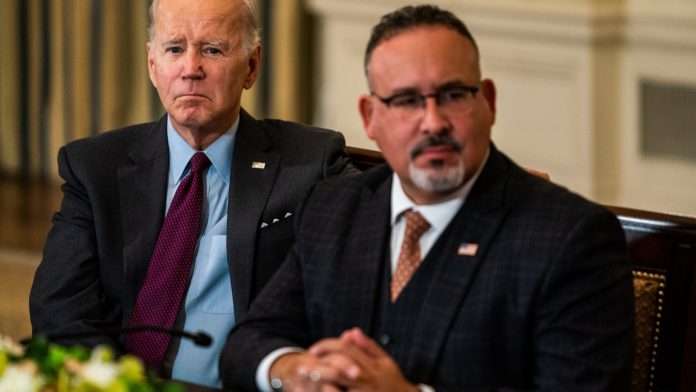
President Joe Biden pictured with his Department of Education secretary, Miguel Cardona, in October 2022.

Demetrius Freeman/The Washington Post via Getty Images


hide caption

toggle caption

Demetrius Freeman/The Washington Post via Getty Images

The Biden-era U.S. Education Department, under Secretary Miguel Cardona, endured more than its fair share of crises over the past four years.

Some were beyond the department’s control (COVID-19), while others were the result of its own decisions (the troubled rollout of the Free Application for Federal Student Aid, or FAFSA).

How well did the department handle those challenges?

NPR spoke with more than a dozen educators, researchers, advocates and policy experts, including two former U.S. secretaries of education, to find out how they would grade Biden’s Education Department.

The results varied depending on the politics of the evaluator, with conservatives being harsher in their assessments. But there was some agreement: for example, that Biden’s greatest success was in guiding schools out of the COVID-19 era. Most observers also agreed that, when it comes to education overall, Biden will most likely be remembered for a pair of high-profile failures: the FAFSA rollout and his unkept promise to provide broad student loan forgiveness.

The grades: No A’s, two F’s and a lot of in-between

Of the 14 experts NPR consulted for this wholly unscientific poll, the Biden administration got no A’s, a bunch of B’s, two hedgie B-/C+’s, two C’s, two D’s, two F’s and one “incomplete” for work left unfinished.

That averages out to be… pretty average, a C.

President Barack Obama’s last education secretary, John B. King Jr., gave Cardona and his team one of those B’s, “with still much to be determined because there are a number of things that are still being litigated [in the courts].” (More on that later.)

The “incomplete” came from Margaret Spellings, a former education secretary under President George W. Bush. “There’ve been some real misses, but also some room for praise.“

“I want to give them a C,” says Denise Forte, who runs the liberal-leaning Education Trust, though she makes clear, it’s not a C+.

The two most conservative experts on our panel were scathing.

“An F,” says Lindsey Burke, of the conservative-leaning Heritage Foundation. “There is just very little, if anything, you can point to in terms of success.”

“It’s hard for me to think how it could have gone worse,” says Rick Hess at the conservative-leaning American Enterprise Institute (AEI), who likewise gives Biden an F.

Let’s start with the issue that most of our experts thought Biden handled well.

President Biden visits students at East End Elementary School, in North Plainfield, N.J., during the second year of the pandemic.

President Biden visits students at East End Elementary School, in North Plainfield, N.J., during the second year of the pandemic.

Evan Vucci/AP


hide caption

toggle caption

Evan Vucci/AP

Helping schools through the COVID-19 pandemic

When Biden was inaugurated, in January 2021, only about a third of K-12 students had returned to full, in-classroom instruction after widespread pandemic closures, according to Burbio, an organization that tracked pandemic-era schooling.

The nation’s schools were nearly a year into COVID’s unprecedented disruptions, and Congress, under President Donald Trump, had already voted to send them nearly $70 billion in relief to help districts reopen safely.

Just weeks after taking office, Biden pushed lawmakers to send even more money to schools, saying reopening “can only be achieved if Congress provides states and communities with the resources they need to get it done safely.”

On March 11, 2021, Biden signed the American Rescue Plan (ARP) Act, sending schools another $122 billion and focusing it specifically in lower-income communities. This move offered a lifeline to many schools, and Congress included a requirement that local districts set aside at least 20% of their funding to pay for services to address pandemic-related learning loss.

“It was done efficiently. I think they rightly put a focus on learning loss and afterschool programs and intensive tutoring and those sorts of things that we know help students catch up,” says Spellings.

For King, the key to success wasn’t just those ARP dollars. “Secretary Cardona came in with the task of trying to make sure that kids got back in school and that educators could be hopeful again. And he was, in some ways, the exact right person.”

At the time, the debate over the return to school had become bitterly political, with then-President Trump and Education Secretary Betsy DeVos pushinghard for schools to reopen, while teachers unions remained skeptical and, in some places, fiercely resistant.

King says Cardona, as a Democrat, former teacher and school administrator, used his credibility “to rally people around the return to school. … I think that was a great service to the country.”

Biden’s student loan accomplishments

The Biden education team’s other notable success may surprise you.

“Ironically, one of their successes,” says Karen McCarthy with the National Association of Student Financial Aid Administrators (NASFAA), “is in the area of loan forgiveness. And I feel like, to a lot of other people, they see loan forgiveness as one of [Biden’s] failures.”

McCarthy is one of several experts in our poll to highlight that Biden pursued two different strategies to achieve federal student loan forgiveness: an ambitious, high-profile strategy that failed (more on that in a minute) and a lower-profile, bureaucratic strategy that succeeded.

The strategy that worked was to focus on improving pre-existing forgiveness programs that Congress had already created, including one for borrowers who work a decade in public service and another that promised relief for borrowers with a severe disability.

When Biden was elected, both programs were difficult to navigate, with thousands of qualified borrowers left on the outside looking in because of technicalities and mismanagement by loan servicers and the Education Department itself.

Cardona and his team expanded the rules of Public Service Loan Forgiveness, streamlined the “Total and Permanent Disability Discharge” program, expanded forgiveness for borrowers who had been defrauded by their colleges and even provided forgiveness to thousands of borrowers who had been hurt or held back by problems with income-driven repayment.

Even the conservatives in our poll conceded that, while they didn’t support these forgiveness efforts, the changes were arguably within the president’s power – certainly compared to Biden’s other, larger loan forgiveness efforts.

On its way out this week, the Biden administration announced that it has approved roughly $180 billion in debt relief for more than 5 million borrowers – “there is no comparison with any other administration,” Cardona told NPR in an exit interview.

“One in eight people with student loan debt have had it relieved. One in eight,” Cardona said.

U.S. Education Secretary Miguel Cardona looks on in October 2022 as President Biden delivers remarks about the online portal for his first, big student debt relief effort – an effort that was ultimately struck down by the Supreme Court.

U.S. Education Secretary Miguel Cardona looks on in October 2022 as President Biden delivers remarks about the online portal for his first, big student debt relief effort – an effort that was ultimately struck down by the Supreme Court.

Brendan Smialowski/AFP via Getty Images


hide caption

toggle caption

Brendan Smialowski/AFP via Getty Images

The problem for Biden and his education legacy is that he had promised to do far more.

The student loan forgiveness failures 

“The student loan forgiveness stuff has been a mess,” says former Education Secretary Margaret Spellings when asked about Biden’s sweeping efforts to provide at least some forgiveness to most borrowers.

There was the first, big plan, to erase $10,000 to $20,000 in debt for most borrowers. That one was nixed by a Supreme Court that chided Biden for executive overreach.

Biden’s Plan B, which would have helped a smaller pool of borrowers, was also challenged in court and, last month, abandoned by the administration.

And then there’s Biden’s loan repayment plan, known as the SAVE plan. It was so forgiving, it rivaled the price tag of his original forgiveness pitch, though SAVE is also now frozen in the courts, again over fears of executive overreach. If it’s not scuttled by a judge’s order, it will likely be shelved by the Republican-held Congress or the new Trump administration.

The Biden administration spent an enormous amount of time, money and human capital creating these three loan forgiveness schemes, attempting to implement them and then defending their legality in court. And for their considerable efforts, they went 0 for 3. Whether you see that as a failure of Biden’s team likely depends on your politics.

Forte, at EdTrust, argues “it was the right thing to focus on.” After all, she says, “the amount of debt that students are carrying, particularly students of color, students from low-income communities, is preventing them from reaching the American dream that everybody deserves.”

On the other hand, Lindsey Burke, who wrote the education platform for Project 2025, says Biden’s most ambitious efforts were legally dubious and “have been slapped down by the courts. So that’s a failure. It should have never happened. Student loan cancellation is bad policy, but it’s a failure in terms of the Biden administration’s ability to advance its agenda.”

In that failure, former Education Secretary John B. King Jr. sees an important lesson for future administrations, who “are going to have to spend a lot more time thinking through, ‘Where can we legislate [with Congress] rather than assuming that executive action is going to survive legal challenge?’ “

In his last week on the job, Cardona insisted to NPR that he believed he had the legal authority to forgive student loans on a grand scale, even if the courts ultimately disagreed.

Miguel Cardona listens during his Capitol Hill confirmation hearing February 2021.

Miguel Cardona listens during his Capitol Hill confirmation hearing February 2021.

Anna Moneymaker/The New York Times via AP


hide caption

toggle caption

Anna Moneymaker/The New York Times via AP

“I’d rather fight to do as much as possible and get shot down than not fight at all,” Cardona said.

The problem with these high-profile loan forgiveness fights is that they required enormous amounts of time, money and expertise and, according to many on our expert panel, arguably hampered the Education Department’s ability to do other things.

Two years ago, NPR reported that the White House’s unwillingness to limit its loan forgiveness efforts led to a political impasse over funding the office of Federal Student Aid.

The result: The office tasked with managing the return to student loan repayment after a long pandemic pause, as well as the rollout of an overhauled FAFSA, was flat-funded for 2023.

That flat-funding no doubt contributed to the Biden education team’s subsequent struggles.

Experts agree: FAFSA was the greatest failure

More than 17 million current and aspiring college students fill out the FAFSA each year in order to qualify for student loans, grants and more. For many, the form is nothing short of a bridge between students’ hopes and dreams, and college. In late 2023, that FAFSA bridge collapsed.

The short version of this story is that, in 2020, Congress voted to make the FAFSA easier to complete, but that required the U.S. Department of Education to overhaul the online form – and the launch of that new form did not go well.

“My gosh, that was so bad,” says McCarthy, whose group, NASFAA, represents college financial aid administrators. “The FAFSA is normally up by October, and really nobody could start filling it out until January.”

There wasn’t just one problem with the rollout – there were many. (The nonpartisan U.S. Government Accountability Office has outlined them in detail.)

Ashton Spatz, center, a financial aid adviser with the University of Illinois at Chicago, assists Jessena Sanchez, left, and her daughter, Leslie Delve, a sophomore at UIC, during a FAFSA workshop in February 2024.

Ashton Spatz, center, a financial aid adviser with the University of Illinois at Chicago, assists Jessena Sanchez, left, and her daughter, Leslie Delve, a sophomore at UIC, during a FAFSA workshop in February 2024.

Vincent Alban/Tribune News Service via Getty Images


hide caption

toggle caption

Vincent Alban/Tribune News Service via Getty Images

McCarthy says those problems resulted in the department taking months longer than usual to send students’ financial aid information on to schools. “It really is quite amazing that students got aid packages and enrolled in the fall.”

Nearly everyone NPR spoke with about President Biden’s Education Department said the FAFSA was its greatest failure and most think it will likely define Biden’s education legacy.

To Spellings, a former Republican education secretary, the FAFSA debacle was “a huge miss and has residual consequences, now and into the future. It was really a big fail.”

King, a former Democratic education secretary, agrees, saying “the FAFSA debacle, and that’s what we have to call it, set us back.”

Those who previously ran or worked at the Education Department, including Spellings, King and Denise Forte, now with EdTrust, all expressed some sympathy for department staff and the technological challenges the FAFSA overhaul presented.

“I’m not going to disparage the folks that are over at the department. I worked at the Department of Education. Career folks are amazing,” Forte says. “[FAFSA] was a huge, huge undertaking.”

But like everyone we spoke with, Forte says the department should have done better. “All you had to do was look at Healthcare.gov and know that we should have been dotting i’s and crossing t’s on this rollout. And that unfortunately didn’t happen.”

In his exit interview with NPR, Cardona acknowledged “delays and errors” were “frustrating for students and families,” but he was also defiant, insisting that the task of revamping the FAFSA was Herculean and the struggles should not define Biden’s legacy.

“More students every year will have access to federal dollars… because of the work that happened during the Biden administration. And it meant we took some bruises and we learned the hard way on certain things. But the system is better now for the next generation because of the work that we did.”

The latest FAFSA launched smoothly late last year, and Cardona says the department has already processed 4 million applications.

The slide in student achievement under Biden

In spite of the flood of federal dollars schools received through the American Rescue Plan, the pandemic triggered an alarming slide in K-12 student achievement.

Many of the experts who spoke with NPR worry that the funding law’s 20% requirement around learning loss was too low, that the money didn’t buy as much learning as it could have. And they worry that the nation’s schools aren’t likely to see so much funding again anytime soon.

On the National Assessment of Educational Progress, also known as the Nation’s Report Card, the average reading score for 13-year-olds in 2023 fell, compared to 2020 – to its lowest point in 50 years.

Math scores for 9- and 13-year-olds have both fallen considerably since 2020.

There was some hope, in the early days of the pandemic recovery, that those $190 billion in extra federal funding would help schools pay for interventions that could make up for learning missed during the pandemic and maybe even reverse this slide in achievement.

That did not happen.

Research shows the money did help students catch up, somewhat. But learning gaps remain.

“I mean, this will be with these students for years to come. It will affect a generation of kids,” says Heritage’s Lindsey Burke.

Hess was one of several experts who said he would have liked to have seen Cardona and his team bring more attention to these declines, even if it’s uncomfortable. “I mean, if Cardona or Biden spent any time talking about academic achievement, I think I missed it.“

Nearly everyone we spoke with believes these achievement declines need more attention.

“We need to get reading and math focused on, attended to, make folks accountable for it and get back to basics,” Spellings says.

Forte agrees. “Because the pendulum has swung the wrong way in many places.”

“I’ll never be satisfied with the growth,” Cardona told NPR this week, “because I know the potential in our country. But I am proud of the work that our educators have done, and I know that we’re moving in the right direction.”

In the end, the Biden education team inherited two crises (pandemic school closures and sliding student achievement) and created another (FAFSA).

They erased the federal student loan debts of more than five million borrowers, but many more will remember not getting the loan forgiveness Biden promised in August 2022. Whether they blame that failure on his education team or on Republican opponents who used the courts to torpedo Biden’s biggest plans, only time will tell.

Jack Hoffman, Nebraska superfan who went viral for spring game TD, dead at 19 after brain cancer battle

0

Jack Hoffman, a Nebraska Cornhuskers superfan battling cancer who captured the attention of the nation for his spring game touchdown run when he was 7 years old, has died. He was 19.

Hoffman died of brain cancer on Wednesday, Team Jack Foundation Executive Director Kylie Dockter said. He had battled new and more aggressive tumors late last year.

CLICK HERE FOR MORE SPORTS COVERAGE ON FOXNEWS.COM

Cancer survivor Jack Hoffman before delivering a drug-free pledge during the halftime of Nebraska’s NCAA college football spring game in Lincoln, Nebraska, on April 12, 2014. (AP Photo/Nati Harnik, File)

“It is with heavy hearts that we share the news of the passing of Jack Hoffman, the courageous namesake of the Team Jack Foundation. Jack passed away after a long and hard-fought battle with brain cancer, a journey that inspired countless lives and left a legacy of hope, strength, and resilience,” the foundation said in a statement on social media.

“Through his battle, Jack touched lives far and wide. From his unforgettable 69-yard touchdown run during the Nebraska Spring Game that captivated the hearts of millions to the countless families who found solace and support through the work of the Team Jack Foundation, his impact will echo for generations. Jack may no longer be with us in person, but his legacy lives on in the work of the Team Jack Foundation, in the lives of the children and families we’ve helped, and in the hope he gave to so many.”

Hoffman was initially diagnosed with brain cancer in 2011, and his parents helped launch the foundation to support research efforts to end pediatric brain cancer.

OHIO STATE PLAYER, TIKTOK STAR DISMISSED BEFORE NATIONAL CHAMPIONSHIP GAME AGAINST NOTRE DAME

Hoffman’s father, Andy, was diagnosed with brain cancer in 2020 and died March 1, 2021. He was 42.

The foundation has raised more than $12.6 million since 2013.

Hoffman went viral during Nebraska’s 2013 spring game after the coaching staff invited him to run a play in the fourth quarter. Hoffman ran for a 69-yard touchdown, and he was the talk of the sports world for several days.

In the midst of all of it, he started up a friendship with running back Rex Burkhead. The two, along with Hoffman’s family, later visited then-President Obama, who presented the youngster with a new football and told him he was proud of him.

“Love you buddy. Tell Jesus we say hello,” Burkhead wrote in a post on X.

Jack Hoffman at the ESPYs

Jack Hoffman, left, along side his father, Andy Hoffman, accepts the award for best moment at the ESPY Awards, July 17, 2013, at Nokia Theater in Los Angeles. (John Shearer/Invision/AP, File)

CLICK HERE TO GET THE FOX NEWS APP

Hoffman played football at Atkinson High School and graduated in May. He was pre-law at the University of Nebraska-Kearney.

The Associated Press contributed to this report.

Follow Fox News Digital’s sports coverage on X, and subscribe to the Fox News Sports Huddle newsletter.

Hamas After Cease-Fire: Weakened but Still the Dominant Palestinian Power in Gaza

0

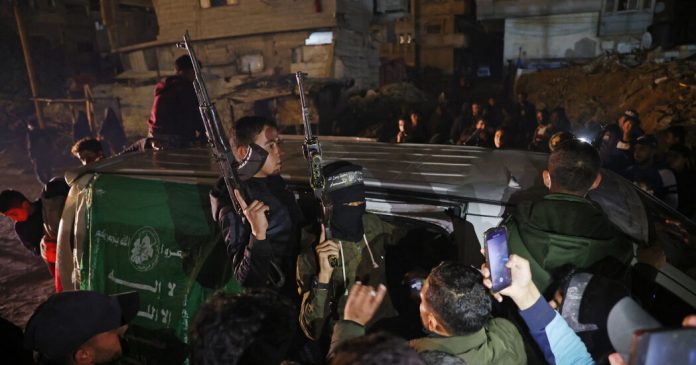
Israel’s military campaign in Gaza has delivered devastating blows to Hamas: It has killed top Hamas leaders and thousands of militants, pummeled the militant group’s tunnel network and undermined its ability to threaten Israel with rocket fire.

When Hamas launched its Oct. 7, 2023, attack against Israel, it had hoped to ignite a regional war that would draw in its allies and lead to Israel’s destruction. Instead, it has been left to fight Israel almost entirely alone. Its allies have been decimated in Lebanon, toppled in Syria and weakened in Iran. The Houthis in Yemen have only managed to inflict occasional rocket and drone attacks, most of which Israel has intercepted.

Despite its isolation, however, Hamas remains the dominant Palestinian power in Gaza even after 15 months of Israeli bombardment, holding sway in displacement camps and refusing to surrender. Although many Palestinians have criticized the group’s decision to carry out the October 2023 attack — unleashing a war that has killed tens of thousands of Gazans and reduced cities to rubble — it has faced relatively little popular unrest.

Hamas has celebrated the provisional cease-fire agreement announced on Wednesday as an “accomplishment,” but its future role in Gaza remains uncertain.

The deal calls for an eventual “cessation of military operations and hostilities permanently,” but Prime Minister Benjamin Netanyahu of Israel has repeatedly suggested that that he will resume attacking Hamas after some hostages held by militants are released.

Yet if the full, multistage agreement is implemented, it could open the door to Hamas rebuilding its ironclad control over Gaza, or at least allow it to maintain an influential role in the territory. Analysts connected to Hamas believe that Israel will struggle to resume the war in the face of international pressure, and that Hamas will play a key role in the future of Gaza.

“Hamas will be present in every detail in Gaza,” said Ibrahim Madhoun, an analyst close to the militant group. “Trying to bypass Hamas will be like burying your head in the sand.”

Mr. Madhoun acknowledged that Hamas’s military wing, the Qassam Brigades, had suffered losses, but said it was still “standing on solid ground” and had recruited new people to replace those killed. Antony J. Blinken, the U.S. secretary of state, said this week that American officials had assessed that Hamas has brought in almost as many new fighters as it has lost in the war.

But if Israel decides to return to war, it could continue to weaken the group.

Resuming the war would not only be a disaster for the Palestinian people, but also Hamas said Tamer Qarmout, a professor of public policy at the Doha Institute for Graduate Studies.

Under such a scenario, Mr. Qarmout said, Israel could find itself moving toward occupying Gaza, which may “cut off Hamas but antagonize everyone else in the public.”

Trump’s pick for interior secretary is Doug Burgum. Here’s what to know : NPR

0

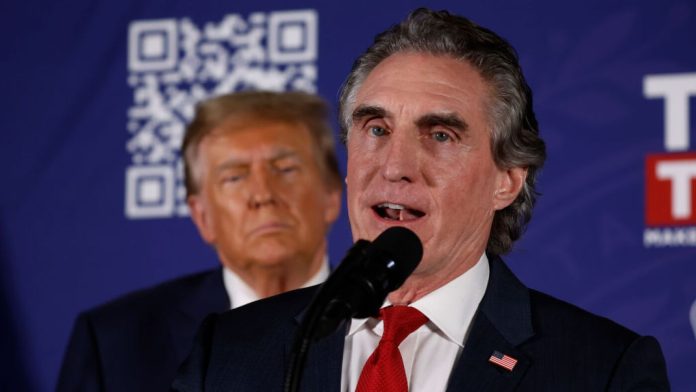
Doug Burgum encourages voters to support Donald Trump during a campaign rally in January 2024 in Laconia, N.H. Burgum ran against Trump for the Republican presidential nomination but later dropped out and endorsed him.

Chip Somodevilla/Getty Images


hide caption

toggle caption

Chip Somodevilla/Getty Images

We’re following the confirmation hearings for the incoming Trump administration. See our full politics coverage, and follow NPR’s Trump’s Terms podcast or sign up for our Politics newsletter to stay up to date.

Who: Doug Burgum

Nominated for: Secretary of the Interior

You might know him from: The 2024 Republican presidential primary. The former governor of North Dakota ran on his experience as a successful businessman before dropping out of the primary and becoming a vocal supporter of former President Donald Trump, then the front-runner, landing on the VP shortlist.

More about Burgum:

  • He sold his software company to Microsoft in 2001 for $1.1 billion. 
  • He is a big booster of oil and gas drilling. 
  • He pledged for North Dakota to be carbon neutral by 2030, largely through carbon capture and storage. 

Position: The Department of the Interior oversees public and federal lands and their natural resources, the Bureau of Indian Affairs, the National Park Service and the Fish and Wildlife Service.

If confirmed as secretary of the interior, Doug Burgum would become a key player in implementing one of the Trump administration’s overarching goals: “Drill, baby, drill.”

The Department of the Interior manages roughly one-fifth of the lands and waters of the United States, giving Burgum — the former governor of an oil-rich state — significant leverage to increase domestic oil and gas production, which is already at an all-time high. But the massive department also oversees national parks and monuments, endangered species protections and relations with federally recognized Native American tribes.

During the first Trump administration, the Department of the Interior cut regulations to make it easier to drill on federal land, significantly weakened the power and scope of the Endangered Species Act and shrunk two national monuments. Deb Haaland, secretary of the Interior during the Biden administration, reversed many of these actions and focused on boosting conservation and renewable energy.

Burgum is expected to reverse course again. Burgum’s pro-drilling stance is fairly well established, and as Trump’s proposed head of the newly proposed National Energy Council — a body that will oversee regulatory processes across government agencies — he’d have considerable power to push fossil fuel extraction.

His views on conservation issues are murkier.

His confirmation hearing, set for Thursday at 10 a.m. EST, could provide a clearer sense of his priorities.

Before jumping into politics for his 2016 governor run, Burgum worked as a software executive. In 2001, he sold his company, Great Plains Software, to Microsoft for $1.1 billion. As governor, he presided over record oil production in North Dakota, though most of this occurred on private, not public, lands. He also pledged to make North Dakota carbon neutral by 2030, largely through carbon capture and storage, not a dramatic increase in renewables.

Burgum will likely face questions from senators about privatizing public land for drilling. Federal lands currently account for roughly one-quarter of the United States’ greenhouse gas emissions, and dramatically boosting fossil fuel production there could increase climate-warming gases.

On the conservation front, Burgum could be asked about whether he’d support weakening the Endangered Species Act, shrinking or eliminating national monuments established by the Biden administration, and drilling in sensitive areas, like the Arctic National Wildlife Refuge in Alaska.

He is expected to be confirmed.

Christina Haack’s divorce will go to trial as estranged husband refuses mediation

0

Christina Haack’s heated divorce battle with estranged husband Josh Hall is heading for the courtroom.

Haack and Hall are “not even close” to settling their divorce.

“We’re going to be going to trial, I hear,” the HGTV star said during a Jan. 12 appearance on Sirius XM’s “Jeff Lewis Live.” “He doesn’t want to do mediation. It’s going to be fun, can’t wait.”

CHRISTINA HALL SAYS EX MADE ‘LIFE HARDER OVER INSECURITIES’; SHE GOT SILENT TREATMENT OVER TAREK EL MOUSSA

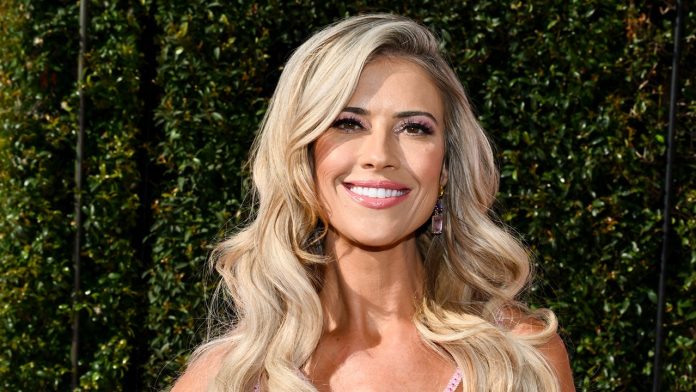
Christina Haack says her divorce with estranged husband Josh Hall will go to trial. (Getty Images)

Haack noted she hasn’t been “ordered” to pay Hall’s attorney’s fees, “but he’s been asking.” “I’ve already had to give a little something,” she admitted. The reality TV star claimed she has been financially supportive of Hall.

“I gave him money to live, and then he bought a Bentley, but then he also doesn’t have a job,” she noted. “But he drives a Bentley, so I’m sure he’s pulling a lot of chicks.”

Haack’s representative declined to comment when reached by Fox News Digital.

HGTV STAR CHRISTINA HALL’S TENSE FIGHT WITH ESTRANGED HUSBAND JOSH CAUGHT ON CAMERA

Christina Hall walks red carpet at Barbie premiere with husband Josh

Christina Haack says she and Josh Hall “don’t get along” and are “not even close” to settling their divorce. (Axelle/Bauer-Griffin)

While speaking with Lewis, Haack also noted she and Hall “don’t get along, there’s no getting along. Have you ever seen how I go after him on social? No. Anyways, yeah we don’t get along.”

On Tuesday, Haack called out Hall for his “narcissism” in a scathing post on Instagram after the realtor’s rep released a statement saying it’s “sad Christina must resort to low blows about her ex Josh to promote her new show. She should focus on her new relationship and stop talking about Josh. As the great Mariah Carey once sang, ‘Why you so obsessed with me?’”

The statement was given to Life & Style regarding Haack’s appearance on “Jeff Lewis Live.”

“I just threw up in my mouth,” Haack wrote over the statement on her Instagram story. “Quoting a Mariah Carey song is a new low even for you. Trust me idgaf about Josh’s life. I do however care about his bts tactics. Narcissism at its finest.”

Christina Haack posts to Instagram

Christina Haack calls out Josh Hall on Instagram. (Instagram: Christina Haack)

Despite the legal back-and-forth that continues to build up, both have been trying to move on.

Hall posted a birthday tribute on social media for model Stephanie Gabrys on his Instagram, seemingly confirming their relationship.

“Happy Birthday to this real life [angel emoji],” he captioned a photo of Gabrys sitting on his lap.

Haack has also moved on with CEO and President of Network Connex Christopher Larocca, according to People magazine.

Josh Hall posts on Instagram

Josh Hall seemingly confirmed his relationship with model Stephanie Gabrys with a photo shared to his Instagram story. (Instagram: Josh Hall)

LIKE WHAT YOU’RE READING? CLICK HERE FOR MORE ENTERTAINMENT NEWS

Haack and Hall filed their own divorce petitions in July, each citing irreconcilable differences as the reason for the dissolution of their marriage. Hall requested spousal support and asked the court to terminate Haack’s ability to receive spousal support from him. Meanwhile, Haack requested the court terminate both of their ability to be awarded spousal support.

“I prefer privacy, especially during something as life-changing as a divorce I did not ask for,” Hall wrote on Instagram after the divorce news broke. “I will not publicly badmouth anyone as people have families, friends and others who respect and love them. Unfortunately, the internet is forever.”

“We are real humans, this is our life and I am not here to entertain people I don’t know with my private matters. Those details will be handled fairly behind closed doors with our respective counsels in due time. Those who know each of us, know who we are.”

Christina Hall and Josh Hall with Christina's three children

Christina Haack and Josh Hall filed for divorce in July 2024. (Jon Kopaloff/Getty Images for Feld Entertainment)

Despite Hall’s plea for no drama, the ongoing divorce battle has been heated.

Haack previously slammed Hall’s alleged request of $65,000 in monthly spousal support while the two worked out details of their split. The HGTV star’s lawyer claimed in an Oct. 10 legal filing obtained by Fox News Digital that the request was “outrageous” because Hall is “self-supporting.”

“The claim by [Josh] that he sent a good faith settlement offer is not an accurate characterization of the communication. The Petitioner Josh Hall requesting $65,000 per month in Spousal Support from [Christina] on a 2-year, 9-month marriage when he is self-supporting is hardly good faith,” the documents read. “[Josh] just paid $70,000 to pay off the lease on [his] separate property Bentley and so he has no need for spousal support from [Christina].”

Josh Hall posts on Instagram

Josh Hall claimed Christina Haack’s legal filing saying he requested $65,000 per month in spousal support was full of lies. (Instagram: Josh Hall)

However, Hall slammed the claim with a statement shared on social media: “So now @dearmeylaw files legal declarations with lies and assumptions… interesting tactic for someone who is a licensed attorney and took an oath of integrity,” he wrote on his Instagram story at the time. “Pretty sure making provably false statements to a judge is unethical.”

Money issues have seemed to be a reoccurring spot of conflict for the former couple. Haack previously accused Hall of transferring $35,000 from her bank account into his personal account just one day after the divorce filing.

“I would not have asked him to send himself my money the day after I told him we are getting divorced,” Haack stated in court documents obtained by Fox News Digital.

CLICK HERE TO SIGN UP FOR THE ENTERTAINMENT NEWSLETTER

Tarek and Christina in a promo photo for "Flip or Flop."

Christina Haack was previously married to Tarek El Moussa. (Aaron Rapoport/Corbis/Getty Images)

Haack was married twice before meeting Hall and secretly tying the knot in 2021. She was married to fellow HGTV star Tarek El Moussa from 2009 until 2018. The former couple share two children, daughter Taylor and son Brayden.

Before marrying Hall in 2021, Haack finalized her divorce with her second husband, Ant Anstead. Haack and Anstead married in 2018 and share a son together.

Christina Haack and Ant Anstead on the red carpet

Christina Haack was previously married to Ant Anstead. (Getty Images)

CLICK HERE TO GET THE FOX NEWS APP

Israeli Cabinet Has Yet to Vote on Gaza Cease-Fire Deal: Live News Updates

0

The long-sought, tortuously negotiated Gaza cease-fire deal announced on Wednesday came about in part through a remarkable collaboration between President Biden and President-elect Donald J. Trump, who temporarily put aside mutual animosity to achieve a mutual goal.

The two presidents directed their advisers to work together to push Israel and Hamas over the finish line for an agreement to halt the fighting that has ravaged Gaza and release hostages who have been held there for 15 months. The deal is set to start on Sunday, the day before Mr. Biden turns over the White House to Mr. Trump.

Each president had his own interest in settling the matter before Inauguration Day. For Mr. Biden, the deal, if it holds, represents a final vindication on his watch, what he hopes will be the end of the deadliest war in the history of the Israeli-Palestinian conflict while freeing Americans as well as Israelis from captivity. For Mr. Trump, the deal, for now, takes a major issue off the table as he opens a second term, freeing him to pursue other priorities.

The dramatic development, just five days before the transfer of power in the United States, cut against the natural grain in Washington, where presidents of opposing parties rarely work in tandem during a transition, even in the face of a major crisis. But the political planets quickly returned to their normal orbits as both sides argued over who deserved credit for resolving the standoff.

While Mr. Biden waited for official word to come from the region, Mr. Trump got the jump on him by disclosing the deal himself in an all-caps social media post. “This EPIC ceasefire agreement could have only happened as a result of our Historic Victory in November,” he added soon afterward.

By the time Mr. Biden appeared before cameras at the White House later in the afternoon, he was more gracious, noting that the two teams spoke with one voice. But he bristled when asked who merited credit, he or Mr. Trump. “Is that a joke?” he asked.

Mr. Biden said the two teams worked together on the deal, but bristled at the question of who merited credit.Credit…Pete Marovich for The New York Times

Still, the partnership, awkward and prickly as it was, stood out in an era of deep polarization. “It really is extraordinary,” said Mara Rudman, who was deputy special envoy for Middle East peace under President Barack Obama. “Everybody’s talking about who gets credit, but the fact is that it’s shared and part of the reason it worked is that it’s shared.”

That was not to say that it would lead to enduring synergy on this or other issues. “This was a case where the right thing to do aligned with people’s best political interest as well,” said Ms. Rudman, now a scholar at the University of Virginia’s Miller Center.

However credit is ultimately apportioned, diplomats, officials and analysts said it seemed clear that both presidents had played important roles. The deal that was finally agreed to was essentially the same one that Mr. Biden had put on the table last May and that his envoys, led by Brett H. McGurk, his Middle East coordinator, had worked painstakingly to make acceptable to both sides.

At the same time, Mr. Trump’s impending return to power and his blustery threat, that “all hell will break out” if the hostages were not released by the time he was sworn in, clearly changed the calculations of the warring parties. Prime Minister Benjamin Netanyahu of Israel, the beneficiary of so much support from Mr. Trump during his first term, could not take for granted that the new president would back him if he prolonged the war during his second term.

Indeed, it was telling that Mr. Netanyahu, who goes by the nickname Bibi, called Mr. Trump first to thank him after the deal was announced and only then called Mr. Biden. In a statement, Mr. Netanyahu emphasized his gratitude to Mr. Trump “for his remarks that the United States will work with Israel to ensure that Gaza will never be a terrorist haven.” Mr. Biden was not mentioned until the fourth paragraph and only in a single sentence that thanked him “as well” for his assistance.

Gathering in Tel Aviv shortly after the declaration of a cease-fire.Credit…Peter van Agtmael for The New York Times

Mr. Trump’s desire to force a deal went beyond his trademark public threats and extended to constructive assistance on the ground. He authorized Steve Witkoff, his longtime friend whom he picked as special envoy for the Middle East, to work with Mr. McGurk to press negotiators to finalize the agreement. Mr. McGurk and his team were happy to have the help and use Mr. Witkoff’s support as leverage.

“This was Biden’s deal,” former Representative Tom Malinowski, Democrat of New Jersey, wrote on social media, “but as much as I hate to say it, he couldn’t have done it without Trump — not so much Trump’s performative threats to Hamas, but his willingness to tell Bibi bluntly that the war had to end by Jan. 20.”

There were some Republicans who were willing to praise Mr. Biden for his efforts to forge the agreement along with Mr. Trump. “It is good to see the Biden Administration and Trump Transition working together to get this deal done,” Senator Thom Tillis of North Carolina wrote on social media.

Few transitions have seen such a moment of intersecting interests. In the throes of the Great Depression, the defeated President Herbert Hoover tried to engage President-elect Franklin D. Roosevelt to team up to address a bank crisis, only to be rebuffed by an incoming leader who did not want to be tied to his predecessor.

A more eerily haunting example came 44 years ago, when President Jimmy Carter labored until the final hours of his presidency to free 52 American hostages being held in Iran without help from his successor, President-elect Ronald Reagan. In fact, some evidence has emerged suggesting that people around Mr. Reagan tried to discourage Iran from releasing the hostages before the election for fear that it would help Mr. Carter, although official investigations never verified that.

Mr. Biden’s team recalled how Iran, in 1981, held back planes with hostages it was releasing until after Jimmy Carter’s successor, Ronald Reagan, was sworn into office.Credit…Mark Goecks/Associated Press

Mr. Carter ultimately struck a deal to free the hostages, but in a final insult Iran held back the planes with the Americans onboard until moments after Mr. Reagan was sworn in on Jan. 20, 1981. That memory was not lost on Mr. Biden’s team in recent weeks, especially after Mr. Carter’s death last month. Administration officials and their allies in recent days had been morbidly mulling the possibility of history repeating itself.

The coming change in political leadership in the United States was not the only factor driving the negotiations over the war in Gaza. The situation on the ground has changed dramatically since Mr. Biden first offered his cease-fire proposal in May.

In the interim, Israel has decapitated the leadership of Hamas, all but demolished its allied militia Hezbollah in Lebanon and taken out key military facilities in Iran. A Biden-brokered cease-fire in Lebanon left Hamas without a second front against Israel, further isolating it. And the fall of President Bashar al-Assad in Syria only reinforced the weakness of Iran and its allies and proxies.

But the looming Inauguration Day in Washington created a new action-forcing deadline that was hard to ignore. Mr. Trump said little during the campaign about the war, but when he did he made it clear that he was not happy about it and urged Israel to wrap it up as soon as possible because the heart-wrenching pictures of death and destruction in Gaza were damaging Israel’s reputation on the international stage.

Moreover, Mr. Trump’s relationship with Mr. Netanyahu has evolved since his first term, when he presented himself as the Israeli leader’s staunchest ally. Mr. Trump cut aid to the Palestinians, moved the U.S. Embassy to Jerusalem, recognized Israeli authority over the Golan Heights and presided over diplomatic openings between Israel and several of its Arab neighbors.

But their ties soured in Mr. Trump’s final year in office when he perceived Mr. Netanyahu to be taking advantage, and they deteriorated even further when the prime minister congratulated Mr. Biden on a victory in the 2020 election that Mr. Trump still denies. Mr. Netanyahu has worked assiduously in recent months to make up with Mr. Trump.

Prime Minister Benjamin Netanyahu of Israel, middle, has been working to repair his relationship with Mr. Trump in recent months.Credit…Doug Mills/The New York Times

As for Mr. Biden, his own relationship with Mr. Netanyahu has been strained since the days soon after the Oct. 7, 2023, Hamas-led terrorist attack, when he flew to Israel and hugged the Israeli leader on the tarmac. Biden advisers and allies have suspected that Mr. Netanyahu was deliberately holding off on a cease-fire deal to hand the victory to Mr. Trump in an effort to kowtow to him.

Mr. Biden said nothing about that during his televised remarks on Wednesday. But after 15 months of trying to manage the Middle East crisis and head off a wider regional war, he appeared relieved to see an end coming.

“I’m deeply satisfied this day has come, finally come, for the sake of the people of Israel and the families waiting in agony and for the sake of the innocent people in Gaza who suffered unimaginable devastation because of the war,” Mr. Biden said.

He referred to the collaboration with Mr. Trump without mentioning him by name. “I’d also note this deal was developed and negotiated under my administration,” Mr. Biden said, flanked by Vice President Kamala Harris and Secretary of State Antony J. Blinken. “But its terms will be implemented for the most part by the next administration. These past few days, we’ve been speaking as one team.”

Celebrations of the annoucement of a cease-fire in Ramallah, West Bank.Credit…Afif Amireh for The New York Times

Asked about Mr. Trump’s role, Mr. Biden noted that the cease-fire was “the exact framework of the deal I proposed back in May” and claimed credit for giving Israel the backing it needed to weaken Hamas, Hezbollah and Iran. “I knew this deal would have to be implemented by the next team,” he added, “so I told my team to coordinate closely with the incoming team to make sure we’re all speaking with the same voice because that’s what American presidents do.”

Mr. Trump made no mention of the role of his predecessor’s team and left the impression in his social media posts that he had delivered the agreement by himself.

“We have achieved so much without even being in the White House,” he wrote. “Just imagine all of the wonderful things that will happen when I return to the White House, and my Administration is fully confirmed, so they can secure more Victories for the United States!”

Netanyahu delays Israel-Hamas ceasefire vote : NPR

0

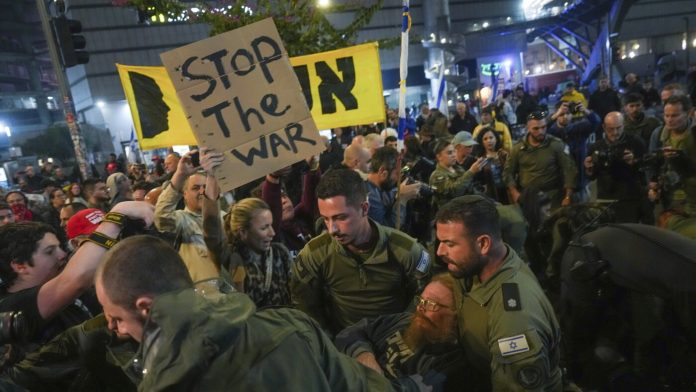
Police scuffle with demonstrators who block a road during a protest demanding a cease-fire deal and the immediate release of hostages held in the Gaza Strip by Hamas, in Tel Aviv, Israel on Saturday.

Ariel Schalit/AP


hide caption

toggle caption

Ariel Schalit/AP

Israel’s Prime Minister Benjamin Netanyahu has said a cabinet meeting that was scheduled to vote Thursday on the peace deal between Israel and Hamas has been delayed, in a blow to hopes that a ceasefire after 15 months of fighting would take effect Sunday.

Netanyahu said that the meeting will only happen once Hamas pulls back on demands for what he called “last minute concession,” adding in a statement that “Hamas reneges on parts of the agreement reached with the mediators.”

He said that until the mediators notify Israel that “all elements of the agreement” have been accepted, the cabinet meeting would not proceed. He did not specify what elements of the deal Hamas had reneged on.

But in an interview with Al-Arabi TV, a senior Hamas official, Sami Abu Zuhri, said there was no basis to claims by Netanyahu that Hamas was retracting parts of the ceasefire agreement.

Another member of Hamas’ political wing, Izzat al-Rishq, said in a statement that Hamas was “committed to the ceasefire agreement, which was announced by the mediators.”

Netanyahu had called President Biden and President-elect Donald Trump to thank them for their help in reaching the deal late Wednesday. But he has simultaneously faced significant domestic political pressure from right-wing members of his coalition government, who have long opposed any kind of deal with Hamas – even though it would lead to the return of dozens of Israelis held captive inside Gaza since October 2023.

Several members of the coalition have repeatedly threatened to abandon the coalition if a deal was finalized – a move that would likely prompt the dissolution of Netanyahu’s current government.

But several more moderate members of Netanyahu’s cabinet said publicly on Wednesday that all their fellow ministers should vote for the deal, as has the country’s president, Isaac Herzog.

In the hours since the deal was announced by U.S. and Qatari officials, 73 people have been killed by Israeli forces and more than 230 injured, according to Hamas-controlled emergency rescue authorities in Gaza, with airstrikes continuing overnight into Thursday morning.

The war began on Oct. 7, 2023, when Hamas-led militants attacked southern Israel from Gaza, killing around 1,200 people and taking more than 250 hostages into Gaza.

The war has killed more than 46,000 Palestinians, according to Gaza health authorities, who said the majority were women and children. The Israeli military says 405 of its soldiers have been killed in fighting since it invaded Gaza.

Patriots rookie Drake Maye, 22, announces engagement to girlfriend of 9 years

0

Drake Maye is ending his rookie season with a ring.

The 22-year-old quarterback announced on his Instagram page that he is engaged to his now-fiancée, Ann Hudson.

“Love doing life with you. Can’t wait to marry you,” Maye wrote in his post.

CLICK HERE FOR MORE SPORTS COVERAGE ON FOXNEWS.COM

New England Patriots quarterback Drake Maye celebrates after running for a touchdown in the first half of an NFL football game against the New York Jets on Sunday, Oct. 27, 2024 in Foxborough, Massachusetts. (AP Photo/Michael Dwyer)

The couple were on a beach right at the water, all alone with an umbrella, roses and a blanket to celebrate the occasion.

Both attended the University of North Carolina, and they celebrated their nine-year dating anniversary this past October.

The New England Patriots took Maye with the third overall selection, and after early struggles, he looked much better as he continued to get action on the gridiron.

Initially starting the season as the backup to Jacoby Brissett, he became the starter in Week 6 and finished with 2,276 passing yards on a 66.6 completion percentage in his dozen starts. He threw 15 touchdowns against 10 interceptions while gaining another 421 yards on the ground and rushing for two scores.

Drake Maye scores touchdown

New England Patriots quarterback Drake Maye, #10, runs for a touchdown against the Arizona Cardinals during the second half of an NFL football game on Sunday, Dec. 15, 2024 in Glendale, Arizona. (AP Photo/Rick Scuteri)

VIKINGS LEGEND SAYS SAM DARNOLD ‘SHOULD BE THE GUY’ MOVING FORWARD DESPITE POOR ENDING TO SEASON

Maye is not the only quarterback in the AFC East to get engaged recently. 

Josh Allen of the Buffalo Bills put a ring on musician Hailie Steinfeld’s finger.

The engagement is certainly a nice break from the recent drama in Pats land – after New England’s season finale, the team fired first-year head coach Jerod Mayo, a move that has been heavily criticized by ex-Patriots.

However, earlier this week, they made the unsurprising move and hired Mike Vrabel, who was available to be hired last offseason, as well.

Drake Maye celebrates

New England Patriots quarterback Drake Maye tosses a fan a souvenir from the team’s 19-3 win over the Chicago Bears in an NFL football game on Sunday, Nov. 10, 2024 in Chicago. (AP Photo/Erin Hooley)

CLICK HERE TO GET THE FOX NEWS APP

Hopefully, for Pats fans, Vrabel can help Maye get his second ring – the next one being for a Super Bowl.

Follow Fox News Digital’s sports coverage on X, and subscribe to the Fox News Sports Huddle newsletter.

How Many Hostages Remain in Gaza, and When Could They Be Released?

0

When Hamas led the Oct. 7, 2023, raids into Israel, killing about 1,200 people, about 250 people were taken into Gaza as hostages, including citizens of Israel, the United States, Britain, Mexico, Thailand and other countries.

Among the captives were the bodies of 37 people killed in the attack, Israeli officials said. Now, about 100 hostages, living and dead, are still being held in the enclave, officials say.

The cease-fire deal announced on Wednesday between Israel and Hamas would begin with an initial phase lasting six weeks, and involve the release of 33 hostages and hundreds of Palestinian prisoners. The agreement requires Hamas to release three female hostages on Day 1, four more on Day 7 and 26 more over the next five weeks, according to a copy of the document obtained by The New York Times. The deal still has to be formally ratified by Israel’s cabinet.

Here’s a closer look at the hostage situation in Gaza.

Early in the war, Hamas released four hostages — two Israeli-American women, Judith Raanan, then 59, and her daughter, Natalie Raanan, then 17, and two Israeli women, Nurit Cooper, then 79, and Yocheved Lifshitz, then 85, citing humanitarian reasons. More than 100 hostages were freed in November 2023 during a staggered truce between Israel and Hamas. In exchange, about 240 Palestinians held in Israel were released.

Eight hostages have been freed in Israeli military operations, including one in the first month of the war, when the military rescued one soldier, Pvt. Ori Megidish, then 19, who had been abducted from her base.

In February 2024, a military operation in the southern Gazan city of Rafah freed two hostages: Fernando Simon Marman, then 60, and Louis Har, then 70.

In June, the Israeli military freed four people kidnapped from the Nova music festival on Oct. 7, 2023: Noa Argamani, then 26; Almog Meir Jan, then 22; Andrey Kozlov, then 27; and Shlomi Ziv, then 41. Ms. Argamani’s case received outsize attention after viral footage showed her being taken into Gaza on the back of a motorcycle as she cried out in desperation.

About 100 Palestinians were killed during the operation, according to the Israeli authorities, but officials in Gaza put the death toll at more than 270, including 64 children. (Neither toll distinguished between civilians and combatants.)

In August, the Israeli military rescued Farhan al-Qadi, then 52, a member of Israel’s Bedouin Arab minority, in an operation that killed at least 20 Gazans, local authorities said.

Of the 250 hostages, about three dozen were presumed dead early in the war, according to the Israeli authorities.

Some of their bodies have since been found in Gaza and repatriated, while other captives initially believed to be alive were subsequently declared killed.

The discoveries have raised questions about the extent to which intense Israeli military operations targeting Hamas have also endangered the captives.

The Israeli military has killed several hostages in error. In December 2023, the military said its soldiers had mistakenly shot and killed three hostages who fled their captors in Gaza: Yotam Haim, 28, and Alon Shamriz, 26, who were taken from Kibbutz Kfar Aza; and Samer Talalka, 24, who was kidnapped from Kibbutz Nir Am while at work.

Last July, Israel’s military retrieved the bodies of five hostages — two soldiers and three civilians, ages 20 to 56. They were found in a tunnel shaft in southern Gaza.

Israeli officials said the captives were killed during the October 2023 attack and their bodies taken as bargaining chips. The next month, Israeli forces said they had recovered the bodies of six hostages in a Gaza tunnel.

In September, the Israeli military recovered the bodies of another six hostages, ages 23 to 40, who it said had been killed in captivity. Among them was Hersh Goldberg-Polin, an Israeli-American whose parents spoke at the Democratic National Convention in August.

In March, the family of Itay Chen — a 19-year-old American born in Israel who was serving in the Israeli military — said it had learned he was killed on Oct. 7, 2023.

In December, the family of Omer Neutra, 21, an Israeli-American serving in the Israeli military, said it had learned he, too, was killed that October. His parents spoke at the Republican National Convention in July.

This month, the Israeli military said Youssef and Hamza Ziyadne were dead. Youssef Ziyadne, 53, was taken hostage from a kibbutz with three of his children, including his 23-year-old son Hamza and two teenagers, Bilal and Aisha, who were freed during the truce in November 2023. The family is part of Israel’s Bedouin Arab minority.

Secretary of State Antony J. Blinken, in a speech on Tuesday, said seven Americans were still being held captive.

Edan Alexander and Sagui Dekel-Chen were believed to be alive as of December, according to the American Jewish Council.

A few of the remaining five were declared dead early in the war. Their bodies remain in Gaza.

How RFK Jr. might handle the threat of bird flu if he’s confirmed : Shots

0

If confirmed, Robert F. Kennedy Jr., President-elect Donald Trump’s pick for health secretary, would have major influence over how the country responds to the bird flu outbreak and prepares for a possible future pandemic.

Kevin Dietsch/Getty Images


hide caption

toggle caption

Kevin Dietsch/Getty Images

Bird flu’s unprecedented spread among livestock and other mammals in the U.S. has raised fears that another pandemic could be in store.

The incoming Trump administration will have to prepare for this risk. As H5N1 spills into more people and animals, scientists warn it could evolve to better infect humans and become more dangerous.

Trump and his picks to helm federal health agencies have largely been silent on bird flu. The messaging so far — and the track record of those Trump has chosen to oversee a potential bird flu crisis — is “worrisome,” says Dr. Andrew Pavia, professor of medicine at the University of Utah who’s worked on influenza pandemic preparedness for more than two decades.

The transition team did not respond to NPR’s request for comment on its plans.

Trump’s choice to lead the Department of Health and Human Services, Robert F Kennedy Jr., has an extensive history of making inaccurate and misleading statements on vaccines and infectious diseases. He’s a lawyer who for years led an advocacy group that is a major player in the anti-vaccine movement, promoting the long-debunked idea that vaccines lead to autism, among other false claims.

Kennedy denies spreading misinformation, though his criticism of vaccines is well known.

He’s also made specific comments undermining trust in the bird flu vaccines. In an online post last summer, he claimed there’s “no evidence” the shots in the federal stockpile will work and that they “appear dangerous.”

And he suggested in another post that “someone” might bioengineer a dangerous form of the virus to profit off the vaccine.

Scientists who study the vaccines are deeply troubled by these statements.

“They are false, baseless and inaccurate,” says Dr. Paul Offit, director of the Vaccine Education Center at the Children’s Hospital of Philadelphia.

Kennedy has also discussed having the National Institutes of Health take a break from infectious disease research for eight years, and replacing hundreds of employees there.

Trump himself suggested last spring that he’d like to disband an office in the executive branch that handles pandemics.

If confirmed as health secretary, Kennedy would have broad powers. He could declare a public health emergency, control and direct funding, and influence key decisions at the Centers for Disease Control and Prevention, the Food and Drug Administration, and NIH, all of which are overseen by HHS.

“At every step, he can certainly play a role in hampering or being a barrier,” says Syra Madad, director of the special pathogens program at NYC Health + Hospitals.

This could be of huge consequence for how prepared the country is to face an escalating crisis. Still, some scientists point to the first Trump administration’s speedy work on a COVID-19 vaccine with Operation Warp Speed, and say they think that ultimately Kennedy would listen to Trump if he called for a similar effort.

“If the president tells him to do something, I would hope that would be the case,” says Dr. Carlos del Rio, a professor of medicine at Emory University. “And let’s be honest, there has been a lot of failure in the current response.”

ITHACA, NEW YORK - DECEMBER 11: Cows from a non-suspect herd are milked at the Cornell Teaching Dairy Barn at Cornell University on December 11, 2024 in Ithaca, New York. The U.S. Department of Agriculture last week issued a federal order that requires the testing of the nation's milk supply amid increasing concerns over H5N1 (avian flu), which has been raising alarm since it was first detected in a Texas cow. In July 2024, New York lawmakers gave $19.5 million in order to expand the Animal Health Diagnostic Center at Cornell University, after avian flu was confirmed to be spreading to dairy cattle. The virus has spread to over 710 dairy herds across 15 states. (Photo by Michael M. Santiago/Getty Images)

In the current U.S. outbreak, bird flu has been found in 925 dairy herds in 16 states, as well as in poultry, pets and wild birds and mammals.

Michael M. Santiago/Getty Images


hide caption

toggle caption

Michael M. Santiago/Getty Images

An urgent need to prepare

Bird flu currently doesn’t pose an imminent threat to the American public — most of the 66 human cases since last April have only led to mild illness and were caused by direct exposure to infected animals.

But, scientists caution, things could change quickly.

“This is like some brush burning around your house,” says Dr. Jesse Goodman, an infectious disease physician at Georgetown University and a former FDA official.

“You better pay attention because it could turn into something else.”

To prepare for this threat, the U.S. must strengthen the pipeline of vaccines and treatments for bird flu, says Pavia. The Trump administration will need to bolster supplies of the existing shots and support development of new ones.

“We are fooling ourselves that we have enough vaccine capacity and the ability to respond quickly,” he warns.

Already under the Biden administration, scientists have criticized the federal government for the slow pace of its response.

“There’s a lot of work that still needs to be done,” says Jennifer Nuzzo, who directs the Pandemic Center at Brown University School of Public Health, adding that it’s not like “handing over the keys to the car with the engine running.”

Two weeks ago — more than nine months after the outbreak was first detected in cattle — health officials announced an investment of more than $300 million into pandemic readiness for bird flu. It wasn’t until December that the federal government took key steps to track the spread in dairy cattle.

“We’re flying blind just like we did during COVID-19,” says Madad.

Alongside vaccines, public health experts have outlined a list of urgent tasks to battle bird flu, including: working with the industry to improve biosecurity measures and testing on farms; coordinating with state and local authorities on the ground; and planning for contingencies.

There are gaps in disease surveillance efforts on farms. And ultimately public health agencies have limited authority in this area, says Dr. Luciana Borio who served as the FDA’s chief acting scientist from 2015 to 2017 and is now a fellow at the Council on Foreign Relations.

“That means we have to put even more effort into developing new vaccines and therapeutics more quickly,” she says. “We can’t just hope that this is going to go away.”

ITHACA, NEW YORK - DECEMBER 11: In this photo illustration, milk samples to be tested are seen on a table at the Cornell Teaching Dairy Barn at Cornell University on December 11, 2024 in Ithaca, New York. The U.S. Department of Agriculture last week issued a federal order that requires the testing of the nation's milk supply amid increasing concerns over H5N1 (avian flu), which has been raising alarm since it was first detected in a Texas cow. In July 2024, New York lawmakers gave $19.5 million in order to expand the Animal Health Diagnostic Center at Cornell University, after avian flu was confirmed to be spreading to dairy cattle. The virus has spread to over 710 dairy herds across 15 states. (Photo illustration by Michael M. Santiago/Getty Images)

The U.S. Department of Agriculture in December issued a federal order that requires the testing of the nation’s milk supply amid increasing concerns over bird flu, which is spreading among U.S. dairy herds.

Michael M. Santiago/Getty Images


hide caption

toggle caption

Michael M. Santiago/Getty Images

Casting doubt on vaccines

Kennedy has grabbed headlines for promoting raw milk despite the public health warnings that it can harbor the bird flu virus. His views on vaccines could be even more consequential.

The Health Secretary could influence the rollout of a vaccine campaign and communication with the public. While it’s rare to do so, he could even override FDA decisions on vaccine approvals and authorizations, and how the CDC comes up with recommendations, notes James Hodge, a law professor at Arizona State University.

“There’s much he could do to disrupt vaccine programs in this country,” says Offit. “I have little doubt that were he to pass his confirmation hearing, that’s exactly what he’ll do.”

Last year, Kennedy took direct aim at bird flu vaccines in several posts on X.  

He cited the pharmaceutical industry’s financial interest in developing bird flu vaccines and he raised a conspiracy theory, suggesting that the government’s work on bird flu vaccines may be in anticipation of a “lab-derived pandemic.”

In June, he wrote: “With so much money on the table, is it conceivable that someone might deliberately release a bioengineered bird flu?”

Dr. Andrew Pekosz calls the idea “preposterous,” and points out that developing vaccines ahead of time is exactly what needs to be done, in case a crisis emerges in the future.

“This is the planning and preparedness that public health officials and scientists do to be ready to respond,” says Pekosz, a professor of microbiology at Johns Hopkins Bloomberg School of Public Health. “Those vaccines could be the primary way we protect our population from a potential H5N1 pandemic.”

And contrary to Kennedy’s statement raising a safety concern, the existing bird flu vaccines in the federal stockpile, as with the seasonal influenza vaccine, “have shown a safety record,” he says. “They’re not dangerous.”

Those vaccines were developed to target older strains of bird flu and approved based on clinical data that looked at their safety and the immune response the vaccines elicited in participants. 

The federal government is now having manufacturers update these shots to more closely target the strain of bird flu in circulation — similar to what’s done with seasonal influenza every year — and is gathering more data based on new studies, which aren’t yet published.

Kennedy’s claim there’s “no evidence” the vaccines will work is misleading because their effectiveness can only be determined in human trials once a bird flu virus is actually spreading between people, says Michael Osterholm, director of the Center for Infectious Disease Research and Policy.

“There’s no way we could know because we don’t have the virus that’s going to cause the next pandemic yet,” he says.

However, health officials have noted since the spring that the newer vaccines, ordered by the federal government for the national stockpile, appear well-matched against the virus circulating in animals, according to lab research on the immune response they generate.

There is also separate data published last July showing the originally licensed vaccines induce antibodies “that likely would be protective” against the current strain, says Offit, though you can’t know for sure without vaccine effectiveness studies.

If the virus changes significantly and begins spreading among people, it’s entirely possible the vaccine will need to be updated further. That’s why the federal government is not preemptively manufacturing hundreds of millions of doses right now, according to David Boucher, a senior official with the Administration for Strategic Preparedness and Response.

‘A swift response’

In the event of a bird flu pandemic, Nuzzo says she expects Americans will “demand” vaccines, given just how deadly this virus might be.

“What I am worried about is whether any ideological opposition, or perhaps lack of understanding of science, gets in the way of a swift response,” she says.

If the virus started spreading among humans, the country would not be able to manufacture all the needed shots in a rapid timeframe.

It would take about six months to churn out 150 million doses, and even longer if the virus had changed enough to warrant another update, says Boucher. And that’s still not nearly enough to protect the entire U.S. population of more than 330 million people. 

Borio believes the government’s work to accelerate development on new bird flu vaccines will continue under Trump, based on her experience working under the first Trump administration.

“No president or Congress wants to see people dying needlessly of an influenza pandemic,” she says.

For his part, Trump’s pick to lead the FDA, Dr. Marty Makary, has pushed back on concerns that Kennedy’s stance on vaccines should disqualify him from being secretary.

But this transition period is a delicate moment, when the country could be caught off guard if the situation suddenly changes, says Goodman, who recommends the Biden administration share its pandemic playbook so incoming officials can game out different pandemic scenarios and assess readiness. He also cautions that Trump’s team needs to preserve the federal workforce, including the career scientists, who have the knowledge on bird flu and pandemics.

“You want to keep the best people, not scare them away,” with “extreme rhetoric,” he says.

As Trump brings in new people, Pavia hopes he taps those with bird flu expertise, saying there are plenty of “conservative choices,” with backgrounds in biodefense and the military. After all, it was President George W. Bush who emphasized the threat of bird flu 20 years ago.

“What you can’t do is bring in novices. You can’t bring in people who don’t have any experience with the diseases or with the complexities of a response,” he says. “Mother Nature doesn’t care what your politics or your policies are.”