Thursday, November 12, 2026
Home Blog Page 355

Chicago blocks proposal that’d allow law enforcement to cooperate with ICE on targeting criminal migrants

0

The Chicago city council on Wednesday blocked a proposal that would have allowed local law enforcement to assist Immigration and Customs Enforcement (ICE) to detain migrants with a criminal record.

Chicago’s “welcoming city” ordinance, in compliance with the 2017 Illinois Trust Act, prohibits local law enforcement from participating in federal immigration enforcement.

Ald Ray Lopez and Silvana Tabares wanted to change the ordinance to enable police to cooperate with ICE to target migrants who had been arrested for gang or drug-related activities or sexual crimes involving minors. Their measure received backlash from activist groups when they first introduced the measure in 2023. 

The two officials saw their proposed amendment get struck down by a 39-11 vote.

CHICAGO FAITH LEADERS BRACE FOR MASS DEPORTATIONS, CEASE HOSTING IN-PERSON SPANISH SERVICES: REPORT

Jordan, a resident of Chicago, slammed the proposed amendment to the city’s ordinance prohibiting local law enforcement from working with ICE.

Before Chicago officials voted down the proposed amendment, Jordan Kelly, a member of the Council on American-Islamic Relations and resident of 30th ward, spoke out against Lopez and Tabares’ proposed amendment.

“Self-hating cowards such as Ray Lopez and Tabares want to turn our city into a hell for migrants who are not only Latin, by the way. CAIR Chicago has 40-50 open asylum cases currently. What do we tell these people and families if we don’t remain a sanctuary? Plus, our economy cannot handle mass deportations,” Kelly said. 

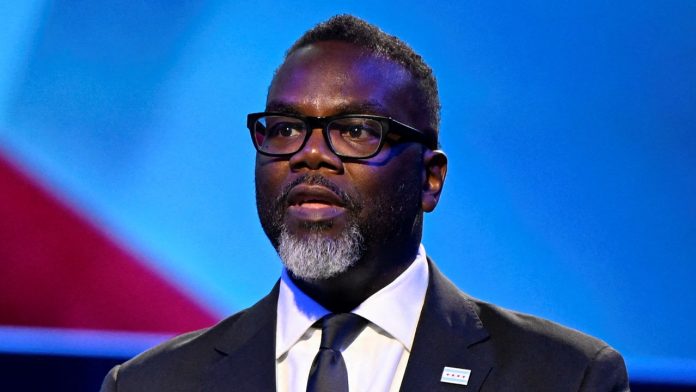
Immigration has been heated issue in the Windy City as officials have had to grapple with a surge of migrants over the past several years. Many Chicago residents are frustrated with city officials, particularly Mayor Brandon Johnson and his handling of the situation. 

One resident who spoke at the city council meeting on Wednesday slammed Johnson

“Who are you loyal to? The American citizens in Chicago or the illegal immigrants in Chicago?,” the man said. “The sanctuary law that Brandon Johnson allowed has brought criminals, drug dealers, and now terrorists.” 

The conservative

One resident slammed Mayor Brandon Johnson for making the city a “sanctuary” for illegal immigrants. 

The vote to block the measure came after Johnson last week issued new guidelines ahead of President-elect Donald Trump returning to the White House. 

Johnson’s guidelines advise that if ICE should enter city property to “contact your agency or department’s designated attorney or general counsel for further guidance. Contact the highest ranking official or designated supervisor onsite and do not take any action until that person arrives.” 

The guidance advises officials to demand copies of warrants, not to consent to ICE entering “any private or ‘sensitive’ locations,” but not to interfere with any search, even if refused. There are other recommendations, like taking notes and keeping contemporaneous written records.

CHICAGO REMOVES LARGEST HOMELESS ENCAMPMENT, RELOCATES TENT RESIDENTS INTO APARTMENTS AND SHELTERS: REPORT

In response to the mayor’s guidelines, Lopez said Johnson is making an “extraordinary effort” to stop his proposal of removing migrants with a criminal record. 

“I am surprised, actually, that the mayor is going through this extraordinary effort to try and stop what Ald. Tabares and I want to do, which is to remove the small number of individuals who choose to commit crimes in the City of Chicago,” Lopez told FOX 32 Chicago. “The narrative out there by the mayor and his allies is that we’re trying to remove everyone—that’s simply not the case.” 

Brandon Johnson on stage

Chicago residents ripped Chicago Mayor Brandon Johnson to his face during a recent City Council meeting convened to vote on his new property tax hike proposal. (Reuters/Vincent Alban)

Trump’s border czar pick, Tom Homan, pledged to go after Chicago with strict enforcement, vowing to verify the status of asylum seekers and arrest anyone providing sanctuary to illegal immigrants. 

CLICK HERE TO GET THE FOX NEWS APP

The incoming border czar also warned that Johnson would be prosecuted should he obstruct ICE’s mass deportation efforts.

Lopez nor Tabares did not immediately respond to a request for comment.

Azerbaijan’s Leader, Emboldened, Picks a Rare Fight With Putin

0

It was a tense conversation between two authoritarian leaders accustomed to getting their way.

President Vladimir V. Putin of Russia was offering explanations for the Azerbaijan Airlines plane crash that had killed 38 people days earlier. Perhaps it was a flock of birds, Mr. Putin said, or an exploding gas canister. Maybe a Ukrainian drone.

But President Ilham Aliyev of Azerbaijan was not buying it, according to two people familiar with that late December phone call. It had become clear within hours of the crash that the plane had been shot down by Russian air defenses in what appeared to be a lethal mistake. It left shrapnel lodged in the leg of one passenger and riddled the fuselage with holes.

On Dec. 29, Mr. Aliyev went public with his anger without mentioning the Russian president by name. “Attempts to deny obvious facts,” he said, “are both nonsensical and absurd.”

The people who described the phone call insisted on anonymity to discuss sensitive diplomatic communications. The Kremlin did not respond to a request for comment.

The furor over the plane crash — and Mr. Aliyev’s willingness to challenge Mr. Putin in public — has revealed a remarkable breach between two post-Soviet rulers who had become close over more than two decades in power. Mr. Putin tried to enlist Mr. Aliyev in an apparent effort to keep quiet the cause of the crash; Mr. Aliyev, emboldened by Russia’s weakened influence in lands it once dominated, insisted that Russia publicly recognize its guilt.

Interviews last week with Azerbaijani officials and people close to the government showed how the Dec. 25 crash of an Embraer 190, with 67 people aboard, has become a geopolitical milestone for the former Soviet Union. Rather than allowing Mr. Putin to dictate his response to the tragedy, Mr. Aliyev has repeatedly lashed out at Russia over its failure to accept responsibility.

Rasim Musabekov, a member of the Azerbaijani Parliament’s foreign affairs committee, described Russia’s response to the crash as “an absurd attitude.”

“Azerbaijan will not accept such a chauvinist attitude,” he added.

Behind the scenes, the interviews showed, those tensions flared directly between Mr. Aliyev and Mr. Putin, even though the two autocrats have often found common ground. In the call on Dec. 28 and another the next day, the people familiar with the calls said, Mr. Putin urged Mr. Aliyev to agree to have a Moscow-based aviation body investigate the crash. Mr. Aliyev refused, insisting that the plane’s black boxes be decoded in Brazil, where the jet was made, a striking display of mistrust of the Russian leader.

Officials in Azerbaijan’s capital, Baku, arranged interviews for The New York Times with three survivors, who said it became clear to some passengers that they were under attack immediately after at least two explosions rocked the plane in midair.

After the second blast, a girl started screaming. Leyla Omarova, 28, looked across the aisle from her window seat and saw the girl’s tights stained with blood.

Three rows behind them, Nurullah Sirajov, 71, had been trying to comfort his wife. The first bang must have been the landing gear, he’d told her. They had never flown before.

Then came the second explosion, a rush of wind from the back of the plane and yells, he said, from other passengers: “They hit us.”

As the jet jerked up and down, coming within 100 feet of the Caspian Sea, Mr. Sirajov thought that at least his and his wife’s marital squabbles over who would die first would finally be resolved: They would die together. But after the front part of the plane disintegrated on impact, the tail section broke off, turned over and slid hundreds of yards through the sandy soil.

“Anyone alive?” Mr. Sirajov remembers yelling in the sudden silence as he dangled upside-down from his seatbelt.

Because Europe closed its airspace to Russia after Mr. Putin’s invasion of Ukraine, many Russians flying westward now connect in Azerbaijan, an oil-and-gas-rich former Soviet republic of 10 million sandwiched between Russia and Iran. Russia also sees Azerbaijan as a key link in an expanded trade route south to Iran, India and the Persian Gulf.

Its role as a transit point for a Russia beset by sanctions is just one way that Azerbaijan has seen its leverage rise against its far larger northern neighbor. Mr. Aliyev has also taken advantage of the Russian military’s distraction in Ukraine to push Russian peacekeeping troops out of Nagorno-Karabakh, the Armenian-controlled enclave that Azerbaijan recaptured in 2023.

Mr. Aliyev has solidified his country’s alliance with Turkey and armed Azerbaijan with high-tech weapons purchased from Israel. He has waged a fierce crackdown against activists and independent journalists, but has maintained a relationship with Europe, which sees Azerbaijan as a key alternative to Russian oil and gas.

Farhad Mammadov, a political analyst in Baku, said that Russia’s political and economic “levers of pressure” on Azerbaijan had been reduced to “practically none.” Aykhan Hajizada, the spokesman for Azerbaijan’s Foreign Ministry, was blunt in arguing that his country had leverage over Russia: “They don’t want to lose Azerbaijan as well,” he said.

The uproar over the plane crash has emerged as a test case. A senior American diplomat, speaking on condition of anonymity because he was not authorized to comment publicly, described the fallout from the crash as “a proof of concept” for Azerbaijan’s ability to stick up for itself. Other post-Soviet countries that have also sought a more arm’s-length relationship with Russia, like Kazakhstan, are watching closely.

“If this is how you behave in this incident with Azerbaijan, then what will the Uzbeks, the Kazakhs and the other remaining partners of Russia think of you?” Mr. Musabekov, the member of Parliament, asked. “It’s that Russia, as a state, is a very, very toxic partner that you need to minimize relations with.”

Mr. Aliyev, who studied in Moscow and took over as Azerbaijan’s ruler from his father in 2003, learned about the crash while en route to a summit of post-Soviet leaders in St. Petersburg. He called Mr. Putin from the plane to tell him he was not coming.

Hours later, Azerbaijani officials landed in Aktau, Kazakhstan, the airport where the Embraer 190 had tried to make an emergency landing. At the crash site nearby, the officials immediately realized that the theories of a bird strike or exploded oxygen canister that they had been hearing from Russia were wrong.

“When I saw the aircraft, it was riddled with holes,” Rinat Huseynov, the safety director for Azerbaijan Airlines, said in an interview. “We didn’t imagine that this was possible at all.”

Mr. Aliyev and Mr. Putin spoke again twice in the days after the crash. Mr. Putin apologized for the “tragic incident” happening in Russian airspace but did not acknowledge that Russia had shot down the plane. The day after the apology, on Dec. 29, Mr. Aliyev went public to accuse Russia of a cover-up.

“Unfortunately, for the first three days, we heard nothing from Russia except for some absurd theories,” Mr. Aliyev said.

Officials said they expected preliminary findings from the investigation by the end of January. Mr. Aliyev reiterated last week that Russia needed to accept responsibility and pay compensation, while the Kremlin said it was cooperating with the probe.

“We are interested in an absolutely objective and unbiased investigation,” Dmitri S. Peskov, Mr. Putin’s spokesman, told reporters last week.

The Azerbaijanis’ working theory is that the shrapnel from exploding missiles of a Russian Pantsir air-defense system damaged the plane. Metal fragments as large as four inches long were found at the crash site.

The flight data and cockpit voice recorders, officials said, could help explain why the pilots chose to cross the Caspian Sea to land in Kazakhstan rather than at a closer airport in Russia; Mr. Huseynov, the airline safety director, said the decision appeared logical given the cloudy conditions in southern Russia at the time.

Inside the passenger cabin, the flight attendants were trying to calm the panic. Ms. Omarova, en route to see family in Russia, said she lost consciousness. Mr. Sirajov, who had packed New Year’s presents for grandchildren in Grozny, said all he could think about was comforting his wife.

Flight data shows that after crossing the Caspian Sea, more than an hour after the pilots reported what they thought was a bird strike, the plane crashed on a second attempt to land at Aktau airport. All of the survivors were sitting in roughly the rear third of the plane, according to a person close to the investigation.

After the tail section came to a stop, Mr. Sirajov fumbled in the darkness to open his seatbelt, unable to tell what had happened to his wife. Only later did he learn that she had also survived.

Finally, Mr. Sirajov yanked his belt open and tumbled onto the cabin’s ceiling. “Go that way, go that way,” he recalls hearing as someone pushed him toward a sliver of light.

California and other states look to speed up vote counting : NPR

0

Employees sort ballots in Los Angeles County on Election Day, Nov. 5, 2024. California regularly takes weeks to count all of its general election ballots.

Etienne Laurent/AP


hide caption

toggle caption

Etienne Laurent/AP

In California, it took election workers more than a month to tally all the votes from last year’s general election.

Because of varying election laws, some states take significantly longer than others to count ballots.

But now, legislators in California and several other states — including Arizona, Nevada, Utah and Wisconsin — have signaled interest in tackling vote-counting rules in an effort to speed up the process.

It’s a mix of states, led by Democrats or Republicans or with divided government, and one key question is whether lawmakers can quicken results without sacrificing access to the ballot.

Some legislators and advocates say faster results would allow less time for misinformation about election administration to take hold.

But Arizona state Sen. Warren Petersen said much of the clamoring for changes in his state is coming straight from voters.

“I have never received as many calls or messages from constituents as I have regarding getting election results faster,” he told NPR.

Petersen, a Republican, has introduced legislation, Senate Bill 1011, aimed at speeding the count.

“I think it increases confidence in the process,” he said. “I think it also eliminates the frustration of waiting for election results. When they see the rest of the nation with their results already, it’s extremely frustrating to be in Arizona and getting your results so late.”

Why some states take more time

Because states have different rules and procedures for how they run elections and count votes, some states always take longer than others to count all of their ballots. (And media outlets like The Associated Press call races before results are final.)

Sam Oliker-Friedland, executive director of the Institute for Responsive Government, said the biggest structural difference that affects how quickly a state can report results is the “proportion of ballots that are cast by mail versus in-person at a polling place.” Unlike most in-person voting, mail-in ballots have to be removed from envelopes and have voter signatures or other identification information verified, before getting tabulated. And Oliker-Friedland said where and when those votes are tabulated — either at a polling place or a central location — could also affect how fast the process goes.

“The more mail ballots, the longer results are going to take,” he said. “There’s also a trend that the further west we get in the United States, the higher volume of mail that states generally have.”

Pamela Smith — president and CEO of Verified Voting, a nonpartisan group focused on technology in elections — said many states that take more time often do so to give voters more opportunities to cast a ballot.

For example, these states often have longer cure periods, which allow eligible voters who made a mistake to fix their ballot and get their vote counted.

“I think what’s important to think about is the balance between how fast we get results reported out and how well voters are supported for their participation,” Smith said. “So, for example, if you reduce the time for voters to cure a signature problem on a ballot so that it can be counted or determined to be not countable, are you disenfranchising them in the name of ‘we have to know immediately’?”

California Democratic Assemblymember Marc Berman said his state is an example of a state that often takes weeks to count votes for good reasons. Registered active voters are automatically mailed a ballot and can return it up to seven days after the election, as long as it is postmarked by Election Day.

“The reason for that is we don’t want delays in the Postal Service to disenfranchise voters,” he said. “But that means that our county elections officials can be getting a decent number of ballots, you know, two, three, four days after Election Day that they’re going to have to process and count.”

California then has a lengthy cure period, after a mail ballot has been returned.

Balancing voter access

Berman said he is “still figuring out the specifics of what the legislation will be,” but said he wants to be sure to strike “a balance between accessibility” and a faster process.

“I personally will never consider a proposal that’s going to water down the voting rights of Californians in exchange for things happening faster,” he said. “That’s not a tradeoff that I’m willing to make. It’s not a tradeoff I think we need to make.”

Pairs of election workers from different political parties open and inspect mail ballot envelopes inside the Maricopa County Tabulation and Election Center in Phoenix on Election Day, Nov. 5, 2024.

Pairs of election workers from different political parties open and inspect mail ballot envelopes inside the Maricopa County Tabulation and Election Center in Phoenix on Election Day, Nov. 5, 2024.

Patrick T. Fallon/AFP via Getty Images


hide caption

toggle caption

Patrick T. Fallon/AFP via Getty Images

In Arizona, Petersen said he is looking to Florida as a model for how to count votes faster. The Sunshine State in recent election cycles has been lauded for reporting results early on election night.

Petersen said he met with Florida’s secretary of state and staff to figure out what the state is doing differently that could potentially speed things up.

For one, Petersen said, he is proposing that Arizona, like Florida, create a cutoff on the Friday before Election Day for dropping off mail-in ballots at a polling site. The law — if passed and signed by the Democratic governor — would allow a voter to go into an election office, show ID and drop off a ballot there, but they wouldn’t be able to drop it off at a polling site on Election Day, as they are currently allowed.

That’s even though Petersen said “over a million voters” in Arizona drop off their mail ballots at polling sites between that Friday and Election Day. In an effort to lessen the impact on voter access, Petersen said his bill would create two more in-person early voting days.

SB 1011 would also enable faster processing of ballots that are cast early in-person by eliminating the envelope that ballots are put into. Petersen said taking each ballot out of an envelope before counting them was adding “up to two days” to the process.

Verified Voting’s Smith said ballot processing is an area of election administration that can pick up speed and yet shouldn’t affect access for voters.

Oliker-Friedland said he also thinks changes to pre-processing rules could be helpful in speeding up election results, but ultimately, he thinks the goal can be addressed without changing policy.

“One of the best ways to actually intervene on something like this is not necessarily passing a new bill,” he said. “It’s giving more resources to the local election officials across the country that are in charge of counting ballots because those three things — people, space and equipment — all costs money that in many cases election officials don’t have.”

Are fast results important?

In general, Smith warns, this rising preoccupation with the speed of election results is not necessary as long as results come for when lawmakers need to be sworn in.

“I don’t think it’s the most important thing. I really don’t,” she said. “I think that what’s most important is transparency and ensuring that voters have all the options, you know, that they have all the opportunities that they need in order to get the job done. And I would urge caution in changing policies to make sure that they don’t reduce that access for voters.”

Ultimately, Smith said, it would be useful to educate the public on why counting ballots takes time.

“I think there needs to be a shift in the mindset,” she said. “Continue to say that we won’t know the election results on election night. And that’s OK.”

Meta fact-checkers set to lose revenue after Zuckerberg cancels contracts

0

Join Fox News for access to this content

Plus special access to select articles and other premium content with your account – free of charge.

By entering your email and pushing continue, you are agreeing to Fox News’ Terms of Use and Privacy Policy, which includes our Notice of Financial Incentive.

Please enter a valid email address.

A network of fact-checkers is set to lose a major source of revenue and may even close shop after Facebook parent company Meta announced it would terminate their contracts and move towards a system closer to X’s Community Notes.

“We don’t have much time left. At this rate, we are done in a few months,” Check Your Fact managing editor, Jesse Stiller, told Fox News Digital.

“We were blindsided by this. This was totally unexpected and out of left field for us. We weren’t aware this decision was being considered until Mark dropped the video overnight. We have no idea what the future looks like for the website going forward,” he added.

On January 7, 2025, Meta revealed that it would end its fact-checking program and lift some content moderation policies to “restore free expression” across its platforms, including Facebook and Instagram.

CEO OF LEFT-LEANING FACT-CHECKER SAYS GOVERNMENT AT FAULT FOR CENSORING HUNTER BIDEN LAPTOP, NOT FACT-CHECKERS

Fact-checkers told Fox News Digital that Meta’s decision to end its third-party fact-checking program will have a significant economic impact on their businesses.  (NICOLAS TUCAT/AFP via Getty Images)

Prior to the announcement, Meta repeatedly stressed they were committed to supporting a long-term independent fact-checking industry to address “misinformation” online.

In an April 2022 blog post, Meta claimed it had built the “largest global fact-checking network of any platform” and contributed more than $100 million to fact-checking programs since 2016.

Meta did not reply when asked how much money it had given to third-party fact-checkers before announcing the end of the program in early January 2025.

According to the company’s website, Meta began prioritizing “additional support and resources” for fact-checkers in early 2020 to combat health “misinformation.”

As part of this initiative, Meta launched a $1 million emergency grant program in partnership with the International Fact-Checking Network (IFCN) to tackle information about the COVID-19 pandemic.

IFCN created the CoronaVirusFacts Alliance, in which nearly 100 fact-checking organizations in more than 70 countries produced over 11,000 fact-checks about COVID-19 across 40 languages. Seven fact-checking organization projects specifically focused on vaccine “misinformation.”

META’S DECISION TO AX FACT-CHECKING SYSTEM, ADOPT MUSK-LIKE POLICY IS A BIG ‘WIN’ FOR FREE SPEECH: EXPERTS

Meta censorship Hunter Biden laptop

Meta’s announcement to restore “free expression” comes after years of scrutiny against the company’s fact-checking and content moderation practices.  (Nicolas TUCAT/AFP/Jason Henry/Bloomberg via Getty Images)

In August, Zuckerberg admitted that the Biden White House had pressured Meta to censor some health information during the pandemic.

Zuckerberg told podcast host Joe Rogan in January that members of the Biden administration would “scream” and “curse” at his employees, demanding they take down information, especially during the rollout of the COVID-19 vaccine program.

Meta later gave the IFCN a $1 million “Climate Misinformation Grant.” The grant, in part, provided funding to organizations working to combat “climate misinformation” and supported collaborative partnerships between fact-checkers and “climate experts.”

The company also provided funding for fact-checkers to “increase their capacity to promote reliable information” ahead of the 2022 elections in various countries, including the U.S., Australia, France and India.

In the United States, Meta worked with the following third-party fact-checkers: AFP – Hub, Check Your Fact, Factcheck.org, Lead Stories, PolitiFact, Science Feedback, Reuters Fact Check, TelevisaUnivision, The Dispatch and USA Today.

All 10 of these partners are expected to lose their funding. It is unclear when or if Meta’s changes will affect overseas fact-checkers.

INTERNET ROASTS NYT HEADLINE ABOUT FACT-CHECKERS RULING META CRITICISM OF FACT CHECKS ‘FALSE:’ ‘BEYOND PARODY’

Mark Zuckerberg speaks on Joe Rogan

Meta and Facebook founder Mark Zuckerberg spoke at length about the pressure he faced from government, particularly Biden’s administration, to censor content on their behalf. (Joe Rogan Experience)

In a recent interview with Fox News Digital, Meta’s chief global affairs officer, Joel Kaplan, claimed that these fact-checkers failed to remain neutral.

“We went to independent, third-party fact-checkers,” Kaplan said. “It has become clear there is too much political bias in what they choose to fact-check because, basically, they get to fact-check whatever they see on the platform.”

Since the pivot away from third-party fact-checking, several of these fact-checking organizations with financial ties to the tech conglomerate have issued statements critical of Zuckerberg and Meta’s claims of political bias.

Previously, these groups were often paid for each published fact-check using Meta’s platforms and tools.

For example, PolitiFact, according to its financial disclosures, earned over five percent of its 2024 revenue from the partnership.

PolitiFact told Fox News Digital that the organization, one of the original participants in Meta’s third-party fact-checking program, will be affected by the company’s decision to discontinue it.

META ISSUES SWEEPING CHANGES TO RESTORE FREE SPEECH ON FACEBOOK, INSTAGRAM

Zuckerberg Musk Meta fact-checking

Meta CEO Mark Zuckerberg announced on Tuesday that his company would adopt a new fact-checking system similar to Community Notes on Elon Musk’s X. (Chris Unger/Zuffa LLC/Jonathan Raa/NurPhoto/ Andrew Harnik/Getty Images)

They also pointed Fox News Digital to comments made by PolitiFact parent Poynter Institute President Neil Brown, who called Meta’s decision a “disappointing cop-out” that “perpetuates a misunderstanding of its own program.”

“Facts are not censorship. Fact-checkers never censored anything. And Meta always held the cards. It’s time to quit invoking inflammatory and false language in describing the role of journalists and fact-checking,” Brown said.

Lead Stories, a Facebook fact-checker employing several former CNN alumni, told The New York Times that it is now doing a large chunk of its work for TikTok’s parent company, Bytedance. Meta was previously the fact-checker’s primary client.

The company was shocked by Zuckerberg’s announcement, considering Lead Stories signed a new yearlong contract with Meta just three weeks ago. Lead Stories admitted that it would see a drop in revenue after severing ties with Meta—a reality that will result in a “staffing reduction,” according to co-founder Alan Duke.

“Cutting fact-checkers from social platforms is like disbanding your fire department,” he told CNN in early January.

META ISSUES SWEEPING CHANGES TO RESTORE FREE SPEECH ON FACEBOOK, INSTAGRAM

Meta logo in background with phone

Meta platforms are being displayed on a smartphone screen, and the Meta logo is appearing in the background in Chania, Greece, on August 9, 2024. (Nikolas Kokovlis/NurPhoto via Getty Images)

In a statement to Fox News Digital, Kristin Roberts, the chief content officer of Gannet Media (USA Today’s parent company), said, “Fact-based journalism is what USA Today does best.”

“We are the nation’s trusted news source because we provide unbiased and essential content for all people. Truth and facts serve everyone — not the right or the left — and that’s what we will continue to deliver,” she continued.

The company did not provide information on its financial relationship with Meta.

CLICK HERE TO GET THE FOX NEWS APP

TelevisaUnivision, Lead Stories, Factcheck.org, AFP – Hub, The Dispatch and Science Feedback did not return Fox News Digital’s request for comment.

Reuters declined to comment.

Poland’s Leader Suggests Russian Hand in Plot to Attack Western Cargo Planes

0

Poland’s prime minister appeared on Wednesday to confirm the conclusions of Western intelligence officials who had warned of a Russian plot to blow up cargo aircraft over Western countries.

“I can only confirm that Russia planned acts of air terror, not just against Poland but against airlines across the globe,” the prime minister, Donald Tusk, said during a meeting with Ukraine’s president, Volodymyr Zelensky.

Mr. Tusk did not elaborate, and it was unclear whether officials believed that Moscow was continuing to actively plan such an action.

Officials first became aware of the plot over the summer, when incendiary devices placed at shipping hubs in Britain and Germany ignited fires that caused minimal damage. In November, four Western officials briefed on intelligence about the operation said the fires had been part of a test of security measures carried out by Russia’s military intelligence service, known as the GRU.

The ultimate goal of the plot was not known, but intelligence agencies started an investigation into whether the intent was to destroy planes on American or European runways, or even blow up an aircraft midair.

By the fall, the White House became so concerned that President Biden ordered his national security adviser and the C.I.A. director to warn top aides of Russia’s president, Vladimir V. Putin, that such plotting could provoke a severe reaction from the United States. Any acts of sabotage that caused mass casualties would represent a serious escalation of conflict between Moscow and Washington, and the United States would hold Russia responsible for “enabling terrorism,” a senior official told The New York Times.

While the Kremlin has denied that its agents engage in sabotage, Western officials say Moscow has ordered its intelligence services to find ways to bring the war in Ukraine, soon to enter its fourth year, to Europe and the United States.

Many of the sabotage plots attributed to Russia appear amateurish, perhaps intended more to annoy than to terrorize. In December, Estonian authorities released details about a gang of GRU agents paid to break the windows of the interior minister’s car and deface World War II monuments, and in France Russian agents have been linked to antisemitic graffiti spray painted on walls.

But other episodes have been more sinister. Fires have broken out at arms factories supplying weapons to Ukraine as well as aboard buses and at shopping malls. And critical telecommunications cables crossing the Baltic Sea have been cut, though attributing these definitively to one country has been difficult. Last year, two assassins who were believed to have ties to Russia killed a Russian defector in southern Spain.

The sabotage campaign, officials said, is being waged almost exclusively by the GRU, an agency that has carried out sabotage and assassination operations in Europe since before Mr. Putin’s 2022 invasion of Ukraine. Most notably, it was operatives from the GRU who used a highly potent nerve agent in the attempted assassination of Sergei Skripal, a GRU turncoat who was living in Britain.

After Russia’s full-scale invasion of Ukraine, the GRU’s activities in Europe abated somewhat as European countries expelled operatives and limited travel for Russians. But in the past year, the agency has figured out ways to restore its operations. Officials say that many acts of sabotage are carried out by hired proxies, sometimes recruited over the internet. That is one reason the operations have so far achieved limited results. But officials worry that recruiting people over the internet to commit such operations also increases the risk of dangerous and potentially deadly mistakes.

“The GRU in particular is on a sustained mission to generate mayhem on British and European streets,” Ken McCallum, the director general of Britain’s Mi5, the country’s domestic intelligence service, warned in rare public remarks last fall. “We’ve seen arson, sabotage and more. Dangerous actions conducted with increasing recklessness.”

After more than 50 years in politics, Biden bids farewell in an Oval Office address

0

After half a century in politics, President Biden bids farewell to public life in a speech from the Oval Office, warning about the concentration of power in the hands of a few ultrawealthy people.

Palisades Charter High School seeks temporary campus after devastating wildfires

0

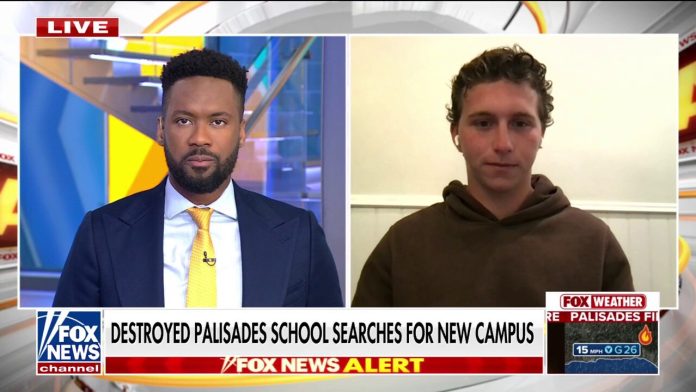
Palisades Charter High School (PCHS) in Los Angeles is appealing to the community to help find a new campus after its previous one was severely damaged by the ongoing wildfires in California.

“We started our high school experience during COVID, so that was online, and online didn’t really work for anyone,” said Charlie Speiser, the PCHS student body president, during an interview on ‘Fox & Friends’ Wednesday. “We’re really just trying to get our community back together, and all our Pali Dolphins under one roof again.”

The school, which serves around 3,000 students from over 100 zip codes, lost much of its campus to the fires. While the brick main building survived, the wooden bungalows in the back and the athletic fields were destroyed during the blaze.

ESSENTIAL PHONE NUMBERS FOR LOS ANGELES-AREA RESIDENTS AND HOW YOU CAN HELP THEM

Water is dropped by helicopter on the Palisades Fire in Mandeville Canyon, Jan. 11, 2025, in Los Angeles.  (AP Photo/Eric Thayer)

In a press release, the administration shared that many students and staff have also lost their homes and belongings. “We are asking for the support and assistance of local businesses, organizations, and individuals to assist in finding a safe, accessible space for our school,” the release stated.

The Pacific Palisades Fire, along with the Eaton Fire, continues to burn in the Los Angeles area. According to Cal Fire, the wildfires have impacted at least 664 structures, destroying more than 485 of them. Strong winds are increasing the threat of further destruction, and the fires have already claimed 24 lives.

Despite the devastation, Speiser said the community is rallying together. 

“All of my personal friends and peers … did lose their houses. Everyone is texting every day, we’re all running errands for each other, really doing everything we can to help each other out. It’s really amazing to see the selflessness of everybody.”

The school’s student body is open to learning in any space large enough to accommodate their community, from warehouses to abandoned office buildings. 

“We are reaching out to anyone we can,” Speiser said. “We really want to get back to in-person (learning) with everyone.”

Dr. Pamela Magee, Executive Director and Principal of PCHS, emphasized the importance of finding a temporary campus. 

“By coming together, we can ensure that our students can stay in their learning environment, with their friends and mentors, at a time when they need it most,” she said.

“We have a unique opportunity to show the strength and resilience of our community in the face of adversity,” Magee added. 

The school is urging anyone who can assist with locating a temporary space or provide support to contact them at [email protected]. 

Donations to aid the recovery effort can also be made at https://givebutter.com/RaisePali.

CLICK HERE TO GET THE FOX NEWS APP

Why Trump Wanted a Gaza Cease-Fire Deal Before He Took Office

0

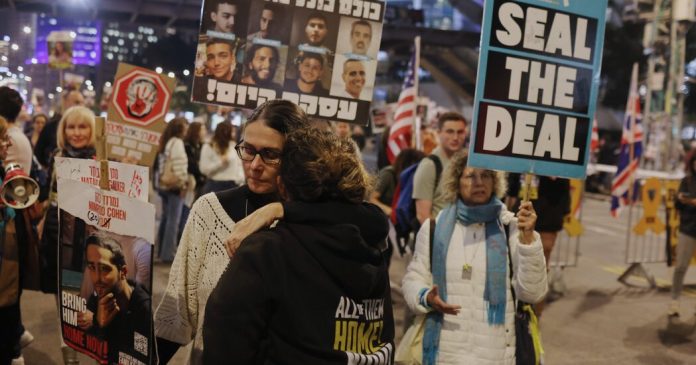
For President-elect Donald J. Trump, the Israeli-Gaza cease-fire deal was key for two reasons.

It removed one of the most vexing international conflicts that hovered over the start of his second term, and it gave Mr. Trump, who was known during his real-estate developer days in New York City as a “deals guy,” something to claim credit for as an early win — even if it happened before he took office.

In a posting on social media on Wednesday, Mr. Trump declared that the deal “only happened as a result of our Historic Victory in November.”

The contours of the deal were not especially different than what President Biden had sought in May. But multiple people with insight into the process said that Mr. Trump’s win in November, along with the involvement of members of his incoming administration, were key parts in moving things forward.

The aftermath of the deadly Oct. 7, 2023, attacks by Hamas had been a backdrop to the U.S. presidential race in 2024. As Mr. Trump emerged not just as the Republican nominee but the survivor of an assassination attempt in July, his relationship with Prime Minister Benjamin Netanyahu of Israel improved. (The ties had frayed after Mr. Netanyahu congratulated Mr. Biden on winning the 2020 election.)

Fear of what the often unpredictable Mr. Trump — who months ago said the world knows that he’s “crazy,” using an expletive for emphasis — might do on the world stage has become a key theme in private discussions among foreign leaders.

So the deal — forged with significant involvement by Mr. Trump’s Mideast envoy, Steve Witkoff — allowed Mr. Trump to begin his term with one less problem.

Ralph Nader, Consumer Crusader (Throwback) : Throughline : NPR

0
American lawyer and consumer activist Ralph Nader, whose book 'Unsafe at Any Speed', led to the passage of improved car safety regulations. He is at a Senate hearing at Washington triggered by his publication.

Whether it’s pesticides in your cereal or the door plug flying off your airplane, consumers today have plenty of reasons to feel like corporations might not have their best interests at heart. At a moment when the number of product recalls is high and trust in the government is low, we’re going to revisit a time when a generation of people felt empowered to demand accountability from both companies and elected leaders — and got results. Today on the show, the story of the U.S. consumer movement and its controversial leader: the once famous, now infamous Ralph Nader.


Guests:
Ralph Nader, American political activist, author and consumer advocate.
Joan Claybrook, lawyer and former president of Public Citizen.
Paul Sabin, Randolph W. Townsend, Jr. Professor of History and Professor of American Studies at Yale University.

To access bonus episodes and listen to Throughline sponsor-free, subscribe to Throughline+ via Apple Podcasts or at plus.npr.org/throughline.

Chicago’s Lincoln Park Zoo lose Flamingo, seal to bird flu

0

The Avian Influenza has claimed the lives of a Harbor Seal and a Chilean Flamingo at Chicago’s Lincoln Park Zoo.

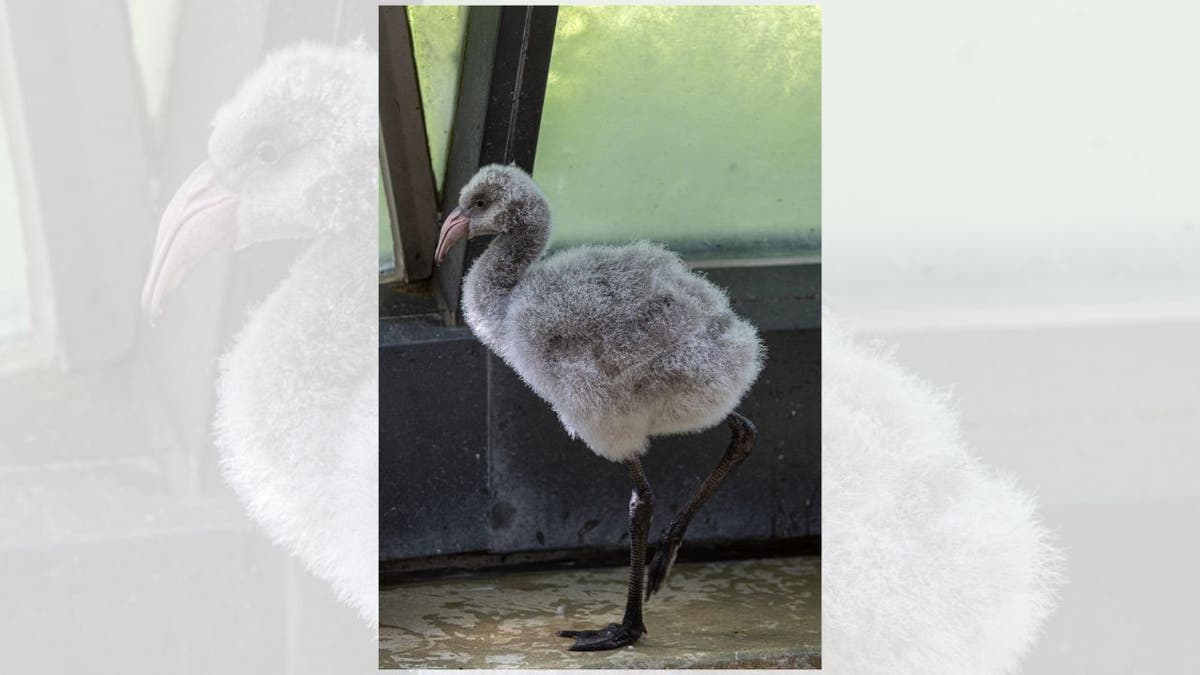
The zoo announced they received results that confirmed the highly pathogenic Avian Influenza was the cause of Teal, a Chilean Flamingo, and Slater, a Harbor Seal’s death.

“This is sad news for wildlife and for the zoo team. Not only are we facing the first known cases of HPAI in animals in our care, but we’ve lost two amazing animals,” said Director of Veterinary Services Lester E. Fisher and Dr. Kathryn Gamble in a statement. “While highly pathogenic avian influenza is a naturally occurring virus in free-ranging waterfowl, more mammal species have been reported to be susceptible to HPAI since 2022.”

ONE STATE LEADS COUNTRY IN HUMAN BIRD FLU WITH NEARLY 40 CONFIRMED CASES

The zoo announced they received results that confirmed the highly pathogenic Avian Influenza was the cause of Teal, a Chilean Flamingo, and Slater, a Harbor Seal’s death. (Lincoln Park Zoo)

The zoo was unable to confirm the source of the exposure, but the Centers for Disease Control say that HPAI is spread through saliva, nasal secretion and the feces of infected birds.

They did say that zoo visitors are not at risk of contracting the disease from the animals at Lincoln Park zoo.

“Because highly pathogenic avian influenza is spread by free-ranging birds, it is no riskier to visit Lincoln Park Zoo than to enjoy a walk outdoors,” said President & CEO and ornithologist Megan Ross. “The zoo remains a safe place to connect with the animals in our care.”

BIRD FLU LEADS TO SEVERE HUMAN ILLNESS AND STATE OF EMERGENCY; EXPERTS DISCUSS RISK

teal

The zoo announced they received results that confirmed the highly pathogenic Avian Influenza was the cause of Teal, a Chilean Flamingo and Slater, a Harbor Seal’s death. (Lincoln Park Zoo)

CLICK HERE TO GET THE FOX NEWS APP  

The zoo has been monitoring HPAI, so there is a response plan in place. The plan addresses staff and animals. It includes personal protective equipment and removing cross contamination between species while monitoring individual animal behavior, according to a statement by the zoo. They have also closed the McCormick Bird House and will be closed until further notice.

slater

The zoo announced they received results that confirmed the highly pathogenic Avian Influenza was the cause of Teal, a Chilean Flamingo and Slater, a Harbor Seal’s death. (Lincoln Park Zoo)

The zoo also said in their statement that it’s important to keep personal pets indoors and away from wildlife.

“Sharing this news of highly pathogenic avian influenza in the area is important for our community at large,” said Director of the Urban Wildlife Institute Seth Magle. “To protect yourself, do not handle wildlife. Additionally, keep your pets safe by keeping cats indoors and dogs on a leash away from wildlife.”