Thursday, November 12, 2026
Home Blog Page 356

Negotiators Reach Cease-Fire and Hostage Deal for Gaza

0

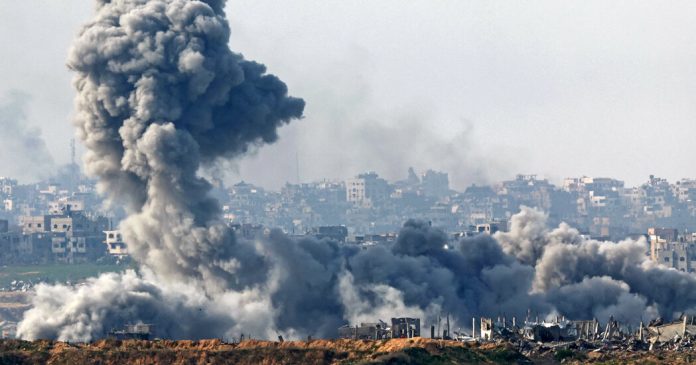
Negotiators announced on Wednesday that they had reached a cease-fire deal for the war in the Gaza Strip, 15 months after a devastating Hamas-led attack on Israeli soil set off a relentless military campaign with few parallels in recent history.

In the attack that set it all in motion, the Oct. 7, 2023, raid on southern Israel led by Hamas fighters, some 1,200 people, most of them civilians, were killed, stunning Israelis. In the months that followed, an estimated 45,000 Palestinians in Gaza, many of them also civilians, were killed and entire towns leveled.

On Wednesday, Gazans were allowing themselves to hope for an end to the long months of hunger, destruction and fear, while Israelis were anxiously readying themselves to welcome home dozens of men and women taken hostage by Hamas during the 2023 attack.

Under the terms of the provisional deal, reached in the waning days of the Biden administration, the Israeli military will begin to pull back its force and Hamas will begin releasing some of the hostages seized during the bloody raid that set off the war. If approved by Israel’s cabinet, the cease-fire will take effect on Sunday.

“An entire country is holding its breath tonight,” said Yair Lapid, the centrist opposition leader of Israel, where the cabinet was expected to vote on the agreement on Thursday.

Hamas, in a statement, said, “It is a historic moment in the conflict with our enemy.” It praised the “legendary resilience” of Gazans in the face of a war that had unleashed a humanitarian crisis. One of the group’s leaders also had praise for the Hamas-led attack that prompted the war, despite the bitter price paid by Palestinians.

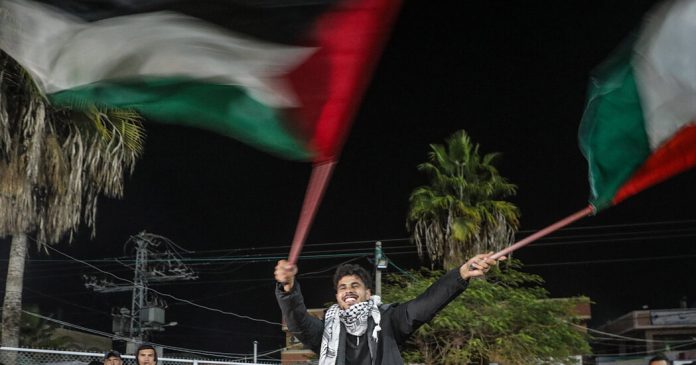
Even amid cautions that some of the details of the agreement had yet be worked out, celebrations broke out on Wednesday in both Gaza and Israel.

“Praise God, this tragedy is over,” said one Gaza City resident, Mohammad Fares, 24, as celebratory whistling and gunfire was heard in the background.

But in a decimated Gaza that little resembles the enclave that existed before Israel unleashed a broad assault aimed at destroying Hamas once and for all, grief and anxiety, not joy, remained the dominant emotions among Palestinians.

“How can we ever rebuild?” asked Suzanne Abu Daqqa, who lives in a suburb near the southern Gaza city of Khan Younis. “Where will we even begin?”

In Israel, families of the hostages issued a statement declaring their “overwhelming joy and relief” over the deal, but they also expressed “deep anxiety and concerns” that some hostages might be left behind. Of the roughly 250 people seized in Israel on Oct. 7, 2023, some 100 are still in Gaza; about a third are believed to have died in captivity.

Even as the tentative cease-fire was celebrated, some appeared at pains not to overstate what might be achieved. In announcing the deal, the prime minister of Qatar, Mohammed bin Abdulrahman al-Thani, spoke of “sustainable calm.”

The agreement, however, was a major breakthrough after months of roller-coaster talks that often appeared to inch close to resolution, only to fall apart. President Biden’s administration had been pressing for a truce as the clock ran out on his time in office.

“Too many innocent people have died, too many communities have been destroyed,” an ebullient Mr. Biden told reporters at a news conference.

His successor, President-elect Donald J. Trump, had threatened severe consequences unless Israel and Hamas reached an agreement before his Jan. 20 inauguration, and Mr. Biden suggested that the White House had consulted with the Trump team about the talks.

“We’re handing off to the next team a real opportunity for a brighter future in the Middle East,” he said. “I hope they take it.”

After months of deadlock, the negotiations moved into high gear in recent days in Doha, the Qatari capital, sped up by Mr. Trump’s looming inauguration. American officials from both the departing and incoming administrations drove the latest efforts to reach a deal, with Qatar and Egypt acting as mediators between Hamas and Israel.

The cease-fire would have several phases, the first of which would last six weeks. During that time, Mr. al-Thani said, Israeli forces in Gaza would withdraw to the east, away from populated areas, and some 33 hostages would be released. In return, Palestinian prisoners being held in Israel would be released.

The 33 hostages to be released in the first phase include women and children, men over age 50 and sick or wounded people. It was still unclear how many of that group are alive, but Israeli officials have estimated that most are.

During the first phase, 600 trucks carrying desperately needed humanitarian relief would enter Gaza daily. And Gazans forced from their homes would be able to return north, where the Israeli invasion began.

Hundreds of thousands of Palestinians in southern Gaza have been living in tents, makeshift shelters, rented homes and relatives’ apartments for more than a year. Many of those planning to return to the north will most likely find that their homes and neighborhoods have been destroyed.

By Day 16, negotiations about the second phase of the deal — also lasting six weeks — would begin, focusing on further exchange of hostages and Palestinian prisoners.

The cease-fire agreement must still pass the Israeli cabinet, where some of the hard-right lawmakers that Prime Minister Benjamin Netanyahu depends on to remain in power have openly opposed a deal.

Amid word that a cease-fire deal might be near, one far-right member of the coalition, Itamar Ben-Gvir, issued a video statement calling on others to join forces and scupper any agreement by quitting the Netanyahu government.

Another far-right cabinet member, Finance Minister Bezalel Smotrich, called the agreement “bad and dangerous to Israel’s national security” and said he absolutely opposed it. But he did not explicitly threaten to leave the government.

Critics of Mr. Netanyahu, including many of the hostage families, have often accused him of sabotaging past efforts to reach a deal in order to preserve his coalition, the most right-wing and religiously conservative in Israel’s history.

On Wednesday, Foreign Minister Gideon Saar said he believed that a majority would sign off on an agreement in a cabinet vote. “Leadership is about deciding between a bad decision and a very bad decision,” Mr. Saar said, adding of the hostages, “If we postpone the decision, we don’t know how many of them will survive.”

Isaac Herzog, the Israeli president, called on the government to approve the deal. “There is no greater moral, human, Jewish, or Israeli obligation than to bring our sons and daughters back to us — whether to recover at home, or to be laid to rest,” he said.

On Wednesday, in the absence of a cease-fire, Gaza Civil Defense reported continued Israeli airstrikes across the enclave, including one on a residential building in northern Gaza City that it said had resulted in two fatalities.

Over the past year, the fighting in Gaza, along with the lawlessness that spread after the invasion, have posed major hurdles to distributing aid. On Wednesday, as humanitarian groups geared up to flood into the stricken enclave, they made it clear that it would still not be easy — even with a cease-fire.

“This is a moment of hope and opportunity,” said Tom Fletcher, the United Nations undersecretary general for humanitarian affairs. “But we should be under no illusions how tough it will still be to get support to survivors.”

Reporting was contributed by Hiba Yazbek, Abu Bakr Bashir, Johnatan Reiss, Rawan Sheikh Ahmad, Ismaeel Naar and Ephrat Livni.
Pro-Stacey Abrams groups fined for breaking Georgia campaign finance law : NPR

0

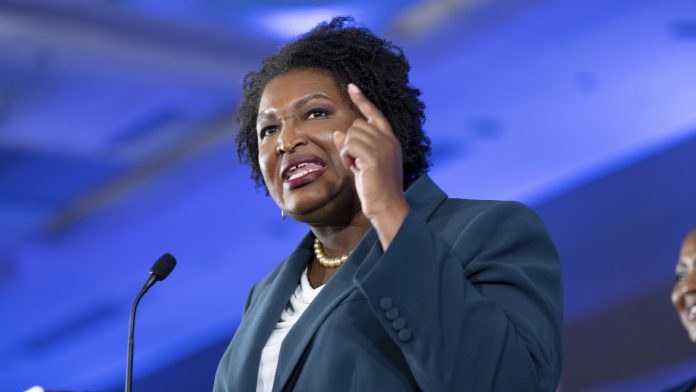
Stacey Abrams, Democratic candidate for Georgia governor, gives a concession speech in Atlanta on Tuesday, Nov. 8, 2022.

Ben Gray/AP


hide caption

toggle caption

Ben Gray/AP

ATLANTA — The Georgia Ethics Commission voted unanimously on Wednesday to fine two advocacy groups that were founded by Democrat Stacey Abrams and led by Raphael Warnock before voters elected him to the U.S. Senate.

The commission found that the New Georgia Project and its affiliated New Georgia Project Action Fund illegally did election work for Abrams and others without disclosing their campaign contributions and spending.

The groups’ current leadership admitted 16 instances of illegal activity in a consent decree and will pay a $300,000 fine, the largest in state history according to the commission’s director, David Emadi.

The commission found that the entities raised $4.2 million and spent $3.2 million to support Abrams and other candidates in the 2018 election cycle.

David Fox, a lawyer for the New Georgia Project and the action fund, said his clients “understand and respect the commission’s positions on the facts and the law.

“The matter relates to events from more than five years ago, and respondents are eager to put the matter behind them,” Fox told commissioners by video.

Where ethics officials ruled the groups went wrong was failing to register as an independent campaign committee before taking contributions for electioneering, and failing to file campaign finance reports of contributions and spending before Abrams narrowly lost the governor’s race to Republican Brian Kemp that year.

The groups repeated the same illegal activity in 2019 when they campaigned to extend public transportation in suburban Gwinnett County, failing to disclose $646,000 in contributions and $174,000 in spending for a voter referendum to join the Metropolitan Atlanta Rapid Transit Authority. The referendum lost.

Abrams founded the New Georgia Project in 2013 to register more nonwhite and young voters in Georgia and to urge them to turn out. The project is a charity that can accept tax-deductible donations. The New Georgia Project Action Fund is a nonprofit social welfare organization that can directly endorse candidates, although donations aren’t tax deductible. Neither group normally has to disclose donors. Emadi said the groups are likely to now file campaign finance disclosures for the period in question.

Abrams stepped down in 2017 and said she had no role with the groups thereafter. Warnock, a close Abrams ally and Baptist minister, was listed as the New Georgia Project’s CEO on corporate filings in 2017, 2018 and 2019.

“I’m not prepared to say he had direct involvement in this,” Emadi said. “I didn’t personally find evidence of that.”

Michael Brewer, a spokesperson for Warnock’s Senate office, said Warnock was working “as a longtime champion for voting rights” and didn’t know anything about violations. “Compliance decisions were not a part of that work,” Brewer wrote in an email.

The complaint was filed in 2019 and survived multiple court challenges, accessing emails in an effort to prove the groups improperly coordinated with Abrams’ 2018 campaign. Wednesday’s consent decree contains no such findings, but Emadi said a separate complaint alleging illegal coordination remains under investigation.

Lawyers for the New Georgia Project previously argued that the groups acted like other nonprofits and that Republicans including Emadi, who had donated to Kemp, were using their majority on the commission in a partisan witch hunt to damage Abrams’ political viability.

Abrams lost the 2022 governor’s race to Kemp by a much larger margin than in 2018, but the ethics case was little discussed.

The commission fined another group, Gente4Abrams, $50,000 in 2020 for failing to register and file reports on $240,000 it spent to help Abrams in the 2018 Democratic primary, the commission found. The group registered after the commission ruling, reporting it spent an additional $685,000 for Abrams in the 2018 general election.

Ethics Commissioner Rick Thompson, who was formerly the commission’s top employee, lauded commission staff and said he wished criminal penalties and not just civil ones were available under state law.

“I think actions like this should be criminal because of the significant impact secret money can have on elections,” Thompson said. “Organizations attempting to keep their election spending secret is shameful and does a disservice to our elections and voters.”

Houston cleaning up ‘Drug addicted rats’ infestation in evidence property room

0

The Houston Police Department and the Harris County District Attorney’s Office announced a change this week to how evidence is stored and processed for criminal cases after a rodent infestation caused some issues.

Police Chief Noè Diaz announced in a press conference that in October the HPD noticed the rats were consuming old marijuana in the evidence property room.

“400,000 pounds of marijuana and storage and the rats are the only ones enjoying it,” said Houston Mayor John Whitmire.

Houston Mayor John Whitmire walks through the Houston Police Department evidence room. (Houston Police Department)

“Think about it, they are drug-addicted rats. They’re tough to deal with,” Peter Stout, CEO of Houston Forensic Science Center said.

Whitmire says the overall problem is that so much evidence is stored that it is no longer needed.

“The problem has been so much evidence is kept and stored that it is no longer needed; that has no impact on the resolution of that charge that conviction, or even that innocence,” he said during the press conference.

He went on to announce that they will be working with the DA to make sure the evidence is properly handled and if it’s no longer needed there will be space for property that is important.

ALL ROADS ‘LEAD BACK TO FENTANYL’: CITY OVERRUN WITH DRUGS SEES PROGRESS AFTER OVERWHELMED POLICE GET NEW HELP

New York City rats

Police Chief Noè Diaz announced in a press conference that in October the HPD noticed the rats were consuming old marijuana in the evidence property room. (Lokman Vural Elibol/Anadolu Agency via Getty Images)

HPD says there are 1.2 million pieces of evidence currently being stored, and it is no longer relevant. 

Before this, evidence like sticks, tennis rackets, bicycles and even rocks were kept for sometimes decades from cases that were solved long ago.

They say that a combination of communication and laws are the main source preventing the destruction of the evidence in a timely manner.

They also said this has caused rats and mold to accumulate in the evidence locker, risking the contamination of new evidence.

MANHUNT UNDERWAY AFTER US MARSHAL DEPUTY SHOT AND KILLED IN HOUSTON

Houston Police Department logo

A Houston police cruiser bearing the insignia of the department.  (Houston Police Department)

CLICK HERE TO GET THE FOX NEWS APP

“Now that this has come to light, I think you’re going to see a lot of pushback from the defense about the integrity of evidence used against people they represent,” said Anthony Osso a criminal defense attorney in Houston.

All narcotic evidence obtained before 2015 will be cleared from the shelves and destroyed with the cooperation of the Harris County District Attorney’s Office and the Houston Forensic Science Center. 

Records of the evidence will be kept indefinitely.

China Deploys Security to Try to Reassure a Country on Edge

0

The Chinese government is stepping up measures to root out potential troublemakers and suppress social discontent, after a spate of mass killings has shaken the country and stirred fears about public safety.

Armed police have been stationed outside of schools, with bollards erected nearby to prevent cars from ramming into people. Police officers have increased patrols in supermarkets, tourist attractions and other crowded places, and pledged to better regulate knives and other weapons. Officials have also promised to help the unemployed and distribute holiday subsidies to the needy.

The security push, which the authorities in some places have labeled “Operation Winter,” follows a string of recent attacks that put a renewed spotlight on China’s struggling economy. In November, a driver plowed into a crowd outside a sports center in the city of Zhuhai, killing at least 35 people in China’s deadliest attack in a decade. A stabbing that killed eight people, and another car ramming outside a school, followed barely a week afterward. In all three cases, officials said the perpetrators were venting financial dissatisfactions.

After the Zhuhai attack, China’s leader, Xi Jinping, ordered officials to “strictly prevent extreme cases.” The authorities at all levels have raced to comply.

The drivers in the two car attacks were sentenced to death late last month, in unusually speedy trials that showed the government’s determination to crack down on possible copycats.

Projecting stability and control has long been one of the ruling Chinese Communist Party’s biggest preoccupations, its implicit justification for limiting citizens’ civil liberties. But that preoccupation has become even more central as high youth unemployment, soaring foreclosures and deteriorating international relations have fueled widespread anxiety about China’s future. Some government workers have gone unpaid, as local governments’ finances stagnate.

Public protests, mostly related to economic issues such as investment losses or unpaid wages, grew by 18 percent in the first 11 months of 2024, compared to the year before, according to a tracker by Freedom House, a Washington-based advocacy group.

But Beijing has remained reluctant to strengthen the country’s social safety net or offer substantial direct relief to consumers. Instead, it has leaned on more heavy-handed tactics to root out those with grievances.

The central government urged officials to ensure social stability during the holiday season, saying in a Dec. 27 notice that they should “conduct dragnet investigations for all kinds of conflicts and hidden risks and dangers.”

In Yinchuan, a city in northwestern China, police officers investigated whether there were any incidents of bullying or disputes between faculty or students, according to a news release.

In Yancheng, in eastern China, the police have checked karaoke bars, rental housing and hotels for potential layabouts.

At a recent meeting of villagers and local party officials in central Henan Province, the police “encouraged everyone to actively report on any conflicts and disputes that have occurred in the village recently.” Under Mr. Xi, the Chinese government has renewed calls for ordinary residents to keep an eye on one another.

The central government routinely issues guidance about ensuring a safe holiday season. But this year, the instructions on social stability were more detailed. They singled out venues to keep an eye on — including campuses and sports venues — and called on officials to monitor public opinion and provide “positive guidance.”

Discussion about the attacks, and about economic discontent in general, has been heavily censored. Relatives of the victims have also been prevented from speaking with journalists.

Economists and public commentators have suggested that the government should focus more on boosting consumer confidence, and offering stronger protections for ordinary people against financial hardships. The authorities have at times acknowledged those demands, such as in their promises to combat wage arrears for migrant workers, or provide holiday handouts to homeless people or people with disabilities.

This month, many civil servants across the country discovered that they had been given a surprise pay raise, according to discussion on social media, though the government did not issue any formal announcement.

Yet many calls for more substantive reforms have been censored, themselves deemed threats to social stability.

“They should have been looking for what forces turned these people into beasts, but instead they ran off to investigate the ‘five types of losers,’” Li Chengpeng, a former prominent Chinese journalist now living overseas, wrote on social media. He was referring to local government notices that circulated online directing officials to surveil people who had suffered losses, such as of jobs or investments.

Still, the same economic downturn that may be fueling some people’s grievances may also make it difficult to sustain the heightened security measures.

Many local governments are already swimming in debt. They are under intense pressure now to answer Mr. Xi’s call to prevent mass incidents, but their money and manpower will soon come under strain, said Hongshen Zhu, an assistant professor at Lingnan University in Hong Kong who studies Chinese governance.

“As long as no new incidents occur, the priority of public safety will drop for local governments until the next public outcry happens,” he said.

Florida man robs elderly woman of $200 lottery winnings: surveillance footage

0

Join Fox News for access to this content

You have reached your maximum number of articles. Log in or create an account FREE of charge to continue reading.

By entering your email and pushing continue, you are agreeing to Fox News’ Terms of Use and Privacy Policy, which includes our Notice of Financial Incentive.

Please enter a valid email address.

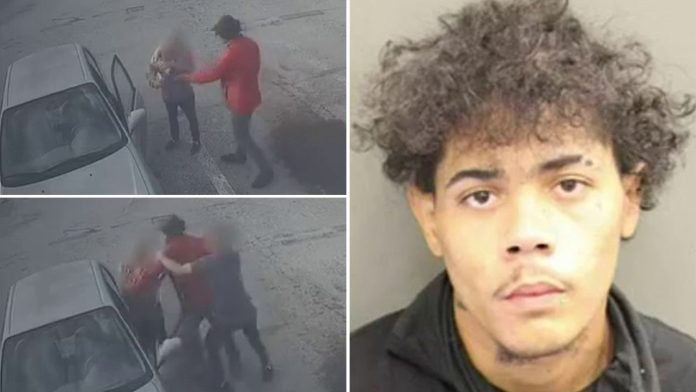
Florida authorities are searching for a man seen on camera robbing an elderly woman in an attack outside an Orlando convenience store on Wednesday.

The Orange County Sheriff’s Office said the violent robbery took place outside a store on Curry Ford Road near the intersection of S. Goldenrod Road on Wednesday morning.

In surveillance footage shared by the sheriff’s office, the 83-year-old, who was not named, can be seen walking out of the store and attempting to get into her car with lottery winnings in her hand. 

FOX 35 Orlando reported that the woman won $200.

RHODE ISLAND POLICE ARRESTED FOUR SUSPECTS WHO ALLEGEDLY ROBBED A FEDEX CARRIER

Orange County deputies are investigating the robbery of an 83-year-old woman after a man in a red jacket, believed to be Diego Stalin Tavarez Fleury, stole her lottery winnings outside a Florida store on Monday morning. (Orange County Sheriff’s Office)

At the same time, the suspect, believed to be Diego Stalin Tavarez Fleury, starts walking toward the woman from the sidewalk area behind her. He approaches her and tries to swipe the winnings out of her hand, then some sort of verbal altercation takes place. 

Another man walks out of the store and appears to tell Fleury to leave.

Fleury then goes after the woman and starts trying to take the money while the other man tries to pull him off of the victim. Fleury drags the woman in the parking lot as she holds onto her winnings, and ultimately steals the money from her.

Suspect attacks woman

Another man attempted to come to the aid of the woman during the robbery, but was unable to stop Fleury from stealing her money and running off. (Orange County Sheriff’s Office)

GUTSY WOMAN, 71, FENDS OFF VIOLENT ATTACK BY 4 TEEN GIRLS ON BLUE CITY SUBWAY

The other man appears to try and get the money back for the woman, but Fleury shoves him and takes off running. As of Wednesday evening, he has not been located.

A store employee told FOX 35 that Fleury often hangs out near the front of the building and has caused problems in the past.

Diego Fleury mugshot

The suspect is believed to be Diego Stalin Tavarez Fleury and he is wanted by the Orange County Sheriff’s Office for robbery, sudden snatching and battery on a person 65 or older. (Orange County Sheriff’s Office)

CLICK HERE TO GET THE FOX NEWS APP

The Orange County Sheriff’s Office has issued an arrest warrant for Fleury on charges of robbery, sudden snatching and battery on a person 65 or older.

Information on his whereabouts can be called in to Crimeline at 1-800-423-8477.

Thursday Briefing – The New York Times

0

Negotiators from Israel and Hamas have agreed to a 42-day cease-fire and hostage release in Gaza, President Biden and other leaders said yesterday, raising hopes that a 15-month war that killed at least 45,000 Palestinians and destroyed much of the enclave could soon come to an end. The truce is set to take effect on Sunday, the Qatari prime minister said. Read the latest.

The agreement needs to be formally ratified by the Israeli cabinet and the government, and both sides were still working on concluding some of the logistical matters, according to officials from Israel and Qatar. A vote in Israel is expected this morning. Here’s what we know about the deal.

Prime Minister Benjamin Netanyahu issued a brief statement at midnight local time reiterating that he would make a full statement only after the final details of the agreement were settled. He has spoken with Biden and with President-elect Donald Trump, his office said. Hamas confirmed the cease-fire deal, calling it an “achievement for our people.”

What this means for Gaza: In the first phase of the cease-fire, Israeli forces would withdraw to the east, away from populated areas. Israel must free several Palestinian prisoners for each hostage released, including some serving life sentences, and allow the entry of 600 trucks carrying humanitarian relief daily, according to a copy of the agreement.

What this means for Israel: A total of 33 hostages would be released over the course of the 42 days. They include women and children, men over age 50 and sick or wounded people. It’s still unclear how many of the 33 are alive. About 100 hostages are thought to still be in Gaza, although the Israeli authorities believe around 35 of them are dead.

Response: Many Gazans reacted with hope tempered by sadness, exhaustion and fear. In Israel, supporters of the deal celebrated the new hope for the return of hostages but also expressed sorrow that a truce would most likely only pause the conflict.

In Gaza: The Gazan Civil Defense Rescue and Emergency Service said last night that the Israeli military was “escalating its aggression against civilians,” even with a cease-fire deal in sight. “At this moment, a residential block consisting of multiple houses” north of Gaza City was “being bombed,” it said.


Donald Tusk, the prime minister of Poland, in a meeting yesterday with Ukraine’s president, Volodymyr Zelensky, appeared to confirm the conclusions of Western intelligence officials who had warned of a Russian plot to blow up cargo aircraft over Western countries.

“I can only confirm that Russia planned acts of air terror, not just against Poland but against airlines across the globe,” Tusk said. He did not elaborate, and it was unclear whether officials believed that Moscow was continuing to actively plan such attacks.

Officials first became aware of the plot over the summer, when incendiary devices placed at shipping hubs in Britain and Germany ignited fires that caused minimal damage. Western officials said in November that the fires had been part of a test of security measures carried out by Russia’s military intelligence service. The ultimate goal of the plot was not known.

Context: While the Kremlin has denied that its agents engage in sabotage, Western officials say Moscow has ordered its intelligence services to find ways to bring the war in Ukraine, soon to enter its fourth year, to Europe and the U.S.

Ukraine: Students in a summer acting course in Kyiv performed a play set in America, called “It’s okay!” It gave them hope that their lives would be OK, too.

President Yoon Suk Yeol of South Korea yesterday became the first sitting president in the nation’s history to be detained in a criminal investigation.

Investigators showed up with 1,000 police officers to take Yoon into custody after his bodyguards rebuffed an attempt to detain him last week. The detention was the latest twist in the weeks of political turmoil that have followed Yoon’s brief declaration of martial law last month and subsequent impeachment.

What’s next: Investigators have 48 hours to interrogate Yoon, after which they can decide to formally arrest him. If he is arrested, they must indict him within 20 days. Separately, the Constitutional Court began deliberating whether he should be removed from office.

A quiet house in southern Poland was “a great place to raise children,” its most recent resident said. Decades earlier, that same house was the home of Rudolf Höss, the commandant of the death camp Auschwitz, and unspeakable horrors took place on the other side of its garden wall.

The house, the subject of the Oscar-winning movie “The Zone of Interest,” will soon welcome visitors as part of commemorations for the 80th anniversary of the Soviet Army’s liberation of the camp.

Lives lived: Martin Karplus, a Nobel Prize-winning theoretical chemist who used computers to model how complex systems change during chemical reactions, died last month at 94.

The writer Gay Talese keeps notes on everything. In “A Town Without Time,” a new collection of his New York writings, the writer notices it all — chestnut vendors, pigeons, doormen, copy boys, ants. And, of course, clothes.

“When I was on The New York Times in 1953 as a copy boy, men still wore suits and jackets and ties and sometimes fedoras,” Talese, 92, said, adding: “Men don’t dress up in New York anymore. You go to a good restaurant and the women look great. The men dress terribly.”

Read our interview with him.

Pam Bondi, Trump’s choice for attorney general, testifies for confirmation hearing : NPR

0

Pam Bondi, Trump’s pick for attorney general, discusses her approach to running the nation’s premier defender of the law.


SCOTT DETROW, HOST:

President-elect Donald Trump’s pick for attorney general, Pam Bondi, was on Capitol Hill today for her confirmation hearing to lead the Justice Department. Trump tapped Bondi for attorney general after his first choice, former Florida congressman Matt Gaetz, withdrew under pressure. NPR justice correspondent Ryan Lucas has been watching and joins us now. Hey, Ryan.

RYAN LUCAS, BYLINE: Hi, Scott.

DETROW: So a lot of Americans probably still aren’t that familiar with Pam Bondi. Why don’t you start by walking us through her background?

LUCAS: Unless you’re from Florida, yeah, you probably don’t know who Bondi is. But she was a longtime prosecutor, a local one in Florida, in the Tampa area. She did that for almost two decades and then was elected to be the state’s attorney general. And she served in that post for eight years. So she has the sort of resume that would make her qualified to lead the Justice Department.

She’s also known Donald Trump for a long time. She’s been his – a vocal supporter of his. She spoke on his behalf at the Republican National Convention in 2016. She served as one of Trump’s personal attorneys during his first impeachment trial in the Senate. She also pushed false claims of vote fraud in the 2020 election, and now we see her here as his nominee for attorney general.

DETROW: And this is a big job. And when it comes down to it, the attorney general’s mission is to uphold the rule of law. What did Bondi say in today’s hearing about her approach?

LUCAS: Well, she leaned heavily into her experience as a prosecutor in Florida – the work she did there on crime, on combating the opioid crisis, on human trafficking. Here’s how she described what her focus is going to be if she’s confirmed.

(SOUNDBITE OF ARCHIVED RECORDING)

PAM BONDI: My overriding objective will be to return the Department of Justice to its core mission of keeping Americans safe and vigorously prosecuting criminals.

LUCAS: She said that includes what she called getting back to the basics – gangs, drugs, cartels, the border, foreign adversaries. She said that’s what the American public expects and deserves. She also said this.

(SOUNDBITE OF ARCHIVED RECORDING)

BONDI: I will fight every day to restore confidence and integrity to the Department of Justice and each of its components. The partisanship, the weaponization will be gone. America will have one tier of justice for all.

LUCAS: Now, Republicans and Trump, as well, of course, have claimed that the current Justice Department has been weaponized against conservatives and against Trump in particular, with the two federal cases that were brought against him. For its part, though, I have to say the Justice Department denies those allegations. It is worth pointing out that the department prosecuted President Biden’s son as well as prominent Democratic members of Congress during the Biden administration.

DETROW: Trump has said a lot about what he wants the Department of Justice to do when he takes office again, and Democrats had a lot of questions about Bondi and whether she can be an independent attorney general. What did she say about this?

LUCAS: Right. We heard Democrat after Democrat push her on this very question. And that’s because of her close ties to Trump and because she has said that the folks who prosecuted Trump will be prosecuted themselves. At today’s hearing, Bondi said a lot of things that you normally hear from a nominee for attorney general. She said the department must act independently. The law must be enforced fairly – that politics can’t play any part, that the American people are her client.

But when she was asked directly what she would do if Trump told her to investigate his perceived enemies – former special counsel Jack Smith, former Republican congresswoman Liz Cheney, attorney general Merrick Garland – whether she would do so, she didn’t answer directly. Here’s one exchange she had with Hawaii Senator Mazie Hirono.

(SOUNDBITE OF ARCHIVED RECORDING)

MAZIE HIRONO: Is Jack Smith one of those bad prosecutors that you will prosecute as AG?

BONDI: Senator, you hesitated a bit when I said, the bad ones. Every decision…

HIRONO: Sometimes badness…

BONDI: …Will be made…

HIRONO: …Is in the eye of the beholder. I’m just asking whether you would consider Jack Smith…

BONDI: Senator…

HIRONO: …To be one of the people. How about Liz Cheney?

BONDI: Senator…

HIRONO: How about Merrick Garland?

BONDI: I am not going to answer hypotheticals.

LUCAS: As testy as that was, Scott, it’s important to remember Republicans have the majority in the Senate, and they appear to be united behind Bondi’s nomination.

DETROW: That’s NPR’s Ryan Lucas. Thanks, Ryan.

LUCAS: Thank you.

Copyright © 2025 NPR. All rights reserved. Visit our website terms of use and permissions pages at www.npr.org for further information.

NPR transcripts are created on a rush deadline by an NPR contractor. This text may not be in its final form and may be updated or revised in the future. Accuracy and availability may vary. The authoritative record of NPR’s programming is the audio record.

Ohio State player, TikTok star dismissed before national championship game against Notre Dame

0

Ohio State has looked dominant throughout the first-ever 12-team College Football Playoff. 

After knocking out the top-seeded Oregon Ducks in the quarterfinals, the Buckeyes defeated the Texas Longhorns in the semifinal to advance to Monday’s championship game. But one member of the Buckeyes, who rose to prominence largely due to his social media presence, will not make the trip to Atlanta for the national title game. 

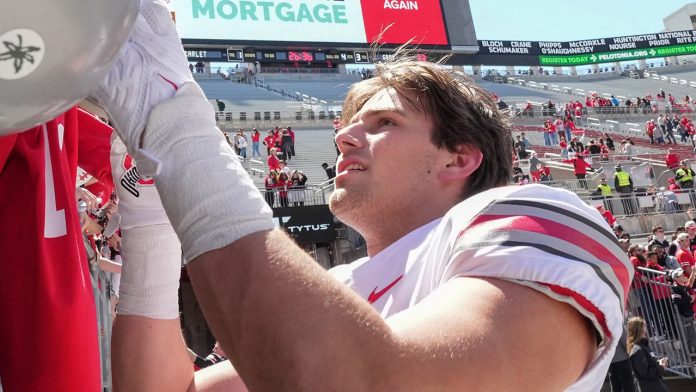
Caden Davis, a former walk-on, has been dismissed from the team, Ohio State Sports Information Director Jerry Emig confirmed to The Lantern.  

CLICK HERE FOR MORE SPORTS COVERAGE ON FOXNEWS.COM

Ohio State Buckeyes defensive end Caden Davis signs an autograph for a fan after the Ohio State Spring Game on April 13, 2024. (Jason Mowry/Icon Sportswire via Getty Images)

The sophomore defensive end never recorded a tackle during his brief stint as an Ohio State student-athlete. Davis has amassed hundreds of thousands of followers across popular social media platforms such as TikTok and Instagram.

University officials did not immediately provide details on what led to Davis’ dismissal.

The College Football Playoff National Championship Trophy

(David Rosenblum/Icon Sportswire/File)

At times, Davis’ online content would provide followers with behind-the-scenes content of the Ohio State football team and athletic facilities. He would also document his life as a student on the Columbus, Ohio, campus.

As of Wednesday, at least one of Davis’ social media bios read, “Ohio State football #61,” while other accounts feature references to the football program.

An Ohio State football helmet

An Ohio State football helmet (Brian Rothmuller/Icon Sportswire via Getty Images/File)

In a since-deleted Instagram post, Davis suggested he was traveling to the Dallas area with the Buckeyes for the semifinal matchup with Texas in the Cotton Bowl. It was later determined that the photos Davis shared were from last season’s Cotton Bowl game. Missouri defeated Ohio State in that game.  

CLICK HERE TO GET THE FOX NEWS APP

Ohio State last hoisted the national championship trophy in 2014, which was the inaugural College Football Playoff Championship.

Notre Dame punched its ticket to the national title game by defeating the Georgia Bulldogs in the quarterfinals before eliminating Penn State in the semifinal. The championship game kicks off at Mercedes-Benz Stadium in Atlanta on Jan. 20 at 7:30 p.m. ET.

Follow Fox News Digital’s sports coverage on X, and subscribe to the Fox News Sports Huddle newsletter.

Biden and Trump Defy Their History of Animosity to Seal Gaza Cease-Fire

0

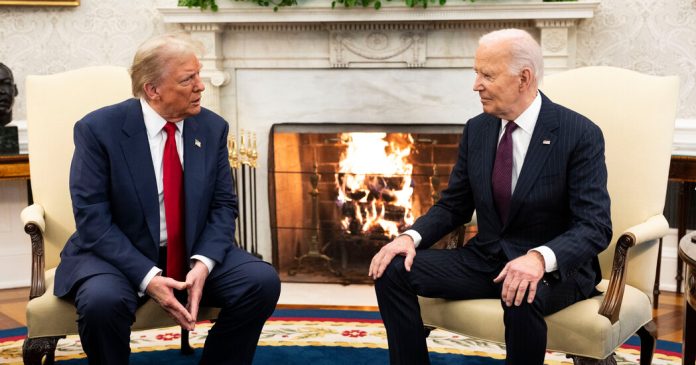
The long-sought, tortuously negotiated Gaza cease-fire deal announced on Wednesday came about in part through a remarkable collaboration between President Biden and President-elect Donald J. Trump, who temporarily put aside mutual animosity to achieve a mutual goal.

The two presidents directed their advisers to work together to push Israel and Hamas over the finish line for an agreement to halt the fighting that has ravaged Gaza and release hostages who have been held there for 15 months. The deal is set to start on Sunday, the day before Mr. Biden turns over the White House to Mr. Trump.

Each president had his own interest in settling the matter before Inauguration Day. For Mr. Biden, the deal, if it holds, represents a final vindication on his watch, what he hopes will be the end of the deadliest war in the history of the Israeli-Palestinian conflict while freeing Americans as well as Israelis from captivity. For Mr. Trump, the deal, for now, takes a major issue off the table as he opens a second term, freeing him to pursue other priorities.

The dramatic development, just five days before the transfer of power in the United States, cut against the natural grain in Washington, where presidents of opposing parties rarely work in tandem during a transition, even in the face of a major crisis. But the political planets quickly returned to their normal orbits as both sides argued over who deserved credit for resolving the standoff.

While Mr. Biden waited for official word to come from the region, Mr. Trump got the jump on him by disclosing the deal himself in an all-caps social media post. “This EPIC ceasefire agreement could have only happened as a result of our Historic Victory in November,” he added soon afterward.

By the time Mr. Biden appeared before cameras at the White House later in the afternoon, he was more gracious, noting that the two teams spoke with one voice. But he bristled when asked who merited credit, him or Mr. Trump. “Is that a joke?” he asked.

Still, the partnership, awkward and prickly as it was, stood out in an era of deep polarization. “It really is extraordinary,” said Mara Rudman, who was deputy special envoy for Middle East peace under President Barack Obama. “Everybody’s talking about who gets credit, but the fact is that it’s shared and part of the reason it worked is that it’s shared.”

That was not to say that it would lead to enduring synergy on this or other issues. “This was a case where the right thing to do aligned with people’s best political interest as well,” said Ms. Rudman, now a scholar at the University of Virginia’s Miller Center.

However credit is ultimately apportioned, diplomats, officials and analysts said it seemed clear that both presidents had played important roles. The deal that was finally agreed to was essentially the same one that Mr. Biden had put on the table last May and that his envoys, led by Brett H. McGurk, his Middle East coordinator, had worked painstakingly to make acceptable to both sides.

At the same time, Mr. Trump’s impending return to power and his blustery threat, that “all hell will break out” if the hostages were not released by the time he was sworn in, clearly changed the calculations of the warring parties. Prime Minister Benjamin Netanyahu of Israel, the beneficiary of so much support from Mr. Trump during his first term, could not take for granted that the new president would back him if he prolonged the war during his second term.

Indeed, it was telling that Mr. Netanyahu, who goes by the nickname Bibi, called Mr. Trump first to thank him after the deal was announced and only then called Mr. Biden. In a statement, Mr. Netanyahu emphasized his gratitude to Mr. Trump “for his remarks that the United States will work with Israel to ensure that Gaza will never be a terrorist haven.” Mr. Biden was not mentioned until the fourth paragraph and only in a single sentence that thanked him “as well” for his assistance.

Mr. Trump’s desire to force a deal went beyond his trademark public threats and extended to constructive assistance on the ground. He authorized Steve Witkoff, his longtime friend whom he picked as special envoy for the Middle East, to work with Mr. McGurk to press negotiators to finalize the agreement. Mr. McGurk and his team were happy to have the help and use Mr. Witkoff’s support as leverage.

“This was Biden’s deal,” former Representative Tom Malinowski, Democrat of New Jersey, wrote on social media, “but as much as I hate to say it, he couldn’t have done it without Trump — not so much Trump’s performative threats to Hamas, but his willingness to tell Bibi bluntly that the war had to end by Jan. 20.”

There were some Republicans who were willing to praise Mr. Biden for his efforts to forge the agreement along with Mr. Trump. “It is good to see the Biden Administration and Trump Transition working together to get this deal done,” Senator Thom Tillis of North Carolina wrote on social media.

Few transitions have seen such a moment of intersecting interests. In the throes of the Great Depression, the defeated President Herbert Hoover tried to engage President-elect Franklin D. Roosevelt to team up to address a bank crisis, only to be rebuffed by an incoming leader who did not want to be tied to his predecessor.

A more eerily haunting example came 44 years ago, when President Jimmy Carter labored until the final hours of his presidency to free 52 American hostages being held in Iran without help from his successor, President-elect Ronald Reagan. In fact, some evidence has emerged suggesting that people around Mr. Reagan tried to discourage Iran from releasing the hostages before the election for fear that it would help Mr. Carter, although official investigations never verified that.

Mr. Carter ultimately struck a deal to free the hostages, but in a final insult Iran held back the planes with the Americans onboard until moments after Mr. Reagan was sworn in on Jan. 20, 1981. That memory was not lost on Mr. Biden’s team in recent weeks, especially after Mr. Carter’s death last month. Administration officials and their allies in recent days had been morbidly mulling the possibility of history repeating itself.

The coming change in political leadership in the United States was not the only factor driving the negotiations over the war in Gaza. The situation on the ground has changed dramatically since Mr. Biden first offered his cease-fire proposal in May.

In the interim, Israel has decapitated the leadership of Hamas, all but demolished its allied militia Hezbollah in Lebanon and taken out key military facilities in Iran. A Biden-brokered cease-fire in Lebanon left Hamas without a second front against Israel, further isolating it. And the fall of President Bashar al-Assad in Syria only reinforced the weakness of Iran and its allies and proxies.

But the looming Inauguration Day in Washington created a new action-forcing deadline that was hard to ignore. Mr. Trump said little during the campaign about the war, but when he did he made it clear that he was not happy about it and urged Israel to wrap it up as soon as possible because the heart-wrenching pictures of death and destruction in Gaza were damaging Israel’s reputation on the international stage.

Moreover, Mr. Trump’s relationship with Mr. Netanyahu has evolved since his first term, when he presented himself as the Israeli leader’s staunchest ally. Mr. Trump cut aid to the Palestinians, moved the U.S. Embassy to Jerusalem, recognized Israeli authority over the Golan Heights and presided over diplomatic openings between Israel and several of its Arab neighbors.

But their ties soured in Mr. Trump’s final year in office when he perceived Mr. Netanyahu to be taking advantage, and they deteriorated even further when the prime minister congratulated Mr. Biden on a victory in the 2020 election that Mr. Trump still denies. Mr. Netanyahu has worked assiduously in recent months to make up with Mr. Trump.

As for Mr. Biden, his own relationship with Mr. Netanyahu has been strained since the days soon after the Oct. 7, 2023, Hamas-led terrorist attack, when he flew to Israel and hugged the Israeli leader on the tarmac. Biden advisers and allies have suspected that Mr. Netanyahu was deliberately holding off on a cease-fire deal to hand the victory to Mr. Trump in an effort to kowtow to him.

Mr. Biden said nothing about that during his televised remarks on Wednesday. But after 15 months of trying to manage the Middle East crisis and head off a wider regional war, he appeared relieved to see an end coming.

“I’m deeply satisfied this day has come, finally come, for the sake of the people of Israel and the families waiting in agony and for the sake of the innocent people in Gaza who suffered unimaginable devastation because of the war,” Mr. Biden said.

He referred to the collaboration with Mr. Trump without mentioning him by name. “I’d also note this deal was developed and negotiated under my administration,” Mr. Biden said, flanked by Vice President Kamala Harris and Secretary of State Antony J. Blinken. “But its terms will be implemented for the most part by the next administration. These past few days, we’ve been speaking as one team.”

Asked about Mr. Trump’s role, Mr. Biden noted that the cease-fire was “the exact framework of the deal I proposed back in May” and claimed credit for giving Israel the backing it needed to weaken Hamas, Hezbollah and Iran. “I knew this deal would have to be implemented by the next team,” he added, “so I told my team to coordinate closely with the incoming team to make sure we’re all speaking with the same voice because that’s what American presidents do.”

Mr. Trump made no mention of the role of his predecessor’s team and left the impression in his social media posts that he had delivered the agreement by himself.

“We have achieved so much without even being in the White House,” he wrote. “Just imagine all of the wonderful things that will happen when I return to the White House, and my Administration is fully confirmed, so they can secure more Victories for the United States!”

A look at the state of the GOP ahead of Trump’s inauguration : NPR

0

Less than a week before President-elect Donald Trump is sworn into office, a look at the fissures — real and imagined — in the Republican Party that is set to take control of Washington.


SCOTT DETROW, HOST:

President-elect Donald Trump will take office next week with a Republican-controlled Congress and a unified party supporting his agenda. And as the GOP turns to governance, there are differing ideas within the party about how to implement Trump’s vision. NPR’s Stephen Fowler joins us with a 10,000-foot view on the state of the Republican Party. Hey, Stephen.

STEPHEN FOWLER, BYLINE: Hey, Scott.

DETROW: So it really seems like Republicans should be unified. No reason not to be – is that the case?

FOWLER: Well, basically, yes. For maybe the first time in the decade Trump’s been on the political scene, everyone seems to be rowing in the same direction, and that’s Trump’s direction. It’s helpful to think about unity looking at a few different groups within the party. One, the Republican National Committee has its winter meeting this week. They’re going to be celebrating a sweep of the presidential battlegrounds. They took control of the Senate and held the House. And they had this coordinated effort with the Trump campaign to boost early voting and target low-turnout voters.

So the party infrastructure was all in alignment, and it paid off. This comes a year after Trump called for new leadership at the RNC. He’s sticking by current chairman Michael Whatley to run things, and that’s a notable contrast to Democrats searching for both new leadership and a new vision.

DETROW: So that’s the national party, the national party apparatus. What about Congress?

FOWLER: There’s not really much of a vocal or meaningful opposition to Trump’s agenda or style the way there was back in 2017 when he first took office. This is a very Trump-friendly House and Senate, but it’s also where you start to see some of these differences pop up. Trump promised a sweeping agenda on the campaign trail, and House and Senate leaders are differing on how to pass said agenda.

House Republicans have a narrow majority, and the leaders there prefer one mega MAGA bill, dealing with everything from Trump’s energy policy, national security, tax cuts, spending cuts. Senate Republican leadership leans toward splitting up his agenda into two measures. Then, of course, there’s Trump, who said last week that the final outcome is more important to him than what actually the process looks like to get there.

DETROW: So that’s the party, and that’s Congress. What are some other key factions you’re going keep an eye on?

FOWLER: Well, the internet, Scott. I mean, social media fights drove a lot of the discussion and debate and detours in campaign policy last year. Also, billionaire Elon Musk owns the site X, which has become more of a hub for conservative political influencing to happen. Musk and other tech leaders are seeing their influence grow ahead of the second Trump term as they become more aligned with the economic part of Trump’s agenda.

DETROW: Right, and Musk especially has been such a key figure since the election. How does he, and people like him, fit into this broader MAGA group, though, that’s been around with Trump for three national elections now?

FOWLER: Well, the Republican big tent does have some growing pains underneath it, Scott. As a case in point, there’s been this blowup over H-1B visas for skilled immigrant tech workers. Musk and others like him say recruiting the best of the best to come work in the U.S. is America first, like Donald Trump wants. Then there are others, like one-time Trump adviser Steve Bannon, who say that America first means curbing legal immigration, too.

But think of it this way, Scott. Instead of there being a winning side and a losing side, the likely path forward policy-wise is a compromise somewhere in between, like most issues in politics. And, really, this underscores the reality that no party is a monolith, even one that is largely in agreement with Donald Trump and his plans.

DETROW: That is NPR’s Stephen Fowler. Stephen, thanks a lot.

FOWLER: Thank you.

(SOUNDBITE OF MUSIC)

Copyright © 2025 NPR. All rights reserved. Visit our website terms of use and permissions pages at www.npr.org for further information.

NPR transcripts are created on a rush deadline by an NPR contractor. This text may not be in its final form and may be updated or revised in the future. Accuracy and availability may vary. The authoritative record of NPR’s programming is the audio record.