Thursday, November 12, 2026
Home Blog Page 414

NY Gov Hochul seeks expanded involuntary commitment laws over violent crimes on subway

0

New York Gov. Kathy Hochul, a Democrat, is looking to expand the state’s involuntary commitment laws to allow hospitals to force more people with mental health problems into treatment.

This comes in response to a series of violent crimes in the New York City subway system.

Hochul said Friday she wants to introduce legislation during the coming legislative session to amend mental health care laws to address the recent surge of violent crimes on the subway.

“Many of these horrific incidents have involved people with serious untreated mental illness, the result of a failure to get treatment to people who are living on the streets and are disconnected from our mental health care system,” the governor said.

HOCHUL’S CHRISTMASTIME BOAST OF SAFER SUBWAY CAME AMID STRING OF ALARMING VIOLENT ATTACKS

New York Gov. Kathy Hochul wants to expand the state’s involuntary commitment laws to allow hospitals to compel more people with mental health struggles into treatment. (John Lamparski/Getty Images)

“We have a duty to protect the public from random acts of violence, and the only fair and compassionate thing to do is to get our fellow New Yorkers the help they need,” she continued.

Mental health experts say that most people with mental illness are not violent and are far more likely to be victims of violent crime than they are to carry out a violent crime.

The governor did not provide details on what her legislation would change.

“Currently, hospitals are able to commit individuals whose mental illness puts themselves or others at risk of serious harm, and this legislation will expand that definition to ensure more people receive the care they need,” she said.

Hochul also said she would introduce another bill to improve the process in which courts can order people to undergo assisted outpatient treatments for mental illness and make it easier for people to voluntarily sign up for those treatments.

Coney Island-Stillwell Avenue Station

Police officers patrol the F train platform at the Coney Island-Stillwell Avenue Station, Thursday, Dec. 26, 2024, in New York. (AP)

The governor said she is “deeply grateful” to law enforcement who every day “fight to keep our subways safe.” But she said “we can’t fully address this problem without changes to state law.”

“Public safety is my top priority and I will do everything in my power to keep New Yorkers safe,” she said.

State law currently allows police to compel people to be taken to hospitals for evaluation if they appear to be suffering from mental illness and their behavior presents a risk of physical harm to themselves or others. Psychiatrists must then determine if the patients need to be involuntarily hospitalized.

New York Civil Liberties Union executive director Donna Lieberman said requiring more people to be placed into involuntary commitment “doesn’t make us safer, it distracts us from addressing the roots of our problems, and it threatens New Yorkers’ rights and liberties.”

Hochul’s statement comes after a series of violent crimes in New York City’s subways, including an incident on New Year’s Eve when a man shoved another man onto subway tracks ahead of an incoming train, on Christmas Eve when a man slashed two people with a knife in Manhattan’s Grand Central subway station and on Dec. 22 when a suspect lit a sleeping woman on fire and burned her to death.

NYC MAN CHARGED WITH ATTEMPTED MURDER AFTER ALLEGEDLY SHOVING COMMUTER IN PATH OF SUBWAY

Police investigate at the Coney Island-Stillwell Avenue Station in Brooklyn

Police investigate at the Coney Island-Stillwell Avenue Station in Brooklyn after a woman aboard a subway car was set on fire and died in New York, United States on December 22, 2024. (Kyle Mazza/Anadolu via Getty Images)

The medical histories of the suspects in those three incidents were not immediately clear, but New York City Mayor Eric Adams, a Democrat, has said the man accused of the knife attack in Grand Central had a history of mental illness and the father of the suspect who shoved a man onto the tracks told The New York Times that he had become concerned about his son’s mental health in the weeks prior to the incident.

CLICK HERE TO GET THE FOX NEWS APP

Adams has spent the past few years urging the state Legislature to expand mental health care laws and has previously supported a policy that would allow hospitals to involuntarily commit a person who is unable to meet their own basic needs for food, clothing, shelter or medical care.

“Denying a person life-saving psychiatric care because their mental illness prevents them from recognizing their desperate need for it is an unacceptable abdication of our moral responsibility,” the mayor said in a statement after Hochul’s announcement.

The Associated Press contributed to this report.

‘The Interview’: Antony Blinken Insists He and Biden Made the Right Calls

0

At the end of a tenure marked by war and division, the outgoing secretary of state defends his legacy on Gaza and Ukraine and says he’s made America stronger.

Craziest air travel stories of 2024

0

Join Fox News for access to this content

Plus special access to select articles and other premium content with your account – free of charge.

By entering your email and pushing continue, you are agreeing to Fox News’ Terms of Use and Privacy Policy, which includes our Notice of Financial Incentive.

Please enter a valid email address.

Many people traveled far and wide in 2024. For many, the memories began during their journey aboard one of the thousands of flights that crisscrossed the globe each day. 

As 2024 wraps up, here is a roundup of some of the craziest airline stories of the last year.  

Faulty door 

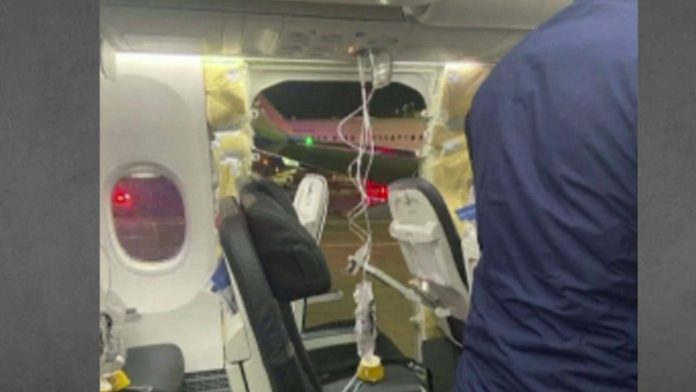
An incident that quickly went viral occurred on Jan. 5 when the plug door panel, which covers an extra emergency exit that is only operable on planes with the maximum capacity, on an Alaska Airlines flight blew off at 16,000 feet.

The aircraft was departing Portland, Ore., and the panel caused the depressurization of the cabin. Pilots returned the plane safely to Portland with no serious injuries reported. 

ANOTHER DELTA AIR LINES CUSTOMER ERUPTS AT DEPARTURE GATE, LEADING TO POLICE ACTION AND A PLANE DELAY

Video footage of the incident shows panicked passengers sitting as wind blew into the aircraft because of the missing door. The incident resulted in a lawsuit against the airline and put renewed scrutiny on Boeing, the maker of the plane. 

“Boeing is accountable for what happened,” then-Boeing CEO Dave Calhoun said at the time. “Whatever the specific cause of the accident might turn out to be, an event like this simply must not happen on an airplane that leaves one of our factories. We simply must be better. Our customers deserve better.”

Tragedy caught on video

A plane operated by the Brazilian airline Voepass crashed in the country’s Sao Paulo state in August, killing all people on board.

The fiery crash occurred in a residential area and killed more than 60 passengers and crew. The plane departed from Cascavel, Brazil, in the state of Parana.

This frame grab from video shows fire coming from a plane that crashed by a home in Vinhedo, Sao Paulo state, Brazil, Friday, Aug. 9, 2024. (Felipe Magalhaes Filho via AP)

Footage captured seconds before the crash shows the aircraft drifting downward vertically and spiraling as it plunged to the ground. 

Aviation experts at the time speculated that ATR 72-500 twin-engine turboprop stalled in midair. 

What’s that smell?

In December, passengers on an American Airlines flight from Dallas, Texas, to Minneapolis, Minnesota, were met with an unexpected surprise after a lavatory water leak reached the aisle of the cabin.

‘GATE LICE’ AND ‘SEAT SQUATTERS’ AMONG 2024’S MOST VIRAL TRAVEL TRENDS

The water was unable to be shut off, and the leak crept down the cabin during the nearly three-hour flight. 

Passengers are seen holding up their bags to avoid what passenger Hilary Stewart Blazevic referred to as “disgusting” liquid, while some attempt to step over the water.

Wing damage

A United Airlines passenger filmed a Boeing 757’s wing “coming apart” shortly before a February flight from San Francisco to Boston was diverted to Denver over the incident.

Kevin Clarke captured the video showing damage on the wing of the aircraft that ultimately prompted the flight to make an emergency landing in Denver to assess the issue. Shortly after takeoff, he experienced “the most violent, shuddering and shaking” before falling back to sleep, he said at the time. 

“A pilot came walking down the aisle and went behind me,” Clarke told Lawrence Jones on “Fox & Friends.”

“I looked out the window, went back to the cockpit and came on the PA system and said, ‘We’re going to be diverted to Denver. There’s some minor damage to… front of the wing.’ So I immediately threw my window open to look at the wing and the trailing edge of the strut was totally… destroyed like you see in a picture.”

“At that point I’m like, well, that’s not a little damage, but… the United pilot’s competent enough to get us to Denver,” he continued. “I guess we’re on our way.”

The Boeing 757-200 with 165 passengers aboard landed in Denver to “address an issue with the slat” on one of its wings. Passengers were put on a different plane and arrived later in the day in Boston.

Slats are movable panels on the front or leading edge of the wing and are used during takeoffs and landings. 

TRAVELERS MAY FACE YET ANOTHER ‘TOURIST TAX’ WHEN VISITING CERTAIN CITIES

Unruly passenger

A few days into 2024, an irate passenger allegedly punched a flight attendant before he was escorted off the plane. 

American Airlines flight 1497 from Dallas/Fort Worth International Airport in Texas to Bozeman Yellowstone International Airport in Montana on Jan. 3 was diverted mid-trip due to an unruly passenger.

The plane was forced to divert to Rick Husband Amarillo International Airport in Texas after Keith Edward Fagiana repeatedly punched a flight attendant. The incident began after another passenger complained that Fagiana was kicking his chair, according to authorities.

After a flight attendant became involved, Fagiana allegedly became enraged and began punching the American Air Lines employee in the stomach.

J.P. Gallagher, an elected official from Montana, told FOX 4 that his wife alerted him to the enraged voyager.

CLICK HERE TO GET THE FOX NEWS APP

“My wife kind of started hitting me and saying, you know, getting me to pay attention that something was happening,” Gallagher said. “There was a drink cart between us and the incident. So I couldn’t see a lot of what was going on, but I could hear some yelling and some, you know, cussing and, you know, the flight attendant saying, stop it.”

Fox News Digital’s Madeline Coggins, Bailee Hill, Ashley J. DiMella and Sarah Rumpf-Whitten contributed to this report. 
 

Saudi Arabia and U.A.E. Tread Cautiously With Syria’s New Leaders

0

For decades, Syria was Iran’s closest Arab ally in the Middle East while the wealthy Persian Gulf monarchies were locked in a competition with Tehran for power and influence across the region.

With the sudden overthrow of the Syrian dictator Bashar al-Assad, his close ally Iran has been sidelined. That presents an opportunity for Gulf states to fill the void and develop ties with the new government in Damascus.

The two leading Gulf powers, Saudi Arabia and the United Arab Emirates, are taking a cautious approach, because Hayat Tahrir al-Sham, the main rebel faction that has seized control of much of Syria, leans toward Islamism and was once affiliated with the extremist group Al Qaeda.

The two Gulf nations have spent the better part of the past two decades trying to prevent the rise of groups that embrace political Islam across the Middle East, opposing the likes of Al Qaeda, the Islamic State and the Muslim Brotherhood.

The Gulf powers have said publicly that the new leaders in Syria must demonstrate that they will be inclusive and tolerant of the country’s diverse array of sects before they can win political and financial support.

Anwar Gargash, a diplomatic adviser to the Emirati president, said recently that the nature of the rebel factions and their past affiliation with Al Qaeda were cause for concern.

“I think these are all indicators that are quite worrying,” Mr. Gargash said during a conference in the Emirati capital, Abu Dhabi, in mid-December shortly after the rebel takeover. “The region has seen episodes like this before, so we need to be on guard.”

The Gulf nations have long feared that the empowerment of Islamist groups in the Middle East could destabilize their own autocratic governments. When the Arab Spring erupted across the Middle East in 2011, several autocracies were toppled and powerful Islamist groups rose to fill the vacuum in countries, including Tunisia and Egypt.

“The U.A.E. has a long history of being particularly hostile to Islamist-affiliated political parties and governments,” said Anna Jacobs, a senior Gulf analyst for the International Crisis Group, a nonprofit. “But at least up until now, the U.A.E. has sent some very clear signals that it’s willing to work with the interim government for the sake of preserving stability in Syria and in the wider region.”

Concerns in the Gulf about Islamist power trace back to the Sept. 11, 2001, attacks on New York. Most of the 19 hijackers were Saudi and had been influenced by the kingdom’s strict version of Islam, Wahhabism, which has been blamed by some for fueling intolerance and terrorism. Saudi Arabia’s de facto leader, Crown Prince Mohammed bin Salman, has since curbed the power of religious clerics.

After the Arab Spring revolution in Egypt, voters elected a president from the Islamist Muslim Brotherhood movement, Mohammed Morsi. But he was ousted in a coup in 2013 that the United Arab Emirates supported.

And the wariness toward Islamists in Syria is felt not only in the Gulf, but in other regional powers, including Egypt.

Abdel Fattah el-Sisi, the general who replaced Mr. Morsi in Egypt in 2013, has spent the years since then stamping out the Brotherhood in his country, seeing the group as a threat to his power.

In mid-December, Mr. el-Sisi made a rare appearance before journalists that suggested nervousness over the events in Syria. He appeared to draw a contrast between himself and Mr. al-Assad.

“There are two things I have never done, by the grace of God: My hands have never been stained with anyone’s blood, and I have never taken anything that wasn’t mine,” he said.

Saudi Arabia and the United Arab Emirates were staunch opponents of the Assad regime after Syria’s civil war began in 2011 and for the decade that followed. Mr. al-Assad became a pariah in the region and beyond for his brutal repression of opponents, which included the use of chemical weapons against his own people.

Both Gulf nations closed their embassies in Syria in early 2012 amid the Assad government’s crackdown on opponents. Over the years, as Mr. al-Assad regained control over much of his country with significant Russian and Iranian military support, there appeared to be a shift in Gulf attitudes.

The two Gulf powers were pivotal players in bringing Mr. al-Assad back into the Arab fold after a decade of isolation. The thaw was driven at the time by a desire for Arab unity to counterbalance Iran’s growing influence in Syria and in the wider Middle East.

After a devastating earthquake that struck Turkey and Syria in early 2023, the Saudi leadership made a humanitarian outreach to Mr. al-Assad. And in a milestone later that same year, the Syrian leader was readmitted to the Arab League.

The engagement with Mr. al-Assad’s administration was a tacit acknowledgment that, despite Western-backed efforts to oust him, his political survival had become a reality that could no longer be ignored.

The shift in Gulf attitudes while Mr. al-Assad still controlled Syria was part of a broader regional reordering as the Saudis and Emirates began to re-engage with Iran.

Under Syria’s new leaders, the economic opportunities of post-conflict rebuilding, an interest when Mr. al-Assad held sway, will be part of any assessment for the Gulf states.

With the country’s infrastructure in ruins, Saudi Arabia and the United Arab Emirates stand to profit from reconstruction efforts, provided they can negotiate favorable terms with the new government in Damascus.

Securing a role in rebuilding Syria also offers another way to influence the country’s future.

Qatar, in particular, seems open to supporting the transitional government in Syria.

Qatar maintained contacts with Hayat Tahrir al-Sham and with other Islamist rebel factions in Syria during the civil war. In 2015, Qatar brokered a prisoner exchange deal between the rebels and the Lebanese Army.

When Saudi Arabia, the United Arab Emirates and Bahrain severed ties with Qatar in 2017, one of their demands for restoring relations was that Qatar sever its support for the Nusra Front, the precursor to Hayat Tahrir al-Sham.

At an Arab League summit in Jeddah, Saudi Arabia, in 2023, Qatar’s emir, Sheikh Tamim bin Hamad al-Thani, walked out of the meeting before a speech by Mr. al-Assad, signaling his country’s stance.

After the Assad ouster, Qatar sent its foreign minister to Damascus in late December, the highest-level government official from the Gulf to meet with the transitional government. It was followed earlier this week by a visit from the chief of the Gulf Cooperation Council and Kuwait’s foreign minister.

Ahmed al-Shara, the rebel leader who headed the offensive that overthrew Mr. al-Assad, said the Qataris would receive priority for their support over the past decade, possibly alluding to a role for the Gulf emirate in reconstruction projects.

The Qatari delegation was accompanied by a technical team from Qatar Airways to provide technical support for the reopening of Damascus International Airport.

“Qatar has a special priority in Syria because of its honorable stance toward the Syrian people,” Mr. al-Shara told reporters.

Rania Khaled and Vivian Yee contributed reporting from Cairo.

GOP lawmaker dishes why he changed his vote to support Mike Johnson in heated House speaker vote

0

Speaker-designate Mike Johnson, R-La., was re-elected to lead the House of Representatives on Friday despite losing one fellow Republican in the final vote tally.

Ultimately, Rep. Thomas Massie, R-Ky., was the only Republican to vote against Johnson, but it could have been worse for the House speaker. Reps. Keith Self, R-Texas, and Ralph Norman, R-S.C., were initially voting against Johnson, but switched their votes to support him.

Norman told Fox News he changed his vote after he got some assurances from Johnson.

“I said, ‘Mike, are you going to give us specific examples of fighting for the things we mentioned? Will you give us your word?’ He said, ‘Yes.’ So I said, ‘OK, we’ll take you at your word.’ That’s why I changed my vote,” Norman explained Friday on “The Story.”

TRUMP CHEERS JOHNSON WINNING SPEAKER VOTE: ‘AMERICA IS BACK’

Johnson’s future appeared uncertain at one point on Friday afternoon when Norman, Massie and Self voted for someone other than him for speaker, putting the gavel seemingly out of reach. 

Johnson then huddled with Self, Norman and other lawmakers behind closed doors before the vote was called to an end. Both later emerged and switched their votes to support Johnson.

Norman shared his initial opposition was rooted in concern as to whether Johnson had the “willingness to fight for Trump’s agenda.”

“We had met with Speaker Johnson yesterday for an extended period of time, and I just didn’t come away with the feeling that the oomph or the willingness to fight for Trump’s agenda was there,” he said on “The Story.” 

Norman stood behind his initial decision to vote against Johnson, reasoning it was “the only way I had to let my voice be heard.”

MIKE JOHNSON RE-ELECTED SPEAKER: HERE WERE THE TOP THREE MOMENTS OF THE DRAMATIC VOTE

Ultimately, the Louisiana Republican won along party lines during the first round of voting, a stark contrast to his predecessor Kevin McCarthy’s drawn-out, 15-round battle in 2023.

Johnson’s re-election victory comes despite saber-rattling by some conservatives who threatened to withhold support from Johnson in protest of his handling of government funding and several other issues in the 118th Congress.

“I think now he understands the fact that no more suspension votes, where we allow more Democrat votes than Republicans — that’s what’s killing the country,” Norman said. “If we’re going to do the same thing over and over again as we have done for the last 14 months, we’re going to be in the same position. I’m just not willing to go along with that, and I didn’t.”

CLICK HERE TO GET THE FOX NEWS APP

“Mike has got a tremendous opportunity to show the American people that not only he’s just going to say it, he’s going to fight it. He’s going to have Trump backing him up, which is all a good thing.”

Fox News Digital’s Elizabeth Elkind contributed to this report. 

South Korean Unrest Conspiracy Theories Are Spread by Social Media

0

Every day​ for the past week, Kim Kwon-seop, 72, has joined thousands of others gathered near the home of South Korea’s impeached president, Yoon Suk Yeol​. They were determined to shield Mr. Yoon from prosecutors who wanted to detain him on insurrection charges stemming from his short-lived declaration of martial law last month.

To them, it was the opposition who had committed insurrection, abusing its majority power at the Assembly​ to repeatedly block Mr. Yoon​’s political initiatives. To them, the opposition’s parliamentary majority ​was invalid because the election last April was rigged. And to them, protecting Mr. Yoon was synonymous with protecting South Korea from “North Korea followers” who have taken root in every corner of their society, from the judiciary to schools to the news media.

​South Koreans commonly dismiss such conspiracy theories as little more than online demagoguery spread by right-wing YouTubers with the help of social media algorithms. But amid the country’s entrenched political polarization, they have fueled the turmoil over Mr. Yoon’s situation, driving zealous believers like Mr. Kim to take to the streets in large numbers, calling for the president’s return to office.

“When I leave home for this rally every day, I tell my wife that this may be the last time she sees me alive, because I am ready to die for my cause,” Mr. Kim said. “This is not just about protecting President Yoon. It’s about saving my country for my descendants.”

If President-elect Donald J. Trump has a “Make America Great Again” movement behind him, Mr. Yoon has the “taegeukgi budae” ​(literally, “national-flag brigade”). It consists of mostly older, churchgoing South Koreans who enliven their rallies with patriotic songs, a wave of South Korean and American flags in support of their country’s alliance with ​Washington, and vitriolic attacks on the nation’s ​left-wing politicians, whom they fear would ​hand their country over to China and North Korea.​

“We won!” flag-waving supporters of Mr. Yoon shouted on Friday when investigators retreated from the presidential residence after failing to serve a court warrant to detain him for questioning.

“Yoon Suk Yeol is depending on the South Korean version of MAGA to hold onto power,” said Ahn Byong-jin, a professor of political science at Kyung Hee University in Seoul.

Mr. Yoon invoked the right-wing fear and indignation when he declared martial law on Dec. 3 to “eliminate the despicable pro-North Korean and anti-state forces at one stroke.” But his attempt to place his country under military rule for the first time in 45 years lasted only hours. The opposition-dominant National Assembly ​voted to rescind it​ and later impeached him.

Suspended from office​, Mr. Yoon ​now faces a trial at the Constitutional Court, which will decide whether to formally remove him. He is also subject to separate investigations​ from prosecutors, who have accused him of committing insurrection when he ordered troops to seize the Assembly and to detain his political enemies during his martial law.

With public surveys showing a majority of South Koreans wanting him ousted, Mr. Yoon’s strongest defenders are his flag-waving supporters and the right-wing YouTubers​, who glorify him as a champion of promoting the alliance with Washington. These YouTubers, some with around a million subscribers,​ demand Mr. Yoon​’s reinstatement and livestream pro-Yoon rallies, where speakers call the efforts to remove ​him a “coup d’état” at North Korea’s behest. They ​also reinforce political ​polarization by channeling conspiracy theories against Mr. Yoon’s progressive enemies​.

Right-wing YouTubers have long boasted of their friendship with Mr. Yoon, after dozens of them were invited to his inauguration in 2022. In the wake of his botched martial law, Mr. Yoon left little doubt that he was a big fan.

“I am watching your struggle in real time through YouTube livestreaming,” Mr. Yoon said in a message to his supporters gathered outside his home on New Year’s Day. “Our country is in danger because of anti-state​ forces running amok, as well as forces in and outside who violate our sovereignty.”

​During a rally on Wednesday, Seok Dong-hyeon, a lawyer who ​serves as Mr. Yoon’s spokesman, thanked right-wing YouTubers there and called the investigators trying to detain Mr. Yoon “a front” for the opposition.

“This is war,” he said​. “And you are warriors.”

Like other democracies, South Korea has grappled with the role of social media in shaping politics​. About 53​ percent of South Koreans say they ​consume news on YouTube, higher than an average of 30​ percent in ​46 countries​ surveyed, according to a 2023 report by Korea Press Foundation. ​

Analysts worry that algorithm-fueled information bubbles, with people continually served more of the type of content they have expressed interest in by watching, are helping divide the nation.​ The language and conspiracy theories Mr. Yoon and his supporters adopted mirror ​those purveyed by right-wing YouTubers, said Hong Sung-guk, a former lawmaker and columnist.

“Yoon’s ​is likely the world’s first ​insurrection instigated by algorithm addictions,” Mr. Hong said.

A dozen participants in a recent pro-Yoon rally interviewed for this article were all firm believers in the conspiracy theories​, saying that right-wing YouTubers were their primary or only source of news.

“They speak the truth,” said Kim Jae-seung, 72. “I no longer read newspapers or turn on TV. They are full of bias.”

Kim Yong-son, 70, pulled out his battered smartphone to show a video clip that depicted the progressive leaders as ​hellbent on undermining South Korea’s alliance with the United States and colluding with North Korea and China — viral content created by the popular right-wing pastor, the Rev. Jun Kwang-hoon.

In 1980, Chun Doo-hwan, the leader of the military junta that ruled the country at the time, ​justified imposing martial law by citing the threats from “North Korean puppets” and “dangerous elements” at home.

As his own political troubles deepened in the wake of scandals ​and disaster, Mr. Yoon aligned himself more openly with the radicalized political right. He accused unfriendly ​journalists of spreading “fake news” and called his political enemies subscrib​ers to “Communist totalitarianism.” ​He even appointed a right-wing YouTuber as head of the center for training government officials.

​Long before Mr. Yoon’s declaration of martial law, some of the right-wing YouTubers had urged him to take such an action to deal with his domestic enemies. They also spread sinophobia, hinting that China was a secret manipulator of domestic politics in South Korea, including its elections. Rallies of his supporters often ring with calls for “expelling Chinese.” Mr. Yoon raised fears of Chineses spies while defending his martial law.

Mr. Yoon and right-wing YouTubers ​also argue that election results in South Korea are no longer trustworthy. ​Pro-Yoon supporters often carry signs saying “Stop the Steal​,” ​borrowing a term made popular by people in the United States who falsely claimed that the ballot count for the 2020 presidential election was manipulated against Mr. Trump.​ One of them, Shin Eun-ju, 52,​ said​ she believed the vote fraud theory, citing “YouTube” as her source.

The police and prosecutors, as well as the election authorities, have long dismissed the allegation as groundless. ​But when Mr. Yoon declared martial law, he also sent troops to the National Election Commission​ to investigate allegations of vote fraud. Military officers involved in his martial law decree had instructions, prosecutors said, to confiscate the commission’s computer servers and detain senior election ​monitors, tying, blindfolding and taking them to an underground military bunker for questioning​ about election fraud. (Martial law ended before any computers were seized or people taken away.)

Mr. Yoon and his lawyers have not commented on specific allegations, and they have broadly denied allegations of insurrection, calling his acts the legitimate exercise of presidential power.

“It’s clear that the president lost his mind to outlandish vote-fraud conspiracy theories while watching low-quality YouTube channels,” said Cho Gab-je, a prominent conservative journalist.

Mr. Yoon’s lawyer, Yoon Kab-keun, said the allegations of rigged elections were strong and divisive enough to merit an investigation.

Google Korea said it manages YouTube contents according to its community guidelines.

Ironically, it was also YouTube ​that helped news of Mr. Yoon’s declaration of martial law go viral on the night of Dec. 3, prompting citizens to rush to the National Assembly to delay the advance of troops and buy time for opposition lawmakers to vote down the martial law.

“It was a clash between the different roles of algorithms,” Mr. Hong said. “Algorithms help information go viral, but also help make you a slave to it.”

Brett Favre questions details of New Orleans attack, Trump Tower bombing: ‘Hard to see what’s real’

0

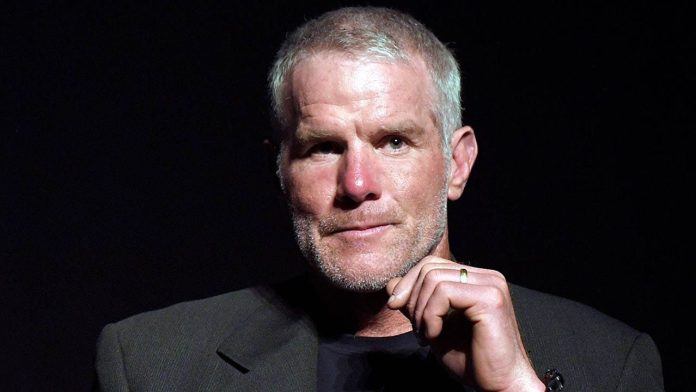
NFL Hall of Famer Brett Favre expressed confusion and skepticism about the details related to the deadly New Year’s Day incidents in New Orleans and Las Vegas.

In an X post Friday, Favre asked followers “what’s going on” with the terror attack in New Orleans that killed 14 and the Cybertruck bombing outside Trump Tower in Las Vegas that killed one.

“What’s going on with the New Orleans and Trump Hotel story? A lot of information and hard to sift through to see what’s real!” Favre wrote. 

CLICK HERE FOR MORE SPORTS COVERAGE ON FOXNEWS.COM

Many of Favre’s followers responded, sharing similar skepticism. 

“Whatever the FBI says, believe the opposite!” one user wrote. 

Another user responded, advising Favre and others to “ignore the media.” 

“None of it. Take in the event. Ignore the media,” the user wrote. 

More details about the two attacks have emerged in recent days.

Shamsud-Din Jabbar, the man who plowed a rented pickup truck into New Year’s revelers on New Orleans’ Bourbon Street Wednesday, and Matthew Livelsberger, the man eyed in the explosion of a Tesla Cybertruck outside the Trump International Hotel in Las Vegas hours later, were both Army soldiers who served at Fort Liberty and deployed to Aghanistan in 2009, Fox News Digital previously reported. 

Las Vegas, Clark County Sheriff Kevin McMahill said that while both men served in Afghanistan in 2009, any potential ties there were still under investigation

“We don’t have any evidence that they were in the same province in Afghanistan, the same location or the same unit,” McMahill said. “Again, something else that remains under investigation.”

SUGAR BOWL’S CORPORATE SPONSOR CEO SLAMMED FOR ‘ADDICTION TO DIVISIVENESS’ STATEMENT AFTER TERROR ATTACK

A defense official told Fox News there was no evidence based on their military service that the attacks were related. While both men served at Fort Liberty, formerly Fort Bragg, they were there at different times. The North Carolina base is home to more than 50,000 service members. 

The FBI released surveillance images of the New Orleans attack that show Jabbar just about an hour before he allegedly sped a rented Ford pickup through a crowd of Bourbon Street revelers in an attack officials say was inspired by the Islamic State. 

CLICK HERE TO GET THE FOX NEWS APP

Former Green Bay Packers quarterback Brett Favre speaks before Republican presidential nominee Donald Trump at a campaign rally at the Resch Center Oct. 30, 2024, in Green Bay, Wis. (AP Photo/Alex Brandon)

More than 30 others were injured. Despite previously investigating the possibility of accomplices in the attack, the FBI said Thursday the bureau is confident Jabbar acted alone. 

The FBI recovered a black ISIS flag from Jabbar’s rented pickup truck that was used for the attack. 

“This investigation is only a little more than 24 hours old, and we have no indication at this point that anyone else was involved in this attack other than Shamsud-Din Bahar Jabbar,” FBI Deputy Assistant Director Christopher Raia of the counterterrorism division at FBI headquarters said Thursday. 

“The FBI is surging people and assets to this area from across the region and across the nation. Special agents in field offices across the country are assisting with potential aspects of this investigation and following up on leads. Additional teams of special agents, professional staff and victim specialists continue to arrive to provide more investigative power and assistance to the victims and their families.” 

Follow Fox News Digital’s sports coverage on X, and subscribe to the Fox News Sports Huddle newsletter.

In France, Drug Traffic Spreads to Small Towns

0

For centuries in Morlaix, a city of cobblestones and creperies on the Breton coast of France, the best-known dealers were the ones who traded in linen during the Renaissance and built a number of unique half-timbered houses in the middle of town.

The new dealers are another story.

France, long a major European market for illicit drugs, is experiencing a new eruption of concern over its domestic drug trade, and the violence that often accompanies it. In the past few years, experts say, the trade in illicit drugs has become more noticeable in France’s small and medium-size cities, bringing a measure of insecurity to places that had once felt sleepy and safe. Morlaix, with its population of about 15,000, is among them.

“We are confronting a tide of cocaine — a new thing,” said Jean-Paul Vermot, the mayor.

On a recent morning, Mr. Vermot gave a tour of Morlaix, pointing with pride to its quaint marina, the City Hall balcony where Gen. Charles de Gaulle delivered a speech in July 1945 and the 18th-century tobacco factory that has been transformed into a cultural center.

He also showed the park bench where, he said, a group of young dealers three years ago threatened to kill him and burn down his house. He showed a public housing complex where he said drug deals were recently made in the open before a police crackdown. He showed a door of a residence still riddled with bullet holes, a recent effort by a group of young dealers to intimidate another young man in debt to them.

Faced with what has been called the “simultaneous explosion” of supply and demand for illegal drugs, French officials nationwide are embracing proposals to crack down on traffickers. Conservative politicians have taken to blaming casual consumers, including marijuana smokers, for supporting a deadly industry at a time when some governments in the Americas and Europe have decriminalized or legalized cannabis.

Whether it all amounts to a new French war on drugs remains to be seen, given the country’s bout of political instability. France’s center-right national government collapsed last month after bitter disagreements over the 2025 budget. A new government, of a roughly similar political bent, was announced just before Christmas.

Its interior minister, Bruno Retailleau, is a holdover from the previous one and a tough-talking architect of the proposed antidrug plan. Its justice minister, Gérald Darmanin, recently said he wanted to put the 100 biggest drug dealers who are currently incarcerated in solitary confinement, “as one does with the terrorists.”

It is clear that any future conversation about drug policy will not be limited to the traditional hot spots in the suburbs of Paris or in Marseille, France’s second-largest city and a legendary bastion of organized crime.

Now, more than ever, the talk is of drugs in “La France profonde,” or “deep France,” those slower-paced places where some essential part of the nation’s soul is believed to reside. In May, a French Senate report found that “the intensification of trafficking in the rural areas and the moderate-sized cities” had been “accompanied by an outbreak of violence particularly spectacular and worrying, sometimes making citizens experience veritable war scenes.”

Mr. Retailleau has said that French drug trafficking has the country on the verge of “Mexicanization,” a phrase that appears to imply a loss of government control over public safety, the corruption of public officials and the increasing prominence of drug gangs in public life. Some experts consider the language to be exaggerated. But many acknowledge that a number of harrowing episodes far beyond the big cities are a new cause for concern.

In October, a 5-year-old child was shot twice in Pacé, a small town near Rennes, during a drug-related car chase. In November, a 15-year-old boy was shot in the head during a drug-gang shootout in Poitiers, a city of 90,000 people in the center-west of France.

Le Parisien newspaper reported last month that five people had been identified as suspects in an armed kidnapping of a 77-year-old woman in June in Trévoux, a town of 7,000 people north of Lyon, as part a drug-related extortion scheme targeting her son.

All of these episodes have been dwarfed by the recent trouble in Marseille, the old Mediterranean port gripped of late by gangland turf battles that have claimed scores of lives in the past three years, and have seen the rise of a generation of teenage contract killers.

In November in Marseille, Mr. Retailleau and the justice minister at the time, Didier Migaud, who leans left, laid out plans to fight the drug war. Among them was a proposal for a national prosecutors’ office and special courts dedicated to organized crime; additional police officers; and the appointment of a new “liaison magistrate” in Bogotá, Colombia.

But in a visit to Rennes after the shooting of the 5-year-old, Mr. Retailleau also laid some of the blame on users: “You who smoke joints, who take rails of coke,” he said, “it has the taste of tears and, above all, of blood.”

A wide range of illicit drugs is available in France, but cannabis and cocaine dominate. Lawmakers find the latter particularly troublesome.

In France, and in Europe generally, cocaine trafficking began to take off in the late 1980s, when the drug market in the United States became saturated, and U.S. officials began cracking down more severely on cocaine. A European Union Drugs Agency report from last year noted that European seizures of cocaine now exceeded those made by the United States.

Jérôme Durain, a French senator who is an author of the Senate report and president of a Senate investigative commission on narcotics trafficking, said the spread of the drug trade to smaller towns was the inevitable result of big-city gangs seeking to expand into new markets. Technology has helped, he said, with the rise of “Uberization,” which allows people in the countryside to order drugs with cellphones.

“It’s like how 30 years ago, when I was young, there were McDonald’s in Paris,” Mr. Durain said in an interview. “Now you have them everywhere.”

Mr. Vermot, the mayor of Morlaix, said harder drugs had become more prevalent there. Recent police surveillance of a known dealing site, he said, identified users from all walks of life. “Heads of businesses, workers, functionaries, artisans and people living on the margins — we truly had the whole range of society who came to buy, with this new phenomenon of the presence of cocaine,” he said.

Mr. Vermot noted that Morlaix’s public housing was well cared for and well integrated into neighborhoods with wealthier residents. This is not the case in some of France’s biggest cities, where poor people clustered in the banlieues, or suburbs, can feel cut off from the center of town and the economic mainstream.

In a close-knit city, he said, this also means that he is quick to hear complaints from neighbors.

“Living together actually allows us to mitigate, to lessen, to avoid a certain number of social problems,” he said, including when young dealers start trouble.

Morlaix is far from a city paralyzed by crime. In a country that strictly limits access to guns, its problems can seem almost quaint by American standards. Its residents are aware of the problem, but not everyone supports a crackdown.

Aurélien Cariou, 48, a night watchman, said he suspected that the proposed drug policies were an expression of prejudice against racial minorities, who tend to live in France’s poorer neighborhoods. Getting tough on cannabis, in particular, he said, seemed like an excuse “to knock the heads of Moroccans and Algerians.”

Daniel Ricoul, 55, the owner of a cosmetics store in the town center, said the government needed to address delinquency with a heavier hand. “It’s necessary to be firm,” he said.

Mr. Durain, the senator, is, like the mayor, a member of the Socialist Party. He said he had spoken to a number of left-leaning mayors around the country who agree with many of the proposed changes to the system because they know there is a problem. If there is buy-in for the proposals from the left and the right, it could give a pending drug-fighting bill legs in a badly polarized legislature that cannot seem to agree on much else.

Mr. Vermot, the mayor, said that some of the city’s problems had subsided with a recent wave of arrests. But he knows he is in for a long-term struggle. He said he liked some of the ideas that would give law enforcement more tools to go after dealers and traffickers. But he is worried that conservatives seeking to rein in France’s ballooning debt will cut social programs that serve to keep drug-world trouble in check.

Still, he said: “We have to be honest. It’s a problem. And we have to continue to confront it.”

Ségolène Le Stradic contributed reporting from Paris.

2nd Homeland Security agent in Utah arrested on charges of selling illicit drugs that were seized as evidence

0

A second Department of Homeland Security agent in Utah was arrested and charged in federal court on accusations of using a confidential informant to sell illicit drugs that were seized as evidence.

Nicholas Kindle, a special agent investigating illegal narcotics trafficking, was arrested three weeks after the arrest of his alleged co-conspirator, special agent David Cole. The two men are each charged with felony drug distribution conspiracy, while Kindle also faces a charge of conspiracy to convert property of the U.S. government for profit.

A judge set Kindle’s initial court appearance for Jan. 21 in Salt Lake City. He could face as many as 25 years in prison if convicted.

Cole was indicted last month by a grand jury, but Kindle was formally charged in an information document from the U.S. Attorney’s Office, which does not require grand jury approval to initiate criminal proceedings.

ICE DEPORTATIONS CATCH UP TO TRUMP-ERA NUMBERS IN FY 2024 AS BIDEN ADMIN COMES TO A CLOSE

A second Department of Homeland Security agent in Utah was charged for allegedly using a confidential informant to sell illicit drugs from evidence. (iStock)

Cole has pleaded not guilty to his drug distribution conspiracy charge and will stand trial starting Feb. 24. If convicted, he could face as many as 20 years in prison.

Kindle and Cole had their Homeland Security credentials suspended but have not been fired.

Prosecutors accuse Kindle and Cole of abusing their positions to acquire illegal drugs known as “bath salts” from Homeland Security evidence and from other law enforcement personnel, including U.S. Customs and Border Protection officers, falsely claiming that they would use the drugs for legitimate investigations.

The pair allegedly began stealing drugs from evidence and lying to fellow agents about the reason for gathering them in 2021. Kindle and Cole also allegedly stole thousands of dollars in cash, a diamond ring and a Peruvian antiquity from evidence.

Department of Homeland Security

Nicholas Kindle, a special agent investigating illegal narcotics trafficking, was arrested three weeks after the arrest of his alleged co-conspirator, special agent David Cole. (AP Photo/Pablo Martinez Monsivais)

Between 2022 and 2024, Kindle and Cole allegedly sold the drugs to a person identified in court documents only as a “source of information” for the department who they allowed to resell the drugs, and they did not arrest the customers.

The FBI says between $195,000 and $300,000 was made through the scheme.

The two agents allegedly later compelled a confidential informant recruited to conduct controlled buys from suspected dealers after he was freed from prison to take the role as the new middleman.

Kindle and Cole used an encrypted messaging app to provide the informant with meeting locations, which included a Panera Bread restaurant and a Nike store, according to an FBI affidavit.

The FBI launched an investigation in October 2024 after the informant’s lawyer contacted the U.S. Attorney in Utah and said that Kindle and Cole had required him to participate in potentially unlawful acts, the affidavit said.

SMUGGLERS ABANDON TWO MIGRANT GIRLS AT SOUTHERN BORDER WITH NOTE TO AUTHORITIES

Photo of the front of the Homeland Security office.

Kindle and Cole had their Homeland Security credentials suspended but have not been fired. (Photo by Samuel Corum/Anadolu Agency/Getty Images)

CLICK HERE TO GET THE FOX NEWS APP

Investigators began tracking the agents and recorded eight instances in which drugs were illegally sold to the informant.

In one instance, the informant gave the FBI a plastic foam cup with a granular substance inside that tested positive for drugs. The informant said the agents left the cup for him in a parking lot trash can.

Synthetic bath salts, also known as Alpha-PVP or cathinone, are believed to be similar to methamphetamine, cocaine or ecstasy, and are unrelated to actual bath products.

The Associated Press contributed to this report.
In Kosovo, Christian Converts Hope to Revive a Pre-Islamic Past

0

The Catholic priest stood at the altar in the hilltop church for the mass baptism, dunking dozens of heads in water and tracing a cross with his finger on each forehead.

Then he rejoiced at Christianity’s recovery of souls in a land where the vast majority of people are Muslim — as the men, women and children standing before him had been.

The ceremony was one of many in recent months in Kosovo, a formerly Serbian territory inhabited largely by ethnic Albanians that declared itself an independent state in 2008. In a census last spring, 93 percent of the population professed itself Muslim and only 1.75 percent Roman Catholic.

A small number of ethnic Albanian Christian activists, all converts from Islam, are urging their ethnic kin to look to the church as an expression of their identity. They call it the “return movement,” a push to revive a pre-Islamic past they see as an anchor of Kosovo’s place in Europe and a barrier to religious extremism spilling over from the Middle East.

Until the Ottoman Empire conquered what is today Kosovo and other areas of the Balkans in the 14th century, bringing with it Islam, ethnic Albanians were primarily Catholics. Under Ottoman rule, which lasted until 1912, most of Kosovo’s people switched faiths.

By reversing that process, said Father Fran Kolaj, the priest who carried out the baptisms outside the village of Llapushnik, ethnic Albanians can recover their original identity.

Ethnic Albanians, who trace their roots to an ancient people called the Illyrians, live mainly in Albania, a country on the Adriatic Sea. But they also make up a large majority of the population in neighboring Kosovo and more than a quarter of the population in North Macedonia.

At the church where the baptisms took place, nationalist emblems jostle with religious iconography. The double-headed eagle symbol of Albania decorates the steeple and also a screen behind the altar.

“It is time for us to return to the place where we belong — with Christ,” Father Fran Kolaj said in an interview.

In many Muslim lands, renouncing Islam can bring severe punishment, sometimes even death. So far, the baptism ceremonies taking place in Kosovo have stirred no violent opposition, though there have been some angry denunciations online. (It is not known how many conversions have so far taken place.)

But historians, who agree that Christianity was present in Kosovo long before the Ottoman Empire brought Islam, question the thinking behind the movement.

“From a historical perspective what they say is true,” said Durim Abdullahu, a historian at the University of Pristina. But, he added, “their logic means that we should all become pagans” because the people living on the territory of today’s Kosovo before the arrival of Christianity and later Islam were nonbelievers.

Like many other Kosovars, Mr. Abdullahu said he believed that Serbia, which has a mostly Orthodox Christian population, had helped stoke the return movement as a way of sowing discord in Kosovo. While Serbia has long been accused of undermining Kosovo’s stability, there is no evidence it has been promoting the conversions.

Archaeologists in 2022 uncovered the remains of a sixth-century Roman church near Pristina, and in 2023 found a mosaic with an inscription indicating that early Albanians, or at least a people perhaps related to them, were Christians.

Still, Christophe Goddard, a French archaeologist working at the site, said it was wrong to impose modern concepts of nation and ethnicity on ancient peoples. “This is not history but modern politics,” he said.

Traces of Kosovo’s distant pre-Islamic past also survived in a small number of families that clung to Roman Catholicism despite the risk of being ostracized by their Muslim neighbors.

Marin Sopi, 67, a retired Albanian language teacher who was baptized 16 years ago, said his family had been “closet Catholics” for generations. In childhood, he recalled, he and his family observed Ramadan with Muslim friends but secretly celebrated Christmas at home.

“We were Muslims during the day and Christians at night,” he said. Since coming out as a Christian, he said, 36 members of his extended family have formally abandoned Islam.

Islam and Christianity in Kosovo mostly coexisted in peace — until Orthodox Christian soldiers and nationalist paramilitary gangs from Serbia began torching mosques and expelling Muslims from the homes in the 1990s.

Foreign Christian missionaries have kept their distance from Kosovo’s conversion campaign. But some ethnic Albanians living in Western Europe have offered support, seeing a return to Catholicism as Kosovo’s best hope of one day entering the European Union, a largely Christian club.

Arber Gashi, an ethnic Albanian living in Switzerland, traveled to Kosovo to attend the baptism ceremony at the church in Llapushnik, which overlooks the scene of a major battle in 1998 between Serb forces and the Kosovo Liberation Army.

He and other activists worry that funding for mosque-building and other activities from Turkey and countries in the Middle East like Qatar and Saudi Arabia, with their more conservative approaches, threatens Kosovo’s traditionally laid-back form of Islam. Most of this money has gone into economic development projects unrelated to religion.

The center of Pristina has a statue honoring Mother Teresa, the Catholic nun and Nobel Peace Prize laureate of Albanian descent, and is dominated by a large Roman Catholic cathedral built after the war with Serbia. But Turkey is currently funding the construction nearby of a giant new mosque that will be even bigger.

Mr. Gashi also said that he feared a return of the Islamic extremism that emerged in Kosovo’s first, chaotic decade of independence. By some counts, Kosovo provided more recruits to the Islamic State in Syria than any other European country.

Christianity, on the other hand, would open a path to Europe, he said.

A crackdown by the authorities in recent years has silenced extremism and reinforced Kosovo’s traditionally relaxed take on Islam. The streets of Pristina are lined with bars serving a wide range of alcohol. Veiled women are extremely rare.

Gezim Gjin Hajrullahu, 57, a teacher who was among those baptized recently in Llapushnik, said he had joined the Catholic church “not for the sake of religion itself” but for the “sake of our national identity” as ethnic Albanians. His wife also converted.

Kosovo’s ethnic Albanian prime minister, Albin Kurti, in an interview in Pristina, played down the importance of religion to Albanian identity. “For us, religions came and went but we are still here,” he said. “For Albanians, in terms of identity, religion was never of first importance.”

That sets them apart from other peoples in the now vanished, multiethnic federal state of Yugoslavia, which disintegrated during the Balkan wars of the early 1990s. The main warring parties in the early phases of the conflict spoke much the same language and looked similar but were clearly distinguished from each other by religion — Serbs by Orthodox Christianity, Croats by Roman Catholicism and Bosnians by Islam.

Activists in the return movement believe that ethnic Albanians also need to cement their national loyalties with religion in the form of Roman Catholicism.

Boik Breca, a former Muslim active in the movement, insisted that the Catholic church is not an alien intrusion but the true expression of Albanian identity and evidence that Kosovo belongs in Europe.

He said his interest in Christianity began when Kosovo, along with Serbia, was still part of Yugoslavia. He was sent to jail off the coast of Croatia as a political prisoner. Many of his fellow inmates were Catholics, he recalled, and helped stir what he now sees as his true faith and a belief that “our ancestors were all Catholics.”

“To be a true Albanian,” he said, “you have to be Christian.”

This view is widely disputed, including by Mr. Kurti, the prime minister.

“I don’t buy that,” he said.

The current push against Islam began with a meeting in October 2023 in Decani, a bastion of nationalist sentiment near Kosovo’s border with Albania. The gathering, attended by nationalist intellectuals and former Kosovo Liberation Army fighters, discussed ways to promote “Albanian-ness” and decided that Christianity would help.

“We are no longer Muslims as of today,” attendees said, adopting the slogan: “To be only Albanians.”

The meeting led to the formation of what was initially called the Movement for the Abandonment of the Islamic Faith, a provocative name since largely dropped in favor of the “Movement of Return.”

From his office in Pristina, decorated with a model of Mecca, Kosovo’s grand mufti, Naim Ternava, has watched the return movement with anxiety and dismay. The push for Muslims to switch to Christianity, he said, risked disrupting religious harmony and was being used by “foreign agents to spread hatred of Islam.”

“Our mission,” he added, “is to keep people in our religion. I tell people to remain in Islam.”