Thursday, November 12, 2026
Home Blog Page 415

A user’s manual to certifying the presidential election

0

The House and Senate will meet on Monday in a Joint Session of Congress to certify the results of the 2024 presidential vote.

The Capitol riot and contretemps over certification of the 2020 presidential election converted the quadrennial, often sleepy affair of certifying the Electoral College into a full-blown national security event. Congressional security officials began erecting 10-foot-high fencing around the outer perimeter of the Capitol complex over the past few days. Some of the fences extend beyond the usual “Capitol Square” which includes the Capitol building itself. One such fence was all the way around the outer boundaries of the Russell Senate Park.

One of the great ironies in the American political system is that the person who lost the race for the presidency often presides over their own defeat. In this case, Vice President Harris. Harris remains the Vice President until January 20. That also means she continues as President of the Senate. 

Others have performed this onerous task of certifying their own defeat. Future President Richard Nixon was Vice President when he lost to President John F. Kennedy in 1960. Nixon then certified JFK as the winner in January 1961. Former Vice President Al Gore ceded his election to President George W. Bush after the disputed 2000 election and tumult over which candidate actually won Florida. Gore was then at the Capitol to seal Bush’s victory in January 2001.

TRUMP RECLAIMS INFLUENCE OF GOP AS REPUBLICANS FALL IN LINE BEHIND JOHNSON

Sunrise light hits the U.S. Capitol dome on Thursday, January 2, 2025, as the 119th Congress is set to begin Friday. (Bill Clark/CQ-Roll Call, Inc via Getty Images)

Here’s what the 12th Amendment to the Constitution says about Congress signing off on the election results: “The President of the Senate shall, in the presence of the Senate and House of Representatives, open all the certificates and the votes shall then be counted.”

This dictates a Joint Session of Congress. This is where the House and Senate meet together, simultaneously, usually in the House chamber. The Speaker of the House presides alongside the President of the Senate: in this case, Vice President Harris.

But Harris kind of runs the show.

The House and Senate only meet in a Joint Session of Congress to receive the President for State of the Union and to certify the election outcome. And since the House successfully elected a Speaker on Friday afternoon, the House and Senate can convene the Joint Session. House Speaker Mike Johnson, R-La., will co-preside over the session atop the dais in the House chamber.

Things are different compared to this exercise four years ago.

The relatively routine, almost ceremonial, certification of the Electoral College forever changed on January 6, 2021, following the Capitol riot.

JEFFRIES CLAIMS ‘NO ELECTION DENIERS’ AMONG DEMS DESPITE 2016 ‘ILLEGITIMATE’ REMARKS WHEN TRUMP WON

Capitol Police began restricting vehicular traffic on streets around the Capitol complex early Monday morning. Access to the House and Senate Office Buildings are limited to members, staff and visitors who are there are on official business. There will only be a few access points for pedestrians to the Capitol grounds. Official Capitol tours are suspended.

Speaker Mike Johnson giving press conference and speech with gavel

Speaker Mike Johnson giving press conference and speech with gavel (Getty Images)

Johnson will call the House to order around 1 p.m. EST on Monday. House Sergeant at Arms Bill McFarland will announce the arrival of Harris and senators as they enter the House chamber. Members of the House Administration Committee and Senate Rules Committee will serve as “tellers” to assist in the tabulation of the electoral votes.

DEMOCRATS HAVE MIXED REACTION TO JOHNSON’S SPEAKER VICTORY: ‘HELL HAS FROZEN OVER’

Harris will declare that the House and Senate are meeting in the Joint Session and announce “that the certificates (of election) are authentic and correct in form.”

Starting with Alabama, it’s likely that one of the tellers will read the following:

“The certificate of the electoral vote of the State of Alabama seems to be regular in form and authentic. It appears therefore that Donald John Trump of the State of Florida received nine votes for President and JD Vance of the State of Ohio received nine votes for Vice President.”

And on we go.

In late 2022, lawmakers made several changes to the 1887 “Electoral Count Act.” Congress initially passed the Electoral Count Act in response to the disputed election of 1876. Multiple states sent competing slates of electors to Washington. Lawmakers determined there was no formality to tabulating the Electoral College results.

Democrat Samuel Tilden prevailed in the popular vote. But President Rutherford B. Hayes won the White House – after a special commission empaneled by Congress presented him with 20 electoral votes in dispute.

samuel tilden-hayes

The Presidental Contest In America, Samuel Tilden, The Democratic Candidate and Rutherford Hayes, The Republic Candidate, 1876. (Universal History Archive/Universal Images Group via Getty Images)

The 2022 Electoral Count Reform and Presidential Transition Improvement Act clarified the role of the Vice President in the Joint Session of Congress. President-elect Trump and other loyalists leaned on then-Vice President Pence to assert himself in the process. Many demanded that he accept alternative slates of electors from the states in question. The updated law states that the Vice President’s role is simply “ministerial.” The new statute says the Vice President lacks the power “to determine, accept, reject, or otherwise adjudicate or resolve disputes over the proper list of electors, the validity of electors, or the votes of electors.”

VP HARRIS MOCKED FOR FLUBBING OPENING LINE OF PLEDGE ALLEGIANCE: ‘WHAT AN EMBARASSMENT’

The new law also established an expedited judicial appellate process for litigation regarding electoral votes. Finally, the law altered how lawmakers themselves can contest a state’s slate of electors during the Joint Session.

The old system required one House member and one senator to sign a petition challenging an individual state’s electoral slate. In 2021, Republicans planned to challenge as many as six swing states. They ultimately questioned two.

In 2001, multiple members of the Congressional Black Caucus tried to challenge Florida’s slate of electors. But they had no Senate co-sponsor.
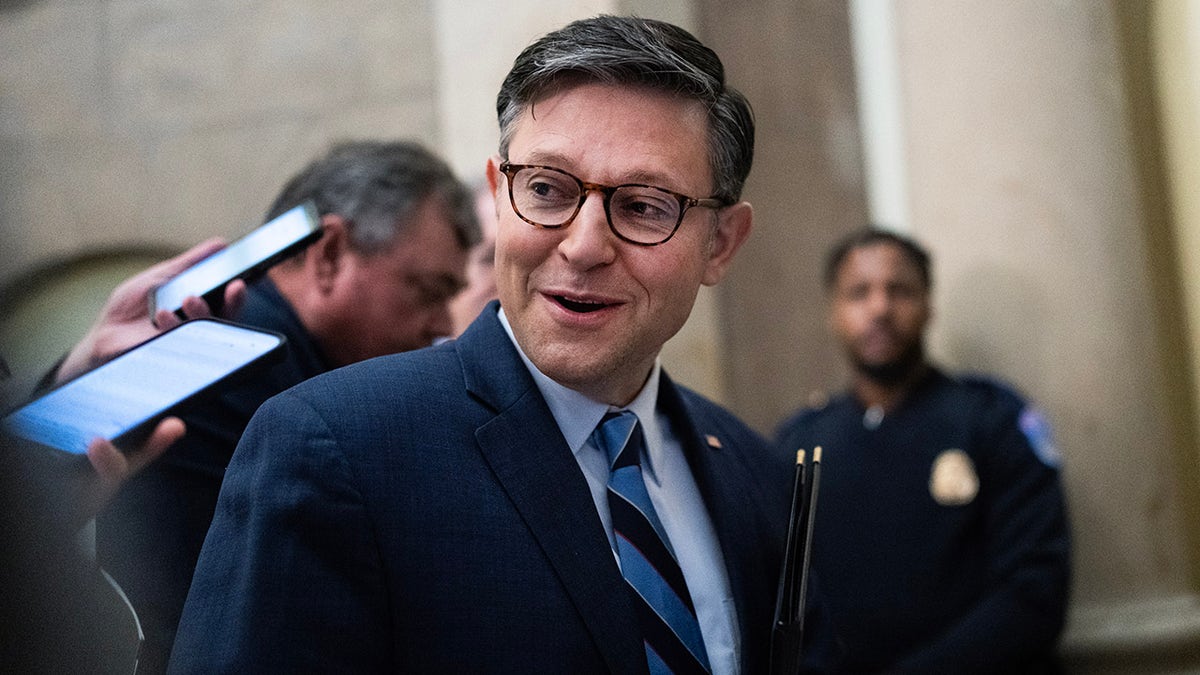
Johnson after last votes last week

FILE: Speaker of the House Mike Johnson, R-La., talks with reporters in the U.S. Capitol  after the last votes of the week on Thursday, September 12, 2024.  (Tom Williams/CQ-Roll Call, Inc via Getty Images)

After Rep. Maxine Waters, D-Calif., made her entreaty to question Florida’s electoral votes, Al Gore – again, presiding over his own loss – asked if the California Democrat had a Senate cohort.

Waters replied that she did not and “did not care.”

Gore then responded with a statesmanlike proclamation that salved the political wounds of the rancorous election he had just lost to President W. Bush.

“The chair will advise that rules do care,” pronounced Gore.

His takedown of Waters triggered an outpouring of bipartisan applause in the House chamber.

TRUMP CHEERS JOHNSON WINNING SPEAKER VOTE: ‘AMERICA IS BACK’

A question emerged about Ohio’s slate of electoral votes when Congress began certifying the 2004 election in January 2005. But this time, late Rep. Stephanie Tubbs Jones, D-Ohio, and former Sen. Barbara Boxer, D-Calif., joined forces to compel the House and Senate to debate and vote separately on Ohio’s electoral slate. But both the House and Senate rejected their petition.

The 2022 law made it tougher to challenge a state’s electoral certificates. Now it requires one-fifth of all House members and one-half of all Senate members to challenge what the states send in.
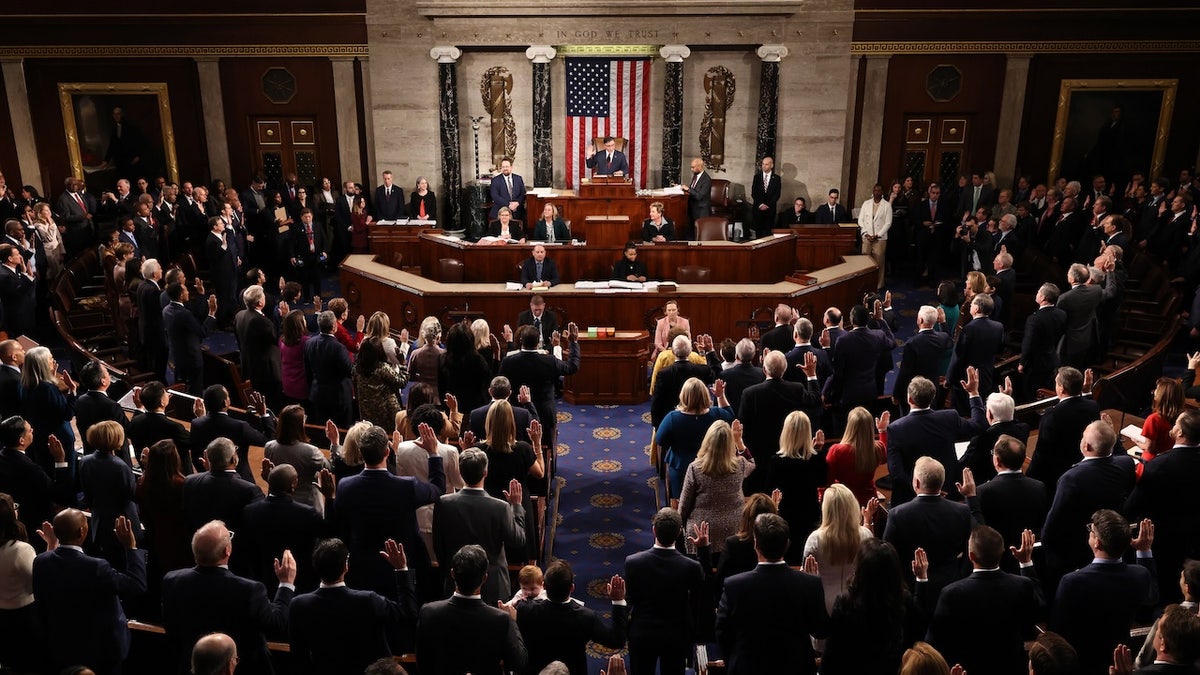
U.S. Representatives of the 119th Congress

U.S. Representatives of the 119th Congress are sworn in during the first day of session in the House Chamber of the U.S. Capitol Building on January 03, 2025 in Washington, DC. Rep. Mike Johnson (R-LA) retained his Speakership in the face of opposition within his own party as the 119th Congress holds its first session to vote for a new Speaker of the House.  (Chip Somodevilla/Getty Images)

The outcome of the 2024 election is not in dispute. There’s no expectation of anyone forcing additional Congressional reviews of the Electoral College. And despite additional precautions, Capitol security officials are not anticipating rallies and certainly no violence, unlike 2021.

In 2021 – after the riot and two near fistfights on the House floor – Pence certified the outcome of the electoral vote just before 4 a.m. EST on January 7. This year’s exercise should be wrapped up in about an hour or so. Vice President Harris will announce that Donald Trump won the election “for a term beginning on the 20th day of January 2025.” She will then dissolve the Joint Session.

CLICK HERE TO GET THE FOX NEWS APP

And two weeks later at noon, U.S. Chief Justice John Roberts swears-in Donald John Trump on the West Front of the Capitol for his second term.
How the Islamic State Radicalizes People Today

0

The Islamic State has lost thousands of fighters to death or prison and suffered the demise of its self-declared caliphate in Iraq and Syria. But the global reach of the group, also known as ISIS, is still vast, in part because of its sophisticated media output and the people around the world who consume it.

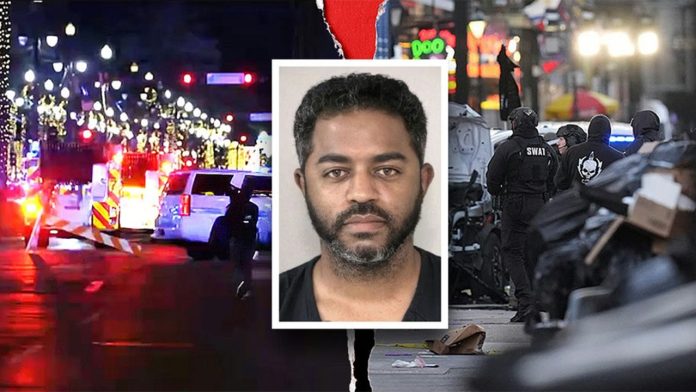
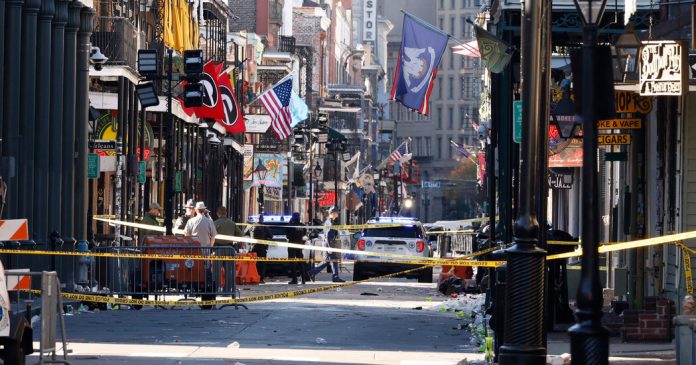
On New Year’s Day, a man with an Islamic State flag killed at least 14 people when he drove into a crowd in New Orleans. Authorities say there was no evidence that the man, Shamsud-Din Bahar Jabbar, had active connections to the terrorist group. But the F.B.I. said “he was 100 percent inspired by ISIS.”

It is not yet clear which specific online content Mr. Jabbar may have seen or how else he may have been radicalized. Experts noted that the placement of the flag on the truck resembled one depicted by ISIS in a media campaign urging followers to “run them over without mercy.” And, authorities said, he posted several videos to his Facebook account before his attack in which he pledged allegiance to ISIS.

From online videos to social media platforms — and even a weekly Islamic State newsletter — the group that wants to force all Muslims to adhere strictly to the faith’s earliest teachings has a very modern media strategy.

“Terrorism is essentially communications,” said Hans-Jakob Schindler, a former United Nations diplomat who is the senior director of the Counter Extremism Project, a think tank with offices in New York and Berlin. “It is not warfare, because obviously, ISIS cannot militarily defeat the West, right? They tried and it didn’t exactly end well.”

How did the Islamic State keep its influence alive? In part, by transforming its movement into a global franchise beyond the Middle East, with active chapters in Afghanistan, Somalia, Mali, the Democratic Republic of Congo, the Caucuses and Turkey, among other places.

But the glue that holds the disparate branches together — and also helps to inspire “lone wolf” terrorists like Mr. Jabbar who carry out their own attacks — is the Islamic State’s sophisticated media operation. Experts say that while it is doubtful that the media operation has a physical headquarters, it is highly centralized and controlled by its media directorate. Much of its output appears to come from affiliates in Africa, which have recently been the most active in terms of attacks..

The group also puts out an online weekly newsletter called Al Naba, or The News, which contains details of the group’s latest exploits, implicitly encouraging followers to commit acts of violence.

“The Al Naba newsletter comes out like clockwork every Thursday, which is one of the more impressive things that the group is able to do,” said Cole Bunzel, a scholar of militant Islam in the Middle East at the Hoover Institution at Stanford University.

“They have an editorial; they cover the different provinces, as they’re called; they cover attacks from that week. They tally up the number of attacks and casualties that they claim. And that’s the main way that they stay connected with their global support base,” he said.

The most recent edition of the newsletter, published on Jan. 2, did not mention the New Orleans attack, and the Islamic State has not claimed responsibility for it.

Al Naba was initially published through the messaging app Telegram and other platforms, constantly adapting as different channels were shut down, said Aaron Zelin, a Washington Institute fellow who has tracked the activities and propaganda of Islamist groups for more than 15 years.

Supporters of the group have also disseminated messages on Twitter, Facebook pages and other social media platforms, according to researchers. When their user profiles are blocked, they often just create new ones. T he Islamic State has used decentralized internet tools that are harder to shut down and moved some of its messaging to the dark web, Mr. Zelin said.

Terrorism analysts say that it has been easy for extremists to connect with potential supporters on social media because of the lack of effort both by some of the companies that operate the platforms and by governments to force a crackdown.

Mr. Schindler said that in light of the New Orleans attack both political parties should ask: “Why is this massive industry with these profits not helping our security services to prevent such attacks? Why do we not get a tip, as we do from the banks and every financial institution in North America and worldwide, that there is a terrorist here, or a tip that there’s a radicalization process going on?”

Terrorism experts say the Islamic State’s mastery of media and message is a key to its success. Al Qaeda, which the Islamic State split from in 2013, laid the groundwork, publishing both online and print magazines and producing videos as well as social media.

In January, 2024, the extremist group revived a campaign directed at its global adherents: “kill them wherever you find them,” a reference to a verse in the Quran.

The idea, which first surfaced in 2015, was to encourage would-be followers to commit acts of jihad at home rather than traveling to Iraq and Syria. That notion became even more important once the caliphate was defeated.

During the period when the Islamic State held ground in Syria and then Iraq (2013-2017) and was eager to gain adherents in the West, it was notorious for posting grisly depictions of violence, such as the beheading of the photojournalist James Wright Foley.

Now, experts say an increasingly daunting challenge is that social media platforms are doing much of the work of spreading the Islamic State’s message, as algorithms that seek to boost engagement take some users deeper and deeper into the extremist worldview.

“Terror groups don’t have to make a ton of effort to radicalize people anymore; the algorithm does it for them,” Mr. Schindler said. “The point of the algorithm is to keep the user on the platform, to give them what they like, and if this happens to be Islamic extremism or if you are in the radicalization process, your worldview shifts.”

In Syria, where the Islamic State took advantage of a long civil war to seize a large swath of territory, only to lose it eventually to U.S.-backed fighters, the group has begun to rebound, accelerating its attacks. That trend might continue, because the regime of President Bashar al-Assad was suddenly toppled in December by another extremist group, Hayat Tahrir al Sham, which was once associated with the Islamic State and Al Qaeda.

The situation is still fluid, but some analysts fear that the Islamic State could regain ground amid the chaos. The group’s newsletter has spoken dismissively of Hayat Tahrir al Sham as “jihadists turned politicians,” but has not called for attacks on them.

Meanwhile, Hayat Tahrir al Sham and other rebel groups say they should take over the role of guarding Islamic State prisoners in eastern Syria and manage the camps holding some 40,000 Islamic State fighters and family members — a job that has been done for nearly five years by the Kurdish-led Syrian Defense Force, which is backed by the United States. Many terrorism experts question how Hayat Tahrir al Sham, which once had links to the Islamic State but then bitterly separated, might carry out the mission of suppressing it.

The Islamic State recently renewed its “Breaking the Walls” media campaign, which encourages the imprisoned fighters to break out of the jails in eastern Syria and free their families.

If that succeeds, Mr. Zelin said, it would be a “disaster.”

LA DA Nathan Hochman meets with Menendez family ahead of resentencing

0

Los Angeles County District Attorney Nathan Hochman met Friday with the family of Lyle and Erik Menendez as the new top cop weighs resentencing the brothers.

The meeting and subsequent press conference came after the Menendez family called for a new sentence that “reflects Erik and Lyle’s abuse, trauma, and demonstrated rehabilitation over the last 35 years.”

“As we prepare to meet with DA Hochman, our family is hopeful for an open and fair discussion,” the family said in a statement released Thursday evening ahead of the meeting with Hochman. “Despite the abuse they endured as children and the unfairness of their current sentence, Erik and Lyle Menendez have spent the last three decades taking responsibility for their actions and contributing positively to their community through leadership and rehabilitation.”

The brothers are serving life sentences without parole for the 1989 shotgun slayings of their parents in their Beverly Hills, California, mansion. The case returned to the national spotlight after former Los Angeles District Attorney George Gascón voiced his support for resentencing.

MENENDEZ BROTHERS RESENTENCING PUSHED BACK, JUDGE EYES LATE JANUARY

Lyle, left, and Erik, right, are pictured in mugshots from 2023. After years apart, they were moved into the same housing unit at Richard J. Donovan Correctional Facility in San Diego in 2018, according to the New York Daily News. (California Department of Corrections)

California Menendez Brothers Case

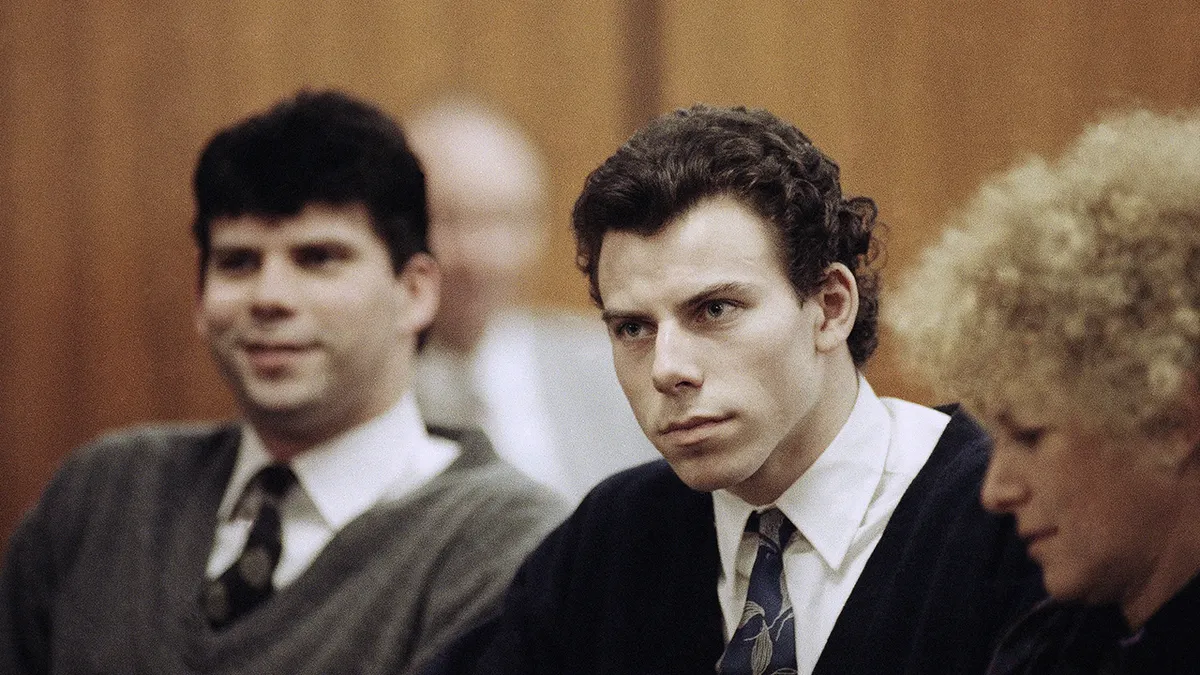
Lyle, left, and Erik Menendez sit with defense attorney Leslie Abramson, right, in Beverly Hills Municipal Court during a hearing Nov. 26, 1990.  (AP Photo/Nick Ut)

At a press conference, the newly sworn-in district attorney said the meeting with the family was “productive.”

CLICK HERE TO GET THE FOX NEWS APP

“It was a very productive session where they gave me all their thoughts about what should happen in this case, their experiences that they wanted to share, the directions that they wanted this case to go,” Hochman said. “It was a very productive conversation over a number of hours.” 

Nathan Hochman

Nathan Hochman talks during a news conference in Los Angeles Sept. 30, 2024.  (AP Photo/Damian Dovarganes, File)

The district attorney said his office is working diligently to review the thousands of pages of transcripts and court records from the case.

“Right now, the resentencing hearing is set for Jan. 30 and 31. That date is the date we’re working against. And if that changes, we will certainly let you know,” he said. “We will continue to do this difficult but important work of reviewing the facts of the law to make the right decision in this case.”

FOLLOW THE FOX TRUE CRIME TEAM ON X

Hochman said his office expects to have a decision by the Jan. 30 hearing date.

WATCH ON FOX NATION: MENENDEZ BROTHERS: VICTIMS OR VILLAINS?

Hochman did not reveal what he spoke about with the family, saying it was an “informal, off-the-record conversation.”

“We’re going to spend the time necessary to get this decision right,” he said. “There’s not a lot of free time in my life right now, but that’s OK. I didn’t sign up for a job that said I was going to have a lot of free time.”

A Long Fight to Keep a Closer Eye on Madrasas Unravels in Pakistan

0

They draw millions of poor Pakistani children with the simple promise of free education, meals and housing. For devout families, they offer Islamic learning rooted in ancient tradition.

But to the Pakistani government and Western counterterrorism officials, the religious seminaries known as madrasas also represent a potential threat. The institutions have long been accused of contributing to violence and radicalization, supplying recruits for the Taliban, Al Qaeda and other militant groups.

Now, Pakistan’s Islamic schools are at the center of an intense political clash — one that jeopardizes years of hard-won progress toward bringing the seminaries under the government’s regulatory umbrella.

The conflict goes back to 2019, when the government enacted a sweeping overhaul requiring madrasas to register with the Ministry of Education. The effort, meant to increase accountability for institutions that have historically operated with minimal state oversight, was strongly backed by Pakistan’s military but faced vehement resistance from Islamist political parties.

In October 2024, the largest of those parties, Jamiat Ulema-e-Islam, secured a deal with the government to end the registration requirement. Under the agreement, madrasas would be registered as they had been before 2019, under a colonial-era law governing charitable, scientific and educational groups. That law provides little oversight of curriculums, activities or funding.

In exchange, Jamiat Ulema-e-Islam agreed to support unrelated constitutional amendments on judicial appointments that had set off a firestorm of controversy.

As the end of the year approached, however, the government had still not implemented the change. It cited concerns that reverting to the older system could undermine counterterrorism efforts, weaken oversight and breach international commitments to combat money laundering and terrorism financing.

The delay triggered threats of anti-government protests in Islamabad, the capital, adding to the government’s challenges amid frequent marches by supporters of Imran Khan, the ousted prime minister.

“We are firm on the agreed madrasa registration terms and will ensure they are upheld,” Maulana Fazlur Rehman, the chief of Jamiat Ulema-e-Islam, warned in Parliament last month. “If the government deviates, the decision won’t be made in Parliament, but on the streets.”

Late last week, the government finally approved the new registration provision, allowing madrasas to choose between modern oversight and the colonial-era framework. The move, in effect, discards the 2019 efforts to reform religious schools in favor of short-term political stability.

When Pakistan was created 77 years ago, madrasas numbered in the dozens. They gained prominence and grew significantly in the 1980s, when U.S. and Arab funding transformed them into recruitment hubs for Islamic volunteers to fight Soviet forces in neighboring Afghanistan. Today, there are about 30,000 madrasas in Pakistan.

Pakistan came under increased pressure to regulate the religious schools after the attacks of Sept. 11, 2001, said Abdur Rehman Shah, a madrasa affairs expert affiliated with Tongji University in Shanghai.

“The post-9/11 war on terror and events like the 2005 London bombings raised global concerns about the lack of effective madrasa monitoring,” Mr. Shah said.

After militants attacked a military-run school in northwestern Pakistan in 2014, killing more than 145 people — mostly children — observation of madrasas became central to counterterrorism efforts. Security agencies used GPS to map the schools and carried out raids and interrogations targeting seminaries suspected of militant links, Mr. Shah said.

In 2019, the government established the new regulatory framework to curb Islamist parties’ influence over the seminary boards that govern madrasas. More than 17,500 madrasas enrolling 2.2 million students were registered with the Ministry of Education, according to official data.

Registration streamlined visa processing for international students, as madrasas attracted increasing interest not only from the Pakistani diaspora but also from students in African and Southeast Asian countries.

However, many seminaries, particularly those aligned with Islamist parties, including the country’s largest and most prominent ones, resisted integration into the formal system, citing fear of government interference in religious education.

After the government agreed last October to end the requirement for registration with the Ministry of Education, officials hesitated to move forward in part because of intensified scrutiny from the Financial Action Task Force, a global watchdog based in Paris.

The task force had placed Pakistan on its “gray list” from 2018 to 2022 for deficiencies in combating money laundering and terrorism financing — a designation that often leads to reduced foreign investment and heightened financial oversight.

“F.A.T.F.’s main demand was a crackdown on terrorism financing, particularly targeting U.N.-designated individuals and entities, including their madrasas,” said Sanaa Ahmed, an assistant professor of law at the University of Calgary who researches illicit financial flows and terrorism financing.

To comply with the task force’s requirements, Pakistan in 2019 seized control of several madrasas linked to banned militant groups such as Jaish-e-Muhammad and Lashkar-e-Taiba.

But after more than two decades of increased examination of madrasas, education experts argue that the efforts overlook a deeper crisis: the country’s struggling public education system, which fails to meet the needs of millions of children, particularly from low-income families.

Pakistan has the second-highest number of out-of-school children globally, with 22.8 million ages 5 to 16 not attending school — 44 percent of this age group, according to UNICEF.

Madrasas, supported by private donations, partly fill the gaps in the public system. For many poor families, they are the only viable option.

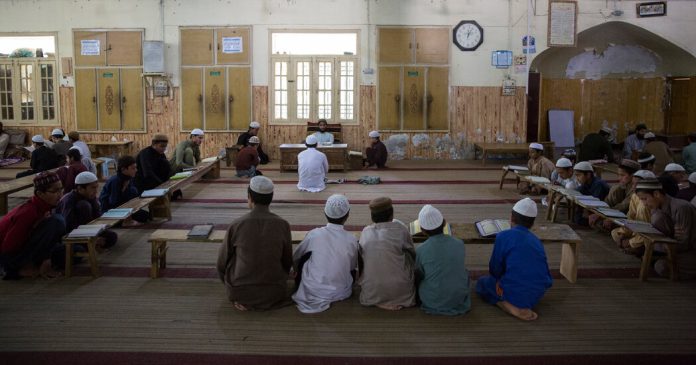
One recent day, in a modest building in a low-income neighborhood in southern Pakistan, the air was filled with young voices reciting verses from the Quran.

Inside, hundreds of young men — some barely in their teens — sat cross-legged on woven mats. Their heads, covered with cotton-knit caps, were bowed over Islamic books, fingers tracing the Arabic script. Some were memorizing the holy verses.

Madrasas emphasize Islamic theology, often with sectarian leanings, and Arabic, a language not widely spoken in Pakistan. While not all of the schools are linked to militancy, many promote a narrow interpretation of Islam, emphasizing doctrinal purity and the defense of Islam against other faiths.

Critical thinking and open dialogue are not primary focuses. Madrasas’ resistance to incorporating subjects like computer science or mathematics leaves graduates ill-equipped for the contemporary job market.

For many families, it is not poverty, but religious conviction, that drives them to enroll children in madrasas.

“I could send my children to private schools to study computers and science, but I’m sending them to a madrasa because I want them to study Islamic education,” said Abdul Wahab, a real estate dealer in Karachi, in southern Pakistan.

Like many devout people in Pakistan, Mr. Wahab believes that a child who memorizes the Quran will bring blessings to the family, including the promise of taking 10 others to paradise in the afterlife.

Despite concerns over radicalization, madrasa administrators say they are unfairly blamed for militancy. “There are many people who go to liberal schools and are radicalized,” said Qari Shahid Gul, a teacher at a madrasa in Karachi.

He cited Saad Aziz, a graduate of a prestigious business school who was sentenced to death after confessing to involvement in several terrorist activities, including the killing of 45 members of the Ismaili sect of Shiite Islam.

“Terrorism must be curbed, but scapegoating madrasas is not the solution,” Mr. Gul said.

Greenland PM seeks independence following Trump comments about acquisition

0

Greenland Prime Minister Múte Egede recently declared his intentions for the island’s future, stating taking major steps to gain independence from Denmark is “necessary.”

Egede’s remarks, which follow a Dec. 22 post on Truth Social by President-elect Donald Trump advocating for the “ownership and control” of Greenland, focused on the basis of secession from Denmark.

“The upcoming new election period must, together with the citizens, create these new steps, based on the foundations that have already been created,” Egede said. “It is about time that we ourselves take a step and shape our future, also with regard to who we will cooperate closely with, and who our trading partners will be.”

Houses are seen on the coastline in Nuuk, Greenland. (Marli Miller/UCG/Universal Images Group via Getty Images)

AMB. CARLA SANDS: TRUMP ADMINISTRATION’S FOCUS ON GREENLAND–WHY WE HOPE TO STRENGTHEN OUR RELATIONSHIP

Trump tried in his first term to buy the mineral-rich, geographically important territory in what he called a “large real estate deal,” Fox News Digital previously reported. 

“Greenland is ours,” Greenland Prime Minister Mute Egede said last week. “We are not for sale and will never be for sale. We must not lose our long struggle for freedom.

Davis Straight Arctic

The Sedco 709 offshore oil drilling rig in Davis Straight, between southwest Greenland and Baffin Island. (Getty Images)

American interest in Greenland dates back to the 1800’s. 

TRUMP: US CONSIDERING POSSIBLY BUYING GREENLAND 

In 1867, the State Department explored buying both Greenland and Iceland, recognizing their strategic importance, Fox News reported. After World War II, Denmark turned down a $100 million offer from President Harry Truman for the island.

Anne-Sofie Toernsoe Olesen bowing down to the queen in a spaghetti strap gown

Anne-Sofie Toernsoe Olesen and Alexander Lüders Rix Bach from Egedal Municipality are received by Danish Queen Margrethe II, Crown Prince Frederik and Prince Christian to a gala dinner for Prince Christians 18th birthday at Christiansborg Castle in Copenhagen, on October 15, 2023. 200 young people from the country’s 98 municipalities as well as the Faroe Islands and Greenland participated in October 15’s gala dinner. (Photo by Emil Nicolai Helms / Ritzau Scanpix / AFP) / Denmark OUT (Photo by EMIL NICOLAI HELMS/Ritzau Scanpix/AFP via Getty Images) (Getty Images)

Acquiring the land would mark the largest expansion of American territory in history, topping the Louisiana Purchase.

CLICK HERE TO GET THE FOX NEWS APP

“Greenland is ours,” Greenland Prime Minister Mute Egede said last week. “We are not for sale and will never be for sale. We must not lose our long struggle for freedom.

Fox News Digital’s Jasmine Baehr contributed to this story.

South Korea’s Dueling Protests – The New York Times

0

It was another call to action on Friday for the South Korean protest movement that had faced down security forces just a month ago to resist President Yoon Suk Yeol’s declaration of martial law.

Those first mass protests got results: Mr. Yoon’s startling declaration of martial law on Dec. 3 was reversed, then the National Assembly impeached him and opened an investigation into whether he had led an insurrection.

But in the weeks since, paralysis and polarization have set in. And that’s what protesters found on the roads outside Mr. Yoon’s official residence.

A mass of Mr. Yoon’s supporters were already there. They had hurried to his neighborhood after being jolted by the news Friday morning of the move afoot to detain him in connection with his martial law declaration last month. Other Yoon supporters had already been there for days, camped out on the pavement near his home in central Seoul, vowing to block any efforts to detain him.

Law enforcement officials retreated after trying for hours to work their way past Mr. Yoon’s supporters and running up against greater numbers of his personal security team. Their warrant to detain him for official questioning went unserved.

Thousands of anti-Yoon protesters rushed in to face off with thousands of pro-Yoon supporters. For his supporters, it was a moment of joy and defiance. For his detractors, one of bitter frustration.

“I’m so angry,” said Lee Ye-seul, 19, a university student in Seoul, who was marching toward Mr. Yoon’s residence with a crowd of protesters calling for his arrest.

The protesters occupied a section of a road near Mr. Yoon’s residence and planned to camp out overnight. “Detain and arrest Yoon Suk Yeol immediately!” read signs they held up. “Let’s wipe out the accomplices, sympathizers and party of insurrection!”

Kim Yoon-hyeong, 20, called the presence of Mr. Yoon’s supporters “the hard right’s attempt to protect its interests” and dismissed their claims. He said Mr. Yoon could not stay in power.

“It doesn’t make sense to leave a person who declared martial law against the country in office,” he said.

Kang Hye-sun, 57, joined the pro-Yoon protest on Friday afternoon after seeing the news earlier of the plan to detain him. She had learned on YouTube that his supporters were near his residence.

“Yoon Suk Yeol is fighting alone,” she said tearfully. She added that she believed there had been voter fraud in last year’s election, when his ruling party lost the majority in the National Assembly.

She was holding a poster that read, “Stop the steal,” the slogan popularized by former President Donald J. Trump to question the results of the 2020 presidential election in the United States, which he lost.

“What happened to Trump is happening to Yoon Suk Yeol,” she said.

Nearby, leaders of the pro-Yoon protests aired similar conspiratorial claims of mass voter fraud in the last election and called Mr. Yoon’s impeachment by the National Assembly invalid.

One pro-Yoon protester waved her cane at the marchers calling for Yoon’s arrest, shouting, “What country are you from?” Some anti-Yoon marchers urged the police to arrest a pro-Yoon protester whom they accused of spitting at the crowd from a pedestrian overpass overlooking the street.

But police officers in neon yellow jackets surrounded both groups of protesters. There was tension, raised voices, jostling now and then, but no outright violence.

As darkness fell, leaders of the protest calling for the impeached president’s arrest urged demonstrators to sit down as they began to camp out on a road outside Yoon’s residence.

Thousands of protesters continued to chant, “Arrest Yoon Suk Yeol!” while seated on the cold asphalt. Temperatures in Seoul, which hovered a little above freezing on Friday, were expected to drop to 17 degrees Fahrenheit overnight.

Ms. Lee, who planned to stay out through the night, said that she had put on a thick winter coat and brought an extra vest in her backpack.

“I will speak out until he is removed and the people involved in the insurrection are punished,” she said.

Republican says Trump was playing golf when president-elect called him to switch House speaker vote to Johnson

0

Join Fox News for access to this content

You have reached your maximum number of articles. Log in or create an account FREE of charge to continue reading.

By entering your email and pushing continue, you are agreeing to Fox News’ Terms of Use and Privacy Policy, which includes our Notice of Financial Incentive.

Please enter a valid email address.

Rep. Ralph Norman, R-S.C., initially voted for Jim Jordan for speaker of the House Friday, but President-elect Trump was able to convince him to change his vote — while working on his golf game.

Norman was one of three Republicans who initially refused to vote for Mike Johnson to retain his role.

While speaking to reporters Friday, Norman said Trump had called him more than once to try to influence his vote on the speaker. 

CLICK HERE FOR MORE SPORTS COVERAGE ON FOXNEWS.COM

Former President Trump follows a tee shot on the third tee during the pro-am prior to the LIV Golf Invitational – Bedminster at Trump National Golf Club Aug. 10, 2023, in Bedminster, N.J. (Mike Stobe/Getty Images)

In Trump’s first phone call to Norman, Trump was hitting the links.

“He said, ‘Look, I’m in the middle of a golf game.’ That was the first time I talked to him,” Norman said, via MediaIte.

“He said, ‘Well, you did vote for Nikki Haley.’ I said, ‘Yes, sir, I did. We’re with you now.’ And I said, ‘We will be with Mike Johnson.'”

Trump owns numerous golf courses, one of which was the site of a second assassination attempt on his life in the summer. Trump’s USGA handicap was once as low as a 2.5, and he claims to have recorded eight holes-in-one.

Trump also spoke with Keith Self, R-Texas, on the phone in an effort to sway Self’s vote, sources told Fox News Digital.

Rep. Ralph Norman, R-S.C.

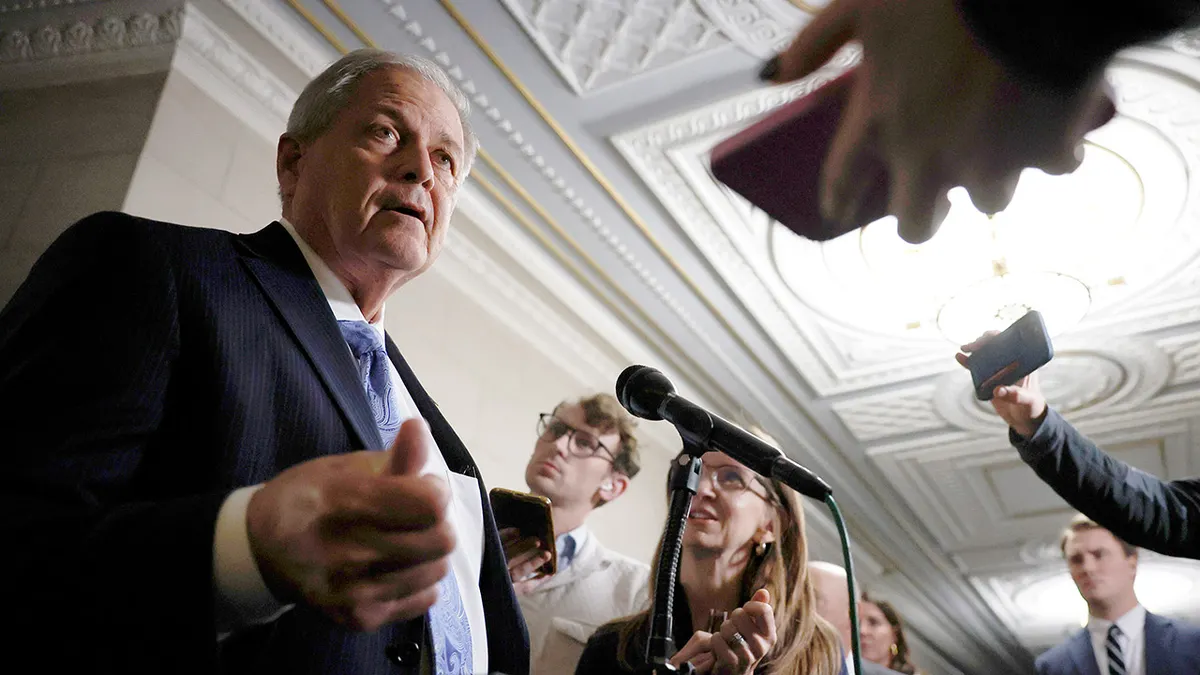
Rep. Ralph Norman, R-S.C., speaks to reporters. (Chip Somodevilla/Getty Images)

Self confirmed to reporters he had spoken with Trump by phone multiple times Friday.

“I talked to him a couple of times today,” Self said. “We had a lively discussion.”

Rep. Nancy Mace, R-S.C., connected Trump with Self and Norman by phone after they voted against Johnson, the sources said.

SCOTTIE SCHEFFLER HAS SURGERY AFTER INJURING HAND WITH BROKEN GLASS, WILL MISS FIRST SIGNATURE EVENT OF 2025

Johnson won the House speakership in the first round of voting, after it initially appeared he might lose.

Self, Norman and Rep. Thomas Massie, R-Ky., each voted for lawmakers other than Johnson, appearing to put the speaker’s gavel out of reach.

But House leaders did not formally close the vote while figuring out a path forward. GOP lawmakers were told to be on the House floor immediately in preparation for a second vote.

Trump golfing

Donald Trump golfing (Getty Images)

CLICK HERE TO GET THE FOX NEWS APP

That second vote did not occur, however, and Johnson was sworn in as speaker Friday afternoon.

Fox News’ Elizabeth Elkind contributed to this report.

Follow Fox News Digital’s sports coverage on X, and subscribe to the Fox News Sports Huddle newsletter.

Guantánamo Convict Sues to Stop U.S. Plan to Send Him to Prison in Iraq

0

An Iraqi who pleaded guilty to commanding insurgents who committed war crimes in Afghanistan filed suit in federal court on Friday, seeking to stop his transfer from the U.S. military prison in Guantánamo Bay, Cuba, to a prison in Iraq.

The petition, filed by his lawyers, made public negotiations that had been underway for some time to transfer Abd al-Hadi al-Iraqi, 63, to the custody of the Iraqi government despite protests from him and his lawyers that he could be subject to abuse and inadequate medical care.

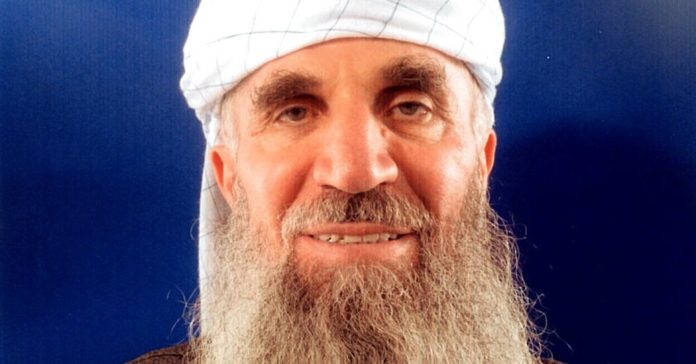
Mr. Hadi, who says his true name is Nashwan al-Tamir, is the oldest and most disabled prisoner at the offshore detention site as a result of a paralyzing spine disease and six surgeries at the base. In 2022, he pleaded guilty to war crimes charges, accepting responsibility for the actions of some of the forces under his command, in a deal to have his sentence expire in 2032. The deal included a possibility that he would serve the sentence in the custody of another country better suited to provide him with medical care.

His lawyers said the U.S. plan is to have the Iraqi government house him at the Karkh prison outside Baghdad, the former site of a U.S. detention operation called Camp Cropper that held hundreds of prisoners in the years before it was returned to Iraqi control in 2010.

“Because of his conviction here and the myriad problems with Iraq’s prison system, Mr. al-Tamir cannot safely be housed in an Iraqi prison,” the lawyers said in their 27-page filing. “Additionally, he does not believe the Iraqi government can provide the medical care he needs for conditions that were aggravated by inadequate medical care while at Guantánamo.”

The lawsuit seeks to thwart a deal that is part of an effort by the Biden administration to reduce the detainee population at the prison before President-elect Donald J. Trump takes office. Four prisoners, including two Malaysian men who like Mr. Hadi pleaded guilty to war crimes, have been repatriated in less than a month. Unlike Mr. Hadi, none of those four men, including a Tunisian citizen and a Kenyan citizen, opposed being handed over to their homelands.

It is not known when the Pentagon intends to deliver Mr. Hadi to Iraq. But the Defense Department notified Congress of the plan on Dec. 13. If the administration is hewing to a statutory requirement of 30 days’ notice to Congress, he could be transported from Guantánamo the week of Jan. 12.

Government lawyers agreed to a speedy process on the challenge. They notified Judge Emmet G. Sullivan of the U.S. District Court in the District of Columbia that they would like to respond to the question of a preliminary injunction by Wednesday.

Spokesmen at the State and Justice Departments declined to discuss the case.

Mr. Hadi was represented on the petition by Benjamin C. McMurray and Scott K. Wilson, federal public defenders in Utah. It was also signed by Susan Hensler, a lawyer who is employed by the Defense Department and has represented him since 2017.

The lawyers cited a 2023 State Department report about concerns over human rights abuses in Iraq that specifically mentioned “harsh and life-threatening prison conditions.” They asked the court to temporarily forbid his transfer while the case is argued. “The permanent harm justifies a preliminary injunction against the immediate transfer of Mr. al-Tamir to an Iraqi prison to serve his sentence.”

Mr. Hadi was born in Mosul, Iraq, in 1961. He fled Iraq in 1990 to avoid conscription into Saddam Hussein’s Army for what became the first U.S. invasion of Iraq, and then settled in Afghanistan. In 2003 and 2004, early in the U.S. invasion, Taliban and Qaeda forces under his command unlawfully used the cover of civilians in attacks that killed 17 U.S. and coalition forces in Afghanistan. His forces, for example, had a fighter pose as a cabdriver in a taxi laden with explosives.

At Guantánamo, he has relied on a wheelchair and four-wheeled walker and has for years been held in a cell outfitted with accommodations for disabled people.

His lawyers said in their filing that U.S. officials notified them of the plan to repatriate Mr. Hadi “a week before Christmas,” adding that “government officials informed defense counsel that they had concluded Iraq was the ‘only’ option.”

Both the prisoner and the lawyers objected to the transfer, the filing said, citing U.S. obligations under international and constitutional law not to send someone to a country where he might be subject to abuse.

Scott Roehm of the Center for Victims of Torture, an advocacy group, said it was his understanding that “senior State Department officials have previously determined that Mr. al-Tamir couldn’t be sent to an Iraqi prison without violating the prohibition on torture.”

“The State Department’s own human rights reports, which are consistent with that determination, find that Iraqi prisons are rife with serious human rights abuses, torture included,” he said. “If the government now has a different view, it needs to explain why, by making its analysis public.”

New Orleans suspect set fire at rental property

0

The driver behind the deadly terrorist New Years’ attack in New Orleans set fire to his rental property in an effort to destroy bomb-making evidence prior to the attack, the FBI and the Bureau of Alcohol, Tobacco, Firearms (ATF) said.

In a joint statement on Friday, the agencies revealed that they believe 42-year-old Shamsud-Din Jabbar set a small fire in the hallway of his rented Airbnb before the attack, and “strategically placed accelerants throughout the house in his effort to destroy it and other evidence of his crime.” But they said the fire burned itself out before spreading to other rooms.

The smoldering of the fire allowed the FBI to recover evidence from the rented Airbnb, including “pre-cursors for bomb-making material and a privately made device suspected of being a silencer for a rifle,” the agencies said.

LAS VEGAS, NEW ORLEANS ATTACKS NOT CONNECTED: POLICE

The FBI and the ATF also revealed new information on Jabbar’s movements prior to driving a high-speed vehicle down the popular Bourbon Street in the early hours of New Year’s Day.

WHAT WE KNOW ABOUT VICTIMS OF NEW ORLEANS TERRORIST ATTACK

Jabbar had also placed two improvised explosive devices, or IEDs, along Bourbon Street, authorities said. He did not manage to detonate the two explosives prior to his death.

“The FBI assesses that during his attack on Bourbon Street, Jabbar intended to use a transmitter, that was found in the F150 truck, to detonate the two IED’s he placed on Bourbon Street,” the agencies said.

The Federal Bureau of Investigation released photos of surveillance footage that shows Shamsud-Din Jabbar an hour before he drove a truck down Bourbon Street, New Orleans, early Jan. 1, 2025. (Federal Bureau of Investigation via AP)

In the latest update, the agencies said that all evidence recovery along Bourbon Street and at the Airbnb rental on Mandeville Street used by Jabbar has been completed.

CLICK HERE TO GET THE FOX NEWS APP 

“Evidence collected from multiple sites is being evaluated to further the investigation,” the agencies said.

After Fierce Lobbying, Treasury Sets Rules for Billions in Hydrogen Subsidies

0

The Biden administration on Friday made final its long-awaited plan to offer billions of dollars in tax credits to companies that make hydrogen, in the hopes of building up a new industry that might help fight climate change.

When burned, hydrogen mainly emits water vapor, and it could be used instead of fossil fuels to make steel or fertilizer or to power large trucks or ships.

But whether or not hydrogen is good for the climate depends on how it is made. Today, most hydrogen is produced from natural gas in a process that emits a lot of planet-warming carbon dioxide. The Biden administration wants to encourage companies to make so-called clean hydrogen by using wind, solar or other low-emission sources of electricity.

In 2022, Congress approved a lucrative tax credit for companies that make clean hydrogen. But the Treasury Department needed to issue rules to clarify what, exactly, companies had to do to claim that credit. The agency released proposed guidance in 2023 but many businesses have been waiting for the final rules before making investments.

The final guidelines that were released Friday followed months of intense lobbying from lawmakers, industry representatives and environmental groups and roughly 30,000 public comments. They include changes that make it somewhat easier for hydrogen producers to claim the tax credits, which could total tens of billions of dollars over the next decade.

“Clean hydrogen can play a critical role decarbonizing multiple sectors across our economy, from industry to transportation, from energy storage to much more,” said David Turk, the deputy secretary of energy. “The final rules announced today set us on a path to accelerate deployment.”

Initially, Treasury had imposed strict conditions on hydrogen subsidies: Companies could claim the tax credit if they used low-carbon electricity from newly built sources like wind or solar power to run a machine called an electrolyzer that can split water into hydrogen and oxygen. Starting in 2028, those electrolyzers would have to run during the same hours that the wind or solar farms were operating.

Without those conditions, researchers had warned, electrolyzers might draw vast amounts of power from existing electric grids and drive a spike in greenhouse gas emissions if coal- or gas-fired power plants had to run more often to meet the demand.

Yet many industry groups and lawmakers in Congress complained that the proposed rules were so stringent, they could throttle America’s nascent hydrogen industry before it even got going.

Among the concerns: The technology to match hydrogen production with hourly fluctuations in wind and solar power is still in its infancy. Owners of nuclear reactors also said that they had been left out.

So the final rules contain several significant tweaks:

  • Hydrogen producers will get two extra years — until 2030 — before they are required to buy clean electricity on an hourly basis to match their output. Until then, they can use a looser annual standard and still claim the tax credit.

  • In certain states that require utilities to use more low-carbon electricity each year, hydrogen producers will now have an easier time claiming the credit, on the theory that those laws will prevent a spike in emissions. For now, Treasury said, only California and Washington meet this criterion, but other states could qualify in the future.

  • Under certain conditions, companies that own nuclear reactors that are set to be retired for economic reasons can now claim the credit to produce hydrogen if it would help the plants stay open. Existing reactors that are profitable would not be able to claim the credit.

  • The final rules also lay out criteria under which companies could use methane gas from landfills, farms or coal mines to produce hydrogen — if, for instance, the methane would have otherwise been emitted into the atmosphere.

The guidelines “incorporate helpful feedback from companies planning investments,” said Wally Adeyemo, the deputy Treasury secretary.

Some hydrogen producers said that many, though not all, of their biggest concerns had been addressed in the final guidance, which runs nearly 400 pages.

“There’s a degree of relief that the rules are, on balance, an improvement from the original draft,” said Frank Wolak, chief executive of the Fuel Cell and Hydrogen Energy Association, a trade group. “But there’s a lot in the details that needs to be evaluated.”

The lack of clear guidance had been holding up investment, said Jacob Susman, chief executive of Ambient Fuels, a clean hydrogen developer that is planning roughly $3 billion in projects across the United States. “Now that we actually have something solid, we can get down to the business of building,” he said.

Environmentalists said that most of the safeguards in the original proposal to prevent emissions from surging had been kept in place.

“The extra flexibilities granted to the green hydrogen industry are not perfect from a climate perspective,” said Erik Kamrath at the Natural Resources Defense Council. “But the rule maintains key protections that minimize dangerous air and climate pollution from electrolytic hydrogen production.”

The Energy Department estimates that the use of cleaner forms of hydrogen could grow to 10 million tons per year by 2030, up from virtually nothing today.

But political uncertainty looms. A new Congress could repeal the tax credits, although hydrogen generally enjoys support from both Democrats and Republicans and a number of oil and gas companies have invested in hydrogen technologies. The Trump administration could also revise the rules around the credits, although that could take years.

Economics are another hurdle. Producing cleaner hydrogen still costs $3 to $11 per kilogram, according to data from BloombergNEF. By contrast, it costs about $1 to $2 per kilogram to make hydrogen from natural gas.

The new tax credit will be worth up to $3 per kilogram, which could bridge the gap in some cases but not all. Technology costs would have to decline sharply.

Even with hefty subsidies to produce hydrogen, it’s not clear that enough buyers will emerge. Around the world, hydrogen companies have canceled several major projects over the last few years because of lack of demand. Steel makers and electric utilities that might have interest in the fuel often balk at the costly equipment required to use it.

“These new rules will probably help, even if they don’t go as far as many in industry wanted,” said Aaron Bergman, a fellow at Resources for the Future, a nonpartisan Washington research organization. “But there’s still the challenge of finding the people to consume the hydrogen you produce.”