Thursday, November 12, 2026
Home Blog Page 80

Friday Briefing – The New York Times

0

President Trump’s plan to impose a 25 percent tariff on cars and parts has sent a shudder through the global auto industry. Markets in Asia, Europe and the U.S. wobbled yesterday as many automakers’ share prices fell. Trump has threatened to target the E.U. and Canada if they band together to retaliate.

The tariffs on all cars, and some auto parts, exported to the U.S. are set to take effect next Thursday. Mexico, Japan, South Korea and Canada account for about 75 percent of U.S. vehicle imports. Here’s how major car companies will be affected.

The tariffs put Trump’s unorthodox trade theory to the test. To the president, tariffs encourage companies to move factories to the U.S., creating more American jobs. Economists say their effects are more complicated and that they could cause significant collateral damage.

Reactions: Mark Carney, Canada’s leader, said the U.S. was “no longer a reliable partner” and that his country would announce retaliatory tariffs next week. In Germany, whose auto industry is a huge exporter to the U.S., the economy minister, Robert Habeck, said it was “crucial that the E.U. delivers a decisive response to the tariffs,” adding, “It must be clear that we will not back down.”

European leaders in Paris yesterday discussed a French proposal to send a “reassurance force” to help safeguard an eventual peace in Ukraine. But Emmanuel Macron, France’s leader, said the specifics of such a force were still being ironed out. Russia has called the proposal unacceptable.

The meeting followed three days of U.S.-brokered talks in Saudi Arabia this week that yielded deals, with caveats, between Russia and Ukraine to halt attacks on energy infrastructure and fighting in the Black Sea.

Russian aims: Moscow wants relief from restrictions on shipping, insurance and banking that have complicated its agricultural exports. “Russia also wants sanctions lifted on the state agricultural bank, and for it to be reconnected to the international payments system Swift,” my colleague Paul Sonne, who covers Russia, said. “But that would require agreement from European allies who have been cut out of the talks.”

At the front: Journalists for The Times were embedded with Ukrainian forces in eastern and southern Ukraine. Amid drones, mines and snipers, peace talks seemed a world away.


Rare public protests in Gaza for an end to Hamas’s rule — and to the war — have spread to a number of towns over the past three days. While most of the demonstrations have been small, they represent the boldest challenge to Hamas’s authority since the war began in 2023.

Hamas has brutally clamped down on protests in the past. This time, its security forces have been largely absent, most likely because of the group’s delicate position with Gazans and the difficulty of mobilizing under the threat of Israeli airstrikes.

Quotable: “Hamas needs to go away,” said Ahmad al-Masri, who helped call for the demonstrations. “If it doesn’t, the bloodshed, the wars and the destruction won’t stop.”

Israel: Prime Minister Benjamin Netanyahu’s coalition gave itself more power to pick judges, resuming a judicial overhaul that divided the country before the war.

Yemen: Middle East experts said the Iran-backed Houthis wouldn’t be easily defeated, despite the intentions disclosed by U.S. officials in their Signal chat.

Whales sing. Fish grunt. But sharks had been silent to our ears, until scientists in New Zealand recently heard a rig shark making a clicking sound, most likely by snapping its teeth together. Listen to a recording.

Lives lived: David Childs, an architect who crowned the New York City skyline with the shimmering new 1 World Trade Center, replacing the twin towers destroyed on 9/11, died on Wednesday at 83.

Europe is strewn with human remains from two world wars that killed tens of millions of people. Many simply vanished into rubble, while others were hastily buried in unmarked graves.

In Germany, where memory and forgetting are bound up with vast guilt, the question of how to handle these remains is especially fraught. Confronting the issue head-on is the Volksbund, an organization tasked with finding the graves of every German who died in the country’s many wars and giving each a decent burial, no matter who they were or what they did. (Auf Deutsch lesen.)


That’s it for today’s briefing. See you next week — and thank you to those who let us know that yesterday’s subject line incorrectly suggested that it was Monday.

Happy Friday, and have a great weekend. — Natasha

Reach Natasha and the team at [email protected].
For Some Autocrats, Even Rigged Elections Can Be Too Much of a Threat

0

Over the last two decades, countries like Turkey, Hungary, Venezuela and India gave the world a lesson on how democracy can erode into “competitive authoritarianism” — a system in which elections are still meaningful, but leaders manipulate the rules to their own benefit, while systematically violating civil liberties.

Now, we are starting to find out what happens when even partial democracy becomes a significant threat to the authoritarians.

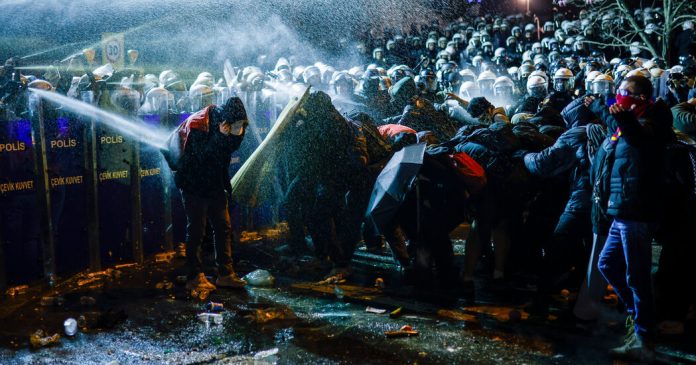
The latest example comes from Turkey, where protests are raging across the country after the arrest of Ekrem Imamoglu, the mayor of Istanbul and the country’s most prominent opposition politician. The government accused him of accepting bribes, rigging bids and misusing citizens’ personal data; he has denied the charges. (Istanbul University also rescinded his diploma; holding a university degree is a requirement for Turkish presidential candidates.)

Mr. Imamoglu’s growing popularity had made him a significant contender in Turkey’s next presidential election, and he was jailed pending his trial on the day of his party’s presidential primary. His arrest, experts say, sent a clear message that President Recep Tayyip Erdogan is no longer willing to give the opposition a real chance to win elections.

Mr. Erdogan seems to have recognized that even if he manipulates the system, he may not be able to beat Mr. Imamoglu, said Lisel Hintz, a political scientist at Johns Hopkins University who studies Turkish politics.

“So this move is an anticipatory move, trying to take the one individual who could potentially challenge Erdogan off the playing field,” she said. “This is really a clear shift from what we would call competitive authoritarianism to full authoritarianism.”

Turkey has not yet gone as far as countries like Russia, where there is little meaningful political opposition to President Vladimir Putin’s control. But many see the government’s actions as a significant step in that direction.

To understand why this is happening, it is helpful to think about elections as a kind of equation of costs and benefits for authoritarian leaders to solve.

On one side are the benefits of elections, which are often considerable, even for leaders who are not particularly invested in democratic freedoms. Winning them validates an authoritarian leader’s popularity and power, even if the election was not entirely free or fair. That not only bolsters the government’s legitimacy at home, but also its relationships with other countries. And it sends a powerful signal to elites in the country’s military, business community and other important constituencies that they should continue to support the government.

On the other side of the equation is the obvious risk of holding competitive elections: The incumbent can lose. That appears to be what happened in Venezuela last year, for example, when President Nicolás Maduro’s efforts to secure his victory through behind-the-scenes manipulation failed, and his opponent won by a landslide, according to independent observers. Mr. Maduro then clumsily declared victory for himself anyway.

In India, events took a slightly different turn. Prime Minister Narendra Modi tried to weaken the opposition by arresting its leaders, cutting off their access to funds and limiting media freedom. In the end, his party lost its majority in parliament anyway. Mr. Modi remained prime minister, but must now govern in coalition with other parties, considerably limiting his power.

In Turkey, experts say that recent events have made it less attractive for Mr. Erdogan to allow competitive elections.

The potential cost of a relatively open election grew as Mr. Imamoglu became more popular. Years of persistently high inflation, exacerbated by Mr. Erdogan’s economic policies, have also made many Turks angry.

And the benefits of an open election shrank, largely because of the geopolitical ripple effects from the re-election of President Trump, said Asli Aydintasbas, a visiting fellow at the Brookings Institution.

The Trump administration does not appear to value the promotion of democracy abroad, and President Trump seems to have an affinity for authoritarian leaders like Mr. Putin. Additionally, waning U.S. support for NATO and defending Europe has made the continent more reliant on Turkey, which has the alliance’s second-biggest military and a flourishing defense industry.

The result is that Mr. Erdogan has received very little criticism from allies in Europe and the United States who might once have opposed electoral manipulation or other undemocratic behavior.

“President Erdogan has gambled on Turkey’s rising influence and leverage in this particular geopolitical climate, and he may be right about that,” Aydintasbas said.

In Turkey, inflation and economic struggles have made it increasingly difficult for the government to maintain its popularity. That is due in part to the nature of competitive authoritarianism, which tends to reward loyalty over capability.

“Incompetence makes it much more difficult to manage the economy in a way that would appeal to the people,” said Selim Erdem Aytac, a political scientist at Koc University in Istanbul.

The government’s arrests of Mr. Imamoglu and other opposition politicians and journalists have triggered a significant backlash. Protests that first broke out on university campuses have now spiraled into the largest demonstrations the country has seen in more than a decade, despite a crackdown by the government.

But it is not clear whether the protests have much capacity to make a difference. Years of democratic backsliding have insulated the government from many of the consequences of its heavy-handed rule. Such backsliding tends to be incremental and cumulative, which avoids triggering immediate public condemnation — but also makes that condemnation less effective when it eventually does come.

“Once you are at a stage where you think, ‘Oh, that’s not acceptable,’ you don’t have the tools to prevent it,” Mr. Aytac said. “The judiciary is already captured. The media is already captured.”


Thank you for being a subscriber

Read past editions of the newsletter here.

If you’re enjoying what you’re reading, please consider recommending it to others. They can sign up here. Browse all of our subscriber-only newsletters here.

I’d love your feedback on this newsletter. Please email thoughts and suggestions to [email protected]. You can also follow me on Twitter.

Mining Company Seeks Trump Support to Shortcut Access to Seabed Metals

0

The long-running battle over whether to allow Pacific Ocean seabed mining took an unexpected turn Thursday when a company disclosed it had been confidentially negotiating a plan with the Trump administration to circumvent a United Nations treaty and perhaps obtain authorization from the United States to start mining in international waters.

The proposal, which drew immediate protests from environmental groups and diplomats from some countries, represents a radical shift in the contentious debate over accessing deposits on the sea floor that contain copper, cobalt, manganese and other metals that are needed for electric-car batteries.

The International Seabed Authority, established 30 years ago by an agreement now ratified by more than 160 nations, has jurisdiction over seabed mining in international waters, outside the coastal areas of each nation.

The Seabed Authority has been slowly crafting regulations governing mining, which remains highly contentious because the potential effects of industrial activity on marine life are unknown.

Now the Trump administration, which has already expressed its desire to retake the Panama Canal and assume control of Greenland, is being nudged by the Vancouver-based Metals Company to disregard the Seabed Authority and grant it a license to start mining as soon as 2027.

Gerard Barron, the chief executive at the Metals Company, announced the maneuver Thursday after it became clear that it could still be years before the Seabed Authority finalizes mining regulations.

Contractors from nations including China, India, South Korea, Japan and Poland are also doing exploratory work in international waters under permits from the Seabed Authority, but none of them have been given permission to start large scale mining.

The Metals Company’s application would come in the next several months from a United States-based subsidiary of the company, and it would use a ship registered in the United States. The company would send a giant vacuum-cleaner-like machine 2.5 miles underwater to the ocean floor to suck up potato-size rocks that are loaded with metals.

Mr. Barron said executives had already met with Trump administration officials to promote their plan, which would also require a permit from the National Oceanic and Atmospheric Administration.

“The United States has had the legal framework and regulations for issuing exploration licenses and commercial recovery permits for deep seabed minerals in international waters,” Mr. Barron said Thursday. “Now there is political will to put existing authorities to use.”

Reached Thursday evening, Commerce Secretary Howard Lutnick said he could not say if the Trump administration would agree to the Metals Company’s proposal and referred a reporter to his staff. Agency officials did not respond to requests for comment.

The Metals Company, which is publicly traded, has spent hundreds of millions of dollars on exploratory work in the Pacific Ocean, in an area known as the Clarion Clipperton Zone, a remote spot between Mexico and Hawaii. Its most recent annual report, released Thursday, shows it is nearly out of cash and borrowing authority, leaving it with just $43 million in reserves. “We’re moving forward with urgency,” the company said.

In January, Leticia Carvalho, a Brazilian oceanographer who is skeptical of seabed mining, became secretary general of the Seabed Authority, suggesting that the final regulations could be delayed even longer.

More than 160 nations have ratified the United Nations Convention on the Law of the Sea, which created the International Seabed Authority and granted it the right to decide where and how seabed mining might take place.

But the United States has never signed the treaty. And that has prompted the Metals Company to lobby the Trump administration and members of Congress, arguing that the United States is free to move ahead with mining in international waters, since it is not a party to the treaty.

Drafts are now circulating of an executive order President Trump will be asked to sign that would direct his administration to go ahead with this plan, according to two people involved in the discussion who spoke on the condition of anonymity because they were not authorized to release the draft document.

The Trump administration has indicated it wants to secure greater access to so-called critical minerals, needed for manufacturing in the United States, even if it means making new international claims.

At his confirmation hearing, Mr. Lutnick expressed general support for seabed mining, although he did not say if the United States would defy the Seabed Authority.

“It is important for American national security that the key rare-earth minerals, we create ourselves,” Mr. Lutnick said at his confirmation hearing. “Fortunately we have the greatest land in the world, and under our seas is the rest of whatever we don’t have on land. We need to harvest it, we need to understand it, and we need to take care of America. We can.”

A briefing document produced by the Metals Company and obtained by The New York Times, noted that before Mr. Lutnick was commerce secretary, he was the chief executive of Cantor Fitzgerald, a financial firm that was the company’s lead banker. The Metals Company also noted that its plans had “strong support from influential members of the Republican controlled Congress.”

But even the idea that the United States might be considering such a move provoked outrage from environmentalists and some nations.

At least 30 nations, from Austria to New Zealand, have called for a delay in the start of seabed mining, arguing that not enough is known about whether it would cause widespread harm to aquatic life and the environment.

“It is a desperate but pretty dangerous act,” said Louisa Casson, an organizer from Greenpeace International, an environmental group that has been trying to block seabed mining. “This could be a negotiating tactic to try to strong-arm the Seabed Authority.”

Mr. Barron pointed to extensive research funded by his company that found that seabed mining had less impact on the environment than open-pit or underground mining.

More than a dozen diplomats who represent their nations before the Seabed Authority — which is in the middle of a work session in Kingston, Jamaica — were expected to meet Friday to decide how to respond to the plans from the mining company.

“This seems a totally improper move by the Metals Company,” said Georgina Maria Guillen Grillo, a representative from Costa Rica, which has worked to slow the start of seabed mining until the environmental and financial regulations are adopted. “They have been pushing us to work on regulations when they do not seem to really care about complying with legal obligations under the international law.”

Prosecutors Seek 7-Year Sentence for Sarkozy in Qaddafi Money Case

0

French prosecutors requested a seven-year prison sentence against former President Nicolas Sarkozy on Thursday, in a trial over accusations that his 2007 campaign received illegal financing from the Libyan government of Col. Muammar el-Qaddafi.

Such a sentence would be unprecedented in modern French history for a former president.

Mr. Sarkozy, a conservative politician who led France from 2007 to 2012, has repeatedly denied any wrongdoing, and judges at the Paris court where he has been on trial since January may or may not follow the prosecution’s request if he is found guilty. His lawyers are expected to lay out their closing arguments next month, and the court is expected to defer its verdict to a later date.

The severity of the sentence request showed that the Libya case is a far more serious threat to Mr. Sarkozy’s legacy than his many other legal entanglements, some of which have already resulted in convictions. In addition to prison time, prosecutors also requested that Mr. Sarkozy, 70, pay a fine of 300,000 euros, or about $340,000; that he be barred from running for office, and that he be stripped of certain civic rights.

Mr. Sarkozy, who no longer holds public office but retains some political influence, lashed out against the sentencing recommendations on Thursday, saying in a statement on social media that the “falseness and violence of the accusations and the outrageousness of the sentence demanded” aimed to “mask the weakness” of the prosecution’s case.

The Libya case is sprawling, convoluted and explosive, involving accusations that Mr. Sarkozy’s campaign illegally accepted funding from Mr. el-Qaddafi, the former Libyan strongman who was killed by opposition fighters in 2011.

Mr. Sarkozy is facing charges of illegal campaign financing, criminal conspiracy, concealing the misappropriation of public funds and passive corruption (a charge that applies to people suspected of receiving money or favors).

Over the past few days, prosecutors who specialize in financial crimes depicted Mr. Sarkozy as the key decision maker in an “unthinkable, unprecedented, obscene corruption pact” with the Qaddafi government, involving a complex web of political and financial ties between Mr. Sarkozy’s advisers, Libyan officials and businessmen or bankers who acted as intermediaries.

Twelve other people are also standing trial on similar charges, and prosecutors have requested sentences ranging from one to six years in prison and fines of up to four million euros.

Since 1945, only one other former French head of state has been found guilty by a court of law: Jacques Chirac, who was convicted in 2011 of a less striking form of corruption, misusing public funds when he was mayor of Paris, and was given a suspended sentence.

Mr. Sarkozy has faced multiple accusations of financial impropriety since he left office, although that has done little to dent his popularity with the base of his conservative party or to prevent his memoirs from flying off the shelves.

Some of the cases have been dropped. But in 2021, he was convicted of trying to obtain information from a judge about a court case against him and is currently serving one year under a form of house arrest with an electronic bracelet.

He was also convicted in 2021 for illegally financing his unsuccessful 2012 re-election campaign, which wildly exceeded France’s spending limits. That case is still going through the appeals process.

Trump executive order aims to remove DEI initiatives from Smithsonian and other cultural bodies : NPR

0

The entry to the Smithsonian Institution’s Smithsonian Castle in Washington, D.C.

Manuel Balce Ceneta/AP


hide caption

toggle caption

Manuel Balce Ceneta/AP

President Donald Trump signed an executive order on Thursday directing Vice President JD Vance to eliminate “divisive race-centered ideology” from Smithsonian museums, educational and research centers, and the National Zoo.

Titled “Restoring Truth and Sanity to American History,” the order states, “Once widely respected as a symbol of American excellence and a global icon of cultural achievement, the Smithsonian Institution has, in recent years, come under the influence of a divisive, race-centered ideology. This shift has promoted narratives that portray American and Western values as inherently harmful and oppressive.” It goes on to say: “Museums in our Nation’s capital should be places where individuals go to learn — not to be subjected to ideological indoctrination or divisive narratives that distort our shared history.”

The order calls for Vance, along with Vince Haley, the assistant to the president for domestic policy and Lindsey Halligan, the special assistant to the president and senior associate staff secretary, to work with Congress to prohibit the Smithsonian from receiving appropriations for exhibitions and programs that, “degrade shared American values, divide Americans based on race, or promote programs or ideologies inconsistent with Federal law and policy.” It also requests that future appropriations “celebrate the achievements of women in the American Women’s History Museum and do not recognize men as women in any respect in the Museum.”

NPR reached out to the Smithsonian for comment but hasn’t heard back.

The executive order further calls for the appointment of citizen members to the Smithsonian Board of Regents committed to advancing the policy of the order.

This is the latest in a series of executive orders issued by the president since he took office in January aimed at rolling back Diversity Equity and Inclusion (DEI) efforts previously promoted by federal agencies – among them the National Endowment for the Arts’ Challenge America program. It primarily supported small non-profits reaching “historically underserved communities that have limited access to the arts relative to geography, ethnicity, economics, and/or disability.”

This latest executive order blames the Biden Administration for advancing a “corrosive ideology” that, it states, sought to revise historical truth. “Over the past decade, Americans have witnessed a concerted and widespread effort to rewrite our Nation’s history, replacing objective facts with a distorted narrative driven by ideology rather than truth,” the order states. “Under this historical revision, our Nation’s unparalleled legacy of advancing liberty, individual rights, and human happiness is reconstructed as inherently racist, sexist, oppressive, or otherwise irredeemably flawed.”

The order includes additional provisions seeking to reinstate public monuments, memorials and statues that were “removed or changed to perpetuate a false reconstruction of American history, inappropriately minimize the value of certain historical events or figures, or include any other improper partisan ideology,” as well as improve the infrastructure of Independence National Historical Park in time for the 250th anniversary of the signing of the Declaration of Independence in 2026.

F.B.I. Agents in Southeast Asia Used Prostitutes, Watchdog Says

0

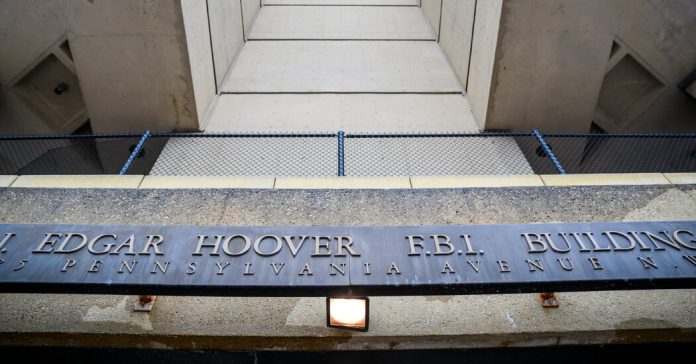
F.B.I. agents stationed overseas had sex with prostitutes in Cambodia, the Philippines and Thailand, even as some bureau employees attended training meant to combat human trafficking, a practice that often exploits vulnerable women, according to an investigation by the Justice Department’s watchdog.

The document, made public on Thursday in response to a lawsuit by The New York Times, covers activity from 2009 to 2018, and describes F.B.I. employees paying for or accepting sex while socializing with each other and with the police in several countries, portraying a lascivious culture where women were freely used for sex.

The previously unreleased information gives the fullest picture to date of damning conduct by F.B.I. agents abroad, resolving some of the unanswered questions from a scandal that began under the first Trump administration and was largely kept quiet for years as government lawyers argued against disclosing details. They come as the new F.B.I. director, Kash Patel, has promised to remake the bureau.

Prostitution is prevalent in Cambodia, the Philippines and Thailand but illegal in all three countries. The F.B.I., which has made combating sex trafficking a priority, prohibits employees from paying for sex.

The F.B.I. did not immediately respond to a request to comment.

Some of the activity happened when officials were in other countries for conferences or events. In 2017, F.B.I. officials visiting Bangkok for an event twice went to bars where they negotiated for sex in the company of the police, the report says.

That same year, the Royal Thai Police co-hosted a training course with the F.B.I. and Homeland Security Investigations, a law enforcement agency within the Homeland Security Department, on combating human trafficking.

It is unclear whether the F.B.I. employees solicited sex during the anti-trafficking training or during another event.

On the sidelines of another event, in Manila in 2018, F.B.I. employees accepted prostitutes paid for by a local law enforcement agency, the report says.

The Wall Street Journal reported in 2018 that several F.B.I. employees had been recalled from cities across Asia while the inspector general investigated alleged contact with prostitutes and other accusations.

In 2021, the inspector general’s office posted a brief summary of its inquiry, noting that five employees had solicited sex while overseas, and that one of them had also given a colleague “a package containing approximately 100 white pills to deliver to a foreign law enforcement officer.”

The report makes clear that several violations happened when multiple F.B.I. employees were present. An outing to a karaoke bar turned seedy when the employees were given room keys or numbered papers corresponding to hotel rooms. At least one of the employees on that outing was a supervisor.

At one point, two employees engaged in sex acts with prostitutes while sharing a room, the report says.

After The Times sued for the internal report in 2023, the Justice Department under both the Biden and Trump administrations fought to keep the information secret, arguing that publishing details could violate employees’ privacy. Last year, the Justice Department released a highly redacted version of the document. It released a more complete report on Thursday only after a federal judge in the Southern District of New York had ordered it to do so.

The five employees who solicited sex resigned, retired, or were removed during the oversight agency’s investigation.

The F.B.I. is not the first U.S. law enforcement agency to come under scrutiny for the exploits of its staff while overseas. In 2015, the Justice Department’s inspector general disclosed that Drug Enforcement Administration agents in Colombia had participated in sex parties with prostitutes paid for by drug cartels over several years. That report prompted a congressional investigation and was swiftly followed by the retirement of the Obama administration’s top drug official.

And in 2012, the Secret Service was roiled by a prostitution scandal involving a dozen agents, also in Colombia.

After the 2015 scandal, Attorney General Eric Holder published a memorandum prohibiting employees from soliciting prostitution, even when legal or tolerated in a foreign country. The practice, he said, “undermines the department’s efforts to eradicate the scourge of human trafficking.” Several of the employees in Asia violated that order, the recent report notes.

The Justice Department inspector general is tasked with investigating and auditing the department’s programs and documenting abuses by its personnel.

President Trump has had a contentious relationship with such oversight agencies. Days after taking office in January, he fired 12 inspectors general from other agencies, though the Justice Department’s inspector general was spared.

Marco Rubio Warns Venezuela Against Attacking Guyana Over ExxonMobil Deal

0

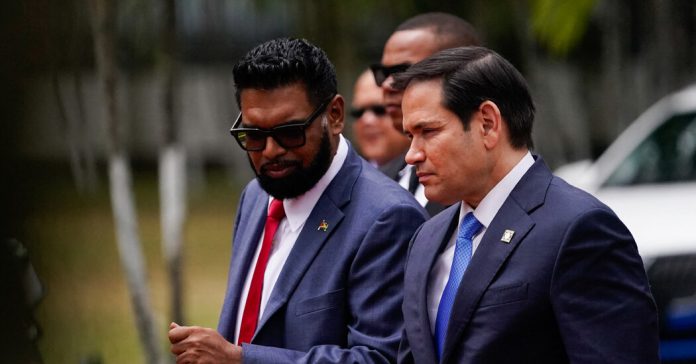
Secretary of State Marco Rubio said on Thursday that there would be “consequences” if Venezuela used forceful actions in asserting claims to resource-rich territories that are under the control of neighboring Guyana.

Mr. Rubio said at a news conference in Georgetown, the Guyanese capital, that the U.S. government would steadfastly oppose “the regional threats based on illegitimate territorial claims by a narco-trafficking regime.”

“There will be consequences for adventurism,” he said as he stood on a stage with Irfaan Ali, the president of Guyana, a small country along the northern coast of South America. “There will be consequences for aggressive actions, and that’s why our partnership in that regard will be important.”

In recent years, Venezuela has intensified claims to the Essequibo region that makes up about two-thirds of Guyana and includes the oil-rich offshore waters where ExxonMobil is leading oil production.

Mr. Rubio said he would not specify what the Trump administration would be prepared to do against Venezuela, but pointed out the power and size of the U.S. Navy, implying the United States could take military action.

Mr. Rubio and Hugh Todd, Guyana’s foreign minister, signed a memorandum of understanding on security cooperation before the news conference.

“I’m very pleased at the reassurance of the U.S. at ensuring the safeguard of our territorial integrity and sovereignty,” Mr. Ali said.

On March 1, Mr. Ali denounced what he called an illegal incursion by a Venezuelan naval vessel into waters near where Exxon is leading a group of companies in extraction.

“This is a serious development concerning our nation’s maritime territory,” he said on television. “We will not tolerate threats to territorial integrity.”

The U.S. State Department expressed support for Guyana and warned Venezuela’s government in a social media post against “further provocation.”

The vice president of Venezuela, Delcy Rodríguez, said at the time that Mr. Ali was telling “baldfaced lies” and that Exxon’s oil-producing operations were illegal.

Exxon discovered the oil reserves in 2015. The Essequibo region is also coveted for its gold, bauxite, diamond, uranium, manganese and other minerals.

On Monday, President Trump said he would impose a 25 percent tariff on any country that buys oil from Venezuela.

Mr. Rubio’s stop in Guyana was the first of two on Thursday during a three-nation tour of the Caribbean and South America. He had been in Jamaica, where he met with the prime minister, and later on Thursday flew to Suriname.

Both Guyana and Suriname are oil-rich countries, and Mr. Trump and Mr. Rubio have stressed the U.S. need for energy security, including through greater fossil fuel production, despite concerns among scientists about a deepening climate crisis.

In January, Mr. Trump withdrew the United States from the Paris Agreement on climate change. He did the same in his first term, but the United States re-entered the pact under President Joseph R. Biden Jr.

On Tuesday, the day before Mr. Rubio left for his trip, the Trump administration’s special envoy for Latin America, Mauricio Claver-Carone, noted that Guyana was on the verge of becoming the largest per capita oil producer in the world, surpassing Qatar and Kuwait.

“It’s seen as some of the greatest offshore opportunities in the world,” he told reporters. “The security of Guyana is a key priority for us in the same way that we have been working with countries in the Gulf States to ensure the security cooperation from the regional threats there.”

“We’ve seen the threats from Venezuela,” he added. “We’ve seen the approaches towards Exxon facilities. Obviously, that’s unacceptable., and we want to work together and find an agreement towards binding security cooperation.”

For many years, the U.S. government has maintained a hostile stance toward the government of President Nicolás Maduro in Venezuela. The first Trump administration imposed broad sanctions on the country and tried to support an opposition leader, Juan Guaidó, in his bid to unseat Mr. Maduro.

At the time, Mr. Rubio, then a U.S. senator representing Florida, promoted policies aimed at deposing Mr. Maduro in favor of Mr. Guaidó.

After a disputed presidential election last year that Mr. Maduro is widely believed to have stolen, Mr. Biden recognized the opposition candidate, Edmundo González, as the legitimate winner.

A reporter from Guyana pressed Mr. Rubio on what the United States would do if the Venezuelan military were to strike Guyana or ExxonMobil.

“It would be a very bad day for the Venezuelan regime if they were ever to attack Guyana or attack ExxonMobil,” Mr. Rubio said. “It would be a very bad day, a very bad week for them.”

An audience of Guyanese officials clapped.

Mr. Rubio landed soon afterward in Paramaribo, the capital of Suriname, and met with the country’s president, Chan Santokhi, in the airport around 5 p.m. Mr. Santokhi and Mr. Rubio told reporters that they had discussed greater cooperation on Suriname’s growing energy industry, which is centered on oil. Mr. Santokhi said economic partnerships among Guyana, Suriname and the United States could play a “crucial role” in the region.

Gazans Demand End to 18 Years of Hamas Rule

0

When an Israeli airstrike ripped through a building in central Beit Lahia on Monday night, the farming community in the northernmost part of Gaza was already on edge over an Israeli evacuation order hours earlier.

The events shook the town’s residents and reminded them of the perils of the war between Israel and Hamas, but they also helped catalyze rare demonstrations against Hamas in Gaza. For three consecutive days, hundreds of people have marched through the town to demand the end both of the war and of Hamas’s 18-year-old rule over Gaza — public protests that have spread to a number of other towns in the battered enclave.

“Hamas needs to go away,” said Ahmad al-Masri, 26, a resident of Beit Lahia who helped call for the demonstrations. “If it doesn’t, the bloodshed, the wars and the destruction won’t stop.”

While most of the demonstrations have been small, they represent the boldest challenge to Hamas’s authority by Palestinians in Gaza since the Hamas-led attack on Israel of October 2023 and the ensuing war, which has reduced cities to rubble.

They also embody the frustration of Palestinians who are again living through deadly and ear-shattering bombing after Israel and Hamas failed to reach an agreement to extend the cease-fire. They make clear that at least some Palestinians have put aside their fears about potential retribution by Hamas, which has governed Gaza with a heavy hand.

“We don’t have anything to lose,” said Mr. al-Masri. “We have already lost our lives, homes and money.”

Before the 2023 attack, Hamas brutally clamped down on Palestinians protesting the miserable living conditions in Gaza and conducted reconnaissance on protest organizers. But during the latest protests, Hamas’s internal security forces have largely refrained from cracking down. That, analysts said, was likely a reflection of both Hamas’s delicate position with Gazans and its reduced ability to mobilize forces under the threat of Israeli airstrikes.

“How can it confront this movement? With force? That would cause even greater anger,” noted Akram Atallah, a Palestinian analyst from the northern Gaza town of Jabaliya. Fearful that Israel could try to kill security officers, Hamas may not be able to deploy them, he added.

But on Thursday, Hamas operatives wielding batons barred media coverage of the demonstration in Beit Lahia. The protest, which included hundreds of people, still went ahead.

Hamas still has a base of supporters in Gaza. Some of them have remained quiet while protests have taken place this week, while others have tried to cast doubt on social media about the motives behind the protests, alleging they were serving foreign agendas, without providing credible proof.

The first protest took place in Beit Lahia around 4 p.m. on Tuesday. The night before, community members sent around a message calling on residents to take to the streets.

“The square is calling on you,” said a screenshot of the message, shared with The New York Times. “Enough of wars. We want to live in peace.”

The message came shortly after Avichay Adraee, the Arabic-language spokesman of the Israeli military, posted an order for people to evacuate from Beit Lahia on his social media accounts. Not long after, an airstrike pounded into the town, residents said.

Asked about the strike, the Israeli military said it was operating against Hamas’s military capabilities, without addressing the specific case. Israel has accused Hamas of operating within civilian areas in the wake of the Oct. 7 attack.

In interviews, protesters said that they hoped Hamas would give up its control over Gaza and remove any reason for Israel to continue to carry out attacks, forcing an end to the war.

“We can’t accept that all of us should die for them to stay in power,” said Sharif al-Buheisi, 56, a resident of Deir al-Balah in central Gaza who participated in a protest on Wednesday. Mr. al-Buheisi is an activist in Fatah, Hamas’s rival, and served as an administrator at Al-Azhar University in Gaza City before the war.

Prime Minister Benjamin Netanyahu of Israel has said that Israel would not end the war until Hamas’s military wing and government were dismantled, while Hamas has expressed willingness to give up control only of civilian government, not its arms.

For Mr. al-Buheisi, an important element of the protests was to push back on the idea — one held by some Israelis — that all of Gaza supported Hamas and terrorism.

“We’re affirming that we are a people that love life and our children,” he said.

The protests included the participation of some mukhtars, local leaders in towns and villages who hold sway with large parts of their communities, demonstrators said. Before the first march in Beit Lahia, a number of young people approached mukhtars to secure support for the initiative, according to Mr. al-Masri and Hassan Saad, another resident of the town. They offered their blessings, they said.

“We’re saying we want to live in dignity,” said Hisham al-Birawi, 64, a mukhtar in Beit Lahia. “We want to live like anyone else.”

Nader Ibrahim contributed reporting.

GOP leaders accused of making threats to block bill to let new moms vote remotely : NPR

0

Rep. Anna Paulina Luna, R-Fla., seen here at the U.S. Capitol on December 20, 2024, is working on a measure that would allow new parents to vote by proxy.

Chip Somodevilla/Getty Images


hide caption

toggle caption

Chip Somodevilla/Getty Images

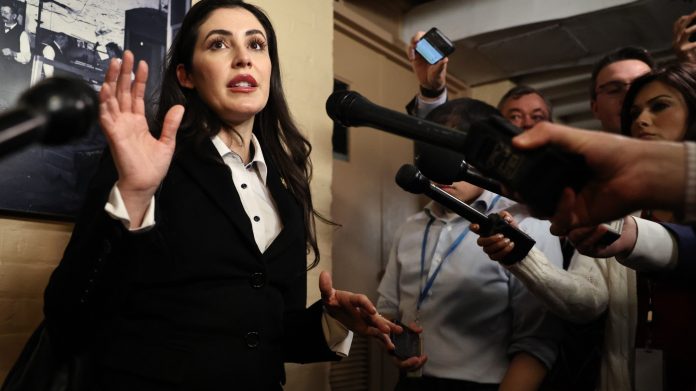
Florida Republican Congresswoman Anna Paulina Luna is accusing leaders from her own party of threatening and bribing other lawmakers to block her effort to allow proxy voting for new parents in the House of Representatives.

“I’m not going to be bought. I will tell you that I’ve now been reached out to multiple times, offering me positions on different committees, and I don’t want it because this is bigger than me,” Luna told reporters on Thursday. “It’s about actually changing the institution for the better.”

Luna, 35, became the 12th lawmaker to give birth while serving in the House in 2023 and appealed to GOP leaders to adjust the rules so that new parents can cast votes remotely around the birth of a child. Both former Speaker Kevin McCarthy, R-Calif., and current Speaker Mike Johnson, R-La., rebuffed her.

“I’m a father. I’m pro-family. The Republican Party is pro-family. We want to make it as easy as possible for young parents to be able to participate in the process,” Johnson said earlier this week when asked by NPR about the push to change the rules. “But proxy voting, in my view, is unconstitutional.”

Johnson’s office declined to comment on allegations by Luna about bribes or perceived threats to other lawmakers.

Luna is teaming up with Colorado Democratic Congresswoman Brittany Pettersen, the 13th lawmaker to deliver a baby while in office. They used a procedural tool called a discharge petition to gather support from a majority of House members — 218 — to force a vote on their measure, which would allow new parents to vote by proxy for 12 weeks around the birth of a new child. They reached that threshold earlier this month and under House rules they can call it up for a vote on the floor as early as next week.

Allegations of threats and trades for votes

Luna says GOP leaders and their allies are using a mix of threats and horse trading to try to get lawmakers to derail that vote. She says she was even offered a committee slot on a panel that she was initially rejected from earlier this year. Luna didn’t specify that the speaker was personally making any offers or threats, but said “multiple people” have reached out to her.

Luna also reported that Tennessee Rep. Tim Burchett, one of 11 Republicans to sign the discharge petition, was offered a vote on two of his bills in return for opposing the proxy voting bill.

“Yeah, somebody said, ‘Well, if we got those bills on the floor, would you vote against Luna?'” Burchett recounted to reporters Thursday. “I was like, voting against pregnant women — are you all crazy?”

Luna said so-called “front liners” — GOP lawmakers who represent swing districts — have been threatened with the loss of fundraising help in their districts for supporting this legislation.

She stressed this is not a partisan issue and believes even those who haven’t publicly backed the bill or signed the discharge petition would ultimately vote for it.

“I have Republican members coming up to me telling me that I am in the right. They will vote to this when it comes to the floor and this should have been done a while ago,” Luna said. “I had a sitting U.S. senator tell me that this is the change the institution needs.”

Pettersen said it “blows my mind” the tactics GOP leaders are using to try to defeat her and Luna’s effort.

“It makes me angry because if they were in this position, they would have a different perspective,” she told NPR from her home on Wednesday.

She called Luna “a fierce advocate” and pointed to the “broad bipartisan support” the issue has received, with nearly a dozen GOP lawmakers signing onto the effort.

Rep. Brittany Pettersen (D-CO) holds her one-month old baby Sam as she departs during a series of votes at the Capitol on March 11, 2025 in Washington, DC. Pettersen is currently working to pass legislation to allow proxy voting for up to 12 weeks for members who have recently given birth or whose spouse has. (Photo by Anna Moneymaker/Getty Images)

Rep. Brittany Pettersen, D-Colo., holds her one-month old baby as she departs during a series of votes at the Capitol on March 11. Pettersen is currently working to pass legislation to allow proxy voting for up to 12 weeks for members who have recently given birth or whose spouse has.

Anna Moneymaker/Getty Images


hide caption

toggle caption

Anna Moneymaker/Getty Images

New moms say Congress needs to adapt

Luna, whose son turns 2 in August, said she’s trying to modernize Congress and forcing the issue using the discharge petition was the way to get leaders to demonstrate that young families have a place in making policy.

“They are not doing the right thing right now. They’re not being honest brokers,” she said. “We’re going to fix it. I’m not backing down.”

Pettersen, 43, waged a similar fight when she was in the state legislature in Colorado. When she ran for the House in 2022, she already had one young son and knew the job in Congress wasn’t family friendly.

“You live part time in another place and you’re flying back and forth. Obviously, this is a big job and you’re constantly working,” she said.

When she became pregnant again, she said she was “thinking through how we’re going to manage this and quite frankly, still dealing with this every day of what does this actually look like when I’m back in Washington? My team trying to figure out how to schedule meetings, what that entails when I’m available.”

So she introduced a bill that would make what she calls a targeted rules change to have Congress “adapt to the times.”

“It is obvious that this place was not made for young women, for young families and for regular people. It’s historically been much more wealthy older men,” she said.

Last month, Pettersen flew to Washington for a crucial vote on a House budget resolution with her newborn, who was four weeks old. With GOP leaders facing a tight vote with a single digit majority, she said it was important to come. She held her baby on the House floor as she spoke out against the proposal. She called the trip to Washington alone with a four week old “scary.”

“You worry about your kid even going to the grocery store with you when they’re that young, let alone, you know, being in an airplane, in an airport, being on the House floor,” she said. “But knowing that so many lives were on the line for that vote — I needed to be there for my constituents.”

The bill is limited to new moms and their spouses and would allow them to vote by proxy for up to 12 weeks — that could include time during and after the pregnancy, and for spouses who need to help partners or infants dealing with medical issues.

Johnson maintains that approving proxy voting is a “slippery slope” to other exemptions.

During the COVID pandemic, then-House Speaker Nancy Pelosi, D-Calif., allowed proxy voting and lawmakers from both parties cast votes regularly by requesting in writing that a member who was present vote in their place.

But Johnson signed onto a legal brief contesting the practice as illegal. When Republicans took control of the chamber in 2023, then-Speaker McCarthy banned proxy voting.

Johnson made the case against bringing it back during a closed-door meeting with House Republicans earlier this week.

“I believe it violates more than two centuries of tradition in the institution, and I think that it opens a Pandora’s box where ultimately maybe no one is here and we’re all voting remotely by AI or something. I don’t know — I don’t think that’s what Congress is supposed to be,” he told reporters afterwards.

New York GOP Rep. Mike Lawler, whose wife had a baby around the November election, joined the effort to force the vote. Petterson also credits Rep. Sara Jacobs, D-Calif., with promoting a change to help those who plan to have families in the future.

Luna noted GOP leaders may be concerned with their slim majority and any factor that could allow Democrats to cast votes, but several Republicans would benefit from a change in the rules.

“You have a Republican male who has his wife due in May, you have another Republican that just announced yesterday that she’s pregnant,” she said. “What if I get pregnant? Is it going to be a problem that we’re not here? I mean, my goodness, the oldest Congress in U.S. history, this will be better for the institution in the long term.”

Luna and Pettersen declined to provide a timeline for when they will force the leadership’s hands with a vote, but Luna quipped on Thursday, “I don’t play to lose.”

King Charles Briefly Hospitalized After Side Effects From Cancer Treatment

0

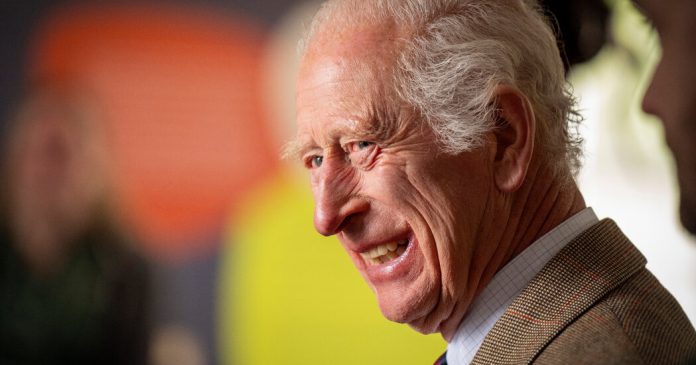
King Charles III was briefly hospitalized on Thursday after suffering side effects from his cancer treatment, Buckingham Palace said in a statement. The palace said Charles, 76, had since returned to his London residence, Clarence House, and that his public schedule for Friday would be canceled as a precaution.

The king announced in February last year that he had been diagnosed with an undisclosed form of cancer, and he has been undergoing treatment since then. The palace did not specify the nature of the side effects, beyond saying they were temporary and “required a short period of observation in hospital.”

Charles has returned to an active schedule in recent months, playing host to foreign leaders including President Volodymyr Zelensky of Ukraine, and visiting an aircraft carrier, the H.M.S. Prince of Wales.

But the palace has offered no updates on his prognosis or the nature of his treatment. His cancer was discovered during surgery for an enlarged prostate last February; the palace has said that he does not have prostate cancer but has offered no other details about his illness.

That is in contrast to his daughter-in-law, Catherine, Princess of Wales, who also was diagnosed with cancer last year, but announced in January that after several months of chemotherapy, that she was now cancer free.

The palace sought to play down concerns about the king’s condition, saying that his recovery continued on a positive track and that the side effects were not unusual for patients receiving medication. Palace officials said they did not expect Charles to make major changes to his schedule, which has included regular foreign and domestic travel.

The king, for example, plans to go ahead with a state visit to Italy next month. The palace announced earlier this week that he and his wife, Queen Camilla, would not visit Pope Francis at the Vatican because Francis is still recovering from pneumonia and a severe respiratory illness, which kept him hospitalized for more than a month.

“His Majesty was due to receive credentials from the ambassadors of three different nations this afternoon,” the palace said in a statement. “Tomorrow, he was due to undertake four public engagements in Birmingham and is greatly disappointed to be missing them on this occasion.”

“He very much hopes that they can be rescheduled in due course and offers his deepest apologies to all those who had worked so hard to make the planned visit possible,” the statement said.

Concerns about the king’s health have faded in recent months, as he has kept up a vigorous schedule, including a demanding nine-day tour of Australia and Samoa last year. But the dearth of information about his treatment or prognosis has made it difficult to gauge whether he is recovering swiftly or simply pushing himself.

The palace did not rule out further minor adjustments to his schedule, which it said would be made in consultation with his doctors. Officials emphasized that the king relished his public duties and that they contributed to his well-being.

Charles has found himself in the center of a diplomatic swirl in recent weeks. Prime Minister Keir Starmer delivered a formal invitation from the king for President Trump to make a state visit to Britain during his meeting with Mr. Trump in the Oval Office.

Several days later, after Mr. Trump clashed bitterly with Mr. Zelensky, the king played host to the Ukrainian president at his country residence, Sandringham. Mr. Zelensky had traveled to Britain after the United States to attend a meeting of European and other leaders to discuss the war in Ukraine.

Charles also met with two successive prime ministers of Canada, Justin Trudeau and Mark Carney, while they were wrestling with tariffs imposed by Mr. Trump and rejecting his call for Canada to become the 51st American state.

Such meetings are commonplace, given that Charles is also the king of Canada. But they took on added significance in light of the deepening tensions between Canada and the United States.

Even the king’s visit to an aircraft carrier, during which he spoke to the crew and watched fighter jets take off and land on the deck, was laden with symbolism. Britain, along with France, has taken a leading role in trying to assemble a multinational force to help secure a peace settlement in Ukraine.