Thursday, November 12, 2026
Home Blog Page 81

Judge accuses Trump administration of trying to undermine judiciary : NPR

0

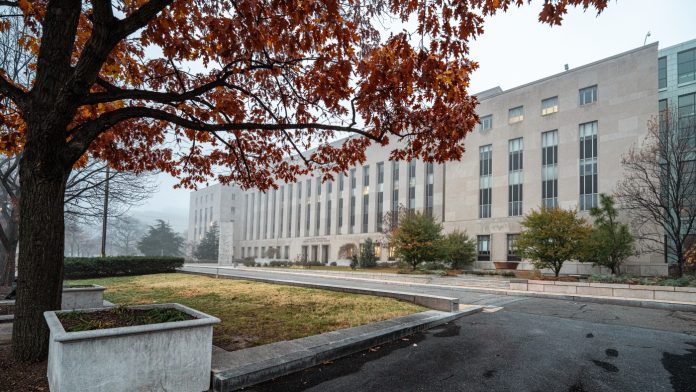
The E. Barrett Prettyman United States Court House in Washington, D.C.

J. David Ake/Getty Images


hide caption

toggle caption

J. David Ake/Getty Images

A federal judge on Thursday rejected the Justice Department’s bid to remove her from a case challenging one of President Trump’s executive orders, accusing the department of attacking her as part of broader campaign to try to undermine the judicial system.

The order from U.S. District Judge Beryl Howell, nominated to serve on the federal bench during the Obama administration, denies the department’s effort to disqualify her from the lawsuit over Trump’s order punishing the prominent law firm Perkins Coie. Earlier this month, Howell said the order likely violated the constitution and temporarily blocked enforcement of it.

The Justice Department responded by accusing Howell, a judge at the U.S. District Court for the District of Columbia, of repeatedly demonstrating “animus” toward Trump, and filed a motion seeking to disqualify her.

Howell’s order is a notable instance of a federal judge vocally pushing back against attempts to discredit the federal judiciary, and comes as judges who have ruled against the Trump administration this year are confronting a wave of threats.

“When the U.S. Department of Justice engages in this rhetorical strategy of ad hominem attack, the stakes become much larger than only the reputation of the targeted federal judge,” Howell wrote in her order Thursday.

“This strategy is designed to impugn the integrity of the federal judicial system and blame any loss on the decision-maker rather than fallacies in the substantive legal arguments presented.”

The Justice Department has also sought to remove Judge James Boasberg from hearing a case over Trump’s invocation of the 1798 Alien Enemies Act.

Trump in a post on social media early on Thursday also argued that “it is virtually impossible for me to get an Honest Ruling in D.C.,” accusing judges there and in New York of being biased against him.

“Their own version of the facts”

In her order Thursday, Howell said no judicial ruling exists in a vacuum, and that every litigating party deserves a fair and impartial hearing.

“That fundamental promise, however, does not entitle any party — not even those with the power and prestige of the president of the United States or a federal agency — to demand adherence to their own version of the facts and preferred legal outcome,” she said.

Fact finding, she stressed, is the role of the courts, and she slammed the Justice Department’s assertion about “the need to curtail ongoing improper encroachments of President Trump’s Executive Power playing out around the country.”

“This line, which sounds like a talking point from a member of Congress rather than a legal brief from the United States Department of Justice, has no citation to any legal authority for the simple reason that the notion expressed reflects a grave misapprehension of our constitutional order,” she wrote.

“Adjudicating whether an Executive Branch exercise of power is legal, or not, is actually the job of the federal courts, and not of the President or the Department of Justice, though vigorous and rigorous defense of executive actions is both expected and helpful to the courts in resolving legal issues,” she wrote.

Howell also pointed out that while she ruled against the administration in the Perkins Coie case, she ruled in favor of the government in another case that recently came before her challenging a Trump administration action against the U.S. Institute of Peace.

Friday Briefing: Trump’s New Tariffs Risk Trade War

0

President Trump’s plan to impose a 25 percent tariff on cars and parts imported into the U.S. sent a shudder through the global car industry. Markets in Asia, Europe and the U.S. wobbled yesterday as many automakers’ stock prices fell.

Trump announced the tariffs on Wednesday and then raised the stakes yesterday by threatening to target the E.U. and Canada if they banded together to retaliate. Talk of retaliatory measures increased the likelihood of a worldwide trade war.

The tariffs on all cars and some auto parts exported to the U.S. are set to go into effect on April 3. Mexico, Japan and South Korea, along with Canada, account for about 75 percent of U.S. vehicle imports. Here’s how major car brands will be affected by Trump’s tariffs.

Reactions: Mark Carney, Canada’s leader, said that the U.S. was “no longer a reliable partner” and that his country would announce its own retaliatory tariffs next week. In Germany, which has an auto industry that is a huge exporter to the U.S., the economy minister, Robert Habeck, said it was “crucial that the E.U. delivers a decisive response to the tariffs,” adding, “It must be clear that we will not back down.”

In Paris yesterday, European leaders discussed a French proposal to send a “reassurance force” to Ukraine after the conflict ends. But Emmanuel Macron, France’s leader, said the contours of such a force were still being ironed out.

The meeting followed three days of U.S.-brokered talks in Saudi Arabia this week that yielded deals between Russia and Ukraine on limited cease-fires on energy infrastructure and the Black Sea.

For a look at the state of the negotiations, I reached out to my colleague Paul Sonne, who covers Russia.

How has Russia approached the talks?

Paul: There are a lot of doubts about whether Russia is seriously engaging or just running out the clock. By demanding that certain sanctions and restrictions be lifted before any cease-fire in the Black Sea, the Kremlin is dragging out negotiations, in part because some of what it is demanding would require not only U.S. action but European action as well.

Judging by the statements this week, there was little that could be seen as a gain for Ukraine, which is already exporting its agricultural products via the western part of the Black Sea and has driven the Russian Navy out of the area.

How would Moscow benefit if those sanctions were lifted?

Russian food and fertilizer are not sanctioned. But restrictions on Russian shipping, insurance and banking make agricultural exports more difficult and expensive for Moscow, so it wants those restrictions eased — and Europe has some restrictions on Russian fish products that it also seems to want eased.

Russia also wants sanctions lifted on the state agricultural bank, and for it to be reconnected to the international payments system Swift. But that would require agreement from European allies who have been cut out of the talks.

Rare public protests for an end to the war and Hamas’s rule have spread to a number of towns across Gaza over the past three days. While most of the demonstrations have been small, they represent the boldest challenge yet to Hamas’s authority there since the war began in 2023.

“Hamas needs to go away,” said Ahmad al-Masri, who helped call for the demonstrations. “If it doesn’t, the bloodshed, the wars and the destruction won’t stop.”

Israel: Prime Minister Benjamin Netanyahu’s coalition gave itself more power to pick judges, returning to an overhaul that divided the country before the war.


Whales sing. Fish grunt. But sharks have been silent, until now. Scientists in New Zealand recently heard a rig shark making a clicking sound, most likely by snapping its teeth together. They believe it’s the first time a shark has been recorded actively making noise.

Listen to a recording.

For the residents of Fanalei Island in the Solomon Islands, dolphin hunting is a sacred tradition, but it has taken on new significance recently as climate change threatens their home.

The 130 or so villagers on Fanalei hunt the dolphins for their teeth, which are used as local currency. They say they hope to buy land on higher ground and escape their sinking homes. “We feel sorry, too, for killing the dolphins,” one hunter said. “But we don’t really have a choice.” Read more.

Trump pulls Stefanik nomination for UN to ensure GOP keeps her House seat

0

President Trump on Thursday said he is withdrawing his nomination of Rep. Elise Stefanik, R-N.Y., to be ambassador to the United Nations because he needs her to stay in Congress.

Tesla Dealers Claimed They Sold 8,653 Cars in 3 Days in Canada. Did They?

0

As in many places around the world, Tesla sales in Canada have been falling for months, an apparent reaction to Elon Musk’s outsize role in the Trump administration and his repeated denigration of Canadian sovereignty.

Yet somehow, four Tesla- owned dealerships reported to the Canadian government that they sold an astonishing 8,653 cars during a single weekend in January — enough to qualify for 43 million Canadian dollars’ (about $30 million) worth of government subsidies under a program just before it expired.

Now the Canadian government wants to know exactly how the electric carmaker managed to move two cars a minute off its lots — a rate that assumes those four dealers had stayed open 24 hours from Jan. 10 to Jan. 12.

Those payments were frozen this month after Mark Carney became Canada’s prime minister and named a new transport minister who ordered officials “to fully examine each claim individually and determine whether all are eligible and valid.” The minister, Chrystia Freeland, saidthat “no payments will be made until we are confident that the claims are valid.”

The subsidy program has expired, but Ms. Freeland, taking aim at the Trump administration, said that if there was a new one, Teslas would not be eligible “so long as the illegitimate and illegal U.S. tariffs are imposed against Canada.”

Tesla’s gain was a loss for some of its competitors.

The company’s breathtaking flurry of sales claims for some of its dealers in Ontario, British Columbia and Quebec drained funds from the government’s rebate program, bringing it to a close before its scheduled March 31 end date. As a result, the Canadian Automobile Dealers Association estimates, 225 dealers selling other brands were unable to claim about 10 million in Canadian dollars, putting some of them in financial peril.

“When you’re looking at a 43 million dollar hit over a weekend, an investigation is definitely warranted,” said Huw Williams, a spokesman for the dealers’ association. “The level of transactions just does not make common sense.’’

Tesla did not respond to a request for comment. The Toronto Star first reported the sales rush claims, which were posted on a government website that tracks rebate payments.

Under the government plan, which began in 2019, dealers deducted rebates of up to 5,000 Canadian dollars when they sold electric vehicles before reporting the purchase information — including buyers’ names and the vehicles’ identification numbers — to the government for reimbursement.

The torrent of Tesla claims started on Jan. 10 after Transport Canada warned dealers across the country that the program would run out of money before the end of March. By Monday morning, the account was empty and the program was closed.

About 1,000 dealers selling other brands submitted claims over that weekend but Tesla accounted for about 88 percent of the applications.

“How did Tesla magically know to hit that number?” Mr. Williams asked, referring to the draining of the rebate programs remaining funds.

While some dealers stacked up claims before submitting them to the government, Mr. Williams said, the Tesla surge “doesn’t fit any pattern for Tesla going backwards.”

He also said that it was physically impossible for the four Tesla dealerships to keep thousands of cars on hand.

Mr. Williams said that Ms. Freeland told his group that dealers who missed out after Tesla emptied the fund would ultimately be reimbursed, but that how long that might take was unclear.

Tesla has become a particular source of anger among Canadians since President Trump began imposing tariffs on Canada and calling for Canada to become the 51st state. Annexation has also been championed by Mr. Musk, who holds Canadian citizenship and lived in Canada before moving to the United States.

An online petition calling on the Canadian government to revoke Mr. Musk’s citizenship has drawn hundreds of thousands of signatures.

More than 80 Teslas were vandalized, their tires punctured and their paint scratched at a dealer Hamilton, Ontario, this month. A Tesla outlet in Montreal was defaced with pink paint. And in Vancouver, organizers of an auto show banned the company over concerns about possible protests and vandalism.

Four Canadian provinces have excluded Tesla from their electric vehicle rebate programs this year.

At least one Tesla competitor has been trying to cash in on the antipathy. Polestar, the Swedish -based, Chinese-controlled EV maker, is offering Canadians a 5,000 Canadian dollar discount if they can prove that they are registered Tesla owners.

mental health and addiction funding on the federal chopping block : NPR

0

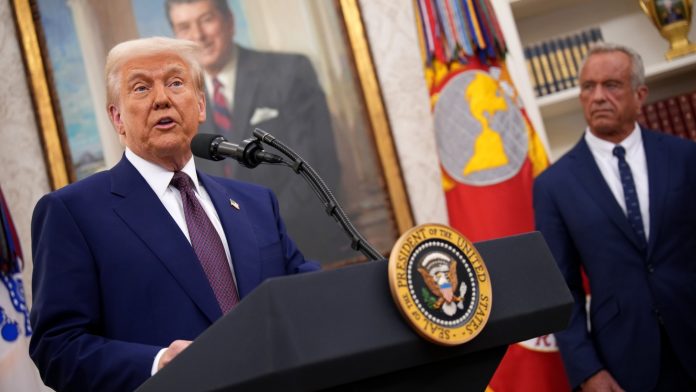
U.S. President Donald Trump and HHS Secretary Robert F. Kennedy Jr. have moved to slash funding for addiction treatment programs and research, saying the money should instead be spent on efforts to “Make America Health Again”.

Andrew Harnik/Getty Images/Getty Images North America


hide caption

toggle caption

Andrew Harnik/Getty Images/Getty Images North America

State and county public health departments and non-profit groups are reeling after the Trump administration announced abrupt cancelation and revocation of roughly $11.4 billion in COVID-era funding for grants linked to addiction, mental health and other programs.

“This is is chopping things off in the middle while people are actually doing the work,” said Keith Humphreys, an addiction policy researcher at Stanford University, who also volunteers doing harm reduction work with people in addiction. He warned the move could trigger layoffs and treatment disruptions.

“Services will be dropped in the middle. Bang, the clinic is closing. It’s a brutal way to make these cuts,” Humphreys said.

The federal grant funding had been scheduled to run through September 2025. In a statement sent to NPR, a spokesperson with the U.S. Department of Health and Human Services said it made sense to freeze the program immediately.

“The COVID-19 pandemic is over, and HHS will no longer waste billions of taxpayer dollars responding to a non-existent pandemic that Americans moved on from years ago,” the statement said, adding that the Trump administration will refocus funding on America’s “chronic disease epidemic.”

Drug overdoses linked to fentanyl and other substances have declined sharply in recent years, thanks in part to a surge in funding for addiction treatment during the Biden administration. But street drugs still kill more than 84,000 people in the U.S. every year, according to the latest data from the Centers for Disease Control and Prevention.

President Donald Trump has made fentanyl smuggling a top concern during the opening weeks of his administration, extending an emergency declaration linked to the powerful street opioid.

But his team has also also rapidly slashed the number of federal researchers focused on addiction and Trump pardoned a tech mogul convicted of building a “dark web” platform used to traffic illicit drugs.

The Substance Abuse and Mental Health Services Administration is also being merged into a new organization, called the Administration for a Healthy America (AHA), as part of a restructuring of HHS that’s expected to eliminate 20,000 federal employees.

The move to rescind funds that include addiction-care grants drew criticism from experts who warned progress reducing overdose deaths could be reversed.

“DOGE is now actively cutting funding aimed at reducing overdose deaths by clawing back money from states,” wrote Regina LaBelle, an expert on drug policy at Georgetown University who served in the Biden administration in a post on social media. “With overdose deaths still exceeding 80,000 annually, is DOGE declaring victory?”

In a statement sent to NPR, a spokesman for Ohio’s Republican Governor Mike DeWine said they are “awaiting firm details before commenting” on the cuts.

Some Democratic leaders across the U.S. condemned the move.

“Senselessly ripping away this funding Congress provided will undermine our state’s ability to protect families from infectious diseases like measles and bird flu and to help people get the mental health care and substance use treatment they need,” said U.S. Sen. Patty Murray, a Democrat from Washington state, in a statement.

She said the loss of $160 million in federal funds designated for use in her state could cost “more than 200 jobs” in public and non-profit health organizations.

New York Governor Kathy Hochul said her state would lose roughly $300 million in funding, much of it earmarked for county health departments in rural areas.

“At a time when New York is facing an ongoing opioid epidemic, multiple confirmed cases of measles and an ongoing mental health crisis, these cuts will be devastating,” Hochul said. “There is no state in this country that has the financial resources to backfill the massive federal funding cuts.”

A spokesperson for Colorado’s Behavioral Health Administration said $250 million in federal cuts to her state would affect as many as 60 programs and could put patient at risk.

“In so many cases, these are life-saving programs and services, and we worry for the wellbeing of those who have come to count on this support,” spokeswoman Allie Eliot, wrote in an email to Colorado Public Radio.

In their statement to NPR, HHS officials downplayed the impacts of the cuts and said most grants being rescinded fund outdated programs linked to the pandemic, including efforts to “address COVID-19 health disparities among populations at high-risk and underserved, including racial and ethnic minority populations.”

Tom Wolf, an addiction activist in San Francisco who has been critical of Democratic approaches to address the overdose crisis, said he remains broadly supportive of Trump’s policy ideas.

“There are certain aspects of what he’s doing that I think are good. For me it’s about getting things done,” Wolf said.

But he also voiced concern about the pace of change and the risk that effective addiction treatment programs could be defunded at a time when tens of thousands of people in the U.S. are still dying from fatal overdoses each year.

“Are they stopping to look at the efficacy of those programs?” Wolf said.

Addiction experts told NPR they are now bracing for what many believe will be deep cuts to Medicaid funding, which provides the largest single source of insurance coverage for drug and alcohol treatment nationwide.

“It’s very hard to look at the budget framework created by Republicans and imagine a scenario other than Medicaid being cut severely,” Stanford University’s Keith Humphreys said. “It’s a frightening prospect. That will be extremely painful for families facing addiction.”

Unburying the Remains of the Third Reich

0

Even if the Volksbund is cautious in its dealings with AfD members, Germany’s far-right party is vocal about its support for the group and its mission. On the AfD website, a petition by its leader, Alice Weidel, lists funding the group as one of its legislative priorities, along with establishing a “National Day for Unborn Life” and a plan to block Gazan refugees from entering Germany. Jan-Phillip Tadsen, an AfD state parliament member in Germany’s northeastern Mecklenburg-Vorpommern, told me that he is both a Volksbund donor and that he likes to lay wreaths at its ceremonies from the AfD.

The Volksbund does have supporters across the political spectrum: Several Volksbund officials I talked to said their biggest political patrons belonged to the Christian Democratic Union, Germany’s center-right party. One Green Party member I contacted told me she supported the group because it promoted peace and was opposed to far-right extremism.

Still, the possibility that far-right extremists could co-opt the Volksbund is a concern for some, including its former leadership. “I fear this organization is at huge risk of being instrumentalized,” Markus Meckel, the Volksbund’s president until 2016, told me when I met him in Berlin. Meckel, a former Protestant pastor, grew up in East Germany, where the Communist regime refused to build World War II memorials because they were seen as inherently pro-Nazi — an approach Meckel said he didn’t agree with because it sidestepped the hard questions of history. When he came to lead the Volksbund in 2013, however, he said he was startled by the group’s emphasis on commemoration. “There was this attitude there of ‘Our poor boys; look at what happened to them in the battlefield,’” he said. For an organization so concerned with the past, the Volksbund had seemed to sideline the mantra of “never again.”

Meckel decided he would undertake a reform project at the Volksbund. After having a look at the materials being distributed by the group, he found most of them to be inappropriate — for example, commemoration books for dead Wehrmacht soldiers that told about their lives but left out any information on the crimes German soldiers committed, or Christmas cards sent to families who had donated that told “sad stories from the western front.” The fliers the Volksbund distributed at its cemeteries focused mainly on the architecture. “But there was nothing about the war, nothing about why the soldiers were even there,” he said. Meckel ordered the publications to cease until they could be rewritten. Meckel also told me that the Volksbund staff almost exclusively focused on identifying the graves of German soldiers and ignored civilian remains.

Before long, the new president was looking into the Volksbund’s finances. One concern was that with each year, there were fewer war widows still alive to make contributions, and the organization’s income was declining. But equally troubling, Meckel said, was that some of the remaining donors had very questionable backgrounds. In one case, Meckel found that a large contributor was actually an organization that he suspected was founded by SS veterans. The group now sent money through a charitable foundation to obscure the funding’s Nazi ties, Meckel told me. “The question is: Who is sponsoring this?” he said.

Trump pulls Stefanik nomination for U.N. ambassador : NPR

0

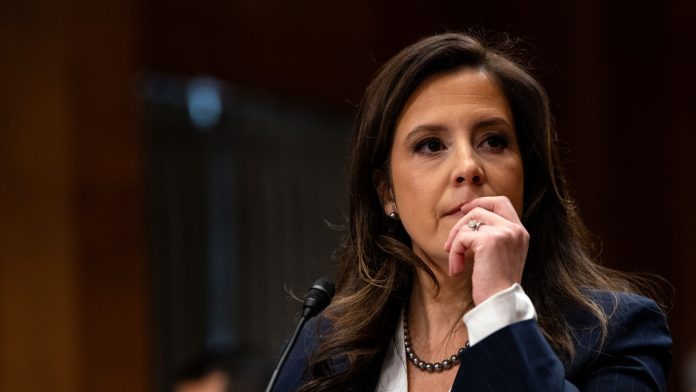
Rep. Elise Stefanik, R-N.Y., testifies before the Senate Foreign Relations Committee on her nomination to be ambassador to the United Nations on Jan. 21, 2025.

Kent Nishimura/Getty Images


hide caption

toggle caption

Kent Nishimura/Getty Images

President Trump on Thursday said he is withdrawing his nomination of Rep. Elise Stefanik, R-N.Y., to be ambassador to the United Nations.

Stefanik’s nomination had been expected to easily clear the Senate — but Republicans are concerned about holding on to their thin majority in the House of Representatives. Republicans currently hold 218 seats and Democrats 213 seats. Four seats are currently vacant.

“As we advance our America First Agenda, it is essential that we maintain EVERY Republican Seat in Congress,” Trump wrote in an announcement on Truth Social. He continued, “I have asked Elise, as one of my biggest Allies, to remain in Congress to help me deliver Historic Tax Cuts, GREAT Jobs, Record Economic Growth, a Secure Border, Energy Dominance, Peace Through Strength, and much more, so we can MAKE AMERICA GREAT AGAIN.”

Before her nomination, Stefanik was the highest-ranking woman serving as a Republican in the House of Representatives. She was a strong defender of Trump during his 2019 impeachment hearings — and also attracted attention for grilling college presidents during congressional hearings on antisemitism on college campuses.

In February, Republican Speaker Mike Johnson publicly acknowledged in remarks to the America First Policy Institute that he needed Stefanik to stay in the House to make sure he had enough votes to pass a budget resolution, although he did support her nomination for the cabinet position.

Boualem Sansal, Algerian French Writer, Is Sentenced to 5 Years in Algerian Prison

0

An Algerian French writer whose arrest in Algeria on accusations of undermining national unity and security inflamed tensions with France was sentenced to five years in prison on Thursday.

The writer, Boualem Sansal, who was born in Algeria and became a French citizen last year, was arrested in November because of statements he made to French news media siding with Morocco in a territorial dispute with Algeria.

His detention raised an outcry from other authors worldwide, and his sentencing came after months of pleas for his freedom from the French president, Emmanuel Macron. France was once Algeria’s colonial ruler.

Mr. Sansal was tried and sentenced without being allowed access to legal counsel, according to his lawyer in France, Francois Zimeray.

“Cruel detention, 20 minutes of hearing, a forbidden defense and ultimately five years in prison for an innocent writer,” Mr. Zimeray said in a statement. The sentence, he said, “betrays the very meaning of the word justice.”

Mr. Sansal, who was diagnosed with cancer and is believed to be about 80, is being held at Kolea prison, outside the capital, Algiers, according to Mr. Zimeray.

“His age and his state of health make each day of incarceration even more inhumane,” the lawyer said. “I appeal to the Algerian president: Justice has failed, at least let humanity prevail.”

Mr. Zimeray said in a text message that the next steps in the case were not clear but that the coming weeks might be decisive. “It’s in the hands of the Algerian government,” he said.

Mr. Macron echoed the sentiment. Speaking to reporters at a briefing on Thursday, he called Mr. Sansal a “great writer” and, noting his poor health, urged his release.

“I know I can count on the humanity of the Algerian authorities,” the French president said before adding: “In any case, I very much hope so.”

Mr. Macron has been taking a more conciliatory tone since accusing Algeria in January of dishonoring itself with Mr. Sansal’s detention.

This month, Mr. Sansal’s lawyer appealed to the United Nations to take a stand in the matter. He called the writer’s detention arbitrary and said that it had occurred in a “larger context” of widespread denial of freedom of expression and the weaponization of the Algerian justice system.

After Mr. Sansal was arrested upon his arrival in Algeria last year, his case drew condemnation from French lawmakers and intellectuals, as well as writers around the world. Winners of the Nobel Prize in Literature, including Annie Ernaux and Orhan Pamuk, and other noted authors like Salman Rushdie joined an opinion article by the French Algerian writer Kamel Daoud in Le Point newsmagazine, denouncing “editorial terrorism” in Algeria.

Repression of Algerian journalists has been increasing in recent years. In 2019, mass protests forced Algeria’s president from power. His replacement, Abdelmadjid Tebboune, who was elected with military support, has pushed the country toward harsher authoritarianism.

Dozens of journalists are believed to have been imprisoned in Algeria as the government has sought to prevent mass protests from flaring again, though the figures are murky given the difficulty of independent reporting, experts say.

Mr. Sansal has long been outspoken about his opposition to Islamism and critical of the Algerian government. In 2012, he was denied the cash portion of a prize by the Arab Ambassadors Council in Paris after attending a writers festival in Jerusalem.

The statements he made that led to his detention came at a particularly fraught time for relations between France and Algeria.

In October, Mr. Macron told Moroccan lawmakers he believed that Western Sahara — subject of a territorial dispute between Algeria and Morocco, a former French protectorate — should be under Moroccan sovereignty, angering Algerians.

Mr. Sansal had also said that Algeria benefited from French colonization because it gained territory in the Western Sahara that once belonged to the kingdom of Morocco.

Mr. Sansal, who had been working as an engineer for the Algerian government, published his first book, “The Oath of the Barbarians,” in 1999. The novel was critical of Islamic fundamentalism and government repression, putting Mr. Sansal out of a job and paving the way for a second career as a writer and commentator.

Drones, Mines and Snipers: Ukraine’s Front Line Is a World Away from Peace Talks

0

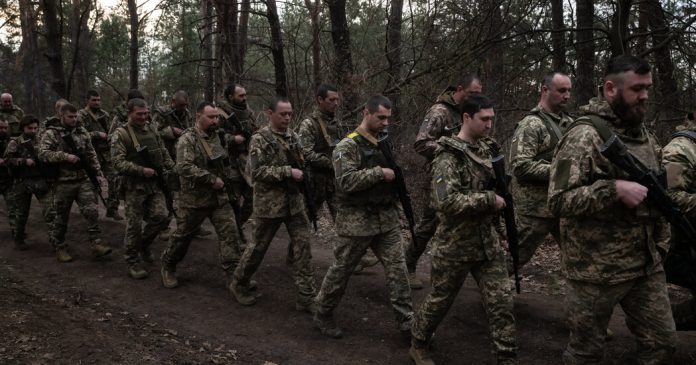
Hunted by drones, stalked by snipers and surrounded by minefields, soldiers fighting in Ukraine can’t risk even a small lapse in concentration.

That is why Col. Dmytro Palisa, commander of Ukraine’s 33rd Mechanized Brigade, instructs his soldiers to ignore speculation about a possible cease-fire.

“They start relaxing, they start overthinking, putting on rose-colored glasses, thinking that tomorrow will be easier. No,” he said in an interview at a command post on the eastern front. “We shoot until we are given the order to stop.”

As diplomats and European leaders thousands of miles away talk about a possible truce and how to safeguard it, Russia and Ukraine are engaged in bloody battles as intense as any of the war. The furious fighting, tearing across the Ukrainian front, is, in part, a late play for land and leverage in the talks, which the Trump administration says are making progress.

President Volodymyr Zelensky of Ukraine says he believes Russia intends to launch new offensive operations “to put maximum pressure on Ukraine and then issue ultimatums from a position of strength,” as he put it last week.

Kyiv wants to deny Moscow that advantage.

Ukrainian forces remain outnumbered and outgunned — much as they have been since Russia launched its full-scale invasion more than three years ago. But they have largely halted Russian advances so far this year and are now engaged in localized counterattacks to claw back land.

Military analysts tracking battlefield developments confirm that the already glacial pace of Russian advances has largely stalled, even though Moscow’s forces continue to launch assaults along key parts of the front.

In interviews from the front line, Ukrainian soldiers and military leaders credited several factors for their resilience: New defensive strategies that more completely integrate drones, rapid adaptation to shifting threats, signs of Russian fatigue and improving morale under a new commander of ground forces, Gen. Mykhailo Drapatyi.

“This war keeps changing the rules,” Colonel Palisa said. “That means we constantly have to adapt. Every night, before going to sleep, we already have to plan an alternative strategy for tomorrow.”

The Ukrainian retreat from most of the Kursk region of Russia earlier this month promises to again reshape the contours of the fight. Tens of thousands of soldiers dedicated to Moscow’s seven-month campaign to retake Russian land there can now be redeployed.

Col. Oleh Hrudzevych, 35, deputy commander of Ukraine’s 43rd Mechanized Brigade, said that the Kursk campaign “really pulled a significant part of enemy forces” and firepower from other parts of the front.

For instance, he said, while battles raged in Kursk, there was a 50 percent drop in the number of aerial bombs — one of Russia’s most effective weapons — in the Kupiansk area on the northern edge of the eastern front, where he is deployed.

Russian forces, he said, have been limited to “mosquito bite” tactics — small assaults that generally end in failure. But he expects that Russia may now redirect some forces to his area.

Capt. Yurii Fedorenko, commander of the 429th Achilles Unmanned Systems Regiment, said that the main task along the northeastern part of the front was keeping Russian troops from expanding their small foothold on the Oskil River.

Unable to erect pontoon bridges because of the threat posed by Ukrainian drones and artillery, the Russian forces have been using small boats to ferry men and equipment across the river under the cover of bad weather.

Captain Fedorenko said that for nearly a month, Russian units had failed to expand their position and continued to pay a heavy price to hold the land they have.

“We conducted a drone flyover of a small tree line about 200 meters long and quite narrow,” he said. “In that one tree line alone, we counted around 190 enemy bodies.”

Drone footage shared by the Ukrainian military with The Times generally supports his account. But it was not possible to independently verify the precise number of Russian soldiers who were killed or injured, or to measure the Ukrainian losses over that same period of time.

Hundreds of miles away, on the banks of the Dnipro River on the southern front, the Russian forces are searching for weak points in the Ukrainian line.

Two months ago, Russian troops launched a series of cross-river assaults — using some 15 to 20 boats in each attack, soldiers said — but the effort failed.

Now, the Russian military is launching probing attacks, trying to press north along the river toward the city of Zaporizhzhia, which is under Ukrainian control. President Vladimir V. Putin and other Russian officials have said publicly that their goal is to fully control the city and the surrounding area.

But their plans to try to encircle Zaporizhzhia were put on hold when Russian troops were redirected to Kursk, said Sr. Sgt. Andrii Klymenko, who has been fighting in the area for many months. His claim was supported by analysts who track Russian military movements.

“Now they’re simply going to revive it,” he said.

Much of the most ferocious fighting continues to be concentrated in the rolling hills and ruined industrial cities of the eastern Donbas region, where after three years Russia has failed to seize control of two coveted targets: the provinces of Donetsk and Luhansk.

Colonel Palisa oversees a stretch of Ukrainian defenses south of Pokrovsk, a city in Donetsk, where Russian offensive operations made the bulk of their progress last year.

But Colonel Palisa said that aggressive drone warfare and smart defensive tactics had, for now, blunted Russia’s advantages. “The enemy hasn’t advanced a single meter in this sector for the past three to four weeks,” he noted. “As of now, we can say that we have stabilized the situation.”

At the same time, he added, his forces have had to adjust to a growing threat: the proliferation of Russian drones tethered to ultrathin fiber-optic cables that render them immune to electronic jamming.

“When they didn’t have fiber optics, we could still move around,” he said. After the fiber-optic drones appeared, he said, his brigade lost some 10 vehicles in just seven days.

“That made me realize that we had to completely change our approach and abandon vehicles altogether,” he said.

Like their Russian counterparts, Ukrainian soldiers now frequently use quad bikes and buggies or move on foot. They often wear cloaks that mask a soldier’s heat signature from drones outfitted with thermal vision cameras.

Netting has been strung over critical supply roads, a simple but effective defense that Colonel Palisa said had cut successful enemy attacks by more than half. And soldiers now routinely carry shotguns along with their assault rifles.

It makes for a sort of ‘Mad Max’ aesthetic as tanks and armored vehicles mix with civilian cars, motorcycles and quad bikes retrofitted with cages and jammers.

The low-tech adaptations, along with a broad restructuring of the military, are strategies that Kyiv hopes will allow Ukraine to continue fighting — even as its primary military ally, the United States, pulls back support, increasingly repeats the Kremlin’s narrative and pressures Ukraine into cease-fire negotiations.

On the front line, any talk about a lasting peace still feels like a dangerous fantasy.

Soldiers say they believe that the fighting will continue until the price of war becomes too high for the Kremlin to bear and Ukraine is made strong enough to deter any future aggression.

“We are fighting for the right to live,” Captain Fedorenko said. “Americans must understand that this is not about pressuring Ukraine into some abstract peace. Such a peace is not possible — because Ukraine did not start this war.”

Olha Konovalova contributed reporting from eastern and southern Ukraine.

For 3 Years, They Quietly Dug Up One of the Biggest Treasures in England

0

Tom Moore got the call just before Christmas in 2021. The head of the University of Durham’s Archaeology department, Mr. Moore was well-known in history circles in Yorkshire, in northeast England. It was why he had received the urgent message, from a man who claimed to have stumbled on something big.

“I think it’s Iron Age,” said the caller, Peter Heads, an amateur metal detectorist. And then, no one said a word.

Now, after more than three years of painstaking excavation, conducted in near-total secrecy, Mr. Moore and his colleagues say that it could be one of the most significant archaeological finds in northern England — and could change historians’ understanding of the Iron Age, around 2,000 years ago.

“Quite simply, this is one of the most important and exciting Iron Age period discoveries made in the U.K.,” Duncan Wilson, the chief executive of the government agency Historic England, said in a statement this week. “It sheds new light on Iron Age life in the north and Britain, but it also demonstrates connections with Europe.”

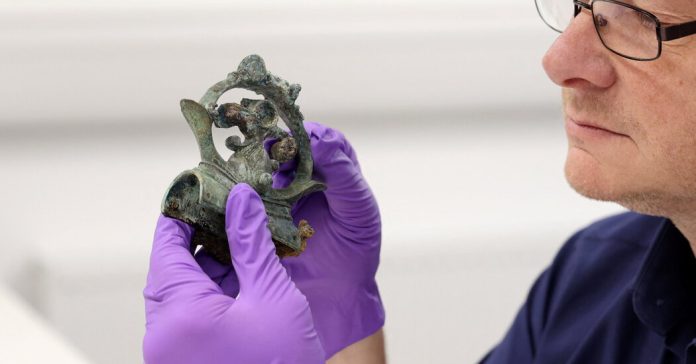
Since Mr. Heads’s finding in 2021, a team of archaeologists working at the site has collected a total of more than 800 objects, most dating to the Iron Age. Among them are cauldrons, a wine-mixing bowl, coral-coated horse harnesses and ceremonial spears.

They also include 28 iron wheels, presumably from a chariot or wagon — the kinds of transportation mechanisms never before believed to have existed in such size and scope among the elite of Britain’s Iron Age.

Experts said that the collection of artifacts — dubbed the Melsonby hoard, for the North Yorkshire town where it was found — stands as an example of how Britain’s complicated treasure laws can work to safeguard potential finds. British law defines anything older than 300 years and consisting of at least 10 percent precious metal as “treasure,” and thus the property of the British crown.

After Mr. Heads stumbled on a few pieces of ancient metal, his decision to immediately notify local historians allowed them to quickly protect the site and begin moving the discovery through the legal process.

“It was all done very quietly,” said Professor Moore, who led the excavation.

He said that the secrecy was partly to ensure that other, less conscientious detectorists did not try to access the site, and partly so the area could be preserved until the artifacts could be evaluated by British authorities. They eventually assessed the find to be worth around 254,000 pounds (about $329,000).

“It was a very responsible metal detectorist who alerted the archaeologists when he found some of the objects,” Mr. Wilson said in an interview. “It was a very good example.”

Not everyone shows as much familiarity with the laws as Mr. Heads. Britain’s rules governing metal detecting require dutiful adherence to reporting requirements, with potential legal consequences for failing to do so.

People can use metal detectors on private land with the landowner’s permission, but if they discover something that might be considered treasure, they are required to report it. If the item is determined to be treasure, it becomes the property of the government, which manages its potential acquisition by museums. Proceeds from any sale are split between the detectorists and the landowner.

Mr. Heads stumbled on the Melsonby hoard while detecting on the property of a friendly landowner. After digging a few holes and recognizing the potential value of the find, he contacted Mr. Moore, whom he knew from working in the area.

“I said to him, ‘Don’t dig it out,’” recalled Mr. Moore. “‘Stop, and I’ll bring a team.’”

Officials are working to get the hoard to the Yorkshire Museum, which is running a crowdfunding effort to purchase the collection.

“This is a Yorkshire story. This is a history of the place, of the people who organized North Yorkshire,” said Adam Parker, the museum’s curator of archaeology. “We think it’s very important for it to be retained in the north.”

For Mr. Parker, Mr. Moore and their colleagues, to finally be able to talk publicly about the Melsonby find is a relief. The discovery was kept quiet for years as the items progressed through the treasures assessment process, keeping them from discussing the matter with other experts.

“We’re really excited now,” Mr. Moore said. “We can kind of start the research process.”