Thursday, November 12, 2026
Home Blog Page 98

Germany, ‘Orphaned’ by U.S., Shakes Off the Shock and Stirs to Action

0

The United States gave Germany its democracy and its constitution. It supported German reunification when France and Britain had their doubts. It has some 35,000 troops in Germany, dedicated to the defense of Europe.

But President Trump and his administration now see Europe as an adversary, NATO as a burden and Russia as a friend. Vice President JD Vance and Elon Musk have thrown their support to a far-right party with neo-Nazi members that wants to undermine the German government and supports Russia’s aims in Ukraine.

Germany, perhaps more than any other country in Europe, feels adrift, orphaned and even betrayed by its closest ally. But if Germans have been pushed out of the nest, they are also beginning to respond, amid deep soul searching and questioning about the future — both their own and Europe’s.

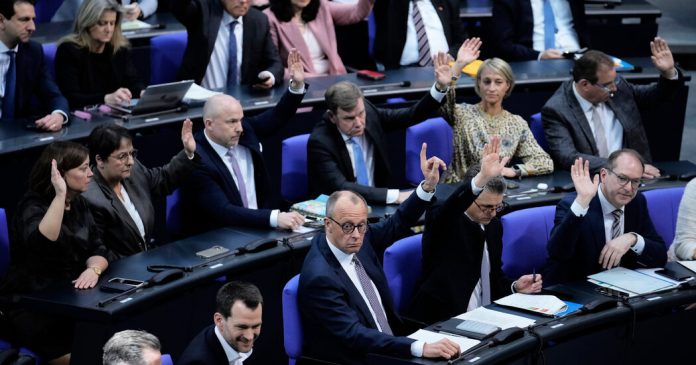
The biggest indication that shock is giving way to action came this week, as the German Parliament voted to loosen the country’s long aversion to debt so that it could begin rebuilding a military and a domestic infrastructure that had fallen into neglect.

It was a groundbreaking step, given taboos about German militarism. Still, it is one that Germans and other Europeans know they must take to adapt to new hostility coming from both Russia and the United States.

Joschka Fischer, a former foreign minister, radical leftist in his younger days and now a Green party stalwart, said, “I always had a complicated relationship with the United States, which was far from perfect, but the U.S. was always the shining city on the hill.”

“But now,” he said, “we’ve lost not only the power that protected us, but also the guiding star in the sky.”

Europe must rearm in response, he said. German leadership is essential to do that, though many on the continent are still insistent that Europeans must, as Mr. Fischer put it, “continue with our close alliance with the U.S., while becoming as strong as possible to deter Russia.”

He, like many others, sees a period of vulnerability before Europe can better fend for itself.

For Norbert Röttgen, a member of Parliament for the center-right Christian Democrats, the rupture with Washington is already profound, with consequences both urgent and far-reaching. “This is the end of the European peace order,” he noted.

“We’ve come to the conclusion that we have to do European security on our own,” Mr. Röttgen said, “and it’s an emergency, because we have war in Europe.”

Europeans are in different stages of adaptation to what they fear is the loss of their American ally. “The initial shock has given way to a sense of mobilization,” said Thomas Bagger, a top official at the German Foreign Ministry.

“It was a sudden feeling of being on our own, a bit orphaned,” he said. “But now there’s a bit more of a self-confident line. There is an understanding that Europe is now what’s left of the West, and that’s especially important for Germany.”

The sense of betrayal by Washington is perhaps strongest among Germans who grew up in the first decades after World War II. “There’s no other country in Europe that is as much a product of enlightened postwar American policy as Germany,” said Mr. Bagger, born in 1965. “So the shock is deeper here.”

Germany embedded itself after the war in the European Union for domestic prosperity and in NATO for security, and Germans developed almost a religious belief in the importance of an international community of shared values — and worked to strengthen it.

Confronting an American administration that says there is no international community but only nation states competing for prosperity and power “is an existential challenge for Germany,” Mr. Bagger said.

At the same time, he agreed with Mr. Fischer that Germany should not break with Washington or do anything to speed the rupture. “It will take time to replace the U.S. in defense and development aid,” Mr. Bagger said. “We’ll still work for the best but no longer base our future on the assumption that things will go on as before.”

The Trump shock can be seen as salutary, too, shaking Germany out of its long complacency, argued Wolfgang Ischinger, a former German ambassador to both the United States and Britain.

If NATO has become larger and stronger in response to President Vladimir V. Putin of Russia and his invasion of Ukraine, then the antagonism of Mr. Trump, Mr. Vance and Mr. Musk to the European Union will only strengthen the continent’s cohesion, he said.

“If there was ever a chance for Europe to get her act together on security, it’s now,” Mr. Ischinger said.

As for Germany, there is the feeling that the trusted and generous Uncle Sam “is now suffering from dementia and doesn’t recognize us or our huge mutual interest,” Mr. Ischinger said. “I always thought we have enough homegrown anti-Americanism in this country without adding to it.”

The Trump antagonism is “serving the interests of those who would love to see more anti-Americanism here, including our Russian friends,” he said.

The willingness of an incoming German government to spend huge sums to modernize Germany’s military is a direct and appropriate response to Washington, Mr. Ischinger said. “For the first time in many months, people can say we did something.”

There is a quieter worry about the European balance of power. The U.S. engagement in Europe was an important balm to anxieties about the power of a reunited Germany, and those anxieties may return, said Jan Techau, a German former defense official and an analyst at the Eurasia Group.

“The question of who was the big boy in Europe was answered by the U.S.,” he said. “But what happens when the U.S. retreats and the question of the European hegemon raises up again? It will make European politics much more complicated.”

“There’s no real way to replace the U.S., despite all the European talk,” he said.

Mr. Techau, too, worries about “an open window of vulnerability” in any transition away from integral U.S. involvement in European security.

“If we get a dirty deal on Ukraine and an escalation of the trade war and Putin probing or escalating hybrid warfare in Germany and Trump decides to withdraw some American troops,” Mr. Techau said, “then it will really start to dawn on people that we are alone out there, and alone in Europe as a nonnuclear power.”

Of course, for some Germans a break with Washington would provide a sense of liberation, too. There were always conservatives who felt, like Mr. Vance, that America was too disruptive as a beacon of modernism; on the left, there was a desire to get out from under the capitalist behemoth.

In last month’s federal elections, more than 34 percent of Germans voted for parties with strong anti-American sentiments. And in a poll this month, only 16 percent of Germans said that they trusted the United States as an ally, compared to 85 percent for France and 78 percent for Britain. Some 10 percent said they trusted Russia.

Germans like to debate and delay decisions, but then they act with thoroughness, said J.D. Bindenagel, a former American ambassador to Germany who teaches at the University of Bonn.

“Germans feel abandoned and betrayed, and they know they’re weak in terms of defense and can’t walk away immediately,” he said. “But when you break trust it’s hard to reestablish. They’re not going back.”


‘So Eager to Get Back’: Travelers Pour Into a Reopened Heathrow

0

Throngs of passengers anxious to get on their way surged into Heathrow Airport in London on Saturday, a day after a power blackout closed the airport and forced thousands to delay their trips.

As information boards flickered back to life, an army of extra airport staff members, dressed in purple, sprang into action to help people as they walked through the terminal doors.

Ganesh Suresh, a 25-year-old student who was trying to get home to Bangalore, India, was among those who secured a coveted seat on a Saturday flight. After his Air India flight was canceled, his parents booked new tickets on Virgin Atlantic, while he spent the night at a friend’s place in Birmingham, England.

“I was so eager to get back,” Mr. Suresh said. He sheepishly admitted to yelling at his parents in frustration during the height of the shutdown chaos. “I might apologize to them when I get back.”

Travelers, diverted or rebooked, arrived early, with trains and other transport routes to the airport reopened. A day earlier, the airport’s roads were empty except for police cars.

A Heathrow representative said on Saturday that the airport was “open and fully operational,” adding that the extra flights on the day’s schedule could accommodate 10,000 extra passengers. At the airport, information boards showed that most flights would leave on time, but the snaking lines at ticketing counters signaled that many travelers were in for more frustrating delays.

More than a thousand flights were diverted on Friday, wreaking havoc on more than a quarter of a million people’s travel plans, Cirium, an aviation data company, estimated.

Some travelers chose not to wait for a flight out of Heathrow. Denyse Kumbuka had lingered in the dimmed Terminal 2 for as long as she could on Friday, spending hours on a bench trying to find her way back home to Dallas.

Then her husband found a seat for her on a flight via Austria. She navigated the London Underground rail system to St. Pancras International train station and got a train to Paris. After spending the night on another bench at Charles de Gaulle Airport, she took an early flight to Vienna, then connected to Dallas on Saturday morning.

“I feel like the mom in ‘Home Alone,’” she said in a text message, referencing the exhausting journey depicted in the 1990 film.

A Heathrow representative said significant delays were expected in the coming days as airlines tried to return their planes to their usual schedules.

For Stephen Delong, 74, and Lesley Scott, 73, the long line at the ticketing office turned out to be the smoothest part of their redirected travel.

“You have to come here; you have to talk to someone,” Mr. Delong said. “The online service just doesn’t work.”

The couple had just learned that in place of their original direct flight from London to Halifax, Air Canada would be rerouting them via Toronto, adding more than 15 hours to their travel time thanks to a long layover. And they would have to spend another night in London because flights on Saturday were all booked. The shutdown had already caused them to miss their grandson’s eighth birthday on Friday.

“You can’t get angry about it,” Mr. Delong said. “It would feel different if somebody blew up the generator.”

The police were still investigating what had caused the fire at the substation in western London that cut power to Heathrow.

John Yoon contributed reporting.

A Montana Senator Seeks to Be Trump’s Voice in Beijing

0

Since President Trump began his second term in January, no high-level officials from the United States have met with their counterparts in China, even as the world’s two largest economies have taken turns imposing steep tariffs on each other.

In the absence of official meetings, Senator Steve Daines of Montana has cast himself as a go-between. Mr. Daines met with Vice Premier He Lifeng, who oversees many economic issues for China, on Saturday and was set to meet Premier Li Qiang, the country’s second-highest official, on Sunday.

In an interview with The New York Times on Saturday after the meeting with Mr. He, Mr. Daines, a Republican member of the Senate Foreign Relations Committee, said he urged China to take effective action to halt the export of chemical precursors for fentanyl.

“I met with President Trump a few days before I came over, and he was pleased that I was coming to communicate his ‘America First’ message and, importantly, to make sure that Chinese leaders knew the seriousness of the fentanyl issue, and the role that China can play in stopping the shipment of precursors to the Mexican cartels,” Mr. Daines said.

Chinese officials have said that the fentanyl crisis is rooted in an American failure to curb demand for the drug, and that Beijing has taken effective measures to limit shipments of fentanyl and its chemical precursors. China’s cabinet issued a report earlier this month on its fentanyl measures, and Mr. Daines said this was being studied by American officials.

Mr. Daines said he was trying to lay the groundwork for a meeting between President Trump and Xi Jinping, China’s top leader. “This visit is the first step to arrange and set up the next step, which will be a very important meeting between President Xi and President Trump — when that occurs, I don’t know, where it occurs, I don’t know.”

The White House has not named Mr. Daines as acting on its behalf. But Mr. Daines is one of Mr. Trump’s top allies in Congress. He was the first member of the Republican leadership in the Senate to endorse Mr. Trump in 2023 for a second term at a time when many Republican senators were leery of seeing Mr. Trump return to the White House.

“Given Senator Daines’s relationship to Donald Trump, China certainly wants to learn from him about Trump’s China policy intentions — whether he still wants to make a deal with China, and if so, what the deal would look like,” said Wu Xinbo, dean of the Institute of International Studies at Fudan University in Shanghai.

China also wants Senator Daines to “bring a message to Donald Trump that China wants to sit down to talk with the U.S. side and to avoid further escalation of the tensions,” Mr. Wu said.

Mr. Trump has imposed 20 percent tariffs on goods from China and threatened more. China wants to head off further tariffs.

“There’s a window of opportunity before early April for China and the U.S. to engage each other, and Senator Daines’s visit could play a pivotal role,” Mr. Wu said.

Mr. Daines said that he was not focusing on tariffs with China, because the Office of the United States Trade Representative has not yet finished a policy review.

Mr. Trump has said he plans to meet with Mr. Xi, without specifying details. China has said nothing publicly about a meeting. But the contacts between working-level administration officials that typically precede such a meeting have been absent so far during Mr. Trump’s second term.

Mr. Xi makes all important decisions in China, particularly on foreign policy. That makes summits with American presidents particularly important in setting the trajectory of bilateral relations. The two leaders met in 2017 when Mr. Xi went to Mar-a-Lago, in Florida, and Mr. Trump went to China.

The lack of engagement with Washington until now has led some in Beijing to begin to doubt whether Mr. Trump is sincere in his expressed desire to meet Mr. Xi, said Yun Sun, the director of the China program at the Stimson Center in Washington.

“They see him changing his position rapidly on a number of issues,” Ms. Sun said. “That translates into an almost fatalism for the Chinese, that they should aim to prepare for the worst case scenario, that’s their conclusion.”

Mr. Daines said he also expressed concern about China’s barriers to imports, beyond just tariffs, during his visit to Beijing. He declined to provide any specifics. But Montana politicians have long argued that China’s intermittent halts on imports of beef from the state are unfair trade barriers, and not the result of any actual concerns about mad cow disease, as Beijing contends.

Mr. Daines lived for six years in southern China in the 1990s as a project manager for Procter & Gamble, the American consumer products giant.

This weekend’s trip is Mr. Daines’s sixth to China since his election to the Senate in 2014, making him one of the few members of Congress who have continued traveling to the country even as relations have deteriorated.

Rockets Fired From Lebanon Prompt Israeli Airstrikes

0

Israel launched airstrikes on Saturday at sites in southern Lebanon that it said were linked to the Lebanese militant group Hezbollah, hours after rockets were fired from Lebanon into Israel for the first time in months.

The attacks were the latest example of how the renewed Israeli offensive in Gaza is rippling across the Middle East.

The Israeli military said that it had shot down three rockets from Lebanon, and there were no reports of casualties. The volley was the first of its kind since last November, when Israel and Hezbollah agreed to a cease-fire brokered by the United States and France.

Neither Hezbollah nor any armed group in Lebanon immediately claimed responsibility for the rocket fire, which followed Israel’s resumed offensive against the Hezbollah ally Hamas in Gaza this week. Those Israeli attacks have already killed more than 600 Palestinians, according to Gaza health officials.

After the Hamas-led raids on Oct. 7, 2023, that ignited the Gaza war, the militant group’s allies across the Middle East began attacking Israel in solidarity.

On Saturday, the Lebanese Army said it had located and dismantled rocket launchers in southern Lebanon, a Hezbollah stronghold. The Lebanese military is distinct from Hezbollah, an Iran-backed militia which has long wielded enormous influence in the country.

“Military units are continuing to take the necessary measures to control the situation in the south,” the Lebanese military said.

The November truce charges the Lebanese government with preventing Hezbollah and other armed groups from operating against Israel. Israel has continued to bombard Lebanon despite the truce, arguing that it is cracking down on militants violating the cease-fire.

And while the agreement initially stipulated a full Israeli withdrawal by late January, Israeli forces still control five points inside Lebanese territory.

The resumed strikes in Gaza this week have brought attacks on Israel from other Hamas allies.

The Houthi militia in Yemen — which, like Hamas and Hezbollah, is backed by Iran — has resumed firing ballistic missiles at Israel, sending hundreds of thousands of Israelis rushing for fortified bomb shelters. Israel’s aerial defense systems have intercepted the missiles.

Israeli leaders have said that they launched the renewed attack in Gaza to pressure Hamas to free more of the dozens of remaining Israeli and foreign hostages in the enclave. Hamas has argued that Israel is tearing up the cease-fire deal.

Euan Ward and Rawan Sheikh Ahmad contributed reporting.

Week in politics: Is the U-S in a constitutional crisis?

0

Analysis of the week in politics – which was dominated by the Trump administration’s deportations of Venezuelans and the ensuing legal showdown with a federal judge.

The Carney Doctrine on Trump: Demand Respect, Be Patient, Diversify

0

It’s been another long week in Canadian politics — and it looks as if it’s going to end with a snap-election call.

Prime Minister Mark Carney is expected to call an election on Sunday, and April 28 is the likeliest date, our sources tell us.

I spent 48 hours traveling with Mr. Carney to Paris, London and Iqaluit, from Sunday to Tuesday, as part of a small group of journalists who accompanied him on his first overseas trip as prime minister (news organizations cover travel costs).

Today I’ll share some observations on how Mr. Carney’s approach to President Trump’s threats is taking clearer shape and is, subtly but discernibly, different from that of his predecessor. Dealing with Mr. Trump will be one of the most important issues — if not the most important — on the ballot, and Mr. Carney’s emerging strategy tells us a lot about what he would do if elected.

Ian Austen will be back next week with our Canada Letter as we dive into the election period in earnest.

[Read: ‘Most European Non-European Country’: Canada Turns to Allies as Trump Threatens]

Mr. Carney has placed respect at the heart of how he talks about President Trump — suggesting he will not engage if Mr. Trump carries on calling him “governor” like he did with Justin Trudeau.

Upon accepting his party’s leadership on March 9, Mr. Carney said he wouldn’t remove Canada’s retaliatory tariffs unless the United States showed his country respect.

On his flash Europe tour this week, he honed that message.

In London, at a news conference at the Canada High Commission, he told us of the U.S. leadership, “They’re disrespectful, they’re not helpful and they need to stop before — they will have to stop before — we sit down and have a conversation about our broader partnership.”

It also seems Mr. Carney is in no hurry to have these conversations with Mr. Trump, and believes that Canada’s approach should be slow, careful and measured, rather than a rush into pleading for easing the tariffs or seeking a deal under duress.

It’s telling that — at the time of this writing on Friday evening — he’s not yet held a call with Mr. Trump since being sworn in as prime minister last week.

In our Iqaluit stop, I asked Mr. Carney if he was changing his strategy toward Mr. Trump. Here’s what he said: “I’m less interested in reacting to every initiative put on the table. We want to have that broader conversation. It won’t happen overnight. There’s no magic one meeting that is going to unlock things.”

He added, “The big issues around trade are going to need to be taken more comprehensively, and they will be taken, from a Canadian perspective, from a position of strength.”

Mr. Carney also mentioned, for the first time, that the dollar-for-dollar retaliatory approach to the U.S. tariffs “has limits,” indicating that while he would stick with the measures put in place by Mr. Trudeau, he may be less willing to escalate.

Mr. Carney’s whirlwind tour was an effort to highlight that he’s comfortable on the global stage, and is known and liked by foreign leaders. But he also took steps this week that suggest he puts teaming up with non-U.S. powers at the heart of his U.S. policy.

First came the announcement, made in Iqaluit on Tuesday, that he had finalized the selection of Australia as a partner to develop an over-the-surface radar for the Arctic. The ABC, the Australian national broadcaster, reported that the United States was also in talks for a similar deal with Canberra, but that they stalled under Mr. Trump, allowing Mr. Carney to complete Canada’s agreement first.

And on Friday we reported exclusively that Canada was a top non-European Union partner for the bloc’s new military industrial initiative that’s taking shape, one that would allow Canada to gain preferential access to European defense contracts. The motive behind this effort is U.S. allies’ desire to pull away from their reliance on American military equipment.

Mr. Carney discussed this in detail with the European Commission president, Ursula von der Leyen, on the phone on Sunday, and with President Emmanuel Macron of France in person on Monday.

[Read: Menaced by Trump, Canada Prepares to Join E.U. Military Industry Buildup]

[Read: Canada Bolsters Arctic Defenses as Trump Sets His Sights North]

Mr. Carney has also indicated he wants to stop talk of Mr. Trump’s “51st state” threats, although he takes them seriously. In London he called the possibility of a U.S. annexation of Canada “unthinkable.”

Instead, he wants to drive home the idea that he believes Canada should be confident in this moment rather than seek external validation.

Some key quotes on that theme include:

“We don’t need another country to validate our sovereign sovereignty. We are sovereign. We don’t need praise from another country. We are proud.” (London, March 17).

“We can stand up for ourselves. Canada is strong.” (London, March 17).

“We can give ourselves more than anything that President Trump or any other trade partner can take away.” (Iqaluit, March 18).


Matina Stevis-Gridneff is the Canada bureau chief for The Times, leading coverage of the country. More about Matina Stevis-Gridneff


How are we doing?
We’re eager to have your thoughts about this newsletter and events in Canada in general. Please send them to [email protected].

Like this email?
Forward it to your friends, and let them know they can sign up here.

Bernie Sanders takes aim at Trump and draws record crowds : NPR

0

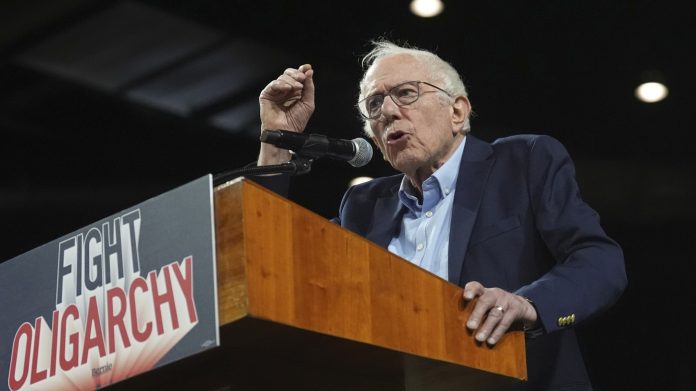
Sen. Bernie Sanders, I-Vt., speaks during a “Fighting Oligarchy” tour event at Arizona State University, Thursday in Tempe, Ariz.

Ross D. Franklin/AP


hide caption

toggle caption

Ross D. Franklin/AP

TEMPE, Ariz. – Sen. Bernie Sanders has emerged as a leading voice for voters opposed to President Trump’s rapid push to dismantle the federal government — and frustrated with the Democratic Party’s response.

Sanders and his fiery form of economic populism attacking the growing influence of billionaires and corporations in politics are not new, but interest in both message and messenger has been renewed by Trump’s second term and the outsized role Elon Musk has played in cutting federal spending and pushing agencies to fire workers.

“Well, when I talked about oligarchy over the years, I think for some people it was an abstraction,” Sanders said in an interview with NPR. Now though, “people understand you have to be blind not to see that what we have today is a government of the billionaires, by the billionaires and for the billionaires.”

But the independent senator from Vermont said, at the same time, the Democratic Party has also turned its back on the American working class and suggested the party capitalize on this moment by championing policies that address things like income inequality, health care and climate change.

“If they do that, I think working people will come back into the fold,” he predicted. “If not, I suspect the party will continue to decline.”

Thursday, Sanders kicked off a western swing of his “Fighting Oligarchy” tour with rallies in Las Vegas and Tempe, Ariz. joined by New York Democratic Rep. Alexandria Ocasio-Cortez. The pair spoke to an overflow crowd of thousands inside and outside the Mullett Arena at Arizona State University about the threat they say Trump and his allies pose to American voters and the government.

“We will not allow you to move this country into an oligarchy,” Sanders pledged, speaking directly to Trump. “We’re not going to allow you and your friend Mr. Musk and the other billionaires to wreak havoc on the working families of this country. No, you’re not going to destroy Social Security. You’re not going to destroy Medicaid. You’re not going to destroy the Veterans administration.”

Friday, Sanders’ communications director said more than 30,000 people showed up in Denver, Colo. to hear him speak, a larger crowd than any event during his two presidential runs.

Sen. Bernie Sanders (I-Vt.) speaks during a rally on Friday at Civic Center Park in Denver. Sanders communications director said the crowd numbered 30,000, a new record for a Sanders event.

Sen. Bernie Sanders (I-Vt.) speaks during a rally on Friday at Civic Center Park in Denver. Sanders communications director said the crowd numbered 30,000, a new record for a Sanders event.

Chet Strange/Getty Images


hide caption

toggle caption

Chet Strange/Getty Images

In the first months of Trump’s return to the White House, his Department of Government Efficiency effort led by Musk has seen chaos and confusion from widespread terminations of government contracts, federal workers and attempted wholesale elimination of agencies and departments.

While Democrats do not hold Congress or the White House, Ocasio-Cortez said voters still have power to push back against Trump administration policies that she says masks the true divide in the country between “those at the very, very top and their endless greed costing the lives of everyone else.”

“Ironically, the most divisive forces in this country are actually starting to bring more of us together,” she said. “And that’s important, because the same billionaires who are taking a wrecking ball to our country derive their power from dividing working people apart.”

The Democratic Party is unpopular, too

While a recent NPR/PBS News/Marist poll finds a majority of voters feel down about the state of the country and that Trump’s agenda is being rushed without considering its impact, that displeasure also extends to the Democratic Party.

An NBC news survey from last week finds the party’s popularity at an all-time low, driven by dissatisfied Democrats who want their elected officials to actively counter Trump’s agenda instead of trying to find compromise.

That sentiment was on display at the Sanders rally in Arizona, where volunteer Clarissa Vela said Democrats need to “stop biting their tongues and get loud” to tell voters what they plan to do about unpopular changes pushed by Trump.

“They need to organize themselves, because that’s all that the only way this is going to work,” she said. “They need to show their faces everywhere they go, and they’re going to be so exhausted. But at the end of the day, if we want to take back our democracy, that’s what we’ve got to do. No war was ever won by sitting on your couch. You know what I mean?”

After decisive losses in November, Democrats elected new party leadership to helm the national infrastructure but have no singular figure driving the response to the early days of Trump’s return to the White House, let alone a unified message.

Democratic voters — and some lawmakers — are unhappy with Senate Minority Leader Chuck Schumer’s decision to help Republicans avert a government shutdown after House Democrats argued against supporting the spending plan.

What comes next?

Rep. Alexandria Ocasio-Cortez, D-N.Y., right, takes a photo with supporters after speaking during a "Fighting Oligarchy" tour event at Arizona State University, Thursday in Tempe, Ariz. (AP Photo/Ross D. Franklin)

Rep. Alexandria Ocasio-Cortez, D-N.Y., right, takes a photo with supporters after speaking during a “Fighting Oligarchy” tour event at Arizona State University, Thursday in Tempe, Ariz.

Ross D. Franklin/AP


hide caption

toggle caption

Ross D. Franklin/AP

As larger and larger crowds attend Sanders’ events and more people call for a shakeup within the Democratic Party’s strategy, a recurring question has popped up: why don’t more Democrats sound like Bernie Sanders?

For one: Sanders isn’t a Democrat, though he caucuses with them. Sanders has been in Congress for three decades and is arguably the best-known progressive in Washington. Vermont’s politics and demographics are also more friendly to Sanders’ views than other battleground districts in the Trump era.

While other elected Democrats might not be sounding the alarm using the same rhetoric as Sanders and Ocasio-Cortez, the rising backlash to Musk and DOGE in particular has seen some in the party begin to adopt similar framing to go after Republicans.

Earlier this week, Minnesota Gov. Tim Walz spoke at an event in Eau Claire, Wisconsin. one of many places where Democrats have held town halls in GOP-represented districts where constituents have expressed anger at Musk-inspired cuts to the federal government.

Walz took aim at Trump and Musk and implored Wisconsin voters to show up for a key state Supreme Court election April 1. He also mentioned ways the party needs to step up and regain voter trust on key issues.

“We’re going to have to have a conversation that Democrats, quite honestly, have skirted around, that America’s health care system is still incredibly broken in a way that doesn’t serve people,” Walz said. “It’s incredibly frustrating.”

For his part, Sanders is not surprised his longstanding message seems to be resonating with people across the ideological spectrum:

“Because if you’re a working class Republican, you don’t think it makes a lot of sense to give a trillion dollars in tax breaks to the richest people in this country and then cut the [Department of Veterans Affairs], go after Social Security and make $800 billion cuts in Medicaid,” he said. “Republican, independent, Democrat… very few people think that makes any sense at all.”

Spring Awakening – The New York Times

0

One afternoon last week, I convinced a friend to accompany me to a restaurant in Brooklyn to learn how to play Hong Kong-style mahjong. I’d always been intrigued by mahjong’s colorful bakelite tiles, the satisfying clacking sound they make as they’re shuffled. My mother plays the American version twice a week with the same groups of friends, a clubby ritual that makes me a little jealous: Why don’t I have a regular game of something going?

We were a group of 15 or so students, all new to the game. To begin, we played a dummy round with all the tiles turned over so that everyone could see their values and the teacher could walk us through each step of gameplay: Here’s how you set up the table, building a wall of tiles. Roll the dice to see which player gets to break the wall. These are the suit tiles, these are the honor tiles, the dragons, the winds.

Mahjong’s not a cinch to learn. Our teacher was excellent, repeating each step of the rules several times, asking us to repeat them back to him. There were whiffs of card games I knew, but I found the intricacies confusing: Wait, you need three identical tiles to form a pung? How did that guy just win the game when I was still working out how the flower tiles operate?

And then: Why am I learning to play this game when I already know many other games and I do not ever play them? This was the thought that snagged me, that made me want to politely claim an emergency and walk out mid-lesson: Why am I doing this? Ostensibly, I’m a curious person, one who’s drawn to new experiences, who wants to expand her horizons, to multiply opportunities for fun. Mahjong offers all of these things! But learning a new game is something I haven’t done in ages. It’s something kids (and their parents) do readily, but eventually, most of us stop. The machinery for learning new things becomes creaky. It’s not easy or comfortable to get that old mainframe up and running again. So many things in life are not easy or comfortable already! Why opt in to another one? And do I even have room in my brain, on my calendar, for another thing that I do?

The friend I’d brought with me to mahjong surprised me a few days later, when I had assumed we’d both decided that our lesson was diverting enough, but neither of us had the energy or appetite or brain plasticity to ever play again. “I got us a mahjong set,” she announced. “Now we just need two other people and we can play.” I thought back to our lesson, how I’d wanted to leave because I wasn’t mastering mahjong fast enough. Being bad at something feels bad. Being new is often unpleasant and embarrassing. Of course we default to doing things we’re good at. We like to be confident and comfortable and look cool.

But here was an invitation to community. An invitation to be bad at something with other people, with the goal of getting to the other side: a new hobby, a new ritual, maybe, eventually, that clubbiness I’d envied in my mom’s games.

I wrote a couple of weeks ago about how I think of this time of year as one of unclenching, of letting go of that coiled, withholding winter self and opening up to spring, which officially arrived this past Thursday in the Northern Hemisphere. The unclenching, I am now thinking, can sometimes be challenging. Deliberately moving from a familiar place to an unfamiliar one isn’t without its discomforts. I was reading recently about how, when a chick is ready to hatch, it develops an egg tooth, a sharp little structure on its beak that it uses to peck its way out of the egg. How incredible! How do we grow our own egg teeth, generate our own tools to crack our own shells, escape our too-tight enclosures and emerge into the light?

Trump Administration

Other Big Stories

Film

Theater

More Culture

  • On fashion runways, ultra-thin models are back.

  • Assassin’s Creed Shadows follows an African-born samurai and a young shinobi in Japan. The game’s vibrant world, however, is more compelling than its story.

  • Jensen McRae, the buzzy folk-pop songwriter, is one of 11 artists to watch, as picked by our critics. See the list.

📺 “Mid-Century Modern” (Friday) What if “The Golden Girls” were … boys? That’s the shtick behind this something-old, something-new situation comedy from David Kohan and Max Mutchnick, the creators of “Will and Grace.” Filmed before a live audience for Hulu, the show focuses its cameras on three men (played by Nathan Lane, Matt Bomer and Nathan Lee Graham) who take early retirement together in Palm Springs. Droll, zingy and sometimes melancholic (there are at least two funerals this season), it’s both a throwback to sitcoms past and a contemporary look at gay men in midlife.

With spring officially springing, vegetable-filled pastas are the move. Krysten Chambrot, an assistant editor on the Food desk, has assembled 24 easy spring pastas for you here; this creamy asparagus pasta gives the season’s favorite stalk an umami boost with roasted seaweed and kombu. A little sesame oil glosses the rigatoni at the end for a dish that’s full of bite in no time at all.

By design: An actor wanted a maximalist home. He got something else entirely.

Changes: Yes, adults can develop seasonal allergies. Here’s why.

Generation wars: Tight-on-tight or tight-on-baggy? Millennials and Gen Z are fighting about gym clothes.

Vroom! In Italy’s “Motor Valley,” car enthusiasts can admire — and even drive — Ferraris and Lamborghinis.

Scam or not? People are using vibration plates to lose weight. Here’s what the data says.

It takes some trial and error to find the right pair of running shoes. Wirecutter’s experts recommend starting by considering what you want most from your shoes. If it’s distance, pay attention to cushioning. If it’s speed, focus on the weight and responsiveness. As for fit, it’s a good idea to be flexible about sizing: Every brand’s sizes are a little different. Use your normal running-shoe size as a starting point, but don’t be shy about sizing up (or, more rarely, down). To help inspire your search, we have recommendations for some of our favorite women’s and men’s running shoes — including a pair stylish enough to wear every day. — Seth Berkman

N.C.A.A. tournament: It’s the best weekend of the year for college basketball fans, with games on from noon till night in both the women’s and men’s tournaments. Here are three to watch today from the men’s bracket:

  • St. John’s vs. Arkansas: Rick Pitino and John Calipari — two championship-winning coaches — both took on program-rebuilding jobs with these teams in the last two years. Apparently, the rebuilds didn’t take long.

  • Gonzaga vs. Houston: Most experts thought Gonzaga was underrated as a No. 8 seed, and a blowout win in the first round only made that seem more true. Now, though, the Zags must face the relentless defense that earned Houston a No. 1 Seed.

  • Drake vs. Texas Tech: No. 11 seed Drake plays at the nation’s slowest tempo and generates a ton of turnovers. But if they hope to continue their Cinderella run, their offense will probably have to play better than it did in the first round.

Newsmax CEO Ruddy at center of court hearing on election-fraud claims : NPR

0

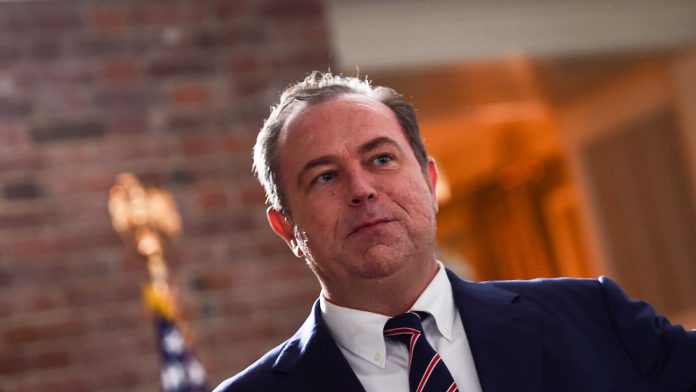
Newsmax Media CEO Christopher Ruddy, shown here in 2018, was the focus of a court hearing in a lawsuit brought by Dominion Voting Systems against the network. Dominion is suing Newsmax for defamation over false claims of election fraud broadcast on the network following the 2020 presidential election.

BRENDAN SMIALOWSKI/AFP via Getty Images/AFP


hide caption

toggle caption

BRENDAN SMIALOWSKI/AFP via Getty Images/AFP

WILMINGTON, Del. — Following the 2020 election, allies of President Trump found a warm reception on conservative media outlets for now-debunked claims about election fraud. More than four years later, lawyers are still sparring over the role cable news executives like Newsmax’s Christopher Ruddy played in broadcasting those claims, just as the company prepares to go public.

Ruddy’s name was mentioned nearly as much as Newsmax itself during a day-long hearing Friday in a defamation case brought by Dominion Voting Systems against the conservative network. Dominion, a voting technology company, reached a $787.5 million settlement with Fox News in 2023 over similarly false claims on its airwaves.

This case hinges on the same basic allegations: That Newsmax hosts not only welcomed guests on their shows who peddled false claims of voter fraud, but that they supported those claims knowing they were false and did so to increase ratings. Conspiracy theory-laden claims about voter fraud and corruption at Dominion ushered it into a “slow death,” Dominion attorney Eve Levin, because clients no longer wanted to work with it. Newsmax argues, much like Fox did, that Dominion’s claims are “calling for censorship” and that its hosts were reporting on one of the biggest news stories of the moment.

Sitting in the front row of the sparsely attended hearing, Ruddy watched intently as Dominion’s lawyers displayed images of his emails and texts, and statements he and other Newsmax employees gave under oath. They outlined Ruddy’s hands-on role in the cable network’s coverage — and doubts that he and others had about their on-air guests.

“Sidney [Powell] needs to check into a hospital,” Ruddy said about a member of Trump’s legal team who became pivotal to the spread of conspiracy theories about Dominion and voter fraud following Trump’s 2020 election loss. (Powell has since pleaded guilty to charges of election interference in Georgia.) Dominion lawyers outlined other instances of Ruddy repeatedly pushing for guests like Powell to come on the network — and when Newsmax shows couldn’t book her, they aired clips originally broadcast by Fox.

Dominion lawyers argued that internally, Newsmax executives and staff knew guests like Powell, commentator Dick Morris and MyPillow CEO Mike Lindell were “anything but reliable.”

Yet Newsmax “implored them to come on,” Dominion lawyer Davida Brooks said in court.

She also showed on screen an excerpt of a quote sent from top Newsmax executive Gary Kanofsky, senior vice president of news and operations, to Executive Vice President of Programming and Content Elliot Jacobson.

“Simply giving them a microphone to spew more anti-election rhetoric and advance their claims without being properly equipped to question the legitimacy or factual accuracy of their assertions may be fun, but it’s terrible journalism,” Kanofsky said.

“How long are we going to have to play along with election fraud?” Newsmax host Bob Sellers asked showrunner Jerry Burke in another excerpt shown in court.

Those were just some of the yet-unheard pieces of evidence brought to light in the case suggesting intimate involvement of Newsmax’s top executives and talent in programming decisions. Many of the legal documents filed in the case have been heavily redacted or filed under seal.

Outside the courtroom, Ruddy told NPR that Newsmax’s coverage has always been balanced, and that there were over “5,000 times” more incidents of “balanced” coverage than the dozen-and-a-half segments at the heart of this lawsuit.

“It’s very selective what they’ve been showing in court,” he said. “My view was that even though I had personal doubts about where it was all going, I didn’t have the power to subpoena, but I felt like, let’s get both sides.”

Newsmax’s attorneys on Friday argued that show hosts were solely responsible for their own statements on air and, in one case, a social media post. They say executives, including Ruddy, weren’t responsible for writing, editing or delivering any of the content that aired on any of those segments.

They argued that anchors like Newsmax star Greg Kelly are opinion hosts with opinion shows. As such, they are free to give their opinions under the First Amendment. Newsmax licenses another show that entertained election conspiracies, the Howie Carr Show; its employees are not involved in their production, the lawyers added.

Newsmax attorneys also made a technical argument that Dominion has sued the wrong company. Newsmax Broadcasting LLC, attorneys said, is the company that published all of the segments on the cable news channel, not its Newsmax Media Inc. parent company.

The court held the hearing on Friday to determine whether the case will go before a jury, or whether the judge will rule on some of the key arguments ahead of trial. A jury trial is scheduled to begin next month.

Newsmax recently settled another defamation suit brought by voting tech company Smartmatic USA before that case made it to trial. The cable channel agreed to pay out $40 million to settle that case. In recent filings with the U.S. Securities and Exchange Commission, Newsmax said it will vigorously defend its case against Dominion, but that a loss in the case could hit the company’s finances hard. Dominion’s claims are estimated to be upwards of $1.6 billion against the company.

Historically, it has been difficult for plaintiffs suing news outlets for defamation to win. They must prove that the outlet spread defamatory statements with “actual malice” — that is, that it either knew what it was broadcasting was false and harmful, or had grounds to know it and acted with “willful disregard” of the truth.

Judge Eric M. Davis, who also presided over the other two voting systems cases in Delaware, is expected to issue a written ruling in the coming days or weeks. In Dominion’s case against Fox, Davis denied both sides’ requests for summary judgment — with one exception in Dominion’s favor. The part that Davis did grant, however, dealt a huge blow to Fox, as his ruling outlined that the conspiracy theories linked to the 2020 election, were in fact, false.

“The evidence developed in this civil proceeding demonstrates that [it] is CRYSTAL clear that none of the Statements relating to Dominion about the 2020 election are true,” Davis wrote in 2023.

Trump’s Attempts to Resolve Global Conflicts Quickly Face Diplomatic Reality

0

When it comes to confronting global conflicts, President Trump is a man in a hurry.

Even before his inauguration, the president claimed credit for what he called an “EPIC cease-fire” in Gaza. He has raced to get Ukraine and Russia to quickly embrace a pause in fighting. And with Iran, Mr. Trump wants an agreement within two months to prevent Tehran from developing a nuclear weapon.

It is the foreign policy version of the president’s “flood the zone” approach in Washington, where he and his lieutenants have used blitzkrieg-like tactics to dismantle the bureaucracy, consolidate executive power and attack his political enemies. On the world stage, too, Mr. Trump has embraced a hurry-up foreign policy approach designed to quickly resolve the disputes he inherited.

But his diplomatic impatience is now running headfirst into the complexity of war and peace, raising questions about the durability of what he has achieved so far. The cease-fire between Gaza and Israel has collapsed. Mr. Trump’s proposal for an immediate 30-day cease-fire was rejected by President Vladimir V. Putin of Russia. And an Iran nuclear agreement — not unlike the one he withdrew from during his first term in office — seems to remain far over the horizon despite his push for a speedy deal.

“Trump’s MO is to always be in a hurry, looking for the transaction, for the temporary, for the now,” said Aaron David Miller, a former Middle East negotiator and a fellow at the Carnegie Endowment for International Peace.

“American foreign policy — Ukraine, Gaza, Iran — they’re not measured in terms of administrations. It’s generational time,” Mr. Miller said. He added that rushing a solution was risky, “because he’s in such a hurry to get results, he’s sort of misdiagnosing the problem.”

The president’s allies reject that assessment. They argue that his approach is designed to create momentum to obliterate what they derisively call the “international, rules-based order” that has dominated global foreign policy for decades. In addition to Iran, Israel and Ukraine, they note that Mr. Trump has shocked the world with threats to use force to acquire control of both Greenland and the Panama Canal.

“Geopolitically, it’s all gas, no brake,” Stephen K. Bannon, the former Trump administration strategist, said in an interview. He said the president is dispatching aides — what he calls “shock troops” — to quickly confront the global conflicts in much the same way that he has deployed Elon Musk and his Department of Government Efficiency inside the federal government.

“What he’s doing geo-strategically and geo-economically, it far, far surpasses what he’s doing domestically,” Mr. Bannon said. “If you look across the board, the method to his madness is deep, it’s meaningful, and it’s going to have the biggest implication for national security.”

The president’s push for momentum has been at the heart of his approach to the two most searing global conflicts in recent times: the yearlong fighting between Hamas and Israel in Gaza; and the three-year war that began when Russia invaded Ukraine.

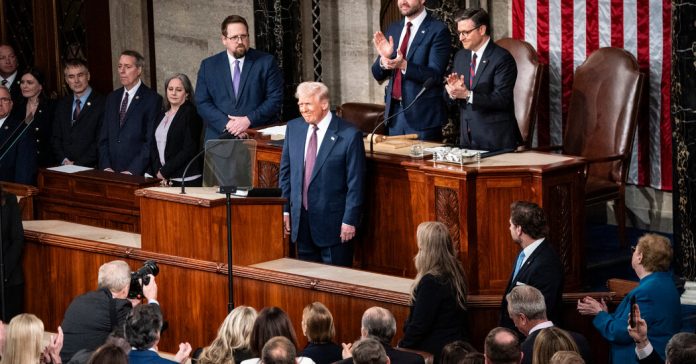
In both, Mr. Trump has repeatedly blamed former President Joseph R. Biden Jr. for failing to prevent — and then move quickly enough to resolve — the conflicts. In his speech to a joint session of Congress earlier this month, the president boasted that “a lot of things are happening in the Middle East.” Of the conflict in Ukraine, he declared his impatience: “It’s time to stop this madness. It’s time to halt the killing. It’s time to end this senseless war.”

Clifford D. May, the founder of the Foundation for Defense of Democracies, said Mr. Trump appears eager to move past global crises so he can focus his attention elsewhere.

“He’d rather do his war on woke. He’d rather do immigration,” Mr. May said. “He would like this off his plate.”

But he said Mr. Trump’s push for a resolution in Ukraine has “hit a substantial speed bump” in the form of Mr. Putin. In a telephone call on Tuesday, the Russian leader slammed the brakes on Mr. Trump’s desire for a quick cease-fire agreement between Russia and Ukraine, agreeing only to stop attacks on energy infrastructure.

Mr. May said that Mr. Putin is playing on Mr. Trump’s desire for a quick resolution by purposefully slowing down the American president’s efforts to disrupt the status quo that has existed throughout the war.

“The disruption factor probably can be useful in some cases,” Mr. May said. But when it doesn’t work, as with somebody like Putin, who is savvy, who is patient, who sees what you’re doing, who tries to play you,” he added, “then you may have to step back and say, OK, what’s plan B here?”

In Israel, Mr. Trump used his social media platform to push for a quick truce days before taking office. Until the resumption of Israeli attacks in Gaza this week, the president had hailed his efforts at peacemaking, even musing to reporters that he deserves to win the Nobel Peace Prize for his work.

“They’ll never give it to me,” he added.

Mr. Bannon rejected the idea that the collapse of the cease-fire in Gaza is evidence that the president’s desire for a quick fix in the region led to a halt in the fighting that was not sustainable or durable. He said Mr. Trump’s support for Israel — and his unequivocal condemnation of Hamas in Gaza — has given Benjamin Netanyahu, Israel’s prime minister, more freedom to conduct the war.

“He’s actually showed the world that, ‘Hey, you can’t deal with these people, they’re not trustworthy,’” Mr. Bannon said of Hamas. “And then Israel comes in and now you don’t see any firestorm like you saw at the beginning.”

Other longtime observers of American foreign policy said that while there is merit in moving quickly when it comes to global diplomacy, that can often spur actions that are not based on solid information.

Lawrence Freedman, an emeritus professor of war studies at King’s College in London, said the problem with the president’s desire for urgency is that it shortchanges the detailed and often laborious work usually required for a long-term solution to wars.

“He thinks if he blusters enough, then people will sort of fall away and that you can get on to the stuff you really want to do,” Mr. Freedman said. “But because it’s not based on a serious assessment of the situation — of the problems at hand — it doesn’t really work.”

Mr. Miller said Mr. Trump is less interested in the long-term solution than the short-term political benefit he gets from announcing a diplomatic achievement.

“You’ve got an extraordinarily impatient impulsive person,” he said, “where speed, frankly, matters more than the policy.”