Thursday, November 12, 2026
Home Blog Page 97

Four Takeaways From Keir Starmer’s Conversations With The New York Times

0

President Trump’s overture to President Vladimir V. Putin of Russia to end the war in Ukraine has rattled leaders across Europe. Few have been more transformed than Prime Minister Keir Starmer of Britain, who was elected last summer on a standard-issue promise to revive his country’s economy and public services.

Now, Mr. Starmer finds himself striding the world stage, at a fateful moment for the trans-Atlantic alliance. In a hectic few weeks, he has led Europe’s response to the peace talks, along with President Emmanuel Macron of France. He has mediated between Mr. Trump and President Volodymyr Zelensky of Ukraine. And he is lobbying Mr. Trump not to leave Europe at the mercy of an aggressive Russia.

Here are four takeaways from a series of recent conversations Mr. Starmer held with The New York Times.

The prime minister has welcomed Mr. Trump’s efforts to wind down the war and said last week’s call between Mr. Trump and Mr. Putin “nudged things on a bit.” But without robust security arrangements, he said, any peace deal would leave Ukraine vulnerable to future incursions.

“I don’t trust Putin, and therefore I take everything he says with some degree of caution,” Mr. Starmer said. “We know what happens if there aren’t security arrangements, which is, he’ll breach the deal in due course, in his own time.”

Europe, he said, must play a lead role in providing that security. Mr. Starmer has devoted much of his energy in recent weeks to cobbling together a coalition of the willing, which would play a deterrent role against Russia to preserve a peace deal.

Britain and France have both committed troops, though, so far, no other European country has done so publicly. Mr. Starmer played down the lack of announcements, saying it was still early in the process, with the peace negotiations uncertain and the military mission of a deterrent force inchoate.

“How do we take the concept into a plan?” Mr. Starmer said. “How do we make sure there’s a plan we can put in place if there is a deal? What we can’t do is wait for a deal and say, ‘Right,’ then scratch our heads.”

When it comes to ties between Britain and the United States, Mr. Starmer has adhered to a straightforward policy: no daylight.

“We are different to some of our other allies,” he said. “On a defense, security and intelligence basis, we are intertwined in a way no two other countries are. It is in our own interest to continue that.”

Mr. Starmer has labored to cultivate a relationship with Mr. Trump and so far, he said, it has paid off.

“I’ve met him a number of times now,” he said. “I’ve spoken to him on numerous cases on the phone. I think we have a really good relationship. I do believe that he absolutely wants peace in Ukraine. That’s what he is driving at. I do believe he is committed to NATO.”

Mr. Starmer has a not-so-secret weapon as he navigates this tricky period: the royal family. He handed a letter from King Charles III last month to an obviously delighted Mr. Trump, inviting him to make a state visit to Britain.

“President Trump has spoken to me about his affection for the royal family and what it meant for him to meet the late queen,” Mr. Starmer recalled. “That is important because that is something I think other countries look to.”

Charles has had a crowded diplomatic dance card in recent weeks, meeting with Mr. Zelensky after his clash with Mr. Trump. He played host to two successive Canadian prime ministers, Justin Trudeau and Mark Carney, as both were wrestling with Mr. Trump’s tariffs against Canada and rebutting his calls for it to become the 51st American state.

“It’s not for me to speak for the royal family,” said the always-careful Mr. Starmer. But he noted that “the Canadian prime minister is his prime minister,” referring to the fact that the king is also Canada’s head of state.

“I still remember how I felt when the Berlin Wall came down,” Mr. Starmer said, in discussing European attitudes toward defense. “It was the beginning of a new era where values of democracy and freedom would prevail. I didn’t think that in my lifetime, I’d see Russian occupation of countries again.”

“Because the peace dividend was going on for so long” in Europe, he said, the importance of paying for defense slipped behind other priorities.

Now, he said, “there is more immediacy and urgency” for Europe to do more. “For a number of years, European countries have been saying we need to step up on defense and security, but we haven’t done it,” Mr. Starmer said. “I feel very strongly that the moment for talking is over and the moment for action is now.”

Catching up on the Trump administration’s recent immigration developments : NPR

0


Catching up on the Trump administration’s recent immigration developments

  • Download

Trump says Boeing will build the new generation of fighter jets, the F-47 : NPR

0

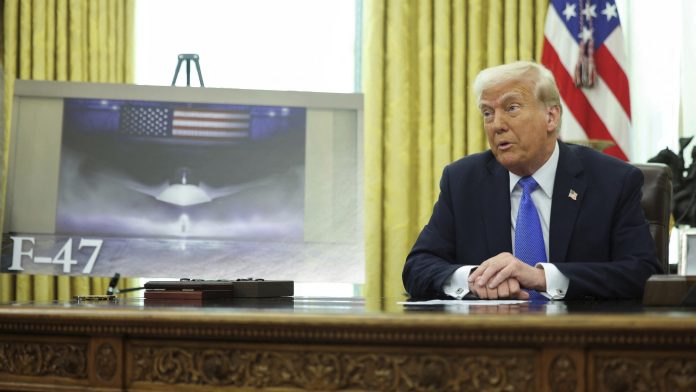
President Trump speaks as an image of an F-47 fighter jet is displayed in the Oval Office in Washington on Friday.

Pool/AP


hide caption

toggle caption

Pool/AP

President Trump has announced that Boeing will build the U.S. Air Force’s next generation of fighter jets.

“They will have unprecedented power,” Trump said on Friday, adding that “America’s enemies will never see [them] coming.”

Trump is the 47th U.S. president and the jet is being called the F-47.

“The generals picked a title, and it’s a beautiful number,” Trump told reporters from the Oval Office. “Nothing in the world comes even close to it.”

Known as the Next Generation Air Dominance, or NGAD, the F-47 will join a legacy of high-performance jets, though little is known about its exact specifications, appearance or capabilities. Trump teased that the sixth-generation fighter aircraft would be “virtually unseeable” on radar.

Although details on the contract’s cost remain unclear, early estimates suggest development costs will exceed $20 billion, according to The Associated Press, while the final price tag would be in the hundreds of billions, The War Zone reported.

“We’ve given an order for a lot. We can’t tell you the price,” Trump said.

The announcement is a big win for Boeing, which has struggled to recover from a series of public relations crises and operational setbacks. The company’s reputation has taken a hit after 737 Max crashes in 2018 and 2019, a door plug blowout in 2024, and longstanding problems with its KC-46 refueling tanker program.

The F-47 will be built at a Boeing manufacturing space in St. Louis, according to St. Louis Public Radio.

Boeing’s stock rose by about 5% on Friday, shortly after Trump’s announcement.

Its largest competitor, Lockheed Martin, saw its shares drop nearly 7%.

Lockheed Martin produces the F-35 jet, which still forms the backbone of the Air Force’s air combat capabilities. But the F-35’s have faced criticism — notably from Trump ally Elon Musk, who has called the F-35 an “expensive & complex jack of all trades, master of none.”

Musk has instead called on the U.S. Department of Defense to invest more in drone technology in lieu of stealth jets.

Secretary of Defense Pete Hegseth said the new warplanes would send a strong message about America’s commitment to remaining a global leader in military aviation.

The new fighter jet, he said, “sends a very clear, direct message to our allies that we’re not going anywhere.”

Greenland Races Into New Era Without Losing Grip on Inuit Traditions

0

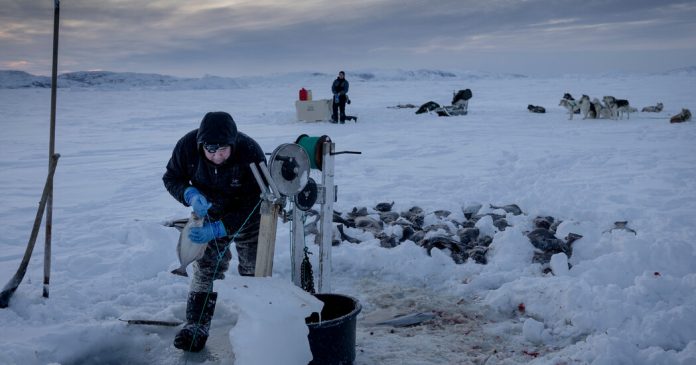
The three bundled up figures, puny against the vastness of miles of snow, trudged toward a hole they had cut into the ice.

Their sled was parked nearby, and the woolly dogs that pulled it were huddled on the frozen ground, barking for food.

Man and dog had to move carefully out here. In some places the ice was three feet thick, in others, it cracked like crystal.

This trio of Greenlanders, and their hungry, howling sled dogs, were following a tradition — ice fishing in a glacier fjord — that members of the Inuit community have been doing for eons. And this moment out in the clean, white snow was a quiet respite from a world changing around them at dizzying speed.

One of the bundled up Greenlanders — Laila Sandgreen — had just hired 10 Filipinos to work at her cafe.

Her husband, Hans Sandgreen, a hardcore ice fishermen of few words, is investing in a growing fleet of expensive snowmobiles for the family tourist business, which faces more and more competition.

Their son, David, was accepted to a top flight economics program in Denmark. But he recently dropped out, saying he “missed the snow, the fishing and the hunting.”

In their town on the west coast of Greenland, the Sandgreens shop at well-stocked grocery stores and have high-speed internet, a nice house and a beautiful kitchen. But each of them still knows how to shoot a gun, steer a sled and skin a seal.

“I feel free out here,” Ms. Sandgreen said. “I don’t have a phone dinging in my pocket.”

Their family story is, in a way, Greenland’s story. It’s a place trying to hold on tight to its culture while racing forward into a new era, and Greenlanders say they don’t want to have to choose either/or.

Even before President Trump catapulted this enormous island, the world’s largest, into the news by suggesting that the United States take it over, change has been sweeping through.

New international airports are opening, immigrants are streaming in and the island’s deeply buried minerals are attracting feverish interest. There are more hotels, more cars — and more cruise ships disgorging thousands of tourists to throng tidy, windy streets in search of that perfect sealskin souvenir or iceberg tour.

All this change is becoming a test of how intact Greenland’s unique heritage will emerge, and it connects with the island’s politics, too.

A recent opinion poll found that 85 percent of Greenlanders do not want to join the United States. Yet many people said in interviews that they didn’t want to keep relying on fishing and Denmark forever, either.

Denmark colonized the island more than 300 years ago and still controls the police, the courts, foreign affairs and defense issues. Increasingly, Greenlanders are pushing for full independence and their own trade relationships.

Beyond that, climate change is remaking the landscape. Every Greenlander has his or her own story about the rainier summers, the thinner ice, the glaciers melting and the permafrost getting squishier, which sometimes collapses a road. The whole island is warmer and more accessible.

Ilulissat, where the Sandgreens live, is a good place to witness all this. The town’s icebergs are attracting a surge of tourists and outside labor to serve them. A local legend, backed up by Danish geologists, is that the specific iceberg that sank the Titanic might have floated south from around here.

All this growth and attention brings its challenges. Small communities on the island’s fringes continue to wither away, as people gravitate toward bigger towns like Ilulissat where there is work.

In the capital, Nuuk, which looks like a little Danish town and which recently opened an impressive new international airport, Greenlanders are having the same big conversations about how to navigate the transitions.

“We’re really good at adapting to new environments,” said Qupanak Olsen, a champion of Indigenous rights who lives in Nuuk and was just elected to Greenland’s Parliament this month.

Mrs. Olsen has stepped away from her career as a mining engineer to become one of the most powerful voices on Greenlandic culture. She travels around the island making 59-second videos celebrating Greenlandic language, Greenlandic food, Greenlander beliefs and her own “personal decolonization process.”

She told a story about how, when she was making a video last year in a remote community, a man came up to her to thank her for honoring Greenlandic traditions. He quickly apologized for bugging her, saying he had no education and that he was “just a hunter.”

“Just a hunter? How can you say you’re just a hunter,” she remembered thinking.

The short exchange bothered her for weeks. She eventually tracked down his number and told him over the phone: “Never, ever say you’re just a hunter. You are the most important people in our culture. I’m here today, and my ancestors survived thousands of years, because of you.”

For a long time, Greenlanders got everything they needed from the animals they killed. Most of the island has little vegetation. There are almost no trees. Whale skin is a rich source of vitamin C, and by eating it, Greenlanders held off diseases like scurvy.

Fishing remains the biggest industry, and many Greenlanders make money off it. Even people with white collar jobs, like Jens Peter Lange, a dental technician in Ilulissat, still go ice fishing in the fjords and stalk reindeer (called caribou elsewhere in North America).

Talking to him reveals the wounds of Danish colonialism.

“Oh, man, I used to get into so many fights when I was studying in Denmark,” he said. “The Danish man is always above the Greenland man — always.”

He recounted a scandal from the 1960s and 1970s, exposed only recently, when Danish doctors inserted IUDs into Greenlandic girls without them knowing they had been fitted with birth control. He shared stories of being passed over for jobs in favor of Danes with fewer qualifications.

“We need to get rid of them,” he said, swiping a thick hand through the air.

On Ilulissat’s snowbound hillsides, new hotels are popping up and new faces appearing: the Filipino cafe workers, a Czech waitress, French, Swiss and Australian climate researchers. Ilulissat is building a new international airport that will bring in even more foreigners.

Mr. Lange says he likes all this. The other night he grilled reindeer for his family (and a few guests) that he himself had shot. The topic of independence came up around the table

“It’s a hard one,” said his wife, Nielsigne Rosbach, a special-education teacher. “We don’t even have enough Greenlandic doctors. We still rely on the Danes. We’d have to begin completely from scratch.”

Hearing this, Mr. Lange grew frustrated and cited the example of the local fish cooperative, started by fishermen sick of selling their fish for low prices.

“Look at those guys,” he said. “They don’t have education. But they figured it out.”

He leaned back in his chair, as the winds swirled outside and the kitchen smelled of rich sauces and grilled meat.

“Even if we don’t know everything right now,” he said, “we will learn.”

Maya Tekeli contributed reporting from Ilulissat, Greenland.

Pakistan Is Trying to Integrate the ‘Most Dangerous Place’ on Earth. It’s Failing.

0

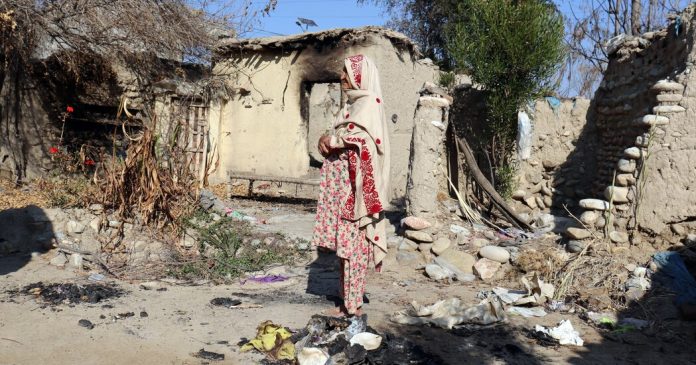
The rugged borderlands of northwestern Pakistan have long had a reputation for lawlessness and militancy, labeled by President Barack Obama as “the most dangerous place in the world.”

The Pakistani government, facing global scrutiny over the presence of groups linked to Al Qaeda and the Taliban, moved in 2018 to overhaul the semiautonomous region’s outdated governance. It merged what had been known as the Federally Administered Tribal Areas into the country’s mainstream political and legal framework, vowing economic progress and a reduction in violence.

Today, the effort is seen by many in the region as a failure.

A renewed wave of terrorism, especially after the Taliban’s return to power in Afghanistan in 2021, has undone much of the progress toward stability. Attacks have risen sharply in Pakistan, with more than 1,000 deaths across the country last year, up from 250 in 2019, according to the Institute for Economics and Peace, an international think tank. The group ranks Pakistan as one of the countries most affected by terrorism, second only to Burkina Faso in Africa.

The region’s troubles can be traced back to harsh colonial-era laws that were in force for more than a century and were meant to control the population, not serve it. The tribal areas’ ambiguous legal status and proximity to Afghanistan also made them a geopolitical pawn.

The merger of the underdeveloped region into a neighboring province has not resolved deep-rooted issues, experts say. The deteriorating law and order there is yet another major challenge for a nation of 250 million people that is grappling with economic instability and political turmoil.

Tribal elders and Islamist parties are now going so far as to advocate for the merger to be reversed. That is also a primary goal of one of the biggest sources of insecurity in the region: the Pakistani Taliban, who have waged a relentless assault on security forces in a campaign aimed at overthrowing the government and establishing an Islamic caliphate.

Pakistan’s leaders “promised development, peace, jobs and a fair justice system — everything we have been denied for decades,” said Noor Islam Safi, an activist from Mohmand, one of seven districts of the British-era tribal areas.

“The promises were empty,” he said during a protest in Mohmand that he led in mid-January. “All we’ve been given is neglect, rising violence and a growing sense of hopelessness.”

The former tribal region, which covers about 10,000 square miles — less than 5 percent of Pakistan’s landmass — and is home to more than five million people, has long been a stark emblem of terrorism, repression and neglect.

In 1901, the British imposed the harsh frontier laws to suppress resistance and buffer against Russian expansion. Pakistan inherited these regulations at its birth in 1947.

The region’s people were denied basic rights and excluded from national governance; they were not given the right to vote in Pakistani elections until 1997. Residents lived under the constant threat of arbitrary arrest and the absence of fair trials. Collective punishment was common. Entire communities suffered for the actions of one individual, facing imprisonment, fines, property destruction and exile.

The Soviet invasion of Afghanistan in 1979 turned the region into a staging ground for Islamic fighters backed by the United States, Arab nations and Pakistan who were battling Moscow’s forces.

“This border region has long served as a geopolitical chessboard, where the ambitions of colonial and post-colonial powers have sought to influence Afghanistan and reshape global geopolitics at the expense of local communities,” said Sartaj Khan, a researcher in Karachi, Pakistan, with extensive expertise in the country’s northwest.

After the Soviet withdrawal in 1989, the region descended into lawlessness, becoming a hub for fugitives, criminal networks, smugglers of arms and drugs, and kidnappers demanding ransom.

The region became a militant stronghold after the Sept. 11, 2001, attacks on New York and the Pentagon, as U.S. military operations in Afghanistan pushed Taliban and Qaeda militants into the tribal areas.

Groups like Tehreek-e-Taliban Pakistan, also known as the T.T.P. or Pakistani Taliban, moved to establish control. Such groups offered rudimentary governance while intimidating and killing tribal elders who resisted their rule.

Over time, the T.T.P. expanded its terrorist network beyond the borderlands, carrying out attacks across Pakistan, including in major cities like Karachi, and even internationally, notably in New York, with the attempted Times Square bombing in 2010.

After a vast operation in the tribal areas, the military declared victory over the T.T.P. in 2018. That year, Pakistan’s Parliament abolished the colonial-era laws and merged the region with the adjacent province of Khyber Pakhtunkhwa.

But gaps in the integration process, analysts and political leaders say, left the region vulnerable when the Taliban returned to power. The Taliban’s resurgence gave the T.T.P. sanctuaries across the border in Afghanistan and access to advanced, American-made weapons that had been seized after the collapse of the U.S.-backed Afghan government.

This allowed the Pakistani Taliban to escalate attacks in the former tribal areas. Since mid-2021, a majority of the surging terrorist attacks in Pakistan have occurred in Khyber Pakhtunkhwa, with a significant concentration in the seven former tribal districts, most notably North Waziristan and South Waziristan.

The T.T.P. killed 16 Pakistani soldiers in South Waziristan in December, and Pakistan responded with an airstrike inside Afghanistan, heightening tensions with Taliban rulers in Kabul.

In Kurram district, 50 miles southeast of Kabul, sectarian violence exacerbated by land disputes led to more than 230 deaths last year. Road closures by warring tribes have kept residents trapped in a cycle of violence.

Farther north along the Afghan border, in Bajaur district, 34 attacks were recorded in 2024, primarily carried out by the Islamic State Khorasan, or ISIS-K, the local branch of the Islamic State, which poses global security risks.

In other districts, the T.T.P. and local allied groups exert control, extorting money from traders.

The new legal frameworks in the former tribal areas remain largely unenforced because of inadequate administrative capacity and insufficient numbers of formal police officers. While the region was promised $563 million in annual development funding, Pakistan’s economic struggles have caused shortfalls. Many essential services are still underdeveloped or dysfunctional.

“An abrupt merger, rather than a gradual and thorough process, failed to replace a governance system that had operated for over a century,” said Naveed Ahmad Shinwari, a development expert with extensive experience in the region.

While police personnel have been recruited and stations established, the traditional semiformal police, composed of illiterate individuals representing their tribes, have struggled to transition into a formal structure, making them vulnerable to militant attacks. Courts exist in some places, but officials in many areas say that security concerns have prevented them from building a judicial infrastructure, forcing residents to travel long distances for justice.

As part of the Trump administration’s gutting of global aid, major initiatives in former tribal areas, including land settlement regulation and infrastructure improvements, have been disrupted.

The region’s merger initially garnered widespread support among residents eager for equal citizenship, but significant resistance has emerged to the changes that followed. Replacing outdated tribal policing and jirgas, or councils of tribal elders, has prompted deep concerns about the impact on a centuries-old way of life.

“Our jirgas used to resolve cases in months, sometimes days, but Pakistan’s overburdened judiciary takes years,” said Shiraz Ahmed, a resident of a remote village who traveled 60 miles for a land dispute hearing.

While some groups in the former tribal areas are calling for the merger to be reversed, analysts said that doing so could essentially hand the region over to militant groups.

Private Island Comes on the Market in Italy

0

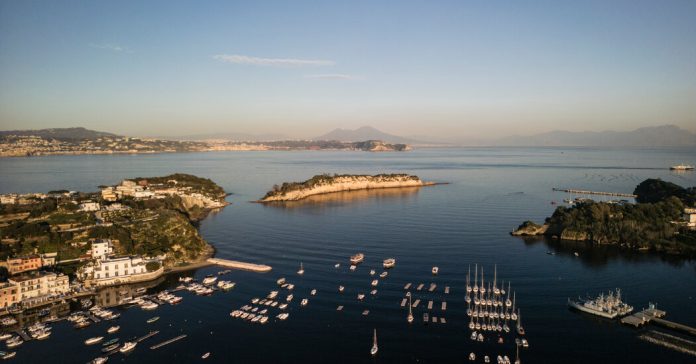
Private Mediterranean islands are rather rare, but Punta Pennata, a sliver of land in the Gulf of Naples with the crumbling walls of an old Roman villa tucked amid its overgrown flora, has been on the market for several months.

Located about 20 miles from downtown Naples, the narrow island with its abrupt cliffs sits like an exclamation point just off the seaside town of Bacoli.

“Surrounded by lush Mediterranean vegetation and Roman relics, it offers a fascinating and unique retreat,” reads the promotional blurb from Sotheby’s International Realty. Punta Pennata, it adds, is an “exclusive opportunity for a prestigious investment.”

That is one version of the island’s future.

The other comes from Josi Gerardo Della Ragione, the mayor of Bacoli, who envisions the island as a public park. In private hands for decades and barely visited, its unspoiled flora would draw residents and visitors alike to a lesser known part of Italy’s coastline, according to the mayor.

“It is like Neverland,” he said in an interview in his office, evoking Peter Pan’s fictional island. “It is a place you can go just to daydream,” he added. “Bacoli is small, but it can still be chaotic.”

The sale has become something of a populist struggle, pitting the quest for a deep-pocketed buyer against a more communal alternative. The main hindrance to the mayor’s plan is the price tag, which Sotheby’s put at around 10 million euros (roughly $10.3 million.)

Since the island was valued at roughly two million euros just a few years ago, the price is “robber baron speculation,” said Mr. Della Ragione, a 37-year-old former journalist who has served as mayor for seven years overall, representing Free Bacoli, a homegrown leftist party that sprouted from a blog founded by civic activists.

Asked about the listing price, Sotheby’s pointed to the one-of-a-kind nature of the property.

The last boom in luxury real estate around here occurred about 2,000 years ago, when the northern coast of the Gulf of Naples was a playground for the Roman Empire’s aristocracy. “It was the Monte Carlo of its time,” said Mr. Della Ragione. Extensive thermal baths were part of the draw. Even the occasional emperor came swanning through. The entire region is part of the Campi Flegrei, or the Phlegraean Fields, a vast area of volcanic activity that includes nearby Mount Vesuvius. The land has risen and fallen over the centuries — a seismic process known as bradyseism.

The vibrant mosaic floors of former palatial, beachfront Roman villas now sit on the seabed, four or five yards under crystalline blue and peridot waters, visible to scuba divers and snorkelers. Small temblors occur regularly.

The harbor adjacent to Punta Pennata island once served as the home port for the Roman naval fleet that dominated the western Mediterranean, records indicate. Some of its galleys rescued survivors fleeing Pompeii after Vesuvius erupted in 79 A.D.

Ciro Amoroso, an amateur historian, embraces the idea of a park on Punta Pennata. “It is our history, our heritage,” he said. “It is part of who we are, so we don’t want it sold.”

There is at least one possible out. Italian law grants any municipality the right to match the asking price for a property with historical significance. Although the mayor is willing to spend his budget for cultural activity on the purchase and expects some help from the regional government, the potential sum does not approach the asking price, he said.

Instead, he hopes to mobilize certain allies, starting with the dead. City records indicate that between 1830 and 1860, about 1,000 people, many of them plague victims, were buried on the island. The location of the graves remains a mystery, but since a cemetery is public property, the mayor wonders whether the island was privatized using some manner of illegal bureaucratic shenanigans.

The sale involves 5,000 square meters of land (about 54,000 square feet), including a decaying 200-square-meter house. The house is distinct from the ruins of the old Roman villa, though it, too, is being reclaimed by the surrounding woods. It was last used 10 or 12 years ago by the grandfather of the family selling the land, and he habitually sat there to watch migratory birds, said Diletta Giorgolo, the head of residential sales for Sotheby’s International in Italy.

The island already falls under the general purview of the area’s parks authority, so any owner would need a permit for landscaping like felling trees, said Francesco Maisto, the president of the Regional Park of Campi Flegrei. That mandate extends to the surrounding water, a protected area because of its rare Posidonia sea grass.

“Even if you buy the island, you cannot just come and do what you want on it,” Mr. Maisto said. “It is a green lung in the area.”

Ms. Giorgolo portrays the raft of restrictions as a selling point, preserving the bucolic yet historic character of the island. It also means that all any new owner could most likely do is to renovate the house.

Even that is subject to dispute. Since the original building permit allowed for a 120-square-meter structure, said the mayor, the additional 80 square meters are suspect. The various bureaucratic hurdles might deter any buyer, the mayor said, laughing. Those hurdles include that the sale and any construction requires his permission.

Ms. Giorgolo holds that someone hoping to create a retreat will not be deterred. “It will be a certain kind of buyer,” she said. “It’s for people that are maybe rich, but also simple.”

Viewings will only begin when the weather improves. It has not even been shown to the mayor. The family that owns the island declined interview requests, with Ms. Giorgolo describing the owner as “shy,” and the mayor saying that the Neapolitan family found all the public attention annoying.

Not that it takes much to reach Punta Pennata. It was once a peninsula, not an island, until a raging storm in 1966 swept away the sand beach linking it to the mainland. That side is now a popular beach, and you can wade out a few yards to the island’s only landing, a small cement jetty. From there, a tall, rusty fence blocks access.

Throughout Italy, the state owns the shoreline. In theory, the public could cavort along the edges of the ridge-like island, but there is no beach, only steep cliffs and occasional rocky outcroppings.

Some Bacoli residents doubt the wisdom of the city acquiring the island. Antonio Pugliese, 50, who promotes the use of traditional sailing vessels, thinks an island park would be too expensive to maintain. But most people questioned at random around the town supported the idea.

Inside the cavelike Scairdac deli, with cheeses and hams curing in the rafters, Giuseppe Scamardella offers visitors an array of local delicacies: First pane sciocco, bread baked with potatoes and mozzarella, and friarielli, a local green that is a more bitter version of broccoli.

Mr. Scamardella, 67, is one of the few people in Bacoli who remember being on Punta Pennata. As a boy, he gathered mushrooms and wild asparagus while his father hunted quail and rabbits. He has not been on the island since the storm.

Bacoli has to do something to compete for visitors, otherwise all the young people will leave, he said, even if his daughter is the fifth generation to run the family store.

“If somebody private buys the island, it will be a terrible thing,” Mr. Scamardella said. “We will lose a little of Bacoli’s soul.”

Virginia DiGaetano contributed reporting.

Canada’s Small Businesses Face a ‘Double Hit’ in the Trade War With U.S.

0

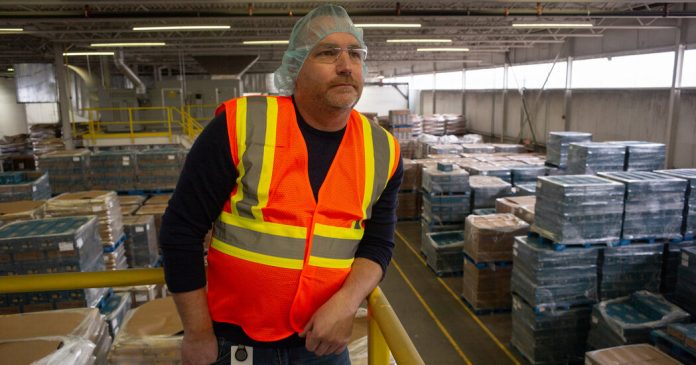
After 142 years in the business of milling and packaging rice and rice flour, Dainty Foods was on a roll.

A surge in demand for precooked and flavored rice made for microwaving had suddenly lifted the fortunes of Canada’s only rice mill.

The company was already modernizing its factory in Windsor, Ontario, and had plans to build a new plant across the border in Detroit to meet demand from U.S. customers.

Now, all that’s been upended and the company’s very existence is in question.

Dainty Foods’ dire outlook reflects a broader fallout from the trade war that has erupted between Canada and the United States. President Trump’s on-again, off-again tariff measures and Canada’s retaliatory strikes are inflicting deep wounds on Canadian small- and medium-sized businesses, which now face escalating costs to move goods back and forth across the border.

Dainty Foods must pay 25 percent more to import rice from the United States and faces the prospect of paying higher costs to export products to America if Mr. Trump follows through on more tariff threats.

“We are potentially staring down a double hit which no company can sustain,” said James Maitland, Dainty’s chief executive. “We kind of chuckled when we heard President Trump say he’s doing this so that people are forced to build in the U.S. Well, we were going to do that. But you’ve crippled us financially.”

After rushing about eight weeks’ worth of rice pouches across the border before Mr. Trump imposed a 25 percent tariff this month, Dainty briefly suspended sending goods to American grocery chains, which account for 80 percent of its sales.

Given Mr. Trump’s capriciousness, Mr. Maitland said, he has no way to make plans with any confidence. If U.S. tariffs are reimposed for any length of time, he added, “this company doesn’t become viable.”

Often operating with slim profit margins and thin financial cushions, smaller companies across Canada, like Dainty, which has about 120 workers, are struggling to navigate the back-and-forth between the two countries over tariffs.

Many have been hit especially hard by Canada’s tariffs on U.S. goods. Of the roughly 100,000 small- and medium-sized companies that are part of the Canadian Federation of Independent Businesses, nearly half import from the United States, according to Dan Kelly, the group’s president, who said that just the “uncertainty and economic impacts of the tariffs” has been damaging.

The Trump administration is expected to hit Canada with another round of tariffs on April 2. The president pulled back on his more sweeping 25 percent tariff on Canadian goods, but is still imposing levies on a significant number of exports, including steel and aluminum.

After decades of trading across an open border, smaller businesses also lack the expertise to decipher the complexities of a tariff system, said Trevor Tombe, a trade economist at the University of Calgary in Alberta.

“Walmart is going to figure it out,” he said. “They have people or they can hire people.” Small businesses, he added, “don’t have that option.”

To date, Dainty has spent about 25,000 Canadian dollars (about $17,300) on trade consultants and lawyers.

But that level of spending is impossible for Jon and Liz Chan, a husband and wife team that owns Wonder Pens, a stationery shop in Toronto, and, like Dainty, is feeling squeezed by both governments.

While Wonder Pens mostly relies on Canadian customers, Mr. Chan said he worried that Americans who buy from them online would stop if more tariffs were introduced and the cost of their goods rose. Canadian tariffs have also meant a higher price for envelopes and other items the shop imports from the United States.

Mr. Chan said he was also feeling the pain of the declining value of the Canadian dollar, which has been another casualty of the trade battle, resulting in higher prices on some products from overseas.

“We’re just sort of trying get by, pay our bills and keep our staff employed,” Mr. Chan said of the shop, which opened 12 years ago and has two full-time and five part-time employees in addition to himself and his wife. “All of this uncertainty is stressful.”

Just down the road from a major car factory in Windsor is a discreetly marked storefront that Ron Sim, a cinematographer, has turned into an optical design and test center. It focuses primarily on making kits that convert vintage still-camera lenses for use on digital motion picture cameras.

Mr. Sim has moved the production of precisely machined metal parts he relies on twice as a result of Mr. Trump’s fondness for tariffs.

When Mr. Trump imposed tariffs on China during his first administration, Mr. Sim shifted production to Thailand.

Then, before last year’s presidential election, Mr. Sim said he thought to himself: “This is going to get worse.” So, to try to protect sales to the United States, the source of three-quarters of his business, he brought his manufacturing closer to home and opened a small factory in Harrow, a farm town south of Windsor.

Now, it seems, that move may not save him from U.S. tariffs.

“I never thought that he’d do this to Canada,” Mr. Sim said after the 25 percent tariffs were briefly in place. “So that caught me off guard, especially after spending millions in machinery and bringing manufacturing to Windsor.”

It is unclear how his customers in the United States — which include a large photographic retailer in New York, several motion picture equipment rental and optical houses, as well as online shoppers — will react to whatever tariffs return on April 2. Mr. Sim said. Vintage lens conversions compete in price with increasingly low-cost and high-quality new lenses from China.

“I feel like I’m walking this tightrope,” Mr. Sim said. “Right now, I’m just standing still, maintaining my balance and seeing where everything is going for as long as I can.”

Across the city, the microwave packet operation at Dainty Foods, which replaced an aging line that made canned rice, is housed in a renovated, gleaming space. But it is also half empty.

The workers there manually box up finished pouches bearing the names of American retailers, including Aldi, Walmart and Whole Foods. As part of an expansion and modernization, Dainty had purchased robots and was going to add a second production line.

But Mr. Maitland said the company was unsure if it would move forward with its plans, given that there is no clarity over what will happen with existing tariffs or new ones that may be coming.

The mill has asked the Canadian government to exempt its rice imports from tariffs, but has not received a response. Canada’s Department of Finance, which sets tariffs, did not respond to a request for comment.

“Nobody has a crystal ball,” Mr. Maitland said. “Nobody knows if this is going to be a few weeks, nobody knows if it’s a few months or if this is the new life. There’s no clear path.”

Trump revokes security clearances for political opponents : NPR

0

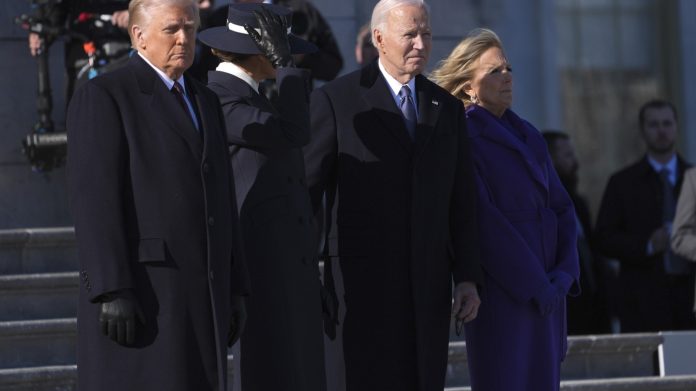
President Trump and first lady Melania Trump stand before sending off former President Joe Biden and Jill Biden to board a Marine helicopter en route to Joint Base Andrews after the inauguration on Jan. 20, at the U.S. Capitol in Washington.

Evan Vucci/AP


hide caption

toggle caption

Evan Vucci/AP

President Trump said he has revoked the security clearances of more than a dozen political adversaries, including former President Biden, former Vice President Harris and several former Biden administration officials.

In a presidential memorandum released Saturday, Trump said it was “no longer in the national interest” for the named individuals to have access to classified information — a move critics view as retaliation for Biden’s decision to strip Trump of his clearance in 2021 due to concerns over what Biden described as Trump’s “erratic behavior.”

The list of those affected goes beyond Biden and his administration, targeting figures involved in Trump’s first impeachment trial, including Fiona Hill, Norm Eisen and Alexander Vindman. Former Secretaries of State Antony Blinken and Hillary Clinton are also named.

It also includes legal figures like New York Attorney General Letitia James and Manhattan District Attorney Alvin Bragg, both of whom have pursued high-profile legal cases against Trump. Two Republican critics of Trump, Liz Cheney and Adam Kinzinger — who both served on the House Select Committee investigating the Jan. 6 attack on the U.S. Capitol — were also included in the memo.

Several former officials shrug off move as meaningless

The practical effects of the move are likely minimal. Security clearances for former officials are generally revoked after they leave office unless they continue to engage in national security matters. Many of those on the list have not had active clearances for years.

In a post on X, Eisen, a former special counsel to the House Judiciary Committee which oversaw Trump’s 2019 impeachment inquiry, wrote: “It’s like the third time he’s announced he’s revoking my security clearance I mean, does he revoke it [and] then give it back to me so he can revoke it again? Who does he think I am, a big law firm or a billionaire who’s gonna back down? It just makes me file even more lawsuits!”

Vindman, a former National Security Council official who testified in Trump’s impeachment hearings, also dismissed the gesture as meaningless: “I’m not a weak-kneed billionaire or a massive spineless law firm, so I don’t care what noises @realDonaldTrump makes about a security clearance that hasn’t been active for five years.”

Mark Zaid, a lawyer whose clearance was also revoked, voiced similar skepticism, writing, “This is like the third time already I’ve lost my security clearance? How many times does it take? Is this like a [Beetlejuice] thing where something magical will now happen?”

Pope Francis Will Be Discharged From the Hospital on Sunday, Doctors Say

0

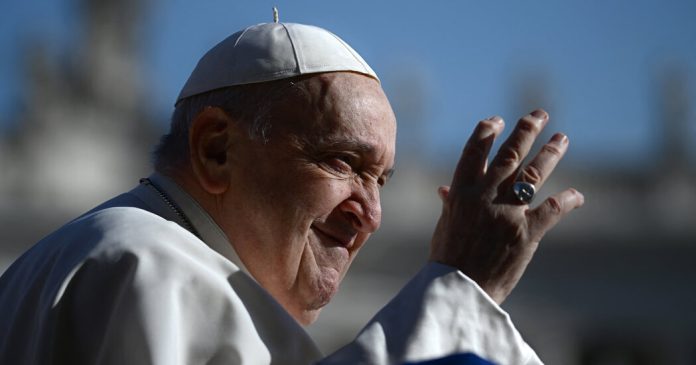
Pope Francis’s condition has improved enough that he will be discharged from a hospital in Rome on Sunday and sent to recover in the Vatican for at least two months, his doctors said on Saturday evening.

They added that the case of pneumonia in both lungs was so severe that it had twice put his life in grave danger.

The doctors said that the pope’s condition had improved and been stable for the last two weeks, and that he had overcome his most dangerous infections, but that he wasn’t completely healed and needed to rest for at least two months.

He would require therapy and oxygen, as is normal for patients recovering from pneumonia, before he could resume his regular schedule, and his doctors urged that the pope stay away from crowds, people who had children, other possible Reposources of infection.

“He was very happy,” said Dr. Sergio Alfieri, the leader of the medical team taking care of the pope. He said the pontiff had been asking for days when he could go back home.

For weeks Catholics around the world have been praying for his recovery, and since Feb. 25, cardinals have led a nightly rosary prayer in St. Peter’s Square that draws hundreds of faithful each night.

Pope Francis was admitted to hospital on Feb. 14 with bronchitis which developed into pneumonia in both lungs, complicated by a microbial tract infection. Doctors didn’t mince words when they held a news conference at the Gemelli hospital on Feb. 21, warning he was “not out of danger,” because of his age and chronic lung disease.

For several weeks, Francis remained in critical condition, as he experienced an asthmatic respiratory crisis, initial, mild kidney failure, and a bronchial spasm that caused him to inhale his vomit after a coughing fit. He used noninvasive mechanical ventilation during the night, alternating with high-flow oxygen therapy during the day.

On March 10, the Vatican announced that Pope Francis has improved enough to no longer be considered in imminent danger from pneumonia and other infections, but said he would require more days of in patient treatment. He began to slowly reduce his use of oxygen therapy.

Last Sunday, the Vatican issued the first photo of the pontiff since he had entered into hospital and the announced Saturday that Francis might appear on the balcony of the Gemelli to impart the Angelus blessing tomorrow.

Francis was already frail. He had a part of one lung removed as a young man, and in recent years, he has been battling a number of health problems, using a wheelchair or a cane to move around. He was hospitalized with bronchitis in 2023, and again a few months later to undergo abdominal surgery for a hernia, linked to colon surgery he had in 2021.

Francis has often struggled with bronchitis during the winter months, but had not stopped the pope from keeping up a grueling schedule in the weeks before his hospitalization, intensified by the opening of the 2025 Jubilee, a year of faith, penance and forgiveness of sins that takes place only every quarter century.

E.P.A. Investigations of Severe Pollution Look Increasingly at Risk

0

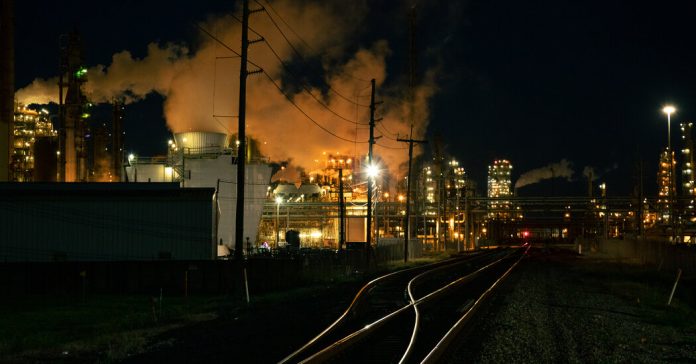
A refinery in New Mexico that the federal government has accused of some of the worst air pollution in the country.

A chemical plant in Louisiana being investigated for leaking gas from storage tanks.

Idaho ranchers accused of polluting wetlands.

Under President Biden, the Environmental Protection Agency took a tough approach on environmental enforcement by investigating companies for pollution, hazardous waste and other violations. The Trump administration, on the other hand, has said it wants to shift the E.P.A.’s mission from protecting the air, water and land to one that seeks to “lower the cost of buying a car, heating a home and running a business.”

As a result, the future of long-running investigations like these suddenly looks precarious. A new E.P.A. memo lays out the latest changes.

E.P.A. enforcement actions will no longer “shut down any stage of energy production,” the March 12 memo says, unless there’s an imminent health threat. It also curtails a drive started by President Biden to address the disproportionately high levels of pollution facing poor communities nationwide. “No consideration,” the memo says, “may be given to whether those affected by potential violations constitute minority or low-income populations.”

Those changes, said Lee Zeldin, the E.P.A. administrator, would “allow the agency to better focus on its core mission and powering the Great American Comeback.”

David Uhlmann, who led enforcement at the agency under the Biden administration, said the memo amounted to the agency announcing that “if companies, especially in the oil and gas sector, break the law, this E.P.A. does not intend to hold them accountable.”

That would “put communities across the United States in harm’s way,” he said, particularly poorer or minority areas that often suffer the worst pollution.

Molly Vaseliou, a spokesperson for the E.P.A., said she could not comment on ongoing investigations or cases. The Department of Justice, which has faced its own staff and budget cuts, declined to comment.

Conservatives have argued that E.P.A. regulations have hurt economic growth and investment. “Bold deregulatory action at E.P.A. will unleash American energy and reduce costs for American families,” said Grover Norquist, President of Americans for Tax Reform, the anti-tax organization, in a statement. “The government’s expensive web of overregulation is being unwoven.”

To be sure, enforcement cases brought by the Biden administration are still winding their way through courts. On Wednesday, the Japanese truck manufacturer Hino Motors pleaded guilty to submitting false emissions-testing data in violation of the Clean Air Act and agreed to pay more than $1.6 billion in fines stemming from a probe first opened by California in 2019.

At the same time, a wider reframing of the purpose of the E.P.A. is underway. The agency was created a half-century ago, during the Republican presidential administration of Richard M. Nixon, with a mandate to protect the environment and public health.

Last week, the Trump administration said it would repeal dozens of the nation’s most significant environmental regulations, including limits on pollution from tailpipes and smokestacks, and protections for wetlands.

In a video posted to X, the social media site, Mr. Zeldin said his agency’s mission was now to “lower the cost of buying a car, heating a home and running a business.”

Project 2025, a blueprint for overhauling the federal government that was produced by the Heritage Foundation and written by many who are serving in the Trump administration, goes further, seeking to eliminate the E.P.A. office that carries out enforcement and compliance work. Mr. Zeldin has also said he intends to cut the agency’s spending by 65 percent and eliminate its scientific research arm.

Some on-site inspections, which form a vital part of enforcement investigations, are already being delayed or suspended, according to two people who spoke on condition of anonymity because they are unauthorized to speak publicly. Investigations related to air pollution were particularly vulnerable, they said.

There has already been one significant reversal. This month the Trump administration dropped a federal lawsuit against Denka Performance Elastomer, a chemical manufacturer accused of releasing high levels of a likely carcinogen from its Louisiana plant.

The Biden administration filed the lawsuit after regulators determined that emissions of chloroprene, used to make synthetic rubber, were contributing to health concerns in a region along the Mississippi River with some of the highest cancer risk in the United States.

“I honestly wonder if the malefactors are going to give us more burning rivers,” said William K. Reilly, E.P.A. administrator under President George H.W. Bush, speaking to reporters this month. He was referring to a fire on the polluted Cuyahoga River in Ohio in the late 1960s that helped galvanize environmental awareness.

And while the E.P.A. said it remained committed to addressing imminent health threats, the risks from pollution tend to play out over longer periods of time, in the form of increased rates of cancer, birth defects or long-term respiratory and cardiac harm, said Ann E. Carlson, a professor of environmental law at the UCLA School of Law.

“The memorandum is essentially a wink, wink to coal and oil interests that they can pollute with what may be close to impunity,” she said.

That would be a stark reversal after the Biden administration had worked to build up the agency’s enforcement work. In 2024, the E.P.A. concluded 1,851 civil cases and collected $1.7 billion in administrative and judicial penalties, both the highest levels since 2017. That same year, 121 criminal defendants were charged.

The agency had also prioritized policing greenhouse gas emissions, toxic “forever chemicals” known as PFAS, as well as the disposal of coal ash, the toxic material left over from burning coal.

The new Trump E.P.A. will pull back both from a focus on coal ash disposal, and from emissions of methane, a potent greenhouse gas, from oil and gas facilities, the recent memo said.

Other Biden-era enforcement settlements are waiting to be finalized, including one involving the decades-old HF Sinclair refinery in Artesia, N.M., accused of causing some of the worst concentrations of cancer-causing benzene in the country.

The E.P.A., together with the Department of Justice and the state of New Mexico, proposed a $35 million settlement in the final days of the Biden administration as part of an effort to protect people living in Artesia, a city of 13,000 people with a long history of pollution. HF Sinclair, which processes about 100,000 barrels of crude oil a day in Artesia, was also required to invest in fixes at the refinery that would reduce emissions of hazardous air pollutants.

So far, the Trump administration has not moved to finalize that settlement.

In a statement, the Texas-based operator said it had already invested in fixes and monitoring to address the allegations.

The New Mexico Department of Environmental Quality said it supported moving forward with the settlement “as expeditiously as possible,” adding that, “due to the change in administration at the federal level, timing is unclear.”

Investigations just getting started face even greater uncertainties, because the agency has leeway not to follow up on violations.

In March 2023, E.P.A. officials discovered leaks and other alleged violations of pollution laws during an inspection at a refinery and chemicals plant operated in Norco, La., by Shell, the Dutch oil and gas giant.

According to a notice later issued by the E.P.A., and obtained by the Environmental Integrity Project, a watchdog group, one chemical storage tank was found with “severe pitting across the entire fixed roof, as well as cracks/openings with detectable emissions.”

The E.P.A. has declined to say whether investigations were continuing. Shell declined to comment.

Some cases may be shaped by wider changes.

In 2021, E.P.A. inspectors found signs that a cattle ranch in Bruneau, Idaho, had disrupted protected wetlands by constructing road crossings and by mining sand and gravel from a local river. The agency sued, alleging violations of the Clean Water Act, in particular a bitterly contested rule adopted by the Obama administration known as “waters of the United States,” which extended existing federal protections to smaller bodies of water such as rivers, waterways and wetlands.

A federal judge dismissed the original case after a 2023 Supreme Court ruling curtailed the federal government’s authority to regulate smaller bodies of water. President Biden’s E.P.A. filed an amended lawsuit in September.

Last week, the E.P.A. said it would rewrite the rule to lower permitting costs for developers.

Ivan London, an attorney with the Mountain States Legal Foundation who is helping to defend the ranchers in the case, said that he expected his clients’ arguments to prevail regardless of the E.P.A.’s new rule-making. The ranchers argue that the E.P.A. has no authority to regulate the wetlands in question.

Still, the current Trump administration would certainly side more with the defendants, and that could affect the case, he said. “I’ve been surprised before, and I’m sure I’ll be surprised again,” he said.