Thursday, November 12, 2026
Home Blog Page 101

Student loans, special education to move out of Education Dept. : NPR

0

The federal student loan portfolio – which manages about $1.6 trillion in loans for roughly 43 million borrowers – is currently overseen by the Education Department’s office of Federal Student Aid (FSA).

Mario Tama/Getty Images


hide caption

toggle caption

Mario Tama/Getty Images

President Donald Trump continued the unwinding of the U.S. Department of Education on Friday, announcing that the management of the entire federal student loan portfolio and of the department’s “special needs” programs would be moved to other federal agencies effective immediately.

Appearing in the Oval Office with Defense Secretary Pete Hegseth, Trump said, “I’ve decided that the SBA, the Small Business Administration, headed by Kelly Loeffler, a terrific person, will handle all of the student loan portfolio. We have a portfolio that’s very large,” Trump said.

The federal student loan portfolio – which manages about $1.6 trillion in loans for roughly 43 million borrowers – is currently overseen by the Education Department’s office of Federal Student Aid (FSA). That office has been gutted by the recent raft of buyouts, early retirements and last week’s broad reduction-in-force.

It was not clear, based on Trump’s announcement, how or if the remaining employees and expertise at FSA would be transferred to the Small Business Administration. Trump said he would move student loans “out of the Department of Education immediately” and that Loeffler and her staff are “all set for it. They’re waiting for it. It’ll be serviced much better than it has in the past. It’s been a mess.”

In a tweet after the Oval Office announcement, Loeffler said, “The SBA stands ready to take the lead on restoring accountability and integrity to America’s student loan portfolio.”

Multiple sources at FSA who could not speak publicly for fear of retribution said they were blindsided by the news.

A spokesperson for the office of Federal Student Aid referred NPR’s request for comment to the Education Department.

The Education Department, White House and the Small Business Administration did not immediately respond to a request for comment.

As recently as Thursday, White House press secretary Karoline Leavitt assured reporters that, “when it comes to student loans and Pell Grants, those will still be run out of the Department of Education.”

After announcing the movement of the federal student loan portfolio, Trump then said, “Bobby Kennedy, the Health and Human Services, will be handling special needs.”

This appears to be a reference to the federal law known as the Individuals with Disabilities Education Act (IDEA), which the Education Department administers. The law guarantees students with disabilities the right to a free, appropriate education and, in 2024, sent roughly $15 billion to schools to help pay for special education services.

The Education Department also has a dedicated Office of Special Education Programs.

The Department of Health and Human Services, headed by Secretary Robert F. Kennedy, did not respond to multiple requests for comment.

In speaking to reporters Thursday, Leavitt also suggested IDEA funding would remain at the department, saying “any critical functions of the department” would remain. When asked specifically about funding for students with disabilities, she responded: “Same answer.”

Administration of IDEA and the federal student loan portfolio are two of the Education Department’s core responsibilities, and it’s unclear if transferring either to other federal agencies can be done without a vote of Congress.

The news comes a day after Trump signed an executive order calling on U.S. Secretary of Education Linda McMahon to “take all necessary steps to facilitate the closure of the Department of Education.”

This is a developing story and will be updated as NPR learns more.
UK Counterterrorism Police Investigating Fire Near Heathrow

0

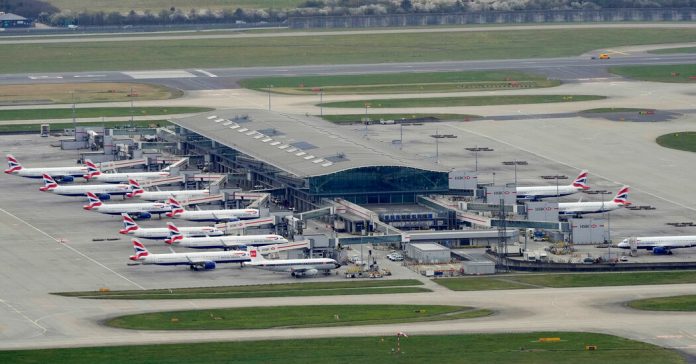
Britain’s counterterrorism police are leading the investigation into the cause of the fire near Heathrow Airport, signaling that the possibility of sabotage was being taken seriously, at least as a precaution. But officials said there was no immediate evidence that foul play was involved.

After the blaze at the electrical substation and subsequent power outage, the scale of the resulting chaos raised uncomfortable questions for Britain’s government about the security measures protecting key transport hubs and the resilience of the country’s aging infrastructure.

The Metropolitan Police in London said that counterterrorism specialists had taken charge “given the location of the substation and the impact this incident has had on critical national infrastructure.”

Sadiq Khan, the mayor of London, said it was “not unusual” for the specialized officers to be involved in an investigation of such a major incident, and he told Sky News that there was “no reason at all for anyone to be concerned or alarmed.”

With the fire under control but still burning, nonetheless, nothing has been ruled out.

In a statement, Prime Minister Keir Starmer said he was “receiving regular updates” about the situation at Heathrow and was “in close contact with partners on the ground.” He added that he knew the outage was “causing distress and disruption, especially for those traveling or without power in their homes.”

A spokeswoman for Heathrow said on Friday afternoon that some flights would resume later in the day, adding that officials hoped the airport would be fully operational by Saturday.

John McDonnell, a lawmaker who represents Hayes, the area where the fire broke out, said on Friday afternoon that any investigation would need to look at “why backup arrangements have not worked” and how the infrastructure could be so vulnerable.

“There are lessons that have got to be learned here,” he told reporters.

Long-Lost Klimt Portrays African Prince

0

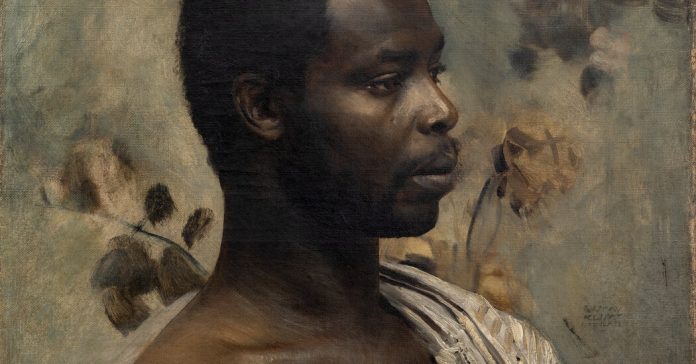
A rediscovered painting of an African prince by Gustav Klimt that captured visitors’ attention at the TEFAF Maastricht fair in the Netherlands is under negotiation for sale, the Vienna-based gallery offering the work said as the event closed on Thursday evening.

The early, almost photorealistic head-and-shoulders portrait of Prince William Nii Nortey Dowuona, shown against a floral background, had been on display at the booth of Wienerroither and Kohlbacher, priced at 15 million euros, or about $16.4 million.

“We are in active negotiations with a major museum,” said Lui Wienerroither, the gallery’s co-founder, though he declined to name the institution. Unlike at contemporary art fairs, high-value sales at TEFAF Maastricht, which specializes in older art, are often finalized after the event to allow buyers time to investigate questions of provenance or attribution. “Processes of due diligence have to be followed,” Wienerroither said.

The man depicted in this 26-inch-high painting was a member of a group of Africans from the Gold Coast (a former British colony now known as Ghana) who were live exhibits in colonial “human zoos” that toured Europe at the end of the 19th century. In the summer of 1896, they were put on display in a mock-African village in Vienna’s Zoological Garden, where Klimt might have seen them. The highly popular show, which attracted 5,000-6,000 visitors a day, was vividly evoked by the contemporary Austrian writer Peter Altenberg in his novel “Ashantee.”

Wienerroither and Kohlbacher says Klimt’s painting came to light in 2023 when an Austrian couple brought the unsigned work, crudely framed and in a grimy condition at the time, into the gallery. The dealers say they discovered a barely legible Gustav Klimt estate stamp on the back of the canvas and confirmed with Alfred Weidinger, the author of a definitive catalog of Klimt’s works, that Klimt was known to have painted a portrait of a prince of the Osu people in what is now Ghana, though the painting’s whereabouts had been unknown for many years.

Subsequent research revealed that the painting was still in Klimt’s possession when he died in 1918 and was sold by auction from his estate in 1923. Five years later, it was listed among the works in a Klimt memorial exhibition in Vienna, on loan from a local collector, Ernestine Klein.

Because she was Jewish, Klein and her husband, Felix, were forced to leave Austria in 1938 when it was annexed by Nazi Germany, and they survived the war in Monaco. Wienerroither and Kohlbacher said in a statement that the painting was being offered for sale “pursuant to a settlement agreement” between Klein’s heirs and the work’s current owners, who it also declined to name. The statement added that the Austrian authorities had granted the work an export license.

The gallery had originally intended to show the Klimt at last year’s TEFAF Maastricht, but withdrew it before the event’s opening.

“There were issues with the contract, and we had to make sure there were no other heirs with a claim on the painting,” Wienerroither said. “Percentages are always a question,” he added, referring to the potentially contentious issue of dividing the proceeds of a restitution sale between claimants. “It needed time.”

Experts say that the painting, made in the year that Klimt and other forward-looking artists formed the Vienna Succession group, represents a significant moment in the artist’s career.

“The portrait of the Ghanaian prince marks the transition to a new stage in his artistic development,” Weidinger, the Klimt scholar, said in an email. “It anticipates key elements of his later portraiture. In particular, the use of symbolic floral motifs in the background establishes a stylistic principle that Klimt would develop consistently from this point onward.”

Similar symbolic floral motifs characterize the background of an enigmatic, long-lost 1917 portrait of a young woman that sold for $37 million at auction in Vienna last April.

Klimt is one of the most admired and coveted of all modern artists and auction prices for his work have recently climbed as high as $108.4 million. Wienerroither and Kohlbacher’s more modest price tag reflects that this latest Klimt painting to appear for sale is a relatively small, unsigned early work lacking the decorative sumptuousness of the artist’s later works.

“It’s the only Klimt painting on the market and it’s a key work,” Wienerroither said.

Shutdown of Britain’s Busiest Airport Causes Worldwide Travel Disruption

0

new video loaded: Shutdown of Britain’s Busiest Airport Causes Worldwide Travel Disruption

transcript

transcript

Shutdown of Britain’s Busiest Airport Causes Worldwide Travel Disruption

Heathrow Airport in London, one of the busiest in the world, was shut down on Friday after a fire disrupted power from a nearby electrical substation.

We’ve had a catastrophic fire at an electricity substation. We don’t know the cause of this fire. It’s obviously an unprecedented event. But if we don’t get one today, should we assume that we’ll get one tomorrow? Tomorrow? after tomorrow. So you don’t know.

Recent episodes in News Clips: Europe

Heathrow Closure: What Are Your Rights If Your Flight Is Delayed or Canceled?

0

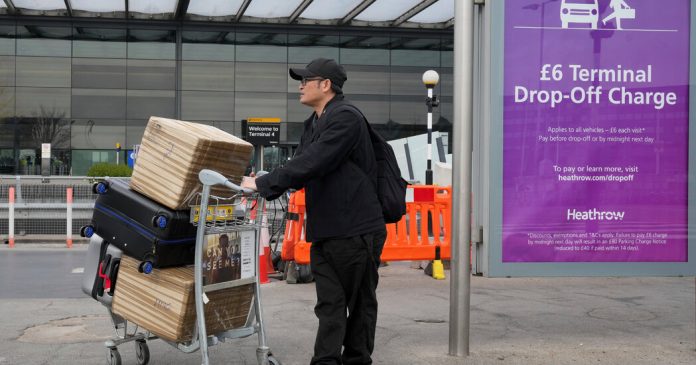
At least 1,300 flights in and out of London’s Heathrow Airport were disrupted on Friday as the airport, Europe’s busiest, was shut down after a major nearby fire caused a power outage.

More flights are expected to be canceled or delayed in the coming days as airlines navigate the ripple effects of the airport’s closure, which is affecting air travel worldwide. About 220,000 passengers had been expected to travel through Heathrow on Friday, according to Flightrader24, the live flight tracking service.

Heathrow said it had no choice but to keep the airport closed until 11.59 p.m. on Friday. “We know this will be disappointing for passengers, and we want to reassure that we are working as hard as possible to resolve the situation,” an airport spokesman said in a statement.

If your travel has been affected by the closure, here’s what you need to know.

Passengers scheduled to travel in and out of Heathrow have been advised not to go to the airport, and to contact their airline for further information.

On Friday, the police turned away passengers trying to reach Heathrow, and cars in the area were diverted.

Most major airlines have updated information on their websites with details about flight disruptions and instructions for rescheduling canceled flights. You can also check their social media channels for updates.

If your flight departs from an airport in Britain, arrives there on a British or European Union airline, or arrives in an E.U. airport on a British airline, you are covered by British law.

Airlines are legally required to provide care and assistance for delays of more than two hours for short-haul flights, more than three hours for medium-haul flights and more than four hours for long-haul flights. You can check how the law applies to your flight here.

Under the regulations, airlines must provide a reasonable amount of food and drink, a means of communication, accommodations for passengers delayed until the next day, and transportation to and from the accommodations or a passenger’s home.

“The airline must provide you with these items until it is able to fly you to your destination, no matter how long the delay lasts or what has caused it,” the U.K Civil Aviation Authority says on its website.

Sometimes during major disruptions like the Heathrow Airport closure, airlines find themselves understaffed, overwhelmed and unable to keep up with passenger demand.

In such cases, the U.K. Civil Aviation Authority advises passengers to pay out of pocket and keep receipts to apply for reimbursement, and to ensure that costs are reasonable. Luxury hotels and alcohol will not be covered by airlines.

More detailed guidelines on how to claim costs or submit a complaint if a reimbursement request is rejected can be found here.

Usually, airlines are required to offer a refund or alternative routing if a flight is canceled, but only if the cancellation is the airline’s fault.

“Disruptions caused by things like extreme weather, airport or air traffic control employee strikes or other ‘extraordinary circumstances’ are not eligible for compensation,” according to the U.K Civil Aviation Authority.

Call your airline to see what options it has. British Airways, which has the most flights out of Heathrow, said it contacted its customers to offer flexible rebooking options — including with other airlines — or a full refund.

The airline is also offering all customers who booked to travel to or from Heathrow March 22 and 23 the option to rebook for free, a British Airways representative said.

Two carriers based in the United States also issued guidance for passengers stranded by the disruptions at Heathrow. Delta Air Lines said it would waive fare differences for flights rebooked on or before March 26. The airline advised passengers unable to reschedule flights within the guidelines to cancel and apply for credit at the value of the ticket, which can be used within one year of the ticket’s issue date. American Airlines said it would also waive change fees.

Comprehensive travel insurance policies usually cover flight delays and cancellations, so if you have coverage, be sure to read the conditions carefully.

Elon Musk’s planned visit to the Pentagon sparks controversy : NPR

0

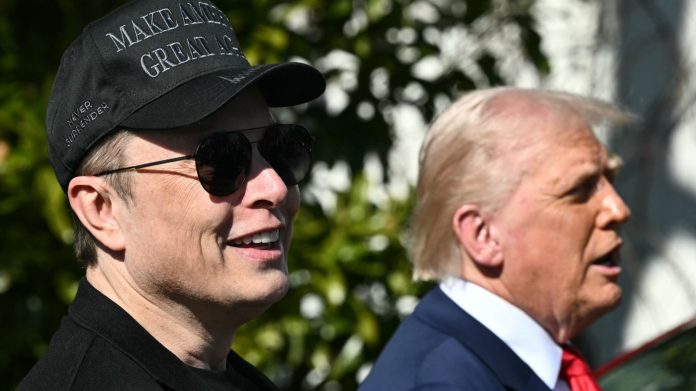
President Donald Trump and Tesla CEO Elon Musk speak to the press at the White House on March 11

Mandel Ngan/AFP via Getty Images


hide caption

toggle caption

Mandel Ngan/AFP via Getty Images

Elon Musk is supposed to visit the Pentagon on Friday. But what he’ll be doing there has ignited a fresh storm of controversy surrounding his access to sensitive government information.

The New York Times, citing unnamed officials, reported that Musk would receive a briefing on U.S. plans for any potential conflict with China, which involve some of the military’s most closely guarded secrets.

“The top-secret briefing that exists for the China war plan has about 20 to 30 slides that lay out how the United States would fight such a conflict,” the Times reported. “It covers the plan beginning with the indications and warning of a threat from China to various options on what Chinese targets to hit, over what time period, that would be presented to Mr. Trump for decisions, according to officials with knowledge of the plan.”

However, President Trump and members of his administration immediately pushed back on social media.

“How ridiculous. China will not even be mentioned or discussed,” Trump wrote.

Defense Secretary Pete Hegseth said Thursday night on X:X “We look forward to welcoming @elonmusk
to the Pentagon tomorrow. But the fake news delivers again — this is NOT a meeting about ‘top secret China war plans.’ It’s an informal meeting about innovation, efficiencies & smarter production. Gonna be great!”

Musk also weighed in on X, the platform he owns, saying “The New York Times is pure propaganda. Also, I look forward to the prosecutions of those at the Pentagon who are leaking maliciously false information to NYT. They will be found.”

The Pentagon briefing was set to take place in a secure meeting place normally used by the Joint Chiefs, known informally as “the tank.” This is according to a U.S. official, who spoke to NPR on condition of anonymity.

The official also said that Adm. Samuel Paparo, head of U.S. Indo-Pacific Command, which includes China, will take part virtually from Sri Lanka.

Pentagon officials said the briefing would focus on China but would only contain unclassified information.

Musk’s widespread access to government information through the Department of Government Efficiency, or DOGE, has already sparked multiple controversies.

His visit to the Pentagon raises additional questions. One is about what sort of national security information is being made available to Musk or members of his DOGE team.

In addition, Musk has extensive business ties to the Pentagon and to China, raising a host of issues about possible conflicts of interest. As the head of Tesla, Musk has extensive operations in China. And as the head of SpaceX, Musk and his company receive billions of dollars from the Pentagon to launch military satellites.

The U.S. military and Ukraine’s military both rely extensively on SpaceX’s Starlink satellite communications network.

NPR’s Tom Bowman contributed to this report.

Russian Energy Sites Burn as Kyiv and Moscow Trade Accusations of Blame

0

As Ukraine and Russia prepare for talks that would put in place a temporary halt on strikes on energy infrastructure, each side has continued to accuse the other of fresh attacks on the power grid, underscoring the deep mistrust between them.

Overnight into Friday, part of a major Russian gas station near the Ukrainian border was set ablaze in an attack that each country accused the other of launching. Unverified videos shared by Russian military bloggers showed a large fire at the station, which once pumped gas to Europe through Ukraine, with what appeared to be pipelines engulfed in flames.

Also on Friday, Russian authorities in the southwestern Krasnodar region reported a secondary explosion at a fuel depot that had been burning for two days after a Ukrainian drone attack. Russian officials said the fire had spread to more than 100,000 square feet.

Kyiv and Moscow agreed this week to a limited 30-day cease-fire on strikes against energy infrastructure — the first major step toward de-escalation in more than three years of war. The agreement followed calls between President Trump and President Volodymyr Zelensky of Ukraine, and Mr. Trump and President Vladimir V. Putin of Russia, to broker the partial cease-fire.

But the details of how and when this partial truce would take hold remain unresolved and are expected to be hammered out in U.S.-mediated talks in Saudi Arabia on Monday. Mr. Zelensky said his country would draw up a list of infrastructure facilities that could be covered by the cease-fire to avoid misunderstandings.

Strikes on energy facilities have been central to each side’s strategy to weaken the other throughout the war. Russia has pounded Ukraine’s power grid, aiming to make life unbearable for civilians and hinder the country’s war effort. Ukraine’s strikes on Russian facilities focus on crippling its vast oil industry, cutting off revenues that finance its military operations.

On Wednesday, the Ukrainian national railway said its power system had been attacked. The same day, Russia said Ukrainian drones attacked the fuel depot in the Krasnodar region. Neither claim could be independently verified.

Both sides have an interest in blaming the other for violating the cease-fire before it even begins, seeking to portray their opponent as untrustworthy. Against that backdrop, Friday’s attack on the Russian gas station fit neatly into this propaganda war.

The gas station sits just across the border from Ukraine, near the town of Sudzha, in territory that Ukrainian forces seized during their incursion into Russia’s western Kursk region last summer. But recent Russian advances have pushed back Ukrainian troops in the area from all but a sliver of land, and it was unclear whether they still controlled the station as of Friday.

The Russian defense ministry said Ukraine had “deliberately” blown up the Sudzha gas metering station as its military retreated from the area. It called the attack “a deliberate provocation” designed to “discredit the peace initiatives of the U.S. president.”

The Ukrainian Army, though, suggested the explosion was a Russian “false flag” operation designed to put the blame on Ukraine. It said Russia had “repeatedly shelled” the station in the past as it counterattacked Ukrainian troops in the area.

“Russians continue to create numerous fakes and seek to mislead the international community,” the army said in a Facebook post.

Until recently, the station was the sole transit point for Russian gas to the European Union through Ukraine. It ceased operations on Jan. 1, after Ukraine refused to renew the transit agreement, part of a broader push by Kyiv and its allies to reduce reliance on Russian energy.

That means Friday’s attack on the station will not immediately affect Russian gas exports. But if the damage is severe, it could have long-term consequences and hinder a potential resumption of exports after the war.

Damien Ernst, an energy expert and professor at the University of Liège in Belgium, said videos of the aftermath of the attack suggested that some equipment, including pipelines, had been hit, in what he described as “significant” damage that could take several months to repair.

Ivan Nechepurenko contributed reporting.

Law experts raise alarms over police action in DOGE Institute of Peace dispute : NPR

0

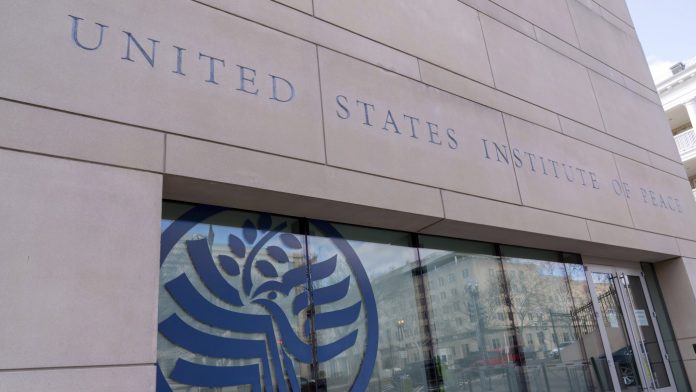
The United States Institute of Peace building Monday in Washington.

Jose Luis Magana/AP


hide caption

toggle caption

Jose Luis Magana/AP

Leadership at the U.S. Institute of Peace has known for weeks that the Trump administration, as well as Elon Musk’s Department of Government Efficiency, had its eyes on them.

But that foresight didn’t seem to matter when Washington, D.C.’s local police force escorted them away from the building Monday afternoon — and allowed a new regime to take over.

“We have been talking to them for many weeks now in anticipation of just this possibility and also to remind them that we are a private, nonprofit corporation in the District of Columbia and therefore not a federal agency,” George Moose, head of the institute until this week, told reporters on the steps of the building that day. “And therefore, the federal government had no entitlement to come in and take over our building.”

Yet the building – with its arched facade across the street from the State Department – became the site of a tense standoff this week between the institute’s employees and staffers with the Trump administration and DOGE.

U.S. District Judge Beryl Howell denied a request Wednesday by the institute to stop the takeover, saying it was difficult to determine whether the Trump administration’s actions were lawful. The judge said a fundamental question remains as to whether the institute, which works to prevent violent conflicts abroad, is an independent agency or part of the executive branch.

DOGE entering in dramatic fashion isn’t all that unusual these days: The group – itself not a government agency – is working to gut the U.S. Department of Education, the U.S. Agency for International Development, and the Consumer Financial Protection Bureau, among others.

What is unusual is that the police got involved – an occurrence Judge Howell said was “deeply troubling.”

A routine and unusual call

Both parties called the Metropolitan Police Department for help – putting law enforcement in the middle of the conflict, and prompting questions for how officers arrived at the decision to side with the Trump administration.

At around 4 p.m. on Monday, DOGE and Trump staffers were still trying to enter the building. According to a statement from the police department, that’s when the interim U.S. Attorney for D.C., Ed Martin, stepped in.

Because the district does not have statehood, Martin is the district’s main prosecutor. He was appointed by the president, and is widely regarded as a Trump loyalist. He did not respond to NPR’s request for an interview.

According to the MPD statement, Martin directed police to a letter saying Moose had been replaced. With that letter in hand, the police asked Moose to leave.

The MPD statement detailed more on Martin’s direction that day.

“The USAO provided the contact information for the acting USIP President, so MPD members could speak directly with him,” the statement said. “MPD members met with the acting USIP President, and he provided the MPD members with documentation that he was the acting USIP President, with all powers delegated by the USIP Board of Directors to that role.”

“In some ways this was a fairly routine call,” says Vanessa Batters-Thompson, executive director of the D.C. Appleseed Center for Law and Justice. “And in other ways it’s very unusual.”

Police officers are frequently called to situations where it’s not immediately clear who’s in the right — for instance, in a fight between a landlord and a tenant.

“Metropolitan Police did what they were trained to do,” says Batters-Thompson. “They went into the building. They notified the people who were there that they were now trespassing and they got them to leave peacefully.”

A question of weaponizing law enforcement

DOGE has pointed to that letter as its justification for taking over the institute and involving the police, saying Moose acted unlawfully by refusing to comply. Representatives for the group did not respond to NPR’s request for an interview.

“George is not the Acting President. He was removed from his position,” White House Deputy Press Secretary Anna Kelly wrote on social media. “George is actually a career bureaucrat who wants to be unaccountable to the American people. The Trump Administration won’t let him.”

But the question, Batters-Thompson says, is whether the letter regarding Moose’s firing was a valid legal document.

The institute, for its part, is arguing that it is not: The organization has sued the Trump administration, maintaining that it is an independent nonprofit established by Congress, and that the administration did not follow the proper steps to remove its leadership.

Others agree. Democratic Congressman Don Beyer called DOGE’s actions an illegal power grab and said it weaponized law enforcement.

“My office has received dozens of calls and emails from concerned neighbors about MPD’s involvement,” D.C. Councilmember Zachary Parker posted on social media. “I share these concerns.”

It also muddles the question of who police should answer to, says Rosa Brooks, a law professor at Georgetown University, who was also an MPD reserve officer from 2016 to 2020.

“For the first time in a very, very long time, street level police officers have to ask themselves whether they’re being told to do something that is itself lawful. And that’s not normally something police have to worry about,” says Brooks. “I don’t think they can fully trust the politically appointed people who are giving them direction, which places them in a really impossible position.”

She says that question of who to trust is hovering over the heads of police officers in a more vivid way than ever before, especially in D.C. which is tied so closely to the federal government.

South Korean Court Blocks K-pop Band NewJeans From Going It Alone

0

A South Korean court on Friday approved an injunction against the K-pop group NewJeans’ attempt to cut ties with its record label, Ador, blocking members from engaging in commercial activities without the label’s consent.

In the latest twist in a long-running feud between the two sides, a panel of judges in the Seoul Central District Court on Friday recognized Ador’s rights as the group’s manager. The ruling could halt the group’s plans to release new songs, organize its own appearances and sign independent advertising deals.

The five members of NewJeans announced their split from Ador last November, accusing the label of mistreatment, and have since renamed the group NJZ. In response, Ador filed a lawsuit to assert its contract rights over the group.

NewJeans said it will challenge the court decision, insisting that the label continued to treat the group unfairly and unequally.

“We believe that the decision did not fully take into account the complete breakdown of trust the members have experienced toward Ador,” NJZ said in a statement. “We did not have sufficient opportunity to fully present the factual background to the court.”

Ador, which disputes the group’s claims of mistreatment, welcomed what it called the court’s decision to “confirm its status as the exclusive management agency of the NewJeans members.”

“With our status as NewJeans’ exclusive agency now legally affirmed, we are fully committed to supporting the artists going forward,” it said in a statement. “We eagerly anticipate meeting with the artists for a heartfelt conversation at the earliest opportunity.”

Both Ador and NewJeans confirmed that the group will participate in the ComplexCon festival in Hong Kong this weekend.

NewJeans and Ador have been embroiled in a dramatic feud that has mesmerized its fans since August 2024. The dispute is centered on Min Hee-Jin, the girl group’s executive producer. Hybe, the parent company of Ador, replaced Ms. Min as Ador’s chief executive last year. NewJeans members went public with their demand for Ms. Min’s reinstatement. When Hybe refused, the group decided to leave Ador.

Hybe is also home to BTS, another global K-pop sensation.

Trump wants to erase DEI. Researchers worry it will upend work on health disparity : Shots

0

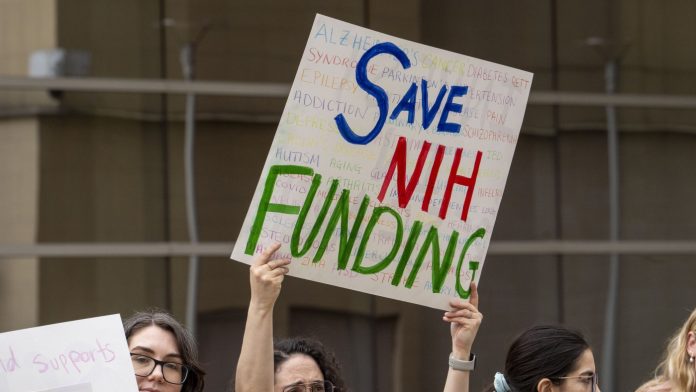
A protestor in Houston, Texas, holds a sign in favor of funding from the National Institutes of Health on March 7 during a “Stand Up for Science” rally at the Houston Medical Center.

Kirk Sides/Houston Chronicle via Getty Images


hide caption

toggle caption

Kirk Sides/Houston Chronicle via Getty Images

Dr. Fola May studies diseases of the digestive tract, and runs a lab at the University of California Los Angeles looking for ways to detect disease earlier in various groups. For that work, she says her lab is “very dependent” on federal funds from the National Institutes of Health and the Department of Veterans Affairs.

So as those agencies began canceling grants and programs that promote diversity, equity and inclusion, or “DEI,” May worried: Would work like hers, looking at health disparities also get swept in?

“I’m terrified,” May says.

Disparities in health — factors that make some groups sicker than others — had been a cornerstone of medical study in recent years, especially since the pandemic laid bare how access to care can affect so many aspects of health.

On the list

But now “health disparity” is among hundreds of terms the Trump administration is telling federal agencies to avoid or scrub from government Web sites, research and databases. Some researchers point out their work benefits rural White populations often overlooked in debates about diversity and equity.

“We have to recognize that disparities are affecting everyone, not just racial, ethnic minorities,” May says. “I’ll give an example: White individuals that live in rural areas of the United States are less likely to get a screening test.”

May and others working on projects addressing various gaps in medical care argue that conflating “health disparities” with racial division or politics will hurt efforts to try to improve the health of people overall.

But she says many people seem to misunderstand.

“One of the biggest challenges right now is that people are becoming very polarized about disparities research, and they’re thinking, ‘Oh, these are resources that are going to groups that are not me,'” she says.

From required to forbidden

So May says there’s an uncertain sense of censorship hovering over her research: “We aren’t sure what we can say in our grants. I very freely — before — wrote about disparities and equity in my grants. Actually, the NIH had a requirement that you had to write about equity and disparities in every grant.”

Across the nation’s scientific communities, researchers say they feel confused and concerned.

“It feels like there’s no adults in the room,” says K, a clinician who works at the VA. NPR granted her anonymity because she fears losing her job for speaking out. K researches why rural veterans — and women in particular — see doctors less, and die younger than counterparts in cities.

Protesters gather in Indianapolis on March 14. One man carries a homemade sign that reads, "Hands off the VA."

Protesters gather in Indianapolis on March 14. The Trump administration wants to cut 80,000 jobs from the Department of Veterans Affairs. The VA also funds medical and mental health research across the country.

Jeremy Hogan/SOPA Images/LightRocket via Getty Images


hide caption

toggle caption

Jeremy Hogan/SOPA Images/LightRocket via Getty Images

She says her academic colleagues and fellow VA researchers have circulated lists of words to avoid. But K says they include words like “women,” “female,” “gender,” and “underserved” — making it hard to accurately present data she’s collected.

“We’re actively omitting really important details and hoping that it’s still accurate and not misleading, while threading this needle of not having the work flagged or torn down,” she says.

No answers

Electra Paskett, a longtime researcher of cancer disparities at the Ohio State University in Columbus, has sought clarity from the agencies, but to no avail. Her partners at NIH can’t answer her questions because of a White House gag order that is still partially in effect.

“Does it fall into the DEI category? You cannot contact them to get an answer,” she says.

The NIH and VA did not respond to NPR’s requests for comment.

Paskett says work overcoming disparities in cancer care has dramatically increased survival, but she now worries the Trump administration’s sweeping policies may undermine that progress because of a misunderstanding of “disparities.”

“We hope that that is not under attack because if we want to cure cancer, we want to eliminate cancer — which is a bipartisan goal,” Paskett says, “then we have to make sure that we’re addressing all populations.”