Thursday, November 12, 2026
Home Blog Page 102

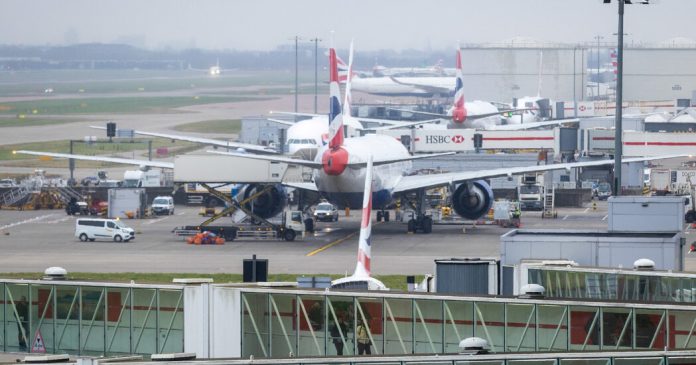
London’s Heathrow Airport Closed After Fire Causes Major Power Outage: Live Updates

0

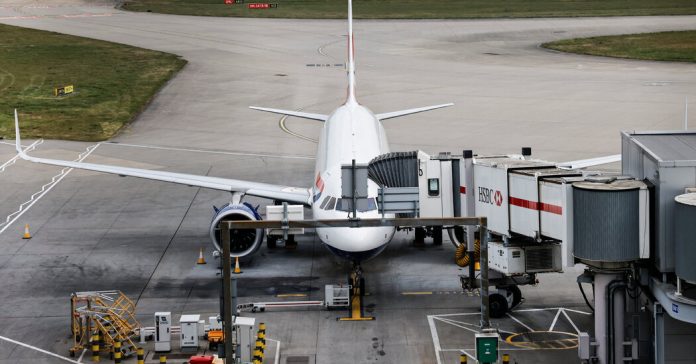
Warren Hu had just settled into his flight from New York to London, where he planned to visit his girlfriend, when he became one of the thousands of passengers whose travel was thrown into disarray early Friday because of a fire near Heathrow Airport.

The plane carrying Mr. Hu, a college student in New York, would be returning to the United States, a crew member announced. “I’m a bit surprised, but we can find a solution, so I’m trying to stay calm,” he said in a text message from the plane.

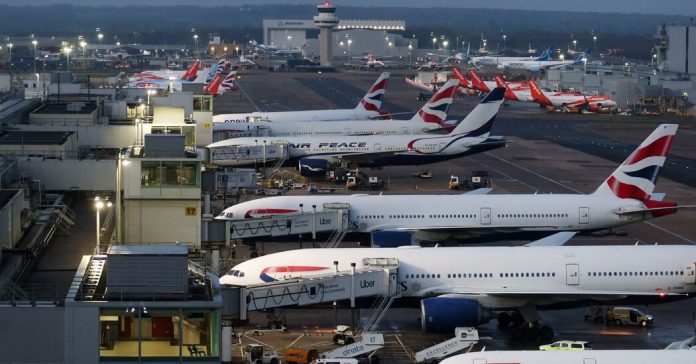
The fire, at an electrical substation near Heathrow, knocked out power at the airport, one of the world’s busiest, forcing the authorities to close it for all of Friday. They warned that flight disruptions could last for days.

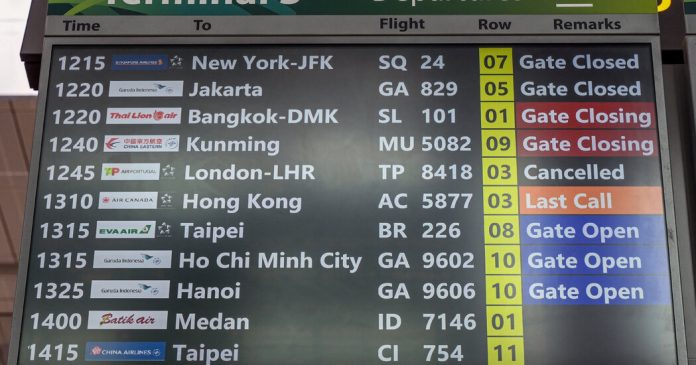
A glance at Heathrow’s flight information board on Friday morning gave a sense of just how big the shock waves from the closure would be. Flights from Vietnam, Brunei and India were scheduled to land Friday morning. Passengers were expecting to board planes taking them to dozens of destinations: Tokyo and Singapore, Minneapolis and Miami.

In the Chinese city of Shenzhen, Lukas Zou was among the travelers waiting for news about their now-delayed flight to London. Mr. Zou, who works at a trading firm, said he learned of the Heathrow shutdown just as he was about to board his Shenzhen Airlines flight, scheduled to depart at 1:45 p.m. local time.

“With so much luggage, I don’t know if I should laugh or cry. I’ve already booked a hotel room in London, and it can’t be canceled,” Mr. Zou said. He said that Shenzhen Airlines was arranging hotel rooms for the affected passengers, and that their flight might now be rescheduled for 2 a.m.

Dozens of airlines fly to Heathrow from about 180 places worldwide. Many planes already in the air were forced to divert to other airports.

As many as 290,000 passengers traveling in or out of Heathrow could be affected by the closure, according to Cirium, an aviation analytics company. On Friday, 669 flights were scheduled to take off from Heathrow, Cirium said.

Heathrow is the main hub for British Airways, which said it was redirecting flights already on their way to Heathrow to other airports in Britain, where possible.

At Fiumicino airport in Rome, dozens stood in line at the British Airways counter, hoping to learn about their flights. The airport’s information board showed that four British Airways flights were canceled on Friday morning.

A group of high school students from Arizona, planning to fly home via Heathrow after a week in Italy, arrived at Fiumicino to disappointment. “We didn’t find out the flight was canceled until half of our party had checked in,” said Angel Brady, a chaperone on the trip. She said the group would miss its connecting flight to Phoenix.

North American, Asian and Australian airlines were also affected. American Airlines, Delta Air Lines, United Airlines, Air Canada and JetBlue were among those having to divert their Heathrow-bound jets or return them to the airports they had come from.

Singapore Airlines said that a flight that left for Heathrow at 9 a.m. local time on Friday was returning to Singapore, and that five flights to London on Friday had been canceled.

Australia’s Qantas diverted two Heathrow-bound flights to Paris.

Nicholas Yong contributed reporting from Singapore.

Trump could upend Supreme Court precedent with FTC firings : NPR

0

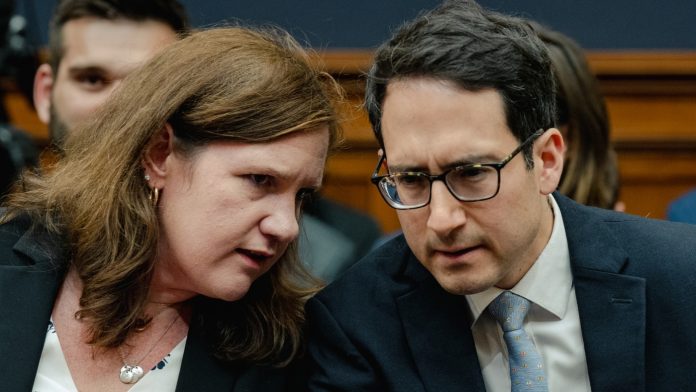
Democratic members of the Federal Trade Commission Rebecca Kelly Slaughter and Alvaro Bedoya chat during a House Judiciary Committee hearing on July 13, 2023. President Trump fired both on March 18.

Shuran Huang/The Washington Post via Getty Images


hide caption

toggle caption

Shuran Huang/The Washington Post via Getty Images

President Trump’s firings this week of the two Democratic members of the Federal Trade Commission drew fresh outrage from people who view the terminations as blatant abuses of power, and renewed assertions from the White House that the president has the authority to fire such officers at will.

Already, Trump’s removals of Democrats at the Merit Systems Protection Board, the National Labor Relations Board, the Federal Labor Relations Authority and other independent agencies have been challenged in federal court.

Now, it appears likely one of those cases will reach the Supreme Court. With several cases in the running, the question is which might get there first. The fired FTC commissioners have vowed to sue as well.

Members of independent agencies fired by Trump

Jan. 27

Equal Employment Opportunity Commission
Fired Democratic Commissioners Charlotte Burrows and Jocelyn Samuels have not yet challenged their firings.

National Labor Relations Board
Democratic board member Gwynne Wilcox was reinstated by U.S. District Judge Beryl Howell. The D.C. Circuit is weighing the Trump administration’s appeal.

Privacy and Civil Liberties Oversight Board
Democratic members Travis LeBlanc and Edward Felten have challenged their firings. U.S. District Judge Reggie Walton has scheduled a hearing for April 30. Trump also fired Democratic Chair Sharon Bradford Franklin, but she did not challenge her firing.

Feb. 7

Office of Special Counsel
Special Counsel Hampton Dellinger was reinstated by U.S. District Judge Amy Berman Jackson and then was removed again by the D.C. Circuit. On March 6, Dellinger ended his legal fight.

Feb. 10

Merit Systems Protection Board
Democratic member Cathy Harris was reinstated by U.S. District Judge Rudolph Contreras. The D.C. Circuit is weighing the Trump administration’s appeal.

Federal Labor Relations Authority
Democratic Chair Susan Tsui Grundmann was reinstated by U.S. District Judge Sparkle Sooknanan.

March 18

Federal Trade Commission
Democratic Commissioners Rebecca Kelly Slaughter and Alvaro Bedoya say they will challenge their firings.

White House prepared for Supreme Court fight

Asked about the firings of FTC Commissioners Rebecca Kelly Slaughter and Alvaro Bedoya, White House press secretary Karoline Leavitt said on Wednesday that “the time was right to let these people go,” adding that the White House was prepared “to fight it all the way to the Supreme Court.”

On Thursday, a group of lawmakers including Democratic Sens. Amy Klobuchar and Dick Durbin called on Trump to rescind the FTC terminations.

“This action contradicts long standing Supreme Court precedent, undermines Congress’s constitutional authority to create bipartisan, independent commissions, and upends more than 110 years of work at the FTC to protect consumers from deceptive practices and monopoly power,” stated their letter signed by 28 senators.

The executive branch includes more than 50 independent agencies and government corporations. Many have historically operated with a degree of autonomy granted by Congress.

The structure of some of these agencies, with members of both major parties serving staggered terms, has helped ensure some distance and independence from the White House. The officers Trump has tried to fire since January mostly had months and years left in their terms. In some cases, the terminations have left boards with only Republican members.

A 90-year-old Supreme Court decision has protected commissioners

The question that these firings raise is whether a Supreme Court decision known as Humphrey’s Executor v. United States should stand. In 1935, the court unanimously upheld Congress’ requirement that presidents can fire members of independent boards or commissions only for cause, such as inefficiency, malfeasance or neglect of duty.

The case involved a conservative member of the FTC, whom President Franklin D. Roosevelt saw as standing in the way of his New Deal policies. William Humphrey died shortly after Roosevelt fired him, so it was his executor who sued the government and won.

The Federal Trade Commission building in Washington, D.C.

The Federal Trade Commission building in Washington, D.C.

Paul J. Richards/AFP via Getty Images


hide caption

toggle caption

Paul J. Richards/AFP via Getty Images

But the court’s current conservative supermajority has been chipping away at that precedent, so the Trump administration could prevail if this gets to the Supreme Court.

The Justice Department maintains that the restrictions established by Humphrey’s Executor don’t apply to today’s FTC or other multimember regulatory bodies, given the power those agencies now wield.

In February, acting Solicitor General Sarah Harris wrote in a letter to Durbin, the top Democrat on the Senate Judiciary Committee, that those commissions, in their present form, exercise substantial executive power, including through rulemaking and issuing unilateral decisions.

“An independent agency of that kind has ‘no basis in history and no place in our constitutional structure,'” Harris wrote, quoting a more recent Supreme Court decision that established that the president could remove the single director of the Consumer Financial Protection Bureau for reasons other than cause. “To the extent that Humphrey’s Executor requires otherwise, the Department intends to urge the Supreme Court to overrule that decision, which prevents the President from adequately supervising principal officers in the Executive Branch who execute the laws on the President’s behalf.”

In the CFPB case, the court limited its decision to agencies with a single director. But Harris’ letter said the Justice Department believes removal restrictions at agencies with multimember commissions are also unconstitutional.

Independent agencies work for the public good

Though the independent agencies are not all household names, their work touches the lives of everyday Americans in numerous ways.

The FTC, for example, investigates unfair or deceptive business practices such as price-fixing and the use of noncompete agreements by employers. It reviews mergers to make sure they don’t limit consumer choice.

The Equal Employment Opportunity Commission reviews complaints from workers about discrimination on the job. The National Labor Relations Board hears disputes between employers and workers who band together to seek better wages and working conditions. The Merit Systems Protection Board hears cases involving federal employees who believe they were wronged by the government.

“These agencies need to be able to operate with a level of independence so that they can do the work for the American people and not be puppet masters” serving the president’s allies, says Jared Davidson, counsel for the nonpartisan, nonprofit legal advocacy group Protect Democracy, which works to counter authoritarianism.

Bedoya, one of the two FTC commissioners removed on Tuesday, warned that billionaires such as Elon Musk, Mark Zuckerberg and Jeff Bezos, all of whom attended Trump’s inauguration, will benefit from his firing and that of his co-commissioner, Slaughter.

“I am currently suing or enforcing court orders against each of their companies,” Bedoya said in an interview on NPR’s Morning Edition, adding that any of those actions could be withdrawn by the Republican commissioners still at the FTC.

Guests including Meta CEO Mark Zuckerberg, Amazon founder Jeff Bezos, Google CEO Sundar Pichai and Elon Musk attend President Trump's inauguration in the rotunda of the U.S. Capitol on January 20.

Guests including Meta CEO Mark Zuckerberg, Amazon founder Jeff Bezos, Google CEO Sundar Pichai and Elon Musk attend President Trump’s inauguration in the rotunda of the U.S. Capitol on Jan. 20.

Julia Demaree Nikhinson/AFP via Getty Images


hide caption

toggle caption

Julia Demaree Nikhinson/AFP via Getty Images

Dire warnings about overturning 90 years of precedent

With legal challenges making their way to the Supreme Court, some lawyers and scholars are issuing dire warnings about the consequences of overturning Humphrey’s Executor.

“It would be absolutely disastrous for the American people if the court decides to give the president carte blanche to ignore the clear mandate of Congress and turn these independent agencies into essentially groups of political cronies,” says Davidson.

If the Supreme Court overturns Humphrey’s Executor, he warns, there would be little standing in the way of Trump firing members of the Federal Reserve Board of Governors if he disagreed with their policies or wanted the Fed to take some specific action, which could destabilize the economy.

It’s a warning echoed by a group of law professors in an amicus brief filed with the Supreme Court.

Quoting from a law review article by Harvard Law professor and former Fed governor Daniel Tarullo, they note that the Fed “would obviously be among the many agencies whose constitutionality would be under a cloud.”

“The functioning of the Federal Reserve is essential to the stability of the American economy,” the law professors wrote. “Concerns (warranted or unwarranted) that its operations could be disrupted could foster financial and political instability and cause lasting harm.”

In another amicus brief filed in a separate case, the law professors give a chilling example of how the Fed’s operations might be disrupted.

“There are times when a political leader seeking re-election will prioritize short-term economic activity over long-term price stability. A president may, for example, want unemployment to go down and economic activity to increase in the run-up to voting,” they wrote. “More accommodative monetary policy can achieve those effects but also will increase the risk of higher levels of inflation in the future.”

On Wednesday night, after the Fed kept interest rates unchanged, Trump posted a message on social media second-guessing that decision.

“The Fed would be MUCH better off CUTTING RATES as U.S. Tariffs start to transition (ease!) their way into the economy. Do the right thing,” he wrote on Truth Social.

Fed Chair Jerome Powell, whom Trump appointed in 2018, has previously said he and his colleagues are guided only by economics in their decision-making. During Trump’s first term, Powell showed a willingness to ignore Trump’s criticism, and last November he said he would not resign if Trump called on him to do so. Powell’s term expires in 2026 but could be extended.

Bedoya, speaking to NPR, warned that Trump could make that decision for Powell should Humphrey’s Executor be overturned.

“People need to understand if I can be removed for any reason at any time, so can Jerome Powell at the Fed,” said Bedoya. “And so it’s not just about small businesses and consumers. It’s also about retirees and investors and their life savings in the stock market.”

Editor’s note: Amazon is among NPR’s recent financial supporters.

Have information you want to share about ongoing changes across the federal government? NPR’s Andrea Hsu can be contacted through encrypted communications on Signal at andreahsu.08.


What Happens When a Hub Like Heathrow Shuts Down

0

London’s Heathrow Airport is one of the busiest travel crossroads in the world. It handles about 1,300 flights a day, from more than 80 airlines. Nearly six million people and more than 130,000 tons of cargo moved through the London airport last month.

So what happens when a hub this size grinds to a halt?

First, the planes full of people and cargo already on their way to Heathrow have to find another place to land. Countless passengers have to find hotel rooms wherever they end up. Crews and pilots must take legally mandated rest. Airlines have to figure out how to reroute planes and cargo.

Ian Petchenik, the director of communications at Flightradar24, a flight tracking website, described it as “a million moving pieces that are all trying to get where they need to go.”

Most major international airlines operate flights into Heathrow, which Mr. Petchenik called the “crown jewel of most international airlines,” and it receives flights from the widest variety of air carriers of any airport in the world.

When Heathrow shut down early Friday, 120 flights were already heading there.

Some were able to land nearby, at other London airports or in Birmingham or Manchester. Others were redirected to continental European destinations like Amsterdam and Frankfurt. One British Airlines flight that left from New York’s Kennedy International Airport ended up in Reykjavik, Iceland. A Japan Airlines flight from Tokyo went to Helsinki, Finland.

In Taipei, the day’s only flight to Heathrow took off shortly after 9 a.m. The plane had only made it past Hanoi when it turned around and headed back to Taipei, according to data from Flightradar24.

But most flights ended up neither where they had started nor where they planned to go, setting off a global logistical scramble for hotel rooms and alternate flights as passengers tried to figure out how to make it to sightseeing tours, business meetings and family events.

The high number of rerouted planes makes the intricate work of air traffic control even more complicated than usual.

“You stuff more aircraft into the same airspace, you’ve got more complexity,” said Martin Craigs, who spent decades in the aviation industry, most recently as president of the Aerospace Forum Asia, a Hong Kong-based association that represents aviation equipment suppliers.

Most airports are prepared to handle slightly higher than usual numbers of incoming aircraft, Mr. Craigs said. “The system has been developed to deal with worst-case scenarios.”

Officials in London said they expected the disruption at Heathrow to continue for several days. It could also take days for airlines to rebook the hundreds of thousands of passengers they expect to be affected.

The shutdown of an important global transit hub for such a prolonged period of time is “unprecedented,” Mr. Petchenik said. A rare, similarly extensive disruption occurred in 2010 when a volcano eruption in Iceland grounded more than 100,000 international flights over several days.

Here are 5 takeaways from the week’s Trump-related developments : NPR

0

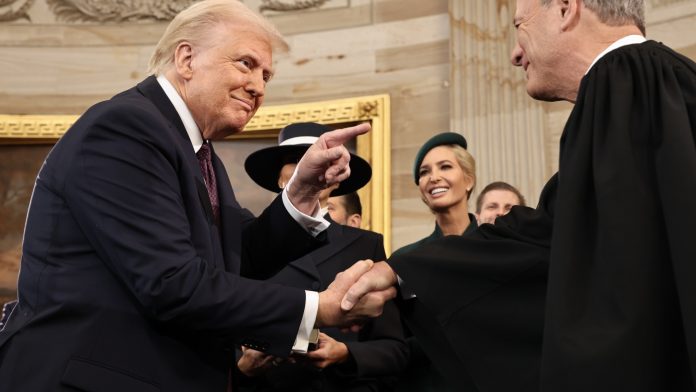
President Donald Trump gestures to Supreme Court Chief Justice John Roberts after his swearing-in ceremony in the Rotunda of the U.S. Capitol on Jan. 20.

Chip Somodevilla/Getty Images


hide caption

toggle caption

Chip Somodevilla/Getty Images

We’ll be recapping what you need to know every Friday morning for the first 100 days of the Trump administration. Get more updates and analysis in the NPR Politics newsletter.

President Trump is continuing to move ahead with deportations and sweeping changes to the federal government. His administration is running into some obstacles in the courts but that hasn’t stopped him from seeing just how far he can go.

Meantime, Trump’s also dealing with a series of foreign-policy hotspots, while taking aim domestically at opponents.

Here are five takeaways from the week:

1. Running into the courts: President Trump is testing the limits of the presidency, doing as much as possible without Congress. To this point, that’s meant tackling a lot — like restructuring the federal government, laying off workers, dismantling agencies and taking over boards of once semi-independent outfits. But while Republicans, who control both houses of Congress, are eager to give Trump the reins, there is another equal branch — the judiciary.

This week saw the courts become speed bumps once again in what Trump is trying to do, from his immigration deportations, his ban on transgender military service members or his attempted termination of climate-related grants through the Environmental Protection Agency. The Trump administration is pushing back, and the president himself called for the impeachment of a judge in one of the cases. That didn’t sit well with Chief Justice John Roberts, who said “impeachment is not an appropriate response to disagreements concerning a judicial decision.”

An NPR/PBS News/Marist poll from earlier this month found that 58% weren’t confident Trump would follow court orders if they block his executive actions. And he will undoubtedly test just how far the courts will let him go with cases that presumably end up at the U.S. Supreme Court.

2. What to fight for: Democrats are not unified on how to oppose Trump (as evidenced by Senate Democratic leader Chuck Schumer’s unwillingness to let the government shut down last week.) The courts are the avenue many on the left see as the best way to thwart Trump’s agenda. But the right believes they have public opinion on their side on many of the issues landing in court.

As they see it: Why would Democrats be against deporting people the administration says are gang members; someone who, they say, was promoting Hamas’ position on a college campus; or a doctor who allegedly had photos of a Hezbollah leader on her phone? Those on the left would argue it’s not about what people are accused of, it’s about adhering to court orders, regardless of what someone is accused of, an idea that’s as old as the republic and John Adams defending British soldiers.

3. Waiting for Putin: Trump spoke separately with Russian President Vladimir Putin and Ukrainian President Volodymyr Zelenskyy hoping to get them on the same page for a ceasefire. Trump said he got a 30-day ceasefire on infrastructure agreed to, but soon after, there were more bombings, including from Russia on Ukrainian hospitals.

The two sides are still incredibly far apart. Russia, for example, wants no more re-arming of the Ukrainian military in addition to seizing four territories it doesn’t have complete control over currently. The Ukrainian view — as well as many in Europe — is that Putin is stalling and likes the idea of being seen again as one of the big dogs on the international stage with a direct relationship with the United States. So Is Trump being played or will something tangible emerge? One thing is for certain, Trump’s approach has broken with decades of bipartisan foreign policy, and he’s upset many U.S. allies, who believe there will be consequences and Trump is unwittingly empowering China.

President Donald Trump (right) walks with Russia's President Vladimir Putin before taking a family photo at the G20 Summit in Osaka on June 28, 2019.

President Donald Trump (right) walks with Russia’s President Vladimir Putin before taking a family photo at the G20 Summit in Osaka on June 28, 2019.

Brendan Smialowski/AFP via Getty Images


hide caption

toggle caption

Brendan Smialowski/AFP via Getty Images

4. More foreign-policy challenges: The Russia-Ukraine war isn’t the only high-stakes international challenge facing Trump. This week, he announced bombings of Houthis in Yemen for their attacks on commercial vessels. He also warned Iran to not help the Yemeni group and said the U.S. would “completely annihilate” the Houthis.

And that ceasefire between Israel and Hamas that the then-incoming Trump administration was so keen on taking credit for evaporated this week. Israel bombed Gaza in what was one of the deadliest single days since the war began.

White House press secretary Karoline Leavitt confirmed on Fox News Monday night that Israel “consulted” the White House before the strikes. It raises the question of Trump’s influence on the war — and what he really wants: Does he want it to end with peace between the two sides — or does he simply want Gazans to leave or be wiped out, as he’s called for Gazans to be relocated and for a “riviera” created?

5. Trump continues to indicate he wants to go after political enemies: For all of the Trump administration’s now-confirmed agency heads who said during their confirmation hearings that they would take the “political weaponization” out of government, there have certainly been a lot of moves that call those pledges into question.

Consider that, just this week, the Trump administration kicked out the South African ambassador for saying something perceived to be anti-Trump; Trump stripped the Biden children of Secret Service protection (even though Biden kept it for Trump’s children) with part of the justification being that Hunter Biden had traveled to South Africa, a country whose government the Trump administration and South African-born adviser Elon Musk have accused of racism toward whites; Trump said Biden’s pardons are “void” because Trump says Biden used an autopen (even though there’s no rule about that), and in the same post, took aim at Jan. 6 committee members; and his administration suggested anger at Maine’s governor for a terse exchange was influencing contract cancellations.

Here’s a day-by-day look at what happened this week as it relates to Trump and his administration (since our last post, last Friday, March 14):

Friday, 3/14/25:

  • Dr. Oz’s Senate confirmation hearing to lead Medicare and Medicaid. 
  • Johns Hopkins cuts 2,000 workers after USAID grant cuts. 
  • Pelosi comes out against Schumer voting for the spending bill. 
  • Trump takes birthright citizenship to the Supreme Court
  • Maryland federal court ruling that Trump firings are an illegal scheme. Temporary restraining order (through March 27). Holding preliminary injunction hearing March 26. Trump has appealed.
  • Democrats’ split is ripped open. House Democratic leaders hold a presser arguing for voting against the spending bill after Schumer said he’d vote for it. Jeffries pointedly doesn’t answer if Senate Democrats need new leadership. 
  • University of Michigan economic survey shows decline in confidence including among Republicans down 10 points since last month.
  • U.S. and Israel reach out to African nations to take in Gazans, according to reporting by the Associated Press. (NPR has not independently verified the reporting.) 
  • Trump lashes out at career prosecutors in speech at Justice Department. He is hotly critical of media outlets, says it has to be “illegal” what is said about him and that it will be “legendary” for those who expose the media. He also says Ukraine should not have picked on someone bigger than them — even though Russia started the war when it invaded three years ago.
  • White House says Hamas “is privately making demands that are entirely impractical without a permanent ceasefire.” Steve Witkoff, the U.S. Special Envoy to the Middle East, says Hamas is threatening a permanent ceasefire. 
  • Arlington Cemetery scrubs links of Black and female veterans, later restoring some and attributing the removals to mistakes implementing the administration’s anti-DEI policies.
  • Dr. Rasha Alawieh, an H-1B visa holder, was not allowed to return to the U.S. after visiting family in Lebanon and was sent back. An order was issued halting her deportation as her plane sat on the tarmac, but the plane ultimately departed for reasons unclear to her family and colleagues at Brown. “They are treating her like a terrorist,” said Dr. Basma Merhi, her lawyer and Brown colleague. “It is ridiculous. She is an accomplished doctor, she is treating patients, who is treated like a criminal. And she is following all the rules. She is not doing anything wrong. And her visa is valid.”
  • Black Medal of Honor recipient’s page taken down, the URL changed to say “deimedal.” 

Saturday:

  • A judge preemptively blocks five Venezuelans the administration alleged were members of a gang from being deported. The judge later extends the order to all alleged Tren de Aragua members.
  • Trump invokes Alien Enemies Act to speed up deportations of Venezuelan gang members. The administration quickly deports many alleged members to El Salvador, in apparent contravention of the court order.
  • All Voice of America and Radio Marti employees are locked out and broadcasts on the networks cease. Also severed were all contracts for the privately incorporated international broadcasters including Radio Free Europe/Radio Liberty, Radio Free Asia and the Middle East Broadcasting Networks.
  • Trump announces action against Houthi rebels. 

Sunday:

  • Polls show Democratic favorable ratings at historic lows (CNN, NBC).
  • The White House argues it didn’t defy a “written order” in regards to deported alleged gang members but the judge’s verbal order was: “Any plane containing these folks that is going to take off or is in the air needs to be returned to the United States.” They were deported to a notorious El Salvadoran prison.
  • For his part, Trump, asked whether the administration had violated a temporary restraining order by deporting Venezuelans, Trump said, “I don’t know. You’ll have to speak to the lawyers. I can tell you this — these were bad people.” On using the Alien Enemies Act to do so, a wartime law, he said they “invaded our country — so in that sense, it is war.”
  • After learning of the judge’s order, the El Salvador president, Nayib Bukele posted, “Oopsie… too late.” He posted a video later that showed what he said were 238 members of the Tren de Aragua gang arriving in his country and said they’d be detained for a year.
  • Trump says he’ll speak to Putin on Tuesday. “We’re doing pretty well, I think, with Russia,” he said. “We’ll see if we have something to announce maybe by Tuesday. I’ll be speaking to President Putin on Tuesday. … We want to see if we can bring that war to an end.”

Monday:

  • Hearing in Boston before a federal judge unhappy with the Trump administration for defying a court order to not deport a kidney specialist, Dr. Rasha Alawieh, with a valid H-1B visa. Later in the day, Homeland Security said in a statement that Alawieh was openly supportive of a Hezbollah leader 
  • Hearing on Alien Enemies Act. DOJ argues it didn’t have to obey an oral order to turn planes around, because it wasn’t in writing. And, they argue, that the judge didn’t have jurisdiction because the planes were outside U.S. airspace. The judge argues he does because he has jurisdiction over the people. 
  • Trump claims in social media post that all pardons issued by Joe Biden are void because he used an “autopen”. It is not clear if Biden used a device, which would not invalidate the pardons. Trump claims pardons for those on the bipartisan congressional Jan. 6 committee are void, therefore potentially opening the door toward a justification for investigation. 
  • Trump chairs meeting at Kennedy Center, says he doesn’t like Hamilton and wants to improve the center structurally, says it’s in “disrepair.” 
  • Dan Bongino begins at FBI as deputy director.
  • Democratic Senate leader Chuck Schumer postpones his book tour citing “security concerns.”
  • U.S. kicks out South Africa ambassador for saying there are “supremacist instincts” in the MAGA movement that led to Trump, in addition to being a reaction to demography. Rubio announces the ambassador’s ouster via X. 
  • Gaza ceasefire ends; Israel embarks on “extensive strikes” on same day Trump reportedly approves an Egyptian Gaza reconstruction plan. They are the largest strikes since the ceasefire began on Jan. 19. 
  • Black Medal of Honor recipient’s page restored. 
  • Georgetown graduate student detained for alleged ties to Hamas and alleged spreading of propaganda.  
  • Attorney General Pam Bondi says destroying Teslas could be classified as terrorism. 
The US Institute of Peace (USIP) in Washington, D.C., on March 17. The Trump administration fired most of USIP's board and sent its new leader into the Washington headquarters of the independent organization on Monday, in its latest effort targeting agencies tied to foreign assistance work.

The US Institute of Peace (USIP) in Washington, D.C., on March 17. The Trump administration fired most of USIP’s board and sent its new leader into the Washington headquarters of the independent organization on Monday, in its latest effort targeting agencies tied to foreign assistance work.

Stefani Reynolds/Bloomberg via Getty Images


hide caption

toggle caption

Stefani Reynolds/Bloomberg via Getty Images

Tuesday:

  • DC police usher in new head of U.S. Institute of Peace into the building after standoff with staff. 
  • Judge demands more answers about deportation flights to El Salvador.
  • Trump calls for judge’s impeachment 
  • Trump takes Secret Service protection away from Hunter and Ashley Biden, former President Biden’s children.
  • Some of the files related to President Kennedy’s assassination are released 
  • After phone call with Trump and Putin, Russia, they say, agrees to a limited 30-day ceasefire on Ukrainian energy and infrastructure. “The leaders agreed that the movement to peace will begin with an energy and infrastructure cease-fire, as well as technical negotiations on implementation of a maritime cease-fire in the Black Sea, full cease-fire and permanent peace,” the White House said in a statement. “These negotiations will begin immediately in the Middle East.” The Kremlin also says there will be a prisoner swap of 175 prisoners on Wednesday. Putin says he does not want to see Ukraine’s military rearmed in order to get a lasting peace.
  • Judge orders that DOGE, Elon Musk’s Department of Government Efficiency, reinstate USAID’s functionality and says that the agency’s closure likely violated the Constitution.
  • Portraits of Trump, first lady Melania Trump, Vice President JD Vance and second lady Usha Vance are seen hanging in the Kennedy Center, breaking with past protocol.
  • Vance becomes finance chair of the RNC, the first time a vice president has done so.
  • Trump fires two Democrats on the Federal Trade Commission. One of them, Alvaro Bedoya, says Trump wants the FTC to be a “lapdog for his golfing buddies.”
  • Astronauts, stranded in space for months, touch down successfully back on Earth. 
  • Chief Justice John Roberts rebukes Trump’s call for impeachment of judge. Trump responded saying the judge is “radical left.” 
  • IRS agents who investigated Hunter Biden given promotions, according to the Associated Press. NPR has not independently confirmed the reporting.
  • Russia continues to hit Ukraine, including a hospital. There also were strikes by Ukraine. 
  • Social Security Administration changes coming March 31. People will no longer be able to verify eligibility for benefits over the phone. It will have to be done online or in person. The Trump administration says it’s to stop fraud. Critics say it may hurt people in rural areas most because of the distance to SSA offices. It also comes as SSA offices are being closed across the country because of DOGE.
  • A federal judge issues a temporary injunction, halting Trump’s ban on people who are transgender in the military. 

Wednesday:

  • Trump and Zelenskyy speak.
  • Mahmoud Khalil case, a Columbia University graduate student and U.S. permanent resident detained by ICE, moving from New York to New Jersey. 
  • Judge James Boasberg grants Trump administration another day to clarify the timeline of  deportation flights that went to El Salvador.
  • Trump says Houthis will be “completely annihilated” in post warning Iran to stop supporting the Yemeni group. 
  • Trump suspends $175 million to the University of Pennsylvania because of trans athletes policy. 
  • Many of the erased images and web sites are being put back up, as agencies figure out what compliance with Trump’s executive orders means, including a page with Jackie Robinson’s army tenure and Navajo Code Talkers after public outcry.
  • Trump considering renovations, potentially paving, the Rose Garden at the White House.
  • Sen. Michael Bennet, D-Colo., when asked by a town-hall attendee when he would call for Schumer to step aside, says: “[I]t’s important for people to know when it’s time to go.”
  • Commerce Secretary Howard Lutnick goes on TV and recommends Tesla stock. 

Thursday:

President Donald Trump signs an executive order to reduce the size and scope of the Education Department alongside school children signing their own versions, during a ceremony in the East Room of the White House on March 20.

President Donald Trump signs an executive order to reduce the size and scope of the Education Department alongside school children signing their own versions, during a ceremony in the East Room of the White House on March 20.

Chip Somodevilla/Getty Images


hide caption

toggle caption

Chip Somodevilla/Getty Images

  • Trump signs executive order aimed at dismantling the Education Department. “We’re not doing well with the world of education in this country, and we haven’t for a long time,” Trump said. “We’re going to be returning education, very simply, back to the states where it belongs.” Local municipalities already fund nearly all aspects of K-12 schooling. Trump also says the department’s “useful functions” will be “preserved in full” but managed by other agencies, including things like Pell Grants and Title I resources for children with disabilities. 
  • Judge orders Trump not to deport Georgetown postdoctoral student and visa holder. The government says he was spreading “Hamas propaganda” and has “close connections” to an advisor to Hamas. The man’s wife is an American citizen and her father had been a political adviser to Hamas.
  • Judge says government provided a “woefully insufficient” response to prior orders about deportation flights. He is now asking the government to explain by 10 a.m. Friday to give more details.

What We Know About the Closure of Heathrow Airport

0

Heathrow Airport in London was expected to be closed all of Friday, shutting down one of the world’s busiest air hubs and causing worldwide travel disruptions, after it lost power because of a fire nearby.

An average of more than 220,000 passengers a day traveled through the airport last year, on flights offered by dozens of airlines to about 180 destinations around the globe.

Here is what we know about Heathrow’s closure.

Heathrow said early Friday that it had been hit by a power outage, caused by a fire at an electrical substation supplying the airport.

The London Fire Brigade said that it had been called to the fire, in western London, around 11:20 p.m. on Thursday, and had deployed dozens of firefighters. About 150 people were evacuated from the area. The fire was under control by around 6:30 a.m., the fire brigade said.

Britain’s energy secretary, Ed Miliband, said it was “too early to say” what caused the fire. He told LBC Radio that so far “there’s no suggestion there is any foul play.”

Nearby homes and businesses were also affected by the outage. Some 100,000 homes were without power overnight as a result of the fire, Mr. Miliband said. That number was down to about 4,000 later in the morning.

Heathrow advised passengers not to go to the airport because it would be closed until at least 11:59 p.m. local time on Friday.

Heathrow’s closure will affect at least 1,351 flights in and out of the airport, according to Flightradar24, a flight tracking website. As the closure was announced early Friday, 120 aircraft were in the air heading to Heathrow.

Some were diverted to alternate airports, including London Gatwick Airport, Amsterdam Airport Schiphol and Charles de Gaulle Airport in Paris, Flightradar24 said. Others turned back to the airports they had left.

It could take several days for airlines to rebook passengers. As many as 290,000 people scheduled to fly to or from Heathrow could be affected by the closure, said Mike Arnot, a spokesman for the aviation analytics firm Cirium.

The disruption caused by the fire was expected to continue into Friday morning, said Pat Goulbourne, assistant commissioner at the fire brigade.

“We expect significant disruption over the coming days and passengers should not travel to the airport under any circumstances until the airport reopens,” a Heathrow spokesperson said in a statement.

Airlines are required to look after you if you are departing from Britain on any airline or arriving there on a European Union or British airline. If your flight is canceled, you should be offered a choice of a refund or alternate travel arrangements at the earliest opportunity, according to Britain’s Civil Aviation Authority.

If you choose to travel at another time, the airline must provide you with a reasonable amount of food or drink, accommodation if your rerouting is not until the next day, and transport to and from the accommodation.

If your flight has been canceled or diverted, check with your airline on its policies.

Trump lawyers face off over Alien Enemies Act deportations : NPR

0

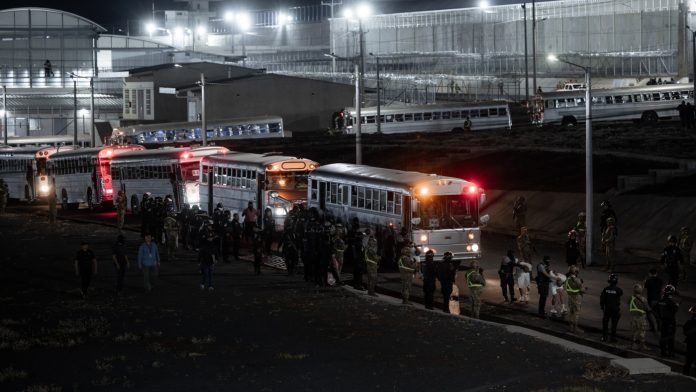
More than 250 people the U.S. government says are foreign gang members arrived in El Salvador by plane on March 16, where El Salvador’s President Nayib Bukele confirmed they will be sent to the country’s mega-prison CECOT.

El Salvador Presidency/Handout


hide caption

toggle caption

El Salvador Presidency/Handout

Government lawyers are expected back in court on Friday to debate the legality of President Trump’s proclamation of the Alien Enemies Act.

Trump invoked the 1798 law last weekend to target members of Tren de Aragua, a Venezuelan prison gang he says is invading the U.S.

Judge James Boasberg, a federal district judge in Washington, D.C., blocked immediate deportations under the law in response to a lawsuit brought by immigrant rights groups, and ordered the government to turn around any planes already in the air. But three flights of more than 250 people deported from the U.S. still ended up in El Salvador the same evening.

Friday’s hearing over the merits of Boasberg’s temporary restraining order comes as the case has become a flashpoint between the judiciary and executive branches, with some Republican officials accusing Boasberg of overreach and calling for his impeachment.

Boasberg has questioned the government over whether the flights of detainees to El Salvador defied his order.

And for a week, the administration has declined to provide all the information he requested about the flights.

In a legal filing on Thursday afternoon, Boasberg called the government’s latest response to whether it had violated his judicial order “woefully insufficient” and said the government “again evaded its obligations.”

The Justice Department, meanwhile, says “the court’s superfluous questioning of sensitive national security information is inappropriate judicial overreach.”

While Friday’s hearing is about the underlying case, questions about compliance with Boasberg’s orders could come up as well.

Court filings escalate

White House press secretary Karoline Leavitt earlier this week provided a breakdown of the 261 people on the three flights, saying 137 were deported under the Alien Enemies Act, 101 were Venezuelans deported under regular immigration proceedings, and 23 were members of the MS-13 gang.

It is unclear which of the three planes carried the 137 alleged Tren de Aragua members.

And the Justice Department has so far declined to provide all the details the judge requested.

In an emergency filing on Wednesday, for example, lawyers wrote that the case has “devolved into a picayune dispute over the micromanagement of immaterial fact finding,” and warned it could open the door to “unnecessary judicial fishing expeditions.”

In a separate appeal to the D.C. Circuit, the Justice Department also requested that Boasberg be removed from the case.

In the meantime, lawyers told Boasberg that the administration is evaluating “whether to invoke the state secrets privilege” with regard to the flight details the court wants, they said. Such a privilege allows executive branch officials to refuse to provide evidence in a court case if they say it could harm national security or foreign relations.

Boasberg on Thursday gave lawyers until Friday morning to provide more details about the administration’s discussions on using the state-secrets privilege, and to make a final declaration on whether they’re going to invoke the privilege of state secrets by March 25. He also asked the government, yet again, to explain why the two flights that departed on March 15 did not violate his emergency block on deportations under the Alien Enemies Act.

Trump attacks Boasberg directly

Trump himself called Boasberg a “radical left” judge and “a lunatic,” suggesting during an interview with Fox News’ Laura Ingraham earlier this week that he was looking for publicity.

“We have bad judges — we have very bad judges — and these are judges that shouldn’t be allowed. I think at a certain point you have to start looking at what do you do when you have a rogue judge?” Trump said.

Trump also posted on Truth Social about how the “crooked judges” acting against him on immigration should be impeached, in what appeared to be a reference to Boasberg.

White House Deputy Chief of Staff Stephen Miller told reporters on Wednesday the administration as a whole stands by Trump’s comments about Boasberg.

“You cannot have a democracy where single, individual district court judges can assume the full, total powers of the commander in chief,” Miller said.

Heathrow Airport Closure Wreaks Havoc on Travelers Worldwide

0

Warren Hu had just settled into his flight from New York to London, where he planned to visit his girlfriend, when he became one of the thousands of passengers whose travel was thrown into disarray early Friday because of a fire near Heathrow Airport.

The plane carrying Mr. Hu, a college student in New York, would be returning to the United States, a crew member announced. “I’m a bit surprised, but we can find a solution, so I’m trying to stay calm,” he said in a text message from the plane.

The fire, at an electrical substation near Heathrow, knocked out power at the airport, one of the world’s busiest, forcing the authorities to close it for all of Friday. They warned that flight disruptions could last for days.

A glance at Heathrow’s flight information board on Friday morning gave a sense of just how big the shock waves from the closure would be. Flights from Vietnam, Brunei and India were scheduled to land Friday morning. Passengers were expecting to board planes taking them to dozens of destinations: Tokyo and Singapore, Minneapolis and Miami.

In the Chinese city of Shenzhen, Lukas Zou was among the travelers waiting for news about their now-delayed flight to London. Mr. Zou, who works at a trading firm, said he learned of the Heathrow shutdown just as he was about to board his Shenzhen Airlines flight, scheduled to depart at 1:45 p.m. local time.

“With so much luggage, I don’t know if I should laugh or cry. I’ve already booked a hotel room in London, and it can’t be canceled,” Mr. Zou said. He said that Shenzhen Airlines was arranging hotel rooms for the affected passengers, and that their flight might now be rescheduled for 2 a.m.

Dozens of airlines fly to Heathrow from about 180 places worldwide. Many planes already in the air were forced to divert to other airports.

As many as 290,000 passengers traveling in or out of Heathrow could be affected by the closure, according to Cirium, an aviation analytics company. On Friday, 669 flights were scheduled to take off from Heathrow, Cirium said.

Heathrow is the main hub for British Airways, which said it was redirecting flights already on their way to Heathrow to other airports in Britain, where possible.

At Fiumicino airport in Rome, dozens stood in line at the British Airways counter, hoping to learn about their flights. The airport’s information board showed that four British Airways flights were canceled on Friday morning.

A group of high school students from Arizona, planning to fly home via Heathrow after a week in Italy, arrived at Fiumicino to disappointment. “We didn’t find out the flight was canceled until half of our party had checked in,” said Angel Brady, a chaperone on the trip. She said the group would miss its connecting flight to Phoenix.

North American, Asian and Australian airlines were also affected. American Airlines, Delta Air Lines, United Airlines, Air Canada and JetBlue were among those having to divert their Heathrow-bound jets or return them to the airports they had come from.

Singapore Airlines said that a flight that left for Heathrow at 9 a.m. local time on Friday was returning to Singapore, and that five flights to London on Friday had been canceled.

Australia’s Qantas diverted two Heathrow-bound flights to Paris.

Nicholas Yong contributed reporting from Singapore.

Sudan’s Army Retakes the Presidential Palace in Khartoum

0

Sudanese military forces recaptured the presidential palace in the battle-scarred capital, Khartoum, early Friday, signaling a potential turning point in Sudan’s devastating civil war, now approaching its third year.

Videos and photos posted Friday morning showed soldiers standing triumphantly at the entrance of the devastated palace, which overlooks the river Nile, after days of heavy fighting with the Rapid Support Forces, or R.S.F., the powerful paramilitary group that the army has been battling.

“We’re inside!” shouted an unidentified officer in one video, as cheering soldiers swarmed around him. “We’re in the Republican Palace!”

Sudan’s information minister confirmed that the palace was back in government control. “Today the flag is raised, the palace is back, and the journey continues until victory is complete,” the minister, Khalid Ali al-Aiser, wrote on social media.

It was a major symbolic victory for Sudan’s army, which lost most of Khartoum to the R.S.F. in the early days of the war in April 2023. It was also a significant boost to the military’s six-month-old drive to push the paramilitaries out of the city entirely.

Days earlier, the R.S.F. leader, Lt. Gen. Mohamed Hamdan, had vowed to stand his ground. “Do not think that we will retreat from the palace,” he said last week in a video address from an undisclosed location.

But the military and allied militias, which have gradually seized most of the northern and eastern parts of the city, pressed hard on their target. Early Thursday, the military launched a blistering ambush on an R.S.F. convoy south of the palace, apparently as R.S.F. troops attempted to flee, video footage showed.

Gunfire and explosions could be heard across the capital for much of Thursday.

“God is the greatest. We captured the Republican Palace,” wrote Misbah Abu Zeid, leader of the Bara Ibn Malik Battalion, an Islamist militia that has fought alongside the military as the battle moved into central Khartoum, on social media.

The launched a major counteroffensive last September. Since then, it has captured strategic bridges on the Nile and, in recent months, seized the north and east of the city.

The war erupted in April 2023 following months of tension between the military chief, Gen. Abdul Fattah al-Burhan, and General Hamdan of the R.S.F. The two men had seized power together in a military coup in 2021, but could not agree on how to integrate their forces.

As the R.S.F. has withdrawn from eastern and northern Khartoum since January, the war’s grim toll has become starkly apparent.

Entire districts have become a charred wasteland, as New York Times reporters saw during the past week in the city.

Bullet-pocked vehicles lay scattered across deserted streets. Apartment blocks stood torched or looted, and banks were blown open. White smoke billowed from a giant wheat silo.

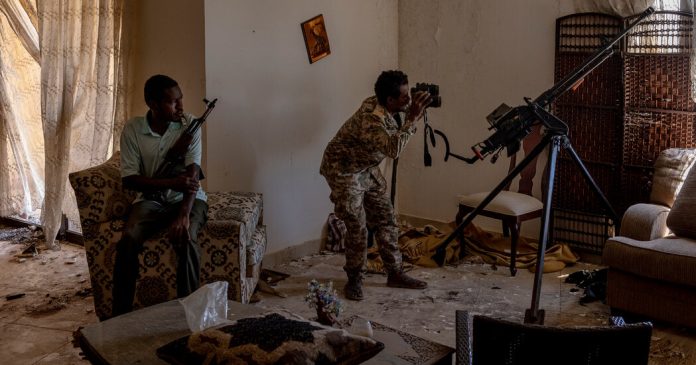
In the city center, army snipers trained their rifles through the windows of a deserted luxury apartment block overlooking the Nile. On the far bank, a riverboat slumped on its side. A surveillance drone buzzed overhead.

A lace curtain billowed around Sgt. Maj. Ismail Hassan as he peered through his binoculars at the bombed-out presidential palace, which sat amid a cluster of hollowed-out office blocks.

“They have many snipers deployed in the tall buildings,” said the army officer. “That’s what makes it so hard.”

The R.S.F.’s best snipers came from Ethiopia, he said, citing military intelligence reports. A document found by The Times at a deserted R.S.F. base in the city, listing recent Ethiopian recruits, supported that idea.

By some estimates, the capital’s prewar population of about eight million people has been reduced to two million. In recently recaptured areas, the army has moved residents to temporary camps on the edge of the city, where the army is screening for R.S.F. sympathizers, several residents said.

For those still in the city, there was a palpable sense of relief the R.S.F. was gone.

“In the days before they left, they demanded money,” said Kamal Juma, 42, as he tapped water from a broken pipe in the street. “If you couldn’t pay, they shot you.”

Mr. Juma mopped the sweat from his brow.

“We can’t take any more of this war,” he said.

Even if the military manages to drive the R.S.F. from Khartoum, there is little prospect of the war ending soon, analysts say.

What started as a power feud between the two generals has exploded into a much wider conflict fueled by a bewildering array of foreign powers.

The United Arab Emirates is backing the R.S.F. with guns, drones and mercenaries, The Times has reported. That support has continued in recent months, even since the United States accused the R.S.F. of genocide in January, according to two Western officials and some American lawmakers.

The Emirates denies backing the paramilitaries.

On the other side, Russia, Iran, Turkey, Qatar and Saudi Arabia have sold, supplied or paid for weapons to Sudan’s military, the two Western officials said on the condition of anonymity to discuss sensitive issues.

In parts of the city, wild bushes sprouted in empty streets, adding to the apocalyptic air. Faded billboards, erected before the war, advertised goods at one-tenth of their current prices — a reflection of war’s crushing economic cost.

But the picture is markedly different in Omdurman, west of the Nileand controlled by the army. Here, markets and restaurants are bustling, and even jewelry stores have reopened as residents stream back.

Even here, though, death is never far.

On Monday night, a volley of R.S.F. rockets landed in a quiet street where six neighbors had gathered under a palm tree to drink coffee after fasting for Ramadan.

After an explosion rocked his house, Moamer Atiyatallah stumbled through the cloud of dust, calling out to his friends under the palm tree, “What happened, guys?”

Nobody answered. All six men — a carpenter, an auto trader and a rickshaw driver, among others — had been killed, as well as two other men who were passing in the streets.

An hour after the strike, wailing women had spilled into the dark street, where stony-faced men picked up scraps of flesh from the ground and gathered them into plastic bags. A distraught young girl ran past.

“Father!” she screamed. “Father!”

Abdalrahman Altayeb contributed reporting.

It’s Been a Minute : NPR

0

Is the FDA cracking down on poppers?

Iain Buist/NCJ Archive/Mirrorpix via Getty Images


hide caption

toggle caption

Iain Buist/NCJ Archive/Mirrorpix via Getty Images


Is the FDA cracking down on poppers?

Iain Buist/NCJ Archive/Mirrorpix via Getty Images

Poppers, a party substance long popular with gay men, were thrust into the national spotlight last week when one producer, Double Scorpio, claimed that they halted operations due to a search and seizure by the FDA. There’s been no official statement from the FDA saying this raid took place, but the suggestion of a raid — against producers of a substance disproportionately popular with the queer community — certainly raised some eyebrows.

Brittany is joined by Selena Simmons-Duffin, NPR’s health policy correspondent, and Alex Abad-Santos, Senior Correspondent at Vox. Together they talk about the FDA’s concerns about poppers — even before our current administration — and the conspiracy theory that’s giving some gay men flashbacks to the 1980s.

Support public media. Join NPR Plus today.

This episode was produced by Corey Bridges. It was edited by Neena Pathak. Our Supervising Producer is Barton Girdwood. Our Executive Producer is Veralyn Williams. Our VP of Programming is Yolanda Sangweni.

One Doctor’s Quest for the Truth About Convicted Killer Lucy Letby

0

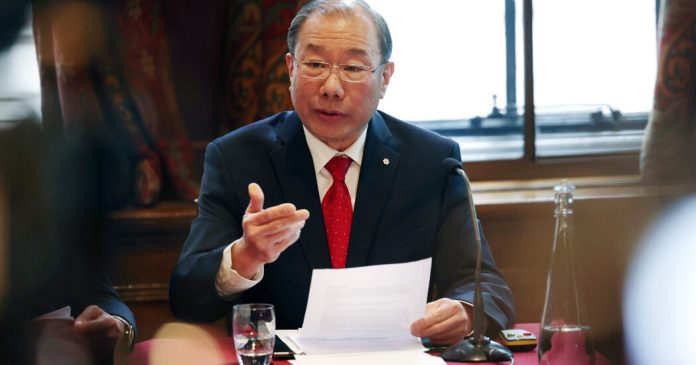
When Dr. Shoo Lee, one of Canada’s most renowned neonatologists, wrote an academic paper in 1989, he never imagined it would one day help convict a British nurse of murder.

But more than three decades after his paper was published, that is what happened.

Lucy Letby, a former nurse in a neonatal unit in northern England, was found guilty in two trials in 2023 and 2024 of the murder or attempted murder of 14 babies in her care, and sentenced to life in prison, where she remains today.

The case rocked Britain, seeming to expose a remorseless serial killer who, prosecutors said, used a bizarre range of techniques to kill her tiny, often very premature, victims: Injecting them with air, overfeeding them with milk or contaminating their feeds with insulin.

For seven of the murder or attempted murder charges, the prosecution’s lead expert witness relied on Dr. Lee’s 1989 paper on a rare complication in newborns — pulmonary vascular air embolism — to argue that Ms. Letby had intentionally injected air into their veins.

The only problem? The expert witness had misinterpreted his work, Dr. Lee says.

“What they were claiming was that this baby collapsed and had skin discoloration, therefore that equals air embolism,” said Dr. Lee, 68, in an interview in London last month. But, he said, “That is not what the research shows.”

That realization set Dr. Lee on a moral mission to review Ms. Letby’s case. Working pro bono, he gathered 14 specialists from around the world to assess the clinical evidence. Last month, he revealed their explosive findings — that “there was no medical evidence to support malfeasance causing death or injury” in any of the babies that Ms. Letby was charged with harming.

“If there’s no malfeasance, there’s no murder. If there’s no murder, there’s no murderer,” Dr. Lee said, adding, “And if there’s no murderer, what is she doing in prison?”

Ms. Letby has exhausted her avenues to appeal in the courts. Her only hope now lies with a small, independent body, the Criminal Cases Review Commission, which is responsible for investigating possible miscarriages of justice.

Dr. Lee, who retired in 2021 to a farm in rural Alberta, knew almost nothing about Ms. Letby’s case until an email landed in his inbox in October 2023.

Ms. Letby had always maintained her innocence, and her lawyer wanted Dr. Lee to review the medical evidence. “I thought it was spam at first, because how often do you get an email like that?” Dr. Lee said. After a second email, he realized the request was real.

Dr. Lee had spent his entire career focused on the youngest patients. After completing medical school in his native Singapore, he moved to Canada and trained in pediatrics before undertaking a neonatal fellowship at Boston Children’s Hospital and later a Ph.D. in health policy at Harvard.

In 1995, he created the Canadian Neonatal Network, connecting specialists from across the country to improve outcomes for newborns. He became pediatrician-in-chief at Mount Sinai Hospital, Toronto, and in 2019, he received the Order of Canada for introducing best practices that reduced infant mortality.

As he studied Lucy Letby’s trial transcripts, Dr. Lee immediately knew his research had been misinterpreted. “I didn’t know whether she was innocent or guilty,” he recalls. “But regardless of whether you’re innocent or guilty, you cannot be convicted on wrong evidence. That’s just wrong.”

He agreed to help with Ms. Letby’s request for an appeal, writing to England’s Court of Appeal and later providing live video testimony. But the court ultimately denied her request, saying Dr. Lee’s testimony should have been introduced at trial.

It was then that Dr. Lee decided to assemble a team of neonatal specialists to look into the case.

“This panel, you’re not going to find a better group of people,” he said, rattling off a list that included the head of neonatology at Children’s Hospital of Philadelphia, a former president of Britain’s Royal College of Pediatrics and the former director of the neonatal intensive care unit of Boston Children’s Hospital.

The key caveat Dr. Lee insisted on was that the panel’s review would be released no matter their findings — even if they strengthened the case that Ms. Letby was guilty.

The experts, who all worked on a voluntary basis, forensically assessed the cause of death or deterioration for each of the 17 babies whom Ms. Letby was initially charged with murdering or attempting to murder.

Two experts separately examined the medical notes of each baby. If their assessments differed, a third expert was brought in. The process was painstaking and took four months. But the final results were clear, Dr. Lee said. “In all cases, death or injury were due to natural causes or just bad medical care,” he told the news conference last month.

In the case of one baby, for instance, the prosecution argued at trial that she had been stable and had died from an injection of air into her IV line, causing an embolism. But the independent review found, based on her medical records, that she had died of sepsis and pneumonia, and that the mother, who went into labor prematurely, had not been given antibiotics to prevent infection.

In another case, a baby born at 25 weeks was intubated using the wrong size of endotracheal tube. While the prosecution alleged that Ms. Letby attempted to murder the infant by dislodging the tube, the experts found the baby’s condition deteriorated because of injury caused by intubation with a tube that was too large, and because a doctor did not understand “the basics of resuscitation, air leak, mechanical ventilation, and how equipment that were commonly used in the unit work.”

Some of the hospital staff, the panel concluded, were caring for the most critically ill or premature babies in a unit that was only meant to treat babies with lesser needs.

“You’re asking doctors in places without the expertise, without the infrastructure, to look after babies that they they’re not prepared to do,” Dr. Lee said. “And if you do that, then you’re going to get disasters.”

Nobody ever saw Ms. Letby harming a baby, and major questions were first raised about her guilt in a New Yorker article in May 2024. In the months since, dozens of experts in medicine and statistics have voiced concerns about the evidence.

Dr. Dewi Evans, the prosecution’s lead expert witness, did not respond to requests for comment, but he has publicly criticized the panel’s work and said he stands by his testimony.

The Countess of Chester Hospital, where the deaths took place, said it was focused on an ongoing police investigation and on a public inquiry that was set up by the government last year to investigate how a serial killer could get away with such crimes for so long. Earlier this week, the hospital’s former managers requested a halt to that inquiry, in the wake of Dr. Lee’s review, but the judge refused, saying that the inquiry was never focused on examining Ms. Letby’s guilt.

Mark McDonald, Ms. Letby’s current lawyer, plans to include Dr. Lee’s full expert report in his application to the Criminal Cases Review Commission, which can refer cases back to the Court of Appeal. The commission said in a statement last month that it had “received a preliminary application in relation to Ms. Letby’s case, and work has begun to assess the application.”

The mother of a child whom Ms. Letby was convicted of attempting to murder denounced the expert panel’s assessment, and a spokesman for the C.C.R.C. asked “that everyone remembers the families affected.”

Dr. Lee insisted that those families were one of his central concerns as he analyzed the cases, after spending four decades caring for babies.

“I can tell you one thing: Families want to know the truth,” he said. “They want to know the truth, regardless of whether it is painful or not painful. They want to know what really happened.”