Thursday, November 12, 2026
Home Blog Page 114

Trump and Putin to Discuss Ukraine in Phone Call: What to Know

0

President Trump and President Vladimir V. Putin of Russia are expected to speak on Tuesday as Washington pushes for a cease-fire in Ukraine. Mr. Trump said the topics would include power plants and “dividing up” Ukrainian assets.

The call will be the first known conversation between the two leaders since Ukraine agreed to support a U.S.-backed monthlong cease-fire, as long as Russia does the same. While Mr. Trump has stated his desire to broker a truce as quickly as possible, Mr. Putin seems to be seeking more concessions.

“Many elements of a Final Agreement have been agreed to, but much remains,” Mr. Trump wrote on Monday on Truth Social, his social media platform. He added that the war “must end NOW,” and said he was looking forward to the call with Mr. Putin.

A week ago, Secretary of State Marco Rubio and Michael Waltz, the U.S. national security adviser, sat down for talks in Saudi Arabia with a delegation led by Andriy Yermak, the Ukrainian president’s chief of staff, Foreign Minister Andrii Sybiha and Defense Minister Rustem Umerov.

After more than eight hours of talks, the United States and Ukraine issued a joint statement saying that Kyiv would support the Trump administration’s proposal for a 30-day cease-fire with Russia, subject to Russia’s approval. The United States said it would immediately resume providing military aid and intelligence to Ukraine, which the Trump administration had suspended after an explosive U.S.-Ukraine meeting at the White House.

The United States and Ukraine also agreed to conclude “as soon as possible” a deal to develop Ukraine’s critical mineral resources.

Mr. Putin has not yet agreed to halt the war that Russia began more than three years ago. He has said the idea for a cease-fire was “the right one and we definitely support it,” but laid out numerous conditions that could delay or derail any truce. That includes demands that Ukraine cease mobilizing new soldiers, training troops or importing weapons for the duration of any pause in fighting.

Mr. Putin also said that Russia would continue to insist on a peace deal that addressed the “original causes” of the war — signaling that he will not stop fighting until he extracts a pledge that Ukraine will not join NATO and that the alliance will reduce its presence in Central and Eastern Europe.

“There are questions that we need to discuss, and I think that we need to talk them through with our American colleagues and partners,” he told a news conference on Thursday, just before meeting with Steve Witkoff, who is Mr. Trump’s special envoy to the Middle East but has also been playing a role in the peace talks over Ukraine.

On Sunday, Mr. Witkoff told CNN that his meeting with Mr. Putin had lasted three to four hours. While he declined to share the specifics of their conversation, he said it went well and that the two sides had “narrowed the differences between them.”

The cease-fire proposal could create tension between Mr. Putin’s desires for a far-reaching victory in Ukraine and for close ties with Mr. Trump.

The Kremlin’s spokesman, Dmitri S. Peskov, declined to say what topics were on the agenda for the call.

Mr. Trump said on Sunday night that he expected to discuss territorial issues with Mr. Putin as well as the fate of Ukrainian power plants. He also noted that there had already been discussions about “dividing up certain assets.”

“We want to see if we can bring that war to an end,” Mr. Trump said. “Maybe we can. Maybe we can’t, but I think we have a very good chance.”

Mr. Trump did not elaborate on what he meant by assets or power plants, but his comments came on the same day Mr. Witkoff mentioned a “nuclear reactor” in an interview with CBS News.

That appeared be a reference to the Zaporizhzhia nuclear plant in southern Ukraine, which Russia seized early in the war and still controls. The six-reactor plant is Europe’s largest, and its proximity to frontline fighting has long raised concerns about the risk of a radiological disaster.

It was not immediately clear, though, whether any discussion about the power plant would focus on Russia giving it up — or finding a way to keep it under any truce.

The power plant sits near the Dnipro River in Ukraine’s southern Zaporizhzhia region, which Russia has officially annexed despite controlling only part of its territory. Surrendering it would mean ceding territory Russia considers its own. It would also give Kyiv’s troops a foothold in a Russian-controlled area that has been relatively protected from Ukrainian attacks thanks to the natural barrier of the large Dnipro River.

At the same time, energy experts say, the nuclear plant is in poor condition after three years of war and restoring full operations would require a lot of time and investment from Russia. That could mean Russia might see an incentive to try trading it in negotiations for something else, such as the easing of Western sanctions on the Russian economy, experts say.

President Volodymyr Zelensky of Ukraine has accused Mr. Putin of stalling so that Russia’s army can advance on the battlefield and strengthen his hand in cease-fire talks.

Moscow’s push to drive out Ukrainian troops from most of the Kursk region of Russia in recent days has deprived Kyiv of an important bargaining chip in any potential negotiations.

The moves in Kursk give Russia an opportunity to show Mr. Trump that it holds the momentum on the battlefield. And battlefield maps compiled by both Russian and Western groups analyzing combat footage and satellite images show that Russian forces have already crossed into Ukraine’s Sumy region from Kursk, in what analysts say may be an effort to flank and encircle the remaining Ukrainian troops in Kursk or open a new front in the war.

Mr. Zelensky has accused Russia to preparing to mount a larger offensive into the Sumy region, which is home to hundreds of thousands of people.

Despite the setbacks in Kursk, Kyiv’s forces have stalled a Russian offensive in the eastern Donetsk region of Ukraine and started to win back small patches of land, according to military analysts and Ukrainian soldiers. Military analysts, however, have been debating whether, after more than 15 months on the offensive, Russian brigades are exhausted or are regrouping for a renewed push.

Since taking office, Mr. Trump has realigned American foreign policy seemingly in Russia’s favor — including by echoing a Kremlin talking point that blamed Kyiv for starting the war.

That raised alarm in Ukraine about whether Mr. Trump would taper the flow of U.S. military assistance. Strain in the relationship burst into public view on Feb. 28, when Mr. Trump and Vice President JD Vance berated Mr. Zelensky in the Oval Office, saying he was not grateful enough for U.S. support.

Since then, Ukraine has sought to smooth over relations with the Trump administration, and Mr. Zelensky has repeatedly expressed gratitude for American assistance.

Mr. Rubio has said that Ukraine would have to make concessions over land that Russia had taken since 2014 as part of any agreement to end the war. But he also said that it would be imperative in talks with Moscow to determine what Russia was willing to concede.

Before agreeing to the cease-fire proposal, Ukraine had insisted that any cease-fire include security guarantees, but there has been no indication since that any such guarantees would be provided before any interim cease-fire would take effect.

European allies have pledged further support to Kyiv. Prime Minister Keir Starmer of Britain has said he would continue pressing Mr. Trump for American security guarantees — a lobbying effort that he shares with President Emmanuel Macron of France. Britain and France have already pledged to contribute troops to a peacekeeping force and are trying to enlist other countries across Europe to do the same.


Democratic strategists discuss party divides after GOP stopgap spending bill passes

0

NPR’s Leila Fadel talks with Democratic strategists Paul Begala and Waleed Shahid about party divides following disputes over a Republican-backed stopgap spending bill.

U.S. Foreign Aid Cuts Hit Sudanese Refugees Fleeing Violence and Famine in Darfur

0

U.S. foreign aid cuts impacting Sudanese refugees in Chad have reduced already razor-thin margins for lifesaving resources like food and water, and other U.S. government-funded programs including mental health counseling and education.

“When we told [the students] the decision, that we’re going to close the school, most of them were crying,” said Aballah Abakar Abdallah, a teacher at the only secondary school in Aboutengue refugee camp, near the border of Sudan.

The school, one of the few standing concrete structures in the camp of 45,000 refugees, was once funded by a grant from the U.S. State Department, through the Jesuit Refugee Services (J.R.S.). It was the largest provider of secondary school education to refugees fleeing the Darfur region of Sudan. J.R.S. said the cuts put the education of roughly 32,000 Sudanese refugee students at risk.

“There’s a lot of challenges, but we cannot really drop out of education because we have brothers in the battlefield,” said Abdulazeem Abdu Abaker, 18, who fled from El Geneina, Darfur, in 2023, and is now a student at the Aboutengue Secondary School. “That’s why we split, part of us in education, and part of us in the battlefield. If we drop out of education, that won’t help the success of our beloved country.”

Earlier this year, the United States accused the R.S.F. and its allied militias, a mostly ethnic Arab paramilitary force vying for control of the country, with committing acts of genocide against the non-Arab Masalit ethnic groups in Darfur.

The majority of the Sudanese refugees who have crossed the border and are living inside refugee camps in Chad are women and children, according to UNICEF, which has reported how gender-based violence is widespread in active conflict areas.

HIAS, a refugee advocacy nongovernmental organization operating in Aboutengue camp, had spent almost two years building trust in the refugee community so at-risk women could approach it with issues of domestic and gender-based violence, as well as in the aftermath of disasters for emergency help and funding.

The Trump administration’s stop-work order in January on all U.S. foreign aid-funded programs prevented HIAS from continuing to follow up on thousands of refugee protection cases. The organization said it recently received word that its stop-work order had been lifted, but it was unclear what programs would continue to be funded, and for how long.

HIAS, along with seven other groups, filed a lawsuit in February against the Trump administration, calling the executive order to halt all foreign aid assistance “unconstitutional,” and the withholding of billions of dollars in congressionally appropriated foreign-assistance funding “unlawful.” A federal judge ruled in favor of HIAS and the other plaintiffs, but HIAS has said the U.S. government has yet to fully comply.

Conservative Freedom Caucus influences Wyoming legislative agenda

0

A review of the legislative session in Wyoming shows what the conservative Freedom Caucus can do when it can run the agenda — sometimes even bumping up against the state’s Republican governor.

Israel Resumes Attacks in Gaza After Stalled Cease-Fire Talks with Hamas

0

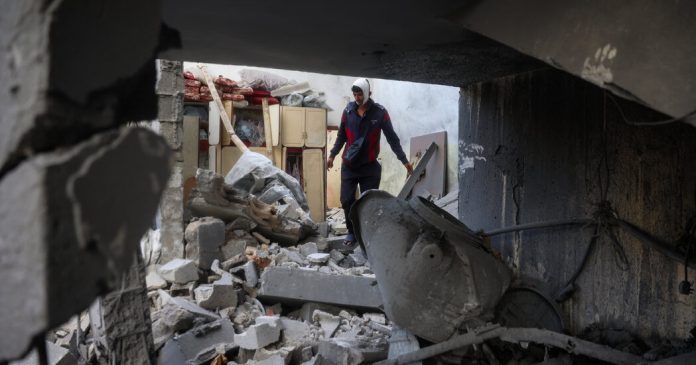
Israel’s overnight attacks on Gaza stopped short of an immediate ground invasion, suggesting that its leaders may be waiting to gauge Hamas’s reaction before returning to a full-scale ground war, analysts said on Tuesday.

The Israeli strikes, which health officials said killed more than 250 people, followed weeks of fruitless negotiations on an extension to the country’s truce with Hamas. The talks stalled after Israel pushed Hamas to release significant numbers of hostages, a move that Hamas was unwilling to make without assurances that Israel would allow it to remain in power in Gaza after the war ends.

The nature of Israel’s strikes on Tuesday morning suggested that its leadership was trying to force Hamas to compromise in those talks, a deadly and risky tactic that could still lead to full-scale war, analysts said.

By focusing on missile strikes instead of ground operations, Israel is seeking “to push Hamas to show more flexibility,” said Michael Milstein, an Israeli analyst of Palestinian affairs and a former senior officer in Israeli military intelligence.

“Personally I don’t think it’s likely Hamas will be ready to give up their red lines,” Mr. Milstein said. “I’m quite concerned that within a few days we will find ourselves in a limited war of attrition: ongoing airstrikes but no readiness from Hamas to give up.”

Six hours after the bombardment began, Hamas still had not fired back — either because its military capabilities were so degraded during the earlier phases of the war, or because it sought to avoid a stronger response from Israel.

But it showed no public signs of backing down in the negotiations. In a statement, Hamas condemned the strikes, saying that Israel had condemned the remaining hostages in Gaza to an “unknown fate” and calling for it to be held “fully responsible for violating and overturning the agreement.”

Israel’s far-right finance minister, Bezalel Smotrich, said in a statement that Israel’s goal was “to destroy Hamas,” expressing hope that the new attacks would evolve into an operation “completely different to what has been done so far.”

But in its official statement announcing the resumption of heavy military action, the Israeli government was more cautious. It avoided any mention of how long the operation would last, or whether it would include the kind of ground invasion required to force Hamas from power. By mid-morning, the Israeli military ordered Palestinian civilians to leave two areas close to the Israel-Gaza border, but it again stopped short of saying that it was deploying troops and tanks there.

Rawan Sheikh Ahmad contributed reporting.

Drones Will Do Some Schlepping for Sherpas on Mount Everest

0

Help may at last be on the way for the Nepali Sherpas who carry heavy loads for foreign climbers through treacherous sections of the world’s tallest peak.

When the main climbing season begins next month on Mount Everest, expedition companies will test drones that can ferry loads as heavy as 35 pounds in the high altitudes, bring back ladders used to set the climbing routes, and remove waste that is typically left behind.

Goods that would normally take seven hours to be transported by foot from Everest’s base camp to Camp I can be airlifted within 15 minutes. By lightening the Sherpas’ burdens, drone operators hope that the chances of fatal accidents — which have risen as climate change has accelerated snowmelt — can now be reduced.

“Sherpas bear enormous risks. The drone makes their task safer, faster and more efficient,” said Tshering Sherpa, whose organization, the Sagarmatha Pollution Control Committee, is responsible for fixing the route through the deadly Khumbu Icefall, southwest of Everest’s summit.

For about a year, operators have been experimenting with two drones donated by their Chinese maker. The pilot test during this year’s Everest climbing season is seen as an important opportunity to persuade expedition agencies to invest in more of the devices, which could be used to carry climbing gear and essential items like oxygen cylinders.

While the upfront cost of the drones may be high, their proponents say they will eventually reduce agencies’ costs.

Among those who could benefit most are the experienced Sherpas known as “icefall doctors.” Before every climbing season, they assemble at the Everest base camp for the daunting mission of establishing a route through the shifting ice.

They carry heavy loads of ladders, fix them over crevasses and lay rope to climb up the ice wall. Once the ladders and ropes are set along the Khumbu Icefall to Camp II, other Sherpas ferry oxygen bottles, medicine and various essentials to high camps. Sherpas make this dangerous climb at least 40 times a season, according to expedition organizers.

When the icefall doctors made their way to the base camp early this month, they were eagerly awaiting the arrival of the drone pilots, who were still in Kathmandu, the Nepali capital, finishing flight clearance documentation.

“They are calling us to team up early,” said Milan Pandey, a drone pilot affiliated with AirLift, a startup drone company in Nepal.

The catalyst for the use of drones was the latest of the many deadly tragedies involving Sherpas on Everest. In 2023, three of the mountain guides were buried under an avalanche as they fixed rope for foreign climbers.

Their bodies could not be retrieved. Doing so could have damaged the ice block and endangered those trying to get the remains, said Mingma G. Sherpa, the managing director of Imagine Nepal, which led the expedition in which the Sherpas died.

His search for ways to improve safety drew him to Chinese expedition companies that were using drones on Muztagh Ata, a 24,757-foot peak in China near Pakistan’s border. The Chinese were using the vehicles to ferry climbing gear, food and other crucial items to Camp II and bring them down.

“The Chinese cooked food at base camp and sent it to Camp II of Muztagh Ata, where climbers could eat hot food,” Mr. Sherpa said. “I thought, why not use drones on Everest’s south side, especially the Khumbu Icefall section?”

At his invitation, a team from the Chinese drone maker DJI went to Nepal in the spring of 2024 to test two FlyCart 30 delivery drones.

The DJI team donated the drones to AirLift, the Nepalese startup. Since then, AirLift has been testing the drones’ limits in the most dangerous sections of Everest.

The drones’ proponents hope that they can do more than carry items. Since the shape of icefall keeps changing, icefall doctors struggle to locate the previous climbing route, which complicates setting the new route each season. Drone operators believe they will be able to pinpoint old routes using geolocation.

The devices could also help make up for the declining numbers of Sherpas. More are leaving because of the safety risks and better employment opportunities abroad.

But even with all the drones can offer, their price tag has given some expedition companies pause.

Once customs duties, batteries, a winch system and other parts are factored in, a DJI drone can cost more than $70,000 — a huge sum in a poor country like Nepal. Startups like AirLift are exploring options to assemble the drones inside Nepal, which they say could reduce their cost by more than half.

The miracle of a warm meal may ride on that cost-cutting effort.

During a trial run last year on Mount Ama Dablam, a Himalayan peak where drones were used to remove 1,300 pounds of waste, Dawa Jangbu Sherpa, a drone pilot, saw the potential of the vehicle firsthand. Food sent from base camp was still hot when it reached Camp I.

“It takes six hours if you follow the normal route to reach Camp I,” Mr. Sherpa said. “But the drone served food in six minutes.”

Tuesday Briefing

0

The Trump administration clashes with a judge.

Trump says he’s ending Secret Service protection for Biden’s adult children : NPR

0

Hunter Biden and Ashley Biden are shown attending Maisy Biden’s commencement ceremony in Philadelphia on May 15, 2023.

Patrick Semansky/AP


hide caption

toggle caption

Patrick Semansky/AP

WASHINGTON — President Donald Trump said Monday he was ending “immediately” the Secret Service protection details assigned to Democrat Joe Biden’s adult children, which the former president had extended to July shortly before leaving office in January.

The Republican president on social media objected to what he said were 18 agents assigned to Hunter Biden’s protective detail while in South Africa this week. He said Ashley Biden has 13 agents assigned to her detail and that she too “will be taken off the list.”

There was no immediate reaction from the former president’s office.

Former presidents and their spouses receive life-long Secret Service protection under federal law, but the protection afforded to their immediate families over the age of 16 ends when they leave office. But outgoing presidents can extend protection for those who might otherwise not be eligible for up to six months after they leave office, something Biden did for his children and Trump did for his family after leaving office in 2021. Former Presidents Barack Obama and George W. Bush also extended protection for their families for a period.

“We are aware of the President’s decision to terminate protection for Hunter and Ashley Biden,” the agency said in a statement. “The Secret Service will comply and is actively working with the protective details and the White House to ensure compliance as soon as possible.”

While touring the John F. Kennedy Center for the Performing Arts Monday afternoon, a reporter asked Trump if he would revoke the protection for the former president’s son.

“Well, we have done that with many. I would say if there are 18 with Hunter Biden, that will be something I’ll look at this afternoon,” Trump said, who added this was the first time he heard about the matter.

“I’m going to take a look at that,” he said.

Pelicot’s Daughter Pursues Conviction That He Raped Her, Too

0

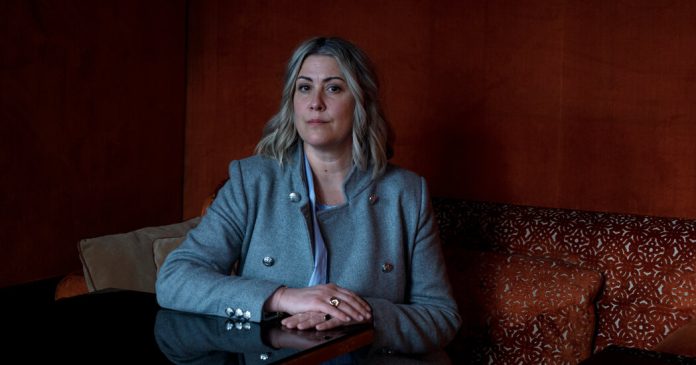
The day her father and dozens of other men were convicted of raping her mother in a trial that had gripped France was an acute personal tragedy to Caroline Darian.

She escaped the Avignon courthouse and was enveloped in a giant crowd of women blocking traffic and chanting their love and gratitude for her and her mother, Gisèle Pelicot, who had become a feminist icon in France for insisting the trial against her husband and 50 other men be public and refusing to feel ashamed as a rape victim.

But Ms. Darian did not hear them. She was overwhelmed by despair.

The trial had ended and she hadn’t gotten the answers she’d hoped for from her father, Dominique Pelicot, whom she believes drugged and raped her, too.

“Dominique was not tried for what he did to his daughter,” Ms. Darian, 46, said in a recent interview over lunch at a Parisian restaurant off the Champs-Élysées. “He wasn’t even confronted adequately for what he did to his daughter.”

The trial that led to the convictions of 51 men forensically inspected the horror Mr. Pelicot inflicted upon his wife over almost a decade, as he mixed sleeping pills and anti-anxiety medication into her drink and food and then, when she was deeply passed out, dressed her up in lingerie and invited strangers to come over and join him in raping her while he took photos and filmed.

But the suspicions of his only daughter Caroline were little more than a sidelight of the trial. Instead of coming away with a degree of healing, Ms. Darian felt deeply wounded.

“My case, in that court, it was like it didn’t exist,” said Ms. Darian, who uses a pen name.

“It was terrible,” she said.

Earlier this month, she filed her own police complaint against her father for rape and sexual assault. It coincided with the publication of Ms. Darian’s second book about her father’s crimes and the cataclysmic impact they’ve had on her life.

Her first book, a raw journal documenting the intimate horror she suffered in the year after her father’s arrest, is being released in the United States on Tuesday as “I’ll Never Call Him Dad Again.” She agreed to an interview with The New York Times in conjunction with its publication.

At the heart of her case are two intimate photos that her father had erased but that forensic investigators had managed to retrieve from Mr. Pelicot’s electronics. Both capture Ms. Darian asleep in bed, with the lights on and the covers pulled back to reveal her beige underwear.

The underwear, Ms. Darian told the court, was not hers. She said that she had no recollection of the photos being taken and that she was a light sleeper. She believes that she, too, was drugged, and that her father used the same modus operandi on her as he had on her mother.

During the trial, Mr. Pelicot at first denied having taken the photos and said he did not believe they were of his daughter. Later, he said he had taken them because he was being blackmailed.

Investigators also found evidence of an erased folder with the title, “My naked daughter” and photo collages of Ms. Darian and Ms. Pelicot, both naked, that Mr. Pelicot had shared with strangers online. In one exchange on Skype, he referred to his “trapped daughter.”

But when it came to his daughter, he was convicted only on charges of having taken the intimate photos without her permission.

Ms. Darian is convinced they are evidence of much more serious crimes that investigators missed or ignored, overwhelmed by her mother’s case.

Her 30-page police complaint, seen by The New York Times, includes material found by investigators though not brought up in the trial.

They include transcripts of Skype interactions Mr. Pelicot had with another user in 2020 when he had shared photo montages. After the user admired his daughter, Mr. Pelicot wrote: “It’s been more than eight years I’ve been offering her up like this. Do you want to see her when she was 30?”

Mr. Pelicot’s lawyer, Béatrice Zavarro, said she had not seen the complaint yet. She noted that the general prosecutor in last year’s trial had acknowledged Ms. Darian’s grievances, but had said there were not enough “objective elements” to prosecute Mr. Pelicot for them.

During the trial, Mr. Pelicot repeatedly said that he had never drugged his daughter. He denied sexually touching her or any of his children and grandchildren, the eldest of whom has also filed a police complaint that he, too, was sexually abused by Mr. Pelicot.

Before their father’s arrest, neither she nor her brothers suspected he was a sexual predator, they told the court. They were a tight-knit family, often gathering for vacations down in Provence, where Mr. and Ms. Pelicot had retired. Their parents had been together for 50 years and seemed very happy.

His arrest, and his admission to crimes against their mother, caused a sudden profound shock. Ms. Darian began suffering panic attacks. She stopped sleeping and was briefly hospitalized in a psychiatric ward.

“Until I was 41, I thought my father was a good, kind person,” Ms. Darian said. “In 2020, all our foundations as children crumbled.”

In 2019, Ms. Darian was crippled with pain from an anal tear doctors could not explain and that required three operations, according to her police complaint. She now believes it was likely caused by her father or men he may have invited to rape her.

In addition to the police complaint for sexual abuse filed by his eldest grandson, Mr. Pelicot has also been indicted in two cold cases, involving young female real estate agents in the 1990s. The first was raped and murdered; the second managed to escape an attempted rape and took refuge in a closet.

During the trial, while Ms. Pelicot remained calm and emotionally detached, Ms. Darian was a cyclone of emotion. Anger and suffering rose off her in waves. Part way through the trial, she announced on Instagram that she was checking herself into a clinic “to be able to sleep again.”

“You are lying — you don’t have the courage to tell the truth,” she hollered, near the end of the trial when her father once again denied having abused her. “You will die with your lies, alone with your lies.”

Remembering that day months later over lunch, Ms. Darian broke into tears. Her father’s refusal to acknowledge the evidence and explain it, she said, was “the ultimate betrayal.”

“He owed me the truth,” she said. “I am not just any victim. I was his daughter.”

Ms. Darian has lost not just her father, but her mother, too. The two are no longer speaking, she said. While she is sure her father abused her, her mother was more equivocal. When asked in court, she responded only that “it could not be ruled out.”

To Ms. Darian, it felt like abandonment.

“My relationship with my mother will never be the same again,” she said.

Gisèle Pelicot has refused all interview requests. One of her lawyers says said she won’t speak publicly before appeals of the convictions are heard, if ever.

Ms. Darian’s younger brother, Florian Pelicot, 38, said he believed their mother showed enormous strength in facing the horrors her husband, and dozens of other men, inflicted upon her. Opening her mind to his sister’s accusations, he thinks, “would have made her collapse.”

“You can’t save yourself and rebuild yourself and also help your children to rebuild themselves too,” he said.

Florian Pelicot emerged from the trial with his own deep wounds: His 18-year marriage ended and he has started the process of getting a paternity test after his father raised doubts he was his son during one of his pretrial interviews with the investigating judge, he said.

Near the end of the trial, Ms. Darian said she darted across the courtroom to the glass box for the accused during a recess for a quick last private word with the man who had been her father.

She told him that their relationship was over, she said, but that her pursuit of the truth was not.

“I’ll go all the way for my personal dignity,” she said in the interview. “Because I know I’m not wrong. I know that he must have done some very serious things. And I’ll get to the bottom of it.”

Ségolène Le Stradic contributed reporting from Paris.

Political scientists seeing parallels between China and the U.S. : NPR

0

American political scientists and historians who study other countries – especially China – say they see more parallels today between their area of study and their own country.


AILSA CHANG, HOST:

American political scientists and historians who study China say they see more parallels today between their area of study, Chinese politics, and their own country, the United States, than ever before. NPR’s Emily Feng spent the last decade covering China and has this story.

EMILY FENG, BYLINE: David Lampton is a political science professor at Johns Hopkins University on the Washington, D.C., campus.

(SOUNDBITE OF SONG, “SAILING THE SEAS (CHINESE CULTURAL REVOLUTION)”)

MAOISM SOLDIERS: (Singing in non-English language).

FENG: Lampton also lived in China during what was called the Cultural Revolution, a decade-long mass movement ending in the 1970s to purge what the then-Chairman, Mao Zedong, believed were deep-state elements conspiring against the Communist cause and his hold on power.

DAVID LAMPTON: There are echoes of kind of Cultural Revolution politics in American politics today.

FENG: Specifically…

LAMPTON: The attempt to control media to build a cult of personality all has differences between now here in the U.S. and there, but there are also some, let’s say, eerie echoes.

FENG: Echoes, like how the Trump administration has banned the AP’s access to certain media events in the Oval Office or onboard Air Force One. Here’s Trump.

(SOUNDBITE OF ARCHIVED RECORDING)

PRESIDENT DONALD TRUMP: Now, the Associated Press, as you know, has been very, very wrong on the election, on Trump and the treatment of Trump.

FENG: Lampton is among the China-watchers who have spent most of their adult lives studying China and who now find themselves using their expertise to understand American politics. They stress the U.S. is a democracy with functioning courts to balance the executive branch, and China is a one-party system, so they are not identical. But these China-watchers do feel uneasy at the parallels they are seeing. Orville Schell is director of the Center on U.S.-China Relations at the Asia Society in New York, and he also sees similarities between Trump and his downsizing of the federal government and Mao Zedong.

ORVILLE SCHELL: Both of these men are deeply in love with the idea that you can’t be creative unless you first destroy.

FENG: Mao purged bureaucrats, citing disloyalty and alleged dissent. President Trump has vowed the same.

(SOUNDBITE OF ARCHIVED RECORDING)

TRUMP: Because we are draining the swamp. It’s very simple, and the days of rule by unelected bureaucrats are over.

FENG: Schell says Mao was constantly suspicious of other party officials – hence, multiple purges.

SCHELL: Here, both men, I think, shared a kind of common sense of paranoia that the existing order is fundamentally hostile to him and needs to be overturned.

FENG: Other China experts, like Yukon Huang at the Washington think tank Carnegie Endowment for International Peace, compare Trump’s global outlook to another Chinese leader – the current one, Xi Jinping.

YUKON HUANG: When you talk about make America great again, this is very similar to the view of Xi, who sees a much more expansionary, important role for China and Asia.

FENG: As in, China’s aggressive ramp-up of its military and economic influence in the Asia-Pacific and Africa is comparable to Trump’s more muscular foreign policy, threatening to take the Panama Canal and expressing desire to control Greenland and Canada, all the while stressing American interests first.

(SOUNDBITE OF ARCHIVED RECORDING)

PRESIDENT XI JINPING: (Non-English language spoken).

FENG: One of Xi Jinping’s key slogans is this – the China dream – for what he calls here, on the Chinese Communist paper the People’s Daily, the great rejuvenation of the Chinese nation.

WU GUOGUANG: Things like MAGA, just like, you know, a China dream.

FENG: This is Wu Guoguang, a former adviser to a reformist Chinese leader. Wu moved to the U.S. in the 1990s and is now a political science researcher at Stanford University, studying how leaders, like China’s Xi Jinping, use policy to concentrate power. He says American democracy does have ways to stop this kind of concentration.

WU: Checks and balances and public opinion – OK – civil society.

FENG: But absent mass demonstrations, Wu says he’s increasingly pessimistic those checks and balances are working well enough. NPR reached out to two China experts who worked for the Trump administration during the first term. They declined to be interviewed. And Wu is not alone. Last month, more than 1,200 American political scientists signed a letter protesting what they see as the undermining of checks and balances in the U.S. system by the Trump administration.

Emily Feng, NPR News, Washington.

(SOUNDBITE OF FRANK OCEAN SONG, “NIKES”)

Copyright © 2025 NPR. All rights reserved. Visit our website terms of use and permissions pages at www.npr.org for further information.

NPR transcripts are created on a rush deadline by an NPR contractor. This text may not be in its final form and may be updated or revised in the future. Accuracy and availability may vary. The authoritative record of NPR’s programming is the audio record.