Thursday, November 12, 2026
Home Blog Page 116

Canada Turns to European Allies Amid Trump Threats

0

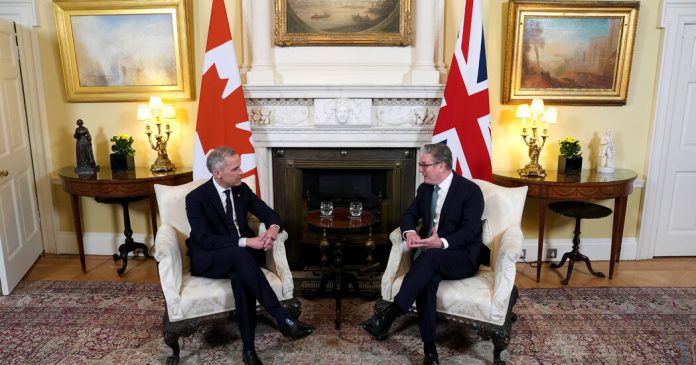
In his first overseas trip as Canada’s prime minister, Mark Carney went on a whirlwind tour of France and Britain on Monday to showcase Canada’s deep European bonds as President Trump threatens his country’s economy and sovereignty.

Just three days after being sworn into office, Mr. Carney had lunch with President Emmanuel Macron of France in Paris, before heading to London, where he had an audience with King Charles III, Canada’s sovereign, and also met with Prime Minister Keir Starmer of Britain.

“I want to ensure that France and the whole of Europe works enthusiastically with Canada, the most European of non-European countries, determined like you to maintain the most positive possible relations with the United States,” Mr. Carney told the press alongside Mr. Macron at the Élysée Palace in Paris.

Mr. Trump has imposed tariffs on Canadian goods and is threatening even more levies, unleashing pain on the Canadian economy, which is deeply integrated with that of the United States, particularly through a free-trade agreement, together with Mexico. Canada has retaliated with its own tariffs on American goods.

But Mr. Trump has also repeatedly declared that Canada should become a U.S. state, and has suggested that he wants to scrap the treaty that demarcates the border between the two nations.

The menacing attitude from Mr. Trump has enraged Canadians, and given Mr. Carney a boost that’s landed him at the helm of his party and his country.

His Europe trip did not yield any specific new commitments but it was an opportunity for Mr. Carney to advance two goals: to reach out to key allies in Europe, showing that Canada has more friends than just the United States, and to display his gravitas on the world stage as he prepares for an election.

Mr. Carney was elected leader of Canada’s Liberal Party on March 8 and was sworn in as prime minister on Friday.

He is expected to call an election as early as this week. He is not an elected member of Canada’s Parliament, and his party operates a minority government, putting him under pressure to seek a mandate to govern.

A career banker who served in two high-profile positions — as governor of the Bank of Canada and then of Bank of England — Mr. Carney is running Canada amid existential threats from its closest ally, neighbor and trading partner, while also launching a political campaign, something he has never done.

Against this backdrop, his European trip played to his strengths at a time when many Canadians are yearning to see their allies step up for them.

Mr. Macron greeted Mr. Carney as an old friend, boosting his image as someone who is at home on the world stage, familiar with its leaders and its problems, at a time of geopolitical and economic turmoil because of Mr. Trump’s revision of America’s alliances and policies.

“Given that we’ve known each other for many years, I know that we are receiving a man who loves his country, who is committed to his country,” Mr. Macron said.

France and Britain are foundational to Canada, having led its settlement by Europeans centuries ago.

Mr. Carney’s personal ties to Britain run deep. His wife is British and he studied at the University of Oxford. In 2013 he became the first foreigner ever to be chosen governor of the Bank of England and he gained British citizenship in 2018. He has moved to renounce his British citizenship, and the Irish citizenship he holds through ancestry, because of his position as prime minister, a spokeswoman said.

His political opponents have sought to paint him as a globalist with little real attachment to serving his home country.

Despite the symbolism of Mr. Carney’s welcome on his quick European tour, the reality is that Canada’s relationship to the United States is inescapable and irreplaceable.

The United States is Canada’s top trading partner; about 80 percent of Canadian exports go to the United States and the trade volume between the two nations is nearly one trillion dollars.

By contrast, last year, trade between Canada and Britain was worth about 61 billion Canadian dollars ($43 billion). Canada’s trade with the European Union as a bloc was more significant, growing to over $100 billion last year, making the E.U. Canada’s second-largest trading partner.

On Monday evening Mr. Carney said that the tariff and counter-tariff pattern was not sustainable, and he expressed an interest in having serious negotiations with the United States.

“What we’re looking for with respect to the United States, is to have a more comprehensive discussion of a negotiation of our overall commercial and security relationship,” Mr. Carney told the news media in London, adding that there were limits to the retaliatory tariffs Canada could impose on the United States.

Pressed to respond to Mr. Trump’s rhetoric about annexing Canada, Mr. Carney said it was “unthinkable” that the United States would make such a move on Canada. “Let me state the obvious, which is that both of us are members of NATO,” he added.

Trump and Putin will talk Tuesday about the proposed ceasefire deal in Ukraine

0

Russian President Vladimir Putin is expected to set conditions on ceasefire proposal in Tuesday phone call with President Trump.

Trump Discussion With Putin to Focus on What Ukraine Will Lose

0

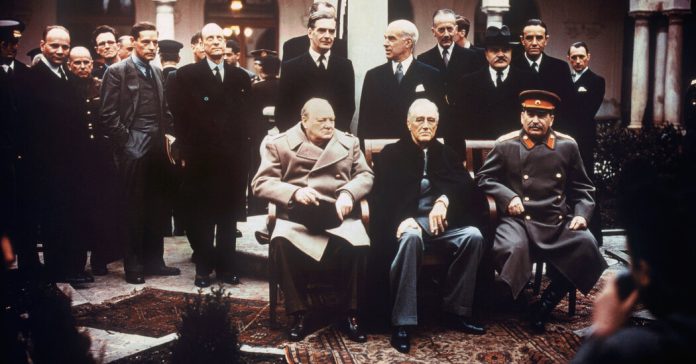
To hear President Trump describe it, he and President Vladimir V. Putin of Russia are about to have something akin to their own Yalta moment, great powers determining borders within Europe.

He didn’t explicitly refer to the 1945 meeting, where Churchill, Stalin and a deathly ill Franklin D. Roosevelt carved the continent into the American-aligned West and the Soviet-dominated East, creating spheres of influence that became the battlegrounds of the Cold War.

But talking to reporters on Air Force One while returning from Florida on Sunday night, Mr. Trump made clear that his scheduled phone conversation with Mr. Putin on Tuesday would be focused on what lands and assets Russia would retain in any cease-fire with Ukraine.

He will, in essence, be negotiating over how large a reward Russia will receive for its 11 years of open aggression against Ukraine, starting with its seizure of Crimea in 2014 and extending through the full-scale war Mr. Putin started three years ago. White House aides have made clear that Russia will certainly retain Crimea — in one of those odd twists of history, the location of the weeklong Yalta Conference in February 1945 — and strongly suggested it would get almost all of the territory it holds.

Though administration officials have stressed that they have kept their Ukrainian counterparts and European leaders fully briefed on their interactions with Russia, only Mr. Trump and Mr. Putin will be on the call, presumably with aides listening in. And it is not clear that either Ukraine or the big European powers will go along with whatever Mr. Trump and Mr. Putin might agree on.

Mr. Trump and his aides have been circumspect about the details of the deal being discussed with the Russian leader. Steve Witkoff, the New York real estate developer and old friend of Mr. Trump’s who is now special envoy to the Middle East, spent hours with Mr. Putin in Moscow recently preparing for the call.

“We’re doing pretty well, I think, with Russia,” Mr. Trump said, adding “I think we have a very good chance” of reaching a cease-fire. But then he turned to the question of what Ukraine might have to give up.

“I think we’ll be talking about land, it’s a lot of land,” he said. “It’s a lot different than it was before the war, as you know. We’ll be talking about land. We’ll be talking about power plants,” apparently referring to the Zaporizhzhya nuclear power plant, the largest nuclear site in Europe. “That’s a big question. But I think we have a lot of it already discussed very much by both sides.”

Mr. Trump was careful not to say much about which parts of Ukrainian territory he was discussing, or whether he would try to limit Mr. Putin’s ambitions. The Trump administration has already made clear it expects Russia to control the land that its troops already command, roughly 20 percent of Ukraine. But aides to President Volodymyr Zelensky of Ukraine said last month they were concerned that Mr. Trump may entertain Mr. Putin’s other desires for parts of Ukraine, perhaps including the critical port of Odesa.

Mr. Trump’s national security adviser, Michael Waltz, said on “Meet the Press” on NBC over the weekend that he expected the talks with Russia to be pragmatic, and he deflected any discussion of whether Russia was being rewarded for its aggression. (As a member of Congress, Mr. Waltz was a vocal defender of Ukraine and its sovereignty. As the head of Mr. Trump’s National Security Council, he has avoided stating the obvious, that Russia began the war.)

“Are we going to drive every Russian off of every inch of Ukrainian soil, including Crimea?” Mr. Waltz asked in the NBC interview.

In his television appearances in recent weeks, Mr. Waltz has taken the position that the most important outcome of the talks should be an end to the killing after three years of vicious trench and drone warfare.

He and other Trump aides say little about the conditions attached to a cease-fire, but suggest they are secondary to that larger mission. The alternative, Mr. Waltz has suggested, was a policy closer to former President Joseph R. Biden Jr.’s strategy: assuring Ukraine that the U.S. and its allies were with them “as long as it takes.”

That is a prescription, Mr. Waltz insisted on Sunday, of “essentially endless warfare in an environment that we’re literally losing hundreds of thousands of people in a matter of months.”

And he warned that the conflict could still “escalate into World War III,” echoing the case that Mr. Trump was making to Mr. Zelensky in their heated, public argument in the Oval Office last month. “We can talk about what’s right and wrong, and we also have to talk about the reality of the situation on the ground,” Mr. Waltz said.

There are other issues that may become central to the negotiation. France and Britain have offered to put troops inside Ukraine, perhaps with other European powers. But it is not clear that Mr. Putin will agree to a peacekeeping or “trip wire” force. Those forces would be part of a security guarantee for Ukraine, though it is unclear how effective European troops would be without backup from Washington.

The administration is also shrinking the work done by the Justice Department’s War Crimes Accountability Team, created in 2022 by Merrick B. Garland, attorney general under Mr. Biden, to hold accountable Russians who were responsible for atrocities committed in the aftermath of the full invasion three years ago.

Taken together, those actions are a major retreat from an effort announced by then-Vice President Kamala Harris in 2023 after the U.S. concluded that Russia had committed “crimes against humanity.” The steps appear to be part of Mr. Trump’s effort to make it easier to come to an accord with Mr. Putin.

No historical analogy to a previous era is exact, of course, and the negotiation to end the war in Ukraine has many differences from the conditions in the depths of the winter of 1945, when it was clear that Nazi Germany would soon lose.

But as Monica Duffy Toft, a professor of international politics at Tufts University, wrote in Foreign Affairs recently, “today’s geopolitical landscape particularly resembles the close of World War II” because “major powers are seeking to negotiate a new global order primarily with each other, much as Allied leaders did when they redrew the world map” at Yalta.

In an interview, Professor Toft said that land expansion “is what Putin wants, and it’s obviously what Trump wants — just look at Greenland and Panama and Canada.”

She continued: “This is what these leaders think they need to do to make their countries great again.”

“The big question mark is China,” she added. The outcome of the negotiations — and particularly the question of whether Mr. Putin is rewarded for what has been a brutally expensive war, “may indicate what will happen if Xi Jinping decides he wants to take Taiwan.”

Why Are Young Germans Moving to the Extremes?

0

In Germany’s national elections a few weeks ago, one statistic stood out to our Berlin-based correspondent: almost half of young German voters cast their ballot for either the far-right or far-left parties. And the divide between extreme left and extreme right in young people seems to fall along gender lines. We try to find out why it seems the youth in Germany are moving to the extremes.

In North Macedonia, Officials Investigate Lapses in Deadly Nightclub Fire

0

As families of victims mourned the loss of loved ones and kept an anxious vigil in hospitals on Monday, the authorities in North Macedonia said they were investigating possible official misconduct in the case of a deadly inferno that killed at least 59 people.

Officials said that Club Pulse, the nightclub where the fire broke out early Sunday, was operating with an illegally issued license document, and that it lacked proper escape routes. The building’s roof was set ablaze by fireworks used during a concert, officials have said. At least 155 people were injured in the inferno that swept through the venue.

“I will have no mercy,” Prime Minister Hristijan Mickoski said on Sunday, adding, “There is no person in Macedonia who is not broken and with a destroyed spirit after this.”

Mr. Mickoski, who took power in June, said the club, which was in Kocani, about 50 miles east of the capital, Skopje, had a license document that had been issued “for a bribe.” He said the document bore the seal of the economic ministry and the signatures of former officials there, and that it was “issued illegally.”

“This is the culmination of a bad, neglected system,” Mr. Mickoski said, describing North Macedonia’s effort to root out corruption, which the European Commission described in a 2024 report as a “serious concern” in the country.

The building that housed Club Pulse was registered as an industrial facility — not a hospitality venue — but had still received a hospitality permit from the economy ministry, the public prosecutor, Ljupco Kocevski, said on Sunday.

Prosecutors are seeking to arrest a former economy minister, Kreshnik Bekteshi, according to MRT, a state-run news agency. Mr. Bekteshi did not respond to a request for comment. Officers detained another former official from the ministry, as well as other officials in other government agencies.

Ljupco Papazov, the Kocani mayor, resigned on Monday. “The shock and brokenness I feel will last my entire life,” he said on Facebook.

Some parents who had lost children in the inferno had expressed fury with Mr. Papazov for maintaining a low profile the previous day. “Why is the mayor not here?” shouted Dragi Stojanov, whose only child died in the fire, in a video from The Associated Press.

In an online direct message, Mr. Papazov said he had been busy coordinating aid after the tragedy, and that he had resigned for unspecified “moral reasons.”

Mr. Stojanov said he had no reason to live after his 21-year-old son was killed. “I lost everything,” he said.

Mr. Stojanov’s son was one of many young people who had come to Club Pulse to see DNK, a popular North Macedonian group.

As the band performed, sparklers were set off around them, video shows. Those sparklers, officials said, were used illegally and appear to have started the fire. “The pyrotechnic devices used in the nightclub were brought by the band,” the country’s interior minister, Panche Toshkovski, said.

“Unfortunately,” he said, “the person who was responsible for handling them has passed away.”

One member of DNK died, as did other artists performing that night, Biljana Arsovska, a spokeswoman for the public prosecutor, wrote in an email. She said officials had not finished identifying victims.

“I feel as if someone hit me with an aluminum baseball bat,” Tijana Dapcevic, a Macedonian singer who knew some of the victims, said in an interview.

She said a friend of hers, Sara Projkovska, had died in the fire. Ms. Projkovska was a professor at Cyril and Methodius University in Skopje, which announced her death in a Facebook post with her picture, smiling under a mane of hot pink hair.

On Monday afternoon, thousands of people gathered in Skopje at the university, in honor of the fire’s victims, news footage showed. Many also gathered to protest in Kocani, news footage shows.

Pictures of the victims had already begun to appear on Macedonian social media, like a yearbook of people whose lives were cut short amid flames and smoke.

One was Petar Ivanovski, a young man with thick eyebrows and a smile, whose university confirmed his death in a Facebook post.

Another, Andrej Lazarov, 25, was a professional soccer player. He was remembered by his team, F.C. Shkupi, in a Facebook photo that showed him playing.

“A lot of children have suffered,” Simeon Sokolov, whose daughter was on a respirator after inhaling smoke, told the Serbian television channel N1 on Sunday night.

“The doctors are doing all they can,” Mr. Sokolov added, “but there are too many injured.”

Many, furious and grieving, pointed to what they saw as gross negligence at the club.

There were no side doors for evacuation, said Mr. Kocevski, the public prosecutor: “Instead, there was only one improvised metal door at the back, which was blocked from the inside.”

The nightclub did not have a functioning hydrant, he added. There were only two fire extinguishers, which he said was not enough for the size of the space.

Jon Hazell contributed reporting.

Judge Sets Hearing to Press Trump Administration on Deportation Flights

0

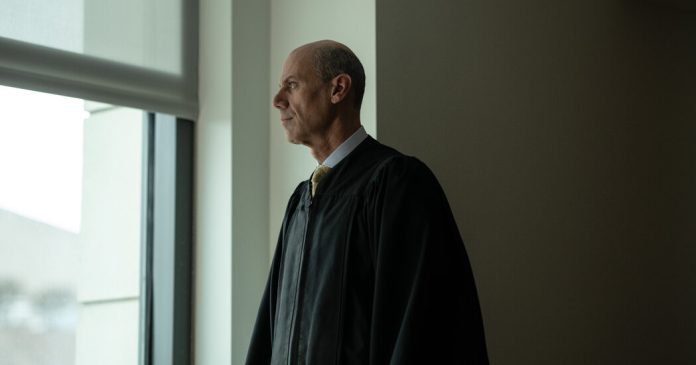
A federal judge in Washington plans to press the Trump administration at a hearing on Monday about whether it has violated an order he issued barring officials from removing any detained noncitizens — including several suspected Venezuelan gang members — from the country with little or no due process.

The hearing was scheduled by the judge, James E. Boasberg, even as President Trump’s so-called border czar, Tom Homan, made defiant remarks on television, indicating that the administration planned to continue such deportations despite the court’s order — an action that could thrust the country into a constitutional crisis, pitting one of the coequal branches of the government against another.

“We’re not stopping,” Mr. Homan said Monday, during an appearance on Fox News. “I don’t care what the judges think, I don’t care what the left thinks. We’re coming.”

Mr. Homan defended the administration’s decision to fly more than 200 immigrants to El Salvador over the weekend, including individuals the government identified as members of the Tren de Aragua criminal gang. He added that the public should expect more deportation flights “every day.”

The legal battle over the removal of the immigrants was the latest — and perhaps most serious — flashpoint yet between federal courts, which have sought to curb many of Mr. Trump’s recent executive actions, and an administration that has repeatedly come close to openly refusing to comply with judicial orders.

Mr. Trump himself expressed skepticism about a ruling last week by a federal judge in California ordering the administration to rehire thousands of fired probationary workers. Mr. Trump told reporters on Sunday night that the judge was “putting himself in the position of the president of the United States, who was elected by close to 80 million votes.”

The hearing in the deported immigrant case was scheduled for 5 p.m. Monday in Federal District Court in Washington. Judge Boasberg said that lawyers for the Justice Department should be prepared to tell him where the flights to El Salvador were — on the ground in the United States, in the air, or already overseas — at the time he handed down his order.

In issuing a temporary restraining order against the removals this weekend, Judge Boasberg said any planes carrying the Venezuelan migrants had to return to the United States “however that’s accomplished — whether turning around the plane or not.”

The White House has denied that it violated the order, arguing the deportation flights departed U.S. soil before Judge Boasberg submitted his written order.

In a court filing early Monday, lawyers for some of the deported Venezuelans noted that the White House had claimed that Judge Boasberg’s order was published in written form at 7:26 p.m. on Saturday, ignoring that he had issued an oral version of the same decision around 6:45 p.m., which “unambiguously directed the government to turn around any planes carrying individuals being removed.”

The White House press secretary, Karoline Leavitt, said on Monday there were “questions about whether a verbal order carries the same weight as a legal order, as a written order, and our lawyers are determined to ask and answer those questions in court.”

Trump administration officials have also suggested that Judge Boasberg’s order did not apply to planes that were already over international waters when the written decision was handed down — a position that the lawyers for the deported immigrants sharply disagreed with.

“Whether or not the planes had cleared U.S. territory,” they wrote, “the U.S. retained custody at least until the planes landed and the individuals were turned over to foreign governments.”

Ms. Leavitt told reporters on Monday that the more than 260 deported immigrants included 137 people removed through the Alien Enemies Act of 1798, an obscure wartime law that the administration has claimed it is using to summarily deport those identified as members of the transnational Tren de Aragua gang. Another 101 were Venezuelans deported under normal immigration proceedings. Ms. Leavitt said another 23 were members of the Salvadoran gang Mara Salvatrucha, or MS-13.

The United States is paying El Salvador $6 million to take in the deportees, Ms. Leavitt told reporters.

Ms. Leavitt on Monday said the group of deportees was responsible for a variety of violent crimes, including murder and sexual abuse, but the administration had not released extensive details about each deportee, and had not provided evidence of their gang affiliations. Ms. Leavitt did not commit to releasing the name of each person deported through the Alien Enemies Act.

Democrats on the Senate Judiciary Committee also accused the Trump administration of “another unlawful and brazen power grab” in proceeding with the deportations.

“We cannot allow Trump to flout the rules and due process,” the Senate Democrats said in a statement on Monday. “All of us, including the courts, must continue to hold this administration accountable, and prevent the Trump administration from taking us down a dark and dangerous road.”

The deportations to El Salvador were just one example of administration actions that conflicted with the positions of the judicial branch.

Over the weekend, a federal judge in Boston said there was reason to believe that the Trump administration had willfully disobeyed his order to provide the court notice before expelling a doctor who was detained for 36 hours in Boston when she returned from visiting her relatives in Lebanon even though she had a valid visa.

Despite the judge issuing an order temporarily blocking her removal, federal authorities still flew Dr. Rasha Alawieh, 34, a professor at Brown University, to Paris, presumably en route to Lebanon.

The Trump administration is facing accusations in at least three other cases that it has not fully complied with judges’ orders or is in contempt for having violated them.

In one of those cases, lawyers for a group of nonprofit organizations accused the State Department of failing to follow a court order that directed it to pay all of the money owed to them by the U.S. Agency for International Development.

In the other two cases, lawyers for a hospital in Seattle and for medical professionals in Maryland have accused the Department of Health and Human Services of failing to comply with separate court orders barring officials from withholding federal funding to health-care providers that offer gender-affirming care.

Trump using Alien Enemies Act should worry all, lawyer argues : NPR

0

A deportation officer with U.S. Immigration and Customs Enforcement conducts a brief before an early morning operation, Dec. 17, 2024, in the Bronx borough of New York.

Julia Demaree Nikhinson/AP


hide caption

toggle caption

Julia Demaree Nikhinson/AP

President Trump’s use of the Alien Enemies Act of 1798 – a wartime law – to deport hundreds of people while the U.S. isn’t at war should concern every single American, argues the CEO of a nonprofit currently suing the president and his administration.

About 250 people, some of whom the administration alleges have ties to the Venezuelan and Salvadoran prison gangs Tren de Aragua and MS-13, were flown to El Salvador over the weekend. On Saturday, a federal judge ordered the administration to stop using wartime powers to carry out any deportations and ordered any planes already in the air to be turned around.

Justice Department officials argued the planes were already outside U.S. territory when the judge issued the order, though it remains unclear when the planes left.

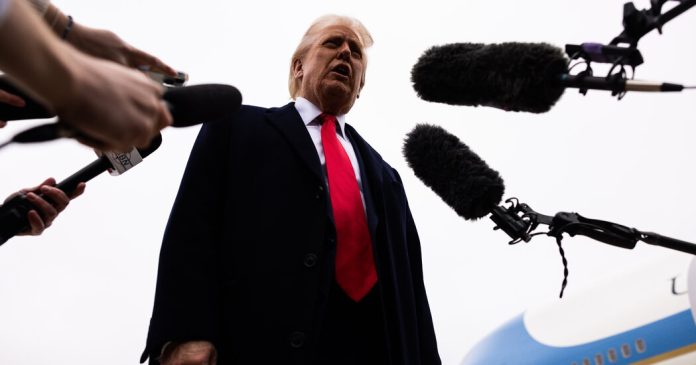
“This is a time of war because Biden allowed millions of people, many of them criminals, many of them at the highest level. Other nations empty their jails into the United States,” Trump told reporters aboard Air Force One on Sunday. “It’s an invasion.”

Skye Perryman of Democracy Forward, a national legal organization that promotes democracy through litigation, told Morning Edition that Trump’s “improper” actions are an attempt to expand his power beyond what the constitution grants the president. She added that the deportations have resulted in people being denied due process under U.S. law.

Democracy Forward, along with the American Civil Liberties Union, filed suit against the Trump administration over its use of the 1798 law. Perryman discussed the lawsuit and what she argues is the administration’s overreach of power.

This interview has been edited for length and clarity.

Leila Fadel: Now, you’re saying he doesn’t need to invoke this act in order to remove what they’re saying are dangerous individuals?

Skye Perryman: The individuals, as we understand that they are seeking right now to remove, are already in custody in some way, but the Trump administration is seeking to circumvent the process that we have in our country in order to just expand power and do something with no process at all. So that’s highly concerning. We’ve not ever been in this situation in the country. But yes, obviously, the United States has comprehensive immigration laws with a lot of enforcement powers, but this one is a misuse.

In this photo provided by El Salvador's presidential press office, prison guards transfer deportees from the U.S., alleged to be Venezuelan gang members, to the Terrorism Confinement Center in Tecoluca, El Salvador, Sunday, March 16, 2025.

In this photo provided by El Salvador’s presidential press office, prison guards transfer deportees from the U.S., alleged to be Venezuelan gang members, to the Terrorism Confinement Center in Tecoluca, El Salvador, Sunday, March 16, 2025.

AP/El Salvador presidential press office


hide caption

toggle caption

AP/El Salvador presidential press office

Fadel: The administration carried out these deportations despite a judge’s ruling blocking them. And they said the planes carrying the migrants were already in the air at the time of the ruling, so they didn’t have to comply. What do you make of that explanation?

Perryman: This is not normal and it’s not OK. We filed a paper with the court late last night with the ACLU, raising a number of responses to how the government has been conducting itself in the court hearing. And we are going to work very hard with the court to ensure that the government complies with the order. But we have serious concerns about this compliance because it does look like that they’re just operating in the throes, that the rule of law does not apply to them. And it’s highly concerning and should be concerning for all Americans.

Fadel: We’ve heard Trump advisers and administration officials blaming in general “activist” judges for blocking the president’s lawful authority, as they say. In this case, did the judge overstep, as the White House officials say they did?

Perryman: Absolutely not. You see the judge doing exactly what we want federal judges to do in an emergent situation. He looked at the facts. He held a hearing. He heard the government and he ultimately issued a temporary order. This is what it means to live under the rule of law in the country. It should be concerning to everyone that our president doesn’t believe that the laws apply to him.

And I’ll just note that, you know, the majority of Americans, the vast majority of Americans and the vast majority of Republicans, when they were asked, including last month, agree that presidents should follow court orders. And so we believe this is a real crisis point and we’re looking forward to raising these issues before the court.

Editor’s note: A Marquette Law School national survey from February found that 77% of Republicans polled said the president should follow Supreme Court rulings. 

The radio version of this story was edited by Adam Bearne and produced by Destinee Adams.

Trump’s Unwelcome News to Auto Chiefs: Buckle Up for What’s to Come

0

The line fell silent.

In a phone call from the Oval Office, President Trump had just delivered unwelcome news to three of America’s most powerful auto executives: Mary Barra of General Motors, John Elkann of Stellantis and Jim Farley of Ford.

Everyone needs to buckle up, Mr. Trump said on the call, which took place in early March. Tariffs are going into effect on April 2. It’s time for everyone to get on board.

The auto chiefs, like the leaders of other industries, had been arguing that Mr. Trump’s 25 percent tariffs on cars coming from Canada and Mexico would wreak havoc on their supply chains and blow a hole through their industry. They had won a concession of sorts when Mr. Trump agreed to give them a one-month reprieve, until April 2.

But now, the Big Three automaker chiefs seemed to realize there was no point in fighting for more. They had gotten as much as they were going to get.

For corporate America, including some major donors, the shock of Mr. Trump’s second term is that it turns out he really does believe the thing he’s been saying publicly for 40 years: Foreign countries are ripping America off, and tariffs are a silver bullet for America’s problems. When he says that “tariff” is the most beautiful word in the dictionary, he means it.

To Mr. Trump, tariffs are not merely a negotiating tool. He believes they will make America rich again. And they combine two of his favorite features of the presidency: They are a unilateral power that he can turn on or off on a whim, and they create a begging economy, forcing powerful people to come before him to plead for mercy.

This account is based on interviews with more than a dozen Trump administration officials and others familiar with the dynamic at the White House over tariffs. They asked for anonymity to discuss private conversations and deliberations.

In the corporate community — a group that spends a fortune on consultants to interpret Mr. Trump, and where the cliché of taking him “seriously but not literally” is in high circulation — many had been clinging to the view that he saw tariffs only as a tool of leverage. It was not that Mr. Trump loved tariffs, they told themselves. It was that he loved what the threat of them could yield in a negotiation.

Over the years, it had become conventional wisdom that the stock market was Mr. Trump’s guiding light and guardrail, and that any plunge in the markets would limit the scope of his tariffs, which were more surgically applied seven years ago.

But Trump 47 has so far been undeterred by a plummeting market and by headlines that would have forced Trump 45 into reverse. The Dow Jones industrial average has shaved off more than 600 points since the new tariffs began. The S&P 500 slid into a correction, meaning it has fallen by more than 10 percent from its peak.

During his first term, Mr. Trump had a weaker stomach for the economic pain caused by a far narrower program of tariffs. He placed tariffs on more than $300 billion of products throughout his first term; now, less than two months in, he has slapped tariffs on roughly $1 trillion of goods.

A few recent public opinions polls show a growing number of Americans disapproving of Mr. Trump’s handling of the economy, but his advisers insist that’s more about lingering high prices than tariffs.

One of Mr. Trump’s advisers, speaking on the condition of anonymity to describe private conversations, said the Biden presidency proved to Mr. Trump that the stock market is not a foolproof barometer of the economy’s future, nor a useful indicator of voter sentiment. If it were, Mr. Biden, who presided over a booming stock market, would surely be the president, the adviser said, explaining Mr. Trump’s thinking.

Advisers say Mr. Trump knows that foreign leaders are watching to see whether he follows through on his threats, looking for signs of weakness. They have said he believes that backing off his tariffs would permanently damage his preferred image as a strongman.

Sometimes he has granted absolution of sorts — like when he exempted from tariffs products from Canada and Mexico that comply with his North American trade deal. But he has repeatedly said that more and bigger tariffs are on the way.

Business leaders are now rapidly reassessing the cheerful assumptions that had guided their thinking since Election Day.

Bill Reinsch, a senior adviser at the Center for Strategic and International Studies and a former Commerce Department official, said Mr. Trump had been explicit in the campaign about his intentions, and that his tariff proposals this time have been much deeper and broader than in his first term.

“I think he was clear,” he said. “I don’t think people paid much attention.”

Their misread is understandable.

In the lead-up to the 2024 election, Mr. Trump’s new crop of economic advisers sent reassuring signals to Wall Street. Their public remarks suggested that Mr. Trump’s second-term trade policy would be much the same as the first. In September, Howard Lutnick, now the commerce secretary, described tariffs as a “bargaining chip” that would ultimately lead to freer markets. And Scott Bessent, who became Mr. Trump’s treasury secretary, wrote in a letter to his clients last year that “the tariff gun will always be loaded and on the table but rarely discharged.”

It is still possible that Mr. Trump backs away from some of his tariffs, but if he’s contemplating a reversal it would be news to his closest advisers. Mr. Trump has said repeatedly he plans to issue much more extensive tariffs on April 2, and his advisers have told foreign officials and chief executives that he won’t be deterred. His comments to his cabinet secretaries and aides in Oval Office meetings track with his public rhetoric, according to two people with direct knowledge, who spoke on the condition of anonymity to describe private conversations.

Mr. Trump personally drafts or dictates his Truth Social posts that threaten ever-escalating tariffs as China, Canada and the European Union retaliate against his provocations. Even former aides who think his maximalist approach is the wrong one say he has a valid point about how China and Europe have treated the United States unfairly when it comes to trade.

He feels that so far the pressure has worked, aides say, citing Mexico’s willingness to stem the flow of undocumented migrants and fentanyl into the United States. Even after Mexico came forward with those measures, Mr. Trump still pushed forward with 25 percent tariffs before pausing their application on a number of items.

One of the biggest differences between the first term and now is that Mr. Trump is far more confident in his instincts and has stocked his team with people who echo them. He rarely hears strong dissenting views about his economic policies.

Mr. Trump received fierce opposition to tariffs in his first term from those who said they would raise costs for consumers and businesses and slow the economy. His team included people Mr. Trump would derisively refer to as “globalists” — like Steven Mnuchin, the treasury secretary at the time, and the economic adviser Gary Cohn, who worked with others to stop tariffs by taking papers from the president’s desk, and showed the president charts and maps to illustrate the benefits of trade. Other aides, like Larry Kudlow, were less confrontational but still skeptical of a protectionist trade policy.

Mr. Trump’s hard-line trade adviser Peter Navarro used to have Oval Office shouting matches against the so-called globalists. Now, returning for a second term, Mr. Navarro’s disputes with other advisers are more nuanced.

Mr. Bessent was a hedge fund executive, and Mr. Lutnick was the chief executive of the Wall Street firm Cantor Fitzgerald. But both have publicly embraced tariffs before they were granted their jobs. And whatever they think about the tariffs privately, nobody is sitting across the Resolute Desk from Mr. Trump, strenuously arguing against his economic ideas. His current team’s arguments revolve around public messaging about the tariffs, as well as exemptions and the scale and timing of the tariffs, but no one is challenging the idea of using them in some form.

Nor is Mr. Trump hearing strong dissent from Capitol Hill. Republican lawmakers are either converts to protectionism or cowed against speaking out. The Wall Street Journal editorial board is the rare right-leaning institution still consistently challenging his approach to trade.

Mr. Lutnick, who is also overseeing the U.S. trade office, receives many calls from unhappy business leaders, along with the White House chief of staff, Susie Wiles, and the agriculture secretary, Brooke Rollins.

On the night of March 13, Mr. Lutnick, Mr. Bessent, Kevin Hassett, who is the National Economic Council director, and a few others met at the Naval Observatory with Vice President JD Vance to discuss having a cohesive public message about the economy, amid complaints from allies about inconsistency, according to four people briefed on the meeting.

White House officials declined to comment on the meeting.

But in a statement provided by the White House, Mr. Navarro described Mr. Trump’s advisers as following his lead, characterizing them as “a diverse group with complementary skill sets and a high level of trust with names like Bessent, Greer, Hassett and Lutnick who debate behind closed doors and emerge as ‘one band, one sound.’”

There have been few exceptions granted. Ms. Rollins heard from farmers who wanted an exemption for potash, an important ingredient for fertilizer. Mr. Trump ultimately agreed to a reduced 10 percent tariff, but was unhappy about the reprieve, according to a person with knowledge of the matter. In a statement, Ms. Rollins said the president’s “reduction of tariffs on potash is a critical step in helping farmers manage and secure key input costs at the height of planting season while reinforcing long-term agricultural trade relations.”

But in many other cases, Mr. Trump has seemed far less willing to offer significant industry exemptions than he was in his first term.

While some industry executives have tried to push back during discussions with the White House, very few have said anything publicly; those who did earned the ire of the Trump administration. Those who have spoken privately have generally sandwiched any criticism of Mr. Trump between lavish praise.

Some companies have been “intimidated” about pushing back on tariffs, wary of becoming some kind of target, Mr. Reinsch said. “Nobody wants to go public,” he said, “because they’re concerned about the consequences.”

But those companies are still counting on policies they favor, such as tax cuts and deregulation.

What’s an autopen, and does it void Biden’s pardons? : NPR

0

The Autopen Model 80 in 2011. President Trump is accusing Biden of using an autopen to sign documents, as many presidents have over the years.

Manuel Balce Ceneta/AP


hide caption

toggle caption

Manuel Balce Ceneta/AP

President Trump is claiming without evidence that some of former President Joe Biden’s actions are invalid because he allegedly used a machine to automate signatures on documents, which is a longstanding practice in the White House.

In a late-night Truth Social post, Trump said his predecessor’s preemptive pardons of members of the House committee investigating the Jan. 6 insurrection are “hereby declared VOID, VACANT, AND OF NO FURTHER FORCE OF EFFECT, because of the fact that they were done by Autopen.”

The notion that Biden relied on the autopen to sign important documents was heavily perpetuated by the Oversight Project, an arm of the Heritage Foundation that played a key role in promoting false claims about noncitizen voting last year.

Trump’s rhetoric fans the flames of conspiracies about Biden not really being in charge during his presidency. While concerns about Biden’s fitness for office forced him to call off his reelection campaign, the right has taken that to an extreme.

“In other words, Joe Biden did not sign them but, more importantly, he did not know anything about them!” Trump wrote of the pardons. However, there is no evidence that is the case.

It is not clear whether Biden actually used an autopen to sign the documents in question. And even if he did, legal experts say it’s not clear the pardons could be rescinded — for that or any other reason.

Article II, Section 2 of the Constitution, which grants presidents broad clemency powers, says the pardon only needs to be “accepted by its subject” to take effect — and does not mention anything about reversing them after the fact.

Jay Wexler, a professor of constitutional law at Boston University School of Law, told NPR he thinks the autopen issue is a “nonstarter” and a “distraction.” Importantly, he says, there is nothing in the Constitution that requires pardons be in writing at all.

“The argument that the pardon fails because it was signed by an autopen fails at the get-go, because there’s no requirement that the pardon even be signed,” he explained.

Trump acknowledged the potential grey area — and repeated his claim about Biden’s cognition — while speaking to reporters on Air Force One.

“It’s not my decision, that would be up to a court,” he said. “But I would say that they’re null and void, because I’m sure Biden didn’t have any idea that it was taking place.”

Concerns about Biden’s age and fitness for office are not new — even from Trump, who became the oldest president inaugurated when he began his second term at age 78. But claims that autopen signatures could be nullifying are more unusual, especially since multiple presidents have used the devices over the years.

“It doesn’t come up regularly,” Wexler says. “And I think that’s because people understand that it’s really not a real issue.”

What is an autopen? 

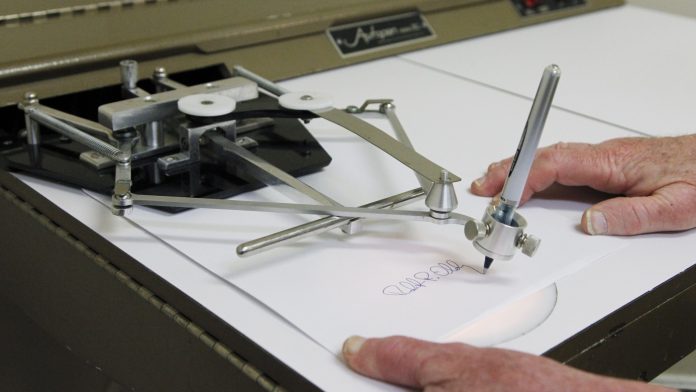
An autopen is a generic name for a machine that duplicates signatures using real ink, making it easy for public figures to autograph everything from correspondence to merchandise in bulk.

They are printer-sized machines with an arm that can hold a standard pen or pencil, and use it to replicate the programmed signature on a piece of paper below.

The Autopen Company, a Maryland-based firm that makes the devices, says they have been “used by universities, government agencies, and other institutions for more than 60 years.”

“The Autopen has long been a tool for the world’s most influential leaders, allowing them to more effectively apply their time and attention to important issues without compromising the impact of personalized correspondence,” it writes.

Where did they come from? 

A precursor to the autopen is the 19th-century polygraph, which allowed one writer to move two pens simultaneously. It was patented in the U.S. in 1803, produced the following year and used enthusiastically by Thomas Jefferson during and after his presidency.

“The use of the polygraph has spoiled me for the old copying press, the copies of which are hardly ever legible,” Jefferson wrote in 1809. “I could not, now therefore, live without the Polygraph.”

As the autopen evolved, a man named Robert De Shazo Jr. learned about an early design while working at a naval torpedo factory in Virginia during World War II. He created the technology and began commercially producing it shortly afterward.

De Shazo’s first customer was from the secretary of the Navy, and the devices quickly became commonplace in the government.

De Shazo — whose company, Automated Signature Technology, was headquartered in Virginia — told The Washingtonian in 1983 that an estimated 500 autopens were being used in the nation’s capital, from Congress to the Cabinet.

“Within four or five square blocks, you’ve got more people who need them than anyplace else in the world,” he said.

Which presidents have used them? 

A number of presidents since Jefferson have relied on autopens, some more publicly than others.

Harry Truman was rumored to have used one, as was Gerald Ford, according to the Shappell Manuscript Foundation.

Lyndon Johnson is credited with publicizing the practice by allowing photos of the device to be taken during his time in office. That story made the front cover of the National Enquirer in 1968 under the headline: “One of the best kept secrets in Washington: The Robot that Sits in for the President.”

The presidents who used autopens in the second half of the 20th century — a list that is reported to include John F. Kennedy, Jimmy Carter and Richard Nixon — did so to sign correspondence and other documents.

Barack Obama became the first known president to sign legislation with an autopen, in 2011, when he signed a Patriot Act extension while he was in France — prompting Republican critics to wonder whether that move was constitutionally sound.

It turned out that the administration of George W. Bush had already considered — and answered — that question. Bush’s Office of Legal Counsel published a 29-page document in 2005 concluding that the president “need not personally perform the physical act of affixing his signature to a bill he approves and decides to sign in order for the bill to become law.”

“Rather, the President may sign a bill … by directing a subordinate to affix the President’s signature to such a bill, for example by autopen,” it reads.

Bush ultimately decided against using the autopen himself, flying through the night to get back to the White House in time to sign emergency legislation in 2005. But his defense secretary, Donald Rumsfeld, was criticized for using one to sign hundreds of condolence letters to families of troops killed in the Iraq War.

Rwanda Cuts Ties With Belgium Over Congo Conflict and E.U. Sanctions

0

Rwanda severed diplomatic ties on Monday with its former colonial ruler, Belgium, which has been pushing to penalize Rwanda over its invasion of the neighboring Democratic Republic of Congo.

Rwanda’s Foreign Ministry gave Belgian diplomats 48 hours to leave the country.

The diplomatic escalation came as the European Union, at the urging of Belgium, on Monday imposed sanctions against Rwandan military and government officials for their involvement in the conflict in Congo.

“Belgium has clearly taken sides in a regional conflict and continues to systematically mobilize against Rwanda in different forums,” Rwanda’s Foreign Ministry said in a statement.

The European Union accused Rwandan officials of fueling the conflict through the presence of Rwandan troops in eastern Congo and the plundering of Congo’s mineral resources. The sanctions were Europe’s first steps toward increasing pressure on Rwanda, though so far it has maintained close cooperation on security and strategic minerals.

“Belgium has been taking the lead in Europe in advocating for sanctions against Rwanda,” said Kristof Titeca, a professor of international development at the University of Antwerp. At the same time, he added, “the European Union did the minimum with these sanctions on individuals — it still remain pretty harmless.”

The Belgian foreign minister, Maxime Prévot, said in a statement that Rwanda’s response “is disproportionate and shows that when we disagree with Rwanda, they prefer not to engage in dialogue.” He said Belgium would respond in kind to the expulsion of its diplomats.

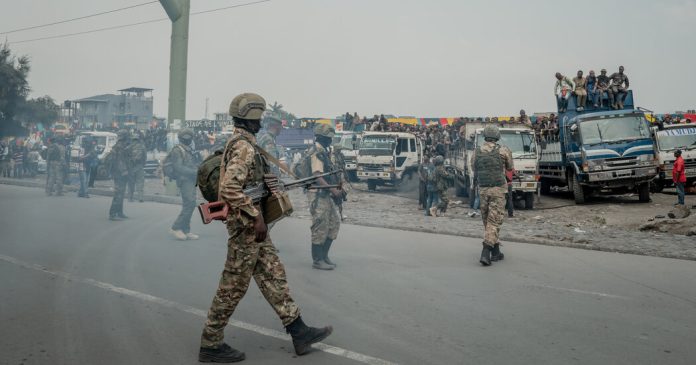
The United States, the European Union and the United Nations say Rwanda has been funding, supporting and commanding an armed rebel group, M23, that has fought government forces in eastern Congo for more than a decade and launched a new offensive there in January.

M23 now controls the region’s two largest cities, border crossings with Rwanda and access to key natural resources, including one of the world’s largest coltan mines. Coltan is a mineral that is vital to making smartphones and other electronic devices. M23 is in charge of an area in eastern Congo that is the size of Greece or Louisiana.

M23 leaders and Congolese government officials are scheduled to meet on Tuesday in Angola for the first peace talks between the two warring parties in years.

The latest wave of violence has killed thousands and displaced more than 500,000 people since the beginning of the year, according to the U.N.’s refugee agency.

Despite widespread evidence shared by U.N. experts and independent researchers that thousands of Rwandan troops are deployed in Congo and that Rwanda supplies weapons to M23, Rwanda has denied backing M23.

Rwanda, a country of 14 million whose economic growth is often viewed as a success story in Africa, remains heavily dependent on external assistance. More than a quarter of its national budget of $4 billion comes from foreign aid, according to the World Bank — about $1.25 billion on average over the past several years.

Britain and Germany have withheld aid to Rwanda, and Canada has suspended some export activities.

On Monday, the European Union imposed sanctions on a Rwandan gold refinery and five Rwandans, including Francis Kamanzi, the chief executive officer of the Rwanda Mines, Petroleum and Gas Board. The bloc has accused Rwanda of mixing minerals plundered from Congo with its own production.

Also sanctioned were Ruki Karusisi, the commander of Rwanda’s special forces, which U.N. experts say oversee M23 units on the ground; and two high-ranking military officials, Désiré Rukomera and Eugene Nkubito.

Yet, Rwanda’s government has mostly remained defiant, and on Monday it accused Belgium of “neocolonial delusions.” Over the past decade, the East African country has cultivated economic and military relationships with a wide range of countries — including Singapore, Turkey and Qatar — beyond its traditional Western partners.

It has portrayed itself as a safe and stable haven in a volatile region, attracting tourism and investment. Last month, finance executives from across Africa met in Rwanda’s capital, Kigali, for a financial technology conference, and cyclists from across the world raced through the country’s lush hills as part of the Tour of Rwanda.

“Rwanda has flexed its muscles at any criticism and signaled, ‘We’re not afraid by sanctions; they’re not having any effect,’” said Mr. Titeca, the professor at the University of Antwerp. “But that strong reaction actually shows that it might have some effect.”