Thursday, November 12, 2026
Home Blog Page 117

In Ukraine’s Frontline Town of Sloviansk, a Taste of Normalcy Beckons

0

Serhii Kovalov doesn’t like sushi. Nor does the sushi chef at his restaurant in eastern Ukraine.

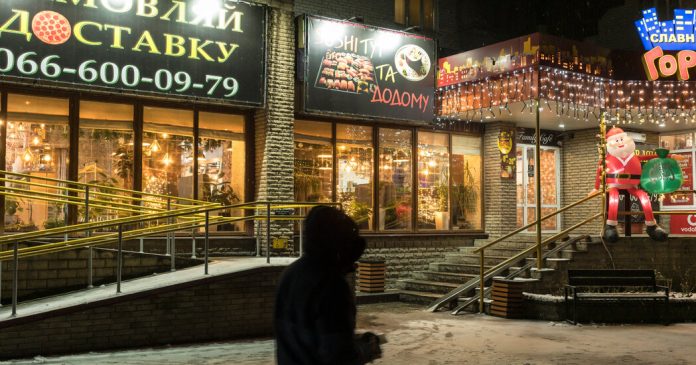
But when customers started asking for it, Mr. Kovalov navigated both enemy shelling and ordinary supply-chain issues to get fresh fish for Philadelphia rolls to his frontline town, Sloviansk.

Now, as Russian forces have drawn closer and life gets more bleak, many Sloviansk residents are weighing whether to flee. Not Mr. Kovalov. He’s determined to keep serving sushi to soldiers and civilians who are seeking comfort, sustenance or a taste of something special after more than three years of war.

“I know I’m needed here,” the 30-year-old Mr. Kovalov said, gesturing at the restaurant and the town outside that has long been in Russia’s cross hairs. “So I stay.”

Sushi has long been wildly popular in Ukraine, and for people in Sloviansk, this treat provides a sense of much-needed normalcy.

When Sloviansk came under attack in February 2022 when Russia’s full-scale invasion began, sushi wasn’t even on the menu at Mr. Kovalov’s restaurant, Slavnyi Horod, or “Glorious City.”

His was the only restaurant in town that stayed open in the early days of the war, and suppliers would not deliver.

“So we began building entirely new logistics routes,” Mr. Kovalov said. Colleagues relocated to central and western Ukraine, setting up new vendor relationships. To get goods back across the active front line to Sloviansk, Mr. Kovalov sometimes drove round-trip himself.

As people fled, the restaurant’s staff dwindled from 35 to seven and became a “family,” Mr. Kovalov said.

With no water or electricity, meals were cooked outside on a fire. Eventually, the restaurant purchased a generator and drilled a well, with Mr. Kovalov intent on keeping its doors open.

Even after a missile destroyed his apartment, Mr. Kovalov headed to the restaurant — with a concussion.

“That was probably the toughest day, having to pull myself together while walking to work. I had to quickly decide: either leave, or stay and lead the team through this,” he said. “I walked in with a smile and said, ‘It’s fine. We got lucky this time — second birthday. Let’s keep working.’”

Amid all that hardship, why would he introduce sushi — which requires special storage and refrigeration — to the menu?

“It started with demand,” he said simply, betraying his business school degree. “There were no sushi restaurants in the city, and guests began asking.”

“Whether I enjoy it or not doesn’t matter,” he insisted.

Today, he has partners in Kyiv who inspect and select “very fresh” raw fish, which is then shock-frozen and packed into cooled containers for the eight-hour overland journey to Sloviansk.

The road weaves through Kharkiv, then Izium, cities whose smashed buildings tell the tale of Russian bombardment, occupation and bitter fights for liberation. It passes a snow-covered forest once filled with mass graves of the invasion’s victims, and it runs close enough to occupied territory to pick up Russian stations on the radio.

From Izium, it’s about 40 minutes down the highway and into Donetsk, the region that is home to Sloviansk. Russian forces have captured a large part of Donetsk and aim to seize all of it.

The fish trucks enter Sloviansk on the north edge of town, where a salt lake in better times drew tourists seeking spa treatments. Many of the spa buildings have been reduced to rubble, and soldiers mill around in the ruins.

Anti-tank barriers line the road into the city center as one-story brick houses give way to apartment blocks, some disfigured from attacks.

Despite the scars, Sloviansk is bustling. Cars honk, soldiers shop for groceries and children wave at ducks in the park.

But pressure is mounting from heavy fighting nearby. Russian forces are pushing to capture Chasiv Yar, a city 30 miles away. Doing so could help clear the way to take Kramatorsk — putting neighboring Sloviansk next in line, residents fear.

Zoya Trubytsyna, 68, said her suitcase was already packed.

“The front line is coming closer,” she said while walking to work. “If something happens in Kramatorsk, we will all leave.”

Life is already getting more difficult, she said, with power cuts and near-nightly explosions.

But Mr. Kovalov still manages to keep his restaurant open for breakfast, lunch and dinner.

As he stirred a coffee and chatted with servers, a morning crowd filled the seats. No one stopped eating when an air-raid warning wailed.

Blue takeout bags decorated with handwritten hearts were lined up behind the cashier for when the lunch rush started about an hour later.

A long deli counter featured hot food, salads and sweets. The sushi station sat at the end, with photos of maki and tempura hanging above.

A soldier added a Philadelphia roll to his loaded tray of sauerkraut, blood sausage and lasagna.

“Honestly, the sushi here isn’t that tasty,” the 33-year-old soldier, who goes by the call sign “Siesta,” said after polishing off his plates. But “it’s a way to feel something familiar, like being at home.”

As a civilian, Siesta said, he would go for sushi with friends in Kyiv. But with his mechanized battalion defending the nearby city of Lyman, the food options are basic. Coming to Sloviansk for “that little bit of soy sauce,” he said, was a rare treat.

Slavnyi Horod is no longer the only sushi spot in town; there are several. Three blocks away is “Big Roll,” which was closed for months after the full-scale invasion. Since reopening, business has been unsteady, said its owner, Nataliia Gordienko, who now keeps only a short-term supply of fish.

“We don’t know what will happen next,” she said while boxing salmon rolls. “What’s the point of stockpiling if power gets cut off?”

People are also scared of Russian strikes, she added, ordering “quickly, quickly” when they come in for takeout.

Of 21 rolls on offer at Mr. Kovalov’s restaurant, the Philadelphia roll — with salmon and cream cheese — is the most popular, according to the sushi master, Dmytro. He seems baffled by its popularity — “it doesn’t really exist in nature” — but has never been a sushi fan himself.

“Raw fish always raises suspicion,” he said, smirking.

Still, Dmytro, who asked that only his first name be used for security reasons, finds the work gratifying, and he watches YouTube videos to learn new techniques. But he is not sure he will stick with sushi forever.

“At this point, I don’t feel like planning anything,” he said as a waitress whispered that an order was waiting. “There’s a war in our country, and it’s hard to know what tomorrow or the day after will bring.”

His boss, Mr. Kovalov, is not immune to the uncertainty. He’s aware the front line in Donetsk is under pressure, saying, “We are afraid every day.”

For now though, he said, leaving is not an option.

“Elsewhere just doesn’t make sense,” he said. “I’ve already found my purpose right here.”

Oleksandr Chubko contributed reporting.

'Red Scare' revisits the fear of Communism that gripped post-WWII America

0

Writer Clay Risen describes the anti-Communist frenzy that destroyed the careers of thousands of teachers, union activists and civil servants — and connects that era to our current political moment.

Netanyahu’s Move to Fire Shin Bet Chief Reflects Wider Push for Control

0

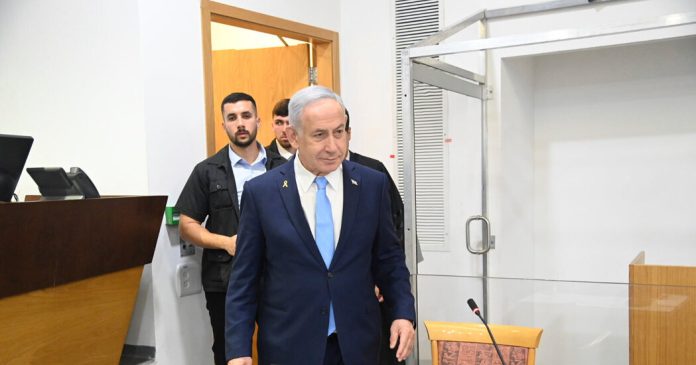
Prime Minister Benjamin Netanyahu’s sudden attempt to remove the head of Israel’s domestic intelligence agency is the latest salvo in a two-year campaign by the Israeli government to exert more control over different branches of the state.

The move prompted calls on Monday for mass protests and led to criticism from business leaders and the attorney general, summoning memories of the social upheaval in 2023 that was set off by an earlier push to reduce the power of state watchdogs.

Mr. Netanyahu’s plan to hold a cabinet vote on the future of Ronen Bar, the head of the agency known as the Shin Bet, was announced less than a month after his government announced a similar intention to dismiss Gali Baharav-Miara, the Israeli attorney general. It also came amid a renewed push in Parliament by Mr. Netanyahu’s right-wing coalition to give politicians greater control over the selection of Supreme Court justices.

These moves mark a return to Mr. Netanyahu’s failed efforts in 2023 to reduce the power of institutions that had acted as a check on his government’s power, including the Supreme Court and the attorney general.

That program — often described as a judicial overhaul — proved deeply divisive, setting off months of mass protests and widening rifts in Israeli society. The campaign was suspended only after the Hamas-led attack on Israel in October 2023 revived a sense of national unity.

Now, amid a shaky cease-fire in Gaza, the easing of tension appears to have ended.

“The removal of the head of the Shin Bet should not be seen in isolation,” said Amichai Cohen, a law professor and fellow at the Israel Democracy Institute, a Jerusalem-based research group. “It’s part of the general trend of taking on these independent agencies and increasing the power of the executive.”

“The judicial overhaul is back,” Professor Cohen added.

The attempt to fire Mr. Bar prompted calls on Monday from opposition leaders and grass-roots activists for Israelis to demonstrate outside the government headquarters in Jerusalem on Wednesday, when the cabinet is set to vote on Mr. Bar’s future. A coalition of 300 major business leaders also issued a rare statement, criticizing Mr. Bar’s dismissal.

Ms. Baharav-Miara, the attorney general, issued a statement saying that Mr. Netanyahu could not begin the process of firing Mr. Bar until it was determined whether it would be lawful to do so. She said there were concerns that it would be a conflict of interest for Mr. Netanyahu — raising the prospect of a constitutional crisis if the prime minister ignored her warning.

Those developments evoked similar moves in 2023, when hundreds of thousands held weekly protests against the overhaul and the business leaders joined labor unions to hold a national strike.

The immediate context to the attempt to fire Mr. Bar was a personal dispute between the security chief and the prime minister. For months, Mr. Bar had angered Mr. Netanyahu by investigating officials in the prime minister’s office over claims that they had leaked secret documents and also worked for people connected to Qatar, an Arab state close to Hamas. Mr. Netanyahu has denied wrongdoing; the Qatari government did not respond to requests for comment.

The final straw for Mr. Netanyahu, analysts said, was most likely a rare public intervention last week from Mr. Bar’s predecessor, Nadav Argaman. In a television interview, Mr. Argaman said he might reveal further accusations of wrongdoing by the prime minister if he believed that Mr. Netanyahu was about to break the law.

Such comments from a close ally of Mr. Bar were “too much” for Mr. Netanyahu, said Nadav Shtrauchler, a former adviser to the prime minister. “He saw it as a direct threat,” Mr. Shtrauchler said. “In his eyes, he didn’t have a choice.”

But the broader context, analysts said, is a much wider dispute between Mr. Netanyahu’s right-wing alliance and its opponents about the nature and future of the Israeli state.

Mr. Netanyahu’s governing coalition is formed from parties that variously represent ultrareligious Jews seeking to preserve their privileges; and settler activists aiming to deepen Israel’s control over the West Bank and further curb Palestinian rights.

For years, these groups have resented the independence of watchdogs like the judiciary, the attorney general and the security services, which have variously moved to limit some privileges for the ultra-Orthodox; block certain moves by the settler movement; and prosecute Mr. Netanyahu for corruption. He is standing trial on charges that he denies.

The government and its supporters say that reining in the judiciary and other gatekeepers like the Shin Bet actually enhances democracy by making lawmakers freer to enact what voters elected them to do. They also say that Mr. Bar should resign for failing to prevent the Hamas-led Oct. 7, 2023, attack that ignited the war in Gaza.

The Shin Bet has “poked their noses into matters of governance, control, values, social cohesion and, of course, democracy,” Eithan Orkibi wrote in column on Monday for Israel Hayom, a right-wing daily newspaper. After Mr. Bar’s dismissal, Mr. Orkibi continued, the Shin Bet will “slowly be returned to their natural professional territory.”

But the opposition says such moves would damage democracy by removing a key check on government overreach, allowing Mr. Netanyahu’s coalition — the most conservative and nationalist in Israel’s history — to create a less pluralist and more authoritarian society. The opposition argues that Mr. Netanyahu should also take responsibility for the Oct. 7 attack, not just Mr. Bar.

“With a submissive coalition of yes men, Netanyahu is on his way to dismantling all of Israel’s gatekeepers,” Barak Seri wrote in a column for Maariv, a center-right daily. “To dismantling everything that is protecting Israel as we have known it since its establishment.”

In a separate development, the Israeli military said it had conducted strikes in central and southern Gaza against people trying to bury explosives in the ground. While Israel and Hamas are formally observing a cease-fire, negotiations to formalize the truce have stalled and Israel is conducting regular strikes on what it says are militant targets. Hamas has said the strikes have killed more than 150 people, some of them civilians. It did not immediately comment on the Monday strikes.

Myra Noveck contributed reporting.

Kremlin Stays Mum on Agenda for Putin’s Call With Trump

0

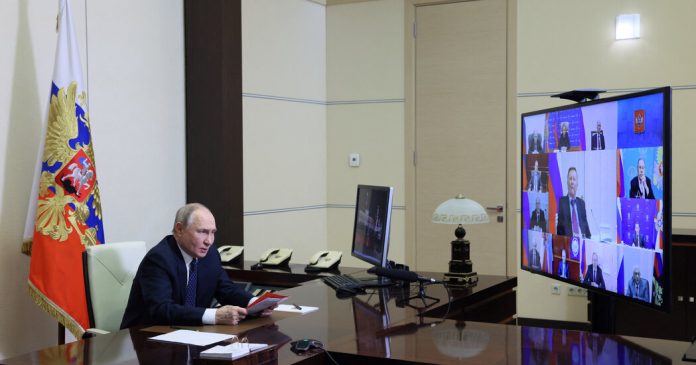
The Kremlin said on Monday that work was underway to prepare the second phone call between President Vladimir V. Putin and President Trump but refused to disclose what would be on the agenda, as American officials continued to project some optimism about a U.S.-backed cease-fire deal with Ukraine.

The highly anticipated phone call, scheduled for Tuesday, will be the first known conversation between the two leaders sinceUkraine agreed to support a U.S.-backed monthlong cease-fire, as long as Russia does the same. While Mr. Trump has unequivocally stated his desire to broker some sort of truce as quickly as possible, Mr. Putin seems to be seeking to exploit the moment to win more concessions.

Speaking aboard Air Force One on Sunday evening, Mr. Trump said that he expected to discuss territorial issues with Mr. Putin as well as the fate of Ukrainian power plants. He also noted that there had already been discussions about “dividing up certain assets.”

“We want to see if we can bring that war to an end,” Mr. Trump said. “Maybe we can. Maybe we can’t, but I think we have a very good chance.”

The Kremlin’s spokesman confirmed on Monday that a call was expected to take place the following day. When asked whether Ukrainian nuclear power plants would be discussed, the spokesman, Dmitri S. Peskov, said “we never get ahead of things” since in Moscow’s “opinion the contents of conversations between the two leaders cannot be discussed a priori.”

“That is why we will not do that,” he told a briefing.

.

Mr. Putin has not yet agreed to the 30-day cease-fire that U.S. officials proposed after talks with Ukrainian officials in Jeddah, Saudi Arabia. He has said the idea was “the right one and we definitely support it” — but laid out numerous conditions that could delay or derail any truce.

“There are questions that we need to discuss, and I think that we need to talk them through with our American colleagues and partners,” he told a news conference on Thursday.

Those remarks came just before Mr. Putin met with Steve Witkoff, who serves as Mr. Trump’s special envoy to the Middle East. But he has been involved in the peace talks over Ukraine and other discussions about restoring ties between Moscow and Washington.

Mr. Witkoff told CNN on Sunday that his meeting with Russia’s leader had lasted three to four hours. He declined to share the specifics of their conversation, but said it went well and that the two sides had “narrowed the differences between them.”

President Volodymyr Zelensky of Ukraine has accused Mr. Putin of stalling while Russia’s army advances on the battlefield to strengthen his hand in talks with the Trump administration about pausing the hostilities.

Moscow’s push to drive out Ukrainian troops from most of the Kursk region of Russia in recent days has deprived Kyiv of an important bargaining chip in any potential negotiations. .

With its advance in Kursk, Russia can show Mr. Trump that it holds the momentum on the battlefield. Battlefield maps compiled by both Russian and Western groups analyzing combat footage and satellite images show that Russian forces have already crossed into Ukraine’s Sumy region from Kursk, in what analysts say may be an effort to flank and encircle the remaining Ukrainian troops in Kursk or open a new front in the war.

Mr. Zelensky has accused Russia to preparing to mount a larger offensive into the Sumy region, which is home to hundreds of thousands of people. Those actions, he said, indicated that Mr. Putin was not interested in peace.

Since the American proposal for a cease-fire, Mr. Zelensky said on Sunday night, “Russia stole almost another week — a week of war that only Russia wants.”

“We will do everything to further intensify diplomacy. We will do everything to make diplomacy effective,” he wrote on social media.

The reference to “power plants” by Mr. Trump was the latest indication that they might factor into any such diplomacy around a cease-fire. While the president did not elaborate, his comments came on the same day Mr. Witkoff mentioned a “nuclear reactor” in an interview with CBS News.

That appeared be a reference to the Zaporizhzhia nuclear plant in southern Ukraine, which Russia seized early in the war and still controls.

The six-reactor plant, Europe’s largest, has not supplied power to Ukraine’s grid since its capture. Its proximity to frontline fighting has long raised concerns about the risk of a radiological disaster.

Ukraine has repeatedly demanded Russian forces leave the power plant in order to reduce the risk of a nuclear accident and ease the country’s power shortages. But that possibility has grown increasingly unlikely as Russia strengthens its hold on occupied territories in Ukraine.

Viktoria Hryb, the head of the Ukrainian Parliament’s subcommittee on energy security, said she was “a little surprised that the question of the plant emerged” in the remarks by Mr. Trump and Mr. Witkoff.

“Ukraine wants it back,” she said, but it isn’t clear why Russia would give it up. The power plant sits in Ukraine’s southern Zaporizhzhia region, which Russia has officially annexed despite controlling only part of its territory.

It is unclear what Russia could ask in exchange for returning the Zaporizhzhia plant to Ukrainian control.

Victoria Voytsitska, a former lawmaker and senior member of the Ukrainian Parliament’s energy committee, noted that Moscow had long sought to resume oil and gas exports to Western countries. Those exports, a crucial source of revenue for Russia’s government, largely stopped after the war began, as European countries moved to wean them off Russian energy supplies and imposed sanctions on Russian energy companies.

Tyler Pager contributed reporting.

Want Cheap Power, Fast? Solar and Wind Firms Have a Suggestion.

0

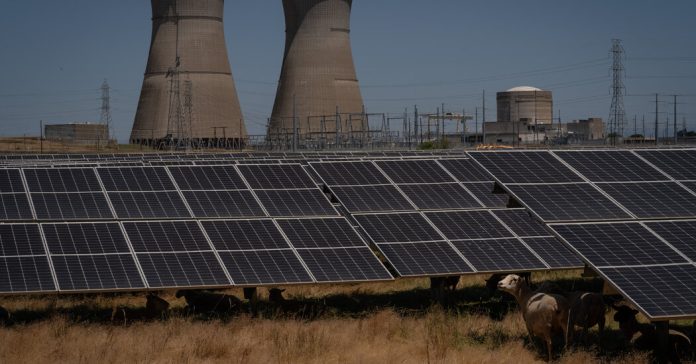
As President Trump works to blunt the growth of wind and solar power and expand fossil fuel production in the United States, the renewable energy industry is making a new pitch: You need us.

Wind and solar developers are increasingly pointing out that America’s demand for electricity is soaring, driven by a boom in data centers, and it’s proving difficult to build enough new gas plants to supply all the extra power that the nation needs.

Wind, solar and battery storage are relatively quick and cheap to construct. That could help avert energy shortages and keep prices low, an argument that renewable energy firms are making to policymakers.

“Our message to the administration is, let’s be realistic about this,” John Ketchum, the chief executive of NextEra Energy, one of the country’s largest power producers, said in an interview. “If you take renewables and storage off the table, we’re going to force electricity prices to the moon.”

At the same time, Republican leaders in Congress are talking about ending federal subsidies in the form of tax credits for low-carbon electricity, which have been expected to supercharge the growth of wind and solar power. Uncertainty around those credits has paralyzed the renewable energy industry, with companies delaying projects and laying off workers.

The chaos could make it harder for the United States to slash its planet-warming emissions, even as scientists warn the risks from climate change are escalating.

But an environmental argument won’t get far with a president who dismisses global warming. So, many wind and solar companies are now casting their industries as essential to achieving U.S. energy abundance.

“The focus is, what do we need to ensure that we have enough energy to retain our dominance in manufacturing, in electrification, in artificial intelligence?” said Sandhya Ganapathy, chief executive of EDP Renewables North America, a leading wind and solar developer.

Over the next 15 years, U.S. electricity demand could increase by up to 50 percent as tech companies build massive data centers for artificial intelligence, factories expand and millions of people plug in electric cars, according to a new study by S & P Global Commodity Insights.

Renewable companies say they are well positioned to help meet that growth in the near future. This year, wind, solar and batteries are projected to make up 93 percent of new electric capacity added to American grids — with the rest coming from power plants that burn natural gas. In many places, building new wind turbines or installing solar panels are often the cheapest ways to generate additional electrons.

But data centers need power around the clock, something wind and solar power alone can’t provide. That’s why, at the nation’s biggest annual gathering of the energy industry in Houston last week, many executives insisted that demand would have to be largely supplied by natural gas plants today and perhaps in the future by advanced nuclear reactors or enhanced geothermal plants, which can generate electricity at all hours.

“The A.I. revolution is coming, it’s going to be big, it’s going to take a lot of power,” said Ryan Lance, chief executive of the oil giant ConocoPhillips. “And gas is going to be right at the forefront of driving that power demand.”

Mr. Ketchum of NextEra had a different view. His company already owns a fleet of 19 gas-fired power plants, one of the nation’s largest, and plans to build even more gas units as the need for electricity grows. But Mr. Ketchum said that wind, solar and batteries will be just as important for meeting rising demand over the next few years.

A big reason, he explained, is that power companies now have to wait up to five years to order new gas turbines as manufacturers struggle to keep up with global demand. Any new gas projects that aren’t already under development are unlikely to come online before 2030, he said. Other nascent technologies like advanced nuclear power are even farther off.

By contrast, many wind and solar projects can be built within 12 to 18 months.

The cost of building new gas power plants has also nearly tripled since the inflation shock of 2022, Mr. Ketchum said, while wind and solar prices have increased only modestly.

Mr. Ketchum added that the intermittent nature of renewables isn’t always a problem, since wind and solar are just one component of a larger electric system. Some regions might have gas turbines that don’t currently run much at night, so ramping those up and then adding solar and batteries for the daytime could help provide additional round-the-clock power.

“Look, nobody’s built more gas-fired generation in the last 20 years than we have, and we agree we’re going to need more gas,” Mr. Ketchum said. “But there’s a time problem and there’s a cost problem. So our message is, don’t pull away from renewables, because they’re the only thing we have as a country that we can build to meet the demand that’s here right now and that’s really low cost.”

Some tech titans echoed that view. Microsoft, which has said it will spend $80 billion on new data centers this year, may need new gas generation in Wisconsin and is paying a hefty sum to reopen the shuttered nuclear plant at Three Mile Island in Pennsylvania. But the company still says it wants as much wind and solar power as it can get.

“It would have been a different conversation a decade ago when wind and solar weren’t as cost-competitive, but now they’re actually the most cost-competitive option” in places like the Southwest or Great Plains, said Bobby Hollis, Microsoft’s vice president of energy.

Jim Robb, chief executive of the North American Electric Reliability Corporation, the nation’s grid monitor, has long warned that an overreliance on renewable energy could cause new problems for electric utilities — a wind drought during hot summer months, for example, can raise the risk of blackouts.

But even Mr. Robb agreed that there aren’t many other options for rapidly expanding energy supply over the next few years. “To the extent that we’re going to unleash abundant energy in North America in the near term, it’s going to mostly be wind and solar,” Mr. Robb said at a panel on grid reliability in Washington last month.

That message is starting to catch on with some conservative lawmakers. As Republican leaders search for trillions of dollars in offsets to pay for tax cuts, at least 21 G.O.P. House members signed a letter this month urging the preservation of incentives for low-carbon power sources — including wind, solar, hydropower, nuclear and geothermal — that were part of a 2022 climate law signed by former President Joseph R. Biden Jr.

One recent study commissioned by ConservAmerica, a conservative environmental group, estimated that repealing those tax credits could cause U.S. electricity costs to rise by $51 billion per year by 2035, largely because wind and solar additions would decline by 50 percent and become more expensive.

“Common sense tax credits that preserve all-of-the-above options for reliable energy are essential to American energy dominance and keeping costs low,” Representative Gabe Evans, Republican of Colorado, said in explaining why he signed the letter. Mr. Evans’ district has several factories that make wind-turbine components.

For now, many Trump administration officials remain deeply skeptical of renewables. In Houston last week, Chris Wright, the new U.S. energy secretary, said that wind and solar power weren’t nearly as useful as natural gas, and often trigger local opposition.

“Wind has been singled out because it’s had a singularly poor record of driving up prices and getting increasing citizen outrage, whether you’re a farm or you’re in a coastal community,” Mr. Wright said.

“Everywhere wind and solar penetration have increased significantly, prices went up,” Mr. Wright said. (That isn’t always true: While California’s electricity rates have jumped as rooftop solar panels have proliferated, Texas has seen its prices decline even as wind and solar now provide one-quarter of the state’s power.)

Some renewable energy proponents said they hoped the attacks on wind and solar power would subside once the reality of America’s need for more electricity sunk in. They compared it to the early years of the Biden administration, when White House officials blocked new drilling leases only to soften after Russia invaded Ukraine and global oil prices spiked.

“We saw the last administration condemn American oil and gas until gas prices went up — and then they said, um, guys can you please produce more oil and gas,” said Jason Grumet, chief executive of the American Clean Power Association, a renewable industry trade group. “We do believe that once the emotion moves through the system and the economics start to come into focus, we’ll have a truly all-of-the-above energy policy.”

Telegram’s Pavel Durov, Charged With Range of Crimes, Is Allowed to Leave France

0

Pavel Durov, the founder of the messaging app Telegram who was charged in France last year with a range of crimes related to illicit activity on the app, has been allowed to temporarily leave the country.

Mr. Durov had been barred from leaving France, but the Paris prosecutor’s office said on Monday that the investigative judges handling his case had lifted the travel restrictions between March 15 and April 7, when he must return to France.

“I’ve returned to Dubai after spending several months in France due to an investigation related to the activity of criminals on Telegram,” said Mr. Durov, a Russian-born entrepreneur who also has citizenship in France and the United Arab Emirates. “The process is ongoing, but it feels great to be home.”

Mr. Durov, 40, was detained near Paris last August and barred from leaving the country after a rare move by French legal authorities, who charged him with complicity in managing an online platform to enable illegal transactions by an organized group.

Mr. Durov is facing a potential sentence of up to 10 years in prison. He was also charged with complicity in crimes such as enabling the distribution of child sexual abuse material, drug trafficking and fraud and refusing to cooperate with law enforcement.

Mr. Durov has criticized French authorities for the arrest, saying he cannot be held personally responsible for what users post on Telegram. But the company has made several changes since August to more aggressively police its platform and to be more cooperative with law enforcement agencies around the world.

“When it comes to moderation, cooperation, and fighting crime, for years Telegram not only met but exceeded its legal obligations,” Mr. Durov said on Monday.

Telegram, which Mr. Durov founded in Russia in 2013, says that it has more than one billion users. Its sparse oversight of user-generated content has made it popular among people living under authoritarian governments, but the lax supervision has also allowed hateful rhetoric and harmful content to fester.

The French case stoked an international debate about freedom of speech on the internet and tech companies’ responsibility to police the speech and actions of platform users. Some governments, especially in the European Union, are increasingly scrutinizing tech companies and pressuring them to address child safety, terrorism, disinformation and the spread of other harmful content.

In France, Telegram has been involved in multiple criminal cases tied to child sexual abuse, drug trafficking and virtual hate crimes. A prosecutor in Paris, Laure Beccuau, last year said the organization demonstrated a “near-total absence” of response when asked to cooperate with law enforcement.

Mr. Durov is among a small but growing list of high-level tech figures who have been accused of crimes committed by users of their platforms, including Ross W. Ulbricht, the creator of the Silk Road virtual black market, and Changpeng Zhao, the founder of Binance, who pleaded guilty last year to U.S. money-laundering violations that took place on his cryptocurrency platform.

President Trump pardoned Mr. Ulbricht in January.

Aurelien Breeden contributed reporting from Paris.

U.S. to Withdraw From Group Investigating Responsibility for Ukraine Invasion

0

The Justice Department has informed European officials that the United States is withdrawing from a multinational group created to investigate leaders responsible for the invasion of Ukraine, including President Vladimir V. Putin of Russia, according to a letter sent to members of the organization on Monday.

The decision to withdraw from the International Center for the Prosecution of the Crime of Aggression against Ukraine, which the Biden administration joined in 2023, is the latest indication of the Trump administration’s move away from President Joseph R. Biden Jr.’s commitment to holding Mr. Putin personally accountable for crimes committed against Ukrainians.

The group was created to hold the leadership of Russia, along with its allies in Belarus, North Korea and Iran, accountable for a category of crimes — defined as aggression under international law and treaties that violates another country’s sovereignty and is not initiated in self-defense.

“The U.S. authorities have informed me that they will conclude their involvement in the ICPA” by the end of March, Michael Schmid, president of the group’s parent organization, the European Union Agency for Criminal Justice Cooperation, better known as Eurojust, wrote in an internal letter obtained by The New York Times.

The group remains “fully committed” to holding to account “those responsible for core international crimes” in Ukraine, he added.

The United States was the only country outside Europe to send a senior prosecutor to The Hague to work with investigators from Ukraine, the Baltic States, Poland, Romania and the International Criminal Court.

A department spokesman did not immediately respond to a request for comment on Sunday night.

The Trump administration is also reducing work done by the department’s War Crimes Accountability Team, created in 2022 by the attorney general at the time, Merrick B. Garland, and staffed by experienced prosecutors. It was intended to coordinate Justice Department efforts to hold Russians accountable who are responsible for atrocities committed in the aftermath of the full invasion three years ago.

“There is no hiding place for war criminals,” Mr. Garland said in announcing the organization of the unit.

The department, he added, “will pursue every avenue of accountability for those who commit war crimes and other atrocities in Ukraine.”

During the Biden administration, the team, known as WarCAT, focused on an important supporting role: providing Ukraine’s overburdened prosecutors and law enforcement with logistical help, training and direct assistance in bringing charges of war crimes committed by Russians to Ukraine’s courts.

The team did bring one significant case. In December 2023, U.S. prosecutors used a war crimes statute for the first time since it was enacted nearly three decades ago to charge four Russian soldiers in absentia with torturing an American who was living in the Kherson region of Ukraine.

In recent comments, President Trump has moved closer to Mr. Putin while clashing with Ukraine’s president, Volodymyr Zelensky — going so far as to falsely suggest that Ukraine played a role in provoking Russia’s brutal and illegal military incursion.

“You should have never started it,” Mr. Trump said in February, referring to Ukraine’s leaders. “You could have made a deal.” He followed up in a post on social media, calling Mr. Zelensky a “Dictator without Elections” and saying he had “done a terrible job” in office.

The Trump administration gave no reason for withdrawing from the investigative group other than the same explanation for other personnel and policy moves: the need to redeploy resources, according to the people familiar with the situation, who spoke on the condition of anonymity because they were not authorized to discuss the moves publicly.

Violence in Syria Shows Difficulty in Unifying Armed Forces

0

Syria’s new president has spoken often about the urgency of merging the many armed groups that fought to topple the strongman Bashar al-Assad into a unified national army.

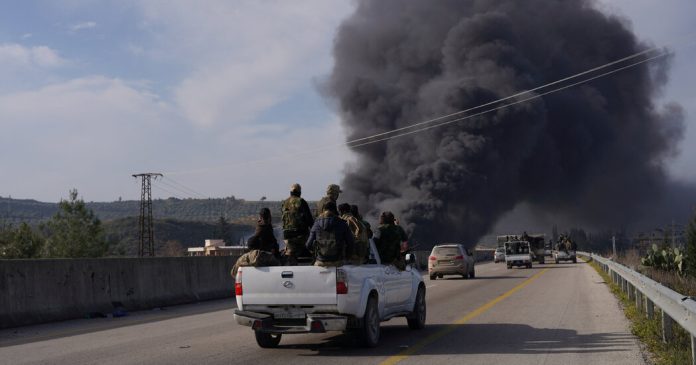
But the spasm of violence that erupted this month in northwestern Syria, which killed hundreds of civilians, made it clear just how distant that goal remains. It displayed instead the government’s lack of control over forces nominally under its command and its inability to police other armed groups, experts said.

The outburst began when insurgents linked to the ousted Assad dictatorship attacked government forces on March 6 at different sites across two coastal provinces that are the heartland of Syria’s Alawite minority. The government responded with a broad mobilization of its security forces, which other armed groups and armed civilians joined, according to witnesses, human rights groups and analysts who tracked the violence.

Groups of these fighters — some nominally under the government’s control and others outside of it — fanned out across Tartus and Latakia Provinces, killing suspected insurgents who oppose the new authorities, the rights groups said. But they also shelled residential neighborhoods, burned and looted homes and carried out sectarian-driven killings of Alawite civilians, according to the rights groups.

The leaders of the new government and the fighters now in its security forces are overwhelmingly from Syria’s Sunni Muslim majority, while the civilian victims of this wave of violence were overwhelmingly Alawites, a minority sect linked to Shiite Islam. The Assad family is Alawite, and during its five decades ruling Syria, it often prioritized members of the minority community in security and military jobs, meaning that many Sunnis associate the Alawites with the old regime and its brutal attacks on their communities during the country’s 13-year civil war.

It will take time for a clearer picture of the events to emerge, given their geographic spread, the number of fighters and victims involved and the difficulty of identifying them and their affiliations. But the violence on the coast represented the deadliest few days in Syria since Mr. al-Assad’s ouster in December, showcasing the chaos among the country’s armed groups.

The Syrian Network for Human Rights, a conflict monitor, said in a report last week that militias and foreign fighters affiliated with the new government, but not integrated into it, were primarily responsible for the sectarian and revenge-driven mass killings this month.

The government’s weak control over its forces and affiliated fighters and the failure of those forces to follow legal regulations were “major factors in the increasing scale of violations against civilians,” the report said. As the violence escalated, it added, “some of these operations quickly turned into large-scale acts of retaliation, accompanied by mass killings and looting carried out by undisciplined armed groups.”

On Saturday, the network raised the number of killings it had documented since March 6 to more than 1,000 people, many of them civilians. Another war monitoring group, the Syrian Observatory for Human Rights, on Friday put the overall death toll at 1,500, most of them Alawite civilians.

No direct evidence has surfaced linking the atrocities to senior officials in the new government, led by interim President Ahmed al-Shara. And the government said it had created a fact-finding commission to investigate the violence and vowed to hold anyone who committed abuses against civilians to account.

“Syria is a state of law,” Mr. al-Shara said in an interview with Reuters published last week. “The law will take its course on all.”

He accused insurgents linked to the Assad family and backed by an unnamed foreign power of setting off the violence but acknowledged that “many parties entered the Syrian coast, and many violations occurred.” He said the fighting became “an opportunity for revenge” after the long and bitter civil war.

During that war, which killed more than a half million people, according to most estimates, many rebel factions formed to fight Mr. al-Assad. Some of them allied with Mr. al-Shara’s Sunni Islamist rebel group in the final battle that ousted the dictator.

Then in late January, a group of rebel leaders appointed Mr. al-Shara president, and he has since vowed to dissolve the country’s many former rebel groups into a single national army. But he had been in office for little more than a month when the unrest in the coastal provinces erupted.

“The unity of arms and their monopoly by the state is not a luxury but a duty and an obligation,” Mr. al-Shara told hundreds of delegates at a recent national dialogue conference.

But he faces tremendous challenges in uniting Syria’s disparate rebel groups.

Many fought hard during the civil war to carve out fiefs that they are reluctant to give up. The conflict devastated Syria’s economy, and Mr. al-Shara inherited a bankrupt state with little money to build an army. And international economic sanctions imposed on the former regime remain in place, hobbling efforts to solicit foreign aid.

So the effort to integrate the armed groups has made little concrete progress.

“The unification is all fluff. It’s not real,” said Rahaf Aldoughli, an assistant professor at Lancaster University in England who studies Syria’s armed groups. “There is a weak command structure in place.”

At the core of the new security forces are former fighters from Hayat Tahrir al-Sham, the Sunni Islamist rebel faction that Mr. al-Shara led for years, experts said. They have a cohesive command structure that Mr. al-Shara oversees but lack the manpower needed to secure the entire country.

Large parts of Syria are still controlled by powerful factions not yet integrated into the national security forces, such as a Kurdish-led militia that dominates the northeast and Druse militias that hold sway in a region southeast of the capital, Damascus.

Other rebel groups allied with Mr. al-Shara have officially agreed to merge into the new, national force but have yet to actually do so. Most have received no training or salaries from the government and remain loyal to their own commanders, Dr. Aldoughli said.

Other armed groups also remain that have no connection to the government, as well as civilians who armed up to protect themselves during the war.

“There has not been much effort to improve the discipline or even the structures of those armed factions,” said Haid Haid, a consulting fellow who studies Syria at Chatham House, a London think tank. “What we have seen is an example of how fragmented and poorly trained those forces are.”

When the unrest erupted on March 6, fighters from many of these groups rushed to join in, with a variety of motives. Some wanted to put down the insurgency, while others sought revenge for violations committed during the civil war.

Much of the violence had a deeply sectarian cast.

In videos posted online, many fighters denigrated Alawites and framed attacks on them as retribution.

“This is revenge,” an unidentified man says in a video shared online that shows groups of fighters looting and burning homes believed to belong to Alawites. The video was verified by The New York Times.

In recent days, the government has announced the arrests of fighters seen committing violence against civilians in videos posted online. It was a positive step toward accountability, Mr. Haid said, but he wondered whether the government would track down and punish fighters whose crimes had not been caught on camera.

“It does not seem that the military forces have the internal mechanisms to identify who did what during those operations and take the appropriate measures,” he said.

How South Sudan Returned to the Brink of War

0

The world’s youngest nation faces the threat of war yet again.

This month, a United Nations helicopter was attacked during an evacuation mission in a remote area in South Sudan, with one member of its crew killed and two others seriously injured. The flight was rescuing wounded government soldiers who had clashed with an armed group in Upper Nile State in the northeast. A day later, the United States said it was removing all nonemergency government employees from the country, citing security threats.

The attack underscored the shaky stability of the East African nation, almost a decade and a half after it gained independence amid hope and fanfare. The latest clashes, and the preceding political tensions, have regional observers fearing the collapse of a peace deal that was agreed on seven years ago.

Here’s what to know.

The main parties involved in the latest clashes are the South Sudanese national military, under the government of President Salva Kiir, and an opposition force known as the White Army, which is believed to be allied with Vice President Riek Machar.

Mr. Kiir and Mr. Machar led the two warring sides of the civil war that broke out in 2013, ending with a fragile peace agreement in 2018. The deal demilitarized the capital, Juba, moved to ensure that both sides shared earnings from oil exports and returned Mr. Machar as vice president.

Yet deep-seated political and ethnic tensions have endured, as have militias and armed factions with shifting loyalties. Clashes are frequently characterized by interethnic violence, particularly between Mr. Kiir’s Dinka and Mr. Machar’s Nuer ethnic groups. Recurring violence has precipitated large-scale displacement, plunged the country into economic free-fall and sharply raised the price of food and fuel.

Mr. Machar’s political coalition has accused the government of targeting his allies in February, including by launching a large-scale operation against his supporters in Upper Nile State. At least 22 political and military leaders allied with Mr. Machar have been arrested, with the whereabouts of some of them still unknown, Human Rights Watch has said.

In early March, the government accused the White Army of attacking and capturing a military garrison in the northern town of Nasir along the border with Ethiopia. The authorities in Juba responded by arresting several of Mr. Machar’s allies, including the deputy chief of the army, Gen. Gabriel Duop Lam, and the petroleum minister, Puot Kang Chol.

The U.N. helicopter in Upper Nile came under fire on March 7, despite assurances of safe passage, according to the chief of the U.N. South Sudan mission, Nicholas Haysom. In addition to a member of the helicopter crew, the attack left several military officers dead, including a general, the United Nations said.

The latest tensions have put the delicate government at risk of collapsing, with opposition groups describing the arrests as a sign of Mr. Kiir’s reluctance to honor the peace agreement and his determination to maintain control over the country’s political landscape. Presidential elections, now scheduled for next year, have repeatedly been delayed, causing frustration among opposition factions.

“South Sudan is one major escalation away from slipping into a new civil war,” said Alan Boswell, the Horn of Africa director at the International Crisis Group. “Should the government collapse or large-scale ethnic violence break out, the country could fragment.”

The cuts in American aid are already having a dire impact on the humanitarian situation in South Sudan. The United States spent $760 million on programs, including emergency food assistance and health, in the country in 2023.

Aid groups say the dearth of humanitarian aid is worsening food insecurity, and the cessation of health programs may spread diseases like cholera, malaria and tuberculosis even further. In January, the United Nations said that violence, bureaucratic impediments and cash extortion of its contractors were impeding effective delivery of aid, including in Upper Nile State.

Uganda said last week that its special forces had deployed to Juba to “secure” the South Sudanese capital. The Ugandan military chief said in a social media post that his nation recognized Mr. Kiir as the country’s only president.

“Any move against him is a declaration of war against Uganda,” he said, adding, “All those who commit that crime will learn what it means.”

Officials in Juba have not publicly confirmed the presence of the troops. But the Ugandan governing party’s parliamentary caucus endorsed the deployment, describing it as a “necessary intervention for peace enforcement to protect lives, restore stability and prevent further escalation of conflict.”

Uganda’s longtime president, Yoweri Museveni, has deployed troops to South Sudan several times in the past to prop up Mr. Kiir’s government. Yusuf Serunkuma, a researcher and scholar at Makerere University in Uganda, said that reports of a decline in Mr. Kiir’s health meant he needed Mr. Museveni’s backing even more. (South Sudan’s presidency has repeatedly denied assertions that Mr. Kiir has health problems.)

A civil war in neighboring Sudan that has killed tens of thousands and displaced many more has also disrupted South Sudan’s oil exports, limiting Mr. Kiir’s ability to fund his patronage network, observers say.

“Salva Kiir has accused Riek Machar of planning to overthrow him in a coup — an old accusation since the founding of the country,” Mr. Serunkuma said. But with the Ugandan deployment, he added, “They’ll probably sustain the status quo.”

Regional observers worry that the Ugandan deployment and an eventual state collapse could converge with the war to the north in Sudan and engulf the region in further conflict.

The United Nations and regional bodies have called on the South Sudanese leaders to de-escalate the crisis and resolve issues through dialogue. Leaders from the eight-nation Intergovernmental Authority on Development called last week for the release of detained officials “unless credible evidence warrants legal proceedings.”

The U.N. Commission on Human Rights in South Sudan also said that all parties should work to make the changes necessary to complete a transitional period ahead of elections, including by overhauling the Constitution.

Elon Musk claims Tesla protest organizer committed crimes : NPR

0

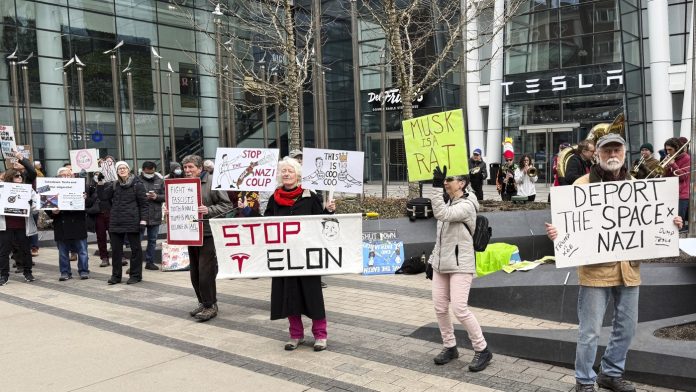
Protesters rally outside of a Tesla store in Boston on March 1, 2025, against the company’s CEO, Elon Musk, who is leading an effort to cut government jobs on behalf of President Trump.

Rodrique Ngowi/AP


hide caption

toggle caption

Rodrique Ngowi/AP

Valerie Costa never expected to be directly in Elon Musk’s crosshairs, but here she is.

Costa, 43, is a community organizer in Seattle who co-founded an environmental activist group called the Troublemakers. Recently, she has helped organize peaceful local protests as part of Tesla Takedown, demonstrations happening worldwide objecting to Tesla CEO Elon Musk’s campaign of slashing and disrupting the federal government.

In a post on X about the protest movement, Musk claimed Costa’s Seattle group was backed by Act Blue, an online fundraising platform for Democrats.

She was baffled.

“I was like, uh, we’re not Act Blue funded. We don’t use Act Blue. We have no connection to Act Blue. We have like $3,000 in our bank account. I could tell you every single person who donated,” Costa said.

Before Costa could figure out how to respond, Musk fired off another post. This time it was even more personal and inflammatory. It said: “Costa is committing crimes,” with a video clip of her appearing on a podcast.

Musk’s post provided no evidence or specific allegations, but the message was clear: Musk was falsely blaming Costa for violence directed at Tesla cars and facilities since President Trump’s inauguration and Musk assumed an influential perch in the White House.

“When one of the most powerful, if not the most powerful person in the world is saying you’ve committed a crime, it doesn’t matter what the truth is,” Costa said.

Dozens of Musk fans targeted Costa with menacing direct messages, social media posts and emails. In several messages reviewed by NPR, Musk supporters said they hope federal authorities will investigate her and even threatened physical violence against her.

“At that point, I started to realize, ‘Oh no, I have to protect myself,” she said.

Valerie Costa, on the right, joins other Tesla Takedown protesters demonstrating at a carmaker facility in the Seattle area in early March.

Valerie Costa, on the right, joins other Tesla Takedown protesters demonstrating at a carmaker facility in the Seattle area in early March.

Elliot Stoller


hide caption

toggle caption

Elliot Stoller

She removed as much personal information as she could from the web. Even her work email was being flooded with attacks, so she deleted the address from her consulting business website. She connected with a lawyer. Then she brought together her roommates to map out a safety plan.

“What happens if the Feds come?” she said.

Her instructions were straightforward: Don’t talk to the Federal Bureau of Investigation. Insist on having an attorney. Don’t let law enforcement in without a warrant.

Costa is afraid that Musk will use his White House power and influence to apply more pressure.

In the face of growing protests against Tesla, Trump held an event with Musk on the White House lawn last week and vowed to label vandalism and attacks against the carmaker as domestic terrorism.

“I’ll do it. I’m going to stop them. If we catch anybody doing it, because they’re harming a great American company,” Trump said, standing in front of a row of Teslas.

There have been a spate of arrests linked to violence against Tesla facilities. Authorities have not said any of the acts were coordinated.

Musk’s posts on X, Costa said, not only amplified false theories about who is behind the protests, but also conflated peaceful protests with the violent acts. That is deeply alarming, she said.

“I took a day and was totally fearful, what do I do, how do I respond to this? And now I am so clear: I need to speak out and defend the right to protest. It’s really an essential part of what it means to be American,” Costa said.

Musk and the White House did not return requests for comment.

The Tesla Takedown protests are aimed at hurting the value of Tesla, the primary source of Musk’s wealth, by encouraging people to boycott the company, Costa said.

As an environmentalist, it may be awkward opposing an electric vehicle maker, but her bigger concern is stopping Musk’s work slashing the federal government.

“That destruction is having a direct effect on peoples’ lives and well being,” she said.