Thursday, November 12, 2026
Home Blog Page 118

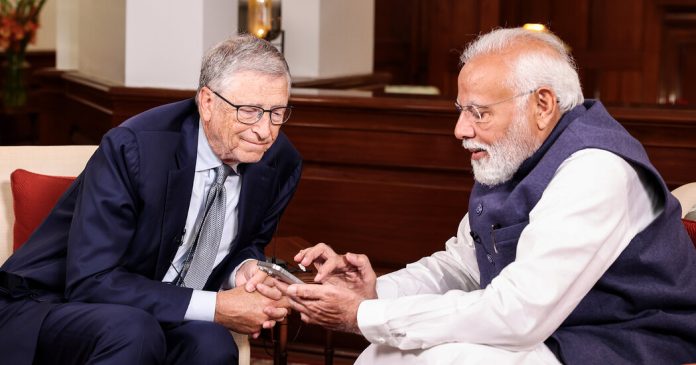
Nary a Critical Word: Bill Gates’s Close Bond With Narendra Modi

0

In September 2019, Bill Gates presented Prime Minister Narendra Modi of India with an award on behalf of his philanthropic organization, the Gates Foundation, for the Indian leader’s work on improving sanitation.

An uproar followed.

Three Nobel Peace Prize laureates wrote to Mr. Gates, arguing that Mr. Modi, who was given the award on the sidelines of the United Nations General Assembly in New York, did not deserve the recognition because democratic and human rights had eroded under his rule. “This is particularly troubling to us, as the stated mission of your foundation is to preserve life and fight inequity,” the laureates wrote.

The outrage did little to deter Mr. Gates and Mr. Modi, who have developed an unusually warm and high-profile relationship in the past decade.

They have met several times, and Mr. Gates has been nothing but complimentary of Mr. Modi. Last year, just before a national election, Mr. Gates sat down with the prime minister for an extended televised exchange that Mr. Modi used to burnish his image as a tech-savvy leader.

The relationship between Mr. Gates and Mr. Modi, according to observers, former foundation employees and critics, yields benefits for both men. Mr. Gates is set to visit India in the coming week, his third visit in three years, and will meet with government leaders and others to discuss India’s innovations and progress.

“This trip will give me a chance to see what’s working, what’s changing and what’s next — for India and the foundation,” Mr. Gates wrote on GatesNotes, his personal blog.

India is central to Mr. Gates’s philanthropic work, which makes it essential for the Gates Foundation to stay on the good side of a government that has cracked down on organizations backed by foreign donors. With the vast number of Indians in dire poverty, global development goals cannot be met without progress in India.

The Gates Foundation’s continued access to India has become all the more important as President Trump has withdrawn the United States from the World Health Organization and gutted the U.S. Agency for International Development. The W.H.O., which supports a range of public health programs in India, is facing budget cuts after the United States’ exit. The Gates Foundation, a behemoth in global public health and development, is among the top donors to the W.H.O.

For Mr. Modi, an endorsement from Mr. Gates — the very face of the computer age to many Indians — is a way to connect the Gates technological legacy to the digital economy championed by the Modi government, a pillar of its “Developed India” policy.

Mr. Modi’s desire to harness technology for growth personally resonated with Mr. Gates, given his deep belief in the power of innovation for progress, according to posts he has written on GatesNotes and two former employees with direct insight into the foundation’s activities in India. They spoke on the condition of anonymity to avoid jeopardizing professional relationships.

Representatives of the Gates Foundation and Gates Ventures, the philanthropist’s private office, did not respond to requests for comment. A spokesman for India’s Ministry of External Affairs had no immediate comment.

Mr. Gates has ample company in embracing Mr. Modi, with political and business leaders across the West courting India as a rising geopolitical and economic power. In doing so, many have turned a blind eye to the Modi government’s assault on the country’s secular foundations, its demonization of India’s Muslim minority and its silencing of civil society.

Globally, the recognition from Mr. Gates brings attention to Mr. Modi for his development work rather than his Hindu nationalist politics. Domestically, the relationship has potential political benefits for Mr. Modi.

“The tech-driven sections of the Indian middle class, they grew up with Gates as this iconic figure,” said P. Sainath, an activist who is the founder and editor of the People’s Archive of Rural India, an independent digital media outlet. “Being in good with Bill Gates doesn’t hurt your image with those classes.”

India’s ties with Mr. Gates and with Microsoft, the company he co-founded, run deep. Satya Nadella, the chief executive of Microsoft, is from India. In January, Mr. Nadella announced plans to invest $3 billion in India, including in artificial intelligence, to help further Mr. Modi’s vision. Mr. Gates has visited India more than a dozen times over the decades, including as Microsoft’s chief executive.

The Seattle-based Gates Foundation, which was started in 2000, opened its India office in 2003 and has invested more in the country than anywhere besides the United States. This year, the foundation’s board of trustees will meet in India as it celebrates its 25th anniversary.

The foundation has partnered with successive Indian governments, supporting public health initiatives, such as polio eradication. It also works closely with the governments of Uttar Pradesh and Bihar, two populous and impoverished Indian states. Mr. Gates sat down with previous Indian prime ministers, including Mr. Modi’s predecessor, Manmohan Singh. But the conversations were typically focused narrowly on the foundation’s work in India.

Mr. Gates hit it off with Mr. Modi during their first meeting in 2014, talking for twice as long as scheduled, according to a GatesNotes post. He said he was impressed with Mr. Modi because of their shared focus on public health, in particular sanitation. Toilets were “high on the agenda, along with vaccines, bank accounts and health clinics.”

Open defecation and waste management remain huge challenges in India, a country of 1.4 billion people. Mr. Modi’s government launched the Swachh Bharat Abhiyan (Clean India Mission), and by 2019, it claimed to have built more than 100 million toilets. That was the work for which the foundation gave him the award, drawing a backlash.

When Mr. Gates traveled to India in 2023, he said his sit-down with Mr. Modi was the “highlight” of his visit and commended him on the country’s digital payments system. “The country is showing what’s possible when we invest in innovation,” he wrote on GatesNotes.

Several people with knowledge of the foundation’s affairs said some employees were unnerved by Mr. Gates’s embrace of Mr. Modi, arguing that the foundation could have pursued its goals and aligned with the government’s objectives without Mr. Gates’s becoming a cheerleader for the prime minister.

Mr. Modi has also heaped praise on Mr. Gates, saying that his government valued the foundation’s expertise and its data- and evidence-driven approach. In 2020, when they met virtually during the pandemic, Mr. Modi encouraged the foundation to “take the lead” in analyzing health care and education changes needed in a post-Covid world.

Last March, three weeks before an election in which Mr. Modi was seeking a third term, he invited Mr. Gates to his official residence for a chat about the country’s progress in using technology to improve the lives of Indians.

The government had planned to air the entire meeting on national television, which reaches more than 650 million people. But the Election Commission told the public broadcaster that doing so would give Mr. Modi’s party an unfair advantage, according to a report in The Economic Times, an Indian newspaper. In the end, only parts of Mr. Modi’s chat with Mr. Gates was aired on television, although it was streamed in full on the website of Mr. Modi’s Bharatiya Janata Party.

A spokesman for the Election Commission said he did not have information about the event. Rajiv Kumar, the chief election commissioner at the time, did not respond to requests for comment.

India has long relied on foreign donors to meet its goals. Organizations like Amnesty International, Rotary International, the Red Cross, Oxfam, U.S.A.I.D. and Greenpeace, as well as various United Nations bodies and private groups like the Ford, Rockefeller and Gates Foundations, provided funding to a thriving local community of nongovernmental organizations or worked alongside them.

But as the Modi government grew increasingly intolerant of any criticism or challenge, including from overseas, Indian laws that regulate the flow of foreign donor funds into domestic nonprofits grew more stringent and were applied more frequently.

A year after Mr. Modi became prime minister in 2014, the government launched a crackdown on foreign organizations, starting with Greenpeace. Many began to scale back their activities or take steps to ensure that their agendas were aligned with the government’s goals.

In 2017, the Indian government accused the Public Health Foundation of India, one of the country’s largest nonprofit groups, of misusing funds and revoked a license allowing it to receive foreign contributions. The Gates Foundation was a big donor to the organization. The health nonprofit regained its license in 2021.

The Gates Foundation has made it clear that its role is to help the Indian government meet its objectives by offering expertise in priority areas like ensuring access to financial services for the poor, female-led development, public health and climate change.

The foundation hewed closely to that message after the controversy over the award it presented to Mr. Modi.

At the time, the foundation said its award was narrowly focused on sanitation goals.

Not long after, Mr. Gates met with Mr. Modi in India. According to a government news release at the time, Mr. Gates reinforced his foundation’s commitment to supporting the goals of the Indian government.

Monday Briefing – The New York Times

0

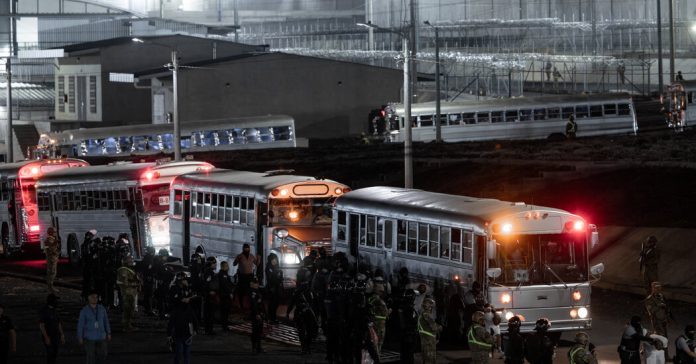
The Trump administration denied that it had violated a court order by deporting hundreds of Venezuelan immigrants accused of being gang members to a prison in El Salvador over the weekend, saying that the president had broad powers to quickly expel them under an 18th-century law meant for wartime.

The White House press secretary, Karoline Leavitt, also asserted in a statement that the federal courts “have no jurisdiction” over the president’s conduct of foreign affairs or his power to expel foreign enemies.

Timing: The judge issued his order shortly before 7 p.m. on Saturday in Washington, but video posted from El Salvador shows deportees disembarking at night. El Salvador is two hours behind Washington. Its president, Nayib Bukele, posted a screenshot about the judge’s order, with a message: “Oopsie… Too late.”

Context: President Trump signed an executive order on Friday invoking the Alien Enemies Act of 1798, which allows for summary deportations of people from countries at war with the U.S. The Venezuelan government said yesterday that the attempt to apply the act to this situation “constitutes a crime against humanity.”

Prime Minister Benjamin Netanyahu said he was taking action to oust Ronen Bar, the director of the Shin Bet, Israel’s domestic intelligence agency, raising concerns among critics that he was seeking to undermine its independence. Members of Netanyahu’s coalition have demanded Bar’s dismissal, saying he had undermined the prime minister.

The decision came amid tensions between Netanyahu and security officials over the handling of the war in Gaza, and in the wake of Shin Bet investigations into allegations against several Netanyahu aides.

Ukrainian troops have withdrawn from all but a sliver of land in Russia’s Kursk region in recent days, according to military analysts and soldiers, as Kyiv’s monthslong campaign to seize and occupy Russian territory appears to be ending in the face of relentless airstrikes and drone assaults.

The fighting in Kursk is now less about holding Russian territory, Ukrainian soldiers said, and more about controlling the best defensive positions to prevent the Russians from pushing into the Sumy region of Ukraine. Here’s how Kyiv’s offensive unraveled.

What’s next: Steve Witkoff, the U.S. special envoy to the Middle East, said yesterday that he expected President Trump to speak with President Vladimir Putin of Russia this week about a cease-fire.

In a hospital corridor, the Costello family was bracing to say farewell to their witty, contrarian, compassionate Brendan. His final wish upended their plans.

Lives lived: Roy L. Prosterman, who left a lucrative corporate law practice to champion land reform in the underdeveloped world, died at 89.

The superhero has been the subject of many different animated TV shows since the 1960s. My colleague Maya Phillips explored how he has evolved.

The original “Spider-Man” show, which aired from 1967 to 1970, had animation that was thoroughly of its time, she writes — “blocky outlines, jerky character movements and flat, untextured backgrounds.” Later iterations have had a more vibrant New York City backdrop and more finessed animation, giving a boost to Spider-Man’s wall-crawling skills — and musculature.

In terms of animation, the most recent series, “Your Friendly Neighborhood Spider-Man,” returns to where it all began, with designs evoking the classic “Amazing Spider-Man” comic books.

Families of Jeju Air Plane Crash Victims Press for Answers

0

It was the site of the worst aviation disaster on South Korean soil. Now the terminal at Muan International Airport serves as a community center for grieving relatives of the 179 people who perished in the crash. Families gather here to talk, eat together — some even stay overnight in tents.

It was in that cavernous building in southwestern South Korea that the families waited anxiously for news after Jeju Air Flight 7C2216 crash-landed on Dec. 29. Then there were tears and outbursts of anger as officials periodically read out the names of the dead, many identified by DNA tests.

“We’re a family now,” said Son Joo-taek, who lost his son in the accident and was among around 20 people who sat around a row of folding tables that held water and snacks on a recent Saturday. “The people here understand what others just can’t.”

Lately, the talk among some of the grieving families has turned toward action: They want to find out what caused the crash. The jet — carrying mostly vacationers home from a year-end trip to Thailand — belly-flopped onto the runway and sped along until it hit a concrete berm and exploded into flames, leaving just two survivors.

Relatives of those killed say they are unhappy with the trickle of information from officials, and the refusal to release records, including transcripts from the control tower. They want to know more about the reports of a bird strike a few minutes before the landing, how the jet came down without its landing gear, and why the berm it hit was not designed to give way.

In desperation, some have turned to books and videos to learn about aviation safety, including how flight recorders, air traffic controllers, localizers and jet engines work. They are also looking into airport design.

“The families’ first priority is to get the truth,” Son Ha-yang, the daughter of Mr. Son, said at the airport where her brother and his girlfriend were killed. “Otherwise, we’re only relying on the investigators, who often use jargon.”

His son, Son Chang-kook, enjoyed traveling. He was 29.Credit…Son Family

Ms. Son, who has taken about three months’ leave from her job in Seoul, said she felt the need to read Boeing manuals and aviation regulations, and has been studying terms that had previously meant nothing to her: C.V.R., F.D.R., I.C.A.O. She has been in touch with other relatives who also said they wanted to learn more about what could have gone wrong.

South Korean authorities have said it could take more than a year to complete the investigation, which has faced hurdles that have frustrated the families. Among them: The jet’s flight recorders stopped recording for the final four minutes of the flight.

“The families want to know why their loved ones died,” said Park Cheol, a lawyer for the families. “They also feel that, by studying, they are making an effort for those who died.”

Some relatives have challenged officials at meetings over the crash. They say they are concerned there are not enough people investigating the cause, compared with instances in the United States. Nor have the authorities acceded to their request to release communications from the control tower around the time of the crash.

South Korea’s transport ministry said in a statement that the investigative body was in talks with authorities to increase the number of investigators. The ministry was also considering providing a transcript of the air traffic control communications, though they were not typically released to the public, it said.

Kim Yu-jin has been watching YouTube videos and reading books about past aviation disasters since her parents and her brother died in the crash. She has been looking at the safety features planes have when making emergency landings.

Her parents, Kim Deok-won, 72, and Jung Sun-suk, 66, helped run her cafe. Her brother, Kim Kang-heon, 42, worked at a food company.Credit…Kim Family

At Ms. Kim’s cafe, in the southern county of Jangheung, her mother, Jung Sun-suk, was the barista and helped package deliveries. Her father, Kim Deok-won, helped transport strawberries and milk, and had planned expanding their 350-square-foot shop.

She said her parents also helped raise her four children. After the crash, she temporarily closed the cafe to focus on her children and deal with the grief.

“Everything has my parents’ touch,” she said. “There are traces of them everywhere.”

After losing his son and daughter-in-law, Lee Jung-keun has focused his personal research on one specific factor: the concrete berm. Most airports worldwide do not have similar structures so close to runways, and when they do, they are made of more fragile materials meant to break apart upon impact, experts have said.

Their son, Lee Jae-hyeok, and his wife, Tae Ari, liked fishing. They were 32.Credit…Lee Family

Mr. Lee scoured the internet for information about the berm and became convinced that it was the biggest factor in the high death toll.

“If it weren’t for the berm, almost everyone would have survived,” he said during a visit to the airport with his wife, Lee Mi-jung.

His son, Jae-hyeok, and the younger man’s wife, Tae Ari, shared a love of fishing and married in 2020. They had been planning to start a family, and Ms. Tae’s private math academy in the southwestern county of Haenam was doing well, Ms. Lee said.

The couple hadn’t originally planned to visit Thailand. But a last-minute offer from a travel agency coincided with their wedding anniversary, Mr. Lee said.

Coming to the airport is a way for some families to find a sense of community when their homes are now defined by absence. Others stay away from the airport, fearing the memories will be too painful, or constrained by work.

The crash left Lee Bong-kyung with a struggling shipyard in the southwestern city of Mokpo that was founded by his father in 2015. Sales have dipped in recent years and Mr. Lee said it was his father’s work ethic that kept the business alive: “All he knew was work,” he said.

His father, Lee Yeon-chae, traveled to Bangkok with his childhood friends. He was 64.Credit…Lee Family

When Mr. Lee began working at the shipyard about six years ago, it gave his father more leisure time. The elder Mr. Lee had traveled to Bangkok with a group of childhood friends. His death has left his son crushed personally and professionally.

“We also have a lot of debt and loans to pay off, so I’ve thought about giving up a few times,” he said.

The experience of many of the bereaved families — isolation from friends and colleagues, solidarity with relatives of other victims and a distrust of the government — echoes the aftermath of other disasters in South Korea, including the 2014 Sewol ferry sinking and a crowd crush in Seoul in 2022.

Lee Jeong-bok and his wife, Jeong Hyeon-kyeong, were mourning another young victim. Their daughter, Min-ju, had died after taking a trip with a high school friend. She was in her second year at her first job out of college.

Their daughter, Lee Min-ju, was in her first job out of college. She was 24.Credit…Lee Family

Since the crash, Ms. Lee’s three other children have been helping out their parents more, such as doing the dishes. “They’ve matured quickly,” she said.

Mr. Lee said he and his wife planned to stay at the airport until the cause of the crash came to light. “The investigation needs to be thorough and objective,” he said. “There will need to be accountability and consequences.”

Once the investigation is complete, the families will consider filing lawsuits to hold those responsible for the crash accountable, said Jung Yu-chan, a spokesman for the families.

At the airport one recent Saturday, Jo Mi-young was mourning an entire family that had perished on the jet. Ms. Jo’s sister Mi-Ja was on board with her daughter, the daughter’s husband and their two children.

Their sister, Jo Mi-ja, 61, traveled with her daughter, Kim Mi-seon, 39, who brought along her husband Na Byung-hwa, 42, and their children, Na Ha-eum and Na Ha-yoon, who were 14 and 9.Credit…Jo Family

Ms. Jo said the children’s father, Na Byung-hwa, had taken his family to Bangkok for a triple celebration: He had recently been promoted at his job at an agricultural cooperative, his wedding anniversary was approaching and his mother-in-law recently had her 60th birthday.

“Who else will remember this family?” Ms. Jo asked.

Her brother, Jo Hyo-seon, said that he and his sister had stayed at the airport almost every day since the crash, finding solace in their shared experience with other families.

“Only here can we cry, only here can we laugh,” he said. “We’re not leaving until the truth is told.”

Takeaways From Our Investigation Into Domestic Worker Abuse in Saudi Arabia

0

In most countries, working as a housekeeper or nanny is a relatively safe profession.

Yet as we traveled across Kenya and Uganda, from crowded and poor urban neighborhoods to far-flung farming villages, we heard many variations on the same horror story: Young, healthy women set off for domestic jobs in Saudi Arabia, only to return beaten, scarred or in coffins.

At least 274 Kenyans, nearly all of them women, have died in Saudi Arabia in the past five years. At least 55 died just last year, twice as many as the previous year.

Autopsies only raised more questions. The body of a woman from Uganda showed extensive bruising and signs of electrocution, yet her death was labeled “natural.” We found a surprising number of women who fell from roofs, balconies or, in one case, an opening for an air-conditioner.

How could this be? This was hardly some obscure industry with fly-by-night players. East African women are recruited by the thousands and trained by well-established companies, then sent to Saudi Arabia through a process regulated and approved by the Ugandan, Kenyan and Saudi governments.

Worker advocates have long blamed archaic Saudi labor laws. But we wondered if something else was at play. We spent nearly a year trying to figure it out.

We interviewed more than 90 workers and their families, and carefully analyzed employment contracts whenever we could.

We found that women from Kenya and Uganda are lured to Saudi Arabia with promises of better wages and opportunities.

Recruitment agencies and their brokers give misleading information about wages and make workers sign contracts they can’t read.

Some agencies market women as products. Agency websites offer workers “for sale” to Saudi clients. We saw one that had a click-to-collect option.

When women arrive in the kingdom, employers often confiscate their passports and belongings. Kenyan housekeepers in Saudi Arabia work for $250 or so a month. But many women told us that their new bosses shortchanged them or denied them wages, declaring, “I bought you.”

Using the employment contracts and, whenever we could find them, autopsies, police reports or legal documents, we began looking into companies that profited off these women.

Corporate records and securities filings led us to powerful people, including officials who could be protecting these workers.

High-ranking officials in Kenya and Uganda and their families, we found, own stakes in staffing agencies.

Fabian Kyule Muli, for example, is a member of Kenya’s Parliament and also owns an agency that sends women to Saudi Arabia. He is the vice chairman of a parliamentary labor committee, a job in which he can pass laws protecting workers. The committee has at times been a champion for sending more people to Saudi Arabia, and has denied that workers are hurt there.

In Saudi Arabia, members of the royal family, including descendants of King Faisal, have been major investors in agencies that supply domestic workers. Senior Saudi officials also hold high-ranking positions with staffing agencies.

Despite years of mounting evidence of abuse, leaders including President William Ruto of Kenya have vowed to send more workers abroad. One of his top advisers owned a staffing company. So does Sedrack Nzaire, whom Ugandan media identifies as the brother of that country’s longtime president, Yoweri Museveni.

In interviews, women told us through tears that their bosses in Saudi Arabia denied them food, raped them, assaulted them with bleach or stabbed them.

Yet East African governments have ignored calls from activists and human rights groups to negotiate better labor agreements with Saudi Arabia. The employment treaties include only minimal worker safeguards.

The Saudi government says its law enforcement and courts protect workers against abuse and help them seek recourse. But women told us they were unable to access such resources, and police sent them back to abusive employers or government-funded facilities that felt like prisons.

Many abused workers must pay for their own flight home, despite regulations saying that they should not have to do so. Our reporting found that desperate workers often returned home broke, disabled and suicidal.

And in the cases of serious injury or death, families have to navigate a web of red tape, apathy and impunity. In Uganda, Isiko Moses Waiswa told us about learning that his wife had died in Saudi Arabia.

Her employer gave him a choice: her body or her $2,800 in wages.

“I told him that whether you send me the money or you don’t send me the money, me, I want the body of my wife,” Mr. Waiswa told us.

Venezuelan Families Fear for Relatives as Trump Celebrates Deportations to El Salvador

0

According to Ms. Casique, her son had no gang affiliation and had entered the United States to seek asylum in late 2023 after several years spent working in Peru to support his family back home. During his journey north, he had been injured in Mexico after a fall from a train, she said.

Mr. García, who had turned himself over to the authorities at the U.S. border, was detained at a routine appearance before immigration officers last year after they spotted his tattoos, Ms. Casique said.

The tattoos, which she says include a crown with the word “peace” in Spanish and the names of his mother, grandmother and sisters, led the authorities to place Mr. García under investigation and label him as a suspected member of Tren de Aragua, according to Ms. Casique.

Mr. García remained in a detention center in Dallas for two months, his mother said, but a judge ultimately decided that he did not pose a danger and allowed him to be released as long as he wore an electronic device to track his movements.

The New York Times could not independently verify why he had been held and released.

After Mr. Trump’s inauguration this year Mr. García became worried, but Ms. Casique remembered telling her son that he had nothing to fear: The administration said it would go after criminals first.

But, on Feb. 6, the authorities arrived at Mr. García’s door and took him into custody.

“I told him to follow the country’s rules, that he wasn’t a criminal, and at most, they would deport him,” Ms. Casique said. “But I was very naïve — I thought the laws would protect him.”

Gabriel Labrador contributed reporting from San Salvador, El Salvador.

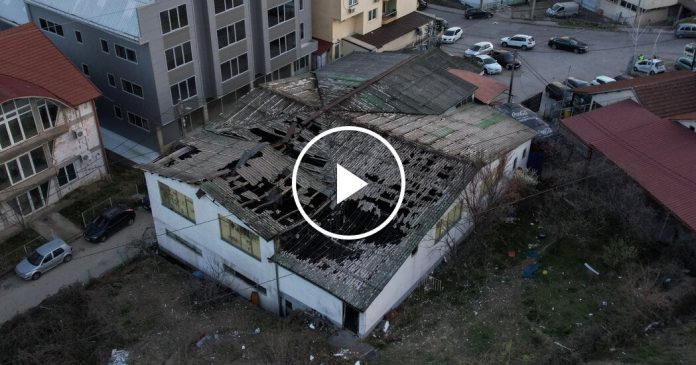
Dozens Dead in Nightclub Fire in North Macedonia

0

Pyrotechnics appeared to have started the fire, which killed nearly 60 people and injured more than 150 others.

President Trump deports hundreds of migrants to El Salvador

0

The United States is not at war, but this weekend President Trump invoked a wartime law that gives him sweeping deportation powers.

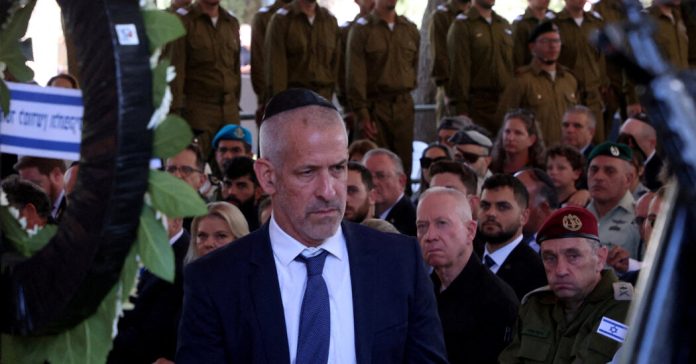
Netanyahu Moves to Fire Israel’s Domestic Intelligence Chief

0

Prime Minister Benjamin Netanyahu said on Sunday that he was taking action to oust the director of the Shin Bet, Israel’s domestic intelligence agency, raising concerns among critics that he was seeking to undermine its independence.

Mr. Netanyahu’s effort to fire Ronen Bar, the head of the powerful agency, underscored longstanding tensions between the prime minister and leading members of Israel’s security establishment, who have clashed over the handling of the war in Gaza.

The decision to pursue Mr. Bar’s termination also came in the wake of Shin Bet investigations into allegations against several Netanyahu aides, including that one reportedly leaked a secret document to a foreign newspaper.

The prime minister’s office said that Mr. Netanyahu had informed Mr. Bar that a draft resolution for his ouster would be presented to the Israeli cabinet this week for approval.

But in a letter, Gali Baharav-Miara, the attorney general, said Mr. Netanyahu wasn’t allowed to even begin the process until a determination was made about the legality of terminating Mr. Bar. She said there were concerns that it would be a conflict of interest for Mr. Netanyahu, since the agency is investigating his aides.

Members of Mr. Netanyahu’s coalition have demanded the prime minister fire Mr. Bar for what they say is his undermining of the prime minister. They have also called for firing Ms. Baharav-Miara, who has long had a strained relationship with Mr. Netanyahu.

Any decision to remove Mr. Bar, who has led the agency since 2021, would also probably be appealed to the Supreme Court.

In a recorded video message posted on social media, Mr. Netanyahu said the firing was necessary because he didn’t trust Mr. Bar.

“At any time — especially during an existential war like this one — there must be complete trust between the prime minister and the director of the Shin Bet,” he said.

Mr. Bar fired back with a strongly worded public statement, saying Mr. Netanyahu’s expectation of “personal trust” was in opposition to the public’s interests.

“It’s a fundamentally flawed expectation that is in contravention with the Shin Bet law and statesmanship,” he said in a rare public statement.

Mr. Bar said he had previously told Mr. Netanyahu that he planned to stay in his post until the return of all hostages held in Gaza and the completion of a number of sensitive investigations. He also said he wanted to finish preparing two people whom he described as candidates to succeed him.

The move to terminate Mr. Bar followed the removal in the last several months of two other security leaders who were often at odds with the prime minister: the defense minister and the Israeli military’s chief of staff.

Former members of the Shin Bet have raised concerns about the possibility of Mr. Netanyahu’s nominating a successor to Mr. Bar based on political considerations.

“Israeli democracy is on a crash course,” said Ami Ayalon, a former head of the Shin Bet. If the prime minister manages to oust Mr. Bar, it would be “another step toward turning Israel into a state that prioritizes personal loyalty to the leader above all else,” he said.

This month, the Shin Bet publicized a summary of its inquiry into agency failures before and during the Hamas-led October 2023 attack that was critical of both Mr. Netanyahu’s government and the agency. While the summary acknowledged the Shin Bet had failed to provide a warning of the attack, it said it had warned that Hamas had not been deterred in preceding months and had recommended taking action against the militant group.

The report also said the Shin Bet had informed the government that political divisions in Israel had emboldened its adversaries, putting the country in a vulnerable position. This finding was widely seen as pointing a finger at Mr. Netanyahu’s government, which had pushed a controversial judicial overhaul that divided the Israeli public.

Monday Briefing: U.S. Deports Hundreds in Face of a Court Order

0

Secretary of State Marco Rubio announced yesterday that hundreds of Venezuelans accused of being gang members were sent from the U.S. to El Salvador, a day after a federal judge ordered the Trump administration to cease such deportations.

The timing of the flights could determine if the Trump administration ignored an explicit court order. The judge issued his order shortly before 7 p.m. on Saturday in Washington, but video posted from El Salvador shows deportees disembarking at night. El Salvador is two time zones behind Washington. President Nayib Bukele of El Salvador posted a screenshot yesterday on social media about the judge’s order, with a message: “Oopsie… Too late.”

Context: President Trump’s administration hopes that the agreement — which involves paying El Salvador to take suspected gang members — will be the beginning of a larger effort. The administration wants to use the Alien Enemies Act of 1798 to arrest and deport Venezuelan gang members without the due process afforded to immigrants for decades. That law is best known for its role in the internment of Japanese Americans during World War II.

Reactions: The Venezuelan government said in a statement yesterday that the attempt to apply the act “constitutes a crime against humanity.”

Ukrainian troops have over the past week withdrawn from all but a sliver of land in Russia’s Kursk region, according to military analysts and soldiers. Kyiv’s monthslong campaign to seize and occupy Russian territory appears to be ending in the face of relentless airstrikes and drone assaults.

The fighting in Kursk is now less about holding Russian territory, Ukrainian soldiers said, and more about controlling the best defensive positions to prevent the Russians from pushing into the Sumy region of Ukraine and opening a new front in the war. Here’s how Kyiv’s offensive unraveled.

What’s next: Steve Witkoff, the U.S. special envoy to the Middle East, said yesterday that he expected President Trump to speak about a cease-fire this week with President Vladimir Putin of Russia.

Promised lucrative incomes as housekeepers or nannies in Saudi Arabia, Kenyan women often return bearing the marks of physical and sexual abuse — if they don’t come back in a coffin. At least 274 Kenyan workers, mostly women, have died in Saudi Arabia in the past five years, a Times investigation found. An untold number of Ugandans have died, too, but their government releases no data.

Powerful people have incentives to keep the flow of workers moving, and the officials who are supposed to protect them often profit from the industry. Kenya’s president said he wanted to send up to half a million workers to Saudi Arabia in the coming years.


When Iichi Marumo entered his first international speedskating race seven years ago, it took him three times as long to finish, compared with most of the competition. At 88, he was also three times as old. He won silver in his age bracket.

After a life of farming, publishing poetry and volunteering in World War II for a kamikaze mission, he hopes to still be skating when he hits 100.

Lives lived: Roy L. Prosterman, a lawyer who left a lucrative corporate law practice to champion land reform in the underdeveloped world, died at 89.

Backstage at the New Victory Theater in New York, a mythological bird prepared to take flight for “Song of the North,” an elaborate shadow puppet staging of stories from a 10th-century Persian epic.

The show, which covers stories from “Shahnameh,” or Book of Kings, has played to packed houses on three continents. The production involves 483 puppets, 208 animated backgrounds, 16 character masks and nine performers and will travel to Canada and Saudi Arabia this year.

The idea behind the show is simple, its creator said: to bring the richness of Persian culture to audiences whose views of Iran may be dominated by negative stereotypes.

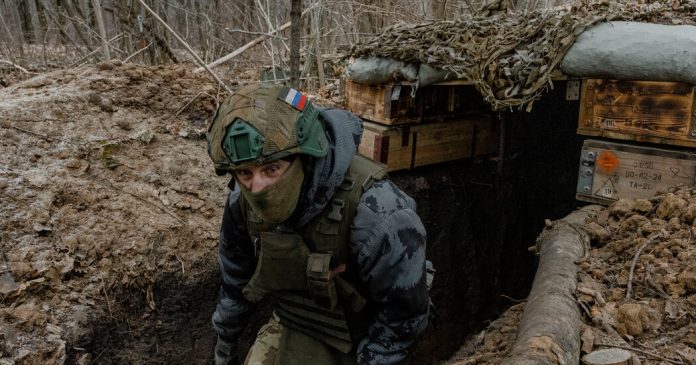
How Ukraine’s Offensive in Russia’s Kursk Region Unraveled

0

Ukrainian forces have pulled almost entirely out of the Kursk region of Russia, ending an offensive that had stunned the Kremlin last summer with its speed and audacity.

Ukrainian soldiers at the front described a retreat that was organized in places and chaotic in others, as Russian forces stormed through their lines and forced them back to a sliver of land along the border.

By the time one Ukrainian assault platoon retreated from its position less than a week ago, all their vehicles had been destroyed, drones hunted them night and day and they were almost out of ammunition.

Russian forces were closing in from all directions, said the platoon’s commander, “prompting our retreat.”

The commander, who asked to be identified only by his call sign, Boroda, in keeping with military protocol, said it took his unit two days to hike more than 12 miles from their positions near the Russian village of Kazachya Loknya to the Ukrainian border. By then, “the area where our positions had been was already occupied by Russian forces,” he said when reached by phone.

At the height of the offensive, Ukrainian forces controlled some 500 square miles of Russian territory. By Sunday, they were clinging to barely 30 square miles along the Russia-Ukraine border, according to Pasi Paroinen, a military analyst with the Finland-based Black Bird Group.

“The end of the battle is coming,” Mr. Paroinen said in a phone interview.

How much Russian territory Ukraine still controls in Kursk could not be independently confirmed, and soldiers reported fierce fighting was ongoing. But the fighting near the border is now less about holding Russian land, Ukrainian soldiers said, and more about trying to prevent Russian forces from pouring into the Sumy region of Ukraine and opening a new front in the war.

The soldiers said they are trying to set up strong defensive positions along ridgelines on the Russian side of the border.

“We continue to hold positions on the Kursk front,” said Boroda, the assault platoon commander. “The only difference is that our positions have shifted significantly closer to the border.”

Andrii, a Ukrainian intelligence officer fighting in Kursk, put it more bluntly: “The Kursk operation is essentially over” he said. “Now we need to stabilize the situation.”

The Kursk operation was seen by some analysts as an unnecessary gamble, stretching Ukraine’s troops and leading to heavy casualties at a time when they were already struggling to defend a long front line in their own country. But it provided a much-needed morale boost to Ukraine, which had sought to show it could bring the war home to Russia and had hoped the territory it occupied there would serve as leverage in any cease-fire negotiations.

While Kyiv has managed to stall Russia’s advance in eastern Ukraine, the turn in Kursk comes as the Trump administration is pushing for a quick truce.

The reversal of Ukraine’s fortunes in Kursk, culminating with a retreat that began in earnest earlier this month, did not come down to any one factor. Russian forces pounded Ukraine’s supply lines and began to cut off escape routes. North Korean troops brought in by Moscow, who faltered at first, improved their combat capabilities. And at a crucial moment, U.S. support — including intelligence sharing — was put on hold.

When The New York Times last visited the border between Sumy and Kursk in late January, daytime movement was nearly impossible because the skies were filled with Russian drones.

The main road from Sumy to Sudzha, a small Russian town about six miles to the northeast that Ukrainian forces had occupied since August, was already littered with burned-out cars, tanks and armored vehicles.

Ukraine had dispatched some of its most experienced brigades to the Kursk operation, but months of unrelenting assaults by Russian forces and the thousands of North Korean troops fighting alongside them were taking a growing toll.

While the North Korean troops had withdrawn from the battlefield in January to regroup, they returned to the fight in early February. And Ukrainian soldiers said their combat skills had improved.

“Many of them executed very smart tactical maneuvers,” said Boroda, the platoon commander.

By mid-February, Russian forces had advanced to within five miles of Ukraine’s main resupply routes into Sudzha, allowing them to target the roads with swarms of drones — many of which were tethered to ultrathin fiber optic cables and therefore immune to jamming.

Other Ukrainian soldiers, who like Boroda asked to be identified only by their first name or call sign in accordance with military protocol, described Russian forces using attack drones for ambushes.

“Their drones would land near key supply routes and wait for a target to pass by,” said Cap, a 36-year-old Special Operations Forces fighter who asked to be identified by his call sign.

Russian drones were also hitting pre-placed explosives to destroy bridges in Kursk, to try to make it harder for Ukrainian troops to retreat, Ukrainian soldiers said.

Russian warplanes also attacked bridges, in one case dropping a 6,000-pound guided bomb to cut off one major artery, according to Ukrainian soldiers and military analysts.

Artem, a senior Ukrainian brigade commander, said that the destruction of the bridges was one of the key reasons Kyiv’s forces had to abandon positions so suddenly in recent weeks. Not everyone made it out, but most did, he said.

Ukraine’s hold in Kursk was already in danger when the Trump administration announced the suspension of military aid and intelligence sharing on March 3.

The sudden loss of American intelligence for precise targeting compounded the difficulties, according to Andrii, the intelligence officer. Without it, he and other soldiers said, the American-made multiple-rocket launchers known as HIMARS fell silent.

“We could not allow expensive missiles to be fired at the wrong target,” Andrii explained.

Then on March 8, Russian troops made a breakthrough, sneaking behind Ukrainian lines by walking for miles through a disused gas pipeline to stage a surprise attack. Russian propagandists and officials cast the operation as heroic feat, while Ukrainian sources called it a risky move that led to many deaths.

While the exact number of Russian troops involved and the success of the attack was impossible to independently confirm, “it caused enough confusion and havoc behind Ukrainian lines that it likely triggered them to start withdrawing,” said Mr. Paroinen from Black Bird Group, which analyzes satellite imagery and social media content from the battlefield.

The Russians “outplayed us a bit,” Andrii said. “There was a little panic.”

At around the same time, North Korean troops were helping lead an assault that broke through Ukrainian lines south of the small village of Kurylivka, further constraining Kyiv’s ability to supply its troops.

As Ukrainian forces there retreated along designated defensive lines, Russian forces kept pushing toward Sudzha and the pace of attacks increased.

Given the Russian positions, evacuating by vehicle would have given drones an easy target, analysts said. And the destroyed military vehicles littering the roads also created obstacles for a retreat — which is why a “significant part of the withdrawal was done on foot,” according to Serhii Hrabskyi, a military analyst and former Ukrainian Army colonel.

Some Ukrainian soldiers burned their own equipment to prevent it from falling into Russian hands before hiking out, soldiers said.

On March 10, the order was issued for some units to withdraw from Sudzha, three Ukrainian soldiers and commanders said.

“It was a mix of organized and chaotic retreat,” Boroda said. “Various factors influenced the nature of the withdrawal: fatigue, good or poor orders from individual commanders, miscommunication or well-established coordination.”

However, despite claims to the contrary made by President Vladimir V. Putin of Russia and President Trump, at no point were large numbers of Kyiv’s forces surrounded, according to military analysts who use geolocated combat footage to map battlefield developments, Ukrainian soldiers fighting in Kursk and even some prominent Russian military bloggers.

Three days later, Russia’s Defense Ministry said it had regained full control of Sudzha. On Saturday, it claimed its forces had retaken two villages outside the town.

While the Ukrainian military’s general staff has not directly addressed Russia’s capture of Sudzha, it on Sunday released a map of the battlefield showing the town outside the territory it controls in Kursk — which has shrunk to a narrow strip of land.

Sudzha, once home to 5,000 people, sustained heavy damage in the fighting. And since the Kursk operation began, military analysts say, both sides suffered heavy losses.

While Kyiv had hoped to use its control over Russian land as leverage in any negotiation to end the war, now Mr. Putin appears to be using the Ukrainian retreat to try and strengthen his hand in talks with the Trump administration about pausing the hostilities.

President Volodymyr Zelensky of Ukraine on Saturday accused Russian forces of massing along the border and attempting to cut off and trap Ukrainian troops in Kursk by pushing into the neighboring Sumy region. The claims could not be independently verified.

Now, Ukrainian soldiers say, they are determined to stop the Russians from pushing toward Sumy.

Oksana Pinchukova, a 44-year-old volunteer living in Sumy, said she is worried about what the weeks ahead will hold.

“Living under constant strikes and shelling — not everyone can handle that,” she said.

Reporting was contributed by Yurii Shyvala, Liubov Sholudko, Maria Varenikova and Constant Méheut.