Thursday, November 12, 2026
Home Blog Page 120

Takeaways ​From ​The Times Interview ​With Chuck Schumer About the Federal Spending Bill

0

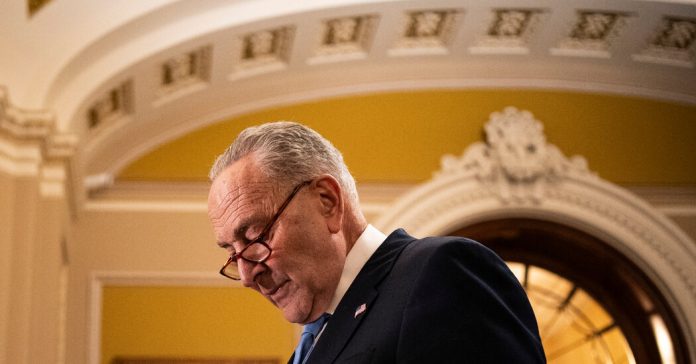
Senate Minority Leader Chuck Schumer is facing the biggest revolt from Democrats in years, but in a conversation with The Interview after his crucial vote supporting a Republican federal spending bill this past week, he tried to brush off questions about whether he should step aside. Democratic officials appeared stunned when Schumer did an about-face on the spending bill, arguing that the choice was the lesser of two evils. Schumer defended his decision in the second part of our wide-ranging interview, even as questions over his leadership by senior party officials continued.

Here are three takeaways from the shutdown portion of our conversation.

Schumer said that he made a “very, very difficult” decision to support the Republican bill in order to avert a government shutdown that, he said, President Trump and Elon Musk wanted. He called Trump and Musk “anti-government fanatics” and “nihilists.”

They want to shutter “agency after agency,” he said, which would create a situation far worse than the Republican bill. He continued:

Two days from now in a shutdown, they could say, well, food stamps for kids is not essential. It’s gone. All veterans offices in rural areas are gone. Social Security, Medicare, Medicaid. They’re not essential. We’re cutting them back. So it’d be horrible. The damage they can do under a shutdown is much worse than any other damage that they could do.

Isn’t this just — Wait, let me just finish, Lulu. It can last forever. There is no off ramp. One of the Republican senators told us: We go to a shutdown, it’s going to be there for six months, nine months, a year. And by then, their goal of destroying the federal government would be gone. And finally, one final point here, and that is that right now under the C.R., you can go to court and contest an executive order to shut something down. Under a shutdown, the executive branch has sole power.

While he accepted that there were “divisions” within his party around his vote, he insisted that he and his fellow Democrats have a respect for each other and that they are united in their fight against Trump.

Schumer reluctantly acknowledged that he and the House minority leader, Hakeem Jeffries, who talk often, have not spoken since Schumer’s surprising vote, suggesting that there is a rupture between the two most senior Democrats in Congress.

Houthis Vow Retaliation After U.S. Strikes in Yemen

0

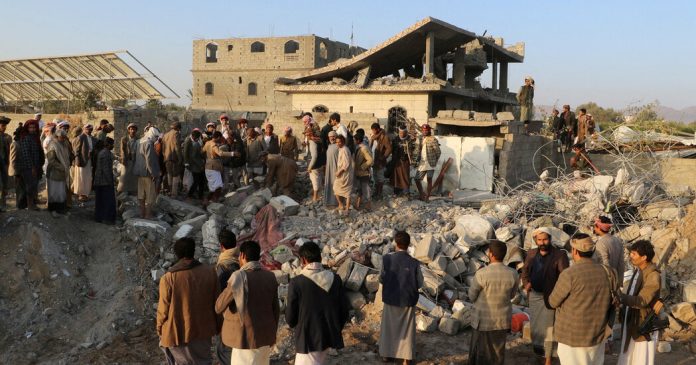
The Houthi militia in Yemen vowed to retaliate after President Trump ordered large-scale military strikes on targets controlled by the group that it said killed at least 31 people.

The Iran-backed group said women and children were among those killed in the strikes on Saturday, the most significant U.S. military action in the Middle East since Mr. Trump took office in January.

For more than a year, the Houthis have launched attacks against Israel and threatened commercial shipping in the Red Sea in solidarity with their allies Hamas, which led the Oct. 7, 2023, attack on Israel that set off the war in Gaza.

The U.S. airstrikes targeted Houthi-controlled areas across Yemen, including the capital, Sana, as well as Saada, al-Bayda, Hajjah and Dhamar Provinces, according to reports from Houthi-run media channels. The strikes killed at least 31 people and wounded 101, “most of whom were children and women,” said Anis al-Asbahi, a spokesman for the Houthi-run health ministry.

The casualty figures could not be independently verified, and the United States has not given any estimates for the number of people killed or wounded in the strikes.

The U.S. Central Command, which posted a video of a bomb leveling a building compound in Yemen, said that the United States had employed precision strikes to “defend American interests, deter enemies, and restore freedom of navigation.”

U.S. airstrikes also targeted a power facility in the northwestern town of Dahyan, in Saada Province, causing a nightlong electricity blackout, residents said.

The Houthi-run Al-Masirah television channel reported that 13 people were killed and nine others wounded in airstrikes on al-Jeraf, a district in Sana considered a stronghold of the group. In Saada Province, in the northwest, 10 people, including four children, were killed when airstrikes hit two buildings, the report said.

Residents in Sana shared images and videos on social media showing shattered windows and fireballs rising from sites that were hit. Others posted anguished messages as the airstrikes hit.

Abdul Rahman al-Nuerah, a resident of Sana, said the blasts shattered the windows of his home and terrified his four children. “I instantly embraced and comforted them,” Mr. al-Nuerah said by telephone. “Children and mothers are afraid and still in shock.”

Mohammed al-Bukhaiti, a senior Houthi leader, vowed retaliation against the United States, calling the strikes unjustified. “We shall respond to the escalation by escalating,” he wrote on the social media platform X.

The Houthi rebels, who control most of northern Yemen, had temporarily halted attacks in the Red Sea when a cease-fire took effect in Gaza in January. But last week, they announced that they would target any Israeli ships violating their ban on Israeli vessels passing through the Red Sea, the Arabian Sea, the Bab-el-Mandeb and the Gulf of Aden.

The Bab el-Mandeb is a strait between the Horn of Africa and the Middle East that connects the Red Sea to the Gulf of Aden, which opens into the Arabian Sea and the Indian Ocean.

In a statement on his Truth Social platform, Mr. Trump said the strikes were also intended as a warning to Iran, the Houthis’ main backer.

“Support for the Houthi terrorists must end IMMEDIATELY!” he wrote. He also warned Iran against threatening the United States, saying, “America will hold you fully accountable, and we won’t be nice about it!”

Days after taking office, Mr. Trump issued an executive order to redesignate the Houthis a “foreign terrorist organization,” calling the group a threat to regional security.

The order restored a designation given to the group late in the first Trump administration. The Biden administration lifted the designation shortly after taking office, partly to facilitate peace talks in Yemen’s civil war.

Last year, the Biden administration labeled the Houthis a “specially designated global terrorist” group — a less severe category — in response to attacks against vessels in the Red Sea.

The 95-Year-Old Japanese Man Who Is the World’s Oldest Speedskater

0

When Iichi Marumo competed in his first international race seven years ago in Moscow, the Japanese speedskater moved down the ice at about the pace of a brisk jog. It took him three times longer to cross the finish line than most of the other skaters that day.

It didn’t matter, because Mr. Marumo was also three times older. He was 88, and his time was still fast enough to earn him a silver medal in his age category of 85 and up.

Ever since, he has won only gold. Now 95, in his most recent race, a national competition in Japan in January, he competed in a category that was created just for him: 95 and over.

So far, he has the category all to himself.

“I win a gold medal every time I appear,” Mr. Marumo said in an interview at his home in Chino, a small city in the rugged mountains of central Honshu, Japan’s main island. As proof, he pulled out a plastic shopping bag filled with more than 20 gold medals, including from races in Holland and Canada.

A small man with slightly bowed legs and an impish smile, Mr. Marumo has been skating his whole life, but he began his competitive career at an age when most people would feel lucky to still be alive. On his wall, plaques from Guinness proclaim him to be the world’s oldest male competitive speedskater. His closest rival is a Norwegian skater who is five years younger. (The oldest currently active female competitor is an 80-year-old Dutch skater.)

The collection caps a remarkable near-century of life. Mr. Marumo survived World War II despite volunteering to fly a kamikaze mission, was awarded by Japan’s emperor for teaching other farmers how to profit by growing celery, and he publishes a short monthly magazine dedicated to traditional Japanese poetry.

To be a speedskater at his age no longer involves much speed. In compression pants and a skintight race suit, he shuffles and glides down the ice, taking care not to fall. Still, he is greeted with enthusiastic cheers, which he returns with a wave and a smile.

Racing wasn’t even his idea: A friend convinced him to do it as a sort of dare. Now he sees it as a fun way to spend his remaining time.

“I never expected to be an international racer,” Mr. Marumo said.

He has become a minor celebrity in Japan, a demographically aging society that has seen a surging enthusiasm for senior sports. The country produces some of the world’s oldest competitors in winter events, including two Japanese women who also hold Guinness World Records as the oldest downhill and cross-country skiers. But they are still five or more years younger than Mr. Marumo.

“He stands out as the poster boy of senior winter sports in Japan and maybe the world,” said Kenji Takai, the director of the Japan Association for Winter Masters Sports. “He’s inspiring people to try to do what he’s doing.”

Mr. Marumo and his fellow silver-haired athletes are also pushing the boundaries of senior sports. In speedskating, the term Masters is typically used for those aged 30 years and up, but Mr. Marumo is more than three times that age.

At the Masters level, speedskating is divided into age categories that are five years long, so entrants can compete against other skaters of similar physical strength. Since Mr. Marumo’s first domestic race, in 2016 at the age of 86, Japan’s skating federation has had to create three new age categories just for him, including his current 95-and-over.

“I hope he continues until we have to create a fourth new category, for those aged 100 and over,” Mr. Takai said.

Mr. Marumo says he wants to be skating when he’s 100, though he may not make it. He has had a few falls, but the worst came during his most recent race in January. The track was outdoors, and when the starting pistol sounded, a blizzard had blown in. Mr. Marumo fell early and couldn’t get back on his feet. Rather than give up, however, he crawled along the ice all the way to the finish line.

It took him 17 minutes to complete the 500-meter course.

“My left leg froze from the pain,” he recalled, “but I had to finish.”

Afterward, he announced that he was retiring from the sport before having surgery for a hernia. But he has since had second thoughts and now says he will race again next year if he feels strong enough.

Mr. Marumo said he first skated around 1940, when he was about 10. In those days, he tied handmade metal blades onto wooden sandals and raced against his elementary school classmates across frozen rice paddies. His childhood ended at the age of 15, when he was convinced to volunteer for the suicide missions that Japan was launching against the advancing Americans in the closing days of World War II. Trained to be a radioman in a two-seat bomber that was to ram into a warship, the war ended before his plane was sent.

Getting a second chance is what taught him to make the most of life, he said. After returning to the farm where he grew up, he saw a few stalks of celery growing. The vegetable was then rare in Japan, but he figured out how to make it flourish in the local soil, turning it into a cash crop in this alpine region. In 1970, the Emperor Hirohito recognized Mr. Marumo with an award for promoting agriculture.

He also became an enthusiast of tanka, a type of short poem. Mr. Marumo said the brisk rhythms resemble the martial songs that had once convinced him to volunteer to die during the war, but he has used his poems to celebrate peace. In 2002, he took over the magazine dedicated to tanka, which he has edited and published ever since.

After the war, he kept up ice skating mainly for exercise. As a City Council member in the late 1980s, Mr. Marumo convinced leaders to build the city’s own speedskating rink. But he never imagined that he himself would one day race competitively.

He was already 86 when a friend persuaded him to enter a race. “There’s no one else your age competing,” the friend told him. “You’ll get a medal just for showing up.”

Becoming a competitive racer has not changed his lifestyle, he said. The skating remains his main source of exercise, and he does little or no additional training. “My philosophy is not to overdo it,” he said.

He admits travel can be exhausting, especially long flights overseas, but his forgetfulness makes it harder. He once showed up at the airport without his passport, which caused him to miss his flight — and almost the entire competition.

Still, Mr. Marumo says he is hooked on speedskating, which has become a new way to celebrate a life that was almost cut short by war — and that he’s not ready to give up on yet.

“I retired once,” Mr. Marumo said. “I don’t want to do that again.”

Takeaways From Our Investigation Into Domestic Worker Abuse in Saudi Arabia

0

In most countries, working as a housekeeper or nanny is a relatively safe profession.

Yet as we traveled across Kenya and Uganda, from crowded and poor urban neighborhoods to far-flung farming villages, we heard many variations on the same horror story: Young, healthy women set off for domestic jobs in Saudi Arabia, only to return beaten, scarred or in coffins.

At least 274 Kenyans, nearly all of them women, have died in Saudi Arabia in the past five years. At least 55 died just last year, twice as many as the previous year.

Autopsies only raised more questions. The body of a woman from Uganda showed extensive bruising and signs of electrocution, yet her death was labeled “natural.” We found a surprising number of women who fell from roofs, balconies or, in one case, an opening for an air-conditioner.

How could this be? This was hardly some obscure industry with fly-by-night players. East African women are recruited by the thousands and trained by well-established companies, then sent to Saudi Arabia through a process regulated and approved by the Ugandan, Kenyan and Saudi governments.

Worker advocates have long blamed archaic Saudi labor laws. But we wondered it something else was at play. We spent nearly a year trying to figure it out.

We interviewed more than 90 workers and their families, and carefully analyzed employment contracts whenever we could.

We found that women from Kenya and Uganda are lured to Saudi Arabia with promises of better wages and opportunities.

Recruitment agencies and their brokers give misleading information about wages and make workers sign contracts they can’t read.

Some agencies market women as products. Agency websites offer workers “for sale” to Saudi clients. We saw one that had a click-to-collect option.

When women arrive in the kingdom, employers often confiscate their passports and belongings. Kenyan housekeepers in Saudi Arabia work for $250 or so a month. But many women told us that their new bosses shortchanged them or denied them wages, declaring, “I bought you.”

Using the employment contracts and, whenever we could find them, autopsies, police reports or legal documents, we began looking into companies that profited off these women.

Corporate records and securities filings led us to powerful people, including officials who could be protecting these workers.

High-ranking officials in Kenya and Uganda and their families, we found, own stakes in staffing agencies.

Fabian Kyule Muli, for example, is a member of Kenya’s Parliament and also owns an agency that sends women to Saudi Arabia. He is the vice chairman of a parliamentary labor committee, a job that can pass laws protecting workers. The committee has at times been a champion for sending more people to Saudi Arabia, and has denied that workers are hurt there.

In Saudi Arabia, members of the royal family, including descendants of King Faisal, have been major investors in agencies that supply domestic workers. Senior Saudi officials also hold high-ranking positions with staffing agencies.

Despite years of mounting evidence of abuse, leaders including President William Ruto of Kenya have vowed to send more workers abroad. One of his top advisers owned a staffing company. So does Sedrack Nzaire, whom Ugandan media identifies as the brother of that country’s longtime president, Yoweri Museveni.

In interviews, women told us through tears that their bosses in Saudi Arabia denied them food, raped them, assaulted them with bleach or stabbed them.

Yet East African governments have ignored calls from activists and human rights groups to negotiate better labor agreements with Saudi Arabia. The employment treaties include only minimal worker safeguards.

The Saudi government says its law enforcement and courts protect workers against abuse and help them seek recourse. But women told us they were unable to access such resources, and police sent them back to abusive employers or government-funded facilities that felt like prisons.

Many abused workers must pay for their own flight home, despite regulations saying that they should not have to do so. Our reporting found that desperate workers often returned home broke, disabled and suicidal.

And in the cases of serious injury or death, families have to navigate a web of red tape, apathy and impunity. In Uganda, Isiko Moses Waiswa told us about learning that his wife had died in Saudi Arabia.

Her employer gave him a choice: her body or her $2,800 in wages.

“I told him that whether you send me the money or you don’t send me the money, me, I want the body of my wife,” Mr. Waiswa told us.

East African Housekeepers Face Rape, Assault and Death in Saudi Arabia

0

East African leaders and Saudi royals are among those profiting off a lucrative, deadly trade in domestic workers.

On any given day in Kenya, dozens, if not hundreds of women buzz around the Nairobi international airport’s departures area. They huddle for selfies in matching T-shirts, discussing how they’ll spend the money from their new jobs in Saudi Arabia.

Lured by company recruiters and encouraged by Kenya’s government, the women have reason for optimism. Spend two years in Saudi Arabia as a housekeeper or nanny, the pitch goes, and you can earn enough to build a house, educate your children and save for the future.

While the departure terminal hums with anticipation, the arrivals area is where hope meets grim reality. Hollow-cheeked women return, often ground down by unpaid wages, beatings, starvation and sexual assault. Some are broke. Others are in coffins.

At least 274 Kenyan workers, mostly women, have died in Saudi Arabia in the past five years — an extraordinary figure for a young work force doing jobs that, in most countries, are considered extremely safe. At least 55 Kenyan workers died last year, twice as many as the previous year.

Autopsy reports are vague and contradictory. They describe women with evidence of trauma, including burns and electric shocks, all labeled natural deaths. One woman’s cause of death was simply “brain dead.” An untold number of Ugandans have died, too, but their government releases no data.

There are people who are supposed to protect these women — government officials like Fabian Kyule Muli, vice chairman of the labor committee in Kenya’s National Assembly. The powerful committee could demand thorough investigations into worker deaths, pressure the government to negotiate better protections from Saudi Arabia or pass laws limiting migration until reforms are enacted.

But Mr. Muli, like other East African officials, also owns a staffing company that sends women to Saudi Arabia. One of them, Margaret Mutheu Mueni, said that her Saudi boss had seized her passport, declared that he had “bought” her and frequently withheld food. When she called the staffing agency for help, she said, a company representative told her, “You can swim across the Red Sea and get yourself back to Kenya.”

In Kenya, Uganda and Saudi Arabia, a New York Times investigation found, powerful people have incentives to keep the flow of workers moving, despite widespread abuse. Members of the Saudi royal family are major investors in agencies that place domestic workers. Politicians and their relatives in Uganda and Kenya own staffing agencies, too.

The line between their public and private roles sometimes blurs.

Mr. Muli’s labor committee, for example, has become a prominent voice encouraging workers to go overseas. The committee has at times rejected evidence of abuse.

Last month, four Ugandan women in maids’ uniforms sent a video plea to an aid group, saying that they had been detained for six months in Saudi Arabia.

“We are exhausted from being held against our will,” one woman said on the video. The company that sent her abroad is owned by Sedrack Nzaire, an official with Uganda’s governing party who is identified in Ugandan media as the brother of the president, Yoweri Museveni.

Nearly every staffing agency refused to answer questions or ignored repeated requests for comment. That includes Mr. Muli, Mr. Nzaire and their companies.

Kenya and Uganda are deep in a yearslong economic slump, and remittances from foreign workers are a significant source of income. Even after other countries negotiated deals with Saudi Arabia that guaranteed worker protections, East African countries missed opportunities to do the same, records show.

Kenya’s Commission on Administrative Justice declared in 2022 that worker-protection efforts had been hindered by “interference by politicians who use proxies to operate the agencies.”

Undeterred, Kenya’s president, William Ruto, says he wants to send up to half a million workers to Saudi Arabia in the coming years. One of his top advisers, Moses Kuria, has owned a staffing agency. Mr. Kuria’s brother, a county-level politician, still does.

A spokesman for Mr. Ruto, Hussein Mohamed, said that labor migration benefited the economy. He said the government was taking steps to protect workers, including weeding out unlicensed recruiting firms that are more likely to have shoddy practices. He said that Mr. Kuria, the presidential adviser, had no conflict of interest because he does not work on labor issues.

In Uganda, recruiting-firm owners include a recently retired senior police official and Maj. Gen. Leopold Kyanda, a former military attaché to the United States.

Recruiting companies work closely with Saudi agencies that are similarly well connected. Descendants of King Faisal have been among the largest shareholders in two of the biggest agencies. A director of a Saudi government human rights board serves as vice chairman of a major staffing agency. So does a former interior minister, an Investment Ministry official and several government advisers.

Together, these agencies paint a rosy picture of work in Saudi Arabia. But when things go wrong, families say, the workers are often left to fend for themselves.

A Kenyan housekeeper, Eunice Achieng, called home in a panic in 2022, saying that her boss had threatened to kill her and throw her in a water tank. “She was screaming, ‘Please come save me!’” her mother recalled. Ms. Achieng soon turned up dead in a rooftop water tank, her mother said. Saudi health officials said her body was too decomposed to determine how she died. The Saudi police labeled it a “natural death.”

Eunice Achieng on the day she left for Saudi Arabia. She was found dead in a rooftop water tank.

One young mother jumped from a third-story roof to escape an abusive employer, breaking her back. Another said that her boss had raped her and then sent her home pregnant and broke.

In Uganda, Isiko Moses Waiswa said that when he learned his wife had died in Saudi Arabia, her employer there gave him a choice: her body or her $2,800 in wages.

“I told him that whether you send me the money or you don’t send me the money, me, I want the body of my wife,” Mr. Waiswa said.

A Saudi autopsy found that his wife, Aisha Meeme, was emaciated. She had extensive bruising, three broken ribs and what appeared to be severe electrocution burns on her ear, hand and feet. The Saudi authorities declared that she had died of natural causes.

Roughly half a million Kenyan and Ugandan workers are in Saudi Arabia today, the Saudi government says. Most of them are women who cook, clean or care for children. Journalists and rights groups, who have long publicized worker abuse in the kingdom, have often blamed its persistence on archaic Saudi labor laws.

The Times interviewed more than 90 workers and family members of those who died, and uncovered another reason that things do not change. Using employment contracts, medical files and autopsies, reporters linked deaths and injuries to staffing agencies and the people who run them. What became clear was that powerful people profit off the system as it exists.

The interviews and documents reveal a system that treats women like household goods — bought, sold and discarded. Some company websites have an “add to cart” button next to photos of workers. One advertises “Kenyan maids for sale.”

A spokesman for the human resources ministry in Saudi Arabia said it had taken steps to protect workers. “Any form of exploitation or abuse of domestic workers is entirely unacceptable, and allegations of such behavior are thoroughly investigated,” the spokesman, Mike Goldstein, wrote in an email.

He said the government had raised fines for abuse and made it easier for workers to quit. He said domestic laborers were capped at 10-hour workdays and were guaranteed one day off per week. He said the government now requires employers to pay their maids through an online system and will one day track people who repeatedly violate labor laws.

“Workers have multiple ways to report abuse, unpaid wages or contract violations, including hotlines, digital platforms and direct complaint mechanisms,” he said.

But Milton Turyasiima, an assistant commissioner with the Ugandan Ministry of Gender, Labor and Social Development, said that abuse remained rampant.

“We get complaints on a daily basis,” he said.

Recruiters fan out across East Africa, from impoverished hilltop villages to the cinder block neighborhoods of Nairobi and Kampala, the Ugandan capital.

They search for people desperate, and ambitious, enough to leave their families for low-paying jobs in a country where they do not know the native language. People like Faridah Nassanga, a slim woman with a warm but detached air.

“We are really poor,” Ms. Nassanga said, sitting outside her one-room concrete home in Kampala. Meals are cooked on a propane burner in the alley beside a trickling sewage gutter. She shares a triple-decker bunk bed with her mother and children.

Ms. Nassanga said a friend introduced her in 2019 to an agent from Marphie International Recruitment Agency, whose co-owner, Henry Tukahirwa, recently retired as one of Uganda’s highest-ranking police officers. Ms. Nassanga agreed to move to Saudi Arabia for a job paying about $200 a month.

She found her housekeeping job as pleasant as recruiters had promised. She had her own room. The woman she worked for sometimes even helped with chores.

Then one day, she said, her boss’s husband walked into her room and raped her. Afterward, she said, he kicked and slapped her. He threw her underwear at her as she retreated to the kitchen, Ms. Nassanga said.

When she became pregnant, Ms. Nassanga’s boss accused her of sleeping with the husband. The Saudi family put her on a plane back to Uganda, said Abdallah Kayonde, who runs a legal-aid group that is trying to get compensation for her.

Ms. Nassanga knows her employer’s name but not her phone number. The only records she has are from the recruiting agency.

Ruth Karungi, who owns the agency with her husband, the retired police official, said that when Ms. Nassanga showed up at the office with an infant, the company contacted the Saudi partner agency, which did not respond.

The company then notified the Saudi Embassy. “We trusted that they would address the case through the proper diplomatic channels,” Ms. Karungi said by email.

She said she did not know if anyone had followed up.

Now, Ms. Nassanga is back sharing a one-room home with her mother, her two older children and her toddler — a boy with a notably different complexion and hair from his siblings.

Saudi Arabia has a wage hierarchy for foreign workers, with East Africans near the bottom at about $200 to $250 a month.

Over the years, some countries have fought for better wages and protections for their workers. The Philippines, for example, negotiated a deal with Saudi Arabia in 2012 that raised wages.

That sent staffing agencies looking for cheaper labor elsewhere.

Few Ugandan workers arrived in the kingdom in 2017, Ugandan government data show. Five years later, the number was 85,928.

African governments stood to benefit from remittances. Mr. Muli’s committee called on Kenya in 2019 to “embark on a rigorous campaign to market Saudi Arabia as an important destination country for foreign employment.”

“The current notion that foreign workers in Saudi Arabia go through suffering” needed “to be corrected,” the committee added.

The African countries provide a “new and lower-cost services market,” one of Saudi Arabia’s largest staffing agencies, Maharah Human Resources Company, wrote in 2019.

Some of King Faisal’s descendants, through a holding company, have been important shareholders in both Maharah and in another major staffing agency, Saudi Manpower Solutions Company, or Smasco.

Al Mawarid, yet another big staffing company, also has deep government ties. Its chairman, Ahmad al-Rakban, was executive director of administration for the Saudi National Guard. The chief executive, Riyadh al-Romaizan, is chairman of a government-backed industry council. Tariq al-Awaji, a former top official at the Interior Ministry, is a company director. Another board member, until recently, was an official in the Investment Ministry.

In recent years, Al Mawarid has paid about $4 million to acquire workers from Macro Manpower, the firm owned by Mr. Nzaire, the brother of Uganda’s president, corporate filings show.

(East African recruiting agencies make money from per-worker fees from Saudi companies. Those companies, in turn, get fees from people who hire maids.)

Al Mawarid’s chief executive, Mr. al-Romaizan, declined to answer questions.

Mary Nsiimenta, a single mother with big, mournful eyes, cleaned house for a family with five children in Najran, in southern Saudi Arabia. She said the children, ages 9 to 18, hit her with a stick and put bleach in her eyes.

(Several women told The Times that they were assaulted with bleach or forced to soak their hands in it as punishment.)

According to Ms. Nsiimenta, her employer was stingy with her salary. After she repeatedly asked to be paid, she said, the family locked her on a third-story rooftop.

As time dragged on, she felt sure she would die there, she recalled.

“The sun was too much,” she said. “Hot. No food. I lost control.”

She jumped, landing hard.

“I crawled out like a snake” to the street, she said. Passers-by brought her to a hospital where, medical records show, doctors repaired her spine. She reported the abuse to doctors and the police, she said, but they told her to return to work.

Ms. Nsiimenta refused, and the Saudi placement agency returned her to Uganda in 2023. In chronic pain and incontinent, she cannot work. Friends and relatives are raising her children. “My life is destroyed,” she said.

Saudi law says that, when a worker needs to go home, an employer, recruiter or the Saudi government is obligated to pay.

“Under no circumstances does a worker bear any financial responsibility for repatriation,” wrote Mr. Goldstein, the Saudi ministry spokesman.

But workers and worker-rights advocates say that laborers are often forced to pay. Those without money can be detained.

Because visas are tied to employment, workers who leave their jobs can lose their legal status. To help address that, the Saudi government paid a company, Sakan, to provide housing and legal assistance to foreign workers in trouble.

Hannah Njeri Miriam ended up at a Sakan center in 2022, about a year after she left Kenya’s Rift Valley for Saudi Arabia.

Ms. Miriam’s employer fired her after a dispute. Jobless and homeless, Sakan was the only place to go. Once there, according to her family, the staff said she could leave only if she paid about $300 for her travel.

She called home, saying she was being mistreated and underfed. Nobody could afford to help. The Kenyan agency that had sent her abroad had gone out of business.

Finally, her family got a call from another woman at the center. She said Ms. Miriam had tried to escape through an air-conditioning opening but had slipped and fallen two stories. A forensic report said that Ms. Miriam had died of head wounds. The Saudi police later said that she died of “congestive cardiac and respiratory failure.” Sakan’s chairman declined to comment.

Mr. Goldstein, the Saudi ministry spokesman, declined to comment on individual deaths but said that every case was thoroughly investigated. He did not comment on the inconsistencies between autopsies and police reports and would not say how many people had been arrested or prosecuted in labor cases.

Mr. Goldstein said the government stopped funding Sakan in 2023. Now, he said, it pays the recruiting agency Smasco to run worker-assistance centers.

Three Kenyan women spoke to The Times from inside a Smasco center. The women, who spoke on the condition of anonymity for fear of retaliation, said that they could not go home unless they paid about $400. The company did not respond to requests for comment.

As migration to Saudi Arabia surged, reports of deaths and injuries spread across East Africa. Bodies began arriving. Each story brought new outrage.

People should not have been surprised. The leaders of Kenya and Uganda had ample warning of abuse, yet they signed agreements with Saudi Arabia that lacked protections that other leaders demanded.

The Philippines deal in 2012, for example, guaranteed a $400 monthly minimum wage, access to bank accounts and a promise that workers’ passports would not be confiscated.

Kenya initially demanded similar wages, according to a government report, but when Saudi Arabia balked, Kenya agreed to a deal in 2015 with no minimum wage at all.

The treaty contained little beyond a promise to establish a committee to monitor labor issues. The commission was never formed, a government report said.

Mr. Mohamed, the Kenyan president’s spokesman, said that the government later negotiated $225 monthly wages. He said Kenyan workers were simply not as highly regarded in Saudi Arabia. “Philippines is able to dictate the price,” he said.

When Uganda cut its agreement with the Saudi government, they made no mention of a minimum wage. The issue of worker mistreatment was well discussed at the time. The Saudi ambassador to Uganda even wrote a column in a Ugandan newspaper assailing critics who “offend and abuse the Kingdom of Saudi Arabia” by publicizing abuse.

In 2021, a Kenyan Senate committee found “deteriorating conditions” in Saudi Arabia and an “increase in distress calls by those alleging torture and mistreatment.” The committee recommended suspending worker transfers.

When Mr. Ruto was elected president in 2022, though, the campaign to send workers abroad intensified. His government reached a new Saudi labor agreement the following year without a wage increase or substantive new protections.

“It’s a cycle of abuse that no one is addressing,” said Stephanie Marigu, a Kenyan lawyer who represents workers.

Now, a few times a month, rural Kenyans head to Nairobi to collect a coffin from the airport.

Hundreds of people gathered in September at a village school in southwestern Kenya. They paid respects to Millicent Moraa Obwocha, who had left her husband and young son behind months earlier.

Her employer sexually harassed and assaulted her, her husband, Obuya Simon Areba, said. Things got so bad last summer, he said, that she asked her Saudi recruiter to rescue her.

A few days later, her husband got the call that she was dead. She was 24. The Kenyan government attributed her death to “nerve issues.”

Her employer, Abdullah Omar Abdul al-Rahman Hailan, said that Mr. Areba’s account was “misleading and incorrect” and called a Times reporter “a clown.”

At the funeral, Ms. Obwocha’s body lay in an open coffin in a white dress and veil.

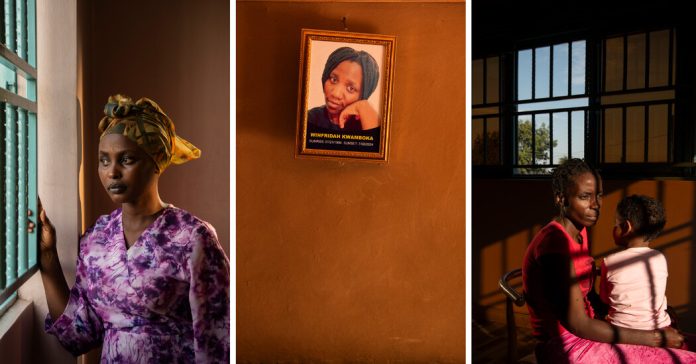
Beside her was a six-foot-tall photograph. In it, she smiles with her fingers held up in a V. She is standing outside the airport, brimming with optimism.

What Is Tren de Aragua?

0

President Trump’s executive order on Saturday invoking the Alien Enemies Act targeted Venezuelan citizens 14 years and older with ties to the transnational gang Tren de Aragua, saying they “are liable to be apprehended, restrained, secured, and removed as Alien Enemies.”

Mr. Trump’s order was quickly challenged in court, but the gang has been a growing source of concern for U.S. officials over the last year. The Biden administration labeled Tren de Aragua a transnational criminal organization in 2024, the New York Police Department has highlighted its activity on the East Coast, and the Trump White House began the process of designating it a foreign terrorist organization in January.

Here is what we know about the gang:

Tren de Aragua (Train of Aragua, or Aragua Train) has roots in Tocorón prison in Venezuela’s northern Aragua state, which the group’s leaders had transformed into a mini-city with a pool, restaurants and a zoo. They reportedly recorded executions and torture there to maintain control over other prisoners.

As Venezuela’s economy collapsed and its government under President Nicolás Maduro became more repressive, the group began exploiting vulnerable migrants. Tren de Aragua’s influence soon stretched into other parts of Latin America, and it developed into one of the region’s most violent and notorious criminal organizations, focusing on sex trafficking, human smuggling and drugs.

Colombian officials in 2022 accused the gang of at least 23 murders after the police began to find body parts in bags. Alleged members have also been apprehended in Chile and in Brazil, where the gang aligned itself with Primeiro Comando da Capital, one of that country’s biggest organized crime rings.

Despite the many unknowns about its true size or sophistication in the United States, Tren de Aragua has emerged as a real source of concern for law enforcement in the last couple of years.

In New York City, according to the police the gang has focused on stealing cellphones; retail thefts, especially high-end merchandise in department stores and thefts while riding scooters; and dealing a pink, powdery synthetic drug, known as Tusi, that is often laced with ketamine, MDMA or fentanyl.

The police have also said that the gang is believed to recruit members from inside the city’s migrant shelters, and has variously had conflicts or made alliances with other gangs.

In other parts of the country, people accused of affiliations with Tren de Aragua have been charged with crimes such as shootings and human trafficking, mostly targeting members of the Venezuelan community.

In May 2024, federal officials uncovered a sex-trafficking ring in which they said the gang was forcing Venezuelan women into sex to repay debts to smugglers who assisted with border crossings. The ring stretched across Louisiana, Texas, Virginia, Florida and New Jersey, according to a complaint filed in federal court.

The group’s presence in the United States was a flashpoint of the 2024 election, as Mr. Trump accused the Biden administration of letting criminals into the country. During a presidential debate, he falsely suggested that the gang had taken over Aurora, Colo.

The Trump administration has repeatedly described Tren de Aragua as a focus of its deportation efforts. Venezuelan migrants seeking asylum say the gang’s presence and the discourse around it in the United States have created hurtful stigma and discrimination against them.

“Any of us who have tattoos, they think that we are Tren de Aragua,” said Evelyn Velasquez, 33-year-old Venezuelan woman, told The New York Times in September. “I’ll go apply for a job and when they hear that we are Venezuelan, they turn us down.”

In February, the White House press secretary said that 10 men detained and housed in Guantánamo Bay, Cuba were members of Tren de Aragua. The sister of one of the men detained said that he was not a gang member.

In late February, the Trump administration abruptly emptied two detention sites the government had used to hold 177 Venezuelans flown in from the United States, including a military prison building formerly used to hold terrorism detainees. Federal officials moved out a second group of migrants this month.

Arlington National Cemetery stops highlighting some historical figures on its website

0

Arlington National Cemetery has removed historical sections about prominent African-American, Hispanic and female veterans from its website.

Protest Against Serbian Leader Draws 100,000 in Biggest Crowd Yet

0

A student-led protest movement in Serbia rallied more than 100,000 people for a huge peaceful street demonstration on Saturday in Serbia’s capital, Belgrade, defying warnings from the country’s embattled strongman leader that months of unrest were careening out of control into violence.

Saturday’s rally, the biggest outpouring of public discontent in Serbia in decades, was preceded by a drumbeat of warnings from President Aleksandar Vucic and his expansive media apparatus that protesters were planning violent attacks to provoke “civil war” and seize power.

Opposition politicians added to a foreboding mood by claiming that they had received information from inside Serbia’s security service of secret plans to arrest Mr. Vucic’s political rivals.

But Saturday’s rally, which began outside the Parliament building in Belgrade and soon engulfed the city center, passed without major incident. Supporters of President Vucic, gathered in a park near Parliament and threw stones at students. But fears that the government would deploy war veterans and soccer hooligans linked to organized crime gangs to beat protesters — as it has in the past — did not materialize.

The Belgrade police said the protesters numbered 107,000 while students at Belgrade University’s faculty of dramatic arts, which helped organize the rally, put the turnout at 800,000.

The protests in Serbia, which have spread across the country, reaching into towns that in the past voted heavily for Mr. Vucic, began in November after 15 people were killed by the collapse of a concrete canopy at a newly renovated railway station. Students and opposition politicians — who protested in dramatic fashion last week by setting off flares and smoke bombs in Parliament — have blamed the tragedy on shoddy work by contractors tied to corrupt officials.

While students have focused on a set of clear demands related to the disaster, including the criminal prosecution of those responsible and the dismissal of ministers who oversaw the renovation project, Mr. Vucic’s political opponents in Parliament have demanded that he form a “transitional government” to oversee new elections.

Past elections, held under the supervision of the governing Serbian Progressive Party, have been marred by voter fraud and the government’s control of major television and news media outlets, which allowed it to mostly silence the messaging of opposition candidates. Mr. Vucic has said he is willing to hold an election but has ruled out a “transitional government” that would include his opponents.

As the protests have gathered momentum and attracted support far beyond campuses, which have been barricaded for months, they have increasingly targeted Mr. Vucic, who has been in power for 13 years, with many demonstrators now calling for his removal and even imprisonment.

“Arrest Vucic,” protesters chanted on Saturday. “He’s finished,” read signs carried by some of them.

The political crisis in Serbia, where President Trump’s son-in-law, Jared Kushner, has been working on a complicated deal for a Trump-branded luxury hotel in the capital’s center, poses a dilemma for the new U.S. administration.

Under President Joseph R. Biden Jr., the United States sought to woo Mr. Vucic away from Serbia’s traditionally close partnership with Russia and was criticized by opposition politicians for being too soft on the Serbian president.

The Trump administration shows no sign of tilting away from Mr. Vucic. On Tuesday, Mr. Vucic met the president’s son, Donald Trump Jr., who was making a previously unannounced visit to Belgrade. The Serbian president, emboldened by President Trump’s dismantling of the aid agency U.S.A.I.D., which had helped finance groups that have documented election fraud and other abuses in Serbia, last month sent armed police to raid the offices in Belgrade of nongovernmental organizations he has blamed for stoking discontent.

Roy L. Prosterman, 89, Dies; Worked to Secure Land for the Rural Poor

0

Roy L. Prosterman, a lawyer who left a lucrative corporate law practice to champion land reform in the underdeveloped world, died on Feb. 27 at his home in Seattle. He was 89.

His death was announced by the Seattle land-rights institute Landesa, of which he was a founder. The organization did not specify a cause.

Mr. Prosterman worked with governments in some 60 countries in Asia, Africa and Latin America over nearly six decades, crafting plans to give a degree of ownership to peasant families. Sometimes the governments he worked with obtained land by expropriating large tracts, with compensation to the owners. At other times, the government simply gave away land it owned.

Seeing land rights as the key to lifting up the world’s millions of rural poor people, he pushed authoritarian governments in places like Vietnam and El Salvador, as well as emerging democratic ones in countries like India, to distribute farmland to impoverished farmers.

In an obituary, Landesa said that millions of people had benefited from the programs created by Mr. Prosterman and his group. Landesa, which was founded in 1981 as the Rural Development Institute at the University of Washington and became an independent organization in 1992, was “an early, and often lonely, voice recognizing the importance that access to land and security of land has in uplifting the lives of the poor in agrarian economies,” the Nobel-winning economist Joseph Stiglitz wrote in the preface to “One Billion Rising: Law, Land and the Alleviation of Global Poverty” (2009), a book edited and partly written by Mr. Prosterman.

For Mr. Prosterman, the son of a Russian immigrant, the epiphany came early in his career. As a young Harvard Law School graduate, he landed a job at one of the most prestigious of New York’s white-shoe law firms, Sullivan & Cromwell. In 1963 the firm sent him to the impoverished West African nation of Liberia for a client looking to build a large port there.

“The quarters that he and his colleagues in the corporate law firm were staying in were quite luxurious,” the rural development expert Tim Hanstad, his partner and co-founder of Landesa, recalled in an interview.

“They were eating imported caviar and salmon from Norway,” Mr. Hanstad said, while the waterfront slums of Liberia’s capital, Monrovia, are among the most desperate in West Africa: muddy, crowded, with little access to sanitation or running water.

“It was a very sobering experience discovering how badly many people on the planet live,” he said in a speech at Claremont McKenna College in 2006, when he received the Henry R. Kravis Prize in Nonprofit Leadership. The conditions, he said, were “beyond the point of poverty that would describe most of the world’s poor.”

Dissatisfied, he left the law firm in 1965 to teach property, antitrust and international investment law at the University of Washington, already consumed by the idea of using his training to aid the world’s rural poor. “He was looking to live a life of purpose, of greater purpose,” Mr. Hanstad said.

A student pointed him to a law-review article suggesting uncompensated expropriation as a tool for land redistribution in Latin America; Mr. Prosterman surmised that “if you tried to solve it that way you would likely end up with civil war instead of land reform,” he told The New York Times in 2012.

In 1966 he wrote a counterproposal in Washington Law Review titled “Land Reform in Latin America: How to Have a Revolution Without a Revolution.” He insisted that “the view that land reform should be carried out with less-than-full compensation of the landlords must be discarded.”

The U.S. Agency for International Development noticed and sent him to South Vietnam in the middle of the Vietnam War as part of the attempt to woo peasants away from the surging Vietcong. Mr. Prosterman came up with a “land to the tiller” law, pushed by President Nguyen Van Thieu through Vietnam’s National Assembly, which in 1970 gave ownership to hundreds of thousands of tenant farmers in return for a “decent price,” Mr. Prosterman recalled in the 2012 interview. He would often note that as a result of the law, rice production surged and rural recruitment by the Vietcong plummeted.

Mr. Prosterman was widely recognized for the Vietnam land law, which a New York Times editorial called “probably the most ambitious and progressive non-Communist land reform of the 20th century.” It became his calling card. But it was not enough to save the Thieu government.

For Mr. Prosterman, the accomplishment led to assignments in El Salvador and elsewhere. Mostly, he did not expound world-transforming visions. Land reform, he said in the 2012 interview, “simply puts a given population — present or future — into a relationship with that land base that is most productive and equitable.”

The outcomes in El Salvador were mixed, as they had been in Vietnam; again Mr. Prosterman was called in by the Agency for International Development, in 1980, in the midst of a civil war between leftist guerrillas and a right-wing government supported by the United States. Mr. Prosterman noted in a New York Times guest essay in February 1981 that both left and right hated the land project he had helped with. Nonetheless, he wrote optimistically, “40 percent of all cropland has been transferred to more than 210,000 peasant families.”

But in May of the next year, the New York Times correspondent Raymond Bonner wrote, “In less than one month as a legislative body, El Salvador’s Constituent Assembly has blocked most of the country’s land redistribution effort from being carried out.” Today, Landesa’s website simply notes that El Salvador’s land reforms “had some limited successes at addressing inequality.”

In more recent decades Mr. Prosterman focused much of his effort on India, which he said in 2012 had “the highest concentration of poor people on the planet.” He pushed what he called “new generation” ideas, in which India’s state governments would give “microplots,” a tenth of an acre or less, to landless people, with “women’s names jointly on the title as owners.”

In one of the last things he wrote, in 2009, Mr. Prosterman acknowledged that “little scope remains for traditional land-to-the-tiller programs that use expropriatory methods to obtain private land” to give farms to tenant farmers. This was, paradoxically, largely because of the decline of “authoritarian” governments, whose existence had made large-scale expropriation easier.

“When the power distances are so great” between landlord and tenant, “democracies don’t work well,” Mr. Hanstad explained.

Roy L. Prosterman (the “L” did not stand for anything) was born on July 13, 1935, in Chicago, the only child of Sidney Prosterman and Natalie (Weisberg) Prosterman. His father was a businessman. He graduated from South Shore High School at 16 and from the University of Chicago with a Bachelor of Arts at 18 in 1954. He received his law degree in 1958.

Mr. Prosterman and his international partners or the organization he founded received a number of awards, including the Gleitsman Foundation International Activist Award for alleviating inequality in 2003, the Schwab Foundation Outstanding Social Entrepreneur award in 2002, and the University of Chicago Public Service Award in 2010.

No immediate family members survive.

During his career, Mr. Prosterman was careful to downplay the political ramifications, as opposed to the human ones, of his work.

“The very fact of giving people secure rights to at least some small sliver of the earth’s surface,” he said in 2012, “strongly motivates them to make improvements that increase production and allow the family to make a number of basic-needs investments.”

Trump invokes 1798 Alien Enemies Act to deport Tren de Aragua : NPR

0

President Trump speaks during a meeting with NATO Secretary General Mark Rutte in the Oval Office of the White House on Thursday in Washington, D.C. On Saturday, Trump invoked a 1790s law declaring members of Tren de Aragua to be alien enemies for immediate detention and removal from the U.S.

Andrew Harnik/Getty Images


hide caption

toggle caption

Andrew Harnik/Getty Images

In his latest move to clamp down on illegal immigration President Trump has filed a presidential action invoking the Alien Enemies Act of 1798, a seldom-used law that gives the president authority to detain or deport nationals of an enemy nation during wartime. It’s only the fourth time in American history a president has used the act — and the first since World War II.

The directive targets members of Tren de Aragua, a Venezuelan prison gang, and authorizes expedited removal of all Venezuelan citizens 14 and older who are not U.S. citizens or lawful permanent residents.

According to the presidential action, those people “are liable to be apprehended, restrained, secured, and removed as Alien Enemies.”

An executive action signed in January that designated Tren de Aragua as a foreign terrorist organization paved the way for the direct removal of its members from U.S. territory under the Alien Enemies Act, declaring they, along with MS-13, a gang with origins in El Salvador not included in Saturday’s action, “present an unusual and extraordinary threat to the national security, foreign policy, and economy.”

The announcement from the White House came just hours after a federal judge issued a temporary restraining order against the removal of five Venezuelan men for 14 days under the expected invocation of the act. An emergency hearing on the matter will take place Saturday evening.

The expedited removal process allowed under the act means that those subject to the president’s declaration would not go through the normal immigration court process, or be able to claim asylum. Advocates fear that invoking the act would also open the door for targeting and deportations of other individuals regardless of their status or criminal records.

“There’s nothing in the law itself that would require it to be limited to undocumented individuals or individuals who have committed crimes,” said Katherine Yon Ebright, counsel on the liberty and national security team at the center-left Brennan Center for Justice. “It’s not about legal status, consistent with the idea that it’s a wartime authority, not an immigration authority.”

It is also unclear how the inclusion of minors in the president’s action Saturday will play into legal challenges.

Trump has laid the groundwork to bring back the old law

Trump threatened today’s move since his early days on the campaign trail in 2023. In several rallies he vowed to “invoke the Alien Enemies Act to target and dismantle every migrant criminal network.” Immigration was a top theme throughout his campaign, during which he also promised the largest deportation actions in the country’s history.

At the Republican National Convention last July, the GOP committed to “invoke the Alien Enemies Act to remove all known or suspected gang members, drug dealers, or cartel members from the United States,” as a part of the party platform.

Trump has long argued that the act would give “tremendous authority” for immigration law enforcement. Detentions and deportations conducted through the act would not go through the immigration court system, and would allow Trump to bypass the traditional deportation process, according to Morgan Bailey, who served as deputy chief of staff at the U.S. Citizenship and Immigration Services during Trump’s first term, which includes appearing before a judge.

“Under the Aliens Enemies Act, this aspect of going through each of these steps is abbreviated, and there isn’t an aspect of showing or allowing the individual to have their day in court before the immigration judge,” Bailey said. “Rather, the person could be deported simply based upon the aspect of whether or not they are a national of a particular country.”

Legal challenges to enforcing the Act remain

The Alien and Enemies Act is the last of the four Alien and Sedition acts, the other three which have been repealed or expired. It allows the president to detain, relocate or deport non-citizens from a foreign nation or government considered an enemy during wartime.

The last time the act was invoked was WWII, during which 31,000 suspected enemy aliens of mostly Japanese, Italian and German descent were placed in internment camps and military facilities. The law requires war to be formally declared — which only Congress has the authority to do.

George Fishman, senior legal fellow at the conservative Center of Immigration Studies and former deputy general counsel at Department of Homeland Security during the first Trump administration, has been a strong proponent of the act. Still, he has acknowledged the legal challenges in defining illegal immigration as an invasion and labeling gangs as foreign nations.

“It’ll be an uphill struggle to get the federal court to sign off on its use,” Fishman said. “Federal courts have never up until now bought off en masse illegal immigration as getting the definition of invasion under the US Constitution’s use of the term.”

But he said that the question of invasion and predatory incursion could still be reasonably argued in court.

Immigrant rights groups, including the American Civil Liberties Union, are already fighting the effort and have urged local governments to put in place measures that limit the use of local resources to assist with immigration enforcement.

Legal experts also say there is legal precedent that may make this difficult as well.

Ebright said that historical efforts to make wartime powers into peacetime immigration enforcement have never succeeded in the courts.

“Challenges will come from the nonprofit sector, advocacy space as well as from states…and very well could result in the courts striking down an effort to use the Alien Enemies Act,” Ebright said. “But it is not completely clear what the courts will do.”