Thursday, November 12, 2026
Home Blog Page 130

Houthi Drones Could Become Stealthier and Fly Farther

0

For more than a year, Houthi rebels in Yemen attacked merchant vessels and warships in the Red Sea with missiles, drones and speedboats loaded with explosives, disrupting global trade through one of the world’s busiest shipping lanes.

Claiming solidarity with Palestinians in Gaza, the Houthis have hit vessels as far as 100 miles off the Yemeni coast, prompting retaliatory airstrikes by U.S. and Israeli warplanes.

The Houthis, who are backed by Iran, largely discontinued their attacks when Israel and Hamas reached a cease-fire in January. But evidence examined by weapons researchers shows that the rebels may have acquired new technology that makes drones more difficult to detect and helps them fly even farther.

“It could potentially give the Houthis an element of surprise against U.S. or Israeli military forces if they were to restart any of these conflicts,” said Taimur Khan, an investigator with Conflict Armament Research, a British group that identifies and tracks weapons and ammunition used in wars around the world.

Mr. Khan traveled to southwestern Yemen in November to document parts of a hydrogen fuel cell system that government forces found in a small boat offshore, alongside other weapons known to be used by Houthi fighters.

Hydrogen fuel cells produce electricity through a reaction of oxygen in the air and compressed hydrogen across a series of charged metal plates. They release water vapor but little heat or noise.

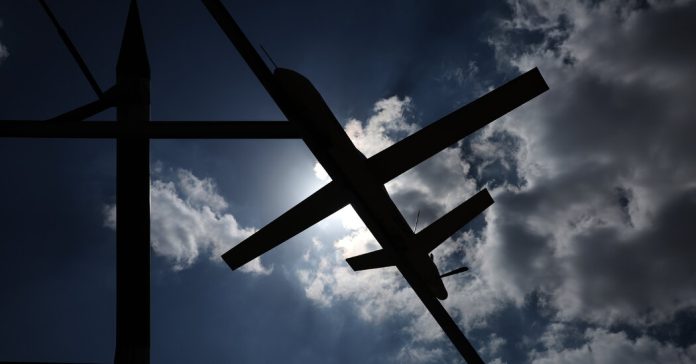
Houthi drones powered by traditional methods like gas-burning engines or lithium batteries can fly about 750 miles. But hydrogen fuel cells would enable them to fly three times that distance and make it far more difficult for acoustic and infrared sensors to detect them.

Conflict Armament Research detailed its findings in a report released on Thursday. The group examined shipping documents showing that the fuel cell components were made by companies in China that advertise their use for drones, and compressed hydrogen tanks mislabeled as oxygen cylinders.

It is not yet possible to know if the items came directly from China, Mr. Khan said. But a new source for weapons components could give the Houthis a strategic boost.

Houthi weapons shipments intercepted at sea have typically been made in, or sent from, Iran, Mr. Khan said. “If the Houthis acquired these items on their own, the cargo we saw would suggest a new supply chain from commercial markets that increases their self-sufficiency, instead of just relying on their backers in the region,” he added.

The boat that Mr. Khan inspected was intercepted at sea in August by Yemen’s National Resistance Forces, which is aligned with the country’s internationally recognized government. The items found aboard included guided artillery rockets, small engines manufactured in Europe that can power cruise missiles, radars and ship-tracking devices, as well as hundreds of commercial drones in addition to the hydrogen fuel cell parts.

Hydrogen-based electrical power with fuel cells is decades old, and was used by NASA during the Apollo missions. Its use to power military drones emerged in the late 2000s during the U.S. wars in Iraq and Afghanistan.

In the years since, hydrogen power became more common for military drones. Its ability to extend their range made it attractive for commercial uses, like inspecting pipelines, power lines and offshore wind farms, according to Andy Kelly of Intelligent Energy, a British company that makes hydrogen fuel cells used in drones that several U.S. companies now sell to the Defense Department.

“The longer they can stay in the air, the more data they can collect,” Mr. Kelly said. “They are key for long-range reconnaissance.”

The hydrogen systems can store three times more energy than lithium batteries of an equal weight, he said, allowing the drone operator to carry more weight over a longer distance.

Fuel cells also produce few vibrations to jostle surveillance cameras and other sensors on a surveillance drone, Mr. Kelly said, adding that they can be reused many more times than the rechargeable batteries commonly used to propel drones.

Conflict Armament Research declined to name the Chinese companies that made the components recovered near Yemen, a policy that ensures its researchers can work privately with firms to determine how their products ended up in the hands of various entities.
Putin aide rejects Trump’s Ukraine ceasefire plan : NPR

0

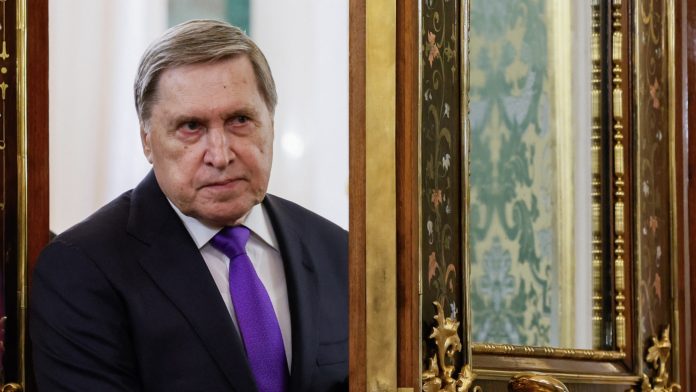
Kremlin aide Yuri Ushakov attends a meeting of the presidents of Russia and Belarus at the Kremlin in Moscow on Thursday.

Maxim Shemetov/AFP via Getty Images


hide caption

toggle caption

Maxim Shemetov/AFP via Getty Images

As U.S. special envoy Steve Witkoff enters talks with Russian officials in Moscow on a Trump administration proposal Ukraine has already accepted for a 30-day ceasefire, President Vladimir Putin’s foreign policy adviser, Yuri Ushakov, rejected the idea.

Speaking on Russian state television, Ushakov dismissed a 30-day ceasefire as a mere “breather” for Ukrainian troops, emphasizing Moscow’s preference for substantive peace talks.

Ushakov reiterated Russia’s demands: Ukraine must recognize Russia’s annexation of Crimea and four southeastern regions, withdraw troops from lands claimed by Russia and pledge never to join NATO. He said he “hopes [the United States] knows our position and wants to believe that they will take it into account as we work together going forward.”

Moscow also seeks limits on Ukraine’s military, protections for Russian speakers and elections to replace Ukrainian President Volodymyr Zelenskyy.

Meanwhile, Russian forces have reclaimed most of the territory lost in last summer’s Ukrainian offensive in Russia’s Kursk region.

The U.S. restored military aid to Ukraine after ceasefire talks Tuesday in Saudi Arabia. Trump, pushing for a ceasefire, warned Russia of financial consequences if Putin resists.

Syrians Want to Go Home, but Many No Longer Have One to Return To

0

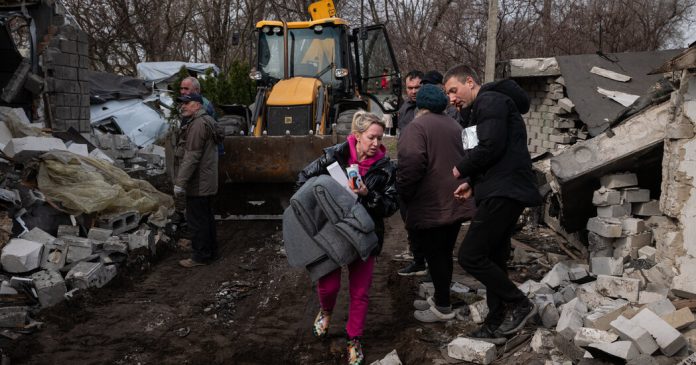
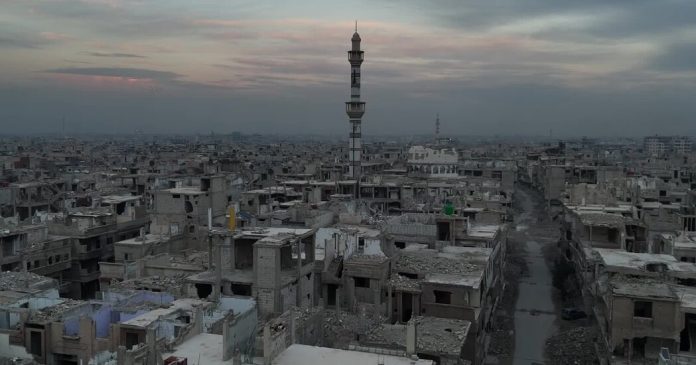
Lubna Labaad walked among a flattened wasteland that was once her neighbors’ homes.

The only building left standing was a mosque, a years-old message scrawled on its outer wall from when rebels surrendered control of the area to the Syrian regime during the country’s brutal civil war: “Forgive us, oh martyrs.”

Now, many former residents of the Qaboun neighborhood in the capital, Damascus — like Ms. Labaad, her husband, Da’aas, and their 8-year-old son — are trying to come back. After the 13-year war ended suddenly with the ouster of President Bashar al-Assad in December, the frozen front lines dividing the country melted away overnight.

“We were waiting for that very moment to return,” said Ms. Labaad, 26.

Their home is still standing but was stripped of pipes, sinks and even electrical outlets by a soldier who neighbors said had squatted there for years with his family. Still, the Labaads are luckier than many others who have returned to find nothing but rubble.

Syria’s conflict forced more than 13 million people to flee, in what the United Nations called one of the largest displacement crises in the world. More than six million Syrians left the country and some seven million have been displaced inside Syria, including Ms. Labaad and her family.

In an interview in January, Syria’s interim president, Ahmed Al-Shara, said he was confident that within two years millions of Syrians would come back from abroad. But the war went on for so long that people had established new lives away from their hometowns.

It is not clear exactly how many people have returned so far. Many have come back to see what happened with homes and hometowns, but the decision to return permanently is not an easy one, especially if there is nothing to come back to. Many others have opted to stay put for the time being, including in camps in Turkey and Jordan that have yet to empty out, as they watch what happens in Syria.

An estimated 328,000 homes in Syria have either been destroyed or severely damaged, according to a 2022 U.N. report, and between 600,000 and one million homes are either moderately or lightly damaged. The analysis was done before a devastating earthquake hit parts of northwestern Syria in 2023 that caused the collapse of still more buildings and damage to others.

The government’s housing ministry did not respond to questions about whether or how it planned to help in the country’s reconstruction. The government is grappling with a host of challenges after Mr. al-Assad’s downfall, from a security vacuum to an economy in chaos to Israel’s incursion into parts of southern Syria.

And recent unrest that has left hundreds dead in the country’s coastal region — many of them civilians killed by forces aligned with the government, according to a war monitor — is raising the specter of spiraling sectarian violence.

Even for those who have returned home, the joy has been dulled by the damage already done. People are having to search to find their long tucked-away house keys “and are coming back and not finding their homes,” said Mr. Labaad, 33.

The day after Mr. al-Assad was ousted in early December, the Labaads wasted no time catching a ride with friends from Idlib, in Syria’s northwest, back to the neighborhood they had fled in 2017. But more than three months later they are still not settled.

On a recent day, Mr. Labaad installed a lock on the front door of the family’s home, which for weeks had been secured with a long metal wire through the keyhole. The soldier who had been living in their apartment stripped everything from the third-floor apartment except for sparkly blue lettering on the wall, reading “Ahmad.” The Labaads think it may be the name of the soldier’s son.

“If we had money we could fix it right away,” Ms. Labaad said. “But we don’t.”

Mr. Labaad used to work day jobs when they lived in Idlib. Back in their hometown, he has started working in security with the new government. But he and his fellow security officers have not received salaries yet.

On a nearby street, Khulood al-Sagheer, 50, had come back with her daughter and granddaughter to see the state of their house. They found only one wall left standing.

“I will put up a tent and sleep here,” Ms. al-Sagheer said, vowing to rebuild. “The important thing is that I return to my home.”

Others have also chosen to live in their homes, no matter how damaged. For months, Samir Jaloot, 54, has been sleeping on a thin mattress and two blankets in the corner of the only intact room of what was his late brother’s apartment in the Yarmouk Camp neighborhood of Damascus. Next to his makeshift bed sits a small wood stove and gas kettle.

The window is still broken, but he has repaired two gaping holes in the wall, most likely caused by tank shells, he said. The walls are pockmarked with bullet holes. He has slowly been making repairs, clearing out the rubble and debris and trying to erect new walls so that his wife and five children can join him.

The partially destroyed apartment sits on the second floor of his family’s four-story building in Yarmouk Camp, named because it began as a camp for Palestinian refugees who fled their homes during the 1948 war surrounding Israel’s establishment. The Syrian war reduced the building to just a floor and a half.

Around the neighborhood is a sea of gray buildings with missing floors, roofs and walls. Most homes were looted long ago, and the only thing seemingly left in every exposed room is more gray rubble.

“This is the house I got married in; my kids were born here,” Mr. Jaloot said of the building, his clothing covered in dust and splotches of cement. “I have good memories here. My dad lived with me; my mother lived with me.”

Standing nearby was his cousin, Aghyad Jaloot, 41, an aeronautical engineer with a trim salt and pepper beard who had just days earlier come to visit from Sweden, where he and his family had resettled. He craned his neck toward the sky. “This sun is worth all of Europe,” he said.

His former neighbor now living in Canada called him recently and told him he planned to return. So did two other neighbors, one who fled to Lebanon and another within Syria.

Now, Mr. Jaloot wants to come back, too.

“If I don’t return and others don’t return, who’s going to rebuild this country?” he asked.

Russia-Ukraine War Live Updates: U.S. Negotiators Head to Moscow

0

As recently as January, President Vladimir V. Putin of Russia emphatically rejected the idea of a temporary cease-fire in Ukraine.

But after a month in which President Trump turned American foreign policy on its head and Russian forces made progress in a key battle, the Kremlin now appears keen at least to entertain the 30-day cease-fire proposal made by Ukraine and the United States on Tuesday.

Dmitri S. Peskov, Mr. Putin’s spokesman, told reporters on Wednesday that the Kremlin was “carefully studying” the outcome of Tuesday’s talks between the United States and Ukraine, and their call for a monthlong cease-fire.

He said he expected the United States to inform Russia in the coming days of “the details of the negotiations that took place and the understandings that were reached.” He raised the possibility of another phone call between Mr. Putin and Mr. Trump, signaling that the Kremlin saw the cease-fire proposal as just a part of a broader flurry of diplomacy.

Late Wednesday, Mr. Putin sought to show he was in control of events by donning military fatigues and holding a televised meeting with his top military officials charged with pushing Ukraine out of Russia’s Kursk region, where Russia has made progress in recent weeks. He directed his troops to defeat Ukraine in the region “in the shortest possible time,” a move that, if successful, would deny Ukraine a key point of leverage in any negotiations with Russia.

Mr. Putin has seen a dizzying reversal in his geopolitical fortunes over the last month as Mr. Trump realigned American foreign policy in Russia’s favor, antagonized U.S. allies and excoriated President Volodymyr Zelensky of Ukraine at the White House.

But the emergence of a joint cease-fire proposal from the United States and Ukraine complicates things for Mr. Putin. It deepens the tension between his desires for a far-reaching victory in Ukraine and for close ties with Mr. Trump.

While Mr. Trump says he wants to end the war as soon as possible, Mr. Putin has signaled he will not stop fighting until he extracts major concessions from the West and from Kyiv, including a pledge that Ukraine will not join NATO and that the alliance will reduce its presence in Central and Eastern Europe.

A picture made available by the Ukrainian presidential office of Tuesday’s meeting between Ukrainian and American officials in Jeddah, Saudi Arabia. Credit…Ukrainian Presidential Press Service, via Agence France-Presse — Getty Images

On Jan. 20, when he congratulated Mr. Trump on his inauguration, Mr. Putin made clear that the goal of any Ukraine talks must “not be a short cease-fire, not some kind of respite.” Russia, he said, sought “a long-term peace based on respect for the legitimate interests of all people, all nations who live in this region.”

Analysts say Mr. Putin’s opposition to a temporary cease-fire stemmed from the simple calculation that with Russian forces gaining on the battlefield, Moscow would only give up its leverage by stopping the fighting without winning concessions.

But a Feb. 12 phone call between Mr. Putin and Mr. Trump, and the White House’s subsequent alignment with Russia at the United Nations and elsewhere, may have affected Mr. Putin’s calculus by making him more eager to stay on Mr. Trump’s good side, analysts say.

That sets up a delicate balancing act for the Kremlin.

Ilya Grashchenkov, a political analyst in Moscow, said the Kremlin could be tempted to accept a truce that would be “tactically unfavorable but strategically favorable” in order to “show that it’s a peacemaker.”

While Russians were not present at Tuesday’s talks in Jeddah, Saudi Arabia, the Trump administration has kept up its engagement with the Kremlin. John Ratcliffe, the C.I.A. director, spoke to his Russian counterpart, Sergei Naryshkin, on Tuesday, Russia’s foreign intelligence agency said on Wednesday.

Steve Witkoff, the envoy for Mr. Trump who met with Mr. Putin for several hours last month, plans to return to Russia in the coming days, according to two people familiar with the matter, who requested anonymity to discuss internal plans. Mr. Trump on Tuesday said that he thought he would speak with Mr. Putin this week, and he told reporters at the White House on Wednesday that his negotiators were en route.

“People are going to Russia right now as we speak,” Mr. Trump said during a meeting with Ireland’s prime minister. “And hopefully we can get a cease-fire from Russia.”

In a sign of Moscow’s continuing charm offensive directed at the Trump camp, Russia’s foreign ministry released a 90-minute interview on Wednesday that the foreign minister, Sergey V. Lavrov, gave to three American video bloggers, including the former Fox News personality Andrew Napolitano.

Mr. Lavrov, speaking English, praised the Trump administration for reversing the Democrats’ “departure from Christian values” and said Russia was ready for the “normal relations” that the United States was offering.

“It certainly is not impossible that the Russians would accept this,” Samuel Charap, a Russia analyst at the RAND Corporation, said of the 30-day offer. “Not because they want an unconditional, temporary cease-fire, but because they now have a stake in relations with Washington.”

Mr. Putin’s calculus could also be affected by Russia’s progress in recent days in pushing Ukrainian troops out of Kursk, the Russian border region where Ukraine occupied several hundred square miles of territory in a surprise incursion last August.

Mr. Zelensky had said he planned to use that land as a bargaining chip in future talks, but the Kremlin signaled that it would refuse to negotiate so long as Ukraine held the territory.

With the Kursk region mostly back in Russian hands, Mr. Putin no longer risks losing face by agreeing to a cease-fire that would leave Ukraine in control of an area of Russian territory, said Sergei Markov, a pro-Kremlin political analyst in Moscow.

A further incentive to agree, Mr. Markov said, was to make sure that Russia “doesn’t look like a war maniac” in the eyes of non-Western countries that have avoided imposing sanctions on Moscow. But, he said, he expected Mr. Putin to insist on preconditions, such as a halt on weapons supplies to Ukraine for the duration of the cease-fire.

“Russia will very likely say, ‘Yes, but —,’” Mr. Markov said in a phone interview.

Russia’s popular pro-war bloggers on Wednesday did not display much enthusiasm for a cease-fire. Some of them expressed concern that a truce could eventually lead to a broader deal with the United States that, in their view, would betray the original goals of the war and eventually lead to a Russian withdrawal from Ukraine.

One blogger, who goes by the name Alex Parker Returns, argued in a post on Wednesday that a peace deal would allow Ukraine “to get off easily and get ready for the next round.”

Ivan Nechepurenko contributed reporting.

U.S. Negotiators Are En Route to Moscow, Kremlin Says

0

American and Russian officials are expected to meet in Moscow on Thursday as President Vladimir V. Putin weighs a 30-day cease-fire proposal from the United States and Ukraine.

Dmitri S. Peskov, the Kremlin’s spokesman, told reporters at about midday Moscow time on Thursday that American officials were en route.

“Negotiators are indeed flying in, and contacts are indeed planned,” Mr. Peskov said. “We won’t get ahead of ourselves — we’ll talk about it afterward.”

Shortly after Mr. Peskov’s remarks, Russian news agencies reported that a plane frequently used by Steve Witkoff, President Trump’s Middle East envoy, had landed in Moscow from Qatar. This would be Mr. Witkoff’s second visit to Russia in weeks. Last month, he met with Mr. Putin for several hours when he came to Moscow to finalize the prisoner exchange that freed Marc Fogel, an American schoolteacher jailed in Russia.

Ukraine has said it would back a temporary cease-fire if Russia did the same.

Mr. Peskov said Thursday that Russia would only offer its response to the cease-fire proposal after talks with the United States in which American officials would lay out that plan in more detail. Mr. Trump has said that he planned to speak to Mr. Putin directly this week.

“After we receive this information — not through the press but through bilateral dialogue — then the time will come for thinking it over and formulating a position,” Mr. Peskov said.

Also on Thursday, Mr. Putin is expected to meet the authoritarian president of neighboring Belarus, Aleksandr G. Lukashenko. The two close allies will hold a news conference in which Mr. Putin could make his first public remarks about the 30-day cease-fire offer, Tass, Russia’s state news agency, reported.

The flurry of diplomacy came as Moscow’s forces intensified a campaign to push Ukrainian forces out of the Kursk region of Russia, the border area where Kyiv’s troops occupied several hundred square miles of territory in a surprise incursion last August.

Japan’s Rice Shortage Sets Off Auction of Emergency Stockpile

0

The results of a rare, closely watched auction in Japan that ended this week are about to be released. But there were no paintings or antique cars on the auction block.

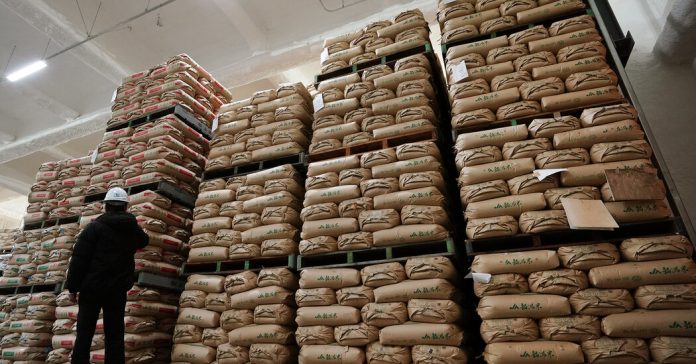
The government is selling 165,000 tons of rice — equivalent to roughly two billion bowls — from its emergency stockpile to make up for over 200,000 tons that some Japanese news media say have “disappeared.”

But there’s more to the story.

Japan doesn’t have enough rice, a pillar of its diet. A shortage forced supermarkets to implement buying limits, and soaring prices have driven restaurants to hike prices of everyday food. Things have gotten so dire that, for the first time, the government is tapping its emergency stockpile in an effort to drive down prices.

“Something truly unthinkable is happening, so we must return the current abnormal situation to normal,” Taku Eto, the agriculture minister, told reporters last month, referring to the crisis and the three-day auction that ended on Wednesday.

Rice started to become scarce in Japan last summer. Experts have attributed that to a confluence of factors, including record summer heat in 2023 that hurt the harvest and natural disaster warnings last August that sparked panic buying.

Japan also strictly limits rice production in order to keep prices high and support domestic rice growers, meaning minor disruptions to the supply chain can have disproportionately large impacts.

An 11-pound bag of rice now costs nearly 4,000 yen ($27), double the price a year earlier. As prices began to rise last year, the authorities warned against panic buying, saying that Japan’s fall harvest would replenish stocks and reduce prices.

Only one of those two predictions came true. Even though the harvest brought in more rice than the previous year’s crop, Japan’s distributors had less to sell in 2024.

“Nobody knows,” said Shuji Hisano, a professor at Kyoto University’s graduate school of economics.

But experts inside and outside the government think they have a pretty good idea.

It has become harder to track rice distribution in Japan because policy changes have given growers more ways to sell rice without going through the traditional major distributors, Professor Hisano said. That trend, plus strict limits on rice production, means that even slight fluctuations in supply and demand can trigger speculative buying and stockpiling.

Speculators are likely now hoarding rice because they think prices will keep rising, said Masayuki Ogawa, an assistant professor of agricultural economics at Utsunomiya University.

“Some businesses and individuals have started to deal in rice as a money game,” he said.

We’ll find out in the coming weeks and months.

The government’s decision to sell a portion of its strategic rice reserves at auction was historic. In the past, the stockpile has been reserved for shoring up supplies in the case of natural disasters or crop failures. This is the first time it’s been used to address distribution issues.

The government set aside 231,000 tons to be released, to match the national shortfall. That figure represents more than a fifth of Japan’s total emergency stockpile, which isstored in over 300 locations.

Distributors bid on the first 165,000 tons in the auction, and the results — to be announced on Friday — will show how many tons of it have been sold. The government has said it hopes the rice will start flowing to wholesalers and supermarkets, and that the remaining 66,000 tons will be auctioned off later if needed.

For a nation that runs on rice — the average Japanese person consumed about 110 pounds of rice per year as of 2022, compared with 27 pounds per year for the average American — the uncertainty over rice supplies is disquieting.

“Rice is an integral part of Japanese people’s lives,” Takao Iizuka, 62, said from his store in Tokyo. “I think because there are concerns over whether or not rice is available, Japanese people are worried right now.”

Mr. Iizuka sells rice raw by the bag, and cooked in the form of rice balls with pickled plums, salmon and other fillings. Last month, he was forced to raise the price of his $1 rice balls by about 20 percent to keep up with the soaring prices of their main ingredient.

Now he worries, for the first time in the three decades he has worked at the store, about whether he will be able to source enough rice to last through the next harvest. One of his suppliers told him in January that they had already run out of rice for the year.

“This is the first time I’ve felt this sense of anxiety,” he said.

Pokémon Go Maker Niantic Sells Unit to Saudi Fund for $3.5 Billion

0

Niantic, the company behind the runaway hit Pokémon Go, said Wednesday that it has agreed to sell its video game business for $3.5 billion to Scopely, a company owned by the Saudi sovereign wealth fund.

Pokémon Go, an augmented reality mobile game, became a cultural sensation when it was released in 2016. Tens of millions of people around the world headed to streets, parks, beaches and even to the middle of the ocean to capture monsters from the Japanese cartoon franchise.

The deal is the latest acquisition by Saudi Arabia’s Public Investment Fund in a multibillion-dollar push into the video game industry. Pokémon Go still rakes in millions of dollars and has legions of devoted fans.

Scopely, which is based in Culver City, Calif. and which owns games including the popular Monopoly Go, said Wednesday in a separate statement that it will absorb all the staff of Niantic’s gaming teams. Pokémon Go has more than 20 million active weekly players, Scopely said.

Scopely was acquired for $4.9 billion in 2023 by the Savvy Games Group, which was launched a year earlier by the Saudi sovereign wealth fund to lead its push into video games, including e-sports. The Saudi government has said it will invest $38 billion in video games by 2030 through the Public Investment Fund.

The fund manages almost a trillion dollars in assets, and invests in a wide range of industries, from real estate and artificial intelligence to sports and entertainment, with a declared mission to diversify Saudi Arabia’s economy beyond fossil fuels.

Some critics have described Saudi Arabia’s investments in sports and video games as an attempt to polish the country’s reputation, especially on human rights.

‘Let’s Not Talk About It’: 5 Years Later, China’s Covid Shadow Lingers

0

Bit by bit, the traces of Shanghai’s coronavirus lockdown in 2022 have disappeared from around Fu Aiying’s stir-fry restaurant. The smell of rotten eggs, from when officials carted her off to quarantine without letting her refrigerate her groceries, is long gone. The testing booths manned by workers in hazmat suits have been dismantled.

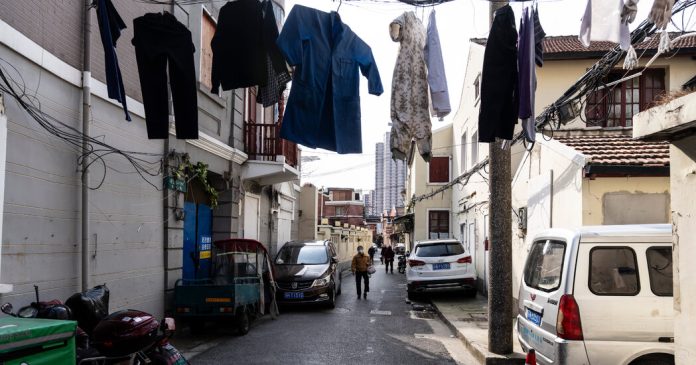
Even her neighbors have moved away, from the century-old neighborhood that had one of the city’s highest infection rates. Soon, the neighborhood itself will vanish: Officials have slated it for demolition, saying that its cramped houses had helped the virus spread. Ms. Fu’s restaurant is one of the few businesses still open, in a row of darkened storefronts and caution signs taped to doorways.

But the boarded-up windows have done little to contain the emotional legacy of that time, a grueling, monthslong lockdown of 26 million people. Some residents, who had prided themselves on living in China’s wealthiest city, found themselves unable to buy food or medicine. They wondered when they might be dragged off to quarantine, forcibly separated from their children.

Ms. Fu spent 39 days in a mass quarantine center, with no idea of when she’d be allowed out. After she was finally released into the still-locked-down city, she had to sneak into her restaurant for rice and oil, because she didn’t have enough food at home.

She felt like a part of her had been permanently dulled. “Since my time in quarantine, I don’t have a temper anymore. I don’t have a personality anymore,” said Ms. Fu, 58, tearing up.

Perhaps no country was as deeply reshaped by the pandemic as China, where the outbreak began in the central city of Wuhan five years ago. For three years afterward, longer than anywhere else, the Chinese government sealed the country’s borders. In the final year, 2022, it declared an especially harsh “zero-tolerance” policy for infections, imposing lockdowns like the one in Shanghai, nationwide. Officials insisted on the restrictions even as the rest of the world decided to reopen and live with the virus.

Years later, the shadow of that experience still lingers. In another Shanghai neighborhood, which held the dubious distinction of being locked down the longest — 91 days — one woman said shortages during that time had once forced her to pay $11 for a head of cabbage. She now stockpiles at least a week’s worth of groceries.

Another woman, Yan Beibei, a college counselor in her 30s, once planned to buy a house in Shanghai’s more affordable outskirts. But during the lockdown, her neighbors helped ensure that she had food. Now, she wants to stay near people she trusts, even if that means delaying homeownership.

“You have to figure out which places feel safer,” she said.

Before the pandemic, the ruling Communist Party’s controls could feel distant to many Chinese, or a worthwhile trade-off for the country’s huge economic gains. But the lockdowns made clear that the party was willing to sacrifice those gains, and people’s safety more broadly, at the whims of one man, Xi Jinping.

Local governments spent tens of billions of dollars on testing, vaccination, payments to health care workers and other related costs in 2022 alone, according to incomplete budget reports. Still struggling to recover financially, some localities have delayed payments to civil servants or cut benefits to retirees. Hospitals have gone bankrupt.

Ordinary people are hesitant to spend money, too. Many saw their savings dwindle as the lockdowns forced companies and factories to shut down. Empty storefronts are a common sight even in major city centers. Ms. Fu, the restaurant owner, said business was half what it had been before the pandemic.

Still, Ms. Fu did not want to dwell on her memories. “Even thinking about it is painful,” she said. “Let’s not talk about it.”

The silence may be a coping mechanism for some residents. But it is also carefully enforced by the Chinese government. The restrictions at times set off intense public anger, including the biggest protests in decades.

The government has worked to squelch any discussion about its response to the pandemic, let alone attempts to reckon with it. Art exhibits about the lockdowns have been shut down. Even today, many social media users use code words like “face mask era” to avoid censorship.

The government has also not pulled back much of the expanded surveillance it introduced then. It has urged cities to hire more neighborhood workers who were in charge of tracking residents’ movements during the pandemic, to strengthen monitoring of public sentiment.

On Shanghai’s Urumqi Road, where some of the biggest protests occurred, in 2022, a police truck is still parked at a busy intersection of hip boutiques and restaurants. Some workers at businesses there declined to discuss the pandemic, citing the political sensitivity.

But silence is not the same thing as forgetting. Many Chinese were shaken by the seeming arbitrariness of the restrictions, as well as the abruptness of the government’s decision, in December 2022, to end them. The government had not stockpiled medicine or warned medical professionals before doing so, and hospitals were overwhelmed as infections skyrocketed.

The mother of Carol Ding, a 57-year-old accountant, fell sick in that wave. Ms. Ding managed to secure her mother a much-sought-after hospital bed — other patients slept in the hallways or were turned away, Ms. Ding recalled — but the hospital didn’t have enough medicine. Her mother died.

“If you had so much power to lock people down, you should have the power to prepare medicine,” Ms. Ding said.

She added that time had done little to ease her emotional pain. “I think it’ll take at least 10 years for all this to go away or be diluted,” she said.

To the casual observer, these pandemic aftershocks may not be immediately evident. Tourists once again stroll Shanghai’s glittering Bund waterfront. Hipster coffee shops and soup dumpling joints are again drawing long lines of customers.

The apparent bustle, though, masks a struggling economy. With well-paying jobs hard to find, more and more people have turned to gig work. But their earnings have fallen as their ranks have grown. And they’re scrambling for fewer and fewer dollars, as people cut down on spending.

Lu Yongjie, who runs a parcel delivery station in a working-class neighborhood of Shanghai, said shipping companies once paid him 20 cents per package. That has now fallen to about 14 cents, he said.

Still, he had to accept the lower prices: “If you don’t do it, someone else will.”

If there is a cure for China’s post-Covid hangover, it may lie with what propelled the country’s prepandemic rise: the doggedness and ambition of ordinary people, like Marco Ma, a 40-year-old restaurant owner.

Since the pandemic, Mr. Ma had shut down four of the six locations of his Korean street food restaurant. His fourth-grade son, once a star pupil, now struggled with paying attention, which Mr. Ma attributed to extended online schooling. He kept expecting the next year to be better, but, in reality, business only got worse.

Still, “I think 2025 will be a turning point,” he said. “You grab onto whatever pieces of news, or whatever to cheer yourself up. What can you do? You have to keep living.”

Siyi Zhao contributed research.

Plans for a Chinese Port in the Black Sea Roil Georgia Politics

0

For more than a year, pro-Western marchers in Georgia, a former Soviet republic that borders Russia, have been accusing their government of allowing Moscow to increasingly reassert its sway over their country.

But driving around this nation of 3.6 million people in the heart of the mountainous Caucasus region, the influence of another ambitious power becomes apparent. China has been stepping up its activities in the region in recent years, building infrastructure and expanding trade routes that it hopes will boost its economy.

In central Georgia, workers from China are erecting soaring viaducts and cutting dozens of tunnels through hard rock to build the first modern highway to link the east and west of the country. In the north, a 5.5-mile tunnel is being bored through the mountains by China Railway Tunnel Group to expand an existing highway to Russia.

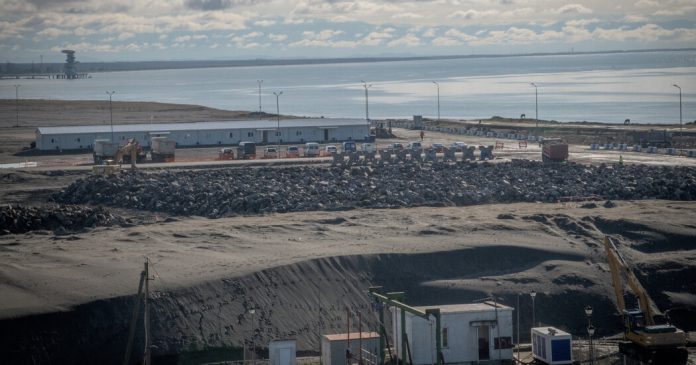
To the west, preparations are underway for another Chinese company, China Communications Construction Company, to develop Georgia’s first deep-sea port on the Black Sea as part of Beijing’s Belt and Road infrastructure and trade initiative.

The port, as yet unnamed, is now at the center of a debate in Georgia and abroad about China’s growing influence in the region and the Caucasus nation’s pivot away from the West. Inflaming the situation is the fact that the project was stripped from a group of Georgian, European, and U.S. companies — the Anaklia Development Consortium — before eventually being promised to the Chinese company last May.

Salome Zourabichvili, the former Georgian president who emerged last year as a leading voice for the pro-Western opposition, said the move was like “stabbing our relations with our American and European partners.”

In July, a State Department official said that awarding the port project to the Chinese company was “incompatible” with wanting to join “U.S. and E.U.-based international organizations.” In 2019, the United States had billed the port as something that could “prevent Georgia from falling prey to Russian or Chinese economic influence.”Last week, Representative Joe Wilson, Republican of South Carolina, criticized the decision, saying it benefited China at the expense of American companies.

The Georgian government has said that the decision to hand the port to the Chinese company would ensure it was implemented “at the highest level.”

“Chinese cargoes are of particular importance for the most effective operation of this port,” Irakli Kobakhidze, Georgia’s prime minister, said shortly after the announcement.

And some analysts see the country’s pivot away from the West as a rational choice given the geopolitics of the region.

“Georgia is trying to get more from China, the actor that is getting stronger in the region,” said Dimitri Moniava, head of the Center for Strategic Communications, a research group in Tbilisi, the Georgian capital.

Situated in the dilapidated former resort town of Anaklia, where packs of stray dogs now patrol the swampy grounds of abandoned hotels, the port is likely to transform international trade in the Caucasus and the broader region. For Georgia, the port would help develop the country as a regional transport hub.

For China, the port would become a gateway to the Caucasus, linking Asia with Europe across what it calls the “middle corridor.” It would allow Chinese companies to ship their goods from China via railways in Central Asia and across the Caspian to Europe, skirting Russia, which has been the target of Western sanctions because of the war in Ukraine.

“Georgia is a key link for the middle corridor and Anaklia port could be the pivotal last nail,” Zhou Qian, China’s ambassador to Georgia, said in an interview. “Georgia’s location is very, very important” for providing “connectivity between Europe and Asia,” he said.

The Georgian government has said that the details of the deal are still being figured out, but that the Chinese company will own 49 percent of the port, with Georgia holding the rest as a majority stake. The Georgian government says it expects the Chinese construction company to invest $600 million in the first phase.

China Communications Construction Company did not respond to requests for comment.

Russia, which is still considered to be Georgia’s main trading partner, could also be a major beneficiary of the project. Novorossiysk, the main Russian port on the Black Sea, has been hobbled by Western sanctions, and with the new Chinese-built routes, goods could flow into and out of Russia unimpeded across the Caucasus.

The port situation highlights how the rivalry between China and the United States is growing in the region, pulling in smaller countries like Georgia.

“On the one hand, you’ll have China, which will be aligned with Russia, on the other you will have the West,” said Ram Ben Tzion, the chief executive of Publican, which analyzes the evasion of trade restrictions. “This port is exactly at the crossroads of these two worlds.”

Projects like the Anaklia port have also become increasingly important for Chinese companies as economic growth slows in China, said Brad Parks, who studies Chinese lending and trade practices at the Center for Global Development, a think tank in Washington.

“It is really mostly about China dealing with its own economic weaknesses at home,” Mr. Parks said.

Anaklia Development Consortium had been doing dredging and other work as part of the port project when its contract was canceled in 2020.

Mamuka Khazaradze, the former head of the consortium, said he believed geopolitics was behind the decision by the governing Georgia Dream party to drop his company’s contract. The party is run behind the scenes by Bidzina Ivanishvili, a reclusive oligarch with long ties to Russia. Mr. Khazaradze was elected as an opposition member of Parliament in October but, like other members of the opposition, has been boycotting the legislature.

Mr. Khazaradze said he had seen a hint of the shift over the port in 2017, when Mr. Ivanishvili summoned him for a meeting. “He asked: ‘What are Americans doing in the Black Sea?’” he said. “He asked me to stop the project,” he said. “It was the first sign that these guys were changing the direction of the country.”

Mr. Khazaradze said he had invested more than $40 million into the project and refused to pull out. The government then opened a criminal case into money laundering against him and his partner, and then canceled the port contract.

Anaklia Development Consortium fought back in a European arbitration court but last year lost the case, with the court saying the group had “assumed the risk that the government would undermine the project.” Another case in the Netherlands is pending.

Representatives of the Georgian government did not respond to requests for comment. In the past the government said the Anaklia Development Consortium was dropped because it had insufficient funds to complete the project. (Mr. Khazaradze has denied that.)

Mr. Khazaradze then founded a political party called Lelo that has been organizing protests against the government, which won an election in October that has been contested by the country’s highly fractured opposition.

Giorgi Gakharia, who was prime minister when the Anaklia Development Consortium contract was canceled, also said Mr. Khazaradze and his partners did not have enough money to complete the project.

“They simply couldn’t fulfill their obligations,” said Mr. Gakharia, who has since parted ways with Mr. Ivanishvili and is now siding with the opposition. In an interview, he said there had been no pressure from Mr. Ivanishvili to cancel the project.

For now, Anaklia remains derelict. A rusty yacht floats in the town’s swampy marina, flanked by the rusty skeleton of what was going to be a Chinese-themed restaurant before it was abandoned a decade ago.

But trucks nearby are now hauling giant stones from across Georgia to use in the construction of a breakwater for the port. If all goes to plan, the site will be transformed in about six years into a bustling hub for up to 600,000 containers.

Jemal Kvartskhava, who oversees a few dozen men bringing stones to the site and building accommodation for an expected surge of workers, said he didn’t really care who built the port as long as it becomes operational.

“This project is good,” said Mr. Kvartskhava, 28. “It will bring new energy to the country.”

Europe Expected a Transactional Trump. It Got Something Else.

0

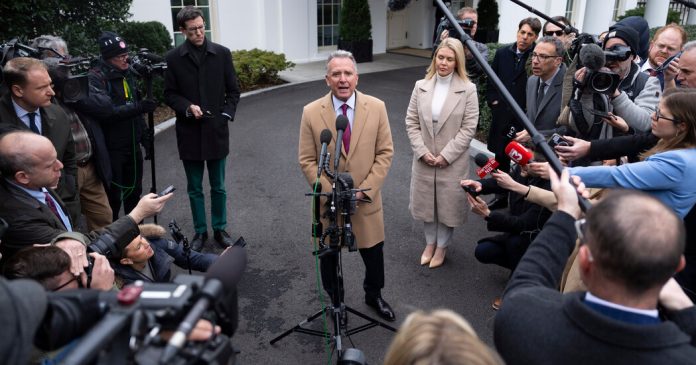
President Trump is no fan of the European Union. He has repeatedly claimed that the bloc was created to “screw” America, has pledged to slap big tariffs on its cars, and this week enacted global steel and aluminum levies that are expected to hit some $28 billion in exports from the bloc.

But for months, E.U. officials hoped that they could bring the American president around, avoiding a painful trade war. They tried placating the administration with easy wins — like ramped-up European purchasing of U.S. natural gas — while pushing to make a deal.

It is now becoming clear that things won’t be that simple.

When American tariffs on steel, aluminum, and products that use those metals kicked in on Wednesday, Europe reacted by announcing a sweeping package of retaliatory tariffs of its own. The first wave will take effect on April 1, imposing tariffs as high as 50 percent on products including Harley Davidson motorcycles and Kentucky bourbon. A second wave will come in mid-April, targeting farm products and industrial goods that are important to Republican districts.

European officials have been clear that they were not eager to take that aggressive step: They wanted to negotiate, and they still do.

“But you need both hands to clap,” Maros Sefcovic, the European Commission’s trade minister, said on Wednesday. “The disruption caused by tariffs is avoidable if the U.S. administration accepts our extended hand and works with us to strike a deal.”

Europe is facing a difficult reality. It is not clear to many European officials what exactly Mr. Trump wants. Tariffs are sometimes explained by administration officials as an effort to level the playing field, but they are also cited as a tool for raising money for U. S. coffers to pay for tax cuts, or floated as a way to punish the E.U. for its regulation of technology companies.

Mr. Trump has said that Europe has “not been fair” with its trading practices. On average, Europe’s tariffs are just slightly higher than U.S. tariffs — about 3.95 percent on average, compared to America’s 3.5 percent on European goods, based on an ING analysis. But it is the case that certain products face notably higher tariffs when shipped to Europe — cars, for instance, are tariffed at 10 percent.

Mr. Trump has also taken issue with the way Europe and other nations tax producers, and has suggested that future U.S. tariffs will also respond to those policies. In part because of that, some of the tariff rates he has floated — like 25 percent on cars — would be far above the ones he criticizes in Europe.

“We’re going to take back our wealth, and we’re going to take back a lot of the companies that left,” Mr. Trump said on Wednesday. U.S. tariffs would echo foreign approaches, he said, though there would be “some cases where they’re a little bit beyond reciprocal.”

Nor has the Trump administration appeared eager to wheel and deal. Mr. Sefcovic went to Washington in February, but he has acknowledged that he made little progress on that trip. President Trump has not spoken individually with Ursula von der Leyen, the European Commission president, since taking office.

Without a clear understanding of what is driving Mr. Trump, and without trusted intermediaries within the administration, it is hard to figure out how to strike a deal that will prevent pain for consumers and companies.

“It doesn’t feel very transactional, it feels almost imperial,” said Penny Naas, a trade expert at the German Marshall Fund. “It’s not a give and take — it’s a ‘you give.’”

That is why the E.U. is now underscoring that it can hit back if forced, and that there will be more to come if the Trump administration goes ahead with the additional tariffs that it has threatened. The bloc is aiming to keep its measures proportionate to what the U.S. is doing, in a bid to avoid escalating the conflict.

But it has also been preparing for months for the possibility of an all-out trade war, even if it hoped to avoid one.

“If they move ahead with those, we will respond swiftly and forcefully, as we have today,” Olof Gill, a European Commission spokesman, said during a news conference on Wednesday. “We have been preparing assiduously for all of these outcomes. We showed today that we can respond swiftly, firmly and proportionately.”

The question is what might come next.

Mr. Trump has promised additional tariffs on European goods, including so-called reciprocal tariffs that could come as soon as April 2. He’s also talked about significantly ramping up tariffs for specific products, like cars.

“It’ll be 25 percent, generally speaking, and that will be on cars and all other things,” Mr. Trump said in late-February comments in the Oval Office. “The European Union was formed in order to screw the United States. That’s the purpose of it, and they’ve done a good job of it, but now I’m president.”

European officials have been clear that if things get bad enough, they could use a new anti-coercion tool that would allow them to put tariffs or market limitations on service companies. That could mean technology firms, like Google.

While Europe sells the United States more physical goods than it buys from it, it runs a big deficit with the U.S. when it comes to technology and other services — in large part because Europeans are a big market for social media and other internet-based companies.

Mr. Sefcovic has listed the anti-coercion tool as a hypothetical option to “protect” the European market from external meddling, and other European leaders have been more vocal about the possibility of using it on the United States specifically.

But since Europe does not want to worsen the trade war, hitting American technology firms is seen as a tool for more extreme circumstances.

“It’s more the nuclear option,” said Carsten Brzeski, a global economist for ING Research.

For now, European officials are hoping that the threat of retaliatory tariffs will suffice to drag America toward the negotiating table. The measures are expected to hit products that are important in Republican strongholds: Bourbon from Kentucky, soybeans from Louisiana.

As workers and companies stare down bleak forecasts, the theory goes, they will call their political contacts and pressure them to negotiate.

The spirits industry — poised to be hit hard by 50 percent tariffs on whiskey — has already voiced alarm. The industry was seriously affected by an earlier and less extreme version of the retaliatory tariffs during Mr. Trump’s first administration.

“Reimposing these debilitating tariffs at a time when the spirits industry continues to face a slowdown” will “further curtail growth and negatively impact distillers and farmers in states across the country,” Chris Swonger, the chief executive of the Distilled Spirits Council, said in a statement on Wednesday.

Political turbulence is already causing pain for some American companies. Tesla’s sales in Germany plunged in February and have slumped across Europe, highlighting anger at Elon Musk, the company’s chief executive and a close ally of Mr. Trump.

But the administration has indicated a willingness to accept some economic pain in exchange for its long-term trade goals — which involve nothing short of rewriting the rules of global trade.

“There is a period of transition, because what we’re doing is very big,” Mr. Trump said in an interview on Fox News on Sunday.

To Europe, a world where Mr. Trump is bent on reorganizing the global order is a more treacherous one. The unfolding conflict risks permanently undermining its most important trading relationship, one that it has long viewed as mutually beneficial, while damaging its close alliance with the United States.

“There are no two economies in the world as integrated as the United States and Europe,” Ms. Naas said. “Decoupling is not really an option, at the moment, so now we’re going to be stuck in this tariff paradigm.”

Ana Swanson contributed reporting.