Thursday, November 12, 2026
Home Blog Page 131

Thursday Briefing – The New York Times

0

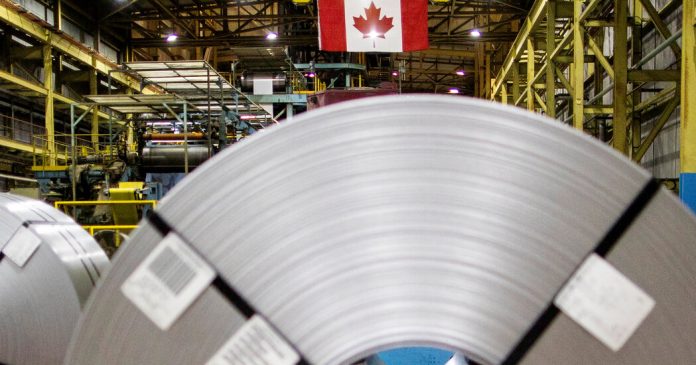
The trade fight widened yesterday as the E.U. and Canada announced billions of dollars in retaliatory tariffs on U.S. exports, hours after President Trump’s levies on steel and aluminum imports took effect.

Europe

The E.U. said that tariffs would take effect on April 1, a response to about $26 billion in tariffs applied by the U.S. But bloc officials emphasized that they were ready to strike a deal.

Their response will come in two parts. A tariff suspension implemented under President Joe Biden will be allowed to lapse, raising tariffs on billions of euros’ worth of products that include boats, bourbon and motorcycles. The second step will be to place tariffs on about 18 billion euros’ worth of additional products, a list of which has yet to be finalized.

Canada

The Canadian government said that it would impose new tariffs on $20 billion worth of U.S. imports. This round is centered on steel and aluminum but also applies to tools, computers, sporting goods and cast iron.

Here’s a breakdown of all the tariffs so far.

Other allies

Britain has chosen not to retaliate, as Prime Minister Keir Starmer looks to sign a long-term trade deal with the U.S. Prime Minister Anthony Albanese of Australia said his country would not impose reciprocal tariffs because they would hurt domestic consumers.


Lawyers for a pro-Palestinian activist and legal U.S. resident who was detained by federal immigration authorities last weekend have been unable to hold private conversations with him, a court hearing revealed yesterday. The Trump administration is trying to deport the activist, Mahmoud Khalil, who has not been charged with a crime.

Khalil, who is married to an American citizen, has been a leader of pro-Palestinian protests at Columbia University, from which he recently graduated. The Trump administration has justified his detention with a little-used statute that allows deportation proceedings against people whose presence is deemed “adversarial” to U.S. foreign policy. Trump said this week that Khalil’s case was the first of “many to come.”

Quote: “This is not about free speech,” Secretary of State Marco Rubio said. “This is about people that don’t have a right to be in the United States to begin with. No one has a right to a student visa. No one has a right to a green card.”

What’s next: The judge said that he would order the government to let Khalil’s lawyers speak with him. He also told a government lawyer to be prepared to address a 2004 Supreme Court opinion that could allow Khalil’s lawyers to keep his case in New York.


Armed groups and foreign fighters linked to the Syrian government were behind the sectarian violence in the coastal region over the past week, a war monitoring group based in Britain found. The tensions have threatened efforts to unify the country.

The violence “included extrajudicial killings, field executions and systematic mass killings motivated by revenge and sectarianism,” the Syrian Network for Human Rights said in a report released on Tuesday. The Times could not confirm the findings.

Background: Hundreds of civilians were killed in Latakia and Tartus provinces, areas dominated by the Alawite religious minority. The ousted dictator Bashar al-Assad was an Alawite, and some fellow members enjoyed privileged status under his rule.

Conflict: Turkey kept bombing armed Kurdish insurgents in Iraq and Syria, even after the militants’ leader urged them to disband and their group declared a cease-fire.

A 17-acre expanse in the Bahamas has been acquired by an unlikely developer: the Royal Caribbean cruise line. It’s building an exclusive beach club with the world’s largest swim-up bar, causing alarm among locals, who say they’re being priced out of their homes. Bahamian businesses have been promised lucrative contracts, but islanders are shocked by how the land has been razed for tourism.

Every season brings its share of books to look forward to, and this one is no different. The Times has picked dozens of its favorite page turners for you.

A “Hunger Games” prequel follows Katniss Everdeen’s eventual mentor at the 50th Hunger Games. Ocean Vuong’s new novel traces the relationship between a Vietnamese man and a widow in a fictional Connecticut town. Read the full list here.

In nonfiction, “Notes to John,” a posthumous work by Joan Didion, features descriptions of her therapy sessions in journal entries addressed to her husband. And a new biography aims to demystify and defend Yoko Ono. Here are our nonfiction picks.

Swedish Battery Maker Northvolt Collapses, a Blow to Europe

0

Northvolt, Europe’s biggest hope for producing batteries in the region to power the transition to electric vehicles, will be split up and sold after it filed for bankruptcy on Wednesday in its home country, Sweden.

The company, which just a few years ago appeared to be Europe’s best chance to compete against Chinese rivals, filed for Chapter 11 bankruptcy protection in the United States last year in an attempt to buy it more time to raise money.

But securing funds proved too difficult. On Wednesday, Northvolt said in a statement that a court-appointed Swedish trustee would take over the process of selling off its business and assets.

The company’s subsidiaries Northvolt Germany and Northvolt North America are not part of the bankruptcy proceedings in Sweden.

Founded in 2016 by a former Tesla executive, Northvolt has been struggling for months, cutting jobs and restructuring operations even before it sought bankruptcy protection.

“Despite pursuing all available options to negotiate and implement a financial restructuring, including a Chapter 11 restructuring process in the United States, and despite liquidity support from our lenders and key counterparties, the company was unable to secure the necessary financial conditions to continue in its current form,” Tom Johnstone, the company’s interim chairman, said in a statement.

European carmakers get their batteries from South Korea’s LG Energy Solution and Samsung, as well as the world’s leading producer, CATL of China. Northvolt sought to capture 25 percent of the European battery market by 2030.

Last year, the company was able to secure a $5 billion loan from the European Union to expand its production.

But it was still not enough to counteract the challenges the company faced, from accidents at a plant in Sweden to the loss of a contract with BMW worth 2 billion euros, or $2.15 billion.

An Unexpected Trump Bump for the World’s Centrists

0

In Britain, a languishing prime minister is suddenly a statesman, while his up-and-coming populist rival has been thrown on his heels. In Canada, the incumbent Liberal Party has a chance to win an election long thought out of reach. In Germany, the incoming center-right chancellor is dominating the agenda after an election many feared would be a breakthrough for the hard right.

As President Trump’s “shock and awe” policies radiate around the world, they are reshaping global politics in unforeseen ways.

Mr. Trump’s sweeping tariffs and threats to the trans-Atlantic alliance have breathed life into centrist leaders, who are regaining popularity for their willingness to stand up to the American president. His clash with Ukraine and tilt toward Russia have thrown right-wing populists from Britain to Germany off balance, blunting, for the moment, their efforts to capitalize on Mr. Trump’s restoration to the White House.

“One of the great ironies of Trump is that he turns out to be the great unifier of Europe,” said Constanze Stelzenmüller, an expert in trans-Atlantic relations at the Brookings Institution in Washington. “It is impossible to overstate how shocked Europeans are by what’s happening.”

The “Trump bump” goes beyond Europe. In Mexico, President Claudia Sheinbaum has won praise, and stratospheric poll numbers, for her coolheaded handling of Mr. Trump’s tariffs. Mark Carney, a former central banker, was catapulted to the leadership of Canada’s Liberal Party with 86 percent of the vote on the belief that he can manage a trade war with the United States.

Mr. Carney’s party, which lagged the Conservatives by double digits under the premiership of Justin Trudeau, has recently closed the gap, putting the Liberals within striking distance of a victory in an election that Mr. Carney is expected to call soon. The Conservative leader, Pierre Poilievre, has struggled to regain momentum, and Liberals have been quick to paint him as a Canadian Trump.

In Europe, which has appeared vulnerable to the same populist tide that swept Mr. Trump back into power, the president’s policies have steadied mainstream leaders who were struggling with stagnant economies and restless electorates. Facing down American tariffs and drawing together to confront an ally that is behaving more like an adversary has proved to be good politics.

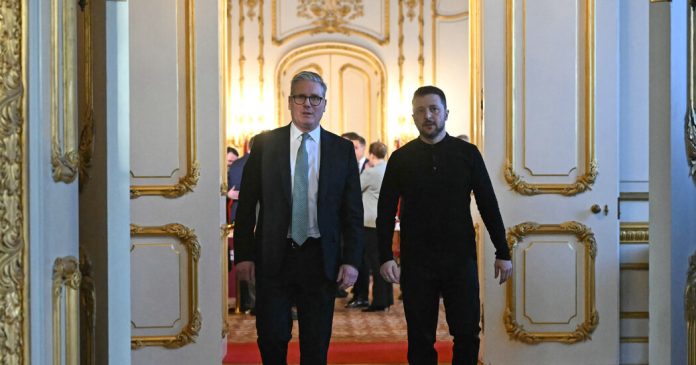
Prime Minister Keir Starmer’s whirlwind of diplomacy — trying to marshal a European peacekeeping force for Ukraine while also working to salvage the alliance with Washington — has won praise across the political spectrum in Britain. Mr. Starmer’s poll numbers have bounced back from what was a dismal first six months in government, though he is still underwater in net approval ratings.

“He desperately needed something, and this appears to be it,” said Tim Bale, a professor of politics at Queen Mary University of London. “It’s not nothing if a prime minister performs well on the world stage.”

Equally significant, Nigel Farage, the populist leader of the insurgent, anti-immigration party Reform U.K, has stumbled for the first time since he won election to the British Parliament last July.

Mr. Farage, a longtime Trump ally, has struggled to fend off accusations that he sympathizes with President Vladimir V. Putin of Russia. He criticized President Volodymyr Zelensky of Ukraine for not wearing a suit to his meeting with Mr. Trump at the White House, even amid signs that the British public overwhelmingly sided with Mr. Zelensky in his clash with the American president.

Mr. Farage’s party was thrown into turmoil last Friday after it reported one its own lawmakers, Rupert Lowe, to the police for threatening a senior colleague — an allegation that Mr. Lowe denies.

Mr. Farage, analysts said, might feel threatened because Elon Musk, the billionaire who is Mr. Trump’s close ally, praised Mr. Lowe in January while withdrawing his endorsement of Mr. Farage, saying he “does not have what it takes.” Mr. Lowe complained in a recent newspaper interview that under Mr. Farage’s leadership, Reform has become a “protest party led by the Messiah.”

“To some extent, Farage has made himself quite vulnerable,” Professor Bale said.

In Parliament last week, Mr. Starmer won raucous whoops and cheers from Labour and Conservative backbenchers alike when he scolded Mr. Farage for his history of friendly statements about Mr. Putin and reaffirmed Britain’s steadfast support for Ukraine.

“Zelensky is a war leader whose country has been invaded,” Mr. Starmer said, as a chastened-looking Mr. Farage nodded in agreement. “We should all be supporting him and not fawning over Putin.”

Tying Mr. Farage to Mr. Putin, analysts said, is more effective than going after him as an enemy of the political system, since like other populist politicians, he thrives on being vilified by the establishment.

“The strategy that has not worked is to point at the populists and say they are the enemy,” said Ben Ansell, a professor of comparative democratic institutions at the University of Oxford. “What works much better is to point at an external enemy and try to lash them to that enemy.”

Mr. Farage’s alliance with Mr. Trump is also becoming a burden, Professor Ansell said, not just because the president is unpopular in Britain but also because his chaotic approach to governing deprives his allies abroad of conspicuous successes — on immigration, say, or economic policy — to which they can point.

Despite hard-right election gains in Germany, the Netherlands, Poland, and Austria, Professor Ansell said, there is a chance that Europe may have passed its moment of “peak populism.” In Austria, the far-right Freedom Party was locked out of government despite winning the most votes, after three mainstream parties stitched together an alternative coalition.

In Germany, the hard-right Alternative for Germany, or AfD, emerged as second-largest party in elections last month, trailing only the Christian Democrats, which are led by Friedrich Merz, the presumptive chancellor. But some analysts had expected the party to perform even better than it did, given that Mr. Musk and Vice President JD Vance endorsed it.

“It’s still bad enough that 20 percent of the people voted for an anti-system, pro-Russia party,” said Ms. Stelzenmüller of the Brookings Institution, “but it’s clear the AfD didn’t gain from Musk’s and Vance’s efforts to campaign on its behalf.”

Nor has the AfD been a central player since the election, as Mr. Merz tries to engineer a landmark relaxation of Germany’s debt laws to enable it to fund a mammoth increase in military spending. Mr. Merz has staked a claim to leadership with his call for Europe to take charge of its own security because of the threat posed by Russia and the unreliability of the United States.

To be sure, Mr. Merz is scrambling to act now because he would have more trouble getting such an increase through the next Parliament, in which the AfD, which opposes the spending, would have enough votes to block it.

It is not clear that Mr. Merz has the votes to pass the measures, which will also need significant support from the Green Party to clear a two-thirds hurdle in Parliament. Privately, Mr. Merz’s aides contend that Mr. Trump has given the would-be chancellor the only argument he needs to prevail. He is the first American president to so explicitly threaten to pull American support.

In Britain as in Germany, analysts said the political landscape could shift again. Mr. Starmer’s pledge to increase military spending, they said, will force the Labour Party into painful trade-offs on taxes and spending that are already exposing rifts within the party. And Mr. Starmer’s recent success on the world stage could prove fleeting if he cannot turn around the economy and rebuild public services.

In that sense, Mr. Starmer’s up-and-down government has something in common with Mr. Trump’s, even if the president’s chaotic debut has so far played to the advantage of the prime minister and other centrists.

“The shine, such as it was, of Trump’s first few weeks has emphatically worn off, and in both foreign policy and economic outcomes, the picture has turned very dark,” Professor Ansell said.

Jim Tankersley contributed reporting from Berlin

Musk Email Reaches Italian Workers. It Did Not Go Well.

0

Italian employees at the Aviano Air Base in northern Italy paused from flipping burgers, unloading trucks and restocking shelves recently to open an email from their bosses demanding that they list five key accomplishments from last week.

The email was a by-now familiar demand from President Trump’s chief cost-cutter, Elon Musk, carrying with it the threat of termination if they did not respond. But on this occasion, it did not land with government employees in the United States, but rather in Italy, a country where workers’ rights are held sacrosanct.

The result set the stage for a puzzling clash of cultures, with the world’s richest man and his job-thrashing chain saw on one side, and one of the world’s most protective champions of the forever job on the other.

“We are in Italy here,” said Roberto Del Savio, a union representative and an employee at the base. “There are precise rules and thank God for that.”

Aviano, an Italian air base that hosts the United States 31st Fighter Wing, employs more than 700 Italian civilian personnel who on a daily basis cook and clean and generally keep the base running.

In all about 4,000 Italian civilian employees work at bases serving about 15,000 American soldiers in Italy, turning each into a sort of a miniature American town where U.S. military personnel can find American food and other familiar items from home.

Those jobs, in keeping with longstanding labor traditions in Italy, are fully unionized and protected under Italian labor laws. But at the same time, the employees work for the United States government, which pays their salaries.

Labor unions say the email was forwarded from a department head to dozens of Italian civilian employees working in the Aviano base’s Army & Air Force exchange service, which provides goods and services to the U.S. Army.

No one seemed certain whether it was a one-off misunderstanding or if Mr. Musk was attempting to assert his demands over Italian workers as well as American ones. A Department of Defense official said that while those emails were meant for U.S. employees, local employees “could receive emails,” too.

The confusion raised questions of whether Mr. Musk could export his brand of unbridled techno-libertarianism to a country that is “founded on labor” per the first article of its Constitution, or whether his chain-saw would snag on Italy’s notoriously thick bureaucracy.

“Ours is a system built on democracy, safeguards, and protections provided by contracts that must be respected,” Pierpaolo Bombardieri, the secretary general of Italy’s Uil union said in a statement.

Mr. Bombardieri called the emails “unacceptable” and the method “aberrant.” Italy’s unions wrote to the Italian government and the U.S. Embassy asking for explanations.

For now, the ground rule appears to be that Italian civilians must answer the email only if they receive it directly from the U.S. government — not if it is forwarded to them, as happened at Aviano and at least one other base in Italy, in the city of Vicenza. But it remained unclear whether the Department of Defense was going to reach out to Italian workers directly.

Some German employees of the U.S. government in Germany also received Mr. Musk’s first email asking them to explain their work output, said a senior diplomat in Berlin, who did not want to be named while talking about an ally. (Mr. Musk’s follow-up email appears to have been sent only to American employees in Germany, the diplomat said.)

In the meantime, some Italian employees had answered the email, said Mr. Del Savio. “One says I was slicing pizza, another says something else.” he said. “But we were all very puzzled,” he said. “Italy is not the Wild West like the U.S.”

Despite recent changes that attempted to make the labor market more flexible, Italy’s labor laws continue to offer broad protections to employees. Especially in the public sector, getting a permanent job is often seen as a guarantee to be unfireable for life.

Many in Italy value this system as a backbone of the Italian welfare state and its democracy, while others point to it as a rigid and inefficient juggernaut that prevents jobs from being created for young people.

Stories of half-hour long workdays and daylong coffee breaks are something of a legend in Italy. Some have said a touch of Musk-style slash and burn approach would not hurt here.

“Italy would also need Musk’s ax,” Nicola Porro, an Italian journalist and right-wing commentator, wrote in a blog post, decrying Italy’s “useless positions.”

Italians seized upon the juxtaposition. One TikTok creator, Alberico Di Pasquale, made a video pretending to show an Italian employee on a permanent contract answering Mr. Musk’s email. “No. 1: I come to work, No. 2: I clock in, No. 3: breakfast,” he said. “No. 4: tournament with my colleagues to see who will get the coffee; No. 5: I get the coffee. Repeat five times points 4 and 5. No. 6: I go pay my bills and grocery shop; No. 7, I clock out.”

But while some had fun with the demands from Mr. Musk, for union representatives at the American base in Aviano, and other Italians, it was serious business.

As Mr. Trump questions the U.S. commitment to NATO and insists that Europe must defend itself, fears of spending cuts are spreading at U.S. bases abroad.

Amid a 30-day freeze of federal credit cards, the U.S. government last week also froze the credit cards that Italian employees at Aviano used to purchase equipment for the base, then started a hiring freeze, the unions said.

Union workers said they did not know what was going to come next. But they said they were going to fight on.

“Musk can do whatever he wants in the United States,” said Emilio Fargnoli, a union representative. “If they are happy with it, sure,” he added. “Not here.”

Jim Tankersley and Jeanna Smialek contributed reporting.

Why the Philippines’ Ex-President Duterte Was Arrested Now

0

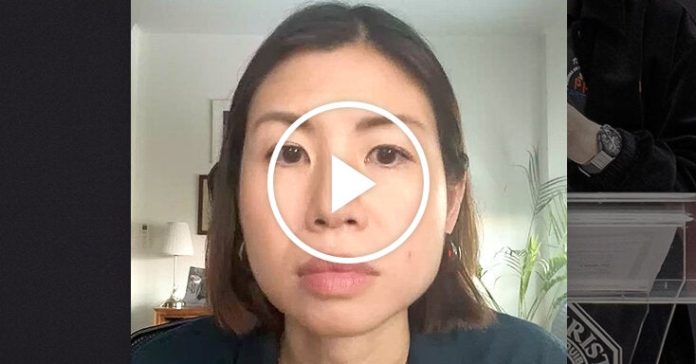
Rodrigo Duterte carried out a war on drugs in the Philippines that rights groups say killed 30,000 people. Sui-Lee Wee, the Southeast Asia bureau chief of The New York Times, explains how Duterte came to be arrested by Philippine police and put on a plane to the Netherlands to face charges of crimes against humanity.

Judge blocks Trump from enforcing order against Perkins Coie : NPR

0

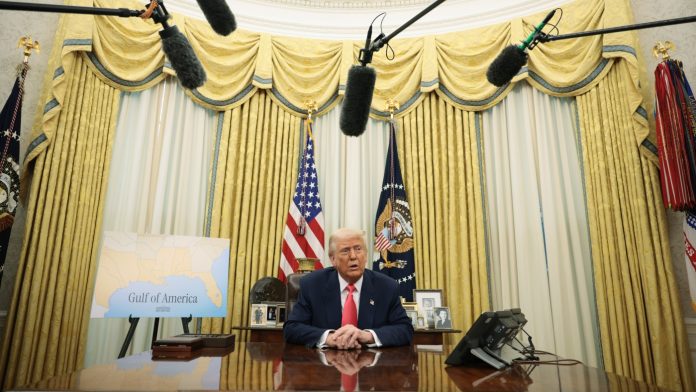
President Trump speaks as he signs executive orders in the Oval Office on March 6, including the order against the law firm Perkins Coie.

Alex Wong/Getty Images


hide caption

toggle caption

Alex Wong/Getty Images

A federal judge on Wednesday temporarily blocked parts of President Trump’s executive order targeting a prominent law firm for its representation of Hillary Clinton’s 2016 campaign and for causes unpopular with his administration.

President Trump issued an executive order last week that accuses Perkins Coie of “dishonest and dangerous activity” and seeks to impose several punitive measures, including suspending security clearances held by Perkins Coie employees and prohibiting government contractors from retaining the firm. It also bars the firm’s employees from federal buildings, and prohibits federal employees from engaging with Perkins Coie staff.

At a hearing in federal court in Washington, D.C., U.S. District Judge Beryl Howell issued a temporary restraining order blocking enforcement of the executive order. Ruling from the bench, Howell said the president’s order against Perkins Coie is clearly intended to punish the firm, and likely violates its First, Fifth and Sixth amendment rights.

“Our justice system is based on the fundamental belief that justice works best when all parties have zealous advocates,” she said. “That fundamental promise extends to all parties, even those with unpopular ideas or beliefs or causes disliked by President Trump.”

While the executive order takes aim at Perkins Coie, Howell said the “potential adverse impact cannot be understated.” The order “casts a chilling harm of blizzard proportion across the entire legal profession,” she said, warning that it will be understood as “an effort to intimidate” attorneys and prevent them from advocating on behalf of clients and causes at odds with the president.

Wednesday’s hearing took place less than 24 hours after Perkins Coie sued the government, saying Trump’s order “is an affront to the Constitution.”

Attorney General Pam Bondi’s chief of staff, Chad Mizelle, argued on behalf of the government. He said the president has the clear executive authority to take action against companies or entities that he deems are not trustworthy with the nation’s secrets.

Trump’s executive order, entitled “Addressing Risks from Perkins Coie LLP,” says the law firm sought to undermine democratic elections, the integrity of the courts and law enforcement.

It cites the firm’s representation of Clinton’s presidential campaign, and its role in the creation of a dossier of unsubstantiated allegations about possible ties between Trump’s 2016 campaign and Russia.

Perkins Coie, which is represented by attorneys from the law firm Williams & Connolly, says the order has already had an impact on its business. Longtime clients have ended their relationship with the firm, it says, and in at least one instance a federal prosecutor has refused to meet with Perkins Coie’s attorneys representing a client.

Putin Visits Kursk to Cheer Russian Troops Trying to Oust Ukraine

0

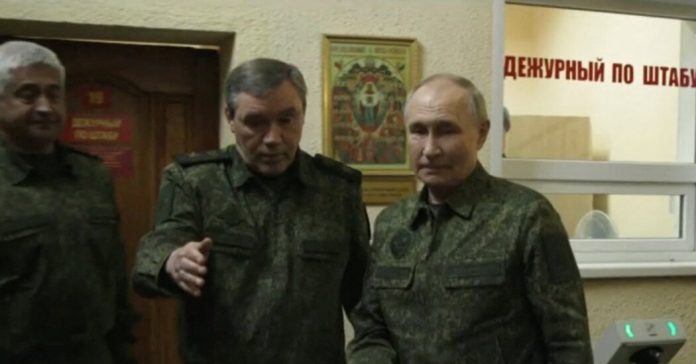
Russia’s president, Vladimir V. Putin, dressed in fatigues, visited a command post near the front in Kursk late Wednesday to cheer on his military’s ejection of Ukrainian forces from much of the territory they had been occupying in the Russian border region.

The Russian leader’s pointed visit came a day after a U.S. delegation met in Saudi Arabia with Ukrainian officials, who agreed to a 30-day cease-fire in the war. American officials planned to take the proposal to Mr. Putin, who has previously said he is not interested in a temporary truce.

Dressed in a green camouflage uniform, Mr. Putin sat at a desk with maps spread out in front of him, according to photos released by the Kremlin. He appeared with Russia’s top military officer, Gen. Valery V. Gerasimov.

In video footage released by Russian state media, Mr. Putin praised the Russian military formations that had taken back much of the territory captured by Ukraine in the Kursk region. He called on the troops to seize the territory for good from Ukrainian forces, who have been occupying portions of the Russian border region since last summer. Kyiv had hoped to use the territory as a bargaining chip in peace talks.

The Russian leader also demanded that Ukrainian forces taken prisoner in the region be treated and prosecuted as terrorists under Russian law. General Gerasimov said more than 400 Ukrainian troops had been captured in the operations.

“People who are on the territory of the Kursk region, committing crimes here against the civilian population and opposing our armed forces, law enforcement agencies and special services, in accordance with the laws of the Russian Federation, are terrorists,” Mr. Putin said.

He added that “foreign mercenaries” do not fall under the Geneva Convention governing the treatment of prisoners of war. The conflict, which began with Russia’s full-scale invasion of Ukraine in February 2022, has drawn foreign fighters. This month, Russia sentenced a 22-year-old British man who had volunteered for the Ukrainian Army to 19 years in prison on terrorism and mercenary charges, after his capture in the Kursk region last year.

Russian forces stepped up an offensive to push Ukrainian troops out of the region this week, as Kyiv reeled from the Trump administration’s decision last week to freeze U.S. intelligence and military assistance to Ukraine after an explosive confrontation in the Oval Office between President Trump and President Volodymyr Zelensky of Ukraine.

After talks on Tuesday with Ukrainian officials in Saudi Arabia, the Trump administration announced that it would resume the assistance.

By then, Russian forces were already well on their way to taking back Sudzha, the main population center in the Kursk region that was captured by Ukraine last year.

For months, Ukraine’s occupation of Russian territory has been a sore point for Moscow, which bolstered its forces with North Korean soldiers in an attempt to take back the land.

Russian officials boasted of a breakthrough attack in Kursk last Saturday, when, they said, some 800 fighters traveled about 10 miles through a disused gas pipeline to carry out a surprise attack on the Ukrainian rear.

On Wednesday, Ukraine’s top military commander, Gen. Oleksandr Syrsky, said in a statement that Ukrainian forces were moving to “more advantageous positions” if necessary and would “hold the line in the Kursk region for as long as it remains reasonable and necessary.” He added, “In the most difficult situations, my priority has been and remains the preservation of Ukrainian soldiers’ lives.”

Mr. Putin has said that any temporary cease-fire or truce will only provide an advantage to Ukrainian forces, who are on the back foot on the battlefield and could use the reprieve to replenish personnel.

Russia has demanded a broader security agreement backed by the West, including a guarantee that Ukraine will not be admitted to the NATO military alliance, as well as other commitments that risk eroding Ukraine’s sovereignty.

“We do not need a truce,” Mr. Putin said during his annual news briefing in December. “We need peace: a long-term and lasting peace with guarantees for the Russian Federation and its citizens.”

Marc Santora contributed reporting from Kyiv, Ukraine.

Consider This from NPR : NPR

0

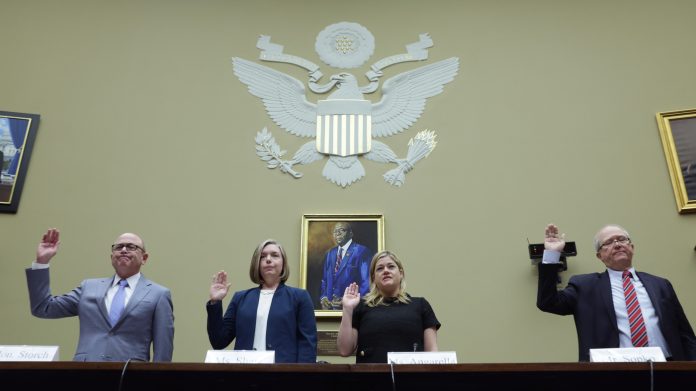
Four different inspectors general appeared before the House Committee on Oversight and Accountability on April 19, 2023.

Alex Wong/Getty Images


hide caption

toggle caption

Alex Wong/Getty Images


Four different inspectors general appeared before the House Committee on Oversight and Accountability on April 19, 2023.

Alex Wong/Getty Images

The Trump administration continues to fire, shut down or defund independent elements of the federal government that traditionally work as a check on presidential power.

Supporters of President Trump say: That’s exactly the point.

For sponsor-free episodes of Consider This, sign up for Consider This+ via Apple Podcasts or at plus.npr.org.

Email us at [email protected].

This episode was produced by Brianna Scott. It was edited by Courtney Dorning, Patrick Jarenwattananon, Kelsey Snell and Nadia Lancy. Our executive producer is Sami Yenigun.

The Balochistan Separatist Movement in Pakistan: What to Know

0

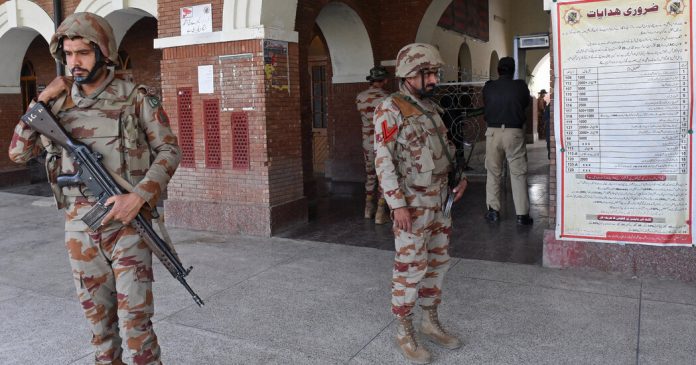
Separatist fighters hijacked a train in southwestern Pakistan on Tuesday and held passengers hostage for about 36 hours. The Pakistani military on Wednesday declared that it had ended the crisis with a rescue operation that freed passengers and resulted in the deaths of more than 30 militants.

Here is what to know about the group behind the attack, the Baloch Liberation Army.

The Baloch Liberation Army, or B.L.A., is a militant separatist group operating in Pakistan’s Balochistan Province, advocating an independent Baloch state. The group has escalated its attacks in recent years, targeting security forces, infrastructure and foreign investments, particularly from China. The B.L.A.’s operations are part of a broader insurgency that has simmered for decades in one of Pakistan’s most volatile regions.

The Baloch people are an ethnic group native to the region spanning Pakistan’s Balochistan Province, southeastern Iran and southern Afghanistan. They have a distinct linguistic, cultural and tribal identity, with their own language, Balochi, which belongs to the Iranian language family.

Historically, the Baloch have maintained a seminomadic and tribal lifestyle, with a deep-rooted tradition of autonomy. Many Baloch nationalists argue that their region has been marginalized by national governments, leading to longstanding grievances over economic deprivation, political exclusion and military repression.

The Pakistani city of Quetta, the capital of Balochistan, has been at the center of the conflict. Its strategic location near the Afghan border makes it a key site for trade, governance and security operations.

Balochistan is Pakistan’s largest province by land area, covering approximately 44 percent of the country’s total territory. However, it is the least populated province, with only about 6 to 7 percent of Pakistan’s total population.

  • A dramatic escalation in the B.L.A.’s tactics came with the hijacking of a passenger train carrying over 400 passengers on Tuesday. The militants forced the train to stop in a remote area, seized hostages and set several cars on fire before security forces intervened.

  • A deadly bombing at Quetta’s railway station in November 2024 killed dozens and wounded many others, marking one of the most devastating attacks in Pakistan in recent years. The B.L.A. claimed responsibility, asserting that it was a response to military operations in Balochistan.

  • Last year, the B.L.A. claimed responsibility for a deadly bombing targeting a convoy carrying Chinese nationals near the international airport in Karachi, Pakistan’s largest city.

  • In 2022, Shari Baloch, a 30-year-old mother of two children and a schoolteacher, detonated a suicide bomb in Karachi, killing herself and four others, including three Chinese teachers.

  • The B.L.A. attacked the building of the Karachi Stock Exchange, which is partly owned by a Chinese consortium, in 2020, and the Chinese Consulate in Karachi in 2018.

  • The B.L.A. has repeatedly targeted Chinese workers and engineers involved in projects under the China-Pakistan Economic Corridor. Attacks have included gunfire, suicide bombings and ambushes on convoys transporting Chinese personnel.

The B.L.A. views China’s investments as exploitative and a threat to Baloch autonomy. It has repeatedly attacked Chinese nationals and projects, particularly those linked to the China-Pakistan Economic Corridor. Balochistan is home to key CPEC infrastructure, such as the Gwadar port. Attacks on Chinese nationals, construction sites and infrastructure projects are intended to disrupt these economic ventures and send a message to Beijing about the costs of involvement in Balochistan. The B.L.A. has framed its campaign as a fight against “colonial-style” economic extraction.

No. Unlike many other militant groups operating in Pakistan, the B.L.A. is a secular separatist movement that seeks independence for Balochistan rather than the establishment of an Islamic state. Its ideology is rooted in Baloch nationalism, and its grievances are primarily tied to political autonomy, economic control over local resources and opposition to what it sees as exploitation by the Pakistani state.

The Balochistan conflict dates back to 1947 when Pakistan gained independence and incorporated Balochistan, a move opposed by many Baloch nationalists. Since then, the region has seen multiple insurgencies, with major uprisings occurring in the 1950s, 1970s and early 2000s.

The most recent insurgency continues today. By 2020, the Baloch insurgency had been greatly weakened by years of counterinsurgency operations, rifts among separatist groups, fatigue and government incentives for the militants to lay down their weapons.

But the intensity and frequency of attacks started rising sharply last year. The number of terrorist attacks in Balochistan nearly doubled in 2021 compared to 2020, according to a Pakistani tally.

Baloch separatism is just one of the forces threatening the nation’s already tenuous unity and stability; others include violent insurgencies by the Islamic State affiliate known as ISIS-K and the resurgent Pakistani Taliban.

The Pakistani government has responded to the B.L.A. with a mix of military operations and intelligence crackdowns, attempting to dismantle the group’s networks. The country’s security agencies have cracked down on educated Baloch youth, forcibly “disappearing” suspected militants, sometimes for years, without trial, according to news reports, student advocates and human rights groups.

Pakistani officials have also alleged that India has provided covert assistance to Baloch insurgents. The B.L.A. claims to be an independent nationalist movement, relying on its fighters and sympathizers within Balochistan rather than external support.

Balochistan’s insurgency has implications beyond Pakistan’s borders. The province shares borders with Iran and Afghanistan, and cross-border movements of militants have raised concerns about broader regional instability. Iran has at times expressed concerns about Baloch separatist activity near its border, while Afghanistan’s shifting political landscape has introduced new variables into Pakistan’s counterinsurgency efforts.

Thursday Briefing: A Widening Trade War

0

The trade fight widened yesterday as the E.U. and Canada announced billions of dollars in retaliatory tariffs on U.S. exports, hours after President Trump’s levies on steel and aluminum imports took effect. Here’s the latest.

Europe

The E.U. said tariffs would take effect April 1, a response to about $26 billion in tariffs applied by the U.S. But bloc officials emphasized that they were ready to strike a deal.

Their response will come in two parts. A tariff suspension implemented under Joe Biden will be allowed to lapse on April 1, raising tariffs on billions of euros’ worth of products that include boats, bourbon and motorcycles. The second step will be to place tariffs on about 18 billion euros’ worth of additional products, a list of which has yet to be finalized.

Canada

The Canadian government said that it would impose new tariffs on $20 billion worth of U.S. imports. This round is centered on steel and aluminum, but also applies to tools, computers, sporting goods and cast iron.

A Columbia University graduate and pro-Palestinian activist, who was detained by federal immigration authorities last weekend, has been unable to hold private conversations with his lawyers since his arrest, a court hearing revealed yesterday. He has yet to be charged with a crime.

The Trump administration has accused Mahmoud Khalil, a permanent U.S. legal resident, of participating in protests that support Hamas, and has justified his detention with a little-used statute that grants the power to declare someone “adversarial” to the U.S. and subject to deportation.

Quote: “This is not about free speech,” Secretary of State Marco Rubio said. “This is about people that don’t have a right to be in the United States to begin with. No one has a right to a student visa. No one has a right to a green card.”

What’s next: The judge said that he would order the government to let Khalil’s lawyers speak with him. He also told a government lawyer to prepare to address a Supreme Court opinion that could allow Khalil’s lawyers to keep his case in New York.


The violence “included extrajudicial killings, field executions and systematic mass killings motivated by revenge and sectarianism,” the Syrian Network for Human Rights said in a report released Tuesday. The Times could not confirm the findings.

Background: Hundreds of civilians were killed in the Latakia and Tartus Provinces, areas dominated by the Alawite religious minority. The ousted dictator Bashar al-Assad was an Alawite, and some fellow members enjoyed a privileged status under his rule.

Conflict: Turkey kept bombing armed Kurdish insurgents in Iraq and Syria, even after the militants’ leader urged them to disband, and their group declared a cease-fire.


A 17-acre expanse in the Bahamas has been acquired by an unlikely developer: the Royal Caribbean cruise line. The company is building an exclusive beach club with the world’s largest swim-up bar, causing alarm among locals who say they’re being priced out of their homes. Bahamian businesses have been promised lucrative contracts, but islanders are shocked by how the land has been razed for tourism.

Every season brings its share of books to look forward to, and this one is no different. The Times has picked dozens of its favorite page-turners for you.

A “Hunger Games” prequel follows Katniss Everdeen’s eventual mentor at the 50th Hunger Games. Ocean Vuong’s new novel traces the relationship between a Vietnamese man and a widow in a fictional Connecticut town. Read the fiction list here.

In nonfiction, “Notes to John,” Joan Didion’s first newly published work in more than a decade, features descriptions of her therapy sessions in journal entries addressed to her husband. And a new biography aims to demystify and defend Yoko Ono. Here are our nonfiction picks.
Cook: Chicken jalfrezi — “jalfrezi” means “hot fry” — is a tangy, spicy stir-fried curry with origins in Bengal.