Thursday, November 12, 2026
Home Blog Page 133

Europe Welcomes a Ukraine Cease-Fire Offer and a Revival of U.S. Aid

0

Europeans reacted with relief to the announcement on Tuesday that Ukraine had agreed with the United States on a 30-day cease-fire in its war with Russia and anxiously awaited Moscow’s response.

They were relieved because Washington announced simultaneously that it would immediately restore military and intelligence support for Ukraine. And there was expectation that Russia must now respond in kind, or presumably President Trump would put some kind of pressure on Moscow analogous at least to the blunt instruments he used against Ukraine.

“The ball is now in Russia’s court,” said the two European Union leaders, António Costa and Ursula von der Leyen, in coordinated messages on social media welcoming the deal and echoing the statement of Secretary of State Marco Rubio.

But in the same sentence the European leaders also welcomed the resumption of U.S. security support to Ukraine, giving it equal emphasis.

“We welcome today’s news from Jeddah on the U.S.-Ukraine talks, including the proposal for a cease-fire agreement and the resumption of U.S. intelligence sharing and security assistance,” the message said on Tuesday. “This is a positive development that can be a step toward a comprehensive, just and lasting peace for Ukraine.”

They also tried to remind Mr. Trump and his team that if Washington wants Europe to guarantee any peace deal in Ukraine, Europe wants to be at the negotiating table. “The European Union,” the message said (hint, hint), “is ready to play its full part, together with its partners, in the upcoming peace negotiations.”

In general, European leaders were shocked by the anger displayed against President Volodymyr Zelensky of Ukraine in the now infamous Oval Office media gaggle on Feb. 28 and Mr. Trump’s apparent acceptance of the Russian narrative that Ukraine started the war.

They were also struck when Mr. Trump’s special envoy, Keith Kellogg, said that Ukraine had to be hit in the head, “sort of like hitting a mule with a two-by-four across the nose,” to get it to comply with Mr. Trump’s demands. The lumber turned out to be the denial of lifesaving American military and intelligence support to Ukraine, its missiles and its American-built fighter jets.

That prompted some in Europe, like Nathalie Tocci, director of Italy’s Institute of International Affairs, to wonder if Washington would do the same to them some day, and whether it was such a good idea to buy so much high-tech American weaponry, like F-35 fighter jets, that depends on American software and integration with American satellites.

European leaders gathered in Paris, London and Brussels last week and this one to promise Ukraine continued and even increased support. “Ukraine is a matter of our own security,” said Norbert Röttgen, a foreign policy expert and German member of Parliament for the Christian Democrats. “If Ukraine falls, it would be a clear threat to Europe.”

But the key point, emphasized by President Emmanuel Macron of France and Prime Minister Keir Starmer of Britain, was that Ukraine needed American backing. Europe, despite all its vows to continue providing Ukraine with money and weapons, cannot replace key American capabilities like intelligence and missile defense, at least not in the near future.

So European leaders were also relieved at Mr. Zelensky’s understanding of his quandary. After the Oval Office blowup, they worked hard to convince Mr. Zelensky to kowtow to the White House with repeated expressions of gratitude to assuage Mr. Trump. Mr. Zelensky did so, while promising that he continued to support another demand of Mr. Trump for providing the United States privileged access to Ukraine’s mineral wealth, and a share of it besides.

The Europeans have been urging Mr. Zelensky to go along for now to put pressure on Russia and help Mr. Trump see that its president, Vladimir V. Putin, is the problem.

The Europeans have also gathered to have preliminary discussions of what they might be prepared to do to guarantee a future longer-term deal between Ukraine and Russia. Much remains unknown, including the purpose of such a force, its size, financing and command structure. But the Europeans do know they will need American cooperation and air support to make such a mission credible.

Nor is it even clear that Moscow will relent on its current refusal to consider allowing European troops in Ukraine, given that one of the main aims of Russia’s invasion was to keep Ukraine from joining NATO and allowing NATO troops to base there.

But Mr. Macron in particular has gone further, seeing the American turnabout on Ukraine as yet another sign that Europe must do more for its own defense and not rely so much on a United States that appears indifferent to Europe, if not openly hostile to it, both economically and politically.

Now Europeans, like Ukrainians, wait for the response of Mr. Putin. So far, he and his officials have rejected the idea of a cease-fire before a final settlement of the conflict. And of course there are no guarantees that even if a 30-day cease-fire were put in place the war would not recommence, giving at least some the impression that Mr. Trump simply wanted a victory to show that he could stop the killing, even temporarily.

Universities freeze hiring over federal funding concerns : NPR

0

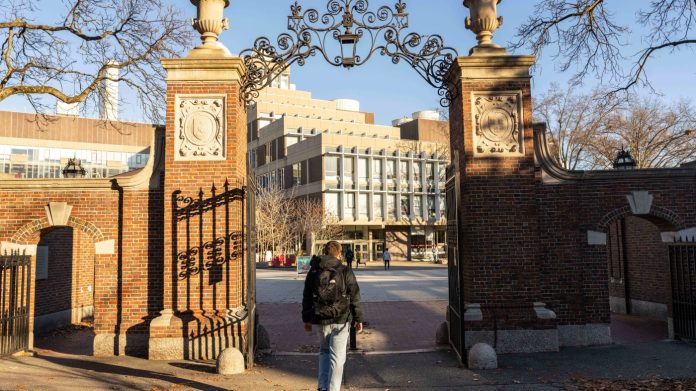
Harvard University is one of more than a dozen institutions of higher learning nationwide that recently announced a hiring freeze, citing uncertainties around federal funding.

Mel Musto/Bloomberg via Getty Images


hide caption

toggle caption

Mel Musto/Bloomberg via Getty Images

Harvard University, the University of Washington and the University of Pittsburgh are among the latest institutions of higher education to announce hiring freezes, citing the uncertainty around federal funding.

Leaders at a growing number of universities across the country say they are looking for ways to cut costs and buy time, as questions swirl around President Trump’s efforts to slash financial support for some schools. Education experts say the pullback of resources will not only hurt current and prospective students, staff and faculty, but could also harm the local economies of university towns and ultimately make the U.S. less competitive globally.

“The lack of clarity and uncertainty concerning future federal research support means loss of opportunity to American science,” said Toby Smith, senior vice president for government relations and public policy at the Association of American Universities. “There will be fewer job offers to new researchers and fewer offers of admission to Ph.D. candidates.”

Many universities have said that the hiring pauses are temporary, and will be evaluated when they have more information about the status of federal support.

“It is meant to preserve our financial flexibility until we better understand how changes in federal policy will take shape and can assess the scale of their impact,” Harvard President Alan Garber wrote in his announcement on Monday.

Garber said he is also asking school leaders to take steps like scrutinizing discretionary spending and reviewing any new multi-year commitments, citing “substantial financial uncertainties driven by rapidly shifting federal policies.”

The belt-tightening at Harvard — the university with the largest endowment in the world — underscores the degree of concern and caution many institutions are operating under in the current political environment. But it’s not only private schools that are proceeding with caution.

North Carolina State University announced a hiring freeze last month, citing “the uncertain impacts of the presidential administration’s Executive Orders and guidance” as well as state financial issues and a potential federal government shutdown. The University of Washington said last week that “significant and rapid policy changes” at the federal level, along with a state budget shortfall, necessitated a pause on all hiring and travel.

“The current federal funding trajectory, while not completely clear, is nevertheless dire,” wrote University of Washington President Ana Mari Cauce.

The Trump administration has threatened to pull federal funding from schools that don’t eliminate diversity initiatives or adequately protect Jewish students from discrimination. It also moved to limit National Institutes of Health (NIH) funding for research universities.

And it’s proposed eliminating the Department of Education, whose responsibilities include managing college financial aid and federal student loans. The department announced Tuesday that it is laying off nearly 50% of its workforce, but says it will continue to deliver programs protected by law.

Federal resources are one of the main pillars of support for colleges and universities, explains Derrick Anderson, senior vice president of the Education Futures initiative at the American Council on Education (ACE).

Anderson says he’s not entirely surprised to see the slew of hiring freeze announcements in recent weeks. He calls it a responsible first step for any organization dealing with uncertainty around resources since it delays potential layoffs and gives universities time to figure out their priorities.

“We are clearly in a world where the [Trump] administration has an agenda for higher education, and universities have a long history of being partners with every administration in advancing the nation’s interest,” he says. “And so a hiring freeze allows these universities, especially universities that are deeply involved in scientific research, to sort of recalibrate where they need to start putting their emphasis.”

He says it’s important for institutions of higher education to evaluate — and improve on — their strengths and weaknesses, because of the crucial role they play in the U.S. and the world. But he hopes they do so in a way that’s “consistent with the values that we’ve had in this country for a long time.”

“We’re going through a moment of time that has particles of uncertainty, and I think that they are significant,” Anderson says. “But the story, in the long run, is still the same: that higher education is a tremendously valuable investment, especially at the undergraduate level, and that we all agree … that it’s such a significant value proposition for the whole of this country that we want to support it.”

More than a dozen schools have announced hiring freezes and other steps

Students stand under cherry blossom trees on the University of Washington campus.

The University of Washington, pictured in April 2023, has paused all non-essential hiring and travel.

Lindsey Wasson/AP


hide caption

toggle caption

Lindsey Wasson/AP

Some of the schools that have frozen hiring include Columbia University’s medical school, the University of Notre Dame, Emory University, Cornell University, Stanford University, Massachusetts Institute of Technology, Northwestern University and the University of California, San Diego.

Their announcements cite the uncertainty around federal funding — due to executive orders and legislative proposals — as a primary factor. Many of their messages also urge administrators and faculty to reduce costs in other ways.

Northwestern, for example, also announced 10% budget cuts last month. Emory is one of several schools that froze compensation adjustments, and also announced “significant reductions in operating expenditures.”

The University of Pennsylvania unveiled a slew of cost-cutting measures on Monday, including a hiring freeze, a review of capital spending and a reduction in non-compensation expenses.

Provost John Jackson Jr. wrote that in addition to changes to federal research funding, other proposals currently before Congress, such as reductions in student loan programs and an increase in the excise tax on university endowments, could also affect the school’s finances.

He said the scope and pace of the possible disruptions “may make them more severe than those of previous challenges,” including the COVID-19 pandemic and the 2008 financial crisis.

“Although the extent and final impact of these policies will not be known for several months, the direction is clear, and we are already experiencing reduced funding,” Jackson added.

Many other university leaders have similarly acknowledged the difficulty that hiring freezes and budget cuts — and the general feeling of uncertainty — pose to their communities.

MIT said that while its plan is “designed to help steward and safeguard the Institute’s mission in the face of unpredictable change, we recognize that it will pose direct challenges across our community.” The University of Vermont said it is “aware that this measure may introduce challenges or delays in the work of our valued colleagues.” And UC San Diego acknowledged that “it may be tough for many to focus amidst all of the uncertainty.”

“Navigating the stream of rapidly changing, and perhaps confusing, policy directives and the uncertainty about the future has been challenging for many, to say the least,” Chancellor Pradeep Khosla wrote.

It’s not just faculty and students who would feel the impact

Northwestern University and downtown Evanston, Illinois.

Northwestern University and downtown Evanston, Illinois, pictured in 2023. Experts say the research apparatus in higher education is part of what makes the U.S. so economically and scientifically competitive.

Brian Cassella/Chicago Tribune/Tribune News Service


hide caption

toggle caption

Brian Cassella/Chicago Tribune/Tribune News Service

While “uncertainty” remains the operative word for now, details are starting to emerge about how much universities stand to lose if the Trump administration succeeds in its efforts to limit NIH funding, which supports most medical research in the U.S. That policy change immediately prompted multiple lawsuits and is currently blocked by a federal judge.

The NIH is the largest public funder of biomedical research in the world, and also covers “indirect costs” like facilities maintenance and administrative support. That “indirect rate” varies between universities, for example, it was 63.7% at Johns Hopkins University and 69% at Harvard. The Trump administration wants to limit indirect costs to just 15% of grants — which could cost universities millions of dollars.

The University of Pittsburgh, for example, says cutting the indirect cost rate will amount to a loss of reimbursement of $168 million this year.

Universities would have to choose how to make up the difference, since there are limits on how much they can dip into their endowments. And “the choices that they have are all pretty bleak,” Holden Thorp, editor-in-chief of the journal Science and former chancellor of the University of North Carolina at Chapel Hill, told NPR last month.

“They’d have to cut other programs in order to fill that hole in, which could affect any discipline or any function of the university,” he said. “Or they would have to cut corners in the way they administer the research, which could create all kinds of problems with accounting or noncompliance with the government’s regulations.”

Industry groups including ACE and the AAU say the proposed NIH funding cuts will harm the millions of Americans facing conditions like cancer and dementia, as well as the next generation of biomedical researchers aiming to heal them.

“The loss of this American workforce pipeline would be a blow to the U.S. economy, to American science and innovation, to patients and their families, and to our nation’s position in the world as a leader in medical research,” they said in a joint statement.

Smith, of the AAU, said the potential loss of research funding could also create a chilling effect on younger students considering careers in scientific and technological research, calling it “an unforced error and a gift to our nation’s potential adversaries, who are now taking advantage of this to actively recruit top U.S. scientific talent.”

“It makes no sense to turn our backs on American science and the talent base needed to fuel it at the very moment we need to step up our game to stay ahead of China and other global competitors,” Smith added.

The strong network of research activities at higher education institutions — with investment from the federal government — is part of what makes the U.S. so economically and scientifically competitive, said Anderson, of ACE. He thinks one thing universities can do in this moment is make sure they are communicating that effectively.

“We do higher ed well — not just well, we are the best,” he adds. “Countries around the world are trying to mimic the way that we do higher ed. And I just think that we as an industry need to do better at explaining that.”

Separatists Are Still Holding Hundreds of Hostages in Pakistan Train Standoff

0

Pakistani security forces have been locked in a deadly standoff with armed militants for more than a day after the attackers seized a passenger train on Tuesday and held hundreds hostage.

The crisis is a dramatic escalation of a long-running separatist insurgency in the country’s southwest.

The Baloch Liberation Army, or B.L.A., a banned separatist group, seized the train, which was carrying more than 400 people, in a remote mountainous region.

The group claimed to be holding at least 214 people, including military personnel and civilian law enforcement officers. It demanded that the government release its imprisoned members within 48 hours, threatening to execute the hostages if the demand was not met.

By Wednesday morning, security authorities said that more than 150 hostages had been rescued, though the fate of the remaining passengers remained uncertain. Officials also reported that at least 27 militants had been killed in the continuing operation and that hostages were being held at three separate locations.

Muhammad Tallal Chaudry, the minister of state for interior, told the Geo TV news channel on Tuesday night that some hostages had been taken into the nearby mountains.

Independent verification of events remains difficult because the hijacking took place in a remote, mountainous region with practically no cell or internet connectivity, restricting the reach of journalists. So far, information has come solely from security officials and the B.L.A. The Pakistani military, which is mainly conducting the rescue operation, has not issued an official statement.

The train was traveling from Quetta, the capital of Baluchistan, to Peshawar. But it became stranded inside a tunnel about 100 miles from Quetta as it came under attack, and the conductor was killed, according to the authorities.

After the capture of the train, Pakistan Railways announced that it would temporarily suspend train operations in Quetta and that they would resume only after security agencies had inspected and confirmed the system’s safety.

Muhammad Ashraf was among a group of 80 passengers who were freed last night and said he reached a nearby railway station after walking for hours along the tracks.

“When the train was attacked, everyone threw themselves to the floor, using luggage and sacks to shield themselves from the bullets,” Mr. Ashraf said by phone after reaching Quetta. “Screams were echoing everywhere.”

The militants took all of the passengers hostage but later released parties traveling with women and children, he said.

Baluchistan, a large and sparsely populated province that borders Iran and Afghanistan, has long been plagued by separatist violence and insurgent activity. The province is also home to major China-led projects, including a strategic port.

Ethnic separatist groups have regained momentum, increasingly attacking security forces and Chinese citizens involved in projects under the Belt and Road Initiative, China’s infrastructure investment program. The separatists accuse Pakistan’s government of allowing China to extract the region’s wealth.

Experts, however say that separatist groups have become increasingly emboldened and sophisticated in their operations, now incorporating tactics such as suicide bombings — an approach that was previously associated primarily with Islamist militants operating in northwestern Pakistan and Afghanistan for the past several decades.

“The ability of the B.L.A. to hijack a train with such precision suggests an advanced intelligence-gathering network and strategic planning,” said Dost Muhammad Barrech, an academic at the University of Balochistan in Quetta.

Just last week, an alliance of separatist groups, including the B.L.A., announced plans to intensify attacks on Pakistani security forces, infrastructure and Chinese interests in the region.

Last year, the B.L.A. carried out one of Pakistan’s deadliest terrorist attacks, a suicide bombing that killed at least 25 people, including security personnel, at a busy railway station in Quetta.

The group also claimed responsibility for another deadly bombing targeting a convoy carrying Chinese nationals near Karachi’s international airport, in Pakistan’s largest city.

Congress reignites a bipartisan effort to ban hair discrimination : NPR

0

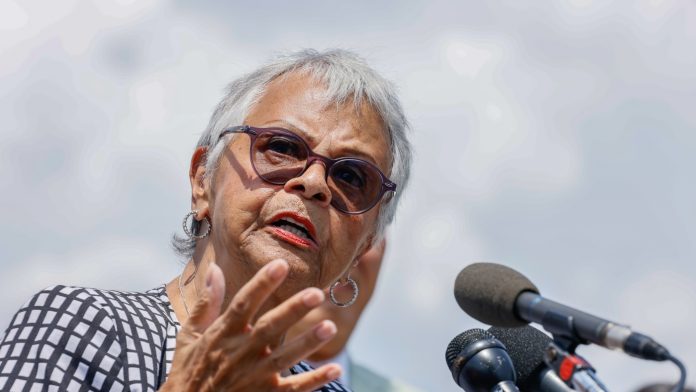
Rep. Bonnie Watson Coleman.

Jemal Countess/Getty Images


hide caption

toggle caption

Jemal Countess/Getty Images

A bipartisan effort to ban hair discrimination has been reintroduced in Congress as the Trump administration targets diversity, equity and inclusion initiatives.

The latest bill, known as the “Creating a Respectful and Open World for Natural Hair Act of 2025” or the “CROWN Act of 2025,” was introduced in the House last month. If enacted, it would ban discrimination against individuals based on their hairstyle or hair texture due to their race. This includes styles in which hair is “tightly coiled or tightly curled, locs, cornrows, twists, braids, Bantu knots, and Afros.”

The bill also seeks to protect individuals from hair discrimination while participating in federally assisted programs, housing programs, public accommodations and schools.

New Jersey Rep. Bonnie Watson Coleman, a Democrat who is leading the measure in the House, said in an interview with NPR prior to a press conference on Tuesday about the bill that it was important to reup the initiative. She emphasized that many Black and Brown Americans, especially students, face obstacles related to their hair.

New Jersey Rep. Bonnie Watson Coleman, fellow Democratic lawmakers and Adjoa B. Asamoah, a co-founder of the CROWN coalition, speak at a press conference about the CROWN Act on Mar. 11 in front of the U.S. Capitol.

New Jersey Rep. Bonnie Watson Coleman, fellow Democratic lawmakers and Adjoa B. Asamoah, a co-founder of the CROWN coalition, speak at a press conference about the CROWN Act on Mar. 11 in front of the U.S. Capitol.

Chandelis Duster/NPR


hide caption

toggle caption

Chandelis Duster/NPR

“It is an extension of racism. It’s just in a different form,” Watson Coleman said on Tuesday. “And so we need to remind people that the diversity of people is what makes this country so beautiful. And that how I wear my hair or do not wear my hair is no expression of my ability to think or to do or to accomplish or to be a part of a team or a good employee.”

Senators Susan Collins of Maine, a Republican, and Cory Booker of New Jersey, a Democrat, also introduced a companion bill to the version in the Senate last month.

“It is wrong that Americans – particularly those within the Black community – continue to face discrimination based on how they choose to style their natural hair,” Collins said in a statement. “This is an issue of basic fairness and equality, and I urge my colleagues to support this bill and stand against discrimination in all of its forms.”

This latest effort follows previous attempts to pass similar legislation, which have stalled in Congress.

The bill passed in the House in 2022 but failed to gain enough Republican support in the Senate to override a filibuster by Kentucky Sen. Rand Paul, a Republican. At the time, Paul argued that discrimination based on one’s hair was already illegal and that the bill could potentially create unsafe conditions for workers as it might prevent them from wearing required safety equipment, such as construction helmets.

It is unlikely the new bill will pass in this Congress, as Republicans hold slim majorities in both the House and Senate. And if it does pass, there’s no guarantee of support from President Trump.

NPR reached out to the White House and House Speaker Mike Johnson for comment but has not received a response.

Despite this uncertainty, Watson Coleman says she hopes she and the other co-sponsors of the bill can garner enough support among Republicans for the bill to ultimately pass.

“We only need three that recognize that there is no harm in this bill. This is an extension of respect,” she says. “There is no unnecessary danger or anything in this bill. It simply is an affirmation that people have a right to wear their hair the way they want to wear their hair.”

While there is currently no federal legislation prohibiting hair discrimination, some states have already implemented measures on their own.

The CROWN Act across the country

As of July 1, 2024, 25 states have enacted legislation banning hair discrimination, according to the Economic Policy Institute. Legislation to ban hair discrimination based on race has also been introduced in Pennsylvania.

Adjoa B. Asamoah, a co-founder of the CROWN coalition has been leading efforts to enact the CROWN Act legislation since 2018. She said during the press conference outside the Capitol Tuesday that “purported race neutral grooming policies that reinforce Eurocentric standards of beauty and myopic notions of what constitutes professional hair remain problematic.”

“Today I am wearing my hair differently than I did at the last press conference … and next month, I will proudly rock my braids. I share this not because my personal hair is the focus, but because protecting and preserving our right to embrace the beauty and sometimes the versatility of it, is. Especially when worn in ways aligned with our racial identity,” Asamoah said.

There have also been legal challenges regarding hair discrimination. A civil rights commission in Akron, Ohio, in February sided with a man who said he was discriminated against because of his dreadlocks hairstyle. Some Black students have also faced disciplinary action regarding their natural hairstyles, including Darryl George, a Texas teen, who was placed in in-school suspension for the length of his locs. In February 2024, a Texas judge ruled that the state’s CROWN Act did not apply to hairstyle length, a decision that Watson Coleman says is “flawed.”

There is also concern that actions rolling back diversity, equity and inclusion initiatives could undermine progress made in prohibiting hair discrimination.

Wisconsin Rep. Gwen Moore, a Democrat, said Tuesday she is concerned there could be a shakeup in hairstyle policies in the U.S. military, which in the past has enforced strict grooming policies against certain hairstyles. In 2018, the U.S. Navy revamped its policy to allow women to wear their hair down and incorporate different hairstyles, including locs. The Army in 2021 also expanded its guidelines to allow female soldiers to wear ponytails while in uniform.

Watson Coleman says she and her congressional colleagues will continue to advocate for the passage of the CROWN Act.

“We know what environment we are currently functioning in. We know the absurdity of some of the things that have been advanced or have been delayed to continue to delay this particular bill is one of those absurdities,” she says. “I can’t tell you what’s going to happen, but I can tell you that we’ll stand behind this bill and the reason for it until we get it passed.”

Trump’s Tariffs on Steel and Aluminum Take Effect

0

President Trump’s sweeping tariffs on foreign steel and aluminum went into effect on Wednesday, escalating America’s trade spats with global competitors, including close allies already reeling from his on-and-off approach to trade penalties.

Mr. Trump’s tariffs of 25 percent on the metals hit imports that enter the United States from any country in the world. The move, which many domestic steel and aluminum makers support, is expected to raise costs for American manufacturers of cars, tin cans, solar panels and other products, potentially slowing the wider U.S. economy.

The action on metals was just the latest attempt by Mr. Trump to leverage the power of tariffs and the American market against foreign governments. Last week, he issued steep tariffs on imports from Canada, Mexico and China, blaming those countries for the entry of drugs and migrants into the United States, before quickly paring some of them back. The president is threatening to impose a raft of other tariffs, including on foreign cars and against countries that he says discriminate against the United States.

His approach has been met with a market slump and has sent many U.S. allies into a defensive mode as they try to decipher what the president actually wants. On Tuesday, Mr. Trump threatened to double the tariffs on Canadian metal after Ontario had responded to Mr. Trump’s previous tariffs by putting a surcharge on electricity exported to the United States. Within hours, Ontario had suspended its surcharge, and Mr. Trump walked back his threats.

The metal tariffs, and other levies to come, are likely to again worsen trade disputes. Foreign governments, including in Canada, have vowed to retaliate by issuing levies that will most likely hurt U.S. exporters. On Wednesday, Europe swiftly announced tariffs on up to $28 billion worth of goods in response. The metal tariffs mainly affect U.S. allies: Canada is by far the largest supplier of both steel and aluminum to the United States. Brazil, Mexico, South Korea and Vietnam are also top suppliers of steel, while the United Arab Emirates, Russia and China are top suppliers of American aluminum.

The tariffs restore and expand similar measures that Mr. Trump put in place in 2018, which ushered in several long-running trade wars. Mr. Trump argued that the tariffs were needed to protect national security and provide a reliable source of metal for the military in wartime.

In the intervening years, both Mr. Trump and former President Joseph R. Biden Jr. made deals with foreign countries, including Brazil, Mexico, Canada and nations in Europe, that whittled away at the tariffs. The U.S. metals industry has complained that the measures were no longer strong enough to keep steel mills and aluminum smelters afloat.

Kevin Dempsey, the president of the American Iron and Steel Institute, an industry group, said that the tariffs had been “very effective” compared with previous one-off trade actions that had only targeted specific countries or specific products.

“Things would be, without those tariffs, much worse for the industry,” Mr. Dempsey said.

But because steel and aluminum are used to make so many other products, raising the price of the metal will have ripple effects throughout the U.S. economy. By increasing costs of basic inputs for many companies, the tariffs could harm manufacturers who ultimately employ far more Americans than steel mills and aluminum smelters do, potentially causing Mr. Trump’s plans to bolster U.S. manufacturing to backfire.

An economic analysis published by the U.S. International Trade Commission, an independent, bipartisan agency, suggested that the costs to the U.S. economy from Mr. Trump’s first tranche of metal tariffs outweighed the gains.

The study found that the metal tariffs levied in 2018 encouraged buyers of steel and aluminum to purchase more from U.S. sources, led to higher domestic prices for metals and expanded U.S. steel production by about 2 percent between 2018 and 2021, the years the report studied.

But the analysis also found that the tariffs raised production costs for firms making automobiles, tools and industrial machinery, shrinking production in those and other downstream industries by about $3.48 billion in 2021 as a result. The steel and aluminum industries produced only $2.25 billion more in metals that year because of the levies.

In an effort to mitigate those harmful consequences, the Trump administration has expanded its steel and aluminum tariffs this time to include various downstream goods, or “derivative products,” made with steel and aluminum, such as tractor parts, metal furniture and hinges.

Chad Bown, a senior fellow at the Peterson Institute for International Economics, a research organization, said that move was an “implicit acknowledgment” that some industries were suffering because of Mr. Trump’s previous tariffs.

He said that the tariffs created a “cycle of cascading protectionism” in which more industries would ask for government safeguards, and that it “may be difficult to stop” once it gets going.

“Where does it end?” Mr. Bown asked.

The prospect of higher costs has also encouraged other U.S. industries, like automakers, to lobby for tariffs on their foreign competitors to protect their businesses. Mr. Trump has said he plans to levy a tariff on foreign cars on April 2.

For automakers, the metal tariffs threaten to raise costs when prices of new cars and trucks are already near record highs. The average price of a new vehicle in January was more than $48,000, according to Edmunds, a market research group.

“Affordability is already a major concern for American car shoppers amid elevated prices and interest rates,” said Jessica Caldwell, head of insights at Edmunds.

Robert Budway, the president of the Can Manufacturers Institute, a trade group that represents companies making steel and aluminum cans for food, soda, beer and paint, said that tariffs would result in higher packing costs, which would ultimately be passed to American consumers.

Food packagers were relying more on imported metals, and simply paying more for them, Mr. Budway said. According to figures from the institute, the cost of a steel can had increased 53 percent from 2019 to 2024, after Mr. Trump first imposed his tariffs.

“It just makes the price higher,” Mr. Budway said.

The measures also seem likely to invite retaliation from foreign countries, rebounding on U.S. exporters.

Canadian officials have said they plan to retaliate, adding on to the 25 percent tariff their government put on $30 billion of American goods this month in response to Mr. Trump’s levies.

“The government of Canada has been clear on this issue since the beginning,” said Gabriel Brunet, a spokesman for the finance minister, Dominic LeBlanc, who is leading Canada’s trade response. “Should the United States move forward” with tariffs on metals or other fees, he said on Tuesday, “we will be ready to respond firmly and proportionately.”

Britain’s trade secretary, Jonathan Reynolds, called the tariffs “disappointing.” The country was investigating steps to protect local producers and negotiating an agreement with the United States to eliminate additional measures, he said on Wednesday. Australia would not impose reciprocal tariffs, Prime Minister Anthony Albanese said, because it would push up prices for Australian consumers.

The European Union had made it clear that it would hit back against the tariffs, which it has called “economically counterproductive,” and put forth a two-part response.

Officials will allow a suspended set of tariffs to take hold in full force on April 1, affecting everything from boats to bourbon. They are also launching a process to finalize which other goods — including farm and industrial products — to hit with higher tariffs.

The European Union’s goal is to hit the United States as hard as it is hitting Europe’s economy, in hopes of drawing America to the negotiating table.

“It is not in our common interest to burden our economies with tariffs,” Ursula von der Leyen, the president of the European Commission, said in a statement.

But making a deal has been tough. Maros Sefcovic, the trade commissioner for the European Union, said during a news briefing Monday that he had traveled to the United States last month “seeking constructive dialogue.”

“In the end, as it is said, one hand cannot clap,” he said. “The U.S. administration does not seem to be engaging to make a deal.”

European officials have also struggled to get their American counterparts on the phone.

Ms. von der Leyen has not spoken individually with Mr. Trump since his inauguration. Asked when she might do so during a news conference on Sunday, she said that “we will have a personal meeting when the time is right.”

Neal E. Boudette contributed reporting.

Mental health care from Veterans Affairs is shaken by Trump’s policies, sources say : Shots

0

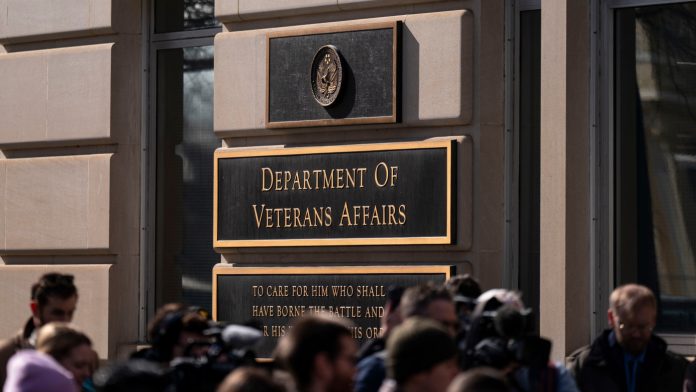
Protestors gathered outside the Department of Veterans Affairs headquarters in Washington, DC, US, on Feb. 13, 2025. The agency plans to cut 80,000 jobs.

Al Drago/Bloomberg via Getty Images


hide caption

toggle caption

Al Drago/Bloomberg via Getty Images

In the wake of federal firings and executive orders, providers and patients at the Department of Veterans Affairs say mental health and mental health care are suffering.

They fear this struggle will get worse as the VA carries through with 80,000 promised job cuts. The agency is one of the largest providers of mental health care in the country.

“I’ve been really struggling with my concentration and my ability to focus when I’m at work, because I feel like I have this ax over my head all the time,” says a mental health provider who asked NPR not to disclose the location of her work and to identify her only as Lynn, her middle name, for fear she could be fired for speaking out.

DEI and gender orders

Lynn is especially concerned about her clients who identify as LGBTQ, since one executive order called on federal employees to eliminate “equity related,” grants or contracts and another directed them to recognize only two sexes.

Consequently employees at the VA have been directed to remove symbols such as flags that indicate support for transgender or queer rights. “We’re kind of skirting around that,” says Lynn. “Some people have put up art in their office that says ‘Love is love,’ or a rainbow. So we’re all kind of being subversive.”

Therapists in other locations reported similar concern that these patients — already in a marginalized population — are being singled out and targeted for discrimination. They employed strategies similar to Lynn’s to silently communicate a message of solidarity to patients who identify as LGBTQ.

These rebellions come with a price.

“If I wear this stuff, am I then gonna become a target from either my patients or maybe my peers?” asks Lynn. “Because there’s this culture of, ‘you need to rat on people.'”

Employees at the VA have received emails encouraging them to report colleagues who are violating the new ban on diversity, equity and inclusion. There have also been high profile firings in the military of leaders who are Black or female.

Lynn says these changes are destabilizing to patients as well. “ We’ve had patients going to the medical records and asking for their charts to be altered,” she says, “to remove references to their gender identity or their sexual orientation because they’re fearing that they might be put on a list or that they might be discriminated against.”

Anxiety about what may come

Some patients who have post-traumatic stress disorder say the changes are especially disconcerting. One woman, who asked to be identified only as D.M., says she’s been suffering from near-constant anxiety since the changes began at the VA. She served for 26 years on active duty as a nurse and was sexually assaulted by a fellow service member. She says since then, she’s strictly avoided being alone in rooms with men.

“Even if you have to grab the office secretary, you make sure you are not one-on-one with that male, and that’s to protect you and to protect him,” says D.M.

Receiving both mental and physical health care at an all-women’s clinic, she says, has been tremendously helpful. D.M. fears such spaces will be eliminated from veteran and army life.” We’re gonna get rid of anything that involves women, transgender, you know, all that stuff,” she says.

The VA has not announced plans to cut such clinics, and the stated purpose of the executive order D.M. references on gender is to “protect women.” In an emailed statement from the VA, spokesperson Peter Kasperowicz wrote, “The VA will always provide veterans, families, caregivers and survivors the health care and benefits they have earned.”

Doug Collins, secretary of Veterans Affairs, has promised to preserve “mission critical” positions such as clinicians.

Research may end

But some VA employees and veterans’ advocates warn that getting rid of any staff could compromise care in a system that is predicated on an integrated model of physical and mental health, including research positions.

“Having high quality research is a part of high quality care,” says Rashi Romanoff, CEO of a non-profit, The National Association of Veterans’ Research and Education Foundations (NAVREF). The group does advocacy for research for veterans and warns that $35 million worth of research that is underway could be lost if the VA does not indefinitely preserve between 350 and 400 clinical trials.

In an emailed statement to NPR, VA spokesperson Kasperowicz said the agency would continue to fund these programs for 90 days “while the department conducts a comprehensive assessment of ongoing research.” Trials include research on topics such as suicide mitigation and treatment for substance use disorder, according to NAVREF’s data collection.

Nurse practitioner Lynn says going to work everyday feels like she’s working on the Titanic. “Half the people on the boat are still in the ballroom partying and 25 percent of them are actively telling me I’m hysterical,” she says.

She plans to stay aboard until she has no choice but to save herself.

Have information you want to share about the ongoing changes across the federal government? Katia Riddle is available through encrypted communications on Signal at Katia.75

Ukraine Hopes for Peace, but Skepticism Runs Deep

0

After hours of exhausting negotiations that ended with Ukraine agreeing to a Trump administration proposal for a 30-day cease-fire with Russia, it was not until the delegation from Kyiv was flying home that it got the news it was most desperate to hear: American military assistance was flowing again.

“I will only say that there is no better reward for such a crazy day than to learn, while already sitting on the plane, a short dry confirmation” that military aid had restarted, Gosha Tykhyi, a spokesman for Ukraine’s foreign minister, wrote on social media after talks with U.S. officials in Saudi Arabia.

The resumption of U.S. weapons deliveries and intelligence sharing was one outcome of the meeting on Tuesday in the coastal city of Jeddah. Ukraine agreeing to the cease-fire proposal was another — but only if Russia agrees to do the same.

While Ukrainians were deeply skeptical that Russia would accept the proposal for a cease-fire, the unfreezing of critical American assistance was widely seen as a positive development that could help mend the ruptured relationship between Kyiv and Washington.

“I would like to thank President Trump for the constructive nature of the dialogue between our teams,” President Volodymyr Zelensky of Ukraine said in his nightly address to the nation — seemingly taking care to publicly express gratitude after he was accused of not being appreciative enough during a disastrous Oval Office meeting last month with the American president that led to the suspension of U.S. military aid and intelligence sharing.

The sudden reduction in support came after weeks of growing tension as the White House seemed to more closely align itself with the Kremlin while increasing the pressure on its ally.

Ever since, Ukraine has sought to smooth over relations with the Trump administration. French and British officials coached the Ukrainian delegation before the talks in Jeddah about how to speak with the Americans, a Ukrainian official with the delegation said.

Mr. Tykhyi said that a key challenge for the Ukrainian delegation was to “control emotions” ahead of the meeting. Once the talks opened on Tuesday, he added, the Oval Office debacle also played a role in determining “the boundaries of the space for compromises and influenced the negotiating positions.”

It took more than eight hours of discussions to reach an agreement.

“It is in these last hours of the endgame, when fatigue is already showing, that a way out of the impasse and even difficult compromises suddenly become possible,” he said

At the conclusion of the meetings, Secretary of State Marco Rubio said that the burden was now on Russia to end the war.

“The ball is now in their court,” he said.

Mr. Zelensky echoed that sentiment in his speech to the nation. “Russia must also show whether it is ready to end the war — or continue it,” he said. “The time has come for the whole truth.”

If Russia does agree to the cease-fire, the challenge will be to make the peace enduring, Mr. Zelensky said.

The Kremlin has not said whether it will agree to the 30-day cease-fire. But the Ukrainian skepticism is informed by history: Russia violated two previous cease-fires, reached in 2014 and 2015, and denied an intention to invade just days before doing so in 2022.

“In my opinion, it will be like before when they introduced the cease-fire,” said Oleksandr Kovinko, a soldier fighting in eastern Ukraine. “We adhere to it, the enemy does not. And how it will actually be, it’s hard to imagine and predict.”

And for the Ukrainians who feel betrayed by the Trump administration’s recent moves, there was a fear that the United States might not be an honest broker.

“I have no hope that the U.S.A. has not completely shifted to Russia’s side,” said Yulia Podkydysheva, a hospice worker reached by phone in Chernivtsi, in western Ukraine.

Everyone, Ms. Podkydysheva said, could use 30 days “to breathe some air and see the light” after three years of unrelenting bombardment. But she does not think that rest will last.

“It will most likely be about some next round of struggle,” she said.

Liubov Sholudko contributed reporting.

Here are 8 things to know about the Trump-backed SAVE Act : NPR

0

Potential young voters get information at a voter registration desk at California State University, Los Angeles, on Oct. 22, 2024. The Republican-backed SAVE Act would add documentary proof-of-citizenship requirements to voter registration.

Frederic J. Brown/AFP via Getty Images


hide caption

toggle caption

Frederic J. Brown/AFP via Getty Images

Congressional Republicans are pushing a bill that would make sweeping changes to voter registration, including requiring those signing up to present documents proving U.S. citizenship. But tens of millions of Americans say they don’t have easy access to such documents, and critics say the proposal would dramatically depress voter participation.

The Safeguard American Voter Eligibility Act, known as the SAVE Act, was first introduced last year as President Trump and his allies focused on the baseless narrative that noncitizens presented a major threat to the 2024 election. Republicans see better chances for the bill now that they fully control Washington, while critics are pushing back with new concerns.

The current federal voter registration form requires voters to swear — under penalty of perjury — that they are U.S. citizens, and some states take additional steps to verify citizenship. Noncitizens who attempt to vote face steep penalties like jail, fines and deportation.

Backers of the SAVE Act say requiring voters to show citizenship documents is necessary to protect election integrity — though they have yet to provide evidence that instances of illegal voting by noncitizens are anything but incredibly rare.

“They are trying to take something that we all agree on — that only U.S. citizens should vote in U.S. elections — and use that to make it harder for millions of eligible citizens to cast their vote,” Michigan Democratic Secretary of State Jocelyn Benson said in a video denouncing the bill.

Here are eight things to know about the SAVE Act.

1. The bill was first introduced last year as Republicans focused on noncitizen voting

Ahead of the 2024 election, Trump and his allies repeated the groundless claim that Democrats planned to cheat by encouraging noncitizens to illegally vote. Many political observers and election experts saw the baseless narrative as an attempt to sow doubt about the election results in case Trump lost.

“We all know, intuitively, that a lot of illegals are voting in federal elections, but it’s not been something that is easily provable,” House Speaker Mike Johnson, R-La., said at a news conference introducing the SAVE Act last May. The bill passed the House in July, with five Democrats voting for it, though it languished in the Senate.

House Speaker Mike Johnson, R-La., speaks during a May 2024 news conference on the steps of the U.S. Capitol as Republicans introduced the SAVE Act.

House Speaker Mike Johnson, R-La., speaks during a May 2024 news conference on the steps of the U.S. Capitol as Republicans introduced the SAVE Act.

Kent Nishimura/Getty Images


hide caption

toggle caption

Kent Nishimura/Getty Images

No evidence came to light of any plot to encourage noncitizens to vote in the 2024 election, but that didn’t stop Republicans from reintroducing the measure at the start of the 119th Congress.

“American elections belong to American citizens, and the public’s confidence in those elections is the cornerstone of our republic,” the bill’s sponsor, Rep. Chip Roy, R-Texas, said in a January news release.

The bill is likely to pass the GOP-controlled House again, but it would need bipartisan support to overcome a filibuster in the Senate.

2. Millions of Americans don’t have easy access to proof-of-citizenship documents

The requirement to show proof of citizenship would apply to new voters as well as existing voters who update their registrations, such as after a move or name change.

But one in 10 voting-age American citizens, or an estimated 21.3 million people, either don’t have a proof-of-citizenship document like a birth certificate, passport or naturalization certificate, or don’t have easy access to one, according to a 2023 survey commissioned by voting rights groups. The survey found people of color are more likely not to have a document proving citizenship.

Obtaining these documents takes time and money. Only about 43% of Americans have passports, according to an analysis by the Voting Rights Lab. The bill says voters can show an ID that indicates citizenship, but currently only five states — Michigan, Minnesota, New York, Vermont and Washington — offer IDs that meet that criteria.

Voters who don’t have a citizenship document with a photo, like a passport, would need to show two documents — such as a government-issued photo ID along with a document proving citizenship, like a birth certificate.

“Adding more requirements to the process — especially costly, unnecessary ones that are a sudden and dramatic departure from existing requirements — will depress turnout overall,” said Lauren Kunis, executive director of VoteRiders, a nonpartisan organization that helps people obtain ID to vote.

3. Married women who changed their names would likely face additional requirements

Up to 69 million American women changed their names after they got married and therefore don’t have birth certificates that match their current names, according to an analysis by the progressive Center for American Progress. These women would likely need additional documentation, such as a name change document or marriage certificate, to register to vote.

The center’s Greta Bedekovics told NPR that would unfairly burden the women’s right to vote.

“Every move, every party affiliation change … and these women would be required to go with all of their documentation every single time,” Bedekovics said.

Cleta Mitchell, an advocate for stricter voting requirements who supports the SAVE Act, pushed back against that argument in a post on X.

“Under this nonsensical theory, married women are not capable of bringing the necessary documentation that shows citizenship AND married status,” she wrote.

Rep. Mary Miller, R-Ill., a SAVE Act co-sponsor, defended the bill in a recent congressional hearing, saying, “The SAVE Act does have robust protections for married women whose names have changed.” The legislation does not mention married women but says states should come up with processes to accept additional documentation when voters have a discrepancy on their proof-of-citizenship document. Miller’s office did not respond to a request for comment.

4. Voter registration would likely require a visit to a government office

The bill specifies that if someone registers by mail they must present their documents “in person to the office of the appropriate election official” before the voter registration deadline passes (or if they are in a state where voters can register at a polling place, they could show their documents there). That requirement would also “completely upend” third-party voter registration drives that rely on mail forms, said Jonathan Diaz, an attorney with Campaign Legal Center, which advocates for expanded voter access and opposes the SAVE Act.

The bill does not mention online voter registration, which is an option in most states. Neither Roy or Rep. Andrew Garbarino, R-N.Y., the bill’s other lead sponsor, responded to an NPR inquiry requesting more details.

Some 80 million Americans registered to vote or updated their registrations between the 2020 and 2022 elections, according to data from the Election Assistance Commission (EAC). The most common way people registered was through department of motor vehicles offices, but 9% of voters registered to vote by mail, fax or email, and 14% registered online in 2022, according to the EAC.

Requiring voters to show documents in person would be particularly burdensome for rural voters, people who rely on public transit and people who cannot leave work during business hours. In the 30 largest counties by area in the West, voters would have to drive an average of 260 miles to get to their election office, according to an analysis by the Center for American Progress. The same analysis found some voters in Alaska and Hawaii could have to fly to get to election offices.

That’s a concern espoused by Arizona Secretary of State Adrian Fontes, a Democrat.

“Because of [a voter’s] physical condition or their age or their distance from their county registrar’s office, they just don’t get to vote anymore?” Fontes questioned. “This is a radical shift in the way we consider preserving the voter’s right to vote.”

5. Election officials have concerns about implementation and new criminal penalties

Fontes said the lawmakers who came up with the SAVE Act may have had a noble idea, but the bill as written is deeply flawed.

“It’s going to put a heavy burden on localities and it’s really bad for voters,” Fontes said.

Some Republican state officials have also voiced concerns with how the bill would be implemented.

Michael Siegrist, a Democrat who runs elections as town clerk in Canton, Mich., said it would be necessary for his office to add some evening hours to accommodate voters who work during the day.

And he would have to evaluate people’s birth certificates, which are not uniform. “How am I supposed to know if you forged that birth certificate?” he questioned.

Raising the stakes further, the SAVE Act says election officials can face five years in prison or be sued if they register a noncitizen or a citizen who did not show proof. Siegrist worries he and his colleagues could be prosecuted for human errors or targeted by frivolous lawsuits.

“It creates too much risk, I think, for any reasonable person to want to stay in the profession,” he said.

6. Key details are still up in the air

The bill leaves the thorniest implementation questions up to states to decide with guidance from the EAC. If an applicant does not possess one of the proof-of-citizenship documents described in the bill, it says states should have a process for those applicants to submit additional evidence and for officials to decide if it is sufficient. The bill also says states should come up with accommodations for voters with disabilities.

Voting rights advocates say it is problematic to have gray areas in a bill that also says election officials can face criminal prosecution for missteps.

“Every incentive is for officials to not interpret this law broadly and favorably for voters,” said Sean Morales-Doyle, an attorney with the Brennan Center for Justice, which advocates for expanding voting access and opposes the bill. “Because if they make a mistake, they’re putting their neck out there and themselves on the line.”

7. States would get more access to federal immigration data 

The SAVE Act would require states to check voter rolls on an ongoing basis to ensure only U.S. citizens are registered. The bill would make it easier for states to use federal immigration data to do that, which has long been a point of contention between state election officials and the federal government.

Last month, 21 Republican secretaries of state wrote to Homeland Security Secretary Kristi Noem to ask for improved access to a federal data system called the Systematic Alien Verification for Entitlements (SAVE) program to help detect noncitizens on their voter rolls.

Some past efforts by states to purge noncitizens from voting rolls, however, have ensnared eligible U.S. citizens due to data inaccuracies.

8. States are considering their own proof-of-citizenship laws

The Republican goals behind the SAVE Act have spread to states as well.

Lawmakers in at least 18 states, including Texas and South Carolina, have introduced bills this year that would require documentary proof of citizenship to register to vote in state elections, according to an analysis by the Voting Rights Lab. New Hampshire passed a proof-of-citizenship law last year.

Kansas and Arizona pioneered such laws — and in both states they’ve been controversial.

In the first few years that Kansas’ law was in effect, more than 30,000 voter registration applicants were blocked due to not providing proof of citizenship — and a state expert conceded most of those people were citizens. In 2018 a federal court declared the state law unconstitutional.

Arizona uses a unique split system in which voters must prove citizenship to participate in state and local elections but not federal elections.

Unlike the protocol outlined in the SAVE Act, many Arizonans are able to fulfill the proof-of-citizenship requirement by writing their driver’s license or state ID number on the voter registration form, since the state’s motor vehicle division tracks citizenship. Still, some 32,000 Arizona voters are barred from voting in state and local elections due to proof-of-citizenship requirements, and an analysis by Votebeat found they are disproportionately young people near college campuses.

Last month, a federal appeals court found portions of two 2022 Arizona laws that would have imposed further proof of citizenship requirements to be “unlawful measures of voter suppression.”


Captain of Ship That Hit North Sea Tanker Is Russian, Company Says

0

The captain of a container ship that struck an oil tanker transporting fuel for the U.S. military on Monday was a Russian citizen, the company that owns that ship said on Wednesday.

The man was arrested in northern England on Tuesday on suspicion of gross negligence manslaughter. One crew member is missing and presumed dead after the crash, which forced both crews to abandon ship.

There was no immediate indication that the captain’s nationality played a role in the crash. Russians make up about 10 percent of international seafarers, according to the International Chamber of Shipping. British lawmakers said on Tuesday that they had no evidence to suggest foul play.

Ernst Russ, the company that owns the container ship, named the Solong, said in a statement that the vessel’s captain was a Russian citizen, while the rest of the crew members were Russian and Filipino.

“Ernst Russ can confirm that the master of the containership Solong has been detained by Humberside police in the U.K.,” the company added in a separate update. “The master and our entire team are actively assisting with the investigations.”

The crash on Monday morning, about 13 nautical miles off the northeastern coast of England, set off a series of explosions and a fire onboard both vessels that sent plumes of black smoke rising into the air. Given that the Solong plowed into the tanker, called the Stena Immaculate, in daylight hours while the tanker was stationary, experts have raised questions about why radar and alert systems did not prevent the crash.

One member of the Solong’s crew was presumed dead after an extensive search was called off late on Monday, though all other crew members escaped unharmed.

On Tuesday, the Humberside Police, the force responsible for the area, said that a 59-year-old man had been arrested on suspicion of gross negligence manslaughter in connection with the crash. As is typical practice under British law, the police declined to provide further details about his identity.

The Stena Immaculate was carrying jet fuel and was being operated by the U.S. Navy at the time of the crash, according to Britain’s transportation minister, Mike Kane, who briefed Parliament about the episode on Tuesday. Mr. Kane was also asked about whether the crash appeared to be intentional.

“Whether there was foul play is, I think, speculation; there is no evidence to suggest that at the moment,” Mr. Kane said, adding that the British government was in touch with its American and Portuguese counterparts. Still, he added, “something did go terribly wrong” to cause the crash.

The Stena Immaculate is owned by Crowley, a Florida-based logistics company, and had been chartered on a short-term basis to serve U.S. government operations.

Two astronauts stranded in space are coming back to Earth : NPR

0

Astronauts Suni Williams (lower) and Butch Wilmore (left) were originally supposed to return to Earth in June of last year. Instead, they’ve been part of the latest crew of the International Space Station, along with astronaut Nick Hague (right).

AP/NASA


hide caption

toggle caption

AP/NASA

Later today, a SpaceX capsule is scheduled to carry four astronauts to the International Space Station. Their arrival will clear the way for two astronauts that have been labeled as “stranded” to finally return to Earth.

The astronauts, Butch Wilmore and Suni Williams, were supposed to spend about a week on the space station when they went up last June. But they remained on the ISS after the experimental Boeing capsule they took into orbit malfunctioned.

In the past month, President Trump and his close adviser Elon Musk have repeatedly claimed that the decision to leave Williams and Wilmore in space was politically motivated.

“Biden was embarrassed by what happened, and he said ‘Leave them up there,'” Trump said during a press availability in the Oval Office on March 6. “Elon is right now preparing a ship to go up and get them.”

But some former astronauts and NASA officials have denied any political motives behind the extended stay of Williams and Wilmore. Here’s what to know about how they ended up on the station and why they’re finally coming home now.

Today’s launch is not, strictly speaking, a rescue mission

The SpaceX Dragon capsule heading to the station tonight is carrying the new crew for the station into orbit, but it’s not actually going to be the capsule that brings Williams and Wilmore home.

The capsule the duo will use to return to Earth has been attached to the space station since September of last year. That capsule, also built by SpaceX, arrived carrying NASA astronaut Nick Hague and Russian cosmonaut Aleksandr Gorbunov, and has two extra seats for Williams and Wilmore.

It could have also returned the astronauts at any point in the past six months or so.

The SpaceX Dragon Freedom spacecraft is pictured docked at the International Space Station on Monday, Nov. 4, 2024. Williams and Wilmore could have used the capsule to return to earth at any point since September of last year.

The SpaceX Dragon Freedom spacecraft is pictured docked at the International Space Station on Monday, Nov. 4, 2024. Williams and Wilmore could have used the capsule to return to Earth at any point since September of last year.

NASA


hide caption

toggle caption

NASA

“They had a SpaceX Dragon there as an emergency lifeboat, to bring them back at any time they needed to,” says former NASA astronaut Scott Kelly.

Instead of coming back immediately, Williams and Wilmore were fully integrated into the crew of Expedition 72 aboard the space station. Williams became the station commander in September and both she and Wilmore have worked conducting experiments and spacewalks during their time there.

Musk and Trump have pushed the theory that Williams and Wilmore are stuck for political reasons, but former astronauts and NASA officials deny that claim.

President Trump appears to have first made the claim that the astronauts were stranded for political reasons on Jan. 28.

“I have just asked Elon Musk and @SpaceX to ‘go get’ the 2 brave astronauts who have been virtually abandoned in space by the Biden Administration,” the president wrote on his social media platform Truth Social.

“Terrible that the Biden administration has left them there so long,” Musk posted the same day on his social media platform X.

The duo has elaborated on that claim several times since. Most notably during an interview with Sean Hannity in February:

“They got left in space,” Trump told Hannity.

“Yes, they were left up there for political reasons, which is not good,” Musk added.

After the interview, things quickly turned ugly on X when a former space station commander, Andreas Mogensen, called that claim “a lie.”

In his response, Musk called Mogenson an “idiot” and said he directly offered to return the astronauts earlier and was rebuffed by the Biden administration.

Former NASA officials have disputed that claim.

“I don’t know who he spoke to,” former NASA Deputy Administrator Pam Melroy told Bloomberg in an interview. “It wasn’t [NASA administrator] Bill [Nelson], it wasn’t me. It wasn’t our senior leadership at headquarters.”

“It certainly did not come to my attention,” Nelson told the Washington Post. “There was no discussion of that whatsoever. Maybe he [Elon Musk] sent a message to some lower-level person.”

NASA says it had technical reasons for keeping Williams and Wilmore at the space station

Current NASA officials have been less confrontational, but they nevertheless cited multiple technical reasons for keeping Williams and Wilmore at the station.

“Our leadership at NASA was trying to make sure that we considered everything just at a technical level, and that’s what we did,” Ken Bowersox, NASA’s associate administrator for space operations said during a press conference on Friday.

Suni Williams rides the space station's robotic Canadarm2 during a space walk on January 30, 2025. Williams has been commander of the station during much of her stay.

Suni Williams rides the space station’s robotic Canadarm2 during a space walk on January 30, 2025. Williams has been commander of the station during much of her stay.

A. Gorbunov/NASA


hide caption

toggle caption

A. Gorbunov/NASA

Bowersox and commercial crew program manager Steve Stitch cited cost and safety as the dominant reasons for keeping the two veteran astronauts aloft for longer than planned. Bowersox said that sending up an extra capsule, or returning a capsule early were “ruled out pretty quickly” due to budgetary concerns.

There were also technical issues caused by the decision to return the Boeing capsule Williams and Wilmore originally flew to space without them. When that capsule returned to Earth empty in August, Williams and Wilmore lost their seats—literally.

Stitch says that it was important to have the custom-fitted seats aboard their spacecraft to ensure that the two astronauts were not injured during re-entry and landing. New custom seats were installed on the Dragon capsule that arrived in September, ensuring a smooth return.

“When we laid all that out, the best option was really the one that we are embarking upon now,” Stitch said.

Williams and Wilmore appear happy to be coming home, but they’ve been doing fine in space

“Every day is interesting because we’re up in space and it’s a lot of fun,” Suni Williams said during a press conference from the ISS on March 4. “The hardest part is having the folks on the ground have to not know exactly when we’re coming back.”

Wilmore added that astronauts are well aware that any trip to space carries risks.

“The mission of the space station… is something that we deeply believe in,” added Wilmore. “It’s that belief that allows us to take those risks.”

Long-duration missions can be psychologically tricky, says former astronaut Scott Kelly, who spent 340 days aboard the space station. But he adds, he has no doubt that Williams and Wilmore have been able to handle it.

“They’re professionals,” says Kelly. “I’m pretty sure they’re not having too much of a problem with this.”