Thursday, November 12, 2026
Home Blog Page 134

Gerald Stratford Is Still Growing Very Big Vegetables

0

You can still find Gerald Stratford in his garden, tending to his extremely large vegetables.

Mr. Stratford, all smiles and pudgy cheeks, became a sensation in May 2020 when he shared two pictures of himself on Twitter. In one, he is holding a giant bundle of arugula (rocket, in Britain), and in the other he is sitting on an upside-down bucket with a bowl of potatoes.

“My first early rocket very pleased,” he wrote.

A minor celebrity arc soon followed, landing Mr. Stratford — who was enduring Britain’s lockdown from his home in the tiny village of Milton-under-Wychwood in Oxfordshire, England — a book deal and radio and television appearances. The food website Eater called him the “Twitter king of ‘big veg’ gardening.” Newsweek gave him a column.

Five years later, he’s gotten used to the fame. It was overwhelming at first, Mr. Stratford said, but he eventually learned how to deal with the attention.

“I think I am enjoying it more now than at the beginning,” he said. “It’s a lot easier to take now.”

In a phone conversation, Mr. Stratford said he was still happy gardening and growing giant vegetables.

“My greenhouse is full and overflowing,” he said. Along with his carrots, parsnips and zucchini, Mr. Stratford said he had plans to grow a giant melon.

Gardening still brings joy to his days. “The world, it’s not a very nice place still since the pandemic,” he said. “But we have our health, and that’s what matters.”

He’s eager to get his hands dirty, and is not planning to get out of his garden anytime soon.

“Long may I continue,” he said.

Why the clean-energy industry is growing despite Trump’s attacks. : NPR

0

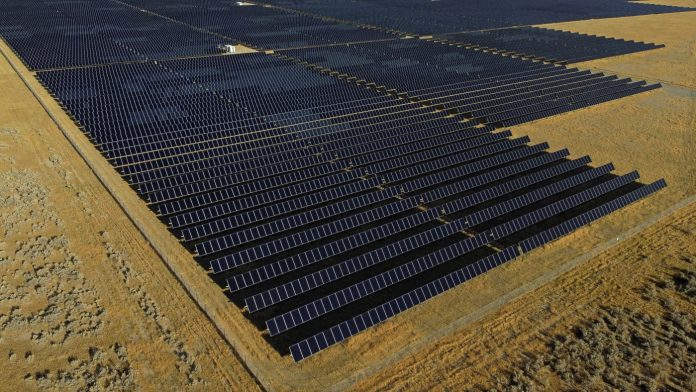
A solar plant in Mona, Utah. The U.S. Energy Information Administration says solar will account for just over half of new power generation that will get built in the U.S. this year.

Rick Bowmer/AP/AP


hide caption

toggle caption

Rick Bowmer/AP/AP

Despite the Trump administration’s wide-ranging attacks on renewables like wind and solar power, the clean-energy industry is on pace for record growth this year, according to government analysts.

The buildout of big solar and battery plants is expected to hit an all-time high in 2025, accounting for 81% of new power generation that companies will add to America’s electric grids, the Energy Information Administration (EIA) said in a recent report. Including wind projects, the share of new power capacity that’s expected to come online this year from renewables and batteries jumps to 93%, the EIA said.

The U.S. needs all the power it can get, because electricity demand is surging for the first time in decades, industry analysts and executives say. That means kickstarting development of nuclear power and geothermal projects, burning more natural gas and, in some cases, delaying retirement of old coal plants. But in the scramble for electricity, renewable-energy and battery plants are crucial, analysts and executives say, because they’re quick to build and provide electricity that’s relatively cheap.

“There is no doubt that the increased demand for electricity over the next decade, coming from data centers and advanced manufacturing, will continue to require vast amounts of renewable energy and batteries,” Andrés Gluski, chief executive of The AES Corporation, a power company that owns both clean-energy and fossil-fuel plants, told Wall Street analysts recently.

Still, the renewables industry faces potential upheaval. The Trump administration tried to withhold federal funding Congress previously approved for climate and clean-energy projects. Trump also ordered the government to temporarily stop issuing or renewing leases for offshore wind projects in federal waters. The Department of the Interior limited who at the agency can issue permits for renewable energy projects on public lands, which could slow permitting. And conservatives are pushing Congress to wipe out tax incentives for clean energy.

If the disruptions spread, companies could abandon plans to build new power plants. That could dampen economic growth and hamstring efforts to develop data centers for artificial intelligence, a priority of the Trump administration. In an interview that aired Sunday on Fox News, Trump declined to rule out the possibility of an economic recession this year.

“At a time when we’re all very concerned about energy abundance and this administration’s broad goal of re-establishing energy dominance, just the idea that we’d be constraining the build of new energy [infrastructure] really feels like it’s rowing in the wrong direction,” says Rich Powell, chief executive of the Clean Energy Buyers Association, whose members range from Amazon to ExxonMobil to Walmart.

Interior Secretary Doug Burgum chairs the Trump administration’s National Energy Dominance Council. An Interior Department spokesperson, Elizabeth Peace, said in a statement that the agency supports renewable-energy development “where it makes sense while ensuring that all energy sources contribute to a reliable and affordable power grid.”

Electrical transmission lines run through grass lands to power Meta's Facebook data center in Eagle Mountain, Utah. The data center is a complex of five large buildings each over four football fields long and totaling 2.4 million square feet.

Electrical transmission lines run through grass lands to power Meta’s Facebook data center in Eagle Mountain, Utah. The data center is a complex of five large buildings each over four football fields long and totaling 2.4 million square feet.

GEORGE FREY/AFP via Getty Images/AFP


hide caption

toggle caption

GEORGE FREY/AFP via Getty Images/AFP

Demand for clean energy ‘is certainly not going away’

The clean-energy industry has exploded over the past decade. Solar, in particular, has accelerated. Meanwhile, growth in the wind industry has slowed because of problems ranging from inflation to pushback on siting projects.

The industry overall has boomed thanks to falling technology costs, federal tax incentives and state renewable-energy mandates. The market got another big boost in 2022, when President Joe Biden signed the Inflation Reduction Act, which provided hundreds of billions of dollars in federal funding for clean-energy projects, among other climate investments.

Corporations like Amazon, Meta and Google have also played a role, signing contracts to buy ever-larger amounts of renewable energy.

“I expect that that will continue,” says Powell of the Clean Energy Buyers Association. “The demand is certainly not going away.”

Some big investors seem to take a similar view. Led by Trump supporter Steve Schwarzman, the investment firm Blackstone said in February that it raised $5.6 billion for its “energy transition” business, which in the past has invested in companies that work in the renewable energy industry. Also last month, Brookfield Asset Management agreed to buy a U.S. renewable energy business for more than $1.7 billion.

“Renewables will be the biggest beneficiary of growing electricity demand because they are the cheapest option, and [electricity buyers] will always absorb as much of the cheapest source of power before turning to more expensive forms of power,” Brookfield’s chief executive, Bruce Flatt, told Wall Street analysts in February.

Congressional Republicans have backed Trump’s pro-fossil fuel agenda. But a group of 21 GOP lawmakers recently called for Congress to preserve tax credits that support the renewable energy industry. “As energy demand continues to skyrocket, any modifications that inhibit our ability to deploy new energy production risk sparking an energy crisis in our country, resulting in drastically higher power bills for American families,” the lawmakers wrote to the Republican chairman of the House Ways and Means Committee, Rep. Jason Smith of Missouri.

Wind turbines along a highway in Andrews, Texas.

Wind turbines along a highway in Andrews, Texas.

Julio Cortez/AP/AP


hide caption

toggle caption

Julio Cortez/AP/AP

Key conservatives call for backing natural gas instead

Clean energy’s draw could wear off as Trump’s policies take effect, says Diana Furchtgott-Roth, director of the Center for Energy, Climate, and Environment at the Heritage Foundation, a conservative think tank. The Heritage Foundation produced a governing agenda called Project 2025 that aligns with many actions Trump has taken so far. Among its dozens of recommendations, the plan calls for Congress to repeal the Inflation Reduction Act, which could eliminate tax incentives that lower the price tag for clean-energy projects.

“I think that what you’re seeing [right now] is people operating with the old prices” in U.S. power markets, Furchtgott-Roth says. “But I think that that might change.”

Rather than renewables and batteries, Furchtgott-Roth says natural gas is “the wave of the future for the United States.” After all, she says, the country has “an almost infinite supply.” The U.S. has huge reserves of natural gas, but its main component, methane, is a big contributor to global warming.

Natural gas fueled about 43% of America’s electricity last year, according to a report from BloombergNEF and the Business Council for Sustainable Energy. The country will almost certainly burn more gas to meet growing power demand, industry analysts say. Gas plants can produce electricity when it’s needed, which regulators say is becoming more important because large parts of the country are expected to face a growing risk of blackouts as coal plants retire.

“We are unabashedly pursuing a policy of more American energy production and infrastructure, not less,” Energy Secretary Chris Wright said Monday at an energy conference in Houston, where he touted the importance of natural gas, according to a copy of his prepared remarks. Wright downplayed the role of renewables and called climate change a “side effect of building the modern world.”

The natural gas-fired Bastrop Energy Center Power Plant in Cedar Creek, Texas.

The natural gas-fired Bastrop Energy Center Power Plant in Cedar Creek, Texas.

Brandon Bell/Getty Images/Getty Images North America


hide caption

toggle caption

Brandon Bell/Getty Images/Getty Images North America

Executives say it will take years to build a lot of new gas plants

A problem with gas plants, though, is that the cost to build them has risen, industry executives say. Gas turbines are also on backorder, and that means companies can’t build plants fast enough to meet rising electricity demand in the next few years.

“Renewables and storage are ready now to meet that demand and will help lower power prices. Gas-fired generation is moving forward but won’t be available at scale until 2030,” John Ketchum, chief executive of NextEra Energy, told Wall Street analysts days after Trump’s inauguration. NextEra runs one of the world’s top renewable energy developers and also has a big natural gas business.

The EIA says solar will account for just over half of new power generation that will get built in the U.S. this year. So far, the Trump administration hasn’t targeted solar like it has the wind industry, and developers are moving ahead with projects, says Paula Mints, chief analyst at SPV Market Research, which tracks the solar market. But she says companies are nervous.

Sweeping tariffs from the Trump administration could increase costs across the U.S. energy industry, making it more expensive to build new power plants of all kinds, says John Hensley, senior vice president of markets and policy analysis at American Clean Power, a trade group.

And if Congress gets rid of clean-energy tax credits in the Inflation Reduction Act, power prices for homeowners, renters and businesses would go up, and the country would build fewer clean energy projects, according to a study commissioned by the Clean Energy Buyers Association.

The result is confusion in the market, leading some businesses to rethink U.S. investments. Days after Trump’s inauguration, an Italian company called the Prysmian Group cancelled plans to build a factory in Massachusetts that would have supplied undersea cables for offshore wind projects. An Indian solar manufacturer, Premier Energies, recently told investors that it paused plans for a U.S. plant until it knows what will happen to federal tax incentives. And Aspen Aerogels, an American firm, stopped construction of a factory in Georgia where it planned to make components for electric vehicles, citing an “evolving environment.” In a recent report, Climate Power, an advocacy group, says more than 42,000 announced clean-energy jobs have been “threatened or eliminated” since Trump took office.

In the face of rising power demand, the last thing the country needs is to slow down clean-energy development, Ketchum told analysts in January.

“We can’t afford to take any options off the table,” he said.

Kurdish Fighters Called a Truce, But Turkey Kept Up Lethal Strikes

0

Turkey’s military has kept up deadly attacks in Syria and Iraq on fighters linked to the Kurdish insurgent group P.K.K. in the two weeks since the movement’s founder called on his followers to lay down their arms and disband.

The P.K.K. leadership, which is based in the Qandil Mountains of Iraq’s northern Kurdistan region, responded to the call by the founder, Abdullah Ocalan, by announcing a unilateral cease-fire on March 1. But they said that Turkey had to release Mr. Ocalan from prison to oversee the group’s disarmament, a possibility that Turkish officials have not publicly entertained.

Previous efforts to negotiate an end to the 40-year Turkey-P.K.K. conflict, which has killed more than 40,000 people, have failed. This time around, Turkish officials are releasing little information about the state of any talks. But it appears that the process is still moving forward, and analysts say Turkey is not discussing its progress to avoid a potential domestic backlash.

For more than four decades, Turkey has been fighting an armed insurgency by the Kurdistan Workers’ Party, or P.K.K., a militant group that says it seeks greater rights for the country’s Kurdish minority.

The group began fighting the Turkish state in the early 1980s, originally seeking independence for the Kurds, who are believed to make up about 15 percent or more of Turkey’s population.

Starting from the mountains in eastern and southern Turkey, P.K.K. fighters attacked Turkish military bases and police stations, prompting harsh government responses. Later, the conflict spread to other parts of the country, with devastating P.K.K. bombings in Turkish cities that killed many civilians.

Over the last decade, the Turkish military has routed P.K.K. forces from major Kurdish cities in southeastern Turkey, while using drones to kill its leaders and fighters, hindering its ability to organize and carry out attacks.

Mr. Ocalan, the founder of the P.K.K., issued a public call to his fighters on Feb. 27 to lay down their weapons and disband. He said armed struggle should be replaced with peaceful political action to try to win more rights for Kurds — Turkey’s largest ethnic minority.

The P.K.K. leadership responded to the call by declaring a unilateral cease-fire. But Turkey did not reciprocate.

Last week, a Turkish defense ministry spokesman, Rear Adm. Zeki Akturk, said that Turkey’s military would “continue its fight against terrorism with determination and resolve until there is not a single terrorist left.” Turkey considers all members of the P.K.K. and other affiliated groups “terrorists.”

Rear Admiral Ataturk said Turkey had killed 26 “terrorists” in Syria and Iraq in the previous week and nearly 1,500 since January.

The P.K.K. has not corroborated those numbers. But its military wing said last week that in recent days, Turkey had carried out more than 800 strikes on the group’s positions in northern Iraq using fighter jets, helicopters and artillery.

The peace talks up until now have not produced a bilateral cease-fire, and Turkish leaders have vowed to keep up the military pressure on the P.K.K., which Turkey and the United States consider a terrorist organization.

“Naturally, to solve our problems we prioritize dialogue, reconciliation and talks,” President Recep Tayyip Erdogan said this month. “But if the hand we have extended is left in the air or bitten, we will keep our iron fist ready at all times.”

Turkish officials have described their goal as a unilateral surrender by the P.K.K. Its fighters are expected to disarm, but there has been no public discussion of any concessions the government has offered in return or potential amnesties for people wanted for P.K.K.-related activity.

“The group understood the fact that it cannot achieve anything with terror, that it outlived its life span and has no choice but to dissolve itself,” said the defense ministry spokesman, Admiral Ataturk. “The P.K.K. and all its related groups should end terrorist activities, dissolve themselves and surrender their weapons as they lay them down unconditionally.”

Mr. Erdogan, too, said that Turkey would continue to use military force if the P.K.K. stalled or peace talks bogged down.

“We will continue our ongoing operations until the last terrorist is eliminated, without leaving a single stone on top of another and no heads atop any shoulders, if necessary,” he said.

The P.K.K. and groups associated with it have long sought greater rights for Turkey’s Kurds, whose language and culture the state has suppressed since Turkey was formed after World War I. While some schools in Turkey now offer elective Kurdish language courses and some Kurdish language broadcasters have received state licenses, many Kurds would like these rights to be expanded.

Last week, Mustafa Karasu, a senior P.K.K. official, said in a televised interview that the group was serious about disarmament but that Turkey had to stop striking P.K.K. positions. He went on to say that Mr. Ocalan needed more freedom to be able to help lead the group’s transition.

“We will realize the transformation the leadership has set forth, the dissolution of the P.K.K., ending the armed struggle. No one should doubt that,” Mr. Karasu said. “And naturally the state, the government, should do what is necessary about democratization without adopting any excuses.”

Mr. Ocalan’s call was preceded by talks that included Turkish officials, Mr. Ocalan, Iraqi Kurdish leaders and members of Turkey’s main pro-Kurdish political party.

Mr. Ocalan is also a figurehead for a Kurdish-led militia, the Syrian Democratic Forces, which controls a stretch of territory in northeastern Syria.

The Turkish government considers that militia an offshoot of the P.K.K. and publicly makes little distinction between them. But the United States views the two groups very differently, and for a decade has allied with the S.D.F. in fighting the jihadists of the Islamic State in Syria.

On Monday, the leader of the S.D.F. reached an agreement with Syria’s interim president, Ahmed al-Shara, to integrate the Kurdish-led force into the new Syrian state.

Although Mr. Ocalan did not mention Syria specifically in his call for disarmament, some Syrian Kurdish leaders have said that the agreement falls in line with Mr. Ocalan’s guidance.

Trump administration pauses many government orders for EVs : NPR

0

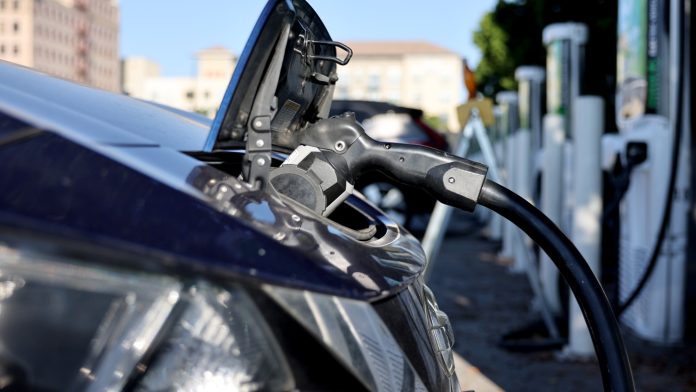
A Nissan LEAF recharges at a station in Pasadena, Calif. Memos obtained by NPR show a key federal agency has paused orders of zero-emission vehicles and some federally-owned EV chargers will be shut off.

Mario Tama/Getty Images


hide caption

toggle caption

Mario Tama/Getty Images

The Trump administration has halted much of the federal government’s adoption of electric vehicles into its massive fleet of cars and trucks.

The U.S. General Services Administration, which orders many of the vehicles and owns EV chargers used by other federal agencies, has “temporarily suspended” orders of zero-emission vehicles, stopped the installation of new EV charging stations, and ordered some existing stations to be shut down, according to internal memos obtained by NPR and Colorado Public Radio.

“All existing charging stations that are deemed not to be mission-critical should be disconnected from the network and turned off,” reads a March 3 memo on EV chargers signed by Michael Peters, the new commissioner of the GSA’s Public Buildings Service, appointed by President Trump.

The new mandates represent a stark reversal from the Biden administration, which directed the federal government to start transitioning the federal fleet to zero-emission vehicles as part of its efforts to combat climate change and support the EV industry.

While research is mixed on whether a transition to EVs would save the government money, environmental advocates say their climate benefits are clear.

“I think it’s a very shortsighted move,” Travis Madsen, transportation program director at the Southwest Energy Efficiency Project, said of the apparent move away from EVs.

The March 3 memo halts the installation of new GSA chargers, though it does allow agencies to ask for an exception if they have a “mission-critical need.” Agencies must follow a similar procedure if they want to continue using existing GSA-owned chargers. The memo does not define “mission critical.”

It’s unclear exactly how many chargers and how many federal facilities the new policy will affect. The GSA has already ordered chargers to be shut down at a large federal campus in Denver, according to an internal email obtained by Colorado Public Radio.

Vehicles speed down Kipling Street past the main entrance to the Denver Federal Center on Sept. 28, 2023

The GSA is shutting down some federally-owned electric vehicle chargers, including at the Denver Federal Center.

Hart Van Denburg/CPR News


hide caption

toggle caption

Hart Van Denburg/CPR News

The pause on orders for new zero-emission vehicles was included in a January memo from Acting Administrator Stephen Ehikian, which suspended “any new GSA-funded obligations” for review. The memo listed several exceptions, including “vehicles for the federal fleet, other than zero emission vehicles.”

In an emailed statement, GSA spokesperson Jorge Pineda confirmed the pause on ordering new EVs. He said the GSA is working with its partner agencies to confirm that current and planned EV chargers are “mission critical in nature.”

Trump has long criticized electric vehicles, saying they are expensive and have limited range. During his 2024 campaign, he pledged to roll back Biden-era policies promoting EVs.

On his first day in office, Trump signed an executive order revoking a goal set by former President Biden for battery-powered vehicles to make up 50% of all new vehicles sold in the U.S. by 2030, which Trump has incorrectly called a mandate.

“Importantly, we ended the last administration’s insane electric vehicle mandate, saving our auto workers and companies from economic destruction,” Trump said during his recent address to Congress.

Trump appeared at an event in front of the White House on March 11, 2025, accompanied by Tesla CEO Elon Musk. Trump said he would purchase a Tesla EV as a 'show of confidence and support' for Musk, now a White House senior advisor.

At a White House event on March 11, Trump said he would purchase a Tesla EV as a “show of confidence and support” for Tesla CEO Elon Musk, now a White House senior advisor. The announcement came as the Trump administration has halted much of the federal government’s adoption of electric vehicles.

Andrew Harnik/Getty Images North America


hide caption

toggle caption

Andrew Harnik/Getty Images North America

Trump has also paused billions in federal spending to build more public EV charging stations and is seeking to unwind other policies that promote EVs, including California’s ban on the sale of new gas-powered cars by 2035. Federal tax credits are still in place to incentivize consumers to buy EVs, though some Republicans in Congress have proposed killing those and imposing a new $1,000 EV tax instead.

Trump has made some exceptions. He has promoted EVs made by Tesla, whose CEO, Elon Musk, was a major campaign donor and is now a White House advisor leading efforts to cut the federal government. Last month, the State Department paused apparent plans for a $400 million contract for armored Tesla vehicles.

Trump targets green fleet plans

The federal government added thousands of electric vehicles to its fleet under Biden, who issued an executive order in 2021 requiring that most federal vehicle leases or purchases be zero-emission by 2035. All acquisitions of light-duty vehicles, which include passenger cars, SUVs and pick-up trucks, were to be zero-emission by 2027. Those targets have also been revoked by Trump.

Transportation is the largest source of planet-warming greenhouse gas emissions in the U.S., according to the Environmental Protection Agency. Cars, SUVs and other light-duty vehicles account for 57% of transportation-related emissions, and the federal government’s huge fleet has some 670,000 vehicles. The GSA provides more than 230,000 of those vehicles.

There were more than 8,500 electric vehicles in the federal fleet as of 2023, according to federal data. That number is likely larger now: In 2024, the GSA said the federal government had begun installing more than 25,000 charging ports and had ordered more than 58,000 zero-emission vehicles.

The March 3 memo does not say how many GSA-owned charging stations are currently in operation, but hundreds of new ports were in the works last year. The memo says that all maintenance and network contracts for non-mission critical equipment “should be terminated.”

Most chargers at the Denver Federal Center have already been turned off, leaving some federal workers “dismayed and shocked,” said a current GSA manager, who spoke on the condition of anonymity out of fear of losing their job for speaking to the media.

It’s not yet clear what federal agencies will do with their existing zero-emission vehicles and chargers, the official said.

Europe Retaliates Against Trump’s Tariffs as Trade Fight Widens

0

The European Union has spent months bracing for painful tariffs from the United States, the bloc’s most important trading partner. On Wednesday, as American steel and aluminum tariffs of 25 percent took effect, European officials began to respond.

While the United States buys the most steel and aluminum from countries including Canada, Brazil and Mexico, Germany is a notable steel producer.

And because the tariffs will also affect products that contain steel and aluminum, such as cookware and window frames, the European Union said, they may hit some 26 billion euros — $28 billion — of the bloc’s exports in total.

Wednesday’s rebuttal is the European Union’s attempt to hit back in equal measure.

The response will come in two parts. The European Union had increased tariffs on a range of goods in retaliation to U.S. measures during President Trump’s first term, but they were suspended under the Biden administration.

That suspension will be allowed to lapse on April 1, meaning that higher tariffs would take effect on billions worth of products that include boats, bourbon and motorcycles.

The bloc’s second step, it said, would be to place tariffs on €18 billion worth of additional products. Representatives from countries across Europe will consult for two weeks before officials finalize the list of products that would be affected.

Items that have been proposed for inclusion are industrial and agricultural, including home appliances, poultry and beef. The goal is to have those new measures in force by mid-April.

The announcement was Europe’s opening move in an unfolding trade conflict — one that is widely expected to intensify over the course of the month ahead.

For the bloc, the American steel and aluminum tariffs are just the start of what Mr. Trump has promised is coming. He has repeatedly said that he would set wide-ranging tariffs on American trading partners globally as soon as April 2. He has suggested that levies on cars in particular could be 25 percent, a figure that would be painful for German and Italian automakers.

“We’re now in this escalating spiral,” said Carsten Brzeski, global head of macro research at the bank ING.

On the one hand, the European Union does not want to escalate the trade war. Officials want the United States to keep negotiating with them. European officials have called tariffs “economically counterproductive,” warning that a tit-for-tat tariff fight would harm everyone involved.

“Tariffs are taxes,” Ursula von der Leyen, president of the European Commission, the bloc’s executive arm, said in a statement on Wednesday. “Jobs are at stake, prices up, nobody needs that.”

But the Trump administration has been reluctant to negotiate, which is pushing European policymakers to adopt a more aggressive stance.

“I traveled to the U.S. last month; I was seeking constructive dialogue to avoid the unnecessary pain of measures and countermeasures,” said Maros Sefcovic, the top trade official for the European Commission, during a press briefing on Monday. “In the end, as it is said, one hand cannot clap. The U.S. administration does not seem to be engaging to make a deal.”

He added: “As the U.S. is watching over its interests, so is the European Union.”

Mr. Trump’s tariffs come at a tough moment for the European economy. After several years of flagging growth, businesses across the bloc are now staring down the prospect of worsening trade conditions that could hurt their overseas business.

Groups representing the German steel industry, for instance, have said that the tariffs come at an “inopportune time,” when producers in the European Union are already dealing with a flood of cheap competition coming from China.

Europe has not been caught by surprise, at least. A trade-focused group within the European Union, colloquially called the “Trump task force,” spent much of last year preparing for different trade conflict scenarios.

But it has been hard for Europeans — and other American trading partners — to decide how to respond to the threat of tariffs. It is not clear what Mr. Trump’s goals are or which ones will ultimately be retained, because the Trump administration has made a habit of threatening and then backtracking, at least temporarily.

“It’s hard to know what is going to stick and what’s not going to stick,” said Michael Strain, director of economic policy studies at the American Enterprise Institute in Washington, which recently hosted an event with Mr. Sefcovic.

European officials have also struggled to get their American counterparts on the phone. Ms. von der Leyen has not spoken individually with Mr. Trump since his inauguration.

Asked at a news conference on Sunday when she might speak to him, she said: “we will have a personal meeting when the time is right.”

Kaja Kallas, the bloc’s chief diplomat, was supposed to meet with Marco Rubio, the American secretary of state, in Washington in late February, but Mr. Rubio canceled that meeting.

And diplomats from across the European Union and its member countries have struggled to identify who they should talk to in the Trump administration, in part because they lack clarity into how decisions are being made.

“I do think there’s a level of consternation at the objectives of the administration,” said Jörn Fleck, senior director with the Europe Center at The Atlantic Council, Washington-based research institution.

And he said that Europe may struggle more to respond in a world in which the United States does not want to simply make a deal — but rather wants to fundamentally reorder the global trade order so that more is produced in the United States.

“Maybe there isn’t any deal to be had,” he said.

Online Influencer Is Killed While Livestreaming in Tokyo

0

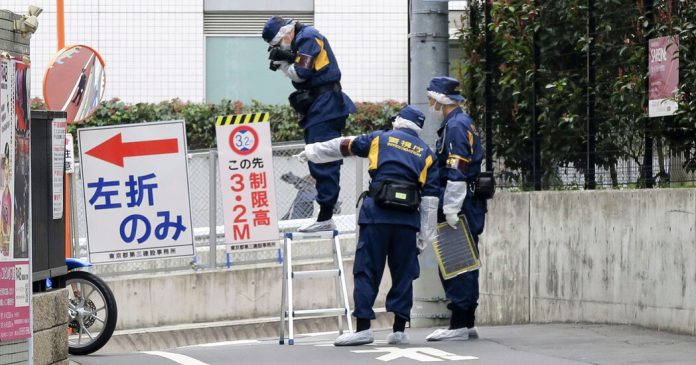
A young female online influencer in Japan was stabbed to death while livestreaming on a Tokyo street by a man whom the police identified as a follower with a grudge.

The influencer, Airi Sato, 22, was heard by passers-by screaming “help!” and her livestream went dark, with the sounds of emergency-vehicle sirens audible to those watching. Her audience posted puzzled and worried reactions, including urgent pleas like “Where did she go?” and “Someone help!”

The Tokyo police said Wednesday that they had charged Kenji Takano, 42, with murder on suspicion he carried out the attack, which took place the day before in a Tokyo neighborhood popular with university students. They said Mr. Takano, who was arrested at the scene, had admitted to the attack, though he said he didn’t mean to kill her.

According to the police, Mr. Takano used a survival knife to stab Ms. Sato in the head, neck and torso while she stood looking into her cellphone camera on a busy street. Ms. Sato, a livestreamer who had more than 2,600 followers, was filming herself as she made a circuit of major train stations.

Although efforts were made to revive her, Ms. Sato died after arriving at a hospital, police said.

Violent crimes remain rare on Tokyo’s usually orderly and clean streets, though there have long been concerns of Japan’s social cohesion fraying from growing inequalities, stagnant wages and, more recently, rising prices.

The police said that they believe this was not a random attack. They said Mr. Takano appears to have been a follower who said he once lent Ms. Sato a large sum of money that she never repaid.

This may have led Mr. Takano to hold a grudge against Ms. Sato, the police said. While she didn’t disclose beforehand where she would be streaming from, Mr. Takano tracked her down by recognizing the buildings behind her, according to local media reports citing police investigators.

The aftermath of the attack was also captured elsewhere online, as passers-by posted photos on social media of Ms. Sato lying collapsed and bleeding on the street.

On her channel in a livestreaming app called WhoWatch, she had often filmed herself while visiting bars and meeting other streamers.

This is not the first killing of a female streamer in Japan. Two years ago, a court in a Tokyo suburb sentenced a 26-year-old man to 17 years in prison for the stabbing death of a 33-year-old influencer who had just broken off a relationship with him.

Hisako Ueno and Kiuko Notoya contributed reporting.

Trump’s Tariffs on Steel and Aluminum Take Effect

0

President Trump’s sweeping tariffs on foreign steel and aluminum went into effect on Wednesday, escalating America’s trade spats with global competitors, including close allies already reeling from his on-and-off approach to trade penalties.

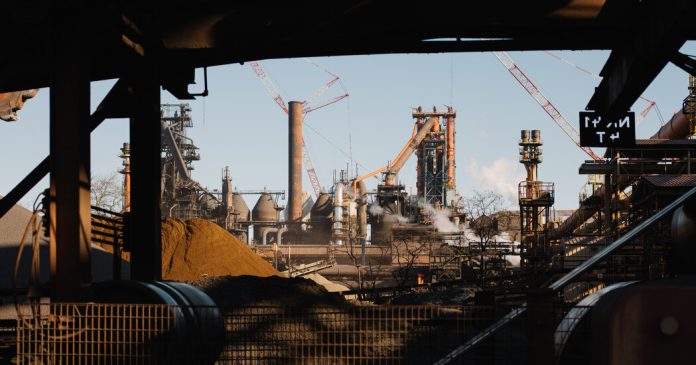
Mr. Trump’s tariffs of 25 percent on the metals hit imports that enter the United States from any country in the world. The move, which many domestic steel and aluminum makers support, is expected to raise costs for American manufacturers of cars, tin cans, solar panels and other products, potentially slowing the wider U.S. economy.

The action on metals was just the latest attempt by Mr. Trump to leverage the power of tariffs and the American market against foreign governments. Last week, he issued steep tariffs on imports from Canada, Mexico and China, blaming those countries for the entry of drugs and migrants into the United States, before quickly paring some of them back. The president is threatening to impose a raft of other tariffs, including on foreign cars and against countries that he says discriminate against the United States.

His approach has been met with a market slump and has sent many U.S. allies into a defensive mode as they try to decipher what the president actually wants. On Tuesday, Mr. Trump threatened to double the tariffs on Canadian metal after Ontario had responded to Mr. Trump’s previous tariffs by putting a surcharge on electricity exported to the United States. Within hours, Ontario had suspended its surcharge, and Mr. Trump walked back his threats.

The metal tariffs, and other levies to come, are likely to again worsen trade disputes. Foreign governments, including in Canada and Europe, have vowed to retaliate by issuing levies that will most likely hurt U.S. exporters. The metal tariffs mainly affect U.S. allies: Canada is by far the largest supplier of both steel and aluminum to the United States. Brazil, Mexico, South Korea and Vietnam are also top suppliers of steel, while the United Arab Emirates, Russia and China are top suppliers of American aluminum.

The tariffs restore and expand similar measures that Mr. Trump put in place in 2018, which ushered in several long-running trade wars. Mr. Trump argued that the tariffs were needed to protect national security and provide a reliable source of metal for the military in wartime.

In the intervening years, both Mr. Trump and former President Joseph R. Biden Jr. made deals with foreign countries, including Brazil, Mexico, Canada and nations in Europe, that whittled away at the tariffs. The U.S. metals industry has complained that the measures were no longer strong enough to keep steel mills and aluminum smelters afloat.

Kevin Dempsey, the president of the American Iron and Steel Institute, an industry group, said that the tariffs had been “very effective” compared with previous one-off trade actions that had only targeted specific countries or specific products.

“Things would be, without those tariffs, much worse for the industry,” Mr. Dempsey said.

But because steel and aluminum are used to make so many other products, raising the price of the metal will have ripple effects throughout the U.S. economy. By increasing costs of basic inputs for many companies, the tariffs could harm manufacturers who ultimately employ far more Americans than steel mills and aluminum smelters do, potentially causing Mr. Trump’s plans to bolster U.S. manufacturing to backfire.

An economic analysis published by the U.S. International Trade Commission, an independent, bipartisan agency, suggested that the costs to the U.S. economy from Mr. Trump’s first tranche of metal tariffs outweighed the gains.

The study found that the metal tariffs levied in 2018 encouraged buyers of steel and aluminum to purchase more from U.S. sources, led to higher domestic prices for metals and expanded U.S. steel production by about 2 percent between 2018 and 2021, the years the report studied.

But the analysis also found that the tariffs raised production costs for firms making automobiles, tools and industrial machinery, shrinking production in those and other downstream industries by about $3.48 billion in 2021 as a result. The steel and aluminum industries produced only $2.25 billion more in metals that year because of the levies.

In an effort to mitigate those harmful consequences, the Trump administration has expanded its steel and aluminum tariffs this time to include various downstream goods, or “derivative products,” made with steel and aluminum, such as tractor parts, metal furniture and hinges.

Chad Bown, a senior fellow at the Peterson Institute for International Economics, a research organization, said that move was an “implicit acknowledgment” that some industries were suffering because of Mr. Trump’s previous tariffs.

He said that the tariffs created a “cycle of cascading protectionism” in which more industries would ask for government safeguards, and that it “may be difficult to stop” once it gets going.

“Where does it end?” Mr. Bown asked.

The prospect of higher costs has also encouraged other U.S. industries, like automakers, to lobby for tariffs on their foreign competitors to protect their businesses. Mr. Trump has said he plans to levy a tariff on foreign cars on April 2.

For automakers, the metal tariffs threaten to raise costs when prices of new cars and trucks are already near record highs. The average price of a new vehicle in January was more than $48,000, according to Edmunds, a market research group.

“Affordability is already a major concern for American car shoppers amid elevated prices and interest rates,” said Jessica Caldwell, head of insights at Edmunds.

Robert Budway, the president of the Can Manufacturers Institute, a trade group that represents companies making steel and aluminum cans for food, soda, beer and paint, said that tariffs would result in higher packing costs, which would ultimately be passed to American consumers.

Food packagers were relying more on imported metals, and simply paying more for them, Mr. Budway said. According to figures from the institute, the cost of a steel can had increased 53 percent from 2019 to 2024, after Mr. Trump first imposed his tariffs.

“It just makes the price higher,” Mr. Budway said.

The measures also seem likely to invite retaliation from foreign countries, rebounding on U.S. exporters.

Canadian officials have said they plan to retaliate, adding on to the 25 percent tariff their government put on $30 billion of American goods this month in response to Mr. Trump’s levies.

“The government of Canada has been clear on this issue since the beginning,” said Gabriel Brunet, a spokesman for the finance minister, Dominic LeBlanc, who is leading Canada’s trade response. “Should the United States move forward” with tariffs on metals or other fees, he said on Tuesday, “we will be ready to respond firmly and proportionately.”

The European Union has been preparing to hit back against the tariffs, which they have called “economically counterproductive.”

Maros Sefcovic, the trade commissioner for the European Union, said during a news briefing Monday that he had traveled to the United States last month “seeking constructive dialogue.”

“In the end, as it is said, one hand cannot clap,” he said. “The U.S. administration does not seem to be engaging to make a deal.”

The E.U. already has a raft of tariffs — including 25 percent levies on products like American whiskey — set to kick in at the end of March. A trade-focused group within the E.U. system spent much of last year preparing for different situations, though it has kept any updates to its tariff lists secret, according to three diplomats who spoke on the condition of anonymity to discuss a matter that is not yet public.

But it has been hard for Europeans to decide how to respond to the threat of tariffs, and European officials have also struggled to get their American counterparts on the phone.

Ursula von der Leyen, the president of the European Commission, has not spoken individually with Mr. Trump since his inauguration. Asked when she might do so during a news conference on Sunday, she said that “we will have a personal meeting when the time is right.”

Neal E. Boudette contributed reporting.

Wednesday Briefing – The New York Times

0

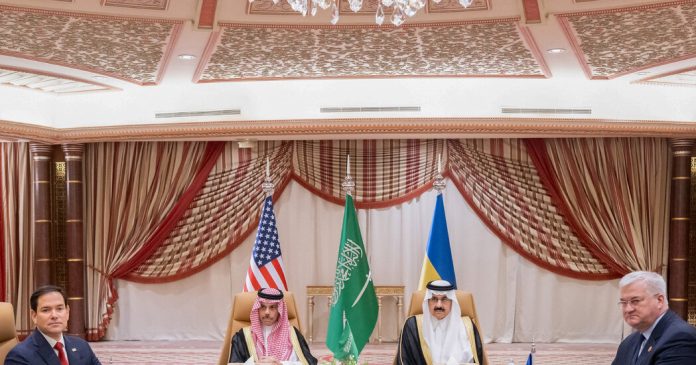
The U.S. said it would immediately lift the pause on intelligence sharing and resume military assistance to Ukraine after hours of meetings in Saudi Arabia. Kyiv said it would support the Trump administration’s proposal for a 30-day cease-fire with Russia.

In a joint statement, the U.S. and Ukraine acknowledged that the terms of any cease-fire would be subject to Russia’s approval. They also agreed to conclude a deal to develop Ukraine’s critical mineral resources “as soon as possible.”

There was no immediate comment from Russia, which did not have officials at the talks.

President Trump told reporters that he might speak this week with Russia’s leader, Vladimir Putin, and that he hoped a lasting cease-fire would be negotiated in the coming days.

What’s next: After the meetings, Secretary of State Marco Rubio said that the agreement now put the pressure on Russia to end the war. “The ball is now in their court,” he said.

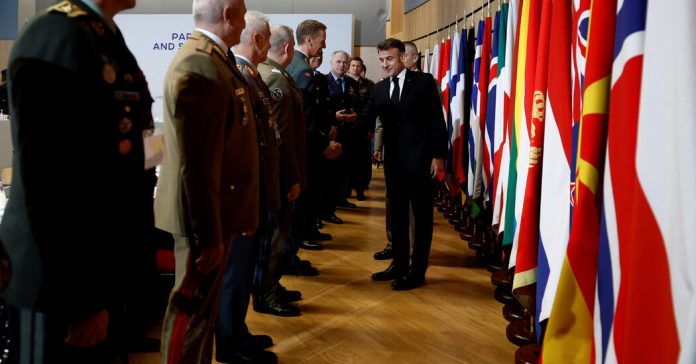
Defense: President Emmanuel Macron of France gathered the chiefs of staff of more than 30 armed forces yesterday to discuss the formation of a multinational peacekeeping force to monitor any cease-fire in Ukraine.

Combat: Russia began assaulting the town of Sudzha, in the Kursk region, which was captured by Ukraine last year. The advance puts Moscow on the verge of ending the first invasion of Russian territory since World War II.


It was a day for confusion and threats. After spending the first half of yesterday threatening Canada with a doubling of tariffs on steel and aluminum, President Trump pulled back when Ontario dropped the surcharges it had imposed on electricity it exports to the U.S. The previously planned 25 percent tariffs on steel and aluminum from Canada — and from any other foreign country — took effect this morning, as scheduled. Here’s the latest.

Markets whipsawed yesterday as investors tried to puzzle through Trump’s commitment to tariffs. Stocks dropped in early trading before recovering late in the day.

Context: Trump’s latest tariff salvo was in response to Ontario’s plan to add a 25 percent surcharge to the electricity it exports to Michigan, Minnesota and New York.

The 51st state: Trump repeated his desire to annex Canada. He said that “the only thing that makes sense” was for the U.S.’s northern neighbor to become its 51st state. He laid out in the clearest terms yet how he envisions that happening, saying it would “make all Tariffs, and everything else, totally disappear.”


The Philippine authorities yesterday arrested former President Rodrigo Duterte at Manila’s main airport as he returned from a trip to Hong Kong, acting on a warrant issued by the International Criminal Court. The court has accused Duterte of crimes against humanity for the antidrug campaigns he carried out, which rights groups say killed roughly 30,000 people, many of whom were not involved with the drug trade.

What’s next: Duterte was on a plane bound for The Hague, where the court is based. The case will test the legal reach of the I.C.C., which draws its jurisdiction from the Rome Statute, a treaty currently signed by 125 countries. Here’s what else to know.

Kigali, Rwanda’s capital, has presented itself as an orderly city with ample attractions and premier sporting events. But that image, and Rwanda’s position as a security partner in Africa, are increasingly at odds with the war that has killed thousands in the Democratic Republic of Congo, where Rwanda backs M23, a rebel group. Tourism brought Rwanda $620 million in 2023, but sanctions are piling up.

Lives lived: Joey Molland, a guitarist and songwriter who was the last surviving member of the band Badfinger, died at 77.

As the producers of the hit West End musical “Operation Mincemeat” prepared to go to New York, they asked a question: “Are we too British for Broadway?” The answer, they hoped, would come from Americans before opening night, later this month.

The show, a comedy about a World War II spy operation, went across the pond armed with an Olivier Award for best new musical and a request for preview audiences to email feedback to the director. Tweaks were made for Broadway palates.

“American audiences are quick and sophisticated, but they also love the dumb stuff, like the slapstick,” the director said. “Almost more than the British.”

Young Professionals Are Increasingly Turning to Boring Small-Business Niches

0

“Making It Work” is a series about small-business owners striving to endure hard times.

When Nicole Rizzo saw the “For Sale” listing for Die Cleaning Equipment, the first detail she liked was that it was run by a married couple. Ms. Rizzo, then 43, was searching for a company to run alongside her own husband. But her husband, David, was puzzled by the name. Was it something involving janitors?

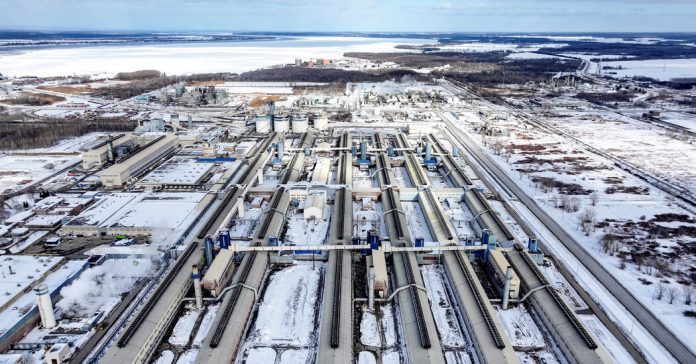
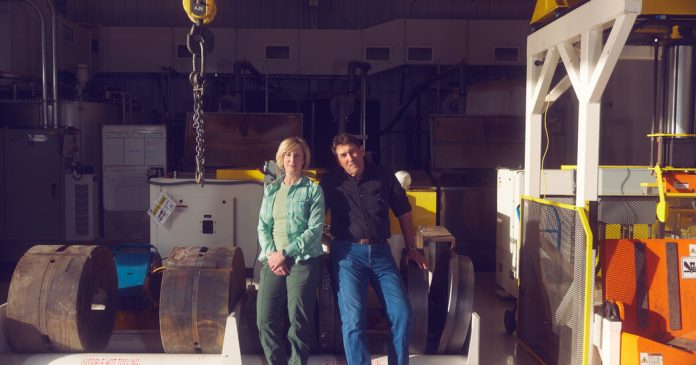
Die Cleaning Equipment, as it turned out, employed welders. The company in Phoenix made machines that cleaned other machines — specifically, aluminum extruders, which force the metal into shapes useful for everything from bumpers to stethoscopes to gun parts. Steve Smith oversaw the shop, where a small team assembled vats and pumps out of stainless steel. His wife, Kristin, handled the finances.

The Smiths had carved out their niche-within-a-niche from scratch, with Ms. Smith initially moonlighting as a church secretary to keep food on the table. But as the couple approached their 70s, they dreamed of a new relationship with aluminum, involving monthslong trips in an Airstream trailer.

A younger couple like the Rizzos were not the obvious choice. Neither knew much about aluminum. Ms. Rizzo had worked in local government, and Mr. Rizzo had held mostly corporate jobs in farming. But a visit to the Smiths’ shop near the Phoenix airport proved illuminating.

“I saw the machines and I was like, This is the coolest thing I’ve ever seen,” Ms. Rizzo said. In June 2021, the Rizzos bought the company for about $600,000. Ms. Rizzo became chief executive. Almost four years later, the couple have recovered their investment.

The ranks of “searchers,” as prospective buyers like the Rizzos are often called, are growing. That’s partly a product of demographics — the generation in their 30s and 40s is the largest ever — and also of a surge of workers pivoting toward greater autonomy. On BizBuySell, the popular listings site where the Rizzos found the Smiths, “corporate refugees” ditching the 9-to-5 have surged to 42 percent of buyers, roughly double the 2021 figure. Meanwhile, nearly a quarter of American small businesses are owned by people 65 and older, making the Smiths part of a “silver tsunami” of sellers.

Enrollment has soared in business school courses on “entrepreneurship through acquisition” — the art of building upon success, rather than hatching it. But an M.B.A. is no requirement. A legion of influencers on YouTube, LinkedIn and TikTok bear advice for how to “think niche” and “buy boring.”

“People are realizing that buying a business is a much less risky proposition than starting a new one,” said Bob House, the president of BizBuySell.

Part of the appeal are loans from the Small Business Administration that can require as little as five percent down from small-business buyers. But borrowers are on the hook for failure. More than a third never find a buyer.

Among searchers, one adage is to fall in love with the economics of the business first. Prepare, then, to be fascinated by the day-to-day details — and challenges.

Brittney Orellano, 39, first learned about “the search” in 2022, through a podcast interview with Codie Sanchez, a YouTuber who often posts about the virtues of acquiring a “boring business.” Ms. Orellano and her husband, Ray, 46, had built a property management company together in Kansas City, Kan. But it had never occurred to her that she could buy a business that was already successful.

The Orellanos’ search was immediately “a full-court press.” She downloaded more podcasts and quizzed her accountant, her friends, her plumber: Was anyone looking to sell?

Six months into their search, the couple acquired Radio Controlled Garage Door & Gate for just under $1 million, financed primarily through an S.B.A. loan.

But they soon realized that, in their excitement, they had “missed some red flags.” The seller walked away with boxes of physical sales records, leaving them without a customer database. The person described as a “general manager” was merely a dispatcher. To turn off one of the vans they inherited, they had to pop the hood and unscrew a valve.

Still, nearly two years later, Ms. Orellano doesn’t regret the venture. She was proud of offering an everyday service over a glitzy one — even as she avoids boring friends with the finer details of garage door clickers.

Most searchers, Ms. Orellano realizes now, are more calculated. The average search is about 18 months and involves browsing through online listings, bonding with reputable brokers, and sending cold emails to potential retirees in the search for a hidden gem. Certain criteria prevail: strong revenue, a “fragmented” industry where small operators can thrive, room for growth.

“A lot more people are getting in the game,” said Nick Haschka, 39, an entrepreneur and investor known for his advice on LinkedIn and X. In 2017, after a failed startup endeavor, he and a business partner bought the Wright Gardner, a 30-year-old San Francisco company that maintains indoor office plants. His friends had questions: He was doing what with his M.I.T. degree? Landscaping? He was far younger than most of his 11 employees.

“I don’t think I had any grand expectations to go and rule the world,” he said. “It was almost the opposite.” If he could not be a tech titan, he could water their ficuses.

Today, would-be entrepreneurs also face growing competition from “search funds” run by recent business school graduates who partner with outside investors, and from private equity firms. Mr. Haschka advises searchers to consider overlooked trends. He had recently begun buying generator businesses, reasoning that the disruptions to California’s power grid aren’t going anywhere.

In Phoenix, the Smiths were proud of their products, which safely automated a hot and caustic process. But they struggled to find a buyer who wanted to keep the business and its employees where they were. “We didn’t want our baby to die,” Ms. Smith recalled. .

Then came the Rizzos. They had considered Jiffy Lube franchises and inquired about a port-a-potty service, but it had already sold, it turned out, to their real estate broker.

When the deal closed, it was an adjustment. Two days in, an expert welder “went to see about her horses,” Ms. Rizzo said, and never returned. They were midway through building two machines at the time.

But another welder stepped in, and the contracts kept coming. The couple, who are currently looking for a bigger space, have added services like installations. If they have any complaints, it’s that success in a niche can be lonely. “Only a few of our relatives think it’s impressive,” Ms. Rizzo said. “Most people are like, whatever.”

If they want to “get nerdy” about aluminum, they still have the Smiths. Every few months, the two couples have breakfast together. Mr. Smith recently teared up when he heard about their latest contract. “His greatest fear was that the person who bought the business would fail,” Ms. Rizzo said. Each new machine was a sign that he had put his baby in the right hands.

It was time for the Smiths, at last, to go camping.

Europe Weighs Peacekeeping Role in Ukraine Amid Trump’s Embrace of Russia

0

With anger in Europe mounting over President Trump’s perceived abandonment of the continent, President Emmanuel Macron of France gathered the chiefs of staff of more than 30 armed forces on Tuesday to review the formation of a multinational peacekeeping force to monitor any cease-fire in Ukraine.

A brief statement from the French presidency at the end of meeting said the chiefs of staff reached an agreement that any force dispatched to Ukraine must be credible and conceived for a long-term commitment, must give unfailing support to the Ukrainian army and should not be disconnected from NATO and its “capacities.”

Mr. Macron said “it was the moment for Europe to exert its full weight, for Ukraine and for itself.”

The countries represented at the meeting, convened in partnership with Britain, were mainly European but included Japan, Canada, Turkey and New Zealand. The broad attendance reflected a widespread dismay at Mr. Trump’s “pause” in American military aid to Ukraine and his embrace of the views of President Vladimir V. Putin of Russia. Soon after the meeting, the United States said it would lift the pause on intelligence sharing and resume military assistance to Ukraine.

“I think the moment is important and your presence here sends out a real signal,” Gen. Thierry Burkhard, France’s military chief of staff, told the gathered officials at the start of the meeting, according to footage released by the French military.

There is near unanimity in Europe that Ukraine is its front line against Moscow and that the defense of Ukraine equals the defense of the continent. There has been a sea change. A Europe that was long content to enjoy a post-Cold War peace dividend is now in a bristling mood of rearmament.

“Whatever it takes” were the words this month of Germany’s incoming Chancellor, Friedrich Merz, to describe “the rule for our defense,” given the change in American strategy. It was a powerful declaration of emancipation for a German Republic effectively created and shaped by the United States after World War II.

“Who can believe that the Russia of today will stop at Ukraine?” Mr. Macron asked in a speech to the nation last week. “As I speak, and for years to come, Russia has become a threat to France and to Europe.”

The French defense minister, Sébastien Lecornu, added on Tuesday that the new challenge facing Europe was “not so much the Russian threat as above all the unpredictability of our American partner.”

How and where any European peacekeeping force would deploy in Ukraine is unclear. Any truce, let alone peace agreement, appeared remote as a Ukrainian delegation met United States envoys, including Secretary of State Marco Rubio, in Saudi Arabia. Sergey V. Lavrov, the Russian foreign minister, said last month that any such European deployment was “clearly unacceptable.”

President Volodymyr Zelensky of Ukraine, convinced that Mr. Putin cannot be trusted, has spoken of the need for a security force of 200,000 troops, but that appears far beyond Europe’s capacity. A deployment in the low tens of thousands seems more plausible, designed to be a credible deterrent, perhaps complemented by an air force contingent to enforce a no-fly zone.

“I would see perhaps 15,000 to 20,000 European troops, enough to deter, but not so large as to be seen by Moscow as a NATO battle corps,” said Camille Grand, a defense expert at the European Council on Foreign Relations in Brussels. “You will want three lines of defense — first the Ukrainian army, second this European force of reassurance and over the horizon a capacity to reinforce that with air power.”

Mr. Trump waved away serious consideration of security during a televised meeting with Mr. Zelensky at the White House last month that veered into an angry confrontation.

“We’ll make a deal, and when the deal is made, I don’t think we talk about security,” Mr. Trump said, suggesting Mr. Putin could be trusted.

Whether the European force is conceivable, given Russian hostility and the possible lack of American support in critical areas, including intelligence, is an open question. The possibility that such troops would be drawn into the conflict if targeted by Russia, despite Mr. Macron’s pledge that they “would not engage in frontline combat,” is another complicating factor.

Beyond the narrow question of deployment, Europe has embarked with urgency on the quest to build a credible European army, a discussion that will continue Wednesday in Paris among defense ministers from France, Britain, Germany, Italy and Poland. Ukraine’s defense minister will join virtually.

How to fight together, accelerate munitions production and build readiness are core questions. Replacing what the United States provides — including intelligence capabilities, space capabilities, strategic transport and air-to-air refueling — amounts to an immense undertaking.

But the need for a sharp change of direction is acutely felt. Across Europe, mockery of Mr. Trump, combined with anger and astonishment, has steadily spread, even if the president has support among far-right parties and people tired of the domination of liberal elites.

A virulent speech this month by a centrist French senator, Claude Malhuret, has gone viral in Europe and the United States, with millions of views.

“We were at war with a dictator,” Mr. Malhuret said, alluding to Mr. Putin. “Now we are fighting a dictator supported by a traitor.”

He suggested that Mr. Trump had treated Mr. Zelensky like “a stable boy” and described Mr. Trump’s policies as “more than an illiberal drift, a beginning of the confiscation of democracy.”

“Washington has become Nero’s court,” he declared, alluding to the tyrannical Roman emperor, “with an incendiary emperor, submissive courtiers and a buffoon on ketamine in charge of purging the civil service.” The “buffoon” was an apparent reference to Elon Musk.

In subsequent interviews, Mr. Malhuret said he had expressed what Americans appeared afraid to say in the growing climate of fear that Mr. Trump’s first weeks in office had provoked. Certainly, he captured sentiments that are propelling Europe toward a military rebirth.