Thursday, November 12, 2026
Home Blog Page 136

U.S.A.I.D. Official Orders Employees to Shred or Burn Classified and Personnel Records

0

A senior official at the main U.S. aid agency, which is being dismantled by the Trump administration, told employees to clear safes holding classified documents and personnel files by shredding the papers or putting them into bags for burning, according to an email sent to the staff.

The email sent by Erica Y. Carr, the acting executive secretary, told employees of the U.S. Agency for International Development to empty out the classified safes and personnel document files on Tuesday. “Shred as many documents first, and reserve the burn bags for when the shredder becomes unavailable or needs a break,” Ms. Carr wrote, according to a copy of the email obtained by The New York Times.

The agency has fired thousands of employees, put some on paid leave and asked a few to work from home, so the headquarters have been mostly empty for weeks.

It is unclear if Ms. Carr or any other official at U.S.A.I.D. got permission from the National Archives and Records Administration to destroy the documents. The Federal Records Act of 1950 requires U.S. government officials to ask the records administration for approval before destroying documents.

The documents being destroyed could have relevance to multiple court cases that have been filed against the Trump administration and the aid agency over the mass firing and sudden relocation of employees, the rapid dismantlement of the agency and a freeze on almost all foreign aid money.

The State Department and a spokesperson for U.S.A.I.D. did not respond to requests for comment.

The American Foreign Service Association, a union representing career diplomats that is a plaintiff in a lawsuit, said in a statement on Tuesday that it was “alarmed by reports that U.S.A.I.D. has directed the destruction of classified and sensitive documents that may be relevant to ongoing litigation regarding the termination of U.S.A.I.D. employees and the cessation of U.S.A.I.D. grants.”

“Federal law is clear: The preservation of government records is essential to transparency, accountability and the integrity of the legal process,” the union said. “We call for full adherence to federal records preservation laws to ensure accountability and protect the rights of U.S.A.I.D. employees.”

The union also noted that employees engaged in the improper destruction of records could find themselves in legal jeopardy.

The aid agency employs nearly 2,000 career diplomats, known as Foreign Service officers, and they are represented by the union. Diplomats generally destroy large numbers of documents only when an embassy or other post is about to be overrun by a hostile force. Some diplomats who got Ms. Carr’s email on Monday night called union officials after becoming anxious over the sudden request.

The Federal Records Act says that “agencies must follow retention schedules approved by” the records agency and covers all electronic documents as well. Printed documents must be saved in an electronic format before being destroyed, and the act says that “agencies must manage electronic records effectively, ensuring accessibility and security.”

In some federal agencies, employees regularly destroy physical documents after saving them in electronic form. It is unclear if employees at U.S.A.I.D. have ensured that all physical documents are being saved electronically before being destroyed.

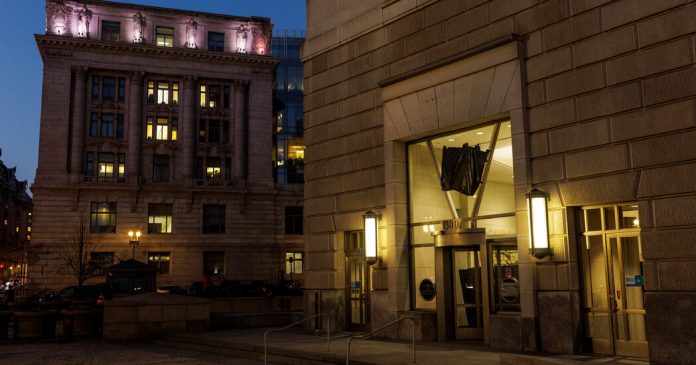
In her email, Ms. Carr asked employees to meet at 9:30 a.m. on Tuesday in the lobby of the Ronald Reagan Building, where the U.S.A.I.D. headquarters is housed, to take part in the destruction of documents. The U.S. government has ended the agency’s lease for office space there. Secretary of State Marco Rubio, who is the acting administrator of the agency, plans to move the remnants of U.S.A.I.D. into the State Department after firing thousands more employees.

The email told employees to mark burn bags with “SECRET” or “USAID/(B/IO)” with a dark Sharpie if possible. “B/IO” stands for bureau or independent office.

Mr. Rubio took charge of U.S.A.I.D. last month and announced that Pete Marocco, a divisive appointee at the State Department, would oversee day-to-day operations. Mr. Marocco has worked with young employees of a task force run by Elon Musk, the billionaire adviser to President Trump, to halt the disbursement of foreign aid funds, cut contracts and fire thousands of employees or put them on leave.

In a volatile cabinet meeting at the White House last Thursday, Mr. Rubio vented his anger at Mr. Musk for the eradication of the aid agency.

On Monday, Mr. Rubio announced on social media that officials had canceled 5,200 aid agency contracts, or 83 percent of the total. The remaining 1,000 will be managed by the State Department, he said. And he thanked Mr. Musk’s team.

The State Department has not released details of the remaining 1,000 contracts.

Several hundred employees of U.S.A.I.D. will probably be absorbed into the State Department, aid agency officials say.

A federal judge ordered the Trump administration on Monday to restart aid payments for work that had been completed. The judge noted that Congress had appropriated foreign aid funds, and that the Trump administration did not have the right to “impound” the money. An executive order signed by Mr. Trump on Jan. 20 froze almost all foreign aid funding.

Ryan Mac contributed reporting from Los Angeles.
Johnson predicts Republicans can pass spending before shutdown deadline : NPR

0

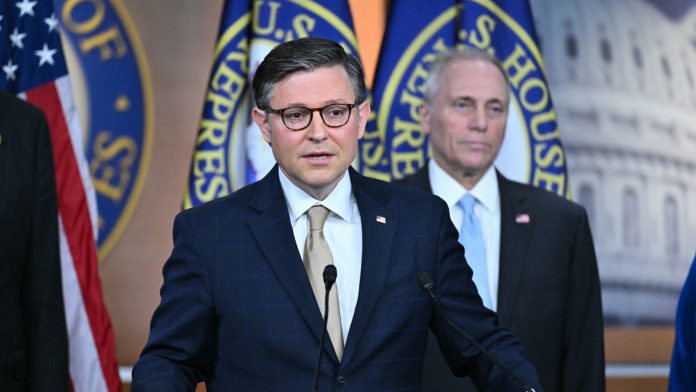
House Speaker Mike Johnson, R-La., told reporters on Tuesday that he expects Republicans will pass a partisan spending bill on Tuesday, sending the legislation to the Senate for consideration before the Friday shutdown deadline.

Roberto Schmidt/AFP via Getty Images


hide caption

toggle caption

Roberto Schmidt/AFP via Getty Images

The House of Representatives will vote Tuesday on a bill to fund federal agencies through September and avoid a potential shutdown on Friday, when current government funding expires.

House Speaker Mike Johnson, R-La., predicted “we’ll have the votes” Tuesday morning, telling reporters in the Capitol the GOP can pass the so-called continuing resolution or CR on their own later in the day.

But it’s unclear if Johnson can muscle the GOP-crafted bill through the chamber with his slim margin with several of his own members not yet on board. 

House Democrats are vowing to oppose the bill. 

“House Democrats will not be complicit in the Republican effort to hurt the American people,” House Minority Leader Hakeem Jeffries, D-N.Y., told reporters Monday evening. Jeffries and other Democrats argued the measure cuts health care and veterans’ benefits.

If the measure clears the House on Tuesday, Senate Democrats will face a decision about helping GOP leaders with the needed votes to avoid a filibuster, or block the bill and face a potential shutdown at the end of the week.

Johnson maintained Democrats were in “panic mode” and said they were running a “misinformation campaign” about the contents of the bill.

“They are going to try and shut the government down,” Johnson said.

Johnson also read quotes from Democrats speaking during the Biden administration about the impact of any shutdown. The display was part of an effort to lay the blame on the minority party if his own party can’t get the bill through. Republicans control the White House, House and Senate and past standoffs over funding have shown voters hold the party in power responsible.

The 99 page bill continues funding levels for federal agencies through September 30, 2025. GOP leaders argued the bill was largely a “clean” continuation of current funding levels, but it does include a boost for immigration enforcement and a boost for defense programs.

Trump and GOP leaders mount pressure for GOP unity

Leaders mounted a full court press after they dropped the bill on Saturday. President Trump endorsed the legislation and called for “NO DISSENT” among GOP ranks in a post on social media.

On Tuesday morning Vice President JD Vance huddled in a closed door conference meeting with House Republicans and urged them to back the measure.

In the past GOP leaders have relied on Democratic votes to pass stopgap funding bills because conservatives traditionally object to any stopgap bills, arguing they fail to cut federal spending. But the ultra-conservative House Freedom Caucus endorsed the bill Monday evening and several conservatives explained they backed this CR because it set up the Trump administration’s effort to cut spending through the DOGE, or Department of Government Efficiency, effort in the next annual funding bill. They also argued a shutdown was not helpful as GOP lawmakers in both chambers are working on a partisan bill to extend the president’s tax cuts, which expire at the end of the year.

Despite that endorsement, Republican leaders were still working to win support from several remaining holdouts.

Rep. Thomas Massie, R-Ky., has vowed to oppose the measure, even as President Trump has threatened to recruit a primary challenger against him.

With Massie expected to oppose the measure, Speaker Johnson may not be able to afford any additional defections. But with the vote fast approaching, at least two other Republicans, Tim Burchett of Tennessee and Georgia’s Rich McCormick, both said they were leaning no. 

“I need to know how we’re going to fix this in September,” McCormick said, referring to the measure’s end date.

Others, including Reps. Eli Crane, R-Ariz., and Beth Van Duyne, R-Texas, have also not committed to voting for the plan.

House Democrats are expecting few if any defections

Democratic leaders worked behind the scenes to urge their members to oppose the bill and several Democrats told NPR they expected few defections. The top House Democratic vote counter, Massachusetts Rep. Katherine Clark, told NPR Democrats “have been united against this tax scam and we see this bill for what it is.”

In the Senate, Minority Leader Chuck Schumer, D-N.Y., said Democrats were waiting to see if the bill can pass the House before deciding on a course of action.

“We’re going to wait to see what the House does first,” Schumer told reporters.

As many as eight Democrats could ultimately be needed to side with Republicans in the Senate in order for the measure to clear the 60 vote threshold needed to pass most legislation in the chamber. The GOP controls 53 seats in the Senate, but at least one Republican, Kentucky’s Rand Paul, has said he was planning to vote against the plan unless an amendment is added to codify DOGE spending cuts.

“Let’s put it in writing,” he said about the cuts. Otherwise, “I’m a no.” 

Several Democratic lawmakers who represent states with large numbers of federal workers have denounced the GOP bill. Virginia Senator Tim Kaine called the bill a “shutdown bill” and made it clear he’s opposing “Hell no!”

Sen. Jon Ossoff, D-Ga., told reporters Monday evening he was evaluating the House GOP bill’s impact on his home state and would wait to see its fate. Asked if he worried his party would be blamed if there was a shutdown, Ossoff said “the GOP is in power and has governing responsibility.”

Israel and Lebanon Agree to Talks on Border, Long a Source of Tension

0

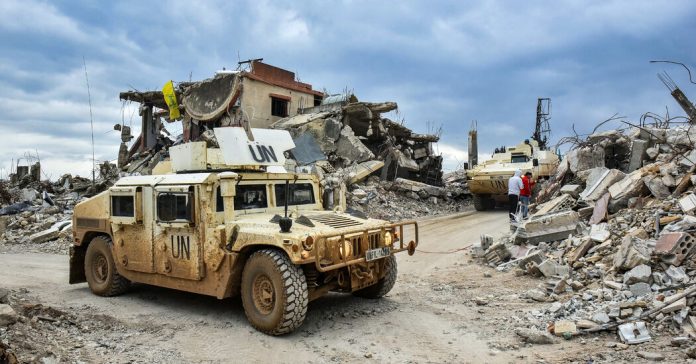
Israel and Lebanon have agreed to start negotiations on disputes over the land border between them, officials said on Tuesday, offering a possible opportunity to resolve disagreements that have contributed to decades of tensions and conflict.

In a statement, Morgan Ortagus, President Trump’s deputy Middle East envoy, said that the United States was bringing Israel and Lebanon together to discuss the demarcation of the border. She said discussions would also focus on the future of five Israeli military outposts in Lebanon and of Lebanese prisoners still held in Israel after a cease-fire deal last year largely halted more than a year of cross-border warfare.

The Israeli prime minister’s office said there was an agreement to establish working groups to discuss the three topics. A Lebanese official, who spoke on the condition of anonymity to talk about sensitive diplomacy, confirmed that Israel and Lebanon agreed to engage in negotiations about demarcating the border.

It was not clear under what format officials planned to hold the talks or indeed, if they would actually go ahead. Israel and Lebanon don’t have direct formal diplomatic relations.

But if Israel and Lebanon succeed in achieving an agreement on the border, it would undermine an argument by Hezbollah, the militant group that is an influential force in Lebanon, for maintaining its arms, analysts said. Hezbollah has long contended that it was fighting what it described as Israel’s occupation of Lebanon.

“If a deal on the border is done, Hezbollah’s alibi will be gone,” said Mohanad Hage Ali, a senior fellow at the Carnegie Middle East Center in Beirut. “It will pull the rug out from under them.”

A day after Hamas launched a surprise attack from the Gaza Strip into southern Israel on Oct. 7, 2023, Hezbollah started firing rockets and mortars into northern Israel in solidarity with the Palestinian militant group.

Tit-for-tat attacks across the Israeli-Lebanese border ensued for months until Israel carried out a massive escalation against Hezbollah, killing top leaders, targeting its weapon caches, and launching a ground incursion into Lebanon.

In late November, Israel and Lebanon signed a cease-fire agreement that was contingent on both Israel and Hezbollah ceding control of southern Lebanon to the Lebanese military by the end of January.

Israel, however, still controls five points in southern Lebanon. Israeli officials have argued Hezbollah hasn’t lived up to its side of the agreement and still posed a threat to Israelis in northern Israel, while the militant group has accused Israel of violating the November agreement by not withdrawing.

“Everyone involved remains committed to implementing the cease-fire agreement and to full implementing all its terms,” Ms. Ortagus said.

Two U.S. officials, who spoke on condition of anonymity because they weren’t authorized to communicate with the media, said they hoped the talks would be convened soon, without mentioning a specific time frame.

One of the U.S. officials said there were 13 specific places where Israel and Lebanon have disagreements on the border.

In 2022, Israel and Lebanon reached an agreement to delineate the maritime border between the two countries. That deal settled the location of the two countries’ exclusive economic zones in the eastern Mediterranean Sea, demarcating where each has the sole right to extract resources.

After that, there was talk by U.S. officials about beginning land border negotiations, a plan envisioned by Amos Hochstein, a top Biden administration envoy. But the war in Gaza put those plans on hold.

The announcement on future border talks on Tuesday came after a meeting of officials from the United States, Israel, Lebanon, France and the United Nations about the implementation of the cease-fire.

Following that meeting, the office of Lebanon’s newly elected president, Joseph Aoun, said Israel had released four Lebanese citizens whom it had detained during the war last year. It said Israel would set free a fifth Lebanese citizen on Wednesday.

The Israeli prime minister’s office said Israel had released five Lebanese detainees as “a gesture” to Mr. Aoun.

The number of people detained by Israel in the latest conflict in Lebanon is thought to be fairly low, and the Israeli military did not immediately respond to a query about how many remain in Israeli custody.

Aaron Boxerman and Euan Ward contributed reporting to this article.

Trump ups aluminum and steel tariff against Canada : NPR

0

Canadian and American flags fly on the Canadian side of the Ambassador Bridge in Windsor, Ontario, on March 8.

Geoff Robins/AFP via Getty Images


hide caption

toggle caption

Geoff Robins/AFP via Getty Images

The day before steel and aluminum tariffs are set to go into effect, President Trump announced he would specifically set tariffs on Canadian steel and aluminum at double the rate of the rest of the world.

“I have instructed my Secretary of Commerce to add an ADDITIONAL 25% Tariff, to 50%, on all STEEL and ALUMINUM COMING INTO THE UNITED STATES FROM CANADA,” Trump wrote in a Tuesday post on his social media site. “This will go into effect TOMORROW MORNING, March 12th.”

The last-minute change to steel and aluminum tariffs, which Trump had already set to go into effect at midnight, is the latest in his chaotic tariff policy. Trump had promised to make tariffs the centerpiece of his second term, and this term has indeed been marked by a series of tariffs imposed, threatened and withdrawn. The uncertainty caused by those rapid shifts has rattled stock markets and other economic indicators.

In his post, Trump said he was imposing the tariffs in response to Ontario’s imposition of a 25% surcharge on electricity exports, which the province said would affect customers in Minnesota, Michigan and New York.

Ontario Premier Doug Ford imposed that surcharge in response to tariffs Trump has threatened — and repeatedly delayed — against Canada. In his latest move, Trump imposed tariffs on Canadian goods last week, then delayed some of them for a month.

Ford said in a statement that it won’t repeal the electricity surcharge “until the threat of tariffs is gone for good.”

Trump said he would declare a “National Emergency on Electricity” to support the affected area, though it was not immediately clear what that would entail. Generally, emergency declarations expand executive powers to deal with a crisis — a tool Trump has used a number of times.

The president also once again proposed that Canada become a U.S. state.

“This would make all Tariffs, and everything else, totally disappear,” Trump wrote.

It’s not clear why Trump has fixated on Canadian statehood, an idea that Canadian leadership has repeatedly and firmly rejected.

A U.S. tariff on steel and aluminum means that U.S. companies will pay more to import those products. That can lead to higher prices for American businesses and consumers. Canada is the largest exporter of both steel and aluminum to the United States, meaning a 50% tax on those imports could have substantial economic effects.

Stock indexes have fallen markedly in recent weeks, as Trump’s tariffs have contributed to economic uncertainty. At market open on Tuesday, the S&P 500 was more than 7% below where it was after Trump was inaugurated.

While the stock market does not necessarily track overall economic health, other indicators have shown weakness. Consumer confidence and consumer spending have both posted recent declines. In a weekend interview with Fox News, Trump would not rule out the possibility of recession.

Trump and administration officials have repeatedly framed any economic fallout from tariffs as short-term pain. The administration has said the goals of tariffs include higher revenue, a boost to manufacturing jobs in the U.S., and a slowdown in fentanyl entering the country. Those goals in many ways conflict with each other — a tariff might boost American manufacturing by deterring the purchase of foreign goods, for example. But then, that tariff would not create much revenue, as businesses and consumers would be buying American goods, and therefore not paying the tariff.

Trump is scheduled to speak Tuesday evening to the Business Roundtable, an association of CEOs of major American companies. Those leaders will likely be seeking clarity on the president’s economic strategy and goals.

Man Arrested on Suspicion of Manslaughter After Ship Hits Tanker in North Sea

0

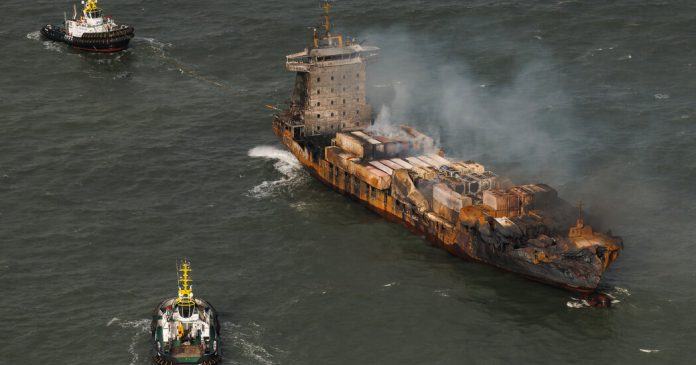
A 59-year-old man was arrested on Tuesday on suspicion of manslaughter, the police in northern England said, after a container ship crashed into an oil tanker in the North Sea a day earlier, leaving one crew member missing and presumed dead.

The container ship, the Solong, struck the Stena Immaculate, an anchored oil tanker that was carrying jet fuel and was being operated by the U.S. Navy at the time, officials said. The episode happened off the coast of northeastern England on Monday morning, setting off a series of explosions and engulfing both vessels in flames.

One crew member from the Solong was missing, and an extensive search was called off on Monday night, Britain’s Coast Guard said. The rest of the crew members on both vessels were brought safely to shore.

The Humberside Police in England said in a statement that it had begun a criminal investigation into the cause of the crash. Craig Nicholson, the detective chief superintendent, said the department had subsequently “arrested a 59-year-old man on suspicion of gross negligence manslaughter in connection with the collision.”

It was unclear what connection the arrested man had to either ship. In Britain, there are tight legal restrictions on what can be reported about a criminal case once an arrest has been made, aimed at protecting the accused person’s right to a fair trial. The police said they were still working to establish the full circumstances of the crash, but by Tuesday afternoon, a fuller picture of the chain of events had begun to emerge.

Mike Kane, Britain’s transport minister, told Parliament on Tuesday that the Stena Immaculate tanker had been anchored about 13 nautical miles off the coast of England near the mouth of the River Humber when it was struck.

“Whether there was foul play is, I think, speculation; there is no evidence to suggest that at the moment,” Mr. Kane said, adding that the British government was in touch with its American and Portuguese counterparts.

“Search-and-rescue operations for the missing sailor continued throughout yesterday, but were called off yesterday evening at the point at which the chances of their survival had, unfortunately, significantly diminished,” Mr. Kane said, adding, “Our working assumption is, very sadly, that the sailor is deceased.”

The tanker, owned by Crowley, a logistics company based in Florida, had been chartered on a short-term basis to serve U.S. government operations.

While the fire on the Stena Immaculate had been extinguished, the blaze continued on the Solong on Tuesday. Ernst Russ, a Hamburg-based shipping company that owns the Solong, said in a statement on Tuesday that it had not been carrying any sodium cyanide, despite initial reports that was the case.

Mr. Kane noted in his statement to Parliament that it was still working to determine what cargo had been on board the Solong but that “counter-pollution measures and assets are already in place, and both vessels are being closely monitored for structural integrity.”

A spokesman for Britain’s prime minister, Keir Starmer, said the Marine Accident Investigation Branch will conduct the preliminary assessment of the crash and its cause.

Stephen Castle contributed reporting.

Stocks sink again, as Trump doubles down on tariffs : NPR

0

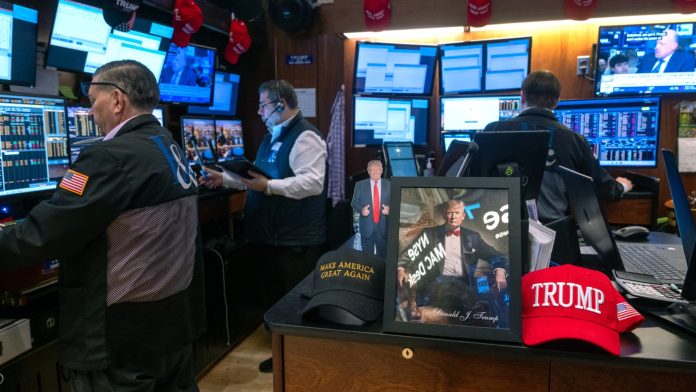
NEW YORK, NEW YORK – MARCH 11: Traders work on the floor of the New York Stock Exchange (NYSE) on March 11, 2025 in New York City. Following the worst day for the markets this year, the Dow was down nearly 500 points in morning trading. (Photo by Spencer Platt/Getty Images)

Spencer Platt/Getty Images/Getty Images North America


hide caption

toggle caption

Spencer Platt/Getty Images/Getty Images North America

President Trump has long cared about the stock market, boasting about its performance during his first term and promising investors many more business-friendly policies during his second.

But now he appears to have other priorities. On Tuesday, Trump doubled down on his steep, and chaotically implemented new tariffs, despite the mounting alarm they are causing on Wall Street and beyond.

In a post on his Truth Social network, Trump said the U.S. will impose an additional 25% tariff on steel and aluminum from Canada, raising the tax to 50% overall.

U.S. stocks sank again Tuesday, a day after the market had its worst day of the year. The Dow fell another 670 points, or 1.6%, by early afternoon trading. The S&P 500 was down 1.3%, and the Nasdaq fell 0.9%.

Investors and economists are increasingly worried about the tariffs’ impact on the U.S. economy — and the possibility that they could spark a recession. That possibility will grow as businesses react to the ongoing market turmoil, financial experts warn.

“In some ways it’s a self-fulfilling prophecy,” says Peter Ricchiuti, a finance professor at Tulane University (who is also a board member of NPR member station WWNO in New Orleans).

“If you think a recession is coming, then you stop capital expenditures, you don’t hire as many people, and then you work yourself into a recession,” he says.

Trump digs in

Yet Trump appears committed to his new tariffs, despite widespread concerns that they will hike prices for consumers and businesses, fuel inflation, and exacerbate a global trade war.

In a Fox News interview aired Sunday, the president declined to rule out the possibility of a recession. Instead, he said that investors should expect “a period of transition” for the economy.

“We’re bringing wealth back to America. That’s a big thing. And there are always periods [where] it takes a little time,” Trump told Fox News.

That spooked investors. By the end of Monday, the U.S. market had lost $4 trillion in value — erasing all of its gains since Trump won the November election. Yet by that evening, the White House downplayed Wall Street’s concerns.

“President Trump delivered historic job, wage, and investment growth in his first term, and is set to do so again in his second term,” White House spokesperson Kush Desai said in a statement Monday.

Some of the largest U.S. companies are starting to see all the economic uncertainty cutting into their business — although their leaders were pretty optimistic going into Trump’s second term. As recently as last month, CEO confidence hit a three-year high, according to the Conference Board.

But retailers have warned that Trump’s new tariffs will increase their costs – and those of consumers. Now major U.S. airlines are also raising the alarm about the mounting economic uncertainty. On Monday, Delta Air Lines cut its forecast, citing a “reduction in consumer and corporate confidence caused by increased macro uncertainty.” On Tuesday, American Airlines and Southwest followed suit.

Some CEOs will get an opportunity to hear from Trump directly, and perhaps air their concerns about tariffs, on Tuesday afternoon. He is scheduled to address the Business Roundtable, an influential organization of the country’s largest companies.

Ukraine Launches Drone Attack Against Moscow Region

0

The pre-dawn attack came hours before scheduled talks between high-level delegations from Ukraine and the United States in Saudi Arabia.

Green card holders’ rights in spotlight after arrest of pro-Palestinian activist : NPR

0

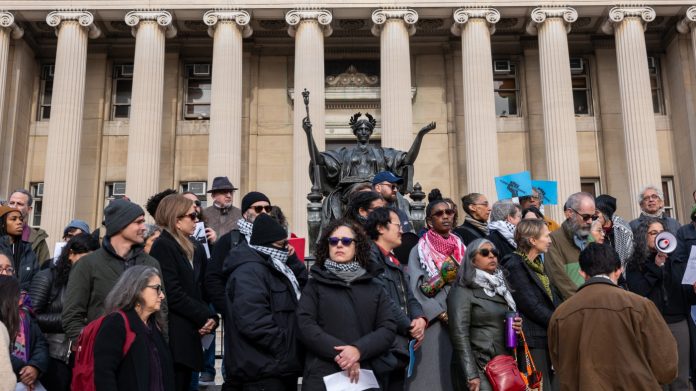
Columbia University faculty members hold a pro-Palestinian and pro-free speech rally on the Columbia University campus in 2023 in New York City.

Spencer Platt/Getty Images


hide caption

toggle caption

Spencer Platt/Getty Images

A New York federal judge is set to hear pivotal questions in the case of Mahmoud Khalil, a leader of large Gaza solidarity protests at Columbia University who now faces deportation after his arrest by Immigration and Customs Enforcement agents.

Khalil, who holds a green card as a legal permanent U.S. resident, isn’t charged with a crime. But the Trump administration says he should be deported because of his protest activity, which it equates with anti-Semitism and support for terrorism.

ICE agents arrested the pro-Palestinian activist at his university-owned apartment building in New York City on Saturday. Khalil recently finished his master’s degree from Columbia’s School of International and Public Affairs. He’s now being held in the Jena/LaSalle Detention Facility in Jena, La. — more than 1,000 miles from the home he shares with his wife, a U.S. citizen who is eight months pregnant.

Khalil’s lawyers have filed a habeas corpus challenge to his detention; District Judge Jesse Furman set a hearing for Wednesday, ordering that Khalil “shall not be removed from the United States unless and until” the court rules otherwise.

The high-profile arrest comes after President Trump’s administration said it would deport international college students who protested against Israel and the war in Gaza on campuses last year.

Immigration law experts spoke with NPR about the case and why Khalil’s status as a green card holder is significant.

What rights do green card holders have?

Attaining lawful permanent resident status in the U.S., widely known as getting a green card, confers many rights.

“You’re not a U.S. citizen, but you’re the next level down, meaning that you have the rights to live, work, travel in the United States,” says Kelli Stump, president of the American Immigration Lawyers Association.

Green card holders also have the right to free speech, according to David Cole, a Georgetown Law professor.

“The First Amendment does not distinguish between citizens and non-citizens,” says Cole, who successfully represented Palestinian clients in a lengthy First Amendment case.

“Therefore, since you couldn’t punish a citizen for their speech, you couldn’t deport a foreign national for their speech.”

Green card status can be revoked — as in cases where someone has obtained that status by fraud, or they commit serious crimes. The government also has broad powers under anti-terrorism laws, including the ability to block entry or remove a non-citizen.

“I do think, for people who are non-citizens, there’s some risk in protesting depending on how the protest is interpreted,” says Jason Dzubow, a partner at Murray Osorio, an immigration law firm in Washington, D.C.

“And the reason for that is because the anti-terrorism provisions are just so broad.”

In his view, it’s unclear exactly where the government might draw a line between publicly espousing pro-Palestinian views and what it views as supporting terrorism.

“This is a really a chilling message that the government is sending,” Dzubow says.

To strip someone of their green card, the government has to go through a legal process, according to Stump.

“Only the immigration judge can take that green card away from you in these specific types of removal proceedings,” she says.

In an immigration court, Stump adds, “the government bears the burden of proving the reason that this person is deportable from the United States. And then just depending on what ground we’re looking at, that’s where the fight ensues.”

What is the government’s position?

While some details about the case aren’t yet known, the Trump administration’s statements about Khalil so far suggest that its move is based on allegations that his protest activity amounts to support for Hamas, which they argue is grounds for deportation.

Department of Homeland Security spokesperson Tricia McLaughlin says the agency alleges that the former graduate student “led activities aligned to Hamas, a designated terrorist organization.”

Trump’s Jan. 20 executive order promised to deport international students if they were found to have espoused anti-Semitism. In a post to social media on Monday, the president called Khalil “a Radical Foreign Pro-Hamas Student.”

One detail that could prove crucial in court is Khalil’s green card status. His attorney, Amy Greer, told NPR that ICE agents who arrested him initially told her his student visa had been revoked. When informed that Khalil was a lawful permanent resident, the agents told Greer that that status was being revoked.

Trump said Khalil’s case is the first of many to come. He vowed, “We will find, apprehend, and deport these terrorist sympathizers from our country — never to return again.”

Why is it significant that this is a civil case, not a criminal one?

“The government has a lot of power over non-citizens in terms of how it charges them under the immigration law, which is a civil law, not a criminal law,” Dzubow says. “There’s less defenses.”

A civil case might not sound as imposing as a criminal case. But the stakes can often be just as high — and under civil law, defendants have fewer legal rights than they would in a criminal case, he says.

Such detainees don’t have the right to an attorney, for instance, meaning that while they can pay for their own lawyer, the government isn’t obliged to provide them with one.

“There’s just less protection available” for a green card holder like Khalil, Dzubow says. “And he doesn’t need a criminal conviction to be deported for supposedly espousing terrorist activity.”

Why is Khalil being held in Louisiana?

“It’s typical” for the U.S. to move a detainee to a state far from their residence, says Dzubow.

“What they do is make it very difficult to defend yourself,” he says of the government’s tactics.

The distance isolates detainees from loved ones, support systems and lawyers, Dzubow says, making it a bigger challenge to gather evidence and witnesses that might help a detainee’s case.

He also suggested the move could be a type of what’s called “forum shopping,” in which a party seeks a favorable court venue. In a deportation case, for instance, lawyers might consult the TRAC Immigration website which tracks how frequently immigration judges deny asylum claims.

Tuberculosis Resurgent as Trump Funding Cut Disrupts Treatment Globally

0

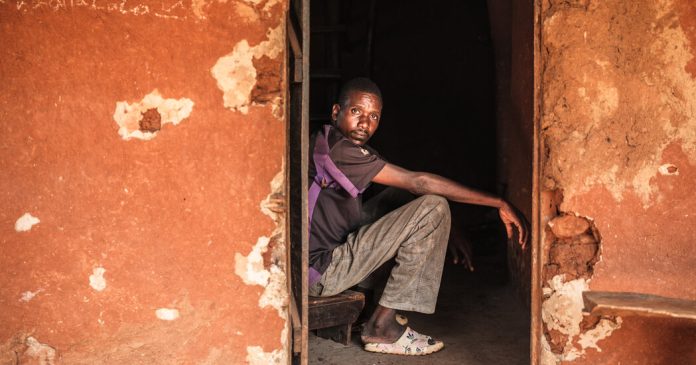
Dalvin Modore walked as if there was broken glass beneath his feet, stepping gingerly, his frail shoulders hunched against the anticipation of pain. His trousers had become so loose that he had to hold them up as he inched around his small farm in western Kenya.

Mr. Modore has tuberculosis. He is 40, a tall man whose weight has dropped to 110 pounds. He has a wracking cough and sometimes vomits blood. He fears the disease will kill him and has been desperate to be on medication to treat it.

Mr. Modore is one of thousands of Kenyans, and hundreds of thousands of people worldwide, with TB who have lost access to treatments and testing in the weeks since the Trump administration slashed foreign aid and withdrew funding for health programs around the globe.

Many, like Mr. Modore, have grown significantly sicker. As they go about their lives, waiting and hoping, they are spreading the disease, to others in their own families, communities and beyond.

The whole system of finding, diagnosing and treating tuberculosis — which kills more people worldwide than any other infectious disease — has collapsed in dozens of countries across Africa and Asia since President Trump ordered the aid freeze on Jan. 20, Inauguration Day.

The United States contributed about half of international donor funding to TB last year and here in Kenya paid for everything from nurses to lab equipment. Trump administration officials have said that other countries should contribute a greater share to global health programs. They say administration is evaluating foreign aid contracts to determine whether they are in the national interest of the United States.

While some of the TB programs may ultimately survive, none have received any money for months.

Family members of infected people are not being put on preventive therapy. Infected adults are sharing rooms in crowded Nairobi tenements, and infected children are sleeping four to a bed with their siblings. Parents who took their sick children to get tested the day before Mr. Trump was inaugurated are still waiting to hear if their children have tuberculosis. And people who have the near-totally drug-resistant form of tuberculosis are not being treated.

Mr. Modore shares a bed with his cousin and his home with four other relatives. All of them have watched him get sicker and thinner, fearing also for their own health.

Despite being fully treatable, tuberculosis claimed 1.25 million lives in 2023, the last year for which data is available.

The main TB research effort, testing new diagnostics and therapies, has been terminated. The global procurement agency for TB medications lost its funds, then was told it might regain them, but still has not. Stop TB, the global consortium of government and patient groups that coordinates tuberculosis tracking and treatment, was terminated, had the termination rescinded, but still has received no funds.

The United States did not pay for all the TB care in Kenya, but it funded critical pieces. And when those were frozen, it was enough to bring the entire system to a halt.

The United States paid for motorbike drivers, who earned about $1 for transporting a sample taken from a person with a presumptive infection to a lab to test it for TB. The drivers were fired on the first day of the funding cut — so the transportation of samples stopped.

The United States paid for some laboratory equipment used to process tests. In many places, processing stopped.

The United States paid for the internet connectivity that allowed many testing sites to send results back to far-off patients via local community advocates known as TB Champions. So even when patients found a way to send samples to a working lab, notification of results stopped.

Without testing that confirms whether a person is infected and what type of TB they have, family members cannot start on preventive therapy.

The United States paid for the half-dozen tests that patients need before beginning treatment for multi-drug-resistant TB, to make sure their bodies will be able to tolerate the harsh drugs. These tests can cost $80 or more, beyond the reach of many patients. Without the tests, clinicians don’t know what drugs to prescribe very sick patients. Prescriptions stopped.

The United States paid for the ships and trucks that moved drugs to ports and on to warehouses and clinics. Shipments stopped.

And the United States paid for the data management contract that provided a national dashboard of data on cases, cures and deaths. Tracking stopped.

Evaline Kibuchi, the national coordinator for the Stop TB Partnership in Kenya, predicted that it would take only three months before infections and deaths from TB increased. “But we won’t even know about the new deaths, because all the data collection was supported by U.S.A.I.D.,” she said.

The United States also paid the stipends — about $35 a month — of community health workers, and TB Champions, who lost the tiny salaries that belie their vital role. Research has shown that because TB treatment involves taking drugs for many months, often with miserable side effects, patients are much more likely to finish a course of medication and be cured when someone is checking on them regularly, cheering them on and watching for lapses.

But across Kenya, the community advocates have kept working, unpaid, covering the costs of trying to reach patients and delivering diagnoses out of their own pockets.

Mr. Modore’s constant cough drew neighborhood attention in January. Doreen Kikuyu, the TB Champion in his area, came and collected a sputum sample from him and used the motorbike system to send it for diagnosis.

By the time his results came back, the Trump administration had frozen the system. Ms. Kikuyu could not get funds for a motorbike to take her to his home to inform him. “But I could not leave him without knowing the answer,” she said. “So I set out walking.”

She also explained that the lab analysis did not provide information on whether he had a drug-resistant form, so he would need further testing before he could start the proper medication. But he would have to pay 1,000 Kenyan shillings — about $8 — to send a sample to the regional laboratory that could do this test. To pay for it, they might need to sell a chicken, one of their few assets. They debated what to do as the days ticked by.

“I’m really hoping to start on medication but I’m just left wondering what will happen,” Mr. Modore said one recent afternoon, sitting hunched in the shade of a stand of trees outside his house.

Eventually, the intrepid Ms. Kikuyu managed to scrape together the money, by gathering contributions from other now-fired community health workers and neighbors. She sent the sample to the lab. Good news came back: Mr. Modore did not have drug resistance and could take the standard medications.

But there was no one to prescribe them. The staff members at the clinic were paid by the United States, and they were now fired. Ms. Kikuyu was at her wit’s end, knowing Mr. Modore was desperately ill.

Working her phone, using airtime she bought herself, she badgered a local government TB official who is a clinician to meet her at the hospital and to prescribe and issue the drugs from the shuttered clinic storeroom. She scraped together more money to bring Mr. Modore to the clinic on a motorbike. As she watched him grin and take his first pills, she felt a flood of relief.

But immediately, she faced a new worry: His family and close neighbors, about a dozen people, needed to start preventive therapy to protect them from getting sick too. The clinic is closed. If she can find a clinician to prescribe drugs for the adults, at least, she could deliver them. (TB drugs for children are complex and require a doctor’s supervision.) But she’s out of money to get back to the Modore home. She has worn herself out walking to the homes of other patients who are waiting for tests, waiting for results, waiting for drugs.

“It’s a problem,” she said wearily. “But we have to get to that family.”

For TB treatment to work, patients must take their drugs every day, without interruption, for months.

Barack Odima, a 38-year-old mechanic in Nairobi, has the most deadly form of the disease, one that is resistant to most treatments. Last fall he started on a rare drug combination, but when he went to pick up his medication two weeks ago, the clinic staff told him that one of the drugs had not been restocked and that they had nothing for him.

“If I don’t get this drug that is missing, how will I be cured?” Mr. Odima said.

After another week, the clinic received a small batch of medications. The clinician and the pharmacist had been laid off, so a TB Champion gave him the medication — but could not tell him how many more pills he might receive.

While he is on the drugs, Mr. Odima is supposed to have monthly testing of his blood, liver and kidneys to make sure his body is tolerating them. That costs about $80, previously covered by the U.S. grant, and he has not had a test since the funding freeze. Mr. Odima’s wife and five children are supposed to be rechecked for the disease this month; it will take all his savings to pay for X-rays.

In an interview in a clinic treatment room plastered with stickers and posters advertising U.S.A.I.D. support, Mr. Odima said he was grateful to the United States for assisting with his treatment, but was baffled that the country had cut off help. Of course his own government should provide such care, he said. “But we are a dependent country,” he said, “and Kenya is not able to support the programs so that all the people with these diseases can get cured.”

In truth, the TB treatment system in Kenya was none too sturdy before the United States yanked its support — the country had nearly 90,000 new infections last year. Labs ran short of supplies to do molecular tests, and people were often misdiagnosed.

The TB Champions, who drop in to check in on anyone they hear about with a persistent cough, were intended as a low-budget, high-impact strategy to change that. Since the aid freeze, they have taken on outsize importance. In the scruffy western Kenyan town of Busia, a Champion named Agnes Okose is using the money she earns from her snack stall to fund trips to outlying villages. Since late January, she has been delivering diagnoses and collecting sputum samples in plastic sample jars she buys herself, toting them in a small lunch cooler to a laboratory in town.

“I am a TB survivor myself: I cannot leave people just dying,” she said. “Whatever small-small money we can find, we are using it.”

The aid cuts have also crippled a network of clinics set up all over Africa two decades ago by President George W. Bush’s Emergency Plan for AIDS Relief. Those clinics bypassed the frail, bureaucratic and graft-riddled health systems in countries battling TB and H.IV. and put patients on lifesaving medication quickly. Twenty years later, they were still partly or totally separate, in most places, and had U.S.-paid staff.

Now African health officials are scrambling to absorb those patients into the regular medical system — as many as 40 percent more people to care for, in facilities that were already overstretched. Kenya’s national government has said it is working on a plan but offered no details for how it will bridge the yawning funding gap.

But because all the TB and H.I.V. cases have gone to the separate clinics for years, clinicians in the main facilities don’t know about drug protocols, side effects or signs of treatment failure.

“You will have health care workers who have never seen a TB case; there will be quality-of-care issues,” said Dr. Timothy Malika, who oversees the TB program of Kisumu County, which has one of the highest rates of TB infection in Kenya.

Abigael Wanga, who lives in a village in Busia County, has five children; two have taken TB treatment for a year. But the two children, Philemon, 8, who hopes to be a pilot one day, and his headstrong sister Desma, 3, still have chest pain and coughs, and no appetite.

Ms. Okose fears they are drug-resistant. She collected sputum samples from them and their three siblings the day before the inauguration. The testing is frozen, and all five children continue to sleep under one blanket at night.

Ukraine wants ‘constructive, friendly’ talks with the U.S. as they meet in Saudi Arabia : NPR

0

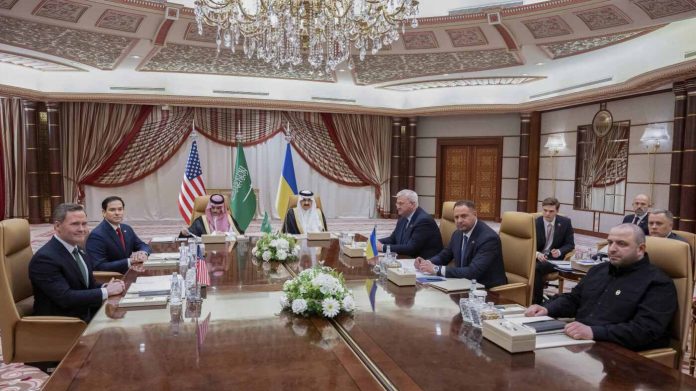
U.S. national security adviser Mike Waltz and Secretary of State Marco Rubio sit down with Saudi and Ukrainian officials in Jeddah, Saudi Arabia, Tuesday.

Saul Loeb/Pool photo via AP


hide caption

toggle caption

Saul Loeb/Pool photo via AP

KYIV, Ukraine — Diplomatic teams from Ukraine and the United States are holding talks in Jeddah, Saudi Arabia, on Tuesday in steps toward ending a full-scale war started by Russia in 2022.

It is the first meeting between Ukraine and the U.S. since President Trump and Vice President Vance berated Ukrainian President Volodymyr Zelenskyy in a televised shouting match in the Oval Office late last month.

Soon after that heated exchange, the Trump administration froze military aid and intelligence to Ukraine. Since then, Zelenskyy has been cultivating European ties and sending conciliatory messages to the White House. He sent his chief-of-staff, Andriy Yermak, to Jeddah to meet with Secretary of State Marco Rubio and national security adviser Mike Waltz.

“We’re very open, and we want to have very constructive, friendly, partner conversation with our American partners,” Yermak told reporters in Jeddah. He did, however, add that security guarantees are “very important because we never want this aggression repeated in the future.”

The Jeddah talks are taking place after Ukraine and Russia launched massive drone strikes on each other’s territory.

This is a developing story that will be updated.