Thursday, November 12, 2026
Home Blog Page 137

U.S. and Ukraine Hold Talks After Drone Attack on Moscow: What to Know

0

Ukrainian and American officials are meeting in Saudi Arabia on Tuesday in hopes of finding a way to halt the Russia-Ukraine war. But the United States, Ukraine and Russia each have very different ideas about what a potential agreement should look like.

Ahead of the talks, Ukraine and Russia launched deadly strikes on each other’s territory, including a large-scale drone attack on Moscow.

Secretary of State Marco Rubio and Michael Waltz, the U.S. national security adviser, sat down in the city of Jeddah with a delegation led by Andriy Yermak, the Ukrainian president’s chief of staff, Foreign Minister Andrii Sybiha and Defense Minister Rustem Umerov.

U.S. officials have said that they hope to determine in the meetings whether Ukraine is committed to pursuing peace with Russia.

Emerging for a break after more than two hours of talks, Mr. Waltz said, “We’re getting there.”

Russia was not present for the talks. The Kremlin’s spokesman, Dmitri S. Peskov, said on Tuesday that Russia expected the American side to inform Moscow about the results of talks with Ukraine.

Steve Witkoff, President Trump’s special envoy to the Middle East, plans to visit Russia in the coming days, according to two people familiar with the matter, who requested anonymity to discuss internal plans.

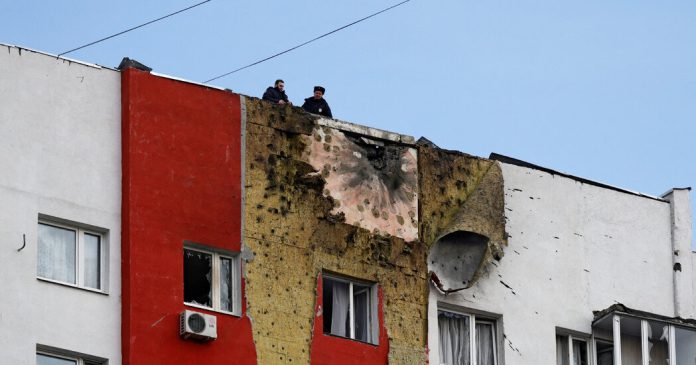
Hours before the talks began, Russian officials said Ukraine had attacked Moscow with its largest long-range drone bombardment of the war.

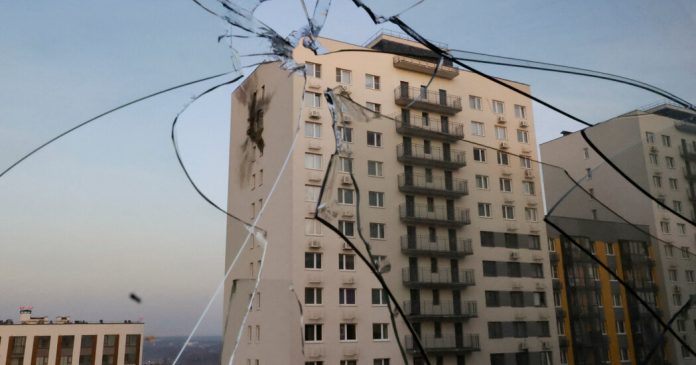
The Russian Ministry of Defense said it shot down at least 91 drones before dawn in the Moscow region, along with over 240 drones targeting other parts of the country. At least three people were killed and 18 others were injured in the Moscow region, the Russian authorities said. Ukraine’s military said it had targeted Moscow’s oil refinery, along with an oil production station in the Orel region. Neither claim could be independently verified.

Kyiv has long maintained that the only way to force Russia to accept an enduring peace deal is through force and by raising the cost of the war for the Kremlin. The timing of the overnight attack on Moscow was meant to drive home that message, Andriy Kovalenko, a senior Ukrainian official focused on Russian disinformation operations, said in a statement.

Russia has also continued its relentless bombardment of Ukrainian civilian and military institutions, regularly launching more than 100 drones each night.

On Tuesday morning, Ukraine’s Air Force said that Russia had launched 126 drones and one ballistic missile overnight. At least one person was killed when a Russian drone struck a warehouse in Kharkiv and at least 17 others were injured in attacks elsewhere in the country, the Ukrainian authorities said.

Russian forces have long held the initiative on the battlefield in Ukraine. In recent weeks, they also have managed to retake about two-thirds of the territory Ukraine seized last summer in the Kursk region of Russia.

But Ukrainian forces have stalled the Russian offensive in the eastern Donetsk region in recent months and have started to win back small patches of land, according to military analysts and Ukrainian soldiers. However, military analysts have been debating whether, after more than 15 months on the offensive, Russian brigades are depleted or are regrouping for a renewed push.

Drones, not the big, heavy artillery that the war was once known for, inflict about 70 percent of all Russian and Ukrainian casualties, according to the Ukrainian military. . They kill more soldiers and destroy more armored vehicles than all traditional weapons of war combined, including sniper rifles, tanks, howitzers and mortars, Ukrainian commanders and officials say.

The war has killed and wounded more than a million soldiers in all, according to Ukrainian and Western estimates.

These are the first high-level, in-person talks for the United States and Ukraine since a Feb. 28 meeting at the White House in which President Trump and Vice President JD Vance castigated and berated President Volodymyr Zelensky, saying he was not grateful enough for U.S. support.

Ukraine is facing the dispiriting challenge of adapting to its main ally adopting the positions of its enemy. Russia and the Trump administration question Mr. Zelensky’s legitimacy and have blamed Ukraine for starting the war.

Ukrainian officials are seeking to smooth over relations with the Trump administration. Over the weekend, French and British officials coached the Ukrainian delegation on how to talk with the Americans, a Ukrainian official with the delegation said.

Ukraine has proposed an immediate truce in the air, saying it would immediately stop long-range strikes into Russia if Moscow agreed to an equivalent halt. That plan, supported by European nations, including France, is envisioned as a first step in building trust ahead of talks about the overall conflict — and the Ukrainian delegation is expected to raise the proposal again in the Jeddah meetings.

Ukraine is also more broadly seeking a resumption of American military aid and intelligence sharing that was suspended after the Oval Office debacle. The intelligence cutoff has already impaired soldiers in combat, according to Ukrainian commanders in the field.

While European allies have pledged further support to Kyiv, Ukraine is seen as having few options for reversing Russia’s recent gains on the battlefield.

On the flight to Jeddah, Mr. Rubio said Ukraine would have to make concessions over land that Russia had taken since 2014 as part of any agreement to end the war. But he also said that it would be imperative in future talks with Moscow to determine what Russia was willing to concede.

“We don’t know how far apart they truly are,” he said, referring to Ukraine and Russia.

Anton Troianovski and Alan Rappeport contributed reporting.
Separatists Hijack Train Carrying Over 400 Passengers in Pakistan

0

Separatist militants hijacked a train carrying more than 400 people in an isolated mountainous area of southwestern Pakistan on Tuesday. The fate of the passengers, whom the militants said they were holding hostage, was not immediately clear.

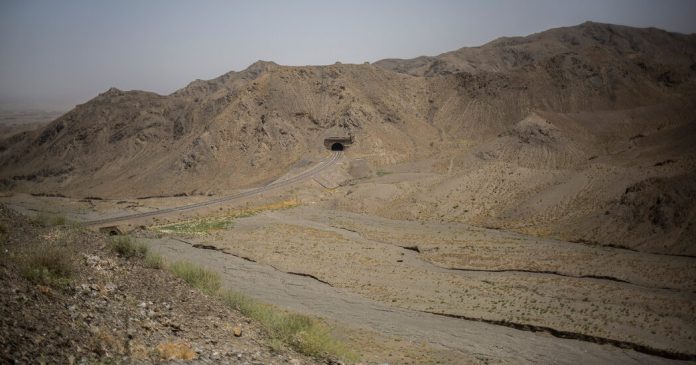
The militants, Baloch ethnic fighters, forced the train to stop in the Bolan district of Balochistan Province after opening fire on it, according to railway and police officials. The train was traveling from Quetta, the capital of Balochistan, to Peshawar, the capital of Khyber Pakhtunkhwa Province. It was to pass through several cities, including Lahore and Rawalpindi, near Islamabad.

Shahid Rind, a spokesman for the Balochistan provincial government, said the authorities were struggling to reach the site of the ambush because of the challenging terrain.

Rashid Hussain, a trader in Quetta, said his family had left on the train for Rawalpindi in the morning but had become unreachable after 2 p.m. “I am deeply worried,” he said by telephone. “The government is not providing any updates. Neither roads nor trains are safe in this province.”

The seizure of the passenger train highlighted the increasing sophistication of a separatist insurgency in Pakistan’s southwest. The attack was the latest in a series of violent episodes in Balochistan, a province bordering Iran and Afghanistan that is the site of major Chinese-led projects, including a strategic port.

A group known as the Baloch Liberation Army, or B.L.A., claimed responsibility for the train hijacking. In a statement, it said its militants had taken hostages, some of whom were security personnel.

The government has yet to confirm reports of hostages or any casualties.

Last year, the B.L.A. carried out one of Pakistan’s deadliest terrorist attacks, a suicide bombing that killed at least 25 people, including security personnel, at Quetta’s busy railway station.

The group also claimed responsibility for a deadly bombing targeting a convoy carrying Chinese citizens near the international airport in Karachi, Pakistan’s largest city. The separatists accuse the Chinese of stealing the province’s resources.

In recent months, separatist groups have escalated high-profile attacks along Balochistan’s three major highways, directly challenging the state’s authority. Last week, an alliance of the groups, including the B.L.A., announced plans to intensify attacks on Pakistani security forces, infrastructure and Chinese interests in the region.

“It points to two key trends: the increasing operational capabilities and sophistication of separatist groups and the weakening control of the government in Balochistan,” said Abdul Basit, senior associate fellow at the S. Rajaratnam School of International Studies in Singapore.

At the Quetta railway station, families of passengers aboard the train anxiously gathered at the information counter on Tuesday, seeking updates.

Many people in the region had begun to prefer rail travel after frequent militant ambushes on the highways on which passengers were killed after being taken off buses. Frequent protests have also caused road blockages.

Train services had resumed only in October after a two-month suspension because of militant attacks on railway tracks.

Hundreds of Civilians in Syria Take Shelter at Russian Air Base

0

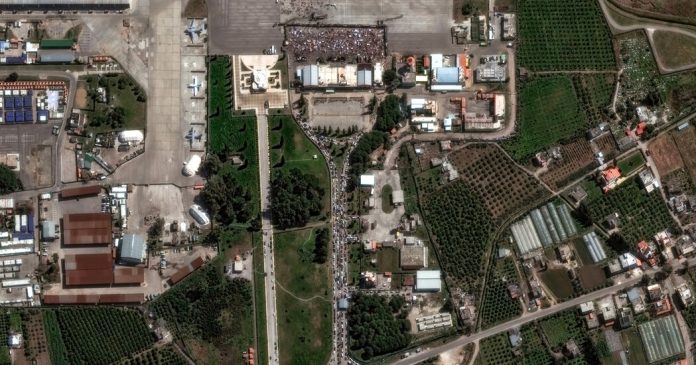
Hundreds of civilians have sought refuge at a Russian air base on Syria’s coast, satellite imagery reveals, as thousands have fled violent unrest that the United Nations said on Tuesday appeared to have been driven by sectarianism.

Footage and satellite images reviewed and verified by The New York Times indicated that civilians were sheltering in a compound shared by the Russian air base in Hmeimim and Latakia International Airport, both of which lie just outside the coastal city of Jableh, where much of the unrest has taken place.

Videos filmed over the weekend showed a large crowd of people waving placards outside the base and chanting, “We want international protection.” Images taken on Saturday by Planet Labs, a commercial satellite company, appeared to also show hundreds of cars newly parked on roads inside the base. One video showed children and women walking past a line of Russian military vehicles and eating food distributed by men in military fatigues. More than a dozen military tents have also been set up in the airport grounds.

Violence erupted last week in Syria’s coastal region between fighters affiliated with Syria’s new government, led by Ahmed al-Shara, and those loyal to the ousted dictator Bashar al-Assad.

More than 1,300 people have so far been killed amid the unrest, largely in the coastal Latakia and Tartus Provinces, according to the Britain-based Syrian Observatory for Human Rights, which has monitored the Syrian conflict since 2011. The war monitor said on Monday that about 1,000 civilians were included in that figure, most of whom were killed by armed forces affiliated with or loyal to the new government.

That could not be independently verified. The U.N. Human Rights Office said on Tuesday that it had so far documented the killing of 111 civilians, but said that verification continued and the actual number was “believed to be significantly higher.”

The U.N. agency, which monitors and defends human rights, said in a statement that many of the killings it had documented were summary executions “that appear to have been carried out on a sectarian basis.” Entire families had been killed in some circumstances, the agency said, with Alawite areas targeted in particular.

The violence has been centered in the heartland of the Alawite sect, an offshoot of Shiite Islam followed by about 10 percent of Syrians. Alawites dominated the ruling class and upper ranks of the military under the Assads, who were themselves members of the sect. The unrest has stoked fears of a renewed sectarian conflict, and presented the most serious challenge yet to Syria’s new Sunni Muslim leaders as they attempt to unite the country after its bloody civil war.

Syria’s interim president, Mr. al-Shara, said on Sunday that the government was forming a fact-finding committee to investigate the violence and to bring the perpetrators to justice. Syrian officials have blamed Assad loyalists for the unrest, and have not yet publicly taken responsibility for the bloodshed. But a trickle of fighters have been arrested by government security forces in recent days after videos spread across social media depicting civilians being killed.

The United Nations’ high commissioner for human rights, Volker Türk, urged Syria’s new government on Tuesday to ensure that the investigations are “prompt, thorough, independent and impartial,” according to a statement.

In the wake of the Assad regime’s downfall in December, hundreds of thousands of Syrian refugees returned from countries such as Turkey, Jordan and Lebanon, according to the United Nations. After more than a decade of war, many hoped that they would now be safe, with Syria’s new leaders promising a new era of stability.

Now, many are trying to leave again.

More than 6,000 people have fled across the border into northern Lebanon in recent days, a spokeswoman for the U.N. refugee agency, Lisa Abou Khaled, said on Monday.

Ukraine Targets Moscow With Large-Scale Drone Attack

0

Russian officials said Ukraine attacked Moscow before dawn on Tuesday with its largest long-range drone bombardment of the war, as both sides stepped up attacks ahead of talks intended to find a way to end three years of fighting.

The Russian Ministry of Defense claimed to have shot down at least 91 drones in the region around Moscow and more than 240 drones directed at other targets across the country. The Ukrainian military did not have any immediate comment on the strikes.

Moscow’s mayor, Sergei Sobyanin, said the attack was the largest against the city since the start of the war. At least two people were killed and 18 others were injured, the Russian authorities said, and Moscow’s four international airports temporarily suspended operations. Railway tracks near the Domodedovo airport south of Moscow were also damaged and a security guard was killed in a nearby town.

President Vladimir V. Putin was briefed on the attack, according to Dmitri S. Peskov, the Kremlin’s spokesman. Mr. Peskov said Russian air defenses were doing “a great job” but told reporters that the authorities “must remain on guard” because attacks would likely continue.

The predawn strikes — just hours before high-level delegations from Kyiv and the United States were scheduled to meet in Saudi Arabia to discuss a possible path toward ending the war — appeared intended to serve as a reminder that despite suffering attacks and enduring huge losses, Ukraine can still hit back at Russia.

Ukraine has proposed an immediate truce in the air, saying it would immediately stop long-range strikes into Russia if Moscow agreed to an equivalent halt. That plan, supported by European nations, including France, is envisioned as a first step in building trust ahead of talks about the overall conflict, in which over a million Ukrainian and Russian soldiers have been killed or wounded.

Ukrainian officials are expected to raise it again in meetings on Tuesday with U.S. officials in Jeddah, Saudi Arabia. In addition to a partial truce in the air, Ukraine was also expected to press the case for a halt to strikes on the Black Sea to gauge whether Moscow was willing to take any steps to end the fighting.

When asked on Tuesday whether Moscow would agree to such a plan, Mr. Peskov said it was “impossible to talk about positions now” and that Russia expected the American side to inform Moscow about the results of talks with Ukraine.

Kyiv has long maintained that the only way to force Russia to accept an enduring peace deal is through force and by raising the cost of the war for the Kremlin. In recent months, Ukraine has stepped up its attacks on critical infrastructure inside Russia, targeting oil and gas facilities that help fund the Russian war effort.

The timing of the overnight attack on Moscow was meant to drive home that message, according to Andriy Kovalenko, a senior Ukrainian official focused on Russian disinformation operations.

“This is an additional signal to Putin that he should also be interested in a cease-fire from the air,” he said in a statement. “Not only the oil refinery, drones can fly en masse over Moscow.”

President Volodymyr Zelensky has said that Ukraine plans to produce 30,000 long-range strike drones and 3,000 long-range missiles this year, building its domestic arms-making abilities even as U.S. military assistance remains suspended.

Russia has maintained its relentless bombardment of Ukrainian civilian and military institutions. Nearly every night in recent weeks, Russia has launched over 100 drones at targets across Ukraine, including at Kyiv, the capital.

The assaults — which frequently include a combination of ballistic and cruise missiles in an effort to saturate Ukrainian air defenses — persisted overnight Monday and into Tuesday.

The Ukrainian Air Force said that the latest attack from Russia included 126 drones and one ballistic missile. Explosions echoed across Kyiv around midnight as air defense teams scrambled, and the Ukrainian Air Force said it shot down or disabled most of the drones as well as the missile.

At least one person was killed when a Russian drone struck a warehouse in Kharkiv and at least 17 others were injured in other attacks across the country, the Ukrainian authorities said. Drones hit the port city of Odesa in southern Ukraine, with the local authorities reporting fires in multiple locations.

Since President Trump spoke by telephone with President Vladimir V. Putin on Feb. 12 — the first official contact between the heads of state for the United States and Russia in years — more than 100 civilians have been killed in Russian strikes, according to data compiled by The New York Times based on reports from the Ukrainian authorities.

Kyiv had hoped to use its control of that portion of land as leverage in any negotiations to end the war, but the recent developments may have changed that calculus, because the cost of holding the territory could outweigh any diplomatic gain.

With Ukraine’s hold in Kursk now collapsed to an area around Sudzha, about six miles across the border, and its supply lines under constant attack, the situation has become increasingly precarious.

The top Ukrainian military commander, Oleksandr Syrsky, said on Monday night that Kyiv was dispatching reinforcements — but rejected Russian claims that a large contingent of Ukrainian soldiers there were at risk of encirclement.

“A decision was made to reinforce our group with the necessary forces and resources, including electronic warfare and drones,” he said.

At the same time, there are signs that the Russian offensive in eastern Ukraine has stalled. Russian forces have not advanced in over a week and Ukrainian forces have engaged in limited counterattacks to regain small patches of land, according to Ukrainian soldiers and military analysts who use combat footage to track the daily movements along the front.

Why the I.C.C. Arrested Duterte Despite Questions Over Jurisdiction

0

The Filipino authorities arrested Rodrigo Duterte, the former president of the Philippines, on Tuesday, days after the International Criminal Court secretly issued an arrest warrant accusing him of crimes against humanity.

The case will be a closely scrutinized test of the legal reach of the court, which investigates accusations of genocide, war crimes, crimes against humanity and the crime of aggression from its base in The Hague.

Here’s what to know about the court and the lead-up to Mr. Duterte’s arrest.

The prosecutor’s office at the International Criminal Court said in 2018 that it was opening an investigation into Mr. Duterte, then the president of the Philippines, and accusations of crimes committed during his crackdown on drugs.

Rights groups have said that roughly 30,000 people were killed in his antidrug campaign, many of them gunned down by police officers, hit men or vigilantes. Some victims were minors, and many were not involved in the drug trade, according to activists.

The I.C.C. draws its jurisdiction from the Rome Statute, a treaty currently signed by 125 countries. Soon after the inquiry was announced, Mr. Duterte said the Philippines would withdraw from the treaty, and the country officially left the court in March 2019.

Mr. Duterte’s lawyer has said the arrest is illegal and without jurisdiction because the country is no longer a court member. A panel of I.C.C. judges, however, wrote in the warrant, dated March 7, that the court had jurisdiction because the accusations dated from when the Philippines was still a signatory of the treaty.

The Philippines is still a member of Interpol, the international police organization, which can seek to arrest Mr. Duterte on behalf of the I.C.C. A representative of Interpol was present when Mr. Duterte was arrested.

But questions of jurisdiction make the case legally complex, said Romel Bagares, a professor of international law based in Manila. In 2019, Mr. Bagares represented a coalition of rights activists in the Supreme Court as they opposed the country’s withdrawal from the I.C.C.

Under Filipino law, a court will need to determine whether the former president can be extradited, Mr. Bagares said. But only Interpol members who are also part of the Rome Statute are obliged to extradite people wanted by Interpol. Some foreign nationals who were wanted abroad were quickly extradited in the past, he said. But this case was more controversial, he said.

“Legally, you cannot send out someone sought in a criminal procedure abroad without an extradition treaty,” Mr. Bagares said.

Mr. Duterte had long been seen as essentially immune to prosecution, and the country’s current president, Ferdinand R. Marcos Jr., had previously pledged to shield Mr. Duterte from international inquiry. An alliance between the two helped Mr. Marcos win election in 2022 with Mr. Duterte’s daughter, Sara Duterte, as his vice president.

But that alliance has since ruptured. Lawmakers impeached Ms. Duterte last month over accusations of corruption and threatening the president. Ms. Duterte has denied the accusations and called the impeachment an attack on her political ambitions.

Now, the arrest of Mr. Duterte is likely to add to the turmoil. The former president still has a substantial following, and many of his supporters have been in uproar since his arrest.

The I.C.C. had suspended its inquiry after the Philippines said its own judicial system would investigate any allegations. But it resumed its investigation in 2023 after the court found the country’s investigation insufficient. Despite previously rebuffing the court in this case, Mr. Marcos has since let officials from the I.C.C. into the Philippines to conduct inquiries.

“The government will be treading here on a minefield, politically,” Mr. Bagares said. Though he had expected Mr. Duterte to be arrested eventually, he said, the speed of it surprised him.

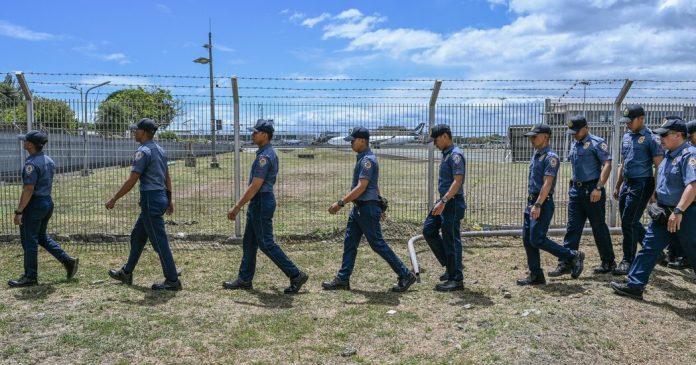
Mr. Duterte was being held at the Villamor Air Base in Manila on Tuesday, and his lawyers were scrambling to file a petition in court for his release.

“It’s not as if he’s traveled to somewhere else and they’ve grabbed him there,” said Sarah Williams, an international criminal law professor at the University of New South Wales in Sydney, Australia. She added that Mr. Duterte’s own country had arrested him when it could have argued it had no obligation to do so.

“It does suggest there’s quite serious domestic politics at play,” she said.

For families whose loved ones were killed during Mr. Duterte’s crackdown, his arrest was a step toward accountability.

If he is extradited to The Hague, Mr. Duterte will make an initial appearance before the I.C.C. judges. He will then face a hearing confirming the charges, during which prosecutors will give more detailed evidence and his defense lawyers will be able to respond. His defense team could also challenge questions of jurisdiction, both in the I.C.C. and in Filipino courts, and he could apply for a provisional release while proceedings continue, Professor Williams said.

A conviction could come with a sentence of up to 30 years.

It could be anywhere from two months to two years, if not longer, before Mr. Duterte faces a formal trial in The Hague, Professor Williams said. And his legal team has argued that the killings he has been accused of were in self-defense, she said.

“It’s going to be a long road from Manila to The Hague,” Mr. Bagares said.

Ramadan in the West Bank: Displacement and Despair

0

The bustle of Ramadan markets has been reduced to a trickle of somber shoppers. A heavy silence has replaced lively chatter. No lanterns glow in windows, and the strings of lights that crisscrossed alleyways, flickering above children playing in the streets, have gone dark.

“Ramadan used to shine,” said Mahmoud Sukkar, a father of four in the West Bank. “Now, it’s just darkness.”

The holy month has long been commemorated in Palestinian cities by traditions deeply rooted in fasting, community and spiritual devotion. Families gathered in the evenings around tables laden with traditional dishes for iftar — fast-breaking meals. Neighbors shared food and other offerings, and nights were illuminated by crescent-shape lights.

But this year is different.

In the West Bank cities of Jenin and Tulkarm, especially the sprawling refugee camps in the Israeli-occupied territory, the streets that once glowed and reverberated with the laughter of children are shrouded in grief. An Israeli military operation that began in January led 40,000 Palestinians to flee their homes, what historians have called the biggest displacement of civilians in the West Bank since the Arab-Israeli war of 1967.

For the first time in decades, Israeli forces sent tanks into Jenin and established a military post in Tulkarm. Nearly 50 people have been killed since the incursion began, according to Palestinian officials. Prime Minister Benjamin Netanyahu of Israel said the operation aimed to eradicate “terrorism.”

Before Israel’s operation began, the Palestinian Authority had been carrying out an extensive security operation in Jenin, which had become a haven for Iran-backed armed fighters from Hamas and Palestinian Islamic Jihad.

A year ago, multiple officials told The New York Times that Iran was operating a clandestine smuggling route to delivering weapons to Palestinians in the West Bank.

While nearly 3,000 Palestinians have returned home since the start of Israel’s military operation, most remain displaced.

Mr. Sukkar, 40, and his wife, Na’ila, 34, fled Jenin with their children and his mother on the third day of the Israeli operation. They left with only the clothes they were wearing — no heirlooms, no keepsakes, none of the decorations they used to commemorate Ramadan.

Their displacement fragmented the family, with Mr. Sukkar and their 9-year-old son moving to a friend’s home, and his wife, her mother-in-law and three younger children staying with relatives. But as Ramadan approached, they sought to reunite.

“We couldn’t stay apart,” Mr. Sukkar said. “Ramadan means we have to be together. And we don’t want to remain a burden on others.”

Mr. Sukkar worked in Israel before the war with Hamas erupted in Gaza in October 2023, but he has been mostly unemployed since. With no stable income, the family eventually found rent-free housing in dorms at Arab American University in Jenin, an initiative funded by the government. They moved in one day before Ramadan, relieved to have a space of their own.

But the struggles of displacement persist.

“We left with nothing,” Mr. Sukkar said. “Now, we don’t know where we belong.”

Palestinians in Jenin long not just for safety, but also for the sights, sounds and tastes that make Ramadan a time of joy and reflection. With tens of thousands displaced, many families can’t break their fast in their own homes.

In the central market in Jenin city, street vendors stand by with racks of seasoned greens and plastic gallons of lemonade and carob juice. But instead of seeing excited shoppers hurrying to prepare for iftar, they face people moving quietly, their faces heavy with exhaustion and worry, navigating the sidewalks rather than the crowded stalls.

In previous years, families would stroll together after breaking their fast, visiting relatives or buying knafeh, a sweet made of dough and white cheese. Now, the streets remain mostly empty.

The musaharati, the traditional night caller who used to walk through neighborhoods beating a drum to wake people for suhoor — the predawn meal before fasting — no longer makes his rounds. For generations, he would stop by doorsteps to collect small donations in exchange for his Ramadan blessings.

“He won’t knock on our door this year,” Ms. Sukkar said. “We don’t have a door to knock on.”

In Tulkarm, Ramadan is overshadowed by a sense of uncertainty, residents say. The presence of the Israeli military not only instills fear, but it also disrupts the very rhythm of daily life.

Intisar Nafe’, an activist displaced from the Tulkarm camp, said she had taken pride in cooking for her community. Her small kitchen had been a refuge, her meals a gesture of care. Her iftar table would have been filled with musakhan, a fragrant chicken dish, or maftoul, hand-rolled couscous.

“Nothing is like Ramadan this year,” she said in a phone interview. “I used to cook for others, help in Ramadan kitchens. Now, I’m waiting for someone to feed me.”

Ms. Nafe’ was displaced with her sister and nieces when her home was destroyed in a military operation, she said. She first moved into a mosque with them while the rest of her family scattered. She, her sister and nieces later rented a small apartment in Tulkarem city.

“Ramadan is about family,” she said. “It’s about breaking bread together, sharing meals, visiting one another. Without that, what is left?”

.

She misses watching Ramadan-themed Arab and Turkish soap operas and the traditions surrounding Ramadan meals.

“My mother, now 88, learned these dishes from my grandmother, who was a Nakba survivor,” she said, referring to the displacement of hundreds of thousands of Palestinians during Israel’s founding in 1948. “Our kitchen was a continuation of the homes we lost.”

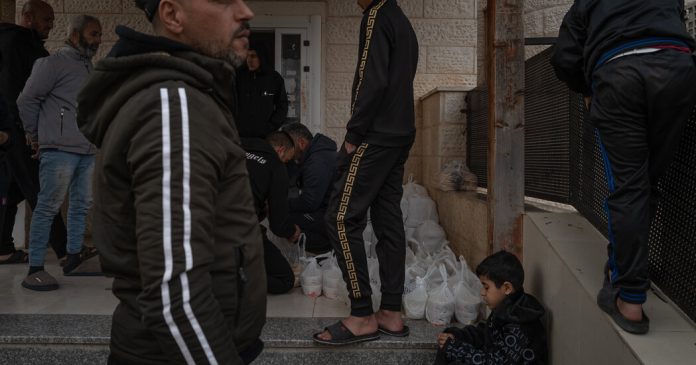
Ramadan’s meal structure — breaking the fast with water and dates, followed by soup, salad and a main course — is now a privilege that few displaced Palestinians can afford. For many in Jenin, iftar is a boxed meal delivered by volunteers. Every evening around 5 o’clock, people rush outside to receive the donations. The meals often arrive cold.

“We do what we can to make it feel like home,” Ms. Sukkar said. “I pour water into plastic cups. I lay out what little we have. But it’s not the same.”

A nostalgic smile flickered across her face. “My iftar table in Ramadan used to be the most beautiful thing,” she continued. “Maybe our house in the camp was small and crowded, but with time, neighbors became family. It was our little paradise, our safety.”

Many displaced families are uncertain when, or if, they will ever return home. Israel has given no sign of ending its operation soon.

“Ramadan is supposed to be a time of renewal,” Ms. Nafe’ said, “but in Tulkarm, it is a month of waiting — waiting for news, waiting for a sign that life might return to what it once was.”

Rodrigo Duterte Arrested on I.C.C. Warrant

0

The former president of the Philippines was detained at an airport in Manila, a step toward possibly bringing justice to the many Filipinos killed during his drug war.

South Korean R&B Singer Wheesung Is Found Dead at 43

0

The South Korean singer-songwriter Wheesung, who popularized R&B music in the country but had documented struggles with drug abuse, was found dead in his home in Seoul on Monday evening, police said. He was 43.

Fire department officials found the singer, whose birth name was Choi Whee-sung, in a state of cardiac arrest in his apartment around 6:30 p.m. on Monday. An officer at Seoul Gwangjin Police Station said there was no evidence of a break-in or foul play, and that the authorities were investigating the possibility of a drug overdose.

The death is the latest in a string of tragedies to strike the country’s booming entertainment industry. Several South Korean celebrities have died including Kim Sae-ron, a young actress who was found dead at her home a few weeks ago. Police ruled Ms. Kim’s death a suicide.

Mr. Choi, who also went by Realslow, began his career in 2002 with the album “Like a Movie” and quickly gained critical and popular acclaim, winning several South Korean music awards in the same year. `

He released around a dozen albums and also starred in musicals, playing iconic roles including Zorro and Elvis Presley. Mr. Choi also helped write music for some of South Korea’s most successful K-pop bands, including Twice and Super Junior.

His career suffered a setback in 2021, after he was found guilty of purchasing and using propofol, a powerful sedative that is a controlled substance in South Korea, on several occasions. He received a suspended sentence of one year in prison, avoiding jail time on the condition that he didn’t reoffend. He was also fined 60.5 million won (around $41,000), ordered to perform community service, and undergo drug treatment.

With the drug charge, Mr. Choi came under scrutiny from the media and faced harsh public criticism, with some people posting hateful comments online. In South Korea, the social standing of celebrities usually hinges on having a blemish-free reputation and blameless character.

Singers in South Korea posted tributes in honor of Wheesung on their social media accounts. “His music was a big part of my 20s,” the rapper Paloalto wrote on Instagram along with a picture of Mr. Choi’s first album cover. “Thank you for being there with me.”

Wheesung had been scheduled to perform on March 15 with the singer KCM in Daegu, a city in the country’s south.

Tajoy Entertainment, the company that managed Wheesung, did not immediately respond to a request for comment.

If you are having thoughts of suicide, call or text 988 to reach the 988 Suicide and Crisis Lifeline or go to SpeakingOfSuicide.com/resources for a list of additional resources.

In South Korea, call 109 for the health ministry’s suicide prevention hotline, or visit the Korean-language site 129.go.kr/109.

As Ukraine and U.S. Cease-Fire Talks Near, Gulfs Remain

0

When Ukrainian and American officials sit down in Saudi Arabia on Tuesday for their first high-level meeting since an Oval Office shouting match between their presidents last month, the goal will be finding a way to halt the bloodiest European war in generations.

But the United States, Ukraine and Russia appear to have very different ideas about what a cease-fire should look like.

Ukraine has proposed an immediate cessation of air and sea strikes, but wants security guarantees before its infantry lays down its arms. The United States is pressing for an immediate, comprehensive cease-fire. And Russia, which will not be at the talks, has signaled that it wants concessions of its own before halting the war it started.

If the Ukrainian proposal to halt the air and sea strikes is agreed to, it would bring about the first negotiated reduction in the fighting in three years of war, but the Trump administration has made clear it is looking for more. Ukraine has offered the unconditional truce on long-range strikes as a confidence building measure while continuing talks on a more comprehensive cease-fire.

Secretary of State Marco Rubio, en route to the meetings in the seaside city of Jeddah, said Monday that Ukraine would have to make concessions over land that Russia has taken since 2014 as part of any peace agreement.

“The most important thing that we have to leave here with is a strong sense that Ukraine is prepared to do difficult things, like the Russians are going to have to do difficult things, to end this conflict or at last pause it in some way shape or form,” Mr. Rubio told reporters.

These will be the first high-level, in-person talks for the United States and Ukraine since a Feb. 28 White House meeting between President Trump and President Volodymyr Zelensky of Ukraine unraveled into an argument and insults. “You’ve talked enough,” Mr. Trump told Mr. Zelensky at one point. “You won’t win.”

Since then, Mr. Zelensky has sought to smooth relations with Mr. Trump, calling their contentious meeting “regrettable,” and Ukrainian officials have been careful in framing their cease-fire proposal. Over the weekend, French and British officials coached the Ukrainian delegation on how to talk with the Americans, a Ukrainian official with the delegation said. The delegation is also expected to meet with the American national security adviser, Michael Waltz.

Ukraine favors a truce at sea and in the air, said the official, who was not authorized to speak publicly of the delegation’s plans, but may pose the idea tentatively. “We don’t know if the Russians are ready for any steps to peace” the official said. The official said the Ukrainians would ask if the Americans, who have been talking to the Russians separately, had insight into Moscow’s position on the Ukrainian proposal.

Mr. Zelensky proposed the partial cease-fire last week, with support from President Emmanuel Macron of France. Russia has not directly responded. Ukraine’s president has also called for an all-for-all exchange of prisoners of war, a traditional confidence-building measure in peace talks.

The proposals that Ukraine is bringing to Jeddah are its most detailed to date. In return, it is seeking one immediate action from the United States: a resumption of military aid and intelligence sharing that was suspended by Mr. Trump after the Oval Office debacle.

The intelligence cutoff has already impaired soldiers in combat, particularly in the Kursk region of Russia, where Russian soldiers, aided by fighter from North Korea, have been rapidly advancing, according to Ukrainian commanders in the field.

The picture appears somewhat different of late in eastern Ukraine, where a slow reversal for the Russians on the battlefield has come into sharper focus. Ukrainian troops there have stalled a Russian offensive, and won back small patches of land. Since the beginning of the month, Russia has captured only five square miles of Ukrainian territory.

Mr. Rubio declined to outline a potential agreement but made clear that concessions will be critical. He said it would be important to learn what Russia is willing to concede. “We don’t know how far apart they truly are,” he said.

“I think both sides need to come to an understanding that there’s no military solution to this situation,” Mr. Rubio said. “The Russians can’t conquer all of Ukraine, and obviously it’ll be very difficult for Ukraine in any reasonable time period to sort of force the Russians back all the way to where they were in 2014.”

It is unclear whether the offer of an aerial and maritime truce, perhaps accompanied by an agreement to share revenues from Ukraine’s mineral mining with the United States, would be sufficient for Mr. Trump to resume intelligence sharing and lift his halt on weapons shipments.

Mr. Trump has pushed for the warring sides to stop fighting as soon as possible, without first negotiating terms that might include mechanisms to safeguard the peace. At the Oval Office meeting, he argued that a cease-fire could be achieved more swiftly than a peace agreement, and that Russia’s president, Vladimir V. Putin, would keep his word.

Russia violated two previous cease-fires, reached in 2014 and 2015, and denied an intention to invade just days before invading in 2022.

In an interview on Fox News’s “Sunday Morning Futures,” Mr. Trump once again said he thought that Mr. Zelensky, on whom he has heaped vitriol, was not grateful for American military aid. When the Biden administration was in power, he said, the Ukrainian leader “took candy from a baby.”

Mr. Trump also said that he also saw “some weakness” with Russia that would facilitate talks. “You know, it takes two,” he said.

Russia has publicly called for conditions to be imposed before a cease-fire takes effect, and Mr. Putin has signaled that he wants to secure a raft of concessions from Ukraine and the West.

Analysts believe that beyond seeking to keep the territory Russia has captured so far and claiming additional land, Mr. Putin will demand a guarantee that Ukraine not join NATO, a retreat by the Western alliance from Central and Eastern Europe and limits to the size and firepower of Ukraine’s military.

“We must choose for ourselves a version of peace that would suit us and that would ensure calm for our country in the long-term historical perspective,” Mr. Putin said on Thursday.

Russia is also pressing for Ukraine to hold presidential elections, arguing that Mr. Zelensky’s rule is illegitimate. Ukrainian elections scheduled for the spring of 2024 were suspended because of the war.

For Ukraine, the talks pose the dispiriting challenge of adapting to an ally that is now adopting positions of its enemy. Both Russia and the Trump administration have questioned Mr. Zelensky’s legitimacy and accused Ukraine of starting the war.

“I am finding it more difficult frankly to deal with Ukraine, and they don’t have the cards,” Mr. Trump said last week.

The United States has also offered no support for a role for European peacekeepers in Ukraine under a cease-fire, but as Ukrainian and American officials meet in Jeddah on Tuesday, top military officials are expected to gather in Paris to discuss such a force. Asked how many troops might be required, France’s defense minister, Sébastien Lecornu, told La Tribune du Dimanche that “everything depends on their mission and positioning.”

Ukraine’s broader goals in the talks with the United States are to slow, so far as possible, the fallout on its war effort from America’s geopolitical pivot to Russia under Mr. Trump. That might buy time for European states to ramp up aid, analysts and former Ukrainian officials said.

“It’s the alignment between Putin and Trump that is the problem,” said Orysia Lutsevych, a Ukraine analyst at the London-based research institute Chatham House. “There’s nothing that Zelensky can do. Ukraine is ready to compromise but not capitulate. I don’t see a leader of Ukraine wanting to be friendly to Trump and Putin.”

Ukraine is not likely to bend on it insistence that there be an enforcement mechanism for any cease-fire, said Andriy Zagorodnyuk, a former Ukrainian defense minister. Russia has greater potential to rebuild its army over any pause in the fighting, he said.

“If we have nothing, and Russia is pumping up their forces, in one year they will be ready to strike again,” Mr. Zagorodnyuk said in a telephone interview.

Marc Santora contributed reporting from Kyiv, Ukraine, Anton Troianovski from Berlin, and Aurelien Breeden from Paris.

With U.S. Aid Cuts No Longer a Threat, Rwanda Bets Big on Soft Power

0

Since an armed rebel group backed by Rwandan troops launched a major offensive in the Democratic Republic of Congo, professional cyclists have raced on lush Rwandan hills, John Legend performed a sold-out concert in the capital, Kigali, and entrepreneurs have gathered at a conference center for a financial technology convention.

Rwanda’s role in the war waged by the rebel group M23 has drawn criticism from the United States, China and the United Nations. But so far the strong words have done little to tarnish the country’s status as a premier destination for investors, tourists, athletes and celebrities.

In his first weeks in office, President Trump ended virtually all American foreign aid, cutting off development programs around the world and leaving the United States with one less negotiating tool when responding to conflicts. Now, with Mr. Trump attending to other crises and slashing government spending, experts say Rwanda is betting on its soft power and reputation as a security partner and investment hub in Africa to minimize the backlash to the offensive.

“Rwanda appears to have calculated that in this moment, the pressure will not be coordinated, and that it can weather the storm,” said Murithi Mutiga, the Africa director at the International Crisis Group.

“The United States is also asserting that it can expand its territory,” Mr. Mutiga added, referring to Mr. Trump’s claims that the United States would “get” Greenland. “It’s an era of strongmen, in which if you feel that you can assert yourself from a military perspective, it will be hard to draw back.”

Rwanda is often touted as one of Africa’s biggest recent success stories. Ravaged by a genocide that killed nearly a sixth of its population in 1994, it has since emerged as a top investment location in Africa.

The country has spent the last decade diversifying its trade relationships to decrease its dependence on the United States and other western partners. It has bought military drones from Turkey, and a Turkish company built Rwanda a stately convention center. Singapore helped redesign the capital. It is teaming up with Qatar to turn a future international airport into a travel hub in Africa.

Despite its involvement in a war in eastern Congo that has killed thousands in just the past few months, Rwanda has positioned itself as a reliable security partner in Africa, currently contributing the second-highest number of peacekeepers to the United Nations. Its soldiers help protect a $20 billion French gas project in Mozambique and have replaced French troops fighting rebels in the Central African Republic.

Paul Kagame, the president of Rwanda for 25 years, worked with the NBA and the International Basketball Federation, which created the Basketball Africa League, to hold its annual playoffs in Kigali, bringing together some of the best teams on the continent. Top European soccer teams like Arsenal, Bayern Munich and Paris St.-Germain have sponsorship agreements with Visit Rwanda, the national tourism agency.

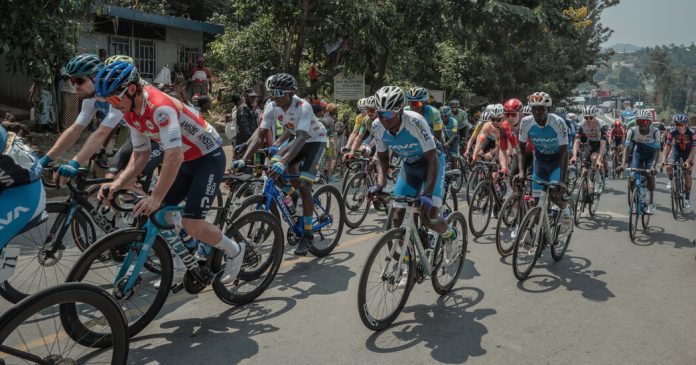
At the Tour of Rwanda last month, cycling teams from the United Arab Emirates, France, South Africa, Israel and elsewhere raced through Kigali and the green tropical farms and forests of Rwanda’s hilly countryside. Young urbanites snapped selfies and cheered while local farmers and children in school uniforms looked on.

The route also took the cyclists near the border with Congo, just miles away from Goma and Bukavu, where thousands died as M23 moved to capture the two cities earlier this year. Rwanda also has aspirations to organize a Formula 1 grand prix race and is set to host the World Cycling Championships in September — the first African country to do so.

Kigali’s image as a clean and orderly city has helped boost tourism — including $1,500-a-day excursions to see mountain gorillas in stunning national parks — that brought the country $620 million in 2023, according to Rwanda’s Development Board. But that image is increasingly at odds with the ongoing war in eastern Congo, critics say, and sanctions are piling up.

Germany and Britain have frozen some of their aid to Rwanda, though other European countries have been divided on a response to the invasion. Canada’s government has suspended some export activities. The United States has imposed sanctions on a Rwandan government minister and an M23 spokesman.

Analysts at S&P Global Ratings have warned that the conflict could hurt Rwanda’s infrastructure spending and tourism. After international donors withdrew support to Rwanda in the wake of an M23 offensive in 2012, the country’s growth dropped under 5 percent, down from 8.6 percent the year earlier.

Grants and infrastructure projects account for more than 7 percent of Rwanda’s economy, at about $1 billion, according to S&P Global Ratings. Before the Trump administration dismantled the U.S. Agency for International Development, Rwanda had received about $650 million in U.S. foreign assistance over the past five years, and more than $1.7 billion over the past decade.

Rwandan troops have been present in eastern Congo for years, but the latest offensive has posed the biggest threat to Congo in decades.

Mr. Kagame has denied backing M23 and has described the conflict near the border as a national security threat for his country. He has accused the Congolese authorities of providing a refuge to militias seeking to attack Rwanda — including hundreds of people he claims were involved in the Rwandan genocide.

Rwanda’s government officials didn’t reply to requests for an interview. Tite Batagazi, a Kigali-based political analyst who supports Mr. Kagame’s government, said “Congo has a domestic problem, but its leaders prefer focusing on a so-called Rwandan aggression.”

As Congo fails to mount a counteroffensive, it has tried to hit Rwanda in other ways. Its foreign minister, Therese Kayikwamba Wagner, has urged the NBA and soccer teams to end their “bloodstained” sponsorship agreements with Rwanda.

“When you’re wearing a jersey of P.S.G., Arsenal or Bayern Munich, you’re very close to this crisis,” Ms. Wagner said in an interview. “Certainly the fans, the clubs’ owners, the players on the pitch do not stand for the kind of violence and human suffering we’re seeing in eastern Congo.”

John Legend performed in Kigali last month despite boycott calls. He later told the BBC, “I don’t believe that we should punish the people of Rwanda and punish the people of other countries when we disagree with their leaders.”

No sports organization has publicly responded to the calls for a boycott. Arsenal, one of Mr. Kagame’s favorite teams, didn’t respond to a meeting request from Ms. Wagner when she was in London in February, she said.

P.S.G. is owned by Qatar, a key ally of Rwanda: Qatar Airways and Rwanda are closing in on a partnership with the national airline, Rwandair, and investment in a new international airport outside Kigali.

At the financial technology conference in Kigali last month, entrepreneurs and executives pitched their latest mobile money solutions and grand plans for financial reforms in Africa.

In M23-controlled Congolese territories, however, local populations remain hobbled by cash shortages and bank closures.