


World markets fall.
What Slowdown? Xi Says China Must Win the Global Tech Race.
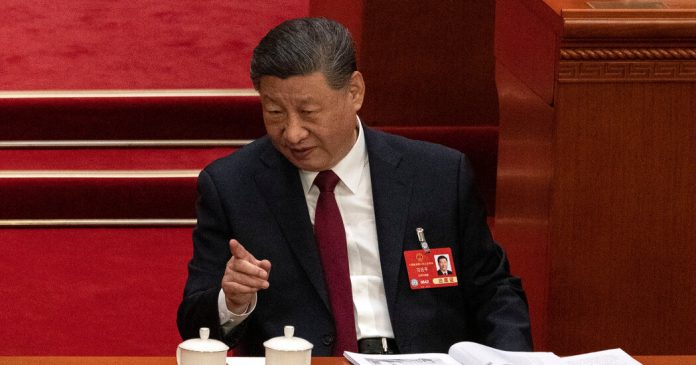
Throughout China’s annual legislative meeting, the national leader Xi Jinping made clear that he wants nothing to hold back his plans for China to march past its rivals by becoming a technological superpower. Not the economic slowdown or heavy local government debt, nor a trade war with the United States.
The meeting in Beijing, called the National People’s Congress, was once a stage for Communist Party leaders to make a show of public consultation. Congress delegates, although handpicked by the party, sometimes chided officials over problems like pollution. There were even rare flashes of discord among senior officials.
Mr. Xi, though, has turned the meeting into a meticulously orchestrated, weeklong salute to himself and his vision. This time, he urged China to forge ahead in advanced technologies including artificial intelligence, biotechnology and new weapons.
“Xi has seen how decades of investment into science by the U.S. government after World War II was a knockout success for the United States, and wants to replicate that,” said Jimmy Goodrich, who studies China’s science policies as a senior adviser at RAND, an organization that provides analysis to the U.S. government and other clients.
“He believes strongly that only by being more self-sufficient and a global leader in science can China achieve success in upgrading its economy, boosting its military capabilities and achieving world-leader status,” Mr. Goodrich said.
Mr. Xi’s implicit message is that other efforts, such as restoring the confidence of China’s private entrepreneurs, must align with that bigger national goal.
The annual congress allows Mr. Xi to give his priorities the gloss of public approval. Dissenting votes from the nearly 3,000 delegates have become exceedingly rare.
Mr. Xi’s agenda told the story. On the first day of the congress, Mr. Xi met with delegates from Jiangsu Province — an industrial powerhouse — and told them to “seize on scientific and technological innovation.” The delegates were shown on state television diligently writing down his comments.
On the second day, Mr. Xi heard reports from scientists and education officials and emphasized the role of education in building China into a “science and technology great power.”
On the third day, Mr. Xi put on his green military uniform to meet members of the People’s Liberation Army. He demanded that China’s military become more efficient in implementing modernization plans, rooting out graft, and also more nimble in applying advanced technologies to “accelerate the development of qualitatively new combat capabilities.”
The public summary of his comments gave no details, but China’s military has been working on next-generation jet fighters, unmanned drones, new submarines and other weapons.
Mr. Xi’s priorities were also reflected in China’s annual budget, which projects that government spending on science and technology will rise by 8.3 percent this year, on education by 6.1 percent and on the military by 7.2 percent. The government set more modest increases of around 5 percent in spending on health care and social welfare.
The Chinese government’s science and technology budget this year is equal to about $172 billion, second to the United States. But government cuts under Mr. Trump could narrow the U.S. lead. Including investment from businesses, the United States spent $806 billion on research and development in 2021, compared to $668 billion in China, according to an estimate last year from the U.S. National Science Foundation.
“Over the past six or seven years of U.S.-China strategic competition, the two most important issues have been geopolitics and technology,” said Wang Hsin-hsien, a professor at National Chengchi University in Taipei who studies Chinese politics. “In China they probably see that there may be a little less pressure on them geopolitically, but there won’t be any easing up from Trump on the technology front.”
Some critics have argued that Mr. Xi’s bet on futuristic goals comes at the cost of providing help to Chinese citizens struggling to make ends meet. The economy is still sagging under a steep fall in housing prices. The number of retirees is growing and the birthrate has slumped. Yet Mr. Xi appears insistent that China can overcome its problems by tilting spending to technological projects and upgrading industry.
So far, Mr. Xi has not indicated a willingness to rein in China’s export drive after Mr. Trump imposed additional tariffs on goods from China.
Nor does Mr. Xi seem worried about any threats to his political dominance. After more than 12 years in power, he has given no sign of choosing a successor. The retired leaders who may once have hemmed in his power have mostly passed away. He has never slackened his tight grip on the key levers of power, such as the Ministry of State Security, said Jonathan Czin, a researcher at the Brookings Institution who formerly worked in the Central Intelligence Agency and studies Chinese politics.
“So far, I see zero evidence of meaningful cracks in Xi’s control. Who at this point in Xi’s tenure would have the temerity to challenge Xi?” Mr. Czin said. “He wields the anti-corruption apparatus like a cudgel, ready to bludgeon any potential opponent.”
Rodrigo Duterte, Philippine Ex-President, Is Arrested on I.C.C. Warrant
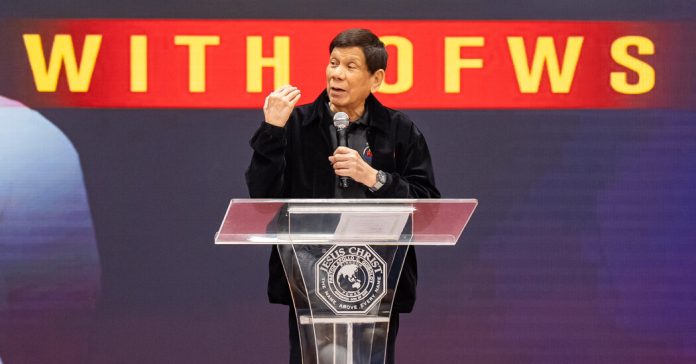
Rodrigo Duterte, the former president of the Philippines, was arrested on Tuesday in Manila, after the International Criminal Court issued a warrant accusing him of crimes against humanity in his war on drugs in which, human rights groups say, tens of thousands of Filipinos were summarily executed.
He was taken into custody at the airport in Manila after returning from a trip to Hong Kong, according to the Philippine government.
Mr. Duterte, 79, who left office in 2022, is a populist firebrand who remains one of the Philippines’ most influential politicians, and he has enjoyed relative immunity despite several accusations against him. Only a handful of people have been convicted in connection with the killings.
This is a developing story.
Marlise Simons contributed reporting from Paris.
Think You Understand Your Dog? Think Again.

Dogs can’t talk, but their body language speaks volumes. Many dogs will bow when they want to play, for instance, or lick their lips and avert their gaze when nervous or afraid.
But people aren’t always good at interpreting such cues — or even noticing them, a new study suggests.
In the study, the researchers presented people with videos of a dog reacting to positive and negative stimuli, including a leash, a treat, a vacuum cleaner and a scolding. When asked to assess the dog’s emotions, viewers seemed to pay more attention to the situational cues than the dog’s actual behavior, even when the videos had been edited to be deliberately misleading. (In one video, for instance, a dog that appeared to be reacting to the sight of his leash had actually been shown a vacuum cleaner by his owner.)
“When it comes to just perceiving dog emotions, we think we know what’s happening, but we’re actually subconsciously relying on a lot of other factors,” said Holly Molinaro, who is a doctoral student at Arizona State University and the first author of the new paper, which was published on Monday in the journal Anthrozoös.
That bias could mislead owners about their dogs’ well-being, Ms. Molinaro said. People who want to be attentive to their dog’s experiences and emotions need to “take a second or two to actually focus on the dog rather than everything else that’s going on,” she said.
The idea for the study was born in 2021, when Ms. Molinaro was just beginning her doctoral work in canine emotions but the Covid-19 pandemic had sharply limited her ability to do in-person research.
She was inspired by studies that explore how context clues affect people’s perceptions of others’ emotions. She was also inspired by a distinctly pandemic-era technology: Zoom. The video conferencing software has a feature that blurs out workers’ backgrounds. Ms Molinaro and her adviser, Clive Wynne — a canine-behavior expert at Arizona State — began to wonder if they could do something similar, creating videos that allowed people to see a dog’s behavior without seeing what was unfolding around it.
And so, while visiting her parents in Connecticut, Ms. Molinaro began recording videos of her family dog, Oliver, a 14-year-old pointer-beagle mix, interacting with her father. In some of the videos, Ms. Molinaro’s father did things that Oliver was likely to respond to positively, such as show him his leash or a toy. In others, he did things that were likely to elicit more negative reactions, such as gently scold Oliver or present him with Ms. Molinaro’s cat, Saffron. (“He was not a fan,” she said.)
Then, after a crash course in video editing, Ms. Molinaro made versions of each video that removed all of the situational context, leaving footage of Oliver, alone, on a black background.
The researchers asked hundreds of undergraduates to watch both sets of videos and assess Oliver’s emotional state in each clip. When the subjects evaluated the original videos, they rated Oliver’s emotions as more positive in the positive scenarios than in the negative ones. But when the context was removed, they rated Oliver’s emotions as equally positive in both types of situations.
Then, the scientists took things a step further by splicing together footage from different situations — showing, for instance, Ms. Molinaro’s father presenting a vacuum alongside footage of Oliver’s response to seeing his leash.
Viewers seemed to be swayed more by the context than by Oliver’s behavior. When Ms. Molinaro’s father was depicted doing something positive, subjects judged Oliver’s emotions to be positive, even if he had been filmed reacting to something negative.
“There’s no evidence at all that people actually see the dog,” Dr. Wynne said. “They seem to have a sort of a big blind spot around the dog himself.”
The study has limitations, including that it was based on the behavior of just a single dog. People might also perform better when asked to evaluate the emotions of their own dogs, Dr. Wynne said, and probably would have noticed signs of intense terror or trauma. (The scientists did not subject Oliver to any extremely negative experiences.)
Still, he hoped that the study would be a wake-up call for pet owners. “I’m taking it to heart in my own life,” said Dr. Wynne, who recently adopted a retired racing greyhound.
“I’m making it a project to learn how she expresses herself,” he added. “Because if I know what makes her happy and unhappy, well, then I can guide her life toward greater happiness.”
Sadly, Oliver did not live long enough to see the study published. “But it’s sweet that he’s memorialized in this research,” Ms. Molinaro said.
Ship Collides With Tanker Carrying Jet Fuel Cargo off England’s Coast

Multiple explosions were reported and jet fuel leaked after a container ship collided with an oil tanker.
Can Mark Carney, Canada’s New Leader, Take on Trump and His Tariffs?
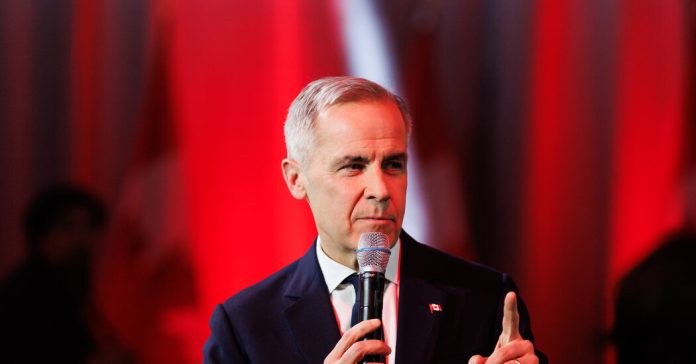
Mark Carney, Canada’s soon-to-be prime minister, weathered two era-defining implosions in his career as a central banker: the 2008 global financial crisis and Brexit.
He has dealt with political chaos, societal upheaval and economic meltdown.
Now he faces what is arguably the challenge of a lifetime: Donald J. Trump.
Can Mr. Carney negotiate with Mr. Trump over tariffs and other combustible issues and find room for compromise, while trying to win a federal election on a full-throated anti-Trump platform?
Mr. Carney was elected on Sunday as leader of the Liberal Party and, in line with Canada’s parliamentary political system, will be sworn in as prime minister, marking the end of the Justin Trudeau era.
His acceptance speech was barely celebratory. Instead, it was more of a war cry.
“America is not Canada, and Canada never, ever, will be part of America in any way, shape or form,” he told party faithful on Sunday night in Ottawa, referring to Mr. Trump’s threats to make Canada the 51st state.
“We didn’t ask for this fight, but Canadians are always ready when someone else drops the gloves.”
A Bigger Battle Looms
Mr. Carney’s fighting words ignited the audience and tapped into deeply felt anger across the country toward Mr. Trump, his decision to impose tariffs on Canadian goods and the danger he’s seen to represent to Canada and its prosperity.
The 59-year-old former governor of the Bank of Canada and Bank of England is presenting himself as the man Canada needs right now.
Mr. Carney’s pitch to Canadians is that his background in finance and his experience dealing with enormous global challenges and working with powerful figures have prepared him to be an expert, steady and seasoned steward of the country as it navigates a crisis in its relationship with the United States.
“Everything in my life has prepared me for this moment,” he said on Sunday.
His party clearly believes that. In the leadership race on Sunday, members rallied behind him, handing him a resounding victory. He won 85 percent of the votes.
It is a rapid rise to the helm of the country for a man who spent much of his career in high-profile but unelected public sector roles, mostly outside his home nation.
His next battle will come quickly, and it will be bigger and tougher than the electoral campaign he just won.
Mr. Carney is likely to call federal elections soon because he does not hold a seat in Parliament and his party has only a minority number of seats in the House of Commons.
Between now and Election Day, which could be just weeks away, according to three people familiar with Mr. Carney’s thinking, he will try to perform a tough balancing act to try to win the federal election. The people did not want to be identified speaking publicly about Mr. Carney’s plans.
He will put taking on Mr. Trump at the heart of his campaign while negotiating with the American president over tariffs and other demands, such as access to protected markets like dairy and the lowering of taxes on U.S. goods sold in Canada.
And he will try to convince Canadians watching closely that he can do both.
Stunning Upset
Mr. Trudeau’s decision to step down and Mr. Trump’s aggressive rhetoric and policies have given Mr. Carney an unexpected opening. In January, the Conservative Party, led by Pierre Poilievre, solidified a lead of more than 20 percentage points over the Liberals in polls, with many voters frustrated with Mr. Trudeau’s stewardship.
But that gap is rapidly closing. Mr. Carney’s ascent seems to have been turbocharged by the fact that many Canadians are seeking an expert in the economy rather than a politician.
Mr. Poilievre has understood the political potency of Mr. Trump’s threats for Canadians and has started promoting himself as anti-Trump, even though many Trump supporters also like Mr. Poilievre and the two men have some ideological affiliations.
“Pierre Poilievre’s plan will leave us divided and ready to be conquered,” Mr. Carney said on Sunday. “Because a person who worships at the altar of Donald Trump will kneel before him, not stand up to him.”
Last week, several polls showed that the Liberals under Mr. Carney could tie with or even narrowly defeat Mr. Poilievre’s Conservatives.
Darrell Bricker, a seasoned pollster, researcher and chief executive of Ipsos Global — Public Affairs, an opinion research and consultancy firm, said he had never seen such a stark and swift political shift anywhere in the world.
The election is very much up for grabs, Mr. Bricker added, and Mr. Carney’s challenge will be to avoid trying to be something he’s not: a politician.
“Actually, the act of governing is the Carney campaign,” Mr. Bricker said. “His proposition is ‘I’m the man who can manage in a crisis. We’re in a crisis, let me show you how I manage it.’”
A Reboot With Trump?
Governing will inevitably mean dealing with Mr. Trump. The United States has imposed some tariffs on Canadian goods, while others are on a reprieve until early April. Next up are 25 percent tariffs on Canadian steel and aluminum exports to the United States scheduled to go into effect on Wednesday.
Financial markets are in turmoil amid the uncertainty, damaging Canada’s economy.
Mr. Trump, in conversations with Mr. Trudeau, has made it clear that his list of economic grievances is long and includes industries such as dairy and banking, where the United States faces barriers to competing in Canada.
Mr. Trump and his advisers have also raised issues that cut to the very heart of Canada’s sovereignty, including revising a border treaty and water-sharing agreements between the two nations.
The collection of threats amounts to a watershed moment for Canada.
“Donald Trump has put unjustified tariffs on what we build, on what we sell, on how we earn a living,” Mr. Carney said on Sunday. “He’s attacking Canadian workers, families and businesses. We can’t let him succeed.”
Mr. Carney has offered a glimpse of what he’s planning to do in dealing with Mr. Trump, and it includes imposing more retaliatory tariffs on U.S. goods and using the proceeds to support Canadian workers and businesses harmed by the rupture in the relationship.
But he has also said that he wants to start negotiating “free and fair trade” between the two nations.
Mr. Trump and Mr. Trudeau had a poor relationship during Mr. Trump’s first term that only got worse in recent weeks.
Mr. Carney’s supporters and advisers hope that he will be able to reboot the dynamic with Mr. Trump and establish better chemistry to the benefit of Canada.
While it may not change Mr. Trump’s agenda, it could put Canada on a different footing as it tries to protect its economy and sovereignty.
Republicans say Medicaid cuts won't happen. But does their budget work without them?

Republicans say medicaid cuts are off the table, but the Congressional Budget Office says the budget they’re proposing doesn’t work without them.
G.O.P. Spending Bill Would Force $1 Billion Cut to D.C. Budget
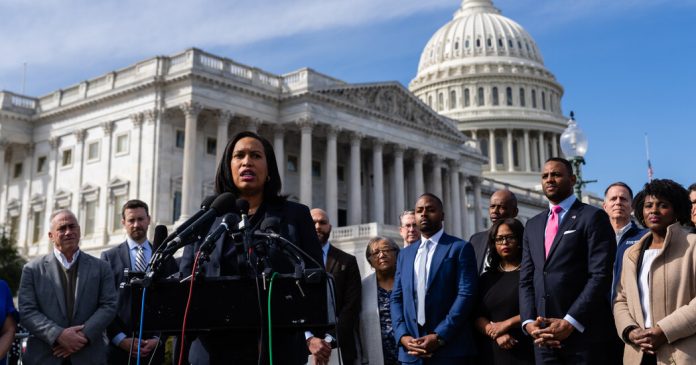
The stopgap spending bill that Republicans are pushing to avert a shutdown at the end of the week would effectively slash the District of Columbia’s budget by roughly $1 billion over the next six months, a change that local leaders warn would force dramatic cuts to essential services.
The reductions are under consideration because of a series of legislative quirks that Republicans are using to force the District, a Democratically run and predominantly Black city with a significant number of federal workers, to absorb the same freeze to its local budget that they are applying across the federal government. President Trump, who has demonized government employees, has said he wants to “take over” D.C.
Under a law that established “home rule” in Washington more than 50 years ago, Congress maintains power over the city, including final approval over its laws and annual budget. Historically, Congress has included routine language in its spending bills that approves the D.C. budget, about 75 percent of which is funded through local revenues.
But Republicans omitted the standard language from the temporary spending bill that is set to come to a vote in the House as early as Tuesday. That has thrust Washington’s fate into the center of a political debate over funding the U.S. government. Democrats could seek to block the measure in the Senate, but with a Friday deadline looming to keep federal funding flowing, doing so could earn them blame for a government shutdown.
The bill would largely freeze federal spending at levels approved last year and, if passed as currently written, would also force D.C. to return to the lower spending levels in its budget approved by Congress in 2024.
That would result in a cut of $1.1 billion mandated halfway through the fiscal year. It would require the District to cut 16 percent of all remaining funds that have not already been spent, according to a memo from Mayor Muriel E. Bowser’s office sent to lawmakers over the weekend.
At a news conference outside the Capitol on Monday, D.C. leaders urged Congress to revisit the temporary spending measure, saying that the effects of the freeze could be “devastating” for the city, likely leading to layoffs in public safety and public schools.
Given that the budget freeze would come six months into the city’s fiscal year, the District would need to scramble within a matter of days to find a billion dollars in savings between now and the end of September.
Since much of that money was tied up in contracts, leases and Medicaid, all of which take time to be accessible, local officials warned that the most immediate target for the cuts would be the salaries of city workers, including police officers and teachers.
“There’s no way to cut that kind of money in the time that we would have in this fiscal year not to affect police or not to affect teachers and not to affect some of the basic government services that allow us to keep our city clean, safe and beautiful,” said Ms. Bowser, a Democrat who explicitly appealed to the president’s oft-spoken desire for a world-class capital.
Ms. Bowser said she had been in touch with the White House.
“They’ve indicated that it didn’t come from them,” she said of the omission.
Local officials complained that it was unfair to extend the spending freeze Republicans have agreed to apply to the federal government to Washington, since most of the money in the city’s budget comes from D.C. residents, not federal sources.
“It’s not really savings, because these are D.C. dollars,” said Phil Mendelson, the chairman of the D.C. Council. “Most folks, unfortunately, in this country think the District of Columbia is funded by the federal government. We are not.”
Most of the District’s funds are generated through local revenue. Another 24 percent comes through federal grants, while less than 1 percent comes from direct federal funds.
D.C. is required to submit a plan balancing its budget over five years, and Ms. Bowser last April had proposed about $500 million in cuts to city programs, including the elimination of a program that gives stipends to child care workers and early education teachers. The D.C. Council reversed most of those cuts, including by restoring $70 million to the child care program.
Representative Eleanor Holmes Norton, a Democrat who represents the District of Columbia as a delegate but has no vote in the House, on Monday proposed an amendment to the stopgap spending bill that would allow D.C. to proceed with its budget as planned.
“D.C. has not been treated as a federal agency for funding purposes in more than 20 years, precisely because doing so can force dramatic overnight cuts to essential services, including police, sanitation and schools,” Ms. Norton said. “Cuts to these services would work against Republicans’ stated goal of improving public safety and order in D.C.”
But it seemed unlikely that Republicans would agree to adopt it.
Republicans in Congress have increasingly sought to weigh in on D.C.’s governance. Last year, the G.O.P.-controlled House voted by large margins for two disapproval resolutions to overturn a pair of laws passed by the D.C. Council.
They have also used amendments on spending bills to ban the city’s ability to tax and regulate the sale of cannabis and prohibit the spending of city funds on abortion services for Medicaid recipients.
Consider This from NPR : NPR
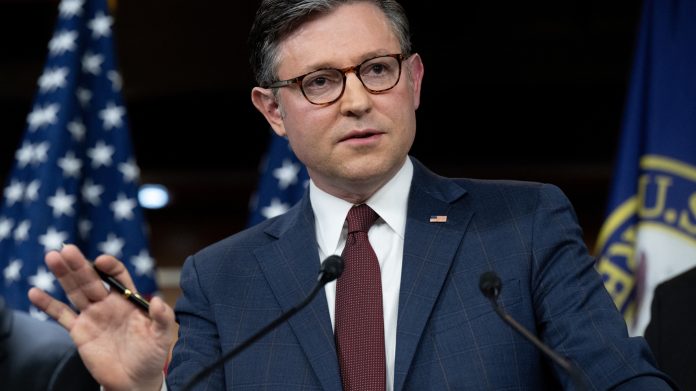
US Speaker of the House Mike Johnson, Republican of Louisiana, speaks during a press conference about the House Republican’s budget on February 25, 2025.
Saul Loeb/AFP via Getty Images
hide caption
toggle caption
Saul Loeb/AFP via Getty Images

US Speaker of the House Mike Johnson, Republican of Louisiana, speaks during a press conference about the House Republican’s budget on February 25, 2025.
Saul Loeb/AFP via Getty Images
House Republicans have to get their spending bill passed by Friday to avoid a government shutdown. They can likely afford to lose just one vote.
And that’s the easy part.
Then they’ll have to get working on their plan to extend 4.5 trillion dollars in tax cuts passed under the Trump administration — a plan that will require huge cuts in government spending.
Republicans are adamant that cuts to Medicaid are a non-starter. But the non-partisan Congressional Budget Office released a report last week that said Republicans’ budget likely would require cuts to Medicaid or Medicare.
For sponsor-free episodes of Consider This, sign up for Consider This+ via Apple Podcasts or at plus.npr.org.
Email us at [email protected].
This episode was produced by Mallory Yu, Connor Donevan and Marc Rivers. It was edited by Sarah Handel and Nadia Lancy. Our executive producer is Sami Yenigun.
Pope Francis No Longer in Immediate Danger From Pneumonia, Vatican Says
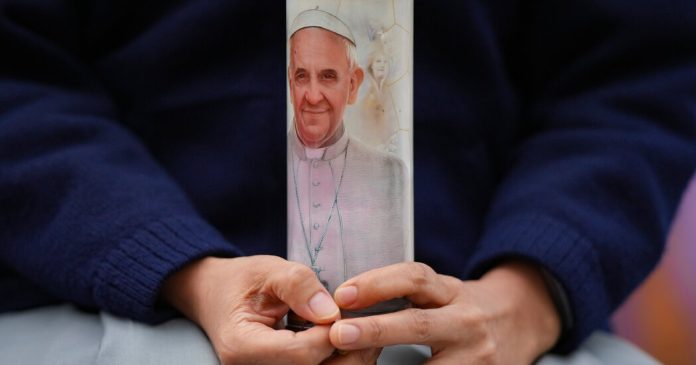
Pope Francis has improved enough to no longer be considered in imminent danger from pneumonia and other infections, the Vatican said on Monday, but added that he would require more days of treatment in the Rome hospital where he has been for nearly a month.
For weeks, doctors had said that Francis, who is 88 and entered the hospital after having difficulty breathing, had a “guarded” prognosis because the respiratory infection in both of his lungs was too serious for him to be considered out of danger. But his “good response to pharmacological therapy” and stable blood tests, the Vatican said in a statement on Monday, led doctors to believe that recent improvements had been “further consolidated.”
“However, in view of the complexity of the clinical picture and the significant infectious picture presented at hospitalization,” the Vatican added, his treatment will continue in “a hospital environment.”
On Monday, Francis continued to follow via video link spiritual exercises by members of the Vatican clergy, and he sent a telegram of condolence to victims of a flood in his home country, Argentina. In recent days, he also met with his top lieutenants in the hospital and sent an audio message, with a strained and weak voice, thanking the faithful for their prayers.
While the Vatican said the pope was expected to remain in the hospital, where he arrived on Feb. 14, for days it did not give an estimate of when Francis was expected to leave since his situation remained complex, a Vatican official said.
Francis, who has been receiving oxygen, has at times suffered severe setbacks, including a crisis in which he choked on his own vomit, requiring doctors to aspirate him. He has also required blood transfusions and noninvasive mechanical ventilation.
The pope’s failing health put the Roman Catholic Church on edge. Each night in St. Peter’s Square, cardinals have led the faithful in rosary prayers for his recovery. Catholics across the world have held vigils, while top Vatican officials have sought to tamp down speculation about his condition or talk of resignation.
The pope, however, had not overcome the pneumonia and had other health problems, the Vatican official said, including bronchiectasis — a chronic lung condition — that could yet pose significant danger.
The pontiff’s age and history of health conditions are also prompting his doctors to remain cautious, the official said. Francis had part of a lung removed as a young man and had been hospitalized before for a respiratory infection, as well as for colon surgery.