


Trump’s Embrace of Russia Leaves Europe in Emotional Shock
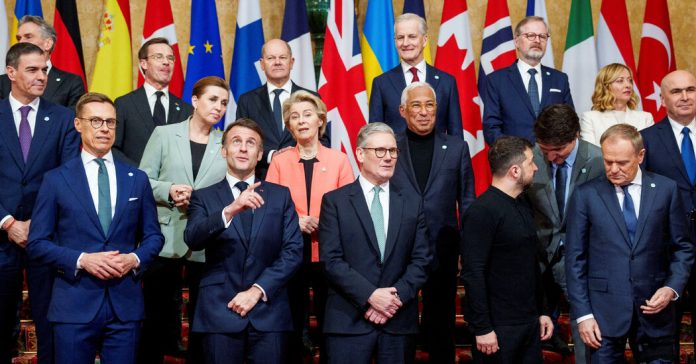
For decades a core objective of the Soviet Union was to “decouple” the United States from Europe. Decoupling, as it was called, would break the Western alliance that kept Soviet tanks from rolling across the Prussian plains.
Now, in weeks, President Trump has handed Moscow the gift that eluded it during the Cold War and since.
Europe, jilted, is in shock. The United States, a nation whose core idea is liberty and whose core calling has been the defense of democracy against tyranny, has turned on its ally and instead embraced a brutal autocrat, President Vladimir V. Putin of Russia. Gripped by a sense of abandonment, alarmed at the colossal rearmament task before it, astonished by the upending of American ideology, Europe finds itself adrift.
“The United States was the pillar around which peace was managed, but it has changed alliance,” said Valérie Hayer, the president of the centrist Renew Europe group in the European Parliament. “Trump mouths the propaganda of Putin. We have entered a new epoch.”
The emotional impact on Europe is profound. On the long journey from the ruins of 1945 to a prosperous continent whole and free, America was central. President John F. Kennedy’s “Ich bin ein Berliner” speech in 1963 framed the fortitude of West Berlin as an inspiration to freedom seekers everywhere. President Ronald Reagan issued his challenge — “Mr. Gorbachev, tear down this wall!” — at the Brandenburg Gate in 1987. European history has also been America’s history as a European power.
But the meaning of “the West” in this dawning era is already unclear. For many years, despite sometimes acute Euro-American tensions, it denoted a single strategic actor united in its commitment to the values of liberal democracy.
Now there is Europe, there is Russia, there is China and there is the United States. The West as an idea has been hollowed out. How that vacuum will be filled is unclear, but one obvious candidate is violence as great powers duke it out.
Of course, as the almost daily whiplash on new tariffs has made clear, Mr. Trump is impulsive, even if his nationalist and autocratic tendencies are a constant. He is transactional; he could change course. In 2017, on a visit to Poland during his first term, he said, “I declare today for the world to hear that the West will never, ever be broken. Our values will prevail.”
The president has since stripped himself of the shackles of such traditional thinking and of the establishment Republican entourage that buttressed it. He appears to be a leader unbound.
The challenge for Europe is to judge what constitutes maneuvering on Mr. Trump’s part and what is a definitive authoritarian American reorientation.
A week after the ugly Oval Office blowup with President Volodymyr Zelensky of Ukraine, accused of failing to say “thank you” for American military assistance that has since been “paused,” Mr. Trump has agreed to a meeting next week of senior Ukrainian and American officials. He has also threatened to impose further sanctions on Russia if it does not enter peace talks. This may allay some of the damage, although little if any basis for ending the Russian-instigated war seems to exist.
“Whatever Trump’s adjustments, the biggest danger would be to deny his abandonment of liberal democracies,” said Nicole Bacharan, a political scientist at Sciences Po University in Paris. “Trump knows where he is going. The only realist position for Europe is to ask: What do we have as a military force and how do we integrate and grow that power with urgency?”
President Emmanuel Macron of France declared this week that the continent faced “irreversible changes” from America. He urged “massive shared financing” for rapid European military reinforcement, announced a meeting next week of European chiefs of staff and said “peace cannot be the capitulation of Ukraine.” He also offered to extend France’s nuclear umbrella to allies in Europe.
These were indications of big strategic shifts. But nowhere in Europe has the impact of American realignment been more destabilizing than in Germany, whose postwar republic was largely an American creation and whose collective memory holds sacred the generosity of American soldiers offering the first succor to a devastated nation.
Christoph Heusgen, the German chairman of the Munich Security Conference, teared up last month as he contemplated the end of his three years in the job. It was easy, he said, to destroy a rules-based order and a commitment to human rights, but hard to rebuild them. He spoke after Vice President JD Vance accused Europe of denying democracy by trying to block the advance of far-right parties, including a German party that has used Nazi language.
“It was a terrible sight, the whipping boy and the weeping boy,” said Jacques Rupnik, a French political scientist who has written extensively on Central Europe. “Europe must step up now to fight for democracy.”
For many Germans, the idea that America, whose forces did so much to defeat Hitler, should opt to cosset a party, the Alternative for Germany, or AfD, that includes members openly supportive of the Nazis feels like an unpardonable betrayal. The AfD is now Germany’s second largest party.
In the words of the British historian Simon Schama, interviewed this week by the Australian Broadcasting Corporation, this combined with the cutting-off of American military and intelligence aid to Ukraine, at least for now, constituted “horrible infamy.”
Germany’s incoming conservative chancellor, Friedrich Merz, reacted with words that felt like the death knell of the old order. “My absolute priority will be to strengthen Europe as quickly as possible so that, step by step, we can really achieve independence from the United States,” he said. The Trump Administration, he suggested, was “largely indifferent to the fate of Europe.”
In moments, a triple German taboo fell. Mr. Merz’s Germany would exit American tutelage, examine the extension to Berlin of French nuclear deterrence and permit growing debt to finance a rapid defense industry buildup.
Even at a time of economic difficulty, Germany is a bellwether for Europe. If French-German military cooperation does grow fast, and is complemented by British military involvement, as seems likely under Prime Minister Keir Starmer, Europe may shed its reputation as an economic giant and strategic pygmy. But it will not happen overnight.
Europe’s major powers, it seems, have concluded that Mr. Trump is no outlier. He has plenty of support among Europe’s growing far right who are anti-immigrant nationalists. He is the American embodiment of an age of rising autocrats for whom postwar institutions and alliances are obstacles to a new world order built around great-power zones of influence.
If Mr. Trump wants to grab Greenland from a European Union member, Denmark, what other European conclusion is credible? The outlier of the past decade now looks like President Biden with his passionate defense of democracy and a rules-based order.
Of course, the ties between Europe and the United States are no small matter. They will not be easily unraveled; they are much more than a military alliance. According to the latest E.U. figures, trade in goods and services between the 27-nation European Union and the United States reached $1.7 trillion in 2023. Every day, some $4.8 billion worth of goods and services crosses the Atlantic Ocean.
Mr. Trump has claimed since taking office a second time that the European Union was “formed in order to screw the United States.” It was a statement typical of his a-historical, zero-sum view of the world. In fact, by any reasonable assessment of the past 80 years, the Euro-American bond has been a prosperity engine and a peace multiplier.
“The alliance is at a very painful stretching point, but I would not call it a breaking-point, at least not yet,” said Xenia Wickett, a London-based consultant who has worked for the U.S. National Security Council. She differentiated between Mr. Trump’s demand that Europe pay more for its defense, a not unreasonable request, and his embrace of Mr. Putin.
Where that embrace leads, if maintained, is unclear. But as Mr. Schama said, “When you do reward aggression, it guarantees another round of aggression.” Ukraine, for Mr. Putin, is part of a much broader campaign to undo NATO and the European Union. Along with China in a “no limits” partnership, he wants his Russian resurrection to put an end to what he sees as Western domination of the world.
As Pierre Lévy, a former French ambassador to Moscow, wrote last month in Le Monde, “It’s up to the American people to understand they are in Putin’s line of fire: de-Westernize the world, end American hegemony, end the dollar’s dominant place in the global economy, and act with the backing of Iran, North Korea and China.”
For now, and for unclear reasons, Mr. Trump does not seem to care. He is not about to waver from his zero-criticism susceptibility to Mr. Putin. Europe, it seems, will just have to overcome its stupefaction.
“We are all heartbroken when we wake up,” Ms. Bacharan said.
Japan’s Ski Slopes Have Too Much of a Good Thing: Snow

Ski resorts in Japan are prized for having some of the deepest, lightest powder around. A winter of exceptionally heavy snow — some areas had more than 12 feet of snowpack this week — should be a skier or snowboarder’s dream.
The ski terrain in Japan this winter is “super big and super gnarly,” the Austrian professional skier Tao Kreibich, 27, said in a video about a recent backcountry excursion in the country. “You can do some crazy stuff.”
Yes, but …
While many of Japan’s 500 or so ski areas are having a banner season, giant snowdrifts have led to challenges that have dented profits and raised safety concerns.
“Heavy snow is both a joy and a worry” for resort workers, said Shinichi Imoto, a spokesman for Washigatake Ski Resort, which is seeing some of its largest drifts in a decade. “There are concerns if it doesn’t fall, and concerns if it falls too much.”
Some resorts have had to close lifts to give crews more time to shovel out. Road closures have cut off access for would-be visitors. In some places, more skiers and snowboarders than usual have gotten lost in the backcountry or stuck in avalanches.
Operations have returned to normal at many ski resorts across the county. But the effects of snowstorms last month — which led to school closures and the cancellation of trains and flights — are still being felt.
At Kagura Ski Resort, a few hundred miles by road northeast of Washigatake, visitor numbers are down this year even though the snow has been good and plentiful, a spokesman, Kazuto Harasawa, said.
Unusually heavy snow forced the resort to close six times last month. The closure of a nearby highway, combined with the resort’s mile-high elevation, did not help. “We are experiencing record-breaking snow and our staff is exhausted, so please understand,” the resort said on social media in late February.
The snow also forced Gala Yuzawa Snow Resort, about 12 miles by road from Kagura, to close for a day in late February — its first closure in more than 30 years of operation. A spokesman, Takashi Onozuka, described this season’s snowfall, which is about two and a half times last year’s, as “honestly disaster level.”
Customers were pleased by the quality of the snow during a recent cold snap, he said, adding: “It’s tough for the workers, though.”
Even if ski lifts, parking lots and other areas can be cleared, heavy snow presents safety risks on trails and in backcountry areas.
Crashes into trees tend to account for many of the skiing deaths in the United States, according to data from the National Ski Areas Association. Other causes of death include avalanches and falls into deep, loose snow around big trees.
In Japan, the northern island of Hokkaido had reported 28 cases of people being stranded in the mountains while backcountry skiing as of late January, more than twice as many as the previous season, according to the local police. That data was compiled before early February, when Obihiro, a city in the southern part of Hokkaido, received 50 inches of snow over 12 hours, a national record.
Mr. Kreibich, the Austrian skier, knows a little about the risks of skiing off piste.
He and a cameraman, Gabriel Koschier, 28, flew to Japan on a whim in early February because the snow in the Alps wasn’t particularly good at the time. They headed to a resort in the Hakuba Valley that had hosted events for the 1998 Nagano Winter Olympics.
They took a lift to the resort’s highest point and hiked uphill for an hour, searching for pristine backcountry terrain. “Even though I’m chasing snow all over the world, I think I’ve never seen so much snow anywhere,” he said in a phone interview.
Though the sun was shining and the powder was exceptional, Mr. Kreibich and Mr. Koschier began to see cracks in the snowpack as they glided over a windswept, nearly treeless ridgeline. Mr. Kreibich said he also noticed that the snow under his feet felt “a little weird.”
Then Mr. Koschier slid nearly 1,000 feet in an avalanche. He survived, shaken but uninjured. Though the moving snow had been deep enough to bury him, he had slid on top of it rather than beneath it.
After they found Mr. Koschier’s skis, the pair returned to the resort on gentler terrain. “From that point, we were just happy to go down and take it easy,” Mr. Kreibich said.
That night, they toasted their luck over sake.
Trump’s Affinity for Putin Grows More Consequential Than Ever
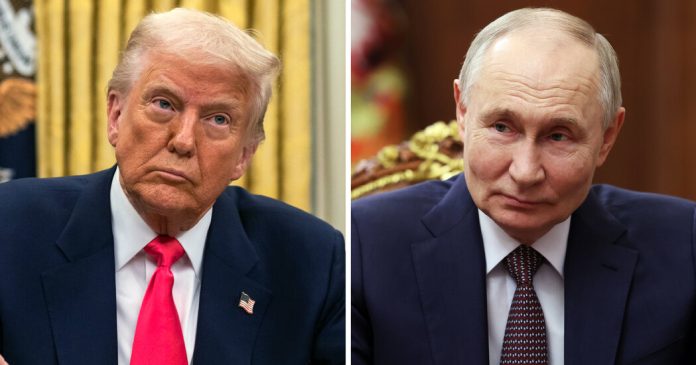
In early 2017, American intelligence agencies delivered an unequivocal judgment about why President Vladimir V. Putin of Russia had ordered a sprawling effort to sabotage the recent American presidential election.
Mr. Putin wanted to cripple the faith Americans have in their own elections, they found, and to undermine a United States-led “liberal world order” that the Russians see as a threat to their security. As a way to achieve this goal, the assessment found, Russia worked to help Donald J. Trump win the election.
Eight years later, Mr. Trump sat in the Oval Office for a blustery meeting with President Voldymyr Zelensky of Ukraine and rendered, once again, his own judgment on that period. There was no Russian sabotage, just a “phony witch hunt” of which both he and Mr. Putin were victims.
“Let me tell you, Putin went through a hell of a lot with me,” he said.
The statement was a tell. The president sees common cause with Mr. Putin, a merging of interests forged through battles against those he believes are his and Mr. Putin’s mutual adversaries — including Democratic lawmakers, European leaders and a spectral “deep state” inside the U.S. government.
The relationship between Mr. Trump and Mr. Putin has for years been scrutinized by American government inquiries, assessments by foreign intelligence services and news media investigations. Taken together, they have unearthed evidence to support an array of theories addressing Mr. Trump’s affinity for a Russian strongman who has spent a career trying to undermine American interests.
As yet, there is no single, tidy explanation. But based solely on Mr. Trump’s public actions during his first six weeks back in office, the simple fact is that he has made few decisions on national security or foreign policy that have not been cheered by the Kremlin, making his stance toward Mr. Putin more consequential than ever.
This is a world turned upside down for Susan Miller, the former head of counterintelligence at the C.I.A., who led the agency’s 2017 intelligence assessment on Russian election interference.
Ms. Miller said in an interview that she thinks Mr. Trump’s affinity for the Russian president boils down to “autocrat envy”— that he covets the power Mr. Putin has to make decisions in Russia without any constraints.
“Trump likes Putin because Putin has control over his country,” she said. “And Trump wants control over his country.”
Mr. Trump has accused Mr. Zelensky of beginning the war that started with a Russian invasion of Ukraine in February 2022, a war that has seen the mass slaughter of Ukrainian civilians. He has stopped sharing intelligence with Ukraine that the country desperately needs to battle Russian forces.
He has gutted American foreign aid programs that Mr. Putin has long detested, including pro-democracy programs in countries like Hungary that Russia is bringing closer into its sphere of influence. He has sidelined European allies, saying they are untrustworthy and suggesting they might have to fend for themselves in the future.
Mr. Trump has defended his actions in part by saying they are necessary steps to getting Russia to the negotiating table, casting himself as a peace broker to end the war in Ukraine. Thus far, however, he has pushed far harder on Mr. Zelensky to make concessions than he has on Mr. Putin.
On Friday, he began the day with a social media post threatening economic sanctions against Russia for what he said was the “pounding” the Russian military was delivering in Ukraine. In the Oval Office hours later, however, he seemed to defend Mr. Putin, saying that Russia’s “bombing the hell out of Ukraine” was actually a sign that Russia wanted an end to the war. He criticized Ukraine for not, in his view, being as motivated to end the conflict.
“What is Putin getting? He is getting more than he and other former K.G.B. officers ever dreamed of,” said Calder Walton of Harvard’s Kennedy School of Government, who wrote a book on the history of espionage between Russia and the United States.
“This is the dismantling before our eyes of the U.S.-led international order, something that Putin has worked toward his entire career,” he said.
How much does all this please Russian officials? Just ask them.
Dmitry Peskov, the Kremlin’s longtime spokesman, went on state television two days after the Oval Office blowup with Mr. Zelensky and praised the Trump administration’s decisions since coming to power. The new White House agenda, he said, “largely aligns with our vision.”
That same day, Sergey V. Lavrov, Mr. Putin’s foreign minister, presented Russians with a wholly different take on world history than the one that Kremlin officials have taught for decades. Mr. Lavrov said it was European nations, not the United States, that were responsible for so many of history’s great tragedies — citing the Crusades, the Napoleonic wars, World War I and the rise of Hitler.
“If we look at history in retrospect,” he said, “the Americans did not play any instigating, let alone incendiary, role.”
Ms. Miller said there was no doubt among members of her counterintelligence team about Russia’s intentions in disrupting the 2016 election: to spread disinformation and sow chaos with the aim of undermining confidence in the democratic process.
At the same time, she said, her agency team — which was joined by officials from the National Security Agency and the F.B.I. — was extremely careful and fiercely nonpartisan in assessing what impact the Russian interference had on Mr. Trump’s election victory.
Nevertheless, during the first Trump administration she found herself in the cross hairs of the team of prosecutors led by John Durham, whom Attorney General William P. Barr had appointed to investigate the origins of the F.B.I.’s Russia investigation. She said that Mr. Durham and other prosecutors grilled her for more than eight hours about the intelligence assessment.
“They were looking for bias in our work,” Ms. Miller said. “They didn’t find any.” Mr. Durham’s final report found no fault with the 2017 intelligence assessment.
Still, Mr. Trump’s anger about what he calls the “Russia hoax” has festered for years, a grievance so deep he now sees Mr. Putin as his ally in victimhood.
Mr. Putin has spent years trying to shape Mr. Trump’s thinking on Ukraine, and there is now little daylight between both men’s public statements about the war.
The first time that Mr. Trump and Mr. Putin met in person, during a July 2017 summit in Hamburg, Germany, the Russian president used much of the time disparaging Ukraine as a corrupt, fabricated country.
He said that Russia had every right to exert influence over Ukraine. He even justified Russian military operations in the country by raising the historical example of President Theodore Roosevelt’s belief that the United States had the right to intervene in the internal affairs of Latin American countries.
Mr. Trump is a longtime admirer of Roosevelt.
Leaving the meeting, Rex Tillerson, then the secretary of state, told anxious White House aides that Mr. Putin had done his “K.G.B. shtick,” and that Mr. Trump had not pushed back on any of the Russian president’s assertions about Ukraine.
More than two years later, the House impeached Mr. Trump because of a July 2019 phone call he had with Mr. Zelensky, during which he made continued American military support to Ukraine contingent on Mr. Zelensky’s helping dig up dirt on his political opponents.
The episode further radicalized Mr. Trump’s views not only toward Ukraine but also to his perceived “deep state” enemies who testified during the impeachment proceedings.
It also began to radicalize other Republicans against Ukraine, who began to echo some of the language that Mr. Putin has long used about the country.
This convergence of views has become even more pronounced in the weeks since Mr. Trump came back to power, as his administration presses Ukraine to negotiate a peace deal with Russia.
On Wednesday, Secretary of State Marco Rubio characterized the conflict in Ukraine on Fox News not as a clear case of Russian aggression, but as a dangerous “proxy war” between the United States and Russia.
Mr. Peskov, the Kremlin spokesman, said in a statement afterward that he agreed entirely. It was, he said, another example of the positions of the White House and the Kremlin aligning “perfectly.”
Iran’s Supreme Leader Rebuffs Trump’s Outreach Over Its Nuclear Program
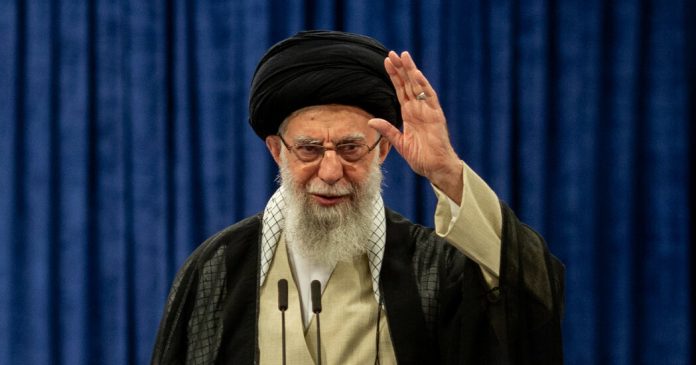
Iran’s supreme leader decried “bullying governments” and bristled on Saturday at the idea of negotiating over the country’s nuclear program with the United States in an apparent response to a letter sent by President Trump earlier in the week.
Ayatollah Ali Khamenei, the leader, indirectly addressed Mr. Trump’s suggestion that Iran negotiate over its rapidly advancing nuclear program or face potential military action, while speaking at a meeting with government and military officials for Ramadan. Though he did not explicitly mention the letter, Mr. Trump or even the United States by name, it was clear he was speaking about Washington’s recent gesture.
“Some bullying governments insist on negotiations not to resolve issues but to impose,” Mr. Khamenei said, according to state media. He added that “negotiation is a path for them to make new demands, it’s not just nuclear issues to speak about the nuclear topic, they are making new demands which will definitely not be accepted by Iran.”
Speaking on Friday in the Oval Office, Mr. Trump suggested that Iran’s nuclear capabilities — which now include enough near-bomb-grade fuel to produce about six weapons — were reaching a critical point. He said he had offered the country a chance to negotiate or risk losing its program in a military strike.
The White House did not provide any specifics about the content of Mr. Trump’s letter, which the president said he sent on Wednesday.
Iranian officials are currently at odds over whether the country should negotiate over the program. While the ayatollah denounced Mr. Trump’s offer, other moderate and reformist leaders have spoken in favor of opening negotiations, including President Masoud Pezeshkian, who took office last year. Ultimately however, Mr. Khamenei, who has long said Iran cannot trust the United States, has the final say.
The 2015 nuclear accord negotiated by President Barack Obama had been effective, officials say. Iran had shipped nearly all its nuclear fuel stockpile out of the country, and international inspectors said the Iranians were abiding by the sharp restrictions on new production of nuclear fuel.
But Mr. Trump, who had repeatedly criticized the accord, withdrew from the nuclear agreement with Iran during his first term and reimposed heavy economic sanctions on the country, gambling that Tehran would respond by pleading for a new deal more advantageous to the United States.
Iran did not come back to the table, and now the program has reached a critical juncture, experts say.
Mr. Trump has also potentially undermined his proposal by upending two U.S. programs that for decades have worked to expose Iran’s atomic bomb programs. One program has since been restored, but experts worry the disruptions will hurt the worldwide struggle to contain nuclear proliferation.
Farnaz Fassihi contributed reporting.
Christians Are Pressing Trump to Clear a Path for Israel to Annex the West Bank

Evangelical Christian leaders who delivered votes to President Trump are now pressing him to declare that Israel can claim ownership of the West Bank, based on a promise God made to the Jews in the Bible.
They are seeking a way to pave a path toward annexation of territory that is widely viewed internationally as intended for a future Palestinian state. Israel seized the territory as part of a war between it, Jordan, Egypt and Syria in 1967 and has occupied it since. In recent years, the right-wing government of Prime Minister Benjamin Netanyahu has been encouraging Jewish settlers to build homes there at an increasing rate.
Prominent evangelical supporters of Mr. Trump are mounting a multipronged approach to pressure the president — making appearances in Israel, petitioning the White House, pushing their ideas at a key evangelical conference and building congressional backing.
Some of America’s leading evangelicals, including Ralph Reed, Tony Perkins and Mario Bramnick, visited Jerusalem on Tuesday to publicly back Israel’s sovereignty of the West Bank.
“I literally feel God is giving Israel a blank check,” said Mr. Bramnick, the president of the Latino Coalition for Israel and the pastor of a Florida church whose profile ballooned after he hosted prayer calls in support of claims the 2020 presidential election was stolen from Mr. Trump.
These evangelical leaders are part of a movement called Christian Zionism and believe that the land was given to the Jews in the Bible.
They refer to the West Bank with the biblical names of Judea and Samaria. They believe that Christians who assist in fulfilling this biblical pledge are blessed and that the establishment of the state of Israel indicates other biblical prophesies will follow. For some, though not all, that most notably includes an apocalypse that will lead to a second coming of Jesus Christ.
“We Christians are calling on our beloved President Trump and his team to aggressively remove all barriers to Israel’s sovereignty over all the land, including Judea and Samaria,” said Terri Copeland Pearsons, an influential pastor who produced the television program of her father, the televangelist Kenneth Copeland, and now serves as the president of his eponymous Bible college in Texas. She made the remarks at the National Religious Broadcasters convention in the state last Thursday.
Organizers at the event pushed a resolution sponsored by the American Christian Leaders for Israel that rejects “all efforts” to pressure Israel to relinquish West Bank territory. That group, formed a decade ago, describes itself as a network of about 3,000 Christian leaders “representing tens of millions of American Christians” who advocate “biblical truth” and steadfast support for Israel. Organizers at the convention said they would present the petition to the White House shortly after the conference. The sponsors did not respond to a request for comment on how many people signed the petition and whether it was presented to the president.
The demand is meant to help build support for a controversial effort promoted by some in Israel to annex land that is home to roughly three million Palestinians and now about half a million Israeli settlers.
Much of the world considers Israel’s West Bank settlements, which have expanded rapidly in recent years, a violation of international law. Israel disputes this characterization.
The Christian Zionist advocacy around the West Bank comes as the prospect of an independent Palestinian state has grown especially dim since the Hamas-led attack on Israel on Oct. 7, 2023, ignited a war in the enclave and also led to rising tensions in the West Bank, about 55 miles away.
Those petitioning Mr. Trump to support Israeli annexation of the West Bank say they hope such a declaration will end any further discussion of a future Palestinian state there.
Their resolution comes as Mr. Netanyahu’s far-right government has greenlighted settlement construction and expansion in the West Bank at a faster rate than in the past and amid intense military raids in Palestinian cities there since January. The raids have displaced tens of thousands of residents.
The petition also joins a wave of similar initiatives by influential conservatives and Christians, in Congress and beyond, aiming to sway policy in the second Trump term.
Days before American Christian Leaders for Israel announced the petition, Representative Claudia Tenney, Republican of New York, who identifies as Presbyterian, sent a similar letter to Mr. Trump with five other members of the congressional “Friends of Judea and Samaria Caucus” she started this year. It called on his administration to “recognize Israel’s right” to declare sovereignty over the territory, saying that doing so would be integral to defending “the Judeo-Christian heritage on which our nation was founded.”
Asked in February at a news conference with Mr. Netanyahu about his position on Israeli annexation of the West Bank, Mr. Trump said that “people do like the idea,” and that there would be “an announcement probably on that very specific topic over the next four weeks.”
Mr. Trump’s comments also helped fuel enthusiasm for a resolution on Israeli sovereignty over the West Bank adopted last month at the Conservative Political Action Conference, an agenda-setting annual conservative gathering.
Mr. Trump has supported other initiatives of the Israeli far right: Last month he endorsed mass Palestinian displacement from Gaza, and in January, he overrode a Biden executive order that had allowed sanctions for West Bank settlers deemed to have violated human rights.
He has selected evangelical Christian supporters of Israel for key positions in his administration, including the televangelist Paula White-Cain as a senior adviser to the newly created White House Faith Office who is vocal about her support for Israel on religious grounds, and Mike Huckabee of Arkansas, a former governor and Baptist minister who has long aligned with Israeli settlers, as his nominee for ambassador to Israel.
In 2017, Mr. Huckabee participated in a ceremony in a West Bank settlement and told CNN he thinks “Israel has title deed to Judea and Samaria,” adding that “there is no such thing as a West Bank” or “an occupation.” Last year after he was named for the ambassador role, he told Israeli army radio that annexation was “of course” a possibility.
Ms. Tenney recently introduced a bill that would replace government references to the West Bank and use the biblical names instead. Representative Brian Mast, the Florida Republican who chairs the House Foreign Affairs Committee, has instructed staffers to call the territory Judea and Samaria, according to an internal committee memo first reported by Axios last Wednesday. (Neither lawmaker responded to requests for comment.)
Christians are far from uniform, however, and many support a two-state solution to the longstanding conflict between Palestinians and Israelis. Evangelical leaders’ stance does not reflect the views of the entire community, much less the perspective of all Christians or all Americans broadly, as backing for Israel has fallen amid its war with Hamas in Gaza, while support for Palestinians has risen and driven a protest movement on college campuses.
“This is a long, enduring tension we Palestinian Christians have with our siblings in the U.S., especially evangelicals,” said Daniel Bannoura, a theology doctoral candidate at Notre Dame who hosts a podcast on faith and social justice called “Across the Divide.”
Mr. Bannoura, the son of a Baptist minister, grew up in the West Bank and later attended college and graduate school in the United States. He said that because his community in the West Bank was “very small and dwindling” — made up of about 50,000 people by some estimates — and because their identities complicate prevailing narratives, “Palestinian Christians haven’t been given a voice.”
In stark contrast, many evangelicals have a direct line to the White House. Larry Huch, a Christian Zionist minister and television show host, boasted at the news conference promoting the West Bank annexation petition that Ms. White-Cain of the White House Faith Office was in touch.
“The current administration is very aware that white evangelical Christians voted in large numbers and are deeply motivated to support Israel,” said David Katibah, who leads communications and Christian engagement at Telos in Washington, a group formed by two Christian Americans in 2009 — one evangelical and the other of Palestinian descent — to support a resolution to the Israel-Palestinian conflict through education and “peacemaker” training.
Mr. Katibah said he had been raised in an American evangelical community and noted that within it there is not a monolithic perspective on annexation. Increasingly, younger evangelicals are embracing “a more expansive view” that emphasizes mutual flourishing, justice and human rights for both sides, he said.
Some research does back this point. A 2021 survey commissioned by the University of North Carolina at Pembroke found a sharp shift in attitudes among younger evangelicals between 2018 and 2021, with their support for Israel dropping from 75 percent to less than 35 percent along with an accompanying rise in a desire to see United States policy that reflects a Palestinian perspective.
More NOAA Employees May Be Let Go, Making 20% of Staff Cut
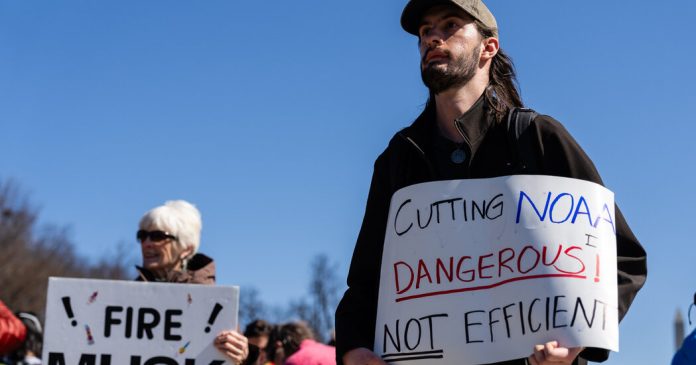
The National Oceanic and Atmospheric Administration, the nation’s premier agency for weather and climate science, has been told by the Trump administration to prepare to lose another 1,000 workers, raising concerns that NOAA’s lifesaving forecasts might be hindered as hurricane and disaster season approaches.
The new dismissals would come in addition to the roughly 1,300 NOAA staff members who have already resigned or been laid off in recent weeks. The moves have alarmed scientists, meteorologists and others at the agency, which includes the National Weather Service. Some activities, including the launching of weather balloons, have already been suspended because of staffing shortages.
Together, the reductions would represent nearly 20 percent of NOAA’s approximately 13,000-member work force.
Managers within NOAA have been told to draw up proposals for layoffs and reorganizations to trim the agency’s staff by at least 1,000 people, according to eight people who requested anonymity because they weren’t authorized to discuss the plans publicly. The effort is part of the “reductions in force” that President Trump required as part of an executive order last month, as he and the billionaire Elon Musk make rapid, large-scale cuts to the federal bureaucracy.
NOAA managers have been asked to complete their proposals by Tuesday, one of the people said. The proposals are likely to involve eliminating some of the agency’s functions, though managers have received little guidance about which programs to prioritize for cutting.
Representatives for NOAA didn’t immediately respond to a request for comment on Saturday.
The recent employee departures have already affected NOAA’s operations in many realms: predicting hurricanes and tornadoes, overseeing fisheries and endangered species, monitoring the changes that humans are bringing about to Earth’s climate and ecosystems.
NOAA, a $6.8 billion agency within the Commerce Department, has been singled out for cuts by some of Mr. Trump’s allies. Project 2025, the policy blueprint published by the Heritage Foundation that is echoed in many of the Trump administration’s actions, calls NOAA “one of the main drivers of the climate change alarm industry.” The document calls for the agency to be dismantled and some of its functions eliminated or privatized.
Organizations including the American Geophysical Union, which represents earth and space researchers, have called on Congress to oppose the administration’s actions.
“Undermining NOAA’s operations could risk the safety of millions of Americans and destabilize countless industries, from farming and fisheries to energy and finance, threatening job losses and economic downturn,” the organizations wrote in a letter. They pointed out that, as the planet warms, extreme weather is becoming more frequent and more damaging, making NOAA’s work more critical.
The idea that private companies could replace NOAA in forecasting the weather is a “gross misunderstanding,” said Keith Seitter, a distinguished visiting lecturer in meteorology and climate science at College of the Holy Cross in Worcester, Mass.
“The app on your phone or what you’re watching on TV, those are private-sector companies, but those private-sector companies depend critically on NOAA for all the information that they’re using to create those forecasts,” Dr. Seitter said. “It’s a coordinated effort.”
Employees who are still working at NOAA describe feelings of deep anxiety. Their colleagues have been let go unannounced, meaning they have no idea who might simply not show up for work. With their government-issued credit cards frozen, they can’t buy supplies for research projects or travel to retrieve instruments that have been installed at sea. They are scrambling to back up their scientific data, fearful that programs might be shuttered or leases on buildings canceled.
At least three NOAA facilities were on a list of federal properties that the Trump administration flagged last week for possible sale. The list was later taken down, replaced by a web page that said a new inventory was “coming soon.”
The firings of scientists at NOAA and other agencies, plus potential cuts to federal funding for research at universities and hospitals, have fed worries that the administration is undermining the foundations of America’s modern scientific leadership.
On Friday, crowds gathered at “Stand Up for Science” rallies in cities around the nation including Austin, Birmingham, Ala., Boston, Chicago, Denver, Nashville and Washington.
“This is the most challenging moment I can recall for science,” Michael Mann, a climate researcher at the University of Pennsylvania, told the rally in Washington, where the crowd peaked at 5,000 people, according to the organizers. “Science is under siege,” Dr. Mann said.
The National Weather Service has faced budget cuts, hiring freezes and calls for privatization before, Dr. Seitter said. “But nothing where you’ve just arbitrarily whacked whole chunks out of the work force, or potentially taken away whole chunks of budget that support mission-critical things,” he said.
The Liberals Choose a Leader in the Shadow of Trump’s Threats

Between the U.S. tariff “psychodrama,” or, per Prime Minister Justin Trudeau’s quip, “Thursday,” and the growing evidence that President Trump’s threats of Canada’s sovereignty are quite serious, it’s been a stressful time for Canadians who are looking for stability.
That may not come quite yet. Even as Liberal Party members overcome registration problems to vote on Mr. Trudeau’s successor at the helm of the party and the country, a federal election looms.
The protracted instability — one that could yield three Canadian prime ministers in one year — is reflected in opinion research, where voters’ views on who is best to manage this generational crisis Canada finds itself in, seem to be very much in flux.
To understand this moment better, we spoke to Shachi Kurl, president of the Angus Reid Institute, a research center.
This interview has been edited for length and clarity.
Much has changed since Mr. Trump came into office.
If this was a telenovela, if this was a soap opera, Donald Trump has inserted himself as the main character and the biggest plot twist to Canadian domestic politics.
[Read: How Trump’s ‘51st State’ Canada Talk Came to Be Seen as Deadly Serious]
How has support for the Liberals shifted since Mr. Trudeau’s resignation on Jan. 6?
We saw polling on Dec. 31 that showed the Liberals down to 16 percent in voter intent. It was one of the driving forces that really put the final nail in the coffin for Trudeau’s political career. One cannot help but reflect on timing — the cruelty of timing — where if he had not had that blowout with Chrystia Freeland in mid-December, if he had not tried to replace her with Mark Carney, he still would have probably puttered through.
And among Conservative voters?
Pierre Poilievre had spent the better part of last year sitting on a very comfortable 20-point lead and making the case that the ballot question had to be about change. It had to be about carbon pricing. It had to be about a tired Liberal government and a tired Liberal brand needing to be shown the door. The ballot question has been completely reframed to which political leader is best suited to take on Trump. What we’ve seen in the last few days and weeks is the Conservative Party caught somewhat flat-footed.
[Read: Trump’s Threats Against Canada Upend Conservative’s Playbook]
How are Canadians feeling?
Canada is having a moment. Canadians are having a moment when their blood is up. According to some of our polling, 55 percent of Canadians say that they’re feeling angry about the rhetoric and the tariffs; 37 percent say they feel betrayed; 30 percent say they feel anxious.
What are some of characteristics in a future leader that might be weighing on Liberal Party voters?
One might have thought that Chrystia Freeland would have a tougher hill to climb than Mark Carney, simply because she carries the baggage of the Trudeau government. With Carney, the challenge is he’s trying to style himself as an outsider. But he’s been close to the Liberal government as an adviser and as a well-wisher for some time. The bigger challenge for both of them, but especially for Carney, is what kind of campaigner is he? History is littered with the detritus of shiny new leaders who are sat or placed atop of old, tired party brands. We saw this in 1984 with the leader who succeeded Pierre Trudeau. His name was John Turner. He surged in the polls and then kind of collapsed. History tells us that what goes up can come down.
What effect could Mr. Trump’s threats of tariffs and on Canada’s sovereignty have on a general election?
The challenge for Poilievre is he is somewhat sidelined by not being one of the main protagonists. Before Trump, and before all of this, it was going to be the Liberals versus the Conservatives; a Trudeau successor versus Pierre Poilievre. Now, it is whoever versus Trump, and that does squeeze Poilievre a little bit. How does he differentiate himself enough from the governing Liberals, while also making the case to an electorate that’s very angry with Trump, including the majority of Conservative voters who are very angry with Trump. You threaten sovereignty; that has an impact regardless of where Canadians sit on the political spectrum.
Trans Canada
Matina Stevis-Gridneff is the Canada bureau chief for The Times, leading coverage of the country.
Vjosa Isai is a reporter for The New York Times in Toronto.
How are we doing?
We’re eager to have your thoughts about this newsletter and events in Canada in general. Please send them to [email protected].
Like this email?
Forward it to your friends, and let them know they can sign up here.
Republicans release funding bill to avert government shutdown : NPR
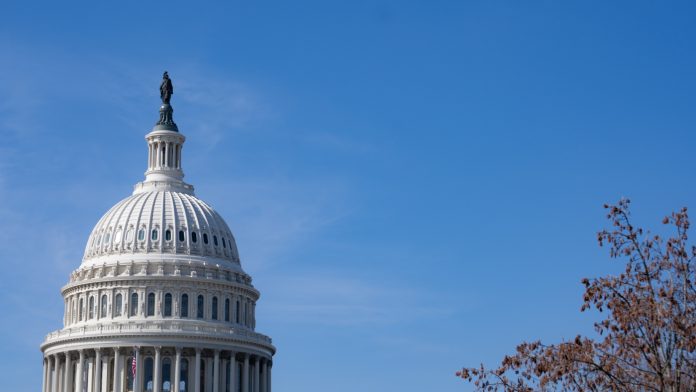
The U.S. Capitol Building on Feb. 10, 2025.
Zayrha Rodriguez/NPR
hide caption
toggle caption
Zayrha Rodriguez/NPR
With just days to go before a government shutdown deadline, House Republicans have released a 99-page stopgap bill they hope will reach President Trump’s desk before some government funding runs out on Friday.
It’s unclear if they have the votes to approve the plan. Republicans have tight margins in both chambers, and may need Democratic votes.
Still, Congressional GOP leaders have conveyed confidence in the move, and they now have President Trump’s backing.
“Conservatives will love this Bill, because it sets us up to cut Taxes and Spending in Reconciliation, all while effectively FREEZING Spending this year,” Trump wrote in a social media post this past week.
The president argues that passing this funding extension will ease the path toward enacting the rest of his legislative agenda: a massive, partisan spending plan that includes an extension of a tax cut program passed under his first term.
The bill released Saturday will fund the government through Sept. 30 and provide a slight boost to defense spending while trimming nondefense programs below 2024 budget year levels. That signals Republicans are hoping to pass the bill without substantial Democratic support.
Democrats had previously indicated that any spending changes to defense and non-defense spending would need to go in the same direction, either both increasing or both decreasing.
Republicans will need to stay largely united to pass the plan with tight margins in both chambers. In the House, Speaker Mike Johnson may have only one Republican “no” to spare.
Kentucky Republican Rep. Thomas Massie already said he’s planning to vote against the bill, even without seeing the text. It doesn’t include an overall 1% budget cut, a provision Massie saw included in a House Rules package under former Speaker Kevin McCarthy.
“I’ll vote against a clean CR that funds everything in 2025 at 2024 levels,” Massie said on X recently.
However, other fiscal hawks who had previously sworn off relying on these stopgap bill — also called continuing resolutions or CRs — in lieu of passing fully-litigated government funding packages are changing their tunes. The group is a small but meaningful share of the Republicans’ razor-thin majority.
Rep. Ralph Norman, a member of the House Freedom Caucus, said Elon Musk’s Department of Government Efficiency has changed everything. “I don’t like [continuing resolutions]. What’s changed is the DOGE commission is coming up with things that the American people are seeing,” said Norman, R-S.C. “So that’s why … I’ll be voting for it,”
Rep. Tim Burchett, R-Tenn., who has also been an opponent of stopgap bills, is now willing to support a plan that keeps spending at 2024 levels. He made the remarks after a White House meeting with Trump that included other fiscal hawks to discuss the plan.
“I’m open to it,” Burchett said. “I want to see what’s in it.”
House Appropriations Committee Chairman Tom Cole, R-Okla., isn’t a fan of stopgap bills himself. However, he recently told NPR it may be the best option with time running out on bipartisan negotiations for a larger spending deal.
“We’ve tried to lean over backwards to make sure none of our guys submit anything that … puts the Democrats in tough spot,” Cole said of the stopgap bill writing process. “I mean, I don’t want them to have the excuse to vote no.”
However, Democrats have largely signaled they aren’t ready to bail out Republicans who defect this time. In statement Saturday, ranking member of the House Appropriations Committee, Democrat Rep. Rosa DeLauro, called the CR a “power grab for the White House.”
DeLauro’s main complaint is that this longer term continuing resolution halts negotiations for full-fiscal year spending bills.
“By essentially closing the book on negotiations for full-year funding bills that help the middle class and protect our national security, my colleagues on the other side of the aisle have handed their power to an unelected billionaire,” DeLauro stated, referring to Elon Musk.
House Democrats were also circulating a document, which was obtained by NPR, detailing why they should vote against the GOP’s yearlong plan.
Even if Speaker Johnson is able to pass the bill through the House this week without Democratic support, it will still need at least seven Democratic senators to back it in order to clear the chamber’s de facto 60-vote threshold and reach the president’s desk for a signature.
NPR’s Eric McDaniel contributed reporting.