Thursday, November 12, 2026
Home Blog Page 147

Armed Teen Is Stopped From Boarding a Flight in Australia, the Police Say

0

A teenager who boarded a commercial flight in Australia armed with a shotgun and ammunition was overpowered by passengers and crew, the police said on Friday.

The teenager, a 17-year-old boy whose identity was not released, had entered the aircraft with the firearm, the department said. Officers from the Victoria Police were called to Avalon Airport in southeastern Australia at about 2:20 p.m. local time on Thursday, it said. He was arrested and faced multiple charges.

A sheep shearer, Barry Clark, was among those onboard the flight who stepped in to detain the teenager. Mr. Clark said that he was headed to Sydney to watch a football match when he noticed a member of the crew asking the teenager, who was dressed in a high-visibility vest and was wearing a tool belt, for his credentials before entering the plane.

“He got agitated and before we know it there was a gun, a shotgun appeared,” Mr. Clark told ABC Radio Melbourne.

“I then proceeded to do what I had to do and just put him in a bit of a lock, got his hand and twisted it and put it up in his back, threw him to the floor and then put my knee in his back and held him in a position where he couldn’t get out,” Mr. Clark told Network 10, a television network, according to The Associated Press.

Police said that they found two bags and a vehicle belonging to the teenager and called in the bomb response unit to assist with the bags as a precaution. No one was injured, they said.

Jetstar Flight 610 was scheduled to fly to Sydney with about 150 passengers. The superintendent of the Victoria Police, Michael Reid, told reporters that the boy had climbed through a hole in the airport’s security fence and made his way to the stairs of the aircraft.

The teenager, from the regional city of Ballarat in Victoria, about 70 miles west of Melbourne, is in custody on eight charges, including unlawfully taking control of an aircraft; endangering the safety of an aircraft; possessing dangerous goods on an aircraft; a bomb hoax; and firearms possession.

On Friday, he appeared in the Children’s Court of Victoria and told the magistrate that he was not applying for bail, according to the Australian broadcaster ABC News. The news report cited charging documents stating that he planted a fake homemade explosive and threatened passengers and crew.

“I’ve got bombs in my bag,” he was quoted as saying.

Mr. Clark, the shearer, said he did not hesitate to get involved, saying that he had been taught as a boy to look after other people. “You don’t think, you act,” he said. “I was quietly confident I could handle him.”

He did not answer the radio interviewer’s question about what was easier, wrangling an attacker or a sheep. Instead, Mr. Clark spoke about the employee who told him seat 1-C was “the best seat in the house” when he made his booking.

Next time, Mr. Clark said, “I am going to ask him if I can go down to cargo.”

Hampton Dellinger tells NPR it was “very hard” to drop lawsuit : NPR

0

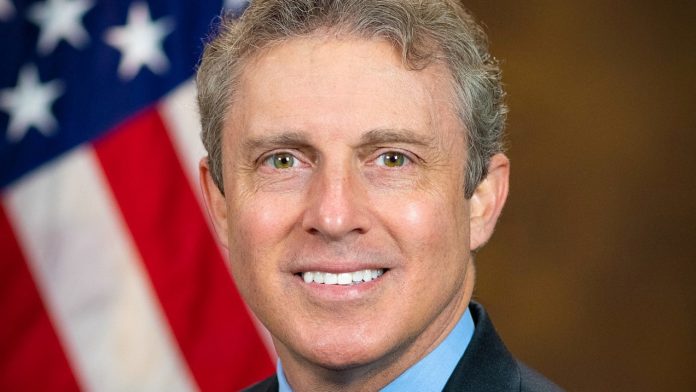
Hampton Dellinger

U.S. Office of Special Counsel/Handout via REUTERS


hide caption

toggle caption

U.S. Office of Special Counsel/Handout via REUTERS

What happens when a whistleblower claims wrongdoing in the federal government?

Who investigates those allegations and who protects those federal employees?

The answer is an independent watchdog agency called the Office of Special Counsel.

Shortly after taking office, President Trump fired the head of that office — Special Counsel Hampton Dellinger. Since then, Dellinger has been locked in a legal fight with the administration. A fight that he gave up on Thursday.

Dellinger was appointed by former President Joe Biden and has led the Office of Special Counsel since March 2024. He sued Trump over the legality of his firing last month, because the law states that special counsels can only be removed by the president for “inefficiency, neglect of duty, or malfeasance in office.”

One judge sided with Dellinger by declaring the firing unlawful and put him back on the job. Then, on Wednesday, an appeals court cleared the way for Trump to remove him. On Thursday, Dellinger dropped his lawsuit, effectively ending his tenure at the office.

The legal battle had played out as Dellinger was investigating the firings of probationary federal employees.

In an interview with All Things Considered host Juana Summers, Dellinger said it was “very hard” to drop the lawsuit.

“I would be before the board that could put these hundreds of thousands of probationary employees back on the job,” he told NPR. “And so it was hard to start the suit. It was very hard to stop it. I’m glad I tried.”

This interview has been lightly edited for length and clarity.

Interview highlights

Juana Summers: I want to start with this question: Why are you giving up this fight to regain your job now?

Hampton Dellinger: Two reasons. One, I recognize that the trio of judges who decided to sideline me are somewhat conservative, and in that sense, mirror our United States Supreme Court. So I do think the odds of me ultimately prevailing may have been long. And even more, it would have literally taken a long time. It could have been up to a year. And I’ve seen the damage that is being done to federal agencies on a day-by-day, even hour-by-hour, basis. And I didn’t think I could — in any meaningful way — pick up the pieces a year from now, even if I prevailed.

Summers: I’m curious, just internally, what got you to that point of saying, “I’m going to step back, I’m not going to continue pushing this.” Was there a moment, a conversation?

Dellinger: There was a judicial decision. And it was hard because when that came down two days ago, that morning, I had been able to get 6,000 newly hired federal employees back on the job. They had been unlawfully fired, in my estimation, based on the investigation I did. And I was ready to move forward and try and get all probationary employees put back on the job because of their unlawful firing. And that night, the court made clear that I was going to lose my job, at least temporarily, and I think a little bit [of time] was going to make a huge difference in terms of my ability to ever be effective again.

Summers: You’ve kind of started to get into this, but in the statement that you put out announcing your decision, you wrote that taking this all the way to the Supreme Court was a long shot. Is it just the politics of the court?

Dellinger:  I don’t know if they would see themselves as political, but their legal viewpoint is one that I disagree with. I recognize they are the final arbiters of the law. There is no question that my firing violated a law, a president has to have a very good reason to fire someone with the type of statutory protections I had. The only question is, is the law unconstitutional? And I think you have to have a view almost of the president as a king, to believe that he should be able to fire anyone he wants, whenever he wants. That’s not what congresses believe, that’s not what prior courts have believed, but I think this court would have likely [ruled] against me, and I feel like that’s unfortunate.

Summers: I’ve been looking at some of the comments from conservative legal scholars and commentators, and they’ve made the case that this is an encroachment on the president’s power to choose his agency heads. I’m talking about, the ruling to preserve your job — what do you make of those arguments?

Dellinger: Well, I’m not a legal scholar, I’m a lawyer. But I do know that every other branch of government has checks and balances. In the legislative branch, in Congress, you’ve got the House versus the Senate. In the judicial branch, you have federal and state courts. Higher court, the highest court — the Supreme Court — and lower courts. And so the idea that our framers, who had fought a war against a king, would have set up the executive branch with no independence, no protection for watchdogs like myself, I don’t think is what our framers had in mind. But at the end of the day, I know the Supreme Court controls, and even when I disagree with a decision or a viewpoint, I respect it. I think that’s what Americans do.

Summers: Now before your firing and during that brief period in which you were reinstated, you’ve challenged the administration’s firings of probationary federal employees. What evidence did you find that those firings may have been illegal?

Dellinger: Well the evidence came from the agencies themselves. The president can reorganize, the executive branch can even downsize, but it has to be done according to regulations and rules. But if you’re going to fire federal employees, it needs to be done on an individualized assessment. And agencies were sending out these mass firing notices, in some instances claiming it was for performance, but there had been no individualized assessment. I think it was not only unlawful, I think it was defamatory. And that’s why I was so pleased that we were able to get 6,000 employees back on the job. And I think there’s a legal basis for all of those terminated probationary employees to be put back on the job immediately. I hope agencies will do it voluntarily. All I have is my voice at this point. But I also think it’s really important to understand that so many federal employees are military veterans. Over 600,000 out of the 2 million employees in the federal executive branch workforce are military veterans. And so when you disrespect federal employees, you’re disrespecting veterans.

Summers: Are you concerned that your successor will run into roadblocks trying to investigate claims that are brought to the Office of Special Counsel or just not even try?

Dellinger: I am. Because it was so critical, I think, to the success of my office — not just when I was there, but going back 50 years when the office was first created — it was so vital that whistleblowers who may already have been mistreated by their agencies felt that they could go to a safe place outside their agencies, have someone with the experience of looking into claims and someone able to protect them. And the independence of my office was key. So now my successors, I fear forever more, are going to be wholly dependent on the good graces of the president. And I just don’t think that can ever work in the same way it had before. And I think it has worked well before.

Summers: You end your statement with this line and I’m going to quote it: “While I’ve given up on continuing to serve as special counsel, I retain my unyielding belief in the rule of law in America and the promise of our indispensable nation. I trust that as long as we cherish these vital precepts, they will exist.” In light of that line, are you feeling hopeful in this moment?

Dellinger: I am, and I’m not. Certainly, we’ve seen presidents push the limits of their authority before, but I’ve talked to many people who say they’ve never seen the types of things we’re seeing now, including these mass terminations of so many hardworking federal employees. But the courts are still there. Congress has a voice, has the power of the purse, and I hope they will use it. And I’ve seen so many Americans care about what’s going on. So as daunting as the present seems, I still have hope. I think we have to have hope for the future.


Trump Administration Sends Politically Charged Survey to Researchers

0

The Trump administration has asked researchers and organizations whose work is conducted overseas to disclose ties to those regarded as hostile, including “entities associated with communist, socialist or totalitarian parties,” according to a questionnaire obtained by The New York Times.

The online survey was sent this week to groups working abroad to research diseases like H.I.V., gather surveillance data and strengthen public health systems. Recipients received funding from Centers for Disease Control and Prevention, the United States Agency for International Development and other federal sources.

The questionnaire appears to be very similar to one sent earlier this week to partners of the United States Agency for International Development, which has been all but dismantled by the Trump administration. Both were titled “Foreign Assistance Review.”

Recipients were instructed to respond within 48 hours. Some grantees interviewed by The Times feared that impolitic or unsatisfactory answers could lead to cancellation of funding.

“Taxpayer dollars must not fund dependency, socialism, corrupt regimes that oppose free enterprise, or intervene in internal matters of another sovereign nation,” the questionnaire said.

“A truly prosperous America prioritizes domestic growth, innovation, and economic strength over foreign handouts,” it added.

A spokesman for the White House did not return a request for comment about the survey.

The form asks a series of questions that touch on collaborators, including whether grant recipients work with drug cartels or “groups that promote mass migration.”

It asks about the impact of programs, such as whether they have an effect on “promoting religious freedom and combating Christian persecution” in other nations.

It asks grant recipients if they or their organizations collaborate with or have received funding from Russia, Cuba, Iran or China — including the Confucius Institute, which works with China’s Ministry of Education to promote language and cultural exchanges with American students.

Some federal officials who oversee grants said they were particularly dismayed by a question asking grantees to disavow associations with communist entities. The United States assists with health work in a number of communist countries, including Vietnam.

“Some of my grantees are literally the public health government structures in a communist country,” said one federal official, who spoke anonymously for fear of retribution. “This is painful.”

Awards and contracts to aid groups have been under review during a 90-day pause on foreign aid, but in some instances they have been canceled and restored over the past few weeks. The Supreme Court on Wednesday ordered the federal government to resume the payments.

Various versions of the questionnaires were sent out starting Wednesday, and the deadlines appear to range from midnight on Friday to 5 p.m. Monday. But the process has been riddled with confusion.

Some grantees appear to have been given extensions, while others were denied. Some noted that the deadline seemed to shift as more copies of the questionnaire were received each day.

The recipients included scientists at large universities and research programs in the United States, as well as tiny organizations abroad. Some questionnaires were apparently sent in error; one was received by Maine’s health department.

A principal investigator with two C.D.C. grants for domestic research projects received the email Thursday evening, only to receive another Friday morning telling him to ignore the previous missive.

The answers are meant to be filled out by a single person in one sitting, with no way to save responses for a break. The form estimates the task to take 30 minutes, including the time required for gathering the necessary data and documents.

“The chaotic way in which these stop work orders, terminations, waivers, reinstated awards, surveys — all with rapid deadlines and minimal communication — have been sent is distracting and incredibly disruptive,” said one scientist, who spoke anonymously for fear of losing funding.

Some American grantees have turned to lawyers for advice about how to phrase the responses.

Organizations that are based overseas are most at a disadvantage. The communications pause the Trump administration imposed several weeks ago still prevents them from talking to federal officials who might be able to assist, according to one C.D.C. official.

Grantees are allowed only to talk to American officials in the countries where they are based.

“They could lose the vital funds they need to do their work if they don’t answer these questions appropriately,” said a federal official, who spoke anonymously for fear of retribution.

Trump reopens detention centers for migrant families : NPR

0

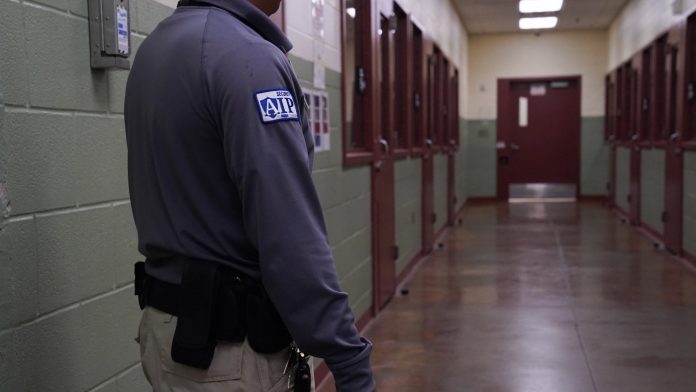
A security guard poses during a media tour of the Port Isabel Detention Center hosted by ICE in Los Fresnos, Texas in 2024. The Trump administration seeks to reopen family detention centers in the state.

Veronica G. Cardenas/POOL/AFP via Getty Images


hide caption

toggle caption

Veronica G. Cardenas/POOL/AFP via Getty Images

The Trump administration has brought back the practice of detaining families with children as a part of an effort to crack down on immigration.

The Department of Homeland Security is reopening the Karnes and Dilley detention centers in Texas and retrofitting them for families.

Families have already been sent to the detention center in Karnes City, in southeastern Texas, DHS said. The Biden administration largely ended the practice of family detention, using the facilities to hold adults instead.

President Trump detained families during his first term in an effort to deter migration through the southern border. The George W. Bush and Obama administrations also did so, and former President Joe Biden briefly considered it.

“The bottom line is that these individuals have final deportations orders from federal judges. This Administration is not going to ignore the rule of law,” Tricia McLaughlin, spokesperson at DHS, said in a statement. “The best option for illegal aliens is to self deport. If they leave now, they may still have an opportunity to return and live the American dream.”

U.S. Immigration and Customs Enforcement, the DHS agency that processes people for deportation, has been particularly constrained since the start of the administration in finding enough people to arrest and detain those without legal status. Its 20 field offices have been tasked with a quota of at least 75 arrests per day, despite limited staffing – even as the agency struggles to find space to hold those placed in detention.

Advocates warn of harms

Immigration advocates have been quick to denounce the move of boosting detention of families, primarily for its effect on children.

“Detention is harmful and traumatic for everyone, but especially children,” Setareh Ghandehari, advocacy director of the Detention Watch Network, said in a statement. The group aims to end the practice of immigrant detention.

“Families should be able to navigate their immigration cases in [the] community with support services provided and facilitated by local community based groups.”

Critics said such detentions, including at these newly reopened facilities, resulted in the death, abuse and psychological harm of children.

“No child seeking safety should be held behind bars, period,” said Amy Fischer, director of refugee and migrant rights at Amnesty International USA.

During the Trump administration’s first term, children of migrants were separated from their parents and held in detention centers in an effort to deter more illegal migration. The move prompted widespread criticism, including from some Republicans.

The policy was ultimately reversed, although some 1,000 children taken from their parents at the border still have not been reunited with their families as of early 2024.

Tom Homan, seen as one of the architects of that policy, is now Trump’s “border czar” but before inauguration pledged that he would aim to deport families together in a humane way.

Private contractor expects “growing” government needs

The facility in Dilley reopened under an agreement between CoreCivic, a private prison company, and ICE to resume operations and hold up to 2,400 individuals. CoreCivic said in a statement that it had managed the facility from 2014 until the contract ran out in August 2024. The new contract, which expires in 2030, is expected to reach annual revenue of $180 million.

“We are entering a period when our government partners — particularly our federal government partners — are expected to have increased demand,” Damon Hininger, CoreCivic’s CEO, said in a statement. “We anticipate continued robust contracting activity throughout 2025 that will help meet their growing needs.”

The administration has been using CoreCivic contracts, as well as the Federal Bureau of Prisons, to increase its detention capacity.

Facilities in New Jersey, Ohio, Nevada, Oklahoma and Mississippi have expanded contracts with ICE since Trump started his second term.

U.N. Helicopter Attacked as South Sudan Teeters on Brink

0

Gunmen attacked a United Nations helicopter on an evacuation mission in a volatile part of South Sudan on Friday, killing one crew member and injuring two others, the United Nations said.

The helicopter crew was trying to rescue wounded South Sudanese soldiers in Upper Nile State, an attempt to defuse tensions in the area, the United Nations said. It added that the wounded soldiers had also been killed. It did not say whether the helicopter was on the ground or airborne when it came under assault, but one armed group called the White Army said the shooting erupted as the men prepared to board.

The attack followed days of spiking political tensions in the east African nation, the world’s youngest country, amid growing fears among residents and Western officials that it was tumbling toward a new civil conflict.

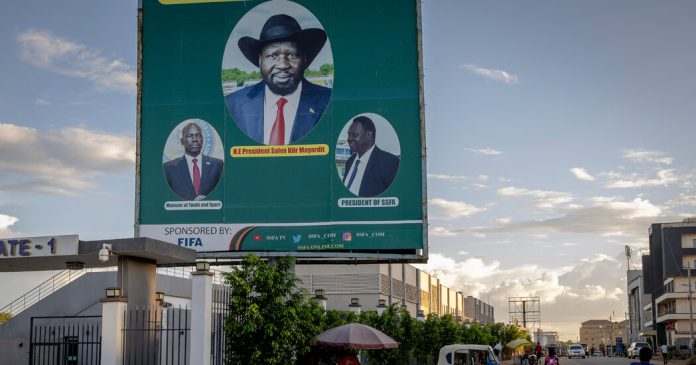
In a speech appealing for calm, President Salva Kiir of South Sudan vowed not to let that happen. “Let no one take law into their hands,” he said on Friday. “The government which I lead will handle this crisis.”

But critics said that Mr. Kiir and rival leaders were largely responsible for the crisis.

A power-sharing agreement between Mr. Kiir and his first vice president, Riek Machar, ended a brutal civil war in 2018; in recent weeks, it has teetered on the brink of collapse as forces loyal to both men have clashed in Upper Nile State.

South Sudan’s information minister said that 27 soldiers were killed in the helicopter attack on Friday but provided no other detail, and the figure could not be confirmed independently.

The White Army, which is allied with Mr. Machar, issued a statement saying that the dead included a major general of the South Sudan military, three of his bodyguards and the helicopter co-pilot. The general’s guards “opened fire on the White Army security officers who had been assigned to facilitate their safe evacuation,” the statement said, and the White Army returned fire. That account could not be confirmed either.

In Juba, the country’s capital, Mr. Kiir has sought to consolidate his power by arresting Mr. Machar’s allies, including the petroleum minister, Puot Kang Chol, and the deputy army chief, Gen. Gabriel Duop Lam.

The White Army overran an army base at Mr. Machar’s stronghold in Upper Nile State.

“South Sudan is slipping rapidly toward full-blown war,” said Alan Boswell, a South Sudan expert at the International Crisis Group. He warned that any renewed conflict was likely to merge with the war in neighboring Sudan, to devastating effect.

“The region could slip into one large proxy war,” he said in a statement, urging regional powers like Kenya and Ethiopia “to act with supreme urgency” to mitigate the crisis. Otherwise, he warned, “large-scale ethnic massacres” were an imminent threat.

Pope Francis urged Mr. Kiir and Mr. Machar to resolve their differences during a visit to South Sudan two years ago. But the latest cycle of arrests and violence has stoked fears that the relationship is crumbling beyond repair.

South Sudan’s minister for peace-building, Stephen Par Kuol, was among those arrested by Mr. Kiir’s loyalists this week, though he was released on Friday.

South Sudan was formed in 2011 when it split from Sudan after a brutal decades-long struggle for independence. But within a few years, a bitter rivalry between Mr. Kiir and Mr. Machar led to a bloody civil war that eventually caused an estimated 400,000 deaths.

Peace, always shaky, has been severely tested in the past two years as the civil war in Sudan, to the north, has wounded South Sudan’s weak economy by cutting the oil production that produces most of the country’s revenue. Presidential elections, which have been postponed repeatedly, are now scheduled to take place next year.

The United States, which played a central role in the creation of South Sudan, is the country’s largest international donor. But the Trump administration, which is slashing America’s foreign aid budget, has identified South Sudan as a place where U.S. presence should be scaled back.

Frantic international efforts to calm the combustible political situation received a hard blow on Friday as news of the helicopter assault emerged.

Nicholas Haysom, the chief of the United Nations mission to Sudan, condemned the attack as “utterly abhorrent” and said it “may constitute a war crime under international law.”

Trump administration cancels $400 million in funding for Columbia University : NPR

0

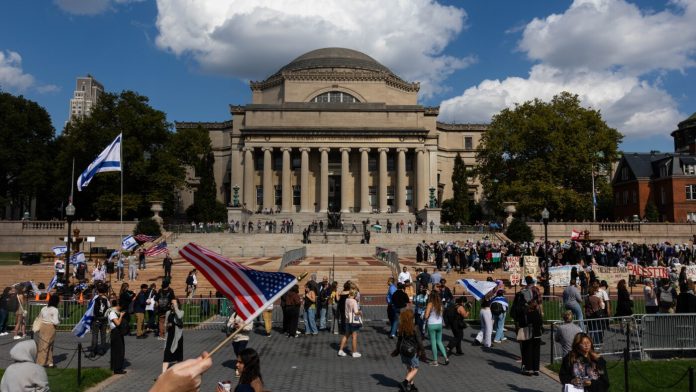
Columbia students organize dueling memorials and rallies both for Israel and Palestinians in Gaza on the one-year anniversary of the October 7th Hamas attack, on Oct. 7, 2024 in New York City.

Alex Kent/Getty Images


hide caption

toggle caption

Alex Kent/Getty Images

The Trump administration says it has canceled $400 million in federal grants and contracts to Columbia University over what it described as the school’s failure to police antisemitism on campus.

The cancellation was announced Friday in a joint statement from the Department of Justice, Department of Health and Human Services, Department of Education and the U.S. General Services Administration. The decision was carried out, the statement said, “due to the school’s continued inaction in the face of persistent harassment of Jewish students.”

It’s unclear what programs at the school may be affected by the cancellation. The statement said the funding pullback was “the first round of action” and that “additional cancellations are expected to follow.” The government also said Columbia holds more than $5 billion in federal grant commitments.

In a statement to NPR, a Columbia spokesperson said the school was reviewing the announcement and pledged “to work with the federal government to restore Columbia’s federal funding.”

“We take Columbia’s legal obligations seriously and understand how serious this announcement is and are committed to combating antisemitism and ensuring the safety and wellbeing of our students, faculty, and staff.”

The administration’s announcement marked the latest turn in the long-running fallout at Columbia over its response to campus protests sparked by the war in Gaza between Israel and Hamas. As the protests unfolded, Columbia came under heavy criticism from Republicans in Congress — as well as some Democrats — who said the university was failing to protect Jewish students from antisemitism. Many of those alleged acts of antisemitism were first reported by the Columbia Spectator.

Last spring, the school administration publicly clashed with pro-Palestinian student demonstrators who demanded the university sell off its investments in companies that have ties to Israel. In April, as the protests continued, the university ultimately shifted all classes to remote-only for the rest of the term. Four months later, the university’s president, Minouche Shafik, resigned following a tenure that lasted little more than a year and was largely defined by the protests.

President Trump has been highly critical of pro-Palestinian protests on campus. Within days of returning to office, Trump signed an executive order calling on the Department of Justice to “investigate and punish anti-Jewish racism in leftist, anti-American colleges and universities.”

Columbia is one of 10 universities that the Department of Justice has said it is investigating following allegations that the schools “may have failed to protect Jewish students and faculty members from unlawful discrimination.”

U.S. Suspends Ukraine’s Access to Satellite Imagery

0

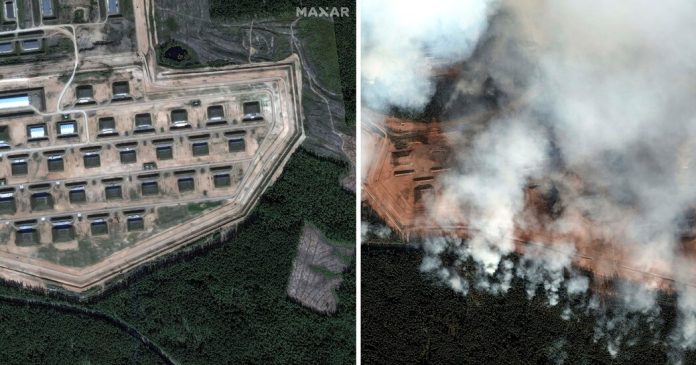
A Pentagon agency said on Friday that it had “temporarily suspended” the sharing of satellite imagery with Ukraine in accordance with orders from President Trump, the latest in a series of steps taken by the administration to pressure Kyiv into peace talks with Russia.

The move, by the National Geospatial-Intelligence Agency, could shut off a vital window on the war for Ukraine, which has used satellite images purchased by the United States to track the movements of Russian troops and to assess damage to infrastructure on both sides of the long front line, according to a Ukrainian defense news agency.

The Trump administration has also halted military aid and stopped sharing intelligence with Ukraine after a contentious White House meeting last week with the country’s president, Volodymyr Zelensky. The end of American assistance, analysts said, could reorder the battlefield and potentially give Russia a decisive advantage.

President Trump has so far ignored Russia’s role as the aggressor in the war in Ukraine, but on Friday, he said that he was “strongly considering” imposing new sanctions and tariffs on Russia until a cease-fire and permanent peace deal was reached. His message came after Russian forces unleashed a massive bombardment aimed at critical Ukrainian infrastructure overnight on Thursday and on Friday.

Maxar Technologies, a Colorado-based company that has provided satellite images to Ukraine through a Pentagon program, confirmed the suspension of imagery sharing in a statement, emphasizing that it abides by the “contractual commitments” it makes with customers like the United States and other countries.

Consider This from NPR : NPR

0

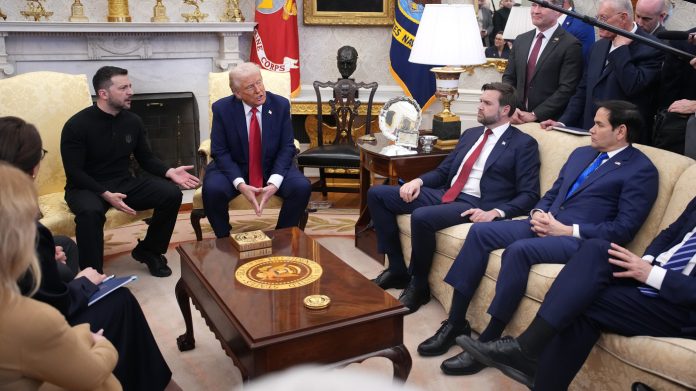
U.S. President Donald Trump (C) and Vice President JD Vance, along with Secretary of State Marco Rubio met with Ukrainian President Volodymyr Zelensky in the Oval Office at the White House on February 28, 2025.

Andrew Harnik/Getty Images


hide caption

toggle caption

Andrew Harnik/Getty Images


U.S. President Donald Trump (C) and Vice President JD Vance, along with Secretary of State Marco Rubio met with Ukrainian President Volodymyr Zelensky in the Oval Office at the White House on February 28, 2025.

Andrew Harnik/Getty Images

It’s been a little more than a week since Ukrainian President Volodymyr Zelenskyy met with President Donald Trump in the Oval Office.

Vice President JD Vance was in the meeting too. And Secretary of State Marco Rubio, the nation’s top diplomat, sat on an Oval Office couch, mostly silent, as Trump and Vance berated the Ukrainian leader.

Along the way, the president and vice president made it clear just how much of the established global order they are ready to upend. An order that for most of his career, Rubio has defended, and worked to help hold up.

So what changed …and what do those changes mean?

For sponsor-free episodes of Consider This, sign up for Consider This+ via Apple Podcasts or at plus.npr.org.

Email us at [email protected].

This episode was produced by Erika Ryan and Brianna Scott, with audio engineering by Ted Mebane.

It was edited by Courtney Dorning.

Our executive producer is Sami Yenigun.

Alarmed by Trump, Poland Must Look at Nuclear Options, Premier Says

0

Warning that a “profound change of American geopolitics” had put Poland, as well as Ukraine, in an “objectively more difficult situation,” Prime Minister Donald Tusk of Poland on Friday said his country must drastically increase the size of its military and even “reach for opportunities related to nuclear weapons.”

Mr. Tusk, in a detailed speech on security to the Polish Parliament, did not explicitly propose developing a nuclear arsenal, but said that “it is time for us to look boldly at our possibilities of having the most modern weapons” and explore options for nuclear and “modern unconventional weapons.”

He added that his government was “talking seriously” with France, Europe’s only nuclear power aside from Britain and Russia, about the possibility of extending the French nuclear umbrella to other European countries. In addition, he said, Poland needs to ensure that all adult men are “trained in the event of war.”

His comments reflect the stark turnabout at the White House with the return of President Trump, who has publicly denigrated the NATO alliance, cast doubt on the U.S. commitment to defend much of Europe in the event of a Russian attack and falsely shifted the blame for Russia’s invasion of Ukraine onto Kyiv. Mr. Trump’s views were received with deep alarm in Warsaw and other parts of Eastern Europe that have bitter memories of being bullied and repeatedly occupied by Russia over centuries.

Poland is a signatory to the Nuclear Nonproliferation Treaty, which prohibits countries that were not among five declared nuclear powers in 1970, when the treaty took effect, from acquiring atomic weapons.

But Israel, India and Pakistan, which never signed onto the ban, and North Korea, which withdrew from the treaty, have all developed nuclear weapons, and there has been sporadic discussion in Poland of trying to join the nuclear club. Jaroslaw Kaczynski, the leader of Poland’s former governing party, said in 2022 that he would, “as a citizen,” like to see Poland acquire nuclear weapons but added: “As a responsible politician, I must assess this idea as unrealistic.”

Russian officials have suggested repeatedly that they could use nuclear arms in the fight against Ukraine, which is not a NATO member, particularly if the West ramps up its military aid to Ukraine. But repeated escalations in that aid so far have not prompted such a response.

The French Institute of International Relations warned in a report last year that “the war in Ukraine has the potential to increase proliferation risks, as it signals that nuclear powers can attack an adversary with conventional capabilities while backing its actions with nuclear threats to deter third-party intervention.”

“The war also sends the message that nuclear weapons are a necessary guarantor of national security,” the report said.

When the Soviet Union fell apart in 1991, Ukraine held on its territory the world’s third-largest nuclear arsenal but relinquished it in 1994, in return for a pledge from Russia, as well as the United States and Britain, to respect Ukrainian borders and refrain from the use or threat of military force. Many Ukrainians now regret giving up this arsenal, as their government has appealed in vain for NATO membership and direct involvement of Western forces in the war.

Poland is the biggest military power among former members of the Soviet-led Warsaw Pact military alliance that are now members of NATO. But those nations have long looked to the United States, with its nuclear arsenal and thousands of troops stationed in Poland and elsewhere in Eastern Europe, as the guarantor of its security.

Poland has a long tradition of nuclear expertise, dating to Marie Sklodowska-Curie, the Polish-born French scientist who won Nobel Prizes in physics and chemistry for her pioneering work in discovering radioactivity — a word she coined — and radioactive elements in the early 20th century. Stanislaw Ulam, a Polish mathematician and physicist, played an important role in the Manhattan Project, the United States’ secret atomic bomb program during World War II, and in the subsequent invention of the hydrogen bomb.

Under Communism, Poland trained a large group of nuclear engineers in preparation for a nuclear power plant that it started building with Soviet assistance but never finished. Poland last year approved plans for the construction of its first atomic power station under a contract with America’s Westinghouse Electric.

Mr. Tusk dedicated most of his speech to the new security situation created by Mr. Trump’s abrupt upending of what had been the pillars of American foreign policy since the end of World War II.

“We cannot deny these facts: Today, Poland’s situation, objectively, and Ukraine’s situation, in particular, is more difficult than it was a few months ago, and we must deal with this fact,” he said.

“Washington’s much more symmetrical attitude toward Moscow and Kyiv, much more symmetrical than we had become accustomed to, is a little different — I am also putting it mildly — from what we feel in Poland or in Europe,” he said.

But Mr. Tusk avoided criticism of Mr. Trump and said the “closest possible ties” with the United States remained essential.

At the same time, he said Poland would expand its military to around half a million personnel, including reservists, more than double its current size and raise spending on defense to 5 percent of its economic output.

But Mr. Tusk ruled out sending Polish soldiers to Ukraine “as part of some contingent,” an apparent reference to French proposals that European countries provide troops for a future security force if U.S. efforts to broker a peace deal bear fruit.

Poland is already one of Europe’s biggest spenders on defense, spending around 4 percent of gross domestic product last year, double the 2 percent minimum set by NATO for its member nations. Most NATO countries are above that threshold now, unlike during Mr. Trump’s first term, when he berated them for not spending more, but he continues to question the U.S. obligation to defend its allies.

Poles, Mr. Tusk said, “will not accept the philosophy that we are powerless and helpless, that if President Trump decides to change his policy, we have no chance.”

“I will repeat once again what seems incredible but is true: 500 million Europeans are begging 300 million Americans to protect us from 180 million Russians who have not been able to cope with 40 million Ukrainians for three years,” he said.

Europe has the means to defend itself but needs to “eliminate one important deficit,” he added — “the lack of will to act, uncertainty and, sometimes, even cowardice.”

Marc Santora contributed reporting from Kyiv, Ukraine.

Former government watchdog on his decision to end legal fight challenging his firing

0

****DRAFT ***NPR’s Juana talks to Hampton Dellinger, who formerly lead an independent government watchdog agency, about his decision to stop challenging the Trump administration for firing him.