Thursday, November 12, 2026
Home Blog Page 152

National Endowment for Democracy sues Trump administration : NPR

0

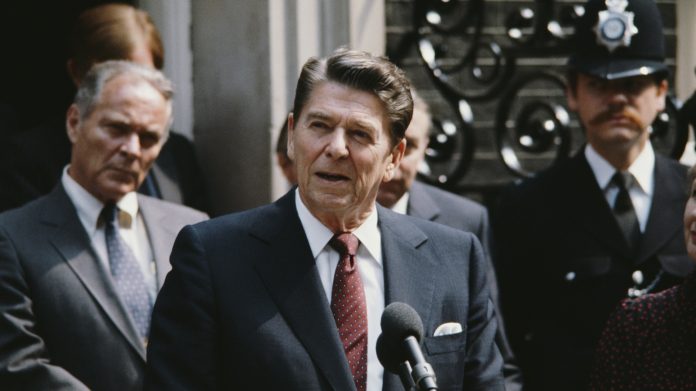
President Ronald Reagan during a state visit to London in June 1982. Reagan laid the rhetorical foundations for the National Endowment for Democracy in a speech during that visit.

Fox Photos/Hulton Archive/Getty Images


hide caption

toggle caption

Fox Photos/Hulton Archive/Getty Images

The National Endowment for Democracy (NED) is suing the Trump administration for denying it access to nearly $240 million in congressionally approved funding. The suit, which was filed Wednesday night in federal district court in the District of the Columbia, is the latest in which an organization has sued the government for refusing to release money already approved by Congress.

The NED supports everything from democracy activists in Hong Kong to independent press coverage of Iran.

NED officials say the halt in funding has created a “devastating” cash flow crisis that has forced it to furlough 75% of its staff and threatens its existence.

“NED is a venture capital fund for democracy, with 83% of its resources going directly to support people fighting for freedom of speech, thought, and religion,” said former Republican congressman and current NED Chair Peter Roskam in a statement. “The sudden withholding of our funds endangers that mission and cripples a force multiplier for America’s national interest.”

The suit names the State and Treasury departments as defendants as well as their leaders, Marco Rubio and Scott Bessent, in their official capacities. Those departments have yet to file a response in court. The State Department said it does not comment on pending or ongoing litigation.

Rubio is a former board member of the International Republican Institute, which receives funding from the NED. In 2017, Rubio thanked the Endowment for its work to “advance the cause of freedom and carry out the vision President Reagan articulated those many years ago.”

Treasury has not yet responded to requests for comment from NPR.

The suit also names the White House Office of Management and Budget and its director, Russell Vought, in his official capacity.

Bipartisan history

Congress created the National Endowment for Democracy in 1983 to support democracy, extend American soft power and counter Soviet influence. Support was bipartisan. President Ronald Reagan laid the rhetorical foundations for the initiative in a 1982 speech to the British Parliament.

“If the rest of this century is to witness the gradual growth of freedom and democratic ideals, we must take actions to assist the campaign for democracy,” Reagan said. “The objective I propose is quite simple to state: to foster the infrastructure of democracy.”

By holding up funding for the NED and the U.S. Agency for International Development, the Trump administration is now making moves that would dismantle that infrastructure.

Criticism at home and abroad

While the NED has enjoyed decades of support on both sides of the aisle, it does have critics.

The Center for Renewing America, a conservative think tank previously run by Vought, has called the NED a “partisan political weapon” that meddles in the internal affairs of other countries and creates turmoil. Chinese Communist Party leaders have accused the NED of trying to destabilize the country by supporting Tibetan, Uyghur and Hong Kong human rights activists.

Roskam, the NED chair, says the biggest beneficiaries from the Trump administration’s funding halt are authoritarian leaders from Moscow to Havana.

“The best way to challenge tyrants is to empower their citizens,” Roskam wrote in the National Review. “That’s exactly what NED does.”
With Trump’s Reprieve on Tariffs, Mexico, Still Wary, Breathes Easier

0

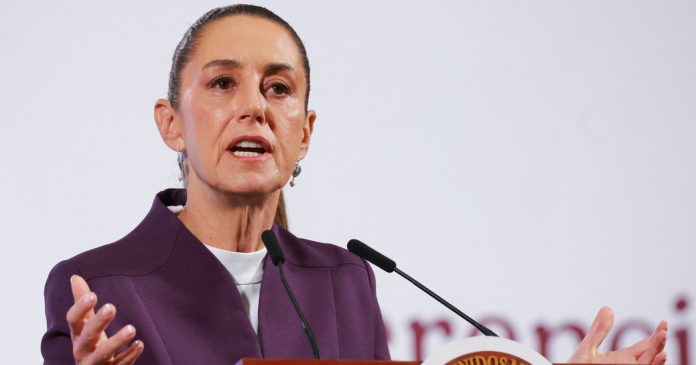
On Thursday morning, President Claudia Sheinbaum of Mexico spoke with President Trump, in a last-ditch attempt to avert the 25 percent tariffs that Mr. Trump imposed this week on her country’s exports, which would devastate its economy.

For now, it appears to have worked.

On social media, after the two leaders’ call, Mr. Trump announced that he would give Mexico another month. At least until April 2, he said, Mexico will not be required to pay tariffs on anything that falls under the main North American trade pact.

“I did this as an accommodation, and out of respect for, President Sheinbaum,” Mr. Trump wrote in a post on Truth Social. “Our relationship has been a very good one.” He also noted Mexico’s work on curbing illegal migration and fentanyl trafficking.

Ms. Sheinbaum responded in a post on social media: “Many thanks to President Donald Trump. We had an excellent and respectful call.”

“We will continue to work together, particularly on migration and security issues, which include reducing the illegal crossing of fentanyl into the United States, as well as weapons into Mexico,” she added.

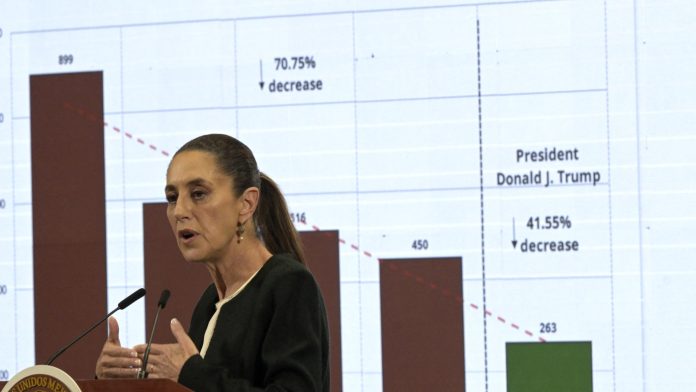
In a news conference on Thursday morning, Ms. Sheinbaum said she had shared with Mr. Trump examples of what the government had accomplished, including data that showed a decrease of more than 40 percent in the amount of fentanyl seized by U.S. Customs and Border Protection at the border. “I told him, we’re seeing results,” Ms. Sheinbaum said, adding that she told him tariffs would jeopardize such cooperation. “It wasn’t a threat, none of that,” she added.

The tariffs, according to banks and business leaders, could cause American companies that make products in Mexico to leave the country, in line with Mr. Trump’s stated goal of pressuring those manufacturers to relocate to the United States. The tariffs could lead to the loss of tens of thousands of Mexican jobs, and a contraction of the gross domestic product of more than 2 percent.

Ms. Sheinbaum has spent the week urging calm while emphasizing the gravity of the situation, and saying her government had a plan to respond to tariffs.

On Wednesday, a day before her call with Mr. Trump, she seemed to have recovered from the shock that he was imposing the import duties, which Mexican officials, just days earlier, had appeared confident they could head off in negotiations with the Trump administration. She had shifted into crisis mode, calling this a “definitive moment” for the country and drawing a comparison to the devastating Covid-19 pandemic.

Yes, Ms. Sheinbaum acknowledged, it would bring pain: Around 80 percent of Mexico’s exports go to the United States. But Mexico had withstood worse. The peso dipped on Tuesday, the day the tariffs took effect, but not nearly as much as it had during the pandemic, she said.

She called for patience, suggesting — correctly, it turned out — that things could still change, and struck a defiant tone, saying that Mexico was not about to take tariffs lying down.

“Mexicans are brave and resilient — the people of Mexico are strong, and our economy is doing well,” she said on Wednesday, adding that “there will be no submission.” If need be, she said, Mexico would build its trading relationships with “Canada and other countries” to compensate for a loss of U.S. business.

In the meantime, many Mexican businesses said they were taking their cues from their president and sitting tight but bracing for impact, knowing the seriousness of what could be in store.

“At this point, there are no immediate reactions from exporters,” said Miguel Muñoz, the director for Mexico at Geodis, a global logistics company, who said he had spoken both to customers and to Mexican chambers of commerce, on Wednesday. “They’re waiting to see what the government is going to do.”

He said that exporters were not making big moves yet, including his customers in the retail industry. They had been further encouraged by Wednesday’s announcement that the Trump administration would exempt automakers from the tariffs for a month, and U.S. Commerce Secretary Howard Lutnick’s suggestion earlier this week that Mr. Trump’s tariff plans for Mexico and Canada could still shift, he said.

“It’s business as usual, honestly — considering it’s going to be delayed a month, what’s to say it’s not going to be delayed six months or more?” he said. “At least for this week, exporters will act as if it’s business as usual, whatever it takes. After next week, they’ll figure out what to do.”

Ms. Sheinbaum’s comments on Wednesday, however, suggested that she was preparing for the worst. Whatever her government’s plan, a trade war is likely to hurt the Mexican economy much more than that of the United States.

And while some opted for calm and caution this week, others sprung into action. Government officials and business leaders said they were working together to find ways to adjust, and to tap into alternative markets.

“Of course, this took us by surprise and it was not what we hoped for, but the key word here is adaptation,” said Antonio Hernández, director of economic development in the city of Torreón, around 300 miles south of Laredo, Texas. “We have to move beyond the tragedy and into action.”

That has meant “knocking on doors” in the European Union with virtual meetings, and starting to plan trips to countries like Hungary and Japan to discuss commercial partnerships, Mr. Hernández said. But there are big obstacles to exporting to two of the world’s biggest markets, the European Union and China, experts say, including the difficulty of transporting agricultural goods with short shelf lives and European controls on importing food.

Business leaders were also looking closer to home, Mr. Hernández said, focusing on Mexico’s domestic market as well as other markets in the Americas.

Although local officials and business leaders have already started to scramble for ways to face the new commercial landscape, Mr. Hernandez said that until they knew more about what Mr. Trump and Ms. Sheinbaum will do, they would not know “what the rules of the game will be.”

The automotive industry — which got a temporary reprieve before Mr. Trump announced his decision to delay tariffs on Mexico more generally — warned on Wednesday that the tariffs threatened to destabilize the highly integrated supply chains between Mexico, the United States and Canada.

“The tariffs will have severe repercussions in the region generating inflation, loss of jobs and lower growth for the three countries,” the Mexican Automotive Industry Association and the National Auto Parts Industry said in joint statement with other associations.

In fact, the mere possibility of tariffs is already disrupting trade. The flow of goods heading north to the United States has slowed considerably, and U.S. companies have talked of pulling their operations out of Mexico.

Ms. Sheinbaum’s approval ratings have recently soared above 80 percent, in large part because of what many see as her poised and firm approach to negotiating with Mr. Trump, as well as her actions on other high priorities, like cracking down on drug-trafficking cartels.

The government has also focused on national solidarity, with Ms. Sheinbaum earlier in the week calling for a demonstration in Mexico City on Sunday, when she had also planned to announce Mexico’s response to Mr. Trump’s tariffs.

On Thursday, Ms. Sheinbaum said that the event would still take place, despite the reprieve. By then, she was calling it a “festival,” with musical groups.

“All Mexicans succeeded in attaining this respect for our country,” she said, adding of the event, “I’m going to explain the achievement that this agreement represents — between our governments and our people.”

Mr. Muñoz, the Geodis Mexico director, said that many businesses had taken a wait-and-see approach.

On Thursday, it appeared they were right to do so — although tariffs still loomed on the horizon.

“What the chambers of commerce are applauding is the way the president has handled this,” Mr. Muñoz said. “They’re not moving a finger yet.”

Trump is giving Mexico a break on tariffs until April 2 : NPR

0

Mexico’s President Claudia Sheinbaum speaks during her daily press conference at the National Palace in Mexico City on March 6, 2025.

Alfredo Estrella/AFP


hide caption

toggle caption

Alfredo Estrella/AFP

President Trump said on Thursday that he will give Mexico a break on tariffs — the latest twist in his on-again, off-again approach to the issue that has sent markets into a tailspin.

Trump’s 25% tariffs on Canadian and Mexican goods went into effect on Tuesday. After talking to the Big 3 U.S. automakers on Wednesday, Trump decided to give them a one-month reprieve from the tariffs.

And then after a conversation with Mexican President Claudia Sheinbaum on Thursday, he said on social media that he would give a break to all Mexican goods covered by the U.S-Mexico-Canada Agreement (USMCA).

“I did this as an accommodation, and out of respect for, President Sheinbaum,” Trump said in his post, thanking Sheinbaum for her work addressing migration and fentanyl trafficking.

The break lasts until April 2

Trump said the reprieve will last until April 2, which is the date that he has vowed to begin “reciprocal tariffs” on goods from a wider range of countries.

The rates, products and countries affected by the upcoming reciprocal tariffs are still to be determined.

Trump originally planned to tariff Canadian and Mexican goods on Feb. 1 to push the U.S. neighbors to do more stop migration and drug trafficking — but then delayed them by a month.

Then last week, he told reporters he was looking at April 2 as a start date for the tariffs — before reversing and putting them in place on March 4.

Most Mexican goods will be included in the reprieve

Sheinbaum described her phone call with Trump as “respectful.” She said she walked Trump through a set of his own government’s statistics showing a huge drop in the amount of fentanyl being seized by border authorities.


“I asked him, ‘How can we continue to collaborate if the U.S. is doing something that hurts the Mexican people?'” Sheinbaum told reporters. She explained that it wasn’t a threat. “I just asked him to understand my position,” she said.

Sheinbaum had been set to announce retaliatory measures at a mass rally on Sunday. Now, she said it will be a celebration.

Canada's Prime Minister Justin Trudeau speaks during a news conference about the U.S. tariffs on March 4, 2025 on Parliament Hill in Ottawa.

Canada’s Prime Minister Justin Trudeau speaks during a news conference about the U.S. tariffs on March 4, 2025 on Parliament Hill in Ottawa.

Dave Chan/AFP


hide caption

toggle caption

Dave Chan/AFP

What about Canada?

There was no immediate indication that Canada would get a break, even though Canada has boosted its border enforcement since Trump took office to try to avert the tariffs.

Canada has said it will retaliate with tariffs of its own.

Prime Minister Justin Trudeau said Canada should expect to be in a trade war with the United States for the foreseeable future. He spoke to Trump on Wednesday evening in a call he described as “colorful.”

Trudeau told reporters that talks were ongoing toward a temporary break on the tariffs.

Trump’s E.P.A. to Rewrite Rules Aimed at Averting Chemical Disasters

0

The Trump administration has moved to rewrite rules designed to prevent disasters at thousands of chemical facilities across the country.

The Environmental Protection Agency filed a motion in federal court on Thursday pulling back the safety regulations, introduced last year under former president Joe Biden. The rules, which took effect in May, require sites that handle hazardous chemicals to adopt new safeguards including explicit measures to prepare for storms, floods and other climate-related risks.

They also require some facilities to scrutinize their use of particularly dangerous chemicals and switch to safer alternatives as well as to share more information with neighbors and emergency responders. In addition, facilities that have suffered prior accidents also must undergo independent audits.

President Trump’s E.P.A. intends to rewrite those rules, the agency said in a filing with the United States Court of Appeals for the District of Columbia. That essentially makes moot a legal challenge launched last year by a group of Republican Attorneys-General, as well as the chemicals industry, which argued that the rules imposed undue burdens on companies with little safety benefit.

The American Chemistry Council, a main industry group and participant in the legal challenge, did not immediately respond to a request for comment.

Earthjustice, a nonprofit law group that sued the first Trump organization more than 200 times in support of environmental rules, condemned the move. “Chemical explosions force entire neighborhoods to evacuate. First responders have died rushing into disasters they weren’t warned about,” said Adam Kron, an attorney at the advocacy organization. “Workers have suffered burns, lung damage, and worse, all because companies cut corners to save money.”

The move comes as the Trump administration has embarked on a broad dismantling of climate and environmental policy across the federal government. The E.P.A. did not detail in its filing the specifics of its planned rewrite, and Molly Vaseliou, an agency spokeswoman, said the agency would not have comment beyond the filing. While the rule took effect last May, some requirements were to be phased in over several years, which means some of the practices it requires might not yet be in place.

In a letter sent to the agency’s administrator, Lee Zeldin, in January, industry groups including the American Chemistry Council asked for a reconsideration of many of the rules’ main components. “The facilities affected by this program are vital components of the U.S. economy, supporting millions of jobs, driving innovation and maintaining our global competitiveness,” the groups said. “It is imperative that E.P.A. take immediate action to fix critical areas of this rule.”

They also asked the agency to immediately shut down a public data tool that had allowed communities to look up details of local sites that store hazardous chemicals, including information on past accidents.

The planned rewrite is the latest in a prolonged policy tussle over strengthening what is known as the Risk Management Program. First introduced in 1996, the RMP regulates nearly 12,000 facilities that handle hazardous chemicals, including factories, wholesalers, oil refineries, natural gas plants, wastewater treatment plants and fertilizer distributors.

Many of those facilities are critical infrastructure, but also a risk to nearby communities, storing large quantities of highly hazardous substances like chlorine, anhydrous ammonia and vinyl chloride.

More than 130 million people live within three miles of sites that handle hazardous chemicals that were covered by the Biden-era rule, the E.P.A. has estimated. A 2020 Congressional Research Service report said that a “worst-case scenario” accident at any of 2,000 of the most hazardous sites could endanger 100,000 people or more.

Former President Barack Obama tried to strengthen the rules after a deadly 2013 explosion at a fertilizer plant in Texas killed 15 people and injured more than 160. The first Trump administration halted the tougher requirements before they took effect. President Biden then reintroduced tougher rules in 2021, and finalized them last year.

Trump administration federal spending freeze blocked by a second U.S. judge : NPR

0

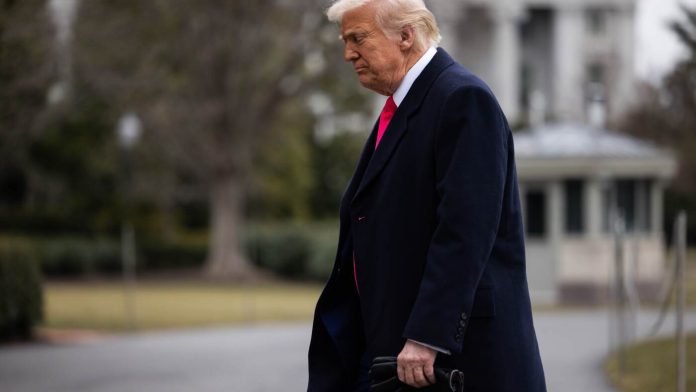
President Trump walks to the Residence after arriving to the White House on Feb. 22. The administration is facing legal challenges over its effort to freeze payments for federal grants and other programs.

Tierney L. Cross/Getty Images


hide caption

toggle caption

Tierney L. Cross/Getty Images

A federal judge in Rhode Island has ruled to extend a block on the Trump administration’s attempt to freeze payments for federal grants and other congressionally approved government programs from taking effect.

Thursday’s preliminary injunction is the second by a federal court blocking the spending freeze. The order marks a victory for Democratic attorneys general from 22 states and the District of Columbia, who filed suit against the Trump administration over its efforts to pause trillions of dollars in government spending in order to evaluate whether those programs aligned with President Trump’s policy goals.

In his ruling, U.S. District Judge John McConnell Jr. said the spending freeze “fundamentally undermines the distinct constitutional roles of each branch of our government.” 

“The interaction of the three co-equal branches of government is an intricate, delicate, and sophisticated balance—but it is crucial to our form of constitutional governance,” McConnell Jr. said. “Here, the Executive put itself above Congress. It imposed a categorical mandate on the spending of congressionally appropriated and obligated funds without regard to Congress’s authority to control spending.”

While the decision represents a rebuke of the spending freeze, the preliminary injunction only applies in the states that brought the challenge.

The administration is expected to challenge the ruling, as President Trump has previously indicated he would appeal court decisions involving this work.

The case was brought against the administration in late January after the Office of Management and Budget released a memo ordering the pause. Almost immediately, the memo sparked widespread confusion, as recipients of federal assistance scrambled to make sense of what the order might mean for everything from Medicaid payments to funding for schools, hospitals and shelters. The White House then rescinded the memo, but vowed to continue its spending review.

Within days of the original memo, McConnell Jr. issued a temporary restraining order against the administration’s effort and in early February, said that the administration was failing to fully comply with his decision. In a court filing, the Trump administration argued that the temporary restraining order did not “Unambiguously Extend” to certain spending because it was paused under a separate OMB memo.

In arguments last month, McConnell Jr. pressed and at times pushed back against an attorney for the Justice Department who argued on behalf of the administration that the freeze was legal and fell within the president’s power. The plaintiffs argued that the move was carried out unconstitutionally and that if implemented, would have massive ramifications for many social programs and projects.

The administration is battling another legal challenge over its effort. A federal judge in Washington D.C., overseeing a separate case brought by a coalition of nonprofit groups, issued a temporary injunction against the funding freeze in late February.

The freeze is part of a broader effort by the administration — with the aid of Trump adviser Elon Musk – to dramatically restructure the federal workforce and slash government spending. The administration has moved to fire tens of thousands of federal workers and effectively shutter multiple government agencies and departments.

Many of these actions have sparked legal challenges. In some cases, courts have ordered the administration to restore funding, but the administration has also sought to maneuver around these orders.

In the Rhode Island case, those efforts were brushed back by Thursday’s decision. In a separate case involving foreign aid payments, the administration won at least a temporary victory on Wednesday when the Supreme Court upheld a lower court’s decision ordering the government to restore roughly $2 billion in payments.

Trump Suspends Tariffs on Mexico for a Month

0

President Trump said on Thursday that he would offer a one-month exemption from tariffs for imports from Mexico that trade under the rules of U.S.-Mexico-Canada Agreement, the trade pact he signed in his first term.

The president wrote on Truth Social that he would give Mexican products an exemption until April 2 from the 25 percent tariffs that he levied on all products from Mexico and most goods from Canada earlier this week. The exemption would cover the vast majority of North American trade and follows days of turmoil in the stock markets.

“After speaking with President Claudia Sheinbaum of Mexico, I have agreed that Mexico will not be required to pay Tariffs on anything that falls under the USMCA Agreement,” he wrote.

“Our relationship has been a very good one, and we are working hard, together, on the Border, both in terms of stopping Illegal Aliens from entering the United States and, likewise, stopping Fentanyl,” he added.

Howard Lutnick, the commerce secretary, made similar comments on Thursday morning, saying that the president would most likely exempt all products that trade under U.S.M.C.A. Mr. Trump’s announcement did not describe any exemption for Canadian goods.

Stocks nudged higher after Mr. Lutnick spoke but remained lower for the day, with the S&P 500 down roughly 1 percent. The change would significantly expand a one-month exception Mr. Trump offered yesterday to automakers who import goods under the rules of the pact, which fell short of investors hopes for reprieve.

Both Mr. Trump and Mr. Lutnick have implied that any relief from tariffs could be short-lived, since the administration is considering another raft of levies next month. The president has said he will announce “reciprocal” tariffs on April 2, which will raise U.S. tariffs to match the levels set by other countries, while also taking into consideration other practices that affect trade, like taxes and currency.

“My expectation is the president will come to the agreement today, and hopefully we will announce this today, that U.S.M.C.A.-compliant goods will not have a tariff for the next month, until April 2,” Mr. Lutnick said. Mr. Trump signed U.S.M.C.A. in 2020 to replace and revise the North American Free Trade Agreement.

At a housewares expo in Chicago, talk keeps turning to price hikes from tariffs

0

The Inspired Home Show in Chicago draws housewares industry insiders from all over the country to network and show off their latest gadgets. This year, they’re making plans to cope with tariffs.

During the War in Ukraine, a Military Orchestra Has a Key Task

0

Three gunshots rang out as an honor guard fired into the air over the snow-covered cemetery. Soldiers lifted a Ukrainian flag from a coffin and handed it to family members. Then a trumpet, accompanied by a drum, bid farewell to the fallen soldier.

After playing a Ukrainian version of taps, the two musicians from the military band walked slowly away, leaving the mourners to grieve.

“Unfortunately, we cannot raise them from their graves, but we can play taps,” Maj. Oleksandr Holub said of the daily visits that members of the band he conducts make to the cemetery, where hundreds of new graves have been dug for Ukrainian soldiers.

Over the three years since Russia’s full-scale invasion began, Ukraine has experienced tremendous losses. In an interview published last month, President Volodymyr Zelensky said that at least 46,000 Ukrainian soldiers had been killed in the war and that more than 350,000 had been wounded, figures that are widely seen as underestimates.

For the past year, the Russian Army has been on the offensive, capturing Ukrainian territory regularly and killing Ukrainian soldiers in increasing numbers.

Then comes the work of the band of the 101st Separate Guard Brigade of the General Staff.

“We treat every funeral like it’s our most important concert, as we are saying farewell to those because of whom we are still here,” said Pvt. Lev Remenev, a song writer in civilian life who volunteered to fight in the army but instead wound up in the 101st Separate Guard band, where he plays the piano.

The mission of the band’s 21 members is to show two sides of Ukraine’s struggle three years into the war: acknowledging the unbearable toll and keeping up the spirits of those who press ahead with the fighting.

They support soldiers and civilians by playing uplifting concerts in schools and at universities and rehabilitation centers. But the tune they play most frequently is a version of taps, to honor their fallen comrades.

The musicians say it is often difficult to transition to the cheerful mood of a concert for schoolchildren or for soldiers in hospitals right after playing at a funeral.

“If you did not manage to switch, and go on being grim, kids feel it,” said Major Holub, 45, the conductor, who has been with the band for 18 years. “Kids are the easiest audience, and it is very easy to get them to have fun,” he said. “Soldiers are the hardest.”

But for the musicians, funerals are the hardest.

They played a version of taps at funerals before the war, too, but mostly for retired soldiers who died of old age, Major Holub said. It became harder in 2014, when Russia invaded the Donbas region of eastern Ukraine and soldiers were killed in battle. It has become much harder since the full-scale invasion, he said.

He recalls the funeral that affected him the most: “I will always remember a young boy called Andriy, from our brigade,” he said. “He wanted us to play at his wedding, and in summer 2023, we played at his wedding. And then a year later, in summer 2024, we played at his funeral.”

He added: “I will say honestly that when I see mothers burying their sons, I have tears coming up — it is very hard.”

Private Remenev joined the army in 2022 and was sent to the Donbas region to fight. That July, he was assigned to join the band.

He still writes songs and his comrades have asked him to write an anthem to celebrate victory, he said. “This is a very high bar,” Private Remenev said of the expectations for an anthem, adding that he had yet to produce one.

“The main thing is for the victory to actually come, and then I will write better normal songs,” he said. “People do not listen to anthems; people like normal songs.”

Since joining the army, he has played more than 200 concerts in hospitals and schools and at other events. But like the others in the band, he has played at even more funerals.

“I always feel gratitude first of all, and then the grief, and then the pain that boys and girls are dying — that our nation is dying,” he said.

He, like his colleagues, says it is hard to be in good spirits after the funerals. At concerts, they need to raise morale. “We are no different from the entire country in this,” he said. “All people who live in war have to force themselves to switch to a false good mood. This ability comes with practice.”

Sometimes, the military band members chat on the bus to the cemetery, giving one another moral support. Sometimes, they say, it is just too sad, and they drive in silence.

Pvt. Oleksiy Prykhodko, 29, has been performing in the band for five years, but he only started playing regularly at funerals after the full-scale invasion in 2022. “It is possible to adapt to everything,” he said. “But it is very hard to see the tears of relatives who lost their loved ones.”

The first funeral he played at stuck in his memory. “We went to the cemetery, but there were no relatives,” he said. “It was the very beginning of the war, and the mother of the fallen soldier had evacuated and could not make it back in time.” She had fled and was a refugee. “One woman called her,” he said. “And she was saying goodbye to her dead son over the phone.”

He added: “I have no answers as to how to cope, but somehow I go on.”

Every morning, he goes out to a parade ground at the base in Kyiv, the capital, at 9 a.m. with his trumpet and plays a version of taps for soldiers at the base. Most days, he plays the music again at a funeral, he said.

On one such day in December, there was a power cut from Russian missile attacks on power plants in the middle of a funeral, he said. The church went dark, and mourners were asked to switch on the flashlight on their phones to find the coffin inside the dark room and bid farewell to the fallen soldier.

Then Private Prykhodko played a version of taps.

“Relatives never say anything to us — they do not think about us at that moment,” he said. “When their loved one dies, we are the last thing on their minds, but we still come and play taps,” he said. “It is a ritual, and it is important.”

Yurii Shyvala contributed reporting.

House votes to censure Texas Democrat Al Green for protest during Trump address : NPR

0

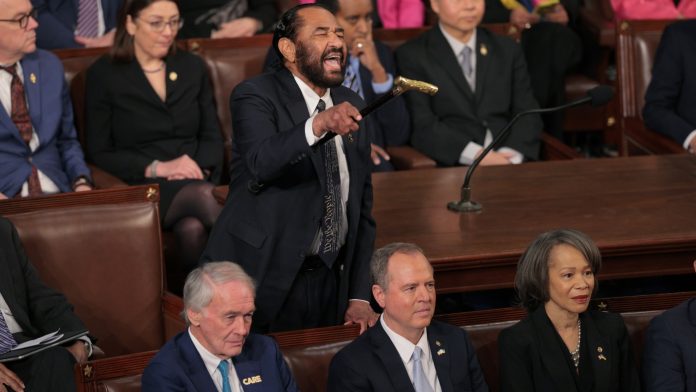
Rep. Al Green, D-Texas, was censured by the House on Thursday. The vote was in response to Green’s protest on Tuesday during President Trump’s address to a joint session of Congress.

Chip Somodevilla/Getty Images/Getty Images North America


hide caption

toggle caption

Chip Somodevilla/Getty Images/Getty Images North America

The House of Representatives voted 224-198 to censure Rep. Al Green, D-Texas, over his protest on the House floor on Tuesday during President Trump’s address to a joint session of Congress.

Al Green becomes the 28th lawmaker to ever be censured, one of the most serious ways that Congress can reprimand a lawmaker.

The Texas Democrat began shouting at the president during his speech, saying Trump did not have a mandate from the American people. House Speaker Mike Johnson, R-La., warned Green to desist and called for the House to come to order.

Green continued and was ultimately escorted out.

Ten Democrats joined all their Republican colleagues to censure Green. Green presented himself in the well of the chamber and was joined by other Democrats, who began singing, ‘we shall overcome.’

Elena Moore contributed to this report

FIFA to Consider Expanding World Cup to 64 Teams

0

FIFA, the governing body for global soccer, is considering a plan that would increase the number of teams in the 2030 World Cup to 64 for a one-off expansion to mark the centenary of the event, the organization said on Thursday.

The proposal, which was made toward the end of a FIFA board meeting on Wednesday, would upend a tournament that already figures to be unwieldy and complicated because it will be played across three continents for the first time in its history.

The World Cup is the most lucrative and most watched event in sports, bringing in billions for FIFA, but the coveted nature of the competition has led to battles among nations to host it, as well as widespread allegations in the past of corruption.

The decision to award the 2034 World Cup to Saudi Arabia was criticized by good governance organizations, after FIFA changed its own rules to allow the country to effectively secure rights without facing any competition.

The FIFA president, Gianni Infantino, has already overseen the expansion of the World Cup once during his nine-year tenure, bringing the number of teams up to 48 from 32 at the next edition in 2026, which will be mostly played in the United States but also include matches in Mexico and Canada.

According to four people with direct knowledge of the discussions, the proposal for a 64-team tournament came as the meeting that was drawing to a close and had reached the section of the agenda earmarked for “miscellaneous” issues.

At that point, a delegate from Uruguay, Ignacio Alonso, made the proposal, reading out a prepared speech in English.

Three of the people with knowledge of the meeting, which was held via video, described the reaction from others present as stunned silence, and the proposals will almost certainly be met with a huge outcry.

But they cautioned that FIFA was likely to be guided by financial and political benefits as much as sporting ones when it came to taking a decision on the matter.

Mr. Infantino, who has expanded his influence over the organization and the sport since he become the head of FIFA, acknowledged the proposal and said it should be analyzed more closely, according to the four people.

Since assuming the highest office in global soccer, Mr. Infantino has made several attempts to reshape the sport, efforts that have often led to public disputes with many other prominent figures in the soccer world.

A proposal to analyze a 64-team World Cup to celebrate the centenary of the event “was spontaneously raised by a FIFA Council member in the ‘miscellaneous’ agenda item near the end” of a board meeting, FIFA said in a statement after The New York Times first published details of the discussions.

“The idea was acknowledged as FIFA has a duty to analyze any proposal from one of its council members,” the statement added.

The last time FIFA considered a major change to the World Cup, staging the event every two years instead of four, it formed a committee that worked on the project for a year before quietly mothballing the idea.

Expanding the World Cup to 64 teams — more than a quarter of FIFA’s overall membership — could render many of the regional qualification competitions for the event meaningless.

Already, as many as seven teams out of 10 from South America can qualify for the 2026 World Cup, and further expanding the World Cup could reduce its appeal for broadcasters.

There are also significant logistical issues. The tournament, with 32 teams, already takes about a month and would almost certainly run longer in an expanded format. The 48-team tournament in 2026 will feature a record 104 games.

Under Mr. Infantino, FIFA has been constantly exploring ways to alter its marquee event, efforts that have usually been met with blowback from other parts of the soccer industry.

On Wednesday, FIFA announced a collaboration with the British rock band Coldplay to put together a halftime show for the first time at a World Cup final when it is played in New Jersey next summer.

The move is similar to what the N.F.L. does with the Super Bowl, its showpiece event, but the announcement was greeted with yet more criticism.

At one point, Mr. Infantino supported the effort to play the World Cup every two years rather than four, and a furious reaction — largely from European soccer’s governing body — forced backers of the idea to shelve it.

Saudi Arabia secured its event after FIFA announced that Uruguay, Paraguay and Argentina would join Morocco, Spain and Portugal in hosting matches for the 2030 tournament, narrowing the field for potential future hosts in 2034.

The three South American nations were awarded one game each to commemorate the centenary of the tournament, which was first played in Uruguay in 1930.

The expansion proposal comes amid regional frustration at automatic places for the three South American hosts for the 2030 World Cup — particularly Paraguay, home of the regional confederation president, which has failed in recent attempts to qualify for the World Cup.

Mr. Infantino secured the FIFA presidency in 2016 following a corruption scandal that led to the ouster of most of its previous leadership.

He ran on a campaign of promising more funds to FIFA’s 211 members and a promise to increase the size of the World Cup. Mr. Infantino now spends most of his time in Miami and has grown close to President Trump, who recently described the FIFA president, whom he invited to his inauguration, as the “king of soccer.”

Mr. Infantino has spent most of his time in his office devising ways to leave a lasting legacy. As well as expanding the World Cup for both men and women, he has created a new World Cup for club teams — rather than national ones — that will be staged for the first time this summer in the United States.

Mr. Trump’s daughter Ivanka Trump took part in the draw that set up the competitions matchups at an event in Miami late last year.

The new club competition is facing several headwinds, including sluggish ticket sales in the United States and a dispute with leagues and player unions, which have filed legal complaints in Europe.