Thursday, November 12, 2026
Home Blog Page 153

State Supreme Court races can be costly, competitive and combative. Why? : NPR

0

Attendees applaud as Brad Schimel announces his run for Wisconsin State Supreme Court on Thursday, Nov. 30, 2023, in Waukesha, Wis.

Angela Major/WPR


hide caption

toggle caption

Angela Major/WPR

MADISON, Wis. — Two years ago, it seemed like all eyes were on Wisconsin and what might have been a sleepy, springtime election.

Two candidates were vying for an open seat on the state Supreme Court. The ideological persuasion of Wisconsin’s highest court was at stake. Interest groups around the country took notice, pouring millions of dollars into the Badger State to influence the outcome.

Ultimately, they broke national records for judicial election spending.

Wisconsin voters could be forgiven for having a sense of déjà vu this year. A springtime court election in an off-cycle year is racking up national attention and big-dollar donations as the high court’s majority is once again up for grabs.

Early estimates show that this race, which pits liberal Dane County judge Susan Crawford against conservative Waukesha County judge Brad Schimel on April 1, is on track to be even more expensive than the one in 2023.

Nakedly political

The nonpartisan race has taken on a highly politicized sheen. The state and national Democratic and Republican parties are involved. Elon Musk has given more than $3 million to back Schimel. Democratic megadonors like Illinois Gov. JB Pritzker, LinkedIn founder Reid Hoffman and George Soros have donated nearly $2 million combined in support of Crawford. Ads running on TV and social media accuse the other candidate of being too extreme, too partisan and too weak on crime.

Liberal Wisconsin Supreme Court candidate Susan Crawford at a campaign event on Feb. 13, 2025.

Liberal Wisconsin Supreme Court candidate Susan Crawford at a campaign event on Feb. 13, 2025.

Angela Major/WPR


hide caption

toggle caption

Angela Major/WPR

But while Wisconsin’s court race may end up being the priciest court race in history, these high stakes and high expenses are increasingly the norm. Recent judicial elections in Pennsylvania, North Carolina, Ohio and Michigan also attracted millions in outside spending.

It didn’t used to be like this.

“For so long, judicial elections were calm, quiet, non-contested — often literally non-contested,” said Damon Cann, a political scientist at Utah State University who wrote a book on the subject.

Shifts over the first decades of the twenty-first century meant that court races went from being staid, relatively nonpolitical affairs to the loud, sometimes nasty and nakedly political races that voters are growing accustomed to.

All of that culminated in Wisconsin’s 2023 Supreme Court race, an expensive, bitterly fought contest that raised new questions about the role of political spending in big court elections.

“A lot more folks are becoming aware of just how important these courts are as these courts are playing the role of ultimate decision-makers in some of the highest profile legal fights playing out today,” said Douglas Keith, senior counsel on the Judiciary Program at the Brennan Center for Justice, a group focused on democracy and voter rights.

“With that attention comes campaigns that look increasingly like a key U.S. Senate race, and less like the quiet state Supreme Court elections that we saw even just a few years ago.”

Now the question is whether such intense court races are simply here to stay.

From the 1840s to the 2020s 

Americans have elected judges since the 1840s, but it wasn’t until the 1980s that they began to attract pro-business donors, said Charles Geyh, a professor of judicial conduct and ethics at Indiana University’s Maurer School of Law who’s been tracking judicial elections for more than 20 years.

After an era of pro-consumer legal changes in tort law that made it easier for ordinary people to bring lawsuits against companies, business groups “started to pour money into judicial races with the explicit purpose of changing the complexion of state supreme courts,” Geyh said.

But tort law didn’t exactly excite voters, Geyh added, so eventually the messaging shifted toward judges’ records on crime.

Conservative Wisconsin Supreme Court candidate Brad Schimel at his campaign announcement on Nov. 30, 2023.

Conservative Wisconsin Supreme Court candidate Brad Schimel at his campaign announcement on Nov. 30, 2023.

Angela Major/WPR


hide caption

toggle caption

Angela Major/WPR

“Because your average voter didn’t give too much of a hoot about tort liability, what would often happen is that they would use crime issues as kind of a surrogate,” he said, explaining the role of business interests. Court races ended up focusing on tough-on-crime records, ultimately promoting conservative judges who were also good for business.

Then, another sea change came in 2000, with the first TV advertisements in judicial races, according to Cann of Utah State. Those came five decades after America’s first political ad aired — a spot for Dwight Eisenhower’s presidential campaign. By 2006, Cann says, “TV advertising was nearly ubiquitous in state supreme court races.”

Some national pundits decried Wisconsin’s hard-fought 2011 Supreme Court races as exemplifying an ugly change. A New York Times opinion piece from the time argued that the matchup was a “nasty, highly politicized race” that “is raising serious questions about the impartiality of the state’s highest court.”

And it denounced the millions of dollars from “special interests” that sought “to tilt the scales of justice.”

But that race cost about $3.58 million — a drop in the bucket compared to what was on the horizon in Wisconsin.

“A new era of judicial politics”

Then the spring of 2023 came to Wisconsin.

In that cycle, groups and individual donors poured an estimated $56 million into the race between then-Judge Janet Protasiewicz, a liberal from Milwaukee, and former Justice Dan Kelly, a conservative from Waukesha County. A conservative justice was retiring, and Protasiewicz’s candidacy was pitched as a chance to flip the court’s majority to a liberal one for the first time in 15 years.

Amid all the noise, one factor revved up voters, fomenting a comparatively high turnout: abortion.

The Protasiewicz-Kelly matchup came after the U.S. Supreme Court overturned Roe v. Wade, sending the legality of abortion back to the states. In Wisconsin, abortion basically became illegal for a year as providers followed a nineteenth-century law widely understood to outlaw the practice.

That issue has repeatedly motivated high-cost court races, said Keith from the Brennan Center, who described this moment as a “new era of judicial politics.”

“There’s no other issue that’s really come to the fore like abortion rights,” he said. “That said, there have been other fights that have led to attention on State Supreme Courts: fights about redistricting, fights around election laws in the lead up to high profile elections, fights about education funding and criminal justice and the death penalty.”

The last most expensive race in history

After taking the bench in 2023, Protasiewicz and the 4-3 liberal majority handed down a significant victory for Democrats when they overturned the state’s GOP-drawn legislative district maps. That opened the door for Democrats to reclaim some power in Madison.

Meanwhile, arguments have already begun in a lawsuit to clarify the legality of abortion and a challenge to the end of collective bargaining for most public sector unions in Wisconsin.

Depending on timing, the outcome of both issues could come down to whoever wins next month.

Then-Judge Janet Protasiewicz and former Justice Dan Kelly debate March 21, 2023, at the State Bar Center in Madison, Wis.

Then-Judge Janet Protasiewicz and former Justice Dan Kelly debate March 21, 2023, at the State Bar Center in Madison, Wis.

Angela Major/WPR


hide caption

toggle caption

Angela Major/WPR

During the 2023 campaign, Protasiewicz was clear about what she described as judicial “values,” if not out-and-out political stances. She supported abortion rights, she said, and thought Wisconsin’s Republican-drawn legislative maps were “rigged.”

And she took money from the state Democratic party, some $10 million in all. Kelly did not take Republican party money. Protasiewicz ended up winning by 11 points, a landslide by Wisconsin standards.

In his concession speech late on April 4, 2023, Kelly called Protasiewicz’s campaign “deeply deceitful, dishonorable, despicable,” and said she “demeaned the judiciary.”

High-cost races for independent seats

In this year’s election, Schimel, who has held Republican office, is accepting party money. So far, the candidates have raised almost $13 million — $7.7 million for Crawford’s campaign and $5.1 million for Schimel’s. Partly, that’s through a state campaign finance loophole that allows political parties to raise and spend unlimited amounts.

One reason Wisconsin’s races can dwarf those in other states is its divided government. With a Democratic governor and a Republican Legislature often at odds, even a nonpartisan court can offer political interests an avenue to pursue their agenda.

Legal experts caution that this can be dangerous after justices emerge from expensive races.

“You have situations where justices are deciding cases involving six and sometimes seven-figure donors to their campaign, or groups that ran million-dollar ads outside of their campaign,” said Keith.

In theory, he said, allowing voters to elect judges was supposed to bring judge selection “out of smoke-filled rooms.” Instead, these high-profile elections cast a political shadow on what is supposed to be an independent body, which risks undermining public trust.

Geyh, the scholar of judicial ethics, says that judges must commit themselves to a culture of neutrality after taking the bench — which becomes that much harder after a multimillion-dollar and bare-fisted battle.
Trump Issues ‘Last Warning’ to Hamas to Release Israeli Hostages

0

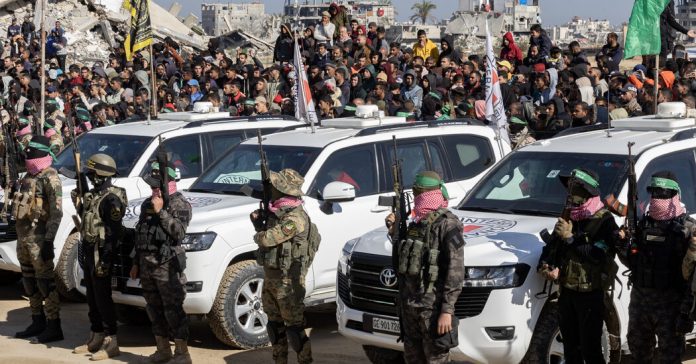
President Trump has directly warned Hamas militants to immediately release all the hostages held in Gaza or face death.

In a blistering social media post on Wednesday, Mr. Trump addressed Hamas militants and built on a statement he made in his address to Congress the night before, when he said his administration was “bringing back our hostages from Gaza,” without providing details.

“Release all of the Hostages now, not later, and immediately return all of the dead bodies of the people you murdered, or it is OVER for you,” he posted on Truth Social on Wednesday.

It was the latest example of Mr. Trump’s use of threats to try to cut through obstacles to a desired political objective. Even as he warned the militant group, officials said that the United States and Hamas had held direct talks in Qatar about the hostages, sidestepping separate negotiations involving Hamas and Israel over the terms of the next phase of a cease-fire in Gaza.

The Israeli government has said that about 25 hostages and the remains of more than 30 others are still in Gaza. Mr. Trump, who has directed strong threats at their captors before, said the militants were “sick and twisted” for keeping bodies.

“I am sending Israel everything it needs to finish the job, not a single Hamas member will be safe if you don’t do as I say,” Mr. Trump wrote.

“This is your last warning,” he went on, adding that if the group continued to hold hostages, “you are DEAD!”

Hamas said in a post on the Telegram app that Mr. Trump’s statement would complicate efforts to negotiate the second phase of its cease-fire agreement with Israel, and would make it easier for the Israeli government not to meet its obligations under the deal. Israel and Hamas are at a deadlock over the second phase, which aims to reach a comprehensive truce that would end the war and free the remaining living hostages.

Hamas and other Palestinian militant groups seized around 250 hostages during the deadly attack on Israel on Oct. 7, 2023, that set off the war in Gaza. The Palestinian authorities say more than 45,000 Gazans have been killed in the conflict. Military experts say that while Israel’s military campaign has weakened Hamas, the group still holds power in Gaza.

More than 100 hostages were released during a truce in late 2023, and 30 others — along with the bodies of eight people seized in the attack — were returned during a second cease-fire that began in January. Under the terms of both cease-fires, Israel has released hundreds of Palestinian detainees in exchange.

Mr. Trump’s post made no mention of a prisoner exchange, and he gave no details of the military aid he said he was sending to Israel. But in one possible indication of the administration’s approach, Secretary of State Marco Rubio this week invoked “emergency authorities” to bypass Congress and send $4 billion in weapons to Israel. It was the second time in a month that the administration had skirted the process of congressional approval for sending arms to the country.

Did tariffs cause the Great Depression? Here’s what to know : NPR

0

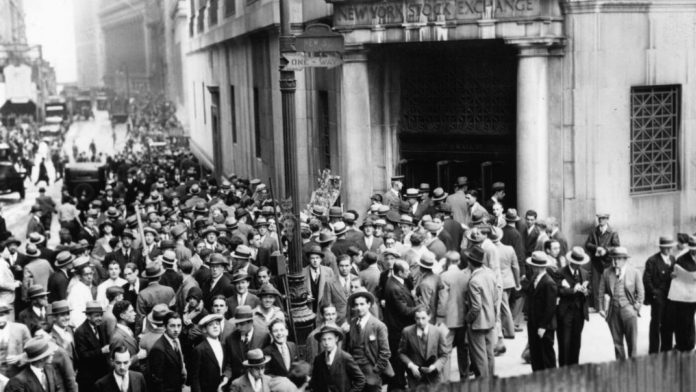
Crowds outside the New York Stock Exchange during the Wall Street Crash in the Financial District of Lower Manhattan, New York City, New York, Oct. 1929.

Fox Photos/Getty Images/Hulton Archive


hide caption

toggle caption

Fox Photos/Getty Images/Hulton Archive

President Trump’s new tariffs on Canada, Mexico and China have unsettled both domestic and international markets, concerning investors and manufacturers.

Canada and China this week announced retaliatory measures after Trump’s long-promised tariffs took effect. The tariffs include a 25% levy on most imports from Canada and Mexico, with an additional 10% tariff on Canadian energy exports. Tariffs on Chinese goods have been increased from 10% to 20%.

This emerging global trade war has raised concerns that consumers will bear the brunt, potentially leading to higher prices on everyday goods.

There are also fears that the tariffs could trigger an economic downturn reminiscent of the Great Depression nearly a century ago.

Posts on social media have claimed that tariffs caused the Great Depression. And clips from the movie Ferris Bueller’s Day Off featuring an economics teacher, played by Ben Stein — an economist and speechwriter for U.S. Presidents Richard Nixon and Gerald Ford — have gone viral. In these clips, he lectures students about the effects of tariffs during the Great Depression.

Here is what to know about what caused the Great Depression.

Was it caused by tariffs? 

The Great Depression was a catastrophic economic downturn that began in October 1929 and lasted for nearly a decade. It is considered one of the worst economic periods in history, with a peak unemployment rate that included an estimated 12,830,000 persons out of work in 1933 alone.

Other countries including Germany and Britain also suffered economic declines during this period.

While the U.S. has imposed tariffs on some imported goods since the late 1700s, did tariffs cause the Great Depression? “Certainly not,” says Gary Richardson, economics professor at the University of California, Irvine and former historian of the Federal Reserve System.

“The depression started when tariffs were low. So the tariffs or the thought of having tariffs were not a cause of the Great Depression,” Richardson tells NPR.

In the early 1900s, the U.S. government transitioned toward a free trade system and adopted federal income taxes in 1913, which helped reduce the government’s dependency on tariffs.

And the Smoot-Hawley Act Tariff Act, named after Republicans Oregon Rep. Willis Hawley and Utah Sen. Reed Smoot, implemented high tariffs that reached nearly 60%. But this act was not signed into law until June 17, 1930, months after the Great Depression had already started.

So what caused the Great Depression?

In this Oct. 9, 1930 file photo, thousands of unemployed people gather outside City Hall in Cleveland during the Great Depression, after some 2,000 jobs were made available for park improvements and repairs.

In this Oct. 9, 1930 file photo, thousands of unemployed people gather outside City Hall in Cleveland during the Great Depression, after some 2,000 jobs were made available for park improvements and repairs.

Uncredited/AP


hide caption

toggle caption

Uncredited/AP

A number of factors contributed to the Great Depression, economists tell NPR.

During the 1920s, known as the Roaring Twenties, the economy was growing and the stock market was thriving.

But the Federal Reserve, created in 1913, raised the discount rate — the interest rate charged to member banks borrowing money, explained Marcus Witcher, an assistant professor of economic history at West Virginia University. According to Witcher, as a result of the Federal Reserve’s policies, the money supply contracted. This meant there was less money in circulation, making it more difficult for Americans to obtain credit either for purchases or to start or expand a business. This led to an economic decline that triggered the stock market crash in October 1929 and caused more than 9,000 bank failures between 1929 and 1933.

Not only did President Herbert Hoover sign the Smoot-Hawley Tariff Act into law despite objections from economists during an already fragile economic period, he also enacted the Revenue Act of 1932, which increased income tax rates from 25% to 63%.

“Hoover increased the taxes because he thought it was important to balance the budget and saw tax increases as the only way to achieve that. As a result, he didn’t balance the budget and further disincentivized economic activity,” Witcher tells NPR.

A combination of these factors resulted in a “perfect economic storm” leading to a domino effect that exacerbated the economic crisis, says Christopher Clarke, an economics professor at Washington State University. The tariffs implemented under the Smoot-Hawley Tariff Act worsened the Great Depression, Richardson, Clarke and Witcher say. These tariffs also strained relationships with other countries beyond the realm of trade.

“Less trade leads to less cooperation and less trust, which will lead to more violence,” Clarke says, adding that strained international relations were contributing factors to World War II.

Is it possible this new trade war will lead to another economic depression?

Trucks head to the Ambassador Bridge between Windsor, Canada and Detroit, Michigan on the first day of President Donald Trump's new tariffs on Canada, Mexico and China.

Trucks head to the Ambassador Bridge between Windsor, Canada and Detroit, Michigan on the first day of President Donald Trump’s new tariffs on Canada, Mexico and China.

Bill Pugliano/Getty Images


hide caption

toggle caption

Bill Pugliano/Getty Images

The impact of the latest tariffs on the economy remains uncertain. However, economists say that the current economy is in a better position than it was during the Great Depression. While it’s unlikely that the new tariffs will trigger a depression, they could lead to an economic slowdown with higher prices resulting in consumers cutting back on spending, according to Clarke. Witcher also said the tariffs could impact jobs.

“The Great Depression was a singular event in our history, so I think it is unlikely that Trump’s 25% tariffs lead to an economic calamity on that scale,” Witcher said. “But a 25% tariff will definitely make us poorer. It will not save many jobs and will likely result in net job losses in related sectors.”

During his address to Congress on Tuesday night, Trump said that more tariffs, including reciprocal tariffs, would go into effect next month on April 2.

“Whatever they tariff us, other countries, we will tariff them,” he said. “Whatever they tax us, we will tax them. If they do non monetary tariffs to keep us out of their market, then we will do non monetary barriers to keep them out of our market.”

The tariffs being implemented by Trump are historically high, similar to tariffs imposed during the Great Depression, and the tariffs could get higher, Richardson says. But the circumstances differ significantly, particularly regarding who is imposing them.

“The tariffs of the 1930s were imposed by the U.S. Congress,” Richardson says. “This is Trump’s signature move and he is personally going to bear probably almost all the blame if things go wrong.”

The economists did not provide any positive outcomes regarding the tariffs. As one economist put it, tariffs are like a game of chicken, where each side waits to see who will back down first. When one country imposes tariffs, the other retaliates, creating a cycle of escalating measures.

“The people imposing the tariffs first, which in this case is the U.S., were kind of saying, ‘Yeah. We understand this could go really wrong, and everyone could suffer. But we’d rather have everyone suffer than the current state of the world. So, if you don’t want everyone to suffer, if you don’t want to suffer, you got to give in to us.’ ” Richardson says.

Witcher, Richardson and Clarke all agree that the new tariffs could have negative implications for the economy.

“Any way you look at it, a 25% tariff is bad economic policy,” Witcher says. “There are very few winners and many, many losers from such a policy. Combined with other factors, such as declining consumer confidence, interest rate increases, etc., they could contribute to a recession.”

NPR’s Maria Aspan contributed to this report.

Where the Gaza Cease-Fire Deal Goes Now Is Uncertain. Here’s What to Know.

0

Nearly a week after the first stage of Israel and Hamas’s cease-fire expired, both Palestinians and Israelis are in limbo, uncertain how long the truce will hold.

The Trump administration, the Arab world, Israel, Hamas and others are now wrangling over the future of the Gaza Strip in a complex series of negotiations — some of which are unfolding along different channels, adding to the confusion.

Here’s a look at the state of the cease-fire talks and who is involved.

In mid-January, after 15 months of devastating war, Israel and Hamas agreed to a truce that would free hostages held in Gaza since the Hamas-led October 2023 attack on southern Israel, in exchange for Palestinian prisoners.

But the agreement did not end the war. Instead, the two sides committed to a complex, multiphase plan meant to build momentum toward a comprehensive cease-fire. They were supposed to negotiate terms for the full truce during the first stage, which lasted six weeks.

Last weekend, the six weeks elapsed with little apparent success toward that goal, despite efforts by Qatar and Egypt, who have been mediating the talks. (Israel and Hamas do not negotiate directly.)

Then, Israel mostly closed the crossings into the Gaza Strip, stopping aid from reaching Palestinians who are still struggling to recover from a year of hunger and destruction. Qatar condemned the move as a violation of the cease-fire agreement, which stipulates that 600 aid trucks must enter Gaza on a daily basis.

The Trump administration has sent mixed signals on the next steps. Officials have said that they hope to reach the second, comprehensive phase of the cease-fire. But President Trump also issued a “last warning” on Thursday to Hamas on social media, calling on the armed group to immediately return the remaining hostages “or it is OVER for you.”

Hamas said that Mr. Trump’s threats were encouraging Israel to avoid negotiating an end to the war.

For Prime Minister Benjamin Netanyahu of Israel, agreeing to pause the fighting has been the easy part. He has been far more reluctant to declare an end to Israel’s war against Hamas while the group remains firmly entrenched in Gaza.

As the first phase of the cease-fire expired, Mr. Netanyahu said that Israel had accepted a new proposal pitched by Steve Witkoff, Mr. Trump’s Middle East envoy. That plan breaks significantly with the truce signed in mid-January.

Under the new proposal, Israel would immediately get half of the remaining hostages back in exchange for another 50 days of a “temporary cease-fire.” During that time, Israel and Hamas would continue talks over a permanent end to the war.

The remaining hostages would be released “if we reach an agreement on a permanent cease-fire,” Mr. Netanyahu said.

Mr. Witkoff’s proposal would effectively allow Israel to get more hostages back without giving Hamas any of its core demands. The Palestinian armed group has and called on Israel and the United States to carry out the January deal as written, appearing to rule out the deal as a non-starter.

Over the past week, Mr. Trump’s administration held intensive and secret direct meetings with Hamas aimed at securing the release of American citizens seized during the October 2023 attack.

The meetings leapfrogged the moribund cease-fire talks between Israel and Hamas. They also broke with the longstanding U.S. approach toward Hamas, which sought to isolate the Palestinian armed group through a “no-contact” policy.

Critics had long argued that not engaging with Hamas over the years had produced few tangible results. In practice, the United States wound up dealing with the group anyway, typically through mediators like Qatar and Egypt.

Adam Boehler, Mr. Trumps nominee to be a special envoy for hostage affairs, met Hamas officials in Doha this week, according to a diplomat familiar with the talks.

The negotiations focused on freeing Edan Alexander, the only American Israeli hostage still believed to be alive, and the bodies of four other U.S.-Israeli dual citizens who were kidnapped and taken to Gaza in the October 2023 attack, officials told The New York Times.

One of those is Itay Chen, 19, an American-Israeli soldier. The Israeli military said last year that he was presumed killed during the Hamas-led attack, although his family has expressed hope that he could still be alive.

“If Israel’s government isn’t able to free Itay,” Ruby Chen, his father, said after news of the direct talks with Hamas broke, “then it’s reasonable for the United States to try and do so.”

Adam Rasgon and Ronen Bergman contributed reporting.

Twitter workers unpack Musk’s obsession with ‘ghost employees’ : NPR

0

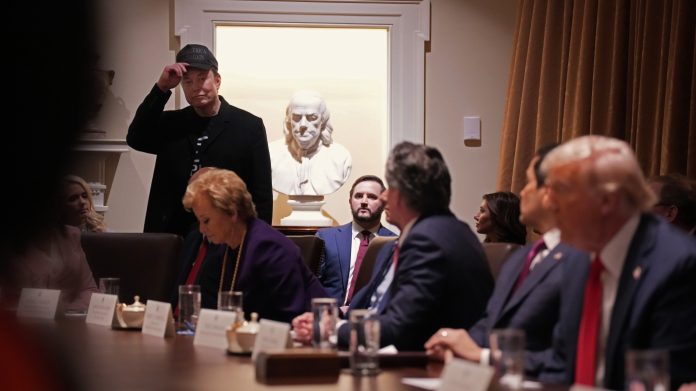
Elon Musk delivers remarks during a Cabinet meeting held by President Trump at the White House on Feb. 26.

Andrew Harnik/Getty Images


hide caption

toggle caption

Andrew Harnik/Getty Images

Shortly after Elon Musk’s purchase of Twitter in 2022, he sent executives on a mission: Conduct a payroll audit.

Musk wanted to verify that all of the social media platform’s employees were “real humans,” a request that perplexed executives at the company. Nonetheless, managers were tasked with confirming that some of their direct reports were indeed alive.

“As if there’s just people collecting paychecks and not doing anything, as if they don’t have supervisors,” said Jay Holler, a former supervisor at Twitter who led an engineering team when Musk took over. “The whole idea was just fundamentally absurd and ignorant of how things actually work.”

Now, with Musk leading the charge on a White House effort to radically reduce the size of the federal workforce, the billionaire’s preoccupation with phantom workers has returned.

In recent weeks, millions of federal employees have been sent emails from a generic government account demanding they list their weekly accomplishments in five bullet points — messages that have prompted confusion and mixed advice across dozens of federal agencies.

But Musk has made it clear: the emails are aimed at validating existing, breathing, employees, a point he emphasized at a Trump administration Cabinet meeting last month.

“They’re literally fictional individuals, or someone is collecting a paycheck on a fictional individual,” Musk said. “So what we’re literally trying to figure out is: Are these people real? Are they alive?”

It was a deja vu moment for former Twitter engineer Yao You, who worked under Musk. To her, the campaign to catch ghost employees lurking on the payroll is really about something else.

“Part of that is making his presence felt very acutely, ”I’m the boss. I’m now overseeing your work, you better make me happy.’ So just putting it on peoples’ mind,” You said. She noted that Musk showed little tolerance for dissenters at Twitter after his purchase of the company. You sees the emails to government employees as a loyalty test.

“It’s not so much about commitment to the company,” she said. “In this case, I guess, commitment to the federal government. It’s about a personal commitment to Elon Musk.”

It’s something You got used to following Musk’s 2022 hostile acquisition of Twitter for $44 billion, a purchase the tech mogul turned into a splashy photo op by walking into the company’s San Francisco headquarters carrying a white porcelain sink. He posted a video of the moment on Twitter with the caption, “Entering Twitter HQ – let that sink in!” 

TOPSHOT - This video grab taken from a video posted on the Twitter account of billionaire Tesla chief Elon Musk on October 26, 2022, shows himself carrying a sink as he enters the Twitter headquarters in San Francisco. Elon Musk changed his Twitter profile to "Chief Twit" and posted video of himself walking into the social network's California headquarters carrying a sink, days before his contentious takeover of the company must be finalized. (Photo by various sources / AFP) (Photo by -/Twitter account of Elon Musk/AFP via Getty Images)

An image from a video posted by Musk on Oct. 26, 2022, shows himself carrying a sink as he entered the Twitter headquarters in San Francisco shortly before he took control of the social media platform he later renamed X.

/Twitter account of Elon Musk/AFP/AFP


hide caption

toggle caption

/Twitter account of Elon Musk/AFP/AFP

And after that sunk in, Musk kicked off the hunt for non-existent employees just before workers were set to receive a bonus, and Musk would not pay it out until the “ghost employee” theory was investigated, The New York Times reported at the time. Musk eventually renamed the platform X and turned it into a pro-Trump megaphone.

Musk and the White House did not return requests seeking any evidence that the federal government has non-existent people on its payroll.

The possibility of dead people receiving Social Security checks has also animated Musk. He’s said “tens of millions” of dead people are getting the federal support — which is not true.

‘Be ready with 50 pages of code’

Some ex-Twitter employees, such as Holler, think the five-bullet-point emails are a performative stunt.

Holler remembers one moment from some of his final days at the company when a message arrived from one of Musk’s assistants.

“You’re scheduled to meet with Elon at 10:30 this morning. Be ready with 50 pages of code,” said Holler, recalling a message he received on Slack, the workplace messaging app.

To check whether Twitter engineers were real, or productive, managers like Holler were told to print out the software code they had recently written, also known as “code commits” in engineering parlance.

“That was an interesting nerd snipe,” Holler said. “Because we don’t think about code in pages. You don’t print code out. It’s fundamentally run by computers. You edit it on a computer.”

Ian Brown, a former Twitter engineer manager who left before Musk’s acquisition, said this idea would be comical if it were not so offensive.

“The culture was absolutely focused on high-performing, talent-dense teams. There was no one phoning it in,” Brown said. “The wild sort of paranoia of woke zombies not doing stuff is just complete fantasy.”

In the end, Musk scrapped the idea and never evaluated engineers’ printed-out software code.

But before he backed away from the plan, the company was, like the whole federal workforce right now, confused, scared and at the unpredictable whim of Elon Musk.

“Nobody is going to thrive in an environment like this,” You, the former Twitter engineer, said of working under Musk. “But if the goal is to survive without losing your sanity, supporting each other, just talking through it, and knowing you’re not suffering alone, can help,” she said. “To know you’re not suffering silently.”

Over a Dozen Conservative Party Donors Fund Britain’s Populist Reform U.K.

0

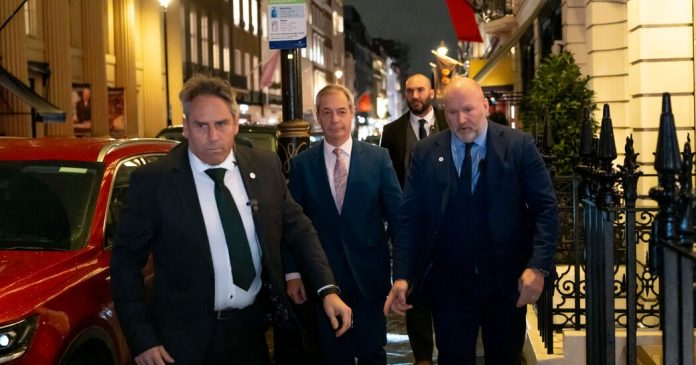
Nigel Farage’s insurgent Reform U.K. party has attracted more than a dozen donors from Britain’s once dominant Conservative Party, an analysis of new data reveals, underlining the threat the Tories face from a right-wing populist party that models itself on President Trump’s MAGA movement.

In total, Reform U.K. raised 4.75 million pounds ($6.1 million) last year, a sharp increase from the less than $200,000 that the party raised in 2023. A third of the money came from former donors to the Conservatives.

The New York Times analyzed every donation that Reform U.K. reported to Britain’s campaign finance watchdog in 2024, including figures for the final quarter of the year that were released on Thursday, to get the first major snapshot of who is funding the party.

The biggest single donation in the last quarter came from Roger Nagioff, a former Conservative donor, former Lehman Brothers banker and Monaco-based investor, who donated £100,000 in December. Other major donations in 2024 included one million pounds from a company owned by Reform’s deputy leader, Richard Tice, and £500,000 from Fiona Cottrell.

The Conservative exodus began after Mr. Farage, an ideological ally of Mr. Trump, took over last year as Reform’s leader just before Britain’s July general election. A longtime political disrupter and former commodities trader who campaigned for Brexit, Mr. Farage has pledged to remake British conservatism, pushing the movement to the right on a nationalistic platform that he frames as anti-establishment and anti-immigration.

Reform has surged in national polls, overtaking the Conservative Party, and taken its first municipal seats. Although the governing Labour Party does not have to hold a general election until 2029, Reform’s fund-raising success underlines Mr. Farage’s momentum and could help his party professionalize as it challenges the two main parties at local elections in May.

While Mr. Farage has described support for Reform as a “revolt against the establishment,” 34 percent of the party’s new funders are former donors to the Conservatives, the centuries-old right-wing party that held power for 14 years in Britain before last year’s general election.

Sam Power, a political finance expert at Bristol University, said that the latest data was a stark warning to the Conservative Party, which is led by Kemi Badenoch.

“The movement of donors from the Conservative Party to Reform already I think will be causing alarm bells in Conservative Party HQ,” Mr. Power said.

“Money talks, and what you can see, if money is moving from one party to another, then that is a major sign that the sands are shifting,” he said. “Not just in terms of elections and the public being Reform-curious, but that donors are increasingly Reform curious, too.”

Other major donors bankrolling Reform in 2024 included billionaires and millionaires, individuals based in overseas jurisdictions or with offshore investments, climate change skeptics and those with investments in fossil fuels or other climate-polluting industries, The Times found.

The Conservative Party has been approached for comment.

Reform, which Mr. Farage originally created in 2019 as the Brexit Party, won 14.3 percent of the vote in last year’s general election. But in recent weeks, it has reached around 25 percent in several polls, at times overtaking the Conservatives and Labour.

This is a developing story. Please check back for updates.

Trump administration’s potential NOAA overhaul raises concerns : NPR

0

Brad Reinhart, senior hurricane specialist at the National Hurricane Center, tracks Hurricane Beryl, the first hurricane of the 2024 season, at the National Hurricane Center on July 01, 2024, in Miami.

Joe Raedle/Getty Images North America


hide caption

toggle caption

Joe Raedle/Getty Images North America

The Trump administration is considering terminating leases for properties housing vital weather service operations and other fisheries operations, according to Craig McLean, a former official of the National Oceanic and Atmospheric Administration, Andrew Rosenberg, a former deputy director of NOAA’s national marine fisheries services, as well as a current NOAA contractor who spoke on the condition of anonymity out of fear of losing their job. One of the potential lease terminations includes a key weather forecasting center in College Park, Maryland.

NOAA has historically employed around 12,000 staff who work on a range of issues from climate change to managing the nation’s multibillion-dollar commercial fisheries. The agency monitors and forecasts extreme weather, including hurricanes and floods, and provides the data that feeds local TV meteorologists’ forecasts and the weather apps on your phone.

The agency is also terminating at least four expert advisory committees, according to an email that NPR obtained from the current NOAA contractor. The email details the termination of the Advisory Committee on Excellence in Space, Climate Services Advisory Committee, Marine and Coastal Area-based Management Advisory Committee and the Marine Fisheries Advisory Committee.

That NOAA contractor also told NPR that the potential closure of the Maryland weather forecasting facility is especially concerning. “Anything that is getting cancelled with the weather program is a terrible idea,” the contractor says. “Loss of an entire facility would hamper our ability to do our jobs, predict the weather properly, help protect people and property.”

McLean says if lease terminations happen that would be “remarkably stupid,” and that a closure in Maryland could mean the agency would have trouble providing accurate forecasts that serve a wide swath of people from mariners to pilots.  McLean says the products at the College Park facility, “are distributed to the weather forecast offices across the country.”

NOAA is part of the Department of Commerce. Neither agency responded to NPR’s requests for comment. A White House official speaking on the condition of anonymity because they are not authorized to speak on the record to the press said the administration is reevaluating the lease terms but is not closing the buildings.

“Someone is sitting at an absolutely unlearned level determining what contracts to end,” says McLean, who served across several previous administrations. He says in his conversations with current NOAA employees there’s confusion about what is happening that is “destabilizing.”

Signage outside the National Oceanic and Atmospheric Administration (NOAA) headquarters in Silver Spring, Maryland, US, on Monday, March 3, 2025. Hundreds of workers at the climate research agency are being fired, including at least two Bay Area weather service employees, raising concerns about NOAA’s ability to serve the public.

Signage outside the National Oceanic and Atmospheric Administration headquarters in Silver Spring, Maryland, on Monday, March 3, 2025. Hundreds of employees at the climate and weather research agency have been fired, including at least three Bay Area weather service employees, raising concerns about NOAA’s ability to serve the public.

Daniel Heuer/Bloomberg via Getty Images


hide caption

toggle caption

Daniel Heuer/Bloomberg via Getty Images

The latest news comes after NOAA began firing at least 800 workers — part of government-wide layoffs ordered by the Trump administration to reduce the size of the federal government.

The terminations included staff at the National Weather Service, which is tasked with generating weather forecasts that millions of people in the U.S. rely on.

As NPR previously reported, the White House sent a memo to federal agency directors ordering them to prepare plans for “large-scale reductions in force” by March 13, though the picture continues to be muddled by the administration’s frequent policy changes, as well as ongoing legal and administrative procedures.

“Tax dollars are being siphoned off to fund unproductive and unnecessary programs that benefit radical interest groups while hurting hard-working American citizens,” the memo from Office of Management and Budget director Russell Vought and Office of Personnel Management acting director Charles Ezell states.

It calls the federal government “bloated” and “corrupt.”

The memo orders agency directors to lay off large numbers of staff, save money, and get rid of real estate, all while increasing productivity and providing “better service for the American people.”

As details on the cuts emerged at locations across the country, current and former workers at NOAA said the cuts threatened key public services, from weather forecasts to wildlife management.

“It befuddles me to see how unplugging and disassembling rather intricate services that the nation has been provided by this federal agency and others is really making America great again,” McLean says. “We are going backwards.”

In the Bay Area, cuts hit already strained weather forecasters 

Member station KQED reported that at least three people at the National Weather Service’s Bay Area office were fired, according to Dalton Behringer, the office’s union steward for the National Weather Service Employees Organization. The three employees — a meteorologist, an administrative support assistant and a facilities technician — were probationary, a distinction indicating they were relatively new to the agency or their current role. They received emails notifying them of their termination before their supervisors were aware, according to Behringer.

Behringer, a meteorologist for the Bay Area office, spoke to KQED after hours in his union capacity.

The Bay Area NWS office, which serves more than 8 million residents across 11 counties in the San Francisco and Monterey Bay regions, was already down one meteorologist, Behringer said. It will now operate with a staff of 22, with 20% of the remaining employees eligible for retirement.

The work of the fired employees “is going to get spread to those of us who are already overworked, and we’re understaffed,” he said.

More than 20 staffers were laid off Thursday at the National Oceanographic and Atmospheric Administration's Virginia Key lab, including scientists who help improve hurricane forecasts and study valuable fish populations.

More than 20 staffers were laid off Feb. 27 at the National Oceanic and Atmospheric Administration’s Virginia Key lab in Miami, Florida, including scientists who help improve hurricane forecasts and study valuable fish populations.

NOAA


hide caption

toggle caption

NOAA

In Florida, fears over hurricane forecasting 

Member station WLRN reported that nearly two dozen scientists based at NOAA’s Virginia Key offices in Miami, Florida were laid off last Thursday, according to a NOAA biologist and a source who worked closely with the agency. Both spoke on the condition of requested anonymity out of fear of losing their job or having funding cut.

They say the cuts are a direct hit to hurricane research and fisheries management vital to protecting U.S. shores.

They confirmed about 16 fired scientists worked in fisheries and a half dozen on hurricane modeling and forecasting.

One of those fired was Andy Hazelton, a meteorologist who worked on improving hurricane forecasts.

He flew repeated missions aboard NOAA’s hurricane hunter planes and focused his research on one of the most pressing concerns: hurricanes that intensify suddenly, giving little warning to the public and emergency managers.

Hazelton, who has four young kids, said working for NOAA had been a lifelong goal.

He said he grew up in areas in Central Florida where he’s experienced hurricanes “so doing modeling and working for NOAA was really a dream.”

At the Virginia Key lab, he helped develop a next-generation hurricane forecasting model as part of a partnership between NOAA and the University of Miami.

The research done by Hazelton and others has helped to dramatically improve hurricane forecasts in a short amount of time. The latest model Hazelton worked on improved track forecasts by 8% and intensity forecasts by 10%, according to the National Hurricane Center. That’s allowing forecasters to better understand when those short-fuse storms might explode and make landfalls more lethal.

With the cuts to NOAA, that progress is threatened across the agency, says Rick Spinrad, the former NOAA administrator under the Biden administration.

“Any of the progress that has been made over the last several years, including in reducing the errors in the track forecast of hurricanes, reducing the errors in the intensity forecast, I think it’s safe to say that that will be compromised,” he says.

An orca whale known as L95, right, swims with other whales from the L and K pods in the Pacific Ocean near the mouth of the Columbia River near Ilwaco, Wash., days after being fitted with a satellite tag.

An orca whale known as L95, right, swims with other whales from the L and K pods in the Pacific Ocean near the mouth of the Columbia River near Ilwaco, Wash., days after being fitted with a satellite tag. One of the people fired at NOAA worked on protecting whales such as orcas from oil spills, ship strikes and fishing gear.

NOAA Northwest Fisheries Science Center via AP/NOAA Northwest Fisheries Science Center


hide caption

toggle caption

NOAA Northwest Fisheries Science Center via AP/NOAA Northwest Fisheries Science Center

In Seattle, NOAA cuts include orca-saving employee 

Hanna Miller was on vacation in Hawaii when she opened her work email and learned that she no longer had a job.

Until last Thursday, she was a natural resource specialist with NOAA, focused on protecting whales from oil spills, ship strikes and fishing gear.

“The Agency finds that you are not fit for continued employment because your ability, knowledge and/or skills do not fit the Agency’s current needs,” the email from Vice Admiral Nancy Hann, Deputy Under Secretary for Operations, read.

“[I] just read it and had enough time to read it and share it with my personal email before I got locked out of my work account,” Miller told KUOW. “I was just really devastated.”

Miller was awarded employee of the year for NOAA Fisheries in the western United States in 2023, and in March 2024, she was promoted. Miller was a week and a half from completing her year-long post-promotion probation when she was fired.

In 2022, Miller helped a multi-agency team make sure endangered orcas didn’t swim into diesel fuel belching out of the sunken Aleutian Isle fishing boat off Washington’s San Juan Island.

“I was on call for 42 days, tracking them every second that I was awake to make sure that they didn’t go through [the oil spill],” Miller said.

“Per long-standing practice, we are not discussing internal personnel and management matters,” NOAA spokesperson James Miller emailed in response to a KUOW interview and information request.

“Public servants are people who are very dedicated to protecting, well, in my case, protecting species and the ocean,” Miller said. “We could have taken higher-paying jobs in other fields, but we’ve chosen these ones because we care.”

Edited by Sadie Babits and Rachel Waldholz.

Fighting for Justice for Japan’s ‘Comfort Women’

0

This article is part of a Women and Leadership special report highlighting women who are charting new pathways and fighting for opportunities for women and others.


When Gil Won-ok, a Korean woman, died recently at the age of 96, the international community lost an outspoken warrior in the effort to make Japan accountable for its practice of sexual slavery during the early part of the 20th century.

Ms. Gil was one of about 240 so-called comfort women from South Korea who had publicly spoken out about their abuse at the hands of the Japanese military from the 1930s through World War II, and her death left just a handful of survivors to continue the cause.

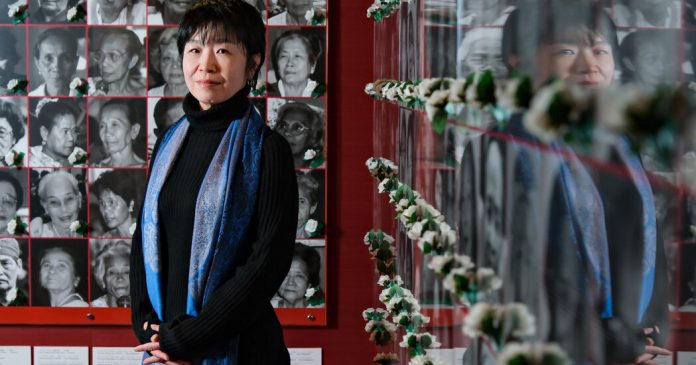
But Mina Watanabe, a Japanese woman who was born years after the war ended, and who had no direct relationship to the practice or its victims, has continued to press for fuller acknowledgment and reparations from Japan. As director of the Women’s Active Museum on War and Peace (WAM) in Tokyo, she and the museum focus on sexual violence against women in war and conflict situations — with extra attention focused on her homeland’s history.

Ms. Watanabe said she had been interested in women’s rights since her school days in Tokyo. When some of the survivors of Japan’s military sexual slavery system finally came forward in the 1990s, her encounters with them “changed my life,” she said in an interview in Tokyo.

She co-founded the museum in 2005 with donations from people in Japan and abroad, and has been campaigning internationally for the rights of survivors since.

Activists for comfort women are often subjected to criticism or left isolated by their fellow Japanese. The interview was edited and condensed.

Who are the women referred to as “comfort women”?

That refers to the victims who were put into the sexual slavery system for Japanese troops from the 1930s up to 1945 in the Asia-Pacific region. While “sex slaves” is a more accurate term to express the essential nature of many different forms of sexual exploitation they were subjected to, we retain the term “comfort women” because it has a historical significance, as it was the euphemism used by the Japanese military at the time.

The Japanese government admits that girls and women suffered, but denies evidence that they were taken against their will during wartime. They have said that with the agreement reached at the Japan-ROK Foreign Ministers’ Meeting in December 2015, the issue was “resolved finally and irreversibly.” What are you still seeking?

The issue is not how they were taken, but that they were held against their will and raped for months or years under military control. Without clear explanation, the government still denies that it was sexual slavery. What the survivors wanted was for the Japanese government to fully acknowledge what had happened to them and to pass their stories on to the next generation to prevent recurrence. It’s not just about a bilateral agreement with South Korea. Although many survivors have passed away, we continue to work to make the government acknowledge the crimes its own military forces committed. I feel it is my responsibility as a woman in Japan.

Has any progress been made?

As for reparations, nothing has progressed. The government claims it has apologized, but what damage it has apologized for has never been clear. It is our regret and shame that the Japanese government does not accept the survivors’ testimonies as evidence even now.

The general perceptions of “comfort women,” however, have changed dramatically in the world community. International law now explicitly recognizes wartime rape and sexual slavery as crimes against humanity. People have listened to the survivors’ stories with compassion and respect them as human rights defenders.

You have said that the legacy of Japan’s treatment of comfort women influences the treatment of women in today’s society in Japan. Could you give us some examples?

It is still common that victims face difficulties in bringing perpetrators of sexual crimes to justice anywhere in the world. However, in Japan, I find a kind of “tolerance” exists for sexual violence committed by military forces. There have been many rapes by U.S. troops in Okinawa, where U.S. bases in Japan are concentrated, but they often go unprosecuted. One well-known Japanese politician even suggested U.S. military officers utilize the sex industry. The idea that sexual violence by soldiers is inevitable must be deeply ingrained in Japan.

(Asked to respond, the Pentagon said in a statement: The standard of behavior for U.S. Forces Japan is unwavering professionalism and zero tolerance for criminal behavior. U.S. personnel who commit criminal acts are held accountable under both Japanese and U.S. law, per the Status of Forces Agreement. Acts of sexual assault undermine the values of respect and dignity that are fundamental to service. These incidents overshadow the friendship and professionalism we exhibit daily. They do not reflect the positive actions of the overwhelming majority of U.S. service members who serve honorably in this country.)

How did you become involved with the Women’s Active Museum on War and Peace (WAM)?

I got involved in the women’s movement in the mid-1990’s and met the late Yayori Matsui, a prominent journalist and leading activist in Japan. She proposed the Women’s International War Crimes Tribunal on Japan’s Military Sexual Slavery be held in 2000 in Tokyo, a people’s tribunal to bring those responsible to justice based on evidence and the law. I was involved from the preparation period. After the judgment was delivered in 2001, however, Yayori passed away in 2002. Her last will was to establish a museum in Japan to pass on the testimonies and documents accumulated for the Women’s Tribunal. To show the full picture of the “comfort women” system in our limited exhibition space, we have held a dozen special exhibitions in these 20 years focusing on different countries and areas of the Asia-Pacific.

What work have you been doing to improve the treatment of women in Japanese society?

As one of our concerted efforts, WAM, together with activists and scholars from eight other countries, has submitted the application related to “comfort women” to the UNESCO Memories of the World Register as a unique and rare documentary heritage to be preserved. The Japanese government has tried to prevent this and withheld its contribution to UNESCO once, but the pending procedure is to start again this year.

There are people in Japan, too, who support our efforts to answer the call of these courageous survivors for justice and nonrepetition. That gives me hope.

How the U.S. federal workforce differs from those in other countries : NPR

0

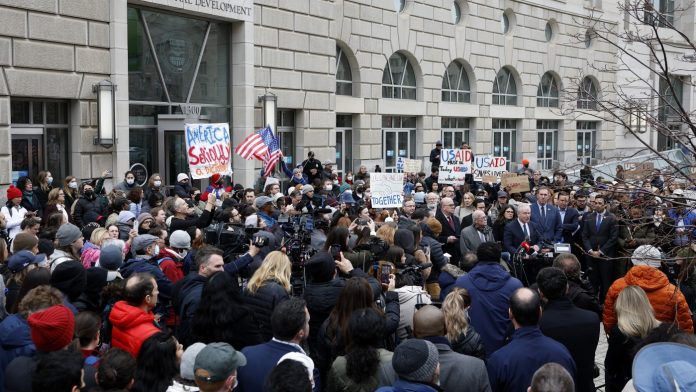
The Trump administration’s plans for mass firings are sparking protests and challenges in court. Here, supporters of the U.S. Agency for International Development join Sen. Chris Van Hollen, D-Md., and Rep. Gerry Connolly, D-Va., outside USAID’s headquarters in Washington, D.C., on Feb. 3 after Elon Musk, who oversees the Department of Government Efficiency, said he and President Trump would close the foreign assistance agency.

Kevin Dietsch/Getty Images


hide caption

toggle caption

Kevin Dietsch/Getty Images

President Trump and Elon Musk’s plans for a wholesale reduction of the federal workforce have brought turmoil to a sector long seen as a bastion of stability. The Trump administration says more cuts are coming, even as some government agencies rush to reverse what they say were mistaken layoffs. Workers are also challenging their terminations, finding notable success.

The effort raises speculation about the administration’s goals, along with warnings against politicizing the U.S. civil service. Critical questions can inform that debate, such as: How does the U.S. federal workforce compare with those of other countries?

Is the U.S. government “bloated”?

Many calls for shrinking the U.S. government cite “bloat” and excessive spending. But experts say that while governments can always work to be more efficient, the size of the United States’ federal workforce is well in line with those of its peers.

“The federal government is smaller proportionately than you would see in other countries” such as Great Britain, Canada or Australia, says Max Stier, president and CEO of Partnership for Public Service, a nonpartisan nonprofit that focuses on improving government.

That’s partly because the size of the U.S. federal workforce hasn’t kept pace with decades of population growth.

“The head count today of the [U.S.] federal workforce is essentially the same as it was in 1969,” Stier says. “And that’s in absolute terms. In relative terms regarding the size of the population, it’s shrunk a lot — and the responsibilities of our government have increased.”

In the late 1960s, the number of federal workers hovered above 2 million (excluding Postal Service workers), according to the Bureau of Labor Statistics. In January 2025, the number stood at 2.4 million.

But there are many more Americans to serve. In October 1969, the U.S. population was about 202.5 million, according to the Census Bureau. At the start of 2025, it was estimated at 341.1 million, the bureau said.

Federal workers accounted for 1.87% of the civilian workforce as of last November, according to the Pew Research Center — and that figure includes more than 600,000 postal workers.

In terms of cost, workers’ pay and benefits account for around 6% of federal spending, Elizabeth Linos, an associate professor of public policy and management at Harvard University’s Kennedy School of Government and director of The People Lab, told NPR’s Fresh Air.

Federal governments can be fairly small if states have relative autonomy in providing some government services, as in the U.S. and Australia. This is one of many variables that can make it difficult to directly compare federal governments.

“The U.S. is a strongly federal system,” says Filipe Campante, a professor of political economy and governance at Johns Hopkins University. “So there’s a lot more that falls under the responsibility of lower levels of government compared to more centralized countries, like France or the U.K.”

When looking at the U.S. public sector overall — including local, state and federal governments — those workers account for just under 15% of total employment, according to the 38-member Organisation for Economic Co-operation and Development (OECD). That’s below the 18% average for the countries in the organization.

Another difference lies in what motivates U.S. federal workers. More than 90% of U.S. civil servants say it’s important that their work contributes to the common good, according to a 2023 OECD report. The figure was notably higher than those of their counterparts in Great Britain and other countries.

1990s cuts brought an “explosion” of contractors

So, how does the federal government provide more services without adding employees? It pays private contractors for services and products.

“In any given year, about $270 billion are spent on federal workers’ salaries and benefits,” Linos says. “Just to put that in perspective, there are specific departments whose contracting budget is larger than that budget.”

In the 2023 fiscal year, the federal government “committed about $759 billion on contracts,” the Government Accountability Office reported. Most of that figure — $478 billion — went toward buying “professional support services” for defense and civilian agencies, and $281 billion was for products, from drugs to airplanes. 

Federal contractors became prevalent after the last large-scale effort to shed government jobs — the Clinton administration’s Reinventing Government initiative of the 1990s.

In this 1995 photo, President Bill Clinton is standing outdoors behind a lectern with microphones attached to it as he discusses his Reinventing Government initiative. Vice President Al Gore is on the right side of the photo.

President Bill Clinton, seen here in 1995, discusses his Reinventing Government initiative, which cut more than 400,000 jobs over seven years. But an “explosion” in the use of contractors followed, says Elizabeth Linos, an associate professor of public policy and management at Harvard University’s Kennedy School of Government.

Joyce Naltchayan/AFP via Getty Images


hide caption

toggle caption

Joyce Naltchayan/AFP via Getty Images

That overhaul took place over seven years. Linos says that around “400,000 federal positions were cut through a combination of departures and attrition, and some layoffs.”

The end result wasn’t exactly the lean federal government some had hoped for. The cuts brought an “explosion” in contract workers, Linos says, adding, “Today, we have something like three times as many [contractors] delivering the work of government” than federal workers.

Other countries, like Australia, are in somewhat similar patterns, often contracting or privatizing services such as utilities, medical care and child care.

“We do a lot of that as you generally do in the U.S.,” says Andrew Podger, a professor at the Australian National University who is also a fellow in the National Academy of Public Administration.

Political appointees are already a hallmark of the U.S. 

Trump is looking to reclassify thousands of influential federal jobs as political appointments — an idea he frequently mentioned during the campaign season.

Such a move would add to a glaring divide: The U.S. already uses political appointments to fill more jobs than many countries with similar governments.

“We have an outsized number of political appointments,” Stier says, citing around 4,000 political appointees.

Among the United States’ peer democracies, “they typically count their political appointees in tens, not in thousands,” he says. “So we really already have a vestige of the old spoils system.”

In this photo, President Trump is seated at a long conference table with members of his administration. Wearing a blue suit and red tie, he is smiling and looking toward people seated to his left. Elon Musk stands in the background, wearing a baseball cap.

President Trump smiles during a Feb. 26 Cabinet meeting at the White House, with Tesla and SpaceX CEO Elon Musk, who oversees the Department of Government Efficiency, standing in the background. Trump says he wants more federal positions to be politically appointed, but experts say the U.S. already has some 4,000 appointed positions.

Andrew Harnik/Getty Images


hide caption

toggle caption

Andrew Harnik/Getty Images

The U.S. has repeatedly worked to standardize civil service, from the Pendleton Act in 1883 to the Civil Service Reform Act of 1978.

“In the 19th century, the idea was you could get a job in government just by displaying loyalty to the new political administration,” Linos says. “And what that led to was lower levels of performance, less merit in government and, ultimately, worse outcomes for residents.”

But the gap persists. As proof, Campante of Johns Hopkins University suggests looking at how governmental transitions take place in the U.K. versus the United States.

“When they have an election, literally, pretty much like the day after, there is a transition in government” in the U.K., Campante says. “Basically the civil service remains in place.”

Both Stier and Campante see Trump’s push for more appointments as a worrying sign, because it would give the executive branch tighter control over career civil servants.

“We have too many already,” Stier says of political appointees. “The challenge there is that you wind up with people who frankly are not chosen on the basis of merit” but because of politics. That leads to leaders not understanding the systems they oversee, which results in worse government, he says.

Then there’s the accountability issue

“I think that the politicization of the civil service is one of the key dramatic changes that are happening right now,” Campante says. “And that’s by [the Trump administration’s] own admission, right? It’s not even like a secret. They’re really kind of making the point that they think that that should be the case.”

Trump’s plan to replace tens of thousands of career civil servants has been percolating since the final months of his first term, when he signed an executive order saying he needed more flexibility and control in choosing workers he would rely on to enact his policies. On Jan. 20, 2025, he reinstated the policy, known as “Schedule F,” saying it would “restore accountability to the career civil service.”

And in Trump’s Feb. 11 executive order about reshaping the workforce through the Department of Government Efficiency, he set a goal of eliminating not only waste but also “insularity.”

In Campante’s view, the president’s goal is “really to kind of reduce that independence and that insulation of the civil service from political control.”

He notes that in Brazil, former President Jair Bolsonaro now faces formal charges of attempting a coup to remain in power after his 2022 election defeat. It’s a contrast, Campante says, to how the U.S. handled Trump after the Jan. 6, 2021, attack on the Capitol.

In this photo, Alex Wild holds a sign during a protest against widespread layoffs at Yosemite National Park. The sign says, "Don't Let Public Lands Go Extinct." Behind him stands a crowd of protesters, many of whom are holding up signs. Trees rise up in the background.

Alex Wild (center), a former National Park Service ranger who was fired on Feb. 14, holds a sign during a protest against widespread layoffs at Yosemite National Park in California on March 1. The National Parks Conservation Association estimates that 1,000 National Park Service employees who were on one-year probationary periods were laid off. About 3,400 employees of the U.S. Forest Service were among the cuts too, according to multiple media reports.

Laure Andrillon/AFP via Getty Images


hide caption

toggle caption

Laure Andrillon/AFP via Getty Images

After taking office this year, Trump issued pardons for hundreds of violent rioters. His administration also dismissed more than two dozen prosecutors who worked on Jan. 6 cases, and it launched an inquiry into FBI staff members involved in Jan. 6 investigations.

To be able to hold leaders accountable, Campante says, civil servants need protections from being fired and politically targeted.

“That role of accountability is, I think, an important aspect that is being seriously degraded right now,” he says.

Stier says he has seen the same pattern when countries move away from democracy and toward authoritarianism.

“One of the first moves is to change the civil service, the government workforce, to a loyalist workforce as opposed to a merit-driven workforce,” he says.

South Korean Fighter Jets Mistakenly Bomb Village, Leaving 7 Injured

0

A South Korean village near the North Korean border was mistakenly shelled on Thursday by two fighter jets from the South’s own air force, leaving 15 people injured and damaging homes and a church.

The jets were taking part in a joint exercise with the United States military when each of them dropped four bombs, according to the South’s military. The bombs were meant to hit a range several miles from the village, but at least one of the South Korean pilots had entered inaccurate coordinates, the military said.

Four of the injured people were seriously wounded and required surgery, said officials in Pocheon, a town that includes the village of Nogok, where the bombs fell. Of the other 11, seven suffered shock and minor scratches from falling down. Local news outlets said none of the victims was in critical condition.

The military said it was suspending all live-fire drills while an investigation was carried out. The exercise Thursday was connected to annual joint exercises, known as Freedom Shield, that the South Korean and U.S. military carry out every year, and which are set to officially begin on Monday.

A woman in Nogok who runs a shop in her home said she was there when an “earthquake-like” explosion rattled the village, breaking windows in her house and in neighbors’ houses. Her home was 700 feet from the spot where the most serious damage was reported.

Photos carried by local news outlets showed a house in the village with parts of its walls and tiled roof blown away. They also showed damage to a Catholic church, and torn branches from pine trees strewn around.

The South Korean Air Force did not say how many of the eight bombs dropped had hit Nogok, which is about 20 miles from the heavily fortified North Korean border. It issued an apology and promised compensation for the victims.

“Something that should never have happened just happened,” said Mayor Baek Young-hyun of Pocheon. “The place where the bombs landed is utterly chaotic and looks like a battlefield.”

Mr. Baek said that three large military firing ranges occupy 12,253 acres of land in Pocheon and bullets that ricocheted from there have sometimes endangered villagers. He demanded that the military stop using the firing ranges until it can ensure that accidents like Thursday’s never happen again.

On Thursday, the South Korean and United States militaries said that this year’s Freedom Shield exercises would begin on Monday and last 11 days. But in recent days, they had begun smaller joint drills in connection with the main exercises.

American troops — but no United States Air Force aircraft — were participating in the joint live-fire exercise when the accident happened on Thursday, the U.S. military in Korea said.

“We take this incident very seriously,” said Col. Ryan Donald, a U.S. military spokesman, adding that his command was coordinating closely with South Korea’s defense ministry and was committed to a thorough and transparent investigation.

The United States has 28,500 troops stationed in South Korea. The allies conduct several joint military exercises each year, calling them defensive in nature. The Carl Vinson American aircraft carrier group steamed into a South Korean port this week to join the Freedom Shield exercise.

North Korea has bristled at the drills, calling them rehearsals for war.

On Monday, Kim Yo-jong, the sister of North Korea’s leader, Kim Jong-un, who also acts as his spokeswoman, accused President Trump’s administration of the “most hostile and confrontational will” against her country, citing its continuation of the joint exercises with South Korea.

“We will never confine ourselves to sitting still and commenting on the situation,” Ms. Kim said. She indicated that North Korea might resume testing nuclear-capable weapons.