Friday, November 13, 2026
Home Blog Page 161

Canada, China say fentanyl is only a “pretext” for President Trump’s tariffs : NPR

0

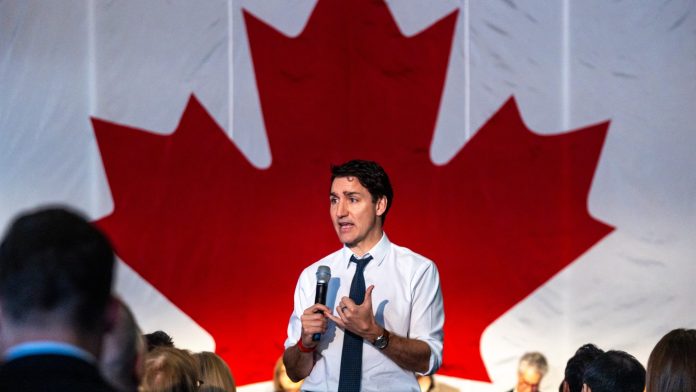
Canadian Prime Minister Justin Trudeau described President Trump’s fentanyl accusations as false and said his country would retaliate with trade tariffs phased in over the next month.

Katherine KY Cheng/Getty Images/Getty Images North America


hide caption

toggle caption

Katherine KY Cheng/Getty Images/Getty Images North America

Officials in Canada and China are blasting the Trump administration for using illegal street fentanyl as justification for new trade tariffs that go into effect today.

In a statement, Canadian Prime Minister Justin Trudeau called Trump’s criticism “unjustified,” noting that fentanyl seizures at the U.S. northern border have dropped to “near-zero.”

“While less than 1 percent of the fentanyl intercepted at the U.S. border comes from Canada, we have worked relentlessly to address this scourge,” Trudeau said. He pointed to $1.3 billion Canadian is spending on new security measures along the border.

Both countries called the link between fentanyl smuggling and trade barriers unjustified and announced plans to retaliate.

President Donald Trump is expected to speak about the clash Tuesday night in an address before Congress. In a statement Monday the White House once again pointed to drugs as a key motivation for new U.S. trade barriers, describing the situation as a “national emergency.”

“While President Trump gave both Canada and Mexico ample opportunity to curb the dangerous cartel activity and influx of lethal drugs flowing into our country, they have failed to adequately address the situation,” the U.S. statement said.

The U.S. on Tuesday imposed 25% tariffs on goods from Canada and Mexico and an additional 10% tariff on goods from China.

Trump has continued to describe fentanyl overdoses as an escalating crisis in the U.S., despite the fact that fatal overdoses have plummeted since 2023 — down nearly 24% according to the latest data from the Centers for Disease Control and Prevention.

Trudeau says Canada will retaliate with tariffs on $155 billion on U.S. goods, phased in over the next three weeks.

Chinese officials said they too have already stepped up cooperation with the U.S. on drug interdiction efforts. Speaking Monday, China’s Foreign Ministry spokesman Lin Jian accused the Trump administration of using “the fentanyl issue as a pretext” to threaten China.

“The U.S.’s attempts to politicize and weaponize trade and economic issues, levy tariff hikes on Chinese imports under the pretext of fentanyl, and create blocks to its normal trade, investment and economic cooperation with China will only harm its own economic interests and international credibility,” Jian said.

Many of the industrial chemicals used to make fentanyl — and other synthetic street drugs — have been linked to firms operating in mainland China. In the past, however, Chinese officials have described the fentanyl crisis as a domestic concern inside the U.S. that should be solved by curbing demand and street drug use.

Beijing responded to the Trump administration’s latest tariff hike by slapping additional tariffs of 10-15% on a variety of U.S. agricultural imports, including chicken, pork, soy and beef, starting next week, China’s finance ministry announced.

Mexico has also stepped up law enforcement pressure on drug cartels, staging raids against fentanyl labs and arresting gang leaders. Last month, Mexico transferred 29 cartel leaders into U.S. custody.

Speaking on Tuesday, Mexican President Claudia Sheinbaum said her country, too, would retaliate with 25% tariffs on U.S. goods.

“There is no motive or reason, nor justification that supports this decision that will affect our people and our nations,” she said.

Sheinbaum said she would detail which American products and industries would be targeted on Sunday.

Data from U.S. Customs and Border Protection shows fentanyl seizures at the U.S.-Mexico border have dropped by roughly 50% in recent months.

This escalating trade fight comes at a time when fatal overdoses from fentanyl are plunging in the U.S., with deaths linked to the synthetic opioid down more than 30% over the last year, according to data from the Centers for Disease Control and Prevention.

“It’s very very exciting to see that it’s dramatically decreasing,” said Dr. Nora Volkow, head of the U.S. National Institute on Drug Abuse, in an interview with NPR last month.

As Gaza Crisis Deepens, Arab Leaders Are Set to Meet and Form a Plan

0

When Arab leaders and representatives meet for an emergency summit in Cairo on Tuesday, they will face pressure to come up with something that has proved elusive for decades: a comprehensive Arab vision for Gaza, just as the Israel-Hamas cease-fire is teetering and Israel, buoyed by President Trump’s backing, holds the upper hand.

“Arab Summit: Rescue mission,” read a stark headline on Saturday in Al Ahram, Egypt’s state-owned flagship newspaper, over an article outlining the “uphill task” facing Arab leaders.

Representatives are expected to ratify an Egyptian proposal that would involve spending $53 billion to rebuild Gaza without, as Mr. Trump has suggested, moving Palestinians out of the strip, according to a preliminary draft of the proposal, which was shared with The New York Times by an Arab diplomat.

The proposal also calls for putting a committee of technocrats and other figures unaffiliated with Hamas in charge of the territory for an initial six-month period. The Egyptian government did not respond to a request for comment, but the editor in chief of Al Ahram Weekly, a state-owned media outlet, confirmed the document’s authenticity.

The Arab summit was originally called in response to Mr. Trump’s proposal last month to expel Palestinians from Gaza, send them to Egypt and Jordan and turn the territory into a tourism hub — an idea that much of the world has rejected as tantamount to ethnic cleansing.

Egypt, Jordan and other Arab allies of the United States have pushed back hard on the plan, saying it would destroy any remaining hope of a Palestinian state and destabilize the entire region.

Mr. Trump appeared to soften his position recently, saying that he was “not forcing” his Gaza idea on anyone. But the Arab world remains deeply concerned. Adding to those worries is the uncertainty surrounding the cease-fire in Gaza, which has paused the bloodshed there for six weeks and seen Israel and Hamas exchange Palestinian prisoners for Israeli hostages.

In the latest crisis to shake the agreement, Israel began blocking all aid and goods from entering Gaza on Sunday, attempting to strong-arm Hamas into extending the first phase of the truce, which just expired, and swapping more prisoners for hostages without moving toward a permanent end to the war.

Israel also recently drove tens of thousands of Palestinians from their homes in the Israeli-occupied West Bank and ruled out allowing them to return, intensifying Arab fears that an Israel emboldened by Mr. Trump’s support will attempt to annex the West Bank. Israel says it is responding to a rising threat of militancy from the West Bank. The Israeli military denies any forced evacuations, but has said it ordered people to leave buildings close to what it said were militant hide-outs.

The Israeli-Palestinian conflict has plagued the Middle East for decades. But recent events have brought the question of how to resolve it to a head, forcing Arab countries to scramble over the last few weeks to come up with a counterproposal to Mr. Trump’s.

Beyond insisting on Palestinian statehood and rejecting forcible displacement, Arab countries have not yet agreed on an alternative vision for Gaza — let alone one that Palestinian political factions, Israel, the United States and other countries would sign on to.

Many major questions remain, such as how to govern Gaza, how to manage its security, how to rebuild it and how to sideline Hamas, which remains the most powerful force in the enclave.

And any plan would have to get around a more fundamental issue: While Arab leaders will support only a framework that would include at least a nominal path toward Palestinian statehood, Israeli leaders are against embarking on a path that would lead to Palestinian sovereignty.

The leaders of Egypt, Jordan and Gulf Arab states met last month in Riyadh, Saudi Arabia, to strategize ahead of Tuesday’s summit in Cairo, which will include all 22 members of the Arab League as well as the United Nations secretary general and the European Council’s president.

But the leaders of two of the most powerful Gulf nations — Saudi Arabia and the United Arab Emirates — do not plan to attend the Cairo summit, raising question about whether there is unified Arab support for Egypt’s plan.

According to the draft proposal expected to be discussed on Tuesday, the transitional governing committee would pave the way for the Palestinian Authority, the internationally recognized body that administers parts of the West Bank, to “fully return” to Gaza. The authority administered Gaza until Hamas, which had won parliamentary elections in 2006, seized control of the strip by force in 2007.

Gaza and the West Bank should be united as one state, Arab officials argue, and must be linked in any conversations about Gaza. The Palestinian Authority president, Mahmoud Abbas, has so far appeared reluctant to give his blessing to any governing arrangement that does not put him fully in control of Gaza.

One open question concerns who will manage Gaza’s security after the war permanently ends. Egypt is proposing an international force be deployed in Gaza and the West Bank, according to the draft, which does not specify which countries might supply troops to such a force.

Hamas officials have said they would be willing to hand over control of civilian affairs to a governing committee of which the group was not a part, as long as Gaza’s postwar future was determined by Palestinian “national consensus,” according to a statement from the group on Tuesday.

But they refuse to demilitarize in Gaza, a crucial demand of both Israel and Mr. Trump. The American president’s top Middle East envoy, Steve Witkoff, said in an interview with CBS’s “Face the Nation” last month that Hamas “has to go.” An official media outlet belonging to Hamas said on Tuesday that “the resistance’s weapons are a red line.”

The Egyptian proposal acknowledges that it will be difficult to disarm Palestinian groups in Gaza. But the draft suggests that the armed Palestinian resistance will only disappear once the Palestinians secure statehood and rights, saying the issue can be resolved “if its causes are removed through a clear horizon and a credible political process that ensures the legitimate rights of Palestinians.”

The Egyptian proposal is most detailed when it comes to Gaza’s reconstruction. Palestinians in Gaza would stay in temporary housing units made of shipping containers on seven sites throughout the territory, with an average of six people living in each. In the first phase, which would last six months and cost $3 billion, rubble and unexploded ordnance would be cleared, 1.2 million people would be moved into prefabricated temporary housing units and 60,000 partially destroyed housing units would start to be rehabilitated.

In the next phase, which Egypt estimates would cost $20 billion and last until 2027, utilities and permanent housing would be rebuilt, and rubble would be used to expand Gaza’s surface area into the sea. Industrial zones, a fishing port, a seaport and an airport would be built during a final phase costing $30 billion and lasting until 2030, according to the draft.

Under this framework, oil-rich Gulf nations would likely pay for Gaza’s reconstruction, though Egyptian officials have also suggested Europe could also contribute funds. The draft says that Egypt will convene a donor conference to drum up funding and investments “as soon as possible.”

Egypt’s foreign minister, Badr Abdelatty, said in a news conference on Saturday with the Palestinian prime minister and foreign minister that Egypt had volunteered to train Palestinian police forces to be deployed in Gaza while the territory is rebuilt.

Jordan is also training Palestinian police personnel, according to the Egyptian draft proposal, which said other countries could possibly join that effort.

Natan Odenheimer and Aaron Boxerman contributed reporting from Jerusalem, and Rania Khaled from Cairo.

Arab and Muslim voters helped deliver Michigan to Trump. They’re not all happy so far : NPR

0


Arab and Muslim voters helped deliver Michigan to Trump. They’re not all happy so far

  • Download

China and Canada Retaliate Against New Trump Tariffs: Live Updates

0

Claudia Sheinbaum, the president of Mexico, stood underneath a giant Mexican flag and before troops at a military installation in Mexico City. It was Flag Day last month and she used her speech as an opportunity to, figuratively and literally, rally around it.

“Mexico must be respected,” she said, adding later: “Its people are brave. We know that when our people unite around their history, their country and their flag, there is no force in the world that can break their spirit.”

Times had changed, she said: Mexico would not bow down to foreign governments.

Given the circumstances — President Trump’s steep tariffs against Mexico went into effect in the first minutes of Tuesday — Ms. Sheinbaum’s optics were fitting. As Mr. Trump once again targeted Mexico, using the hammer of tariffs as a negotiating tool, a sense of Mexican nationalism has been strengthened.

The Mexican government and businesses have rekindled a “Made in Mexico” campaign. Some Mexicans have called for boycotts of U.S. companies and products, while others have put together lists of Mexican stores and brands to support instead of American ones.

Ms. Sheinbaum is frequently featured on the front page of local newspapers with members of the country’s military or in front of a giant Mexican flag. Private companies have taken out nationalistic advertisements, one featuring the president leading the masses and carrying a banner saying, “Mexico united, never defeated!”

And Ms. Sheinbaum, who has been trying to balance a pro-Mexico drumbeat while advocating cooperative dialogue with American officials, has seen her approval ratings rise as high as 80 percent, according to one poll. She has not only succeeded a popular president, Andres Manuel López Obrador, who reshaped Mexican politics and was her mentor, but has come into her own at a time of global upheaval under Mr. Trump.

“There’s a lot of support for the president now,” said Juan Manuel Sánchez, 57, an artisan in Mexico City who also praised Ms. Sheinbaum’s crackdown on drug trafficking.

During his first term, Mr. Trump used tariffs to renegotiate the North American Free Trade Agreement and strike a new U.S.-Mexico-Canada agreement, which he signed in 2020. He has used similar tactics now against Mexico and Canada, while arguing that too many illegal drugs and migrants are flowing from the two countries into the United States.

A month ago, Mr. Trump signed an executive order calling for 25 percent tariffs on Mexican imports. But less than a day before they were to go into effect, Mr. Trump and Ms. Sheinbaum spoke on the phone and announced an agreement to delay them for 30 days.

Under the terms of that deal, Mexico posted an additional 10,000 Mexican National Guard troops on the border to help stem the flow of fentanyl and migrants into the United States. In return, Ms. Sheinbaum said, the U.S. government would work to stop the flow of guns into Mexico.

A Mexican National Guard member at a tent used to hold repatriated Mexican citizens in Ciudad Juárez, near the U.S. border, in January.Credit…Paul Ratje for The New York Times

Even though the number of migrant crossings at the southern border has dropped to once unthinkable levels since Mr. Trump took office in January, Mexican officials were significantly deterring migration to the United States months before. Last week, Mexico sent nearly 30 top cartel operatives wanted by American authorities to the United States, one of the largest such handovers in the history of the drug war.

“There’s a lot of unity in the country in the face of what is happening,” including Mr. Trump’s economic threats, Ms. Sheinbaum said on Monday, hours before the tariffs took effect.

Although Mr. Trump insisted on Monday that the tariffs would begin the next day, the cloud over Mexico from the north has loomed since his most recent presidential campaign. It led to uncertainty and frustration but also boosted national pride.

Agustin Barrios Gómez, a former Mexican congressman and a founding member of the nonprofit Mexican Council on Foreign Relations, said that even Mexicans who didn’t vote for Ms. Sheinbaum “understand that right now, Mexico’s national interest — beyond party politics — is to rally around our president.”

One reason for the surge in support for her, Mr. Barrios Gómez said, was to ensure Ms. Sheinbaum has enough political capital within the country to be in a stronger negotiating position with Mr. Trump come what may.

Nationalism is complicated in Mexico, Mr. Barrios Gómez said, because it is so intricately intertwined with the United States geographically, culturally and economically, as well as with immigration and security.

“We are not neighbors, we’re roommates,” he said. In other words, analysts said, the U.S. tariffs against Mexico will hurt both economies, as would the reciprocal tariffs suggested by Ms. Sheinbaum. (Mr. Trump is also threatening separate 25 percent tariffs on global steel and aluminum imports, which would affect Mexico.)

For Mexico, the tipping point against the United States has not been reached, Mr. Barrios Gómez said late last week before the tariffs went into effect, but “if you call someone your enemy enough, you might just turn them into one.”

The specter of a trade war between the countries has changed the perception in Mexico of Mr. Trump and of its relationship with the United States.

According to the Mexican polling firm Buendía & Marquéz, the number of respondents in Mexico who believed the relationship between Ms. Sheinbaum and Mr. Trump was at least good dropped significantly between last November and February, while the number of respondents who have a negative opinion of Mr. Trump jumped to 80 percent in mid-February from 66 percent in early January.

Mr. Trump has nevertheless praised Ms. Sheinbaum as a “marvelous woman” while mocking Canada’s prime minister, Justin Trudeau. Mr. Trudeau, who has become increasingly unpopular at home, is entering his final days in office while Ms. Sheinbaum’s popular foundation is stronger. She resoundingly won election last summer and began her six-year term in October.

During her Monday morning news conference, Ms. Sheinbaum once again called for calm ahead of Mr. Trump’s tariffs deadline and said she hoped to strike a last-minute deal, which did not materialize. “Obviously we don’t want there to be tariffs,” she said, adding that her government would respond.

Since before Mr. Trump’s inauguration, her administration has been promoting what it calls “Plan Mexico,” a strategy meant to diversify its economy to make it less dependent on the United States, to reinvigorate Mexican manufacturing and propel the country to become one of the world’s top 10 economies. (It is currently the 15th largest, according to the International Monetary Fund.)

As part of that effort, Ms. Sheinbaum’s administration started the “Made in Mexico” drive, in which an official seal is placed on products made in the country that meet certain requirements. The seal, with an illustration of a Mexican eagle, was created in 1978 to promote Mexican goods and has been revived by presidents over the years.

As the threatened U.S. tariffs were paused a month ago, Mexico’s secretary of economy, Marcelo Ebrard, told companies that the government wanted to once again push the “Made in Mexico” seal.

Last week, Walmart Mexico, the largest private employer in the country with 200,000 workers, unveiled its efforts to put the “Made in Mexico” seal — with the added word “proudly” — in the aisles of its 3,000 stores throughout the country. Although Walmart is an American brand, Javier Treviño, Walmart Mexico’s senior vice president of corporate affairs, said the company wanted to show customers that it is a Mexican entity and that most of the products it sells are made within the nation.

The campaign “is very important for us because we have to strengthen investment and confidence in Mexico and ensure that the economy can grow, because the environment is not easy,” Mr. Treviño, a former Mexican congressman, said in an interview.

In Mexico City, the Grupo Modelo brewery, which manufactures Corona beer, said it would put new “Made in Mexico” caps on its bottles.Credit…Raquel Cunha/Reuters

Other big companies have joined Ms. Sheinbaum’s push, including Grupo Modelo, the brewing giant that makes Corona and Modelo beers, which announced it would put new “Made in Mexico” caps on bottles.

On Saturday, Mr. Sánchez, the Mexico City artisan, was at his neighborhood market, which, he said, proved that he prefers to shop locally. Before Mr. Trump’s tariffs went into effect, he said he might consider boycotting U.S. companies and products if they did.

Unlike in Canada, where locals have been shunning American products and buying more Canadian flags since Mr. Trump threatened the tariffs, Mr. Sánchez said that Mexicans were already nationalistic and that most had a flag.

“But when something very serious happens here,” he said, “we all unite.”

Maria Abi-Habib contributed reporting from Mexico City.

What to expect from President Trump's address to a joint session of Congress Tuesday

0

President Trump will give his first address to a joint session of Congress in his second term Tuesday night. So what can be expected?

Israel Strikes Syria Again as Tensions Rise

0

Israel has conducted new airstrikes on Syria’s coast and ground raids in the country’s south, part of a wave of attacks that Israel says is necessary for its security that has raised tensions with Syria’s new government.

The strikes appeared to be the latest attempt to keep weapons from the Assad regime out of the hands of groups that may be hostile to Israel.

The Israeli military said on Monday evening that it had targeted a weapons storage facility in Qardaha, former President Bashar al-Assad’s hometown. The town is a few miles from a major Russian air base outside the coastal city of Latakia. There were no immediate reports of casualties, according to Syria’s state news agency, SANA.

Hours later, the Israeli military conducted ground raids into two towns in southern Syria, cutting off roads and searching military barracks before blowing up warehouses and withdrawing, according to the Syrian Observatory for Human Rights, a war monitoring group based in Britain.

The attacks came a week after Prime Minister Benjamin Netanyahu of Israel demanded the “complete demilitarization” of much of southern Syria “from the forces of the new regime.”

Since the Assad regime was toppled in December by a lightning rebel offensive, Israel has carried out hundreds of airstrikes in Syria that it says are aimed at preventing weapons falling into what it considers potentially hostile hands.

It has also deployed forces into a United Nations-monitored demilitarized zone at its border with Syria, and invaded border villages in southern Syria in what it described as temporary measures to protect its own security. Many Syrians fear that the incursions could morph into a prolonged military occupation.

Syria’s new government has said that Israel was violating its sovereignty. The attacks have been condemned internationally, with the United Nations saying in January that the country’s “territorial integrity, and unity must be fully restored.”

After violence broke out between Syrian government officers and armed men on the outskirts of Damascus last week, Mr. Netanyahu said he had instructed the military to defend the country’s Druse minority from Syria’s new rulers, a move that Syrian Druse and government leaders themselves rejected.

Syria’s interim president, Ahmed al-Shara, has repeatedly said that Syria is not seeking conflict with Israel. At a two-day “national dialogue” conference in Damascus last week that was billed as the start of a process to build an inclusive Syrian government, the closing statement rejected Israel’s threat that it would not allow the presence of Syrian armed forces in the country’s south.

It remains unclear, however, how Syria’s leadership will respond to the Israeli demand.

Ukraine Races to Salvage U.S. Alliance After Trump Halts Aid

0

A day after President Trump ordered the suspension of American military assistance, Ukrainian diplomats and politicians scrambled on Tuesday to find a way to salvage its alliance with Washington while the war weary nation prepared for the possibility that it will have to fight on without U.S. support.

With the White House and the Kremlin growing ever more closely aligned, Ukraine was seeking to shore up support from its European allies, many of whom were quick to offer reassurances on Tuesday. Military officials were assessing how long Ukraine’s own stockpiles would last before the situation led to critical gaps on the front.

President Volodymyr Zelensky of Ukraine did not comment directly on the aid suspension — which will affect more than $1 billion in arms and ammunition in the pipeline and on order — but he convened senior civilian and military leaders to discuss “special issues concerning our national resilience.”

“We are working on all possible scenarios to protect Ukraine,” he said in his nightly address to the nation on Monday. “The base line scenario is to hold positions and create conditions for proper diplomacy, for the soonest possible end to this war with a decent peace.”

In comments that seemed aimed at addressing President Trump’s accusations that he doesn’t want peace, Mr. Zelensky added: “We need peace — real, fair peace — not endless war. And we need security guarantees.”

An emergency meeting in the Ukrainian parliament was convened on Tuesday to assess the impact of the latest pressure from Trump administration while soldiers in the trenches woke up to the news that an already grueling war could get even more challenging, and brutal.

The decision to suspend the delivery of aid came three days after an explosive meeting at the White House in which Mr. Trump berated Mr. Zelensky and called him ungrateful — a rupture in relations that might be difficult to repair.

In the streets and in the halls of Ukraine’s government, there were cries of betrayal. But more than anger there was a sense of sadness and disbelief.

The first thing that came to mind upon hearing the news was President Franklin D. Roosevelt’s phrase that “this date will go down in infamy,” Oleksandr Merezhko, the chairman of the Foreign Affairs Committee in parliament, said in an interview. “It was a kind of Pearl Harbor, a political Pearl Harbor, for us.”

It is all the more painful, Mr. Merezhko said, “when it comes not from your enemy, but from whom you consider to be your friend.”

“This is awful,” he added. “It’s like the worst betrayal.”

Mykhailo Samus, the deputy director at the Center for Army, Conversion and Disarmament Studies in Ukraine, an independent institution, said a cutoff in aid would mean “that the U.S. is conducting a joint operation with Russia to force Ukraine — the victim of aggression — into surrender.”

“The consequences would be a blow to the U.S.’s position as the former leader of the West,” he added.

The impact to Ukraine would also be severe and grow with time, Mr. Samus said. But “if Trump thinks, or his advisers think, that there is some kind of switch that turns off the Armed Forces of Ukraine,” Mr. Samus added, then the administration has fundamentally misunderstand why Ukrainians are fighting, their will to carry on and the current dynamics on the battlefield.

European leaders — who will convene in Brussels on Thursday to discuss both support for Kyiv and the urgent need for Europe to build up its own military capabilities — were quick to rush to Ukraine’s defense Tuesday morning.

Ursula von der Leyen, who heads the executive arm of the 27-nation European Union, said: “This is Europe’s moment and we must live up to it.”

Appearing in Brussels, she proposed a new program that would make 150 billion euros in loans to member states to fund defense investment.

Britain’s deputy prime minister, Angela Rayner, said America’s suspension of military aid to Ukraine was “a very serious moment.” But she told the BBC that Prime Minister Keir Starmer would continue to work with the U.S., Europe and Ukraine to achieve a lasting peace.

Asked whether Mr. Starmer might come to regret his cordial meeting last week with Mr. Trump and the invitation for a second state visit, she said that Mr. Starmer “won’t choose between the U.S. and Europe.”

The Kremlin, not surprisingly, rejoiced at the latest news.

“If it’s true, then this is a decision which could really push the Kyiv regime to a peace process,” Dmitry S. Peskov, the Kremlin spokesman, told reporters.

“It’s obvious that the United States has been the main supplier of this war,” he added. “If the U.S. stops those supplies, this will be the best contribution to peace, I think.”

However, Ukrainians and Western military analysts said that rather than speeding the end of the war, the move could give Moscow even more incentive to keep fighting. They noted that it was Mr. Putin who started the war and whose army is on the offensive, albeit slowly.

“There is no evidence that Russia would be prepared to accept a deal, and what that would be,” said Malcolm Chalmers, deputy director general of the Royal United Services Institute, a research group in London. “Indeed this decision will encourage Putin to ask for more — including Ukrainian demilitarization and neutrality.”

The pause will halt the delivery of interceptor missiles for Patriot and NASAMS air defense systems, which have saved an untold number of lives as they provide the best shield for Ukrainian cities and critical infrastructure from missile and drone attacks.

While military analysts and Ukrainian officials have said Kyiv is in a better position to sustain its war effort than it was in late 2023, when Congress suspended assistance for months, the move would have cascading effects that will grow with time.

Liubov Sholudko, Kim Barker, Jeanna Smialek and Stephen Castle contributed reporting.

Trump is asserting extraordinary power over independent agencies. Is the Fed next? : Planet Money : NPR

0

President Trump talks to reporters from the Resolute Desk on Jan. 30.

Chip Somodevilla/Getty Images


hide caption

toggle caption

Chip Somodevilla/Getty Images

This first appeared in the Planet Money newsletter. You can sign up here.

President Trump vs. the independent agencies. It’s a battle for the history books — literally. To understand the significance of this showdown, we need to go back to history ourselves.

Historians generally agree that the first independent agency in the U.S. government was the Interstate Commerce Commission (ICC). Founded in 1887, the ICC had a pretty revolutionary job: regulating the powerful railroad industry. Led by “robber barons,” the monopolistic companies that controlled the railroads were accused of price gouging and other abuses of power. The creation of the ICC was one of the opening salvos of the turn-of-the-century, bipartisan Progressive movement that sought to rein in big corporations and the excesses of free-market capitalism.

Because the railroads were so critical to the United States’ economy and because the work of regulating the railroads was highly technical — think like crunching data to figure out what railroad rates should be — Congress wanted the ICC to be staffed by experts who operated above the fray of partisan politics. They designed it to be led by a board of commissioners from both major political parties. And, significantly, they decided to insulate the agency from presidential control.

The original law creating the ICC instructed, “Commissioners can only be removed by the President for ‘inefficiency, neglect of duty, or malfeasance in office.'” In other words, the president couldn’t just fire them willy-nilly. When the act creating the ICC was going through Congress in 1887, there was surprisingly little discussion about why the president was limited in this way.

The first iteration of the ICC had actually pretty weak regulatory powers. In 1906, however, Republican President Theodore Roosevelt signed a law greatly strengthening the ICC, including giving it the power to make rules regulating the railroad industry that had the force of law. This souped-up ICC became the prototype for many independent agencies to come.

In this black-and-white photo, President Theodore Roosevelt is sitting at his desk circa 1905 and is reading some papers that he's holding.

President Theodore Roosevelt works at his desk circa 1905.

Hulton Archive/Getty Images


hide caption

toggle caption

Hulton Archive/Getty Images

Over the course of the 20th century, Congress designed and presidents signed into existence all sorts of independent agencies. These federal agencies regulate critical areas of the U.S. economy and society, including the stock market, product safety, fraud and corruption, the money supply, labor relations, monopolies, nuclear power, the media and elections. One common feature of these agencies is they have buffers against presidential control — like making it hard for presidents to fire their leaders; giving those leaders really long tenures, so new presidents don’t necessarily appoint them when they take office; and allowing these agencies to make rules and regulations without a president’s stamp of approval.

Lawmakers have offered many rationales for limiting presidential power over independent agencies (and given how many agencies there are and how different their missions are, it makes sense why there are so many reasons). These include insulating the agencies from political pressures, making their work less partisan, reducing turnover of agency leaders, promoting stability and predictability in agency decision-making, creating checks and balances within the federal bureaucracy and helping prevent corporate interference with these agencies’ technocratic work serving the American public.

However, since their inception, there have been many questions over how these agencies fit within the U.S. constitutional framework. And many have opposed insulating these agencies from presidential control, particularly since the Reagan Revolution of the 1980s. Companies don’t like being regulated, especially by unelected bureaucrats. Presidents don’t like having their power limited. And many conservatives claim this whole system is antidemocratic.

Since taking office, Trump has been asserting extraordinary power over independent agencies and trying to rein in their autonomy. For example, he issued an executive order asserting that he, as the elected head of the executive branch, has authority over independent agencies and that their rules and regulations need his approval. And he has fired the leaders of the National Labor Relations Board and the Equal Employment Opportunity Commission, among others. (Much of this is being challenged in federal courts, and one court recently ruled that the president’s firing of the head of an independent agency, the Office of Special Counsel, was unlawful.)

Democratic lawmakers and consumer advocates have criticized Trump’s attacks on agency independence. “Trump’s illegal executive order on independent agencies aims to shield corporations from accountability and centralize more power with Trump and his minions,” said Robert Weissman, a co-president of Public Citizen, a progressive consumer advocacy group, in a news release. Weissman stresses that this order will hurt the work of agencies like the Federal Election Commission, which he said “is independent of presidential control so that it can serve its election integrity mission without partisan favor.” And he points to the potential effect on the Federal Trade Commission (FTC) and Securities and Exchange Commission, which are supposed to protect investors, consumers and “market integrity.” He says, “Their independence is designed to enable them to perform these duties without undue political pressure from giant corporations, the super rich and the super-connected.”

It’s interesting that Weismann used the word “accountability,” because that’s the same word that many conservatives use when criticizing independent agencies. They condemn these agencies as not being accountable to the president, who is the only person in the government who is democratically elected by the whole country.

Many conservative legal scholars, especially those who believe in “unitary executive theory,” have long argued that independent agencies are really a part of the executive branch — and that therefore, under the Constitution, the president should have dominion over them, including the power to appoint and fire their leaders at will. In their view, independent agencies shouldn’t be independent. Some in this camp go as far as arguing that these agencies are part of an unelected “fourth branch” of government — the administrative state, or “deep state” — which undermines the constitutional system and the democratic will of voters.

“For the Federal Government to be truly accountable to the American people, officials who wield vast executive power must be supervised and controlled by the people’s elected President,” Trump states in his recent executive order.

Trump’s legal team seems eager to challenge the constitutionality of independent agencies, and conservatives on the Supreme Court have sent signals that they may be willing to play ball and declare them unconstitutional — despite legal precedents that go back at least 90 years. For instance, in 2020, the Supreme Court stripped the Consumer Financial Protection Bureau of its independence, ruling that because it was headed by a single leader, instead of a commission (like say the ICC or FTC), the president could fire its leader at will.

What does this mean for the Federal Reserve?

The most powerful independent agency is arguably the U.S. Federal Reserve, which is responsible for controlling inflation and helping make sure the economy is good enough so Americans can find jobs (to use econ jargon, its “dual mandate” is to ensure price stability and full employment).

Mainstream economists have long believed that central banks like the Fed should be independent because politicians care a lot about elections, which happen in the near term, and they’ll be incentivized to make decisions about interest rates that serve their narrow, short-term electoral goals instead of the public interest of long-term economic growth and stability. For example, a president may want the Fed to lower interest rates before an election to juice the economy — but that could end up resulting in runaway inflation and ultimately be really bad for everyone.

Making the Fed independent, the thinking goes, helps solve this political problem by taking monetary policy out of the hands of political leaders, with their short-term election pressures, and putting it into the hands of nonpartisan technocrats (for more on this, check out this awesome Planet Money episode, “Happy Fed Independence Day“).

Interestingly, in his recent executive order asserting his authority over independent agencies, Trump takes a mixed approach to the Fed. The Fed famously conducts monetary policy — like influencing how low interest rates go and how much money circulates in the economy — but it has another important job, which is overseeing and regulating the financial sector. Trump asserts authority over the Fed’s regulatory work. But he makes clear his executive order asserting his power over independent agencies “shall not apply” to the Fed “in its conduct of monetary policy.”

Many Fed watchers, however, are still worried. Legal scholars question what will happen to the Fed if the Supreme Court says independent agencies are unconstitutional. And during both his first and second terms, Trump has publicly pressured the Fed to lower interest rates. Trump reportedly even mulled the idea of firing Fed Chair Jerome Powell — whom he had appointed to head the Fed — after Powell refused to follow Trump’s preferences for lower interest rates during his first term. Things got so heated back in 2018 that, according to The Wall Street Journal, Powell even prepared a plan to “fight his removal if sought by the president.” Trump ended up backing off, but many wonder whether another clash between the president and the independent central bank is inevitable this term.

It’s within this context that Sen. Elizabeth Warren, D-Mass. — who, prior to becoming a senator, was an architect of the now not-so-independent Consumer Financial Protection Bureau — recently wrote a public letter expressing concern about Stephen Miran, who is Trump’s nominee for chair of the Council of Economic Advisers (CEA). Before working at a hedge fund, Miran got his Ph.D. in economics at Harvard University, where he studied under Martin Feldstein, who served as President Ronald Reagan’s CEA chair. The CEA is an important body that advises the president on economic matters.

In this photo, Stephen Miran is seen from the neck up while testifying at a Senate Banking Committee hearing. He's wearing glasses and a shirt with a while collar.

Stephen Miran, who is President Trump’s nominee for chair of the Council of Economic Advisers, testifies at a hearing of the Senate Banking Committee on Feb. 27.

Kayla Bartkowski/Getty Images


hide caption

toggle caption

Kayla Bartkowski/Getty Images

In her letter, which she sent before Miran’s recent Senate confirmation hearing, Warren basically demanded that the economist publicly commit to the Fed’s independence. And she expressed concern about a March 2024 report that Miran co-authored at the Manhattan Institute titled, “Reform the Federal Reserve’s Governance to Deliver Better Monetary Outcomes,” which is critical of the Fed and offers a plan for overhauling it, including handing the president — and also state governors — greater power over it.

A plan to overhaul the Fed

Given that Miran — at the time of this writing — may be the next chair of the CEA, we figured it’d be worth reading through his proposal for overhauling the Federal Reserve. It’s pretty fascinating, offering a comprehensive blueprint for a radically new kind of Fed that he and his co-author, Dan Katz, argue would “ensure that it remains insulated from day-to-day politics while enhancing its accountability and democratic legitimacy.”

Miran and Katz begin their report by criticizing the Fed’s recent conduct. They’re critical of its large-scale purchases of assets, arguing it has distorted credit markets (this policy is known as “quantitative easing” — listen to this illuminating Planet Money radio segment about this here). They’re critical of the Fed’s response to the COVID-19 pandemic, which they argue “contributed to two years of declining real incomes and the highest inflation in four decades.” They are critical of the Fed’s work to address climate change and to increase the racial and gender diversity of its staff, suggesting these policies have been partisan. They are critical of what they call the Fed’s “revolving door,” in which economists move back and forth between the executive branch and the Fed. And they accuse the Fed of falling victim to “groupthink,” which they suggest has undermined the efficacy of its policies.

“Scrutiny of Fed rhetoric and actions makes it clear that the Fed has moved beyond its traditional narrow, technocratic role and instead has pursued a much more expansive monetary and regulatory agenda that is more consistent with an explicitly political institution,” Miran and Katz write in their Manhattan Institute report.

For these reasons and more, Miran and Katz “propose a fundamental overhaul of the Fed’s governance.”

Miran and Katz recommend a number of big reforms. “The core” of these reforms is their proposal to hand the president greater power over the Fed’s leadership, the Board of Governors, and give state governors greater power over the Fed’s 12 regional Reserve banks (read more about the Fed’s structure here).

First, presidential power over the Fed. They propose that Fed leaders be “subject to at-will removal by the president to ensure their accountability to the democratic process.” They also propose that Fed leaders serve shorter terms, which would give presidents more opportunities to appoint people to it.

However, Miran and Katz acknowledge that it’s important to insulate monetary policy from short-term political whims. So they offer a counterbalance: “To offset increased presidential influence on the Board of Governors, we recommend increasing the influence and independence of the regional Reserve Banks,” they write.

While the Fed’s Board of Governors is an independent government agency, the Fed’s 12 Reserve banks are essentially private corporations that, Miran and Katz write, are currently “controlled by local private banks, nonprofits, and corporations, without democratic legitimacy.” These Reserve banks are sometimes called “bankers’ banks” because they do a lot of things for banks that banks do for consumers, like providing loans, processing electronic payments and so on. Their leaders also play a significant role voting on the Fed’s monetary policy decisions, because a rotating group of them gets to vote on those decisions.

It’s rare that you hear conservatives advocate for nationalizing — that is, the government taking over — anything. However, that’s what Miran and Katz argue when it comes to the 12 Reserve banks.

“We propose nationalizing Reserve Banks, empowering governors of the states in their districts with the selection of their boards of directors, which, in turn, will continue to appoint Reserve Bank leadership,” Miran and Katz write. “Allowing Reserve Bank leadership to vote at every meeting of the Federal Open Market Committee (FOMC)—the 12-member branch of the Federal Reserve that determines the direction of monetary policy—will balance increased White House control over the Federal Reserve Board of Governors.”

Essentially, Miran and Katz argue that the 12 Reserve banks should be government entities that are under the sway of state governors and that they should play a bigger role in determining policies that set interest rates and the circulation of money in the economy. “Positioning the Reserve Banks as a check on the Board of Governors is a classic expression of American federalism, a formula that has proved successful for over two centuries,” they write.

Miran and Katz argue their plan balances the needs of “increased political accountability against the need to keep day-to-day politics out of monetary policy.” However, state governors also worry about elections — and it’s unclear how much of a check they would provide against a president wanting to juice the economy with lower interest rates — so it’s unclear how successful this plan would be at striking that balance.

As for the Interstate Commerce Commission, it was actually shut down in 1995. It might prove to be a pioneering independent agency in more ways than one.


A Russia-Friendly Region in Bosnia Cheers Trump’s Return

0

As the United States and Europe condemned Russia for its invasion of Ukraine, Sasa Bozic responded by opening the Putin Café in the Bosnian city of Banja Luka, decorating it with a mannequin of the Russian president — a foot taller than Vladimir V. Putin is in real life.

Today, with much of Europe horrified at President Trump’s attack on President Volodymyr Zelensky of Ukraine in the Oval Office, Mr. Bozic has a new project: a motel and restaurant complex called “Trump and Putin’s Place.” He plans to open it this summer.

Paying tribute to Mr. Trump and Mr. Putin, Mr. Bozic said, is not political — just “a “marketing trick” that works in Banja Luka. Since the 1989 collapse of Communism in Eastern Europe, many in the mostly ethnic Serb city and surrounding region have looked favorably on Russia and with hostility on an American-led order in Europe that Mr. Trump appears intent on upending.

A Biden Café, Mr. Bozic said, would never work, even less an eatery named after President Zelensky, but “everyone here likes Putin and Trump.”

Banja Luka is the capital of Republika Srpska, a Serb-controlled region of Bosnia and Herzegovina that was born from the ethnic cleansing of the Balkan wars of the early 1990s. That violence more than three decades ago punctured hopes that the demise of Communism would open a new era of prosperity and harmony. It gave an early foretaste of the appeal and destructive power of ethnonationalism, a force now resurgent around the world.

The Serb region has for decades felt out of step with — and victimized by — what it views as a hostile, American-dominated world order committed, at least in principle, to human rights, democracy and territorial integrity.

Many ethnic Serbs have regarded Russia, which shares their Orthodox Christian faith, as a protector against the West, which intervened militarily during the 1992-95 war to help Bosnia’s Muslim populations and again in 1998 to break Serbia’s grip on Kosovo.

Serbs inside Serbia and beyond its borders in Bosnia still harbor bitter memories of NATO bombings in the 1990s.

Now many feel that things have changed with the return of President Trump.

“Trump’s America is different,” said Mladen Ivanic, a former prime minister of Bosnia’s Serb enclave. While opposed to the region’s ethnonationalist leadership, he hopes the new administration in Washington will be more sympathetic to Serb concerns. But he also sees tumult ahead.

“We are now living in a new world where everything is possible, even conflict between America and Europe” Mr. Ivanic said. “I never thought that was possible.” He added that he believed that “Trump has no interest in the Balkans,” but his demolition of longstanding assumptions about what the United States stands for have “changed everything.”

The change has dismayed former Communist countries that, thankful for Washington’s hostility to Moscow during the Cold War, count themselves as loyal American allies.

Vytautas Landsbergis, a former leader of Lithuania who led his Baltic nation, then still a Soviet republic, to declare independence in 1990, described Mr. Trump’s confrontation with Mr. Zelensky as a crude betrayal.

“They invited a guest, beat him up, spat on him, and threw him out the door,” Mr. Landsbergis said. “What happened in Washington is an extremely low level” that “has never been seen before.”

Lech Walesa, the former Solidarity trade union leader in Poland and a global symbol of resistance to tyranny, on Monday joined former political prisoners to send a letter to President Trump voicing “horror and disgust” at his hectoring of President Zelensky, saying it reminded them of their encounters with imperious Communist-era officials.

For those who see the United States as a bully rather than a liberator, the prospect of Washington turning its back on old verities has been met with glee.

Milorad Dodik, the Republika Srpska’s embattled leader, has been fishing eagerly in the troubled waters stirred up by President Trump. He praised the Oval Office confrontation with Mr. Zelensky, who had been trying to correct Mr. Trump’s depictions of the origins of the war in Ukraine, as a triumph for “truth” over “fairy tales.”

Hoping that Washington will rally to his side against Bosnia’s central government in Sarajevo, Mr. Dodik recently hosted a visit to Banja Luka by Rudolph W. Giuliani, the former New York mayor and Mr. Trump’s former attorney. Mr. Giuliani arrived shortly before a Bosnian court convicted Mr. Dodik of flouting the rulings of an international official overseeing implementation of the 1995 Dayton peace agreement.

That agreement, brokered by the Clinton administration, put an end to more than three years of ethnic conflict in Bosnia and has kept the peace since.

Mr. Dodik, who has long embraced Russia as his protector, is now looking to Washington for help. In a letter to Mr. Giuliani, he wrote: “You and President Trump understand better than anyone the ruthless nature of the deep state and the lengths they go in attacking political opponents.”

The visit did not go entirely as planned. Mr. Giuliani obligingly portrayed Bosnia and Herzegovina, a country from which Mr. Dodik has repeatedly threatened to secede, as a menacing hotbed of Islamic extremism and wore a MAGA-style hat with the words “Make Srpska Great Again.” But he inadvertently insulted his host by calling him a “Bosnian,” a label that Mr. Dodik uses for Muslims.

A day after Mr. Giuliani attended a rally of Mr. Dodik’s ethnic Serb supporters, the enclave’s leader was sentenced in absentia last week by the Sarajevo court to a year in prison and barred from holding public office for six years. He says he does not recognize the court’s authority.

Mr. Dodik’s outreach to Washington, said Damir Kapidzic, a professor of politics at the University of Sarajevo, has been motivated by his desire to stay out of prison and get U.S. sanctions against him lifted.

“He has his back against the wall,” he said, adding: “He hopes the uncertainty that Trump has thrown into the world will help him.”

Mr. Kapidzic said this uncertainty bodes ill for a shaky American-backed order in the Balkans whose stability depends on U.S. cooperation with European countries.

A return to war, he said, was highly improbable — too many young people of fighting age have moved abroad and there are no large stocks of weapons, as there were when Yugoslavia fell apart.

But, Mr. Kapidzic said, Bosnia risks a destabilizing scramble for influence between outside powers, including Russia, China and Turkey, “if the Trump administration decides to completely pull back from supporting the multilateralism that ended the Balkan wars.”

Aleksandar Trifunovic, the editor in chief of Buka, a news site in Banja Luka, agreed that a return to the violence of the 1990s was unlikely, though there have been threats against the judge who ruled against Mr. Dodik.

More worrying, he said, was an unraveling of the norms that have kept Bosnia together as a state, albeit a highly dysfunctional one. Mr. Dodik last week vowed to purge “traitors” — ethnic Serbs who worked in his region for the police and other institutions under the control of the central government in Sarajevo.

“We will hang their names on plaques wherever we can, in the media and everywhere,” he said. “We will not tolerate betrayal.”

Mr. Trifunovic said that Mr. Dodik has been emboldened by President Trump’s campaign against the “deep state,” particularly the dismantling of U.S.A.I.D. and Elon Musk’s denunciation of the aid agency — without substantiation — as a “criminal organization.”

“It is very dangerous,” Mr. Trifunovic said, adding that he had never received grants from U.S.A.I.D. but had still been accused by Mr. Dodik as being part of a group of “criminals” using American money “to destroy the Republika Srpska and Milorad Dodik.”

Drasko Stanivukovic, the opposition mayor of Banja Luka, said he disagreed with Mr. Dodik on many things but shared his hope that President Trump would help ethnic Serbs protect their identity and territory. “We are all cheering for Trump here,” he said. “The world has been ruled by liberal values for too long.”

Tanja Topic, a Banja Luka political commentator for a Serbian magazine, said the increasingly aggressive mood reminded her of the 1990s.

“There are the same poisonous narratives, the same people but thankfully no guns this time,” she said. Politicians like Mr. Dodik, she added, “don’t like rules and have put a big bet on Trump.”

As Trump shrinks other parts of government, immigration task forces grow : NPR

0

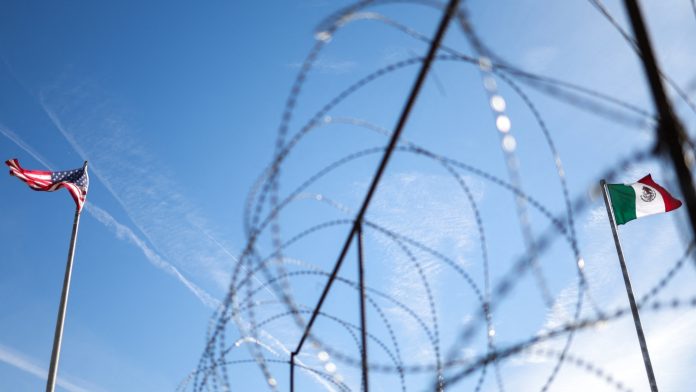
An American flag (L) and Mexican flag (R) fly along the US-Mexico border in El Paso, Texas in January 2025.

Charly Triballeau/AFP via Getty Images


hide caption

toggle caption

Charly Triballeau/AFP via Getty Images

The Trump administration is taking the novel step of turning to other agencies to quickly bolster its immigration enforcement workforce as it prioritizes arrests and deportation.

The Department of Homeland Security is tapping other agencies and federal groups — from the U.S. Marshals Service to the IRS — to support Immigration and Customs Enforcement, according to memos published by DHS and emails obtained by NPR.

Sarah Saldaña, former director for ICE under President Barack Obama, said it’s common for law enforcement agencies to assist one another. For example, IRS or Drug Enforcement Administration agents might help with collecting evidence related to fraud or human and drug trafficking, she said.

But the new directives seem different, she said.

“What is unusual is to tap them as a general rule, to be available to presumably expand the reach of either the removal officers or the investigative agents,” Saldaña said. “That’s unusual because they have their own missions and their own lanes.”

The ICE workforce, some 20,800 people, is smaller than that of Customs and Border Protection and U.S. Citizenship and Immigration Services (USCIS), and hasn’t grown for decades, according to a 2024 year-end report.

Officials have long warned that staffing levels within the agencies that oversee immigration enforcement at DHS have been below what is needed, no matter which party is in the White House. ICE oversees domestic and international investigations through its Homeland Security Investigations department and deportations through its Enforcement and Removal Operations branch.

Now, officers are facing more pressure. White House leadership has quickly grown frustrated with the pace of arrests. White House deputy chief of staff Stephen Miller told CNN that the agency has a daily goal of arresting at least 75 people per each of its 20 field offices — but would like to surpass that target.

“U.S. Customs and Immigration Enforcement recognizes the importance of its relationships with its law enforcement partners to carry out its mission in a way that best serves national security, public safety and border security,” an ICE spokesperson said. “ICE has always coordinated with federal, state, and local law enforcement agencies as part of its mission.”

But employees across government are concerned that they might not be fully equipped to assist in the new mission, even as ICE officers face the pressure of steep arrest quotas.

Bringing in other agencies

In the first week of his second term, Trump officials issued a directive they considered “essential to fulfilling President Trump’s promise to carry out mass deportations.”

The memo gave law enforcement officials in the U.S. Marshals Service, the DEA, the Bureau of Alcohol, Tobacco, Firearms and Explosives, and the Federal Bureau of Prisons authority to investigate and apprehend people suspected of being in the country without authorization. Most of those officials did not previously have duties that overlapped with ICE’s removal mission.

“For decades, efforts to find and apprehend illegal aliens have not been given proper resources. This is a major step in fixing that problem,” said then-acting DHS Secretary Benjamine Huffman said in a statement. The department has since highlighted the collaborations on social media.

The move came after U.S. Secretary of Homeland Security Kristi Noem wrote to Treasury Secretary Scott Bessent last month, requesting that “qualified officials” from the Internal Revenue Service’s criminal investigations unit help with immigration enforcement tasks. That included assisting with investigating human smuggling, overseeing contracts, managing detention dockets, and physically escorting or supporting the transportation and removals of people in the U.S. without legal status.

The administration is also relying on immigration detention and support from the military, including at military bases around the country.

Saldaña, the Obama-era official, said she can foresee pitfalls in bringing in others to assist with deporting those without legal status, for example, because other agencies don’t know ICE’s mission, and procedures.

Eddie Walker, president of the National Treasury Employees Union Chapter 247, agreed that it was a new policy for agents to help across the board with ICE efforts.

“It’s certainly unorthodox,” Walker said. “I’m not sure how many people would leap to that job. It seems like a very different type of job.”

Noem later in February also signed memorandums deputizing up to 600 special agents within the State Department’s Diplomatic Security Service across the country to help with arrests and deportations.

ICE appears to be trying to source workers from other agencies within DHS, too.

An email obtained by NPR shows that in early February, the USCIS Fraud Detection and National Security Directorate emailed some of their employees working remotely. Those workers, who are trained to investigate immigration-related fraud, were notified that their names had been “put forward” for consideration to serve on short-term ICE details and ICE task forces.

“We are reaching out to let you know that you may be contacted and that you are expected to confirm availability upon request of that communication,” the USCIS email states.

It is not clear how many employees in total have been deputized to work for ICE from other agencies, and how effective their support has been.

Pushback from employees, Democrats

But federal employees and Democratic lawmakers have protested some of the reassignments.

Four Bureau of Prison facilities are currently holding about 700 immigration detainees, according to Kathleen Toomey, associate deputy director of the BOP. The use of federal prisons to house detainees was what Trump also relied on in his first term in office.

A letter Democrats sent to Attorney General Pam Bondi raised alarm that the facilities may not be able to handle the shift in the prison population. A separate letter from Democrats sent to Senate Judiciary Chairman Chuck Grassley, R-Iowa, included a statement from an anonymous BOP employee.

“We have not been trained or employed for this purpose, and we don’t know what these individuals are being detained for,” the employee wrote. “BOP employees did not sign up for this. We have not been trained for this. We are not being paid for this. And it is not in our contracts.”

Congressional funding needs

Congress is permitted to expand ICE’s capacity and abilities by enlarging its budget, which could curtail the need for ICE to source workers from other agencies.

“Tom Homan said, ‘I am begging you for money,'” Senate Budget Committee Chair Lindsey Graham, R-S.C., told reporters on Capitol Hill, also quoting the director of the Office of Management and Budget as saying that “We can’t rob other accounts any longer.'”

Graham said the request from the administration for an extra $175 billion would cover four years of immigration-related security enforcement.

The Senate passed a budget resolution last week with that figure, an early step in the reconciliation process, which would allow Republicans to pass much of Trump’s legislative agenda with only GOP votes.

But first, congressional Republicans have to get on the same page. House Republicans passed a competing budget resolution on Tuesday. Reconciliation is only possible if both chambers ultimately get on board with the same resolution.