Friday, November 13, 2026
Home Blog Page 162

Chinese Company to Single Workers: Get Married or Get Out

0

The ideal worker at the Chinese chemical manufacturer, according to the internal memo, is hardworking, virtuous and loyal. And — perhaps most important — willing to have children for the good of the country.

That was the message that the company, Shandong Shuntian Chemical Group, sent to unmarried employees recently, in a notice that spread widely on social media. It instructed them to start families by Sept. 30, or else.

“If you cannot get married and start a family within three quarters, the company will terminate your labor contract,” the memo said.

Shandong Shuntian was not the first company to try to dictate its employees’ personal lives amid rising concern about China’s plummeting marriage and birth rates. Weeks earlier, a popular supermarket chain had told its staff not to ask for betrothal gifts, to lower the cost of weddings.

Both orders were widely criticized, for many of the same reasons that people are refusing to start families in the first place. Besides the economic cost of having children, many young Chinese cite a desire for personal autonomy. They reject the traditional idea that their families should direct their lives, and they certainly aren’t inclined to let their employers have a say.

Last year, 6.1 million Chinese couples got married — a 20 percent decline from a year earlier, and the fewest since the government began releasing statistics in 1986. China’s population has fallen for three straight years.

The authorities have been trying to reverse those trends. Officials have visited women at home to ask whether they plan to get pregnant; published propaganda claiming that pregnancy can make women smarter; and called for creating a “fertility-friendly social atmosphere,” including in workplaces.

Some companies seem eager to comply.

The notice from the chemical company, which began circulating online last month, was directed at unmarried employees between the ages of 28 and 58, including divorced workers.

“Not responding to the call of the country, not marrying and having children, is disloyal,” the memo said.

As online ridicule grew, the company quickly backtracked. Reached by phone, a woman at its headquarters said the notice had been retracted, and that the local government had ordered the company to undergo “rectification.” She refused to answer further questions. Local labor officials could not be reached for comment.

Years ago, when the Chinese authorities wanted to limit births, they resorted to coercive measures like forced abortions and sterilizations. (The city where the chemical company is based, Linyi, was particularly notorious for such tactics.) Now that Beijing is trying to do the opposite, it is taking a softer approach, perhaps to avoid setting off large-scale resistance.

But officials have signaled support for some companies’ meddling, as in the case of the supermarket chain Pangdonglai.

The chain’s founder, Yu Donglai, wrote on social media in November that he would soon forbid employees to exchange “bride prices” — payments, sometimes amounting to tens of thousands of dollars, that a man traditionally gives to his future wife’s family. Critics of the practice, including the government, have argued that it makes marriage unaffordable for many men.

Employees would also not be allowed to invite more than five tables of guests to their weddings, Mr. Yu said.

Some commenters accused him of overstepping. But People’s Daily, the ruling Communist Party’s official mouthpiece, defended him. The rules were “intended to promote a new trend of civilized marriage,” it said in a commentary. “Its guiding significance is worth paying attention to.”

Pangdonglai formalized the new rules in January. Employees who don’t comply will retain basic benefits but be ineligible for additional ones, like extended leave.

Some social media users speculated that the recent announcements were disguised cost-cutting measures, or dismissed them as the whims of entrepreneurs. Both Pangdonglai and the chemical company are private, not state-owned.

But the fact that companies felt comfortable issuing such edicts reflects the broader social environment, suggesting that they thought the orders would be well received, said Lu Pin, a Chinese feminist scholar and activist.

Rather than issue its own orders, the government might prefer to create social pressure to have children, Ms. Lu said. If people fear being excluded from their communities or losing their jobs, they might be more likely to comply, she said.

“Governance through social norms is low-cost, low-risk and avoids accountability for the government,” Ms. Lu said.

There have been suggestions, however, that the government might exert more direct pressure on its own employees.

Last year, a draft document from the health commission of Quanzhou, a city in southern China, spread online. It called on employees of government agencies to “take the lead in implementing the three-child policy.”

The document did not specify what was meant by implementing. But commenters drew parallels with a famous open letter from the central authorities that is seen as having launched the one-child policy in 1980. That letter exhorted party members to “take the lead” in having one child.

A woman who answered the phone at Quanzhou’s health commission confirmed the draft’s existence. But she said the city was waiting on higher-level instructions before issuing final guidelines.

Siyi Zhao contributed research.

President Trump taking an ambitious to-do list to joint session of Congress address

0

President Trump heads to Capitol Hill Tuesday night to deliver an address to a joint session of Congress. He has an ambitious to-do list, but just a slim Republican majority in Congress to work with.

‘We Pray Famine Doesn’t Return’: Gazans React to Israel’s Halt of Aid

0

Palestinians feared hunger and increased food prices after Israel stopped the entry of all goods and humanitarian assistance into the Gaza Strip.

Biden’s Envoy to Fight Antisemitism Says She Saw Surge of Hate After Oct. 7

0

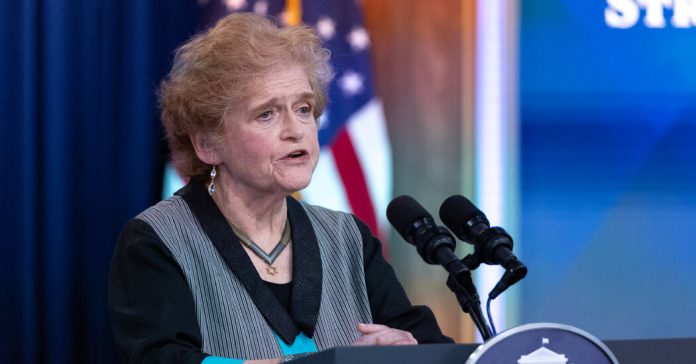
When Deborah Lipstadt was appointed the Biden administration’s special envoy to fight antisemitism abroad, she started by visiting Saudi Arabia and the United Arab Emirates for what she described as encouraging exchanges with leaders of the two Muslim nations.

Her hope was that Gulf leaders could use their voices to help stem antisemitism among Muslims around the world.

“It was all very promising,” said Dr. Lipstadt, who was a historian and scholar of antisemitism and genocide before she took on the role, with the rank of ambassador in 2022. “I think there was a real conversation going on.”

Then came the Hamas-led attack on Israel on Oct. 7, 2023.

It was the deadliest single day for Jews since the Nazi genocide of World War II. Israel’s devastating response that unfolded over the next 15 months, a war that killed tens of thousands of Palestinians in Gaza, internally displaced nearly the entire population of more than two million and left the territory in ruins.

“Oct. 7 of course changed everything,” Dr. Lipstadt said in Jerusalem in January just before her term ended.

Now, Dr. Lipstadt is back teaching at Emory University as a Distinguished Professor and is writing a memoir about her experiences serving the former president. She turned down an offer to teach a course next year at Columbia University.

In an opinion piece published on Monday in The Free Press, Dr. Lipstadt said she did not want to “serve as a prop or a fig leaf,” or put herself or her students at risk, after what she described as the campus administration’s weak response to anti-Israel protesters who broke regulations and harassed other students. Columbia, in a statement, said that Dr. Lipstadt had been “informally” invited to consider teaching a course and that when she signaled her intent “not to continue the conversation,” interim Columbia President Katrina Armstrong “reached out to personally engage her and share her personal commitment to combating antisemitism.”

In Dr. Lipstadt’s interview in January, reflecting on her two years as Mr. Biden’s envoy, she said the 2023 attack on Israel unleashed a chain of events that brought what she called “a tsunami of antisemitism.”

She said people were accusing Israel of genocide online as rescue workers were still gathering the bodies of Oct. 7 victims from Israeli communities near the Gaza border. And there were immediate displays of support and defenses of Hamas as soon as Israel launched its military campaign in Gaza.

In the months that followed, as death, distress and destruction mounted in Gaza, pro-Palestinian demonstrations swept through American university campuses and cities around the world, sometimes with antisemitic overtones.

The number of antisemitic episodes in the United States surged to the highest level ever recorded, according to the Anti-Defamation League, a rights organization, with about triple the number of cases reported to the group in the year after the Oct. 7 attack compared with a year earlier.

A survey of Jews in the European Union carried out in the months before the attack found that 90 percent of respondents had encountered antisemitism online in the previous year, 56 percent had encountered offline antisemitism from people they knew and 37 percent were harassed for being Jewish during the year before. Some European Jewish organizations reported an increase of more than fourfold in antisemitic incidents after the attack.

Antisemitism, an age-old curse, was always simmering, said Dr. Lipstadt, 77, who is herself Jewish. But after Oct. 7, “it suddenly became OK, almost normalized,” she added.

The Trump White House has accused the Biden administration of turning a blind eye to a “campaign of intimidation, vandalism and violence on the campuses and streets of America” by “pro-Hamas aliens and left-wing radicals.”

Dr. Lipstadt wrote in The Free Press that President Biden did condemn the violence on campus, often unequivocally, “But there were too many moments that were met with silence.”

The Biden administration in 2023 released the first U.S. National Strategy to Counter Antisemitism calling for a bipartisan effort to get government, law enforcement and schools to stanch the spread of hate online. And in 2024, the United States led 38 countries and four international bodies in outlining best practices for tackling Jew hatred known as the Global Guidelines for Countering Antisemitism.

In January, President Trump signed an executive order vowing to more strongly protect American Jews from antisemitism. It allows for the cancellation of visas and deportation of foreign students who sympathize with Hamas, the Palestinian militant group that has governed Gaza for most of the past two decades.

Israel has leveled accusations of antisemitism against countries, foreign leaders and institutions over issues including the International Criminal Court’s issuing of arrest warrants for Prime Minister Benjamin Netanyahu and his former defense minister, Yoav Gallant, and a genocide case against Israel in the International Court of Justice. They were accused of war crimes and crimes against humanity in Gaza.

Dr. Lipstadt described antisemitism as the oldest continuous hatred, so deeply rooted that it is almost impossible to eradicate. She saw her job as a chance to call it out and use diplomacy and the levers of government to quell the ancient prejudice.

Dani Dayan, the chairman of Yad Vashem, World Holocaust Remembrance Center in Jerusalem, said Dr. Lipstadt provided global resonance to the issue. But unfortunately her assignment “did not encompass domestic U.S. antisemitism at a time when it was much needed,” he said.

In the summer of 2022, shortly after taking up her role, Dr. Lipstadt made a counterintuitive choice for her first trip abroad by heading to Saudi Arabia.

The wealthy Gulf kingdom has no formal diplomatic relations with Israel. But less than two years before, two of its Gulf neighbors, the United Arab Emirates and Bahrain, established full ties with Israel. And there was talk of Saudi Arabia soon following suit — a possibility that Mr. Trump is again pursuing in his second term.

“I went there to make a statement,” she said.

Her pitch was that regardless of their position on the Israeli-Palestinian conflict, “antisemitism is something that is wrong and unacceptable.”

After her Saudi visit, she went on to the United Arab Emirates, where her first meeting with the president, Sheikh Mohamed bin Zayed, ran long, lasting 95 minutes.

Toward the end of her term, Dr. Lipstadt returned to the two Gulf Arab nations. But the Gaza war and its ripples around the region had engendered a new hesitancy around the subject of antisemitism, she said, with Gulf leaders highly conscious of the anti-Israel sentiment among their people.

And an already fraught debate about the line between legitimate criticism of Israeli policies and antisemitism had sharpened.

At the same time, the atmosphere on American college campuses was charged.

Many Jewish students were saying they felt unsafe. At the same time, other students complained of anti-Muslim bias and the stifling of free speech among pro-Palestinian students and faculty.

But Dr. Lipstadt said she had no trouble distinguishing between legitimate criticism of Israel and antisemitism.

A working definition of antisemitism, adopted in 2016 by the International Holocaust Remembrance Alliance and endorsed by more than 40 countries, includes manifestations of “the targeting of the state of Israel, conceived as a Jewish collectivity,” but not criticism of Israel similar to that leveled against any other country.

If all such criticism were deemed antisemitic, Dr. Lipstadt said, then many Israelis would be considered antisemites.

“The national sport of Israel is not football,” she said. “It’s criticism of the government.”

Criticism becomes antisemitic when one questions the right of Israel to exist as a Jewish state or singles out Israel and applies a double standard compared to other countries, she said.

Now, people are either engaging in overt antisemitism while claiming they are only criticizing Israeli policy, or conversely, calling normal criticism of Israel antisemitic, she added.

“Both are illegitimate,” said Dr. Lipstadt.

She said she considered the genocide case in The Hague to be antisemitic.

A special U.N. committee concluded last year that Israel’s military campaign in Gaza was “consistent with the characteristics of genocide,” citing the high death toll and accusations of Israel’s use of starvation as a weapon of war. Amnesty International has also concluded that Israel committed genocide against the Palestinians in Gaza.

Several countries, including Belgium, Ireland, Mexico and Spain, joined the genocide case initiated by South Africa against Israel in the world’s top court.

There is no debate that the suffering of civilians in Gaza and the level of destruction there has been horrible, Dr. Lipstadt said.

“But is it genocide?” she said. “It doesn’t fit the definition of genocide,” she added. “I mean, there’s got to be an intent to wipe out a culture or people.”

Where Being Gay Is Punishable by Death, Aid Cuts Are ‘Heartbreaking’

0

In the weeks since President Trump signed an executive order dismantling the U.S. Agency for International Development, Andrea Minaj Casablanca’s phone has been inundated with desperate pleas for help.

A counselor who works with nonprofits catering to members of Uganda’s embattled L.G.B.T.Q. population, she has fielded urgent requests from people seeking H.I.V. medications, therapy sessions and shelter in the wake of Mr. Trump’s executive order. Ms. Casablanca responded to these calls while grappling with her own crisis: being fired from a job that was funded by U.S.A.I.D.

“Our whole world has been turned upside down,” Ms. Casablanca, a 25-year-old transgender woman, said on a recent afternoon in Kampala, the capital. “Everyone is in fear of the future.”

L.G.B.T.Q. people in Uganda have in recent years endured an intensifying crackdown in this conservative East African nation. President Yoweri Museveni signed a law in 2023 that calls for life imprisonment for anyone who engages in same-sex relations in Uganda and up to a decade in prison for anyone who tries to.

Now, activists say, the U.S.A.I.D. cuts have put them at even greater risk, with shelters underfunded, hundreds of individuals unemployed and many more facing discrimination and violence. Vital medical supplies remain scarce, while members of L.G.B.T.Q. groups increasingly report feeling depressed or suicidal.

The law also allows for the death penalty for anyone convicted of “aggravated homosexuality,” a sweeping term defined as acts of same-sex relations with minors or disabled people. Mr. Museveni and his government have claimed that homosexuality is a Western phenomenon and that the law protects children and defends the sanctity of the family.

“This is a reckoning,” said Richard Lusimbo, the founder and director general of the Uganda Key Populations Consortium, a nonprofit promoting L.G.B.T.Q. rights and health.

“With these programs gone, I worry our communities will be pushed back into disarray and disempowerment,” he added. “It’s heartbreaking.”

Muhoozi Kainerugaba, Mr. Museveni’s son and the chief of the Ugandan military, urged President Trump to restore aid for those infected with H.I.V., adding, “Our people will be grateful.”

The United States provides more than $970 million annually in development as well as humanitarian and security assistance to Uganda. In 2023, about $440 million was spent on health programs, followed by emergency relief, agriculture and education services, according to U.S. government data.

For years, the United States supported L.G.B.T.Q. groups in Uganda through U.S.A.I.D.-funded initiatives, offering H.I.V. treatment, legal training and resources for activism. Previous U.S. governments also condemned human rights violations against gay Ugandans, imposing trade and travel restrictions in response.

Just days after Mr. Trump took office in January, his administration announced it was halting all foreign aid as it conducted a 90-day audit of spending. Secretary of State Marco Rubio issued a waiver to continue funding lifesaving medicines and medical services, including for H.I.V. and tuberculosis care and treatment.

But the exemption excluded programs that promoted diversity, equity and inclusion. That meant L.G.B.T.Q. people were unable to receive medication to protect them from H.I.V. infections. Several Ugandan gay rights groups said that, during the audit, they were informed that their projects were permanently terminated because they promoted diversity, equity and inclusion.

In late February, the Trump administration announced it had completed a review of all U.S. foreign aid and was cutting 90 percent of U.S.A.I.D. programs, including those providing lifesaving medication.

The rapid loss of aid from the United States has left many gay Ugandans terrified. “It’s like running from one fire to another fire,” said Agy Hrd, the executive director of Africa Queer Network, which works on L.G.B.T.Q. rights in over a dozen African countries.

Ms. Hrd, who has vigorously campaigned against the anti-homosexuality law in Uganda, said she was attacked and beaten in the country last year. With the sudden funding cuts, she worries that many gay people, especially in rural areas, will get sick or encounter violence and have nowhere to turn for safety or support.

“I haven’t slept well in weeks,” she said. “We have a big battle ahead of us.”

An informal survey of 127 nonprofits dealing with L.G.B.T.Q. issues and other at-risk groups carried out by Uganda Key Populations Consortium, Mr. Lusimbo’s organization, showed that 97 percent of them had lost almost all their budgets as a result of the U.S.A.I.D. cuts. Mr. Lusimbo said he had to let most of his staff go in the past month.

Organizations have begun distributing what few resources they have left, and relying on volunteers to maintain essential services, like finding shelters or delivering testing kits. Brant Luswata, the executive director of Icebreakers Uganda, a gay rights organization, said that as services were eliminated, his group had been asked to return filing cabinets and chairs purchased with American tax dollars.

Activists said some L.G.B.T.Q. clinics were now charging for services that had previously been free, like H.I.V. testing. Mental health services have been reduced or cut altogether, they said. There are also fears that the abrupt suspension of aid will undo years of progress in teaching Ugandans about safe sex or expose people living with H.I.V. to life-threatening infections because of their weakened immunity.

“The infections have not gone on a pause just because there’s a 90-day review,” Mr. Lusimbo said. “We live in a global village,” he added. “Everyone’s health is in jeopardy.”

The conditions for L.G.B.T.Q. Ugandans are so perilous that shelters often move locations frequently or relocate individuals in order to avoid personal attacks or raids from the authorities. Now, some of those shelters are beginning to close.

Since 2020, approximately three dozen shelters in secret locations across Uganda have protected thousands of gay people from homelessness and violence, according to John Grace, the coordinator of the Uganda Minority Shelters Consortium.

The shelters relied on intermediaries who received American funding, including from U.S.A.I.D. and the Centers for Disease Control and Prevention. But because of gradual funding cuts and policy changes under the Trump administration, at least a dozen shelters have now closed, said Mx. Grace, who is nonbinary.

Those that remain are understaffed and overcrowded and have begun turning people away, they said.

“It’s a total mess,” said Mx. Grace, 32, whose family kicked them out after they came out as nonbinary a few years ago. “These shelters are a lifeline for so many people, and now they’re struggling to survive.”

For Ms. Casablanca, the counselor, the relentless stream of phone calls shows no sign of letting up. Despite not receiving her $40 monthly paycheck funded by U.S.A.I.D., she has chosen to continue working as a volunteer.

Across Kampala and other Ugandan cities, she said, L.G.B.T.Q. people are reaching out, worried about where to get medication, condoms, lubricants and tests. Some call in tears, sharing their struggles with fear and isolation, she said. Many, like her, also worry about where their next paycheck will come from or how they will pay rent.

To make ends meet, she said, she has taken on work as a party decorator. “We need to survive in this darkness,” she said.

Tuesday Briefing – The New York Times

0

President Trump suspended the delivery of military aid to Ukraine yesterday, according to senior U.S. officials, who said the pause would stay in effect until Trump determined that Ukraine had demonstrated a good-faith commitment to peace talks with Russia.

The order was to take effect immediately, affecting more than $1 billion in arms and ammunition in the pipeline and on order.

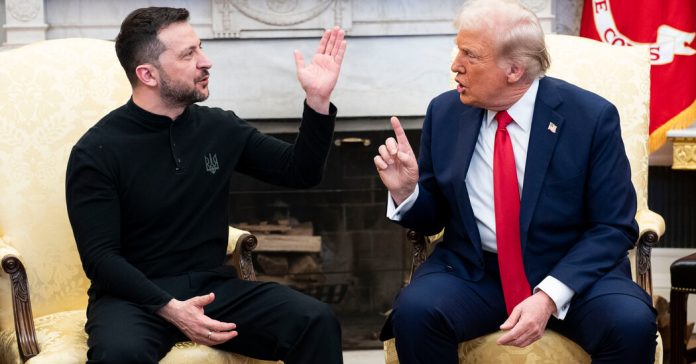
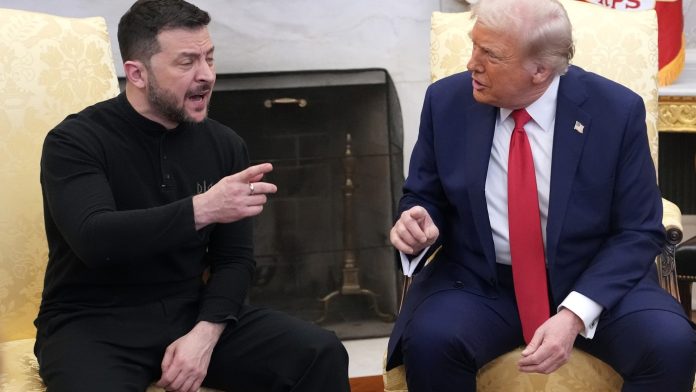
Earlier in the day, President Volodymyr Zelensky returned to Ukraine after a whirlwind diplomatic mission that included both humiliation, by Trump in a confrontational Oval Office meeting, and a warm embrace, from European leaders. Zelensky vowed to use all diplomatic avenues to pursue an end to the war, but he said there was “a long way to go.”

Russia has given no indication that it will accept any terms but Ukrainian capitulation and permanent conquest of a large swath of Ukraine — and Trump appears set on standing with Moscow. Ukrainians say they will not lay down their arms unless they receive security guarantees, supported by the U.S., that would prevent another Russian attack.

Support: Britain and France have promised that a “coalition of the willing” will secure a truce. But how many countries will step up, and does that even matter, given Russia’s rejection of such a coalition as part of any settlement? (Read about what the cost of defending Ukraine may mean for investors in Europe.)

Warfare: Drones now do most of the killing in the war, causing about 70 percent of deaths and injuries, commanders say.


President Trump’s threats to impose stiff tariffs on goods imported from Canada, Mexico and China are expected to become a reality today. Trump said yesterday that there was no chance for a last-minute deal to avert them, and company executives and foreign officials scrambled to prepare.

The tariffs will add a 25 percent fee on all Mexican and Canadian exports coming across those borders and an additional 10 percent for Chinese goods. Canada was poised to retaliate, potentially setting off a trade war, and Mexico’s president, Claudia Sheinbaum, said: “Whatever the decision is, we will also make our decisions.”

Trump has described the tariffs as an effort to pressure those countries to stop the flows of migrants and deadly drugs. But speaking yesterday, he appeared to change the terms, saying Canada and Mexico needed to relocate auto factories and other manufacturing to the U.S. Canada and Mexico are both deeply dependent on exports to the U.S.

Effects: The announcement sent stock markets tumbling, with the S&P 500 falling 1.8 percent, its worst one-day drop so far this year.

Automobiles: The tariffs are likely to raise prices for new cars and trucks. Nissan and Stellantis could be hit the hardest.

Division: What’s behind Trump’s love-hate relationship with Canada, one of the largest trading partners of the U.S.?

As cease-fire discussions continue between Israel and Hamas, the two sides are preparing for those efforts to fail and for the conflict to resume.

Hamas is collecting unexploded bombs to make improvised explosive devices, recruiting new members and replacing commanders, according to a member of Hamas’s military wing. Israel has prepared extensively for a new, more intense campaign in Gaza, Israeli officials said.

In the Gaza Strip, Palestinians are feeling the effects of Israel’s halt on the entry of all goods and humanitarian assistance, as the prices of food and other essential goods climb.

For over a decade, Barry Joule served as friend, drinking partner and helper to the artist Francis Bacon. Ten days before Bacon died, Joule says, he gave him a trove of papers and artworks.

Some in the art world believe these works are genuine. Others, including Bacon’s own estate, aren’t so sure. Is Joule a keeper of Bacon’s secrets? Or is he, at best, misguided — or, at worst, a fantasist and a trickster?

Lives lived: Khalil Fong, a Hong Kong singer-songwriter who infused a soul and R&B sensibility into Chinese pop songs, died at 41.

The writer-director Sean Baker was the biggest victor at the Academy Awards on Sunday night.

For my colleague Manohla Dargis, the chief film critic at The New York Times, his success was gratifying: His movie “Anora,” she writes in this appraisal, “is the kind of scrappy, low-budget, independent movie that has been making the Oscars more interesting for, well, decades.”

On accepting his best director award, Baker made a plea that seemed to aim at a culture where great movies get watched on phones. “This is my battle cry,” he said. “Filmmakers, keep making films for the big screen.”

For more:

Richard Haass says Trump has put world order ‘on life support’ : NPR

0

Richard Haass, president emeritus of the Council on Foreign Relations.

Kaveh Sardari/Council on Foreign Relations


hide caption

toggle caption

Kaveh Sardari/Council on Foreign Relations

After he was kicked out of the White House on Friday afternoon, Ukrainian President Volodymyr Zelenskyy went to London.

There, world leaders welcomed him much more warmly.

Over the weekend, leaders from over a dozen countries rallied to Ukraine’s defense after a heated meeting in the Oval Office where President Trump berated Zelenskyy and accused him of being ungrateful for the support his country had received from the U.S.The change in tone in London was markedly different.

“Our starting point must be to put Ukraine in the strongest possible position now, so they can negotiate from a position of strength. And we are doubling down in our support,” said British Prime Minister Keir Starmer in a news conference Sunday.

Starmer said Europe must do the “heavy lifting” to secure a lasting peace agreement between Russia and Ukraine, adding, “To support peace, and to succeed, this effort must have strong U.S. backing.”

Meanwhile, the Trump administration continues to align itself more closely with Moscow.

In an interview with All Things Considered‘s Ari Shapiro, longtime diplomat Richard Haass said President Trump’s foreign policy has effectively put the post-WWII world order “on life support.” And now, American allies have lost “their special place.”

Haass, president emeritus of the Council on Foreign Relations, served three Republican presidents. He said, “Being an ally [to the U.S.] in many ways has become something of a liability.”

President Trump and Ukrainian President Volodymyr Zelenskyy meet in the Oval Office of the White House in Washington, D.C., Friday.

President Trump and Ukrainian President Volodymyr Zelenskyy meet in the Oval Office of the White House in Washington, D.C., Friday. The discussion devolved into a tense exchange.

Saul Loeb/AFP


hide caption

toggle caption

Saul Loeb/AFP

Interview highlights

Ari Shapiro: Do you think the Europeans can figure out how to end this war without U.S. leadership?

Richard Haass: The Europeans can only do so much. They don’t have the defense industries. But Ukraine can hold on. The problem is without the United States supporting Ukraine, and I think that’s likely the way we’re heading, it’s quite probable that Vladimir Putin will not have the incentive to compromise, to accept a cease-fire except on terms that are quite draconian.

Shapiro: So you’re saying Russia could make real advances in Ukraine if the U.S. pulls back and that would disincentivize any kind of peace talks?

Haass: Right. And that’s what’s missing. I don’t understand about the president’s approach. He says he wants to be a peacemaker here. Well, there’s the old line saying, if you want peace, prepare for war. The best way to get peace is to persuade Vladimir Putin that the United States and the west will stand by Ukraine. So continued war by Russia will not lead Mr. Putin to anything that resembles success. We’ve done just the opposite. We have now essentially said we’re going to shut down American support for Ukraine so Vladimir Putin sitting in the Kremlin going, why should I compromise? I’m going to get everything I need simply by continuing to do what I’m doing.

Shapiro: What about the argument that Trump is effectively saying the quiet part out loud that Ukraine cannot win this war even with U.S. support so it’s time to just bring the conflict to an end?

Haass: If by “win this war,” you mean recover all of its territory going back to 1991? You’re right. That was actually a good strategic insight of this administration that militarily recovering all Ukraine had lost in 2014 and 2022 was not realistic. And the Biden administration refused to do that. But the other way to define success is you have a ceasefire, Ukraine keeps what it has now — which is 80 percent of its territory, the war stops and then you have the ability over years or decades to negotiate. And maybe you come up with a new relationship between Ukraine and a post-Vladimir Putin Russia. I think there are all sorts of possibilities. But again, success should not be defined either as Ukraine recovering all of its territory militarily that’s a nonstarter, or giving Vladimir Putin everything he wants.

Shapiro: I’d like to get your take on what the big picture set of U.S. alliances right now looks like because since the end of WWII, the globe has been more or less defined by a certain set of expectations and those alliances seem very shaky right now. Trump last week said at his cabinet meeting that the European Union “was formed in order to screw the United States.” To put it bluntly, is the post-war order done?

Haass: To put it bluntly, the post-war order is on life support. And it’s a tragedy. I’ve never seen this before in history. I’m used to empires or orders crumbling. I’m used to them being overwhelmed. I’ve never seen the side, the country that created it and maintained it, dismantling it. And that is exactly what we are doing. And what’s so tragic about it is the great strategic advantage of American foreign policy is we wake up every morning and we have this pool of partners, dozens in Europe and in Asia, that are willing to work with us militarily to deter conflict, to fight them if need be, willing to trade with us, invest with us and so forth, and we are undermining that — and for nothing that’s necessarily good or even in any way comparable in return.

President Trump and Russian President Vladimir Putin shake hands before attending a joint press conference after a meeting at the Presidential Palace in Helsinki, on July 16, 2018.

President Trump and Russian President Vladimir Putin shake hands before attending a joint press conference after a meeting at the Presidential Palace in Helsinki, on July 16, 2018.

Yuri Kadobnov/AFP


hide caption

toggle caption

Yuri Kadobnov/AFP

Shapiro: Well, what’s the alternative? What comes after that?

Haass: Could be a world of much more disorder where adversaries see opportunities. Could be a world of spheres of influence, where China says, Oh, we’re going to do with Taiwan and others what we want, where Russia controls big parts of Europe, where the United States can. Consistent with some of what the president has said, seems to play a more aggressive role in the Western Hemisphere. So that’s possible, too. The problem is any one of those worlds has far more conflict to it, far less prosperity and far less freedom. So I just don’t understand why we would trade in an approach to the world that has mostly worked for 80 years for something that’s far more risky and potentially far more costly.

Shapiro: You watched the Trump campaign closely. You follow foreign affairs closely. Are you surprised by this? One month into the new administration?

Haass: In a word, I’m very surprised by what I’m seeing. I followed closely President Trump’s first term, which while something of a departure, was still on the playing field. Trump 2.0 is qualitatively different. It’s far more radical. I would never use the word conservative. It’s the opposite of conservative because rather than conserving, it is disrupting. And we see all these alliance relationships being disrupted. We see in sometimes now an unconditional reaching out to adversaries like Russia. And what we don’t see is what the president proposes to put in place of the existing order. It seems to be a world, if you will, without structure, without permanent relationships. And it’s not something that was talked about during the campaign. And I think when people went to the polls, this is not what they voted for. It’s not what they bargained for, but it is what they’re getting.

Trump Suspends Military Aid to Ukraine After Oval Office Blowup

0

President Trump on Monday temporarily suspended the delivery of all U.S. military aid to Ukraine, senior administration and military officials said, just days after Mr. Trump and President Volodymyr Zelensky of Ukraine had an explosive confrontation at the White House.

The order affects more than $1 billion in arms and ammunition in the pipeline and on order. It resulted from a series of meetings at the White House on Monday between Mr. Trump and his senior national security aides, the officials said, speaking on the condition of anonymity to discuss internal deliberations.

The officials said the directive would be in effect until Mr. Trump determined that Ukraine had demonstrated a good-faith commitment to peace negotiations with Russia.

Mr. Trump’s decision dramatically escalates the breach between Washington and Kyiv, at a critical moment in the conflict. The most immediate beneficiary of the move is President Vladimir V. Putin of Russia. If the suspension is lengthy, he can use the time to press for further territorial gains. And he may well decide to hold back from any negotiations at all, figuring that any prolonged dispute between Mr. Trump and Mr. Zelensky will only strengthen his position, either on the battlefield or when cease-fire talks ever take place.

Mr. Trump’s move has few direct precedents in recent American history. While the United States has paused the transfer of specific weapons systems to allies and partners, such as President Joseph R. Biden Jr.’s decision to suspend deliveries of 2,000-pound bombs to Israel that he feared could be used against civilians in Gaza, a full cutoff is essentially an ultimatum. It forces Mr. Zelensky to agree to a cease-fire on terms Mr. Trump dictates, or condemns the country to larger battlefield losses.

The suspension also puts the United States in direct opposition to its major NATO allies. Most of the largest European nations, led by France, Britain and Germany, have pledged to step up aid to Ukraine in recent days, siding with Mr. Zelensky in his dispute with the Trump administration. But they simply do not have the stockpiles to make up the difference in the short term.

Mr. Trump’s directive, which was reported earlier by Bloomberg News, also halts deliveries of equipment from Pentagon stockpiles as aid through the Ukraine Security Assistance Initiative, which provides funds that Kyiv can use only to buy new military hardware directly from U.S. defense companies. It was unclear what exactly Mr. Zelensky would need to do for Mr. Trump to resume the military assistance.

Mr. Trump has increasingly aligned himself with Mr. Putin and his narrative about the war in Ukraine. He falsely claimed that it was Ukraine that started the war and has called Mr. Zelensky, who was democratically elected, a “dictator.”

He has called Mr. Putin “smart” and “cunning,” but declined to call him a dictator. And Mr. Trump has spoken in recent days about how he and Mr. Putin have been bonded by going through the shared ordeal of the investigation into Moscow’s attempts to tilt the election eight years ago to Mr. Trump. American intelligence officials concluded at that time that Mr. Putin’s intelligence agencies worked actively to swing the 2016 election in Mr. Trump’s favor, a conclusion that Mr. Trump has rejected and called part of the “Russia hoax.”

The tensions between Mr. Trump and Mr. Zelensky exploded into the open on Friday, when the two men were supposed to sign a deal at the White House for Ukraine to turn over rare mineral rights to repay U.S. military aid over the past three years. Instead, Mr. Trump and Vice President JD Vance berated Mr. Zelensky in front of the cameras for not being grateful enough for U.S. support.

The fate of the minerals deal remained unclear.

Mr. Trump said on Monday that he did not think the minerals deal was dead, calling it a “great deal for us,” but that there was one thing he needed to see from Mr. Zelensky to restart negotiations.

“I just think he should be more appreciative,” Mr. Trump told reporters.

Earlier in the day, Mr. Trump seized on comments Mr. Zelensky made over the weekend when he predicted that a peace deal with Russia was “still very, very far away.”

“This is the worst statement that could have been made by Zelenskyy, and America will not put up with it for much longer!” Mr. Trump wrote on social media.

On Monday, several members of Mr. Trump’s cabinet continued to join with allies in suggesting that Mr. Zelensky was responsible for the diplomatic breakdown, and should show remorse for the Oval Office episode.

Commerce Secretary Howard Lutnick said in an interview on CNN on Monday that it was “way too far” for Mr. Zelensky to demand, as part of any deal, “reparations” and the return of seized land from Russia and security guarantees.

“You’ve got to say, ‘We love America, we appreciate America, we want you by our side, and if you think we should have peace, we should have peace’” Mr. Lutnick said.

“That’s not a peacemaker,” Mr. Lutnick said of Mr. Zelensky, “that’s a troublemaker.”

Mr. Lutnick suggested that Mr. Trump was still committed to brokering a deal between Ukraine and Russia, and “beat both sides down to get them to the table.”

In the aftermath of the Oval Office meeting, the Trump administration immediately began having discussions about cutting off or reducing military assistance, training and possibly military intelligence support for Ukraine, a senior official said on Friday. It was unclear late Monday whether Mr. Trump also directed officials to curtail intelligence sharing, although one senior official said it was still flowing — for now.

Mr. Trump convened a meeting of members of his national security team on Monday to discuss the administration’s options.

The decision comes at a critical moment in Ukraine’s war against Russian aggression, and as Mr. Trump has made clear in recent weeks that the days of isolating Moscow are over.

Through its own weapons production and arms deliveries from Europe, Ukraine could withstand a U.S. shutdown from some weeks, even a few months, U.S. officials and analysts said on Monday.

“The reality is that Ukraine is far less dependent on the United States for its day-to-day combat needs than it was a year ago,” said Michael Kofman, a senior fellow at the Carnegie Endowment for International Peace, who has visited Ukraine several times since the war started three years ago.

But if the halt in deliveries went longer, Ukraine would lose its supply of some advanced weapons, including advanced air-defense systems, surface-to-surface ballistic missiles and long-range rocket artillery. The United States also provides Ukraine with parts, maintenance and technical support.

Mr. Zelensky has said that cutting off military assistance would be a devastating blow but would not end the fighting.

“The contribution from the United States to Ukraine’s defensive capability and security is now around 30 percent,” he said during an interview last month. “You can imagine what would happen to us without this crucial 30 percent.”

U.S. military aid stopped flowing to Ukraine last year for several months after Mr. Trump pressed his Republican allies in Congress to withhold assistance.

The effects were first felt in the nightly aerial bombardments that Russia directed at energy infrastructure across the country. With the launching tubes of American air defense systems empty, air defense teams could do little to defend against Russia’s most sophisticated missiles as they laid waste to the nation’s thermal power plants.

As aid was delayed month after month, metro stations in the capital were crowded with families seeking shelter as the blanket of protection provided by American Patriot batteries began to fray.

The impact on the front took more time to be felt. But as supplies dwindled and American-made Howitzers fell silent, Ukrainian commanders fighting in the area said they were forced to ration ammunition.

Adam Entous contributed reporting from Washington, and Marc Santora from Kyiv, Ukraine.

A slim majority of Americans say state of union is not strong, poll finds : NPR

0

President Trump will address a joint session of Congress on Tuesday. The speech comes as a new NPR/PBS News/Marist poll finds a slim majority of Americans are worried about the country’s direction.


ARI SHAPIRO, HOST:

President Trump will deliver an address to a joint session of Congress tomorrow. He’s been in office for six weeks and has launched a blitz of actions since returning to the White House, so the speech will be an opportunity to promote some of those moves in prime time. Some Americans say they have concerns with how the president is carrying out his agenda. NPR political reporter Elena Moore is here to talk us through it. Hey, Elena.

ELENA MOORE, BYLINE: Hey, Ari.

SHAPIRO: This is not technically a State of the Union speech, but it looks and sounds a lot like one. What’s the difference?

MOORE: Yeah. Well, much like a State of the Union, tomorrow, Trump will address Congress from, you know, the House Chamber. You’ll see similar scenes. Trump will walk in and greet people, and there will likely be lots of standing ovations from half of the audience, given folks sit by party. But the speeches have different purposes. The State of the Union allows the president to recap accomplishments over the past year. This joint address lets a newly sworn-in president lay out his plans. So that’s what Trump’s going to do. It’s set to kick off tomorrow at 9 p.m. Eastern, and NPR will have live, in-studio video coverage on our website, but you can also, of course, listen on the radio.

SHAPIRO: OK. So those are the logistics. What are we likely to hear from the president?

MOORE: Well, immigration will probably be a big topic. Trump’s taken executive action there already, most notably his attempt to end birthright citizenship. That’s being challenged in court. He’s also threatened to impose steep tariffs on Canada and Mexico aimed in part at curbing illegal border crossings. Earlier today, Trump said those 25% tariffs will take effect tomorrow. Foreign policy may come up too. Compared former President Joe Biden, Trump is redefining the country’s policy towards the Israel-Hamas war and Russia’s war in Ukraine. Trump has expressed more sympathy for Russian President Vladimir Putin, and his speech comes just days after a contentious visit with Ukraine’s President Volodymyr Zelenskyy.

But, you know, lastly, Trump will probably talk DOGE as well – you know, his Department of Government Efficiency initiative, which billionaire Elon Musk is the public face for. The administration has already overseen some drastic changes to the government. You know, tens of thousands of federal workers have been laid off. Some agencies have essentially closed. But Trump is really standing by these moves, Ari, you know, despite a bunch of legal challenges and just confusion among the federal workforce.

SHAPIRO: Well, you’ve got some new information about how Americans feel about all that. What have you learned?

MOORE: Yeah, I mean, Americans seem to be fairly split on Trump’s performance so far. In his – you know, in the latest NPR/PBS News/ Marist poll released today, a slim majority of respondents – 53% – think the State of the Union is not strong, and about the same say the country is headed in the wrong direction. You know, plus 56% think Trump is rushing to make changes without considering their impact.

You know, but these moves are playing well for Trump’s base. More than 8 in 10 Republicans think Trump is doing what needs to be done to get the government on track. You know, take Carter Deaderick, who lives in the Atlanta suburbs. She responded to NPR’s poll and said she’s pleased with Trump’s work so far.

CARTER DEADERICK: He’s doing what he said he was going to do, which most presidents have not. I like how he gets it done, and he works nonstop for it. I respect that.

MOORE: And on the DOGE effort, Ari, you know, Florida Republican voter David Nicholas can acknowledge things are moving fast, but he told me the federal government just needs to tighten its belt.

DAVID NICHOLAS: There’s really no time to waste. And I feel bad for the people who are getting laid off. But it’s, like, I’ve been laid off before, and nobody really gave a care about my feelings or anything like that. They just came to me and say you don’t work here anymore.

SHAPIRO: OK, so strong support from Republicans, but you said a majority of Americans don’t feel this way necessarily. Where is Trump struggling the most right now?

MOORE: Well, he’s lost some support from independent voters. Nearly two-thirds agreed Trump’s decisions are rushed. You know, Richard Patterson of Tennessee is in that camp. He’s a registered Republican, but says he put down independent on our survey because he’s anti-Trump.

RICHARD PATTERSON: The means are important as well as the end. I don’t like the way that things are being done, and I am very concerned about the executive branch growing in power.

MOORE: And he told me he supports, you know, cutting government spending and waste but says the way Trump is doing it is alarming.

SHAPIRO: NPR’s Elena Moore, thank you.

MOORE: Thanks.

Copyright © 2025 NPR. All rights reserved. Visit our website terms of use and permissions pages at www.npr.org for further information.

NPR transcripts are created on a rush deadline by an NPR contractor. This text may not be in its final form and may be updated or revised in the future. Accuracy and availability may vary. The authoritative record of NPR’s programming is the audio record.

President Trump pauses Ukraine military aid : NPR

0

President Trump and Ukrainian President Volodymyr Zelenskyy during their Oval Office last Friday. Zelenskyy left the contentious meeting without a deal.

Andrew Harnik/Getty Images


hide caption

toggle caption

Andrew Harnik/Getty Images

The Trump administration is pausing military aid to Ukraine, a White House official said, just days after a disastrous meeting between President Trump and Ukrainian president Volodymyr Zelenskyy.

 “The President has been clear that he is focused on peace. We need our partners to be committed to that goal as well,” the White House official said, speaking on background. “We are pausing and reviewing our aid to ensure that it is contributing to a solution.”

The move comes a day before Trump is scheduled to speak to Congress, and as Europe is working to forge a coalition to support Ukraine in its war against Russia.

Monday night’s development is the latest twist in a saga that began last Friday when Zelenskyy visited the White House to finalize a deal on minerals, which Trump has said is a step toward a broader peace deal he is trying to broker. But the meeting between the two men deteriorated when they began openly arguing about how to end Russia’s war in Ukraine.

Trump accused Zelenskyy of “gambling with World War III” and “disrespecting” the United States.

Ukraine has been pushing for security guarantees from the United States to prevent Russia from seizing more territory if there is indeed a ceasefire. Trump has been reluctant to commit to that.

In London Sunday, British Prime Minister Keir Starmer said Zelenskyy had agreed to work on a ceasefire plan with Britain and France. European leaders — with the exception of Hungary — largely supported Zelenskyy following his Friday Oval Office meeting with Trump.