Friday, November 13, 2026
Home Blog Page 171

France Bans PFAS in Many Products, but Not Cookware

0

A year ago, France embarked on an ambitious goal: To craft the world’s widest ranging ban on the use of harmful “forever chemicals” in everyday products.

On Friday, that effort culminated in a national ban on PFAS that environmental and health experts hailed as a big step forward, with one notable exception.

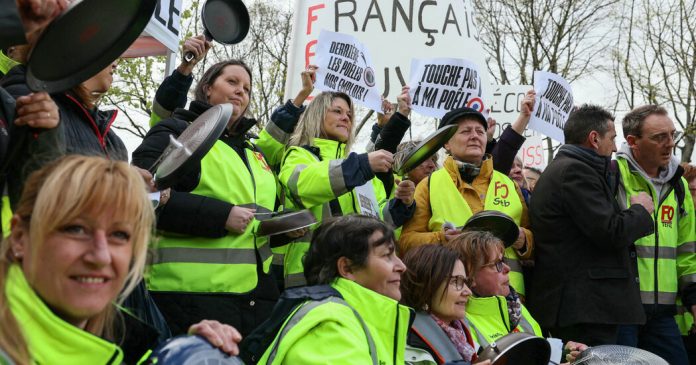
After campaigning by the home appliances manufacturer, Tefal — including a rowdy rally by employees wielding pots and pans — nonstick pans and other PFAS-containing cookware were excluded from the ban.

“Victory against PFAS in the National Assembly! France confirms that it can lead the way in protecting public health,” Nicolas Thierry, a politician of France’s Green Party who proposed the ban last year, wrote on Bluesky. Yet the exemption granted to cookware was his “biggest regret,” Mr. Thierry later told Le Monde, the French daily.

PFAS, or per- and polyfluoroalkyl substances, are a class of chemicals used in items like nonstick cookware, water-repellent clothing, cosmetics and firefighting foam. Known commonly as “forever chemicals” because they don’t easily break down in the environment, PFAS can damage the liver and immune system and have also been linked to birth defects, developmental delays and an increased risk of certain cancers.

France’s new law, which goes into effect next year, bans the manufacture, trade and marketing of PFAS-containing cosmetics, footwear, certain textiles and ski wax. From 2030, the ban will cover all textiles containing the chemicals, except for protective clothing worn by firefighters and other professionals.

The law exempts pans and other cookware that use PFAS nonstick coatings, however, after the French manufacturer of Tefal nonstick cookware launched a public campaign to limit the law’s scope. Tefal and its supporters say a ban on use in cookware would threaten jobs, limit choice for consumers and hurt France’s industrial competitiveness.

“Our nonstick coatings are recognized as being safe,” a public poster campaign declared. In April, the company organized a rally near the French parliament, where employees banged on pots, held up signs that read “Don’t touch my pan!” and chanted “Ecology yes, our jobs no.”

“We are fighting because we are within our rights,” Thierry de La Tour d’Artaise, chairman of Groupe SEB, which owns the Tefal brand, said at the rally. The proposed ban, he said, “is bad for the consumer.”

Martin Scheringer, a professor of environmental chemistry at ETH Zurich, a public research university in Switzerland, said it was true that health risks from nonstick cookware itself were not the biggest concern. However, he said, manufacturing of nonstick materials can cause “substantial emissions of PFAS to the environment.”, with harmful effects on health.

Environmental groups also say that safer alternatives exist. And the discovery of PFAS hot-spots near chemical factories and military bases across Europe pointed to the need to rein in the chemicals at the source, said Hélène Duguy, an attorney at the environmental law firm ClientEarth. “We’re going to have to pay so much to clean it up in the future,” she said.

Despite its narrowed scope, the new law makes France the world’s second country after Denmark to ban PFAS in a range of consumer products. Denmark has taken a more piecemeal approach, starting with PFAS in food packaging.

The European Union is considering a wider ban on PFAS chemicals that would cover both industrial and consumer uses, including cookware, a ban that would essentially override the French law. That process is in early stages.
Trump Berates Zelensky in Fiery Exchange at the White House

0

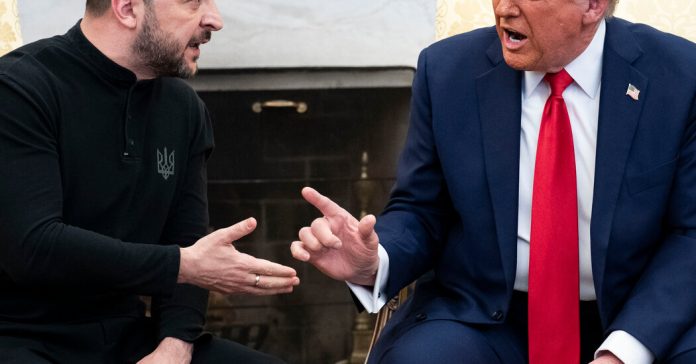
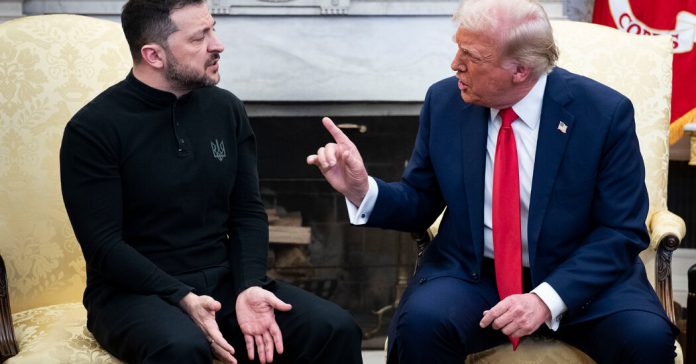
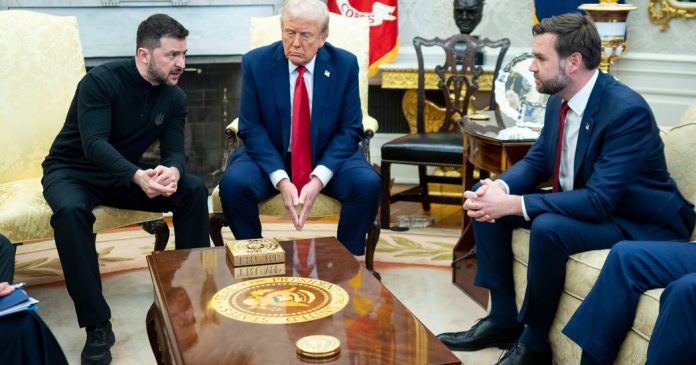
The United States’ relationship with Ukraine erupted in a storm of acrimony on Friday as President Trump and Vice President JD Vance berated President Volodymyr Zelensky of Ukraine in an explosive televised Oval Office showdown and abruptly cut short a visit meant to coordinate a plan for peace.

In a fiery public confrontation unlike any seen between an American president and foreign leader in modern times, Mr. Trump and Mr. Vance castigated Mr. Zelensky for not being grateful enough for U.S. support in Ukraine’s war with Russia, and sought to strong-arm him into making a peace deal on whatever terms the Americans dictated.

With his voice raised and temper flaring, Mr. Trump threatened to abandon Ukraine altogether if Mr. Zelensky did not go along. After journalists left the Oval Office, Mr. Trump canceled the rest of the visit, including a planned joint news conference and signing ceremony for a deal on rare minerals, and U.S. officials told the Ukrainians to leave. A grim-faced Mr. Zelensky strode out, climbed into a waiting black sport utility vehicle and departed the White House grounds.

“I have determined that President Zelenskyy is not ready for Peace if America is involved, because he feels our involvement gives him a big advantage in negotiations,” Mr. Trump wrote on social media. “I don’t want advantage, I want PEACE. He disrespected the United States of America in its cherished Oval Office. He can come back when he is ready for Peace.”

The White House later sent out Senator Lindsey Graham, Republican of South Carolina and a close Trump ally, to tell reporters that Mr. Zelensky should consider stepping down. “He either needs to resign and send somebody over that we can do business with or he needs to change,” Mr. Graham said on the White House driveway.

The president’s verbal assault on Mr. Zelensky was a stunning display of anger and resentment toward the leader of a country that has been invaded by a larger power intent on eliminating it as an independent state. No other president in memory has lashed out at a visiting foreign leader in the Oval Office on camera in such a vituperative way, not even at an adversary of the United States, much less a putative ally.

Talking over the Ukrainian leader, Mr. Vance called Mr. Zelensky “disrespectful” for coming into the Oval Office and making his case in front of the American news media and demanded that he thank Mr. Trump for his efforts to broker a peace deal with Russia. Mr. Trump jumped in and told the Ukrainian leader that “you’re not really in a good position right now” and that “you’re gambling with World War III.”

“You’re either going to make a deal or we’re out,” Mr. Trump added. “And if we’re out, you’ll fight it out and I don’t think it’s going to be pretty.”

The spectacle underlined how radically Mr. Trump has reoriented American foreign policy in less than six weeks back in office, all but switching sides in the war in Europe as he expresses sympathy for President Vladimir V. Putin of Russia and antipathy for Mr. Zelensky.

Even as he shouted at the Ukrainian leader in the Oval Office, the president spoke of Mr. Putin as if they were friends, saying that the Russian leader has “been through a lot with me” in enduring the “Russia hoax,” referring to the investigation of Mr. Putin’s clandestine efforts to help Mr. Trump win the 2016 election.

The confrontation provided a major boost to Mr. Putin, who has long sought to drive a wedge between Ukraine and its most important patron, the United States. Russian officials seemed overjoyed on social media. “The insolent pig finally got a proper slap down in the Oval Office,” Dmitri A. Medvedev, a top Putin lieutenant, wrote online.

America’s traditional European allies, on the other hand, were deeply alarmed and rallied behind Mr. Zelensky, with the leaders of France, Germany, Poland and others issuing statements of support for Ukraine and its beleaguered leader. The show of solidarity came just days after the United States sided with Russia over Europe in opposing a U.N. resolution condemning Russian aggression on the third anniversary of its full-fledged invasion of Ukraine.

After leaving the White House, Mr. Zelensky tried to smooth over the rupture with a social media post aimed at Mr. Vance’s complaints about ingratitude. “Thank you America, thank you for your support, thank you for this visit. Thank you @POTUS, Congress, and the American people,” he wrote, using the acronym for president of the United States.

In a later interview with Fox News, Mr. Zelensky refused to apologize to Mr. Trump, but expressed regret about the exchange and appreciation to the United States for its support. “We are thankful and sorry for this,” he said.

Mr. Trump seemed less interested in making up. Speaking with reporters on the South Lawn before heading to Florida for the weekend, the president said that Mr. Zelensky opposes peace. “He’s looking to go on and fight, fight, fight,” Mr. Trump said. Asked if he wanted Mr. Zelensky to step down, he said, “I want somebody that’s going to make peace.”

Mr. Vance’s eagerness to assail Mr. Zelensky raised the question of whether it was a planned or impromptu ambush. Mr. Vance has never been a supporter of Ukraine and said in 2022 that “I don’t really care what happens to Ukraine.”

After Mr. Vance began chastising Mr. Zelensky, it seemed to prompt Mr. Trump to join in. The result, though, was the blowup of an economic deal that Mr. Trump had prioritized in recent days, a commitment by Ukraine to turn over rare mineral rights to repay U.S. military aid over the past three years. The future of that deal remained unclear. A Trump administration official said later on Friday that all U.S. aid to Ukraine could be canceled imminently.

Mr. Zelensky’s hurriedly arranged visit to Washington to sign the minerals deal was meant to smooth over tensions with Mr. Trump, who just last week parroted Russian talking points by falsely claiming that Ukraine “started” the war and calling Mr. Zelensky a “dictator without elections.”

With Mr. Zelensky agreeing to the minerals deal, Mr. Trump seemed ready to make nice by telling reporters on Thursday that he did not even remember the dictator comment and expressing respect for the Ukrainian leader. He welcomed Mr. Zelensky at the door of the West Wing on Friday morning with an honor guard, and they shook hands politely but without evident warmth.

The encounter, though, quickly turned hostile shortly after they sat down in the Oval Office with journalists present. Mr. Zelensky, dressed in his usual dark long-sleeved shirt, sought to explain the history of the war with Russia, noting that it went back to 2014 when Moscow first seized Crimea and occupied territory in eastern Ukraine and continued through Mr. Trump’s first term.

He also expressed skepticism of peace efforts mentioned by Mr. Vance. “What kind of diplomacy, JD, you are speaking about?” he asked. “What do you mean?”

Bristling, Mr. Vance replied: “I’m talking about the kind of diplomacy that’s going to end the destruction of your country.”

He then began assailing Mr. Zelensky. “I think it’s disrespectful for you to come into the Oval Office to try to litigate this in front of the American media,” Mr. Vance lectured. “You should be thanking the president for trying to bring an end to this conflict.”

He accused Mr. Zelensky of mounting a “propaganda tour” in the United States. “Do you think that it’s respectful to come to the Oval Office of the United States of America and attack the administration that is trying to prevent the destruction of your country?”

Mr. Zelensky tried to respond to Mr. Vance’s assertions and said that the United States could feel threatened by Russia some day. “You have a nice ocean and don’t feel now, but you will feel it in the future,” he said.

That set off Mr. Trump, who cut off Mr. Zelensky. “Don’t tell us what we’re going to feel,” he said, raising his voice. “You’re not in a good position. You don’t have the cards right now.”

“I’m not playing cards,” Mr. Zelensky replied. “I’m very serious, Mr. President. I’m the president in a war.”

“You’re gambling with World War III,” Mr. Trump retorted. “And what you’re doing is very disrespectful to the country, this country, that’s backed you far more than a lot of people said they should have.”

Mr. Vance jumped back in. “Have you said ‘thank you’ once this entire meeting? No.”

“A lot of times,” Mr. Zelensky said. “Even today.”

Mr. Vance then accused him of campaigning for “the opposition” by visiting an ammunition plant in Scranton, Pa., last fall when the Ukrainian leader thanked workers for the arms they were making.

“Please,” Mr. Zelensky said. “You think that if you will speak very loudly about the war —”

Mr. Trump interrupted. “He’s not speaking loudly. He’s not speaking loudly. Your country is in big trouble.”

“I know,” Mr. Zelensky said, adding that he was “thankful” for U.S. support.

Mr. Vance was unsatisfied. “Just say thank you,” he demanded.

“I said a lot of times,” Mr. Zelensky repeated. “Thank you to the American people.”

After the meeting blew up, Trump administration officials regrouped and ultimately decided to tell Mr. Zelensky to leave, according to a person with knowledge of the events. Two officials were dispatched to inform the Ukrainians, who were waiting in the Roosevelt Room. One Ukrainian official proposed a meeting between Mr. Trump and Mr. Zelensky to calm things down, the person said, but the Americans said no.

Mr. Graham later called the meeting a “complete, utter disaster” but blamed it on Mr. Zelensky, saying that he had advised the Ukrainian leader in a meeting earlier in the day: “Don’t take the bait. Don’t let the media or anyone else get you into an argument with President Trump.”

It was a measure of how much Republicans have fallen behind Mr. Trump that Mr. Graham and Secretary of State Marco Rubio, both onetime hawks and strong supporters of Ukraine against Russia, backed the president and vice president.

“Somebody asked me, am I embarrassed about Trump?” Mr. Graham said. “I have never been more proud of the president. I was very proud of JD Vance standing up for our country.”

Mr. Rubio also praised the president: “Thank you @POTUS for standing up for America in a way that no President has ever had the courage to do before,” he wrote online. (He said later on Friday that Mr. Zelensky “should apologize for wasting our time.”) The White House seemed happy to highlight the clash, releasing a list of supportive statements by the president’s own cabinet officials and Republican allies echoing Mr. Rubio’s argument that he was defending American interests.

The Oval Office blowup drew criticism from supporters of Ukraine. Senator Amy Klobuchar, Democrat of Minnesota, gave an “answer to Vance” on social media: Mr. Zelensky, she said, “has thanked our country over and over again both privately and publicly.” She was one of several lawmakers who met with Mr. Zelensky before his visit to the White House.

“And our country thanks HIM and the Ukrainian patriots who have stood up to a dictator, buried their own & stopped Putin from marching right into the rest of Europe,” she wrote. “Shame on you.”

Adding their support were presidents and prime ministers of France, Germany, Norway, Sweden, the Netherlands, Latvia, Lithuania, Estonia, Poland, Spain, the Czech Republic, Moldova, Portugal, Finland, Iceland, Ireland, Luxembourg and others.

“We stand with Ukraine in good and in testing times,” wrote Friedrich Merz, set to be Germany’s next chancellor after elections this week. “We must never confuse aggressor and victim in this terrible war.”

Maggie Haberman and John Ismay contributed reporting.

Zelensky, Seeking a Diplomatic Victory With Trump, Leaves With a Debacle

0

It was meant to be a moment of triumph for President Volodymyr Zelensky of Ukraine, a chance after weeks of maneuvering for an Oval Office meeting to demonstrate American backing in Europe’s bloodiest war in generations.

Instead, the meeting unraveled into insults. Mr. Zelensky, who had stayed in his country to fight against a Russian onslaught and who rallied much of the world to support Ukraine, was left shaking his head as President Trump said he trusted Russia to uphold a cease-fire.

He was berated by Mr. Trump and Vice President JD Vance as “disrespectful” for arguing that Russia posed a threat beyond Ukraine. At times, a corner of Mr. Zelensky’s lip curled as the American leaders rebuked him and downplayed the prospects of aid to his army, which is locked in vicious trench warfare with Russia.

Mr. Trump, who raised his voice at times, scolded Mr. Zelensky, saying, “you don’t have the cards.”

Mr. Zelensky responded, “I’m not playing cards.”

The upbraiding in the Oval Office came at a critical juncture in the war, with Ukraine striving to keep Russia at bay in battles of attrition in the country’s east and the Trump administration opening cease-fire talks directly with President Vladimir V. Putin of Russia.

Mr. Zelensky at no point backed away from what he has called Ukraine’s critical national interests, laying these out as a seat at the table in cease-fire talks; air defenses to protect Ukrainian cities and power plants; and U.S. military backup for a proposed, European-led peacekeeping force.

But it was unclear where Mr. Zelensky’s curdled relationship with Mr. Trump leaves Ukraine, which had relied heavily on American support over the last three years, and which had tried for weeks to broker a mineral rights deal that would satisfy the Trump administration.

What was clear, from the start of the diplomatic visit to its abrupt finish, were the signs of antipathy between Mr. Zelensky and the Trump administration.

Mr. Zelensky, who says he does not wear a suit to show solidarity with his soldiers, wore the simple, military-style clothing he usually wears at official events. When he arrived at the White House, Mr. Trump told reporters, “he’s all dressed up today!”

Later, in the Oval Office, a reporter for the right-wing One America News asked Mr. Zelensky about it, saying, “Do you own a suit? A lot of Americans have problems with you not respecting the dignity of this office.”

Mr. Zelensky, a former comedic actor, jabbed back, saying he would wear a suit after the war ended. “Maybe something like yours?” he added. “Maybe something better, I don’t know.”

The confrontation with Mr. Trump cut the meeting short, canceled the signing of the highly touted deal for Ukrainian mineral rights, and left Ukraine seemingly on the precipice of losing the support of its most powerful backer.

In its diplomacy, Ukraine had hoped to engage with the United States in a cease-fire process that would progress on two tracks, with the Trump administration talking separately to Russia and Ukraine. The minerals deal — whose expected signing was Mr. Zelensky’s reason for visiting — was intended to open a path for the U.S.-Ukrainian branch of these talks, while providing Mr. Trump a rationale for any spending related to securing a cease-fire.

Before leaving Kyiv, Mr. Zelensky had noted Ukraine’s positions that he wanted the Trump administration to support. The Ukrainian army, he said, would not lay down its arms unless it had assurances a cease-fire would hold, and Ukraine would insist on maintaining its army in combat readiness at “maximum numbers” rather than accept caps on its forces.

Militarily, Ukraine does not appear to be at imminent risk of a major defeat, at least by the standards of past close calls, including the Russian army’s advance to the outskirts of the capital, Kyiv, in the first days of the war. Russia’s initial attack put Mr. Zelensky’s presidential office within about 12 miles of enemy troops.

Ukraine has sufficient ammunition to last through April or May without additional American supplies, military analysts have said. Ukraine depends on the United States for Patriot air-defense missiles, which are the only system capable of intercepting Russian ballistic missiles, such as the Kinzhal hypersonic missiles that have been fired at Kyiv.

Western assistance, including from the United States, with satellite surveillance and rocket artillery has given Ukraine an edge. But Ukraine’s reliance on American ammunition, howitzers and armored vehicles has faded, as Ukraine’s arms production has ramped up and exploding drones, also made domestically, have surpassed all other weapons in lethality.

In a flurry of diplomacy before the meeting in Washington, Mr. Zelensky had sought to shore up European support. He was scheduled to attend a summit of 18 European leaders on Sunday in London, where European pledges of aid were expected. It was unclear whether the heated exchange in the Oval Office would prompt European leaders to expand their backing for Ukraine.

The public scolding by the U.S. president was a remarkable pivot point for a leader who two years ago drew standing applause from both Republicans and Democrats in Congress.

But his style was more or less effective, even if it rankled some observers. Mr. Zelensky’s theatrical, emotional communication served Ukraine well in the dramatic, early months of the war, helping to lift spirits at home and bring in aid from allies. Later, it drew grumbles and led at one point to a British defense secretary saying he should show gratitude.

When asked in an interview Friday night with Fox News if he owed the president an apology, Mr. Zelensky said, “I’m not sure that we did something bad,” but he did characterize the confrontation as “not good for both sides.”

Mr. Zelensky arrived in Washington after a long and rocky negotiation to grant half the Ukrainian government’s future revenue from natural resources to a partly U.S.-controlled fund.

Mr. Zelensky had pushed back on the deal’s terms, prompting Mr. Trump to say falsely that Ukraine had started the war. Mr. Zelensky shot back that Mr. Trump lived in a bubble of “disinformation.”

Mr. Zelensky’s showmanship in pushing for a better deal prompted some head-scratching in Ukraine, where some asked why he would risk antagonizing a mercurial leader like Mr. Trump. Mr. Zelensky went into the meeting on Friday carrying photographs of war victims, clearly ready to argue Ukraine’s points again.

Instead, Friday’s encounter will be sure to unnerve millions of already exhausted Ukrainians at risk of shifting front lines and missile attacks.

Mr. Zelensky has long tried to walk a fine line with Mr. Trump, who has repeatedly praised Mr. Putin and who, during his first term, pushed Ukraine to help tarnish his political rival, leading to his first impeachment. For months, Mr. Zelensky has tried to avoid angering the leader of a vital ally but standing firm when he felt he had no choice, such as on Mr. Trump’s claim about the war’s start.

The approach had won both praise and criticism from politicians inside Ukraine — and brought a bump in popularity for Mr. Zelensky, who was seen as standing up to bullying, insults and falsehoods about a conflict that is raw, personal and immediate for Ukrainians.

But Mr. Zelensky’s approach clearly didn’t work on Friday.

At the meeting, he showed Mr. Trump photographs of Ukrainian prisoners of war who, he said, had been abused in Russia, making a point that the war is about more than the potential profit of natural resources.

The photographs were not visible to members of the press. But Ukrainian prisoners of war have returned from Russian prisons as haunting, rail-thin figures covered in bruises. It was a sharp departure from what Prime Minister Keir Starmer of Britain presented to Mr. Trump a day earlier: an elegant letter of invitation from King Charles to attend a royal banquet.

During the mineral agreement talks in Kyiv, Mr. Zelensky’s chief of staff, Andriy Yermak, had pressed for a White House signing of the agreement, according to a person familiar with the negotiations.

Mr. Zelensky had seen the meeting as a diplomatic success — demonstrating that Mr. Trump would meet with him first, and President Vladimir V. Putin of Russia second. The Trump administration’s envoy to Ukraine for cease-fire talks, Keith Kellogg, had advised against a White House meeting, but the Ukrainian negotiators insisted, the person said.

After Friday’s diplomatic debacle, the mineral deal and cease-fire talks alike appear to be stymied.

During the exchange in the White House, the two leaders debated a key area of dispute: whether a cease-fire should come before a deal on security guarantees. Mr. Trump said enforcement for a cease-fire is just “2 percent” of the task of ending the war. Mr. Zelensky has insisted that Mr. Putin cannot be trusted and that guarantees are needed, calling them a cornerstone for the future peace of Ukraine.

“We will never agree without a security guarantee,” he said.

Eve Sampson contributed reporting.

Federal workers get a new email demanding their accomplishments : NPR

0

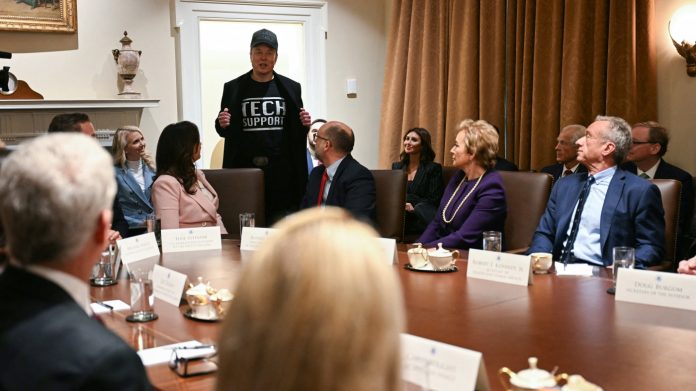
Leader of the Department of Government Efficiency Elon Musk wears a shirt that says “Tech Support” as he speaks during a cabinet meeting with US President Donald Trump at the White House in Washington, DC, on February 26, 2025.

Jim Watson/AFP via Getty Images


hide caption

toggle caption

Jim Watson/AFP via Getty Images

Federal employees have received a second email from the Office of Personnel Management asking them what they did last week even as those demands are currently facing legal scrutiny.

Late Friday night, federal employees received a second email asking them to share five bullet points on their accomplishments last week. It’s the latest in an effort led by Trump advisor Elon Musk, who has said his goal is to monitor productivity, while searching for fake government employees for which he has presented no evidence.

Employees were also told that going forward, they were expected to submit similar lists by end of the day every Monday.

Multiple government sources, including from the Department of the Interior and the Department of Treasury, shared a copy of the email with NPR on condition of anonymity because they fear retaliation by the Trump administration.

Why Japanese Oscar Contender ‘Black Box Diaries’ Isn’t Being Shown in Japan

0

A film by a Japanese woman about her search for justice from uncooperative authorities after she reported being raped is a contender at Sunday’s Academy Awards. Yet, despite being the first full-length documentary made by a Japanese director ever nominated for an Oscar, the movie cannot be seen in her home country.

In the film, “Black Box Diaries,” the journalist Shiori Ito tells the story of what happened to her after she reported being raped at a hotel by a prominent television journalist and the ordeal she says she experienced with Japan’s justice system.

The film, which is up for best documentary feature, premiered in January 2024 at the Sundance Film Festival. It was released in U.S. theaters in October and can currently be seen or is slated to be shown in over 30 countries. However, those do not include Japan.

The Japanese subsidiary of a major streaming service declined to distribute the film in early 2024, the filmmakers said, and theaters have so far displayed little interest in showing it. The prospects for the film’s release grew even murkier in October when Ms. Ito’s former lawyers and other previous supporters, including fellow journalists, spoke up against her, saying she had used footage without the consent of people in it.

This is not the first time that Japan has balked at showing unflattering films that were well received in Hollywood. “The Cove,” a documentary about a dolphin hunt in the town of Taiji, and “Unbroken,” a feature film about cruel treatment of Allied prisoners during World War II, both opened at least a year after their U.S. premieres. “The Cove,” which was made by an American director, won the Oscar for best documentary feature in 2010.

Ms. Ito says that “Black Box Diaries” is running into resistance, despite having a Japanese director, because it shines a light on a topic normally kept in the shadows: how the legal system and society, more broadly, look unfavorably on women who come forward to say they were sexually assaulted.

“This film is not just about sexual violence. It’s about power, corruption and systemic problems,” Ms. Ito said. “I am making many people uncomfortable, that’s for sure.”

Ms. Ito, 35, has been a polarizing figure since she came forward in 2017 to say that she was raped while unconscious by the journalist Noriyuki Yamaguchi after an evening of drinking over dinner. Mr. Yamaguchi, who was the biographer of former Prime Minister Shinzo Abe, denied the charges, and a criminal case was dropped by prosecutors after two months.

Ms. Ito won a civil suit against him for damages in a ruling that was upheld by Japan’s Supreme Court.

The case made her a symbol of Japan’s still underdeveloped #MeToo movement, while critics have accused her of grandstanding to advance her career.

“There is a tendency in Japanese society to avoid talking about hot-button issues,” said Atsushi Funahashi, a film director. “I believe this film should become a catalyst to ensure that no woman ever has to go through this kind of painful experience again.”

The stress of all the attention appeared to take its toll on Ms. Ito. On Feb. 20, she canceled a Tokyo news conference at the last minute, citing medical reasons. A limited screening of an edited version of her film was also scrapped.

A group of lawyers, including those who had represented her in the civil suit, held their own news conference the same day to reiterate their concerns with the film. They said “Black Box Diaries” uses video and audio of a taxi driver, a police detective and one of the lawyers without those individuals’ permission.

They also faulted Ms. Ito for including footage of herself being dragged out of a taxi by Mr. Yamaguchi when they arrived at the hotel. The footage from a security camera was used without the hotel’s permission, said the lawyers, who demanded that it and other scenes be deleted or greatly altered.

“I must now speak out against someone whom I fought alongside for so many years,” one of the lawyers, Yoko Nishihiro, said. “How miserable is this.”

In a statement released after canceling her news conference, Ms. Ito apologized for “causing harm” by not obtaining consent and said she is making a modified version of the film “to ensure that individuals cannot be identified.”

At the same time, there are scenes that Ms. Ito and the film’s producers say they are unwilling to cut. One of these is the security camera footage from the hotel, which Ms. Ito said was “the only visual proof of the sexual assault.”

Eric Nyari, a producer of the film, said they were trying to negotiate a version of the film that could address the criticisms regarding privacy while still exposing what happened.

“There are certain areas where we are meeting concerns,” Mr. Nyari said, “but there are certain areas where we believe we’re in the right and we are not going to change.”

Ukrainians Blindsided by Deal’s Breakdown and by Trump’s Actions

0

Liudmyla Shestakova has lost a lot to this war — her son, and his wife, who died together on the front lines. But she’s a realist, like many in this mining region in central Ukraine. And ever since President Trump suggested it, she has thought that her country should sign a proposed deal that would give America some profits from mining in Ukraine.

Ms. Shestakova, 65, who works with an environmental group called Flora in the city of Kropyvnytskyi, had hoped a deal between the U.S. and Ukraine on critical minerals could bring much-needed investment to the region.

But on Friday night, Ms. Shestakova, like many people in Ukraine, was shocked and blindsided at how the deal fell apart and how she felt that President Trump treated Ukraine’s president, Volodymyr Zelensky, almost like a serf who didn’t bow and kiss the ring quite enough.

“With a trustworthy partner, this could have been a beneficial deal for everyone,” said Ms. Shestakova, who once ran Flora and now sits on its supervisory board. “But with a partner like Trump, it could actually be dangerous.”

Across Ukraine, people said they were upset Friday night. They also said they wouldn’t stop fighting, even if America walked away.

“It will be hard, but we will survive,” said Iryna Tsilyk, 42, a poet and film director in the capital, Kyiv, whose husband serves in the army. “Today, I was not ashamed of my president and my country. I am not sure that the Americans can say the same.”

This deal was never any Ukrainian’s idea of a grand bargain. But since Mr. Trump took office, it became increasingly apparent that it was the only bargain on offer.

After Russia launched its full-scale invasion into Ukraine three years ago, the U.S. became Ukraine’s biggest supporter, and President Biden, Mr. Zelensky’s biggest cheerleader. Since taking office, Mr. Trump has referred to Mr. Zelensky as a “dictator,” blamed Ukraine for starting the war and praised Vladimir V. Putin, Russia’s president. And Mr. Trump has made it clear that he wanted payback for all of the support the United States had delivered in the past.

The minerals deal was supposed to be the down payment. It was supposed to guarantee that the U.S. would stay engaged in the war and continue supporting Ukraine, if it got something back.

Ukraine has more than 100 major deposits of critical minerals, alongside oil and natural gas reserves, according to the Kyiv School of Economics. And the central Ukrainian city of Kropyvnytskyi, with about 220,000 residents, is ground zero for these. It’s built on mining, much like the rest of the Kirovohrad region, rich with uranium, titanium, nickel and rare earth elements — the very minerals that the deal was built on, that Mr. Trump and the United States seemed so excited about.

A final draft of the minerals agreement reviewed by The Times described how a U.S.-controlled fund would receive revenue from Ukraine’s natural resources. The specifics were vague, but after furious rounds of negotiations, it had turned from something that felt almost like extortion for most Ukrainians to something they could live with.

Before the deal fell apart, Ukrainians in the area were largely excited about the idea of getting more American investment in the region. Maybe that could help clean up the hills of uranium-laden tailings from the mines, or deliver higher-paying jobs. Most people here said they were fine with giving some of the profits from future mines to America in return for the country’s support in its war with Russia.

After the deal fell apart, Ukrainians said they were shocked. It was a jaw-dropping moment. At restaurants, diners interrupted their meals to stare at their phones watching live videos of Mr. Trump and Mr. Zelensky.

“If the agreement is not signed, it will be much harder for us to continue fighting,” said Volodymyr Savytskyi, 75, a geologist who worked at a mine near Kropyvnytskyi for decades. He added: “If it is not signed, we will have to find another way, working with Europe and negotiating differently.”

As always, Ukrainians were quick with the memes Friday night. “R.I.P. back door deal,” said one, with a gravestone.

Oleksandr Tyron, a 30-year-old information technology worker who fled Vasylivka in the Zaporizhzhia region because of the Russian invasion, said he found out about what happened late Friday, after attending a pre-medicine class. “The knowledge of premedical care will help me in case of a Russian ballistic or drone attack in Kyiv,” he said dryly. (Ukrainians have needed to master dark humor over the past three years.)

He said he was proud of Mr. Zelensky for standing up to Mr. Trump. But he said he did not know what would happen if the U.S. decreased or stopped its support.

“I believe we will continue to stand our ground. I am sorry that Ukrainians and Ukraine have to prove themselves once again, but we have to do what we have to do,” he said. “There is no other way. Moscow is simply trying to destroy us, and after everything the Russians have done here, allowing them to succeed is unthinkable.”

In Kyiv, Yuliia Alendar, a 30-year-old lawyer, described Mr. Trump’s treatment of Mr. Zelensky as disrespectful. She also complained about how Mr. Trump has blamed Ukraine for starting the war.

“It’s like blaming a victim of violence for having a short skirt,” Ms. Alendar said. She added: “If Trump wanted to show that democracy is bending to dictatorship, then he succeeded. It feels like democracy is limited to the borders of the United States.”

Olena Kuzmenko, 50, a former deputy of the Pervozvanivska community in Kirovohrad, said she was grateful for all of the assistance for Ukraine. “But from the very beginning, this tone of ‘You are ungrateful’ was infuriating to me,” she said. “I don’t understand it at all. It feels like an attitude of ‘We are big and strong, and you are small, so just do what we say.’”

Ms. Shestakova said she understood that it would be difficult for Ukraine without U.S. support.

“They will tear Ukraine apart, but we will stand,” she said. She added that it was the right of Ukrainians to choose their president. “It’s better to have no deal at all than to have this one,” Ms. Shestakova said.

Evelina Riabenko, Dzvinka Pinchuk and Oleksandr Chubko contributed reporting from Kyiv, and Yurii Shyvala contributed reporting from Lviv.

Unknown Illness Kills Dozens in Congo as Experts Clash on Cause

0

The mystery behind an unknown illness that has killed dozens in the Democratic Republic of Congo just 48 hours after they first showed symptoms deepened after the World Health Organization on Friday offered a new theory that seemingly contradicts African medical experts.

At least 60 people have died and more than 1,000 have been sickened in Congo’s Équateur Province by the illness, which is characterized by “fever, headache, chills, sweating, stiff neck, muscle aches, multiple joint pain and body aches, a runny or bleeding nose, cough, vomiting and diarrhea,” according to the latest W.H.O. report issued on Thursday.

At a news conference in London on Friday, Dr. Michael Ryan, director of emergencies for the W.HO., said the illnesses were most likely caused by poisoning, contradicting a theory proposed on Thursday by experts at the African Centres for Disease Control and Prevention who speculated malaria was to blame.

“Based on onset of symptomatology to death,” Dr. Ryan said, “it looks and appears very much more like a toxic type event, either from a biologic perspective like a meningitis or from a chemical exposure.” He added that there was “a very strong level of suspicion,” that the poisoning was related to “a water source.”

Investigators determined the initial outbreak began in the northwestern village of Boloko before spreading to nearby Danda village, the W.H.O. said. A second, larger outbreak occurred in Bomate village.

Preliminary investigations traced the outbreak to three children who in January ate a bat and died. Before death, the children had all bled from their noses and vomited blood.

Viruses in bats are known to cause a number of diseases in humans and are thought to be natural reservoirs for Marburg and Ebola viruses, two hemorrhagic fevers that are the source of continuing outbreaks in the region.

Laboratory testing yielded negative results for both Marburg and Ebola, the W.H.O. said, but around half of the samples tested positive for malaria, which is rampant in the region. Samples are also being tested for meningitis.

On Thursday, Dr. Ngashi Ngongo from the Africa Centres for Disease Control and Prevention said in a virtual news conference that early testing indicated a connection to malaria.

The Équateur sickness “is very much similar to what happened in Panzi last year,” Dr. Ngongo said, referring to a flulike illness that infected hundreds of people in the southwestern part of the country. The illness was later found to likely be a respiratory infection complicated by malaria.

Though the W.H.O. said it had been assisting local authorities, aid to the country has likely been diminished by recent U.S. funding cuts.

Before recent cuts to U.S.A.I.D. by the Trump administration, the United States may have deployed experts to Congo’s hot zone. Today, there are fewer than 10 people employed at what remains of the agency, to respond to outbreaks around the globe, including those caused by Ebola, mpox and Marburg.

The outbreak in northwestern Équateur Province is several hundred miles away from an ongoing war and deepening humanitarian crisis in eastern Congo where the Congolese military is battling Rwanda-backed rebels.

Stephanie Nolen contributed reporting.

Up First from NPR : NPR

0

Representative Alexandria Ocasio-Cortez, a New York Democrat, says she thinks Republicans have begun making mistakes… and her party is resolved to strike back.

Want more comprehensive analysis of the most important news of the day, plus a little fun? Subscribe to the Up First newsletter.

This bonus episode of Up First was edited by Susan Davis, Kelsey Snell and Reena Advani. It was produced by Adam Bearne. We get engineering support from Neil Tevault and Hannah Gluvna. Our Executive Producer is Kelley Dickens.

Who Is the P.K.K. Leader Abdullah Ocalan?

0

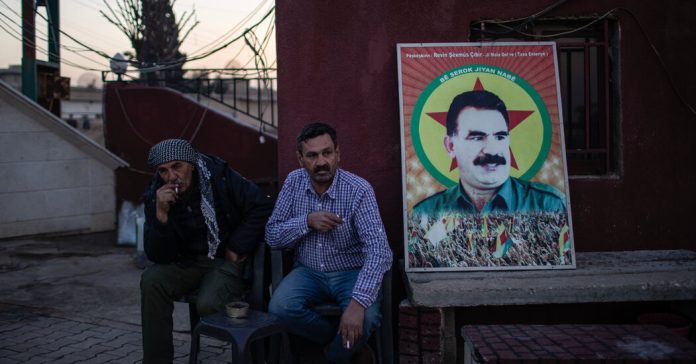
Abdullah Ocalan, the imprisoned leader of a Kurdish guerrilla movement that has been waging a bloody insurgency against the Turkish state for decades, has called on his fighters to lay down their arms and disband.

The rare message from Mr. Ocalan on Thursday raised the possibility that a conflict that has killed more than 40,000 people over four decades could finally end.

Mr. Ocalan is the founder and leader of the Kurdistan Workers’ Party, or P.K.K., which has been battling the Turkish state. He has been in a Turkish prison for a quarter century.

The P.K.K. began as a secessionist group that sought to create an independent state for Turkey’s Kurdish minority, but more recently it has said it was seeking greater rights for Kurds inside Turkey. Turkey, the United States and other countries classify Mr. Ocalan as a terrorist and the P.K.K. as terror group for its attacks that have killed Turkish security forces and civilians.

But many of Turkey’s Kurds view Mr. Ocalan as a potent symbol of the struggle for Kurdish rights. And despite his imprisonment since Turkey convicted him in 1999 of leading an armed terrorist group, he wields great influence over the P.K.K. and its affiliated militias in Syria, Iraq and Iran.

Mr. Ocalan in 1992.Credit…Ramzi Haidar/Agence France-Presse — Getty Images

Mr. Ocalan founded the P.K.K. in the late 1970s with a group of other rebels and largely ran the organization from neighboring Syria as it launched attacks in southeastern Turkey and later in other major Turkish cities.

In 1998, Syria forced him out and he traveled to Greece, Italy and Russia to seek asylum before Turkish intelligence agents, with help from the C.I.A., captured him inside a plane at an airport in Nairobi, Kenya, on Feb. 15, 1999.

That same year, Turkey convicted him and sentenced him to death. That sentence was commuted to life imprisonment after Turkey abolished the death penalty as part of its bid to join the European Union.

At the start, the P.K.K. sought to create an independent Kurdish state and Mr. Ocalan said that armed action was necessary to advance that cause.

“We are not in favor of violence to solve the problems,” he said in 1988 in his first interview with Turkish journalists. But it was required, he said, “to prevent our national identity from being destroyed entirely.”

After his capture in 1999, he was incarcerated on Imrali Island in the Sea of Marmara, south of Istanbul, where he was the only prisoner for many years. Behind bars, his views changed. His goal moved away from achieving an independent state, and he wrote that nation-states themselves violated people’s rights.

Instead, he proposed a new ideology, “democratic confederalism,” which he described as borderless, community-based democracy that promotes ecological living and gender equality. He also argued that Kurds could achieve their rights through what he considered to be the proper application of democracy in Turkey.

His new views were heavily influenced by the American political philosopher Murray Bookchin. The two men exchanged letters through Mr. Ocalan’s lawyers before Mr. Bookchin’s death in 2006.

For most Turks, Mr. Ocalan remains the country’s most hated terrorist, accused of ordering deadly attacks and driving an insurgency that killed more than 40,000 people over four decades. Turkish politicians and the news media frequently refer to him as a “baby killer” or the “chief terrorist.”

Human rights groups criticized his isolation on Imrali Island. In 2009, five other prisoners were sent to the facility, and Mr. Ocalan was allowed to meet them a few times a week, according to Turkish media reports.

But in recent years, Mr. Ocalan and the island’s other inmates were not allowed any visitors, including their lawyers, or any phone calls with family members.

Last October, a powerful political ally of President Recep Tayyip Erdogan, made a surprising public call to Mr. Ocalan, requesting that he tell his fighters to lay down their arms and end the conflict.

That led to limited visits from relatives and political allies of Mr. Ocalan to explore the possibility of a new peace process between Turkey and the P.K.K.

Flow of U.S. Weapons to Ukraine Has Nearly Stopped and May End Completely

0

President Volodymyr Zelensky of Ukraine entered the White House for a meeting with President Donald Trump on Friday knowing that the flow of weapons and military hardware from the United States to his country had essentially stopped.

By the time he left, after a televised argument between the two leaders, the situation appeared even more dire.

As the two men met, it had been 50 days since the Pentagon had announced a new package of weapons to Ukraine and the new administration had said little about providing any more.

A Trump administration official said later on Friday that all U.S. aid to Ukraine — including the final shipments of ammunition and equipment authorized and paid for during the Biden administration — could be canceled imminently.

After Russia’s full-scale invasion of that country in February 2022, such shipments of military hardware from the United States were announced roughly every two weeks during the Biden administration, and sometimes just five or six days apart.

According to the Pentagon, about $3.85 billion remains of what Congress authorized for additional withdrawals from the Defense Department’s stockpile. A former senior defense official from the Biden administration said the last of the arms Ukraine had purchased from U.S. defense companies would be shipped within the next six months.

After that, it will be up to a host of European and other countries to keep Ukraine’s guns firing.

Mr. Trump has insisted on “payback” for military aid. On Friday, the two leaders had been expected to sign an agreement that would give the United States access to Ukraine’s mineral wealth.

A draft of the deal vaguely mentioned security guarantees for Ukraine. But Mr. Zelensky left the White House without an agreement, while his country faces relentless attacks from Russian and North Korean troops along a 600-mile front line.

Ukraine has depended on a lifeline of arms from the United States throughout the war, starting the day after Russian troops crossed the border, when the Biden administration announced that it would send Kyiv $350 million worth of arms from the Defense Department’s stockpiles.

After Friday’s spectacle in the Oval Office, the Trump administration official said the president might decide to end even the indirect support being provided by the U.S., which includes other types of military financing, intelligence sharing, training for Ukrainian troops and pilots, and hosting a call center that manages international aid at a U.S. military base in Germany.

Such actions would be a shocking abandonment of an embattled partner nation, marking the death knell of support that had survived a political challenge by House Republicans more than a year ago.

In late October 2023, Speaker Mike Johnson began signaling that he would hold up additional funding for Ukraine in the House after Mr. Trump — then out of office — broadcast his hostility toward further aid.

By the time Mr. Johnson lifted his hold and allowed an aid package to pass on April 20, 2024, Russian troops had advanced as Ukraine’s ammunition supplies dwindled.

Since his election, Mr. Trump has vastly overstated the amount of aid the United States has given Ukraine, according to the Kiel Institute, a German research organization. He has also falsely claimed that European contributions to Ukraine were loans that Kyiv would repay.

European nations have contributed $138 billion to Ukraine’s war effort compared with $119 billion in military and humanitarian assistance from the U.S., according to Kiel Institute data.

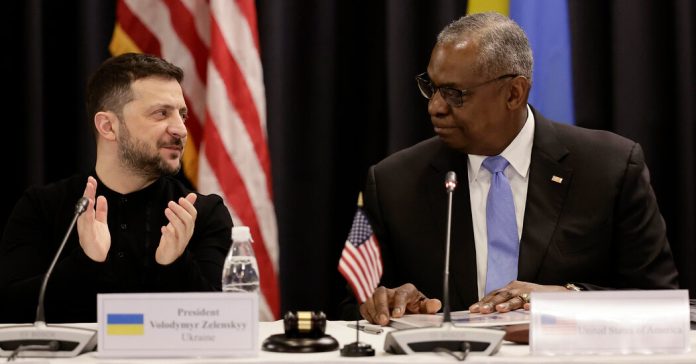
Once the last of the U.S.-funded purchases of arms end, the main source of military assistance for Kyiv will be the Ukraine Defense Contact Group, a collection of roughly 50 nations founded in April 2022 by former Defense Secretary Lloyd J. Austin III. It met 25 times during the Biden administration to coordinate the provision of weapons and the development of new military capabilities for the embattled nation.

At the contact group’s meeting at Ramstein Air Base in Germany in January, Mr. Zelensky said it would be “crazy to drop the ball now” on assistance, after Ukraine had held off Russian forces for so long.

Mr. Austin, when asked whether he thought the new Trump administration would stick with the coalition, declined to speculate, saying that was a decision “for the next administration to make.”

On Feb. 6, the Pentagon said it was passing leadership of the group to Britain.

The Pentagon referred questions about continuing support to Ukraine to the British ministry of defense.

“A just and lasting peace is only possible if we continue to show strength and provide Ukraine with the support it needs to defend itself against continued Russian aggression,” a spokesman for the ministry of defense said in response to questions about how Britain would lead the contact group. “There will be no letup in our support, which we will continue for as long as it is necessary.”