Friday, November 13, 2026
Home Blog Page 172

Behind the Collision: Trump Jettisons Ukraine on His Way to a Larger Goal

0

After five weeks in which President Trump made clear his determination to scrap America’s traditional sources of power — its alliances among like-minded democracies — and return the country to an era of raw great-power negotiations, he left one question hanging: How far would he go in sacrificing Ukraine to his vision?

The remarkable shouting match that played out in front of the cameras early Friday afternoon from the Oval Office left provided the answer.

As Mr. Trump admonished President Volodymyr Zelensky and warned him that “you don’t have the cards” to deal with President Vladimir V. Putin of Russia, and as Vice President JD Vance dressed down the Ukrainian leader as being “disrespectful” and ungrateful, it was clear that the three-year wartime partnership between Washington and Kyiv was shattered.

Whether it can be repaired, and whether a deal to provide the United States revenue from Ukrainian minerals that was the ostensible reason for the visit can be pieced back together, remains to be seen.

But the larger truth is that the venomous exchanges — broadcast not only to an astounded audience of Americans and Europeans who had never seen such open attacks on each other, but to Mr. Putin and his Kremlin aides — made evident that Mr. Trump regards Ukraine as an obstacle to what he sees as a far more vital project.

What Mr. Trump really wants, one senior European official said this week before the blowup, is a normalization of the relationship with Russia. If that means rewriting the history of Moscow’s illegal invasion three years ago, dropping investigations of Russian war crimes or refusing to offer Ukraine long-lasting security guarantees, then Mr. Trump, in this assessment of his intentions, is willing to make that deal.

To anyone listening carefully, that goal was bubbling just beneath the surface as Mr. Zelensky headed to Washington for his disastrous visit.

Secretary of State Marco Rubio — once a defender of Ukraine and its territorial sovereignty, now a convert to the Trump power plays — made clear in an interview with Breitbart News that it was time to move beyond the war in the interest of establishing a triangular relationship between the United States, Russia and China.

“We’re going to have disagreements with the Russians, but we have to have a relationship with both,” Mr. Rubio said. He carefully avoided any wording that would suggest, as he often said as a senator, that Russia was the aggressor, or that there was risk that, if not punished for its attack on Ukraine, it might next target a NATO nation.

“These are big, powerful countries with nuclear stockpiles,” he said of Russia and China. “They can project power globally. I think we have lost the concept of maturity and sanity in diplomatic relations.”

Mr. Trump makes no secret of his view that the post-World War II system, created by Washington, ate away at American power.

Above all else, that system prized relationships with allies committed to democratic capitalism, even maintaining those alliances that came with a cost to American consumers. It was a system that sought to avoid power grabs by making the observance of international law, and respect for established international boundaries, a goal unto itself.

To Mr. Trump, such a system gave smaller and less powerful countries leverage over the United States, leaving Americans to pick up far too much of the tab for defending allies and promoting their prosperity.

While his predecessors — both Democrats and Republicans — insisted that alliances in Europe and Asia were America’s greatest force multiplier, keeping the peace and allowing trade to flourish, Mr. Trump viewed them as a bleeding wound. In the 2016 presidential campaign, he repeatedly asked why America should defend countries running trade surpluses with the United States.

In the five weeks since his second inauguration, Mr. Trump has begun exercising a plan to destroy that system. It explains his demand that Denmark cede control of Greenland to the United States, and that Panama return a canal that Americans built. When asked how he could seize sovereign territory in Gaza for redevelopment in his plan for a “Riviera of the Middle East,” he shot back, “Under the U.S. authority.”

But Ukraine was always a more complicated case. Only 26 months ago, Mr. Zelensky was feted in Washington as a warrior for democracy, invited to address a joint session of Congress and applauded by Democrats and Republicans alike for standing up to bald aggression by a murderous foe.

Mr. Trump and Mr. Vance had signaled for months that in their minds the American commitment to Ukraine’s sovereignty was over. Three weeks ago, Mr. Trump told an interviewer that Ukraine, a former Soviet republic that had embraced its independence, built close ties to Western Europe and sought to join NATO, “may be Russian someday.”

To the shock of America’s allies, Mr. Vance traveled to the Munich Security Conference two weeks ago and said nothing about assuring that any armistice or cease-fire would come with security guarantees for Ukraine, or about Russia paying any price for its invasion.

Instead, Mr. Vance seemed to embrace the rising far-right party in Germany and its counterparts throughout Europe. Gone was the Biden-era talk about sticking with Ukraine “as long as it takes” to deter any temptation by Russia to carry the war farther West.

Mr. Zelensky saw all this, of course — he was at Munich, too — but clearly he did not read the room the way his European supporters did. While President Emmanuel Macron of France and Prime Minister Keir Starmer of Britain preceded him to the Oval Office with elaborate plans to placate Mr. Trump, and explain how Europe was stepping up its own military spending, Mr. Zelensky took the bait, especially when Mr. Vance began mocking Ukraine’s efforts to recruit troops.

He got combative, telling Mr. Trump that the oceans between America and Russia would not protect it forever. Mr. Trump raised his voice, and told the Ukrainian that he would be lucky just to get a cease-fire, suggesting that any terms — or no terms — would be better than his inevitable defeat.

“I want to see guarantees,” Mr. Zelensky retorted. And minutes later, he left the White House, his luncheon of rosemary roasted chicken and creme brulee uneaten, the minerals deal unsigned and his country’s future ability to fend off a renewed Russian push to topple Kyiv in doubt.

Almost immediately, the world retreated to its familiar corners.

Mr. Macron, siding with the Ukrainian leader, urged that the West thank the Ukrainians for being the forward defense of freedom. He was joined by the nervous Eastern Europeans, led by Poland, Lithuania and Latvia. But in private, several European diplomats said they thought the damage might be irreparable.

The Russians celebrated their good luck. Former President Dmitri A. Medvedev thanked Mr. Trump for “telling the truth” to Mr. Zelensky’s face. He urged him to suspend remaining American aid.

Mr. Rubio was among the first to congratulate the president for putting in his place a man the secretary of state used to applaud as a modern-day Churchill in a T-shirt.

“Thank you @POTUS for standing up for America in a way that no President has ever had the courage to do before,” Mr. Rubio wrote on social media. “Thank you for putting America First.”

Of course, it is far easier to repeat Mr. Trump’s favorite slogan, and to blow up an existing world order, than to create a new one. It took decades to assemble the post-World War II rules of global engagement, and for all its faults, the system succeeded at its primary objectives: avoiding great power war and encouraging economic interdependence.

Mr. Trump has never articulated at any length what he would replace those rules with, other than that he would use America’s military and economic power to strike deals — essentially an argument that keeping the peace is as simple as weaving together minerals agreements and trade pacts, maybe with a few real estate transactions thrown in.

There is little precedent to suggest that approach alone works, especially in dealing with authoritarian leaders like Mr. Putin and President Xi Jinping of China, who take a long view in dealing with democracies that they view as lacking the sustained will necessary to achieve difficult objectives.

But judging by Friday’s display in the Oval Office, Mr. Trump seems convinced that as long as he is at the helm, the world will order itself as he commands.


Zelenskyy's visit to the White House ends abruptly after Oval Office spat

0

Zelenskyy was at the White House to finalize a deal on minerals, which Trump has said is a step toward a broader peace deal he is trying to broker. But no deal was signed and the visit was cut short.

Excerpts From the Fiery Exchange Between Trump and Zelensky at the White House

0

A meeting between President Trump and President Volodymyr Zelensky of Ukraine on Friday turned into an angry showdown at the Oval Office. At times cross talk made some comments difficult to understand. Here are key excerpts from the heated exchange.

Trump (responding to a reporter): I’m not aligned with Putin. I’m not aligned with anybody. I’m aligned with the United States of America. And for the good of the world. I’m aligned with the world. And I want to get this thing over with. You see the hatred he’s got for Putin. It’s very tough for me to make a deal with that kind of hate. He’s got tremendous hatred. And I understand that. But I can tell you the other side isn’t exactly in love with him either.

So it’s not a question of alignment. I’m aligned with the world. I want to get the thing set. I’m aligned with Europe. I want to see if we can get this thing done. You want me to be tough? I can be tougher than any human being you’ve ever seen. I’d be so tough. But you’re never going to get a deal that way. So that’s the way it goes.

Vice President JD Vance: I will respond to this. So look, for four years in the United States of America, we had a president who stood up at press conferences and talked tough about Vladimir Putin. And then Putin invaded Ukraine and destroyed a significant chunk of the country. The path to peace and the path to prosperity is maybe engaging in diplomacy. We tried the pathway of Joe Biden, of thumping our chest and pretending that the president of the United States’ words mattered more than the president of the United States’ actions.

What makes America a good country is America engaging in diplomacy. That’s what President Trump is doing.

Zelensky: Yeah. OK. He occupied it, our parts. Big parts of Ukraine. Part of east and Crimea. So he occupied it on 2014. So during a lot of years, I’m not speaking about just Biden. But those times was Obama, then President Obama, then President Trump, then President Biden, now the President Trump. And God bless: Now President Trump will stop him. But during 2014, nobody stopped him. He just occupied and took. He killed people.

Trump: 2015.

Zelensky: 2014.

Vance: 2014 and 2015.

Trump: 2014. I was not here.

Zelensky: But during 2014 ’til 2022.(…) Nobody stopped him. You know that we had conversations with him, a lot of conversations. My bilateral conversation. And we signed with him. Me, like a new president. In 2019, I signed with him the deal I signed with him, Macron and Merkel. We signed cease-fire, cease-fire. All of them told me that he will never go. We signed him. Gas contract. Gas contract. But after that, he broken the cease-fire. He killed our people and he didn’t exchange prisoners. We signed the exchange of prisoners, but he didn’t do it. What kind of diplomacy, JD, you are speaking about? What do you mean?

Vance: I’m talking about the kind of diplomacy that’s going to end the destruction of your country.

Vance: Mr. President, Mr. President, with respect. I think it’s disrespectful for you to come to the Oval Office and try to litigate this in front of the American media. Right now, you guys are going around and forcing conscripts to the front lines because you have man power problems. You should be thanking the president for trying to bring an end to this conflict.

Zelensky: Have you ever been to Ukraine? You say what problems we have.

Vance: I have been to—

Zelensky: Come once.

Vance: I’ve actually watched and seen the stories, and I know what happens is you bring people, you bring them on a propaganda tour, Mr. President. Do you disagree that you’ve had problems bringing people into your military?

Zelensky: We have problems. I will answer.

Vance: And do you think that it’s respectful to come to the Oval Office of the United States of America and attack the administration that is trying to prevent the destruction of your country?

Zelensky: A lot of questions. Let’s start from the beginning.

Vance: Sure.

Zelensky: First of all, during the war, everybody has problems, even you. But you have nice ocean and don’t feel now, but you will feel it in the future.

Trump: You don’t know that.

Zelensky: God bless, you will not have a war.

Trump: Don’t tell us what we’re going to feel. We’re trying to solve a problem. Don’t tell us what we’re going to feel.

Zelensky: I’m not telling you.

Trump: Because you’re in no position to dictate that. Remember this: You’re in no position to dictate what we’re going to feel. We’re going to feel very good.

Zelensky: You will feel influence. I’m telling you.

Trump: We’re going to feel very good and very strong.

Zelensky: You will feel influence.

Trump: You’re right now not in a very good position.

Trump: You’ve allowed yourself to be in a very bad position. And he happens to be right about. You’re not in a good position. You don’t have the cards right now. With us you start having cards.

Zelensky: I’m not playing cards. I’m very serious, Mr. President. I’m very serious. I’m the president in a war—

Trump: You’re playing cards. You’re playing cards. You’re gambling with the lives of millions of people. You’re gambling with World War III. You’re gambling with World War III. And what you’re doing is very disrespectful to the country, this country, that’s backed you far more than a lot of people said they should have.

Vance: Have you said ‘thank you’ once this entire meeting? No. In this entire meeting, have you said ‘thank you’? You went to Pennsylvania and campaigned for the opposition in October. Offer some words of appreciation for the United States of America and the president who is trying to save your country.

Zelensky: Please. You think that if you will speak very loudly about the war, you—

Trump: He’s not speaking loudly. He’s not speaking loudly. Your country is in big trouble. Wait a minute.

Zelensky: Can I answer?

Trump: No. No. You’ve done a lot of talking. Your country is in big trouble.

Zelensky: I know. I know.

Trump: You’re not winning. You’re not winning this. You have a damn good chance of coming out OK because of us.

Zelensky: Mr. President, we are staying in our country, staying strong, from the very beginning of the war, we’ve been alone, and we are thankful. I said thanks in this cabinet, and only in this cabinet.

Trump: You haven’t been alone. We gave you through this stupid president, $350 billion. We gave you military equipment. And your men are brave. But they had to use our military. If you didn’t have our military equipment—

Zelensky: You invited me—

Trump: If you didn’t have our military equipment, this war would have been over in two weeks.

Zelensky: In three days. I heard it from Putin: in three days.

Trump: Maybe less.

Zelensky: This is something, in two weeks. Of course. Yes.

Trump: It’s going to be a very hard thing to do business like this. I tell you.

Vance: Just say thank you.

Zelensky: I said it a lot of times thank you to the American people.

Vance: Accept that there are disagreements. And let’s go litigate those disagreements rather than trying to fight it out in the American media when you’re wrong. We know that you’re wrong.

Trump: But you see, I think it’s good for the American people to see what’s going on. I think it’s very important. That’s why I kept this going so long. You have to be thankful.

Zelensky: I am thankful.

Trump: You don’t have the cards. You’re buried there, your people are dying. You’re running low on soldiers.

Zelensky: Don’t, please, Mr. President.

Trump: Listen. You’re running low on soldiers. It would be a damn good thing. Then you tell us, ‘I don’t want a cease-fire. I don’t want a cease-fire. I want to go, and I want this.’ Look, if you could get a cease-fire right now, I’d tell you, you take it. So the bullets stop flying and your men stop getting killed.

Zelensky: Of course we want to stop the war.

Trump: But you’re saying you don’t want a cease-fire.

Zelensky: But I said to you, with guarantees.

Trump: I want a cease-fire, because you’ll get a cease-fire faster than an agreement.

Zelensky: Ask our people about cease-fire, what they think—

Trump: There wasn’t with me. That wasn’t with me. That was with a guy named Biden who was not a smart person. That was with Obama.

Zelensky: It was your president.

Trump: Excuse me. That was with Obama, who gave you sheets, and I gave you javelins.

Zelensky: Yes.

Trump: I gave you the javelins to take out all those tanks. Obama gave you sheets. In fact, the statement is: Obama gave sheets, and Trump gave javelins. You got to be more thankful because let me tell you, you don’t have the cards. With us, you have the cards. But without us, you don’t have any cards.

It’s going to be a tough deal to make because the attitudes have to change.

Reporter: What if Russia breaks cease-fire? What if Russia breaks peace talks? What do you do then? I understand that it’s a heated conversation?

Trump: What are you saying?

Vance: She’s asking: What if Russia breaks the cease-fire?

Trump: What if anything? What if a bomb drops on your head right now? OK? What if they broke it? I don’t know, they broke it with Biden because Biden, they didn’t respect him. They didn’t respect Obama. They respect me. Let me tell you, Putin went through a hell of a lot with me. He went through a phony witch hunt where they used him and Russia, Russia, Russia, Russia. You ever hear of that deal? That was a phony. That was a phony Hunter Biden, Joe Biden scam. Hillary Clinton, shifty Adam Schiff. It was a Democrat scam. And he had to go through that. And he did go through it. We didn’t end up in a war. And he went through it. He was accused of all that stuff. He had nothing to do with it. It came out of Hunter Biden’s bathroom. It came out of Hunter Biden’s bedroom. It was disgusting. And then they said, ‘Oh, the laptop from hell was made by Russia.’ The 51 agents. The whole thing was a scam. And he had to put up with that.

He was being accused of all that stuff. All I can say is this: He might have broken deals with Obama and Bush, and he might have broken them with Biden. He did. Maybe. Maybe he didn’t. I don’t know what happened. But he didn’t break them with me. He wants to make a deal. I don’t know if he can make a deal.

The problem is, I’ve empowered you to be a tough guy, and I don’t think you’d be a tough guy without the United States. And your people are very brave.

Zelensky: Thank you.

Trump: But you’re either going to make a deal or we’re out. And if we’re out, you’ll fight it out. I don’t think it’s going to be pretty, but you’ll fight it out.

But you don’t have the cards. But once we sign that deal, you’re in a much better position. But you’re not acting at all thankful. And that’s not a nice thing. I’ll be honest. That’s not a nice thing.

All right. I think we’ve seen enough. What do you think, huh? This is going to be great television. I will say that. All right. We’ll see what we can do about putting it together. Thank you.

What's next for Ukraine after Zelenskyy and Trump's tense Oval Office meeting

0

In an extraordinary scene, the White House meeting between President Trump and Ukrainian leader Volodymyr Zelenskyy turned into a shouting match on live television.

Migrants Deported to Panama Jungle Camp Face Uncertain Future

0

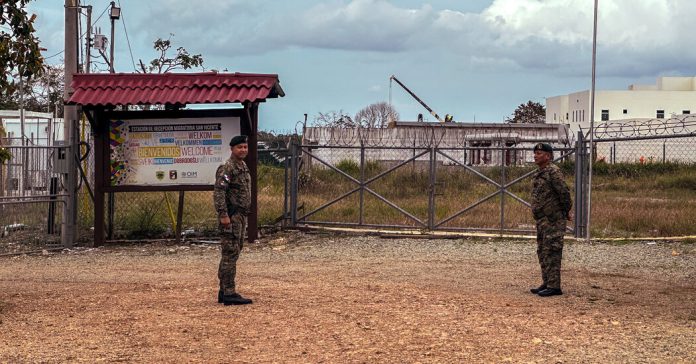
The camp lies four hours from Panama’s capital, down a bumpy, often desolate highway, at the edge of a treacherous jungle called the Darién.

For more than a week, it has held more than 100 asylum seekers from around the world. Surrounded by fences and armed guards, they sleep on cots or hard benches.

Journalists have been barred, lawyers say they have been blocked from speaking to their clients and it is the government in charge — not the international aid groups Panamanian officials say are the ones organizing the operation.

The migrants are among several hundred people who arrived in recent weeks at the U.S. southern border, hoping to seek asylum in the United States, and were swiftly deported to Central America.

They have since become test cases in the Trump administration’s effort to send some of its most challenging-to-deport people to other countries. Of the roughly 300 people sent to Panama, more than half have agreed to be repatriated, according to President Raúl Mulino.

Another 112 have said that it is too dangerous for them to go home or that they lack documentation allowing them to do so. Now they are at the camp by the jungle with no sense of how long they will be held or where they may be sent next.

Though their numbers are small, their cases point to the tension between the Trump administration’s aims of expelling vast numbers of migrants and the limits of Latin American countries working to facilitate those ambitions — under enormous pressure from President Trump.

Panama, like the United States, cannot easily deport people to places like Afghanistan and Iran, often because those countries refuse to take back their citizens.

Those trapped at the camp include at least eight children, as well as women fleeing the Taliban in Afghanistan and Christian converts fleeing the government in Iran. None have been charged with crimes, according to Panamanian officials.

A few people inside the camp still have access to cellphones and have been able to communicate with The New York Times.

“We told them: You are treating us like prisoners,” said Sahar Bidman, 33, a mother of two from Iran. “When I want to take my children to the shower they escort us.”

As Panamanian officials struggle to figure out what to do with this group, they have faced growing criticism from lawyers and human rights activists.

Gehad Madi, a United Nations special rapporteur who was permitted to visit the camp in recent days, emerged with pointed critique. He called it a “detention center” and said he was “extremely concerned” about the legal basis for holding the migrants.

A petition of habeas corpus presented by a Panamanian lawyer to the country’s supreme court claims the group’s internment is illegal.

Mr. Mulino told reporters on Thursday that the migrants at the camp, called San Vicente, were awaiting documentation, which some lacked and would need to travel. He did not explain how the government planned to deport people, or say if it would offer people asylum in Panama or facilitate passage to a different country willing to take them.

Asked why the detainees had not been allowed to speak to lawyers, he answered: “I don’t know.”

The United States, through the U.N. Refugee Agency, is paying for food, lodging and other needs of the deported migrants, said Carlos Ruiz-Hernández, Panama’s vice minister of foreign affairs.

A spokeswoman for the Department of Homeland Security, Tricia McLaughlin, said questions about the migrants should be directed to Panama.

“These individuals are in the custody of the Panamanian government,” she said, “not the United States.”

Mr. Mulino had earlier said that the migrants’ arrival in his country was “being organized” by two United Nations agencies, “not by the government of Panama.”

But one of those agencies, the U.N. Refugee Agency, said in a statement that it was not actually working inside the camp and was simply providing funds.

The other agency, the International Organization for Migration, has also not been regularly present in the Darién camp, according to a person with close knowledge of the situation who was not authorized to speak about it publicly.

It has focused on arranging repatriation for those who volunteered for it.

At least two groups, the Red Cross and UNICEF, have begun providing aid in the camp in recent days, according to migrants.

Mr. Ruiz-Hernández, in a written response to questions from The Times, said, “We want to assure the public that all migrants at San Vicente continue to receive comprehensive support.”

“Our government,” he continued, “remains dedicated to upholding human dignity and addressing the needs of every individual within our care.”

Ms. Bidman is one of 10 Iranian Christians at San Vicente who said they had left their country in the hopes of practicing their religion freely in the United States.

Instead, the U.S. government in mid-February flew them from California to Panama City, where they were locked in a hotel for about a week. After they refused deportation, they were bused to the San Vicente camp.

Converts from Islam to Christianity in Iran face a possible punishment of death.

The group is given three meals a day, and when Ms. Bidman’s son, Sam, age 11, injured his leg he was taken to a clinic where a doctor examined him and provided painkillers.

After a visit from the Red Cross and UNICEF, conditions inside improved slightly, several of the Iranians said, with camp authorities cleaning living quarters and the showers and providing a water cooler.

“At the beginning when we arrived here the kids cried every day,” Ms. Bidman said. “I keep telling them this is temporary and at the end of it we will go someplace nice.”

The people held at San Vicente are part of a much larger migration challenge for Central American nations.

Starting in 2021, enormous numbers of people began trekking from South America into Panama, through the Darién jungle, in an attempt to reach the United States. With Mr. Trump promising mass deportations, the wave is starting to go in reverse, with migrants trudging south from Mexico.

Mr. Mulino has said he is considering flying Venezuelan migrants from Panama to Colombia, where they could cross by land back into Venezuela. (Lacking relations with Venezuela, he cannot simply send them to Caracas.)

This has drawn at least 2,000 people, including many Venezuelans, to Panama in recent weeks, said Mr. Mulino, even though no flights have materialized.

Instead, some returning migrants have begun taking dangerous, hourslong boat rides from Panama to Colombia, over choppy waters. One boat shipwrecked this month amid bad weather, resulting in the drowning of an eight-year-old girl, according to border police.

Many returnees are now waiting at a different government migrant camp, called Lajas Blancas, about 40 minutes from San Vicente. There, six migrants told The Times that Panamanian officials were the ones signing people up for the boat journeys.

Mr. Mulino has acknowledged the existence of these maritime trips. Asked about official involvement, Mr. Ruiz-Hernández said the country had “implemented a comprehensive approach to ensure the safety and protection of migrants being repatriated to their home countries.”

Zulimar Ramos, 31, one of the Venezuelans at Lajas Blancas, said she was considering taking one of the boat rides, despite the dangers.

“The American dream is dead,” she said.

Panama is not the only country pressed by the Trump administration to accept deportees from around the world. In February, Costa Rica received more than 200 people from Central Asia, the Middle East and Eastern Europe, including many children.

As in Panama, the migrants are being held at a remote facility some six hours from the capital. Omer Badilla, the head of the country’s migration authority, has said people were being held to protect them from falling prey to traffickers.

For family members of the deportees, the lack of clarity about the length and terms of their detention has been painful.

Farzana, 22, who lives in Canada, said her sister was among those held at the Panamanian camp. The sister had entered the United States earlier this year, hoping to traverse the nation and seek refuge in Canada, Farzana said.

Concerned her sister would face retaliation at the camp if a family member spoke out, Farzana asked that only her first name be used.

A lawyer working with the women, Leigh Salsberg, said she has been trying to get in touch someone at the camp with no success.

“It feels like these people are in a black hole. I’ve been reaching out to the UNHCR” — the refugee agency — “and IOM, and it seems that no one is actually in contact with them at all.”

Farzana cried as she told her sister’s story.

“It’s really hard for me,” she said. “I’m really worried about her. But I can’t do anything.”

Federico Rios contributed reporting from Metetí, Panama.

How Canadians Are Directing Their Ire at the U.S. Over Trump’s Tariffs

0

Canada isn’t known for making a fuss, with niceness essentially part of its national brand.

Not anymore. Canadians are angry, and they’re showing it.

Threats by President Trump to impose 25 percent tariffs on Canadian exports and to annex the country have set off cascades of fury.

“Do you know how angry you have to be with the United States to intentionally go out and purchase Canadian-made toothpaste? Because I’m there,” Janel Comeau, a Canadian illustrator and writer based in Halifax, Nova Scotia, posted on X.

The call to rally against Mr. Trump has helped unify provinces across the political spectrum, including Quebec, which has long defended its French identity. Recent polls have shown national pride in the province has risen.

Even Americans, who rarely pay attention to matters north of the border, are taking note, with Canadian discontent becoming a regular talking point among U.S. television personalities.

“You know it’s bad when you’ve upset the Canadians,” Seth Meyers, the host of “Late Night,” said on X.

Here are some ways Canadians are manifesting their displeasure.

Product labels have come under perhaps unprecedented scrutiny by Canadian shoppers.

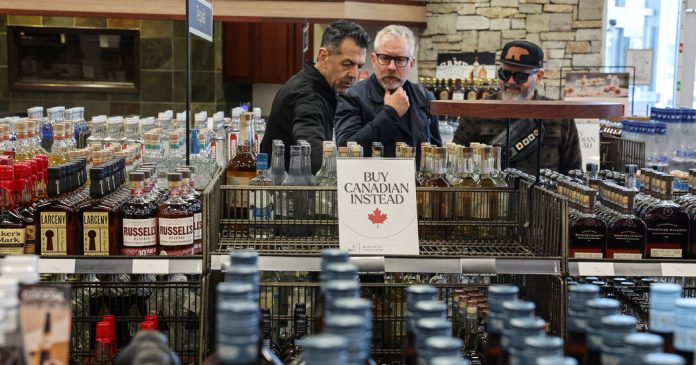
Grocery stores have plastered item displays with made-in-Canada signage. Responding to consumer demand, developers have rolled out applications, like MapleScan and Buy Beaver, that allow shoppers to scan a product’s bar code and learn its origins.

Canadians are also flooding social media forums to trade tips on amending grocery lists: ditch the Coca-Cola in favor of Canada Dry ginger ale (though despite the name it is owned by an American company); forgo Colgate toothpaste for toothpaste made by the Green Beaver Company; and skip the Kellogg’s cornflakes and instead pick up Nature’s Path granola.

“Before I would just go for what suits my pocketbook the best, and now, I’m making a point,” said Bill Fukazawa, who lives in Vancouver. “If there’s a Canadian choice, I’m going to make a Canadian choice.”

Mr. Fukazawa, who runs a food channel on YouTube called Maplecook, said in an interview that he was willing to sacrifice the authentic American ingredients to make his favorite food, Kansas City-style barbecue, as a form of protest.

“There’s an overwhelming feeling in Canada of betrayal,” Mr. Fukazawa said. “There is no country closer to us than the United States.”

Canadian travelers are redirecting their dollars to warm weather destinations outside the United States, with some seasonal residents even selling properties. (Though the trade feud is helping fuel this, the weak Canadian dollar is also playing a role.)

Canada is the leading country of origin for foreign tourists to the United States, according to the U.S. Travel Association, an industry group. Last year Canadians made more than 20 million visits to the United States and spent $20.5 billion.

Ahead of spring break for schools across Canada, there are signs that Canadians are heeding the suggestions of Canadian officials, including Prime Minister Justin Trudeau, to rethink their vacation plans.

A Feb. 27 survey by the Quebec Tourism Industry Alliance, a province that makes up a sizable portion of Canada’s snowbirds, found that half of travelers who planned to visit the United States this year said they had canceled their trips. (Tourists to the United States from Quebec spend about $6 billion annually, according to the Tourism Industry Alliance.)

Janet DePerry, a real estate broker in Dana Point, Calif., said she had fielded urgent requests in recent months from two clients who wanted to sell homes that they owned in California, one in Palm Desert, and the other in Orange County.

How eager were they to sell? “I told them what their house was worth, and they chose to list it for $50,000 less,” Ms. DePerry said. “I couldn’t say ‘I’m sorry’ enough to these people.”

Hockey fans in Canada were overjoyed after the country beat the United States this month in an inaugural four-nation championship. What would have normally been relatively friendly round-robin games for global bragging rights turned into icy geopolitical theater.

“You can’t take our country — and you can’t take our game,” Mr. Trudeau wrote in a post on X after the final game, which included Canadian fans booing “The Star-Spangled Banner.”

Many Canadian hockey fans also trained their ire against their country’s most famous hockey player: Wayne Gretzky, who was Canada’s honorary captain for the four-nation tournament.

Mr. Gretzky had already ruffled some Canadian feathers by attending Mr. Trump’s inauguration in January and remaining silent about the president wanting to make Canada the 51st state.

Then at the tournament he did not wear a Canada team jersey or any other red-and-white apparel.

Mr. Gretzky has said nothing about the backlash. But Mr. Trump has come to his defense.

“He’s the Greatest Canadian of them all, and I am therefore making him a ‘free agent,’ because I don’t want anyone in Canada to say anything bad about him,” Mr. Trump said in a social media post.

The first few letters of “Americano” had been wiped off the chalkboard menu of Morning Owl, an Ottawa coffee shop tucked away in a government building. At a friend’s suggestion, the owner, Todd Simpson, replaced the wording to read “Canadiano.” It’s written in red, with a maple leaf next to it for good measure.

Mr. Simpson’s gesture has drawn intense media attention and, he said, has lured locals and tourists into his off-the-beaten-path shop to show their support for Canada.

Coffee shops in other parts of the country have also stopped using Americano as part of their menu selections.

“It’s just something to lighten up this horrible thing that’s happening right now between the two countries,” Mr. Simpson said. “It’s a shame that all this is going on.”

The actor Mark Critch delighted viewers with his impressions of Mr. Trump during the president’s first term on the Canadian sketch comedy show “This Hour Has 22 Minutes,” which is shown on CBC, the national broadcaster.

Mr. Critch has reprised the role, to even bigger audiences, after Mr. Trump’s re-election in November.

“Times of confusion and uncertainty are great for comedy,” said Kaari Sinnaeve, a CBC spokeswoman, “especially now for ‘22 Minutes’ with so much material, and audiences hungry for a comedic take.”

Bezos’ changes to ‘Washington Post’ lead to more cancellations : NPR

0

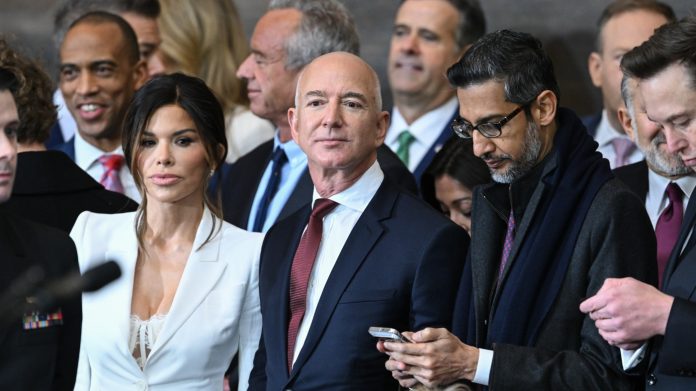
Washington Post owner Jeff Bezos, center, shown at the inauguration ceremony of President Trump at the U.S. Capitol in January.

Pool/Getty Images/Getty Images North America


hide caption

toggle caption

Pool/Getty Images/Getty Images North America

More than 75,000 digital subscribers to The Washington Post have cancelled since its owner, billionaire Amazon founder Jeff Bezos, announced on Wednesday that he would radically overhaul the paper’s opinion pages to reflect libertarian priorities and to exclude opposing points of view.

Wednesday’s announcement led to the immediate resignation of Opinions Editor David Shipley. He had vainly sought to persuade Bezos to drop the plans, according to a person with direct knowledge. Shipley did not respond to requests for comment.

Bezos’ decision also prompted an outcry from longtime Post figures, including Associate Editor David Maraniss and former Executive Editor Marty Baron. Baron called the move “craven” and told Zeteo News that Bezos, whom he praised extensively in his 2023 memoir, was “basically fearful” of President Trump.

The number of cancellations comes from a person who asked for anonymity because of the fear of repercussions at the Post. The Washington Post Co. declined to comment on the figures, first reported here by NPR, citing its status as a privately held company. Nor did it comment on the criticism.

A net loss of hundreds of thousands

The rapid-fire cancellations since Wednesday represent a historic level of reader fury over the changes. Yet they are only the most recent wave in a series of mass cancellations that began in late October. That was when Bezos killed a planned endorsement of Democratic presidential nominee Kamala Harris. Between then and Election Day, more than 300,000 subscribers canceled the Post, as NPR first reported last month. That was more than 12% of digital subscribers, which make up the vast majority of the paper’s paid circulation.

The Post has aggressively wooed new subscribers to replace them, boosting circulation by 400,000, often at highly discounted rates, according to a Post executive. (The executive spoke on condition of anonymity because the Post does not release circulation figures.)

Even so, there is broad consensus inside the Post that without Bezos’ decisions, the paper would be up hundreds of thousands of paying subscribers from where it was before the election. Instead, the numbers NPR has been able to obtain indicate a net loss of a couple hundred thousand subscribers.

In support of “personal liberties and free markets”

During Trump’s first term, under Bezos’s ownership and Baron’s editorial leadership, the paper adopted the motto, “Democracy Dies in Darkness,” an alliterative promise to deliver hard-hitting accountability journalism. The editorial page, which operates separately from the news section, laid out an argument in 2020 titled, “A second Trump term might injure the democratic experiment beyond recovery.”

No such emphasis was found in Bezos’ memo on Wednesday setting out his new philosophy, which promised a reorientation of the opinion section in support of “personal liberties and free markets”.

“We’ll cover other topics too of course,” Bezos wrote in a note to staffers that he posted publicly on Elon Musk’s social media site X, “but viewpoints opposing those pillars will be left to be published by others.”

In this age of the Internet, he said, a newspaper no longer must provide a “broad-based opinion section that [seeks] to cover all views.”

The Post newsroom has covered the return of Trump aggressively. Wednesday’s announcement alarmed senior news editors severely enough that Executive Editor Matt Murray assured them that morning that he had heard nothing to suggest that Bezos wanted to interfere with news coverage, which is separate from the opinion section. Murray sent a memo to the full newsroom to say they should continue to report “without fear or favor,” in the memorable journalistic aphorism.

A stated desire to regain public trust

Bezos said his decision not to publish the planned Harris endorsement just days before the election was driven by a desire to shore up the paper’s standing among the broader public. “Most people believe the media is biased,” he wrote in an opinion piece published by the paper. “Anyone who doesn’t see this is paying scant attention to reality, and those who fight reality lose.”

Yet he also admitted that his other business interests made things complicated. Amazon and the space company Blue Origin maintain contracts with the federal government worth billions of dollars annually. Government regulators make decisions daily that can affect their vast fortunes. The Trump administration is moving aggressively to reshape the government and private industry in line with the president’s priorities. The media has served as a particular target.

“You can see my wealth and business interests as a bulwark against intimidation, or you can see them as a web of conflicting interests. Only my own principles can tip the balance from one to the other,” Bezos wrote in October.

Distrust grows in newsroom

Since then, however, he has given $1 million toward Trump’s inauguration fund. In January, Bezos sat on the dais with other tech titans as the president was sworn in. And on Wednesday evening, he had dinner with Trump, the president told The Spectator.

Many Post staffers have questioned the motives for Bezos’ warmer relations with Trump. Some have been more public than others.

In early January, Shipley rejected a cartoon by Pulitzer Prize-winning staffer Ann Telnaes, whose proposed sketch showed Bezos alongside other tech and media billionaires abasing themselves before Trump. Telnaes quit, telling NPR, “Of course these are businesses, and I understand that. But they own a newspaper and they have an obligation, frankly, to protect the free press.”

Another spike of subscription cancellations followed in the week after Telnaes quit and Shipley’s decision became public — at a volume many thousands above typical levels.

This story marks the first time that this cancellation wave has been reported publicly.

Since Bezos’ announcement Wednesday, some of the Post’s competitors have capitalized on the news. The Guardian sent a fundraising pitch to readers, saying its fate will never be dictated by a billionaire owner. The New York Times‘ opinions editor Kathleen Kingsbury declared, “our audience is looking to us for insight, discernment and leadership in some of the most chaotic and uncertain moments in the modern era,” in a note announcing veteran Times journalist David Leonhardt would become editorial director of the section.

Trump Berates Zelensky at White House Meeting: Live Updates

0

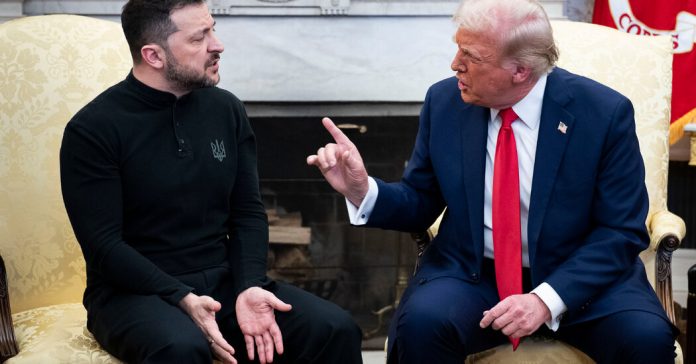
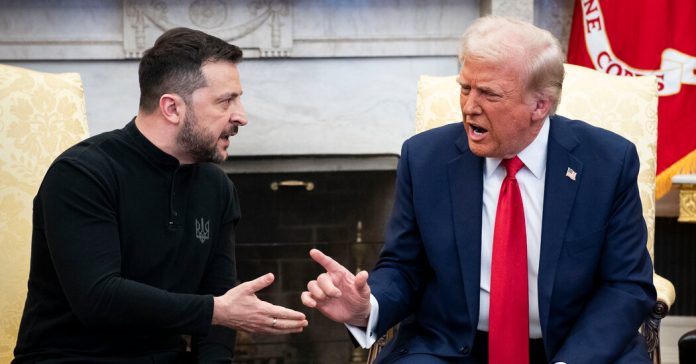
President Trump and Vice President JD Vance berated President Volodymyr Zelensky of Ukraine on Friday in an explosive televised Oval Office shouting match that ultimately blew up plans to sign a rare minerals deal and signaled a dramatic break in relations between two wartime allies.

In a public confrontation unlike any seen between an American president and foreign leader in modern times, Mr. Trump and Mr. Vance castigated Mr. Zelensky for not being grateful enough for U.S. support in its war with Russia and sought to strong-arm him into making a peace deal on whatever terms the Americans dictated.

With voices raised and tempers flaring, Mr. Trump threatened to abandon Ukraine altogether if Mr. Zelensky did not go along. After journalists were escorted out of the Oval Office, Mr. Trump canceled the rest of the visit, including a planned joint news conference and signing ceremony for the minerals deal. A grim-faced Mr. Zelensky then strode out of the West Wing, climbed into a waiting black sport utility vehicle and departed the White House grounds.

“I have determined that President Zelenskyy is not ready for Peace if America is involved, because he feels our involvement gives him a big advantage in negotiations,” Mr. Trump wrote on social media. “I don’t want advantage, I want PEACE. He disrespected the United States of America in its cherished Oval Office. He can come back when he is ready for Peace.”

The White House later sent out Senator Lindsey Graham, Republican of South Carolina and a close Trump ally, to tell reporters that Mr. Zelensky should consider stepping down. “He either needs to resign and send somebody over that we can do business with or he needs to change,” Mr. Graham said on the White House driveway.

The confrontation left the state of affairs uncertain, but provided a major boost to President Vladimir V. Putin of Russia, who has long sought to drive a wedge between Ukraine and its most important patron, the United States.

Even as he shouted at Mr. Zelensky on Friday, Mr. Trump expressed solidarity with Mr. Putin, saying that the two of them had together endured the special counsel investigation during his first term into Russian efforts to aid Mr. Trump in the 2016 election.

The president’s verbal assault on Mr. Zelensky was a remarkable display of anger and resentment toward the leader of a country that has been invaded by a larger power intent on eliminating it as an independent state. No president in memory has ever erupted at a visiting foreign leader in such a vituperous way on camera, not even enemies of the United States, much less a putative ally.

Talking over the Ukrainian leader, Mr. Vance told Mr. Zelensky that it was “disrespectful” for him to come to the Oval Office and make his case in front of the American news media and demanded that he thank Mr. Trump for his leadership. Mr. Trump jumped in and told the Ukrainian leader that “you’re not really in a good position right now” and that “you’re gambling with World War III.”

“You’re either going to make a deal or we’re out,” Mr. Trump added. “And if we’re out, you’ll fight it out and I don’t think it’s going to be pretty.”

Mr. Vance’s eagerness to assail Mr. Zelensky left many observers wondering whether it was a planned ambush or an impromptu tantrum. Mr. Vance has never been a supporter of Ukraine and said in 2022 that “I don’t really care what happens to Ukraine.”

After Mr. Vance began chastising Mr. Zelensky, it seemed to trigger Mr. Trump to join in. The result, though, was the blowup of an economic deal that Mr. Trump had prioritized in recent days, a commitment by Ukraine to turn over rare mineral rights to repay U.S. military aid over the past three years. The future of that deal remained unclear.

Mr. Zelensky’s hurriedly arranged visit to Washington to sign that deal was meant to smooth over tensions with Mr. Trump, who just last week parroted Russian talking points by falsely claiming that Ukraine “started” the war and calling Mr. Zelensky a “dictator without elections.”

With Mr. Zelensky agreeing to the minerals deal, Mr. Trump seemed ready to make nice by telling reporters on Thursday that he did not remember the dictator comment and expressing respect for the Ukrainian leader. He welcomed Mr. Zelensky at the door of the West Wing on Friday morning with an honor guard, and they shook hands politely but without evident warmth.

The encounter, though, quickly turned hostile shortly after they sat down in the Oval Office with journalists present. Mr. Zelensky, dressed in his usual dark, long-sleeved shirt, sought to explain the history of the war with Russia, noting that it went back to 2014 when Moscow first seized Crimea and occupied territory in eastern Ukraine and continued through Mr. Trump’s first term.

He also expressed skepticism of peace efforts mentioned by Mr. Vance. “What kind of diplomacy, JD, you are speaking about?” he asked. “What do you mean?”

Bristling, Mr. Vance replied: “I’m talking about the kind of diplomacy that’s going to end the destruction of your country.”

He then began assailing Mr. Zelensky. “I think it’s disrespectful for you to come into the Oval Office to try to litigate this in front of the American media,” Mr. Vance lectured. “You should be thanking the president for trying to bring an end to this conflict.”

He accused Mr. Zelensky of mounting a “propaganda tour” in the United States. “Do you think that it’s respectful to come to the Oval Office of the United States of America and attack the administration that is trying to prevent the destruction of your country?”

Mr. Zelensky tried to respond to Mr. Vance’s assertions and said that the United States could feel threatened by Russia some day. “You have a nice ocean and don’t feel now, but you will feel it in the future,” he said.

That set off Mr. Trump, who cut off Mr. Zelensky. “Don’t tell us what we’re going to feel,” he said, raising his voice. “You’re not in a good position. You don’t have the cards right now.”

“I’m not playing cards,” Mr. Zelensky replied. “I’m very serious, Mr. President. I’m the president in a war.”

“You’re gambling with World War III,” Mr. Trump retorted. “And what you’re doing is very disrespectful to the country, this country, that’s backed you far more than a lot of people said they should have.”

Mr. Vance jumped back in. “Have you said ‘thank you’ once this entire meeting? No.”

President Trump with President Volodymyr Zelensky of Ukraine at the White House before their meeting in the Oval Office on Friday.Credit…Eric Lee/The New York Times

Mr. Trump’s blowup with Mr. Zelensky contrasts with his assessment of Mr. Putin, whom he has long admired and since winning a second term only praised. Just this week, the president called Mr. Putin “a very smart guy” and “a very cunning person.” He said that he believed that Mr. Putin really wants peace, and predicted on Thursday that “he’ll keep his word” if a deal is reached, despite multiple Russian violations of agreements in the past.

While he has spoken with Mr. Putin by telephone, Mr. Trump has given little sense of how he expects to negotiate either a cease-fire or an enduring peace agreement. During last year’s campaign, he promised to end the war within 24 hours and to do so even before his inauguration.

Since taking office, Mr. Trump has demanded that Ukraine turn over some of its natural resources as payback for military aid provided under President Joseph R. Biden Jr. to defend itself against Russia. While Mr. Trump has repeatedly and falsely claimed that the United States has contributed $350 billion and Europe only $100 billion, in fact, according to the Kiel Institute for the World Economy, Europe has allocated $138 billion compared with $119 billion from the United States.

The Oval Office blowup drew criticism from supporters of Ukraine. “Answer to Vance: Zelenskyy has thanked our country over and over again both privately and publicly,” Senator Amy Klobuchar, Democrat of Minnesota, said on social media. She was one of several lawmakers who met with Mr. Zelensky before his visit to the White House.

“And our country thanks HIM and the Ukrainian patriots who have stood up to a dictator, buried their own & stopped Putin from marching right into the rest of Europe,” she wrote. “Shame on you.”

The Social Security Administration braces for workforce cuts : NPR

0

Union leaders say staffing at the Social Security Administration is at a 50-year low.

Kevin Dietsch/Getty Images


hide caption

toggle caption

Kevin Dietsch/Getty Images

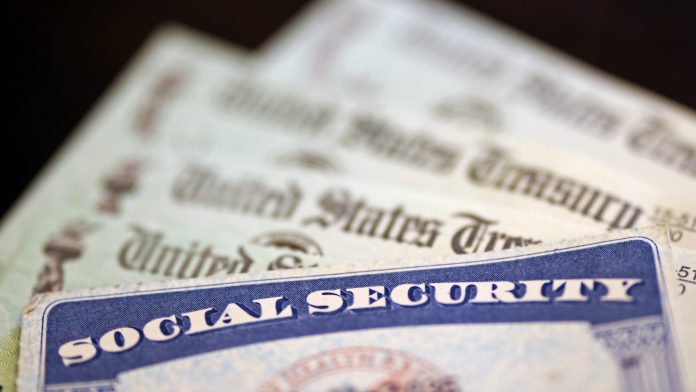
The Social Security Administration (SSA) announced Thursday that it “will soon implement agency-wide organizational restructuring that will include significant workforce reductions.”

The planned cuts, which are in line with an executive order from President Trump to broadly slash the federal workforce, are raising concerns about staffing at the agency that disburses retirement savings, as well as disability and survivor benefits, to tens of millions of Americans.

Advocates say long wait times for services have plagued the agency for years, and its staffing of some 60,000 employees is already at about a 50-year low.

Ahead of the looming broader cuts, at least five of eight regional commissioners have recently resigned, according to a senior SSA official who was not authorized to speak to the press.

Morale at the agency is extremely low, the source said, as staff are crying in meetings and managers are trying to reassure their employees during a time of great uncertainty.

“The public is going to suffer terribly as a result of this,” the source wrote to NPR. “Local field offices will close, hold times will increase, and people will be sicker, hungry, or die when checks don’t arrive or a disability hearing is delayed just one month too late.”

“Hopefully Congress takes note of the mass resignation of the Regional Commissioners and starts asking questions,” the source concluded.

Rich Couture — a spokesman for AFGE SSA General Committee, a union representing roughly 42,000 Social Security workers — told NPR that “AFGE is adamantly opposed to any mass layoffs” of its workers, “whether frontline or support staff.” Frontline workers directly support beneficiaries, the number of which he said increases by 10,000 people daily.

“SSA is at its lowest staffing levels in 50 years while taking care of more Americans than ever,” Couture said in a statement. “We need to retain our frontline workers who directly serve the public as well as those workers who provide critical support for the frontlines. Any cuts will ultimately hurt the public and undermine delivery of Social Security benefits.”

Trump has said that Social Security “won’t be touched” as he continues to make sweeping cuts to the federal government.

The SSA did not return a request for comment about the reduction in force. According to the agency announcement, as part of the reorganization it “may reassign employees from non-mission critical positions to mission critical direct service positions.”

Thursday’s announcement from the SSA followed guidance a day earlier from the Trump administration for federal agencies to develop plans for the large-scale elimination of positions, in line with Trump’s Feb. 11 executive order.

That guidance said that agencies that provide direct services to citizens, such as Social Security, can’t implement any reduction in force until the administration certifies “that the plans will have a positive effect on the delivery of such services.”

New leadership raises new concerns at the SSA

Until now, the SSA has been largely spared from efforts, mainly overseen by billionaire Elon Musk, to slash the size of the federal government. That includes a federal hiring freeze and more recent dismissals of large numbers of mostly newer workers.

New leadership at the agency has carried out more targeted changes, like closing its Office of Civil Rights and Equal Opportunity.

Any change to Social Security that could affect benefits is typically considered a political liability. Social Security remains one of the most popular government programs and it is how most Americans save for retirement.

To that end, Trump and Republican congressional leaders have vowed to protect Social Security from their planned cuts to government spending.

But in the last week or so, the agency has faced much of the same chaos and disruption that has been experienced by other federal departments. Changes at the agency are also leading to worries among employees and cybersecurity experts about the protection of sensitive records.

The agency’s prior acting commissioner, Michelle King, was recently replaced after clashing with associates of Musk’s Department of Government Efficiency who sought access to sensitive personal data held by the agency. That’s according to the senior SSA official who spoke to NPR on condition of anonymity. King has not responded to NPR’s requests for comment.

King has been replaced by Leland Dudek, who was being investigated internally before being promoted, according to the SSA official.

The protection of sensitive data is one of the top concerns for SSA employees.

“SSA is incredibly risk averse. And for good reason,” the SSA official said. “The data we house is intimate and comprehensive. Every U.S. man, woman and child (living and dead), has a Social Security Number and records of their work, income, tax, disability and civil relationships. And now DOGE has access to all of it.”

The SSA’s servers are vast, complex and archaic, processing billions of data points a day, often using programming languages that few people are familiar with, the source continued. Those systems are already under constant attack by digital adversaries from around the world, creating a constant challenge for those tasked with protecting the systems.

There are no indications that the engineers working with DOGE have gone through required training to protect federal records, the source said, nor specific agency-level training to work in each department’s unique systems. Lawmakers have already begun to raise the alarm about cybersecurity concerns of DOGE’s access to federal systems, while legal cases about DOGE’s access are ongoing.

Musk says he’s trying to protect Social Security — but parrots baseless claims

Musk said on social media that his goal it not to slash Social Security benefits, but to “stop the extreme levels of fraud taking place, so that it remains solvent and protects the social security checks of honest Americans.”

Musk has not provided proof for his claim of “extreme levels of fraud.” He’s pointed to recipients in the SSA database who are impossibly listed as well over 100 years old.

But a 2023 report from the agency’s Office of Inspector General said there were nearly 19 million Social Security number-holders who didn’t have information about their deaths in the system, and “almost none of the 18.9 million numberholders currently receive SSA payments.”

Acting Commissioner Dudek himself knocked down Musk’s claim as well.

Advocates complain of long-running issues with disability benefits

And now the agency is preparing for a significant cut to its workforce.

Charles Hall, an attorney who has been representing Social Security disability claimants in particular since 1979, said staffing issues at the agency have been a persistent problem for people seeking benefits.

“Disability claims have been progressively affected by Social Security’s lack of staffing, literally for at least 20 years,” he said. “It certainly has become more and more of an issue.”

Max Richtman, president & CEO of the National Committee to Preserve Social Security and Medicare, told NPR that the process to get disability benefits, in particular, is “so cumbersome and difficult to navigate” and insufficiently staffed that in the last couple of years, “about 10,000 claimants who appealed for their benefits die waiting for their claim to be resolved.”

Hall said improvements in technology have also yet to cover this increase in workload. Because disability claims are done on paper and labor intensive, technology is not enough to solve the problem.

“It requires a lot of manpower,” Hall said. “This is much more labor intensive than people would imagine… They only think in terms of retirement benefits, which are relatively simple, but the other workloads get pretty complicated.”

Richtman said that wait times for assistance from agency staff is only going to get worse if the Trump administration makes deep cuts in the workforce. He said Americans pay into Social Security through a payroll tax, so they deserve to access those benefits.

“It really should be looked at, I think, through a different lens and the rest of, you know, whatever else is happening at the federal government and downsizing,” he said.

Have information you want to share about the ongoing changes at the Social Security Administration or across the federal government? Reach out via encrypted communications on Signal to Ashley Lopez (alopezreports.90) or Jenna McLaughlin (JennaMcLaughlin.54).

Pope Francis Suffers a Setback, Inhaling Vomit

0

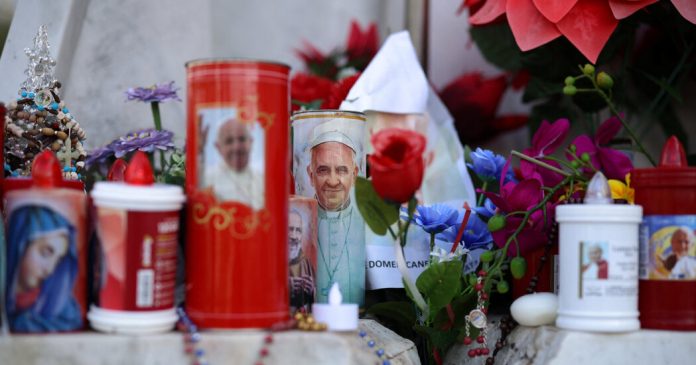
Pope Francis, hospitalized for two weeks, suffered a potentially serious setback on Friday, the Vatican said — a bronchial spasm that resulted in him inhaling vomit. It added that he had responded well to treatment and remained conscious and alert at all times.

Doctors said it would take 24 to 48 hours to determine whether the crisis has worsened the condition of the pope, who was being treated for pneumonia in both lungs and infections, the Vatican said. His doctors have always said that the pope is not out of danger, and that the overall the situation is complex.

The bronchial crisis on Friday afternoon was an isolated incident, the Vatican said. It said that as a result, he required “noninvasive mechanical ventilation” — meaning he was not intubated, which requires sedation.

Francis is now using a mask covering his mouth and nose to help him breathe. The Vatican said Francis was cooperating “with therapeutic maneuvers,” and was in “good spirits.”

The 88-year-old pope was admitted to a hospital two weeks ago with bronchial problems that developed into pneumonia in both lungs, as well as other complications. He had a respiratory crisis last Saturday that he appeared to have overcome, and medical bulletins in recent days were cautiously upbeat.

“It’s a setback,” Austen Ivereigh, Pope Francis’ biographer, wrote on X. While he urged others to put the news “in perspective” and consider that the pope was alert and responsive, he admitted: “I was getting too confident. Please keep up prayers.”

Others shared his concern.

“Given his age, and given that he is in such a state, we must be worried,” Father Felicien Abengalo, a priest in Rome, said on Friday. “His illness is not a minor illness.”

“We are worried,” said Rosa Busà, 66, who stopped by St Peter’s square on Friday during a vacation. “We love Pope Francis very much.”