Friday, November 13, 2026
Home Blog Page 175

Francis’ Illness Raises a Hard Question: Who Governs if the Pope Can’t?

0

Since being hospitalized with acute pneumonia for two weeks, Pope Francis has signed off on the appointment of 20 bishops, accepted the resignations of at least four and approved moving five people along the road to sainthood, according to the daily bulletin on the Vatican website.

Some of the events noted were more esoteric, like his appointing a cardinal to represent him in April at the 1,000th anniversary celebration of the coronation of Boleslaw I the Brave, the first king of Poland.

Overall, the public tenor of the Holy See has changed absent its most public face and voice — lacking the weekly appearances of the pope and his pronouncements on important global issues, like rebuking the Trump administration over immigrant deportations. Yet the machinery of the Vatican state churns on even while the 88-year-old pontiff lies in a hospital with no discharge on the calendar.

“Francis is still governing, he is in contact with his aides,” Matteo Bruni, a Vatican spokesman, said in response to a question about the pope’s work. “What he is missing is the contact with the faithful, the general audiences, the pastoral activity.”

In a statement on Thursday evening, the Vatican said that the pope’s clinical condition continued to improve. He was alternating between using a high flow of oxygen and a ventilation mask, it said, and had spent the morning doing respiratory physiotherapy and resting, before an afternoon round of physiotherapy.

“In view of the complexity of the clinical picture, further days of clinical stability are required to determine the prognosis,” the Vatican statement said. The Vatican press office added that the pope was no longer considered in critical condition, but was still not out of danger.

Yet the whole ordeal of his extended stay at Gemelli hospital, the longest of his papacy, with no public appearances, has awakened old concerns among church experts and observers about who would govern the church if this or any pope were to fall into a coma or otherwise be incapacitated.

To a certain extent, the Holy See operates much like a political system with a president and a prime minister. The pope, the president in this scenario, deals with major policy pronouncements and appointments, while the secretary of state, Cardinal Pietro Parolin, oversees day-to-day matters involved in running the Vatican itself and the global church.

The powers limited to the pope alone include appointing bishops, accepting retirements and issuing new decrees to change Vatican law. In addition, the bureaucracy would be unlikely to make policy pronouncements on issues of global import, like cease-fire negotiations in Gaza, without his imprimatur.

Inevitably, Francis’ illness postpones some decisions, which critics of his agenda do not mind. Before he fell ill, for example, Francis dissolved the Sodality of Christian Life, a controversial Catholic organization founded in Peru. Some of the group’s supporters had hoped his illness might slow the implementation of the decision, said John Allen, the editor of Crux, an independent online news site covering the Catholic Church. But Vatican officials and experts alike said there has been no particular slowdown during this hospitalization because the pope, while ailing, remains alert and able to engage with those around him.

Business rolls along as usual “as long as the pope can understand what people are saying to him and can sign his name,” said the Rev. Thomas J. Reese, a longtime Vatican analyst and the author of the book “Inside the Vatican: The Politics and Organization of the Catholic Church.”

But there are no established legal guidelines for what to do when that is not the case, especially if any incapacity endured for months rather than weeks. In the case of a brief hospitalization, a lot of those actions already in the pipeline could continue without a hitch.

But major decisions, like whom to appoint as archbishop in a high-profile city, would be problematic. It would also be extremely difficult to remove an errant cardinal or other prominent figure, experts said.

Pope Francis, like Paul VI in the 1960s, announced that soon after assuming the papacy in 2013, he signed a resignation letter in case he was ever incapacitated. But its contents have remained secret, and experts point to a number of legally murky issues.

First, who gets to decide that the pope is incapacitated? And second, church law states that for any resignation to be valid the pope must have freely chosen to make the decision. Some legal experts wonder whether a letter written more than a decade ago would pass muster as a “freely chosen” decision.

In recent history, the question was most acute during the long decline of Pope John Paul II, who began suffering from Parkinson’s disease years before his death in 2005. Although he could still answer “Yes” or “No,” his evident decline fed questions in the Vatican rumor mill about who was really making decisions, said Father Reese.

A far more dire consequence that some of John Paul’s defenders attribute to his slowed facilities was the lack of a response from the church to widespread accusations of child sexual abuse by Catholic clergy.

“The church has paid a significant price for that in the 20 years since then,” said Dr. Miles Pattenden, a history professor and the author of “The Cambridge History of the Papacy.”

The problem of ailing popes is not exactly a new one, but is far more complicated in the age of social media, instant communication and greater longevity. “In the bad old days, the doctors would kill him quickly through bleeding and terrible medicine,” said Father Reese, or “just lock him in a back room and run the church.”

Before 1700, there was an established precedent of a “cardinal nephew,” a close relative of an ailing pope, running matters in his name. “An old or elderly pope who was infirm would stay in bed and his nephew would run the government,” said Dr. Pattenden, and while the practice was still extant the nephew would often become pope himself when his older relative passed away.

Church leaders have long been reluctant to address the issue of defining when a pope might be considered incapacitated because it impedes the theory that a pope must have complete freedom to act, said Mr. Allen. “Nobody can tell a pope when it is over,” he said. “It is extraordinarily delicate to navigate how you get to the end of a papacy without the pope’s express will.”

The hurdles are evident in specific provisions like Canon 335 of Vatican law, which states that if the Holy See is “vacant or entirely impeded” then nothing can be altered in the governance of the church. But “entirely impeded” is not defined.

Francis’s predecessor, Benedict XVI, resigned at 85, citing age and infirmity, but he was an extreme outlier — no pope had stepped down in almost 600 years.

Given the leaps in modern medicine to prolong life, an international group of Catholic legal experts has proposed norms to flesh out what constituted “entirely impeded,” and had called for the transfer of governing authority to the entire College of Cardinals or a commission, depending on how long the pope was incapacitated. If a committee of experts deemed the pope’s incapacity irreversible, cardinals in the Curia would have to declare his governing days over and call a conclave to name a new pope.

But those were only proposals and to date no established law has seen the light of day.

With the pope’s condition slowly improving, there appears to be less urgency, but depending on how long his hospital stay lasts, it still could have an effect.

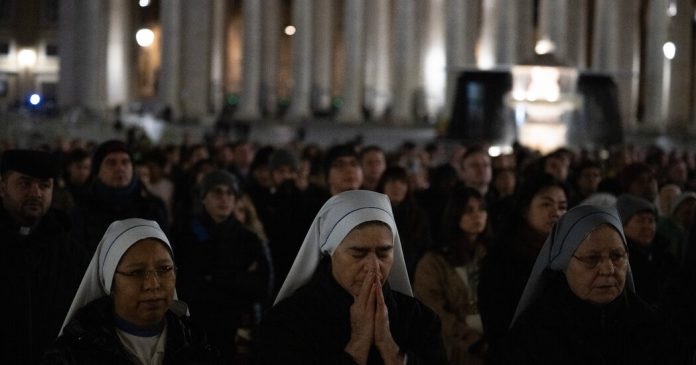
The streets of Vatican City and the churches of Rome are full of pilgrims here for the church’s Jubilee Year, but their hopes of seeing Pope Francis have been dashed while he remains in the hospital.

“The big reason that most people would come to Rome during a Jubilee Year is to see the pope,” Mr. Allen said. “If you cannot see the pope, that puts a damper on things.”
U.S. quietly unfreezes millions in Taiwan aid, annoying China : NPR

0

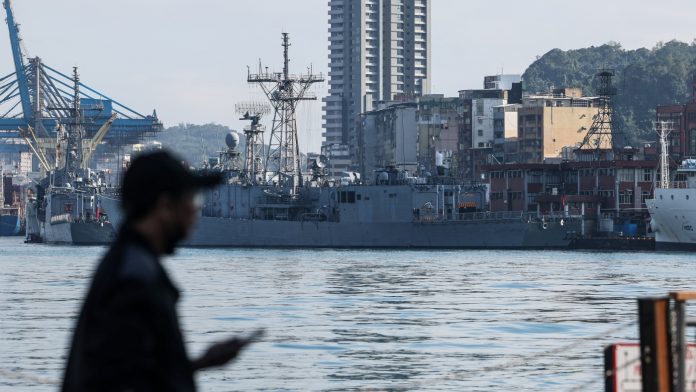
A man stands in front of Taiwanese navy ships anchored at the harbor in Keelung, near Taipei in northern Taiwan, on Dec. 11, 2024.

I-Hwa Cheng/AFP via Getty Images


hide caption

toggle caption

I-Hwa Cheng/AFP via Getty Images

The U.S. government has quietly unfrozen about $870 million in security assistance programs for Taiwan, according to two officials familiar with the matter, who were not authorized to speak publicly.

It is a significant move amid dramatic cuts to foreign assistance by the Trump administration, reductions which have faced a flurry of legal challenges. On Wednesday evening, just hours before a midnight deadline, the Supreme Court’s chief justice paused a federal judge’s order to disperse some $2 billion in frozen foreign aid.

China criticized the resumed funding decision for violating its security interests in Taiwan, a democratic, self-governing island which China claims as its territory and has repeatedly threatened to invade if necessary. On Thursday, China’s Defense Ministry spokesperson Wu Qian said, “We will come get you sooner or later,” in reference to Taiwan.

A spokesperson for China’s Foreign Ministry, Lin Jian, said earlier this week the U.S. funding decision “sends a gravely wrong signal to ‘Taiwan independence’ separatist forces.”

On Wednesday, China also kicked off live-fire military drills off the shores of Taiwan’s main island.

“During this period, [China] even blatantly violated international practice by setting up a drills area in waters about 40 nautical miles off the coast … without prior warning,” Taiwan’s Defense Ministry said.

Taiwan’s Defense Ministry said it had found and monitored 45 aircraft, 14 navy vessels and one ship from the Chinese military operating around Taiwan in a 24-hour period ending Thursday.

This month, China also held live-fire drills with a group of three naval ships in international waters off the coasts of New Zealand and Australia, leading Australian authorities to issue a warning to commercial flights between the two countries over the presence of the Chinese warships.

The Chinese drills near Taiwan began a day after Taiwan’s coast guard said it detained eight Chinese sailors on a ship carrying the flag of the West African nation of Togo. The ship dropped anchor shortly before Taiwan’s state telecom company discovered a nearby undersea cable had been severed.

The cable, connecting Taiwan’s main island to a Taiwanese outlying island that is also close to China, is the third Taiwanese undersea cable in two years to be severed under suspicious circumstances. Taiwan said in at least one instance, a Chinese ship may have dragged its anchor over the cable.

Last November, two undersea fiber optic cables in the Baltic Sea were severed and officials in Sweden and other countries are investigating a Chinese-flagged ship in possible connection to the incident.

Friday Briefing

0

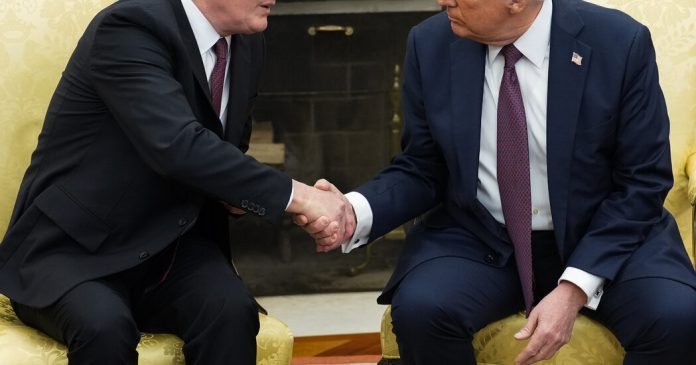
A meeting between President Trump and Prime Minister Keir Starmer.

Trump’s mass firing of federal workers is “illegal” : NPR

0

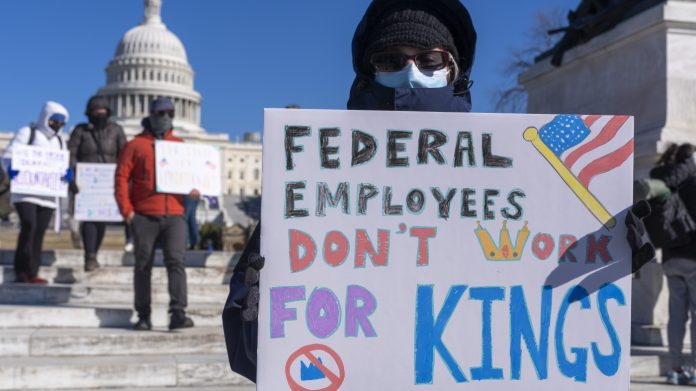
A protester with a sign saying “Federal Employees Don’t Work for Kings” demonstrates in support of federal workers and against recent actions by President Trump and Elon Musk on Presidents Day in Washington, D.C.

Jacquelyn Martin/AP/AP


hide caption

toggle caption

Jacquelyn Martin/AP/AP

A federal judge in San Francisco says the Trump administration’s firing of thousands of probationary employees is illegal and should be stopped.

U.S. District Judge William Alsup says the U.S. Office of Personnel Management must rescind directives sent to some agencies ordering them to fire their probationary employees — typically those in their first or second year in a job.

The decision came at the end of a hearing on Thursday. His order covers the Veterans Affairs Department, the National Park Service, the Small Business Administration, the Bureau of Land Management, the National Science Foundation, the Department of Defense and other agencies whose firings impact the civic groups that sued the Trump administration.

The temporary restraining order came in response to a lawsuit filed by a coalition that also included labor unions. The coalition’s attorneys allege that the U.S. Office of Personnel Management (OPM) unlawfully ordered agencies to carry out the firings.

“Statements from officials at multiple federal agencies admit that the agencies carried out the terminations not at their own discretion, but on the direct orders of OPM,” the attorneys wrote in a court filing.

Underpinning their argument is the fact that, while OPM handles many human resource functions for the federal workforce, it does not have Congressional authority to manage the employees of other agencies, a point that Alsup underscored in court.

“The agency has no authority to tell any other agency in the U.S. government who it can hire and fire, period,” he said.

Government says it asked, not ordered agencies to fire employees

In court, the government’s attorney argued that OPM had merely asked, not ordered, the agencies to fire probationary employees, drawing a distinction between the two.

“Asking is not ordering,” Assistant U.S. Attorney Kelsey Helland argued.

As part of its court filings, the government submitted an OPM memo to human resource officers dated Feb. 14. It states, “We have asked that you separate probationary employees that you have not identified as mission-critical no later than end of the day Monday, 2/17.”

Helland maintained that memo did not constitute an order.

Alsup was unconvinced.

“How could so much of the workforce be amputated suddenly overnight? It’s so irregular and widespread, so aberrant in the history of the country,” he said from the bench. “I believe they were directed or ordered. That’s the way the evidence points.”

The unions and civic groups had bolstered their case with what they called “mountains of evidence” that OPM had, in fact, ordered the agencies to fire employees.

Alsup read from that evidence, highlighting congressional testimony given on Tuesday by Tracey Therit, chief human capital officer for the VA.

In answer to a question from Rep. Mark Takano, D-Calif., about whether anyone had ordered her to carry out the terminations of approximately 1,400 probationary employees at the VA, Therit responded, “There was direction from the Office of Personnel Management.”

Therit also acknowledged that while her signature was on the termination letters that employees received, “the memo was provided,” although she declined to say by whom.

Judge asks government to “do the right thing”

Alsup did find merit to the government’s argument that some of the plaintiffs — the labor unions — lacked standing to bring the case in federal court, and instead should have brought the case to the independent agencies that handle complaints about personnel actions within the federal government.

Therefore, the relief he ordered — a rescinding of OPM memos directing federal agencies to fire probationary employees — does not cover every agency, only those that interact with the civic groups that are plaintiffs in the lawsuit.

But Alsup made clear he believes widespread relief may be warranted.

“I’m going to count on the government to do the right thing and go further than I have ordered and to let some of these agencies know what I have ruled,” he said.

He scheduled another hearing in two weeks to hear from people in key positions. They include Charles Ezell, the acting director of OPM, as well as agency leaders who were on the receiving end of his orders.

Twice from the bench, Alsup noted the importance of probationary employees, calling them “the lifeblood of our government,” the bright minds who work their way up, renewing the reinventing the government.

Losing them would hurt their agencies’ missions, he said.

A separate complaint over the probationary firings is winding its way through the administrative channels within the federal government. Earlier this week, the Merit Systems Protection Board ordered six fired federal employees temporarily reinstated pending further investigation of their firings by the Office of Special Counsel.

Special Counsel Hampton Dellinger is exploring ways to seek relief for a broader group of people similarly fired, his office said.

Have information you want to share about ongoing changes across the federal government? NPR’s Andrea Hsu can be contacted through encrypted communications on Signal at andreahsu.08.

Biodiversity Talks in Rome End

0

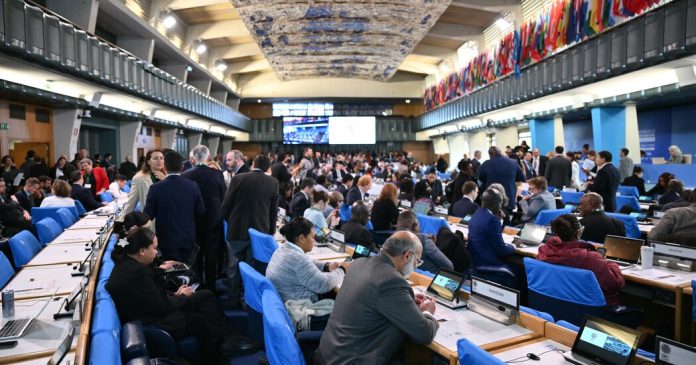
While the Trump administration in Washington was cutting environmental programs, delegates at U.N. biodiversity talks in Rome made modest progress Thursday on a series of measures to support nature.

Governments gathered to tackle global biodiversity losses that are unprecedented in human history, driven by the ways people have transformed the world.

The seismic geopolitical changes of recent weeks loomed over the talks as countries negotiated in a large conference room, fighting for small steps toward consensus. Delegates painstakingly negotiated the language of diplomatic texts even as Britain announced reductions to its overseas development aid and as the United States continued cutting its international aid programs.

“We have sent a light of hope,” said Susana Muhamad, Colombia’s departing environment minister, who presided over the meeting. “The common good — the environment, the protection of life and the capacity to come together for something bigger than each national interest — is possible.”

Many developing countries are rich in biodiversity but poor economically, and three days of tense negotiations centered on whether a new fund would be part of a plan to mobilize $200 billion a year for nature funding by 2030.

African and Latin American countries have demanded a new fund, arguing that the way they currently gain access to multilateral money is unfair and inefficient. But many donor countries have fought their proposed fund, saying it would be expensive to set up and manage, diverting money that could otherwise be spent on conservation itself. In the end, delegates agreed on a process to decide whether a new fund would be created. Still, it was a hard-won compromise and the room erupted in applause.

Delegates also approved a framework for monitoring nations’ progress on biodiversity commitments made in Montreal in 2022, which included an agreement to conserve 30 percent of the world’s land and water.

“We now have a road map to secure the finances required to avert the biodiversity crisis, and the means to monitor and review progress,” said Martin Harper, chief executive of BirdLife International, a science and advocacy group. “These crucial steps must now be backed up with real money from developed nations.”

Countries have recognized a biodiversity financing gap of $700 billion a year. In a landmark agreement in 2022, they agreed to mobilize at least $200 billion a year by 2030 from public and private sources and to find an additional $500 billion a year by 2030 by phasing out or reforming subsidies that harm nature. It’s a huge amount of money to find in five years, even in the most favorable political climate.

The talks unfolded with one country conspicuously absent: the United States.

“I can’t remember the last time the U.S. didn’t show up, but it’s been a very, very long time,” said David Ainsworth, a spokesman for the secretariat that manages the United Nations biodiversity treaty that underlies the talks, the Convention on Biological Diversity.

The United States has long held an awkward but nonetheless influential role in global biodiversity negotiations. It is the only country in the world, with the exception of the Vatican, that has not ratified the treaty. Still, the United States has long wielded considerable influence from the sidelines of the talks.

Now, all that has been thrown into question. In recent years, at least $385 million of U.S. biodiversity funding was funneled through the Agency for International Development, which is being dismantled by the Trump administration. Other streams of U.S. biodiversity funding are also at risk.

The White House did not answer questions on its plans for biodiversity funding or why it did not send delegates to the talks.

Monica Medina, who served as biodiversity envoy in the Biden administration, called the American absence in Rome “a deafening silence” and said cuts to biodiversity funding could result in devastating extinctions.

“U.S. funding has been a very important part of how we have kept some of the biodiversity we all love — elephants, whales, rhinos and polar bears — from going extinct,” Ms. Medina said. “We might not be able to keep some of these amazing animals around for our kids and grandkids without some of this funding.”

The meeting in Rome was a resumption of talks held last fall in Cali, Colombia, officially called the 16th Conference of the Parties to the Convention on Biological Diversity, or COP16. After reaching a groundbreaking agreement in overtime on a new way for companies to compensate countries for their use of genetic material, the talks lost quorum and were suspended.

One promising outcome of the Rome talks, according to stakeholders, was a move to begin an international dialogue of environment and finance ministers from developed and developing countries.

Over the course of the negotiations, some delegates made impassioned pleas for nature.

“Biodiversity cannot wait for a bureaucratic process that lasts forever while the environmental crisis continues to get worse,” a government delegate from Bolivia told the gathered nations on Wednesday. “Forests are burning, rivers are in agony and animals are disappearing.”

Trump says new tariffs with cut fentanyl deaths, but overdoses are already plummeting : NPR

0

President Donald Trump says rampant drug smuggling and overdose deaths are largely the fault of three countries – Canada, China and Mexico – and he says tough tariffs are the answer. But Canada plays almost no role in the U.S. overdose crisis and drug deaths have been plummeting.

Andrew Harnik/Getty Images/Getty Images North America


hide caption

toggle caption

Andrew Harnik/Getty Images/Getty Images North America

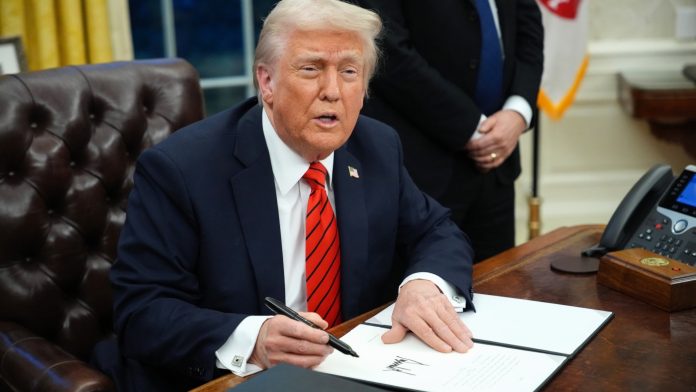
President Donald Trump confirmed Thursday that new 25 percent tariffs will go into effect March 4th against two of the U.S.’s largest trading partners. Trump also threatened to add an additional 10 percent tariff on Chinese goods and services on the same date.

Writing on Truth Social, Trump once again cited street drugs “pouring into our country from Mexico and Canada at very high and unacceptable levels” as a primary reason for the policy.

But federal data from U.S. Customs and Border Protection show Canada plays almost no role in the smuggling of fentanyl or other deadly street drugs into the U.S. Despite that fact, Canadian Prime Minister Justin Trudeau promised in December to step up efforts to secure the northern border.

“By deploying new helicopters, drones, and surveillance tools. By adding new scanners and sniffer dog teams to stop and seize fentanyl. By cracking down on the money laundering that’s funding cross-border crime,” Trudeau said, detailing new policy initiatives in a post on social media.

Asked on Thursday about data showing Canada isn’t a significant player in the U.S. addiction crisis, Trump argued that drugs are coming across the northern border without being detected.

“They should be apprehending much more, cause a lot comes through Canada and as Mexico gets stronger in terms of the border it comes through Canada,” Trump said, without offering evidence to back his claim.

Meanwhile, fentanyl smuggling across the southern border from Mexico has plunged over the last year with seizures in January 2025 down 50 percent compared with a year earlier. Street drug experts say in many parts of the U.S., the availability and potency of fentanyl has dropped significantly.

The number of total overdose deaths from street drugs has also fallen at an unprecedented pace, down by nearly a quarter over the last year.

Many states have seen a decline in fatal overdoses of between 30 and 50 percent, according to provisional data from the Centers for Disease Control and Prevention

“It’s very, very exciting to see,” said Dr. Nora Volkow, head of the U.S. government’s National Institute on Drug Abuse, speaking last week about the drop in drug deaths.

She noted that the decline in deaths linked to fentanyl, as opposed to other street drugs, is even greater. “From fentanyl it’s a 30.6 percent [drop] in one year, that’s a huge reduction,” she said.

Despite rapid improvements in a public health crisis that has killed hundreds of thousands of Americans, street drugs remain a political flashpoint.

“The families of the victims are devastated and, in many instances, virtually destroyed,” Trump said in his post on social media. “We cannot allow this scourge to continue to harm the USA.”

In addition to 25 percent tariffs on goods and services from Canada and Mexico, Trump threatened China will face an additional 10 percent tariff on the same date. China is a major source of industrial chemicals used by drug gangs to produce fentanyl, though the government of China has cracked down on suppliers over the last year.

While pointing to drug smuggling as a rationale for tariffs, Trump has also pardoned individuals who faced federal drug charges, including Ross Ulbricht, creator of a dark web internet market called Silk Road.

Ulbricht was convicted of distributing narcotics, among other charges, and sentenced to life in prison in 2015.

Trump’s pardon of January 6 riot defendants has also been extended by the U.S. Justice Department to include individuals facing drug-related charges.

Palestinian Prisoners Released in Hostage Swap With Israel

0

new video loaded: Palestinian Prisoners Released in Hostage Swap With Israel

transcript

transcript

Palestinian Prisoners Released in Hostage Swap With Israel

The Israeli military said Hamas turned over what it said were the remains of four Israeli hostages for the exchange of dozens of Palestinian prisoners.

“Our delegation will go to Cairo and see whether we have a common ground to negotiate. We said we are ready to make the framework longer in a return to release more hostages.”

Recent episodes in Israel-Hamas War

Veterans groups raise the alarm about DOGE cuts at the VA

0

Veterans groups are raising alarm about what they call indiscriminate cuts across the Department of Veterans Affairs.

U.S. Terminates Funding for Polio, H.I.V., Malaria and Nutrition Programs Around the World

0

“People will die,” said Dr. Catherine Kyobutungi, executive director of the African Population and Health Research Center, “but we will never know, because even the programs to count the dead are cut.”

The projects terminated include H.I.V. treatment programs that had served millions of people, the main malaria control programs in the worst-affected African countries and global efforts to wipe out polio.

Here are some of the projects that The New York Times has confirmed have been canceled:

  • A $131 million grant to UNICEF’s polio immunization program, which paid for planning, logistics and delivery of vaccines to millions of children.

  • A $90 million contract with the company Chemonics for bed nets, malaria tests and treatments that would have protected 53 million people.

  • A project run by FHI 360 that supported community health workers’ efforts to go door-to-door seeking malnourished children in Yemen. It recently found that one in five children was critically underweight because of the country’s civil war.

  • All of the operating costs and 10 percent of the drug budget of the Global Drug Facility, the World Health Organization’s main supply channel for tuberculosis medications, which last year provided tuberculosis treatment to nearly three million people, including 300,000 children.

  • H.I.V. care and treatment projects run by the Elizabeth Glaser Pediatric AIDS Foundation that were providing lifesaving medication to 350,000 people in Lesotho, Tanzania and Eswatini, including 10,000 children and 10,000 pregnant women who were receiving care so that they would not transmit the virus to their babies at birth.

  • A project in Uganda to trace contacts of people with Ebola, conduct surveillance and bury those who died from the virus.

  • A contract to manage and distribute $34 million worth of medical supplies in Kenya, including 2.5 million monthlong H.I.V. treatments, 750,000 H.I.V. tests, 500,000 malaria treatments, 6.5 million malaria tests and 315,000 antimalaria bed nets.

  • Eighty-seven shelters that took care of 33,000 women who were victims of rape and domestic violence in South Africa.

  • A project in the Democratic Republic of Congo that operates the only source of water for 250,000 people in camps for displaced people located in the center of the violent conflict in the east of the country.

  • Pre- and postnatal health services for 3.9 million children and 5.7 million women in Nepal.

  • A project run by Helen Keller International in six countries in West Africa that last year provided more than 35 million people with the medicine to prevent and treat neglected tropical diseases, such as trachoma, lymphatic filariasis, schistosomiasis and onchocerciasis.

  • A project in Nigeria providing 5.6 million children and 1.7 million women with treatment for severe and acute malnutrition. The termination means 77 health facilities have completely stopped treating children with severe acute malnutrition, putting 60,000 children under the age of 5 at immediate risk of death.

  • A project in Sudan that runs the only operational health clinics in one of the biggest areas of the Kordofan region, cutting off all health services.

  • A project serving more than 144,000 people in Bangladesh that provided food for malnourished pregnant women and vitamin A to children.

  • A program run by the aid agency PATH, called REACH Malaria, which protected more than 20 million people from the disease. It provided malaria drugs to children at the start of the rainy season in 10 countries in Africa.

  • A project run by Plan International that provided drugs and other medical supplies, health care, treatment of malnutrition programming, and water and sanitation for 115,000 displaced or affected by the conflict in northern Ethiopia.

  • More than $80 million for UNAIDS, the United Nations agency, which funded work to help countries improve H.I.V. treatment, including data collection and watchdog programs for service delivery.

  • The President’s Malaria Initiative program called Evolve, which did mosquito control in 21 countries by methods that include spraying insecticide inside homes (protecting 12.5 million people last year) and treating breeding sites to kill larvae.

  • A project providing H.I.V. and tuberculosis treatment to 46,000 people in Uganda, run by the Baylor College of Medicine Children’s Foundation, Uganda.

  • Smart4TB, the main research consortium working on prevention, diagnostics and treatment for tuberculosis.

  • The Demographic and Health Surveys, a data collection project in 90 countries that were crucial and sometimes the only sources of information on maternal and child health and mortality, nutrition, reproductive health and H.I.V. infections, among many other health indicators. The project was also the bedrock of budgets and planning.

  • Former DOGE staffer explains her decision to quit

    0

    Staffers of the Department of Government Efficiency resigned in protest saying they won’t use their skills to dismantle government services. One woman shares the reasons why she took this step.