Friday, November 13, 2026
Home Blog Page 176

Boris Spassky, Chess Champion Who Lost ‘Match of the Century,’ Dies at 88

0

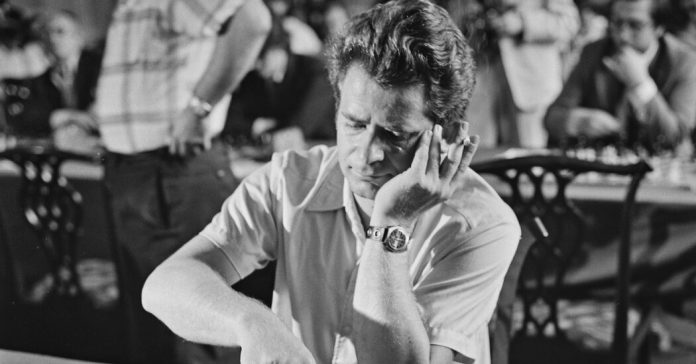
Boris Spassky, the world chess champion whose career was overshadowed by his loss to Bobby Fischer in the “Match of the Century” in 1972, died on Thursday in Moscow. He was 88.

His death was announced by the International Chess Federation, the game’s governing body, which did not cite a cause. Mr. Spassky had suffered a major stroke in 2010 that left him in a wheelchair for the rest of his life.

Arkady Dvorkovich, the president of the federation, said in a statement: “He was not only one of the greatest players of the Soviet era and the world, but also a true gentleman. His contributions to chess will never be forgotten.”

Mr. Spassky had noteworthy accomplishments as a player, but the politics of the match with Mr. Fischer, at the height of the Cold War, and the media attention focused on it, turned both of them into pawns in a wider drama.

Mr. Spassky was not happy about all the attention. In a 2023 interview for an exhibition at the World Chess Hall of Fame in St. Louis, his son, Boris Jr., said: “The role that he played in the 1972 match, he always thought of it as a chess player, because all the fuss around it, political, geostrategic, he never mentioned it. I am pretty certain that he felt the pressure.”

It was a measure of the match’s resonance that 20 years later, when the two men staged a rematch, it drew worldwide interest, even though both players were well past their prime.

When they played the first match, in Reykjavik, Iceland, Mr. Fischer, with his brash personality, was something of a folk hero in the West. He was widely portrayed as a lone gunslinger boldly taking on the might of the Soviet chess machine, with Mr. Spassky representing the repressive Soviet empire.

The reality could not have been further from the truth. Mr. Fischer was a spoiled 29-year-old man-child, often irascible and difficult. Mr. Spassky, at 35, was urbane, laid back and good-natured, acceding to Mr. Fischer’s many demands leading up to and during the match.

The match almost did not happen. It was supposed to start on July 2, but Mr. Fischer was still in New York, demanding more money for both players. A British promoter, James Slater, added $125,000 to the prize fund, which doubled it to $250,000 (about $1.9 million today), and Mr. Fischer arrived on July 4.

The match was a best-of-24 series, with each win counting as one point, each draw as a half point and each loss as zero. The first player to 12.5 points would be the winner.

In Game 1, on July 11, Mr. Fischer blundered and lost. Afterward, he refused to play Game 2 unless the television cameras recording the match were turned off. When they were not, Mr. Fischer forfeited the game.

The match seemed in doubt, but a compromise was worked out to move the match to a tiny, closed playing area behind the main hall.

Mr. Fischer won Game 3, his first victory ever against Mr. Spassky, and proceeded to steamroll him, winning the match 12.5 to 8.5.

Mr. Spassky’s sportsmanship was on full display in Game 6 of the match, which by then had been moved back into the main hall. When Mr. Fischer won the game, taking the lead for the first time in the match, Mr. Spassky joined with the spectators in standing and applauding his victory.

After losing the match, Mr. Spassky received a chilly reception on his return to the Soviet Union. He bounced back to win the Soviet Championship in 1973 and reached the semifinals of the qualifying matches for the world championship in 1974, losing to Anatoly Karpov, the future world champion.

Still, things were not the same. For two years, he was banned from traveling abroad, the life blood of a professional chess player in the Soviet Union, and his financial support and perks were cut. He found a way out, however.

In 1975, he met Marina Stcherbatcheff, a secretary working at the French Embassy in Moscow, who became his third wife. They moved to France, and he became a French citizen in 1978.

In 2012, in a bizarre episode, Mr. Spassky was whisked out of France, turning up about a month later in Russia, where he claimed that he had been kept against his will in a hospital in France and had been able to leave only with help from friends. He lived in Moscow for the rest of his life.

The pressure that Mr. Spassky felt to defend the Soviet hegemony over chess was immense. Years later, he was reported to have said of the 1972 match: “I was happy to lose the championship. My years as champion were the worst years of my life.”

Boris Vasiliyevich Spassky was born in Leningrad (later St. Petersburg) on Jan. 30, 1937. He was the second child of Russian parents; his parents later divorced, and his father left the family.

He grew up extremely poor, and when he was 5, during the siege of Leningrad, he was temporarily placed in an orphanage to escape the war. It was there, according to his son, that he learned to play chess.

He began studying chess in earnest in 1947 when he joined the Palace of Pioneers, a state-sponsored club that developed the talents of promising children, and his talent was immediately noticed and nurtured. By the time he was 11, he was receiving a stipend for chess, which became the family’s primary source of income.

In 1955, he won the World Junior Championship and placed third in the Soviet Championship, becoming a grandmaster at 18, the youngest in history. That record was eclipsed three years later when Mr. Fischer became a grandmaster at 15.

From 1951 to 1961, Mr. Spassky trained with Alexander Kazimirovich Tolush, a well-known master of the attack, and he had a number of successes. But he grew disenchanted with his results and switched to Igor Zakharovich Bondarevsky, who had a more strategic approach. Mr. Spassky’s play began to improve, and he began his ascent to the world title.

At his height as a player, from the early 1960s to the early ’70s, Mr. Spassky won by playing in whatever manner the position demanded. When opportunities presented themselves, he could attack viciously, as in his brilliant performance against David Bronstein in 1960, a game used as the basis for the chess scene in the 1963 James Bond movie “From Russia With Love.” He could also, with great patience, deftly outmaneuver his opponents, as he did in his Game 21 victory in the world championship match against Tigran Petrosian in 1966.

Mr. Spassky lost the match against Mr. Petrosian, but he qualified to play for the world title again in 1969, and this time he beat him. After his loss to Mr. Karpov in 1974, Mr. Spassky qualified for three more world championship cycles but was knocked out each time.

He remained a Top 10 player into the mid-1980s, but his results began to slip and he played without his former élan, often settling for quick draws. Many observers said that he had become lazy.

By 1992, Mr. Spassky was living on the margins of the chess world. Then the owner of a bank in Belgrade, where Mr. Fischer was living, offered $5 million for a return match with Mr. Fischer. The condition was that the match would be played in Serbia and Montenegro, the former Yugoslavia, which were under United Nations sanctions for waging a brutal war against Croatia and Bosnia-Herzegovina.

The match violated the sanctions, but Mr. Spassky enthusiastically agreed to play. “He pulls me out of oblivion,” he said of Mr. Fischer. “He makes me fight. It’s a miracle and I am grateful.”

The match received worldwide attention and lasted 30 games, but the result was no different from the one 20 years earlier: Mr. Fischer won, 10 games to 5, with draws not counting.

The matches differed, however, in two respects: The quality of play had suffered a sharp decline, and the tension between the two players was gone. Mr. Spassky and Mr. Fischer, bound together by being at the center of so much scrutiny for so long, were old friends, laughing and talking before and after the games.

In addition to his son, Mr. Spassky’s survivors include three grandsons. All three of his marriages ended in divorce.

Mr. Spassky’s warm feelings for Mr. Fischer were genuine, as he showed in 2004, when Mr. Fischer was arrested in Japan for not having a valid passport and was threatened with deportation to the United States to face charges for violating the sanctions against Yugoslavia.

Before Mr. Fischer was ultimately released and sent to Iceland, Mr. Spassky sent a letter to President George W. Bush, asking for clemency.

“Bobby and myself committed the same crime,” he wrote. “Put sanctions against me also. Arrest me. And put me in the same cell with Bobby Fischer. And give us a chess set.”

Farmers will be hit hard by the dismantling of USAID

0

A pause on the release of $2 billion in foreign aid could affect the government’s longest-running permanent program for international food assistance — Food for Peace.

Austrian Parties Reach Deal to Form Government Without Far Right

0

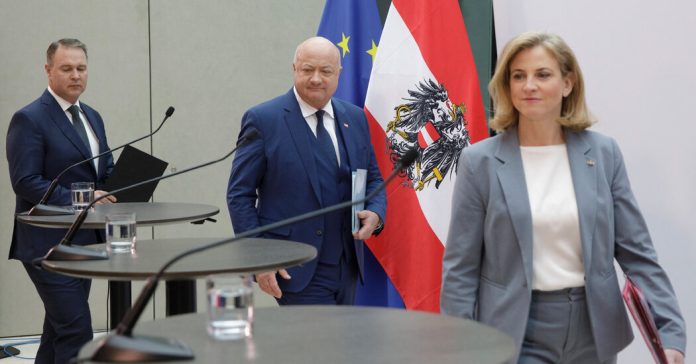
Three mainstream political parties in Austria said on Thursday that they had reached an agreement to form a new government that excludes the far right, ending five months of roller-coaster negotiations after an election last fall.

It was an improbable comeback for a diverse political coalition that was tripped up by policy infighting when it tried and failed to form a government earlier this year.

And it was a bitter setback for the Freedom Party, which finished first in last year’s elections on the strength of an anti-establishment, anti-immigrant campaign, and was briefly on the cusp of giving Austria its first far-right chancellor in the postwar era. No party came near winning a majority of votes or seats in Parliament.

The likely new chancellor, Christian Stocker, will instead come from the center-right party that has led the nation for most of the last seven years: the People’s Party, which finished second in the September elections, as voters punished it for a string of corruption scandals that mostly occurred years ago.

Mr. Stocker is set to lead the first three-party coalition in an Austrian government, alongside the Austrian Social Democrats and the centrist NEOS party.

“In times of great challenge, Austria has always drawn its strength from the consensus of constructive forces,” Mr. Stocker said at a news conference in Vienna on Thursday, where the three parties’ leaders presented a more-than-200-page plan to govern the country for the next four years. The coalition will announce further ministerial appointments on Friday.

The announcement freezes out the Freedom Party, which failed in its own attempt to form a government earlier this year.

The new government will start on thin ice. The Freedom Party has only grown more popular since last fall, and is now backed by a third of the country.

Polls show Austrians remain frustrated about an economy that has spent the last two years in recession and worried about immigration to the country, particularly from predominantly Muslim countries. The Freedom Party made both a central issue in its last campaign, promising widespread deportations and a ban on political forms of Islam.

In a nod to those issues, the new government said it would toughen its stance on migration, by not allowing asylum seekers to bring their families, while banning head scarves for girls.

“We are honest: these are going to be hard years, two hard years,” said Beate Meinl-Reisinger, the head of NEOS. “We are in a difficult economic situation; we are in a difficult budgetary situation,” she said.

The Freedom Party, founded by former Nazi soldiers in the 1950s, and its leader, Herbert Kickl, had been bidding to become the latest in a wave of hard-right, anti-immigrant parties to take or share power in Europe.

After the Freedom Party won the fall election, other parties refused to work with it. Those parties were given a chance to form a government, but their efforts bogged down on policy issues, like how to mix spending cuts and tax increases to reduce the nation’s budget deficit.

When the mainstream coalition reached an impasse, the most conservative of the parties, the People’s Party, entered negotiations with the Freedom Party. They were prepared to make Mr. Kickl the chancellor.

But those negotiations surprisingly broke down over the question of which party would be able to run the interior ministry, which is responsible for migration and public safety. Both parties insisted they wanted it for themselves.

That gave the mainstream groups one more chance.

Mr. Stocker said that the three parties were able to pick up negotiations where they broke off in January, and all three leaders said they worked late into the nights to be able to present the program, which has elements of each party’s platform. While fixing the budget was a top priority, the Social Democrats lauded a rent freeze for people who are feeling the effects of recession. The NEOS party praised a plan to reduce bureaucracy and cut certain labor costs.

There are many pressures on this coalition, including over the national debt and the other differences among the parties, says Laurenz Ennser-Jedenastik, a political science professor at the University of Vienna.

Still, he said, there’s one major factor holding the coalition together. “The negative incentives are very strong: others would almost certainly benefit from the failure,” he said.

For years, the two main parties of the coalition were the only mainstream options in Austria — power would switch between the two regularly. Those old rivalries might make the coalition more fragile, wrote Peter Filzmaier, an Austrian political analyst, in an email exchange.

“As soon as, contrary to expectations, one of the coalition partners should become more and more popular, old rivalries between the ÖVP and the SPÖ will resurface,” wrote Mr. Filzmaier, referring to the People’s party and the Social Democrats by their German acronyms.

One thing could make the coalition more stable, say experts: the smallest party, NEOS, cannot bring down the government by leaving it, because the two mainstream parties have enough seats in the Austrian Parliament for a majority.

Mr. Stocker, who is expected to lead the country starting Monday, took over his party’s leadership after the former chancellor, Karl Nehammer, resigned from the post in January when the mainstream coalition talks fell apart the first time.

At the time, Mr. Stocker was widely criticized for entering into negotiations with the hard right, especially because he spent months warning Austrians how dangerous the party was.

NEOS party members are expected to approve the agreement in a special vote on Sunday, Ms. Meinl-Reisinger told journalists on Thursday. The government could then be sworn in on Monday.

Mainstream European political parties have struggled in recent years to respond to an erosion in support for establishment parties and the rise of a new group of hard-right leaders who have harnessed voter unrest over immigration, economic stagnation and cultural change.

In Germany, the hard-right Alternative for Germany, or AfD, finished second in Sunday’s parliamentary elections, doubling its vote share from 2021 but falling short of its hopes for an even stronger showing. But it is not expected to factor into the next government. All other German parties respect what is known as a national “firewall” against the AfD, refusing to include it in government, as part of a decades-long national effort to avoid a rerun of the Nazi era.

JD Vance, the U.S. vice president, criticized Europeans this month in Munich for that practice, which he said disenfranchises voters concerned about immigration, and urged them to include hard-right parties in government. “There is no room for firewalls,” he said.

Austria has no such firewall. The Freedom Party has repeatedly been included as a junior partner in coalition governments, most recently with the People’s Party. But it has never held the chancellorship.

The CFPB drops a major lawsuit against Capital One : NPR

0

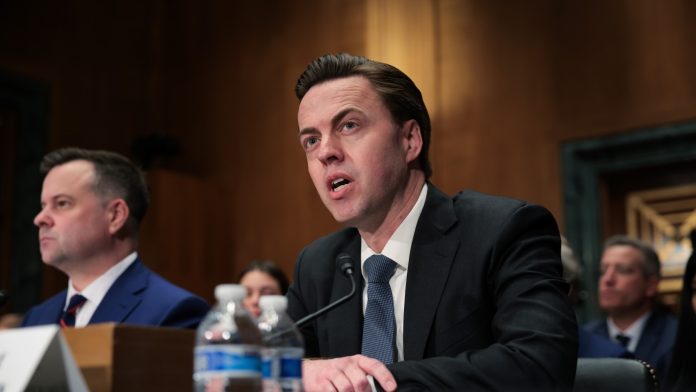
Jonathan McKernan, nominee for Director of the Consumer Financial Protection Bureau, testifies before the Senate Banking Committee on Thursday in Washington, D.C.

Kayla Bartkowski/Getty Images/Getty Images North America


hide caption

toggle caption

Kayla Bartkowski/Getty Images/Getty Images North America

The Consumer Financial Protection Bureau on Thursday dropped five major legal cases it had underway — including a big lawsuit against Capital One — marking a major reversal for an agency that had pursued aggressive action against financial institutions accused of wrongdoing during the Biden administration.

Just last month, the CFPB had accused Capital One of failing to pay more than $2 billion in interest to customers by misleading them into thinking they would be getting higher rates. Capital One denied the charges.

The bureau also dropped its cases against Rocket Homes, Pennsylvania Higher Education Assistance Agency, Vanderbilt Mortgage and Finance, and Heights Finance Holding Company.

News of the court filings dismissing the CFPB’s legal cases came just as the Senate Banking Committee was grilling President Trump’s nominee to lead the agency, Jonathan McKernan.

The CFPB has faced intense turmoil in recent weeks, with over a hundred workers fired and the agency virtually shuttered after staff were told to stop all work. Employees were locked out of the bureau’s D.C. headquarters and the building’s lease was canceled.

People protest in support of the Consumer Financial Protection Bureau (CFPB) headquarters in Washington, D.C., earlier this month.

People protest in support of the Consumer Financial Protection Bureau (CFPB) headquarters in Washington, D.C., earlier this month.

Jacquelyn Martin/AP/AP


hide caption

toggle caption

Jacquelyn Martin/AP/AP

During his Senate testimony, McKernan said the agency had overreached under the Biden administration,

“We’ve got to refocus it on its mission,” said McKernan, who was previously on the board of the FDIC. “We need to right-size it, make sure that we have an efficient CFPB and we need to reinstate some accountability to our elected officials.”

Sen Elizabeth Warren (D-Mass.), who played a major role in the bureau’s founding after the 2008 financial crisis, said during the hearing that she did not believe that the timing of the court filings were coincidental, though she offered no evidence.

“It seems to me the timing of that announcement is designed to embarrass you and to show exactly who is in charge of this agency right now: Elon Musk and his little band of hackers,” she told McKernan.

Sen. Tina Smith (D-Minn.) said that she had asked McKernan about the pending litigation the day before and had been “assured” that he would “review these lawsuits.”

“This makes me question like who’s really going to be in charge of the CFPB if this is what’s happening while your nomination is being considered?,” she said.

“My question is, who’s going to be in charge here?” Smith asked McKernan.

“Senator, if I’m confirmed, I’m the director,” he replied.

‘CFPB RIP’

The CFPB is currently led by acting director Russell Vought, the White House budget director and one of the architects of the conservative plan Project 2025.

The Trump administration has made clear its contempt for the bureau, and that it wants to either eliminate CFPB or drastically pare back its work. Musk has tweeted “CFPB RIP.”

Consumer groups decried the end of the litigation.

“Voters in the last election expressed their dismay with high prices, yet the Administration is stopping the essential work to stop corporate abuses that take billions from people every year,” said Lauren Saunders, associate director of the National Consumer Law Center. “The cases dismissed today actually underscore why the CFPB’s work is so essential to investigate practices that are draining hard-earned money from the pockets of everyday people.”

Before joining the FDIC’s Board of Directors, McKernan held staff roles in the Senate, the Treasury, the Federal Housing Finance Agency, and spent a brief stint detailed to CFPB. He previously spent nine years as a lawyer focused on banking and consumer financial laws, according to his prepared testimony. Several business groups have endorsed McKernan’s nomination.

Mexico Releases Cartel Operatives, Including Rafael Caro Quintero, Into U.S. Custody

0

The Mexican government on Thursday sent to the United States nearly 30 top cartel operatives wanted by the American authorities, including one notorious drug lord whom U.S. officials had been seeking to bring to justice for 40 years, according to a statement by the Mexican government.

The handover of so many significant cartel figures to the United States at once was one of the most important efforts by Mexico in the modern history of the drug war to send traffickers to face charges in American federal courts.

The development came as the Trump administration was leaning hard on the Mexican government to step up its fight against the cartels, and Mexican officials’ concession appeared to be an early win for President Trump in what will likely be a longer struggle against the criminal groups.

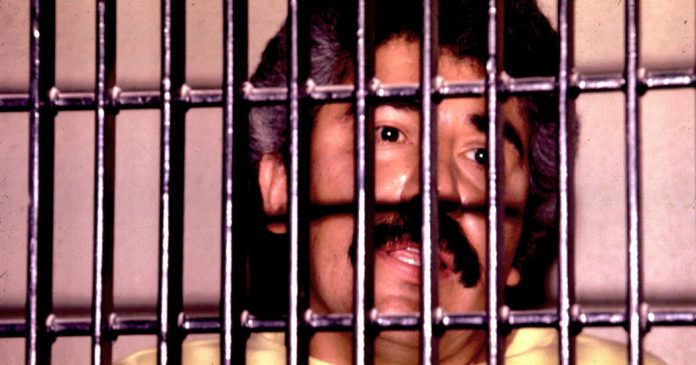
Among those being flown to the United States was Rafael Caro Quintero, a founding member of the Sinaloa drug cartel, who was convicted in Mexico of masterminding the 1985 murder of Enrique Camarena, an agent with the Drug Enforcement Administration, three people familiar with the matter said. Getting hold of Mr. Caro Quintero has for decades been all but an obsession among officials at the agency.

The transfer of the wanted men, who had been in Mexican custody, came as a high-level delegation from Mexico arrived in Washington to meet with senior U.S. officials to hammer out a security agreement amid tension between the two nations. The U.S. government declined to make any immediate public comment, but the Mexican foreign ministry released a statement announcing the release of the cartel figures.

“This action is part of the work of coordination, cooperation and bilateral reciprocity within the framework of respect for the sovereignty of both nations,” the statement said.

In recent weeks, the Trump administration has been engaged in a heated debate over how far — and how hard — to go in pushing the Mexican government to deal with the cartels, which have for years wreaked bloody violence in Mexico and smuggled untold amounts of illegal drugs into the United States.

Some White House officials have adopted an aggressive posture, advocating unilateral military action against drug lords and cartel infrastructure in Mexico to curtail narcotics, such as fentanyl, from crossing the border. Others have argued for a more pragmatic approach, saying that increased partnership with the Mexican government would ensure continued cooperation on issues like migration.

Amid these deliberations, Mr. Trump and his allies have placed enormous diplomatic and economic pressure on Mexico’s president, Claudia Sheinbaum, including by threatening to impose steep tariffs on her country.

On Thursday, at a joint news conference with Britain’s prime minister, Keir Starmer, Mr. Trump kept up that pressure, saying the flow of lethal drugs across the southern border had not stopped.

“The drugs continue to pour into our country, killing hundreds of thousands of people,” he said, even though U.S. overdose deaths have dropped recently, according to public health officials. “We’re losing substantially more than 100,000 people. I mean, dead.”

Still, Mexico’s decision to send the jailed traffickers to the United States was hailed in American law enforcement circles as a major victory and a clear signal that Ms. Sheinbaum planned to cooperate with the Trump administration in cracking down on the cartels.

“This is an unbelievably important moment and marks a true turning point,” said Ray Donovan, the former chief of operations for the D.E.A. “This shows President Sheinbaum’s willingness to work with us to target and dismantle the criminal organizations that have impacted the United States and Mexico for generations.”

Mr. Caro Quintero is an outsize figure in the annals of Mexican crime. He is reviled by U.S. federal drug agents for the role he played in the torture and killing of Mr. Camarena, who was known as Kiki, while working undercover in Mexico. Mr. Camarena’s murder has long been viewed as a kind of catalyst that propelled American law enforcement deeper into Mexico’s cataclysmic war against the cartels.

After being sentenced to 40 years in prison, Mr. Caro Quintero was released from Mexican custody on a legal technicality in 2013 and returned to hiding in rural Sinaloa, his home state. He was ultimately captured by the Mexican authorities near San Simón, a town in Sinaloa, in 2022.

Only hours after he was detained, a military helicopter crashed outside the nearby city of Los Mochis, killing 14 Mexican marines onboard. Mexico’s president at the time, Andrés Manuel López Obrador, said then that the slain troops had been involved in the mission to capture the former crime lord.

Mr. Caro Quintero has been under indictment on several drug trafficking counts in Federal District Court in Brooklyn since 2020. And he could make an appearance there in a front of a federal judge as early as Friday, one of the people familiar with the matter said.

Mexico was also releasing into U.S. custody Miguel Ángel Treviño Morales, an infamously brutal former leader of the Zetas cartel who was captured in Mexico in 2013, the people said.

Mr. Treviño, who is better known as Z-40, after his radio call sign in the Zetas, is widely viewed as one of Mexico’s most violent cartel operatives, having helped perfect the practice of using carnage as a message.

His organization was founded by highly trained and heavily armed Mexican commandos who were initially given the job of going after the gangs, but in the end sold their services to one in particular, the Gulf cartel. After riches — and intense bloodshed — followed, the Zetas, with Mr. Trevino in their upper ranks, went out on their own and eventually became one of Mexico’s most powerful and feared criminal organizations.

Mr. Treviño is facing overlapping drug charges in federal courts in Texas, including those in Austin and Laredo.

Consider This from NPR : NPR

0

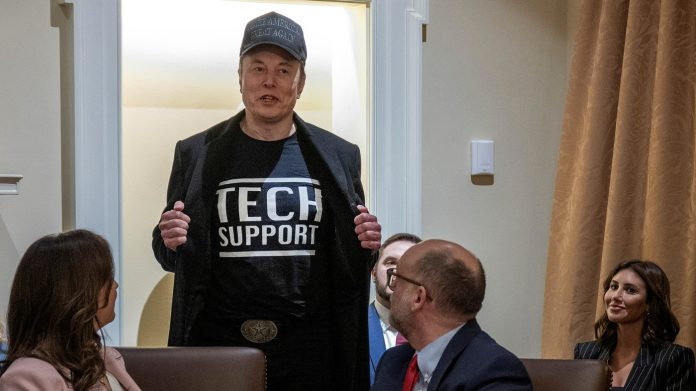
Leader of the Department of Government Efficiency Elon Musk wears a shirt that says “Tech Support” as he speaks during the first cabinet meeting of US President Donald Trump’s second term.

JIM WATSON/AFP via Getty Images


hide caption

toggle caption

JIM WATSON/AFP via Getty Images


Leader of the Department of Government Efficiency Elon Musk wears a shirt that says “Tech Support” as he speaks during the first cabinet meeting of US President Donald Trump’s second term.

JIM WATSON/AFP via Getty Images

On Tuesday, 21 employees working under DOGE resigned in protest. In an anonymous letter, they wrote, “We will not use our skills as technologists to compromise core government systems, jeopardize Americans’ sensitive data, or dismantle critical public services.”

D.K. is one of those people – because she’s worried about retaliation for speaking out, NPR has agreed to use only her first and middle initials.

She used to work for U.S. Digital Service, which was launched in 2014 to improve how the federal government delivered information online to Americans. On his first day in office this term, President Trump signed an executive order changing the name to the Department of Government Efficiency, or DOGE.

D.K. once worked in the private sector, but wanted to dedicate her skills to helping people.

“When I found United States Digital Service, it seemed like the perfect fit,” she told All Things Considered host Ari Shapiro. “The ability to go out and use my knowledge and expertise to help make the government systems better was the biggest draw.”

The following interview has been edited for length and clarity.

Interview highlights

Ari Shapiro: So this resignation letter says people who arrived with DOGE fired technical experts, mishandled sensitive data and broke critical systems. Can you give us an example of an instance where you saw that happen?

D.K.: Yeah, there are quite a few. One of the big ones and there has been information that has come out that is incorrect is in regards to the Social Security Administration. The access to that data – that data contains all the information on any person who has ever been eligible for Social Security. It doesn’t mean that it’s somebody who is actively receiving Social Security, and perhaps it could be somebody who passed away quite a long time ago. That data, not only is it being utilized incorrectly, but the access to it and the feeding it into other systems makes all of that data and all of the American people’s data very insecure.

Shapiro: How would you respond to people who say, well, these are disaffected Democrats who are heading for the exits?

D.K.: I would say that is a gross mischaracterization of the United States Digital Service as a whole. While we were founded during the Obama administration, United States Digital Service still operated during the first Trump administration and was able to do good work during that time. United States Digital Service members come from all different backgrounds and a lot of them from the private tech sector, and there are a lot of differing political opinions. We cover the gamut as far as our political leanings and part of being an EOP [Executive Office of the President] employee. And the oath that we swear to the Constitution when we start is to operate in a nonpartisan, nonpolitical way. We are here to serve the American people. It is not a political issue.

Shapiro: You could have chosen to stay and try to work within the system. What was the tipping point that made you decide leaving was the best choice?

D.K.: The first real tipping point came when many of my colleagues were fired for seemingly no reason, when they had been performing exceptionally at their jobs and were dedicated to serving this country and to help improve this country’s governmental systems. The second tipping point came when it became clear that the former United States Digital Service would be asked to become more involved with DOGE’s activities. And those activities are the antithesis of what United States Digital Service was founded upon and what the mission has been: to do the most good for the most amount of people, to go where the work is and to hire and empower great people, which means supporting our agency partners and uplifting the federal servants.

I realized that my actions would, if I stayed, would just further legitimize DOGE and potentially cross extreme ethical and legal lines.

Shapiro: Cross ethical and legal lines, how?

D.K.: Some of the activities that DOGE has currently been focused on are gaining access to government systems that house the American people’s data. And with that, it is unclear whether they are upholding privacy and security standards that are regularly practiced throughout the government before the new administration came in. There is a high risk of the American people’s data being exposed or being utilized for nefarious means. And it also creates the opportunity for potential foreign actors to come in and get access to that data, as well. That is completely across the line, both legally and ethically, and something I realized I could no longer do good from the inside and that I must leave.

For sponsor-free episodes of Consider This, sign up for Consider This+ via Apple Podcasts or at plus.npr.org

Email us at [email protected]

This episode was produced by Mia Venkat.

It was edited by Natalie Winston, Ben Swasey, Courtney Dorning and Nadia Lancy, with audio engineering by Ted Mebane.

Our executive producer is Sami Yenigun.

With Trump, Alliances Come With Strings Attached

0

After World War I, Germany, which had invaded Belgium, had to fork over billions to cover the damages the war had caused.

The end of World War II saw Japan, after invading the Philippines, forced to pay reparations.

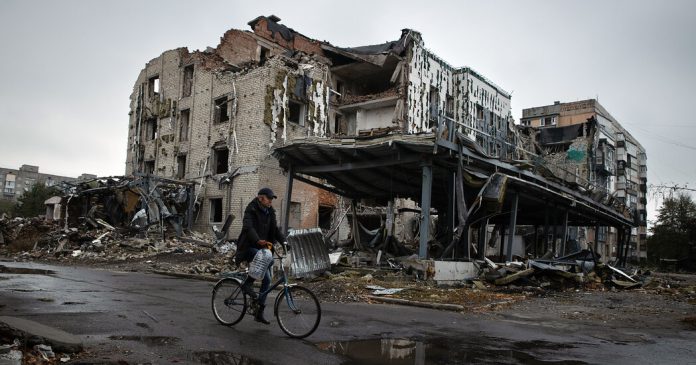
But as President Trump tries to end Russia’s invasion of Ukraine, he has flipped traditional U.S. foreign policy upside down in demanding that the invaded, not the invader, pay up.

On Friday, Mr. Trump and President Volodymyr Zelensky of Ukraine are set to sign a deal enabling the United States to share in the country’s mineral wealth, a move Mr. Trump has portrayed as payback for the aid American taxpayers have supplied the war-torn nation. Mr. Trump insisted that the United States would not be providing security guarantees to Ukraine in return.

The deal may prove beneficial in some regards to Ukraine, because becoming more economically intertwined with the United States could provide its own signal of protection. But it underscores Mr. Trump’s impulse to squeeze even America’s traditional allies as he applies his transactional approach to foreign policy.

“By definition, allies and partners tend to be dependent on us for part or most of their security, and they tend to be economically involved with us,” said Richard N. Haass, the former president of the Council on Foreign Relations and an adviser for former Secretary of State Colin L. Powell. “And what the Trump administration has done is turn that into a liability.”

The United States has traditionally aided its allies under the premise that doing so helped create a more orderly world. Mr. Haass pointed to America’s involvement in producing arms for the allied countries in World War II, the Marshall Plan and the defeat of the Iraqi invasion of Kuwait.

“By setting up a world where we demonstrated that aggression didn’t pay, there would be less aggression,” he said.

But Mr. Trump has indicated he has little use for traditional U.S. alliances, and tends to evaluate relationships based on whether other countries are contributing economically to the United States.

Mr. Trump began his second term with economic hardball toward America’s neighbors to the north and south, threatening to impose new tariffs. Mr. Trump said on Thursday that tariffs on imports from Canada and Mexico would go into effect on Tuesday “as scheduled,” and that China would face an additional 10 percent tariff.

“We’ve been treated very unfairly by many, many countries, including our friends — friend and foe,” Mr. Trump said at a news conference on Thursday.

He has mocked Canada as the 51st state and called its prime minister a “governor.” Mr. Trump has also repeatedly expressed interest in annexing Greenland, seizing the Panama Canal and fundamentally remaking the U.S. relationship with Europe and the North Atlantic Treaty Organization.

But it is Mr. Trump’s upending of America’s relationship with Russia and Ukraine that has prompted the most concern in recent weeks. After years of a U.S. strategy to isolate Moscow, Mr. Trump had a phone call with President Vladimir V. Putin and began talks with Russia about ending the war — initially without Ukraine’s participation.

Now Mr. Trump is close to signing a deal to share in the profits from Ukraine’s natural resources. A draft of the agreement, obtained by The New York Times, contained only vague references to protecting Ukraine. It says the United States “supports Ukraine’s effort to obtain security guarantees needed to establish lasting peace.”

“It’s Mafia stuff,” said Representative Jim Himes of Connecticut, the top Democrat on the House Intelligence Committee. “Zelensky, who is known for his courage, should give Donald Trump the big middle finger and remind him that the one time that NATO Article 5 was exercised, it was on behalf of the United States of America, and neither Britain nor France, nor Germany, nor Belgium, said, ‘Yeah, we’ll help you after 9/11 so long as you give us some of that oil you’ve got.’”

Mr. Trump said on Thursday that, under the deal, the United States would be “digging and taking the rare earth, which we need in our country very badly.” But he expressed doubts that Ukraine actually had the precious minerals America wanted.

“You dig and maybe things aren’t there like you think they’re there, but we’ll be spending a lot of time there,” he said. “It’ll be great for Ukraine. It’s like a huge economic development project. So it’ll be good for both countries.”

Republicans on Capitol Hill, even some who have spoken out against Russian aggression, have argued in favor of Mr. Trump’s moves, portraying the president as negotiating hard to get the best deal for America. The minerals agreement has gone through several iterations and its latest version, which was reviewed by The Times, contained more favorable terms to Ukraine than previous drafts.

“He is a great deal-maker, as everyone will have to acknowledge whether they like it or not,” Speaker Mike Johnson said at his weekly news conference.

Meghan L. O’Sullivan, the director of the Belfer Center for Science and International Affairs at Harvard University’s Kennedy School, said the long-term costs of a transactional foreign policy were not immediately noticeable.

She was a special assistant to President George W. Bush and the deputy national security adviser for Iraq and Afghanistan. During that time, she noted, the United States rejected any suggestion that it should take control of those countries’ resources and withdrew from Iraq’s largest oil fields.

Transactional deals might feel like short-term wins for America, she said, but if the United States withdraws from its traditional role deterring aggression, it will “translate into a more dire economic situation, and globally, a less peaceful, less secure world, and this won’t be good for American prosperity.”

USAID workers clear desks, as Trump dismantles aid agency : NPR

0

United States Agency for International Development (USAID) supporters hold banners as USAID workers retrieve their personal belongings from the USAID’s headquarters in Washington, Thursday, Feb. 27, 2025.

Manuel Balce Ceneta/AP


hide caption

toggle caption

Manuel Balce Ceneta/AP

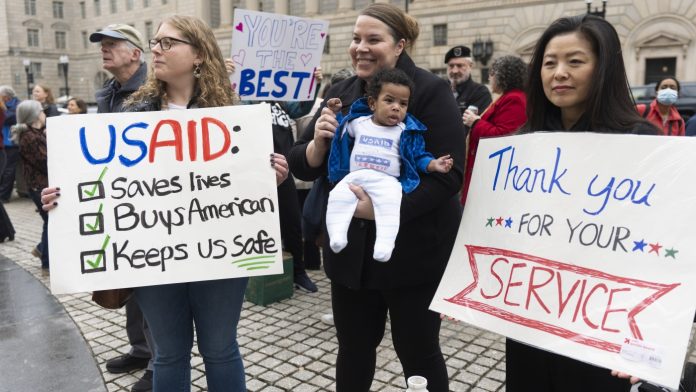
WASHINGTON, D.C. — The Trump administration has been dismantling the U.S. Agency for International Development. The headquarters have been closed for weeks, but on Thursday, some workers got back to their desks to clean them out.

Applause broke out in the lobby in the Ronald Reagan Building each time USAID officials walked out of the elevators with bags of pictures, posters and other knickknacks from their time in public office.

Employees who have been fired or put on administrative leave were told to show up at the now-shuttered USAID headquarters in Washington at an appointed time and given 15 minutes to clear out their desks.

Former USAID administrators Samantha Power and Gayle Smith were both there to support their old colleagues.

“The manner in which this is being done is the exact opposite of USAID’s mission,” Power said. “USAID’s mission is about elevating human dignity and this is about trampling it at every turn.”

Power, who ran the agency under former President Joe Biden, says the Trump administration has been moving fast in what she calls the ultimate “shock and awe” approach — not giving time to allow the courts and supporters of USAID on Capitol Hill to get their bearings.

“I’ve just seen my former colleagues walk out with their possessions, some of whom have worked here for 30 years,” Power told NPR, “and seeing a lot of tears and a lot of heartache.”

Most of the departing USAID employees didn’t want to share their names, for fear of retribution. One who came to the U.S. as a refugee said she wanted to work for the agency, to give back to the U.S.

Another woman, who had worked for the agency for 11 years, said she was fired from the Africa bureau. “I didn’t think I would be ending my career like this,” she said.

Trump administration officials have branded the agency’s employees as criminals and “radical-left Marxists.”

The administration has canceled existing USAID contracts following a review of foreign assistance “to ensure taxpayer dollars were used to make America stronger, safer, and more prosperous,” the State Department says. The administration asked the Supreme Court to weigh in after a federal district court ordered payment to agency contractors for work that has already been done. Late Wednesday, Supreme Court Chief Justice John Roberts temporarily blocked the lower court’s order.

Aid groups and advocates have raised alarm that cutting USAID — which supported projects in more than 120 countries and worked to prevent the spread of disease and eliminate poverty — will lead to loss of life, particularly in global humanitarian crisis zones.

Smith, who was a former USAID administrator under former President Barack Obama, said she was watching the various court cases closely. “We’ll see what the Supreme Court comes back with, whether that’s catch your breath or they’re really going to say it’s all right if the U.S. government doesn’t pay its bills.”

Smith worries that scenes like the one on Thursday could turn young people away from public service.

“From a foreign policy point of view, this is crazy,” Smith said. “You don’t just cut off your arm and say we’ll figure out later whether or not we need it.”

Trump Officials Split Over How Hard to Go on Mexican Cartels

0

Inside the White House, Trump officials are embroiled in a debate over whether to carry out military strikes against Mexican drug cartels or instead to collaborate with Mexican authorities to jointly dismantle criminal organizations.

On one side, several people familiar with the matter say, some U.S. officials are advocating for unilateral military action against cartel figures and infrastructure to stem the flow of drugs across the border. On the other side, those people say, some officials are arguing for increased partnership with the Mexican government to ensure, among other things, continued cooperation on the issue of migration.

Amid this split, a high-level delegation from Mexico arrived in Washington on Thursday and met with senior U.S. officials to hammer out a security agreement, a draft of which was crafted last week and will likely anchor the talks.

The visit came as the Mexican government began sending to the United States on Thursday nearly 30 top cartel operatives wanted by the U.S. authorities, according to a statement by the Mexican government.

In discussions so far, American officials have delivered vague ultimatums and unclear policy demands that Mexico dismantle the cartels or face the full force of Washington’s power, according to three people familiar with the preliminary negotiations who were not authorized to speak publicly, leading to confusion among Mexican officials.

Much of the confusion stems from the division inside the Trump administration on dealing with the drug cartels, several of which were recently designated by the State Department as foreign terrorist organizations.

One camp is being led by Sebastian Gorka, President Trump’s senior director for counterterrorism within the White House National Security Council, according to three current and former U.S. officials who were not authorized to speak publicly.

Mr. Gorka, a combative defender of Mr. Trump, has been working with a former officer in the Joint Special Operations Command, which oversees highly secretive U.S. military special operations, in an effort to push toward using American military power to take down Mexican drug lords and their operations on the ground, the current and former officials said.

A more cautious stance has been staked out by the White House’s Homeland Security Council, which is led by Stephen Miller. Mr. Miller has staffed his group with federal law enforcement officials who have deep experience in investigating, prosecuting and running capture operations in Mexico against cartel leaders with local counterparts.

According to two people familiar with the talks, Mr. Miller’s more measured approach is over concern that to go too hard against the cartels could shut down the broader cooperation with Mexican forces on one of his signature policy priorities: stopping migrants from reaching the U.S. border.

Officials at the National Security Council denied that there was any divergence of opinion within the Trump administration.

“Everyone from the president to his administration staff is committed to having all options on the table as it relates to addressing terrorist threats,” Brian Hughes, a spokesman for council, said. “There is no debate about how we will use all means necessary to protect Americans from Mexican drug cartels.”

More clarity may come this week, as Omar García Harfuch, Mexico’s secretary of security, and his delegation meet with their American counterparts. The delegation arrives just days before Mr. Trump has said he will impose a 25 percent tariff on Mexican imports as retribution for the Mexican government not doing enough to counter the flow of fentanyl.

The draft security framework, which will lay the foundation for future cooperation, currently calls for more cartel leader arrests and the creation of more Mexican units vetted by American law enforcement to target everything from money laundering to fighting drug groups on the ground, according to three people familiar with it. It is also expected to address migration and the border.

The stakes for Mexico could not be higher.

When the State Department designated six Mexican cartels as terror organizations earlier this month, that action set up the potential for Pentagon and intelligence resources to be deployed against the drug organizations, should Washington choose to do so.

As calls from Trump administration officials grow louder for a military solution to the cartels and to counter drug trafficking, particularly fentanyl, the Mexican government has strongly pushed back.

Ms. Sheinbaum has demanded that any U.S. military action against cartels be done in cooperation with Mexican forces and has vowed to protect Mexico’s sovereignty.

On Tuesday, Ms. Sheinbaum said in a news conference that her government “does not want operations of U.S. forces in Mexico,” adding that there is currently vast sharing of intelligence and information with American authorities.

Mexico aims for “coordination or cooperation, never invasion or subordination,” she said. Ms. Sheinbaum added that her government would pursue amendments to the Constitution to curb the work of foreign agents in Mexico, to ensure they don’t operate independently.

In an effort to aid the Mexican government, the C.I.A. has stepped up secret drone flights over the country, although the agency has not been authorized to use the drones to take any lethal action on its own, officials have said. For now, C.I.A. officers in Mexico have been passing information collected by the drones to Mexican officials.

The U.S. military’s Northern Command is also expanding its surveillance of the border, but unlike the C.I.A., it is not entering Mexican airspace.

“Sovereignty is not negotiable, that is a basic principle,” Ms. Sheinbaum told a news conference earlier this month, after the C.I.A. drone flights were revealed by The New York Times.

Mexican forces have ramped up their fight against the cartels amid the barrage of threats from Mr. Trump, hoping to placate Washington and show that they are willing and able partners in the war on the drug cartels.

In Sinaloa state, the hub of Mexico’s most powerful criminal syndicate, the Sinaloa Cartel, the Mexican government has carried out high-level arrests, drug lab busts and drug seizures that have disrupted fentanyl-production operations there.

In December, Mexican authorities also seized more than 20 million doses of fentanyl in Sinaloa, their biggest-ever synthetic opioid bust.

On Tuesday, Mexico’s defense secretary said that U.S. drones had been used in the effort to apprehend top figures in the Sinaloa Cartel. Mexican officials recently announced the arrest of José Ángel Canobbio Inzunza, said to be right-hand man of Iván Archivaldo Guzmán Salazar, a son of the notorious drug lord Joaquín Guzmán Loera, better known as El Chapo.

Mr. Canobbio Inzunza was indicted in the United States in November on charges of smuggling fentanyl into American cities like Chicago, where two of Ivan Guzmán’s younger brothers — Joaquín and Ovidio Guzmán López — are also facing charges.

But if the United States pushes Mexico too far, it may reverse decades of cooperation between the two nations, analysts and former diplomats have warned. Even before Mr. Trump was re-elected, ties between the United States and Mexico over the issue of drug cartels were already strained.

This summer, Mexican officials were outraged by what they believed to be direct American involvement in the kidnapping of one of the country’s most powerful drug lords, Ismael Zambada García, who was forcibly flown across the border where he was arrested by U.S. federal agents near El Paso. Despite U.S. assertions that the abduction was carried out by one of El Chapo’s sons without any American assistance on the ground, Mexican officials demanded the Justice Department provide more answers.

The episode involving Mr. Zambada García, who is facing sweeping drug charges in Brooklyn, came only a few years after another breach in U.S.-Mexico relations involving the cartels.

Trump says he doesn’t see need for U.S. security guarantees to end Ukraine-Russia war : NPR

0
President Donald Trump meets with British Prime Minister Keir Starmer in the Oval Office on Thursday. Starmer is on his first visit to the White House since Trump returned to office.

President Donald Trump meets with British Prime Minister Keir Starmer in the Oval Office on Thursday. Starmer is on his first visit to the White House since Trump returned to office.

Carl Court/Getty Images


hide caption

toggle caption

Carl Court/Getty Images

President Trump expressed confidence Thursday in reaching a peace deal between Ukraine and Russia, while downplaying the need for U.S. security guarantees for Ukraine.

He said that striking a deal with Russia would be the “difficult part,” but that adding security is the easy part.

“I have confidence that if we make a deal, it’s going to hold,” Trump told reporters in a meeting with British Prime Minister Keir Starmer.

As part of the broader effort, Trump said Ukrainian President Volodymyr Zelenskyy will come to Washington, D.C., on Friday to sign a critical minerals deal. Trump indicated that the deal would serve as a security “backstop.”

“I don’t think anybody’s going to play around if we’re there with a lot of workers,” Trump said.

The British prime minister is in Washington just days after French President Emmanuel Macron spent the day at the White House on Monday. The visits are part of a combined effort urging Trump to maintain U.S. support for Ukraine.

Both Starmer and Macron used a mix of praise and flattery to woo the U.S. president. Macron commended Trump for agreeing to work with Zelenskyy on a rare minerals agreement that would provide more security guarantees.

An invite from King Charles III

British Prime Minister Keir Starmer hands an invitation from King Charles III for a second state visit to President Trump at the White House on Thursday.

British Prime Minister Keir Starmer hands an invitation from King Charles III for a second state visit to President Trump at the White House on Thursday.

Carl Court/Getty Images


hide caption

toggle caption

Carl Court/Getty Images

Starmer opened his meeting by presenting Trump with an invitation from King Charles III to visit London for a second State Visit. Trump accepted.

Starmer then credited Trump with “changing the conversation” to open the possibility for a peace deal.

But he emphasized that the United Kingdom wants to make sure the deal “is enduring.”

“We’ve talked and we will talk about how we work with yourself, Mr. President, to ensure that this deal is something which is not violated, because it’s very important that if there is a deal, we keep it,” Starmer said.

Trump said he expected it would last.