Friday, November 13, 2026
Home Blog Page 177

Starmer Offers Trump a Plea and a Promise Over Ukraine

0

While sitting beside Prime Minister Keir Starmer of the United Kingdom in the Oval Office on Thursday, President Trump said repeatedly that he trusted Vladimir V. Putin of Russia not to violate the terms of whatever peace deal that might soon be reached to end the war in Ukraine.

“I think he’ll keep his word,” Mr. Trump said of Mr. Putin. “I’ve known him for a long time now.”

The president referenced the investigations into Russian meddling in the 2016 election that occurred during his first term in office and implied that it all just brought the two leaders closer together. “We had to go through the Russian hoax together,” said Mr. Trump. “They had to put up with that, too. They put up with a lot.”

His attitude toward the Russian leader could hardly be more different from the British leader sitting inches away in the Oval Office.

Mr. Starmer is the latest in a series of European leaders to come to Washington hoping to reason with Mr. Trump as he pushes for negotiations with the Russians to end the war they started in Ukraine. Emmanuel Macron, the French president, visited earlier in the week.

Mr. Starmer had come to the capital with a promise and a plea: He planned to tell Mr. Trump that his country is willing to send troops to Ukraine as part of a peacekeeping effort once the war ends.

But in the Oval Office on Thursday afternoon, Mr. Trump was asked about this hypothetical scenario: What if Britain sent those peacekeeping troops to Ukraine, only for Russia to renege on a peace deal, going on the attack again? Would the Americans come to the aid of the British in Ukraine?

In the span of one minute, Mr. Trump seemed to say no (“They can take care of themselves very well”); and then yes (“If they need help, I’ll always be with the British”); before landing back on no (“They don’t need help”).

“Could you take on Russia by yourselves?” Mr. Trump asked Mr. Starmer, and uneasy laughter broke out in the room. (All this was said while Vice President Vance and Secretary of State Marco Rubio sat on the other side of Mr. Trump.)

Mr. Starmer intended to use his visit to urge Mr. Trump not to abandon Ukraine to the demands of Mr. Putin.

Ukraine has felt the consequences of weak security agreements before: In December 1994 they gave up their Soviet nuclear weapons, which were still controlled from Moscow, and the United States, Britain and Russia agreed to respect the existing borders of Ukraine.

The agreement proved worthless when Russia seized Crimea in 2014. And while the agreement brought the Ukrainians arms and intelligence support in 2022 at the start of Russia’s full-scale invasion, neither Britain nor the United States provided troops.

In the Oval Office, Mr. Starmer thanked Mr. Trump for changing the conversation on Ukraine and said he believed a “historic deal” could be achieved to end the fighting. The prime minister also gave Mr. Trump a letter from King Charles III inviting him to a state dinner.

After opening it, Mr. Trump called the king “a great, great gentleman.”

But underneath the diplomatic pleasantries, the two men were expected to have some difficult conversations about the future of Ukraine and whether a peace agreement results in concessions to Russia despite its invasion of its neighbor three years ago.

Mr. Starmer was prepared to urge Mr. Trump not to rush into a diplomatic resolution to the conflict without ensuring that Ukraine is given security guarantees that would prevent Russia from invading again in the future.

But White House officials said Thursday morning ahead of the meeting that discussions about a deal regarding Ukraine’s rare-earth minerals — which Mr. Trump has said the United States needs — do not include such guarantees.

A White House national security official said the economic partnership with the Ukrainians does not include any specific guarantee of funding for future war fighting. The official, speaking on condition of anonymity to preview the meeting, said the minerals agreement would not commit any American personnel to the region.

That difference was expected to be at the center of the private deliberations between Mr. Starmer and Mr. Trump.
In Greenland, Taking It All In With Snowy Jogs and Sled Dogs

0

Times Insider explains who we are and what we do and delivers behind-the-scenes insights into how our journalism comes together.

The wind was howling around me, trying to slip through every crack and crevice of my outfit; at the cuffs of my jacket, the hems of my snowpants, the tiny gaps in my helmet.

It was mid-January, and I was zooming toward an ice fjord in Greenland, clocking at least 30 miles per hour on a snowmobile. It was, maybe, five degrees out. Everything around me was frozen, and even though it was close to 11 a.m. the sky was black, like night. This is how it goes in the Arctic Circle during the winter.

I was tagging along with a Greenlandic family, on their way to their favorite fishing spot. The journey was part of a nearly two-week reporting trip to Greenland, an island that conjures up images of icebergs and polar bears and has been thrust recently into the news by President Trump. He covets Greenland for its size, its location and its minerals and has threatened a U.S. takeover.

So off I went to Greenland.

I started in Nuuk, the capital, interviewing members of the political class and everyday people, asking them what they thought of Mr. Trump’s talk. Short answer: They didn’t like it.

After one long day of reporting, I went for a jog. It was snowing, and Nuuk’s streets were covered in ice. A mile or so in, a pack of runners plodded past me, headed in the other direction. I pulled a subtle U-turn and thought I had stealthily folded myself into the group until a Danish guy turned around and asked: “Who are you?”

I grunted back, “American journalist,” and he cracked a smile and insisted that I stick it out to the end. Nuuk’s running club, I learned, always ends at a bar called Daddy’s, where we had a few beers and talked about life on the island.

I had been dying for a little exercise, but the run was also part of the job. I was using the classic anthropologist’s tactic of participant observation. By joining activities and just hanging out, I gained a deeper understanding of the place I was covering and in this case, Greenland’s fusion of cultures.

Greenland has been part of Denmark for centuries, and people here have iPhones and running clubs and countless other aspects of life in a developed country. But at the same time, many Greenlanders still hunt seals, use dog sleds, ice fish and follow traditions that are unique to this part of the world.

I’ve reported from various places, and the participant observer approach isn’t always appropriate. When I’m reporting from the front lines of the Ukraine war, it’s not like I’m going to join the battle. But for an article like this one, sharing a few experiences with people on the island was enriching and fun.

That’s why I wanted to check out ice fishing in Ilulissat, a town perched on Greenland’s west coast that’s surrounded by a skyline of sapphire icebergs. (Danish geologists say the iceberg that sank the Titanic might have come from around here.)

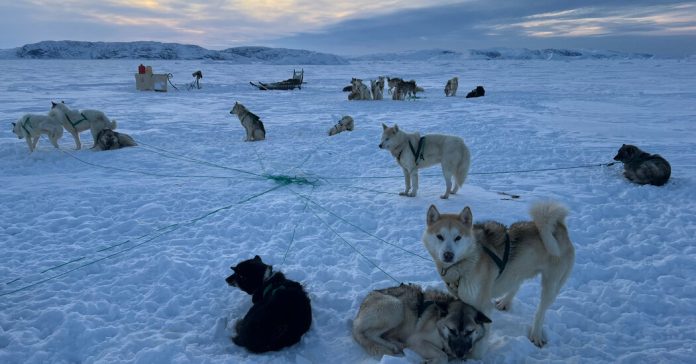
I learned that ice fishing is quite an involved activity. At a certain point, we had to get off our snowmobiles and travel the rest of the way, across delicate ice, via dog sled. A dozen happy-looking huskies kicked up a cloud of snow as they tugged us along.

When we got to the fishing hole, it took us hours to reel in the line; it is bated with hundreds of hooks and the fjord that it is dipped into is more than 3,000 feet deep. I pitched in, winding up some of the line and then later, cinched down some of the reindeer skins that covered the fish. It wasn’t much, and of course the Greenlanders did everything much better and faster than I did, but it helped me connect a little better with the people I was writing about.

Part of our mission as journalists is to connect on two levels: First, with the subjects of our stories, who may then feel more comfortable sharing information, sometimes very personal information. Second, with you, our readers. The more material we can gather in the field, the more details, experiences and texture we soak up, the better we can write an article that brings you into the action.

Around midafternoon we headed back, and passed an abandoned ice hole. By this time, the dogs were howling and hungry. As soon as they saw a pile of fish scraps next to the hole, they lunged. The sled started to slide sideways and I thought to myself: This isn’t good. Our sled was 20 feet away, then 10 feet away, then closer and closer to getting pulled into a hole of near-freezing water, half a mile deep.

At the last second, the three of us on the sled — me, Ivor Prickett, (a photographer), and our translator, Maya Tekeli — abandoned ship. We tumbled off into the snow and the sled kept going, barley missing the hole. We climbed back on, laughing so hard our sides hurt.

Maybe it was a little too much participant observation. But at least someone, somewhere in a warm room, gets to read about it.

Putin Praises Trump for Working to Thaw U.S.-Russia Tensions

0

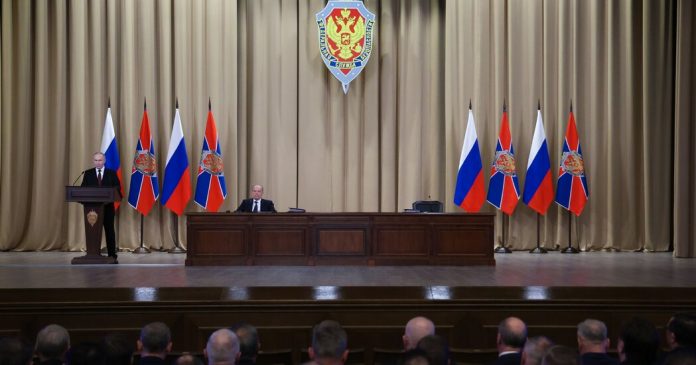
President Vladimir V. Putin of Russia lauded the Trump administration on Thursday for its efforts to mend ties with the Kremlin.

Speaking in Moscow at the annual meeting of Russia’s intelligence agency, the Federal Security Service, Mr. Putin praised the new U.S. administration for “pragmatism, a realistic worldview” and “discarding many stereotypes, so-called ‘rules’ and messianic, ideological clichés of their predecessors.”

And he blamed Joe Biden, the former president, for causing a crisis in the “entire system of international relations.”

“The first contacts with the new American administration give us some hope,” he said in televised comments. “There is a mutual willingness to work on restoring the relations and gradually tackle the colossal amount of the systemic and strategic problems in the global architecture that had piled up.”

Mr. Putin’s comments extended a pattern of praise for the new American president as Russia looks to draw the United States into its camp and against Ukraine and Europe. The remarks follow an unexpected thaw between Moscow and Washington after more than a decade of strife ignited by the Kremlin’s aggression in Ukraine that started with the largely bloodless annexation of Crimea in 2014.

The tensions erupted into an all-out war in 2022 when Mr. Putin invaded Ukraine in what has come to be Europe’s bloodiest conflict since the end of World War II. The invasion engendered hostility from the Biden administration and much of the West.

Despite his recent praise, the Russian president of 25 years has also regularly made it clear that he views the United States as an adversary and would look for ways to undermine it, including ordering an online campaign and hacking attacks targeting the 2016 elections in the United States.

In a head-spinning shift of relations that followed a phone call between Mr. Putin and President Trump, top U.S. and Russian officials sat down for talks in Riyadh, the capital of Saudi Arabia, last week for their first negotiations since before the Russian invasion. As the first concrete step to demonstrate good will by both sides, they agreed to restore diplomatic staffing in both countries, which has been at skeletal levels because of several rounds of mutual expulsions and restrictions.

President Putin on Thursday, however, was cautious about the progress in the talks, saying that elements of the Western establishment were “still intent on stoking the instability in the world and trying to derail or smear the dialogue that has been launched.”

His remarks are most likely directed at European leaders who appear dismayed by the Trump’s administration’s sudden change of course, particularly raising questions about U.S. support for Ukraine, which has been fighting off Russian aggression these past three years in large part thanks to American weapons and funding.

Earlier on Thursday, unnamed U.S. and Russian officials convened in Istanbul to discuss ways to strengthen diplomatic ties. The meeting was held at the official residence of the U.S. consul general in Istanbul — a rare choice of location as Russian diplomats have not agreed to meet on American territory since before the invasion of Ukraine.

The first major round of expulsion of Russian diplomats from the United States — and Russia’s response — came in 2016 when the outgoing Obama administration sought to punish Moscow for meddling in the U.S. presidential election, which brought Mr. Trump to power.

The Trump administration continued the diplomatic war and Russia responded in kind, ordering 755 U.S. diplomats in 2017 alone to leave the country in a sweeping expulsion, the size of which had not been seen since the days of the Cold War.

Further diplomatic tit-for-tats, triggered by Russia’s ongoing aggression in Ukraine as well as attacks in the West, led to further reduced staffing.

Later on Thursday, Valentina I. Matvienko, chairwoman of Russia’s upper house of Parliament, met with President Recep Tayyip Erdogan of Turkey to relay a “verbal message” from President Putin on “global issues” and Turkish-Russian ties, her office said.

Turkey, which has a longstanding relationship with Russia, emerged early in the war with Ukraine as an important mediator, helping to broker a grain export deal and hosting a round of peace talks in April 2022.

Mr. Erdogan, who hosted President Volodymyr Zelensky of Ukraine last week, has said his country is ready to host more talks between Moscow and Kyiv if needed.

Ontario Voters Head to the Polls. Here’s What to Know.

0

International relations seldom figure into local politics in Canada. And Thursday’s provincial election in Ontario, where many voters are worried about issues closer to home, like access to health care and the soaring cost of housing, should have been no exception.

But President Trump has upended the electoral dynamic.

His threats against Canada — including to impose crushing tariffs on Canadian exports and to annex the country — have been cast as a defining election issue in Ontario, Canada’s most populous province, as voters head to the polls on Thursday.

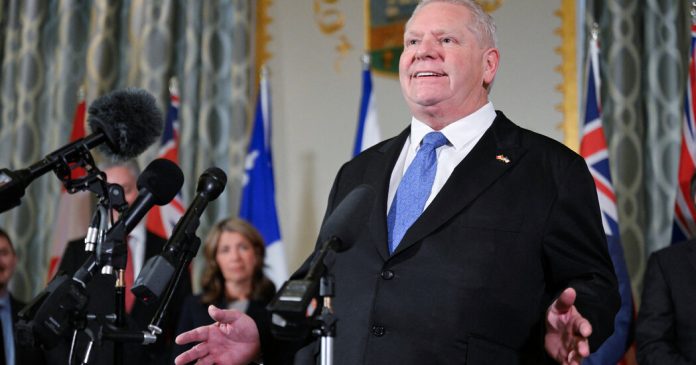
“This election is about who we are and what we stand for,” Premier Doug Ford, Ontario’s conservative leader, said in a campaign ad. “So let me be clear: Canada will never be the 51st state. Canada is not for sale.”

The province of 16 million, which represents about 40 percent of Canada’s population, is home to some of the country’s key industries, including automotive, manufacturing and technology. Tariffs would deal the province a deeply painful blow, including significant job losses.

Since Mr. Ford called the election a month ago, he has taken a handful of days from the campaign trail to travel to Washington and make the case why tariffs would be ill advised.

Several polls show Mr. Ford holding a double-digit lead over his closest rivals, with voters regarding him as the best candidate to take on Mr. Trump.

Mr. Ford is the leader of the Progressive Conservative Party of Ontario and was first elected in 2018. That year, Mr. Ford, 60, won a majority government after 15 years of Liberal Party rule on a platform that focused on lowering taxes and developing key industries, like mining in the northern part of the province.

The son of a businessman who was also a provincial politician, Mr. Ford rose through party politics by marketing himself as an anti-establishment candidate, and during his first premiership campaign he drew comparisons to Mr. Trump.

Before becoming Ontario’s leader, Mr. Ford served as a city councilor in Toronto, where his brother, Rob Ford, was the mayor who attracted international notoriety after he confessed to using crack cocaine. He died in 2016.

Polls show that Mr. Ford’s political opponents — Bonnie Crombie of the Liberal Party, and Marit Stiles of the progressive New Democratic Party — have been unable to gain ground.

Ms. Crombie, a former mayor of Mississauga, a city west of Toronto, has focused on health care. She has called for adding 3,100 physicians in Ontario over the next four years to ensure all Ontarians have a family doctor, increasing nursing salaries and financing hospital expansions.

Ms. Stiles, who spent four years as a Toronto school board trustee, has emphasized improving education, promising to spend millions to address the province’s backlog of school repairs and to eliminate interest on college student loans.

The race has largely coalesced around the question of which candidate will be best able to protect the economy in the face of tariffs.

Mr. Trump said he plans to apply 25 percent tariffs on Canadian exports unless Canada strengthens its border security. Mr. Trump and Canada agreed to a 30-day reprieve, which is set to expire on Tuesday, after Prime Minister Justin Trudeau agreed to adopt various steps to fortify the border.

Mr. Ford has projected strength, regularly appearing at news conferences wearing a baseball cap that says “Canada Is Not For Sale” and threatening to retaliate against the United States by cutting off the energy it purchases from Ontario.

While the Conservatives already hold a majority of seats in the provincial legislature, Mr. Ford called an early election — more than a year before its scheduled date in June 2026 — because he said the party needed “a strong mandate” from voters to fight Mr. Trump’s tariffs.

But his opponents have questioned Mr. Ford’s timing, noting that if tariffs were imposed they would support additional spending to help Ontarians cope with economic pains caused by the levies, rendering an early election unnecessary.

They have also pointed out that the federal government would be the main negotiating party with Mr. Trump’s administration, not Ontario, though Mr. Ford could take some retaliatory measures on his own.

The tariffs could cost Ontario as many as 500,000 jobs, Mr. Ford said, particularly in the province’s auto industry, where production is so intertwined with the United States that car parts cross the border multiple times a day during assembly.

While the discussion of tariffs has dominated the campaign, candidates have also elevated domestic issues, including health care spending, transit and education.

The candidates have all promised to improve health care access in a province where 2.5 million people do not have a family doctor because of a severe shortfall of physicians, according to the Ontario College of Family Physicians, a nonprofit.

On housing, the candidates have emphasized the need to increase building and make construction less costly for developers.

While he is a teetotaler, Mr. Ford has had an obsession with liquor dating back to his first campaign, when he promised to reduce alcohol costs. This time, Mr. Ford has promised to remove minimum costs for alcohol, making the case that it would motivate liquor sellers to lower prices to compete.

Some critics have also questioned Mr. Ford’s close relationship with developers.

A plan to open up a protected area of green space, forests and wetlands around Toronto, known as the greenbelt, to development has come under scrutiny and is under investigation by provincial police.

Polls open at 9 a.m. and close at 9 p.m. Results, which will be posted on the Elections Ontario website, are likely to come in not long after the polls close.

What to Know About the Turkey-P.K.K. Conflict

0

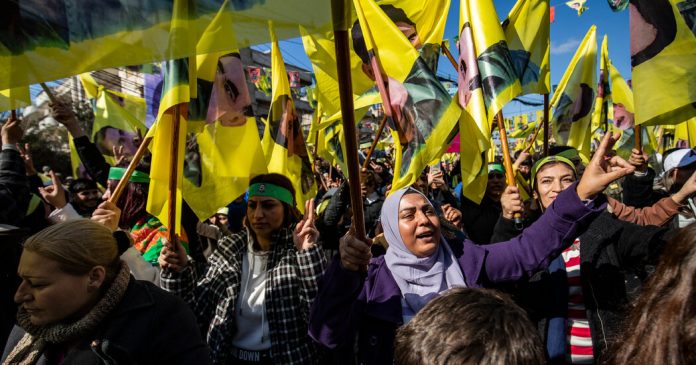
For more than four decades, Turkey has been fighting an armed insurgency by the Kurdistan Workers’ Party, or P.K.K., a militant group that says it seeks greater rights for the country’s Kurdish minority.

More than 40,000 people have been killed in the conflict, in both P.K.K. attacks on military and civilian targets, and Turkish military operations against the militants and the communities that harbor them. Turkey, the United States and other countries consider the group a terrorist organization.

Now, the group’s founder, Abdullah Ocalan, has called on Kurdish fighters to lay down their arms — although it remains unclear how effective his plea will be and what, if anything, the Turkish government is offering the group in exchange for ending the fighting.

Here is what to know about the P.K.K. and its conflict with Turkey.

The group launched an armed insurgency against the Turkish state in the early 1980s, originally seeking independence for the Kurds, who are believed to make up about 15 percent or more of Turkey’s population.

Starting from the mountains in eastern and southern Turkey, P.K.K. fighters attacked Turkish military bases and police stations, prompting harsh government responses. Later, the conflict spread to other parts of the country, with devastating P.K.K. bombings in Turkish cities that killed many civilians.

In 1999, Turkey captured Mr. Ocalan and convicted him of leading an armed terrorist organization. He received a death sentence that was later commuted to life in prison. He remains revered by the group’s members.

Since his incarceration, Mr. Ocalan has shifted its ideology away from secession and toward Kurdish rights inside Turkey.

Mr. Ocalan in 1993.Credit…Joseph Barrak/Agence France-Presse — Getty Images

Over the last decade, the Turkish military has routed P.K.K. forces from major Kurdish cities in southeastern Turkey, while using drones to kill its leaders and fighters, hindering its ability to organize and carry out attacks.

The conflict has been on a low boil for years, although occasional P.K.K. attacks have revived fears of a wider conflict. Last year, a small squad of its militants stormed into the headquarters of a state-run aerospace company armed with rifles and explosives and killed five employees before the security forces regained control.

The Kurds are an ethnic group of roughly 40 million people — there are widely varying estimates — concentrated in Iran, Iraq, Syria and Turkey.

They speak multiple dialects of Kurdish, a language not directly related to Turkish or Arabic. Most are Sunni Muslims.

The Kurds were promised a nation of their own by world powers after World War I, but that was never granted. There were Kurdish rebellions in various countries over the following generations, and Kurds have faced state suppression of their language and culture.

In Syria, the Kurdish-led Syrian Democratic Forces, whose leaders have roots in the P.K.K. and follow Mr. Ocalan’s ideology, controls the northeastern part of the country. They have been backed for years by the United States and played a crucial role in defeating the Islamic State, but the fall of the Syrian strongman Bashar al-Assad in December has left their future status unclear. They are clashing with Turkish-backed Syrian rebels, and remain outside of the control of the new Syrian government in Damascus.

Since the 1991 Gulf War, the largely Kurdish northern region of Iraq has been semiautonomous. The P.K.K. leadership is now based in the Qandil Mountains of northern Iraq. In recent years, Turkey has attacked the group and affiliated militias in Iraq and Syria while lobbying the Iraqi government to expel it.

Multiple efforts to freeze or end the Turkey-P.K.K. conflict have been made, starting with a cease-fire in 1993. But all of them collapsed, often leading to greater bloodshed.

Violence flared on and off until a new round of peace talks began in 2011. At that time, Turkish intelligence officers met with Mr. Ocalan in prison to map out a plan for his fighters to disarm, and Kurdish politicians ferried messages between him and his associates in northern Iraq.

But the process collapsed in mid-2015, with each side blaming the other for the failure. One of the conflict’s most deadly phases followed, with pitched battles in cities in Turkey’s southeast that killed more than 7,000 people, according to the International Crisis Group.

Although Turkey still considers the P.K.K. a separatist terrorist group that does not represent the Kurdish people, it has acknowledged some historic violations of Kurdish rights and widened the margins for Kurdish language and culture.

It has licensed Kurdish-language television and radio broadcasts and allowed Kurdish language as an elective course in some schools.

At the same time, however, the government has removed more than 150 elected Kurdish mayors from their posts since 2015, according to the Peoples’ Equality and Democracy Party, which represents the pro-Kurdish movement politically and has seats in Parliament.

Most of the removed mayors were accused, and some convicted, of crimes related to the P.K.K.

Human Rights Watch has called the removal of Kurdish mayors politically motivated and a violation of voters’ rights.

Anxiety in Gaza and Israel as Cease-Fire Nears End of First Phase

0

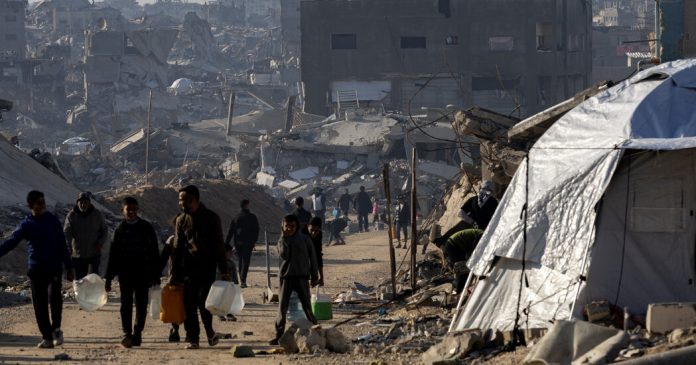
Shamekh al-Dibs has not begun rebuilding his home in northern Gaza, which was destroyed last year. He is living in a nearby school turned into a shelter for displaced Gazans, grappling with a deep uncertainty over whether this tense calm will last.

The first phase of the cease-fire elapses on Saturday night and there have been few signs of progress in talks on the next steps. This leaves both Israelis and Palestinians in limbo, not knowing how long the truce will hold after the first series of hostage-for-prisoner exchanges was completed early Thursday morning.

“Our only hope is that the cease-fire continues,” said Mr. al-Dibs, 36 and currently unemployed.

For now, the first six-week phase of the cease-fire is set to conclude without a clear framework to take its place. That does not necessarily mean an immediate return to war: The agreement says the truce can continue as long as negotiators are working on the next steps. But it makes the already fragile pause in the fighting more precarious.

Israel was sending a delegation to Cairo on Thursday to see whether it could find a formula with Hamas to extend the cease-fire in exchange for the release of more hostages, government officials said, without providing further details.

Extending the deal will entail tackling much thornier issues, such as a permanent end to the war and the reconstruction of Gaza. Under the terms of the phased agreement, Israel would effectively have to declare an end to its war against Hamas in order to secure the release of some two dozen hostages believed to still be alive.

For the families of Israeli captives, the prospect of their loved ones’ release is both closer than ever before and agonizingly distant. They are well aware that formidable obstacles remain to securing their freedom given the lack of an agreement on the second phase of the deal.

“By Sunday, we’ll be in no man’s land,” said Adi Alexander, whose American Israeli son, Edan Alexander, has been held in Gaza for more than 500 days. “It was left blurry on purpose, and it’s still blurry,” he said of this element of the cease-fire agreement.

Israel and Hamas did not sign off on an immediate end to the war in Gaza in mid-January. Instead, they committed to a complex, multiphase plan that aimed to slowly build momentum toward a comprehensive cease-fire after more than a year of devastating fighting in Gaza.

The first stage was intended to stop the fighting for at least six weeks days while the two sides hashed out a more extensive settlement.

Hamas released 30 Israeli and foreign hostages and handed over the bodies of eight more in exchange for more than 1,000 Palestinians jailed by Israel. It was a rocky process that involved staged handovers of the hostages in Gaza that Israel described as humiliating, and that almost derailed the entire deal.

Israel and Hamas remain as distant as ever when it comes to their core demands in the truce negotiations.

Israel has vowed it will not end the war permanently until Hamas is no longer in control of Gaza and the territory is demilitarized. Hamas has mostly refused to consider disbanding its battalions of armed fighters or sending its leaders into exile.

Steve Witkoff, President Trump’s Middle East envoy, has floated the idea of extending the first phase by continuing to swap more hostages for prisoners.

On Thursday, Abdel-Latif al-Qanou, a Hamas spokesman, said the group was open to extending the first phase as long as it did not entail giving up on Hamas’s core demands, including an end to the war and a full withdrawal of Israeli forces. He said Israel had dragged its feet on opening negotiations for the second phase.

Mr. Netanyahu has faced considerable pressure from within his own government not to conclusively end the war against Hamas. His political allies say they hope to ultimately keep fighting Hamas and want to build Jewish settlements in Gaza.

Under the cease-fire agreement, Israel is set to begin withdrawing its forces from Gaza’s border with Egypt over the weekend. But Mr. Netanyahu has repeatedly stated that he views Israeli control of the area — known as the Philadelphi Corridor — as a core security interest.

Both Israel and Hamas have reasons to avoid a resumption of the war.

Hamas wants to give its military forces a chance to recuperate and begin rebuilding a destroyed Gaza. Israel wants to bring home the remaining hostages. Of the roughly 250 taken during the Hamas-led attack of Oct. 7, 2023, the Israeli government believes about 25 are still alive. Israel also wants to bring home the bodies of roughly 30 others.

But the prospect of a return to fighting has also never really gone away. Many Israelis, particularly on the right, have said they cannot countenance ending the war with Hamas’s rule of Gaza intact. For now, Hamas appears to have given little ground on the question.

Mr. Alexander, whose son was abducted from an Israeli military post, said he was optimistic that neither Israel nor Hamas wanted to go back to fighting.

“Nobody wants this war to restart again — not Israel, not the United States. I definitely don’t think Hamas wants it,” he said.

But the Israeli government should “put the hostages up front, let this country heal, and think about Hamas later,” said Mr. Alexander.

Pro-Russia Politicians in Ukraine, Inspired by Trump and Putin, See an Opening

0

Three years ago, support for members of a Ukrainian political party that advocated closer ties with President Vladimir V. Putin of Russia plunged to near zero after Russian forces invaded Ukraine, flattening whole cities and killing tens of thousands of Ukrainians.

The party, called the Opposition Platform for Life, was banned, some members went to jail on charges of treason, and others fled Ukraine. A few former members banded together in a new faction and still sit in Parliament, but have generally kept quiet since the Russian invasion.

Now some of those pro-Russian politicians are attempting an unlikely comeback, inspired by President Trump’s attacks on Ukraine’s current leadership and Russian demands, echoed by Mr. Trump, that the country hold elections.

The politicians are posting widely viewed videos on social media in which they have promoted themselves as future candidates; criticized President Volodymyr Zelensky and his government; and praised Mr. Trump.

The efforts are unlikely to gain much traction in a country that remains overwhelmingly hostile to Russia and the people who have supported it. But analysts say the videos, which are rife with misinformation, could nonetheless stoke divisions at a time when Ukraine’s unity and its leaders are under threat from a hostile Mr. Trump.

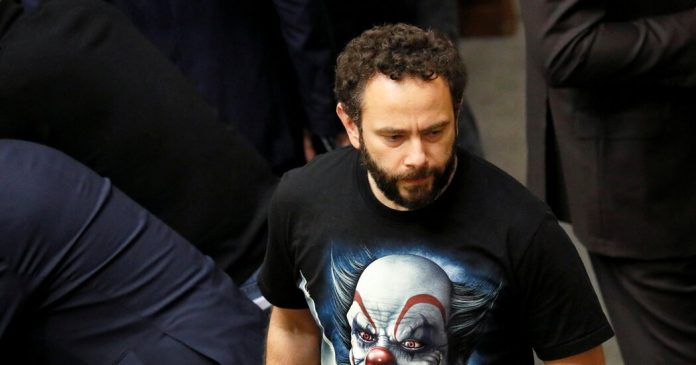
Oleksandr Dubinsky, a former member of Parliament, has produced videos promoting what he calls a pro-Trump and pro-peace agenda from prison, where is he serving time for treason. His videos place blame Ukraine’s leaders for the war, saying they are committing genocide against the Ukrainian people, an echo of Russian propaganda.

Since November, when Mr. Trump was elected to a second term, the audience for Mr. Dubinsky’s jailhouse videos on TikTok has grown from about forty thousand to nearly 1.6 million views.

On Feb. 20, two days after Mr. Trump called Mr. Zelensky a “dictator,” Mr. Dubinsky announced that he would run for president if an election were held. Ukraine was in danger of falling into a “new form of dictatorship,” Mr. Dubinsky said, accusing Mr. Zelensky of forcing his most prominent potential challengers to renounce running for election.

A former head of the Opposition Platform for Life, Yuriy Boyko, had no activity on social media until early December, when he started posting videos from a newly opened TikTok account. In the videos, he blames “Ukrainian radicals” for laws sidelining Russian language in public spaces, a theme that has long been voiced by Mr. Putin.

The pro-Russian politicians appear to have at least some support within the Trump administration. In 2023, Tulsi Gabbard, who is now serving as the national intelligence director, criticized the banning of Opposition Platform for Life, saying that Mr. Zelensky had “outlawed opposition political parties.”

However, other opposition parties have been operating freely in Ukraine.

The term “pro-Russian” in Ukrainian politics is generally applied to figures linked to the country’s former Russian-aligned president, Viktor F. Yanukovych, who fled to Moscow after a street uprising in 2014. Former members of Opposition Platform for Life who were once affiliated with Mr. Yanukovych, still hold about two dozen seats in Parliament.

Political analysts say the pro-Russia politicians had seen an opening provided by the demands for an election by Moscow to destabilize Ukraine from within.

“The role of pro-Russian politicians is to introduce divisive topics into society,” said Oleh Saakyan, a political analyst at the National Platform for Resilience and Social Cohesion, an independent think tank. “They aim to create divisions between groups like veterans and nonveterans, refugees and those who stayed in Ukraine, and pit them against each other.”

Russia has proposed a three-stage plan for ending the war that would center on the holding of elections in Ukraine. Under the plan, which emerged after a high-profile meeting in Saudi Arabia this month between U.S. and Russian officials, there first would be a temporary cease-fire, followed by elections in Ukraine, and then peace talks with a newly elected president. Ukraine was due to hold a presidential election in early 2024, but the government and civil society groups have agreed that it is impossible to hold an election at a time of war.

Most Ukrainian politicians and analysts say they believe Russia is trying to stir political infighting in Ukraine to distract from the defense of the country, and that Moscow would use the time to regroup and build up forces for renewed combat.

“When elections cannot be held according to democratic standards, they become a tool in Russia’s hands to attack democracy instead of supporting it,” Mr. Saakyan said.

Alina Tropynina, the senior editor of Vox Ukraine, which monitors social media, said the pro-Russian politicians had been ramping up their posts on social media blaming Mr. Zelensky for the war, apparently in response to Moscow’s latest plan.

“It sounds as though Ukraine started the war and that its end depends solely on Ukraine, leaving out that in fact Russia invaded,” Ms. Tropynina said.

Artem Dmytruk, a pro-Russian politician in exile in London, has been accusing the Ukrainian authorities of deliberately prolonging the war, asserting that they benefit from the conflict financially and are hindering peace talks.

Mr. Dubinsky, who describes himself as Trumpist on his social media accounts, posts multiple updates daily praising Mr. Trump and questioning Mr. Zelensky’s legitimacy.

On Jan. 6, Mr. Boyko posted a video on TikTok of himself playing a famous Ukrainian Christmas tune, “Carol of the Bells,” on a piano while wishing his viewers peace.

The timing was significant — it was posted on the same day that the Russian Orthodox Church celebrates Christmas Eve, though the Ukrainian church switched in 2023 to celebrating Christmas on Dec. 25 along with most of Western Europe.

Other Ukrainian politicians who are not aligned with Russia also regularly criticize the government and say they would like to take power themselves.

Dmytro Razumkov, a politician who broke with Mr. Zelensky in 2021 and now leads an opposition faction in Parliament, said he would run for president if elections were held.

“I have always participated and always will participate in elections, in one form or another,” he said.

But those opposition politicians also say the time is not right for new elections.

“I definitely think that elections are already needed, but not during a hot war,” said Andriy Osadchuk, a member of Parliament with the opposition Holos party.

Nataliia Novosolova and Andrew E. Kramer contributed reporting.

Andrew Tate and His Brother Leave Romania for Florida

0

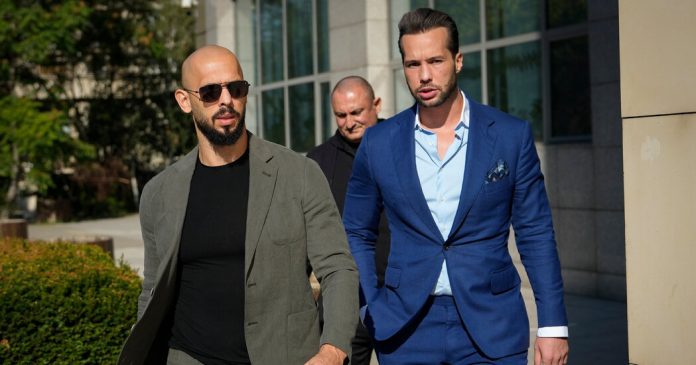
Andrew Tate and his brother Tristan Tate, the British American online influencers who have been held in Romania for two years over criminal investigations, left the country for the United States, Joseph McBride, their lawyer in the United States, said on Thursday.

The brothers boarded a private jet in Romania at around 10 p.m. on Wednesday, and were expected to land at an airport in southern Florida sometime Thursday morning, Mr. McBride said.

In response to questions about the brothers, Romanian prosecutors said in a news release that they were still pursuing criminal investigations against two British American citizens. They did not name the people, but said they had been allowed to leave Romania and had to “appear before judicial authorities whenever summoned.”

The State Department did not immediately respond to a request for comment. But the brothers’ departure from Romania raised immediate questions about whether they would return to the country.

A lawyer in Romania for the brothers did not immediately respond to a request for comment. In a post on social media, Mr. McBride said, “Romania rightly decided it didn’t have the evidence needed to hold them any longer.”

The online influencers have faced a protracted legal battle with prosecutors, who charged them with human trafficking and forming an organized crime group. According to Romanian prosecutors, the brothers misled several women into believing that they wanted a relationship with them. The women were instead housed in a compound near Bucharest and forced to appear in online pornographic videos, prosecutors said.

The Tates have repeatedly denied all the allegations against them and successfully appealed that indictment in a Bucharest court, which found that the case did not meet the requirements for a trial. Prosecutors in Romania have since said they are investigating the brothers over other accusations of human trafficking and money laundering.

Andrew Tate, a former kickboxer known for his sexist views, has promoted a brand of masculinity tied to lavish displays of wealth. According to an archived page on his website that has since been removed, Mr. Tate described a method that he said made him rich.

“My job was to meet a girl, go on a few dates, sleep with her, test if she’s quality, get her to fall in love with me to where she’d do anything I say, and then get her on webcam so we could become rich together,” he said. He claimed that he had worked with “over 75 girls,” on the site.

In recent weeks, the brothers have publicly aligned themselves more strongly with President Trump. “The Tates will be free, Trump is the president. The good old days are back,” Andrew Tate said on X earlier this month.

The Financial Times has reported that U.S. officials have urged Romania to lift travel restrictions on the brothers. Richard Grenell, a special envoy for the United States and a close ally of Mr. Trump, raised their case with the country’s foreign minister, Emil Hurezeanu, at the Munich Security Conference this month. Mr. Grenell could not be reached for comment.

Mr. Hurezeanu had a “focused exchange” with Mr. Grenell at the conference, the country’s foreign affairs ministry said in a post on X at the time. The two officials “covered current topics of shared interest” between the two countries, the ministry said, but the post did not mention the Tate brothers.

Mr. Hurezeanu later told G4Media, an online news site that covers judicial issues, that he and Mr. Grenell had a brief conversation in a hallway at the conference, during which Mr. Grenell brought up the Tate brothers. Mr. Hurezeanu said he had requested another meeting with Mr. Grenell to find out “what his intentions were in relation to Romania,” but that the conversation never took place.

The Ministry of Foreign Affairs did not immediately respond to a request for comment.

The brothers were also arrested in Romania in March 2024 on a separate warrant issued by the British authorities accusing them of human trafficking. A Bucharest court had ruled that the brothers should be extradited to Britain after the resolution of the Romanian cases. It was unclear on Thursday what the outcome of that extradition ruling would be.

Four British women also sued Andrew Tate in 2024, claiming that he had raped and abused them. Matthew Jury, a lawyer representing the women, said on Thursday on social media that reports that the Trump administration had lobbied for their release were “disgusting and dismaying.”

He called on the British government to “take immediate steps” to ensure the brothers would face the charges against them in Britain. “Any suggestion that the Tates will now face justice in Romania is fanciful,” he said.

Earlier this month, an American woman who gave evidence to Romanian authorities sued the brothers for allegedly luring her to Romania and coercing her into sex work, the first suit filed in the United States against the Tates. The brothers had sued her first for defamation, claiming that her testimony was fabricated.

On Friday's Morning Edition, an interview with Rep. Alexandria Ocasio-Cortez, D-N.Y.

0

On Friday’s Morning Edition, NPR’s Steve Inskeep’s interviews Rep. Alexandria Ocasio-Cortez, D-N.Y., She thinks Republicans have begun making mistakes, and that her party is resolved to strike back.

Romania Opens Criminal Case Against Ultranationalist Politician

0

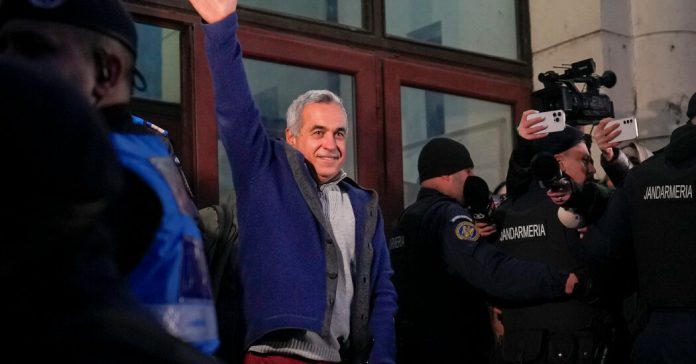
Prosecutors in Romania have opened a criminal case against Calin Georgescu, an ultranationalist politician who in November won the first round of a presidential election only to have his victory annulled when the Constitutional Court ordered a redo of the vote.

The start of criminal proceedings against Mr. Georgescu, a fierce critic of NATO and the European Union, was announced by prosecutors on Wednesday. The move came just two weeks after Vice President JD Vance cited Romania in a speech at a Munich security conference as an example of what he said was Europe’s “retreat” from free speech and democracy.

Romania’s Constitutional Court canceled the election last year just two days before a December runoff vote that Mr. Georgescu had been seen as well positioned to win. It said it wanted “to ensure the correctness and legality of the electoral process.”

The court’s intervention came after Romania’s security service released declassified intelligence reports that pointed to possible Russian interference in the election campaign but provided no solid evidence of that.

Mr. Georgescu stunned Romania’s political establishment by winning a first round of voting on Nov. 24, aided by a flood of videos on TikTok and other social media. A former soil expert with the United Nations, Mr. Georgescu was largely unknown in Romania at the start of the election campaign last year.

The videos promoting Mr. Georgescu ahead of the November vote were not labeled as campaign material, a violation of Romania’s election law, and it has not been explained how his campaign managed to dominate social media so suddenly and thoroughly.

The cancellation of the vote result in November made Mr. Georgescu a martyred hero to anti-establishment political forces in Romania and also right-wing Americans, including Mr. Vance and Elon Musk, who has taken to social media several times to denounce his treatment.

Mr. Georgescu has not been arrested but placed under “judicial control,” a status that bars him from leaving Romania and using social media. Police officers on Thursday visited his home near Bucharest, Romania’s capital, to check on his whereabouts and activities.

Mr. Georgescu was on his way to register as a candidate for the upcoming redo of the canceled election when police stopped his vehicle in traffic in Bucharest on Wednesday morning and said he needed to report to prosecutors. After hours of questioning, prosecutors said in a statement that they had started “criminal proceedings” against him for six crimes.

Those include “incitement to actions against the constitutional order,” the “communication of false information” and involvement in the establishment of an organization “with a fascist, racist or xenophobic character.”

Tudorel Toader, a former constitutional court judge, told Romanian news outlets that the charges were extremely serious and that Mr. Georgescu, if brought to trial and convicted, could face up to 25 years in jail.

Denouncing the prosecutors’ action, Mr. Georgescu said in a message to his supporters that he was “fighting this system that wants us in slavery.” In a reference to Romania’s past as a brutal police state under Nicolae Ceausescu before the 1989 collapse of communism, he added: “The communist Bolshevik system is continuing its heinous abuse.”

The saga has also stirred unease among some Romanians who have no sympathy for Mr. Georgescu’s opposition to NATO and his claims to be fighting evil globalist forces at the behest of God.

Funky Citizens, a respected pro-democracy activist group, issued a statement saying that “although we believe it was necessary for the authorities to use the available legal tools to understand in detail and inform the public about the causes that led to the cancellation of the 2024 presidential elections, the measures seem to come very late.”

Long delays by the authorities in explaining their actions against Mr. Georgescu, the group said, “leave room for speculation and conspiracy theories to grow without being countered by official information, which only weakens the fragile trust that remains in state institutions.”

Andrada Lautaru contributed reporting.