Friday, November 13, 2026
Home Blog Page 186

Francis Is in Critical Condition. What Happens When a Pope Dies?

0

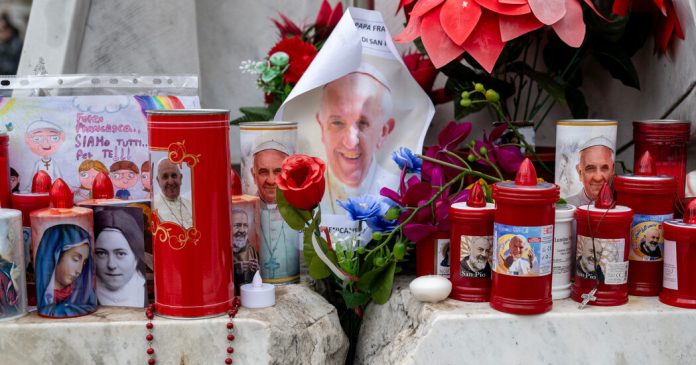
The Catholic world is gripped with uncertainty as Pope Francis, 88, remains in critical condition in a Rome hospital because of a complex lung infection and other serious ailments.

On Tuesday morning, the Vatican said Francis had rested well all night, a day after saying that he was responding to therapy and showing slight improvement.

Cardinals gathered in front of St. Peter’s on Monday evening to lead a rosary for the pope.

Here’s what we know about his condition, and about how things would go should he die.

Francis’ initial respiratory tract infection has developed into pneumonia in both lungs, and other complications have emerged during his hospital stay.

He had a respiratory crisis that has resulted in his having to receive high flows of supplemental oxygen. On Sunday, the Vatican announced that he was suffering from “initial, mild kidney failure,” which was “under control.”

He is being treated with various drugs, and his doctors have said that calibrating them has been a challenge.

Given his age and history of lung disease, doctors have been guarded about his prognosis.

While Francis’ fate is still unclear, what is more certain are the time-honored rituals that were drafted and refined over the centuries to ensure secrecy and an orderly transition. The carefully choreographed pageantry provides order to a church in its most dramatic moment of flux.

A pope’s death is immediately confirmed by the head of the Vatican’s health department and the cardinal chamberlain of the Holy Roman Church, who becomes the Vatican’s de facto administrator. The pope’s body is dressed in a white cassock and brought to the pope’s private chapel.

The cardinal chamberlain, camerlengo in Italian, is a position now held by Cardinal Kevin Joseph Farrell, a 77-year-old American of Irish origin. He and other officials, along with members of the pope’s family, congregate in the chapel for a ceremony. The body is placed in a coffin made of wood and lined with zinc. The pope is dressed in red, his miter and pallium placed next to him.

After the ceremony, the camerlengo drafts a document authenticating the pope’s death, affixing the doctor’s report. He secures the pontiff’s private papers and seals his apartments, which in the case of Francis are a large section of the second floor at the Casa Santa Marta, the Vatican City guesthouse used by visiting cardinals, where Francis has lived throughout his papacy.

He also arranges for the destruction of the so-called fisherman’s ring, used by the pope to seal documents, with a ceremonial hammer, to prevent forgeries.

Francis has brought an unpretentious style to the church — rejecting elaborate outfits and the ornate papal apartments. His plans keep that up to the end, scaling back some of the funerary pomp and ceremony.

In rewriting the funeral rites in 2024, Francis simplified several elements. Since the 13th century, the bodies of popes have gone on public view, their embalmed bodies placed on a raised pedestal. When John Paul II died in 2005, his body was first brought to the Apostolic Palace within hours for a private viewing for cardinals, bishops and other members of the church hierarchy, as well as prominent Italian officials.

Francis has done away with that sort of viewing. Instead, a public viewing will take place directly in St. Peter’s Basilica, where thousands have thronged to pay respects to popes in the past. But his body will remain in the coffin, which will not be on a raised pedestal. “Francis decided to highlight humility over glorification,” said Agostino Paravicini Bagliani, a church historian.

The College of Cardinals decides on the day and hour that the pope’s body will be brought to St. Peter’s Basilica, in a procession led by the camerlengo, and on when the viewing will commence.

The funeral and burial of the pope must take place between four and six days after his death, and funeral rites in various churches in Rome will last nine days.

Past popes were put in three nested coffins, one of cypress, one of zinc and one of elm. But as part of Francis’ rule change, he decreed that he would be buried in a single coffin, made of wood and lined in zinc.

The coffin is closed the night before the funeral. The pope’s face is covered by a white silk veil and he is buried with a bag containing coins minted during his papacy and a canister with a “rogito,” or deed, briefly listing details of his life and papacy. The rogito is read aloud before the coffin is closed.

The new rules also allow for a pope to be buried in a church other than St. Peter’s Basilica. Francis has asked to be buried instead in the Basilica of St. Mary Major, a church dear to him and one he often visited to pray in front of an icon of the Virgin Mary.

Within 15 to 20 days of the pope’s death, the dean of the College of Cardinals, Cardinal Giovanni Battista Re, 91, will summon the cardinals to Rome for what is known as a conclave to elect Francis’ successor.

The period between the death of a pope and the election of a new one is called the sede vacante, or “the seat is vacant.” During that time, the College of Cardinals keeps general oversight of the church, but it is barred from making any major decisions.

When the cardinals meet, they gather in the Sistine Chapel. All cardinal electors must swear an oath of secrecy and vote by secret ballot. Only cardinals under age 80 are eligible to vote. A two-thirds majority is needed to elect a new pope, and politicking is part of the process.

Cardinals are not allowed to leave the conclave except in rare cases. The word conclave — from the Latin “with key” — refers to the isolation imposed on them, which is meant keep the electoral process from dragging on.

During the conclave, the cardinals live in Casa Santa Marta, which was built on John Paul II’s orders to replace the improvised rooming arrangements in the papal palace that had previously housed them.

The cardinals cast repeated votes until a two-thirds majority emerges. After every vote, smoke is released through a chimney that can be seen from St. Peter’s Square, where crowds typically form to watch and wait. If a vote ends without a two-thirds majority, the smoke is black.

When a decision is reached, the smoke is white.

Inside the Vatican, the dean of the college asks the chosen successor whether he accepts the job. After getting the presumed yes, the dean asks him for the name he wishes to be called as pope.

In the sacristy of the chapel, the new pontiff is dressed in a white cassock. After greeting the cardinals, he proceeds to a balcony of St. Peter’s Basilica, where a senior cardinal proclaims, in Latin, “Habemus papam” or “We have a pope.”

British Couple Arrested by Taliban in Afghanistan, Family Says

0

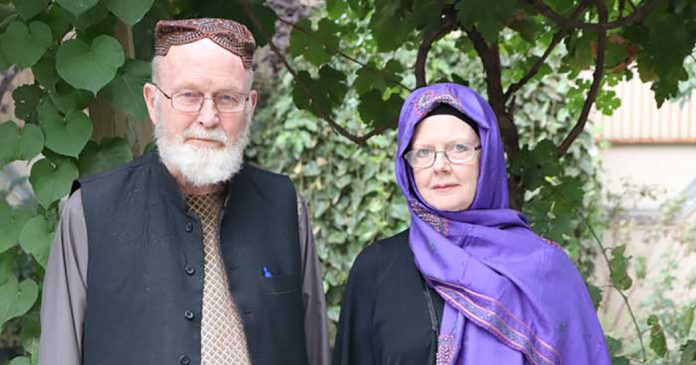
A British couple who spent almost two decades running education programs in Afghanistan were detained by the Taliban earlier this month, their children said in interviews with a number of British news outlets.

The couple, Peter Reynolds and Barbie Reynolds, were arrested on Feb. 1 when returning to their home in the country’s Bamiyan Province, according to accounts first given to The Sunday Times of London. The pair, who are in their 70s, have long run a program that offers education and training in Afghanistan.

After the Taliban takeover in Afghanistan in 2021 and the withdrawal of Western troops from the country, the couple decided to stay despite the potential risk, according to one of their four children.

“They were just trying to help the country they loved,” Sarah Entwistle, the couple’s eldest daughter, told The Sunday Times.

When the Taliban came to power, it imposed an Islamic republic government and rolled back rights for women and other groups, including restricting access to education for women after the sixth grade. Women are also banned from most workplaces, and public spaces like parks, gyms and salons under Taliban law.

Ms. Entwistle told the BBC that she and her siblings were able to message their parents for a few days after their arrest. Her parents told them they were being held by the interior ministry but were fine, she said. But she added that she has not heard from them in over two weeks and said she feared for their well-being because of their age and because her father is currently taking medication, after recently suffering from a stroke.

Mr. Reynolds, 79, and Ms. Reynolds, 75, were working on a number of educational projects as part of Rebuild, a research and training company that they founded in 2009. One program helped to teach parenting skills to mothers, according to their daughter. “The idea they are being held because they were teaching mothers with children is outrageous,” Ms. Entwistle told The Sunday Times.

The couple’s connection to Afghanistan extends back to their youth. According to their development company’s website, they married there more than 50 years ago. Rebuild is based in Kabul, but has programs across the country.

“Under the new Islamic Emirate of Afghanistan, Rebuild has grown and developed new enterprises with new staff, eager to help and support their country’s future,” the company website reads. In a video on the website, published months after the Taliban took control, Mr. Reynolds explains the practical training they offer. Footage shows women in head scarves and men taking part in courses, including “communication skills” and management training. In other clips, children are shown apparently learning the alphabet.

The couple’s children have written to the Taliban, in a letter shared with The Associated Press, urging them to release Mr. and Ms. Reynolds.

“They have always been open about their presence and their work, diligently respecting and obeying the laws as they change,” their children wrote. “They have chosen Afghanistan as their home, rather than with family in England, and they wish to spend the rest of their lives in Afghanistan.”

In their letter, the family said that the Taliban were aware of the couple’s work and had previously supported their training efforts.

“We kindly ask for the release of our father and mother so they can return to their work in teaching, training and serving Afghanistan, which you have previously supported.”

The Taliban government and local officials in Bamiyan did not immediately respond to a request for comment.

A representative for Britain’s Foreign Office confirmed in an emailed statement that it is “supporting the family of two British nationals who are detained in Afghanistan,” but declined to provide further details.

The foreign office advises against all travel to Afghanistan, pointing to a “heightened risk of British nationals being detained” and to the British government’s “extremely limited” ability to help those in need of consular support, as it has no embassy or diplomatic relationship with the Taliban.

The United States also has no diplomatic representatives in the country and has likewise warned against travel to Afghanistan by American citizens. A number of Westerners have been detained in the country since the Taliban seized control, and two Americans were freed in a prisoner swap in January.

Safiullah Padshah contributed reporting

Bridge Collapse Kills Several in South Korea

0

Emergency crews searched for survivors and worked to clear rubble from the site, which was part of a highway construction project in Cheonan, South Korea.

Syria Begins National Dialogue but Without Kurdish-Led Militia

0

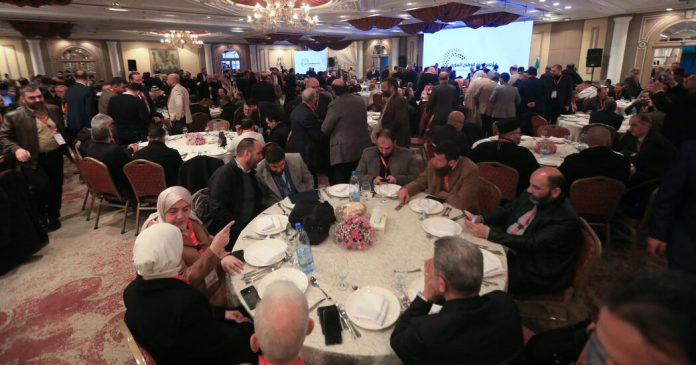
Syria’s interim government is bringing together people from the country’s many religions and sects for a two-day national dialogue that began on Monday.

Ahmed al-Shara, the country’s interim president, whose rebel coalition seized control of Syria in early December, promised to hold a national dialogue to discuss the formation of a representative government.

His government set a March 1 deadline to begin the process. Invitations for the event were sent out on Sunday, Feb. 23, to hundred of participants, including community leaders, academics and religious leaders, only one day before the conference was set to begin.

Also invited were journalists, businessmen, activists, former detainees of the Assad government and the families of people who were killed or wounded in Syria’s brutal, 13-year civil war.

Mr. al-Shara has spoken of the need to unite Syria’s many fractious populations to build a new Syria. Syria is a Sunni Muslim majority country but has many religious and ethnic minorities, including Alawites, Druse, Christians and Kurds.

But attempts at unity have already run into challenges.

Some Kurds, who make up some 10 percent of Syria’s population, were invited to the dialogue. But the Kurdish-led Syrian Democratic Forces, a U.S.-backed militia that controls much of Syria’s northeast, was not. Syria’s interim government has demanded that the militia disarm and join a unified national military force, as a condition of joining the dialogue.

The committee organizing the conference has previously said that the SDF does not represent all Syrian Kurds.

Turkey, a close ally of the rebel group that led the overthrow of the Syrian dictator Bashar al-Assad, has for years sought to curb the power of the Syrian Democratic Forces, maintaining that the militia is linked to Kurdish separatist insurgents inside Turkey.

Many Syrians are skeptical about what a national dialogue may bring, especially in a deeply divided country where sectarian tensions are spilling over into revenge killings.

Syrians are also wary of the promises of inclusivity coming from a government led by Hayat Tahrir al-Sham, an Islamist group that has given government and ministerial positions to its own loyalists. It has yet to include in the government other rebel groups that helped to oust Mr. Assad.

The conference organizers have said that there is no direct link between the formation of the new Syrian government and the dialogue conference, though they are happening at the same time.

Conference participants will issue recommendations for the new government, as well as for the writing of a new constitution and laws. But those recommendations appear to be nonbinding.

“Recommendations from the National Dialogue will not be mere advice and formalities, but will be the basis for the provisional constitutional declaration, economic identity and institutional reform plan,” said Hassan al-Dughaim, the committee’s spokesman.

Tuesday Briefing – The New York Times

0

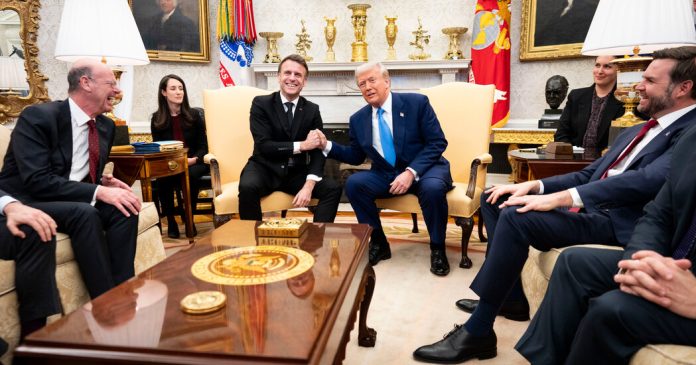
President Trump met with his French counterpart, Emmanuel Macron, at the White House yesterday, three years to the day after Russia began its full-scale invasion of Ukraine. The leaders diverged significantly over the war’s causes, each side’s role in the conflict and its possible resolution.

Trump told reporters that the fighting could be over “within weeks” and suggested he might visit Moscow as soon as this spring. He refused to call President Vladimir Putin of Russia a dictator, while Macron stated flatly that “Russia is the aggressor.”

At the U.N., the U.S. opposed a European effort to condemn Russia and call for its immediate withdrawal from Ukraine. The Trump administration introduced its own resolution, which softened the language and called only for an end to the war, essentially siding with Moscow over longtime allies.

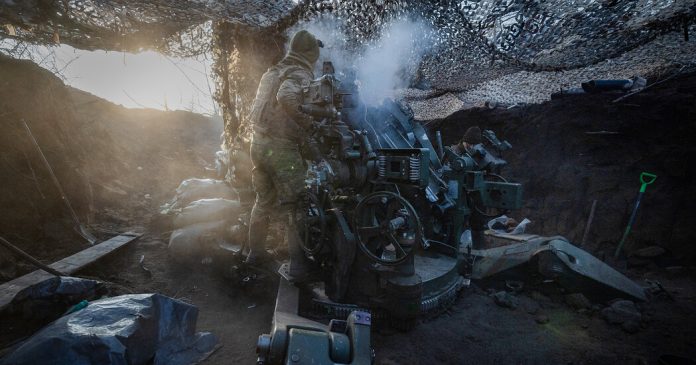
In Ukraine: Zelensky has mostly played weak hands wisely, our correspondent writes, but his approach to Trump has fallen flat. Is the strategy hurting Ukraine? Meanwhile, the country’s military is struggling to replenish its ranks. Some wounded soldiers have pushed through pain to fight Russia again.

Russia: Putin said U.S. companies could do lucrative deals in Russia and even help mine rare earths in Russian-occupied Ukraine, amplifying the Kremlin’s message that the U.S. would profit from a better relationship with Moscow.

First person: She is getting treatment for cancer, while her husband languishes in a Russian prison. It’s the story of Ukraine writ large: an exhausted population still holding on.


Friedrich Merz, Germany’s presumptive next chancellor, could be weak from the start. He didn’t win all that much of the vote on Sunday, and many Germans seem unenthused about him personally.

Yet Merz has a chance to be the most globally influential German chancellor since the heyday of his longtime rival Angela Merkel, given President Trump’s threats to abandon Europe militarily and circumvent it in peace negotiations with Russia.

For Germans, one big question remains: whether Merz can deliver the sort of dramatic changes on the economy and immigration that voters say they crave. Here’s what the election result means for the economy.

Analysis: “He’s taking over the country at a time of big crisis — at home, and abroad,” said Jim Tankersley, our Berlin bureau chief.

Related: TikTok and a backlash against conservative immigration policy helped the far-left Die Linke party surge into Parliament. And Elon Musk called the leaders of the hard-right Alternative for Germany to congratulate them on their performance.

Mousa Abu Marzouk, the head of Hamas’s foreign relations office, told The New York Times that he would not have supported the Oct. 7, 2023, attack on Israel had he known of the devastation that would result in Gaza. Israel’s offensive has reduced much of the enclave to rubble and killed tens of thousands of Palestinians.

It’s unclear to what extent Abu Marzouk’s views on Oct. 7 are shared by other Hamas leaders, who have tended to take a harder line, or whether he shared them in an attempt to influence negotiations with Israel.

West Bank: Israel appears to be laying the groundwork for a prolonged military presence in the area, and Palestinian officials are warning of a “dangerous escalation.” Here’s what to know.

What’s next: The cease-fire in Gaza is set to end on Sunday, and Hamas and Israel have yet to begin negotiating an extension. Steve Witkoff, President Trump’s Mideast envoy, plans to return to the region tomorrow to push for a new truce. While a brief extension of the cease-fire is possible, the likelihood of a long-term deal seems remote.

Across the West, voters are lurching to the right. Yet in Denmark, the governing Social Democrats have pursued bold progressive policies since 2019, cruising to re-election in 2022. One approach sets them apart from their center-left counterparts elsewhere: a far more restrictive stance on immigration.

Lives lived: Roberta Flack, the singer and pianist whose blend of soul, jazz and folk made her one of the most popular artists of the 1970s, died at 88. Get to know her essential songs.

  • Back for the Final Chamber: Wu-Tang Clan, the pathbreaking rap group from New York, is hitting the road for the last (but biggest) time ever. We sat down with its chief architect, RZA.

  • The bot will see you now: Therapists in the U.S. are getting ready for a battle with A.I. pretenders.

  • The indie queen: For years, Parker Posey has had trouble finding satisfying work in Hollywood’s shifting landscape. Then came “The White Lotus.”

Many resorts around the world are embracing landscapes in their more natural states, instead of social-media-perfect beaches of fine white sand and unobstructed ocean views. Most of those apparently magical vistas are very much manufactured anyway.

Preserving native vegetation aids a healthy ecosystem, strengthens natural defenses against climate change and provides habitats to native species. Doing so also transforms ideas about what kind of tropical beach is worthy of a week’s vacation. Read more here.

Cook: Enjoy these lamb shanks with fluffy couscous or plenty of crusty bread.

Watch: “Zero Day” on Netflix is a throwback thriller with modern sensibilities.

3 Years Into Russia-Ukraine War, Trump Ushers in New World for Putin

0

President Vladimir V. Putin of Russia took the stage in Sochi, Russia, last fall, two days after Donald J. Trump won the U.S. presidential election, and spoke of the dawn of a new world order.

“In a sense,” Mr. Putin said, “the moment of truth is coming.”

It may have already arrived.

After three years of grinding warfare and isolation by the West, a world of new possibilities has opened up for Mr. Putin with a change of power in Washington.

Gone are the statements from the East Room of the White House about the United States standing up to bullies, supporting democracy over autocracy and ensuring freedom will prevail.

Gone, too, is Washington’s united front against Russia with its European allies, many of whom have begun to wonder if the new American administration will protect them against a revanchist Moscow, or even keep troops in Europe at all.

It is a rapid shift of fortunes for Mr. Putin. He dug in on the battlefield — despite mounting pressures and costs — to wait out Western resolve in a far longer and more onerous conflict than Moscow had expected. Now, the Russian leader may believe his moment has come to shift the balance of power in favor of the Kremlin, not only in Ukraine.

“I think he sees real opportunity, both to win the war in Ukraine, effectively, but also to sideline the U.S. not just from Ukraine but from Europe,” said Max Bergmann, a Russia analyst at the Center for Strategic and International Studies in Washington who worked at the State Department during the Obama administration.

The Russian leader’s “grandiose objective,” Mr. Bergmann said, is the destruction of NATO, the 32-country military alliance led by the United States, which was established after World War II to protect Western Europe from the Soviet Union.

“I think that is right now all on the table,” Mr. Bergmann said.

The opening represents one of the biggest opportunities for Mr. Putin in his quarter-century in power in Russia.

For years, Mr. Putin has lamented the weakness Russia showed in the decade after the fall of the Soviet Union and has fixated on reversing the influence the United States has since gained in Europe at the Kremlin’s expense.

Before Russia’s invasion of Ukraine three years ago, Mr. Putin issued demands to the United States and its European allies that went far beyond Ukraine, proposing the resurrection of Cold War-style spheres of influence in a Europe divided between Moscow and Washington.

He demanded that NATO agree not to expand farther east to any nations of the former Soviet Union, including Ukraine. He also asked the United States and its Western European allies not to deploy any military forces or weaponry in the Central and Eastern European countries that once answered to Moscow.

Many of those nations, such as Estonia, Poland and Romania, have been NATO members for decades and would be difficult to defend against a Russian invasion without pre-positioned troops and equipment.

“In Putin’s view, it’s the most powerful countries that should get to determine the rules of the road,” said Angela Stent, emerita professor of government at Georgetown University. “Smaller countries, whether they like it or not, have to listen to them.”

Never mind, Ms. Stent said, that Russia lacks a superpower economy. “But it does have nuclear weapons, it has oil and gas and a veto on the U.N. Security Council,” she said. “It’s just power, hard power.”

At the time, the West immediately rejected Mr. Putin’s prewar proposals as unthinkable. The Russian leader is now almost certain to revive them in impending negotiations with Mr. Trump, a longtime skeptic of NATO and American troop presence in Europe. That has prompted a crisis among European allies, who are worried about what the U.S. president might concede.

“There is something very big going on at the moment,” said Lawrence Freedman, emeritus professor of war studies at King’s College London. “This is not business as usual. This is a very different administration, and it’s very hard to see how trans-Atlantic relations will be the same at the end of this.”

Even if Mr. Trump’s return has shifted the geopolitical environment in Mr. Putin’s favor, the Russian leader has suffered serious setbacks over three years of war, and so far has failed to achieve his goal of bringing Ukraine back into Moscow’s orbit.

Russia turned the tide on the battlefield, wresting about 1,500 square miles of land from Ukraine last year, but still has not taken the full territory of the four Ukrainian regions the Kremlin formally “annexed” in 2022. Though Ukrainian forces are reeling from personnel shortages, there has yet to be a vast Russian breakthrough causing a complete collapse of the Ukrainian lines.

Mr. Putin’s gains have also come at a significant cost. Russia is suffering losses from 1,000 to 1,500 dead and wounded per day by some estimates.

Russia’s war economy is showing strains, with 10 percent inflation, sky-high interest rates and sputtering economic growth, despite gargantuan state defense outlays. NATO has expanded to include two more nations in Russia’s backyard, Finland and Sweden, the opposite of what Mr. Putin intended.

“If you’re sitting in the Kremlin looking at this, yes, there is an opportunity, but don’t get your hopes too high,” said Thomas Graham, a fellow at the Council on Foreign Relations, who served as a top White House adviser on Russia during the George W. Bush administration. “A lot could change quickly, and at the end of the day, Trump is unreliable.”

To end the war, Mr. Graham added, both parties need to agree to stop fighting. Ukraine and its European backers most likely will not simply accept a raw deal that Mr. Trump cuts with Mr. Putin, despite intense pressure they might face from Washington.

“This is a lot more complicated than simply Putin and Trump sitting down and signing a piece of paper basically prepared by Putin,” Mr. Graham said, noting that he “wouldn’t pop the champagne corks in Moscow right now,” even if Russia appears to be in a better position than it once was.

Heading into talks, Mr. Trump faces the added difficulty that Mr. Putin is not a popular figure among the American public. Any deal seen as Kremlin appeasement could prove difficult to sell at home, though the vast majority of Americans favor a quick end to the conflict, which Mr. Trump promised on the campaign trail.

Last year, more than eight in 10 Americans expressed a negative view of Russia, and 88 percent said they did not have confidence in Mr. Putin to do the right thing in international affairs, according to a Pew Research Center poll. Nearly two-thirds of respondents called Russia an enemy of the United States.

Mr. Trump’s own secretary of state, Marco Rubio, who has been leading the talks so far, has in the past called Mr. Putin “bloodthirsty,” “a butcher” and “a monster.”

Mr. Putin, however, has benefited from changes in the information landscape and increasing admiration in the right-wing media universe, led by the former Fox News host Tucker Carlson, who visited Moscow to interview him last year.

Three years ago, Ukrainians successfully took to Twitter to popularize their cause around the globe at the outset of the invasion. But disinformation, often friendly to the Kremlin, has flourished on the platform since Elon Musk took over the company in 2022 and later rebranded the social media giant as X.

Federal prosecutors last year said they had unearthed a covert Russian campaign to spread Kremlin-friendly messages by funneling money to right-wing American influencers through a Tennessee-based media company.

The Western countries that lined up against Mr. Putin are facing their own problems at home. The two most influential countries in continental Europe — France and Germany — have been mired in political dysfunction for months and gripped by the rise of Kremlin-friendly far-right parties, now enjoying the backing of both Russian and American officials.

In the United States, Mr. Trump’s defense secretary has ordered senior leaders to begin the process of identifying major cuts in military spending. Some incoming top officials at the Pentagon have pushed for a significant withdrawal of American forces from Europe to focus on China, arguing that Europeans can handle their own defense.

Mr. Putin and his advisers would welcome the change.

“I would imagine if they are smart, they would adhere to Napoleon — when your enemy is destroying itself, don’t interfere,” Mr. Graham said. “I think that would be the approach at the moment.”

Alina Lobzina contributed reporting.

3 Workers Killed in Collapse at Construction Site in South Korea

0

At least three workers were killed and five others were injured when part of a highway construction site collapsed in South Korea on Tuesday morning, officials said.

Emergency crews were searching through the rubble for victims, South Korea’s National Fire Agency said. The collapse happened about 9:50 a.m. near the city of Cheonan, which is about 50 miles south of Seoul, the capital.

The collapse happened during the construction of a bridge connecting sections of the highway, Yonhap, a South Korean news agency, reported. Five steel beams supporting the bridge, each about 164 feet long, collapsed one after another, the news agency said.

A video published by Yonhap shows part of a structure supported by columns breaking into pieces and plunging to the ground.

This is a developing story.

Map: Tracking Tropical Cyclone Alfred

0

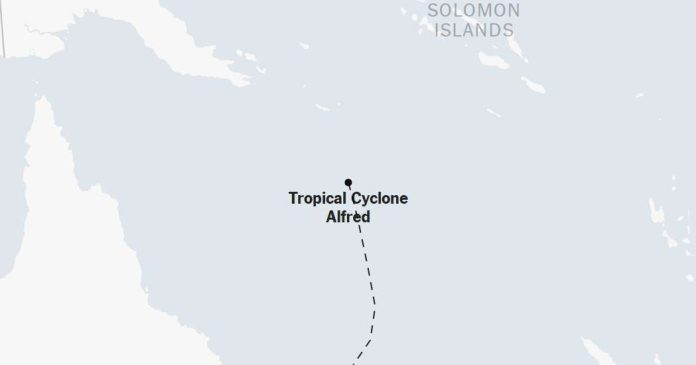
Alfred was a tropical cyclone in the Coral Sea Monday evening Eastern time, the Joint Typhoon Warning Center said in its latest advisory.

The tropical cyclone had sustained wind speeds of 75 miles per hour, which would make it a Category 1 hurricane if it were in the Atlantic Ocean.

 All times on the map are Eastern. By The New York Times

What does the storm look like from above?

Satellite imagery can help determine the strength, size and cohesion of a storm. The stronger a storm becomes, the more likely an eye will form in the center. When the eye looks symmetrical, that often means the storm is not encountering anything to weaken it.

Satellite image of the storm.

Only about a quarter of the Earth’s tropical cyclones form in the Southern Hemisphere. When these storms have sustained winds of 74 m.p.h. or greater, they would be called hurricanes in the Atlantic, but here, they are called cyclones. The only other difference is that, in the Southern Hemisphere, cyclones spin clockwise (hurricanes spin counterclockwise).

Cyclones can strike eastern Africa, primarily Madagascar, as well as the western, northern and eastern coasts of Australia and surrounding island nations.

The season here runs opposite the rest of the world, typically beginning in late October and running through May. Peaks in activity vary depending on the region, but normally, activity is highest in late February and early March.

Sources and notes

Tracking map Tracking data is from the National Hurricane Center. The map shows probabilities of at least 5 percent. The forecast is for up to five days, with that time span starting up to three hours before the reported time that the storm reaches its latest location. Wind speed probability data is not available north of 60.25 degrees north latitude.

Wind arrivals table Arrival times are generated from a New York Times analysis of National Hurricane Center data. Geographic locations use data from the U.S. Census Bureau and Natural Earth. Time zones are based on Google. The table shows predicted arrival times of sustained, damaging winds of 58 m.p.h. or more for select cities with a chance of such winds reaching them. If damaging winds reach a location, there is no more than a 10 percent chance that they will arrive before the “earliest reasonable” time and a 50 percent chance they will arrive before the “most likely” time.

Radar map Radar imagery is from the National Oceanic and Atmospheric Administration via Iowa State University. These mosaics are generated by combining individual radar stations that comprise the NEXRAD network.

Storm surge map Storm surge data is from the National Hurricane Center. Forecasts only include the United States Gulf and Atlantic coasts, Puerto Rico, and the U.S. Virgin Islands. The actual areas that could become flooded may differ from the areas shown on this map. This map accounts for tides, but not waves and not flooding caused by rainfall. The map also includes intertidal areas, which routinely flood during typical high tides.

Satellite map Imagery is from the National Oceanic and Atmospheric Administration and Japanese Meteorological Agency via the Cooperative Institute for Research in the Atmosphere.

Precipitation map Data for multi-day forecasts or observed rainfall totals are from the National Weather Service. The 1-day forecast is from the National Oceanic and Atmospheric Administration.

Office of Special Counsel asks for stay of Trump’s firings : NPR

0

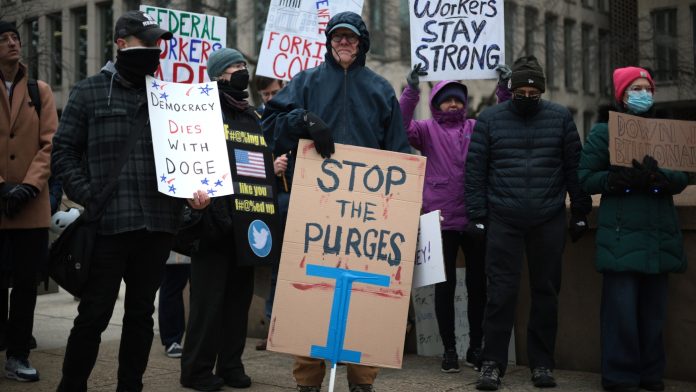
Protesters rally outside of the headquarters of the U.S. Office of Personnel Management on February 5, 2025 in Washington, D.C.

Alex Wong/Getty Images North America


hide caption

toggle caption

Alex Wong/Getty Images North America

The independent agency that protects federal workers from illegal actions says there’s evidence the Trump administration has violated federal law in firing probationary employees — typically, those in their first or second year on the job.

The U.S. Office of Special Counsel has asked for a stay of the terminations of six federal employees who were fired over the past two weeks.

In a statement, Special Counsel Hampton Dellinger pointed to legal principles that guide how federal agencies hire and fire employees. He notes that all employees, including those still in their probationary period, should be evaluated based on individual performance.

None of the federal employees brought to his attention had performance issues, according to the Special Counsel’s filing with the Merit Systems Protection Board, the federal body that would enforce a stay. They included disabled veterans working for the Departments of Education and Veterans Affairs who would receive preference in a mass layoff done legally.

Instead, the filing states, the evidence indicates that agencies improperly used the employees’ probationary status to accomplish a downsizing of the workforce, without following the proper procedures for doing so.

“Firing probationary employees without individualized cause appears contrary to a reasonable reading of the law,” Dellinger wrote. “I believe I have a responsibility to request a stay of these actions while my agency continues to investigate further the apparent violation of federal personnel laws.”

The decision to seek a stay issued Friday and first reported Monday by Government Executive came in response to a class complaint filed by the legal advocacy group Democracy Forward and the Alden Law Group.

The MSPB can grant or deny the request for a stay, but if it does nothing, the stay will take effect after three business days, according to Democracy Forward.

The stay would only apply to the six individuals, but the Office of Special Counsel notes that Dellinger is considering ways to seek relief for a broader group of federal employees who were similarly fired.

Unions challenge the mass firings in federal court

Separately, a coalition of labor unions and civic organizations has asked a federal court in San Francisco to temporarily block the Trump administration from firing probationary employees.

The lawsuit, originally filed on Feb. 19, argues that the Office of Personnel Management has no authority to manage employees of federal agencies other than its own.

U.S. District Judge William Alsup gave the government until Wednesday morning to file its opposition, and scheduled a hearing for 1:30 pm PT Thursday.

The unions’ complaint points to a federal statute that states, “The head of an Executive department or military department may prescribe regulations for the government of his department, the conduct of its employees, the distribution and performance of its business, and the custody, use, and preservation of its records, papers, and property.”

In other words, while OPM handles many human resource functions for the federal workforce, it does not have Congressional authority to tell other agencies what to do.

“Each agency has its own authorizing statutes that govern its administration,” the unions’ attorneys wrote.

Over the past couple weeks, the Trump administration has fired tens of thousands of federal employees, with more dismissals expected this week. It has placed thousands more across the government on administrative leave, leaving them unable to do their work.

Have information you want to share about ongoing changes across the federal government? NPR’s Andrea Hsu can be contacted through encrypted communications on Signal at andreahsu.08.

Putin Dangles Deals for Rare Earth Metals for U.S.

0

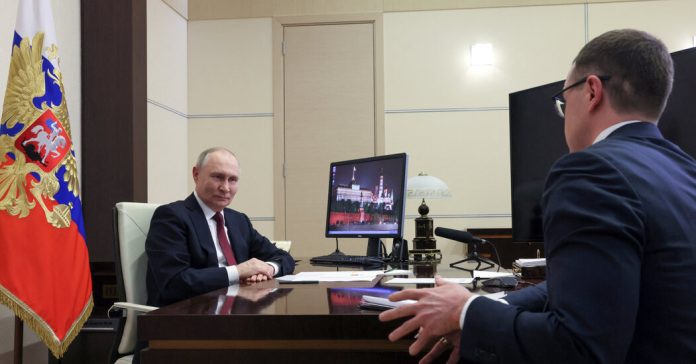
President Vladimir V. Putin on Monday said American companies could do lucrative business deals in Russia and even help mine rare earths in Russian-occupied Ukraine, further amplifying the Kremlin’s message to President Trump that there was money to be made from a better relationship with Moscow.

Mr. Putin, in an interview with Russian state television that was released late Monday, said that Russia had an “order of magnitude” more rare earth metals than Ukraine and that Moscow was “ready to work with our foreign partners, including the Americans,” in developing those deposits.

He said the invitation applied to Russian-occupied Ukraine as well, adding that American companies could also “make good money” by helping to develop aluminum production in Siberia.

“There is something to think about here,” Mr. Putin said, referring to aluminum, “as well as about joint work on rare earth metals and in other areas, for example, energy.”

The interview showed Mr. Putin working hard to appeal to Mr. Trump’s interest in profits and deal-making. It came as Mr. Trump has swung American foreign policy in Mr. Putin’s favor at dizzying speed, as underscored by the United States siding with Russia in votes at the United Nations on Monday about the war in Ukraine.

Mr. Trump has been pressuring Ukraine to agree to grant the United States a share of its revenues from mining rare earth metals and other natural resources. The two sides were closing in on such an agreement on Monday.

Mr. Putin praised Mr. Trump’s recent comments about a potential deal in which the United States, Russia and China would halve their defense budgets.

“It seems to me that the idea is good: The United States would reduce by 50 percent, and we would reduce by 50 percent, and the People’s Republic of China would then join in if it wants,” Mr. Putin said. “We think that the proposal is good and are ready for discussions on this matter.”

But the interview also showed that Mr. Putin appears to be in far less of a hurry than Mr. Trump to end the war in Ukraine. Russia continues to slowly gain ground on the battlefield, while Ukraine struggles with a dearth of personnel and uncertainty about the future of American support.

Mr. Putin said there was little discussion about the war in his Feb. 12 call with Mr. Trump and last week’s meeting between American and Russian officials in Saudi Arabia — a cautionary note about the prospects for imminent peace compared to recent statements from Mr. Trump, who has said that the war could end within weeks.

“We touched on problems related to the Ukraine crisis, but it itself was not substantively discussed,” Mr. Putin said of the recent talks between the United States and Russia. “We only agreed that we would move toward this.”

Asked by the reporter for Russian state television whether Mr. Trump was playing into Russia’s hands, Mr. Putin said no and praised the American president for using “a rational approach to the current situation.”

“He is in a unique position,” Mr. Putin said. “He does not simply say what he thinks, but he says what he wants.”

Mr. Putin said Mr. Trump was right to criticize President Volodymyr Zelensky for the lack of elections in Ukraine during martial law — a stance that Mr. Putin has pushed for months, calling Mr. Zelensky an illegitimate president.

In a new talking point, Mr. Putin appeared to assert that Ukraine’s rightful president should be Gen. Valery Zaluzhny, Ukraine’s top military commander for the first two years of the war, who is now ambassador to London.

Mr. Putin said General Zaluzhny was twice as popular as Mr. Zelensky inside Ukraine, without providing a source for his figures. Polling does show Mr. Zelensky trailing General Zaluzhny in a hypothetical presidential election, but by much narrower margins.

Mr. Putin said Mr. Zelensky would have “absolutely no chance of winning the elections” against General Zaluzhny. Mr. Putin referred to the general as “Mr. Zaluzhny,” a notable courtesy given that Mr. Putin almost never uses Mr. Zelensky’s name in public.