Wednesday, November 11, 2026
Home Blog Page 19

Catholic leaders criticize Trump for posting apparent AI photo of himself as the pope : NPR

0

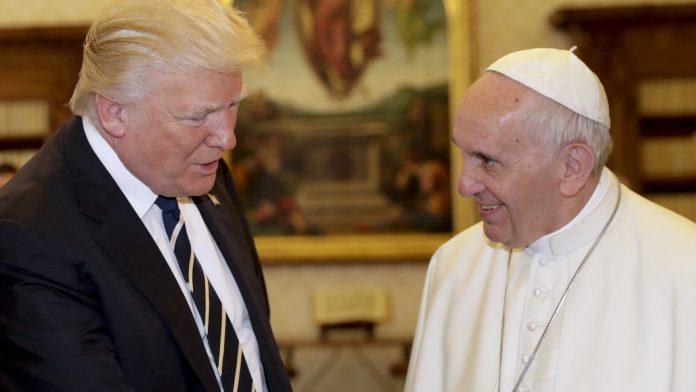
President Trump is pictured at the Vatican in 2017 with Pope Francis, who died last month. Trump posted on social media Friday what appears to be an AI-generated image of himself dressed as the pope.

Alessandra Tarantino/AFP via Getty Images


hide caption

toggle caption

Alessandra Tarantino/AFP via Getty Images

Some Catholic leaders and at least one U.S. Catholic group are criticizing President Trump after he posted on social media what appears to be an artificial intelligence-generated image of himself dressed as the pope.

Trump posted the image on his Truth Social account on Friday night, and shortly after it was reposted by the White House on its official X account.

Trump traveled to the Vatican late last month to attend the funeral of Pope Francis, who had died several days earlier at age 88. The papal conclave to elect the next pope is set to begin on Wednesday.

The image shows Trump in the pope’s traditional white cassock, wearing a gold cross around his neck as well as the iconic papal hat, or mitre.

Cardinal Timothy Dolan, the archbishop of New York who is friendly with Trump, told journalists in Rome Sunday morning that he hoped Trump “didn’t have anything to do with” the image. When asked if it offended him, Dolan said, “it wasn’t good.”

The New York State Catholic Conference said in a post on X: “There is nothing clever or funny about this image, Mr. President. We just buried our beloved Pope Francis and the cardinals are about to enter a solemn conclave to elect a new successor of St. Peter. Do not mock us.”

Bishop Thomas John Paprocki of the Diocese of Springfield in Illinois said in a Facebook post that by publishing the image “Trump mocks God, the Catholic Church, and the Papacy.”

Paprocki added the image was “deeply offensive” — especially as Catholics continue to mourn Pope Francis and prepare for the papal conclave. “President Trump owes an apology to Catholics and all people of good will,” he said.

The White House did not immediately respond to NPR’s request for comment Sunday morning.

But the Associated Press reported that White House press secretary Karoline Leavitt has responded to the criticism, saying “President Trump flew to Italy to pay his respects for Pope Francis and attend his funeral, and he has been a staunch champion for Catholics and religious liberty.”

Vice President JD Vance, who converted to Catholicism in 2019, said on social media Saturday afternoon that “[a]s a general rule, I’m fine with people telling jokes and not fine with people starting stupid wars that kill thousands of my countrymen.”

Last week, when asked by reporters who he’d like to see elected pope, Trump said: “I’d like to be pope. That would be my number one choice,” before adding, “no, I don’t know, I have no preference. I must say we have a cardinal that happens to be out of a place called New York who’s very good” — an apparent reference to Dolan.

6 months after polls closed, dispute over North Carolina Supreme Court seat drags on

0

The last 2024 election to be decided is for a seat on the North Carolina Supreme Court. With the Democrat ahead by about 700 votes, the GOP challenger has taken thousands of ballots to court.

Politics chat: Canadian Prime Minister at the White House, Trump comments on recession

0

We look ahead to President Trump’s meeting with Canadian Prime Minister Mark Carney, as well as comments he made in an interview with NBC News regarding a potential recession.

What is the 'broligarchy'?

0

NPR’s Don Gonyea talks to Morgan Sung, host of the KQED podcast ‘Close All Tabs,’ about the rise of the ‘broligarchy’.

Warren Buffett to retire, warns trade war will hurt U.S. : NPR

0

A See’s Candies worker restocks the display next to a cutout of Warren Buffett at the Berkshire Hathaway shareholders meeting exhibit hall Friday, May 2, 2025 in Omaha, Neb. (AP Photo/Josh Funk)

(AP Photo/Josh Funk)


hide caption

toggle caption

(AP Photo/Josh Funk)

OMAHA, Neb.–Warren Buffett wants the United States to knock off its trade war.

“Trade should not be a weapon,” the billionaire investor and Berkshire Hathaway CEO said on Saturday morning, at his annual shareholder meeting in Omaha.

The United States “should be looking to trade with the rest of the world. We should do what we do best, and they should do what they do best,” Buffett told the crowd of thousands in a downtown arena, who broke out into applause.

Buffett did not mention President Trump, whose sweeping new tariffs have ignited a global trade war, roiled financial markets, and sounded wide-ranging alarms about a recession.

But his rebuke of Trump’s policies answered one of Wall Street’s biggest questions of this weekend: Would Buffett weigh in on the trade war and its massive disruptions? Many of those attending this “Woodstock for Capitalists,” which draws tens of thousands of people from around the world, told NPR they were waiting for Buffett to speak out on the tariffs.

Buffett, 94, also closed the event with major news, announcing that he would be stepping down as CEO at the end of the year, in favor of his long-designated successor, Greg Abel. He received a prolonged standing ovation from the audience in Omaha’s CHI Health Center.

“The enthusiasm from that response can be interpreted in two ways,” he quipped as he left the stage.

The Berkshire Hathaway CEO has been largely silent on trade this spring, as some of his peers have cautiously started criticizing the tariffs’ impact on the global economy — and their businesses.

Buffett “has got to be frustrated by what’s going on in Washington, for no other reason than it has injected a degree of uncertainty into his business,” says Cathy Seifert, an analyst who covers Berkshire for CFRA Research.

Now many of the largest U.S. companies are cutting or withdrawing their financial forecasts for this year, citing the tariffs.

Berkshire added to the warnings on Saturday morning, as it reported a sharp drop in quarterly profit from a year earlier. The company said it can’t currently predict the tariffs’ impact on its vast array of businesses and investments, but “it is reasonably possible there could be adverse consequences.”

Buffett uses his bully pulpit to advocate for America

At age 94, Buffett wields a tremendous amount of power on Wall Street and beyond.

He bought Berkshire Hathaway in 1965, when it was a struggling textile mill. Sixty years later, it’s one of the largest companies in the world, operating businesses ranging from insurance and railroads to Dairy Queen and Duracell batteries. It’s also a powerful investor in other companies, owning shares in Coca-Cola, Apple, American Express, and other big businesses.

“Because of its breadth and its depth … it really is sort of a microcosm for the broader economy,” Seifert says.

The Omaha-born Buffett is famously folksy and tends to wrap himself in the American flag, regularly praising both his country and its systems. “The luckiest day in the world is the day I was born. I was born in the United States,” he said on Saturday.

So he framed his opposition to tariffs, in part, as a matter of national security for the U.S. and its citizens.

“The more prosperous the rest of the world becomes … the more prosperous we’ll become, and the safer we’ll feel and your children will feel someday,” he said, to more applause.

Buffett turns rote corporate event into “Woodstock for Capitalists”

Buffett spoke for more than four hours on Saturday, in a decades-old tradition that’s unlike any other investor meeting in corporate America.

Most of these events are tedious, rote, and often virtual. But Berkshire and its CEO have turned its annual meeting into a party weekend in Omaha.

In person, the feeling is part fan convention, part quasi-religious revival, and part pop-up outlet mall. Buffett said that on Friday, almost 20,000 people visited the CHI Health Center’s exhibit hall, full of displays — and shops — devoted to Berkshire-owned brands.

Many emerged with bulging shopping bags full of See’s Candies, Fruit of the Loom underwear, and plush “Squishmallow” toys modeled after Buffett and his late business partner, Charlie Munger.

Finance bros in vests crowded past young families with strollers, foreign travelers taking selfies with gigantic Berkshire signs, and retirees who told an NPR reporter they’ve owned Berkshire shares for decades.

“I told my kids: Do not sell it,” said Lorenzo Alaan, a retired physician who traveled to Omaha from The Villages, Florida.

“You sell your house, your jewelry, don’t sell Berkshire,” he added. “It’s for your children and grandchildren.”

Week in politics: Will Congress pass the White House budget?

0

The Trump administration’s vision for the American workforce may fall victim to economic instability generated by the administration’s tariff regime.

Kentucky Derby showcases role of Latinos in the industry : NPR

0

Spectators watch a horse race at Churchill Downs in Louisville, Ky., on April 30, 2025. Junior Alvarado, a jockey from Venezuela, makes his way to second place before crossing the finish line.

Lydia Schweickart for NPR


hide caption

toggle caption

Lydia Schweickart for NPR

LOUISVILLE — As a young boy in Venezuela, Junior Alvarado wanted to follow in his father’s footsteps and be a winning jockey.

He started as what he called a “backboy” in the racing stables in Barquisimeto, Venezuela. He remembered hearing about this big race called the Kentucky Derby.

“We didn’t have much access to watch any other races, but the Kentucky Derby was the famous race,” Alvarado said. “Once I became a jockey, I thought my only chance to win that race — I had to go to the United States and I had to make it there. And that’s what I did.”

Alvarado, 38, has now competed in the Kentucky Derby five times. He hopes to be the first to dart past the tall white “FINISH” post this weekend on a bay horse, No. 18 Sovereignty, during his sixth run.

Jockey Junior Alvarado (38) poses for a portrait in the jockey quarters of Churchill Downs in Louisville, Ky., on April 30, 2025.

Jockey Junior Alvarado (38) poses for a portrait in the jockey quarters of Churchill Downs in Louisville, Ky., on April 30, 2025.

Lydia Schweickart for NPR


hide caption

toggle caption

Lydia Schweickart for NPR

Nineteen jockeys are slated to load into the green-and-white metal gates at the famous Churchill Downs racetrack this Saturday evening. Their horses will bullet down the 1 1/4-mile sandy track at a speed of 35 miles an hour. It’s the one shot to win $5 million and one of the most coveted titles in American horseracing.

Most of those competing this weekend in Kentucky hail from around the world. The American Business Immigration Coalition estimates jockeys on visas account for up to 70% of U.S. competitors.

Now, as the Trump administration aims to crack down on many forms of migration, those in the industry bank their athletes will be spared from regulatory changes. But some across the country are already feeling the pain of living in limbo.

Many riders come from Mexico, Panama and Venezuela, where there are established jockey academies. Other Latino jockeys are U.S.-born, including from Puerto Rico.

“In Venezuela as well as many other Central and South American countries, horse racing is a big sport. It is equal to American football,” said Ramon Dominguez, a retired jockey from Venezuela and member of the U.S. racing Hall of Fame. “A lot of the kids grow up with the dream of one day becoming a jockey.”

Program numbers, found on each race horses’ saddlecloth, are laid out on a table in the jockey quarters of Churchill Downs in Louisville, Ky., on April 30, 2025.

Program numbers, found on each race horses’ saddlecloth, are laid out on a table in the jockey quarters of Churchill Downs in Louisville, Ky., on April 30, 2025.

Lydia Schweickart for NPR


hide caption

toggle caption

Lydia Schweickart for NPR

Rising in prominence in the industry

The Latino presence in American horseracing has evolved over the years. From the grooms to some of the winningest jockeys, Latinos have risen in prominence.

Jockeys from abroad are primarily able to get their foot in the door competing in the U.S. by using the P visa for athletes and O visa for individuals with extraordinary achievement.

Current and former jockeys said that to compete means sacrifice, leaving families behind and training long hours to become the best of the best.

“Our racing scene has been very much enriched by jockeys from all countries,” said Bonnie Smerdon, an immigration attorney who helps jockeys with their visas and has been in the industry for almost 10 years. “I’m doing more and more jockey visas than [when I] started out in my career.”

While many come on visas, Smerdon said there are other avenues. For example, she has one client from Venezuela on Temporary Protected Status, a parole program the Trump administration revoked, risking the work authorization of hundreds of thousands of immigrants.

Alvarado, the Venezuelan jockey, said the opportunities that are getting denied are “heartbreaking.” He knows jockeys in limbo with their immigration status.

“A lot of those are very good athletes. They want to better themselves,” Alvarado said.

Smerdon said she has been able to get all her clients’ visas approved to bring in more athletes to the U.S., despite the Trump administration’s recent crackdowns.

“It takes people from all over the world”

Others in the industry agree their industry is untouched so far.

Mindy Coleman, general counsel of the Jockeys’ Guild, helps jockeys process their immigration paperwork.

She said it can already be complicated to request an athlete visa for a jockey because the sport is very unique — each athlete can compete for multiple different trainers and on several horses.

Mindy Coleman talks with invited guests at Jocktails, a charity bartending event that supports the Permanently Disabled Jockeys Fund, on April 30, 2025. Coleman works with the Jockeys’ Guild, representing professional jockeys in American Thoroughbred and Quarter Horse racing.

Mindy Coleman talks with invited guests at Jocktails, a charity bartending event that supports the Permanently Disabled Jockeys Fund, on April 30, 2025.

Lydia Schweickart


hide caption

toggle caption

Lydia Schweickart

Those in the industry fear future restrictions on visas based on country of origin, or any limits to foreign talent.

“I don’t want there to be additional restrictions in reviewing those petitions when they are originally submitted,” Coleman said, noting she is thorough in providing background for the immigration agents.

“It’s a beautiful, wonderful week,” she said about the races leading up to the Kentucky Derby. “But quite frankly it takes people from all over the world in order to have this fastest two minutes in sports in Kentucky.”

One reason foreign athletes compete in the U.S. is that many skew smaller and lighter than the average American, she said, making them more competitive in the race.

Jockey schools in places like Panama also help shape a high-caliber talent pool.

“What Latin America is sending us is their highest-trained professionals and people who become influential, who give back to the United States, who become our heroes,” said Gabi Kuzenzli, associate professor at the University of South Carolina specializing in Latin American history and sports. “What people don’t realize is we’re talking about winning trainers, owners, jockeys, assistant trainers. This is a site of Latino excellence.”

A jockey trains before sunrise on a horseracing track in Louisville, Ky., on April 30, 2025.

A jockey trains before sunrise on a horseracing track in Louisville, Ky., on April 30, 2025.

Lydia Schweickart for NPR


hide caption

toggle caption

Lydia Schweickart for NPR

Jockeys flock to opportunities in the U.S.

One such jockey is Javier Castellano, 47, who apprenticed in competitions in Venezuela and came to the U.S. at age 19. Since then, he has won 6,000 races, competed in the Kentucky Derby 16 times, won once in 2023 and is hoping to land another title on Saturday night.

“I had heard that in the U.S. there was a big scene for international equestrian opportunities and I wanted to try my luck here in the U.S.,” Castellano said, noting that his success in Venezuela was the launching point to compete in America. “I had to go through the same process as any immigrant of not knowing the language; it’s a different culture, different food.”

At first, he came on a tourist visa and then secured a lawyer to help him complete the necessary paperwork to compete in the U.S. Castellano said the U.S. offers more tracks and horses where jockeys can compete, compared to some of the South American countries jockeys come from.

“God has blessed me with the gift of being able to ride horses and work in something I love,” Castellano said. He will take to the track on No. 20, a three-year-old bay horse named Owen Almighty.

Martin Garcia (40), a jockey from Veracruz, Mexico, discusses his experiences riding in competitions on the backside of a horse racing track in Louisville, Ky., on April 30, 2025. Garcia entered the country 15 years ago and will be competing in his fourth Kentucky Derby.

Martin Garcia (40), a jockey from Veracruz, Mexico, discusses his experiences riding in competitions on the backside of a horse racing track in Louisville, Ky., on April 30, 2025. Garcia entered the country 15 years ago and will be competing in his fourth Kentucky Derby.

Lydia Schweickart for NPR


hide caption

toggle caption

Lydia Schweickart for NPR

There are many pathways to the coveted track in Louisville. Martin Garcia, 40, riding No. 1 Citizen Bull, is from Veracruz, Mexico, and will compete in his fourth Kentucky Derby. Garcia said he entered the country illegally about 15 years ago, but is now a citizen.

“I am really excited that I can ride a horse like those that are here and that I have the opportunity because there are many talented jockeys,” Garcia said.

He grew up around horses on a ranch in Mexico but fell into being a professional jockey once in the U.S. He now rides hundreds of races a year.

“When I am on a horse, my mind is blank; you have to follow the rhythm of the horse,” Garcia said. “It is such a unique sport.”

The Louisville Hispanic Chamber of Commerce honored three Latino jockeys on April 30, 2025, at their 2025 Derby Pitch event, including Joel Rosario from the Dominican Republic, and Mario Gutierrez from Mexico.

The Louisville Hispanic Chamber of Commerce honored three Latino jockeys on April 30, 2025, at their 2025 Derby Pitch event, including Joel Rosario from the Dominican Republic, and Mario Gutierrez from Mexico.

Lydia Schweickart for NPR


hide caption

toggle caption

Lydia Schweickart for NPR

Honoring Latinos’ contributions

Ahead of Derby night, three Latino jockeys, two which are riding this weekend, were honored by the Louisville Hispanic Chamber of Commerce on stage — their many accolades listed off on stage.

“Without our jockeys, we would not have a Kentucky Derby,” said Hank Enright, one of the event emcees. “So it’s very important we take a pause and thank these unsung heroes for the most exciting two minutes of sports.”

One jockey honored was Joel Rosario, who will take to the track aboard No. 14 Tiztastic for another shot at winning (he won in 2013). Rosario started riding at the age of 13 in the Dominican Republic and about 20 years ago he came to the U.S. on a visa to compete.

Joel Rosario, a horseracing jockey from the Dominican Republic, poses for a portrait at the Speed Art Museum in Louisville, Ky. Rosario was honored by the Louisville Hispanic Chamber of Commerce at their 2025 Derby Pitch event on April 30, 2025.

Joel Rosario, a horseracing jockey from the Dominican Republic, poses for a portrait at the Speed Art Museum in Louisville, Ky. Rosario was honored by the Louisville Hispanic Chamber of Commerce at their 2025 Derby Pitch event on April 30, 2025.

Lydia Schweickart for NPR


hide caption

toggle caption

Lydia Schweickart for NPR

“At first, it was a little difficult. I thought for a bit that it might be better to return to the Dominican Republic,” Rosario told NPR at the event. “But I kept working, and was supported by the owners and trainers.”

Now, Rosario said he has won more races than he ever thought possible. He sees his story as a successful jockey as an immigrant story, too.

Rosario said he’s noticed an increase in Latino jockeys over the last two decades. “U.S. Latinos have continued advancing and succeeding here in the U.S.,” he said, “And I want it to always be that way.”


After paying people to leave, USDA scrambles to fill positions : NPR

0

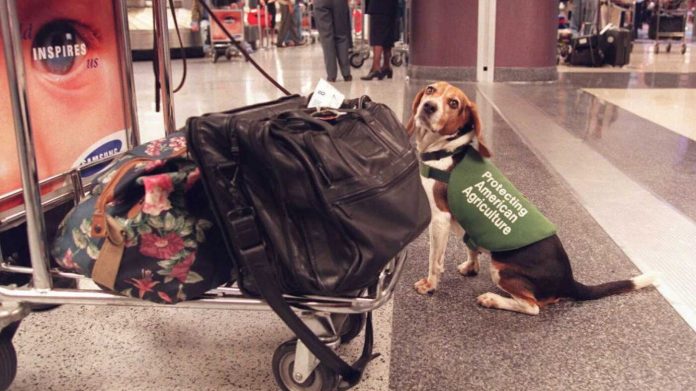
A sniffer dog from the U.S. Department of Agriculture sits next to the luggage of passengers arriving at the airport in Atlanta. USDA is currently seeking to fill 73 jobs, including in its Animal and Plant Health Inspection Service’s animal care program.

Joel Robine/AFP via Getty Images


hide caption

toggle caption

Joel Robine/AFP via Getty Images

As the Trump administration marches forward with its plan to dramatically slash the federal workforce, agencies are bidding farewell to employees who have agreed to resign now in exchange for pay and benefits through September.

But at least one agency, the U.S. Department of Agriculture’s Animal and Plant Health Inspection Service (APHIS), is already scrambling to fill some of those newly vacant roles, according to internal communications seen by NPR.

On Thursday, a day after the departure of hundreds of employees who accepted the deferred resignation offer, remaining APHIS employees received an email from human resources announcing “lateral transfer opportunities.” Qualified employees are invited to apply by Tuesday for 73 open positions “that are especially critical to fill as soon as possible,” the email said.

The agency is looking for scientists, budget analysts, technicians, inspectors, and a veterinarian to carry out its mission to protect the health, welfare, and value of America’s plants, animals, and natural resources.

The immediate posting of these jobs has infuriated employees who took the deferred resignation offer out of fear that their positions would be eliminated.

“We are now all at home, being paid to stay home while they announce, less than 24 hours later, our jobs,” said one APHIS employee who accepted deferred resignation and now sees their position on the list of openings. “What logic metric is being used to justify this?”

The employee, whose role involved ensuring that agricultural commodities entering the U.S. are both legal and safe, agreed to speak with NPR on condition of anonymity out of fear of reprisal for speaking to the media.

On the hook for two salaries

In filling jobs that are open due to voluntary resignations, the government will effectively be on the hook for two salary-and-benefit packages through the end of September — one for the person newly moving into the job, and one for the person who was paid to leave that job.

It’s not clear what will happen to the roles that are vacated by employees who move to the newly opened positions.

It’s also not clear if all 73 open positions had been occupied by people who accepted the deferred resignation offer. The email to employees explained that APHIS had been approved to fill a limited number of positions “given the impact of recent and upcoming staff departures.”

NPR asked the USDA press office to explain the rationale for offering employees in mission-critical positions the chance to resign with five months of pay and benefits, and how their replacements would be funded during those months. Most APHIS positions are funded through fees paid by importers and other entities that use the agency’s services, not Congressional appropriations.

The agency declined to answer those questions and instead sent a statement.

“Under President Trump’s leadership, USDA is being transparent about plans to optimize and reduce our workforce and to return the Department to a customer service focused, farmer first agency,” the statement said. “While Secretary Rollins is actively pursuing plans to reduce USDA’s workforce to better serve the needs of the people we serve, she will not compromise the critical work of the Department, including its ongoing work to protect American agriculture from foreign disease and pests.”

U.S. Agriculture Secretary Brooke Rollins speaks to the press outside the White House on February 14, 2025 in Washington, D.C.

U.S. Agriculture Secretary Brooke Rollins speaks to the press outside the White House on February 14, 2025 in Washington, D.C.

Kayla Bartkowski/Getty Images North America


hide caption

toggle caption

Kayla Bartkowski/Getty Images North America

Fear of being fired led to resignation

The APHIS employee who spoke to NPR said they never wanted to leave their job. They’d been with the agency for about eight years.

The employee took pride in the role they played, protecting American agriculture from invasive plants, pests and diseases and ensuring the safety of imported food products headed for supermarkets.

They did not consider leaving when the first deferred resignation offer was rolled out days after President Trump’s inauguration. But eventually, they bowed to what they describe as “relentless attempts” over the past few months to get employees to quit.

The overriding message, the employee said, was basically — “You should take the [deferred resignation offer] before we fire you. It’s really the best option for you.”

With no information on USDA’s restructuring plans coming from management, and conflicting information over whether mission-critical roles would be spared in layoffs, the employee became increasingly fearful that no APHIS job was safe.

“My understanding from management was there was no guarantee,” the employee said.

Fueling the unease was the fact that there were deep cuts happening elsewhere. In late March, the Department of Health and Human Services announced a reduction in force, or RIF, of 10,000 employees, as part of what the agency called a “dramatic restructuring.”

“Just like anyone else, our fear was that we would be RIF’d regardless of how mission-critical we were,” the APHIS employee said.

Around that same time, Trump signed an executive order ending collective bargaining rights for wide swaths of the federal workforce, including everyone at APHIS, citing national security concerns. Days later, employees were told their union would no longer be recognized.

“Now we have no workers’ rights,” the employee remembers thinking.

So when USDA reopened its deferred resignation offer on April 1 and gave employees a week to decide whether to opt in, the employee decided it was best to leave.

“By that point, I was so terrified,” they said.

Since then, a federal judge has halted Trump’s executive order on collective bargaining, and even before that, APHIS had informed at least one of the unions representing its employees, the National Association of Agriculture Employees (NAAE), that the agency would once again recognize the union.

Concerns about mass departures were brewing

Even before now, there were signs that senior leaders at APHIS were concerned about the large number of people departing the agency.

On April 23, some employees who had accepted the second deferred resignation offer, including entomologists, botanists and quarantine staff with APHIS’ Plant Protection and Quarantine program, received an email from agency leaders, inviting them to change their minds and stay in their jobs.

“While staffing levels will be reduced in other areas … your mission critical position will not be affected,” the message promised.

But not everyone got this offer. The APHIS employee who spoke with NPR surmises that people working in less visible positions, away from the ports where goods are inspected, were excluded, despite the important role they play in providing those on the frontlines with critical information in real time.

The employee considers that an oversight, given how much their colleagues at the ports rely on them.

“It would be like cutting off the jobs of all the 911 operators and leaving the police on the street,” they said.

Armando Rosario-Lebron, the union’s eastern regional vice president, says the union broadly supports lateral moves and even has procedures for how they should be carried out in its collective bargaining agreement with APHIS.

“We have nothing against laterals as an instrument for workforce balancing,” he says.

What the union finds objectionable is the timing, Rosario-Lebron says, with opportunities rolled out a day after people left their jobs, and without any notice given to the union.

Nevertheless, the job opportunities have been posted. Qualified applicants — those with relevant experience as well as the licensure and certifications to perform the work — have until 11:59 pm ET on May 6 to apply for the new positions, according to internal communications. Reassignments take effect May 18, with employees reporting to their new positions May 19.

Judge strikes down Trump executive order targeting Perkins Coie law firm : NPR

0

President Donald Trump signs executive orders in the Oval Office of the White House on March 6, including an order terminating the security clearances of those who work at the law firm Perkins Coie.

Alex Wong/Getty Images


hide caption

toggle caption

Alex Wong/Getty Images

A federal judge on Friday struck down President Trump’s executive order targeting the prominent law firm of Perkins Coie, finding it unconstitutional and declaring it an attack on the foundational principles of the American legal system.

The ruling from U.S. District Judge Beryl Howell is the first to permanently block an executive order issued by Trump punishing a law firm for representing clients or causes that he dislikes.

“No American President has ever before issued executive orders like the one at issue in this lawsuit targeting a prominent law firm with adverse actions to be executed by all Executive branch agencies,” Howell wrote in her 102-page ruling.

“But, in purpose and effect, this action draws from a playbook as old as Shakespeare, who penned the phrase: ‘The first thing we do, let’s kill all the lawyers.'”

Perkins Coie was the first law firm targeted with a sweeping executive order that imposed potentially existential punitive measures on it. Trump’s order suspended security clearances for the firm’s employees, barred its attorneys from access to government buildings and officials, and ended government contracts with the firm.

Trump has issued similar executive orders against several other prominent law firms that he views as political enemies. Three of those firms, in addition to Perkins Coie, have sued to challenge Trump’s actions, and won court orders temporarily blocking enforcement of the orders.

Perkins Coie’s case is the first to be permanently blocked.

In her ruling, Judge Howell framed the targeting of Perkins as an attack on the independence of the legal profession and the judicial system.

“The importance of independent lawyers to ensuring the American judicial system’s fair and impartial administration of justice has been recognized in this country since its founding era,” she said in her ruling.

This case, she added, “presents an unprecedented attack on these foundational principles.”

Trump’s order, the judge wrote, “stigmatizes and penalizes a particular law firm and its employees,” from partners through mailroom attendants because of the firm’s representation of clients pursuing claims and taking positions that Trump doesn’t like.

“In a cringe-worthy twist on the theatrical phrase ‘let’s kill all the lawyers,'” she adds, Trump’s executive order “takes the approach of ‘let’s kill the lawyers I don’t like,’ sending the clear message: lawyers must stick to the party line, or else.”

Perkins Coie welcomed her ruling.

“This ruling affirms core constitutional freedoms all Americans hold dear, including free speech, due process, and the right to select counsel without the fear of retribution,” a spokesperson said in a statement. “We are pleased with this decision and are immensely grateful to those who spoke up in support of our positions. As we move forward, we remain guided by the same commitments that first compelled us to bring this challenge: to protect our firm, safeguard the interests of our clients, and uphold the rule of law.”

The Justice Department did not immediately respond to a request for comment.

While Perkins and three other firms have challenged Trump’s orders, at least nine other firms have either cut deals with the president to get him to lift an order against them or to avoid the possibility of one. In return, they’ve agreed to provide hundreds of millions of dollars combined in free legal work on causes they and the president support.

Trump administration announces reorganization and staff cuts at EPA : NPR

0

The Environmental Protection Agency’s science wing, the Office of Research and Development, faces major changes under the Trump administration. The office does research to understand how environmental contaminants affect human health. Its work feeds into regulations like the Clean Air Act.

Mark Schiefelbein/AP


hide caption

toggle caption

Mark Schiefelbein/AP

The Trump administration announced plans for a significant reorganization of the Environmental Protection Agency on Friday, and signaled major cuts in staffing to come – especially for the agency’s scientific research arm.

EPA administrator Lee Zeldin said the EPA expects to cut staff to levels similar to the 1980s, when President Ronald Reagan occupied the White House, in order to “operate as efficiently and effectively as possible.”

That could mean potentially thousands fewer employees. The agency currently has a workforce of about 15,000 people. Staffing during the Reagan administration fluctuated between about 11,000 to 14,000 employees.

The agency plans major changes in the Office of Research and Development, the wing of EPA that provides scientific analysis on the risks of air pollution, chemicals, and other environmental hazards. It plans to move some scientific staff from ORD into existing policy-making offices, which write regulations, and send others to newly created offices.

In a meeting on Friday, EPA leadership told ORD staff to expect cuts in the coming weeks.

Former EPA official Jennifer Orme-Zavaleta says the reorganization could undermine research at the EPA.

“By splitting things up or eliminating that expertise, we put people at greater risk and we put this country at greater risk,” Orme-Zavaleta says.

The ORD has historically provided independent scientific assessments about the risks of environmental contaminants, from lead in drinking water to air pollution. Its scientists have provided foundational research into some of the country’s most challenging environmental problems.

ORD researchers were some of the first to identify sources of PFAS health hazards over a decade ago, for example. Before that, research from a North Carolina laboratory established direct links between breathing in different amounts of ozone – the primary component of smog – and health problems like asthma. Policymakers within the agency rely on ORD science to design rules to protect Americans from pollution.

EPA Administrator Lee Zeldin speaks during a cabinet meeting at the White House, Wednesday, April 30, 2025, in Washington. (AP Photo/Evan Vucci)

EPA Administrator Lee Zeldin announced a reorganization to make EPA “operate as efficiently and effectively as possible.” The reshuffle would create several new offices, but agency leaders told staff to expect significant employment cuts in coming weeks.

Evan Vucci/AP


hide caption

toggle caption

Evan Vucci/AP

Experts are concerned that staff and budget changes could result in major cuts to research. Zeldin has previously announced his intention to slash EPA’s overall budget by 65% in coming years. In its budget submitted to Congress this week, the Trump administration called for a roughly 45% cut to ORD’s budget.

“The magnitude of these kinds of cuts would really affect the entire research enterprise of the EPA,” says Chris Frey, a dean of research at North Carolina State University who led ORD during the Biden Administration.

In an op-ed published Friday in Newsweek, Zeldin said the reorganization efforts are intended to “transform the EPA into a more efficient and effective agency.”

He says the proposed changes will save an estimated $300 million by 2026 – a roughly 3% savings compared to the agency’s 2024 budget of more than $9 billion.

Scientific staff worry about “musical chairs”

In a meeting Friday, EPA leaders encouraged ORD’s 1500 staff to apply for the roughly 500 new positions created in the reorganization.

“I feel like they’re playing musical chairs, but taking out half the chairs, and everyone else is going to get cut,” says an EPA staff scientist who attended the meeting. NPR is not using their name because they fear retribution for speaking publicly.

The reorganization is just the latest change at EPA. In March, Zeldin announced ambitious plans to review and potentially roll back more than two dozen environmental rules and policies.

Earlier this year, the agency announced it would close offices focused on environmental justice and diversity, equity and inclusion and freeze millions of dollars in funding. In its statement Friday, the agency said those cuts resulted in a reduction in force of about 280 people, while 175 people were transferred to other offices.

In its first 100 days, the Trump administration has made cuts to scientific programs across the federal government. It has fired hundreds of scientists at the National Oceanic and Atmospheric Administration and slashed funding for research administered through the National Institutes of Health and the National Science Foundation. It has also dismissed scientists working on the National Climate Assessment, the government’s flagship report on how global warming is affecting the U.S.