

We hear from Trump voters in Wisconsin, Missouri, and Colorado about what they think of the policies in the first 100 days of the Trump Presidency.
Why Hegseth wants to eliminate the Women, Peace and Security program

Defense Secretary Pete Hegseth wants to eliminate the Women, Peace and Security Act. He doesn’t have the power to do so, but what is the act’s goal, and what does this mean for women in combat roles?
Radio Free Asia lays off most of its staff after major funding cuts : NPR

The receptionist desk sits empty at Radio Free Asia, Tuesday, April 1, 2025, in Washington, D.C.
Rod Lamkey/AP/FR172078
hide caption
toggle caption
Rod Lamkey/AP/FR172078
Radio Free Asia is laying off about 90 percent of its staff and is shutting down many of its language services, citing its inability to continue paying employees after the Trump administration cut off its funding.
“We are in an unconscionable situation,” Bay Fang, RFA’s president and CEO, said in a statement. “Because we can no longer rely on [the U.S. Agency for Global Media] to disburse our funds as Congress intended, we will have to begin mass layoffs and let entire language services go dark in the next week.”
This past March, President Trump ordered the U.S. Agency for Global Media (USAGM), the federal agency which distributes funds to RFA and other U.S. government-funded broadcasters, to wind down their operations to the bare minimum, in an effort “to reduce unnecessary governmental entities.”
Since 1996, RFA has broadcast in languages like Burmese, Cambodian and Mandarin to a weekly audience of around 60 million listeners.
It and the other U.S. government-funded broadcasters were set up in the wake of World War II, to reach listeners and readers living in what the U.S. considers repressive or authoritarian societies and to promote democratic values.
Combined, these broadcasters reached a weekly audience of more than 400 million people outside the U.S. around the world. In the last decade, RFA has broken stories on China’s detention campaign on ethnic Uyghurs and continued on-the-ground reporting in Myanmar in the midst of a civil war.
“This work is more than a job for me and so many of the people who are part of RFA. They are immensely proud to be part of this team and see it as their life’s work to shine a light into the dark corners of the countries we cover,” Fang told NPR on Friday. ” So today was perhaps the most difficult in my career.”
After Trump’s directive in March, Kari Lake, a Trump senior advisor who effectively runs USAGM, promptly terminated congressionally-appropriated grants to Radio Free Asia and the other nonprofit news outlets funded by the U.S. government, including Radio Free Europe/Radio Liberty and Middle East Broadcasting Networks (MBN). She also shut down Voice of America, which is part of the government.
Lake, a former television anchor who lost an Arizona senate race last year, has called the agency she now effectively heads “unsalvageable.” “The rot is so bad. It’s like having a rotten fish and trying to find a little portion you can eat,” she said of USAGM in an interview with Newsmax in March.
VOA and the Office for Cuba Broadcasting, which runs Spanish-language programs, were forced to suspend more than 1,000 of their employees. RFA put about three fourths of its staff on unpaid leave.
In April, a federal judge in Washington D.C. ordered the administration to reinstate RFA and MBN’s funds and employees, saying the White House’s order to dismantle the broadcasters was “arbitrary and capricious.”
But this week, a D.C. appeals court granted an administrative stay, freezing that court order for RFA and MBN.
The following day, on Friday, RFA formally laid off many of its staff who were already on unpaid leave. RFA’s Fang says a skeleton crew still remains to update RFA’s much-pared back programming.
Trump budget would slash federal rental aid by 40% : NPR
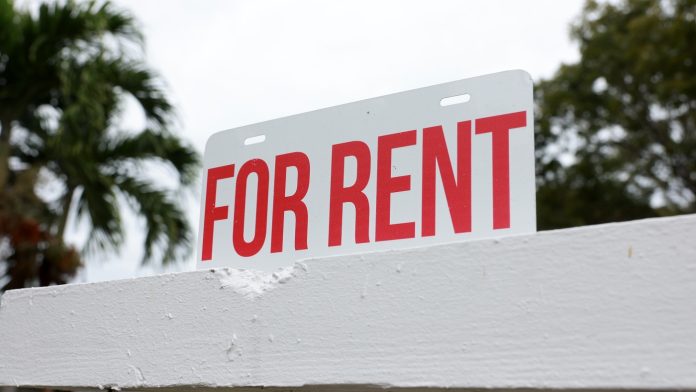
The proposed White House budget calls for cutting Housing and Urban Development rental aid and sending that smaller pot of money to states “to design their own rental assistance programs based on their unique needs and preferences.” The plan also would impose a two-year cap on rental assistance for able-bodied adults.
Joe Raedle/Getty Images
hide caption
toggle caption
Joe Raedle/Getty Images
President Trump has repeatedly promised to “make America affordable again.” But for those Americans most in need, his administration’s latest budget plan would dramatically shrink the federal rental aid that helps keep millions of people housed.
In its request for the Department of Housing and Urban Development (HUD), the White House called the current system of federal rental assistance “dysfunctional” and proposed essentially ending Section 8 and other housing voucher programs. Its plan calls for cutting rental aid by about 40% and sending that money to states “to design their own rental assistance programs based on their unique needs and preferences.”
It would also impose a two-year cap on rental assistance for able-bodied adults, which it said would ensure most federal subsidies went to the elderly and disabled.
The budget does include $25 million in housing grants for young people aging out of foster care.
In a statement, HUD Secretary Scott Turner called the budget request “bold” for reimagining aid programs that have become “too bloated and bureaucratic to efficiently function.”
The proposal comes as nearly half of all renters are considered cost-burdened and as homelessness is at a record high. Advocates say that if millions of poor people barely making ends meet were to suddenly see their rental aid shrink — or even end altogether — it would tip many over the edge.
“We would see, I think, homelessness escalate in a way that has been really unprecedented, and unheard of,” said Kim Johnson, policy manager with the National Low Income Housing Coalition.
Already, federal rental aid falls far short of need. It’s available for only about a quarter of all people eligible for it. “Cutting that really feels like cutting into bone,” said Ann Oliva, CEO of the National Alliance to End Homelessness.
The president’s budget is only a suggestion, since Congress holds authority over spending and will create its own budget. But lawmakers are under pressure to find deep savings to enact Trump’s larger agenda, which includes sweeping tax cuts.
Some congressional Republicans have already targeted healthcare and food aid for next year’s budget, but “I don’t think Congress has the appetite to enact cuts to the housing programs,” says Kevin Corinth, with the conservative American Enterprise Institute. He sees the White House getting a kind of “free pass” to propose more ambitious HUD cuts that likely will not actually happen.
States would get more control over how HUD aid is spent — and more responsibility
While the White House budget blueprint would significantly shrink federal rental aid that helps millions of people, it said states could choose to pitch in with their own funding to make sure the same number of people are covered.
The plan does give states more flexibility on how they can use that smaller pool of money, by sending it in the form of block grants. Welfare funding works this way. Over time, however, many states have diverted much, if not most, of that money to things other than cash aid for poor families.
Housing advocates noted all this would be disruptive not only for tenants, but also for the millions of landlords who receive federal rental aid.
Another part of Trump’s budget calls for shrinking HUD funding for homelessness by 12% and putting a two-year cap on people’s eligibility for aid. It also proposes a fundamental shift in how homelessness funding is allocated that would bypass thousands of local nonprofits and give the money directly to states.
“That is very concerning to us,” said homelessness advocate Oliva. “Homelessness is a very local issue. It happens in people’s neighborhoods, it happens on city blocks and in city streets.”
Oliva said states simply don’t have the infrastructure or expertise to ensure homelessness funding can go to where it’s most effective.
This change would also upend decades of federal policy by moving money away from permanent housing and toward shelters and shorter-term housing.
The impact of HUD cuts would ripple across local communities
Local advocates said the fallout from HUD cuts would affect much more than housing. “We’re talking about a massive impact across communities,” said Jessica Kubicki with the Housing Collective in Connecticut.
For example, people who may no longer be able to afford health insurance would be more likely to seek care in emergency rooms. The need for food aid would increase. And children in school could suffer if their parents were forced to leave their housing and squeeze in with family or friends.
“Because you’ve got maybe three kids sleeping in the same room, in the same bed,” Kubicki said. “They’re not sleeping well. They’re not doing well educationally. They don’t have food.”
The cuts would also come on top of another impending loss of HUD funding. In 2021, as part of the American Rescue Plan Act, the Biden administration funded 70,000 emergency housing vouchers for people without housing or at risk of losing it, and for those fleeing domestic violence.
That money was supposed to last until 2030. But it’s running out faster than expected because of how much rents have spiked in recent years. HUD has told local housing authorities to prepare for emergency voucher funding to end next year — and possibly sooner.
In Connecticut, Kubicki is hoping the state can pick up that extra funding to give emergency voucher holders more time. But deep cuts to HUD’s broader budget would make that even more difficult.
“This is not fixing anything,” she said.”This is making everything so much worse.”
The case for making housing aid less generous
While Corinth of AEI does not believe Congress will slash HUD’s budget, he does think it’s worth asking whether federal housing programs are fair. “It makes sense to get people aid when they need it,” he said, “but we don’t necessarily want them to stay on it forever.”
Many people receive housing subsidies for well over a decade. “If the median or fair market rent is around, say, $4,000 for a family in San Francisco, your income can get really high and you’re still going to be getting those subsidies,” he said.
Corinth also said when there’s such a severe housing shortage like now, federal subsidies can goose the market and push up prices for everyone. He’d prefer to help people through other benefits, like tax credits.
Another way he thinks rental aid is not fair: There’s not nearly enough
to help most people who are eligible for it. “So I think it’s very reasonable to say we should lower amounts, or have some kind of time limits,” he said, “to kind of share around the resources to others.” Corinth suggested a five year time limit.
Housing Secretary Turner has said the agency’s ultimate goal is to “get people off subsidies and live a life of self-sustainability.” On a recent trip to Arkansas, where the prospect of federal budget cuts came up, he said HUD’s job is to “maximize the budget that we do have.”
Layers of cuts could be “destabilizing” for the broader housing economy
Beyond rental aid cuts, the White House budget for HUD would eliminate a program that creates more affordable housing, and another that funds nonprofits to enforce fair housing laws.
Also on the chopping block: community development grants that cities can spend on everything from childcare services to home repair for seniors. The White House said that money has been used for things the federal government should not fund, like a concert plaza and skateboard parks.
Johnson, with the low-income housing coalition, said shrinking HUD funding could undermine the Trump administration’s pledge to build affordable housing on federal lands. “How are you going to build affordable housing if you’re also cutting the programs that make those deals pencil out for developers?” she said.
Advocates worry that HUD funding for disaster recovery could also be disrupted.
“In my own experience, folks who can get out of a disaster shelter on their own do so,” said Oliva, with the homelessness alliance. But those who were already precariously housed or who have disabling conditions, she said, “without additional support, they will end up in the homeless services system.”
The White House proposal to shrink HUD’s antipoverty programs doesn’t come in a vacuum. The administration has already pushed out thousands of agency employees and signaled more staff cuts to come. It’s canceled contracts that support low-income housing, and targeted housing and community development programs at other agencies.
In a recent report on those moves, even before the White House’s budget proposal came out, the National Association of Affordable Housing Lenders warned of far-reaching consequences.
“These disruptions would ripple through the broader economy, reducing construction activity, limiting job creation, and potentially destabilizing housing finance markets that depend on the certainty and liquidity provided by federal programs,” the report said.
Medicaid needs to be ‘preserved,’ says Colorado Rep. Jeff Hurd : NPR
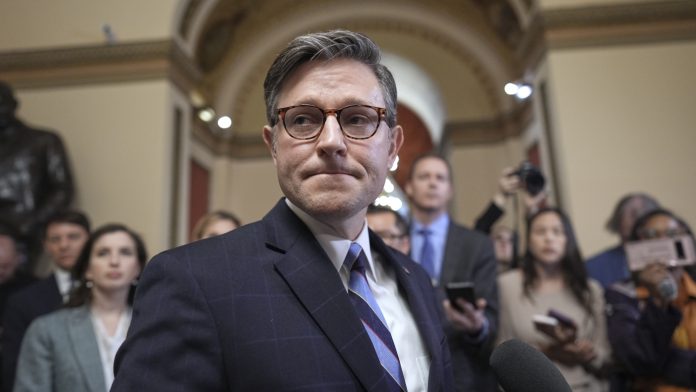
Speaker of the House Mike Johnson, R-La., talks to reporters just after House Republicans narrowly approved their budget framework, at the Capitol in Washington, Thursday, April 10.
J. Scott Applewhite/AP
hide caption
toggle caption
J. Scott Applewhite/AP
As Speaker Mike Johnson and his slim GOP House majority work to pass President Trump’s budget, they’ll have to work around the fact that cuts to Medicaid are unpopular with the public and enough members of their own party to upend the process.
An April poll from KFF found that both Republicans and Democrats say they broadly oppose funding cuts to Social Security, Medicare and Medicaid. About 76% of the public overall opposes major cuts to Medicaid.
But an analysis from the nonpartisan Congressional Budget Office found that if Republicans want to meet their desired savings, they will likely have to make cuts to the social safety net program that provides health insurance to low-income adults and people with disabilities.
The prospect of deep cuts to Medicaid benefits led to 12 House Republicans sending a letter last month telling House Speaker Johnson they would not support a final reconciliation budget bill if it reduces Medicaid coverage for vulnerable populations.

Rep. Jeff Hurd, R-Colo., one of the 12 lawmakers to sign the letter, told Morning Edition that the focus should be on “preserving the original purpose of Medicaid.” He added that the attention should be on children, pregnant women, low-income individuals and seniors.
Colorado Public Radio reports that about a fifth of Colorado’s population relies on Medicaid — with about a third of the population in Hurd’s congressional district being dependent on Medicaid coverage.
Hurd told NPR’s Michel Martin that work requirements and stopping “improper” Medicaid payments are areas where savings could come from.
This interview has been edited for length and clarity.
Interview highlights
Michel Martin: So tell me about your district in Colorado. When you said vulnerable populations, who do you have in mind? Who are you picturing?
Rep. Jeff Hurd: So my district is Colorado’s third congressional district and nearly one-in-three people in that district rely on Medicaid. When I talk about vulnerable populations from my perspective, I’m talking on preserving the original purpose of Medicaid, providing health care for low-income groups, people like children, seniors who are dual enrolled in Medicare, pregnant women, individuals with disabilities, and families who can’t afford private insurance.

Rep. Jeff Hurd, R-Colo., speaks during a news conference at the Republican National Committee after a meeting of the House Republican Conference on Wednesday, Jan. 22.
Tom Williams/CQ-Roll Call, Inc via Getty Images
hide caption
toggle caption
Tom Williams/CQ-Roll Call, Inc via Getty Images
Martin: So the letter you co-signed said you would support what you called “targeted reforms.” Can you just give me, like, one example of something you think makes sense?
Hurd: One example would be re-evaluating the continued federal subsidization of able-bodied working age adults under the Affordable Care Act expansion.
Martin: Would you say more about that? Are you talking about work requirements? That’s something that Walker Johnson supports.
Hurd: Certainly that would be something that I think we should be looking at. We need to protect those. Medicaid was created to serve, but we shouldn’t allow the expansion to crowd out the traditional priorities.
Martin: You know, some people say work requirements are a backdoor way to force people out of the program. You don’t think that’s true?
Hurd: No, I think we should incentivize people who are able to work, to work and to have jobs that allow them to support themselves and not need to rely on assistance from taxpayers. One of the things that I think we might want to look at as well, maybe this is going down the road, but things that would reduce the or eliminate the so-called benefits cliff, where an individual gets a job and starts working and then all of a sudden they lose their Medicaid benefits. It creates sometimes perverse incentives. That’s one of the structural reforms that I think maybe down the road we need to be looking at as well to make sure that we’re incentivizing people who are able to work and not need to rely on Medicaid.

Martin: Isn’t that the issue, though, that some people who earn so little and they work in jobs where they don’t have access to health care? I mean, think about somebody who might work at a gas station, for example, and yet if they get sick, then they become reliant on public funds like. So what’s the answer to that?
Hurd: Well, I think we can account for that. We can account for the people that are having extenuating circumstances and who are trying to work, who have been working. We can distinguish between those individuals and those individuals who aren’t doing that and who are taking away the funds and resources from people that need it the most. Those vulnerable populations that I mentioned before, I think there’s a way that we can find the right balance.
Martin: So the same letter says you support cutting administrative red tape. This is something that’s confusing to me, right? Every few years you hear about these overbilling scandals or somebody’s getting paid for care that doesn’t exist. Right? Like every few years, there’s some scandal like this, for example, some you know, some agency that is supplying, say, home care workers. And it turns out that these people don’t exist. So to try to forestall that, they lay on more paperwork. And then everybody who deals with health insurance has this maddening experience of dealing with more and more paperwork. And then we complain about red tape. Why can’t we get that balance right?
Hurd: I saw the Medicaid application packet when I was visiting my district last week and it is frustrating. It can be difficult to navigate. That said, the Government Accounting Office suspects that they’re about $50 billion each year in improper Medicaid payments. There has to be a better way to look at this. We need to find the right reforms in the right ways to make sure that we’re spending these dollars correctly and to incentivize individuals that are trying to get through this process – who are doing so in good faith and they’re the core populations that we’re trying to support the most – that they have the ability to do so. There’s a way to do it. We can do it better, and that’s one of the things we should be working on.
Martin: So Medicaid accounts for about 10% of the federal budget. It’s a big number. If it’s important to you, as it is important to others to preserve access to this program, where do the savings come from?
Hurd: Well, I think it’s from the one of the things that we talked about just now, possibly work requirements, eliminating improper payments. I think there’s also some possible reforms that we can make to things like the so-called Section 1115 waivers that fund non-health care services like housing stipends or nutrition benefits or transportation costs. Housing and food are important, but we already have programs for that. I think Medicaid should be focused on health care. So that’s another example of ways that I think we can realize more effective spending within the system that we have. If you talk to folks in rural Colorado, they will tell you that Medicaid is already under a significant amount of stress. I think that we can deliver these dollars in a more effective way. The answer isn’t always just spending more money, it’s spending it more effectively. And I think that’s what we as Republicans need to be doing, and that’s what I’m focused on from my perspective.

Martin: It is unusual sort of in the current environment for Republicans to organize and make sort of a public statement about a specific policy issue. Can you just tell me a little bit about why you and the others, lawmakers who signed this letter felt it was important to make a public statement like this?
Hurd: Well, I think it’s important to let the folks back home that I represent know that this is an issue that’s important to me and that we are part of the Republican coalition that is working together to advance the president’s priorities, the priorities we ran on as Republicans, but make sure that we do so responsibly in a way that protects the most vulnerable in our districts. And so that was the animating spirit behind my writing that letter. I’m also not on the committee that’s writing the actual legislation with respect to Medicaid. And so it was important for me and some of the others on that letter to make sure that the folks writing the legislation know what our priorities are as part of that Republican coalition.
Trump again threatens Harvard’s tax-exempt status : NPR
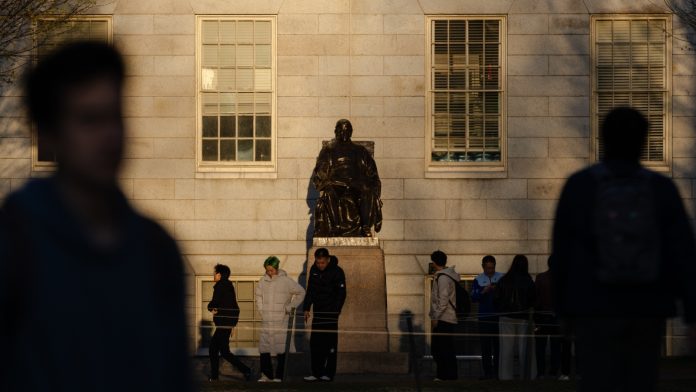
People gather to take photos with the John Harvard statue at Harvard University. President Trump made another threat to Harvard’s tax-exempt status in a social media post on Friday.
Sophie Park/Getty Images
hide caption
toggle caption
Sophie Park/Getty Images
On Friday, President Trump again threatened to revoke Harvard University’s tax-exempt status.
“We are going to be taking away Harvard’s Tax Exempt Status. It’s what they deserve!” Trump wrote in a Truth Social post.
His comments marked the latest volley in a battle between the Trump administration and the wealthiest college in the world.

Trump first suggested revoking the school’s nonprofit tax status in April, when he wrote on Truth Social: “Perhaps Harvard should lose its Tax Exempt Status and be Taxed as a Political Entity if it keeps pushing political, ideological, and terrorist inspired/supporting ‘Sickness?’ “
The administration claims the university has failed to protect Jewish students on campus and had sent Harvard a list of demands it said must be met, or the university would risk losing some $9 billion in federal funding. Harvard’s president rejected the administration’s demands, saying they were illegal and an intolerable attempt to dictate “what private universities can teach, whom they can admit and hire, and which areas of study and inquiry they can pursue.” In response, the government froze more than $2.2 billion in federal funding.

Nearly all colleges and universities are tax-exempt organizations. They are given nonprofit status along with charities, religious institutions and some political organizations.
That’s part of the reason some elite, U.S. institutions have been able to amass huge endowments. Harvard has the largest, at more than $50 billion.

Republicans have long sought to curb the tax exemptions in higher education. In 2017, Congress passed a 1.4% tax on university endowments, which impacted many of the nation’s elite institutions. The president doesn’t have the power to revoke an organization’s tax status, but he can ask the Internal Revenue Service to do it.
Harvard has sued the Trump administration, claiming the government’s actions violate the First Amendment and don’t follow proper procedure. The expedited trial will begin this summer.
New law firm to defend targets of Trump investigations : NPR
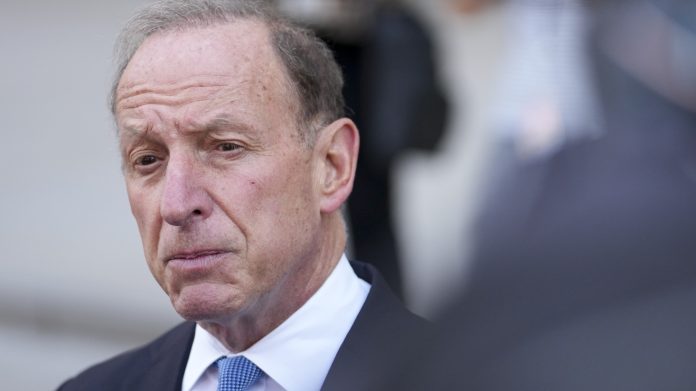
Abbe Lowell, who represented Hunter Biden, makes a statement in September 2024 in Los Angeles.
Eric Thayer/AP
hide caption
toggle caption
Eric Thayer/AP
Over nearly 40 years of legal practice, Abbe Lowell has seen a lot.
He’s represented the son of former President Joe Biden and the son-in-law of President Trump. He’s defended members of Congress from both major political parties and super lobbyists.
Now, Lowell is doing something new: he’s starting his own small law firm, Lowell & Associates.
“Our first and foremost obligation will always be to zealously represent an individual client,” Lowell said. “But by zealously representing an individual client, if we can be a force to strengthen the overall rule of law, that’s what it’s about.”

The creation of the firm comes as the legal profession has been in the crosshairs of Trump’s bevy of executive actions in his first three months in office. Trump has targeted individual law firms with executive orders that they view as retribution, while federal judges who have ruled against the Trump administration have been confronting a wave of threats.
Lately, some of the individuals Lowell represents have also drawn the ire of the current president.
That list includes New York’s Democratic Attorney General Letitia James, who led a civil fraud investigation into Trump and the Trump Organization; former Trump administration staffer Miles Taylor, who wrote a tell-all book about it; and lawyer Mark Zaid, who represents whistleblowers.

“We are not a partisan firm,” Lowell said. “We are not trying to make a political statement. What we’re trying to do is respond to the moment, which is very different than it’s been.”
One difference is the attention on law firms. Trump has said these firms are abusing the legal system and pursuing baseless partisan attacks.
Some of those firms are fighting his orders in court. Many others are striking deals with the White House.
The president talked about some of those deals an in interview with ABC News this week.
“These are the most powerful firms in the world,” Trump said. “And they just signed whatever I put in front of ’em. I’ve never seen anything like it. I’m — I’m actually surprised myself in a certain way.”
The settlements have been controversial, including among young lawyers. Two of them — Rachel Cohen and Brenna Trout Frey — used to work at the Skadden firm.
But they resigned recently, as Skadden agreed to do $100 million of pro bono work with Trump in March.
Now, Lowell said, they’re joining his new law firm.
Trump sending national security adviser Mike Waltz to the UN in White House shakeup
Mike Waltz is out as national security adviser in the first big shakeup in White House staff since Trump started his second term. Trump will nominate Waltz to serve as ambassador to the UN.
Trump is proposing Congress cut $163 billion in non-defense spending next year : NPR
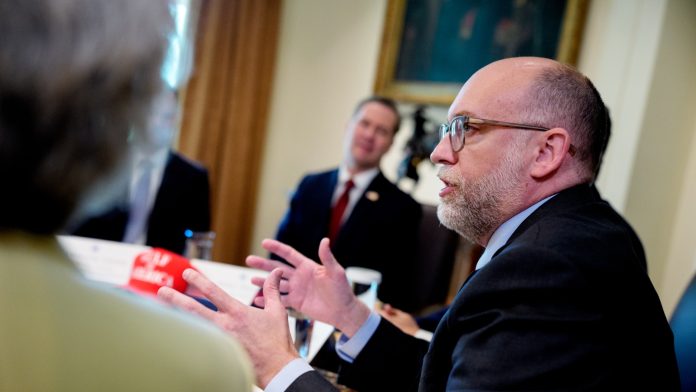
Office of Management and Budget Director Russ Vought speaks during a Cabinet meeting at the White House on April 30, 2025.
Andrew Harnik/Getty Images
hide caption
toggle caption
Andrew Harnik/Getty Images
President Trump is set to propose $163 billion in cuts to non-defense discretionary spending for the 2026 fiscal year in what’s known as a “skinny budget” later on Friday.
Those cuts are for spending that Congress authorizes each year — which does not include spending on safety nets like Medicare, Medicaid and Social Security.
The cuts, first reported by the Wall Street Journal, represent a 22.6% cut in projected spending for the current fiscal year. They were confirmed by a spokesperson for the White House Office of Management and Budget who was not authorized to speak publicly ahead of the release of the budget proposal.
The “skinny budget” is a summary of budget proposals that presidents often release in their first term, followed later on by the traditional full budget books that include all spending and revenue projections.
This is a developing story that will be updated.
Rep. Jeff Hurd discusses movement by some Republicans to reject deep Medicaid cuts
NPR’s Michel Martin speaks with Rep. Jeff Hurd, R-Colo., about a movement by some Republican lawmakers to reject deep cuts to Medicaid, the low-income federal health insurance program.