Friday, November 13, 2026
Home Blog Page 194

‘Terrorist’ Attack at Market in France Leaves One Dead

0

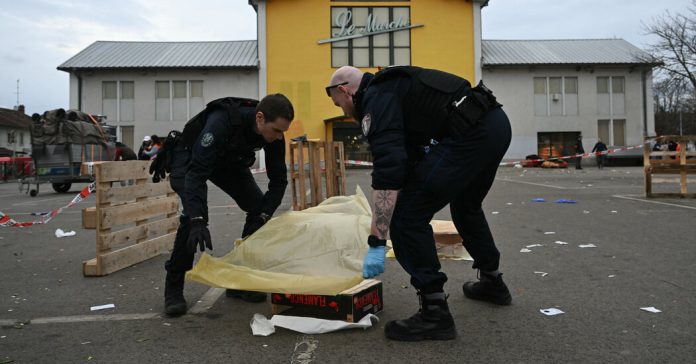
A man went on a stabbing rampage in a small city in France on Saturday, killing one person and injuring several more in what President Emmanuel Macron called “an Islamist terrorist attack.”

“It was a terrorist attack, there’s no doubt — an Islamist terrorist attack,” he said, adding that the government was determined “to root out terrorism in our country.” The police said they were investigating the stabbing as a terrorist attack.

The man targeted a market in Mulhouse, a city about 70 miles south of Strasbourg, near France’s borders with Germany and Switzerland.

As he began his attack, the 37-year-old was heard shouting, “Allahu akbar,” according to France’s antiterrorism police. The Arabic phrase, meaning “God is great,” is an everyday expression used in religious and nonreligious settings alike, but has also become a war cry in some terrorist attacks by Islamic fundamentalists.

A civilian who tried to stop the man was killed, the police said. Three police officers were also injured in the attack, two of them seriously.

The man, who was arrested at the scene, has not been identified by name, but was on France’s terrorist watch list, Nicolas Heitz, Mulhouse’s prosecutor, told French media. He was registered on a list of persons the government is monitoring for potential radicalization who by law are obligated to leave French territory after the authorities have rejected their residence or asylum applications, according to Mr. Heitz.

“Horror has just swept over our city,” Michèle Lutz, Mulhouse’s mayor said in a post on Facebook.

‘Terrorist’ Attack at Market in France Leaves One Dead

0

A man went on a stabbing rampage in a small city in France on Saturday, killing one person and injuring several more in what President Emmanuel Macron called “an Islamist terrorist attack.”

“It was a terrorist attack, there’s no doubt — an Islamist terrorist attack,” he said, adding that the government was determined “to root out terrorism in our country.” The police said they were investigating the stabbing a terrorist attack.

The man targeted a market in Mulhouse, a city about 70 miles south of Strasbourg, near France’s borders with Germany and Switzerland.

As he began his attack, the 37-year-old was heard shouting, “Allahu akbar,” according to France’s antiterrorism police. The Arabic phrase, meaning “God is great,” is an everyday expression used in religious and nonreligious settings alike, but has also become a war cry in some terrorist attacks by Islamic fundamentalists.

A civilian who tried to stop the man was killed, the police said. Three police officers were also injured in the attack, two of them seriously.

The man, who was arrested at the scene, has not been identified by name, but was on France’s terrorist watch list, Nicolas Heitz, Mulhouse’s prosecutor, told French media. He was registered on a list of persons the government is monitoring for potential radicalization who by law are obligated to leave French territory after the authorities have rejected their residence or asylum applications, according to Mr. Heitz.

“Horror has just swept over our city,” Michèle Lutz, Mulhouse’s mayor said in a post on Facebook.

As Conflict Rages in Congo, President Offers U.S. Minerals Deal

0

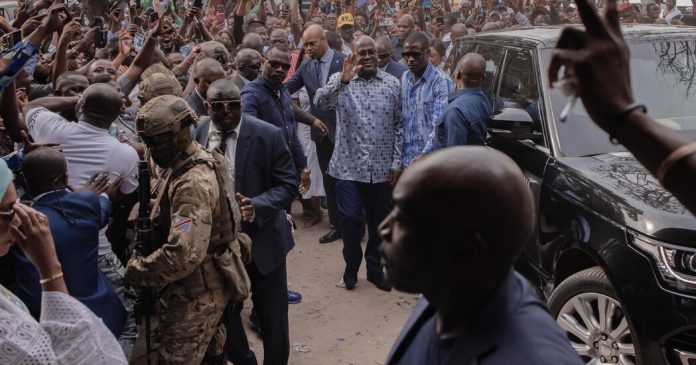
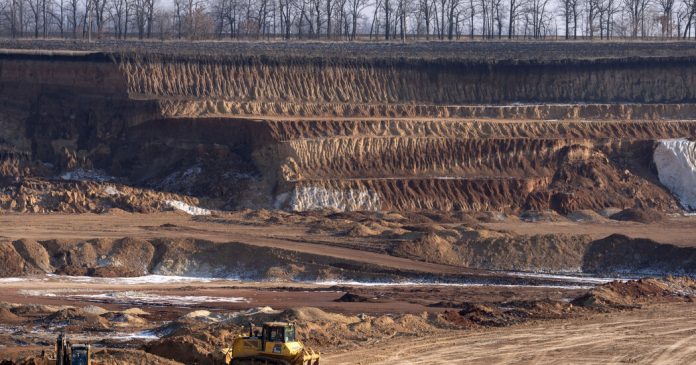
In his first interview since an armed group backed by Rwanda seized swaths of his country’s territory this year, Felix Tshisekedi, the president of the Democratic Republic of Congo, offered the United States and Europe a stake in his country’s vast mineral wealth, a sector currently dominated by China.

Congo is considered to be among the world’s wealthiest country in terms of natural resources. It provides much of the world’s coltan, which is used to power smartphones and computers. It also holds more than half the world’s cobalt reserves, used in electric vehicles.

Mr. Tshisekedi seemed eager to capitalize on this as he tries to manage a conflict he says is similar to Russia’s invasion of Ukraine. Mr. Tshisekedi has pinned his hopes on Western pressure against Rwanda, calculating that major investments in Congo — including a possible minerals deal — would bring his country much more security and stability.

China currently has far greater access to Congo’s mineral wealth than the United States, while the European Union has negotiated with Rwanda, agreeing to give it about $935 million in return for access to minerals like tin, tungsten and gold.

Mr. Tshisekedi said those minerals are plundered by Rwanda from his country, and called Europe’s deal “an absolute scandal,” accusing the European Union of being “complicit in the theft and looting of Congo.”

The European Union has argued that the deal will lead to increased regulation and greater cooperation in the fight against conflict materials. Last week, the European Parliament called for the deal to be suspended until Rwanda ceased all interference in Congo, “including exporting minerals mined from M23-controlled areas.”

Competition over Congo’s riches has long kept its population among the world’s poorest, and the weakness of its army has kept it vulnerable to outsiders.

An armed group called M23 began its lightning offensive in eastern Congo earlier this year. The group is made up of roughly 8,000 men that the United States and the United Nations say are directed and funded by Rwanda.

M23 has killed thousands of Congolese soldiers and civilians since January, capturing two key airports and two major eastern cities, Goma and Bukavu. It is currently marching toward a third.

On Thursday, the United States announced sanctions on an M23 spokesman and a Rwandan government minister for links to the violence in eastern Congo.

A thousand miles to the west in Kinshasa, Congo’s capital, Mr. Tshisekedi has been running out of options. Speaking over video call from his wood-paneled office, he said he had skipped recent peace talks on the conflict because Rwanda has insisted he speak directly to M23.

“I don’t want to negotiate with M23,” he said. “M23 is an empty shell.”

Mr. Tshisekedi accuses Rwanda of trying to disguise M23 as a Congolese armed movement, saying it is really a creation of the Rwandan military meant to defend Rwandan interests in Congo, including plundering minerals. “We’d rather talk to Rwanda,” he said.

Paul Kagame, the president of Rwanda, has denied funding or directing M23. In response to a request for comment, a spokeswoman for Mr. Kagame wrote that Mr. Tshisekedi was promoting a “tired story,” and encouraged him to “follow the road map African regional leaders have decided.”

Those regional efforts to resolve the crisis have floundered, and Mr. Kagame has also refused to attend recent peace talks. Calls by the African Union for a cease-fire have so far gone unheeded.

But the crisis is at a pivotal moment. In its sanctions announcement on Thursday, the United States warned of the prospect of a wider regional war.

This week, M23 attacked all the main Congolese military positions on the road to Butembo, a city north of Goma, according to local reports. M23 has also said it has its sights on Kinshasa. Mr. Tshisekedi has vowed to retake Goma from M23 “either through dialogue or military reconquest.”

The Trump administration has already shown interest in a deal that could ensure a stream of strategic minerals directly from Congo, Mr. Tshisekedi said. He also touted investments in major Congolese projects including a mega dam that, if completed, would be the world’s largest hydroelectric plant.

At the same time, Rwanda has cultivated relationships with Western powers — hosting major sporting events and concerts with celebrities like Kendrick Lamar — making more aggressive sanctions from the West unlikely to come quickly, analysts say.

“Leaders need to be braver,” Mr. Tshisekedi said. “It seems to me everyone’s afraid of Kagame. Why? That surprises me.”

M23 claims its mission is to protect one of Congo’s ethnic minorities.

Thirty years ago, about 800,000 civilians, mostly Tutsis, were slaughtered in Rwanda by members of the Hutu majority. After the genocide, many of the Hutus in Rwanda fled into Congo to avoid facing justice. M23 claims the Tshisekedi government is failing to protect Congolese Tutsi, known in Congo as Banyamulenge, from discrimination.

Mr. Tshisekedi has denied this. “That’s not true,” he said in the interview. “I am the first president of this country to have said loud and clear to all my compatriots that the Banyamulenge, or Congolese Kinyarwanda-speaking Tutsi, all are indeed Congolese.”

Mr. Kagame says the conflict in eastern Congo must be resolved between Congolese leaders and the rebels. He has acknowledged that Rwandan troops are present in Congo, but denies supporting M23. Fighters hostile to Rwanda in eastern Congo pose a national security risk for his country, Mr. Kagame has said.

Mr. Tshisekedi said in the interview that this was a false pretext to justify invasion. “In reality, they’re plundering Congo’s natural resources,” he said, calling Mr. Kagame a “warlord” with a “mania to be the apex predator.” According to the United Nations, M23 already controls much of Congo’s coltan.

So far, the United States has issued condemnations of Rwanda but taken little action. On Jan. 30, President Trump called the fighting in eastern Congo “a very serious problem” but declined to say more.

Experts said the sanctions announced on Thursday were a significant symbolic step — particularly those against James Kabarebe, one of Mr. Kagame’s oldest loyalists, who helped a previous incarnation of Rwanda-backed rebels seize Kinshasa in 1997.

But, analysts say, the United States could go much further, for instance by pushing the World Bank to cut Rwanda’s funding, much of which is provided by the U.S. government, and by reviewing Rwanda’s lucrative role as a supplier of troops to peacekeeping missions.

On Friday, the U.N. Security Council unanimously adopted a draft resolution that called for the withdrawal of Rwandan troops in Congo and an end to the M23 offensive.

“The only language Kagame understands is force,” Mr. Tshisekedi said. “Diplomacy is not in his DNA.”

Pope Francis Put Church Above His Health, Vatican Observers Say

0

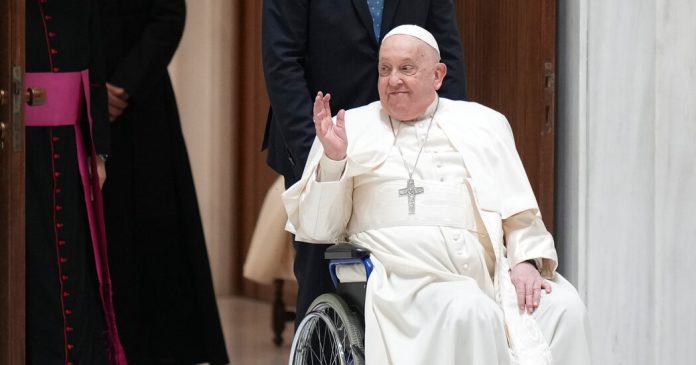
In the days after the Vatican announced on Feb. 6 that Pope Francis had bronchitis and would be restricting his activities to his residence, he proceeded to hold multiple private audiences a day with groups of nuns, pilgrims and leaders of foundations.

On Feb. 9, he presided over an outdoor Mass in St. Peter’s Square, where the wind was so strong that it blew his white zucchetto off his head. He could not finish his homily, passing it to an aide and saying, “I have trouble breathing.”

Three days later, at his weekly Wednesday audience, the ailing pope had an aide read his speech. But then he shook hands with dozens of prelates, many leaning over to whisper greetings, and took photos with Spanish faithful, Milanese military recruits and nuns from Mother Teresa’s order.

Two days after that, Francis was rushed to the hospital, with what doctors said was a complex medical condition that evolved into pneumonia in both his lungs.

Many who know him said in interviews that Francis, driven by a sense of mission and a discipline born of his early training, essentially worked himself into the hospital.

He is now bedridden after weeks of ceremonies and audiences — both private and public — that only intensified with the start in December of the 2025 Jubilee, a year of faith, penance and forgiveness of sins that takes place only every quarter century.

But the pope’s grueling schedule — which would exhaust anyone, let alone an 88-year-old with a series of health issues — is in keeping with Francis’ personality and with his vision of the papacy, say doctors, biographers and Vatican observers.

“The pope cares a lot about the Church, so it’s clear he put the Church first,” Dr. Luigi Carbone, the pope’s personal physician at the Vatican, told reporters at a briefing at the hospital on Friday.

Dr. Sergio Alfieri, another one of the pope’s doctors, added that “he doesn’t hold back because he is enormously generous, so he tired himself out.”

Francis became pope late in life — he was 76 — and was determined to make the most of it because he suspected that, relatively speaking, he would not hold the position for long. A year into his papacy, he told reporters that he thought he would be pope for two or three years, then “off to the house of the Father.”

That prediction was clearly wrong. Instead, he established a schedule — waking up before 5 and at his desk by 6 to tackle a full day of work — that Nelson Castro, the author of the book “The Health of Popes,” called “crazy.” Just last September, Francis took the longest and most complicated trip of his tenure: an 11-day, four-country tour in the Asia-Pacific region.

“For Francis, it’s all or nothing,” said Austen Ivereigh, a Catholic commentator and papal biographer. In Francis’ view, it was “an essential dimension of the papacy” that people had constant access to him, and there was no time to be inaccessible for health reasons.

“His primary concern isn’t to extend his life, his primary concern is to exercise the papal ministry in the way that he believes it must be exercised, which is all in, 100 percent,” Mr. Ivereigh said.

“He has a crazy agenda,” said another biographer, the Argentine journalist, Elisabetta Piqué. Alongside his official morning schedule, he has a parallel, equally full agenda for the afternoon. “He always says, I’ll have time to rest in the next world,” she said.

Francis had a deep-seated sense of duty that was instilled in him by the boarding school he attended as a child, run by the Salesian religious congregation, and later by the Jesuit order which he joined in 1958, said Fabio Marchese Ragona, another biographer.

He said that Francis had told him that he had joined the Jesuits “above all for the discipline,” and that keeping commitments was drilled into him — as was arriving early for appointments.

Carlo Musso, who worked with Francis on “Hope,” an autobiography that was published last month, noted: “The word he used most, the exhortation I remember best, is ‘forward.’ Even when he was looking back, it was so he could move forward.”

People who know Francis say that he is resistant to taking a break, even when he should because of sciatica, a bad knee or recurrent bronchial woes. As a young man, he had the upper lobe of his right lung removed, and he has suffered bouts of influenza and bronchitis during the winter months.

“He’s so obstinate; he’s a testardo,” said Dr. Castro, using the Italian word for stubborn. And the pope has admitted to being “a very difficult patient,” he added.

The pope once told him that he liked to keep his distance from doctors, Dr. Castro said, “meaning that he wants to make the decisions” about what he can and cannot do.

Mr. Ivereigh said that Francis had admitted that one of his “big faults” was obstinacy. “He’s very strong willed and doesn’t readily listen to suggestions that he cut things back,” he said.

Mr. Musso pointed out that a few hours before he was taken to hospital, Francis held audiences with the prime minister of the Slovak Republic, the president of CNN and representatives of a charity that works in Puerto Rico. “He has an enormous capacity for work,” he said.

The pope does not go away for summer vacations, Mr. Musso added. That habit, said Ms. Piqué, is a source of chagrin for many Vatican employees. His last real vacation was in 1975, Francis himself said in his autobiography “Hope.”

John Paul II and Pope Benedict XVI summered at the papal residence in Castel Gandolfo, though the former also opted for mountain stays in northern Italy.

Francesco Antonio Grana, a Vatican reporter for the Rome daily newspaper Il Fatto Quotidiano, said it did not help that Francis surrounded himself with “yes men” who indulged the pope.

“This hospitalization could have been avoided” had someone put the brakes on the pope’s schedule, Mr. Grana said.

“I prefer a live pope than a pope who died because he kept one more commitment on his agenda,” he added. “With Donald Trump in the White House, the world needs a live and combative pope.”

The same week that he went into the hospital, Francis wrote an open letter to bishops in the United States criticizing President Trump’s policy of mass deportations of immigrants, and he has stood up to Mr. Trump on issues like climate change.

Francis’ workload was not only arduous but also brought him into contact with hundreds of people who could potentially transmit diseases, said Massimo Andreoni, professor emeritus of infectious diseases at the University of Rome Tor Vergata. “So perhaps he should be more careful when he has a cold or bronchitis and maybe slow down a little and look after himself a little more,” he added.

There are a few signs that the pope may be ready to slow down.

Francis was visited in the hospital on Wednesday by Prime Minister Giorgia Meloni of Italy. Reporting on the meeting, the Milan daily newspaper Corriere della Sera wrote that Francis complained to the prime minister: “The doctors said I have to take some time off” and that “I have to be careful with my health, otherwise I go straight to heaven.”

At a news briefing on Friday, Francis’ doctors made clear they would keep him at the hospital as long as he needed treatment that he could only receive there, rather than bring him home to his residence in Casa Santa Marta.

“We think it’s prudent,” said Dr. Alfieri. “If we brought him to Santa Marta, he’d start working like before, we know this.”

On the Ropes, Olaf Scholz Keeps Punching

0

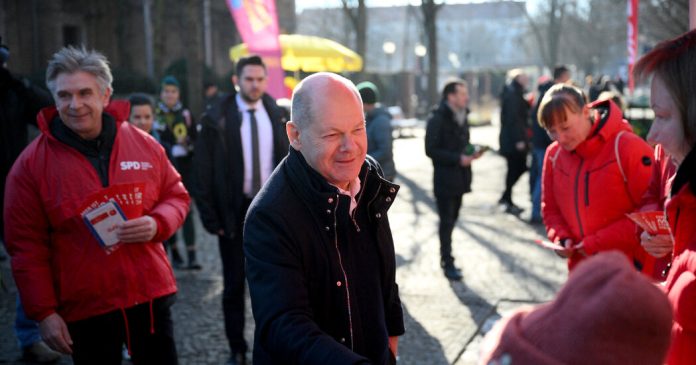
A month ago, no one would have ever mistaken Germany’s often taciturn chancellor for an aggressive political campaigner. But prowling the stage in a dark suit and open shirt with a microphone in hand, Olaf Scholz certainly looked like one on Friday night.

At a nearly euphoric rally for someone trailing in the polls, Mr. Scholz spoke for 50 minutes before supporters in Dortmund, one of only two German cities where his center-left Social Democrats are projected to win the majority.

He trumpeted his government’s achievements, like raising the minimum wage and bridging the loss of Russian gas after the invasion in Ukraine. He told the crowd he could still win. And he took a swipe at President Trump.

“If you translate what ‘transactional’ means specifically,” Mr. Scholz said, alighting on a word often used to describe the American president’s approach to politics, “it means I only think of myself and I only do what benefits me.”

Nearly 2,000 Social Democrats jumped to their feet and cheered. “I thought he was in good fighting form,” said Elisabeth Schnieder, 69, who joined Mr. Scholz Social Democrats, or S.P.D., after she retired from her job as a senior care aide.

“I just wish he had shown that side earlier.”

The Friday rally was Mr. Scholz’s last of the campaign ahead of Sunday’s vote. It was also possibly the last of his career.

Mr. Scholz, 66, has been relentlessly optimistic (some might call it unrealistic) in a race that would have seemed hopeless to anyone else. That is because he was the only one who believed he could win in 2021, when his party was stuck at 14 percent before catching up in a few short months to win. That success seems to have inured him against the realities of the polls.

At the same time, Mr. Scholz has clearly relaxed in the final weeks of the campaign. Instead of standing rigidly behind his lecterns at recent televised debates, he leaned against them from the side, in a pose more befitting a 1950s-era Hollywood Cowboy movie than German politics.

It does not seem to have done the job. According to opinion polls, Mr. Scholz’s party is expected to come in with half the support of the conservative Christian Democrats of Friedrich Merz, and also behind the far-right Alternative for Germany.

Sunday’s election was scheduled seven months early because the government Mr. Scholz led collapsed in November. His tenure will likely be cut short by a sluggish economy, a shrinking export market and inane political infighting between the three parties that made up Mr. Scholz’s “future coalition.”

Even some of Mr. Scholz’s biggest supporters were not acting this week like he had a chance to win. The Social Democrats are Germany’s oldest party and have long partnered with organized labor. But this week, one of Germany’s biggest unions called a two-day nationwide public transit strike, ending just over a day before polls open.

Behind all of his bluster, Mr. Scholz and the people around him know that he has in all likelihood lost the chancellorship. His party’s best — and most likely — scenario is a grand coalition, in which the Social Democrats would play a junior partner to the conservative Christian Democrats.

It may spell the end of Mr. Scholz’s political career, but it would put the party in the familiar role of ensuring Germany’s generous social benefits stay intact, even under a conservative-led government.

“It’s the only way we can stop the C.D.U. from rolling back some of the progress,” said Christian Ratschinski, 43, who has been both a machinist and a union member for more than two decades.

Mr. Scholz seemed to hint that such political coexistence was possible, in an unusually friendly debate exchange on Wednesday with Mr. Merz, the man likely to replace him as chancellor.

Asked if he would consider getting on an aircraft flown by Mr. Merz, who is a private pilot and owns a twin-engine plane, Mr. Scholz grinned and nodded. “I’m assuming he has his pilot’s license for a reason,” he said

Mr. Merz’s response came quickly.

“Now you’ll ask me,” Mr. Merz said, “whether I would take him along for a ride.”

U.S. Pressing Tough Demands in Revised Deal for Ukraine’s Minerals

0

Ukraine on Saturday was seriously considering a revised American proposal for its vast natural resources that contains virtually the same provisions that Kyiv previously rejected as too onerous, according to a draft document of the new proposal.

Some of the terms appear even tougher than in a previous draft.

Though Ukraine had not finalized the deal as of Saturday afternoon, its assent to the terms would represent a capitulation to American demands after a week of intense pressure from President Trump. The American president views access to Ukraine’s vast mineral wealth as necessary repayment for the billions the United States has provided Kyiv for its war against Russia.

The deal could strip Ukraine of funds that are now mostly invested in the country’s military and defense industry, and that could help rebuild the country once the war is over.

The terms of the new proposal, which is dated Feb. 21 and was reviewed by The New York Times, call for Ukraine to relinquish half of its revenues from natural resources, including minerals, gas and oil, as well as earnings from ports and other infrastructure.

A similar demand was made in a previous version of the deal, dated Feb. 14 and reviewed by The Times. Four current and former Ukrainian officials and a Ukrainian businessman who had the terms of the new proposal described to them confirmed that the demand remained unchanged.

Ukraine had been floating the prospect of a partnership with the United States on its valuable natural resources as a way to persuade Mr. Trump to provide additional support for its war effort as well as guarantees against future Russian aggression if a peace deal is struck.

The new document provides neither. In particular, President Volodymyr Zelensky had been seeking security guarantees for Ukraine, a condition that was absent in the first draft agreement presented to him last week, prompting him to decline to sign the deal.

The new document states that the revenues will be directed to a fund in which the United States holds 100 percent financial interest, and that Ukraine should contribute to the fund until it reaches $500 billion — the amount Mr. Trump has demanded from the war-torn country in exchange for American aid.

That sum, more than twice Ukraine’s economic output before the war, was not mentioned in the previous version of the deal. It is unclear whether Mr. Trump is requesting that sum in exchange for past American military and financial assistance, or whether it would also apply to future support.

The revised proposal states that the United States could reinvest a portion of the revenue into Ukraine’s postwar reconstruction, including by investing in the development of the country’s subsoil assets and infrastructure.

The new draft agreement also includes provisions for revenues from territories currently occupied by Russia, in the event they were freed: The share of resource revenues contributed to the fund from liberated areas would be 66 percent. Russia currently occupies about a fifth of Ukraine’s territory, including significant portions of the resource-rich Donbas region.

The deal could potentially be finalized before the end of the day on Saturday, but it could also be delayed, given Mr. Zelensky’s previous opposition to its terms.

Keith Kellogg, Mr. Trump’s special envoy to Ukraine and Russia, visited Kyiv from Wednesday to Friday and discussed the new proposal with Mr. Zelensky.

A potential deal for Ukraine’s resources has been a major point of dispute in a rapidly deteriorating relationship between Mr. Zelensky and Mr. Trump. Their interactions became acrimonious in the last week as the American president assailed Mr. Zelensky in highly personal terms, calling him “an unelected dictator.”

The Ukrainian president, in turn, said that Mr. Trump was living in a “disinformation web” after Mr. Trump falsely claimed that Ukraine had started the war against Russia.

Two of the people who had the new proposal described to them said that one of the few changes made by the United States that could satisfy Ukraine was the removal of a clause placing the deal under the jurisdiction of a New York court. The provision had raised concerns on the Ukrainian side, because it could weaken Ukraine’s legal standing in case of a dispute.

The United States has allocated $119 billion for aid to Ukraine, according to the Kiel Institute for the World Economy, a research organization in Germany.

The Trump administration has suggested that the mere presence of American economic interests in Ukraine would be a security guarantee for Kyiv. Top U.S. cabinet members have pressed Mr. Zelensky to sign the deal in recent days.

“President Zelensky is going to sign that deal, and you will see that in the very short term,” the U.S. national security adviser, Mike Waltz, said on Friday. “And that is good for Ukraine. What better could you have for Ukraine than to be in an economic partnership with the United States?”

NIH funding freeze stalls $1.5 billion in medical research grant funding : Shots

0

Funding is stalled for National Institutes of Health research grants.

J. Scott Applewhite/AP


hide caption

toggle caption

J. Scott Applewhite/AP

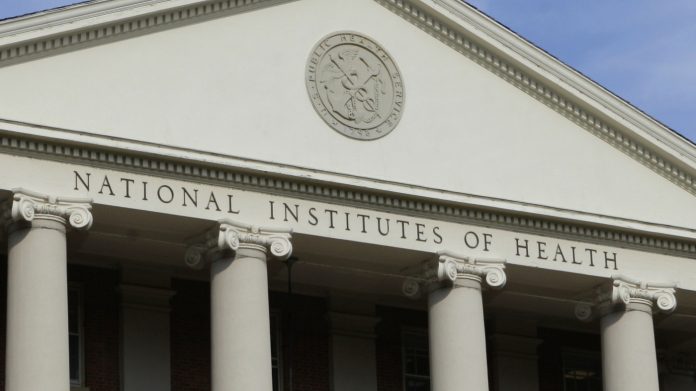
The National Institutes of Health has stopped considering new grant applications, delaying decisions about how to spend millions of dollars on research into diseases ranging from heart disease and cancer to Alzheimer’s and allergies.

The freeze occurred because the Trump administration has blocked the NIH from posting any new notices in the Federal Register, which is required before many federal meetings can be held.

While that may seem arcane, the stoppage forced the agency to cancel meetings to review thousands of grant applications, according to two people familiar with the situation, one of whom was not authorized to speak publicly and the other who feared retribution.

Already, the meeting freeze has stalled about 16,000 grant applications vying for around $1.5 billion in NIH funding, one of the people who is familiar with the grant-making process said.

Officials at the NIH hope to get the freeze on Federal Register notices lifted soon to avoid a severe funding disruption. With an annual budget of nearly $48 billion, the NIH is the largest public funder of biomedical research in the world.

All requests for NIH grants go through an intensive review process. Each year there are about 2,600 meetings involving some 28,000 scientists, doctors, administrators and other expert reviewers. Their decisions keep the NIH funding flowing to more than 300,000 researchers at more than 2,500 universities, medical schools and other institutions.

But because of the freeze, “applications will come in and basically they go into a black hole and nothing can be done with them,” said the person familiar with the NIH grant-making process. “That is where we are now.”

Some members of those committees, including key gatherings known as “study sections,” expressed frustration.

“Today, I was meant to be serving on one of the many cancelled National Institutes of Health study sections,” Annika Barber, assistant professor of molecular biology and biochemistry at Rutgers University, said during a briefing Thursday protesting the disruption of biomedical research funding. “And instead of providing feedback on critical biomedical research for federal funding, I’m here to explain what America is losing when we lose basic science research.”

Some outside observers defended the situation.

“A temporary pause in publicizing or funding new grants in order to review them is typical for a new administration,” Judge Glock, director of research and a senior fellow at the Manhattan Institute, a conservative think tank, wrote in an email to NPR.

Soon after Trump was inaugurated, the federal government froze all grants, including NIH grants. But that freeze was temporarily blocked by a federal judge.

Some researchers suspect the NIH’s Federal Register freeze is an attempt to circumvent that ruling.

Other observers dispute that interpretation.

“I do not think this pause is an end run around the court order blocking the earlier, more general funding freeze, because that freeze dealt with many different programs, including some that the executive did not have the power to delay,” Glock said. “If the Trump administration continued such a pause on Federal Register notices indefinitely, then there would be a good argument that that was an impoundment that could also be stopped by a court, but a temporary pause on Federal Register notices seems like a more typical chance for review.”

Even some of the NIH’s biggest supporters believe the agency could benefit from changes, such as making the grant-making process more transparent. But some observers say the Trump administration’s approach so far has been indiscriminate and counterproductive.

“I think they are systematically dismantling the whole process with which we have been funding scientific research for 80 years, and it’s very, very sad,” said one of the people familiar with the NIH funding process who spoke to NPR. “There’s no question the system is not perfect and can be improved upon. But the system can work well enough that we shouldn’t address the problem by blowing everything up, which is what they’re doing.”

Neither NIH nor the Department of Health and Human Services, of which it is a part, immediately responded to NPR’s request for comment.

It was unclear if the freeze on Federal Register notices was being imposed on other agencies. But the move has intensified fears of funding and program cuts at NIH and among thousands of scientists who depend on the agency for funding.

The NIH has been hit with cuts to its workforce, losing about 1,200 people so far. At the same time, the Trump administration is trying to cap the rate at which the NIH pays for the indirect costs of doing medical research at 15%, which is far lower than the rate that has been paid at many institutions. Scientists say it could cripple medical research. A federal judge in Boston is deciding whether the cap can go forward.

Many scientists fear the moves are just the beginning of what could eventually lead to a restructuring of the NIH. Robert F. Kennedy Jr., who now leads HHS, which oversees the NIH, has said it needs major reforms.

In addition, Dr. Jay Bhattacharya, the Stanford University researcher President Trump has nominated to be director of the NIH, has also criticized the agency. Some Republican members of Congress and conservative think tanks have proposed major changes to the NIH, including sending most of the agency’s $48 billion directly to states through block grants.


Shocked by Trump, Europe Turns Its Hopes to Germany’s Election

0

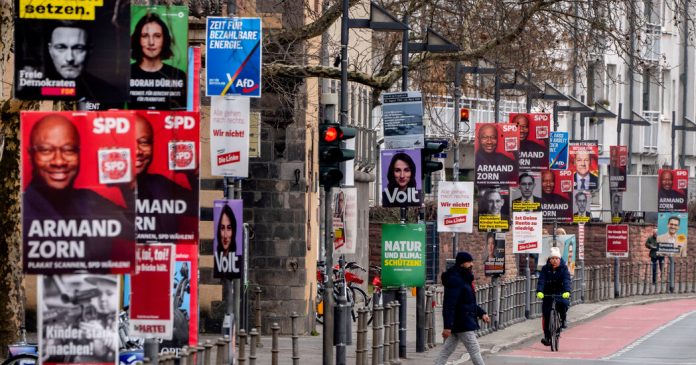
In the final days of Germany’s abbreviated election campaign, the task facing its next chancellor has snapped into focus. It appears far more existential, for the country and for all of Europe, than almost anyone initially imagined.

Germany’s coalition government came apart just a day after the U.S. presidential election last November. As a result, a vote that was supposed to come this September is now set for Sunday. German leaders quickly realized that meant their campaign would be largely fought in the early days of President Trump’s second term.

They were nervous from the start. But they were nowhere near prepared.

In just a few short weeks, the new Trump team has cut Ukraine and Europe out of negotiations to end the war with Russia, and embraced an aggressive, expansionist regime in Moscow that now breathes down Europe’s neck. It also threatened to withdraw troops that have protected Germany for decades.

How Germans vote will now be a critical component of Europe’s response to Mr. Trump’s new world order, and will resonate far beyond their borders.

“It is not just another change of government” under Mr. Trump, Friedrich Merz, the leading candidate for chancellor, warned on Friday after taking the stage for an arena rally in the western town of Oberhausen, “but a complete redrawing of the world map.”

Perhaps no one has distilled the stakes of the election more succinctly — ironically enough — than the prime minister of Greece, a country that famously clashed with the Germans when it was digging out of a financial crisis a decade ago. Kyriakos Mitsotakis, a fellow conservative, addressed Mr. Merz in a recorded message broadcast to 4,000 attendees at the Oberhausen rally. He reminded the audience of Greece’s emergence from its economic woes, and encouraged Mr. Merz to engineer a similar turnaround.

“Dear Friedrich,” Mr. Mitsotakis said, “Germany and Europe need your leadership.”

Mr. Merz and other candidates, including the current center-left chancellor, Olaf Scholz, have warned of strained or even severed ties with the United States, while vowing to fill a continental and global leadership vacuum.

Mr. Merz openly questioned this past week whether the United States would remain a democracy much longer — or slip into full autocratic rule — and whether NATO would continue to exist. Mr. Scholz has said that Germany and Europe must be prepared to go it alone without Mr. Trump.

The question is what any of the candidates will be able to do about that.

Germany has been weakened by crises at home and abroad. The country’s export-driven industrial business model is broken. Its economy is no larger today than it was five years ago, and it is losing ground to the rest of Europe and other wealthy nations on several key measures of economic health.

Its domestic politics are mired in disputes about immigration, regulation, government spending and the mountains of paperwork that Germans must navigate to deal with daily tasks.

Among the other challenges for Germany is that Trump administration officials, including Vice President JD Vance and Elon Musk, have also embraced a hard-right political party, the Alternative for Germany, or AfD, that revels in Nazi slogans and is ostracized by all of the country’s mainstream parties.

Its likely second-place finish on Sunday is expected to heighten the sense of fracturing and potential paralysis in German politics.

The last German chancellor to be seen as a leader of Europe was Mr. Merz’s longtime party rival, Angela Merkel. She did so in part by forging a partnership with President Barack Obama. The current moment might demand the opposite.

No European head of state has emerged to lead the continent in opposition to Mr. Trump’s foreign policy or his economic plans, including threats of tariffs that could target European companies. Two leaders who might have filled that role, President Emmanuel Macron of France and Prime Minister Keir Starmer of Britain, have been hurt in their efforts by low approval ratings at home.

Nonetheless, they will travel separately to the White House this week, hoping to at least persuade Mr. Trump to slow the pace of his possible disengagement from Europe.

It could be weeks or months for a new German leader to join them. Even after the votes are counted, the winner will need to form a governing coalition, a historically plodding process.

Polls suggest that Mr. Merz will almost certainly not win a majority in Sunday’s vote, and that he could enter with relatively low approval ratings for a chancellor-to-be. Still, his fresh face could provide a jolt Europe needs.

“With a waning or even unreliable U.S. presence on the continent,” said Sudha David-Wilp, the vice president of external relations of the German Marshall Fund in Berlin, “Merz could be the chancellor at the right moment to heed the call.”

The incumbent, Mr. Scholz, has been hindered globally ever since his government crumbled last fall. He is now polling in third place, behind Mr. Merz and the AfD — a party that no other mainstream party will invite into government.

Mr. Scholz has shed some of his stoic image in recent days and grown more combative, both toward Mr. Trump and toward Mr. Merz. He promised stronger German leadership to nearly 2,000 supporters at his final campaign stop on Friday. He was in Dortmund, one of the last remaining strongholds for his Social Democratic party, and just an hour down the road from Mr. Merz’s rally.

“I find it irritating how everyone is now surprised by the current American administration. You could read all of this beforehand,” Mr. Scholz said. “And in this respect, we as Germany must also be capable of acting, namely by solving our problems in Germany and Europe and by sticking together in doing so.”

“We can do this,” he added. “The European economic area, with its 450 million inhabitants, is larger and stronger than the United States. We can manage our own affairs.”

Polls suggest that Mr. Scholz is a long-shot to retain his job. The more intense guessing game among German political analysts is what sort of coalition might emerge from Sunday’s result, with Mr. Merz at the helm — and how much it might help or hurt Mr. Merz’s global ambitions.

If his Christian Democrats win around a third of the vote, or if only a few other parties pass an electoral threshold for taking seats in Parliament, Mr. Merz could likely form a government with just one other party.

He has said that would never be with the AfD, parts of which Germany’s domestic intelligence agency considers extremist, though together they are expected to have a majority.

If the vote is more splintered and more parties clear the threshold, Mr. Merz could be forced into a three-party coalition. As Mr. Scholz learned, three-party governments tend to be more fragile, and more prone to infighting that slows down major legislation.

Being forced into a larger coalition, many Christian Democrats and their supporters concede, would almost certainly sap Mr. Merz’s power to push deregulation, tax cuts and other domestic initiatives through Parliament in a bid to boost the economy.

And if Mr. Merz is unable to reignite growth, analysts say, he will struggle to project the economic power needed to lead Europe — or to find the revenue to help Germany accelerate its rearmament.

Mr. Merz betrayed few worries on Friday, flogging his potential future coalition partners, including the Social Democrats and the Green Party, in his speech in Oberhausen.

“We look forward to seeing you here again in a few years,” he told the crowd — four years from now, perhaps, at the end of the next federal election campaign.

“Then we will look back at this year 2025, on the federal elections and the results,” he said. “And then we will be asked whether we have correctly assessed the situation, and whether we have drawn the right conclusions from it.”

Week in politics: Trump's policy towards Ukraine, mass firings at federal agencies

0

We look at President Trump’s embrace of Vladimir Putin as he turns his back on U.S. ally, Ukraine, as well as mass firings at government agencies and how that will affect the services they provide.

Who Are the 6 Freed Israeli Hostages

0

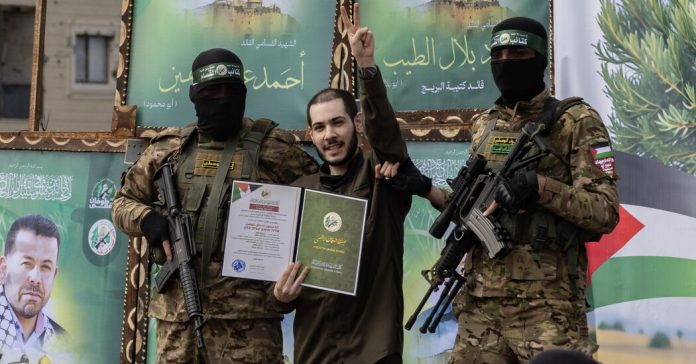
Hamas released six more hostages on Saturday as part of its cease-fire deal with Israel, the last living captives to be freed under the current truce in Gaza.

As part of the cease-fire agreement, Hamas committed to releasing at least 33 of the nearly 100 captives remaining in Gaza, a number of whom are believed to be dead, in exchange for more than 1,000 Palestinians jailed by Israel and a partial Israeli withdrawal. Both sides are set to negotiate terms to extend the truce, but an agreement appears remote.

Two of the captives freed on Saturday had been in Hamas’s hands for about 10 years. Four others were taken during the Hamas-led attack on Oct. 7, 2023, which prompted the Gaza war.

A poster of Omer Wenkert at the site of the festival in southern Israel where he was abducted.Credit…Amir Cohen/Reuters

Omer Wenkert, 23, was kidnapped during the Oct. 7 assault as Palestinian militants attacked a music festival, the Tribe of Nova, being held near the Gaza border. Videos and photographs from the time of the attack show him being restrained, stripped to his underwear and surrounded by armed men in the back of a truck as he was taken away to Gaza.

He was in touch with his family on the morning of the attack and had said that he was afraid. Relatives later saw video of his abduction. His grandmother, Tsili Wenkert, a Holocaust survivor who said that she had been saved by the Soviet Army, appealed to Russian officials for help in securing her grandson’s release.

Mr. Wenkert managed a restaurant in central Israel and was supposed to start a restaurant management course in college. His father, Shai Wenkert, pleaded for his freedom near Mr. Netanyahu’s residence in Jerusalem on the first anniversary of the Hamas-led attacks.

In a speech to a group of other relatives of hostages and their supporters, he said: “A whole year in which time has stopped. I’m still on the same day.”

A handout photo of Eliya Cohen.Credit…Bring Them Home Now

Eliya Cohen, who was 27 when he was captured, had also been at the Nova music festival. He took cover with other festival attendees when militants threw grenades into their shelter and stormed it, ordering Mr. Cohen and two other men out with them, according to his girlfriend, Ziv Abud from Tel Aviv, one of the bunker’s few survivors.

Ms. Abud had gone to the festival with Mr. Cohen, her nephew and her nephew’s girlfriend. Of the four, she was the only one to make it home. Mr. Cohen was shot in the leg during the raid, she said, and she hid with him under a pile of dead bodies until she felt him pulled away from her.

Mr. Cohen’s mother, Sigalit Cohen, told The Guardian in December 2023 that she had quit her job as an accountant to lobby for the release of the captives. Near the first anniversary of the war and hostage crisis, she wrote in an editorial addressing Israelis: “Have we learned anything from that cursed day? Have we taken it upon ourselves to be better?”

A handout photograph of Hisham al-Sayed.Credit…Bring Them Home Now

Hisham al-Sayed is a member of Israel’s Arab Bedouin minority from the town of Hura. He is one of two Israeli hostages, along with Hadar Goldin, who were captured by Hamas militants in the Gaza Strip many years before the Oct. 7 raids.

Mr. al-Sayed entered Gaza in 2015 and was not seen again until 2022, when Hamas released a video purporting to show him lying in a bed looking dazed and wearing an oxygen mask. Mr. al-Sayed has schizophrenia, according to his family, and had attempted to enter Gaza before. Hamas accused Mr. al-Sayed of being an Israeli soldier and was thought to be holding him to pressure Israel to release Palestinian prisoners.

In 2017, a Human Rights Watch investigation concluded that Mr. al-Sayed was not affiliated with the Israeli military or government. After Hamas captured hundreds of hostages in the Oct. 7 assault, the families of captives who had been lobbying for their relatives’ release for years joined forces with relatives of the newer hostages.

Mr. al-Sayed’s father, Shaban al-Sayed, said that the family was awaiting his son’s return with deep anxiety.

“We don’t know in what condition he’ll return,” he said. “We’re waiting for him — and when we see him, we’ll know how much we have to celebrate.”

A cutout poster of Avera Mengistu at a site in Tel Aviv.Credit…Hannah Mckay/Reuters

Mr. Mengistu, now 38, is the longest-held living Israeli hostage in Gaza. In 2014, nearly two weeks after a cease-fire ended a 50-day war between Israel and Hamas, Mr. Mengistu was seen in security camera footage walking along the beach before crossing a fence dividing Israel from Gaza.

Born in Ethiopia, Mr. Mengistu immigrated to Israel with his family when he was 5 and lived in the coastal city of Ashkelon, some 10 miles north of Gaza. His older brother told Israeli media that Mr. Mengistu had been deeply affected by the death of another sibling and faced serious mental health issues.

Mr. Mengistu was apparently last seen in a video released by Hamas in January 2023, though the footage could not be independently verified. As with Mr. al-Sayed, Human Rights Watch later assessed that he was a civilian with a history of mental health problems.

A sign calling for the release of Omer Shem Tov in Tel Aviv.Credit…Leon Neal/Getty Images

Omer Shem Tov was 20 when he was abducted alongside two friends at the Nova music festival. His friends — Maya Regev and her brother, Itay Regev — were released during a weeklong truce between Israel and Hamas in November 2023.

In December 2023, after their release, the Regevs appeared in a video together wearing T-shirts that bore the face of Mr. Shem Tov, pleading for his return. “Every day there is like hell,” Ms. Regev said from a wheelchair, having undergone surgeries for a gunshot wound in her leg.

“I have a friend named Omer, and I really, really miss him,” Itay said. “I know what he is going through in there, and I know how frightening it is.”

Mr. Shem Tov’s older brother, Amit Shem Tov, expressed dismay after the end of the last truce. “The end of the cease-fire is the worst thing that could have happened because it seriously delays the release of my brother,” he said.

A handout photograph of Tal Shoham.Credit…Bring Them Home Now

Tal Shoham was 38 when he was captured from Kibbutz Be’eri. His wife, Adi Shoham, and their son and daughter, ages 8 and 3 at the time, were freed in the first cease-fire deal.

Early last year, Mr. Shoham’s father, Gilad Korngold, was among a group of relatives of hostages who burst into an Israeli Parliament meeting to demand action on the abductees.

“The danger is increasing every day that passes,” Mr. Korngold said in an interview afterward. “Israel and the relevant countries in the region need to sit at the table — without eating or sleeping — and make this terrible situation end.”

On the first anniversary of the attack, Mr. Shoham’s family was still waiting. His mother, Nitza Korngold, like other Israelis frustrated with the government’s lack of progress on a hostage release agreement, boycotted the official ceremony and attended an alternative commemoration.

“My dear Tal, if you can see or hear me, we all miss you so much,” she said. “We are doing everything to bring you and all the hostages home soon. We will not give up on you.”