Friday, November 13, 2026
Home Blog Page 197

Census stopped work on gender identity data after Trump order : NPR

0

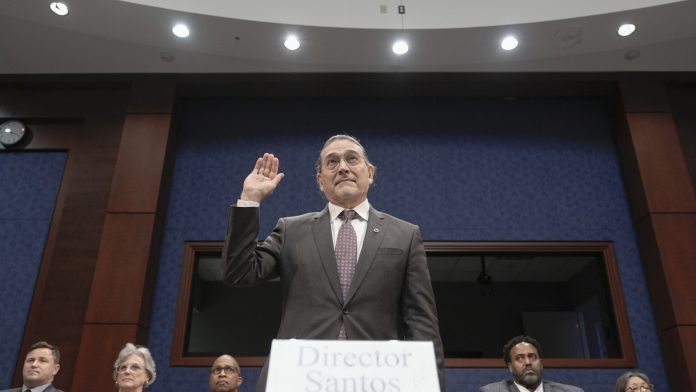
Robert Santos, who resigned as U.S. Census Bureau director on Feb. 14, raises his right hand to swear in during a House Oversight Committee hearing in December 2024 on Capitol Hill in Washington, D.C.

Mariam Zuhaib/AP


hide caption

toggle caption

Mariam Zuhaib/AP

After President Trump put out an executive order targeting gender identity, the U.S. Census Bureau stopped work on producing statistics that could help protect the rights of transgender people, the bureau’s recently departed leader tells NPR.

The bureau, which is the federal government’s largest statistical agency, has taken steps to remove gender identity questions from at least three separate surveys it conducts.

They include the National Crime Victimization Survey and the National Health Interview Survey, Robert Santos tells NPR in his first published interview since resigning last week. Brian Tsai, a spokesperson for the health survey’s sponsoring agency, the National Center for Health Statistics, confirms in a statement to NPR that the change was made to comply with Trump’s Executive Order 14168. The Times Union of Albany, N.Y., first reported on a directive that went out to one of the bureau’s regional offices about the crime survey’s change.

The bureau has asked for approval of a “non-substantive change” to the Household Trends and Outlook Pulse Survey that would delete questions related to gender identity, a regulatory document released this week shows. On forms for another survey — the Survey of Sexual Victimization, which tracks sexual abuse and harassment in correctional facilities as required by the Prison Rape Elimination Act — the bureau has replaced the word “gender” with “sex“.

Santos says Trump’s order has also led to the bureau reassessing research into adding questions about gender identity and sexual orientation to its own annual American Community Survey, a key source of demographic data on the country’s population.

“That work, although it was funded by Congress, was suspended until there could be a clarification as to whether that should proceed or not,” says Santos, an appointee of former President Joe Biden.

Toward the end of former President Barack Obama’s administration, the Justice Department requested those questions for the American Community Survey, which the DOJ said could produce more comprehensive statistics about LGBTQ+ people to assist with enforcing federal laws such as the Violence Against Women Act, the Civil Rights Act and the Matthew Shepard and James Byrd Jr. Hate Crimes Prevention Act.

But the first Trump administration stalled efforts to research how best to ask about a person’s sexual orientation and gender identity, and during sworn testimony for a lawsuit, a Trump official at the time said the administration did not want questions on those topics to be included. After Biden was elected president, the Justice Department renewed its request for the questions, and Congress, under a bipartisan spending plan, approved $10 million to fund the bureau’s research, which included plans for in-person interviews this spring.

The press offices for the bureau and the agency that sponsors the crime survey, the Bureau of Justice Statistics, have not responded to NPR’s requests for comment.

Naomi Goldberg, executive director of the Movement Advancement Project, a think tank focused on LGBTQ+ rights and voting issues, points out it’s unusual for questions to be removed from federal government surveys without opportunities for public feedback and justification based on research.

“We should all be worried about questions disappearing from surveys and what that means,” Goldberg says. “If questions can be removed in this way, what about questions about disability, about race and ethnicity, about economic variables?”

The “heart-wrenching” process of following Trump’s order

This confirmation of how Trump’s executive order on gender identity has affected certain U.S. statistics comes after three weeks of silence from the Census Bureau on the public losing access to previously released datasets and research.

The temporary shutdown of parts of the bureau’s website, Santos confirms, was the result of the Trump administration giving federal agencies a short turnaround time for reviewing webpages and removing any that included words related to gender identity.

The scramble, which began shortly after Santos announced his plan to resign late last month, was a “heart-wrenching” process, he adds.

“The Census Bureau staff fully embrace the principles of scientific integrity, objectivity, transparency and independence. Yet all federal employees, both appointees like me, as well as the career staff and the leadership, are obliged to follow the rule of law. Executive orders fall within the rule of law,” Santos says.

The Trump administration is currently facing multiple lawsuits over Executive Order 14168, including one led by the National Urban League that challenges limits on federal data collection about gender identity.

“I did not want my resignation to be a protest”

Before he joined the bureau in 2022, Santos was an outspoken critic of how the first Trump administration interfered with the 2020 census. He says he decided last August — prior to last year’s presidential election and “independent of any political consideration” — to cut short his five-year appointment as the agency’s director.

“The decision was really based on the fact that my wife and I had been living apart by necessity, her in Texas and me in D.C.,” he explains.

With key preparations underway for the 2030 national head count that will be used to redistribute political representation and federal funding to communities, Trump now has an early opportunity to name a successor for a role that Santos says he believes should remain “apolitical.”

“Unless it was absolutely necessary, I did not want my resignation to be a protest, and I do not see it that way,” Santos says. “I do see that we have very difficult times ahead of us and that there is a lot of education that needs to occur with the decisionmakers so that untoward, damaging types of events don’t befall the federal statistical system, including the Census Bureau.”

While Santos says the recent wave of mass firings of federal workers at other agencies is “causing a lot of suffering and angst” among the career civil servants at the bureau, the Trump administration’s ongoing hiring freeze is “a lurking threat that folks have not recognized.”

Restricting the bureau’s ability to hire interviewers for surveys, Santos says, “could end up resulting in some key economic indicators either not coming out the way they normally do — unemployment rates, inflation, things of that sort — or being delayed.”

Have information you want to share about changes at the Census Bureau or across the federal government? Hansi Lo Wang is available via the encrypted messaging app Signal (hansi.01).

Edited by Benjamin Swasey

Ukraine Promises Swift Deal for Minerals as Trump Cuts Kyiv Out of Peace Talks

0

President Volodymyr Zelensky said that Ukraine will work “swiftly and very sensibly” on an agreement granting the United States access to its natural resources, in an apparent overture to tamp down tensions that had flared with President Trump over the deal.

Kyiv has focused on strengthening its negotiating position as the United States and Russia open talks on ending the war — with or without Ukraine’s involvement. In a flurry of diplomacy on Thursday and Friday, Mr. Zelensky spoke with half a dozen leaders in Europe and Canada to shore up other sources of support.

As he did so, however, Mr. Trump said in a radio interview on Friday that the Ukrainian president did not need to participate in talks intended to end the conflict on his soil.

“I don’t think he’s very important to be at meetings to be honest with you, he’s been there for three years,” Mr. Trump told Brian Kilmeade, the Fox News host, adding that he had been watching Mr. Zelensky “negotiate with no cards.”

“And you get sick of it,” Trump said. “You just get sick of it. And I’ve had it.”

Kyiv and Moscow engaged in direct talks early in the invasion but since April of 2022 have negotiated only over prisoner of war exchanges and to return Ukrainian children from Russia.

The idea of trading natural resources for U.S. assistance was first put forward by Ukraine, but Mr. Zelensky balked when the U.S. proposal suggested that Kyiv provide access to profits from 50 percent of the country’s minerals and energy resources. Mr. Zelensky had also objected that the deal included no American security commitments.

Several aides to Mr. Zelensky believe that a new version of the agreement under discussion on Thursday addresses those concerns, and have now advised Mr. Zelensky to sign it, a person familiar with discussions in the Ukrainian government about the U.S. proposal said on Friday. The shift in some Ukrainian officials’ stance on the deal was first reported by Axios.

In another positive sign for the talks with the United States on resources, Keith Kellogg, the retired lieutenant general who is Mr. Trump’s envoy to Ukraine for settlement negotiations, posted on X praise for Mr. Zelensky as “the embattled and courageous leader of a nation at war and his talented national security team.” Mr. Kellogg said he had “extensive and positive discussions” on his visit to Kyiv.

In a statement Friday evening, Mr. Zelensky said his negotiating team was working with U.S. counterparts on “an agreement that can strengthen our relations,” but that the need remained “to work out the details to ensure its effectiveness.”

He added: “I look forward to the outcome — a just result..”

Talks had derailed last week after Mr. Zelensky declined to immediately sign a version presented to him by the U.S. treasury secretary, Scott Bessent, on a visit to Kyiv.

Mr. Trump responded with a broadside against Mr. Zelensky’s moral standing in the conflict, falsely saying Ukrainian leaders started the all-out war that began in 2022 with Russia’s invasion of Ukraine. Mr. Zelensky, in turn, said Mr. Trump lived in a “web of disinformation.”

But the U.S. pressure on Kyiv continued. On Thursday, the U.S. national security adviser, Mike Waltz, said in an interview on Fox & Friends that Ukrainian leadership needed “to tone it down and take a hard look and sign that deal.”

Mr. Zelensky suggested that talks were progressing in a nightly address to Ukrainians on Thursday, after a meeting in Kyiv with the Trump administration’s envoy to Ukraine and Russia, Mr. Kellogg, saying it was “a meeting that restores hope.”

He offered no details on a potential natural resources deal, other than to say that “economy and security must always go hand in hand,” and that his interest was in securing an enduring agreement with the United States.

The Ukrainian government has simultaneously pursued a flurry of diplomacy with Europe, in hopes that Europe might provide security commitments or military aid to fill gaps if the United States withholds support.

Mr. Zelensky and other Ukrainian officials concede that European nations cannot fully replace the full range of military and intelligence assistance the United States provides to Ukraine, but they have been encouraged by discussions of forming a European peacekeeping force to enforce a cease-fire.

On Thursday, Mr. Zelensky spoke by phone with five European leaders, from France, the United Kingdom, Norway, Denmark and Finland, and with the prime minister of Canada, Justin Trudeau, and on Friday with the president of Poland, Andrzej Duda.

In the nine days since Mr. Trump opened negotiations with Russia in a phone call with President Vladimir V. Putin on Feb. 12, Mr. Zelensky has met or spoken on the phone with European leaders at least nine times. A visit was scheduled for Monday by Spain’s prime minister, Pedro Sánchez.

And Mr. Macron and the U.K. prime minister, Keir Starmer, will continue to press Ukraine’s case in planned visits to Washington next week, where they are expected to present to the Trump administration what Europe and the United Kingdom can provide Ukraine and to lay out what is still needed from the United States.

AP sues Trump White House for denying access over ‘Gulf of Mexico’ row : NPR

0

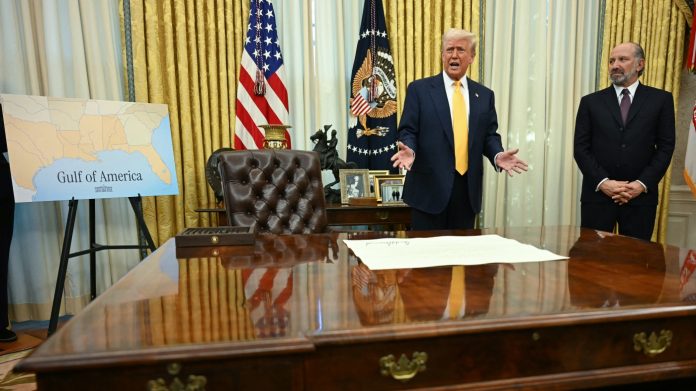
A poster with a map captioned “Gulf of America” with President Donald Trump in the Oval Office of the White House in Washington, DC, on February 21, 2025.

JIM WATSON/AFP via Getty Images/AFP


hide caption

toggle caption

JIM WATSON/AFP via Getty Images/AFP

The Associated Press has sued the Trump administration for barring it from major presidential events over its refusal to rename the Gulf of Mexico as the Gulf of America.

President Trump signed an executive order on his first day in office renaming the Gulf which directly affects usage by the federal government but holds no force outside the U.S.

The AP serves audiences and news organizations across the globe. The news agency says its guidance recommends that its journalists and the news organizations that rely on it reflect the Gulf’s historic name, but acknowledge Trump’s desired shift in language. In its lawsuit, the AP said that the White House’s retaliation was a threat to freedom.

“The press and all people in the United States have the right to choose their own words and not be retaliated against by the government,” reads the AP’s lawsuit, filed by attorneys from the Ballard Spahr law firm. “The Constitution does not allow the government to control speech. Allowing such government control and retaliation to stand is a threat to every American’s freedom.”

After it was barred, there had been a flurry of appeals and private protests by several media outlets and diplomatic overtures to resolve the matter, even as both sides indicated they would not budge.

The AP says its journalists remained blocked from major events at the Oval Office, Air Force One, Trump’s private estate in Florida, Mar-a-Lago, and other spots where journalists with White House press credentials are routinely welcomed. Such events as Trump’s press conference with Indian Prime Minister Narendra Modi was off limits to AP reporters, as was Trump’s press conference at which he explained he would keep the ban on AP reporters to key events in place.

On Tuesday, Trump told reporters, “We’re going to keep them out until such time as they agree that it’s the Gulf of America.”

The next day, AP Executive Editor Julie Pace met with White House Chief of Staff Susie Wiles in Florida. While neither side commented about the meeting, the AP reiterated its intend to maintain its independent editorial process.

The AP has participated in the White House press pool since its creation over a century ago. That has made it possible for the AP to deliver to the public timely and thorough reporting on the President almost everywhere he goes, which is information critical to the public.

The White House Correspondents Association weighed in this week to urge that Trump and his aides reconsider.

But the president’s action is consistent with other measures taken by the new administration. Various government departments and agencies have taken steps to identify and cancel subscriptions to news organizations. Under Defense Secretary and former Fox star Pete Hegseth, the Department of Defense dislodged eight news organizations, including NPR, the New York Times, the Washington Post, CNN and NBC, from long-held work stations at the Pentagon.

But the action has been consistent with other measures taken across the new administration. Several agencies have taken steps to identify and cancel subscriptions to news organizations.
Under Defense Secretary and former Fox star Pete Hegseth, the Pentagon dislodged eight news organizations, including NPR, the New York Times, the Washington Post, CNN and NBC, from long-held work stations. The Federal Communications Commission’s new chairperson has initiated investigations of all the major television networks (save Rupert Murdoch’s Fox) and NPR.

As of publication of this article, the White House had not responded to requests for comment about the AP’s lawsuit.

Hamas Says It Has Returned Another Body It Believes Is Shiri Bibas

0

Hamas on Friday said it had turned over to the Red Cross the body of a woman that Hamas officials believe belonged to Shiri Bibas, the Israeli mother whose capture with her two young sons during the Oct. 7, 2023, attack became a symbol of the country’s anguish.

Ms. Bibas’s remains were initially believed to have to been repatriated to Israel on Thursday, with those of her two children, as part of a negotiated exchange for Palestinian prisoners. With a DNA test, Israeli officials then determined the body was that of another person and not Ms. Bibas.

“Tonight, at the request of the parties, an ICRC team received human remains, which were then transferred to Israeli authorities,” The International Committee of the Red Cross said on Friday, adding, “The ICRC cannot confirm any additional details.”

The Israeli military said that news reports of the repatriation were under review.

Mousa Abu Marzouk, head of Hamas’s foreign relations office, said in a text message that the body returned on Friday was believed to be that of Ms. Bibas. Another Hamas official, who requested anonymity to discuss a sensitive arrangement, confirmed the handoff and similarly said it was Hamas’s understanding that they had turned over the right body this time.

A third Hamas official Mahmoud Mardawi told the television network Al Araby TV that Hamas had turned over remains of Ms. Bibas.

It was not immediately clear that Hamas had handed over the correct body on Friday.

Friday’s statements, less than 24 hours after Hamas provided Israel with the wrong remains, were the latest development in a series of crises that have made up the first phase of a cease-fire with Hamas. So far, 19 living Israeli hostages have been traded for hundreds of Palestinian prisoners.

Despite recriminations from both sides, the cease-fire has held for a month. And Hamas’s rapid effort to find and return the body of Ms. Bibas was a sign that it did not want to bear responsibility for endangering the agreement ahead of the next transfer, planned for Saturday.

On Thursday, Hamas said it had handed over the remains of four hostages: Ms. Bibas, who at the time of her capture was 32; her two children, Ariel, then 4, and Kfir Bibas, then 9 months; and Oded Lifshitz, 83. The handoff was staged in front of crowds in Khan Younis, and each casket bore a photo of a hostage.

Israeli officials brought the remains to a forensic institute in Tel Aviv, where the identities of Ariel, Kfir and Mr. Lifshitz were confirmed.

But early on Friday, Israel said that one of the bodies Hamas handed over was not that of Ms. Bibas. The Israeli military called the finding a “violation of the utmost severity” of the cease-fire. In a statement, Hamas acknowledged the possibility of a mistake or a “mixing up of corpses.”

The first phase of the cease-fire deal is set to expire in less than two weeks, and Israel and Hamas have yet to agree on terms to extend the agreement into the next phase.

High-stakes showdown is brewing between a federal judge and Trump officials at USAID

0

Aid groups are asking a federal judge to find USAID and State Department officials in contempt for not restoring funding to global programs. USAID says it has a legal right to cancel contracts.

Berlin Stabbing Attack at Holocaust Memorial Injures One

0

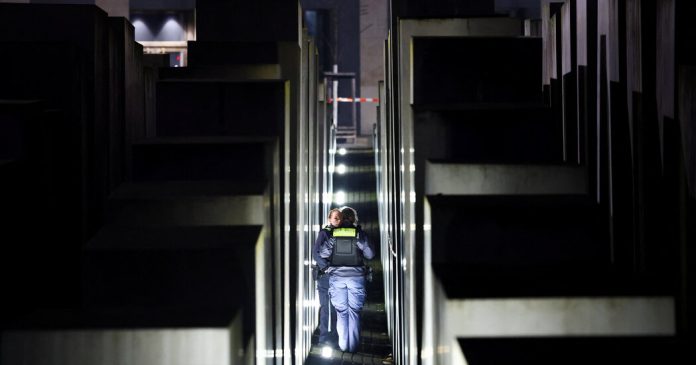
After an intensive search, the police in Germany detained a suspect in a Friday stabbing attack at Berlin’s iconic Holocaust memorial that left one person seriously injured.

The assault, two days before a pivotal national election, occurred in the labyrinth of concrete stelae that make up the Memorial to the Murdered Jews of Europe, located across the street from the U.S. Embassy and one of the capital’s most sacrosanct sites.

Police said they were verifying the arrested person’s identity and that the investigation was ongoing.

The injured man, a 30-year-old Spaniard, was taken to the hospital, and rescue workers were treating people who witnessed the event for shock, the police said in a statement.

The expansive memorial, described as a “place of remembrance and warning” by Berlin’s tourism website, covers more than four-and-a-half acres and contains 2,711 concrete slabs of varying heights.

Photos published by local news media showed a swarm of emergency vehiclesaround the memorial, illuminated by the glow of blue lights.

The attack comes as Germans prepare to vote in parliamentary elections Sunday that may reshape the country’s political landscape. Frustration over Germany’s stagnant economy and dissatisfaction with immigration have pushed Germany’s far-right party, Alternative for Germany, or AfD, high in the polls.

The AfD party, which has been linked to neo-Nazis, has promised to stop migration and deport immigrants.

Over the last year, Germany has endured a string of seemingly unrelated attacks carried out by immigrants from Afghanistan and the Middle East.

Last week, an asylum seeker from Afghanistan crashed a car into a union demonstration in Munich, injuring dozens in the city, where global figures had gathered for a security conference.

And in December, a Saudi Arabian citizen plowed his car through a Christmas market in Magdeburg, killing six people and injuring hundreds more.

Christopher F. Schuetze contributed reporting.

Maine Gov. Janet Mills spars with Trump over transgender athlete rules : NPR

0

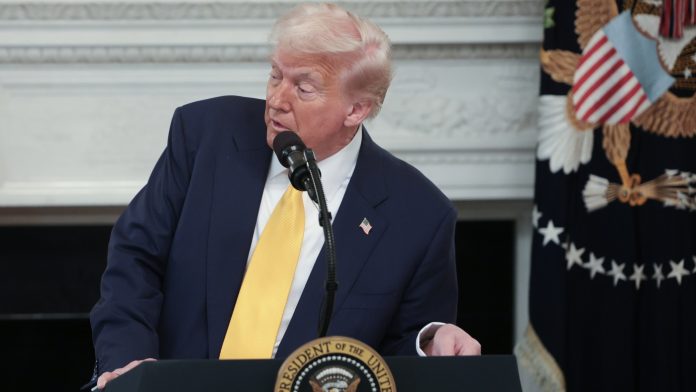
President Donald Trump addresses Gov. Janet Mills (D-ME) after she said, “See you in court” over the issue of trans women in sports at meeting of governors at the White House on February 21, 2025 in Washington, DC.

Win McNamee/Getty Images


hide caption

toggle caption

Win McNamee/Getty Images

President Trump sparred with the Democratic governor of Maine at a White House event Friday over the state’s opposition to an executive order that would bar transgender student athletes from playing on girls’ sports teams.

The order, which Trump signed earlier this month, calls for the federal government “to rescind all funds from educational programs that deprive women and girls of fair athletic opportunities.” After the order was issued, the NCAA changed its policy on transgender athletes, limiting participation in women’s sports to those assigned female at birth.

But the Maine Principals’ Association, which governs school sports in the state, said it would continue to allow trans girls to compete because the federal action conflicts with state law.

During remarks at a governors’ event Friday, Trump asked Maine Gov. Janet Mills if the state was going to comply with the order. Mills replied that she would comply with “state and federal law.”

“Well, we are the federal law,” Trump said. “You better do it, because you’re not going to get any federal funding at all if you don’t.”

Mills then replied, “See you in court.”

“Good, I’ll see you in court,” Trump said. “I look forward to that. That should be a real easy one. And enjoy your life after governor, because I don’t think you’ll be in elected politics.”

After the exchange, Mills released a statement saying, “If the President attempts to unilaterally deprive Maine school children of the benefit of Federal funding, my Administration and the Attorney General will take all appropriate and necessary legal action to restore that funding and the academic opportunity it provides. The State of Maine will not be intimidated by the President’s threats.”

The Trump administration argues that Title IX, the statute that prevents sex discrimination in education programs that receive federal funding, requires the government to “take all appropriate action to affirmatively protect all-female athletic opportunities and all-female locker rooms.”

In 2024, then-President Joe Biden’s administration issued rules interpreting Title IX as including protection from discrimination based on gender identity and sexual orientation. A federal judge struck down those rules in January, and Trump on his first day in office issued an executive order stating that the U.S. would only recognize biological sex.

Students in New Hampshire are now challenging Trump’s order.

Trump Appears to Back Away From His Gaza Plan

0

President Trump on Friday appeared to back off his demand that some two million Palestinians be permanently relocated from the Gaza Strip to nearby countries in the Middle East so the United States could take over the territory and develop it into “the Riviera of the Middle East.”

Earlier this month, the president said he favored taking control of Gaza and displacing the Palestinian population of the devastated seaside enclave. Over the course of several days, he repeatedly waved aside objections to the idea, including flat-out rejections from the leaders of Egypt and Jordan.

At the time, Mr. Trump said that he would be able to persuade the leaders of those two countries — and potentially others in the region — to accept the Palestinians through the force of his will.

“They say they’re not going to accept,” Mr. Trump said. “I say they will.”

But in a telephone interview with a Fox News host on Friday, Mr. Trump seemed to concede that his efforts at persuasion had failed and the refusal by Egypt and Jordan to accept displaced Gazans would make the idea unworkable.

“Well, we pay Jordan and Egypt billions of dollars a year. And I was a little surprised they’d say that, but they did,” Mr. Trump told the Fox News host Brian Kilmeade before adding: “I’ll tell you, the way to do it is my plan. I think that’s the plan that really works. But I’m not forcing it. I’m just going to sit back and recommend it.”

The comments were a striking reversal for one of the most brazen foreign policy proposals ever made by a sitting president. And they came after weeks of back-and-forth that included several high-ranking Trump administration officials trying to downplay the proposal, followed by the president insisting that he was serious.

Mr. Trump first publicly raised the idea in early February, when he declared that “The U.S. will take over the Gaza Strip.” With Prime Minister Benjamin Netanyahu of Israel by his side during a White House visit, Mr. Trump said the United States would “own it and be responsible” for disposing of unexploded munitions and rebuilding Gaza into a mecca for jobs and tourism, pledging that it would become “the Riviera of the Middle East.”

Secretary of State Marco Rubio and Karoline Leavitt, the White House press secretary, said soon after that any relocation would be temporary. But Mr. Trump followed up with a social media posting suggesting again that Palestinians would be relocated into communities where they would be “happy, safe, and free.”

In the interview on Friday, the president said that trying to redevelop Gaza without moving Palestinians out would be impractical, in part because of the presence of Hamas terrorists, who have ruled in Gaza for decades. He said that a U.S. takeover, and the displacement of Gaza’s Palestinians, would be the best approach.

“The U.S. would own the site,” Mr. Trump said. “It’d be no Hamas, and it’d be developed, and you start all over again with a clean plate.”

But he spoke of the idea in past tense, suggesting that he had given up on it.

“I liked my plan. I thought my plan was good,” Mr. Trump told Mr. Kilmeade. “You get them out, you move them, you build a beautiful community and a permanent community.”

A spokesman for the National Security Council did not respond to emails seeking comment on whether the president’s remarks indicated that he was giving up on the idea of the United States rebuilding Gaza.

In the interview, Mr. Trump seemed resigned to the reality that Gaza would have to be rebuilt without U.S. ownership and without moving its people out, though he also appeared to interpret Israel’s long occupation of the territory as ownership.

“We’ll see what happens,” he said. “I thought it was great, because the location is, you know, it’s a great location. I don’t know why Israel ever gave that up. Why did they give it up?”

Eric Adams’ corruption case on hold while judge seeks more legal input : NPR

0

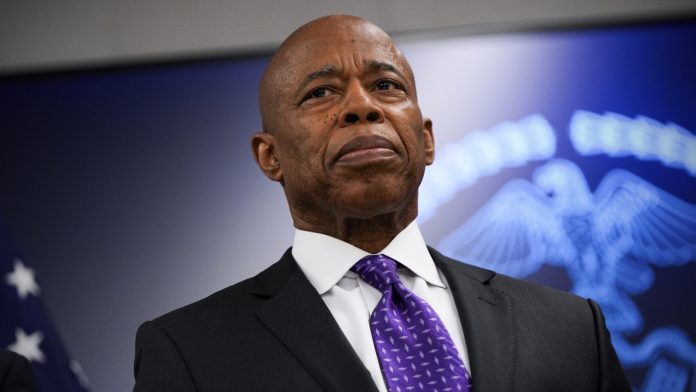
New York City Mayor Eric Adams attends an NYPD event Thursday in the Bronx borough of New York.

Julia Demaree Nikhinson/AP


hide caption

toggle caption

Julia Demaree Nikhinson/AP

A federal judge in Manhattan reviewing the Justice Department’s controversial handling of corruption charges against Mayor Eric Adams says he needs more time and more legal input before ruling on the DOJ’s request the criminal case be dismissed.

In a five-page order issued Friday, Judge Dale Ho in Manhattan said because the DOJ and Adams’ legal team are in agreement on a deal that would suspend the charges, the court hasn’t yet heard “adversarial” arguments questioning the arrangement.

Ho then appointed a conservative attorney, Paul Clement, to develop counter-arguments to DOJ’s decision. “[C]ourts are aided in their decision-making through our system of adversarial testing, which can be particularly helpful in cases presenting unusual fact patterns or in cases of great public importance,” he wrote.

The DOJ’s handling of the Adams case is being widely viewed as an early test of how the Trump administration will use the Justice Department’s sweeping power to advance the White House’s political agenda.

During a hearing in Ho’s court Wednesday, DOJ acting assistant Attorney General Emil Bove made it clear the government is suspending its corruption case against Adams in part so that New York City’s mayor can assist the Trump administration on one of its top policy priorities: identifying and rounding up migrants living in the U.S. without legal status.

Bove urged Ho to rule quickly on the DOJ’s dismissal request, but Ho repeatedly voiced concern about the fact that the government plans to retain authority to re-indict Adams at any time, meaning the Trump administration will hold significant leverage over Adams’ future decision-making.

Under questioning from Ho, the DOJ’s Bove said no “quid pro quo” arrangement exists that trades Adams’ action on migrants for prosecutorial leniency. But Bove also argued that such an arrangement would be legitimate, if it advanced President Trump’s agenda.

At least seven DOJ attorneys have resigned over Bove’s handling of the Adams case. Three other former federal prosecutors filed a legal brief with Ho’s court arguing the DOJ’s linking of politics and prosecutorial decision-making sets a “dangerous” precedent.

During a press conference on Thursday, New York Gov. Kathy Hochul also voiced concern over the DOJ’s arrangement with Adams, saying she feared President Trump would attempt to “coerce” New York officials to go along with his agenda. But Hochul declined to use her authority to remove Adams from office.

In today’s order which prolongs Ho’s review of the case significantly, he pointed to the “public importance of this case, which calls for careful deliberation.” According to Ho, additional legal filings and a possible hearing will be wrapped up by mid-March.

Pope Francis Is in a ‘Good Mood’ but ‘Not Out of Danger,’ His Doctors Say

0

Pope Francis’ complex lung infection is not immediately life-threatening, his doctors said Friday, from the Rome hospital in which he has been treated for the past week, but they warned he is “not out of danger.”

The 88-year-old pontiff, who had part of a lung removed in his youth, would remain in the hospital for at least another week, his doctors told reporters. Francis, they said, had been prescribed “many drugs” to treat a bronchial infection that had developed into double pneumonia, but he was not on a respirator.

The doctors said the pope was in a “good mood” and had even cracked jokes earlier in the day, but his condition remained critical.

“I know I am an older man, that I have a chronic problem,” the pope told his surgeon, Sergio Alfieri, who shared the conversation with reporters gathered at Policlinico Agostino Gemelli, the hospital where Francis is being treated.

“The situation at my age is grave,” the pope said, according to Dr. Alfieri. The pope, his doctor said, understood the risk of death at his age, and told him “all doors were open.”

Dr. Alfieri said the pope is “not out of danger” and described what he called an “important infection,” which had not entered the bloodstream, a life-threatening condition known as sepsis.

As the pope’s hospital stay enters a second week, questions have grown about the future of the Roman Catholic Church, whether Francis — the spiritual leader of almost 1.4 billion Catholics —passes away or whether he manages to fight his infection but emerges physically diminished. The damage to his lungs was already chronic, and in recent days a few cardinals have openly spoken about the possibility of Francis resigning, as his predecessor Benedict XVI did in 2013.

Calibrating the right treatment involved many factors, Dr. Alfieri said. “Our job is not easy.”

The pope’s medical doctor at the Vatican, Luigi Carbone, noted that Francis was, after all, 88, and that it would take time for him to recover. It would not take much for the situation to become “unbalanced,” he said.

Dr. Alfieri said Francis was fragile but tough and Dr. Carbone said Francis was not one to give up.

Dr. Alfieri said that on Friday evening the pope had left his room to go pray at a chapel in his suite at the hospital.