Friday, November 13, 2026
Home Blog Page 208

Pope Francis Has Bilateral Pneumonia

0

Pope Francis, who remains hospitalized, has bilateral pneumonia, the Vatican said on Tuesday.

The term simply means pneumonia in both lungs, said Dr. James Musser, director of the center for infectious diseases at the Houston Methodist Research Institute. He added that, without examining a patient, he could not say anything specific about his condition.

In general, pneumonia is an infection of the small airways of the lungs. As the body mounts an inflammatory response, small pockets in the lungs fill with immune cells; symptoms can include fever, cough and shaking chills. To diagnose the illness, a doctor typically asks the patient to say a long “e,” as if the person were singing. Through a stethoscope, the “e” of a pneumonia patient sounds like an “a,” said Dr. Paul Pottinger, a professor of infectious diseases at the University of Washington.

Most people with pneumonia recover well at home and do not need to be hospitalized. But for older people, pneumonia can be “a deadly situation,” infectious disease experts said.

Dr. Peter Chin-Hong, professor of medicine and infectious diseases at the University of California, San Francisco, added that “the mortality rate goes up after age 85.” The pope is 88, and is missing part of one lung after pulmonary surgery in 1957.

The most likely cause of pneumonia is an infection caused by a bacterium, Streptococcus pneumoniae, according to Dr. Chin-Hong. “The No. 1, 2 and 3 cause of pneumonia is strep pneumonia,” he said.

The illness can respond to antibiotics, but bacteria can sometimes spill out of the lungs and into the rest of the body, resulting in sepsis, a dangerous situation. A vaccine can help mitigate this sepsis risk but does not prevent the condition, Dr. Chin-Hong said.

Dr. Pottinger noted that, although strep pneumonia can involve both lungs, it usually is confined to one lobe of one lung. Most bilateral pneumonia, he said, is caused by viruses, including influenza, or other bacteria. Other causes include respiratory syncytial virus, or R.S.V., Legionella, mycoplasma and chlamydia, Dr. Pottinger said.

He agreed with Dr. Chin-Hong about the likely gravity of the pope’s condition.

“It is a very scary situation,” Dr. Pottinger said.
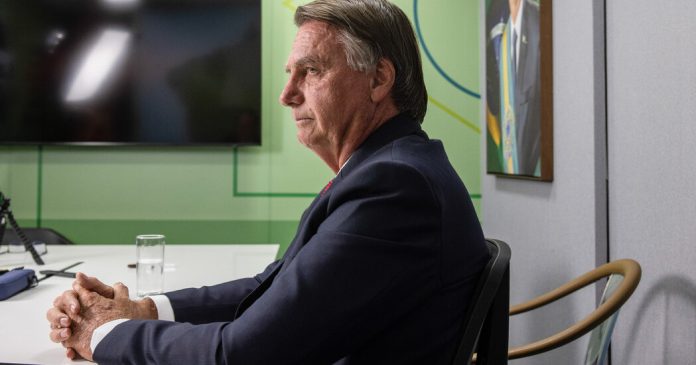
Brazil Charges Bolsonaro With Attempting a Coup

0

Jair Bolsonaro, Brazil’s former president, was charged Tuesday with overseeing a vast scheme to try to undermine his nation’s trust in the 2022 elections and then overturn that vote even after his allies could not find evidence of fraud.

Brazil’s attorney general, Paulo Gonet Branco, indicted Mr. Bolsonaro and 33 other people for a series of crimes against Brazil’s democracy. The charges essentially accepted recommendations from Brazil’s federal police in November.

The case will now go before Brazil’s Supreme Court, which will analyze the charges and decide whether to order Mr. Bolsonaro’s arrest and have him face trial.

A lawyer who represents Mr. Bolsonaro had no immediate comment.

This is a developing story and will be updated.

Consider This from NPR : NPR

0

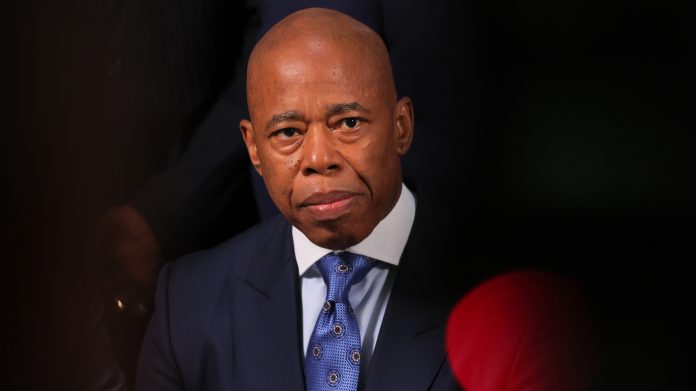
New York Mayor Eric Adams attends a press conference on gun violence prevention and public safety last summer.

Michael M. Santiago/Getty Images


hide caption

toggle caption

Michael M. Santiago/Getty Images


New York Mayor Eric Adams attends a press conference on gun violence prevention and public safety last summer.

Michael M. Santiago/Getty Images

New York Governor Kathy Hochul, along with other top officials, spent much of Tuesday weighing whether to use her power to remove New York City Mayor Eric Adams from office.

It’s a power that no New York Governor has ever used before.

Adams faces growing calls to step down over allegations of corruption – and criticism that Adams’ deepening ties with the Trump administration have compromised his ability to govern independently.

The nation’s biggest city has been all but paralyzed by the legal and political problems of its Mayor. What’s next for Eric Adams, and what does the scandal tell us about the Trump Justice Department?

For sponsor-free episodes of Consider This, sign up for Consider This+ via Apple Podcasts or at plus.npr.org

Email us at [email protected]

This episode was produced by Marc Rivers, Megan Lim and Tyler Bartlam. Our audio engineer is Ted Mebane. It was edited by Courtney Dorning, Sarah Handel, Nadia Lancy, Kristian Monroe and Cheryl Corley. Our executive producer is Sami Yenigun.

Florida Man Says He Shot Israeli Tourists in ‘Mental Health Crisis’

0

A man in Florida charged with attempted murder in the shooting of two tourists in Miami Beach on Saturday — he told the police he had thought they were Palestinian — is attributing the violence to a “severe” mental health episode.

The man, Mordechai Brafman, 27, was driving when he stopped his truck and got out to shoot at two people, according to a police report. He told the police that he had killed them.

The victims turned out to be Israeli Jewish tourists, neither of whom was seriously wounded, and Mr. Brafman, who is also Jewish, now faces charges on two counts of second-degree attempted murder.

Identity-related violence targeting Muslims and Arabs, as well as Jews, has surged since the Hamas-led attack on Israel on Oct. 7, 2023, and Israel’s subsequent decimation of the Gaza Strip, according to advocacy groups.

Dustin Tischler, Mr. Brafman’s lawyer, said that his client appeared before a judge on Tuesday morning and was being held in jail, with his next hearing set for Friday. He was denied bond on Monday.

Mr. Tischler said that his client had “no prior history of violent or hateful behavior” and that he was cooperating with law enforcement. His client acknowledged the seriousness of the charges, he said, but had not been able to control his actions.

“At the time of the incident, Mr. Brafman was experiencing a severe mental health crisis which caused him to be in fear for his life,” the lawyer said in a text message to The New York Times. “It is believed that his ability to make sound judgments was significantly compromised.”

Mr. Tischler said he and his client were “committed to working with medical professionals to ensure Mr. Brafman receives appropriate and necessary treatment.”

Local media reported that the victims of the shooting were a father and son who identified themselves as Yaron and Ari Rabi and said they were in Florida for vacation. They told a Miami television station that Mr. Brafman had shot at them multiple times and continued shooting while they drove away to seek help at a nearby condominium building. The son was shot in the shoulder and the father was grazed by a bullet on his forearm.

Antisemitic and Islamophobic speech proliferated across the internet after the conflict between Israel and Hamas broke out, and violence related to the war has become relatively common around the world.

In Illinois, a Palestinian American woman was injured and her son was killed by their landlord about 10 days into the fighting in Gaza. Just weeks later, in Vermont, three Palestinian Americans were shot.

In the final months of 2023 in New York, several people were charged with hate crimes, including a woman who threw her cellphone and hot coffee at a man in Brooklyn while making anti-Islamic statements, teenagers who attacked people in a Brooklyn synagogue and a man who stalked and harassed five men wearing skullcaps while making antisemitic statements.

The violence continued into the next year.

In February 2024, a Palestinian American man was stabbed in Texas. Months later in the same state, a 3-year-old Palestinian American girl survived an attempted drowning that was apparently related to her identity. An argument over the war that broke out between a pro-Israel protester and a passerby in Massachusetts in September escalated into a physical struggle that ended with both men charged with crimes.

The Council on American-Islamic Relations said that discrimination and attacks against Muslims and Palestinians surged after the war began in 2023 and rose by about 70 percent in the first half of 2024 amid heightened tensions stemming from the conflict.

The Florida chapter of the Council on American-Islamic Relations on Sunday called on the state and federal authorities to charge Mr. Brafman with a hate crime, which increases the potential penalties for an offense, based on his stated intentions. The fact that his victims were not of Palestinian descent does not change the nature of the attack, the group said.

“It is the alleged shooter’s reportedly bias-motivated actions, not the actual ethnicity of the victims, that should be the determining factor for charges in this disturbing case,” the council said.

The Miami-Dade State Attorney’s Office did not immediately respond to a request for comment. Local news media reported on Tuesday that prosecutors had said they would charge Mr. Brafman with a hate crime.

Mr. Tischler did not respond to a request for comment on the hate-crime element of the case. He did, however, express deep relief on the part of Mr. Brafman that the victims were out of the hospital and seemed to be recovering.

Will That Asteroid Strike Earth? Risk Level Rises to Highest Ever Recorded.

0

Astronomers on Tuesday said that the asteroid designated 2024 YR4 had become the most likely sizable space rock ever forecast to impact planet Earth. The object, first detected in December, is 130 to 300 feet long and expected to make a very close pass of the planet in 2032. Its odds of impacting Earth on Dec. 22 of that year currently stand at 3.1 percent.

That exceeds the threat once posed by Apophis, a much larger asteroid that was discovered in 2004. Astronomers initially calculated its chances of hitting Earth in 2029 at 2.7 percent. Further observations of Apophis reduced the odds of an impact at any time during the next century to zero. But the prospect was, for a time, unsettling.

While 2024 YR4 is far smaller than Apophis, a diminutive asteroid is still capable of causing tremendous devastation. Much depends on where it would enter Earth’s atmosphere.

Although 2024 YR4 would not come close to decimating a country, it could scar or demolish a city with a direct hit. And there is a very slim chance that it might. Much of the object’s estimated track passes over empty ocean, but some possible impact locations are close to large cities like Bogotá, Lagos and Mumbai.

The kinetic energy of an asteroid is a proxy for how destructive its impact would be. And as asteroids mostly move at the same speed — about 38,000 miles per hour — the key variable is its mass.

With just a handful of observations to rely on, astronomers only have a range of estimates for the mass of 2024 YR4. “We don’t know how dense or porous it is, so its mass, and therefore the energy it would release if it strikes Earth’s surface or explodes in the atmosphere, is uncertain,” said Mark Boslough, a physicist at the Los Alamos National Laboratory.

In all cases, though, “the bigger it is, the worse it is,” said Gareth Collins, an asteroid impact expert at Imperial College London. And small increases in size translate to giant leaps in destructive potential. The rule of thumb is that if an asteroid’s radius doubles, it has eight times more kinetic energy; a 300-foot asteroid will do far more damage than a 130-foot one.

The composition is also important. An asteroid made mostly of iron, for instance, would plunge deeper into the atmosphere and deliver a more injurious punch to the planet. But 2024 YR4 is statistically likelier to be a stony asteroid, which is more prone to fragment into smaller pieces as it is heated during its atmospheric descent.

But even a midair immolation of an asteroid — an airburst — can be extremely fierce.

If 2024 YR4 is stony and on the smaller end of estimates — 130 feet — the odds of an airburst are high, said Kathryn Kumamoto, the head of the planetary defense program at the Lawrence Livermore National Laboratory.

“The main comparison point we have for a stony asteroid impact of this magnitude is Tunguska,” Dr. Kumamoto said. The Tunguska event of 1908 involved an asteroid similar in size to 2024 YR4 exploding above a sparsely populated part of Siberia. It generated a blast wave of roughly 12 megatons, not unlike that of a nuclear weapon, that destroyed a forest more than twice the size of New York City.

A 130-foot rock exploding above the open ocean, or even nearer shore, would not be particularly concerning, as it “would be unlikely to cause a significant tsunami,” said Lorien Wheeler, an expert at the Asteroid Threat Assessment Project at NASA’s Ames Research Center in California.

An airburst above a city would be more unpleasant. Windows would explode inward, producing shotgun sprays of glass, and the damage to buildings would be widespread. Some injuries could be life-threatening.

The angle at which the asteroid enters the atmosphere makes a difference. If it comes in straight down, it may come closer to the ground before exploding and potentially inflict more destruction. Entry at a more gradual angle may result in an explosion at a much higher altitude.

If 2024 YR4 turns out to be 300-feet long, its impact “could cause more severe damage,” said Michael Aftosmis, an expert at the Asteroid Threat Assessment Project.

Such an asteroid “is more likely to make it through the atmosphere, particularly if we are unlucky and the entry angle is steep,” said Dr. Kumamoto. “A portion could make it to Earth’s surface relatively intact.”

An impact in the remote ocean far from land would pose much less risk, said Dr. Kumamoto — tall waves that would quickly shrink before reaching land. A splashdown next to a coastline, however, could cause a tsunami capable of inundating nearby land.

Should this larger version of 2024 YR4 hit solid ground, it could carve out a crater perhaps two-thirds of a mile across.

“The asteroid would create an enormous explosion,” Dr. Boslough said. And the blast wave would be astonishingly powerful. Multistory buildings around the crater would buckle and crumple, bridges would fold over, and cars, trees and people would be thrown in all directions. Dr. Boslough also noted the potential for a “hot jet of asteroid vapor that would descend to the surface and incinerate everything.”

People close to ground zero would very likely die, he said. And people tens of miles away would still be hit by a thundering, expanding blast wave. “People within the local region would be at risk of serious injury,” Dr. Kumamoto said.

Experts said that it’s still unlikely that 2024 YR4 will impact Earth in 2032. But this range of impact outcomes is precisely why planetary defenders are taking this asteroid deadly seriously.

Gov. Hochul takes action on embattled NYC Mayor Adams

0

NY Governor Kathy Hochul moved Tuesday to oust NYC Mayor Eric Adams from office over a growing scandal involving federal corruption charges and Adams’ controversial ties to the Trump administration.

Under Trump’s Mass Deportation Plan, Some Migrants Are Being Sent to Panama

0

They arrived at the United States border from around the world, hoping to seek asylum. Instead, they were detained, shackled and flown by the U.S. military to a faraway country, Panama.

They were stripped of their passports and most of their cellphones, they said, and then locked in a hotel, barred from seeing lawyers and told they would soon be sent to a makeshift camp near the Panamanian jungle.

At the hotel, at least one person tried to commit suicide, according to several migrants. Another broke his leg trying to escape. A third sent a plaintive missive from a hidden cellphone: “Only a miracle can save us.”

When President Trump took office in January, his plan for sweeping deportations faced a major challenge: what to do with migrants from countries like Afghanistan, Iran and China where the United States cannot easily send deportees, because the other nations will not accept migrants or for other reasons.

Last week, the new administration found a solution: Export them to a country willing to take them in.

On Wednesday, U.S. officials began flying hundreds of people, including people from Asian, Middle Eastern and African countries, to Panama, which is under intense pressure to appease Mr. Trump, who has threatened to take over the Panama Canal.

Now it will be Panamanian officials who decide what happens to them. Because the deported migrants are no longer on U.S. soil, Washington is not legally obligated to make sure they are treated humanely or have the chance to seek asylum.

Costa Rica announced on Monday that it would also receive a flight from the United States, carrying 200 deportees from Central Asia and India. Panama and Costa Rica have said that the operations would be supervised by United Nations agencies and financed by the United States.

Panama’s president has said that the plan is to send people back to their home countries. But if the United States could not easily send deportees back to certain countries, it is unclear how Panama will do so.

Muzaffar Chishti, a senior fellow at the Migration Policy Institute, a nonpartisan think tank, called the Panama plan part of “a totally new era of enforcement,” in which Washington is coercing other nations into becoming part of its “deportation machinery.”

Panama’s deputy foreign minister, Carlos Ruiz-Hernández, said at a news conference on Thursday that Panama and the United States were adhering to international protocols in their treatment of migrants.

Lawyers in Panama say it is illegal to detain people without a court order for more than 24 hours. Yet roughly 350 migrants deported by the United States on three military planes have been locked in a soaring, glass-paneled hotel, the Decapolis Hotel Panama in Panama City, for nearly a week, while officials ready a camp near the jungle.

Armed guards prevent any of the deportees from leaving the hotel. Several of them are children.

In a statement, the Department of Homeland Security said the migrants deported to Panama were in the United States illegally. “Not a single one of these aliens asserted fear of returning to their home country at any point during processing or custody,” said Tricia McLaughlin, an agency spokeswoman. “They were properly removed from the country.”

The Panamanian government has barred journalists from visiting the migrants. But The New York Times managed to interview several people inside the hotel, all of whom said they were asylum seekers being held against their will.

In one window visible from a sidewalk below the hotel, a woman clawed at a latchless glass pane in an attempt to escape. When she noticed journalists below, she held up a piece of paper that read “Afghan.”

She made hand motions that indicated an airplane, then her head falling off. The message seemed to be clear: A flight home meant death.

A migrant from Iran, Artemis Ghasemzadeh, 27, wrote “Help us” in lipstick on one window. The Times, which was able to contact Ms. Ghasemzadeh and other deportees by cellphone, conducted interviews with her, several other Iranian deportees and a migrant from China. Many of the deportees wanted only their first or last names used out of fear that they would suffer reprisals if returned to their countries.

It was Ms. Ghasemzadeh who told a reporter “only a miracle can save us.”

She said she was an English teacher who, in Iran, had converted to Christianity in an underground church. According to Iran’s Islamic Shariah law, converting from Islam is considered apostasy and is a crime punishable by death.

She left Iran in December, she said, hoping to build a new life in the United States. She knew that Mr. Trump was deporting migrants, she added, but thought, “I’m not a criminal, I am educated, I will show them my qualifications, my conversion to Christianity papers.”

Ms. Ghasemzadeh took a series of flights to Mexico, she said, and then headed for the southern border, paying a smuggler around $3,000 to help her climb over the border wall. She was soon picked up by border officials.

After five days in federal custody, Ms. Ghasemzadeh said, all the deportees except for the children had their hands tied and their feet shackled by U.S. authorities.

Her group was placed on a gray military airplane — more than 100 people from Iran, Pakistan, Afghanistan, Uzbekistan, China and other nations, according to the Panamanian government.

Once on board, an Uzbek woman who was with her two young children fainted, according to Ms. Ghasemzadeh and a couple who were sitting next to them. The children were crying.

A member of the U.S. military who was on board came to Ms. Ghasemzadeh and asked for her help in translating, because she was asking questions in English. He asked why the Uzbek woman was so scared.

“I said it was because we had no idea where we were being taken — can you please tell us?” Ms. Ghasemzadeh said.

“He hugged me gently,” she continued, “whispered into my ear that we were going to Panama, and asked me not to tell anyone about it.”

On Sunday morning, after another deportee attempted suicide at the hotel in Panama, Ms. Ghasemzadeh said, all glass and sharp objects were confiscated from the rooms.

Ms. Ghasemzadeh said that she and nine other Iranian Christians, including three children, ages 8, 10 and 11, had spent their days in the hotel, frantically trying to get help from the outside. At night they read from a copy of the Bible she had on her cellphone.

Mr. Ruiz-Hernández, Panama’s deputy foreign minister, said the migrants were being held in the hotel as a stopgap measure, because the Trump administration had asked Panama to take the migrants quickly and a separate facility for migrants was still being prepared.

Panama, Mr. Ruiz-Hernández said, is “a leader and strategic partner in migration management,” adding that his government and the United States had an agreement and were “respecting human rights.”

He added that the migrants at the hotel had “no criminal records.”

Panama has said that two United Nations organizations, the International Organization for Migration and the U.N. refugee agency, are charged with overseeing the migrants while they are in Panama.

“We are simply here to assist,” Mr. Ruiz-Hernández said.

A spokesman for the International Organization for Migration said the group was “facilitating returns where safe to do so” and was not involved “in the detention or restriction of movement of individuals.”

According to a senior U.N. official who requested anonymity to discuss a sensitive matter, the U.N. was providing Panama with humanitarian and technical support, but the Panamanians were tightly managing the deportees and the process they were following was not entirely clear.

The deportees at the hotel will soon be sent to a camp at the edge of a jungle called the Darién Gap, according to Panama’s president, José Raúl Mulino. Built just a few years ago to house migrants headed north to the United States, the camp will now handle a reverse migration wave.

It is unclear how long the migrants will be held there.

In the past, the camp, called San Vicente, consisted of just a few shacks in a muddy expanse, and officials often kept migrants penned inside. Dengue fever is a common danger in the region.

At the Decapolis hotel, a man in his 50s with the surname Wang wrote “China” on a window. In a phone call, he said he had come to the United States alone, “for freedom.”

He’d left behind his wife and children, he said.

Just a few days before, he had crossed into the United States, where he was detained, cuffed and put on a plane to Panama.

“I thought: America is a free country with respect for human rights,” he said. “I had no idea it was like a dictatorship.”

As far as his home country went, he said, “I would rather jump off a plane than go back to China.”

On the military plane ride from California to Panama, Mona, a 32-year-old Iranian Christian convert, said her 8-year-old son cried, terrified to see his parents shackled. To calm him down, she told him that this was like overcoming the challenges in a video game, and that once the plane landed they would be free.

Her son asked if she would make his favorite Persian dish after the plane landed. Her husband, Mohammad, 33, said that throughout the flight, when his wife and son cried, he reminded them about a Christian teaching they often recited.

“Jesus has said, ‘If you don’t take your eyes off me, I won’t take mine off you.’ So I was constantly signaling that to my wife, saying, keep your eyes on him,” he said.

Ang Li contributed reporting from New York and Federico Rios from Panama City.

Wednesday Briefing: U.S. and Russia Discuss Cooperation

0

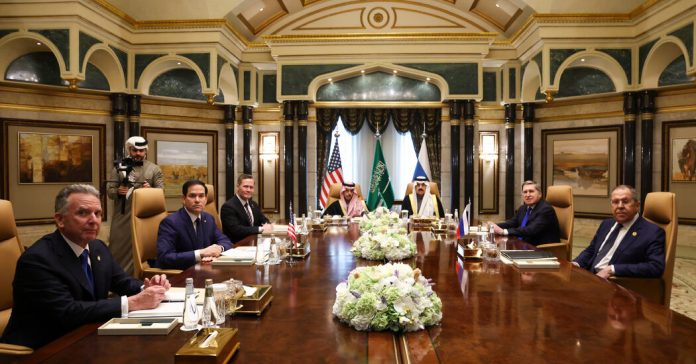
Senior U.S. and Russian officials agreed yesterday not only to work together on ending the war in Ukraine, but also to cooperate on financial investment and re-establishing normal relations. The negotiations were the most extensive in years between the two global powers.

The meeting, which took place in Saudi Arabia, was a head-spinning reset of the Russia-U.S. relationship after three years of Western efforts to isolate Moscow for invading Ukraine in 2022. President Trump again demonstrated his intention to roll back an approach toward Moscow that has included sanctions, isolation and weapon deliveries to Ukraine. He also showed his willingness to cast aside the worries of European allies.

Speaking to reporters after the meeting, U.S. officials did not dwell on Russia’s violation of international law in attacking Ukraine, the war crimes Moscow has been accused of, or the three years of devastation caused by Russian shelling and bombardment. Instead, they repeatedly praised Trump for trying to stop the fighting by talking to Russia in a way that President Biden had not.

What’s next: Rubio said that the U.S. would engage with Russia about what the end of the war would look like. Both countries would negotiate how to remove restrictions on their embassies in Moscow and Washington and explore new partnerships in geopolitics and in business.

What else is on the table: Russia appeared to use the talks to cater to Trump’s interest in profits and natural resources, arguing that U.S. oil companies and others stood to gain hundreds of billions of dollars by doing business in Russia again.

Ukraine: President Volodymyr Zelensky, angered that Ukraine had not been invited to the meeting, said he was postponing his own visit to Saudi Arabia, which was planned for today.


Hamas’s chief negotiator said yesterday that militants intended to hand over the remains of four Israeli hostages to Israel tomorrow in exchange for the release of Palestinian prisoners. He and the Israeli prime minister’s office also said the number of living hostages scheduled to be released on Saturday would be increased to six from three.

The Hamas negotiator said that members of the Bibas family — some of the most well-known hostages worldwide — would be among the four bodies handed over tomorrow to Israel. Israel did not confirm or comment on that announcement.

Lebanon: Israeli forces yesterday retained control over strategic border points in southern Lebanon as a deadline passed for both Israel and Hezbollah to leave the region.

Displacement: Thousands uprooted by the war in Lebanon have been unable to reach towns occupied by Israel, but some have tried anyway. For one man, the journey was deadly.


The Trump administration has sent hundreds of migrants from Afghanistan, Iran and China to Panama over the last week, where they were confined to a single hotel guarded by armed men. Panamanian officials will decide what happens to them next.

The government barred journalists from the hotel, but my colleagues managed to speak by phone with several people locked inside. They told us of their terror and uncertainty, how some deportees attempted suicide while others feared that death waited for them at home.


Euston Road isn’t a place Londoners go on purpose — it’s six lanes of suffering on the way to somewhere better, dotted with dismal landmarks and snarled with traffic. But one local grew fond of the shabby street and found that it spoke to how our lives blend into a city and make it a home. Also, she says it has a great E.R.

Lives lived: Paquita la del Barrio, the prolific Mexican vocalist and songwriter known for her powerful feminist ballads, died at 77.

A new R&B era is here, with women artists leading the way. Some are reviving the genre’s gospel roots, while others are hybridizing the genre with hip-hop.

Roughly defined, the new R&B has shorter songs, embraces pop (which has borrowed a lot from R&B) and boasts slick lyrics that appeal to modern appetites. A few of the women at the vanguard of this new sound told us what it means to them.

Listen: Get to know this new sound in nine songs.

Zelensky Lashes Out at Trump for Excluding Ukrainians From Peace Talks

0

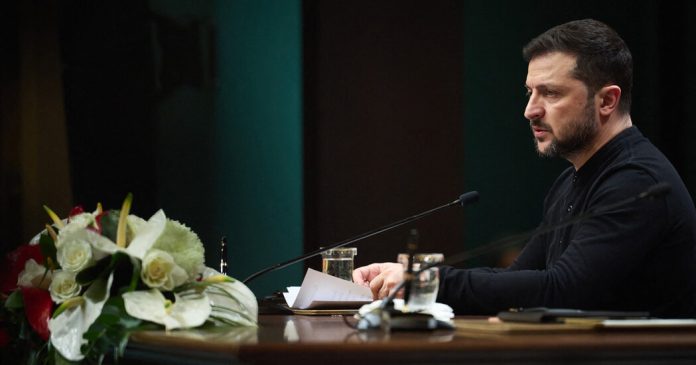
Shortly after the United States’ groundbreaking meeting with Russian officials on Tuesday, President Volodymyr Zelensky of Ukraine lashed out at the Trump administration’s negotiating tactics in his harshest terms yet for excluding Ukrainians from talks on their own country’s fate.

Speaking after American and Russian officials, meeting in Saudi Arabia, agreed to establish teams to negotiate an end to the war in Ukraine and normalize relations, Mr. Zelensky canceled a trip planned to Saudi Arabia on Wednesday, to protest his exclusion from the discussions. The talks ended with upbeat statements from the Russian and American delegations and pledges for closer ties — continuing a thaw in relations that Kyiv and European allies have found unnerving.

“Decisions on how to end the war in Ukraine cannot be made without Ukraine, nor can any conditions be imposed,” Mr. Zelensky said from Turkey, where he had traveled as part of a planned tour of the Middle East. “We were not invited to this Russian-American meeting in Saudi Arabia. It was a surprise for us, I think for many others as well.”

Ukraine, he said, learned of plans for the gathering from the media. Mr. Zelensky suggested that he had intended to meet American officials after the gathering in Riyadh, the Saudi capital, on a previously scheduled state visit to Saudi Arabia.

“I don’t know who will stay, who will leave, or who is planning to go where. To be honest, I don’t care,” he said. “I don’t want coincidences, and that’s why I will not go to Saudi Arabia.”

Ukraine has been seeking talks that would provide it protection against future aggression by Russia, with a commitment of membership in NATO or peacekeepers deployed into the war zone. Ukraine has also asked nations to consider prosecutions for Russian war crimes and reparations for a conflict that has leveled whole cities and killed and wounded tens of thousands of civilians, as well as about a million soldiers on both sides.

Those kinds of demands were nowhere near the conversation in Riyadh, where American negotiators instead focused on “the incredible opportunities” that would come with an improved relationship with Moscow, according to Secretary of State Marco Rubio.

But Mr. Zelensky insisted that the terms of any settlement negotiated without Ukraine “cannot be imposed” on Ukraine.

The pointed remarks represented a shift from Mr. Zelensky, who has tried to walk a fine line in the face of Trump administration pronouncements, avoiding direct criticism. He has offered praise in recent speeches and interviews, over the weekend telling NBC that President Trump could succeed in pressuring Russia into a settlement because Mr. Putin feared him.

But as the meeting in Riyadh came together, he sharpened his criticism of the negotiating process.

In an interview with the German broadcaster ARD on Monday, Mr. Zelensky said the United States was seeking a quick cease-fire by “saying things that Putin really likes.” The aim of the American negotiators, he said, was to move quickly to a presidential summit with Mr. Trump and Mr. Putin and announce a truce.

“But what they want, just a cease-fire, is not success,” Mr. Zelensky said.

The United States and European nations, he has said, should first outline the terms of postwar security in Ukraine, and he has insisted that Russia accept security guarantees to prevent violations or a resumption of the war.

Mr. Zelensky compared the Russia-U.S. talks that opened in Saudi Arabia to the negotiated end to America’s military presence in Afghanistan, which opened the door to the Taliban’s return to power after a 20-year American war. The United States negotiated directly with the Taliban, cutting out the American-backed Afghan government.

“I do not think that anybody is interested in Afghanistan 2.0,” Mr. Zelensky said. “We remember what happened in Afghanistan when the Americans left in a hurry.” That pullout, he said, was an example of “what can happen when somebody doesn’t finish, doesn’t think and leaves in a hurry.”

The United States has been the largest single supplier of military and financial aid to Ukraine since Russia’s all-out invasion in 2022, though the European Union nations collectively have provided more. Several European heads of state, also excluded from the talks, convened on Monday in Paris to gauge what military assistance or peacekeeping troops European countries could commit to secure a possible cease-fire.

Ukraine depends on the United States for satellite intelligence and air defenses, including Patriot interceptors, which are its only reliable shield against Russian ballistic missiles. Ground troops are less dependent on American weaponry, as combat has evolved during the war. Ukraine’s domestically made exploding drones now inflict a majority of casualties on Russian troops.

Over the course of the war, Ukraine has fought Russia’s far larger and better equipped army to a near standstill, though momentum is now clearly in Russia’s favor. Since November 2022, about half of 1 percent of Ukrainian land has changed hands in violent but largely static combat. Russia is now creeping forward in a bloody but slow-moving offensive in the Donbas region of eastern Ukraine.

“At this point, it is clear that neither side will win this war on the battlefield,” Mr. Zelensky said on Tuesday. “Russia wanted this, it failed. No one believed in Ukraine, yet we proved ourselves and defended our independence at an incredibly high cost in the lives of our soldiers, our people. This proves that a shift toward diplomacy must happen, but it must lead to a just peace.”

Mr. Zelensky has said he hopes to reach an agreement with the Trump administration that would exchange a share of profits from natural resources for military aid. A Trump administration proposal had demanded half of the government’s proceeds from natural resources, an official familiar with the proposal said.

Mr. Zelensky had balked at the deal, saying it did not detail any security commitments from the United States in exchange.

“This is a very important issue for us, and we are highly interested in signing an agreement” with the United States, Mr. Zelensky said in a video call with reporters in Kyiv on Monday from Abu Dhabi, in the United Arab Emirates.

Mr. Zelensky, though, said that Europe was also interested in investing in Ukraine. “I told our American partners that we also have offers from Europe,” he said. Mr. Zelensky has said any deal on resources in Ukraine should consider other backers of the Ukrainian war effort.

Maria Varenikova contributed reporting from Kyiv, Ukraine.

Two Tiny Captives, Symbols of Hostage Crisis, to Come Home Dead, Hamas Says

0

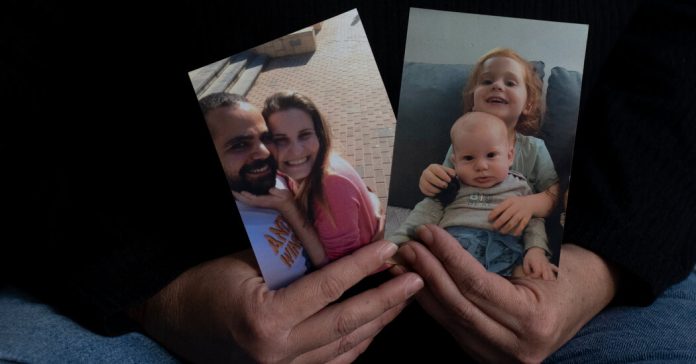
For more than a year, many Israelis and others around the world have anguished over the fates of a mother and her two young sons who were captured by gunmen and taken to Gaza during the Hamas-led assault of Oct. 7, 2023.

On Tuesday, hopes dissipated that the Israeli woman, Shiri Bibas, and her children would be returned alive when Hamas announced that it would hand over their bodies this week.

For many Israelis, the kidnapping of Ms. Bibas, her husband, Yarden, and their redheaded children — Ariel, who was 4 at the time, and Kfir, then not even 9 months old — epitomized the cruelty of the Hamas-led attack that prompted the 15-month war in Gaza. The family’s capture became a rallying cry both for those who supported a deal to end the war and negotiate the hostages’ speedy release, and for those who believed the military should continue fighting until Hamas was destroyed.

News that Hamas would turn over the bodies, part of a series of negotiated exchanges in this phase of a cease-fire agreement, followed the release of 19 living Israeli hostages in recent weeks. If those releases lifted spirits in Israel, the report of the children’s deaths left many in the country distraught.

Israel has not publicly confirmed the deaths of the three Bibas family members, but the Israeli military said last month it was “gravely concerned” about them.

Israel is expected to release Palestinian prisoners and detainees in exchange for the bodies.

Mr. Bibas was abducted separately to Gaza. He was seen in video footage being driven away with a bleeding head wound. Ms. Bibas’s elderly parents were also killed in the Hamas-led attack.

The abduction of the Bibas family has been seared into the Israeli national psyche. The campaign for their release has featured orange balloons to symbolize the redheaded boys as well as references to Batman, a character beloved by the toddler Ariel.

In a video from the attack, Ms. Bibas could be seen desperately clutching her two sons while a Palestinian militant stood nearby. Wrapped in a blanket, she appeared terrified.

On Tuesday, the Bibas family said in a statement that Hamas’s pledge to send home their bodies had sent them “into turmoil” but that they were still awaiting further information. “Until we receive definitive confirmation, our journey is not over,” the family said.

Roughly 1,200 people were killed in the Hamas-led 2023 attack and more than 250 abducted, according to Israel. One of the hardest-hit communities was the Bibases’ hometown, Nir Oz, roughly a quarter of whose 400 residents were either killed or taken hostage. Kfir was the youngest to be seized.

The attack prompted Israel to declare war on Hamas and invade Gaza, leading to the deaths of tens of thousands of Palestinian civilians and fighters and leaving much of the coastal enclave in ruins.

Mr. Bibas texted other family members throughout the attack from the fortified safe room where he had hidden with his wife and children. “I love you all,” Mr. Bibas wrote as Palestinian gunmen overran Nir Oz. He later sent a final missive: “They’re coming in.”

Hamas’s armed wing, the Qassam Brigades, put out a statement in November 2023 that Ms. Bibas and her two children had been killed in an Israeli airstrike. Fears about their fates grew when they were not among the other captive mothers and children released during a weeklong cease-fire that month.

Hamas later put out a propaganda video showing Mr. Bibas in captivity sobbing as he responded to the claim his family had been killed.

A year ago, the Israeli military released footage from a security camera that it said showed Ms. Bibas and the children in Gaza on the day of their abduction being wrapped in a sheet and forced into a car. Rear Adm. Daniel Hagari, the chief spokesman for the Israeli military, said at the time that the captives had been taken to an outpost belonging to the Mujahedeen Brigades, a small armed group, in eastern Khan Younis, Gaza, and that they were then taken somewhere else.

Early this month Mr. Bibas was released as part of the truce between Israel and Hamas that began last month. The agreement stipulates that Hamas release at least 33 Israeli hostages in exchange for more than 1,500 Palestinian prisoners over the deal’s first phase, which, barring an extension, is set to expire in early March.

An Israeli government spokesman said last month that Hamas had provided a list indicating that 25 of the 33 hostages were alive and that eight had been killed.

“Sadly, my family hasn’t returned to me yet,” Mr. Bibas said in a statement after his return to Israel. “They are still there. My light is still there, and as long as they’re there, everything here is dark.”

Eylon Keshet, Mr. Bibas’s cousin, described Ariel in November 2023 as a boy who loved being the center of attention and playing with toy tractors and cars. Kfir, he said, was a “chill” baby on formula who was just beginning to eat solid food.

The Bibas family has been through “a twisted reality from hell,” another relative, Yifat Zailer, said in an interview last year.